
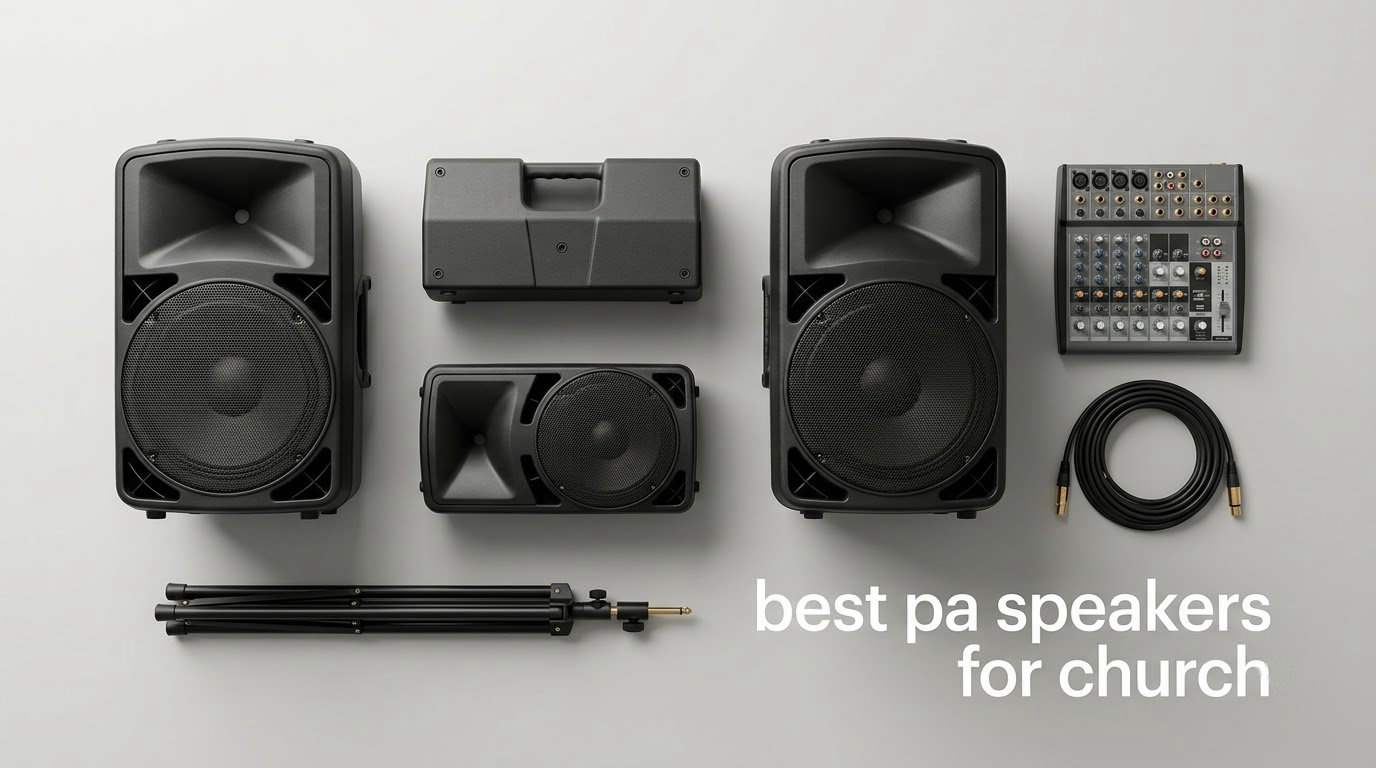
I have spent the last few months answering the same question from church sound teams, and it is almost never “which speaker is the loudest.” It is “why can’t the back row hear the sermon, and why does the room howl every time the pastor steps away from the pulpit.” Those are room and placement problems far more often than they are equipment problems, which is exactly why most of the advice you will find about the best PA speakers for church is misleading.
The mistake I see repeatedly is buying louder. Churches that turn a 150-seat fellowship hall into a 150-decibel environment end up with muddy, unintelligible speech and a congregation that gives up on the singing. Practitioners on r/livesoundadvice and r/worshipleaders keep landing in the same place: start smaller, treat the room, and only then add output. Our broader guide to powered PA speakers covers the general case if you want the electronics background first.
What follows is a roundup of ten powered cabinets and column systems that genuinely suit church work, ranked by how well they handle a sermon, not by how big the wattage number is. I looked hard at speech intelligibility, feedback behaviour, how forgiving the box is for a volunteer operator, weight for load-in, and warranty length. If your room is a fixed install rather than a portable rig, jump to the PA system buying guide and then come back.
Table of Contents
What Are the Best PA Speakers for a Church?
The best PA speakers for a church are powered cabinets with clear midrange output, a horn that keeps the sermon intelligible, and DSP that limits feedback. Match two of them to your seating count, place them at ear height near the front, and treat reflective walls before adding more volume. For most rooms under 300 seats, a 12 or 15 inch two-way powered top is the right starting point.
Top 3 Picks for Best PA Speakers for Church in 2026

ALTO TS415
- 2500W with 15 inch woofer
- 1.4 inch HF driver
- 3-channel onboard mixer
- ALTO app EQ and speaker modes

Mackie Thump212
- 1400W Class-D with 12 inch woofer
- 128 dB max SPL
- Built-in feedback eliminator
- Only 29.1 lb

Bose L1 Pro8
- 180 degree horizontal coverage
- Integrated 7x13 inch race track sub
- Bluetooth and 3-channel mixer
- One-trip portability
Best PA Speakers for a Church (October 2026)
| Product | Specifications | Action |
|---|---|---|
| ALTO TS415 |
|
Check Latest Price |
| Mackie Thump212 |
|
Check Latest Price |
| Bose L1 Pro8 |
|
Check Latest Price |
 JBL IRX108BT JBL IRX108BT |
|
Check Latest Price |
 JBL EON715 JBL EON715 |
|
Check Latest Price |
 QSC K12.2 QSC K12.2 |
|
Check Latest Price |
 Electro-Voice ZLX-12P-G2 Electro-Voice ZLX-12P-G2 |
|
Check Latest Price |
 JBL PRX ONE JBL PRX ONE |
|
Check Latest Price |
 Mackie SRM215 Mackie SRM215 |
|
Check Latest Price |
 Yamaha DBR10 Yamaha DBR10 |
|
Check Latest Price |
1. ALTO TS415 15 Inch Powered PA – Best All-Rounder for a Sanctuary
ALTO TS415 2500W 15″ Powered PA Speaker
2500W peak
15 inch LF plus 1.4 inch HF
3-channel onboard mixer
Bluetooth with stereo linking
Pros
- Deep
- powerful low end for a 15 inch top
- 3-channel mixer with dual XLR and 1/4 inch combo inputs
- Pole mount plus M10 suspension points plus wedge position
- ALTO app for EQ and speaker modes
Cons
- Factory EQ is bright in the 1k-5k range
- App parametric EQ is awkward to operate
- Input gain is attenuated for +4dBu sources
The TS415 is the box I keep coming back to because it does the least compromising between speech and music. That 15 inch low-frequency driver gives a sermon enough weight to sound like a voice in a room rather than a mic through a wall, and the 1.4 inch high-frequency driver keeps the consonants sharp. For a 200 to 300 seat sanctuary with a worship band behind a pulpit mic and two lapel mics, it has the headroom without the colouration I have heard in cheaper cabinets.
Reviewers repeatedly note the integrated three-channel mixer as the practical winner for a volunteer booth. Dual XLR and 1/4 inch combo inputs mean a pulpit mic, a lapel receiver and a playback channel all live in the box, so a small church can skip the rack entirely. The Bluetooth streaming plus true stereo wireless linking between two TS4 units also means the youth room and the sanctuary can share a system without cables.
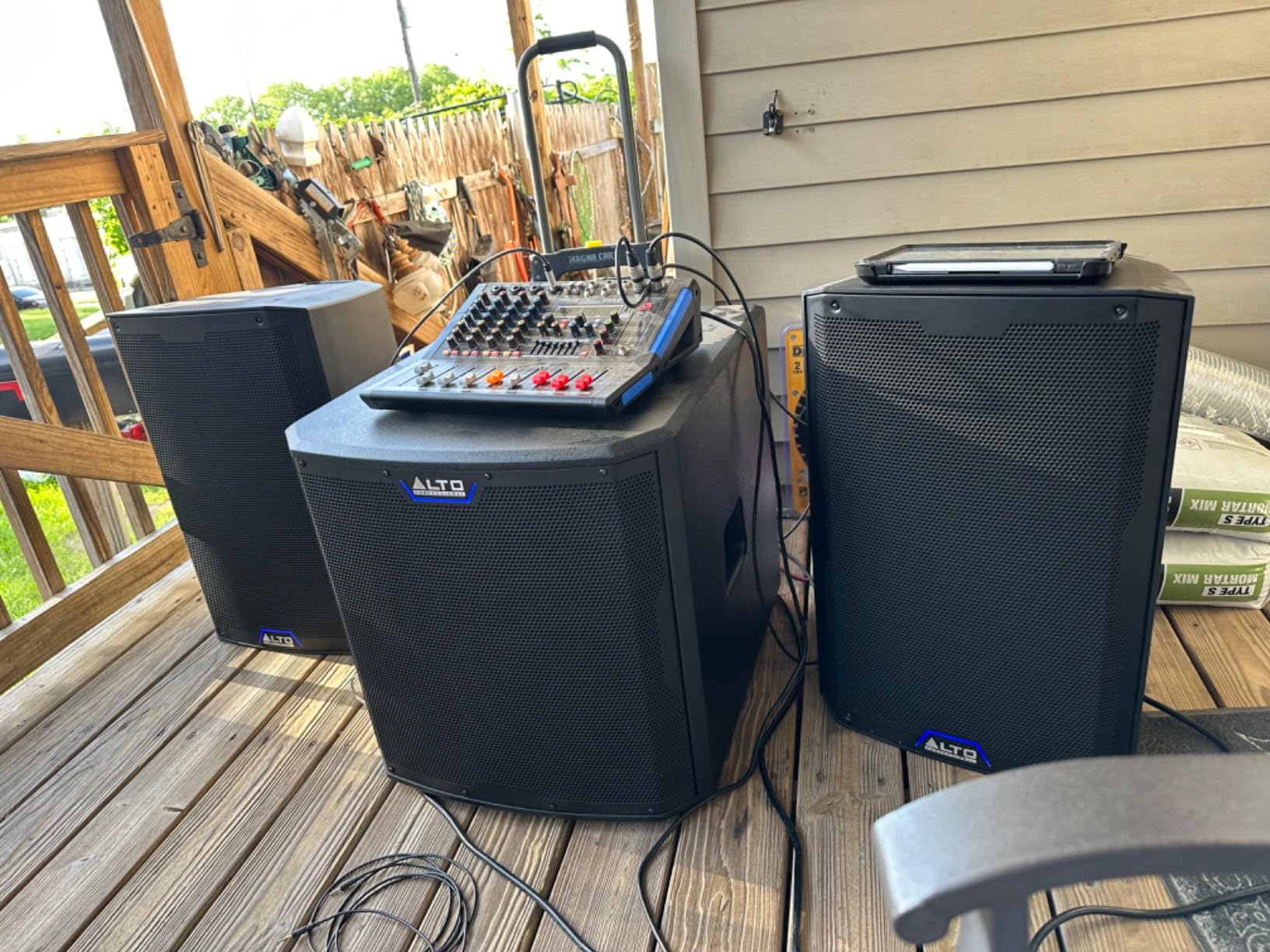
Two details decide whether this is right for your room. The mounting options are unusually flexible for a 15 inch cabinet: a 36 mm pole socket, integral M10 suspension points, and a wedge monitor position from the same box, so the same speaker can be a main, a fill or a floor wedge.
The other is weight, at 20.8 kg. That is a two-person lift onto a stand for most teams, though the side handles help. Warranty is a one year manufacturer limited, which is the shortest cover on this list and worth weighing if you are buying for a permanent install.
Who the TS415 suits
This is the pick for a mid-size sanctuary, a fellowship hall that seats 150 or more, and for churches upgrading from an old flat or mis-matched pair. The deep low end means a worship team with an upright bass or an acoustic guitar does not immediately sound thin when a sub is not yet budgeted.
It is also a strong match for the common small-church pattern of a pair of speakers behind the band doing double duty as mains and monitors, which practitioners on r/livesoundadvice describe as the most sensible rig under 100 seats. The wedge position makes that workable without buying separate monitors.
Where the TS415 falls short
The factory voicing is the main gripe. Owners and reviewers both flag brightness in the 1k-5kHz region at high level, which is precisely the band that carries speech intelligibility. For a sermon-led service that can read as harsh on a lapel mic before the operator has dialled anything in.
That is a fixable problem, but it needs EQ, and the ALTO app’s parametric section is not the smoothest tool for a volunteer to open during a service. The attenuated input gain also means a +4dBu source from a digital mixer needs a boost before it reaches a comfortable level.
2. Mackie Thump212 12 Inch Powered Loudspeaker – Best Value
Mackie Thump212 12″ 1400W Powered Loudspeaker with Heavy-Duty Drivers
1400W Class-D
12 inch woofer
128 dB max SPL
47 Hz to 23 kHz response
Pros
- Only 29.1 lb so one person can carry it
- 128 dB max SPL with plenty of headroom
- Built-in feedback eliminator and music ducking
- Owners report covering 150-250 people
Cons
- No Bluetooth on the standard version
- No onboard EQ so a mixer handles tone
- Can be noisy at very low volume
The Thump212 answers a question I get constantly, which is how to cover a room properly without hiring a bigger cabinet. 128 dB max SPL from a 1400 watt Class-D amplifier and a 12 inch driver is a lot of clean level for the money, and multiple owners say they cannot push the gain past a fraction of full before they run out of headroom.
For a church the built-in feedback eliminator and music ducking are the features that matter most. A volunteer can set a lapel channel, let the box handle the feedback filtering, and duck the band under the sermon without touching a mixer, which removes the two most common causes of a service stopping mid-song.
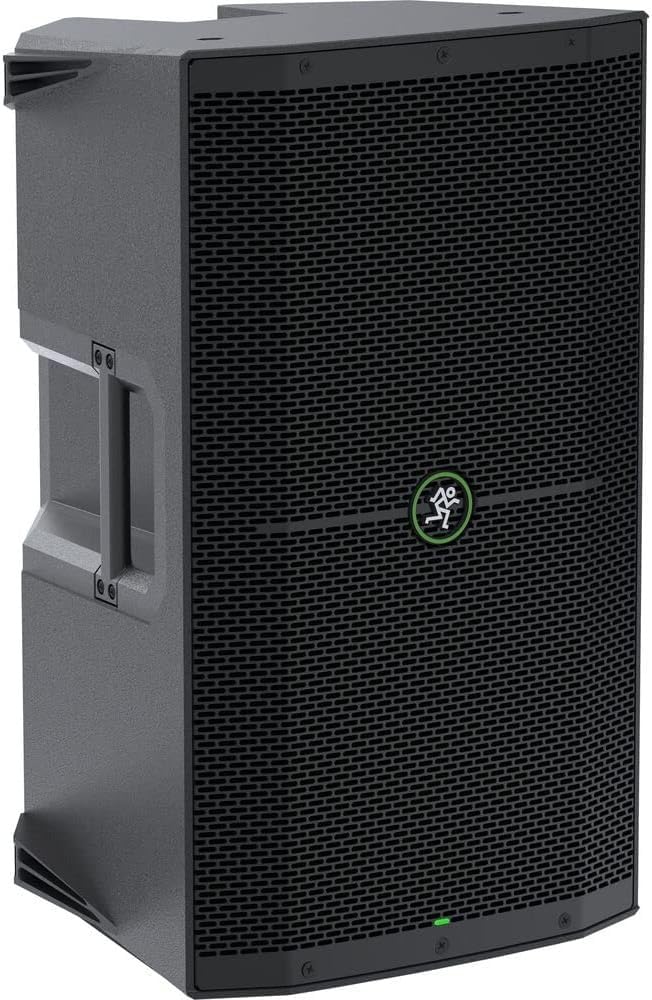
At 29.1 pounds with a 14 by 14 by 24 inch footprint, this is the one-person carry in the roundup. For a church that moves gear between a fellowship hall, a youth room and an outdoor service, that is not a small detail, and it is a genuine step up from the 45 to 50 pound cabinets most 12 inch tops weigh.
Frequency response of 47 Hz to 23 kHz tells you the low end is present but modest, so a band playing worship material will want a sub eventually. Reviewers covering 150 to 250 people in a hall or small open-air service report that it holds together well within that range.
Who the Thump212 suits
This is my pick for a small church moving past a consumer PA, and for a youth room or fellowship hall that has to be carried out to a parking lot for a service. The stainless steel grille and the weight make it a working tool rather than a display piece.
It is also a good first step toward the standard digital mixer rig. With XLR and quarter-inch connections it feeds straight into an XR18-class board, and the pair-of-speakers-behind-the-band pattern works here because the feedback eliminator is doing the housekeeping.
Where the Thump212 falls short
There is no Bluetooth on the standard model, which means a phone or tablet needs a cable or a receiver. For a church running a video countdown or a Spotify playlist from a phone each week, that is an annoying gap rather than a dealbreaker.
There is also no onboard EQ. Tone shaping happens on a mixer, and at very low levels some owners report the cabinet is noisier than expected. A heavy low end can also crowd an acoustic or bluegrass worship set unless the mixer trims it.
3. Bose L1 Pro8 Portable PA – Best for a Mobile or Chapel Rig
Bose L1 Pro8 – Portable PA System Portable Line Array Speaker with Integrated Bluetooth Built-in Mixer and Wireless App Control
C-shaped line array with 8 drivers
Integrated 7x13 inch race track sub
180 degree horizontal coverage
Built-in 3-channel mixer
Pros
- Moves from vehicle to venue in one trip
- Consistent tonal balance with clear vocals
- Integrated sub covers a lot of bass in a small footprint
- Bluetooth streaming and app control
Cons
- SPL ceiling limits it to small venues
- Integrated column is hard to fly or stack
- Premium price against point-source tops
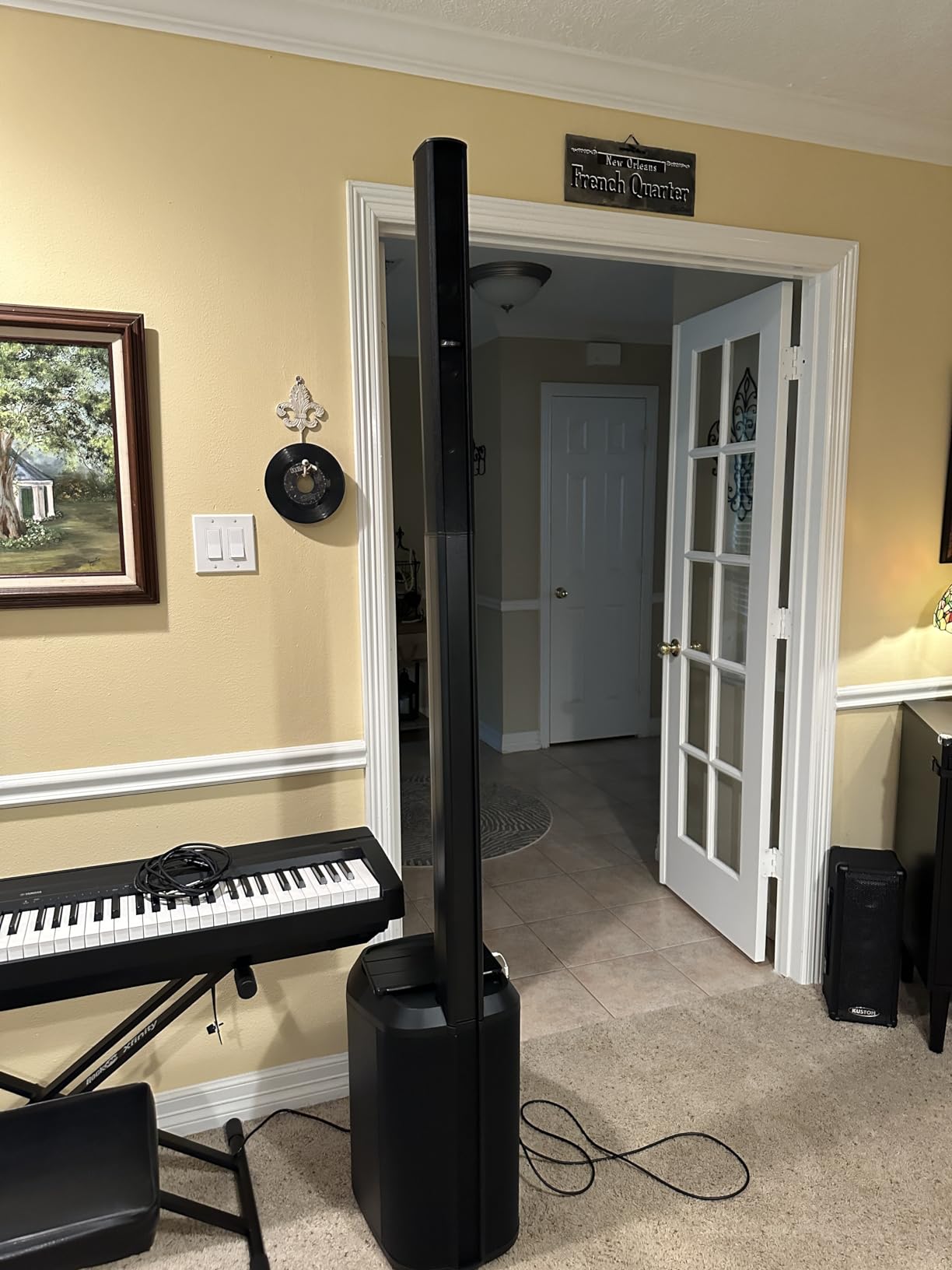
The L1 Pro8 is the system I recommend when the system has to leave the building. A C-shape extended-frequency line array with eight articulated 2 inch neodymium drivers, 180 degree horizontal coverage, and an integrated 7 by 13 inch race track subwoofer means one person can carry a complete PA out of a trunk and have it running in minutes.
That 180 degree coverage pattern is the underrated part. Instead of pointing two narrow horns at the congregation and leaving the sides dead, the array spreads sound across the seating, which is how a small chapel gets even coverage without delay speakers. Reviewers consistently praise the tonal balance and vocal clarity for the size.
The built-in three-channel mixer with smartphone app control removes the last piece of external gear a mobile church needs. Bluetooth streaming at 10 m covers a service, and the vocal and instrument channels are dialled from a phone at the front of the room rather than a rack in a corner.
Bass is the surprise. An integrated subwoofer in a column this narrow covers more low end than a conventional 12 inch woofer in a much larger footprint, which means an acoustic worship set sounds complete without a separate sub cabinet.
Who the L1 Pro8 suits
It fits a church under about 100 seats that meets in a rented hall, a chapel doing funerals and weddings, and a mobile congregation that sets up in a community centre once a month. The one-trip portability is the reason to buy it rather than saving money with a heavier pair.
It also works as a rehearsal or overflow room system, and for youth events the vertical footprint means it tucks against a wall instead of blocking a door.
Where the L1 Pro8 falls short
The ceiling is output, and reviewers are direct about it. This is a small-venue system, so a 300 seat sanctuary with a full band will run out of level well before the congregation complains about clarity.
The fixed column architecture is also a real constraint for a sanctuary. You cannot stack it, fly it, or separate the sub from the array, so if the room needs a sub on the floor and a main on a stand, this is the wrong shape of system.
4. JBL IRX108BT 8 Inch Powered Speaker – Most Versatile
JBL Professional IRX108BT Powered PA Speaker, Portable Loudspeaker with Bluetooth, 8 Inch Woofer, 1300 Watt, Mobile DJ, Musicians, Small Venues, Ceremonies and Sports Events, Black
1300W with 8 inch woofer
2 XLR and TRS combo inputs
Bluetooth plus feedback suppressor
One-touch ducking
Pros
- Lightest cabinet in the roundup at 17.4 lb
- Clear speech reproduction from wireless mics
- Mix-through for feeding a second system
- Works as a monitor or an on-the-spot PA
Cons
- An 8 inch woofer cannot produce deep low end
- Onboard EQ effects are minimal
- Not weather resistant for outdoor use
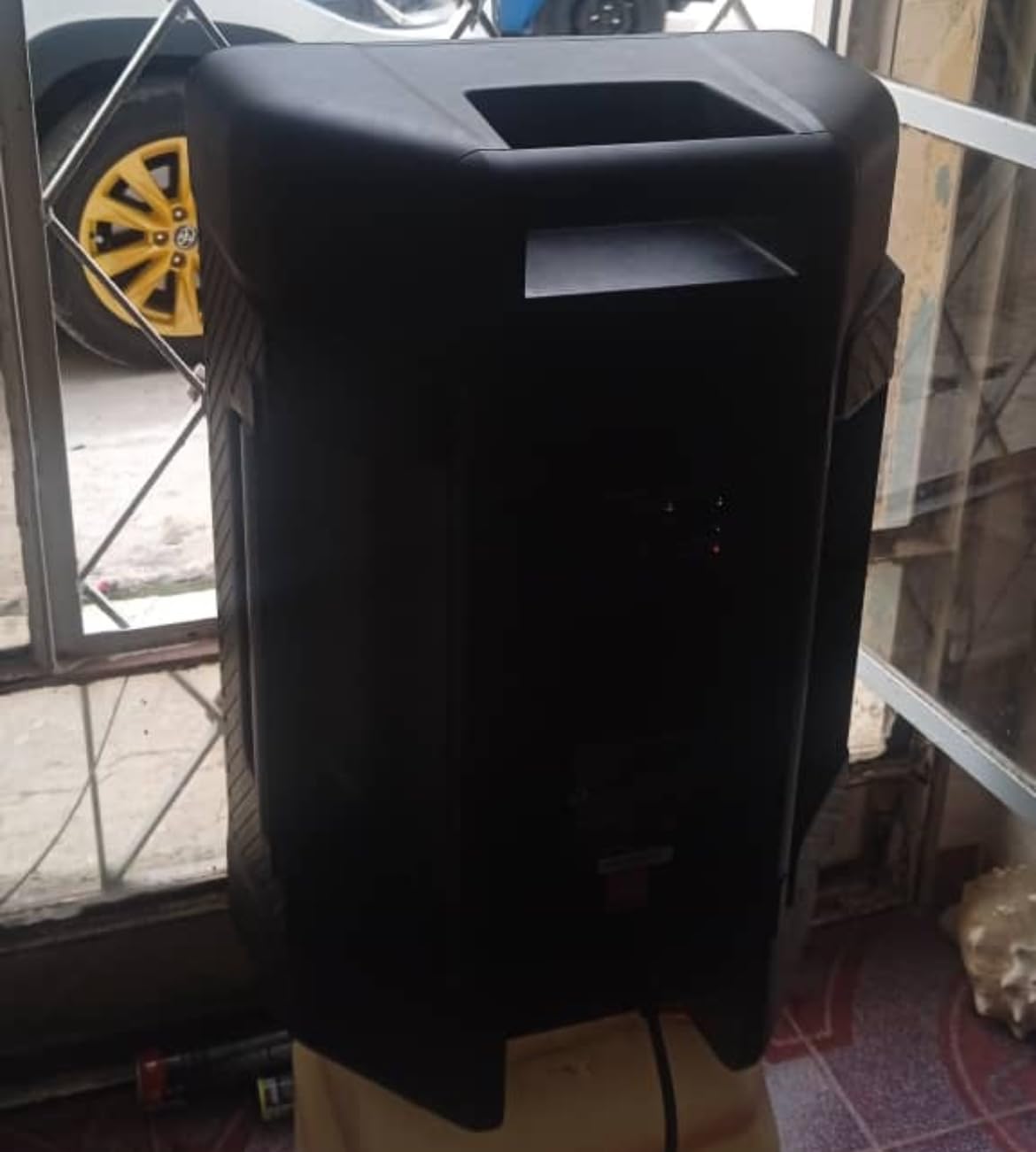
With the most reviews of anything in this roundup, the IRX108BT has the clearest picture of how a small church actually uses a speaker. 1300 watts with an 8 inch woofer, two XLR and TRS combo inputs, Bluetooth per unit, a feedback suppressor and one-touch ducking, and it still weighs only 17.4 pounds in a polypropylene cabinet.
Speech reproduction is what owners single out. Crisp, clear output from wireless lapel and pulpit mics with no distortion is exactly the brief for a sermon, and the one-touch ducking means the band drops under the spoken word without an operator finding the right fader.
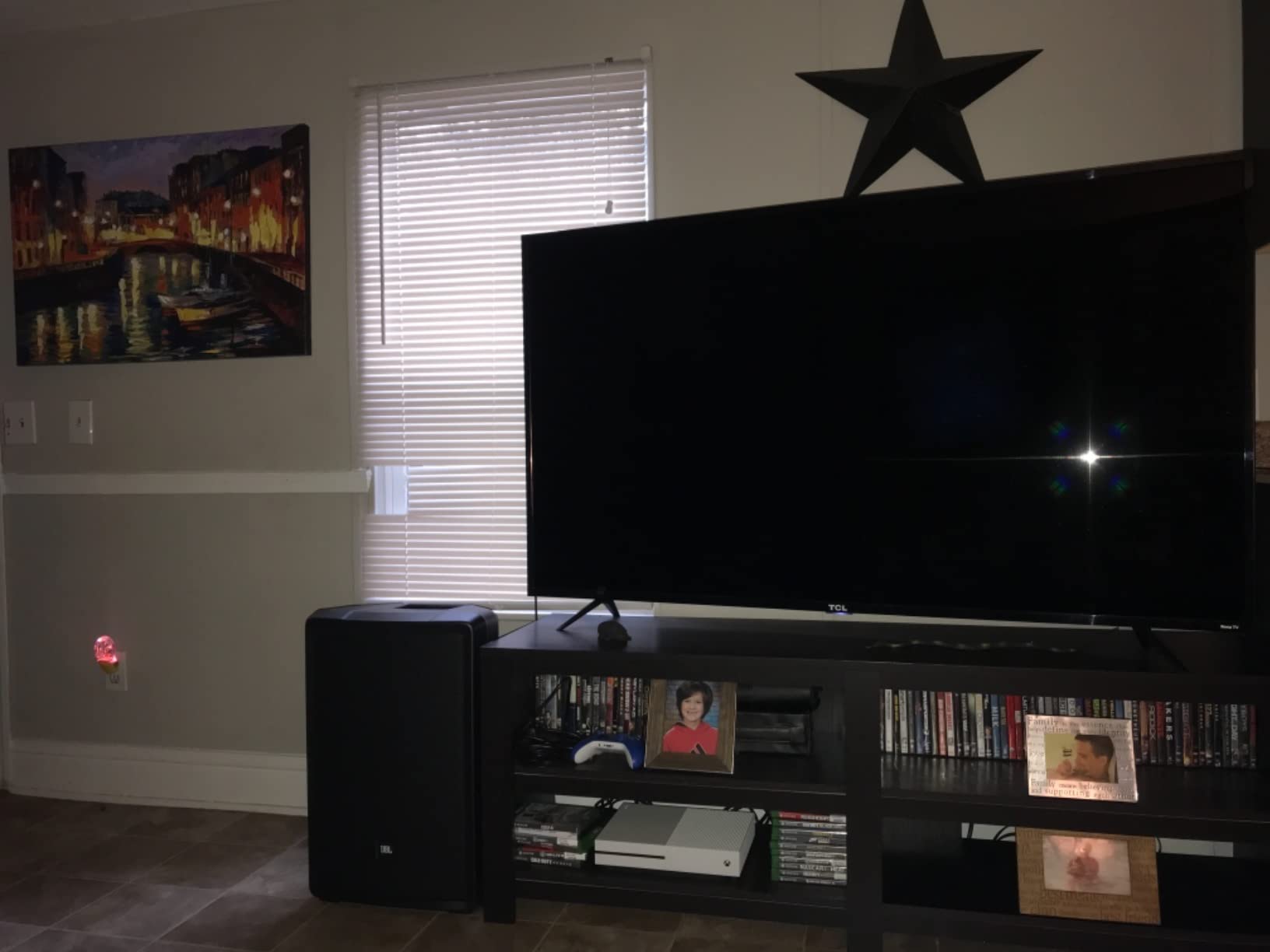
Two features make it more useful than the price suggests. The mix-through output lets one cabinet feed a larger system, and the same box flips to a monitor or a temporary PA for a funeral in a fellowship hall, which is how a lot of small churches avoid owning a second rig.
Owners also report the Bluetooth connection holding longer than cheaper competitors, and the cabinet surviving gigs and even a flood. A small minority of reviews describe manufacturing defects and replacements, which is worth noting but not a pattern in the 4.4 star average.
Who the IRX108BT suits
This is the pick for a church under 100 seats, a prayer meeting room, a choir room, and a nursery or children’s space that needs reinforcement rather than a main PA. One person can carry a pair, load them and be set up before the first guest arrives.
It is also the safest starter purchase for a team that has never owned professional audio. There is nothing to learn beyond gain and volume, and the feedback suppressor does the one job a volunteer cannot do reliably by ear.
Where the IRX108BT falls short
An 8 inch woofer is the ceiling. It cannot produce deep low end, so a worship band with bass guitar will sound thin without a sub, and a room larger than about 100 seats will outgrow it quickly.
Onboard EQ effects are minimal, so tone shaping has to happen upstream, and the cabinet is not weather resistant. For an outdoor service it needs cover, which limits the flexibility its weight otherwise offers.
5. JBL EON715 15 Inch Powered PA – Best for a 200 Seat Sanctuary
JBL Professional EON715 Powered PA Speaker, 15 inch, 1300 Watt, Black
15 inch 2-way powered top
JBL Waveguide horn
1300W amplification
Bluetooth at 100 m range
Pros
- Crisp
- clear sound with bass you can feel
- Enough volume for small and medium rooms
- Quiet at low level and strong when pushed
- Pairs easily with a mixer
Cons
- Heavy at 46.5 lb for two-person handling
- Pro Connect app is criticised by users
- Bluetooth sometimes re-pairs at each power-up
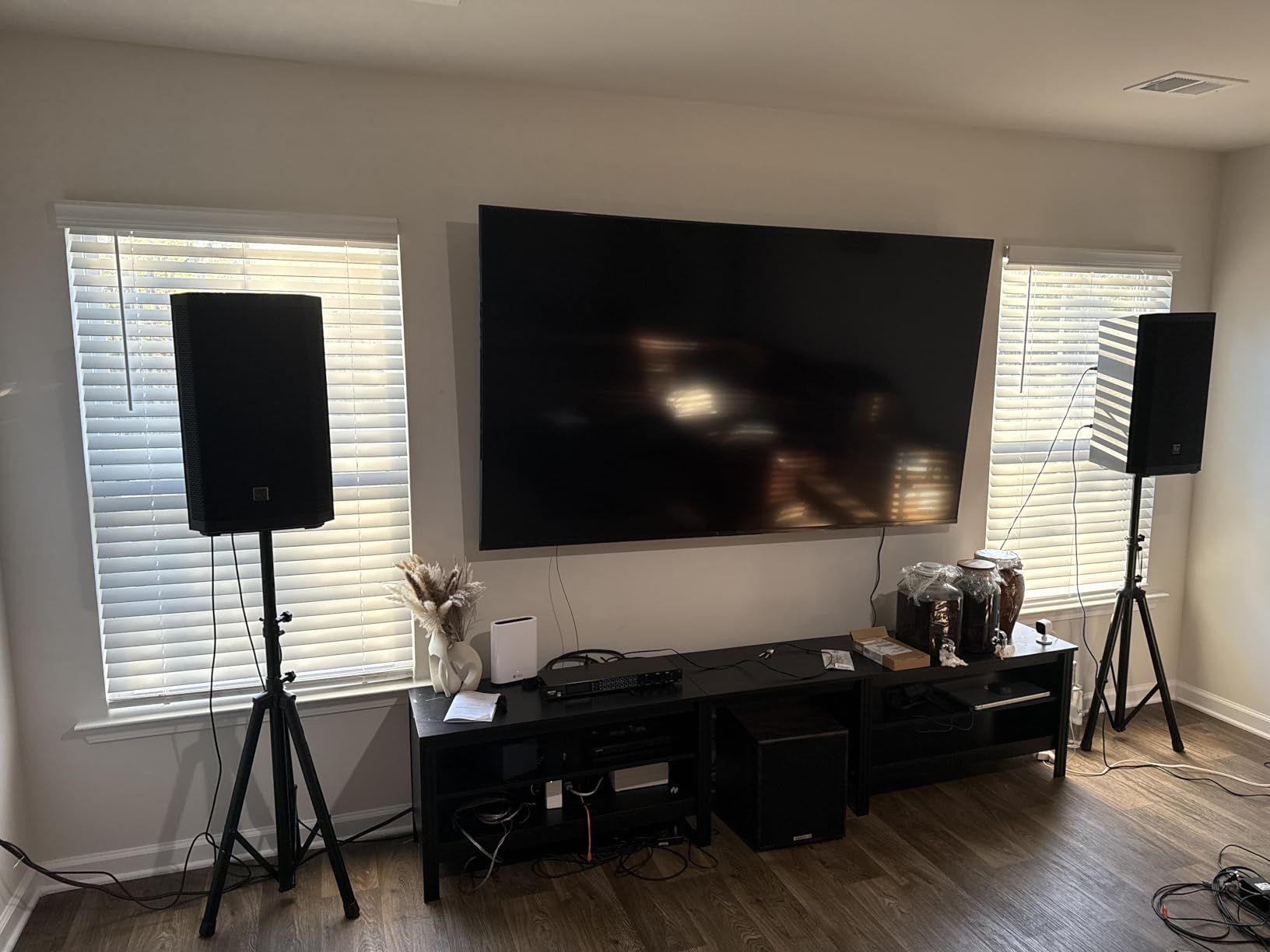
The EON715 is where a lot of churches land when they outgrow a 10 inch box, and the JBL Waveguide horn is the reason. It controls the dispersion from the compression driver so the high frequencies stay aimed at the congregation rather than spraying into the ceiling and the back wall, which is the single biggest cause of unintelligible sermons in a high-ceilinged room.
1300 watts of amplification with a 15 inch low-frequency driver gives enough volume for small and medium venues, and owners describe it as quiet at low level and powerful when pushed. That range matters in a sanctuary, because a service starts quiet with a prayer and ends loud with a band.
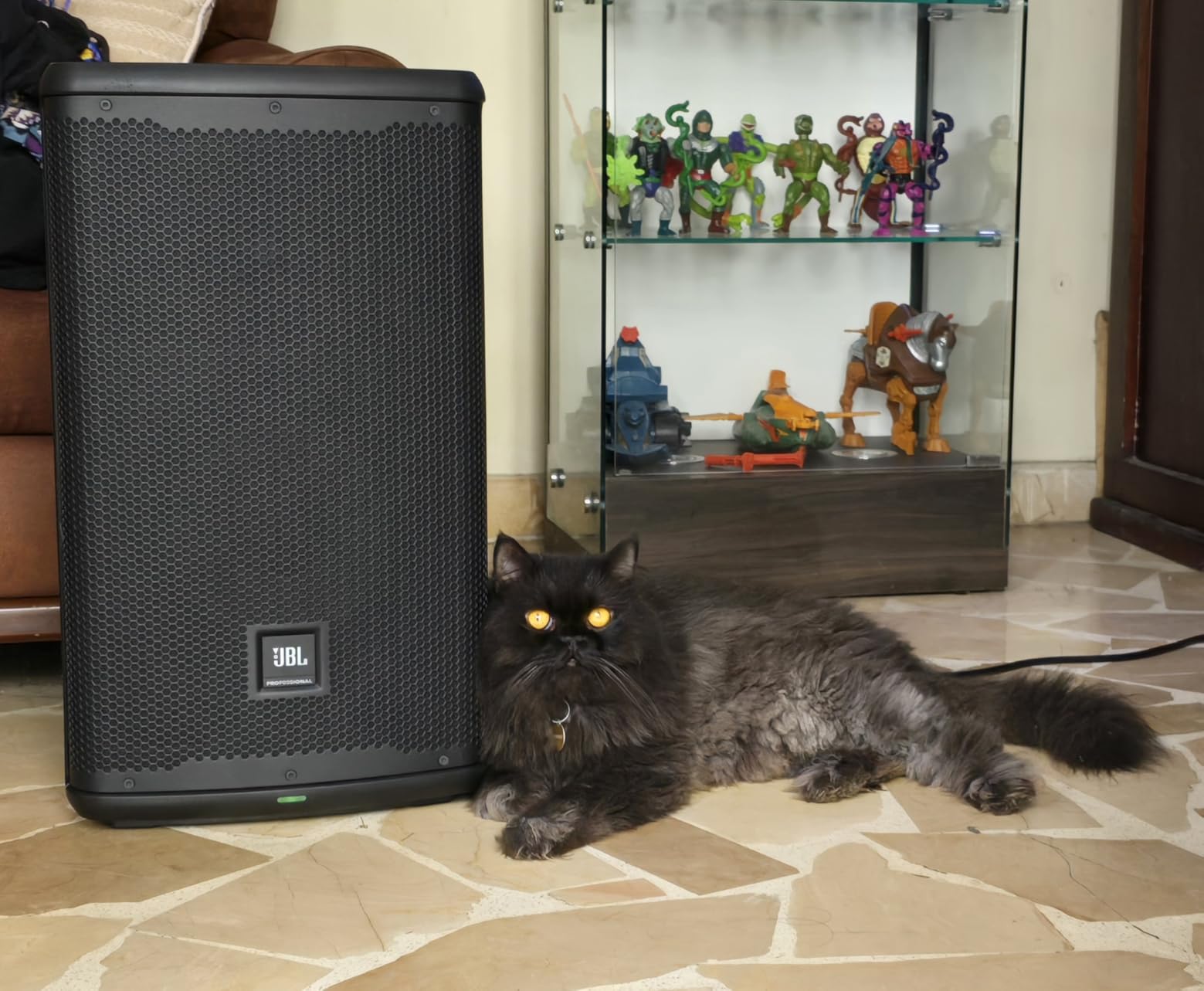
Pairing is straightforward. It works with a mixer, pairs with a second unit, and reconnects over Bluetooth instantly after the first pairing. The double handles make lifting onto stands easier, which tells you the manufacturer expects these to be moved.
It is a floor-standing box by design, with a metal grille and a polypropylene cabinet. For a fixed sanctuary position near the front wall that is fine, but a permanently installed church should be considering a flown or column solution further down this list.
Who the EON715 suits
It fits a 150 to 300 seat sanctuary with a pulpit mic, two lapels and a worship band, and it is a strong replacement for an older JBL installed system. Working worship engineers name the brand repeatedly as the trusted tier, and this cabinet is the modern equivalent of the SR-series rigs they still carry.
It also suits a church that wants a familiar brand on the label for insurance, resale and parts availability, which matters more to a building committee than most spec sheets admit.
Where the EON715 falls short
At 46.5 pounds this is a two-person handling job, and a church that moves its PA between rooms every Sunday will feel that. JBL’s Pro Connect app draws consistent criticism, and Bluetooth can need re-pairing at each power-up.
There are reported firmware bugs in the stereo TWS pairing, and the box is not water resistant, so an outdoor service needs a canopy. The waveguide that makes it so good indoors is tuned for a room, not a field.
6. QSC K12.2 12 Inch Powered Loudspeaker – Premium Install Workhorse
QSC K12.2 Active 12″ Powered 2000 Watt Loudspeaker
2000W Class-D with low-noise fan
Factory presets and scenes
12 inch woofer and 1 inch tweeter
3 year full warranty
Pros
- Quiet
- low-noise amplification stage
- Scenes and presets make setups repeatable
- Digital display for clear control
- 3 year full warranty is the longest here
Cons
- Heavy at 47.8 lb for a 12 inch cabinet
- Premium price for an entry-level buyer
- Digital controls take practice to navigate
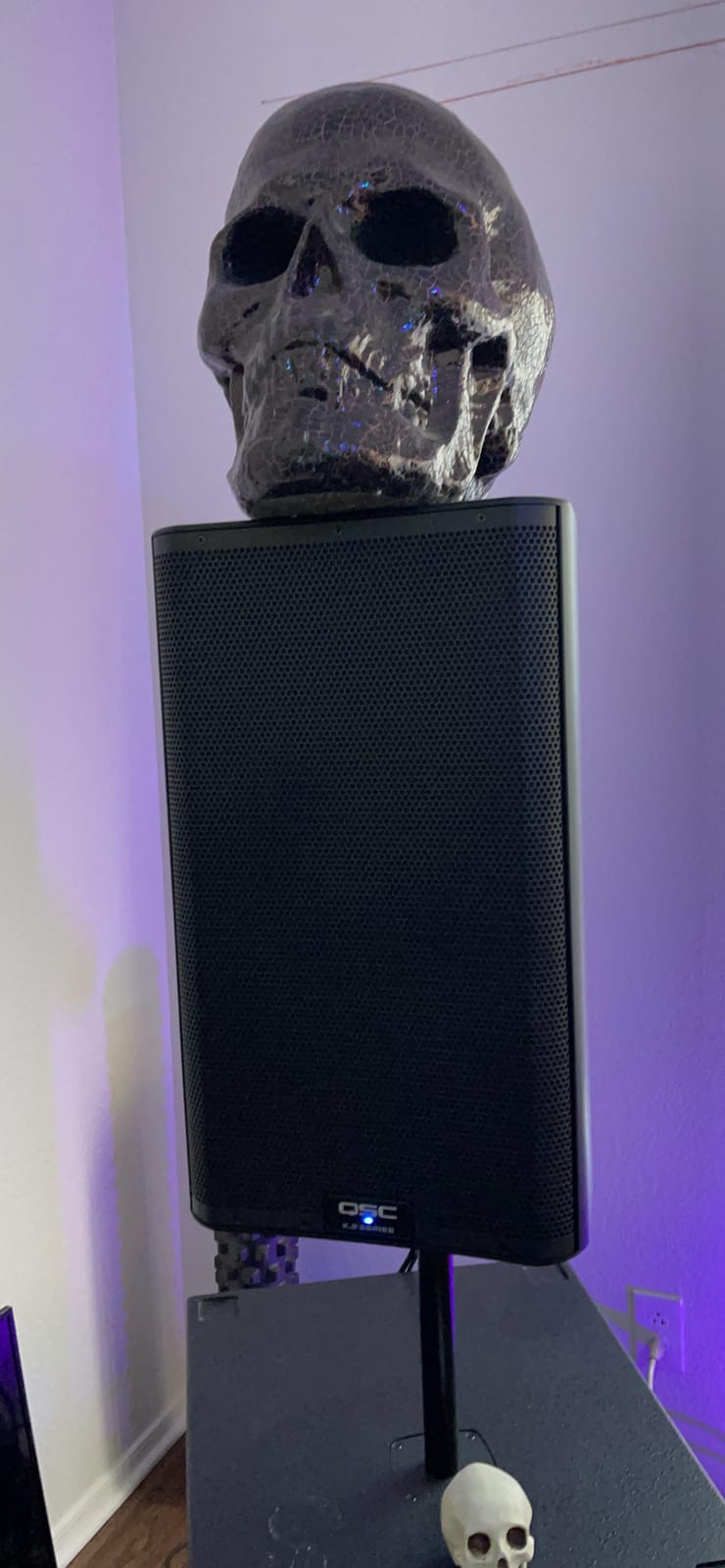
The K12.2 is the most permanent-install-friendly box in this roundup, and the reason is the warranty. Three years full coverage, rather than the single year most competitors offer, is what a building committee should care about when a cabinet is going on a stand or into a balcony position and staying there for a decade.
Sound quality is best-in-class in the group. A 2000 watt Class-D amplifier with a low-noise variable speed fan means the noise floor stays low enough for a quiet prayer, and the 12 inch woofer with a 1 inch tweeter delivers even coverage across a seating area.
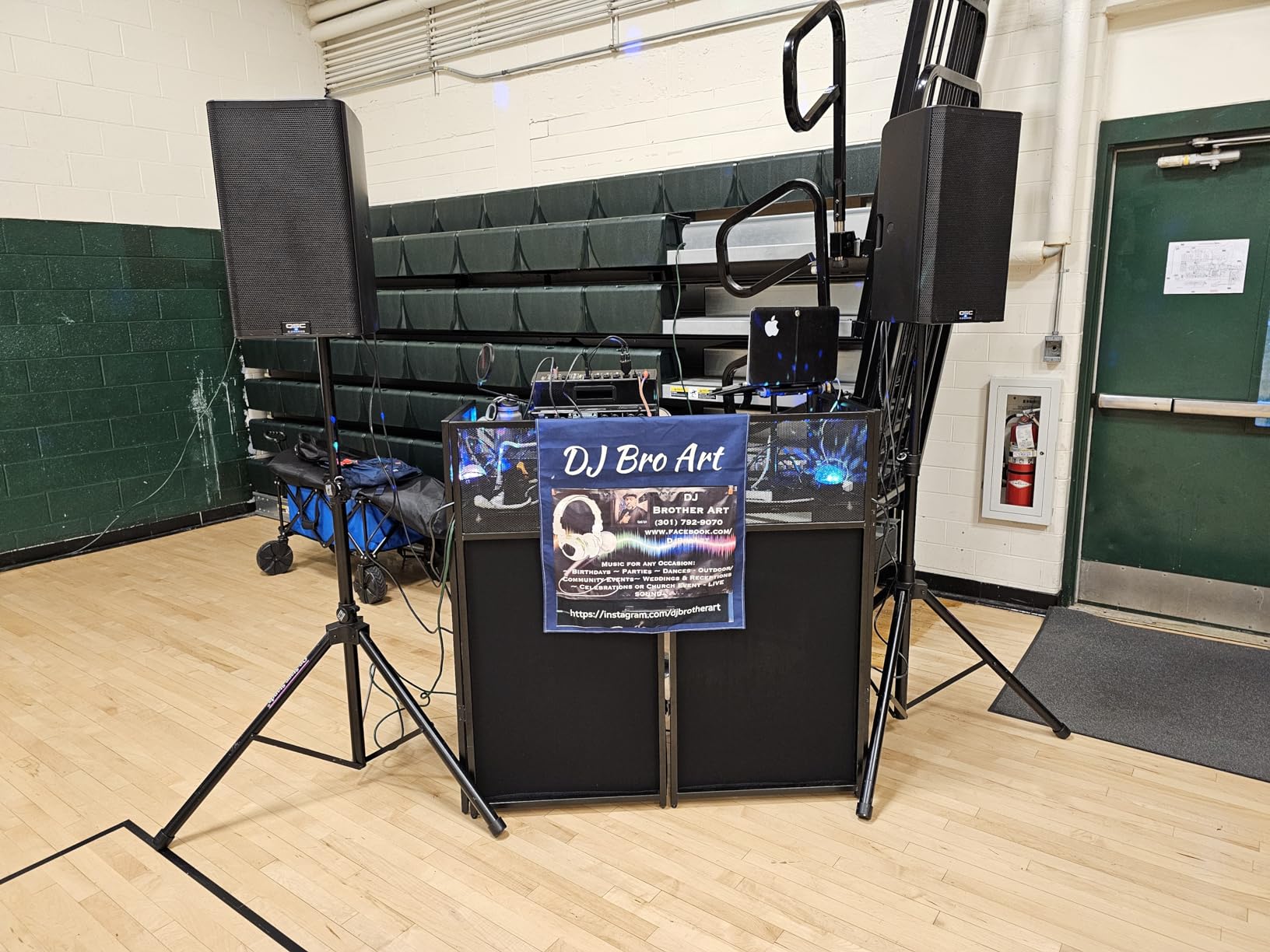
For a volunteer booth the scenes matter most. Factory presets and savable, recallable scenes let you store a sermon configuration and a band configuration, then recall the right one without touching EQ mid-service. The multi-function digital display gives clear control of loudspeaker functions from the back of the room.
It is a standard install spec workhorse, suited to both permanent and touring use, and reviewers treat it as dependable rather than exciting. That is the right character for a box you will not think about for years.
Who the K12.2 suits
It fits a 200 to 400 seat sanctuary that will keep its PA in one position, and churches with a paid or semi-skilled operator who will use the DSP properly. A touring worship team that owns its PA and moves it also lands here.
It is the pick for an overflow room or a second sanctuary in the same building, where matching a main house tone matters more than portability. If you are weighing line array options for a fixed room, our line array speaker guide covers that decision.
Where the K12.2 falls short
47.8 pounds is heavy for a 12 inch cabinet, so moving it between rooms is a two-person job. The price also sits well above entry-level 12 inch powered speakers, which matters in a budget-constrained congregation.
The digital controls take practice to navigate, and a volunteer who has never seen the menu will spend the first few services learning it rather than running the room. If someone on your team will not read the manual, this is not the box to hand them cold.
7. Electro-Voice ZLX-12P-G2 12 Inch Powered Loudspeaker – Best DSP for a Worship Band
Electro-Voice ZLX-12P-G2 12in. 2-Way Powered Loudspeaker with Bluetooth
12 inch powered top
DYNACORD DSP with FX,AFS,ducker,PEQ
Bluetooth and QuickSmart app
Increased max SPL over first generation
Pros
- Higher max SPL and wider response than the original ZLX
- Digital mixer with FX
- feedback suppression
- ducker and parametric EQ
- QuickSmart Mobile app control
- Ergonomic cabinet built for daily transport
Cons
- At 36.8 lb it is not a one-person long carry
- App-dependent control adds a learning curve
- Output limits very large room coverage
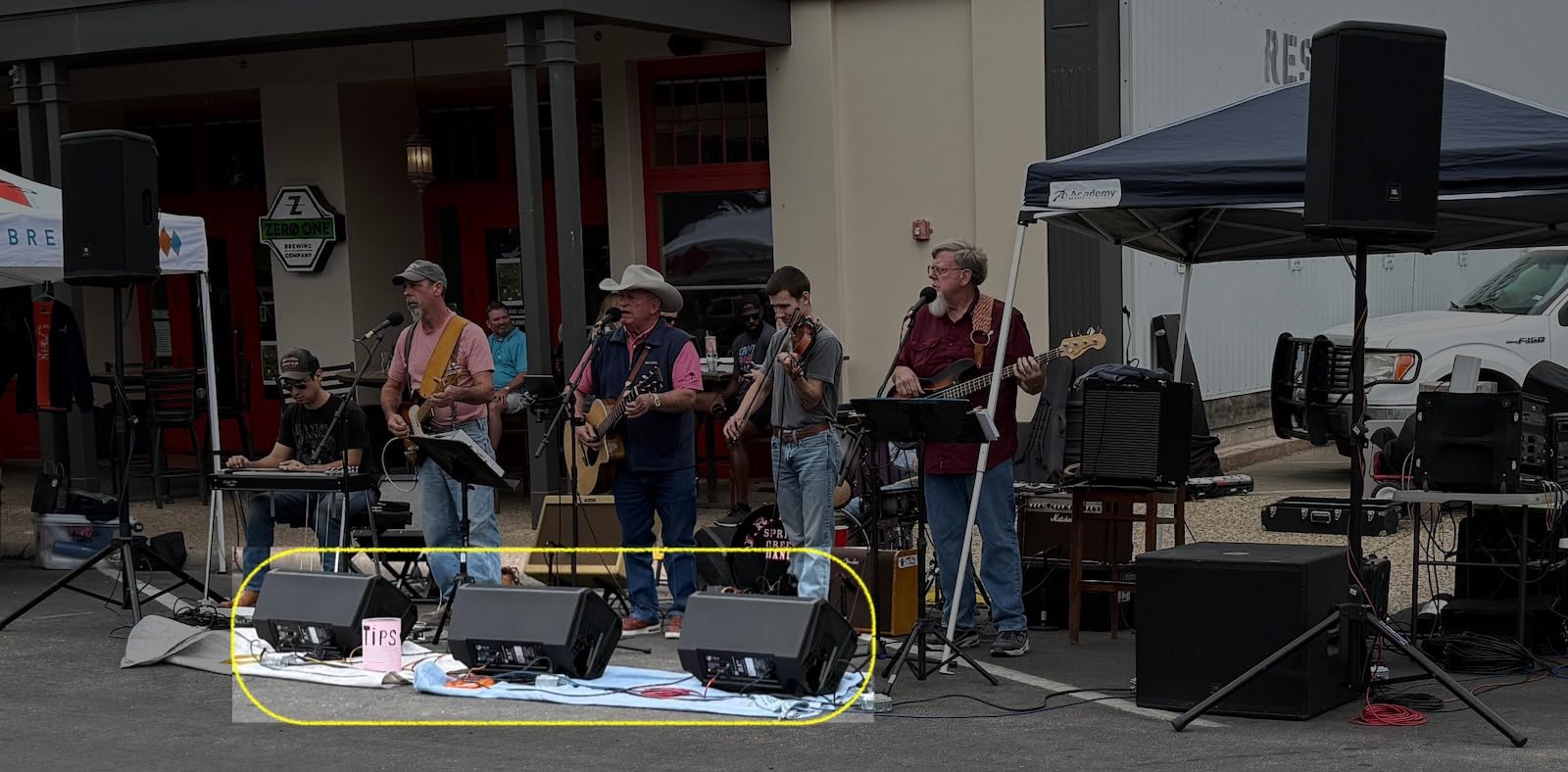
The ZLX-12P-G2 is the second generation of Electro-Voice’s best-selling pro loudspeaker series, and the DSP is the reason it matters for a church. Power comes from DYNACORD and brings a built-in digital mixer, effects, automatic feedback suppression, a ducker and parametric EQ into a 12 inch powered top, which is more onboard processing than anything else at this size.
For a worship band rig that is exactly the right list. A guitarist or singer can hear themselves without wedges if the operator builds it into the mix, the ducker handles the sermon transition, and the feedback suppression covers the lapel channel in a reflective room without the volunteer touching anything.
Electro-Voice raised the maximum SPL and extended the frequency response over the first generation, and the low output limit is 48 Hz. Bluetooth wireless stereo streaming plus QuickSmart Mobile app control mean the box is configured from a phone before anyone walks in.
The cabinet is described as robust and ergonomic rather than light, and the handles are designed for everyday transport. At 36.8 pounds it is a carry for one person over a short distance and a two-person job across a stage.
Who the ZLX-12P-G2 suits
It fits a mid-size sanctuary where the worship team needs more mix control than a couple of physical knobs can provide, and where an XR18-class digital mixer is already part of the plan. The built-in DSP reduces what has to be bought around the speaker.
Reviewers on r/livesoundadvice specifically name the ZLX-12p as sufficient for background music with enough power for a larger event, and the flexible onboard mixer inputs make it easy to run a mic straight into the box. For a 200 to 300 seat room, that is a credible one-box-per-side answer.
Where the ZLX-12P-G2 falls short
Control is app-dependent, and that is a genuine downside for a volunteer booth. If the phone is the only interface, a dropped Bluetooth connection during a service becomes an audio problem rather than an inconvenience.
36.8 pounds is not a one-person carry over a long distance, and the 12 inch class output limits coverage in a very large room. With 113 reviews the sample is thinner than the rest of this list, so it is a newer-generation choice with less long-term owner history behind it.
8. JBL PRX ONE Powered Column PA – Best for a Large Sanctuary
JBL Professional PRX ONE Active, Powered Column Line Array Speaker System, 20000W Peak Power, 12 Inch, Bluetooth Wireless Audio, 7-Channel Mixer, Portable PA for DJs, Musicians, Events, Black
2000W peak with 12 inch sub
Twelve 2.5 inch HF drivers
130 dB SPL and 35 Hz to 20 kHz
7-channel digital mixer
Pros
- Complete PA with sub
- array
- mixer and DSP in one enclosure
- 130 dB SPL and 35 Hz response
- 7-channel mixer with full input fader access
- AFS Pro feedback suppression and one-touch ducking
Cons
- Heaviest unit here at 56.6 lb and 80 inches tall
- Sub and column cannot be positioned separately
- Premium price for a single-box system
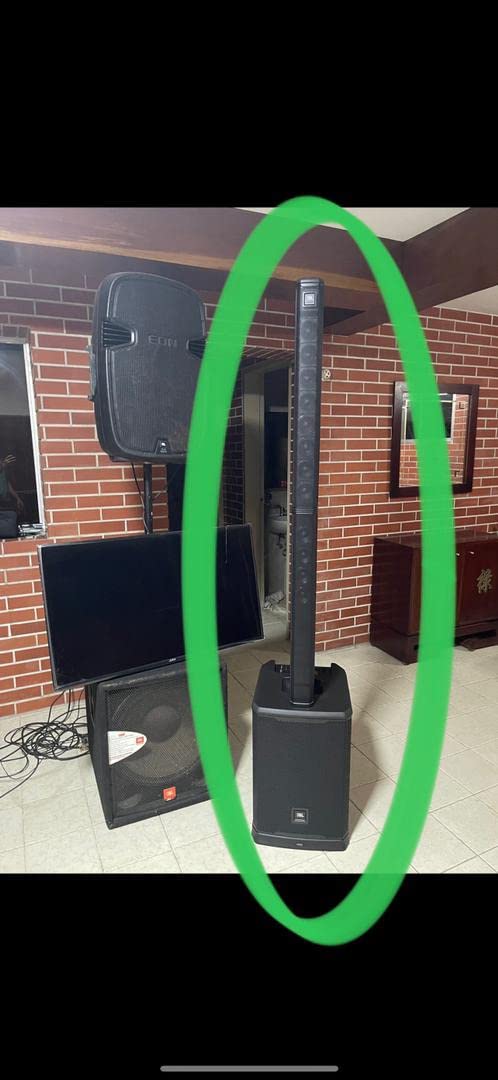
The PRX ONE is the one system here that solves a large sanctuary without a rack of amplifiers, a processor and a stack of cabinets. A 2000 watt peak Class-D amplifier drives a 12 inch subwoofer that is hard-wired to a column array of twelve 2.5 inch high-frequency drivers, delivering 130 dB SPL across a 35 Hz to 20 kHz range.
The vertical array coverage is the reason it exists. JBL’s A.I.M. hat array-shading technology shapes the column so sound goes where the seating is, which reduces the need for outfill speakers down the sides of a wide sanctuary. For a room with a balcony, that matters.
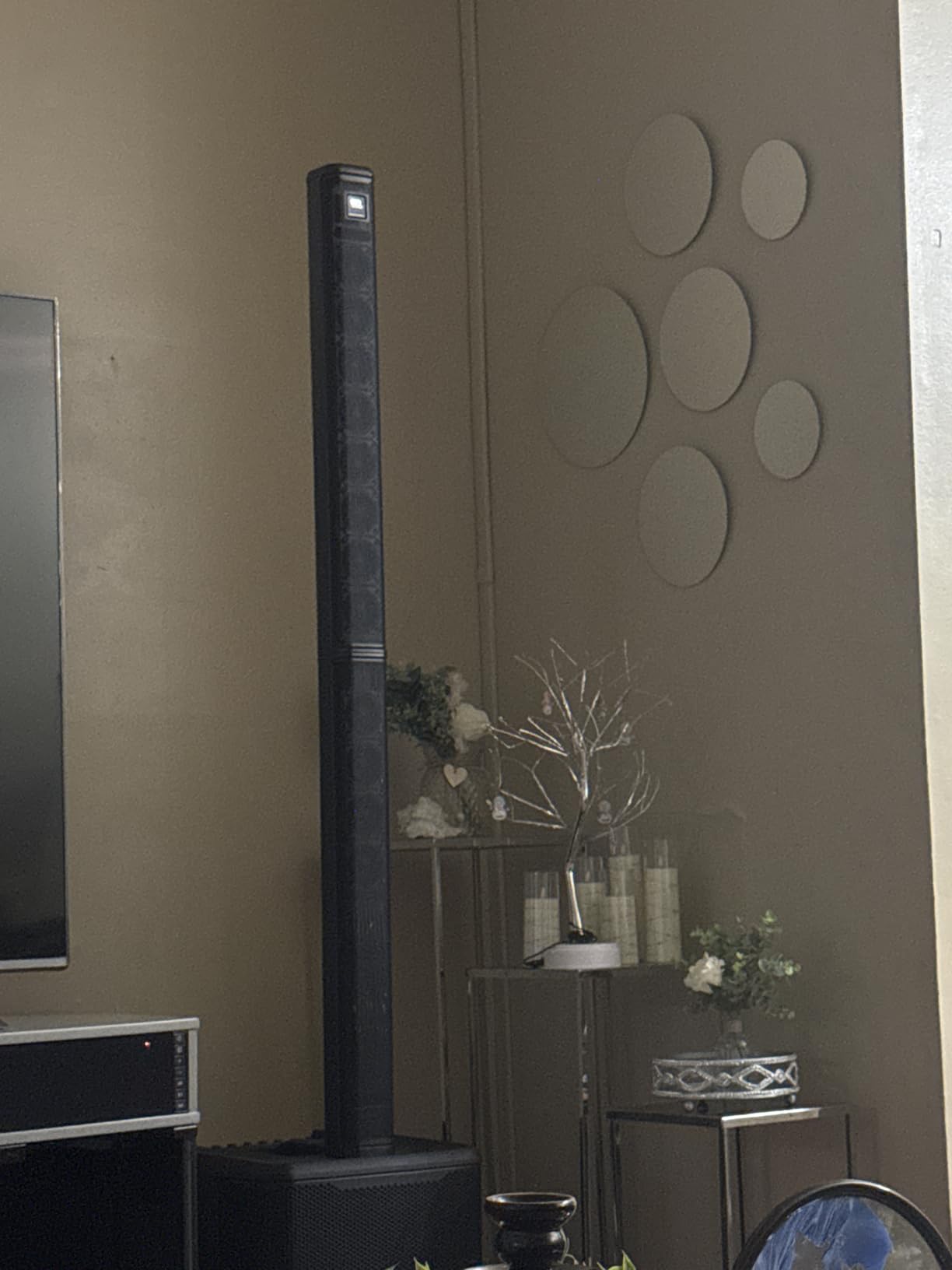
Onboard you get a full DSP suite with Lexicon and dbx reverb, delay and compression, dbx DriveRack AFS Pro automatic feedback suppression, one-touch ducking by Soundcraft, and an integrated seven-channel digital mixer with full access to input faders. A volunteer can run a full service from the speaker itself.
That eliminates a surprising amount of infrastructure. No external mixer, no amp rack, no outboard DSP, and a single enclosure to install and cable. For a church that has never had a permanent system, the simplicity is the argument.
Who the PRX ONE suits
It fits a 400 to 600 seat sanctuary, a large fellowship hall used for gatherings several times a month, and any church that has decided to stop renting gear for big services. The sub is genuinely integrated, so a band with a full backline does not sound thin.
It also suits a worship team that travels to conferences or guest services, because one column replaces an entire rack of processing. If a portable setup is more important than output, our portable PA system guide covers lighter options.
Where the PRX ONE falls short
It is the heaviest and tallest unit here at 56.6 pounds and 80.4 inches, so transport and rigging need planning and a second pair of hands. One system covers a wide room, and a wide room is not a small room.
Its 4.3 star rating is the lowest in this group with a 10 percent one-star share, and the fixed sub-to-column architecture means the sub cannot sit on the floor while the array flies. Buying one of these is committing to that layout, which is fine if it matches the room and costly if it does not.
9. Mackie SRM215 15 Inch Powered Speaker – Best for Youth Rooms and Overflow Space
Mackie SRM215 V-Class 2000W 15 inch Powered Speaker
2000W with 15 inch LF driver
1.4 inch HF driver
4-channel digital mixer
Bluetooth at 100 ft range
Pros
- 2000W and a 15 inch driver for larger rooms
- Onboard 4-channel digital mixer cuts external gear
- Bluetooth streaming and app control
- 2 year limited warranty
Cons
- Heaviest weight class here at 22.2 kg
- No wireless linking between two units
- App-based control adds setup complexity
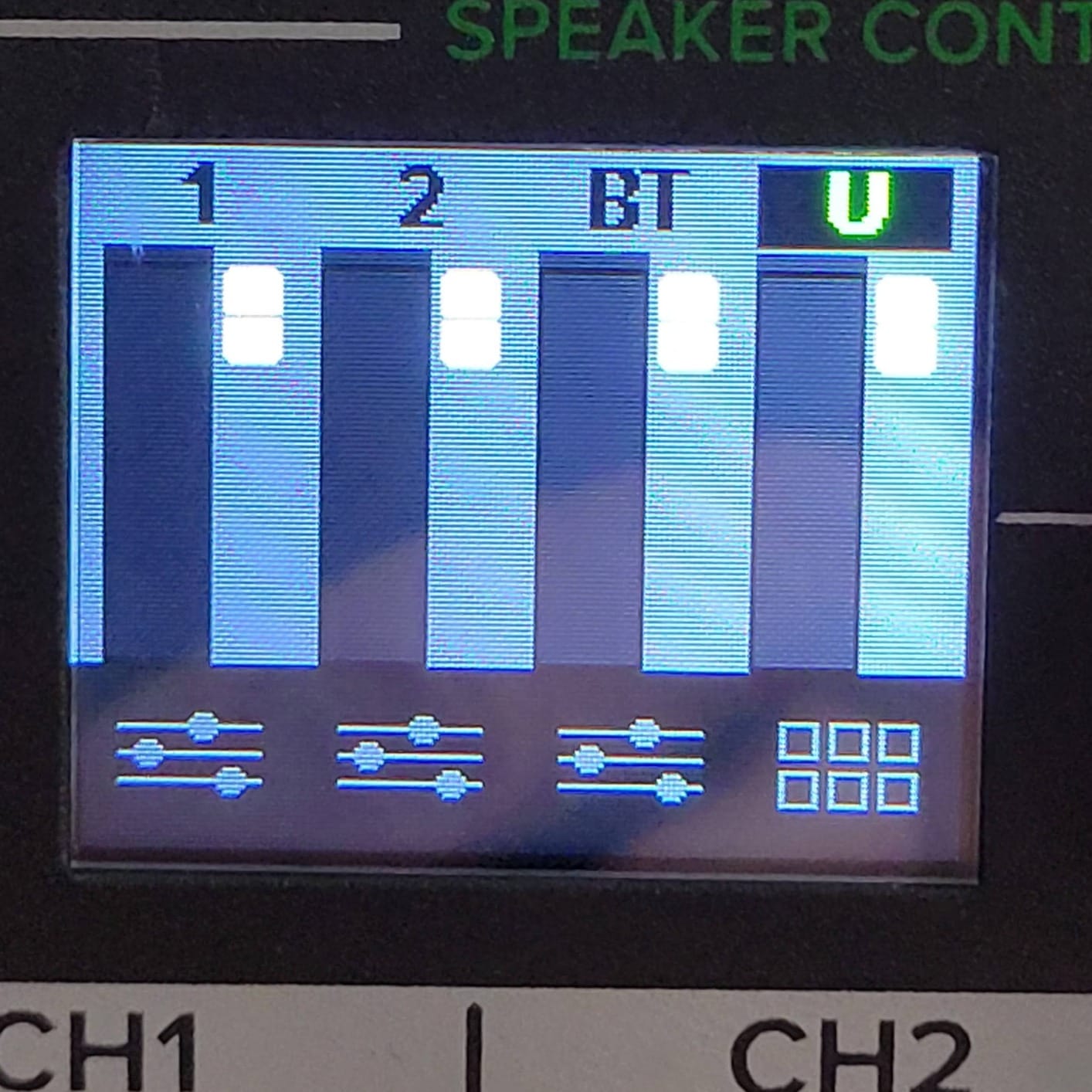
The SRM215 is a different answer to the Thump212, and the difference is the 15 inch driver. 2000 watts with a 15 inch low-frequency driver, a 1.4 inch high-frequency driver and onboard DSP with a four-channel digital mixer, so you get low-end reach a 12 inch cabinet cannot give you at the same output level.
That matters most for a youth room or overflow space where a band plays a modern worship set in a treated space. The extended low end covers a keyboard or bass without a sub, and the four-channel onboard mixer is enough for a keyboard, a vocal mic, a guitarist and playback.
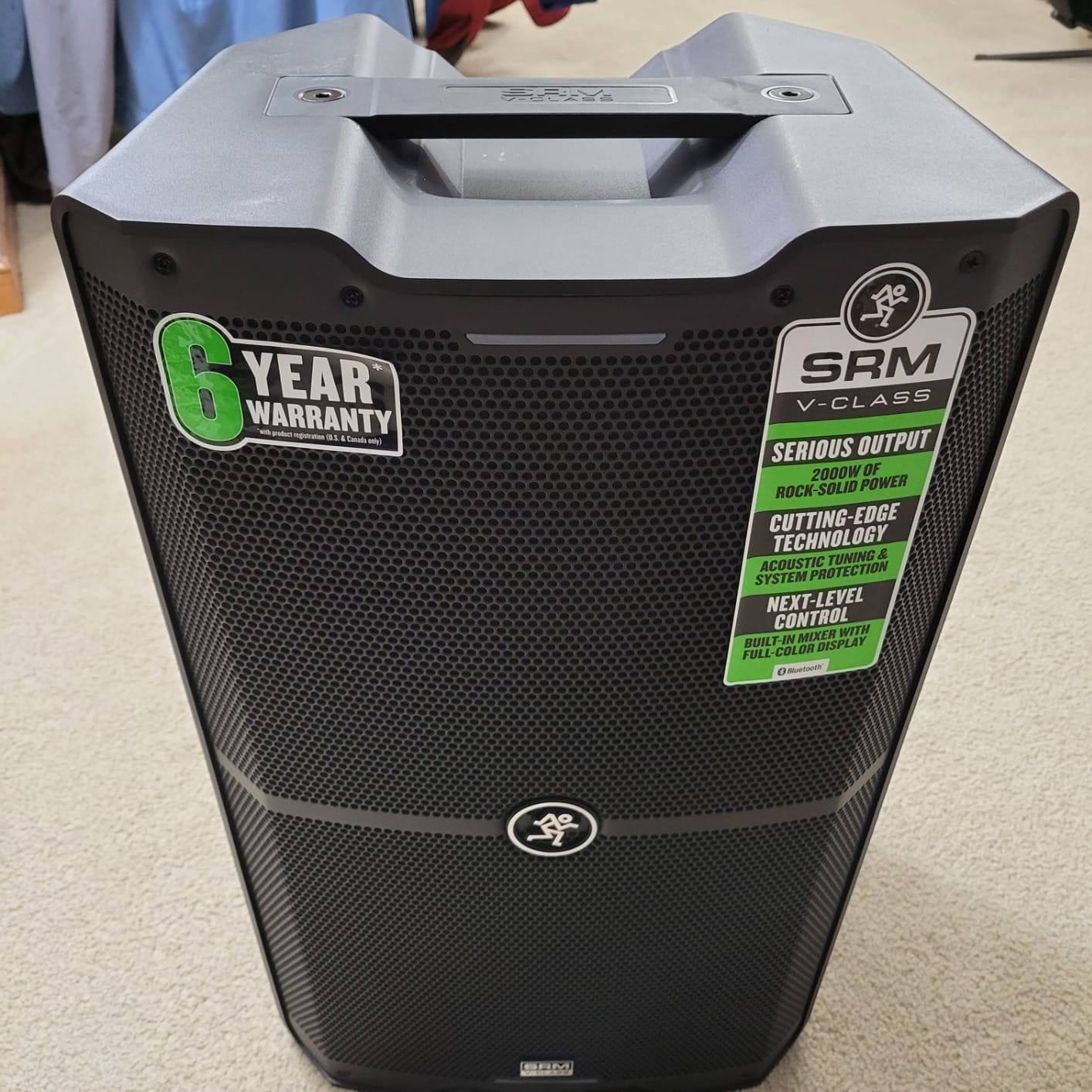
Bluetooth streaming reaches about 100 feet, which is enough to play from a phone at one end of a youth room while the speaker sits in the corner. There is onboard digital signal processing and a stand mount position for a pole, plus the ability to run in monitor mode for a band member.
Owners chose it for headroom in larger rooms, and the two year limited warranty is a reasonable middle ground between the single-year covers on most of this list and the QSC’s three years.
Who the SRM215 suits
It fits a youth room, a fellowship hall with a band, a choir room that needs to hear itself, and an overflow room that must cover a separate space. The four-channel mixer means a small team can run a service without a full console.
For a church whose sanctuary PA is already sorted, this is often the more useful second purchase. Most congregations have a good main room and one neglected secondary space, and this fixes the second space cheaply.
Where the SRM215 falls short
At 22.2 kg it is the heaviest weight class here for a single 15 inch cabinet, and moving it between rooms is a two-person job. There is no wireless linking between two units, so a stereo pair needs a cable.
App-based control adds setup complexity that the Mackie brand otherwise avoids, and its 4.3 rating with a 10 percent one-star share reflects some units arriving with defects. At 117 reviews, the ownership history here is thinner than the brands above it.
10. Yamaha DBR10 10 Inch Powered Speaker – Best for Small Chapels
Yamaha DBR10 700-Watt Powered Speaker
700W bi-amplified
10 inch woofer
129 dB SPL
7 year manufacturer warranty
Pros
- Only 21 lb
- among the lightest 10 inch powered speakers
- 129 dB SPL from a 10 inch cabinet
- Seven year warranty
- Neutral studio-like voicing for speech and music
Cons
- No Bluetooth
- needs a receiver on the RCA input
- Bass is prominent and needs EQ on some material
- A 10 inch woofer will not cover a large room
The DBR10 is the last box I would put in a sanctuary, and for a specific reason: the seven year manufacturer warranty. Nothing else on this list comes close, and for a church that buys a pair and expects them to run for a decade in a fixed position, that is worth more than a generation of features.
It is also startlingly capable for a 10 inch bi-amplified cabinet. 700 watts of clean digital power, 129 dB SPL and a 55 Hz to 20 kHz FIR-X tuned range, from a box weighing 21 pounds. Owners specifically report it covering small church meetings and rooms under 100 people.
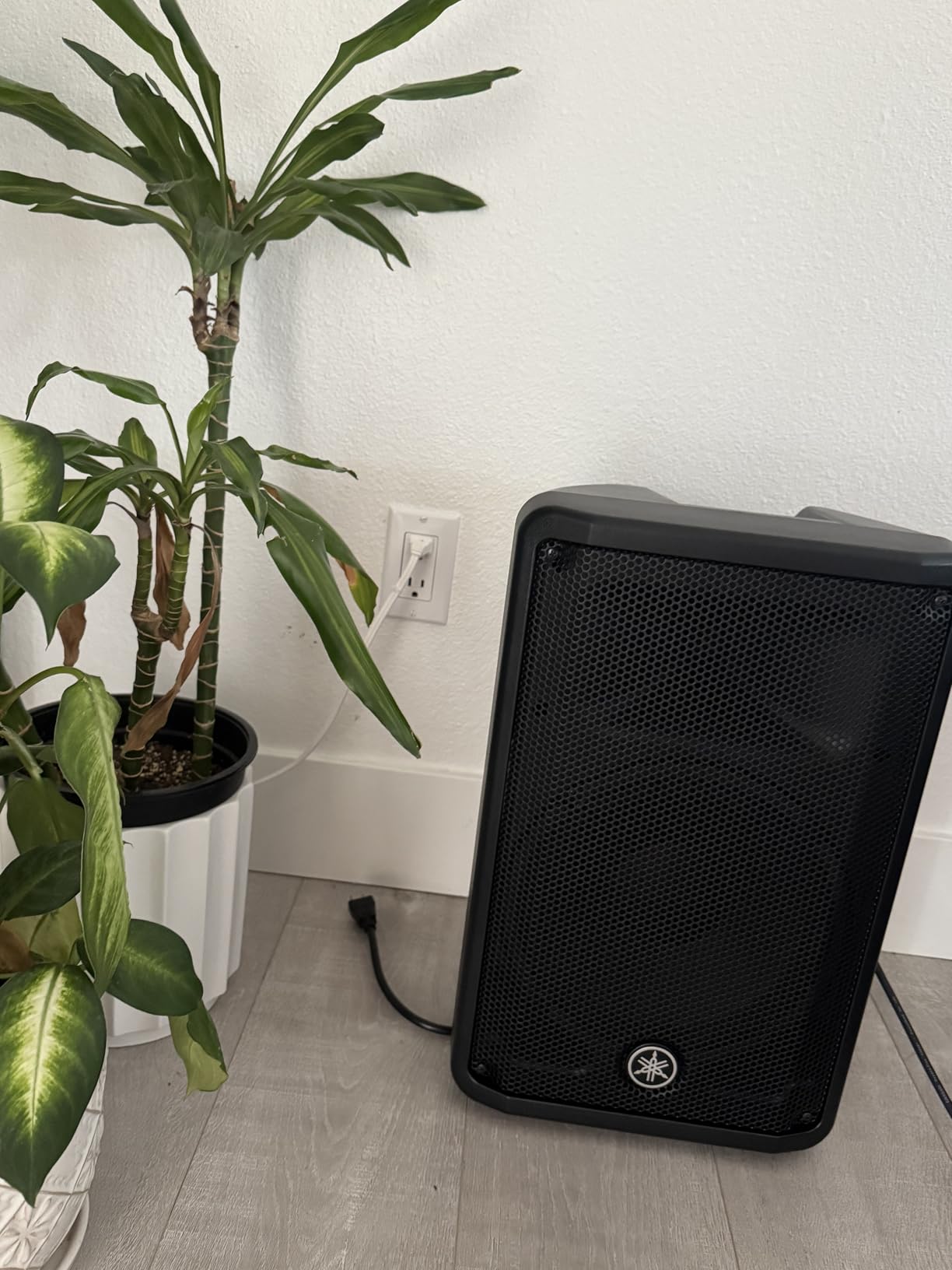
The voicing is neutral and studio-like, which is exactly what a sermon-led service needs. Operators on r/livesound often warn against goosing the highs beyond what a small PA can handle, causing distortion instead of clarity, and a neutral box is a good place to start before touching the EQ.
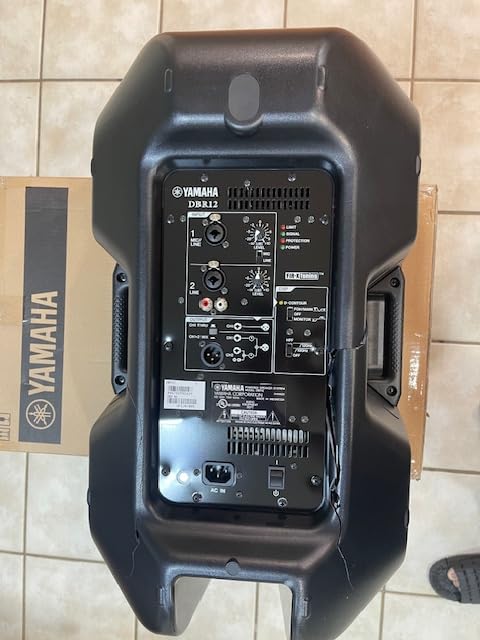
It also has a switchable low-frequency cutoff and a monitor mode, combo connectors in and an XLR out, and flying points for M8 eyebolts, so a pair can be rigged permanently rather than stood on tripods.
Who the DBR10 suits
It fits a chapel under 100 seats, a retirement village or care home chapel, a mission hall, and any space where two people need to carry the whole PA. At 21 pounds each, a pair is a one-person-per-box job.
It is also the pick for a permanent speech-only install where a neutral, reliable box with a long warranty matters more than features, and where the goal is simply for the back row to understand every word.
Where the DBR10 falls short
There is no Bluetooth, so phone playback needs a separate receiver on the RCA input. Despite the powered speaker description it is not a fully wireless deployment, and that trips up first-time buyers.
The bass is prominent and needs EQ on some program material, and a 10 inch woofer will not supply low end for a large room without a subwoofer. It is a chapel and small-room answer, not a main house cabinet.
How to Size a PA for Your Sanctuary
Start with the number most people get wrong: how much level you need, not how many watts you can afford. Speech intelligibility, not music output, is the design goal in a church. A room that clears the sermon at the back row will sound fine at low level with almost any of the boxes above, and most complaints I hear are about the sermon, not the band.
The second mistake is over-powering. Practitioner consensus across r/livesound and r/livesoundadvice lands on roughly 500 watts per sub as a realistic starting point for small and medium rooms, and one of the most common thread titles on those forums is that most rooms are needlessly overpowered. More output in a hard-surfaced, high-ceilinged room does not add clarity, it adds reverberation and feedback headroom you do not need.
A conservative sizing guide by seating
Under 60 seats (fellowship hall, small chapel, care home): one 10 or 12 inch powered top on a stand, or a single column system. A sub is optional for spoken word only.
60 to 150 seats (small sanctuary, youth room, mission hall): a pair of 10 or 12 inch tops on stands, positioned at the front corners. A sub is optional unless a band plays regularly.
150 to 300 seats (mid-size sanctuary): a pair of 12 or 15 inch tops on stands or a single stand per side, with a delay speaker if the room is deeper than about 20 metres. A sub is recommended for a full worship band.
300 to 500 seats (larger sanctuary): a pair of 15 inch tops plus a distributed column or point-source main, with subs and at least one fill for the balcony or side seating.
500 seats and up (main house, balcony): a permanently rigged main house array with subs, fills and delays. At this size a point-source pair is the wrong tool, and a line array is the right answer.
Where the mains should go
Place the mains at the front of the seating area, not at the back wall, and aim them at the last row rather than the middle. If the room is long enough that the back row is more than about 20 metres from the front, add a delay speaker and time-align it to the mains, otherwise people at the back hear the delay speaker and the mains at different times and the sermon smears.
For tiered seating or a balcony, treat the balcony as a separate room with its own fill rather than expecting the floor speakers to cover it. A box with a controlled horn pattern, such as the JBL EON715, wastes far less energy on the ceiling than a wide-coverage box of similar power, and that shows up as intelligibility rather than volume.
Our complete PA system guide walks through the mixer, processing and cabling side of a system, and the floorstanding speaker guide is worth a look if your sanctuary is a domestic-style space rather than a traditional room.
Powered vs Passive Speakers for Churches
A powered speaker, also called an active or powered PA speaker, has the amplifier built into the cabinet. A passive speaker is just a driver in a box and needs an external amplifier matched to its impedance. For a church buying its first real system, powered wins, and it is not close.
Powered cabinets remove the amplifier rack, the signal cable runs and the impedance matching problem, and every product in this roundup is powered for exactly that reason. They are also easier to service: a technician replaces a box rather than diagnosing an amp channel. The cost is that you cannot upgrade the amplification later, and you carry the amplifier weight on every load-in.
Passive makes more sense in two situations. A permanent install in a large sanctuary, where a church or installer can specify a multi-channel amplifier with limiters and Dante or AES networking and control everything from one place, and a touring rig where the amplifiers are already in the truck. The amplifier question for a passive install is the one to research first, and the same headroom logic applies: size for the room, not for the advertisement.
Between powered and passive sits the column array, and the all-in-one column systems here, like the JBL PRX ONE and the Bose L1 Pro8, are effectively a third category. They trade flexibility for simplicity, and for a congregation that has never had a permanent system that trade is usually worth making.
Treat the Room Before You Buy Bigger Speakers
This is the advice that comes up most often in the church audio threads and the one almost no commercial page bothers to repeat: leave the speakers where they are and control reflections first. A sanctuary with plaster, wood, tile, stained glass and a high ceiling has a long reverberation time, and reverberation is what turns a quiet, intelligible sermon into an unintelligible one.
Start at the back and side walls. Heavy absorption panels or draped fabric on the rear wall behind the last row does more for sermon clarity than a more powerful speaker, because the first thing a congregation hears is the reflection off the wall behind them arriving a fraction of a second after the direct sound.
Carpeting on the stage, some absorption on the ceiling above the seating, and soft furnishings at the sides will each help. You are not trying to deaden the room, which kills the sense of occasion in worship, you are trying to knock the reverberation time down far enough that the direct sound dominates. Do that first and a smaller speaker set goes much further.
If you do have budget after treatment, spend it on coverage rather than volume: a second pair of smaller tops distributed through the room beats one loud pair at the front. Harder-working ceiling, and hard walls and glass, will always beat bigger boxes.
Subs, Monitors and Feedback Control for Volunteer Teams
Subwoofers are not essential for a spoken word service, but a church with a worship band will notice their absence quickly in a treated room, and low frequencies are the first thing to disappear when an operator pulls the level back to keep the sermon clear. A modest sub is easier to justify for most congregations than an expensive main speaker.
Monitors are the other half. The common pattern in small churches, described repeatedly on r/livesoundadvice, is a pair of speakers behind the band doing double duty as mains and monitors, with the band hearing themselves through the mains. It works and it is cheap, but a proper floor wedge for each player is what stops the band turning up their own monitors and blowing out the mix.
On feedback, the order of operations matters more than the hardware. Walk the mic behind the main speakers and set the gain to the point where it howls, then back it off about 6 dB. Keep the mic a hand’s width behind the front lip of the pulpit. Avoid pointing a speaker directly at a rear wall.
After that, use the DSP. A built-in feedback eliminator, as found on the Mackie Thump212, the JBL IRX108BT, the Electro-Voice ZLX-12P-G2 and the JBL PRX ONE, takes a channel that was howling and puts a few dB of headroom back. And use ducking rather than an operator’s hand, so the band drops under the sermon automatically instead of being turned down at exactly the wrong moment.
The last piece is the sound check. A volunteer with fifteen minutes and a saved scene on a QSC K12.2 or a saved app preset on an ALTO TS415 will have a better service than the same person improvising on a system with no presets at all.
Frequently Asked Questions
What is the best PA system for a church?
The best PA system for a church is one that makes the sermon intelligible at the back row before it does anything else. For most rooms under 300 seats that means a pair of powered 12 or 15 inch tops, a small digital mixer, a feedback eliminator and a treatment plan for reflective walls. Add subs only once a worship band makes them necessary.
What are the best speakers for a church sound system?
The best speakers for a church sound system are powered cabinets with a controlled horn, clear midrange and a feedback suppressor. Our top picks are the ALTO TS415 for mid-size sanctuaries, the Mackie Thump212 for value and weight, the Bose L1 Pro8 for mobile and chapel work, and the JBL EON715 for a 150 to 300 seat room.
How many watts do you need for a PA system?
For speech reinforcement in a church, most rooms are over-powered rather than under-powered. A rough guide is one powered 10 or 12 inch top per 100 seats for a small room, one 12 or 15 inch top per 150 to 200 seats for a mid-size sanctuary, and a distributed array with subs above 300 seats. Practitioner consensus puts a realistic starting point near 500 watts per sub.
What is the best amplifier for a church sound system?
If you buy powered speakers, there is no separate amplifier to choose, which is why we recommend them for most churches. If you go passive, size the amplifier to match the speaker’s impedance, use a channel with limiters built in, and give yourself headroom rather than running a channel at its limit. Multi-channel digital amplifiers with remote control suit permanent installs best.
What is the 83% rule for speakers?
The 83 percent rule is a placement guideline: place your main speakers so that at least 83 percent of the seating area is covered by the direct sound from the front of the room rather than by spill or by a delay speaker. In practice it means moving the mains forward and aiming them at the back row, not parking them against the back wall.
Do churches need subwoofers?
Most churches do not need subs for a spoken word service, and adding them will not make the sermon clearer. A church with a worship band playing in a treated room will notice their absence, and low frequencies are usually the first thing lost when an operator pulls the level back for speech. Add a sub when the band needs low-end weight, not before.
Final Verdict
For most congregations in 2026, the ALTO TS415 is the best PA speaker for a church: enough low end and headroom for a worship band, a three-channel mixer that removes rack gear, and mounting options that let the same cabinet work as a main, a fill or a wedge. A 150 to 300 seat sanctuary is its sweet spot, and the bright factory EQ is a five-minute fix for anyone willing to open the app once.
Below 100 seats, the Mackie Thump212 or the Yamaha DBR10 will cover the room and survive being moved. Mobile chapels and rented halls belong with the Bose L1 Pro8, large main houses with the JBL PRX ONE, and a permanent install with someone who will use the DSP deserves the QSC K12.2 and its three year warranty.
Whichever you choose, treat the walls before you treat the wattage. A room that has been controlled for reflections will be more intelligible, cheaper to run, and easier for a volunteer to operate than a louder one.