
Most people who search for the best workstation keyboards for producers are not looking for a stage keyboard. They are looking for a machine that loads instantly, holds a whole arrangement in its own memory, and can sit between them and their DAW without adding another box to the desk. That distinction matters more than any spec sheet, because the loudest search results mix true workstations with arrangers, stage pianos and slim controllers until the category stops meaning anything.
A workstation keyboard is self-contained: several synthesis engines, a large onboard sound library, a built-in sequencer, onboard effects and, on current models, a multichannel USB audio interface. The interface part is the one producers care about most and reviewers mention least. When a board ships with 4×32 or 24×24 USB audio, you can plug mics and line sources straight into it and record into your DAW without a separate interface taking up desk space or budget.
We spent weeks comparing the ten boards below on the things that decide whether a workstation earns a place in a production room: engine count and sound quality, key action, sequencer type, USB audio channel count, sample memory, weight and how long the menu system takes to learn. Two of these ten are not full workstations and we say so plainly in their sections. We also flag where the bundled DAW is a limited edition, because that is the single most common disappointment owners report after the trial licenses expire.
If you want a quick answer instead of a long one: the workstation PC and CPU guides on this site cover the computer side of a production setup, and the Keychron, Ducky and Corsair roundups cover everyday typing and gaming boards. None of them are music workstations. What follows is.
Top 3 Picks for Best Workstation Keyboards for Producers (October 2026)


All 10 Best Workstation Keyboards for Producers in 2026
| Product | Specifications | Action |
|---|---|---|
| Yamaha MX61BK |
|
Check Latest Price |
| Roland FANTOM-06 |
|
Check Latest Price |
| Korg Kross 2-61 |
|
Check Latest Price |
 Yamaha MODX6+ Yamaha MODX6+ |
|
Check Latest Price |
 Roland JUNO-D6 Roland JUNO-D6 |
|
Check Latest Price |
 Akai MPC Key 37 G2 Akai MPC Key 37 G2 |
|
Check Latest Price |
 Arturia AstroLab 61 Arturia AstroLab 61 |
|
Check Latest Price |
 Yamaha Montage8 Yamaha Montage8 |
|
Check Latest Price |
 Korg minilogue Korg minilogue |
|
Check Latest Price |
 Korg microKORG S Korg microKORG S |
|
Check Latest Price |
1. Yamaha MX61BK – Best Overall Workstation Keyboard for Producers
Yamaha MX61BK Music Production Synthesizer, 61-Key, Black
61-key synth action
MOTIF sound engine
Class compliant USB audio/MIDI
128-note polyphony
Pros
- One cable USB audio and MIDI with no drivers to install
- 128-note polyphony covers full 16-track playback
- Virtual Circuit Modeling effects
- Only 14.9 lb so it moves between rooms easily
- One year Yamaha warranty
Cons
- Small screen and deep menu system feel dated
- Mostly plastic construction
- No touchscreen for fast sound edits
- Bundled remote control software targets older DAW versions
The MX61BK is the board we recommend to a producer who wants one instrument to cover sketching, playback and recording into a DAW. It connects with a single USB cable as class-compliant audio and MIDI, so there is no driver to install and no interface to configure before the first session.
It records and plays back stereo audio alongside 16 channels of MIDI over that same cable, and the 128-note polyphony holds up with a full 16-track sequence without dropouts. That combination is the reason it earns the top spot here.
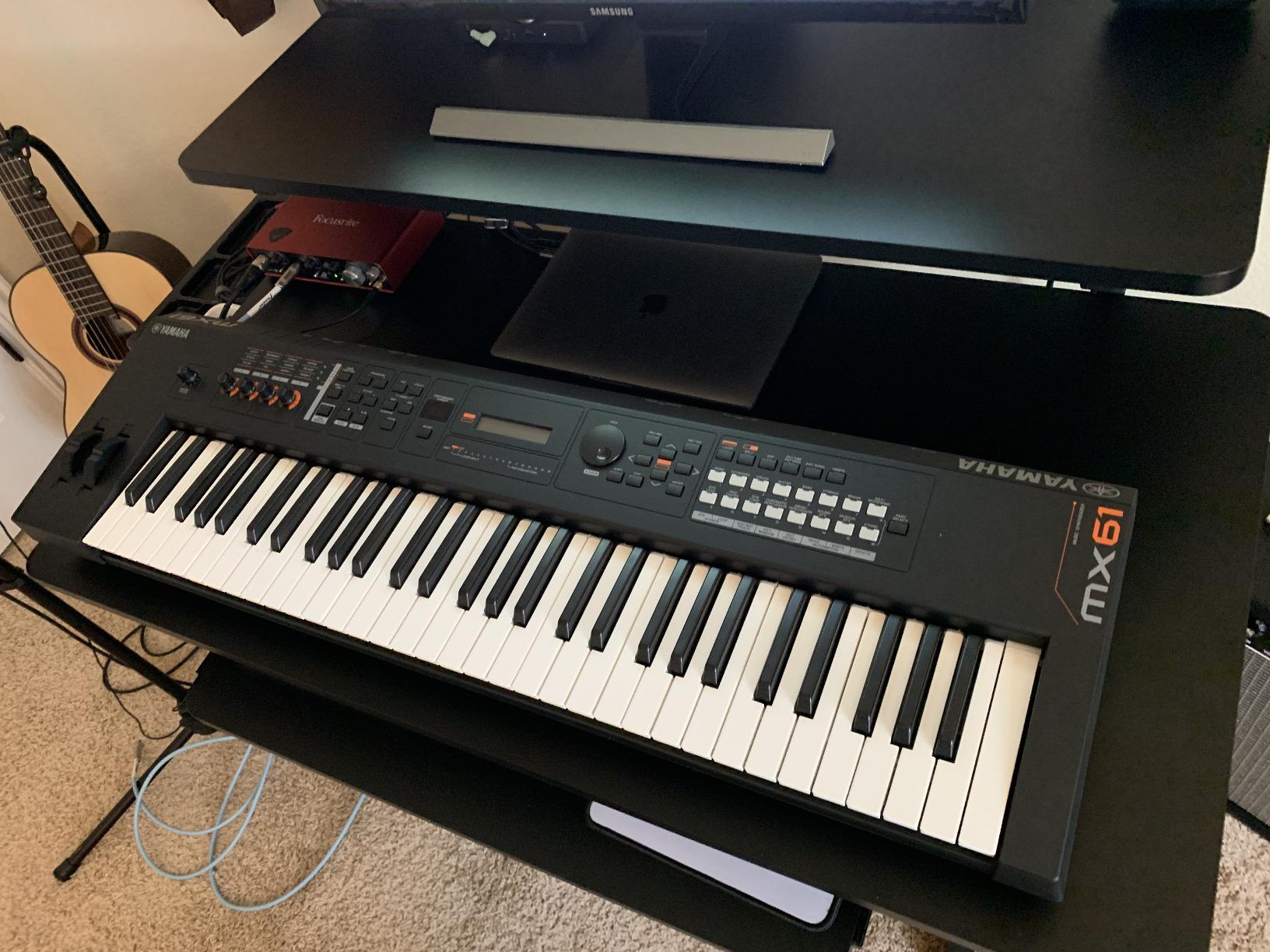
The MOTIF sound engine is the part that travels well. It layers up to eight elements per voice, and Virtual Circuit Modeling adds convincing vintage amplifier and processor character so a rough mix already sounds like a rough mix rather than a demo.
At 14.9 lb and 44.7 by 15.3 by 8.2 inches, it is one of the easier 61-key boards to carry between a home room, a rehearsal space and a church balcony. Reviewers report that it goes from unpacking to a usable instrument faster than boards with far more features.
What you gain by using the onboard sequencer
Capture is the strongest argument. Playing into the board and getting an arrangement back out without opening a DAW removes the friction that kills ideas, and this sequencer handles basic song structure well enough for sketching.
Reviewers also point out that the audio recording function is capable enough to cover a full worship service, which tells you how much headroom there is beyond demo use.
Where the workflow frustrates people
The screen is small and the menu system runs several levels deep, and that is the most repeated complaint in owner reviews. It is a poor board for fast live sound tweaks in front of an audience.
The chassis is mostly plastic, so it belongs in a studio or a home room rather than a hard touring rig. The included remote control software lists Logic Pro 9, Cubase-era DAWs and older SONAR versions, so on a current DAW you will set up control surfaces yourself.
2. Roland FANTOM-06 – Best for Sampling and Deep DAW Workflow
Roland FANTOM-06 | 61-Note Synthesizer Keyboard | Thousands of Electronic & Acoustic Sounds | ZEN-Core & SuperNATURAL Technologies | Lightweight & Durable | Deep Onboard Sampling | DAW Integration
ZEN-Core and V-Piano engines
4x32 USB audio interface
Color touchscreen
61-note synth action
Pros
- 4x32 USB audio interface built in
- Native Logic Pro and Ableton Live integration
- Large color touchscreen with dedicated control surface
- Onboard multisampling with sample import
- Under 14 lb for a 61-note board
Cons
- Steep learning curve for sampling and sequencing
- Performance pads feel spongey
- Unweighted synth action
- Roland acoustic piano samples trail rival flagships
The FANTOM-06 puts the flagship FANTOM sound set and control surface into a 61-note body at 13 lb. For a producer, the decisive spec is the 4×32 USB audio interface with native integration for Logic Pro, Ableton Live and MainStage.
Four audio inputs and 32 outputs over one cable means you can record a full session straight into your DAW, including multichannel audio from external gear, without buying a second interface.
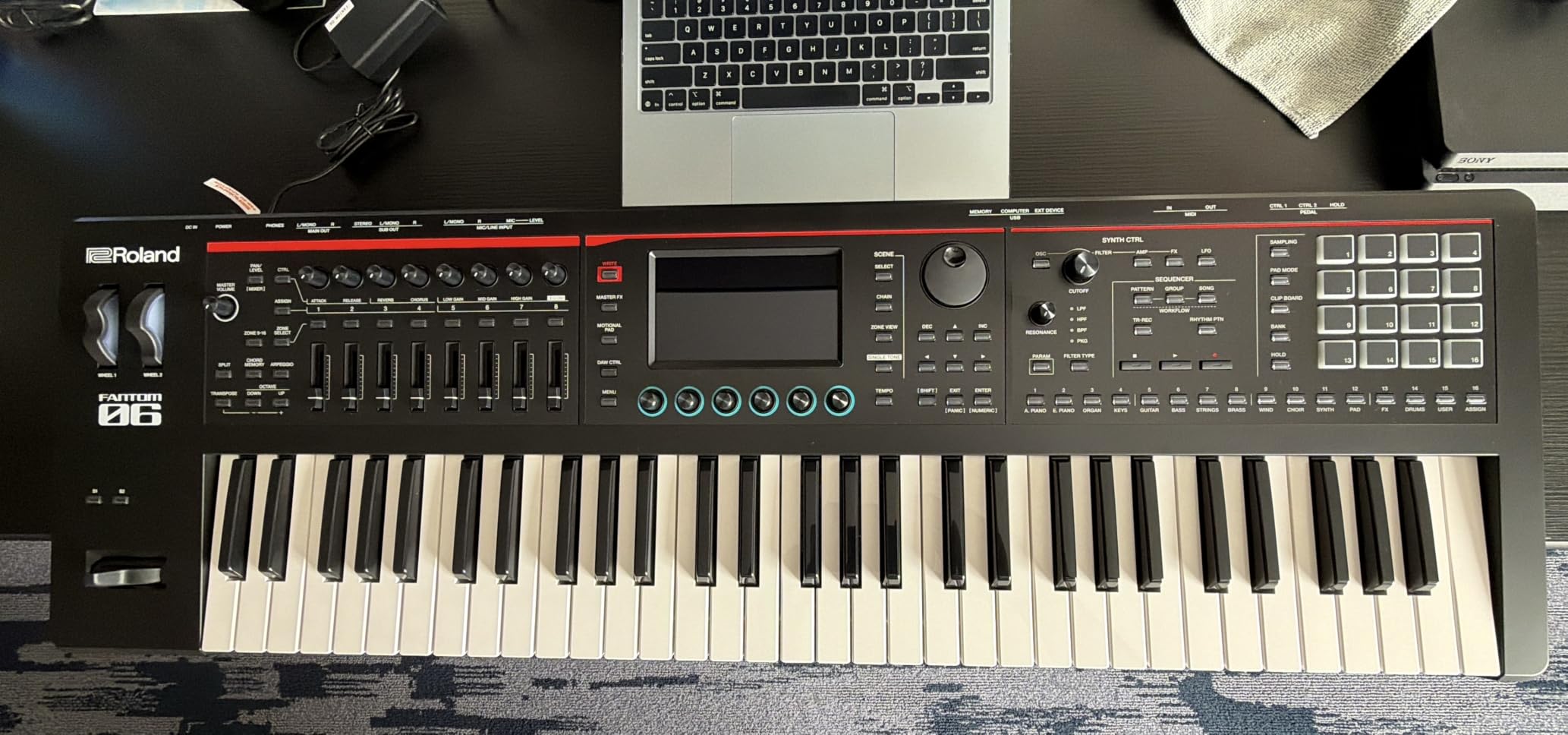
Sequencing is clip-based, with a TR-REC step sequencer and piano-roll editing, which is the modern way to work rather than the linear tape style older workstations use. Onboard multisampling with pitched keyboard assignment and sample import goes well beyond playing presets.
Expandability is real: JUNO-106, JUPITER-8, JX-8P and SH-101 model expansions load from Roland Cloud, and the 32-band stereo vocoder has a mic input. A dual CV/gate output and multi-channel audio I/O make it a useful centerpiece in a hybrid rig.
What the touchscreen actually changes
Once you learn it, the color touchscreen, RGB pads and the dedicated synth control section make sound selection and sampling fast. Reviewers who already know Roland instruments describe it as the value route into the flagship sound set.
The same control surface is why the board feels heavy on a small desk: 44.4 by 18.6 by 8.8 inches of footprint for a 61-note instrument. Plan the stand accordingly.
Where owners report friction
The learning curve is the headline caveat, and reviewers note this instrument is designed for experienced musicians rather than beginners. Sampling and sequencing workflows take real study before they feel natural.
Pad feel is described as spongey, sometimes enough to look like a stuck pad. The synth action is unweighted, and a few owners feel the Roland acoustic piano samples fall short of competing flagship instruments.
3. Korg Kross 2-61 – Best Value 61-Key Workstation
Korg Kross 2-61 61-Key Synthesizer Workstation
61-key synth action
EDS-i 16-layer soundsets
Step and MIDI sequencers
Audio recorder
Pros
- Realistic sound library with downloadable Korg sound packs
- Programs combine up to 16 sounds in one patch
- Only 3.8 kg so it is easy to carry
- Step and MIDI sequencers plus audio recording
- Alloy steel chassis
Cons
- Multi-level menu system is slow to work through
- Light unweighted synth action keys
- Needs external speakers for full output
- No printed manual in the box
The Kross 2-61 is the pick if your budget stops the flagship tier but you still want a real workstation with recording features. At 3.8 kg it is the lightest full-size board here, which is rare in a 61-key instrument with an audio recorder.
The EDS-i engine builds each program from up to 16 combined sounds in a layer, and Korg sound packs are downloadable to expand the library. Reviewers consistently call the sound realism the standout feature at this level.
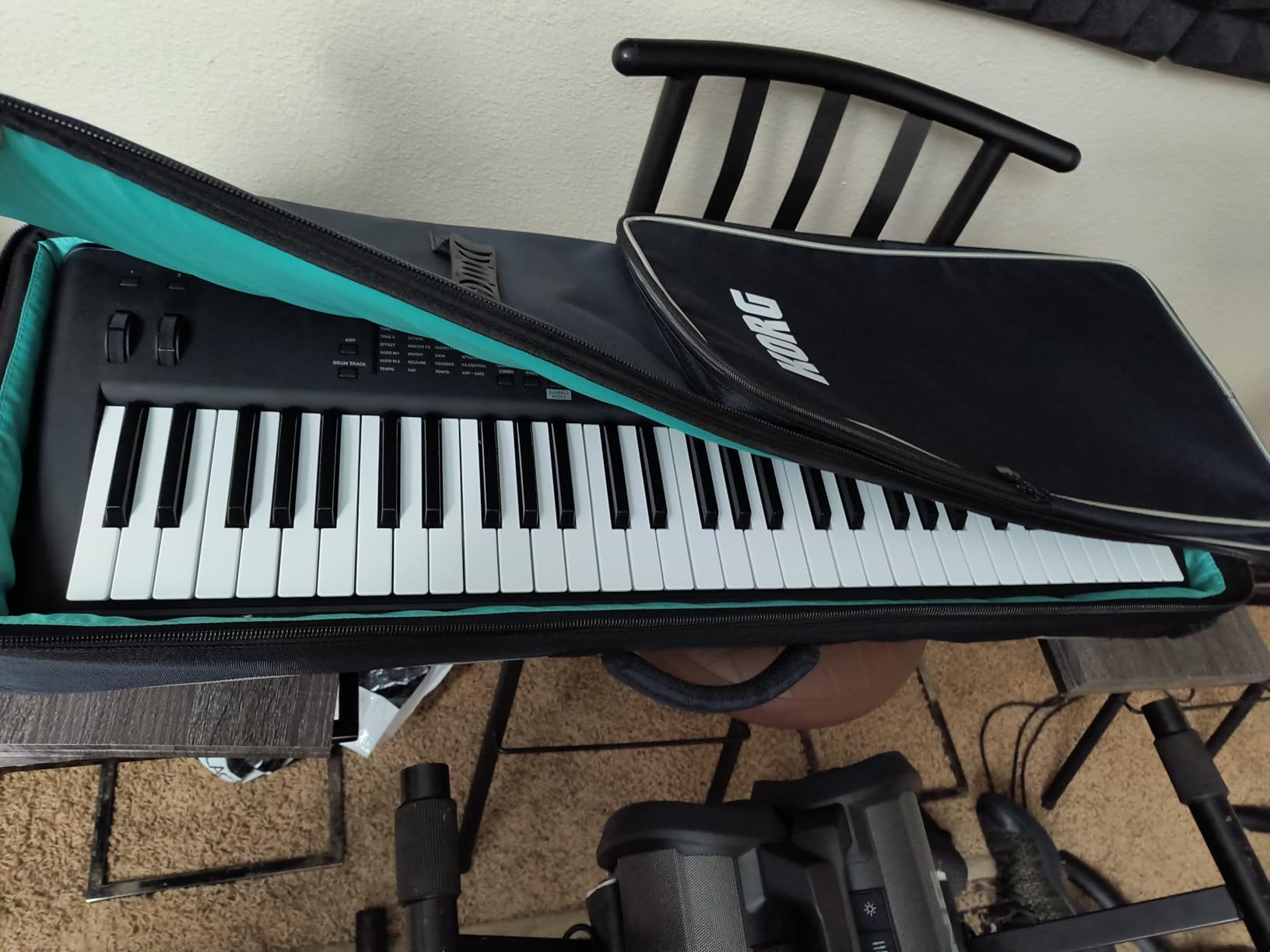
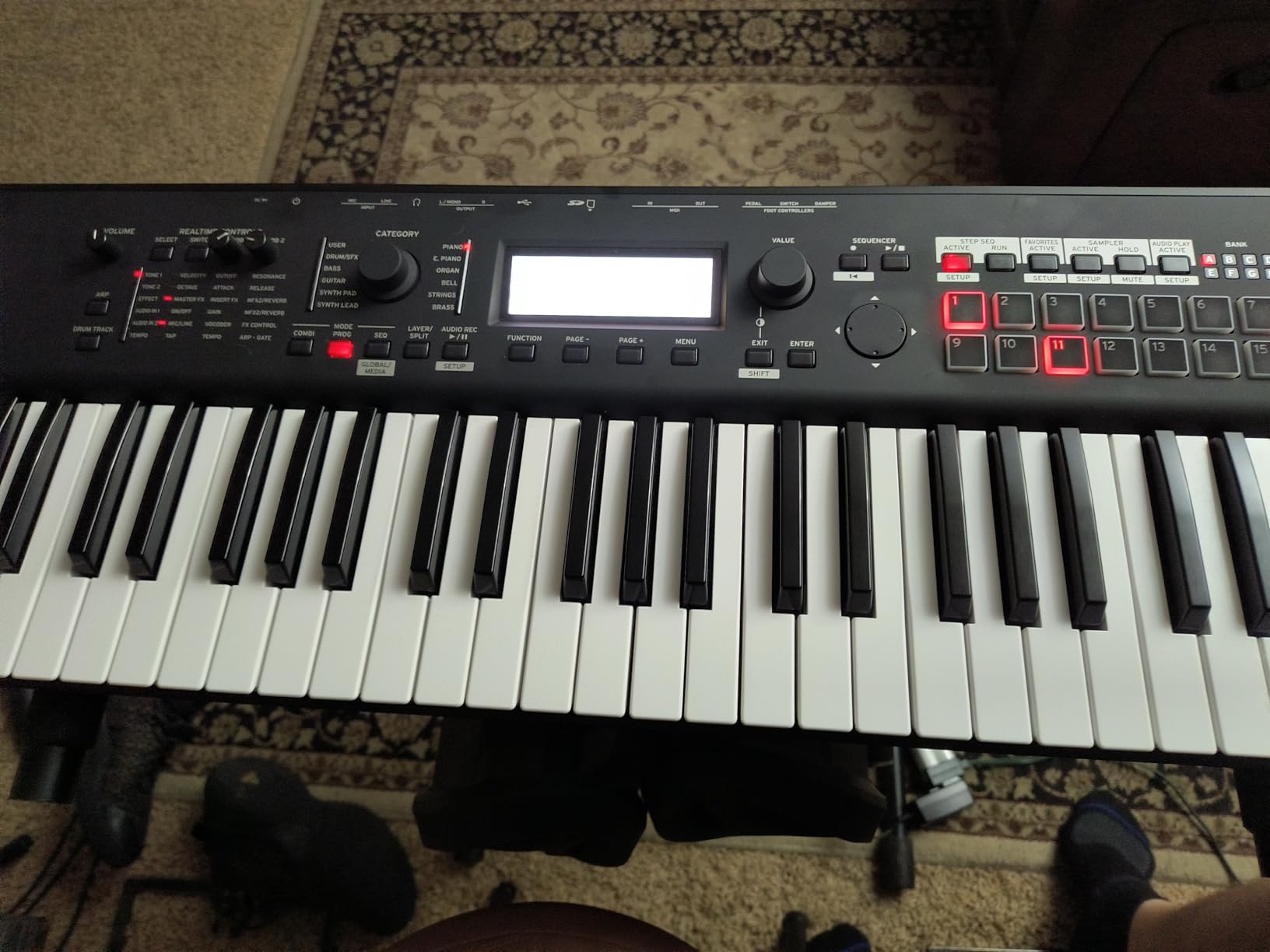
Production capability is genuine rather than decorative. There are both step and MIDI sequencers, an audio recorder, and mic and line inputs so you can sample an external source directly into the board.
The steel chassis and 1 year warranty give it a studio feel that cheaper plastic boards lack, and owners use it across home, church and cover band settings without complaint.
How much music you can actually finish on it
More than most buyers expect. A step sequencer for drum and bass parts, a MIDI sequencer for arrangement, audio recording for a final pass, and 16-layer programs for a full sound is a complete small production chain.
The small screen is the constraint. Owners report the sequencer is usable even with it, but expect to lean on the panel buttons rather than on-screen editing.
Where the compromises show
The menu architecture is powerful and deep, and reviewers describe it as frustrating when you need a fast change, particularly in front of an audience. The same buyers note the keys are neither weighted nor semi-weighted, so pianistic writing feels different than on a graded board.
There is no built-in speaker, so you need external monitors or headphones, and the full manual has to be downloaded rather than read in the box.
4. Yamaha MODX6+ – Best Weighted-Key Workstation Under 7 kg
Yamaha MODX6+ 61-Key Synthesizer Workstation , Black
GHS weighted action
AWM2 and FM-X engines
Motion Control matrix
6.6 kg
Pros
- GHS weighted keybed feels close to an acoustic piano
- Large library across AWM2 and FM-X
- Motion Control animates per parameter
- Only 6.6 kg for a weighted 61-key board
- One year Yamaha warranty
Cons
- About 1.75 GB of internal sample memory
- Thinner Super Articulation content than PSR models
- Deep feature set is intimidating at first
- Predominantly plastic construction
The MODX6+ is the answer for a producer who writes realistic piano parts and wants real weighted keys without hauling a 20 kg instrument up two flights of stairs. GHS action is heavier in the low keys and lighter in the high keys, following an acoustic pattern.
At 6.6 kg it is dramatically lighter than most weighted 61-key workstations, and buyers with professional production backgrounds rate it as a genuine step up from mid-range Korg gear.
Why Motion Control matters in a production room
Motion Control is a customizable synthesis control matrix, and Motion Sequences run at tempo to animate almost any parameter. For a producer that means filter movement, vibrato depth and effect intensity can be written once and recalled, rather than dialled in by hand every session.
Sound coverage is broad, spanning acoustic instruments, synths and drums across both the sampled AWM2 engine and the 8-operator FM-X engine.
What limits it as a sampler
Storage is the real ceiling. Owners single out roughly 1.75 GB of internal sample memory as too small for a modern flagship, and that is why the shipped library can feel thinner than the spec sheet suggests.
Several buyers also note fewer included Super Articulation voices than comparable PSR instruments, and the depth of the feature set means the manual only scratches the surface.
5. Roland JUNO-D6 – Best for Mobile Recording and Small Rooms
Roland JUNO-D6 Synthesizer, 61-Note Keyboard
ZEN-Core with over 3800 sounds
USB-C audio/MIDI
Eight-track sequencer
61-note synth action
Pros
- Over 3800 ZEN-Core sounds ready to play
- USB-C audio and MIDI plus mobile battery power
- User WAV samples playable and editable on the board
- Battery operation for phone and tablet recording
- Roland Cloud sound packs and wave expansions
Cons
- Lowest average rating here at 4.2 with a 12 percent one-star share
- Unweighted synth action keybed
- Eight-track sequencer is basic next to clip-based Roland models
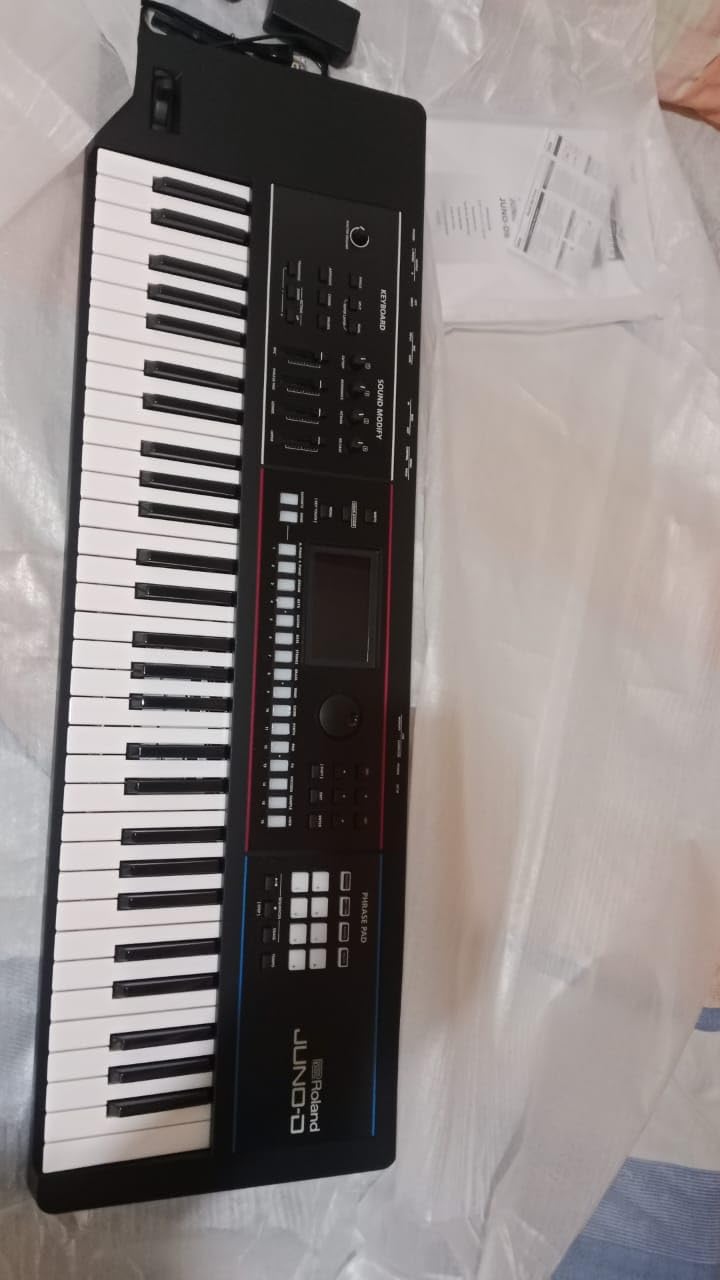
The JUNO-D6 is built around one practical idea: a full sound library that runs on battery power over USB-C. That combination makes it the most straightforward board here for recording a vocal or an instrument straight into a phone or laptop away from the studio.
The ZEN-Core engine carries over 3800 onboard sounds covering acoustic, electric piano, organ and synth categories, and the library expands through Roland Cloud sound packs and wave expansions.
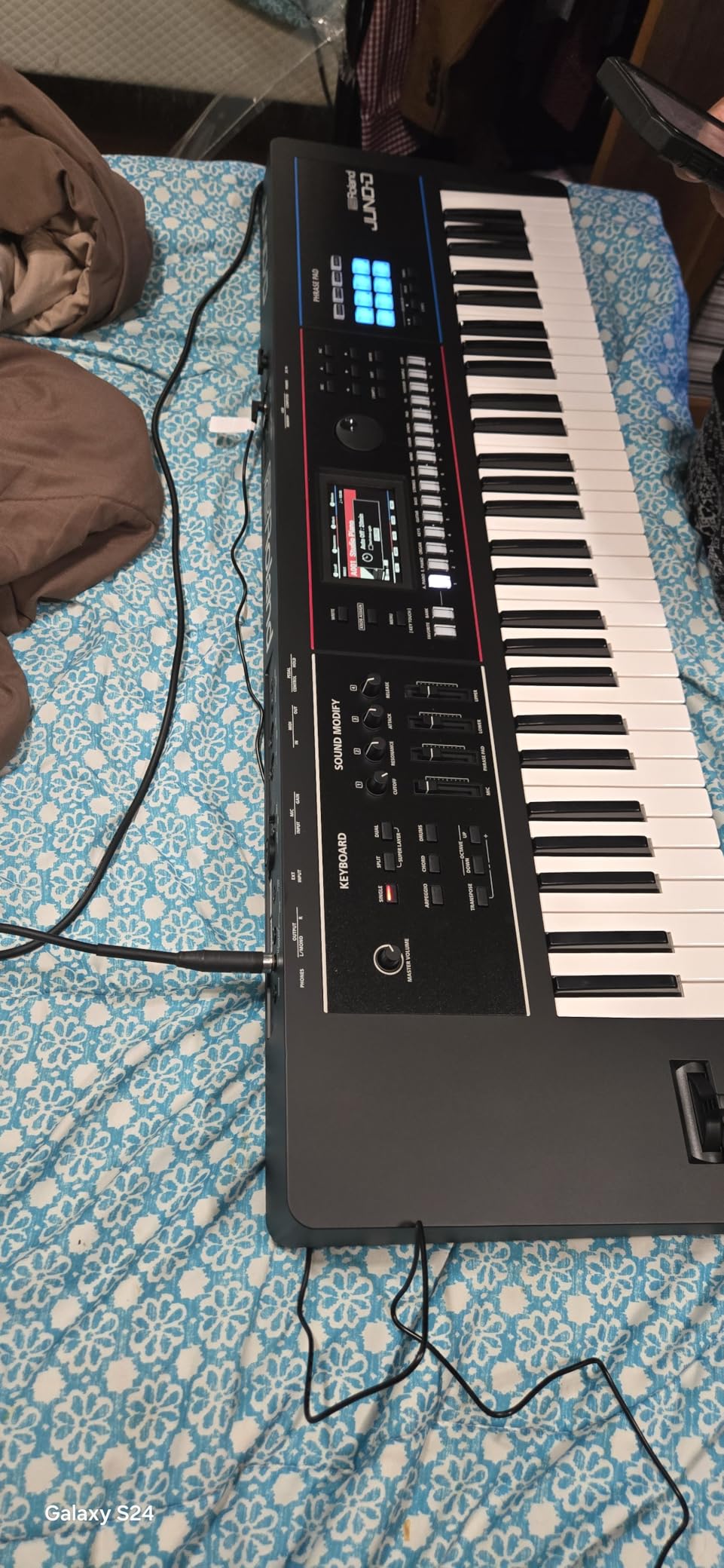
User WAV samples import and remain playable and editable on the keyboard, which is the feature that turns it from a preset player into a small sampling tool for a producer on the move.
There is also a built-in eight-track sequencer, enough to sketch an arrangement before you get back to the desk.
What makes it genuinely portable
At 12.8 lb and 39.57 by 12.76 by 3.7 inches, it is one of the thinner 61-note boards on the list. USB-C mobile battery power support means the board itself can be powered and connected to a tablet with one cable.
For a writer who records ideas on location, that single feature is worth more than the deeper sampling tools on a bigger chassis.
Where it falls short
This board sits at the bottom of the ratings here, at 4.2 with a 12 percent one-star share. Buyers who rate it lowest are the ones who wanted a workstation sequencer and found the eight-track recorder too basic.
The keybed is unweighted synth action, so piano parts feel nothing like an acoustic action, and the 12.8 lb weight is fine for a car but not for carry-on flying.
6. Akai MPC Key 37 G2 – Best for Standalone Beat Making
Akai Professional MPC Key 37 G2 Next-Gen Standalone Production Keyboard
MPC3 OS standalone workflow
USB-C 24x24 audio and 32 MIDI channels
7-inch touchscreen
16 MPC pads
Pros
- Fully standalone production with no computer required
- One cable gives 24x24 audio and 32 MIDI channels
- 8-core processor handles 16 stereo tracks and 32 plugin instruments
- Over 20GB of factory content
- Only 4.4 kg with responsive keys and pads
Cons
- Steep learning curve with thin documentation
- MPC3 Pro Pack is a paid upgrade
- Quickstart guide only in the box
- Menu workflow frustrates quick single-instrument edits
- 37 keys is small for pianistic parts
The MPC Key 37 G2 is the only board here that is a complete standalone production system rather than a synth with a sequencer attached. MPC3 OS runs a track-based workflow with a Linear Arranger, so you can build a song with no computer, no interface and no mouse.
The 8-core processor is four times the performance of the previous generation, supporting up to 16 stereo tracks and 32 plugin instruments per project. Over 20GB of factory content comes built in, including Native Instruments and Spitfire Audio MPC Editions plus two months of Splice access.
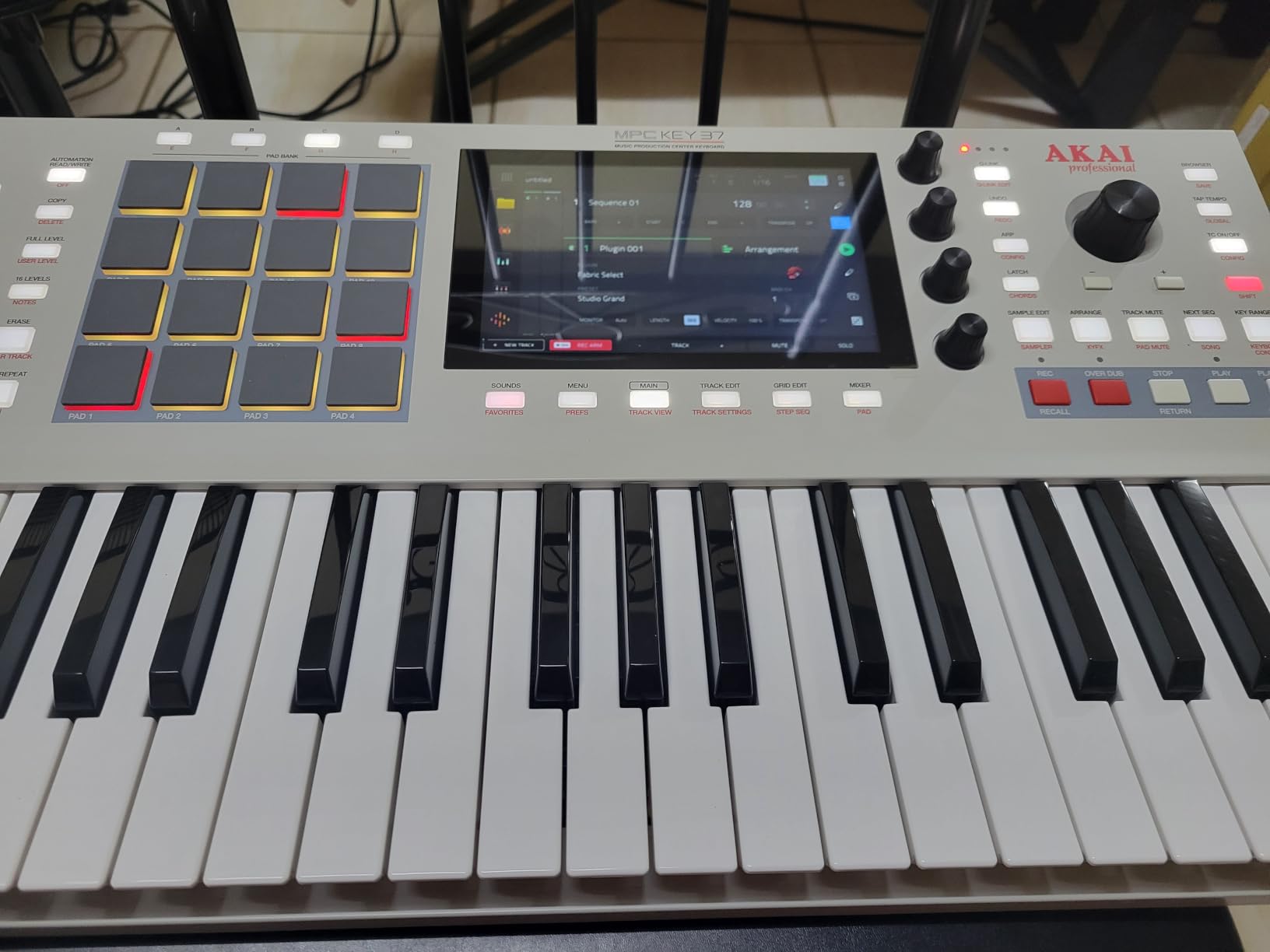
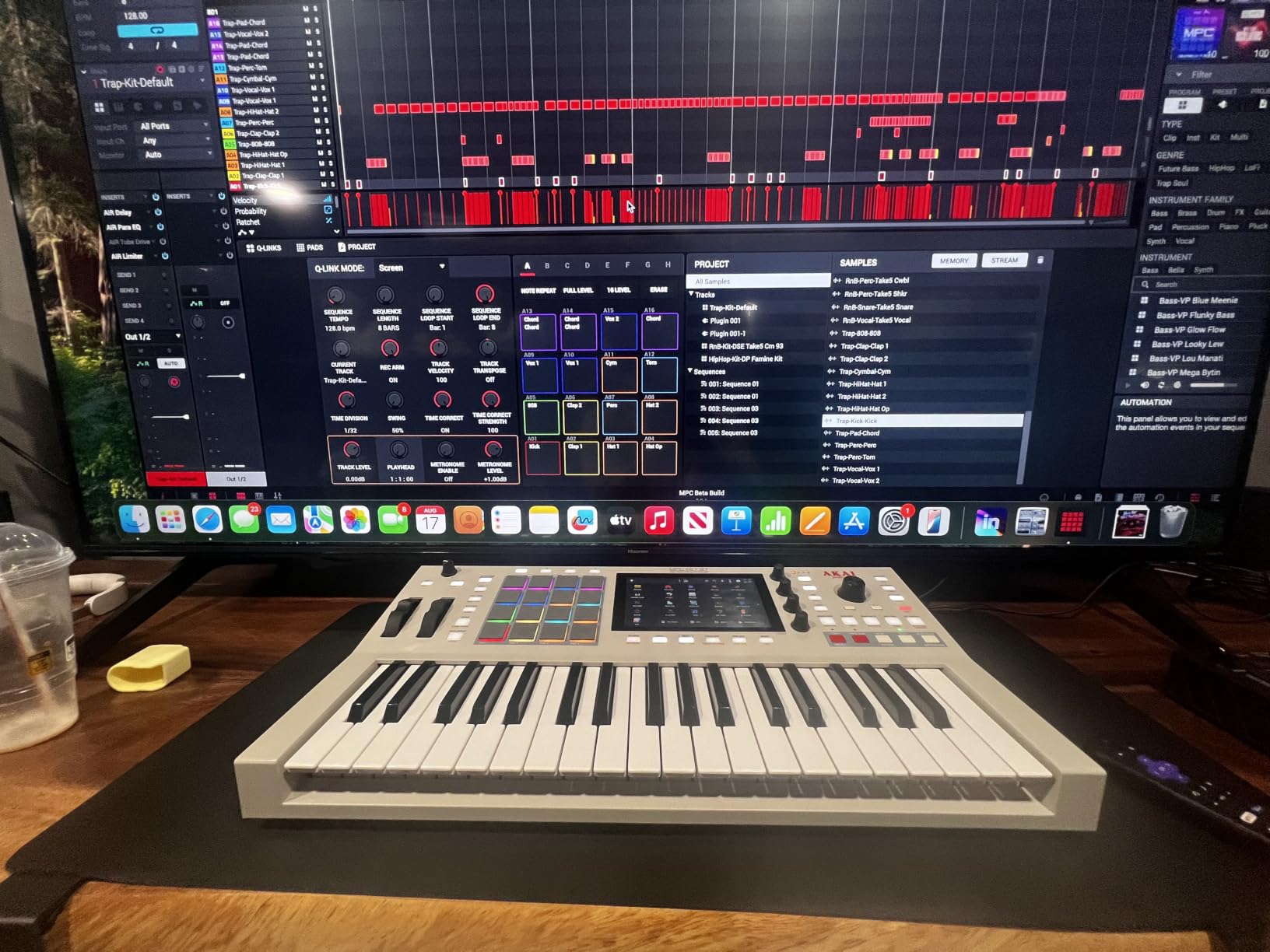
Connectivity is the other headline. A single USB-C cable carries 24×24 multichannel audio and 32 channels of expanded MIDI, and you can sample directly from a phone, tablet or external device over the same connection.
For a beat maker, that means the board is the sequencer, the sampler, the drum machine and the audio interface, in a 4.4 kg body.
When it beats a traditional workstation
When your process is pattern and sample based rather than keyboard and patch based. The 16 backlit MPC pads, the 7-inch touchscreen and the track-based Linear Arranger are built for chopping, layering and arranging, not for playing a set of orchestral parts.
Ableton Live Control Mode plus project import and export makes switching to a DAW session straightforward, which is why hybrid users rate it highly.
What the paywall and the key count cost you
The MPC3 Pro Pack, which unlocks clip launching, studio time-stretch and expanded CV control, is not included and must be purchased. Several owners also report the documentation does not support the learning curve, and one buyer returned the unit.
Thirty-seven full-size synth-action keys is enough for bass lines, chords and pads but tight for written piano parts, and the menu-driven workflow frustrates anyone who wants to copy and paste a single-instrument bar.
7. Arturia AstroLab 61 – Best Crossover Between Studio and Stage
Arturia AstroLab Stage Keyboard (61 Key)
34 instruments and 1300+ presets
Built in virtual synthesis
Multifunction touch control strip
61 keys
Pros
- 34 instruments and over 1300 presets in one instrument
- Built in virtual synthesis rather than sample playback alone
- Analog Lab Pro and V Collection software included
- Available in 37
- 61 and 88 key formats
- Two year warranty
Cons
- Tied for the lowest rating here at 4.2 with 7 percent one-star reviews
- Cluster of three-star reviews on sound set and workflow
- 13.22 kg is heavy for a stage keyboard
The AstroLab 61 is framed as a stage keyboard with a studio backbone, and that framing is honest. Thirty-four instruments and over 1300 presets cover a wide stylistic range, backed by a built-in virtual synthesis engine rather than sample playback alone.
The multifunction touch control strip handles on-the-fly tweaks, which matters more when you are playing live than when you are sitting at a desk with a mouse.
What the bundled software adds to a session
Analog Lab Pro and V Collection are included, so the studio-side library is already loaded on your computer and the board is not dependent on onboard sounds alone. For a producer building a sound palette, that is a real head start.
Because the engine is virtual synthesis, presets are editable in ways pure sample playback is not, so a sound can be modified rather than simply chosen.
Why the reviews are mixed
With 36 reviews and a 4.2 average that includes a noticeable three-star group, sentiment is genuinely divided. The heaviest criticism is whether the sound set and workflow deliver enough for the money.
At 13.22 kg it is one of the heavier boards on this list for a 61-key instrument, so plan a sturdy stand and a two-person carry if you move it.
8. Yamaha Montage8 – Best for Sound Design on a Large Keybed
Yamaha Montage8 88-key Synthesizer Workstation, Black
Motion Control combining AWM2 and FM-X
Motion Sequences
Pure Analog Circuit DAC
88 weighted keys
Pros
- Motion Sequences animate almost any parameter at tempo
- Sound quality praised as among the best in any keyboard
- 88 weighted keys with major build quality
- Balanced stereo outputs with Pure Analog Circuit conversion
- About 130000 note capacity for large libraries
Cons
- No pattern based sequencer so it leans on an external DAW
- No Motif-style sampling capability
- Extremely heavy at 29.5 kg
The Montage8 is the deepest sound design instrument here. Its Motion Control engine unifies the AWM2 and FM-X engines, and Motion Sequences are tempo-synchronized and assignable to virtually any synthesizer parameter, which makes animated patches easy to build.
Eight rotary encoders and faders with a step ladder LED give precise control, and the large color touchscreen is a clear step up from the display on earlier Motif instruments.
When the 88 keys earn their weight
If you write two-handed parts, score to picture, or need a full range in one take, 88 weighted keys change the work. The key count is the reason this board exists in a producer’s room rather than on a stage.
Balanced stereo outputs with Pure Analog Circuit conversion are the detail pros mention most, because they affect the final sound in the mix rather than the feature list.
The honest caveat about the sequencer
Despite the workstation label, there is no proper pattern-based sequencer and no Motif-style sampling. Reviewers treat it as a supersynth driven from an external DAW rather than a self-contained production system.
Buyers who expected a Motif-class sequencer at flagship pricing pushed back, which shows in a 4.0 average and a 13 percent one-star share. At 29.5 kg across a 64.5 by 22.5 by 10.3 inch body, it also stays at home.
9. Korg minilogue – Best First Analog Synth, Not a Full Workstation
Korg minilogue 37-key Polyphonic Analog Synthesizer w/ 16-step Sequencer
4-voice analog VCO/VCF/VCA
200 presets
Polyphonic step and motion sequencer
5 lb
Pros
- True analog signal path with warm punchy tone
- 200 factory presets with full patch editing
- Polyphonic step and motion sequencer
- Onboard tape style delay and oscilloscope
- Only 5 lb and easy to transport
Cons
- Four voice polyphony is thin for dense layered arrangements
- 37 slim mini keys are not weighted
- No audio recorder or DAW integration
- Not a self contained production machine
We include the minilogue with a clear label: it is a four-voice analog polysynth, not a workstation. It has no audio recorder, no USB audio interface and no full sequencer, so it cannot replace anything in a production chain.
What it can do is teach you analog synthesis cheaply and give you a genuinely useful sound source to layer under the rest of your session.
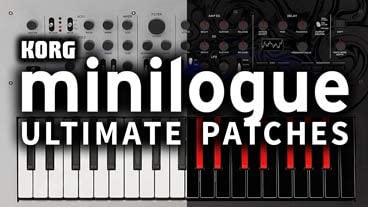
The signal path is a real analog VCO, VCF and VCA architecture, and owners describe the tone as warm and punchy with 200 factory presets covering a lot of ground. A polyphonic step and motion sequencer records, saves and recalls sequences, which is more sequencing than most monosynths of this size offer.
The onboard tape-style delay and the real-time oscilloscope both add value in sound design, and the metal and plastic body at 5 lb is easy to move between rooms.
When it fits beside a workstation
It fits when you want a second, immediate sound source with zero load time while writing toplines or effects returns. Owners treat the preset bank as versatile across many genres, and the oscilloscope doubles as a tuning tool for playing and recording.
It is also the most common first instrument sold into a home studio, which is why so many owners already know the interface.
Why it is not a workstation pick
Four-voice polyphony falls short the moment you layer chords and a bassline and a pad together, and reviewers call this the recurring limitation.
The 37 slim mini keys are the other issue. They suit a player who wants a compact on-ramp, not a producer who needs weighted or full-size feel.
10. Korg microKORG S – Best Portable Board with a Built In Speaker and Vocoder
Korg microKORG S Compact Analog Modeling Synthesizer w/ Vocoder Mini Mic
Dual oscillator analog modeling engine
8-band vocoder with mini mic
2.1 stereo speaker system
6 AA battery power
Pros
- Very wide sound range for the money
- Built in 2.1 speaker system with woofer
- 8-band vocoder with included gooseneck mic
- Runs on six AA batteries
- Bass wood body with fully labeled panel
Cons
- Mini keys are small and light for serious playing
- Oscillators are digital modeling not true analog
- Plastic keybed feels inexpensive
- Vocoder quality is basic
The microKORG S is the pick when you want a sound source that makes noise in a room without a monitor, an amp or a wall outlet. The built-in 2.1 stereo speaker system with a woofer is unusual at this size and genuinely usable for sketching ideas.
Six AA batteries make it portable, and at 2.75 kg it fits in a backpack. The dual-oscillator analog modeling engine delivers a wide range of retro and video-game-style patches, and 64 additional preset and user programs sit in expanded memory.
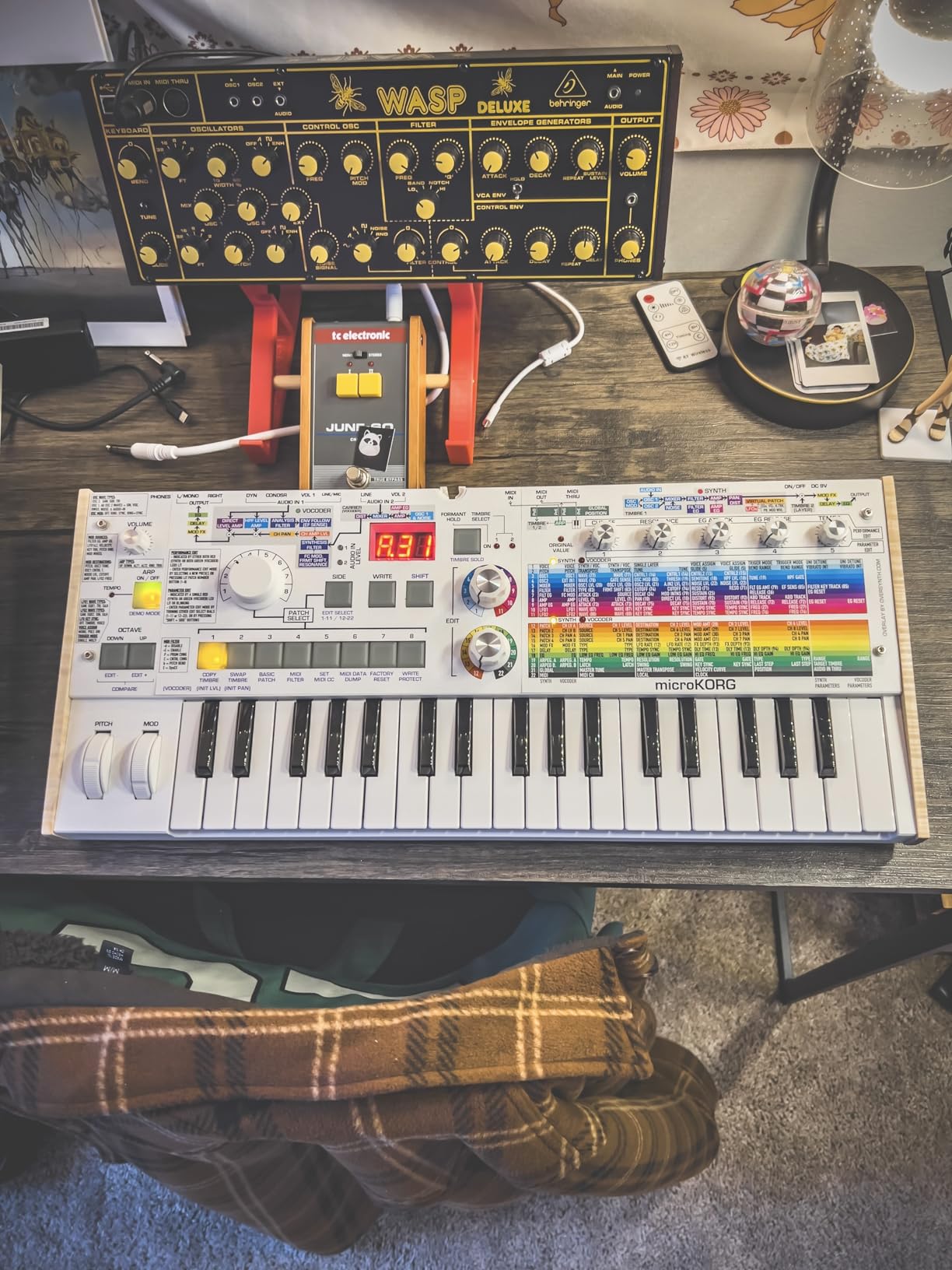
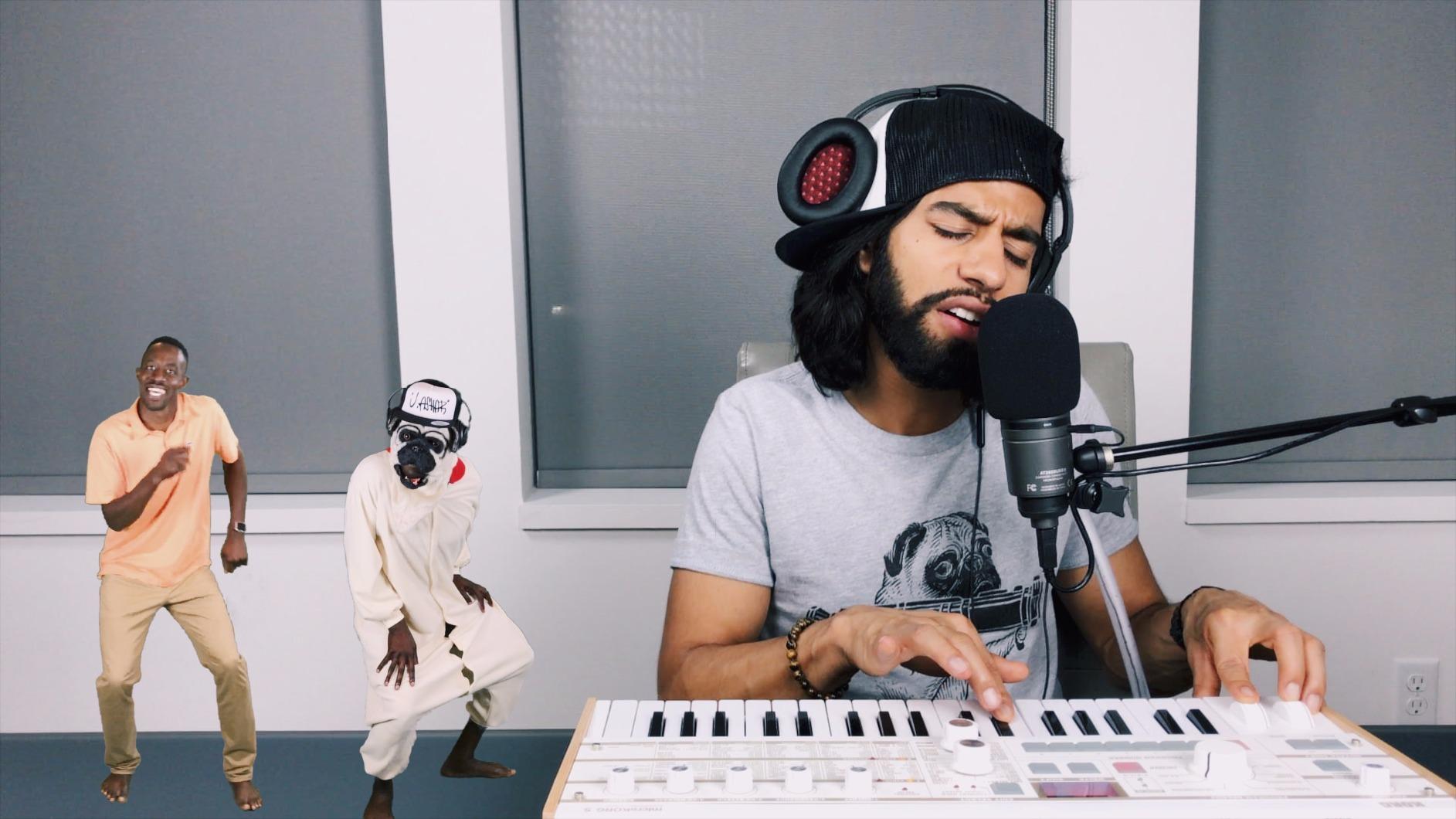
The 8-band vocoder with formant shifting and the included gooseneck mini microphone produces usable vocal effects, which is a sound most other instruments at this level cannot make at all.
Everything is labeled on the front panel, so the learning curve is short. Owners consistently call it the easiest affordable synth to set up and start playing.
When it earns a place in a producer room
When you need a scratch synth with speakers for reference, or a quirky lead and texture generator for a session that does not need a workstation behind it. The modeling engine is digital rather than true analog, and some purists dislike that, but the range is wide for the money.
It pairs well with a computer as a portable sound module with audio in a single box, at 20.63 by 9.13 by 2.76 inches.
Where the compromises bite
The mini keys are small and the plastic keybed has a light feel, so this is not an instrument for a pianist. The 8-band vocoder is basic compared with the 32-band model on the FANTOM-06.
It also records nothing and sends no audio interface channels, so any recording happens in a DAW on the other end of the USB cable.
How to Choose a Workstation Keyboard for Production
Start with the job the board has to do in your room, not with the engine count on the box. The specs below are the ones that change the workflow, and everything else is preference.
Key count and key action come first
Roughly 61 keys covers two octaves below middle C, which is enough for most pop and electronic writing. 73 or 76 keys reaches low B, which opens up the lowest bass notes. 88 keys is the choice for anyone writing two-handed parts, scoring to picture or playing a full range in one pass.
Key action matters as much as the count. Graded hammer action models the acoustic instrument most closely, fully weighted comes next, then semi-weighted, then unweighted synth action. If you want realistic piano parts, weight beats key count.
Sound engines matter more than preset count
Sample playback gives realism, virtual analog gives movement, and FM or physical modeling adds bite and unpredictability. What matters is whether the engines are genuinely different from each other, not how many presets share one of them.
The FM-X 8-operator engine is capable of highly dynamic sound, which is where the bite in an aggressive lead or bass patch comes from. Boards that combine engines give you a wider palette than a single-engine machine with a long preset list.
Sequencer style decides how you work
Linear sequencers behave like a tape machine and suit single-instrument recording. Clip-based systems, as on the FANTOM-06, behave like short song segments and suit loop production. Track-based systems, as on the MPC Key 37 G2, behave like a simplified DAW and suit beat makers.
Owners consistently report that the menu depth on modern boards is the hardest part of the learning curve, so pick the workflow that matches how you already think rather than the most powerful one.
The USB audio interface question decides whether you can retire your interface
Class-compliant USB audio needs no drivers and no control panel software. The FANTOM-06 offers 4×32 channels, the MPC Key 37 G2 offers 24×24 plus 32 channels of MIDI, and the MX61BK records and plays stereo audio with 16 channels of MIDI over one cable.
None of these replace a dedicated interface for every studio. They replace one for the mobile, writing and scratch-track jobs, which is where most home studios get immediate value.
Who really makes the keybed
The most-upvoted question in gear forums is which company builds the keys. Fatar makes keybeds used by several major brands, and in-house designs such as the Yamaha GHS and Korg RH3 vary widely. A brand name on the front panel tells you very little about the action under your fingers.
Also weigh what ships with the board. Bundled DAWs are usually limited editions, and the Analog Lab and V Collection software on the AstroLab 61 is closer to a full library than most bundles.
Buying a used workstation
Used boards are the standard way into the flagship tier, but check these five things before you commit.
1. Firmware version. Run the current firmware before anything else, because a board several generations behind loses voices and fixes that were added later.
2. Every key, in every octave. Play a chromatic run and check velocity response on each one, not just the middle register.
3. Faders, encoders and the touchscreen. Encoders that skip or a screen with dead areas are the most common failures on used units.
4. Storage health and sample memory. Check total capacity, since a full drive on a board with fixed internal allocation leaves no room for new libraries.
5. I/O and power. Test USB audio, headphone and line outputs, the sustain pedal jack and the power supply under load.
Workstation vs MIDI Controller vs Arranger vs Stage Piano
Four different instruments get called a producer keyboard, and choosing the wrong one is the most common category mistake we see.
A MIDI controller has keys, pads and knobs and no internal sounds. It sends notes to a computer and needs a software instrument to make any noise. It is the cheapest way to start, and it is the wrong tool if you want to work with no screen open.
A workstation keyboard has its own engines, sounds, sequencer and effects, and on current models a USB audio interface. It works standalone and connects to a DAW. That is the category every pick above belongs to, except where we say otherwise.
An arranger workstation, such as the Genos line, is built around accompaniment styles, one-touch song playback and vocal harmony. It is aimed at live players and singers, not at beat makers, so it sits outside this list.
A stage piano is optimised for a single job: reproducing a live acoustic piano, usually with hammer action and a small sound set. It is cheaper and simpler than a workstation, and the right answer when your music is piano music.
Frequently Asked Questions
What is the best keyboard for music producers?
The Yamaha MX61BK is the best overall choice here because it combines a MOTIF sound engine with class-compliant USB audio and MIDI, 128-note polyphony and a 14.9 lb body, so it records into a DAW over one cable and moves easily between rooms. Producers who want deeper sampling and a touchscreen should look at the Roland FANTOM-06.
What is a producer keyboard called?
A producer keyboard is usually called a workstation keyboard or a music workstation. It has multiple sound engines, a large onboard sound library, a built-in sequencer and effects, and often a USB audio interface. If it has no internal sounds and only sends notes to a computer, it is a MIDI controller instead.
Should a beginner use 61 or 88 keys?
Start with 61 keys. Two octaves below middle C covers most pop, hip hop and electronic writing, and a 61-key board costs less, weighs less and fits on a small desk. Move to 88 weighted keys when you write two-handed parts, score to picture or need a full range in a single take.
Is a workstation keyboard worth it when you already have a DAW?
It is worth it if you want instant sounds with no load time, an arrangement you can capture without opening a laptop, and a USB audio interface that can replace a separate box. It is not worth it if you only need pads and keys to control software instruments, because a MIDI controller does that job for far less.
Can a workstation replace my audio interface?
For scratch tracks, writing sessions and mobile recording, often yes. The Roland FANTOM-06 provides 4×32 USB audio, the Akai MPC Key 37 G2 provides 24×24 audio plus 32 MIDI channels, and the Yamaha MX61BK records and plays stereo audio with 16 MIDI channels over one class-compliant cable. For low-latency monitoring and studio-grade converters, keep your dedicated interface.
Final Verdict for the Best Workstation Keyboards for Producers in 2026
The Yamaha MX61BK is the best workstation keyboard for most producers in 2026 because it does the three things that matter, plays sounds instantly, records over a single USB cable with no drivers, and moves at 14.9 lb. Buy the Roland FANTOM-06 if sampling and a touchscreen pull you more than weight does.
Pick the Korg Kross 2-61 to spend less, the Akai MPC Key 37 G2 to work without a computer at all, and the Yamaha MODX6+ when weighted keys in a light body are the deciding factor. The minilogue and microKORG S on this list are synths, not workstations, and we have said so where they appear.
Whichever you choose, test the keybed and check the menu depth in a shop before you commit. Those two things decide whether you will use the board every week or regret it within a month.