
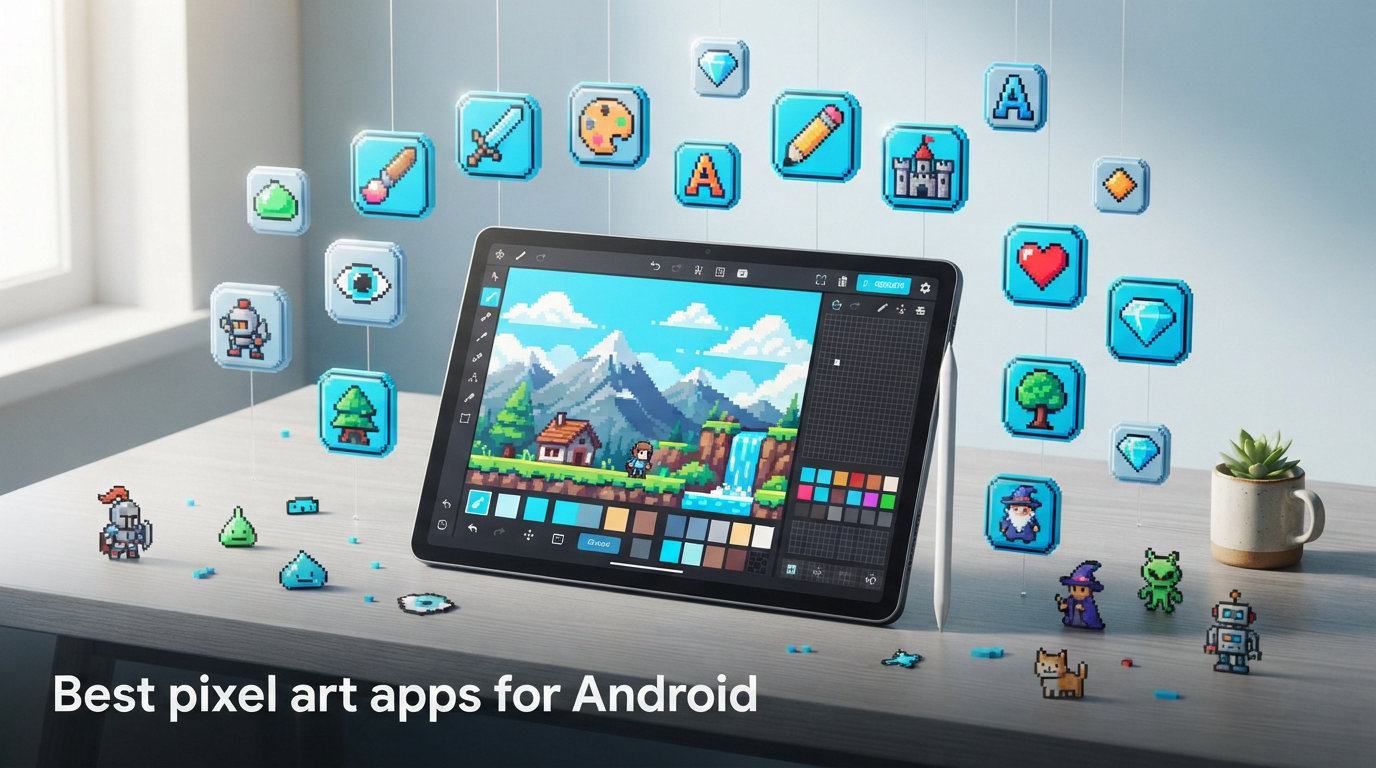
Whether you are a game developer crafting sprites for your next indie project, a digital artist exploring the charm of retro aesthetics, or simply someone who enjoys creating charming pixel art on the go, Android offers a remarkable ecosystem of apps designed specifically for pixel art creation. The convenience of having a capable pixel art studio in your pocket means you can sketch ideas during your commute, refine character designs while traveling, or even complete professional-grade illustrations using just your smartphone or tablet.
In this comprehensive guide, we will walk you through everything you need to know about pixel art apps for Android. From understanding what pixel art truly is and why it remains relevant in modern design, to exploring the key features that distinguish exceptional apps from mediocre ones, and finally diving into detailed reviews of the best options available today. By the end of this article, you will have a clear understanding of which apps best suit your creative needs, whether you are a beginner just starting your pixel art journey or a seasoned artist seeking a powerful mobile companion to your desktop workflow.
Table of Contents
What Is Pixel Art and Why Create It on Android?
Pixel art is a form of digital art where images are created and edited at the individual pixel level. Rather than working with smooth vectors or brush strokes that blend seamlessly, pixel artists place discrete colored squares onto a grid to form their artwork. This technique harks back to the early days of computer graphics and video game consoles, where limited hardware made pixel art the standard visual style. Games like Super Mario Bros, The Legend of Zelda, and early Final Fantasy titles defined entire generations with their distinctive 8-bit and 16-bit aesthetics.
Despite advances in technology that enable photorealistic 3D graphics, pixel art has maintained its enduring appeal. The aesthetic evokes nostalgia while also offering a unique artistic style that communicates warmth, simplicity, and intentionality. Many independent game developers actively choose pixel art for its charm and accessibility, and the style remains popular across mobile games, indie titles, and even contemporary art installations.
Creating pixel art on Android devices has become increasingly viable thanks to advances in mobile processing power, screen resolution, and touch-screen precision. Modern Android devices, particularly those with stylus support like Samsung Galaxy tablets, offer capable canvases for detailed pixel work. The portability factor cannot be overstated; being able to create, review, and share pixel art from your Android phone or tablet provides flexibility that desktop software simply cannot match. Whether you are blocking out initial concepts during a lunch break or polishing final sprites while commuting, Android pixel art apps empower you to stay creative anywhere.
For game developers specifically, Android pixel art apps offer a way to prototype visual assets quickly. You do not need to wait until you are back at your desk to test a sprite idea or adjust a walk cycle. The convenience of having a capable pixel art editor in your pocket has drawn many artists to mobile-first workflows, especially solo developers who juggle design, coding, and art simultaneously. There is also a growing community of pixel artists who create art purely for social media and personal expression, and mobile apps make it easy to create and share work directly from your phone.
Key Features to Look for in Pixel Art Apps for Android
Not all pixel art applications are created equal. When evaluating options for Android, certain features can dramatically impact your workflow and the quality of your output. Understanding these features will help you make an informed decision and select an app that aligns with your specific needs and creative goals.
Layer Support
Layer functionality is essential for any serious pixel art work. Layers allow you to separate different elements of your artwork, such as backgrounds, characters, and foreground details, so you can edit them independently without affecting other parts of the image. This organizational capability becomes increasingly important as your projects grow in complexity. Without robust layer support, you may find yourself constantly recreating elements or struggling to make simple adjustments that unintentionally disrupt other areas of your work.
Good layer support means more than just having multiple layers. You want the ability to reorder layers, adjust opacity, toggle visibility, and merge layers when needed. Some apps also support blend modes like multiply and screen, which are useful for adding shading and lighting effects without destroying your base colors. If you are coming from desktop software like Aseprite, you will want an app that supports at least basic layer operations to maintain your workflow.
Animation Tools
If you plan to create animated sprites for games, your app needs a built-in animation timeline with onion skinning. Onion skinning shows faint outlines of adjacent frames so you can see how the motion flows between them. Without this feature, animating smooth walk cycles or attack sequences becomes guesswork. Look for apps that support frame-by-frame editing and let you preview animations in real time.
The best pixel art apps for Android offer timelines with at least 24 frames, though some go much higher. You should also check whether the app supports variable frame rates per frame, which lets you control the timing of each pose independently. This level of control matters when you want a character to hold a pose for a beat before transitioning to the next movement.
Color Palette Management
Pixel art thrives on limited color palettes. A good app should let you create, save, and switch between custom palettes. Preset palettes based on classic hardware like the NES, Game Boy, or Commodore 64 are a bonus that saves time and keeps your art authentic to a specific retro style.
Apps that restrict you to a full RGB color picker without palette management make it harder to maintain visual consistency across a set of sprites. When you are creating dozens of characters and objects for a game, having a saved palette ensures everything looks like it belongs in the same world. Some apps also support importing palette files in formats like GPL or PAL, which lets you use the same palettes you have built in desktop tools.
Export Options
Think about where your pixel art will end up. If you are making game sprites, you need to export sprite sheets, individual PNGs, or even animated GIFs. Check whether the app supports transparent backgrounds and exports at the correct resolution without unwanted scaling. Some apps automatically upscale your pixel art, which can ruin the crisp edges that define the style.
Sprite sheet export is particularly important for game developers. The app should let you define the number of columns and rows, set the frame dimensions, and output a single PNG file that you can drop directly into a game engine. PSD export is a bonus that lets you preserve layers when moving projects back to desktop software.
Canvas Size and Grid System
The canvas should let you work at common pixel art sizes like 8×8, 16×16, 32×32, 64×64, and custom dimensions. A visible grid that snaps your tools to individual pixels is essential. Some apps also offer zoom levels that go high enough to work comfortably on a phone screen, which typically means at least 1600% zoom or more.
Being able to see the entire canvas while also zooming into individual pixels is critical on a small screen. Look for apps that offer smooth zooming and panning without lag. Some apps also support split-screen views where you can see the actual size output alongside your zoomed-in workspace, which helps you check proportions while you work.
Stylus and Pressure Sensitivity
If you use an Android tablet with a stylus like the Samsung S-Pen, pressure sensitivity adds a natural feel to your drawing. Palm rejection is equally important so you can rest your hand on the screen while working without accidentally placing pixels. Apps that support these features give you a desktop-like experience on mobile hardware.
Even on phones without an active stylus, apps that support generic capacitive styluses or offer finger-friendly tools with adjustable brush sizes make the drawing experience more comfortable. The ability to zoom in and out with pinch gestures while drawing with another finger is a small but important quality-of-life feature that separates good apps from frustrating ones.
Top Pixel Art Apps for Android Worth Trying
Our team spent significant time testing pixel art apps across multiple Android devices to evaluate real-world performance, feature sets, and user experience. Here are the seven apps that stood out, each excelling in a different area. We have organized them by what they do best to help you quickly find the right fit for your specific needs.
Pixel Studio (Best Overall)
Pixel Studio is the most frequently recommended Android pixel art app on Reddit, and for good reason. It offers a full-featured pixel art editor with layer support, animation capabilities, custom color palettes, and a wide range of drawing tools optimized for pixel-level precision. The interface strikes a balance between power and usability, making it approachable for beginners while deep enough for serious professional work.
The animation timeline supports frame-by-frame editing with onion skinning, which makes it a strong choice for game sprite creation. You can export your work as PNG, GIF, or sprite sheets. It also supports PSD file import and export, which is a rare find on mobile and makes it easier to move projects between desktop and Android. This PSD compatibility alone makes Pixel Studio the top pick for artists who split their time between Aseprite on desktop and mobile creation.
On the downside, the free version includes ads that can interrupt your workflow during longer sessions. The ad-free version requires a one-time purchase, which is fair given the feature set. Some users have also reported minor lag when working with very large canvases or high frame count animations on older devices. For most users, Pixel Studio is the closest thing to a desktop pixel art editor on Android.
DotPict (Best for Beginners)
DotPict focuses on simplicity, making it one of the best entry points for anyone new to pixel art. The app strips away complex menus and presents a clean canvas where you tap to place individual pixels. Color selection is straightforward, and the preset palettes are well-curated for retro art styles. There is almost no learning curve, which means you can start creating within seconds of opening the app for the first time.
Where DotPict falls short is in advanced features. Layer support is limited, and animation tools are basic compared to Pixel Studio. This is not the app for building game sprite sheets or complex animations. But for casual pixel art, doodling, and learning the fundamentals of color and form at the pixel level, DotPict provides a frustration-free experience that keeps the focus on creativity rather than settings.
The app also includes a social gallery where you can share your creations and browse art from other users. This community aspect adds motivation for beginners who want to see what others are making and get inspired by the range of work possible with simple tools. DotPict is free with optional in-app purchases for additional palettes and features.
Pixilart (Best for Community)
Pixilart combines a capable pixel art editor with one of the most active pixel art communities on mobile. The app is built around its online platform, which means your creations can be shared directly to the Pixilart community gallery where other artists can view, like, and comment on your work. This social layer turns pixel art from a solitary activity into something more collaborative and motivating.
Feature-wise, Pixilart covers the essentials well. You get layers, a solid set of drawing tools, custom palettes, and basic animation support. The canvas supports sizes up to 128×128 on mobile, which handles most sprite and icon work. Export options include PNG and animated GIF. The drawing tools feel responsive on both phones and tablets, and the interface is clean enough to find what you need without digging through menus.
The community integration is what sets Pixilart apart. If you thrive on feedback and collaboration, having a built-in audience of fellow pixel artists is a major advantage. The app also hosts regular drawing challenges that push you to try new styles and techniques. For artists who find motivation in sharing their progress, Pixilart creates an environment that encourages consistent practice. Pixilart is free to use, supported by its web platform.
Pixquare (Best for Professionals)
Pixquare gets regular mentions from professional pixel artists on Reddit, particularly those who work with tilesets and game-ready assets. The app offers precise drawing tools with excellent layer management and a clean interface that stays out of your way during detailed work. It feels designed by people who actually create pixel art professionally rather than as a casual side project.
One of Pixquare’s strengths is its tilemap editor, which lets you arrange tiles into larger compositions directly within the app. This is a feature that most other Android pixel art apps lack, and it makes Pixquare especially valuable for game developers building tile-based levels. You can see how individual tiles look when repeated across a surface, which saves the back-and-forth of exporting to a separate tool to check tiling consistency.
The learning curve is slightly steeper than DotPict or Pixilart because Pixquare does not hold your hand with tutorials or guided workflows. But if you already have experience with pixel art and want professional-grade tools on your Android device, Pixquare delivers. The layer system supports blend modes, and the export options cover the formats most game developers need. It is free with optional premium features that unlock additional tools and remove ads.
Piskel (Best Free Browser Option)
Piskel takes a different approach from the other apps on this list. It is a browser-based pixel art editor, which means you access it through Chrome or any web browser on your Android device rather than installing a native app. This has distinct advantages and trade-offs. On the plus side, it is completely free, requires no installation, and works across devices since your sprites are saved locally in your browser or can be exported as files.
The animation tools in Piskel are surprisingly capable for a free tool. You get a proper timeline with onion skinning, frame duplication, and real-time preview. It also supports sprite sheet export, which is essential for game development workflows. The interface is clean and responsive even on mobile browsers, which is impressive for a web application.
The downside is that browser-based tools lack some of the native Android integration you get with dedicated apps. There is no stylus pressure sensitivity, no offline mode unless you set it up manually, and the touch controls can feel less precise than a native app. The zoom behavior on mobile browsers can also be finicky, occasionally interpreting a drawing gesture as a page scroll. Still, for a zero-cost option that runs anywhere and requires no commitment, Piskel is hard to beat.
Resprite (Best for Animation)
Resprite is built with animation at its core. While most pixel art apps treat animation as an add-on feature, Resprite designs its entire workflow around creating animated sprites. The timeline is robust, supporting high frame counts and giving you fine control over timing and playback speed. This focus makes it immediately obvious that the developers understand what animators actually need.
The drawing tools cover everything you need for pixel art, including a pixel-perfect line tool, shape tools, and fill options. Layer support is solid, and you can organize layers into groups for complex animations with multiple moving parts. This grouping feature is particularly useful for character animations where you might want to animate the head, body, and limbs on separate layer groups. Export options include animated GIF, sprite sheet, and individual frame PNGs.
Resprite works well for artists who are specifically focused on animated game sprites rather than static pixel art. If your primary goal is creating walk cycles, attack animations, or environmental effects, Resprite’s animation-first approach saves significant time compared to apps where animation feels like an afterthought. The app offers a free tier with a premium unlock that removes limitations on frame count and export resolution.
Krita (Best for Mixed Media)
Krita is not exclusively a pixel art app. It is a full-featured digital painting application that happens to work well for pixel art when configured correctly. The advantage is that you get access to an enormous set of brushes, blending modes, and professional-grade tools that go far beyond what dedicated pixel art apps offer. For artists who work across multiple digital art styles, having one app that handles everything is appealing.
To use Krita for pixel art, you set up a small canvas, enable the pixel grid, and use the pencil tool with no anti-aliasing. This gives you the precision needed for pixel-level work while still having access to all of Krita’s other capabilities. Layer support is excellent, and the animation timeline is one of the most advanced available on Android. Krita also supports color management with ICC profiles, which matters if you need consistent colors across devices.
The trade-off is that Krita’s interface is dense and can overwhelm users who just want a simple pixel art experience. The number of tools and settings visible by default is designed for professional digital painters, not pixel artists. It is also a heavier app that performs best on tablets or high-end phones with ample RAM. On older or budget devices, you may encounter lag with larger canvases. If you already use Krita for digital art and want to incorporate pixel art into your broader workflow, it is a natural choice. But for pure pixel art beginners, a dedicated app like Pixel Studio or DotPict will feel more approachable. Krita is completely free and open source.
Free vs Paid Pixel Art Apps for Android
One of the most common questions artists face when selecting pixel art software is whether to invest in a paid application or stick with free options. Both approaches have merit, and the right choice depends on your specific circumstances, goals, and budget.
Advantages of Free Options
Free pixel art apps provide accessible entry points for artists exploring the medium or those with limited budgets. Piskel (via browser), DotPict, and Pixilart all offer free tiers that allow you to create quality pixel art without financial commitment. These options are particularly valuable for beginners who want to experiment with pixel art before investing money in specialized tools.
Free apps also serve as legitimate options for casual creators who do not need advanced features. If you are making pixel art purely for fun, social media, or occasional personal projects, the limitations of free apps may never impact your experience significantly. You can produce genuinely impressive work with free tools if your goals align with their capabilities.
Limitations of Free Options
However, free apps often come with limitations that affect serious or frequent use. Advertisements can interrupt creative flow, which many artists find frustrating during focused work sessions. Feature restrictions in free versions may limit professional use cases, with advanced tools locked behind paywalls. Cloud storage or export options may be limited, potentially affecting your ability to work efficiently or maintain proper file backups.
Some free apps also include watermarks on exports or restrict commercial use of creations made with their free tiers. If you plan to sell games or assets created with pixel art, carefully review the terms of service for any free app you consider.
When Paid Apps Are Worth the Investment
Paid pixel art applications typically offer more comprehensive feature sets, ad-free experiences, and better support for professional workflows. Pixel Studio and Pixquare, for example, provide robust tool sets that support serious pixel art creation without the interruptions or restrictions common in free alternatives.
When evaluating paid apps, consider the one-time purchase cost versus subscription models. Some developers offer lifetime purchases, providing permanent access after a single payment, while others require ongoing subscriptions. The long-term cost implications differ significantly between models, and the best choice depends on how intensively you plan to use the app over time.
For professional artists or those planning to use pixel art apps regularly, paid options generally provide better value through improved features, stability, and workflow optimization. The absence of ads alone can significantly improve the creative experience, allowing for more focused work sessions without interruption.
How to Choose the Right Pixel Art App for Your Needs
Picking from the pixel art apps for Android listed above comes down to matching the app to your specific needs. Here is a straightforward framework to help you decide based on who you are and what you want to create.
For Complete Beginners
Start with DotPict or Pixilart. Both have gentle learning curves and do not overwhelm you with features you will not use right away. DotPict is better if you want a distraction-free canvas where you can focus on learning the basics of pixel placement and color selection. Pixilart is ideal if you want community interaction and feedback from other artists to stay motivated.
Neither requires any financial commitment to get started, which means you can explore pixel art as a hobby without investing money upfront. Once you feel comfortable with the fundamentals and want to tackle more complex projects, you can graduate to Pixel Studio without losing any work since both apps support standard PNG export.
For Game Developers
Pixel Studio or Pixquare should be your first picks. Pixel Studio offers the most well-rounded feature set with PSD support for desktop collaboration, making it easy to move sprites between your phone and your desktop editor. Pixquare’s tilemap editor is unique and genuinely useful if you are building tile-based games where you need to see how tiles repeat and connect.
Both apps handle sprite sheet export, which is essential for getting your art into game engines like Unity, Godot, or GameMaker. They also support transparent PNG export, which preserves the clean edges that pixel art demands. For rapid prototyping during game jams or while commuting, having either of these apps on your phone means you never lose productive time.
For Artists Focused on Animation
Resprite is the clear choice for animators. Its timeline-first design means you spend less time fighting the interface and more time creating motion. The frame timing controls and layer grouping make it efficient for building complex multi-part character animations. Pixel Studio is a solid second option if you want animation capability alongside a broader set of general pixel art tools, and it may be the better pick if you create both static sprites and animations in the same projects.
For Cross-Device Workflows
Pixel Studio’s PSD support makes it the best option for artists who split time between desktop software like Aseprite or Photoshop and their Android device. You can start a project on your computer, load it in Pixel Studio on your phone, make edits on the go, and sync it back to your desktop later. Pixquare also handles cross-device workflows reasonably well through standard file format exports like PNG and GIF.
The key to making a cross-device workflow smooth is using compatible file formats and cloud storage. Save in PSD or PNG, use a shared cloud folder, and keep your canvas sizes consistent across devices.
Desktop to Mobile Pixel Art Workflow Tips
One of the biggest pain points for pixel artists is moving work between desktop and mobile. Reddit threads are filled with users asking how to maintain a seamless workflow when they use Aseprite on their PC but want to continue working on their Android phone. Here are practical tips that can help bridge the gap between desktop and mobile pixel art creation.
Use Compatible File Formats
PNG is the universal format that every pixel art app supports without issues. If you need to preserve layers, look for apps like Pixel Studio that support PSD import and export. Avoid proprietary formats that lock you into a single app, because you will regret it when you want to switch tools later. GIF works well for sharing animated previews with teammates or clients, but always keep a layered master file as your source of truth.
When exporting from desktop tools like Aseprite, use the export sprite sheet option with a transparent background. This gives your mobile app a clean file to work with. Avoid JPEG at all costs for pixel art, since its lossy compression introduces artifacts around the crisp edges that define the pixel art style.
Leverage Cloud Storage
Set up Google Drive, Dropbox, or another cloud storage service as a shared folder between your desktop and mobile device. Save your work in a consistent folder structure so you always know where to find the latest version. This eliminates the friction of manually transferring files via USB cable, email attachments, or messaging apps.
Some apps like Pixel Studio can integrate directly with cloud storage, letting you open and save files without leaving the app. Even without direct integration, Android’s built-in file manager makes it easy to move files between cloud storage and your pixel art app. The few extra seconds it takes to save to a cloud folder is worth the peace of mind of knowing your work is backed up and accessible everywhere.
Establish a Naming Convention
Name your files with a clear pattern that includes the project name, asset type, and version number. Something like “game-hero-idle-v03.psd” tells you exactly what the file contains without opening it. This becomes critical when you have dozens of sprites across multiple projects, and doubly so when you are switching between desktop and mobile where file managers show less context.
Stick to your naming convention consistently. It takes a bit more effort upfront, but when you are searching for a specific sprite at 11 PM the night before a deadline, you will thank yourself for the organization.
Keep Canvases Consistent
Use the same canvas size for all sprites within a project. If your game uses 32×32 sprites, set that as your default canvas in both your desktop and mobile editors. Mixing sizes between devices leads to scaling artifacts and inconsistent art styles that are difficult to fix later. Write down your standard sizes somewhere accessible so you can reference them quickly when switching between devices.
This consistency also applies to color palettes. Export your game’s palette as a file and import it into your mobile editor. Many apps support palette import, and having the exact same colors available on both desktop and mobile prevents the subtle color shifts that can break visual consistency across your sprites.
Test on Your Target Device
If your pixel art is for a game, periodically preview your sprites at actual game size on your phone. What looks good zoomed in at 1600% might look muddy or unclear at 1x scale. Most Android pixel art apps have a preview mode that shows your work at 1x. Use it regularly, and adjust proportions and contrast based on how the sprite reads at its intended display size.
This is one area where mobile apps actually have an advantage over desktop editors. Since you are creating on a screen size similar to your players’ screens, you get an immediate sense of how the art will look in context. Desktop artists often create sprites that look great zoomed in but lose definition at game resolution.
Frequently Asked Questions
What is the best pixel art app for Android?
Pixel Studio is widely considered the best pixel art app for Android. It offers layers, animation with onion skinning, custom palettes, PSD support, and sprite sheet export. Reddit users consistently rank it as the top choice for both beginners and experienced pixel artists on Android. The combination of professional features and accessible interface makes it the most well-rounded option available.
Is there a pixel art app for Android mobile?
Yes, several pixel art apps are available for Android mobile devices. Pixel Studio, DotPict, Pixilart, Pixquare, and Resprite are all native Android apps you can download from the Google Play Store. Piskel is a free browser-based option that works on Android through Chrome. Modern Android devices provide capable platforms for pixel art creation, with some apps even supporting stylus input for enhanced precision.
What app do pixel artists use on Android?
Professional and hobbyist pixel artists on Android most commonly use Pixel Studio for its full feature set. Pixquare is frequently mentioned for professional work involving tilesets and game assets. Pixilart appeals to those who value community features and social sharing. Krita is also popular among artists who do mixed digital art beyond just pixel work. The choice depends on specific needs: animation, professional features, community, or beginner-friendliness.
Is Aseprite available for Android?
No, Aseprite is not available for Android. It is a desktop-only application available for Windows, macOS, and Linux. However, several Android alternatives attempt to replicate Aseprite’s functionality, with Pixel Studio being the most commonly recommended option. Some artists use cloud synchronization to work between Aseprite on desktop and their preferred Android app, making Pixel Studio’s PSD support particularly valuable.
Is Pixel Studio good for Android?
Yes, Pixel Studio is excellent on Android. It is the most recommended pixel art app in Reddit communities and offers professional-grade features including layers, animation with onion skinning, PSD import and export, custom color palettes, and sprite sheet export. The free version includes ads, but the feature set rivals desktop pixel art editors. For artists seeking a capable mobile companion to desktop tools like Aseprite, Pixel Studio is the strongest option available on Android.
Can I make game sprites on my Android phone?
Absolutely. Many indie game developers create sprites and game assets using Android apps. Pixel Studio and Pixquare both support export options specifically designed for game development, including sprite sheets and transparent PNG files. With a stylus and a capable app, you can produce professional-quality game sprites entirely on your Android device. The portability means you can work on assets during commutes or travel without access to your desktop.
What features are most important for pixel art apps on Android?
The most important features depend on your goals, but generally include layer support, precise drawing tools that snap to pixel grids, color palette management, and export options compatible with your workflow. If you create animation, prioritize apps with timeline tools and onion skinning. For game development, ensure the app exports in formats your game engine supports. Stylus support and canvas size options also matter significantly depending on your device and project needs.
Are free pixel art apps worth using?
Free pixel art apps can be worth using for casual creation, experimentation, or by beginners exploring pixel art before committing financially. However, free options often include advertisements, feature limitation, or restricted export capabilities that may frustrate serious or professional use. If pixel art becomes a regular activity, investing in a paid app typically provides better value through an ad-free experience and comprehensive features. Evaluate your needs honestly before deciding.
Conclusion
The best pixel art apps for Android have matured to the point where creating professional-quality sprites and animations on a phone or tablet is entirely practical. Pixel Studio leads the pack as the most well-rounded option, handling everything from basic pixel sketches to complex animated sprite sheets with PSD compatibility for desktop collaboration. It is the app we would recommend first to almost anyone serious about mobile pixel art.
For beginners, DotPict and Pixilart offer welcoming entry points with minimal learning curves and no upfront cost. Game developers will find Pixquare’s tilemap editor and Pixel Studio’s sprite sheet export especially useful for production workflows. Animators should look at Resprite for its timeline-first design, and anyone wanting a zero-cost solution can start with Piskel directly in their browser. Krita serves artists who want broader digital painting capabilities alongside their pixel art.
The key is matching the app to your workflow and goals, not just picking the one with the most features. Consider what you actually need: animation capabilities, community interaction, professional-grade precision, or simple ease of use. Download one or two that match your needs, spend time getting comfortable with the tools, and start building something.
Pixel art rewards practice more than any particular app, and the convenience of having a capable editor on your Android device means you can practice anywhere. Every pixel you place makes you a better artist, regardless of which app you choose. The growing ecosystem of pixel art apps for Android ensures there is a capable tool for every artist, from casual doodlers to dedicated game developers building their indie dreams one pixel at a time.