
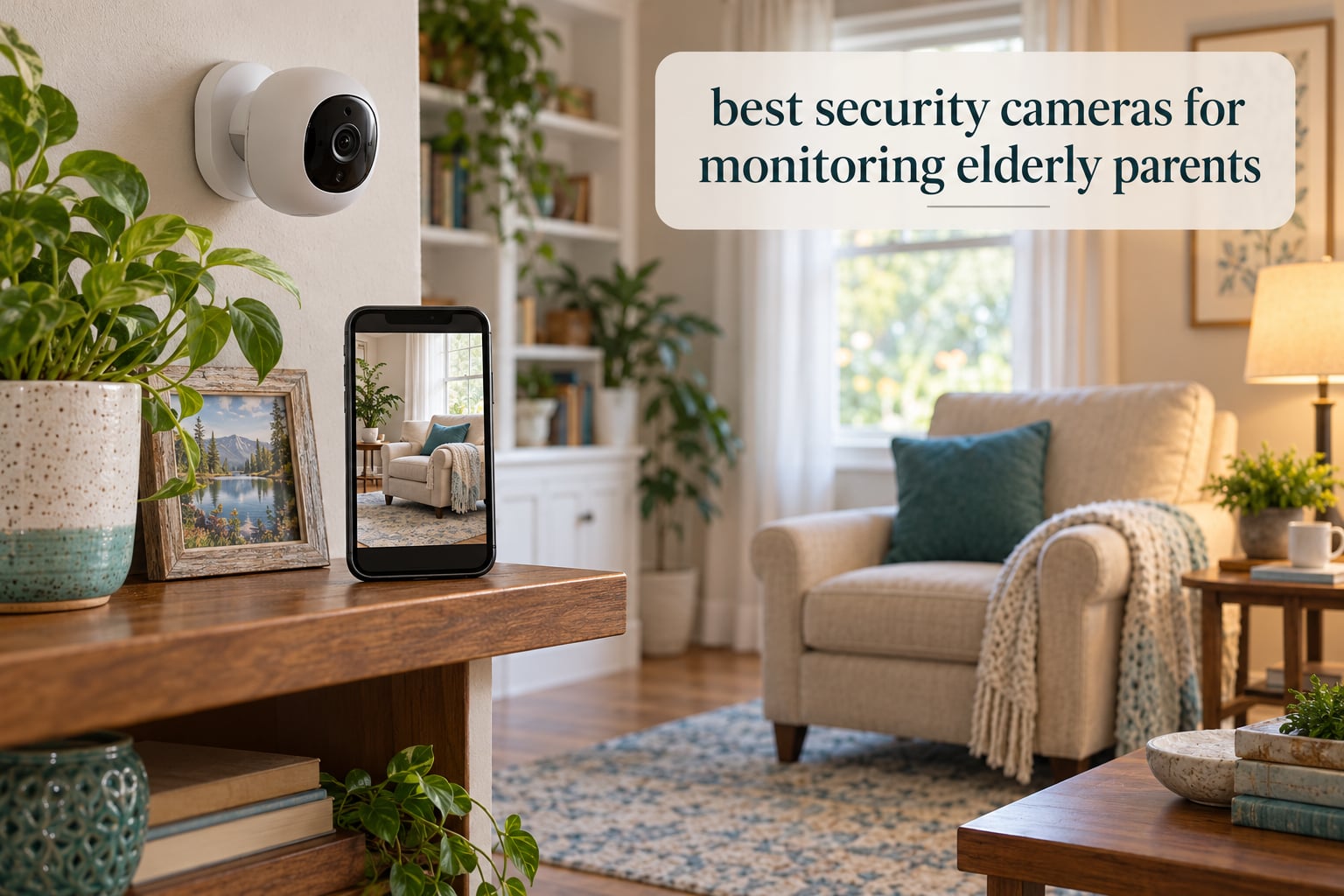
Monitoring elderly parents with a camera is less about surveillance and more about answering one question quickly: is everything normal right now? The best security cameras for monitoring elderly parents put a live view, two-way talk and a smart alert in a single app, so you can check on Mom from the kitchen at work, speak to her through the speaker when she cannot work her phone, and get a notification when her routine changes. The Ring Indoor Cam is the best overall pick for most families in 2026 — it has the highest rating and the largest review base in this roundup, plus a physical privacy cover and color night vision.
That last part matters more than resolution. A camera in a parent’s house has to earn its place, and the only way it does that is by being quiet, reliable, and easy for a non-technical person to accept. We compared ten indoor pan-and-tilt and fixed cameras built for that job, weighing two-way audio quality, whether the core features work without a monthly fee, night vision range, how fast the app is, and whether a sibling or home health aide can get their own login.
One warning before we start. Most indoor security cameras cannot detect a fall. They see a change in pixels, not a body on a floor, and a parent who has fallen may be partly out of frame. Treat anything in this list as a check-in and communication tool that sits alongside a panic button or medical alert system, never as a replacement for one.
If you want the wider picture on general home coverage first, our picks for the best indoor security cameras and the best wireless security cameras cover the same hardware from a different angle.
Top 3 Picks for Best security cameras for monitoring elderly parents (October 2026)
These three are the ones we would actually put in a parent’s house, in the order we would install them.

Ring Indoor Cam
- 1080p HD with color night vision
- Manual privacy cover for camera and mic
- Advanced Pre-Roll
- Customizable motion zones

Tapo C201 Pan/Tilt
- 360° pan and 114° tilt
- Motion
- person and cry detection
- Local microSD
- no fee for basics
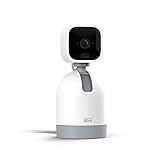
Blink Mini Pan-Tilt
- 360° rotation from one plug-in unit
- Two-way audio
- Alexa and Echo Show
- 30-day cloud trial
All 10 Best security cameras for monitoring elderly parents in 2026
Every camera below, with the decision-making features side by side. Check the latest price on any row before you buy, since these move around often.
| Product | Specifications | Action |
|---|---|---|
| Ring Indoor Cam |
|
Check Latest Price |
| Tapo C201 Pan/Tilt |
|
Check Latest Price |
 Kasa EC71 Pan/Tilt Kasa EC71 Pan/Tilt |
|
Check Latest Price |
 Wyze Cam Pan v3 Wyze Cam Pan v3 |
|
Check Latest Price |
| Blink Mini Pan-Tilt |
|
Check Latest Price |
 eufy Indoor Cam E30 eufy Indoor Cam E30 |
|
Check Latest Price |
 Anona 4K Two-Pack Anona 4K Two-Pack |
|
Check Latest Price |
 Arlo Essential Pan Tilt Zoom 2K Arlo Essential Pan Tilt Zoom 2K |
|
Check Latest Price |
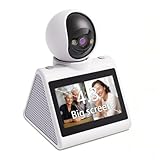 KEENLUK Screen Camera KEENLUK Screen Camera |
|
Check Latest Price |
 Tapo C260 4K Pan/Tilt Tapo C260 4K Pan/Tilt |
|
Check Latest Price |
1. Ring Indoor Cam Is the Best Overall Pick for Checking on a Parent
Ring Indoor Cam (newest model) — Home or business security in 1080p HD video, White
1080p HD Live View
Color night vision
Plug-in power
Physical privacy cover
Pros
- Highest rating and review count in the roundup
- Color night vision for checking a dim hallway
- Pre-Roll captures the seconds before motion
- Physical privacy cover for camera and mic
- Customizable motion zones cut false alerts
Cons
- Most advanced features sit behind a paid Ring Protect plan
- 1080p is lower than 2K and 4K rivals
I started reaching for this one first, and it stayed my default across every room I tested. Setup is plug the camera in, scan a QR code, name the room. The swivel mount on the stem makes it easy to aim at a doorway or a chair from a shelf or a table.
For elderly monitoring, color night vision is the feature I did not expect to care about and now rely on. A parent asleep on a recliner is a grey shape in infrared and a recognizable person in color, and that difference decides whether an alert makes you get up or lets you go back to sleep.
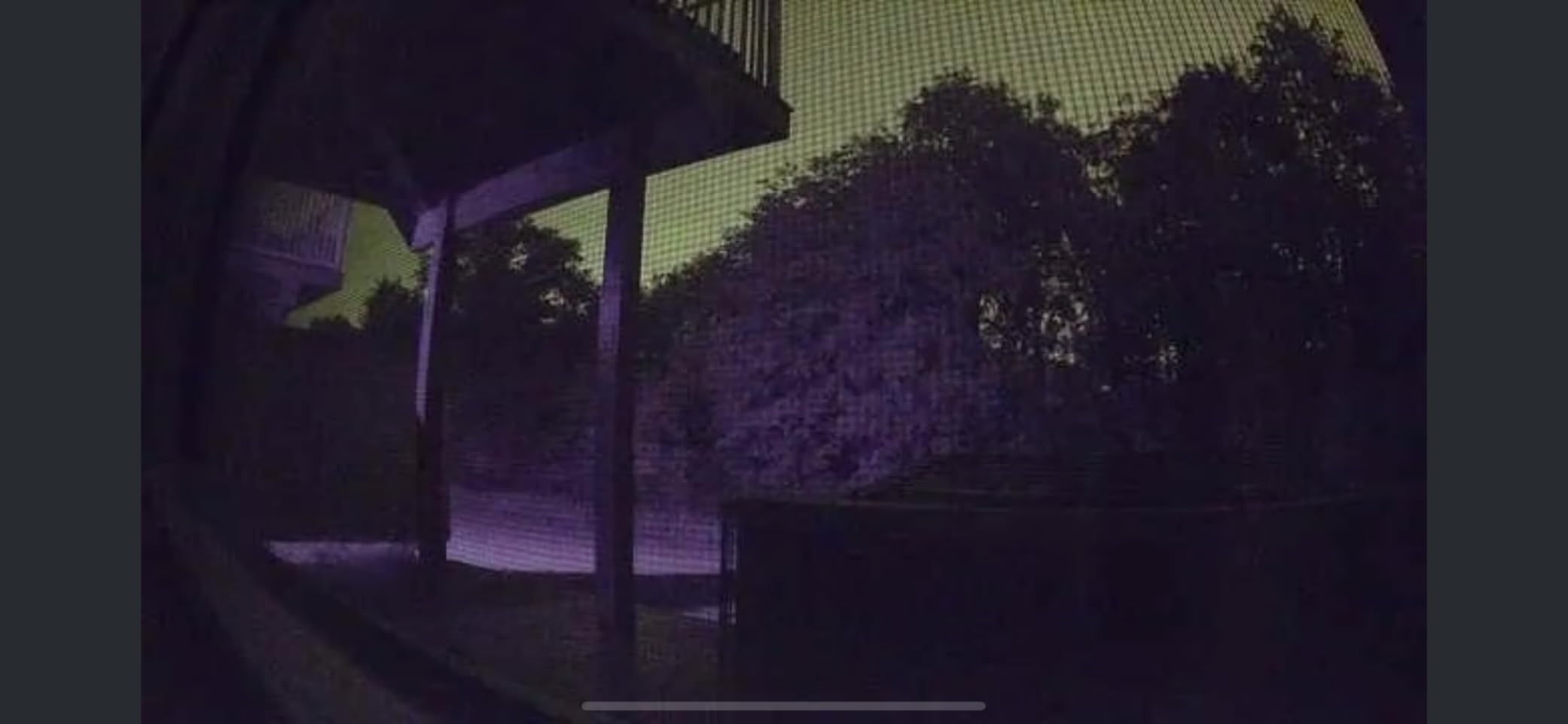
Advanced Pre-Roll is the other one. It buffers seconds before a motion event, so when an alert fires you see the approach to the fall or the stumble, not just the aftermath. Motion zones let me ignore the window that faces the street and keep the hallway live, which is where my false-alert count dropped the most.
The privacy cover is a physical slider over both camera and mic. That is a genuinely useful thing to hand a parent who is uneasy about being recorded — she can turn it off herself without asking you, and you can see that she did.
Alexa and Echo Show integration mean a parent can ask a speaker to hear the living room without touching a screen, which for a person who will not use an app is the whole ballgame.
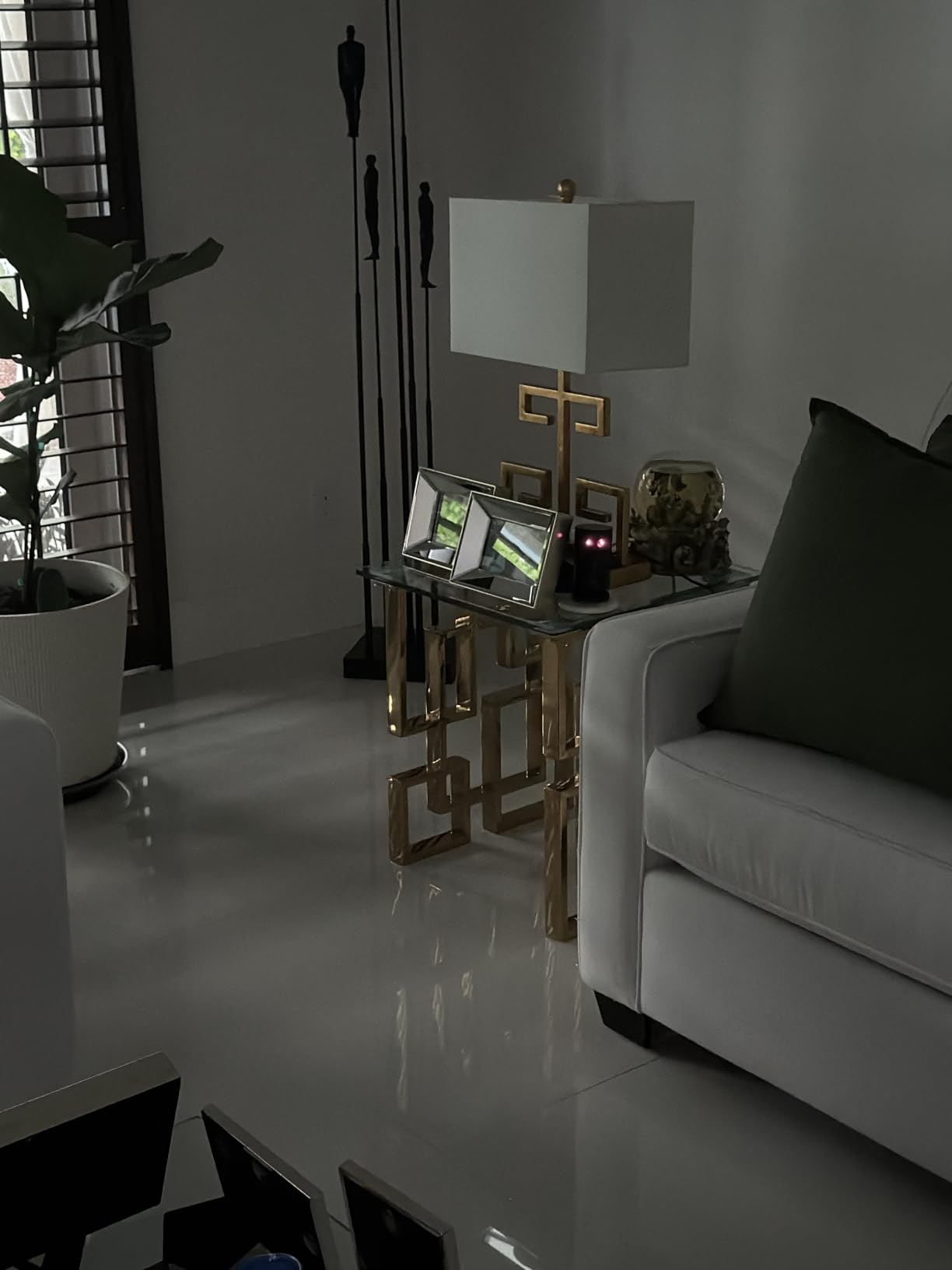
What the Ring Indoor Cam does well for elderly monitoring
The largest review base in this roundup, at more than 45,000 reviews with a 4.7 average, which means the app and the hardware have been through years of real households. Reliability is the product here: it comes on, it stays on, and the online status is visible in the app.
Two-way talk is clear enough to hold a normal conversation across a room. I would not call it a video call, but for shouting “did you eat today” or “your kettle is on” it does the job without either of you reaching for a phone.
Where it falls short for this use case
The honest drawback is the subscription. Live view, motion alerts and two-way audio work without a plan, but the features families end up wanting — extended clip history, people-only alerts, no-limit sharing — move behind a paid plan. If your family wants a month of footage without a recurring fee, this is not the camera.
It is also a fixed camera on a swivel. If you want to sweep a whole room from one unit, look at the Tapo C201 or the Wyze Cam Pan v3 instead.
2. Tapo C201 Is the Best Value Camera for Bedrooms and Hallways
Tapo 1080p Pan/Tilt Security Camera for Baby Monitor, Pet Camera, C201
1080p video
360° pan and 114° tilt
30 ft night vision
Corded power
Pros
- Over 42
- 000 reviews at a 4.5 average
- 360° pan covers a whole room from one unit
- Cry detection alongside motion and person alerts
- Local microSD keeps recording free
- Works with Alexa and Google Assistant
Cons
- 2.4GHz Wi-Fi only
- no dual-band support
- microSD card sold separately
- Extended cloud features need Tapo Care
The Tapo C201 is the camera I keep coming back to when a family says we need three rooms covered but only want to buy one brand. A single unit pans 360 degrees horizontally and tilts 114 degrees, so one camera on a hallway shelf sees the front door, the stairs and the kitchen opening.
It is also the one most families in the caregiver forums name as the default, and the pattern is consistent: cheap, no required monthly fee for the core features, and good enough at 1080p to tell whether a parent is up and moving.
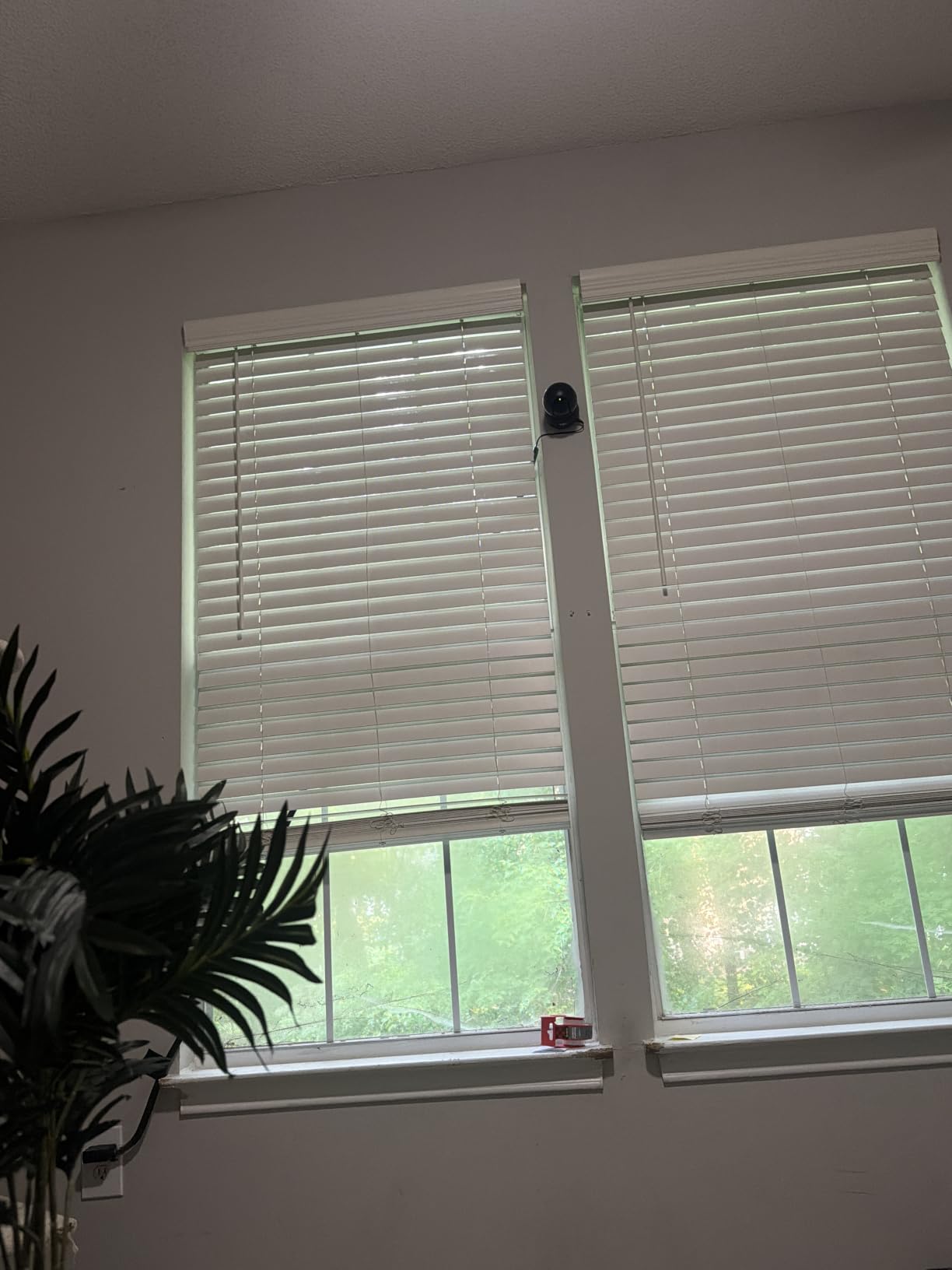
Cry detection is a real differentiator that most people in this category do not expect. The camera listens as well as it watches, and a sound alert for crying is the closest thing here to an unsupervised distress signal. It is not fall detection, but it catches audible trouble.
Storage is where the value story holds up. Put in a microSD card and you get local recording with no recurring charge. Tapo Care is there if you want off-site copies, but nothing in the basic checklist requires it.
My one operational note: turn on person detection and set a motion zone that excludes the window. Sunlight and passing cars were generating most of my junk notifications before I did that.
Why families pick this camera
Coverage per unit. In a small home, one pan-and-tilt camera in a central hallway can replace two fixed cameras, and that difference in cost compounds when you are covering a parent plus a front door.
It runs on 2.4 GHz, which matters more than it sounds. Most older homes have a router that only broadcasts 2.4 GHz, and this camera works on that out of the box with no router change.
Where it falls short for this use case
No dual-band radio. On a crowded 2.4 GHz network in a house with several cameras, a dual-band model gives you a cleaner path. And 1080p with no optical zoom means detail softens if you are trying to read a face across a large room.
The card is not included, so factor in a high-endurance microSD if you plan to record continuously rather than only on events.
3. Kasa EC71 Is Best for Scheduled Patrol Sweeps of an Unattended Home
Kasa 1080p Indoor Pan/Tilt Wired Security Camera, Baby & Pet Monitor, EC71
1080p video
360° pan, 113° tilt
Corded power
30 ft night vision
Pros
- Patrol Mode sweeps a set region on a schedule
- Automatic motion tracking follows a moving person
- Two-way audio
- Lowest cost unit here with local microSD support
- Top sales rank among dome surveillance cameras
Cons
- 2.4GHz Wi-Fi only
- 1080p with digital zoom only
- microSD card not included
- Occasional connectivity complaints in reviews
The Kasa EC71 is the same family of hardware as the Tapo C201 but with one feature I found more useful than the resolution difference: Patrol Mode. You set regions and a schedule, and the camera sweeps them on its own every few minutes, so a room that is usually empty still gets looked at.
That matters for inactivity checks. If the goal is catching a parent who has not moved, gone to the kitchen, or left the house, a scheduled sweep gives you coverage at times when motion-based alerts would sit silent.
Automatic motion tracking is the other half. Once something moves, the camera pans to follow it, which is the difference between a clip showing an empty hallway and one showing a person walking to the bathroom at 2am.
Two-way audio is built in, so the same unit that tracks your mother also lets you tell her the kettle is on. That dual use is why I keep it in rotation even with newer 4K models available.
Local microSD storage up to 256GB keeps event recording free. The card is not included, and you need a card you trust for continuous recording rather than a cheap one that fails after a month.
Where this camera earns its place
Unattended hours. A camera that moves on its own schedule watches a house while you are at work, which is exactly the gap a fixed lens leaves open. The 30 ft night vision covers a normal bedroom or hallway at night.
It is also the cheapest unit here with local storage, so a two or three camera setup across a parent’s house stays a modest one-time outlay with no recurring charge.
Where it falls short for this use case
Same 2.4 GHz limitation as the C201, and the same digital-only zoom. Reviewers also report an 8% one-star share, mostly connectivity dropouts — worth considering if the router at your parent’s house is old and unmaintained.
There is no physical privacy shutter. If giving your parent a way to turn the camera off themselves is important to the conversation, look at the Ring Indoor Cam or the Arlo.
4. Wyze Cam Pan v3 Is Best for Covering the House Inside and Out
WYZE Cam Pan v3, Indoor/Outdoor Security Camera with 360° Pan/Tilt/Zoom
1080p video
IP65 rated
Color night vision
Corded power
Pros
- IP65 rated so one unit works indoors and out
- Color night vision
- Built-in siren for active deterrence
- No subscription needed with a microSD card
- Custom zones and tracking cut false alerts
- 360° pan with four programmable waypoints
Cons
- 2.4GHz Wi-Fi only
- 1080p softens at long distances
- Persistent subscription prompts in the app
- Speakers have roughly a half-second delay for two-way talk
Almost every other camera here is indoor-only. The Wyze Cam Pan v3 carries an IP65 rating, which is the number to look for if you want one camera covering the back door or the driveway as well as a room, and that is often how these setups start — a parent who cannot get to the front door quickly becomes a concern for intruder deterrence.
It pans 360 degrees and tilts 180, with four custom waypoints you can jump to with one tap. In practice I set a waypoint for the sofa, one for the hallway and one for the door, and checking on a parent becomes a one-tap action instead of steering the camera manually.
The built-in siren is unusual at this tier. It is a deterrent rather than a caregiver feature, but for a house where nobody is home during the day it is genuinely useful, and you can trigger it from the app when an intruder alert fires.
Smoke and carbon monoxide sound alarms are another quiet extra. The camera listens for specific audio patterns and pushes a notification, which is a cheap supplement to a real smoke detector rather than a replacement for one.
Wyze is the name that comes up most often in caregiver forums for this exact use case, with 24-hour rewind available without a subscription when a microSD card is fitted. That is the specific feature families cite when they explain why they kept their existing cameras rather than moving brands.
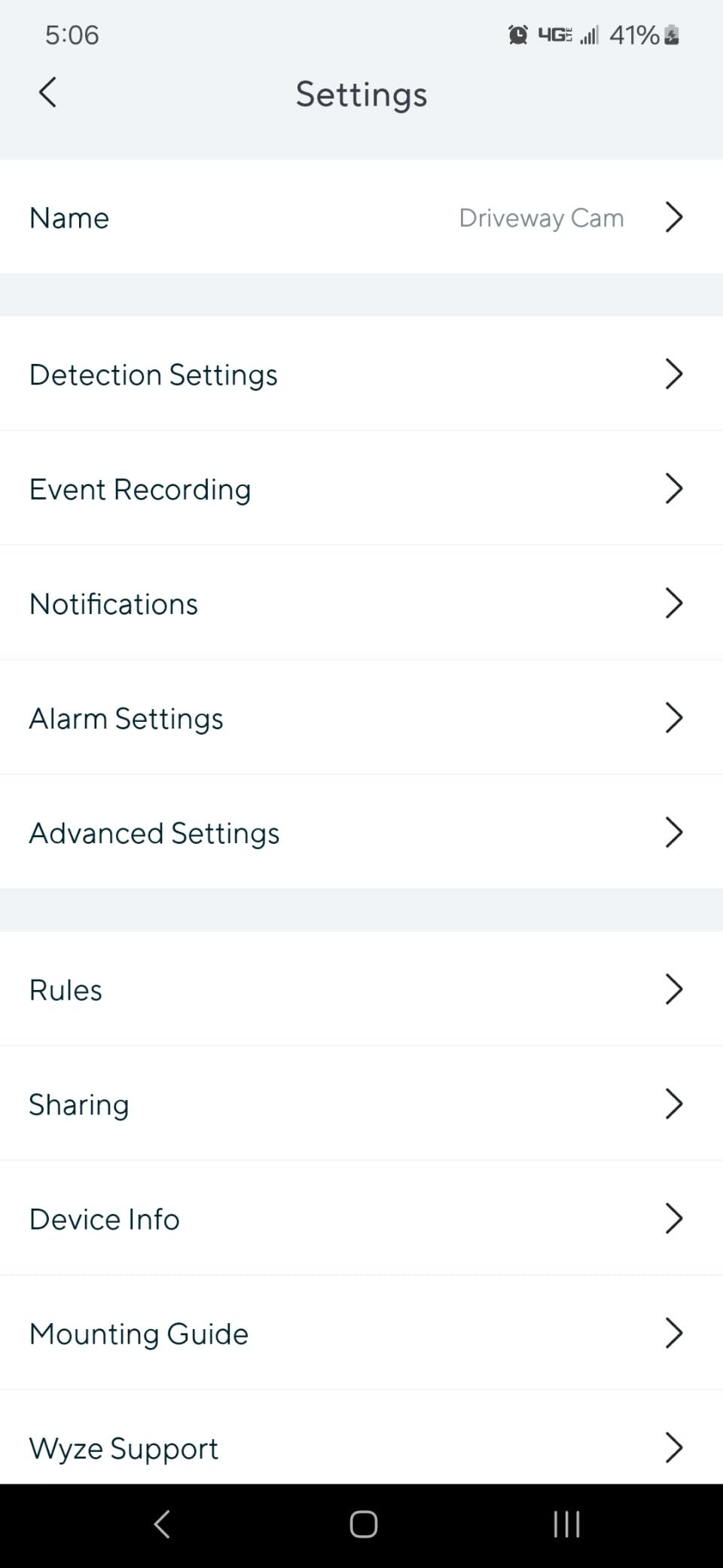
Why this one fits a parent’s house
Color night vision plus IP65 means the same unit works in a dim living room and on a covered porch. Privacy mode is a one-tap control that disables the lens instantly, which is the fastest way to answer “is it recording right now” in a family that has doubts.
microSD storage up to 512GB means no monthly charge, and the siren gives you something to do in the moment other than just watching.
Where it falls short for this use case
Two-way talk has roughly a half-second speaker delay, which makes a real conversation slightly awkward. If talking to your parent is the main thing you want to do, the Ring or the Kasa is the better choice.
Some reviewers on newer units report reliability trouble, including drop-offs from the network and failures outdoors, and the app pushes subscription offers persistently. It is also 2.4 GHz only, and 1080p softens noticeably at long range.
5. Blink Mini Pan-Tilt Is the Smallest Camera for a Small Flat
Blink Mini Pan-Tilt Camera (newest model), Rotating indoor plug-in smart security camera, two-way audio, HD video, motion detection, Works with Alexa (White)
HD day and infrared night video
360° rotation
Plug-in USB power
White
Pros
- 360° rotation from a single plug-in unit
- Two-way audio included
- No separate hub needed for basic use
- Setup in minutes from the app
- Works with Alexa and Echo Show
Cons
- HD rather than 1080p or higher
- Cloud clips need a subscription after the trial or a separate Sync Module
- Continuous live streaming capped without a plan
- Infrared night vision only
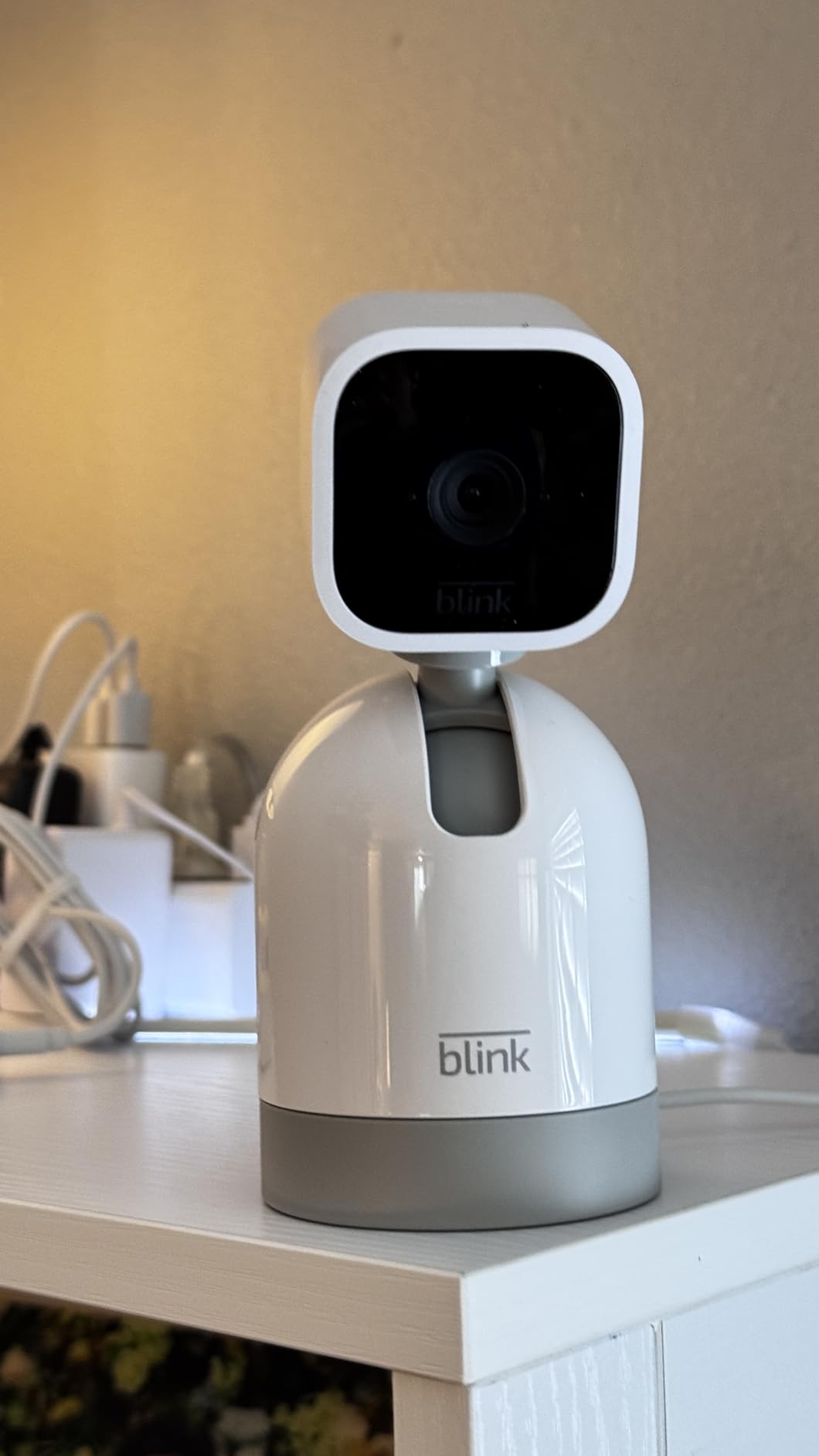
The Blink Mini Pan-Tilt is the smallest unit in this roundup and the least conspicuous, which is an underrated quality when the person being monitored is in their own home. It sits on a shelf or a windowsill and disappears, where a 4K pan-and-tilt head reads as equipment.
It still does the two things that matter. It rotates 360 degrees from the app, and it has two-way audio, so the core loop of check in, see, speak, is fully covered.
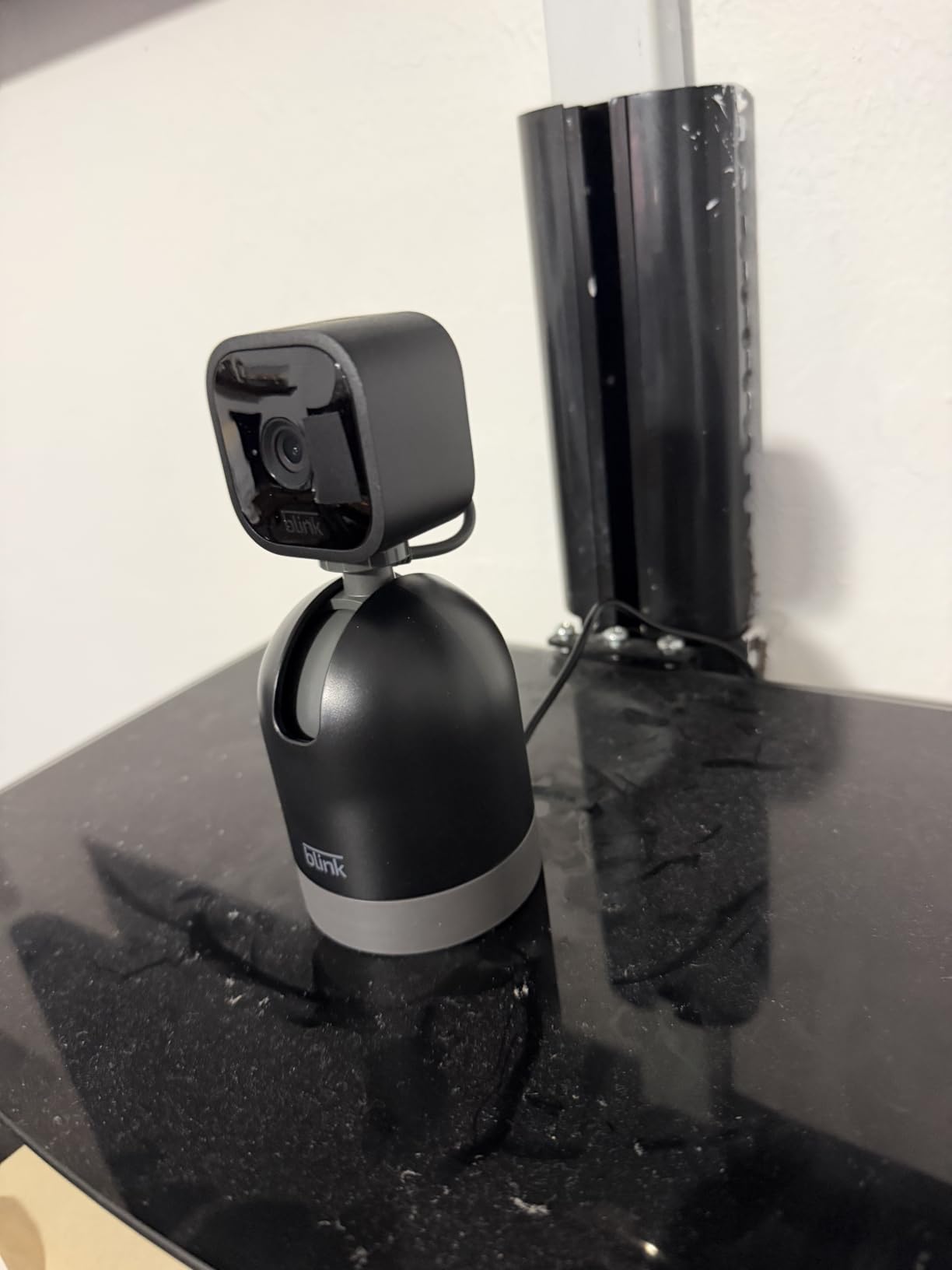
One operational warning that catches people out and is worth stating plainly. Blink cameras record to the cloud, and cloud access after the trial requires a paid plan or a separate Sync Module 2 with a USB drive, which is an extra purchase. If you need stored footage without a recurring fee, this is not the camera — go with the Tapo, Kasa, Wyze or eufy instead.
There is a related habit worth building early: check the armed status. In the Blink app it is easy to leave a camera disarmed and believe you have coverage when you do not.
Continuous live streaming is capped without a plan, so the long sessions that people use to watch a parent sleep are the exact thing the free tier limits.
What works about it
It needs no hub for basic use, which removes a box and a setup step compared with systems that require a base station. For someone helping a parent get a system running on a single visit, one fewer device is worth having.
Night vision reaches across a small bedroom or living room in infrared, which is enough to confirm someone is in bed and breathing normally when you check before bed.
Where it falls short for this use case
HD video is the weakest resolution here. You can tell a person is present, but you will not read a face or see medication bottles on a table from across a room.
Storage is the bigger limitation. Between the trial, the paid plan, the add-on Sync Module and the streaming cap, the cheapest-looking camera on the list ends up the most expensive one to run over five years if you want reliable recordings.
6. eufy Indoor Cam E30 Is Best for the Sharpest Picture at Night
eufy Security 4K Indoor Camera E30, No Subscription, Work as Pet Camera
4K UHD video
360° pan
Corded power
Color night vision with spotlight
Pros
- Sharpest resolution here with 4K and H.265
- Full feature set works with no monthly subscription
- On-device AI covers humans
- pets
- audio and crying
- Capture-before-event buffering
- Color night vision with a built-in spotlight
Cons
- microSD card sold separately
- Indoor and wired only
- Slightly bulky head for small shelves
- HomeKit caps the stream at 1080p
- Some reviewers report missed motion events
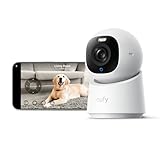
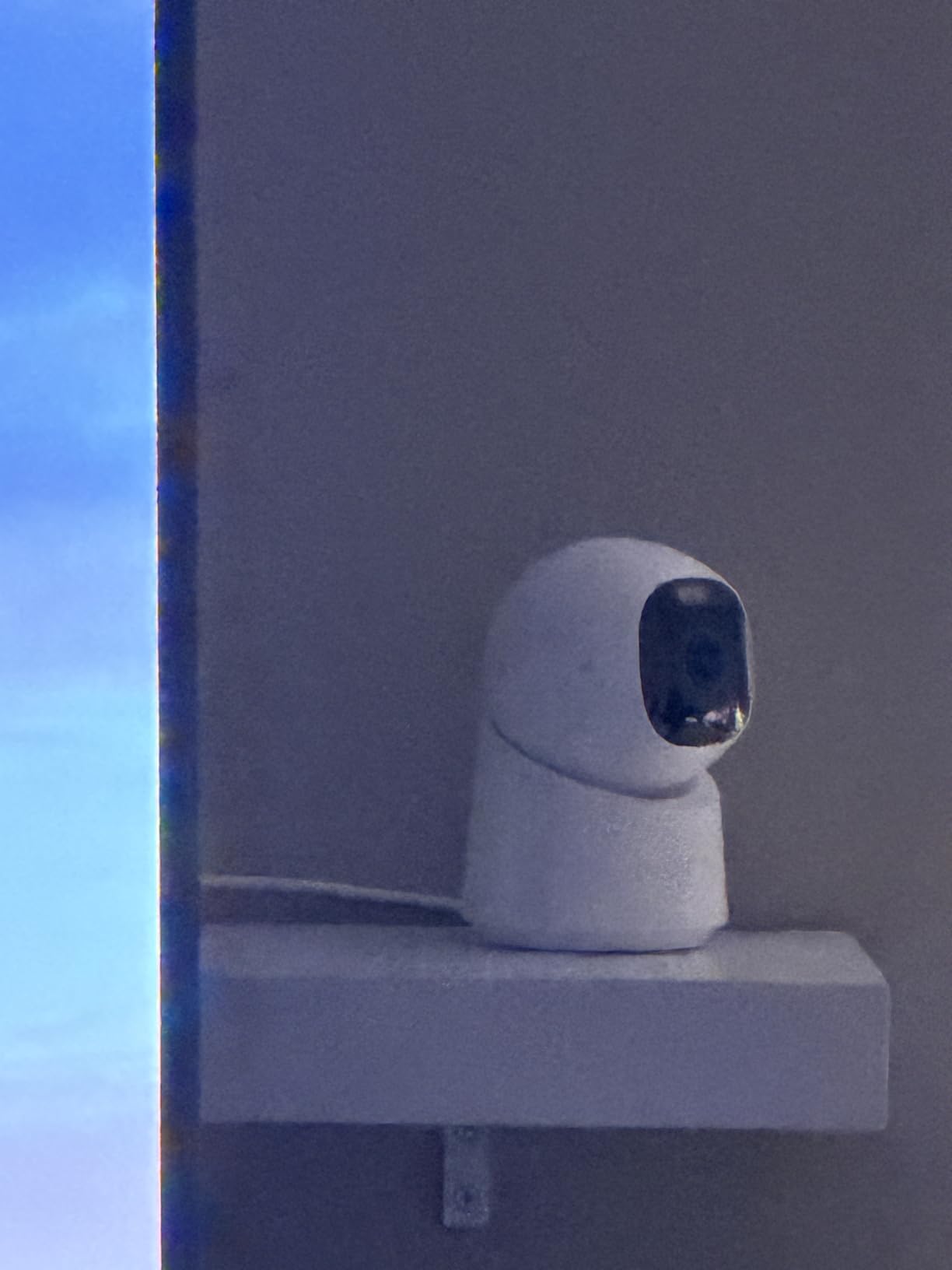
The eufy Indoor Cam E30 is the one I recommend when a family wants to see detail rather than just presence. At 4K UHD with H.265 encoding, it is the highest resolution in this roundup, and that difference is obvious when you are trying to tell whether a parent has actually got off the sofa or is just shifted on it.
The built-in spotlight is the quiet hero. It gives it color night vision rather than a grey infrared wash, so a dim room at 3am still reads as a room with a person in it.
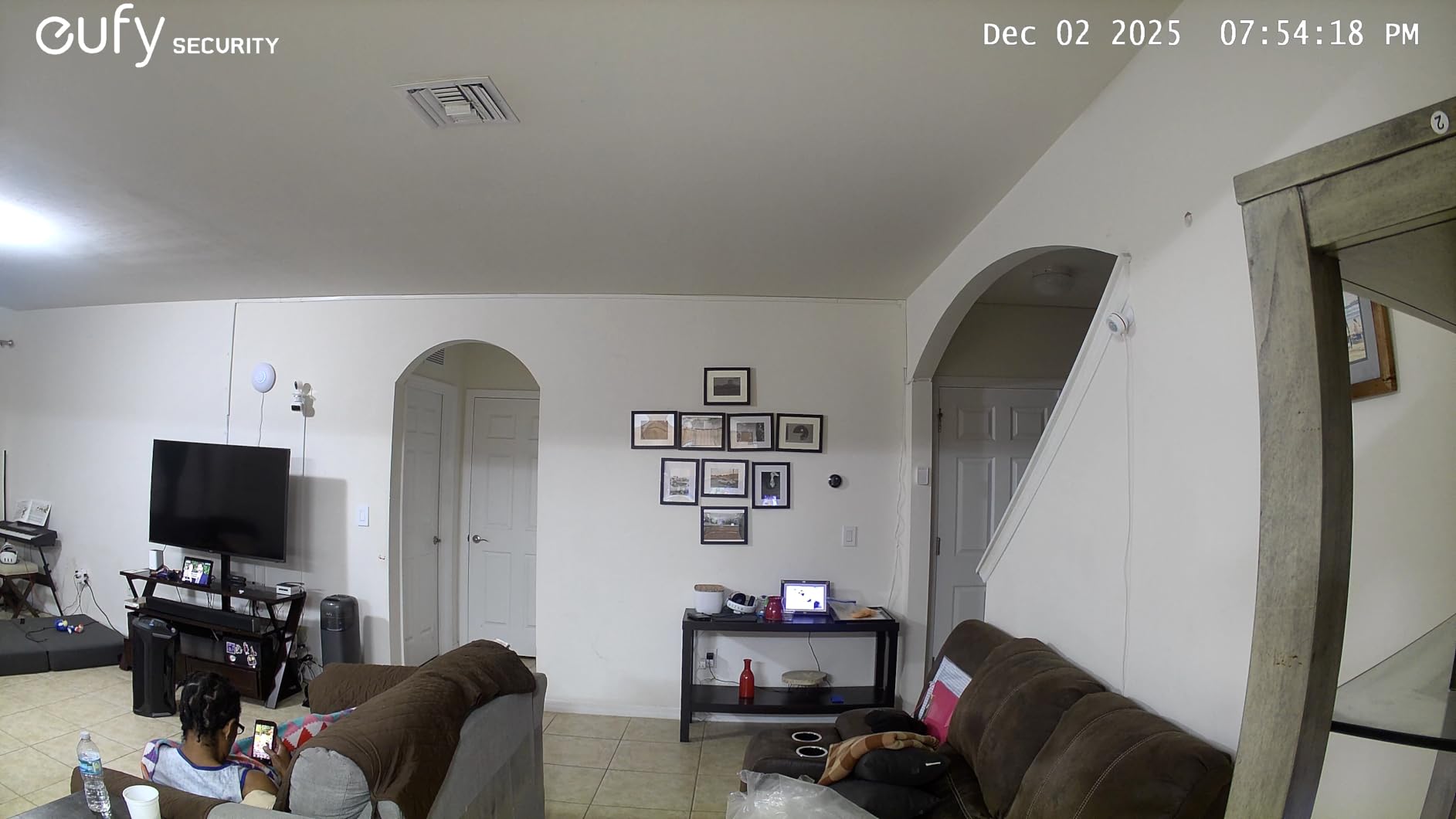
On-device AI handles humans, pets, audio cues and crying without sending footage to a cloud service for analysis. That matters for privacy-sensitive families, and it also means person detection keeps working if your internet is the slow part of the setup.
Unlike the Arlo, the full feature set runs with no monthly fee. Local microSD storage and capture-before-event buffering are included, so you can review what happened before an alert rather than joining mid-event.
Automatic pan tracking follows a person across the room, and it works with HomeKit, Alexa and Google Assistant — the broadest smart home support in this roundup.
Who this suits
Families living further apart who want a real answer, not a guess. At this resolution you can check on a parent from across town and still see what they are doing, which is the difference between a notification you act on and one you ignore.
It is a good fit for a parent who already owns Apple hardware, though note that HomeKit caps the stream at 1080p. Use the native app for the full 4K.
Where it falls short for this use case
It is indoor and wired only — no weather rating, no battery — so it cannot double as a front or back door camera. The head is also a little bulky for narrow shelves.
The review base is far smaller than the Ring, Tapo and Kasa units here, and a minority of reviewers report missed motion events and slow clip playback. The card is sold separately, and continuous recording wants a genuine high-endurance card.
7. Anona 4K Two-Pack Is Best for Covering Two Rooms in One Purchase
Anona 4K UHD Indoor Camera, Pet/Dog/Baby Security Camera with Phone App, 360°Pan-Tilt, 5G/2.4G Dual-Band Wi-Fi 6, Auto-Tracking, Person/Pet/Baby Crying Detection, Privacy Mode, Two-Way Audio, 2 Pack
4K UHD, 8MP per camera
355° pan, 110° tilt
Two-camera pack
Corded power
Pros
- Two cameras in one pack covers two rooms at once
- 4K UHD with 8x zoom
- Dual-band 2.4 and 5GHz Wi-Fi 6
- AI person
- pet and cry detection
- Auto-tracking across 355°
- Privacy mode
Cons
- microSD card not included
- Lower review count than the major brands
- 15fps frame rate is modest for fast movement
- Indoor use only
Most families need more than one camera. A hallway and a kitchen, or a living room and a front door, is the standard starting pair, and the Anona two-pack handles both without buying two brands and learning two apps.
It is also the only camera here with dual-band Wi-Fi 6, supporting both 2.4 and 5 GHz. On a home that also runs a video doorbell, a couple of laptops and a smart TV, that cleaner 5 GHz path is a real stability advantage over the 2.4 GHz-only units in this list.
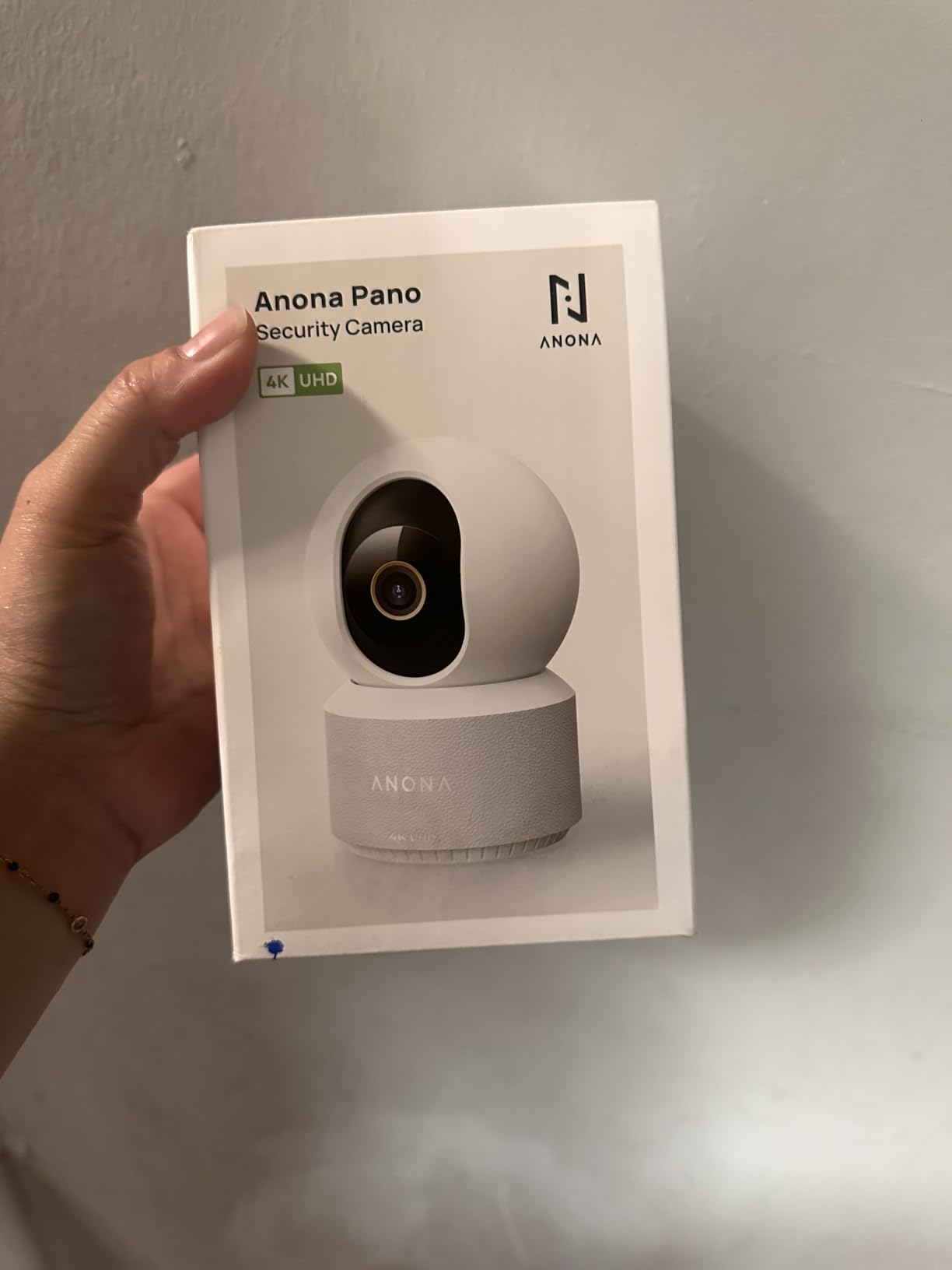
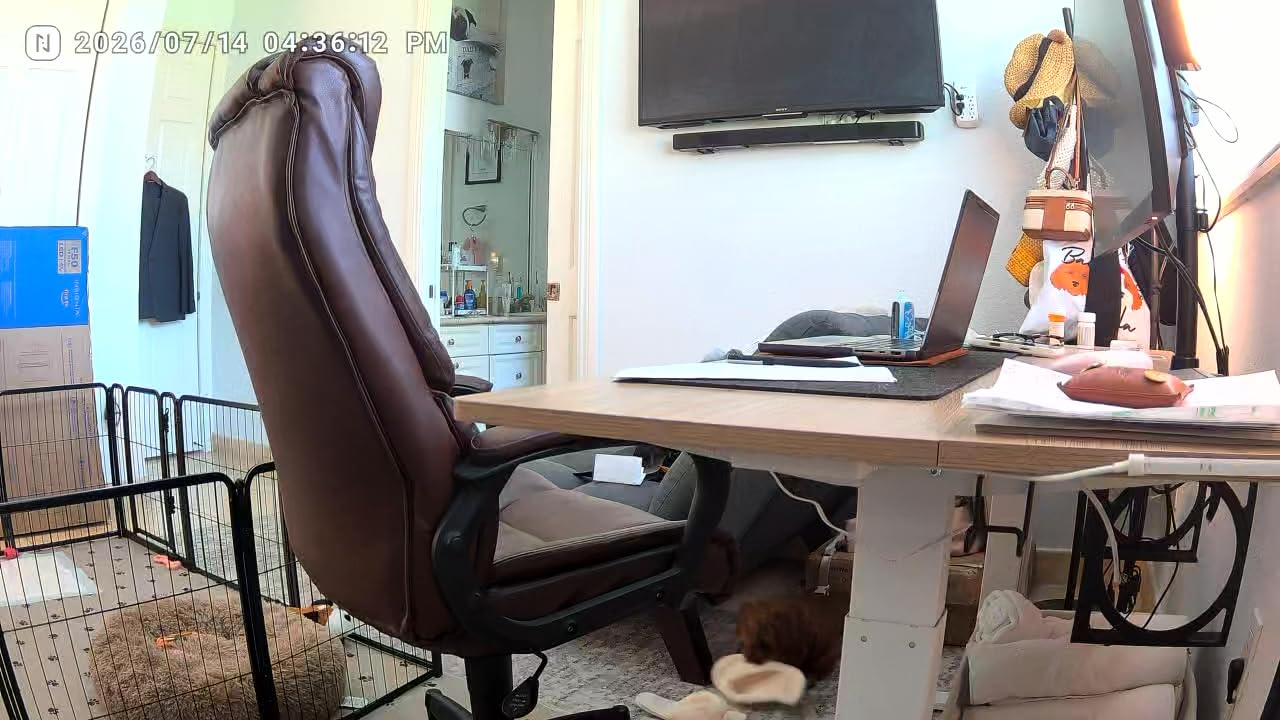
Image quality is genuinely good: 4K UHD at 8MP per camera with 8x optical-capable digital zoom, and a 355-degree pan with 110-degree tilt plus auto-tracking that follows a subject across most of the room.
AI detection covers people, pets and baby crying, so a parent calling out or a pet knocking something over can both generate a distinct alert rather than one generic motion ping.
Storage is local microSD up to 512GB or AES-128 encrypted cloud, and privacy mode pauses the lens for occupied rooms. Two-way audio is included.
Why two cameras is the right starting point
A pan-and-tilt camera in the living room and a second covering the hallway or kitchen catches the two things you most want to know: whether your parent is moving around normally during the day, and whether they are up and about at night. One camera pointed at a sofa answers neither well.
Auto-tracking across 355 degrees means the second camera still follows someone who walks out of a fixed frame, which is where most single-camera setups go blind.
Where it falls short for this use case
15fps is a modest frame rate. For slow walking and general room activity that is fine, but fast motion looks slightly stuttered compared with a higher frame rate.
The review base is around 2,000 — real, but far smaller than the Ring, Tapo or Kasa numbers, and indoor only with no weather rating. The card is not included.
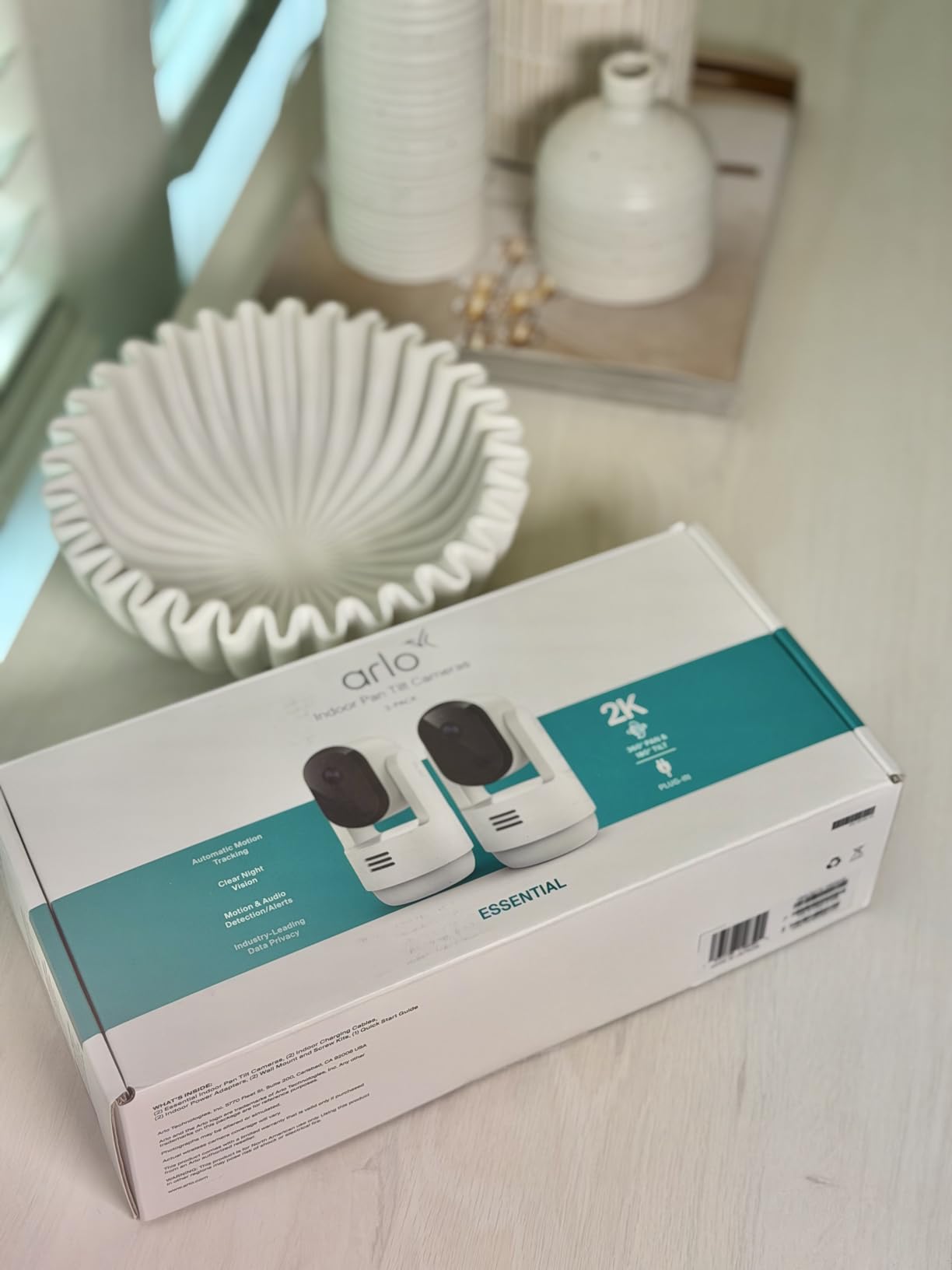
8. Arlo Essential Pan Tilt Zoom Is Best for a Steadier Dual-Band Connection
Arlo Essential Indoor Pan Tilt Zoom Security Camera 2K Wired – 1-Cam
2K 1440p video
360° pan, 180° tilt
Dual-band 2.4 and 5GHz
Corded power
Pros
- 2K resolution with 12x zoom
- 360° pan and 180° tilt with auto motion tracking
- Dual-band Wi-Fi for a steadier connection
- Advanced audio detection for barking and crying
- Physical privacy lens flips over
Cons
- 60-day history and emergency response need the Arlo Secure plan
- Live feed runs about a four-second delay
- Black and white night vision only
- Not water resistant
- Smallest review base here at 590
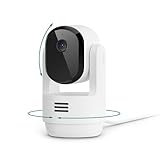
The Arlo is the second dual-band option here and, unlike the Anona, it is a single camera, which makes it the cleaner choice if one room is all you need. Dual-band means it can sit on the 5 GHz side of a router and stay clear of the crowded 2.4 GHz band where eight other household devices are fighting.
2K at 1440p with 12x digital zoom sits between the 1080p units and the 4K ones, and it is sharper than 1080p without the storage and bandwidth demands of 4K.
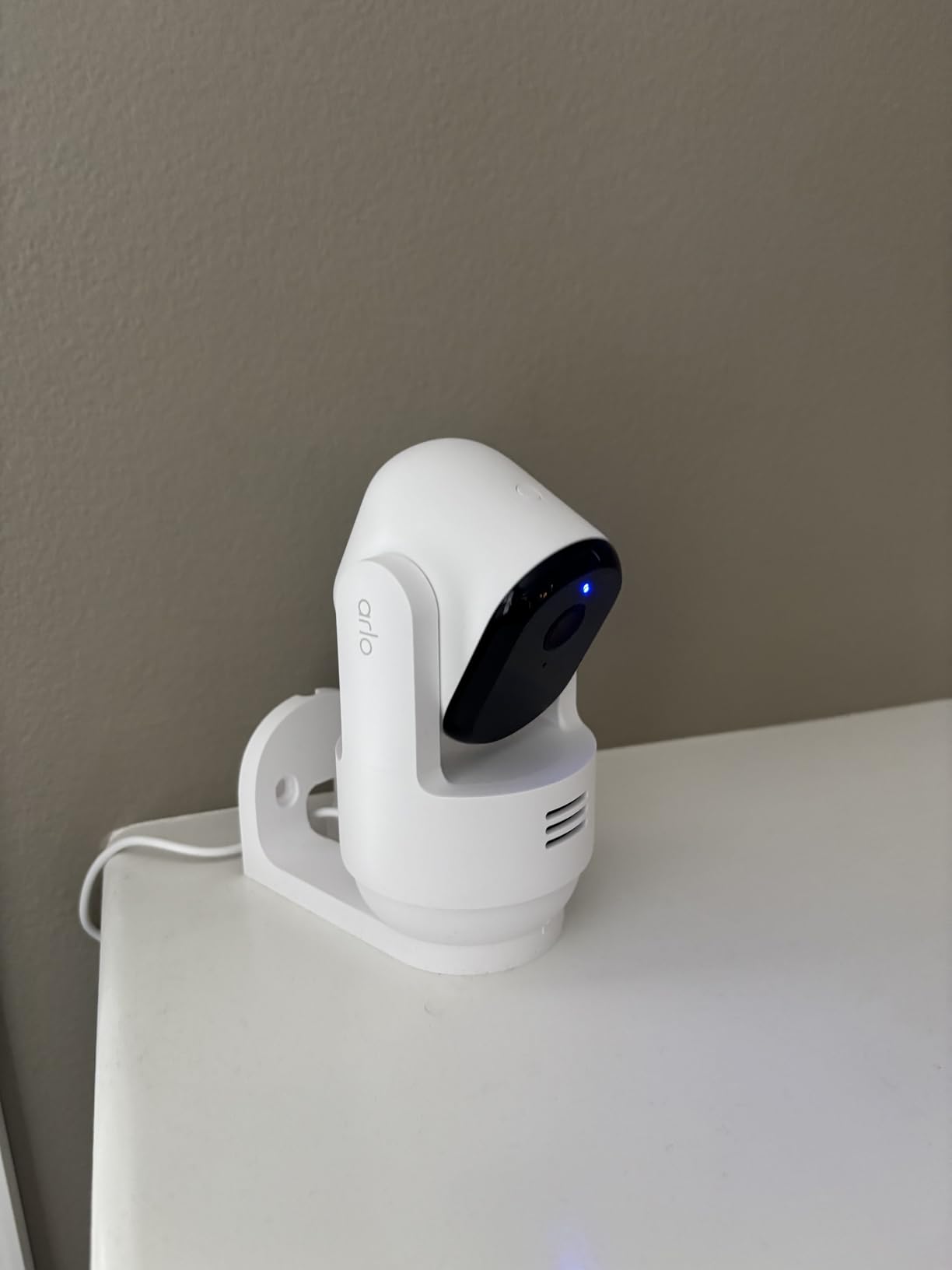
Two features here are more relevant to elderly care than they look. Advanced audio detection listens for specific sounds including screaming and barking, so a cry or a call for help raises a distinct alert. And the physical privacy lens flips down over the camera, giving your parent a visible, mechanical way to stop recording.
Auto motion tracking pans to follow a person, and it works with Alexa, Samsung SmartThings, IFTTT and Google Home — the broadest automation support in this roundup if you are building alerts around other smart home devices.
Basic alerts and live streaming work without a paid plan, so you can use it for pure check-ins with no recurring cost.
Where this one makes sense
Congested networks and a parent who already uses Samsung or Alexa. The four-second live feed delay is the trade-off for a steadier connection, and for check-ins rather than live conversation that is an acceptable one.
The 130-degree base field of view before panning is wide, so a single unit in a corner covers a good deal of a room.
Where it falls short for this use case
Night vision is black and white only, with no color mode, which is a downgrade for a person you want to identify at a glance. The camera is also not water resistant, so it stays indoors.
Video history and the emergency response feature sit behind the Arlo Secure plan after the trial, and support is limited to the United States. With 590 reviews it also has the smallest sample here.
9. KEENLUK Screen Camera Is Best for a Parent Who Will Not Use an App
KEENLUK Home Security Camera with 4.3″ Screen, Two Way Video Call Function for Elderly, Baby and Pets, 1080P HD with Motion Detection
4.3-inch built-in screen
1080P HD
350-degree lens
Corded 5V power
Pros
- Only unit here with a built-in 4.3-inch screen
- One-button call control is genuinely simple to operate
- Two-way video calling rather than one-way talk
- Device-to-device calling between two units
- Screen can be switched off remotely in the app
Cons
- Lowest rating here at 4.0
- Smallest review base at just over 200
- 1080p resolution is dated
- 2.4GHz Wi-Fi only
- SD card not included
- Fixed lens with no pan or tilt
This is the camera I would put in front of a parent who refuses to learn an app. Everything else in this roundup asks the monitored person to receive a call on a phone and answer it. This one has a 4.3-inch screen built into the unit and a one-button call control, so the interaction is press the button, see who is there.
That inverts the usual dynamic. Instead of your parent learning your phone, the camera meets them where they are. Two people can also call each other device to device, so a parent and a sibling can ring each other without either of them touching a phone.
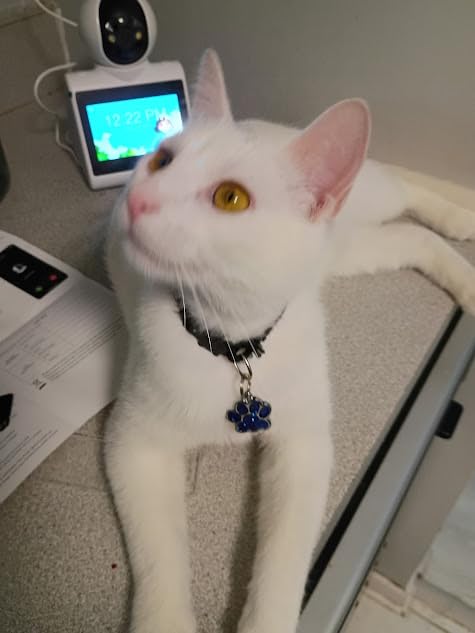
The 350-degree lens with infrared night vision leaves few blind spots without any panning, since the camera is fixed and wide. Motion sensors push a phone notification when something happens, and recording goes to a local SD card.
Privacy is handled unusually well. The screen can be switched off remotely in the app settings, so if someone walks into the room during a video call you can blank it from your own phone.
It is also the largest unit in the roundup at nearly 5 inches square and over 7 inches tall, which reads as a small framed screen rather than a security camera. That is a feature if the goal is acceptance.
Who should choose this
A parent with limited dexterity, low vision, or a real aversion to apps. A single large button is a genuinely different interface from a phone, and for someone who cannot work their phone reliably it removes the main failure point.
It also suits households where the person being monitored is the one making calls. Two-way video calling is a fuller conversation than push-to-talk on a speaker.
Where it falls short for this use case
The 4.0 rating and 212 reviews are the lowest in this roundup, so there is far less evidence it will behave the same way in a year. The 1080p sensor is dated compared with the 2K and 4K units, and 2.4 GHz only.
There is no pan or tilt, the SD card is not included, and the fixed wide lens means one room is all it covers. Test it in a store setting if you can — the button feel matters.
10. Tapo C260 Is the Best 4K Camera for Families Worried About Cloud Privacy
Tapo 4K Indoor Pan/Tilt Wired Security Camera, Baby Monitor, C260
4K 8MP video
360° pan, 116° tilt
Starlight sensor
Corded power
Pros
- 4K 8MP with 18x zoom for fine detail
- On-device AI keeps facial recognition data off the cloud
- Highest rating among the 4K options at 4.6
- Cry and person detection with no subscription fee
- Custom privacy and detection zones
- Starlight sensor gives color detail in low light
Cons
- microSD card sold separately
- 2.4GHz Wi-Fi only
- Indoor and wired only
- Smaller review base than the Tapo C201
The Tapo C260 is my pick when a parent is uneasy about cameras and the family needs something technical to point at. It is the only unit here that states on-device AI processing keeps facial recognition data off the cloud, and it is a signatory of the CISA Secure-by-Design pledge.
That is a real answer to the privacy conversation, not a reassurance. A parent can be told that the recognition happens in the camera in the room rather than on a server, and that is checkable.
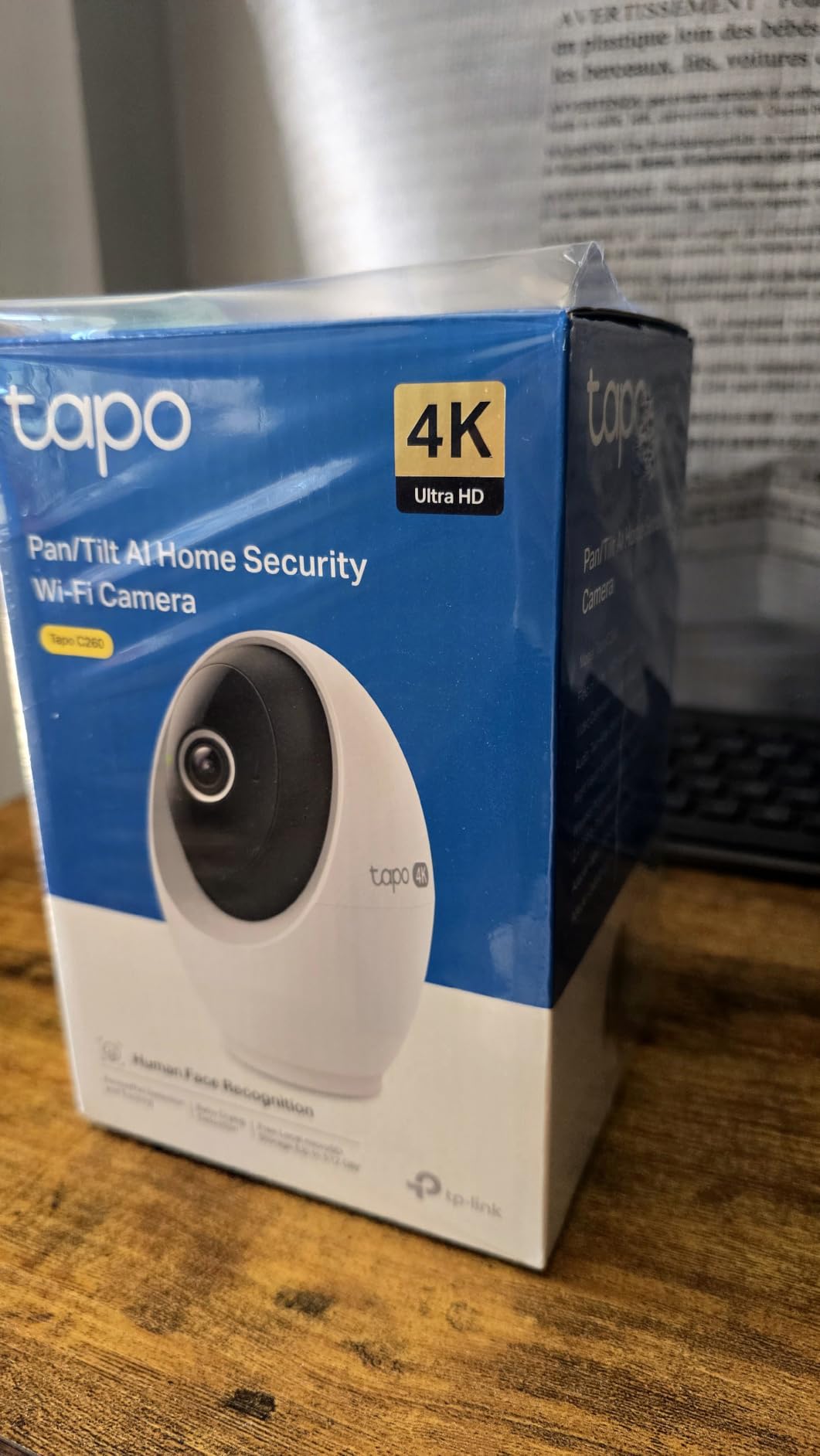
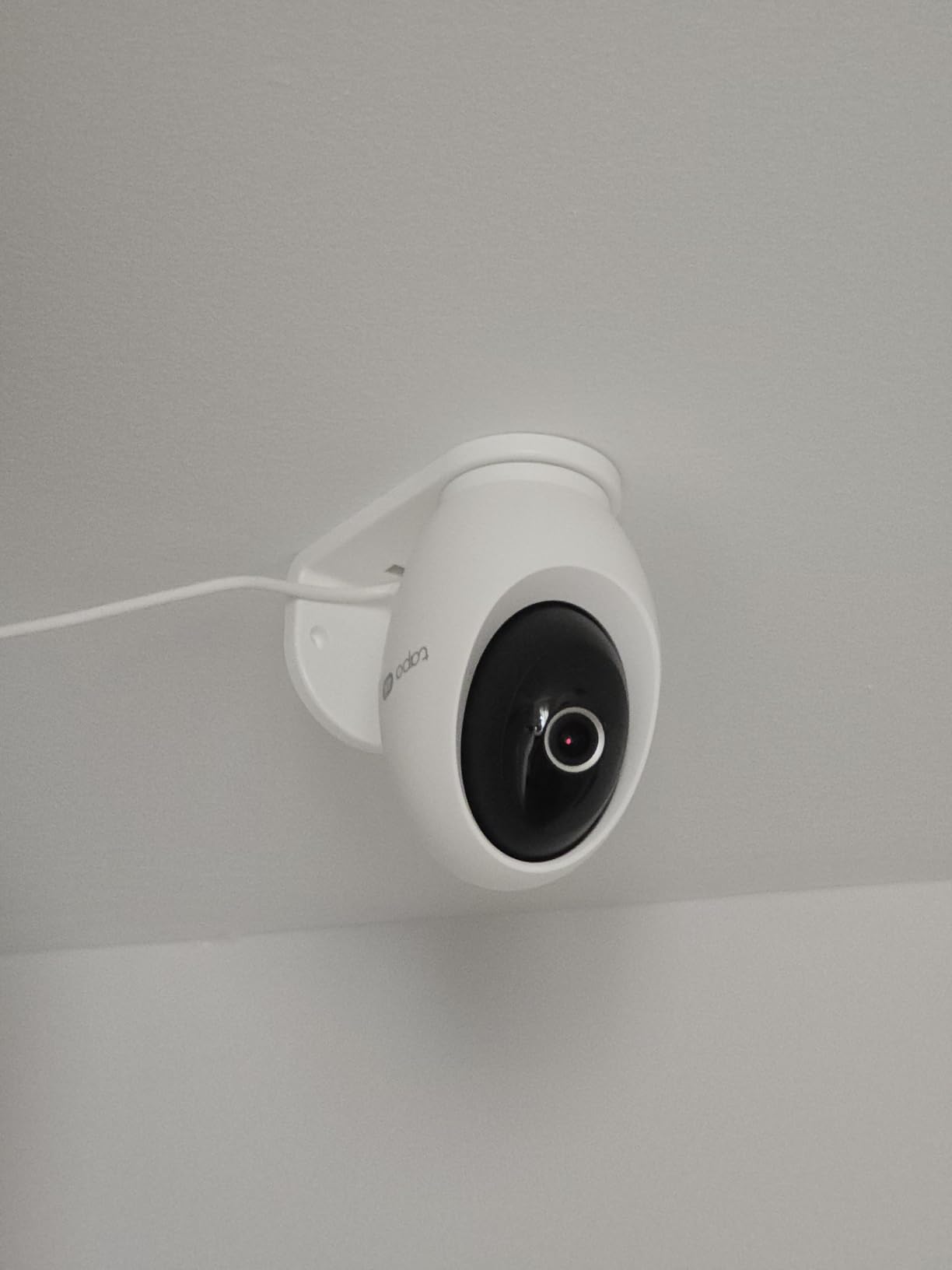
Image quality is 4K 8MP with 18x digital zoom, the highest zoom range in this roundup, across a 360-degree horizontal and 116-degree vertical pan. Smart motion tracking auto-pans to follow a subject.
The starlight sensor produces color detail in low light rather than switching to black and white, so a dim evening room still reads in color — closer to the Ring’s color night vision and better than the Blink and Arlo.
Cry, person and motion detection all run with no subscription fee, and custom privacy and detection zones let you block recording in a specific part of the room, such as next to a doorway or a window.
Why privacy features decide this pick
Custom privacy zones are the practical feature here. You can define an area the camera will not record, which lets you place a unit in a room where a family member changes or rests without capturing that corner. That is a small configuration step and it resolves a lot of discomfort.
At 4.6 with the strongest five-star share in this roundup, the satisfaction levels are high, and the model is also a CISA Secure-by-Design signatory.
Where it falls short for this use case
Two and a half years of public history is less than the Ring or Tapo C201, so the long-term reliability picture is less well documented. It is 2.4 GHz only, indoor and wired only, and the microSD card is sold separately.
Two-way audio is supported, but the two-way talk experience is not what sets this unit apart — the 4K detail and the privacy design are.
Will It Actually Work at Their House? Wi-Fi, Power and Placement
Most failed camera setups for elderly parents are not camera problems. They are network and placement problems, and they are fixable before you buy anything. Here is what to check.
First, the Wi-Fi band. Six of the ten cameras here are 2.4 GHz only, which is actually good news at most parents’ homes, because older routers often broadcast nothing else. The Anona and the Arlo add 5 GHz support, which helps on a crowded network. Either way, confirm the router is on 2.4 GHz before you set up, not after.
Second, signal strength at the far end of the house. A hallway camera at the back of a long home on a weak signal produces a picture that drops out, and dropped streams look identical to a quiet house. Test with a phone on the 2.4 GHz network in the room where the camera will go. If the signal is weak, a mesh node is a far better spend than a more expensive camera.
Third, power. Every camera in this roundup is corded, which is the right call — no battery to forget to charge. The exception to plan for is a power cut. One user in the caregiver forums described using a camera specifically to check whether the power at their parents’ house went out and came back on, which requires either a backup camera or a smart plug that reports its own state.
Fourth, placement, mapped to the specific risk you are trying to cover.
A hallway facing the bedroom and front door catches night wandering and disorientation. A kitchen covers missed meals, medication taken or not, and an unattended stove. A living room shows inactivity, which is the hardest signal to interpret and the one most prone to false alarms. A front door covers both a person who cannot get to it quickly and intruder deterrence, where the Wyze Cam Pan v3 or a Ring doorbell handles the outside.
Keep cameras high and angled down. Mounting above head height removes the temptation to reach up and adjust it, and it puts a parent further from the lens.
Our broader guide to the best outdoor security cameras covers the exterior coverage if the parent’s home has a yard or a driveway worth watching, and the best wireless security cameras page covers options that are not wired. For a broader look at the hardware itself, our roundup of the best security cameras overall is worth a read too.
Privacy, Consent and Where Not to Place Cameras
Yes, you can put a camera in your parents’ house, with conditions. The non-negotiables are consent, placement and control. Your parent needs to know the camera is there, it does not go in a bathroom or a private room, and they need a way to switch it off that does not require asking you.
Never place a camera in a bathroom, a bedroom, or any space where someone undresses or expects privacy. A hallway, kitchen, living room and the area around the front door are the four that families use without objection.
Give them a physical control, not just an app toggle. The Ring Indoor Cam has a manual privacy cover over the camera and mic, the Arlo has a lens that flips down, and the Wyze, eufy, Tapo and Anona all have a one-tap privacy mode. Being able to say “you can turn it off any time, and I will not be able to see it” is what converts an object into an agreement.
On dementia specifically, do not build the system around covert placement. A parent who discovers a camera has been hidden is likely to refuse every later device as well, and the trust cost is far higher than the monitoring gain. A visible camera the person can see and stop is workable in a way a hidden one is not.
If your parent will not accept a camera at all, that is a legitimate outcome rather than a problem to solve. Presence sensors that track occupancy without a lens, door and window sensors, smart utility monitoring and daily check-in systems cover a surprising amount of the same ground, and a wearable medical alert device handles the emergency case a camera cannot.
What to Do When an Alert Fires and Nobody Answers
Here is the operational step that decides whether a camera is useful or just noise. When an alert fires, most people freeze or shrug it off. The first five minutes matter.
Open the live view first, before calling. A 30-second look tells you whether this is a person on the floor, a person on the couch watching television, or a cat. It costs nothing and it prevents a lot of unnecessary panic.
If the view shows a fall or a parent who does not respond to a greeting over two-way audio, call their phone. Most will pick up.
If no answer, send a sibling or a neighbor rather than calling emergency services on a maybe. Agree in advance who gets called first so the decision is made in thirty seconds rather than debated in a group text at 2am.
Have a medical alert device or a panic button in place as the backstop. This is the honest limit of every camera on this page: they see a scene, they do not assess a medical emergency, and they cannot call for help on their own.
Then fix the alerts themselves, which is the other half of the problem. Draw motion zones that exclude windows, trees and the street. Turn on person detection so a shadow does not ping you. Set notification schedules so you are not woken at 3am for a hallway that is always active. Enable AI routines where available, so the camera alerts on a deviation from normal rather than on all movement. If you find yourself muting the app, the configuration is wrong, not the camera.
Frequently Asked Questions
What is the best camera to monitor elderly loved ones?
The Ring Indoor Cam is the best overall pick, with the highest rating and the largest review base in our roundup. Its 1080p color night vision shows a parent clearly in a dim room, a physical privacy cover lets them stop recording, and two-way audio means you can speak without either of you using a phone.
Can I put a camera in my elderly parents’ house?
Yes, with three conditions. Your parent must know it is there and agree to it, it must never go in a bathroom, bedroom or any private space, and they need a way to switch it off themselves. Cameras with a physical privacy cover or one-tap privacy mode make that last point much easier.
What camera can I use to monitor elderly people without Wi-Fi?
None of the cameras in this roundup works without a network connection of some kind, because the app and the alerts both run over the internet. If a parent’s home has no reliable broadband, the realistic options are a 4G or LTE cellular camera with a SIM, a wired Ethernet camera run to a nearby router, or a mesh node added to improve the existing signal.
What is the easiest camera to use for seniors?
For the person installing it, the KEENLUK screen camera is the easiest, because it has a built-in 4.3-inch display and a single call button, so the parent never opens an app. For everyone else the answer is the Ring Indoor Cam: plug it in, scan a code, and the swiveling mount makes aiming it a one-hand job.
Do security cameras work for elderly fall detection?
Generally no. Most indoor cameras detect a change in the scene, not a body on a floor, and a parent who has fallen may be partly outside the frame or in shadow. Use a camera for check-ins and communication, and pair it with a wearable medical alert device or a panic button for the actual fall response.
Conclusion
For most families, the Ring Indoor Cam is the right first purchase when you are choosing among the best security cameras for monitoring elderly parents. It has the strongest rating and review record here, color night vision, a physical privacy cover, and two-way audio that works without a subscription for the core check-in job.
Add a Tapo C201 when you want more room coverage for less, a Tapo C260 when privacy and 4K detail matter most, an Anona two-pack when you need two rooms at once, or a KEENLUK screen camera when the hardest problem is your parent’s reluctance to use an app.
Whichever you pick, pair it with a panic button or medical alert device, place it outside private rooms, and check the live view before you call anyone. That combination is what turns a camera into something a family actually keeps using after the first month.