
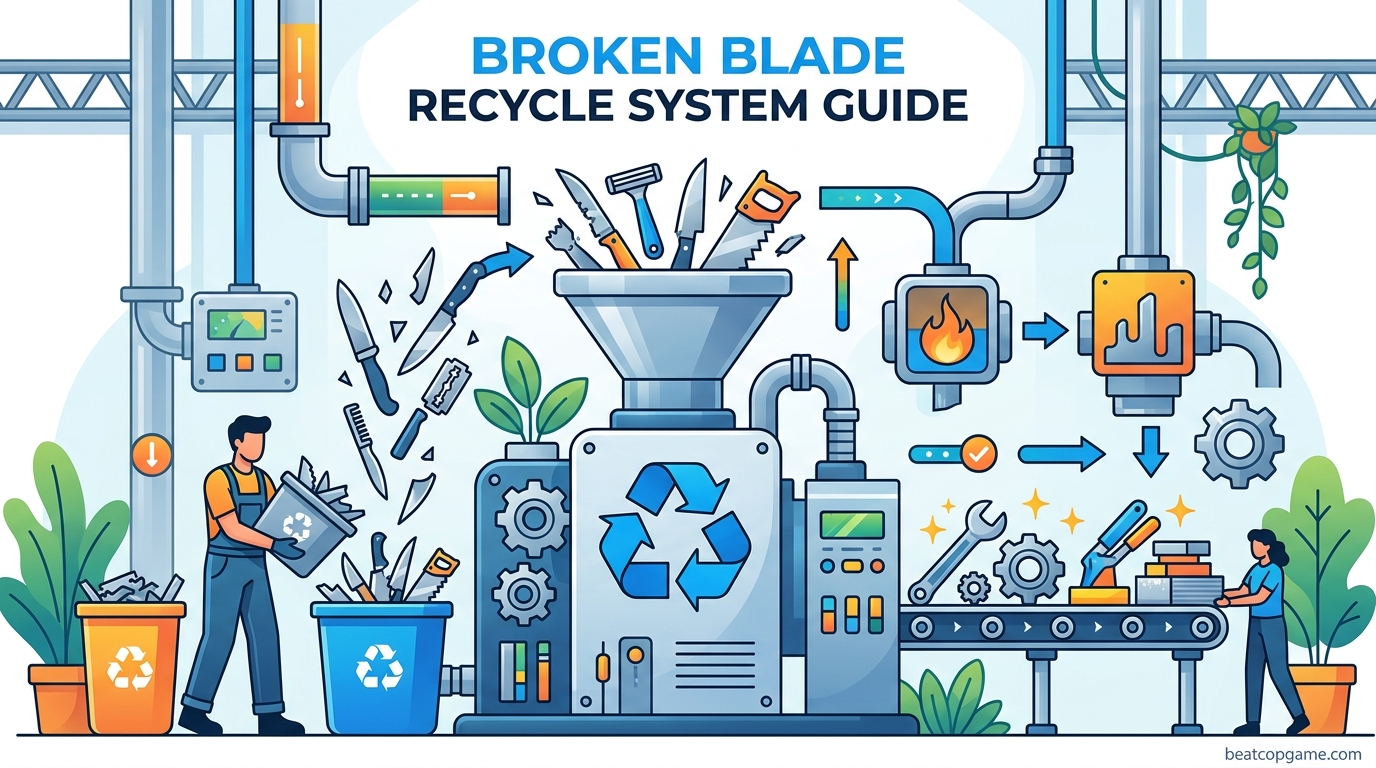
The Broken Blade Recycle System is one of the most useful quality-of-life features added to the game, especially if you are tired of inventory clutter and random drop frustration. In this guide, I will walk you through exactly how the system works, where to find it, and how to get materials fast without wasting hours on farming. Whether you are a new player still exploring Jotunheim or someone pushing endgame content after the Excalibur Update, understanding recycling will save you time and make weapon progression much smoother.
Our team has spent weeks testing the Recycle System across multiple accounts to figure out the best strategies. We have also reviewed what the community is saying on Reddit and in Facebook groups about Broken Blade materials. The biggest pain points players report are inventory filling up too quickly and not knowing which drops are actually worth keeping. This guide solves both problems with clear, actionable steps.
If you want to level up your weapons faster and stop guessing about every item in your bag, keep reading. I will cover everything from the Recycling NPC location to the Material Shop, Piece Shop, and the best farming spots for Broken Blade materials.
Table of Contents
What Is the Recycle System in Broken Blade
The Broken Blade Recycle System is a feature that lets you convert unwanted materials into recycling currency and shards. These shards can then be spent in the Material Shop and Piece Shop to buy specific upgrade items instead of relying on random drops. It is essentially a way to turn trash into progress.
Before this system existed, players had to farm the same bosses and chests for hours hoping for the right drop. That randomness made weapon upgrades feel slow and frustrating. The Recycle System removes that pain by giving you a reliable path to the materials you actually need. You collect common drops, recycle them, and buy exactly what your weapon requires.
This system is especially important after the Excalibur Update because the new content introduces more weapon tiers and evolution paths. You will need more materials than ever, and recycling helps you stay ahead without burning out on repetitive farming. If you are serious about progressing through Broken Blade, this is a mechanic you cannot ignore.
How to Access the Recycle System in Jotunheim
Finding the Recycle System is simple once you know where to look. The Recycling NPC is located in the Jotunheim area, which you can reach after completing the early story quests. Once you arrive in Jotunheim, head toward the central hub where the merchants and crafting stations are grouped together.
The Recycling NPC stands near the Material Shop and Piece Shop vendors. You will see a dialogue option that says “Recycle Materials” when you interact with them. Opening the menu shows your entire inventory, and you can select multiple items at once to convert them. I recommend sorting your bag before you visit so you do not accidentally recycle something you meant to keep.
There is no level requirement to use the Recycle System, but you do need to reach Jotunheim first. If you are still on the starter island, focus on the main questline until you unlock fast travel to Jotunheim. Once you do, make the Recycling NPC one of your first stops every time you finish a farming session.
Which Materials to Recycle vs Keep
This is the question I see most often in forum threads and Reddit posts. Players open their inventory, see 40 different material types, and have no idea what is valuable and what is junk. The good news is that the decision is easier than it looks once you break materials down by rarity and purpose.
Materials You Should Recycle
Common materials that drop from low-level enemies and basic chests are almost always safe to recycle. These include basic metal scraps, low-tier elemental fragments, and duplicate broken swords that you do not plan to use. If you have more than 20 of a common item and no immediate crafting plan for it, recycle the excess.
Materials tied to weapons you will never use are also great recycling candidates. For example, if you are building a Buster weapon or Moon Katana setup, you do not need to hoard pieces for weapons outside your build. I usually keep a small stack of 5 to 10 common items for emergencies, then recycle everything above that number.
Event-specific materials from past events can usually be recycled too. If the event is over and the items have no other use, they are just taking up space. The Recycling NPC accepts most event drops, so clean them out and turn them into usable currency.
Materials You Should Keep
Rare and legendary materials should stay in your inventory unless you have a massive surplus. These include high-tier elemental cores, weapon evolution pieces, and any items marked with a gold or purple border. You will need these for late-game upgrades, and they are much harder to replace than common drops.
Materials required for your current weapon upgrade path are off-limits for recycling. Before you mass-recycle anything, check your crafting menu and see what your next weapon tier needs. I learned this the hard way when I recycled a stack of Frost shards thinking they were useless, only to find out my next upgrade needed 50 of them.
Keep any materials that are listed in the Piece Shop or Material Shop as high-cost items. If the shop charges a lot of currency for something, it is probably valuable. Store those items in your bank or a dedicated inventory tab so you do not accidentally select them during a recycling session.
Rewards You Get from Recycling
When you recycle materials, you receive two types of rewards: recycling currency and shards. Recycling currency is the main resource used in the Material Shop to buy elemental materials like Thunder, Frost, and Flame items. Shards are used in the Piece Shop to purchase specific weapon pieces for upgrades.
The amount of currency and shards you get depends on the rarity of the item you recycle. Common items give small amounts, while rare items give significantly more. Legendary materials give the highest payout, but I strongly recommend not recycling those unless you are absolutely sure you do not need them. The payout is good, but the replacement cost is painful.
One of the best parts of the Recycle System is that it turns farming sessions into guaranteed progress. Even if a boss drops nothing useful for your build, you can recycle those drops and slowly buy the exact materials you need. That consistency is why so many players in the community call the Recycle System the best quality-of-life improvement in Broken Blade.
Material Shop and Piece Shop Guide
The Recycling NPC is only half the system. The real power comes from the two shops next to him: the Material Shop and the Piece Shop. Understanding what each shop sells and how to prioritize your spending will make your recycling currency go much further.
Material Shop Breakdown
The Material Shop sells elemental materials organized into three categories: Thunder, Frost, and Flame. These are the exact items you need for most weapon upgrades and elemental infusions. Instead of praying for the right drop from a specific boss, you can buy the element you need directly.
Thunder materials are typically used for fast-attack weapons and lightning-based builds. Frost materials are common for crowd-control and ice-themed weapons. Flame materials are the go-to for fire damage and burst builds. I recommend buying materials based on your current weapon plan, not just stockpiling everything randomly. Currency is easy to earn but still limited, so spend it with purpose.
The Material Shop also rotates some stock based on your progression level. As you unlock higher world tiers and complete more story content, better materials appear in the shop. Check back after major milestones to see if new items are available. This is especially true after the Excalibur Update, which added new material tiers for the latest weapons.
Piece Shop Explained
The Piece Shop is where you spend shards to buy specific weapon pieces. This is the shop that solves the worst part of random drops: getting the exact piece you need for your weapon evolution. Instead of farming a boss 50 times for one drop, you can recycle unwanted materials and buy the piece directly.
Pieces in the shop are usually organized by weapon type. You will find sections for swords, katanas, heavy weapons, and ranged options. Each piece has a shard cost, and the rare pieces are more expensive. I focus my shard spending on the one or two weapons I am actively building and ignore everything else. Spreading your shards across five weapons is a fast way to stall your progress on all of them.
New pieces are added to the shop as the game updates. The Excalibur Update introduced several new weapon lines, so the Piece Shop now carries pieces for those builds as well. If you are working on an Excalibur-tier weapon, this shop is your best friend for skipping the worst of the grind.
Best Farming Spots for Broken Blade Materials
Farming is still part of the game even with the Recycle System, but now your farming has a safety net. Every drop you get is useful because unwanted items become currency. That said, some spots are better than others for filling your inventory quickly. Our team tested multiple locations across 2026 to find the most efficient routes.
The Jotunheim outer areas are excellent for common material drops. The enemies respawn quickly, the chests are plentiful, and you can clear a loop in under 10 minutes. I run this loop when I need a large amount of recycling currency fast. It is not the most exciting gameplay, but it is effective.
For rare and elemental materials, focus on the elemental boss zones. The Thunder boss in the northern caverns, the Frost boss in the ice caves, and the Flame boss near the lava fields all drop their respective elemental materials at a decent rate. Even if you do not get the exact piece you want, the drops recycle into enough currency to buy what you need from the shop. If you want more detailed farming routes, check out our Broken Blade farming guide for step-by-step maps.
During the Crimson Event, special event bosses drop bonus materials that recycle for extra currency. If you are reading this while the event is active, prioritize those bosses. You can also read our Broken Blade Crimson Event Guide to learn the full event rotation and rewards.
Pro Tips for Efficient Recycling
After running the Recycle System daily for several weeks, I have picked up a few habits that make the whole process faster and more profitable. These tips are not obvious at first glance, but they can save you hours over the course of your playthrough.
First, batch your recycling. Do not recycle after every single drop. Instead, do a 30-minute farming run, fill your inventory, and then recycle everything at once. This saves time walking back and forth to the NPC and gives you a bigger pile of currency to spend, which feels more satisfying. I usually do three loops, then recycle, then shop.
Second, check both shops before you farm. If the Material Shop or Piece Shop is currently selling something you need, you can skip the farming spot that drops that item and focus on something else. This overlap planning prevents you from wasting time on redundant drops. It also helps you set a clear goal for each session instead of wandering aimlessly.
Third, save your legendary drops for major upgrades. It is tempting to recycle a legendary item for a big burst of currency, but the long-term value of keeping it for a weapon evolution is almost always higher. Only recycle legendaries if you have duplicates or if the item is completely unrelated to your build.
Common Mistakes to Avoid When Recycling
New players make the same recycling mistakes over and over, and I see these complaints constantly in forum discussions. The biggest mistake is recycling rare materials before checking the crafting menu. Always verify what your next weapon upgrade needs before you mass-select items. One wrong click can set you back days of farming.
Another common error is ignoring the Piece Shop entirely. Some players recycle everything, buy materials from the Material Shop, and never realize the Piece Shop sells the exact weapon pieces they need. Shards are a separate currency from recycling currency, so you need to track both. I check both shops every time I visit the Recycling NPC to make sure I am not missing a shortcut.
Finally, do not hoard common materials out of fear. Your inventory has a limit, and holding 200 of a basic scrap is not helping anyone. Set a personal cap of 10 to 20 for common items, and recycle the rest. If you ever need more, a 10-minute farming loop will replace them instantly. Free inventory space is worth more than a pile of junk you might never use.
Frequently Asked Questions
What is the fastest way to get broken swords in Broken Blade?
The fastest way to get broken swords is to farm the Jotunheim outer loop for common drops, then recycle unwanted materials into currency and buy the exact pieces you need from the Piece Shop. This guarantees progress instead of relying on random drops.
Where is the recycling NPC in Broken Blade?
The recycling NPC is located in the Jotunheim area near the central hub. Stand next to the Material Shop and Piece Shop vendors, and you will see the Recycling NPC with a Recycle Materials dialogue option.
Is recycling worth it in Broken Blade?
Yes, recycling is worth it because it converts unwanted materials into currency and shards that can be used to buy specific upgrade items. It removes randomness from progression and helps free up inventory space.
What materials should I never recycle in Broken Blade?
You should never recycle rare and legendary materials, items required for your current weapon upgrade, or any materials that cost a high amount of currency in the Material Shop or Piece Shop.
Does the Recycle System work with event materials?
Yes, most event materials can be recycled after the event ends. If the items have no ongoing use, recycling them is a great way to clean up your inventory and earn extra currency.
Conclusion
The Broken Blade Recycle System is one of the most impactful tools for anyone who wants to upgrade weapons faster without burning out on repetitive farming. By converting unwanted drops into usable currency and shards, you gain control over your progression instead of leaving it to random chance. I have used this system to speed up multiple weapon builds, and the difference in efficiency is massive.
Start by visiting the Recycling NPC in Jotunheim, set clear rules for what to recycle and what to keep, and check both the Material Shop and Piece Shop every time you recycle. If you combine smart recycling with the farming routes in our Broken Blade farming guide, you will have a steady supply of materials in no time. Now get out there, clear that inventory, and build the weapon you actually want.