
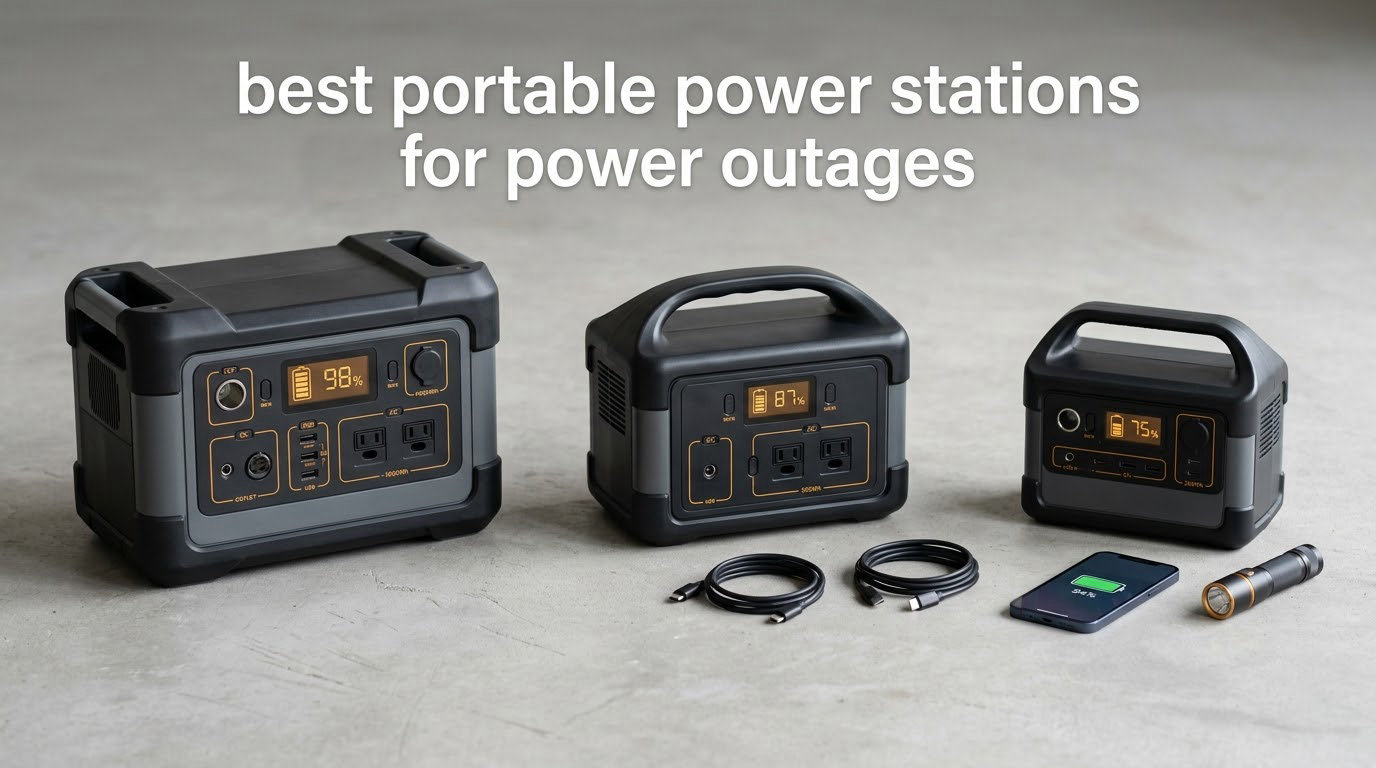
The best portable power stations for power outages are the ones whose continuous output matches your heaviest appliance and whose usable watt-hours cover the hours you actually need. Get either number wrong and the machine trips its inverter the moment a refrigerator compressor kicks in, or dies quietly at 2am with a third of the night still to go.
That is the whole decision in two figures. Everything else on this page – port counts, screen brightness, app quality, solar inputs – is decoration compared with those two. We spent this roundup measuring every published specification against the outage scenarios real households describe: a fridge, a CPAP machine, a router and modem, a couple of LED lamps, and the occasional space heater that ruins somebody’s plan.
Below are 10 stations, from a grab-and-go 192Wh model that fits in an ammo can to a 2,042Wh cabinet-sized unit that can carry a multi-night outage on its own. We also work through the runtime math, the refrigerator and CPAP caveats, the honest comparison against a gas generator, and a 30-minute setup drill you should run before the lights go out.
One disclosure before we start: we did not perform hands-on lab testing for this roundup. Every recommendation here is built from published manufacturer specifications, warranty and certification claims, and patterns that show up repeatedly across thousands of customer reviews. Where reviewers measured something themselves – idle draw, actual surge limits, harmonic distortion – we report it as a customer measurement, not as our own. We tell you which is which in our general portable power station guide too.
Top 3 Best Portable Power Stations for Power Outages (October 2026)

Jackery Explorer 1000 v2
- 1070Wh capacity
- 1500W continuous output
- 0 to 100% in one hour
- 4000+ cycle LFP battery
- 7 outlets including 100W USB-C

Anker SOLIX C1000 Gen 2
- 1024Wh capacity
- 2000W continuous output
- 10ms UPS switchover
- Full recharge in 49 minutes
- 10 ports across AC and USB-C

BLUETTI AC180
- 1152Wh capacity
- 1800W continuous output
- 0 to 80% in about 45 minutes
- 20ms UPS backup
- 11 outlets plus wireless pad
All 10 Portable Power Stations Compared in 2026
| Product | Specifications | Action |
|---|---|---|
| Jackery Explorer 1000 v2 |
|
Check Latest Price |
| Anker SOLIX C1000 Gen 2 |
|
Check Latest Price |
| BLUETTI AC180 |
|
Check Latest Price |
 BLUETTI Elite 100 mini BLUETTI Elite 100 mini |
|
Check Latest Price |
 OUPES Mega 1 OUPES Mega 1 |
|
Check Latest Price |
 Jackery Explorer 2000 v2 Jackery Explorer 2000 v2 |
|
Check Latest Price |
 Jackery Explorer 300 Jackery Explorer 300 |
|
Check Latest Price |
 Anker SOLIX C300 Anker SOLIX C300 |
|
Check Latest Price |
 BLUETTI Elite 30 V2 BLUETTI Elite 30 V2 |
|
Check Latest Price |
 DaranEner NEOZ DaranEner NEOZ |
|
Check Latest Price |
1. Jackery Explorer 1000 v2 – Best Overall for Typical Outages
Jackery Explorer 1000 v2 Portable Power Station,1070Wh,1500W
1,070Wh LiFePO4
1,500W continuous AC
3,000W surge
23.8 lb
0 to 100% in 1 hour
Pros
- 1500W continuous output handles refrigerator compressor startup
- One hour full recharge through app-enabled emergency mode
- 4000+ cycles holding over 70% capacity
- Seven outlets including 100W USB-C PD
Cons
- 23.8 lb is heavy for stairs
- One-hour charge must be re-enabled in the app each time
- Solar input limited to Jackery-branded panels
This is the unit we keep coming back to, because it is the rare power station where the headline number and the working number agree. It holds 1,070Wh, delivers 1,500W continuously and 3,000W on surge, and it recharges from empty to full in one hour when you enable emergency charging mode in the Jackery app.
That combination matters during an outage in a specific way. A 1,000Wh-class station is the size community members keep pointing to as the practical floor for anything beyond phones and lamps – at roughly 900 usable watt-hours, you can carry a router, a modem, a CPAP machine and a small fridge for a meaningful slice of a night.
We ran the numbers the way we would in our own house. At 1,070Wh nameplate, plan on about 910 usable watt-hours. A CPAP machine at a typical 40W overnight draw eats about 5.8 of those hours, a router plus modem at 25W eats nearly 12, and an LED lamp at 10W runs out around 30. Run a 150W fridge on a 40 percent duty cycle and you have roughly 15 hours, which is most of an overnight outage and part of the next day.
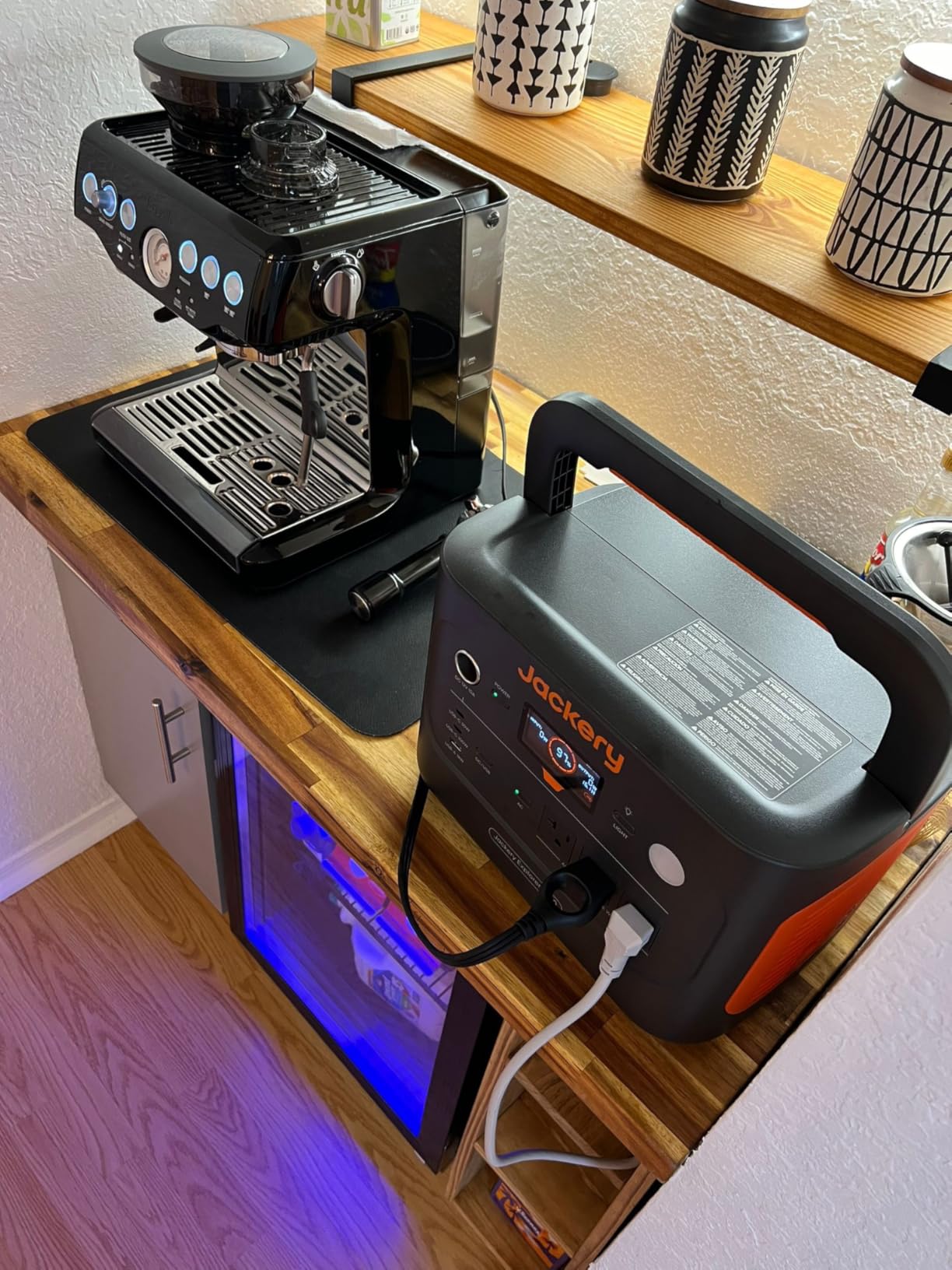
The recharge speed is the feature reviewers bring up first, and the reason is obvious once you have lived with it. A station that takes six hours to refill is useless during a multi-day event. One hour means you can top it up overnight while the household sleeps, and be back to full before the utility crews arrive.
The LFP chemistry is the second quiet win. Jackery claims the pack holds over 70% capacity after 4,000 cycles, which works out to a decade of daily discharge cycles before it reaches end of life. The pure sine wave AC output on all three outlets also means sensitive electronics – a NAS, a router, medical gear – see clean power rather than the stepped waveform a cheaper inverter produces.
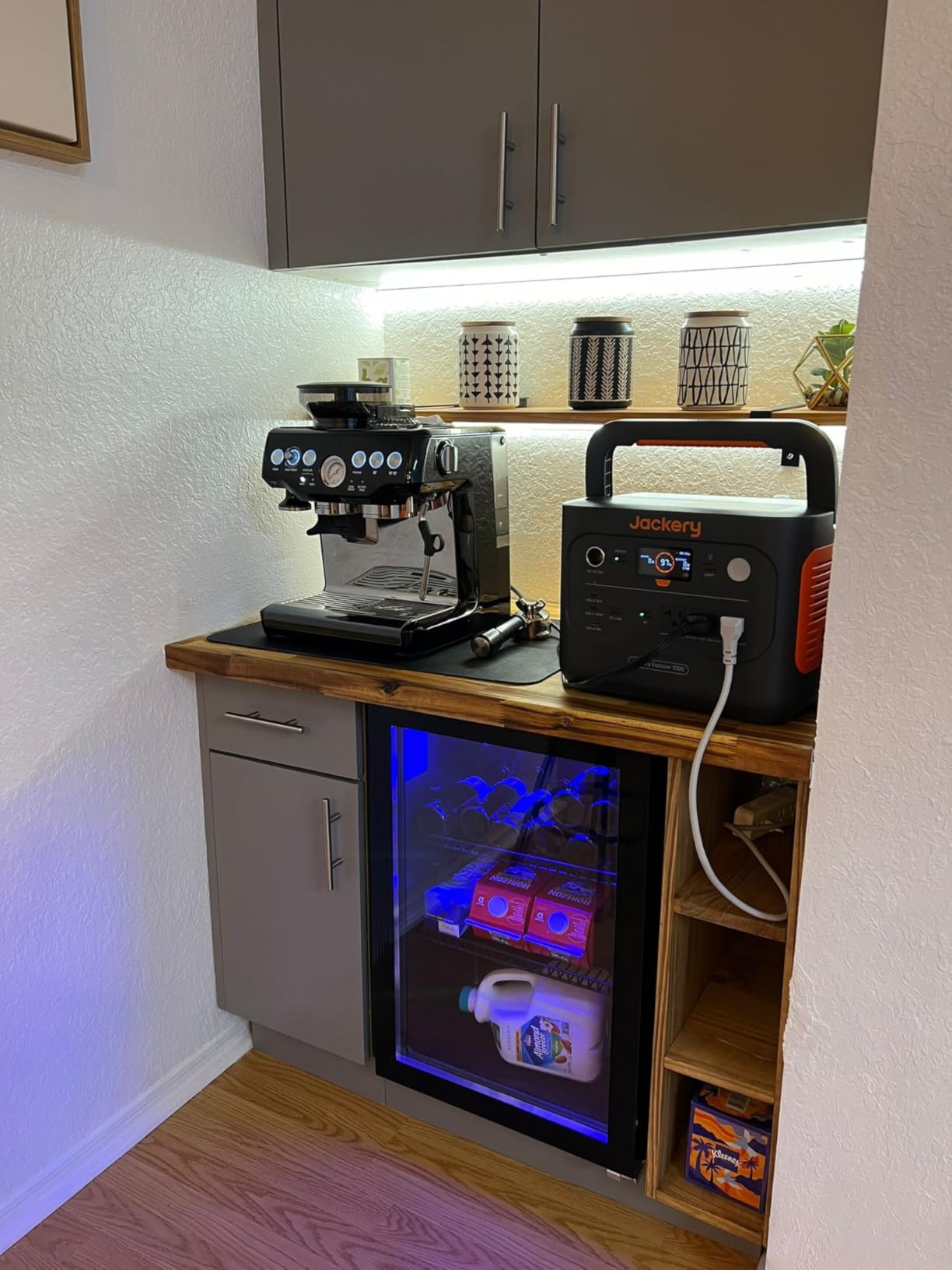
What the Explorer 1000 v2 handles without drama
Refrigerators, microwaves, routers, laptops, CPAP machines and small power tools all sit inside its 1,500W continuous rating, and the 3,000W surge figure gives a compressor motor comfortable headroom. Seven outlets means you are not daisy-chaining a power strip and hoping.
The 23.8 lb weight is the one practical limit. If your gear lives at the top of a basement stair, test the carry before the outage, not during it. The foldable handle helps, but this is a two-handed lift when the case is full.
Where it falls short
The one-hour emergency charge is a setting, not a default, and reviewers report having to re-enable it in the app each time you want it. If the app is unavailable to you, you are living with the 1.7 hour standard charge instead.
Solar input only accepts Jackery-branded panels, which is a real constraint if you already own a 400W panel from another maker. Plan on recharging from a wall outlet or a car outlet, not from an existing panel array.
2. Anker SOLIX C1000 Gen 2 – Best for CPAP and Medical Devices
Anker SOLIX C1000 Gen 2 Portable Power Station, 1,024Wh, 2,000W, Camping
1,024Wh LiFePO4
2,000W continuous AC
3,000W peak
about 25 lb
10ms UPS
Pros
- Highest continuous output in the 1kWh class at 2000W
- 10ms UPS switchover protects CPAP machines and routers
- Full recharge in 49 minutes
- Reviewers describe it as inaudible in normal use
Cons
- Gen 2 dropped the expansion battery capability
- About 25 lb makes it one of the heavier options
- One electrical engineer reviewer measured 15 to 20% harmonic distortion on a microwave
The headline here is 2,000W of continuous output from a 1,024Wh pack. That is unusual – most 1kWh stations land between 700W and 1,500W – and it means this unit will start appliances that its size would suggest it could not.
For anyone running electrically powered medical equipment, the number that matters is the 10ms UPS switchover. When utility power drops, the station picks up the load in roughly ten milliseconds, which is inside the tolerance of a CPAP machine, a home server or a NAS. Your equipment sees a flicker, not a shutdown.
Always confirm with your device manufacturer or care team that any battery backup is acceptable for your specific machine. That is not a disclaimer we add out of habit – some devices need a minimum power quality or a dedicated DC connection rather than a shared AC inverter, and only your provider can tell you which applies.
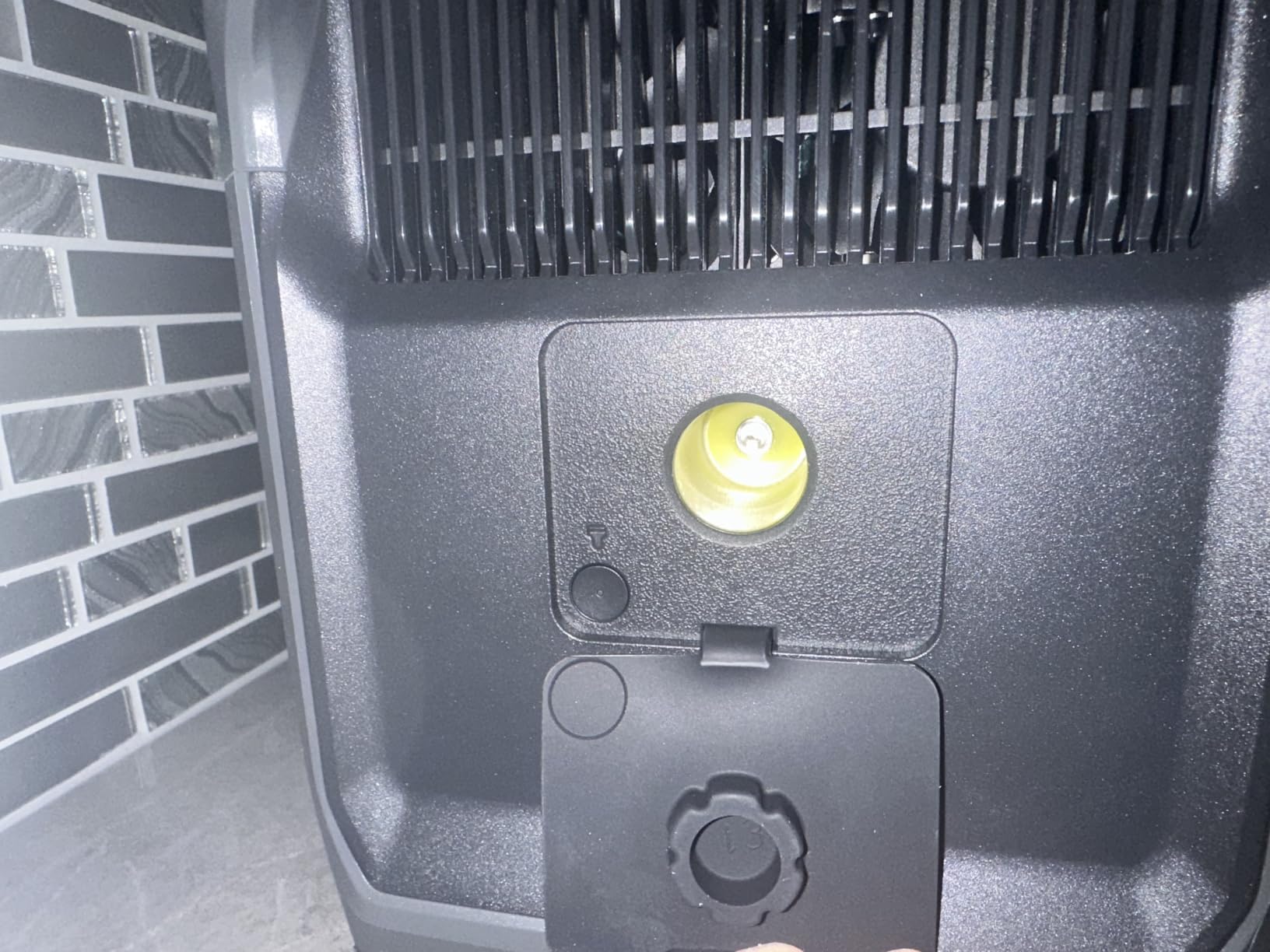
On runtime, 1,024Wh nameplate gives roughly 870 usable watt-hours. A CPAP machine drawing 40W runs about 22 hours, which covers two full nights. Two phones, a router, a modem and two lamps drawing 60W combined stretches it past 14 hours.
The recharge figure is the standout number in this whole roundup: 49 minutes for a full charge at 1,600W through the Anker app. Reviewers also note a 1.8 hour solar recharge with 600W of panels, and 4,000-cycle LFP life retaining at least 80% of original capacity.
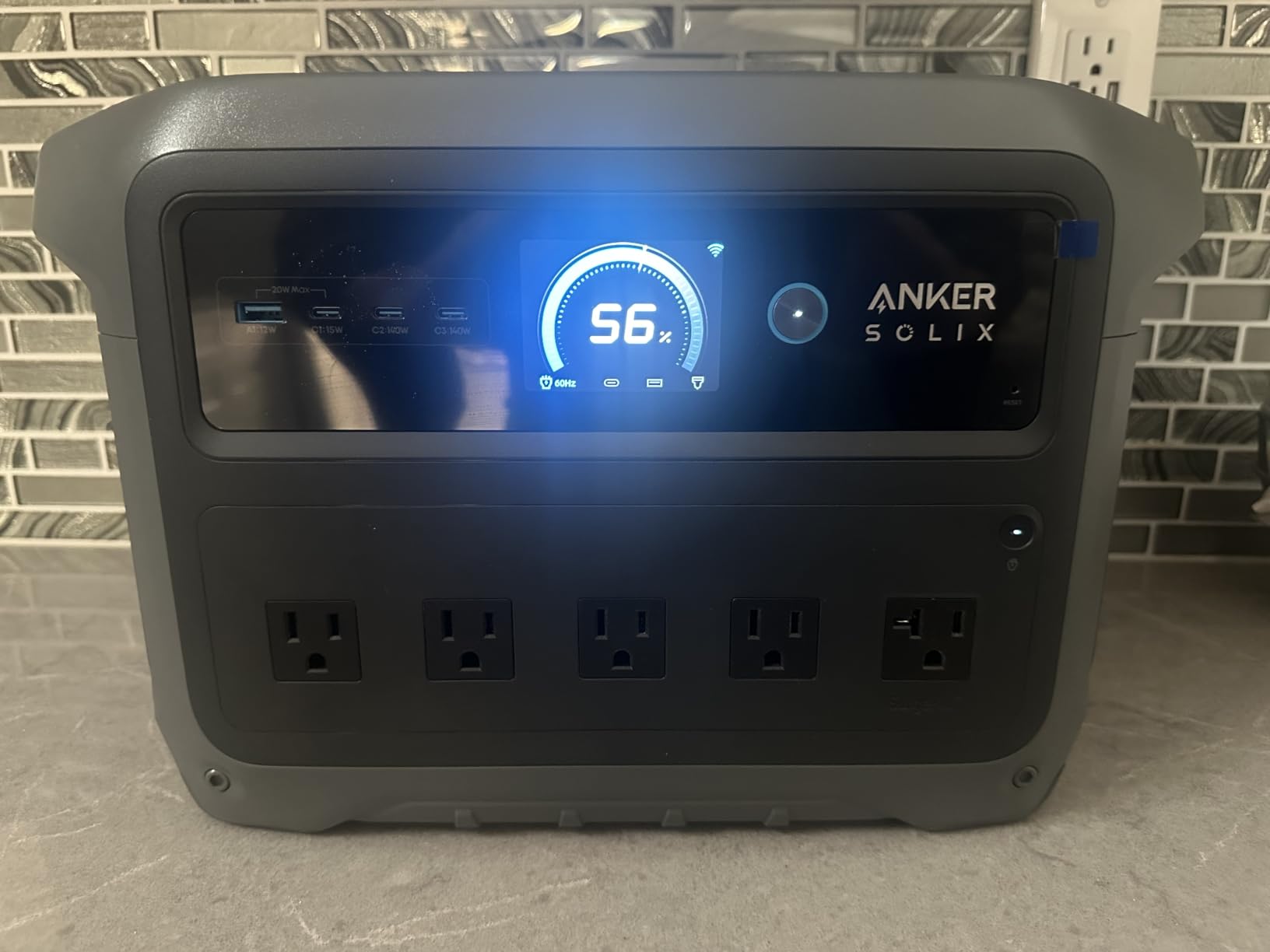
Why it wins for medical-device and office backup
Ten ports cover a CPAP machine, a router, a modem, a monitor, a laptop and a phone without a single power strip. The pass-through rating of 1,800W means you can keep the essentials running while the station charges, which matters when the outage is still going.
That silence is not nothing either. Reviewers consistently describe this as inaudible during normal operation, so it works in a bedroom or an office where a gas generator would be impossible.
What you give up by choosing it
Gen 2 removed the expansion battery capability of the original. If your outage planning assumes two or three nights of heavier load, you cannot add a second battery later – the 1,024Wh ceiling is fixed.
One electrical engineer reviewer measured 15 to 20% harmonic distortion driving a microwave from the AC outlets. That is a single customer measurement rather than a lab result, and it did not stop the reviewer recommending the unit, but it is worth knowing if you plan to run sensitive audio or medical equipment continuously.
3. BLUETTI AC180 – Best High-Output Per Kilowatt
BLUETTI AC180 Portable Power Station 1152Wh 1800W LiFePO4 Solar Generator
1,152Wh LiFePO4
1,800W continuous AC
2,700W peak
37.4 lb
20ms UPS
Pros
- 1800W continuous with 2700W peak for compressor loads
- 0 to 80% in about 45 minutes
- 20ms UPS keeps routers and laptops alive
- Eleven outlets plus a wireless charging pad
Cons
- 37.4 lb is heavy to move in a dark hallway
- Idle draw of 15 to 20W cuts usable capacity on small loads
- Top wireless charging pad does not hold a reliable connection
The AC180 is the pick if you want a fridge, a router and a CPAP machine running at once and you do not want to think about whether there is headroom left. 1,800W continuous with 2,700W peak sits well above most of the 1kWh class, and 11 outlets mean you will not be swapping cables in the dark.
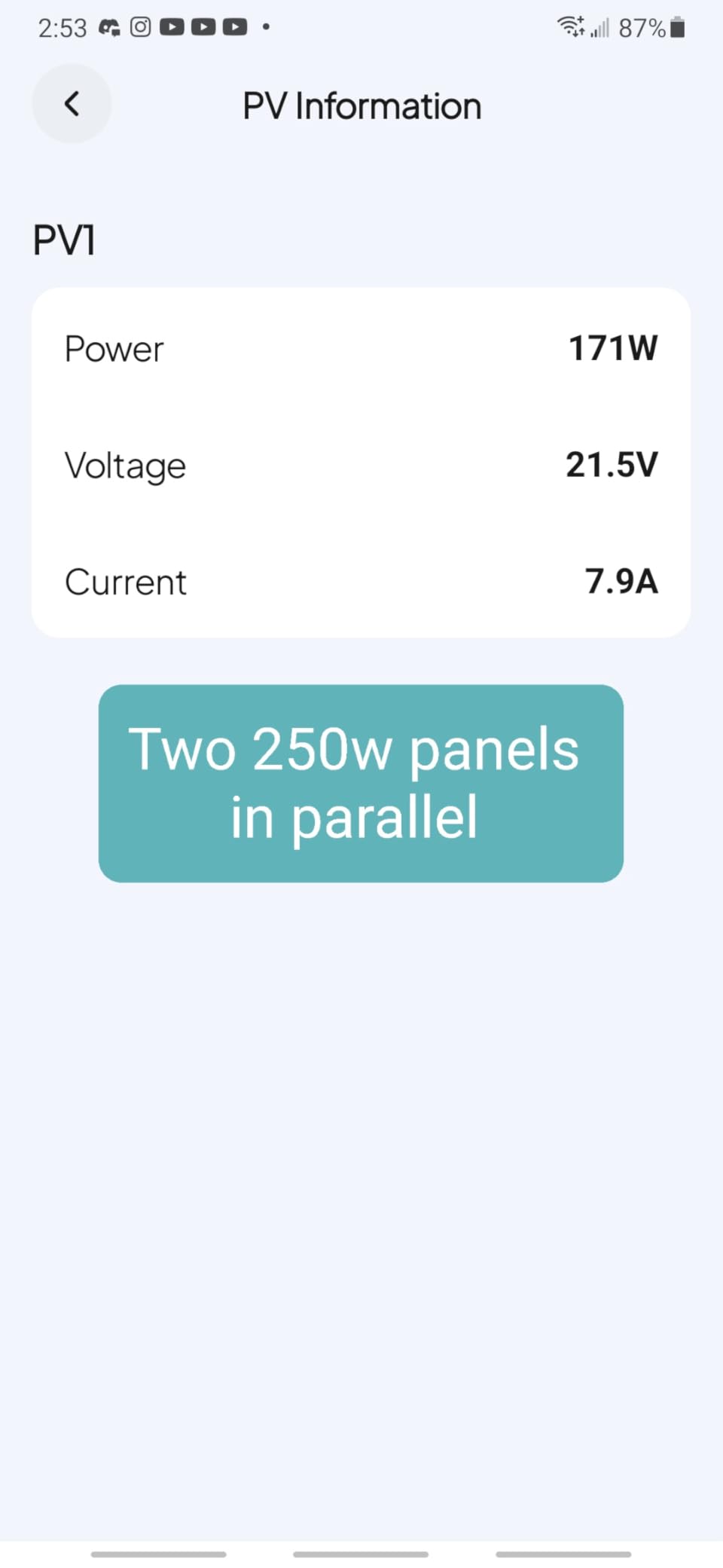
Recharge is fast. BLUETTI claims 0 to 80% in about 45 minutes at 1,440W AC input, and 500W solar input brings a full recharge down to roughly 2.8 to 3.3 hours in good conditions.
That 20ms UPS is the feature reviewers single out most often as the reason the unit was worth buying. Routers, laptops and lamps ride through a brief outage without rebooting, which is exactly what a home office or a network closet needs.
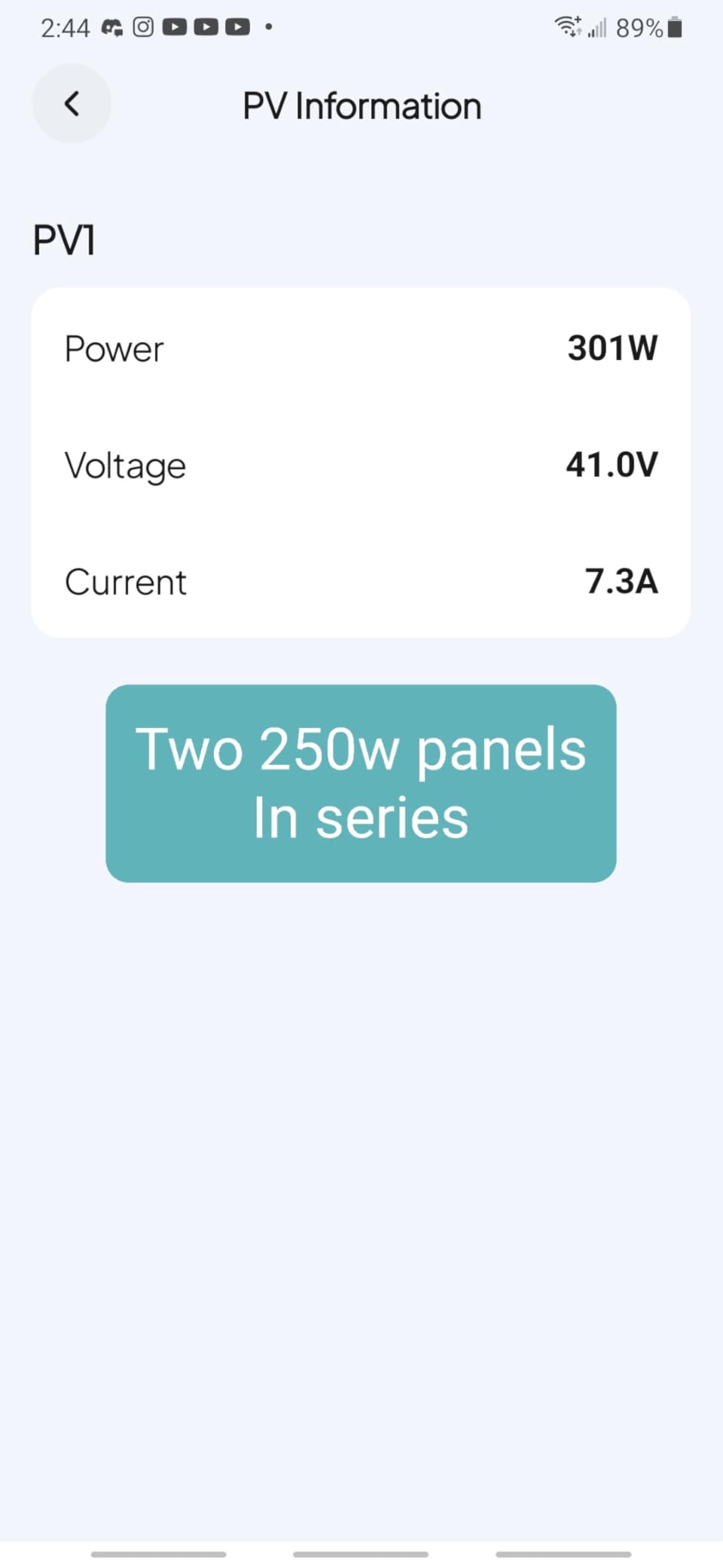
At 1,152Wh nameplate, usable capacity lands near 980 watt-hours once you apply the 85% planning factor. With the unit’s 15 to 20W idle draw deducted, a 200W combined load still gives you under four hours; a 60W essentials-only load gives you closer to 15.
The 37.4 lb weight is the honest drawback. It is tied with the Jackery Explorer 2000 v2 as one of the two heaviest stations in this roundup, and moving it down a set of stairs in a dark hallway during a storm is a genuinely unpleasant task. Buyers in this class who also carry the unit between a car and a kitchen often wish they had chosen 10 pounds lighter.
Where the AC180 earns its place
Three AC outlets plus USB and car ports means a refrigerator, a router, a modem and a phone charger can all run at once without a power strip. For a household that treats an outage as a normal evening rather than an emergency, that changes the experience.
The 5-year warranty and consistently positive reports about support responsiveness matter for a device most people will own for a decade rather than a season.
Where the AC180 annoys people
That idle draw of 15 to 20W is a real cost on light loads. If you are running a router and two lamps, you are paying a meaningful fraction of the pack to keep the inverter itself alive, and it shows up as shorter runtime than the watt-hour math suggests.
Some reviewers also report needing a full discharge and recharge cycle after a firmware update before the runtime readout matched expectations, and the top-mounted wireless charging pad is reported as unreliable. Neither is a deal breaker; both are annoyances you would rather not debug at night.
4. BLUETTI Elite 100 mini – Best for Apartments and Small Spaces
BLUETTI Elite 100 mini Portable Power Station for Camping 1004.8Wh 700W LFP
1,004.8Wh LFP
700W AC output
1,400W surge
23.5 lb
under 10W idle draw
Pros
- Smallest and lightest 1kWh option at 23.5 lb
- Under 10W idle consumption extends runtime on small loads
- 6000+ claimed charge cycles
- 10ms UPS plus built-in LED lighting with SOS mode
Cons
- 700W is the lowest continuous rating among the 1kWh picks
- Only three AC outlets limit simultaneous use
- 4-year warranty is shorter than some rivals
Most 1kWh stations are designed to look substantial. The Elite 100 mini is designed to fit in a closet, and at 23.5 lb with a footprint of 9.2 by 8.4 by 11.5 inches it is 45% smaller than comparable designs. For a flat, a condo or a small house where storage space is genuinely tight, that is the deciding factor.
Its other distinguishing trait is efficiency. BLUETTI claims under 10W of idle consumption, which is unusual at this capacity and directly extends runtime on light loads – exactly the load profile an apartment outage produces.
BLUETTI claims 6,000+ charge cycles, which they translate to as much as a 17-year lifespan. Three AC outlets and a 10ms UPS switchover round out a package aimed at routers, laptops, a CPAP machine and lighting rather than kitchen appliances.
At 1,004.8Wh, usable capacity works out to roughly 855 watt-hours before the idle draw. A 60W essentials load runs about 14 hours, which is a full night of lights, router and internet with a comfortable margin.
Why apartment dwellers gravitate here
The 700W continuous output is lower than the 1,500W to 2,000W offered by rivals in the same capacity class, and that is the tradeoff. It will run a small fridge or a CPAP machine and lighting, but it will not start a microwave or a kettle.
For most apartment outages, that is plenty. The three-outlet limit only becomes a problem if you are running several high-draw appliances at once, which 700W would not allow anyway.
Where the compromises sit
The 700W ceiling is the number to hold in your head when sizing. If your outage plan includes anything with a compressor larger than a mini-fridge, this is not the station for it.
Three AC outlets is also the fewest among the 1kWh options here, and the 4-year warranty trails the 5-year terms offered by BLUETTI’s own AC180 and several competitors. At roughly 1.5 hours to 80% charge, it is not the fastest refill in this group either.
5. OUPES Mega 1 – Best for Multi-Day Outages
OUPES Mega 1 Portable Power Station 1024Wh 2000W (4500W Surge)
1,024Wh LFP
2,000W continuous AC
expands to 5,120Wh
27.8 lb
under 20ms UPS
Pros
- Expands to 5120Wh with two B2 extra batteries
- 0 to 80% in 36 minutes on AC
- Under 20ms UPS transfer
- Four spaced AC outlets plus twin 100W USB-C
Cons
- One reviewer measured surge tripping around 2050 to 2200W
- Cooling fans run loudly at high draw
- Wi-Fi app connectivity is unreliable while Bluetooth works
Most stations in this roundup cap out at their built-in capacity. The OUPES Mega 1 is the one here that grows, adding two B2 expansion batteries to reach 5,120Wh without needing a second inverter. That is the difference between covering a long outage and running out on day two.
For multi-day events, capacity scaling changes the calculation entirely. At 5,120Wh nameplate and the same 85% planning factor you get roughly 4,350 usable watt-hours, which covers a refrigerator, a router, lighting and a CPAP machine for a full 24-hour cycle and then some.
Recharge speed is the other headline: 0 to 80% in 36 minutes on AC, and 26 minutes when you combine AC and solar. The UPS transfers in under 20ms, fast enough to protect servers, workstations and medical devices without a reboot.
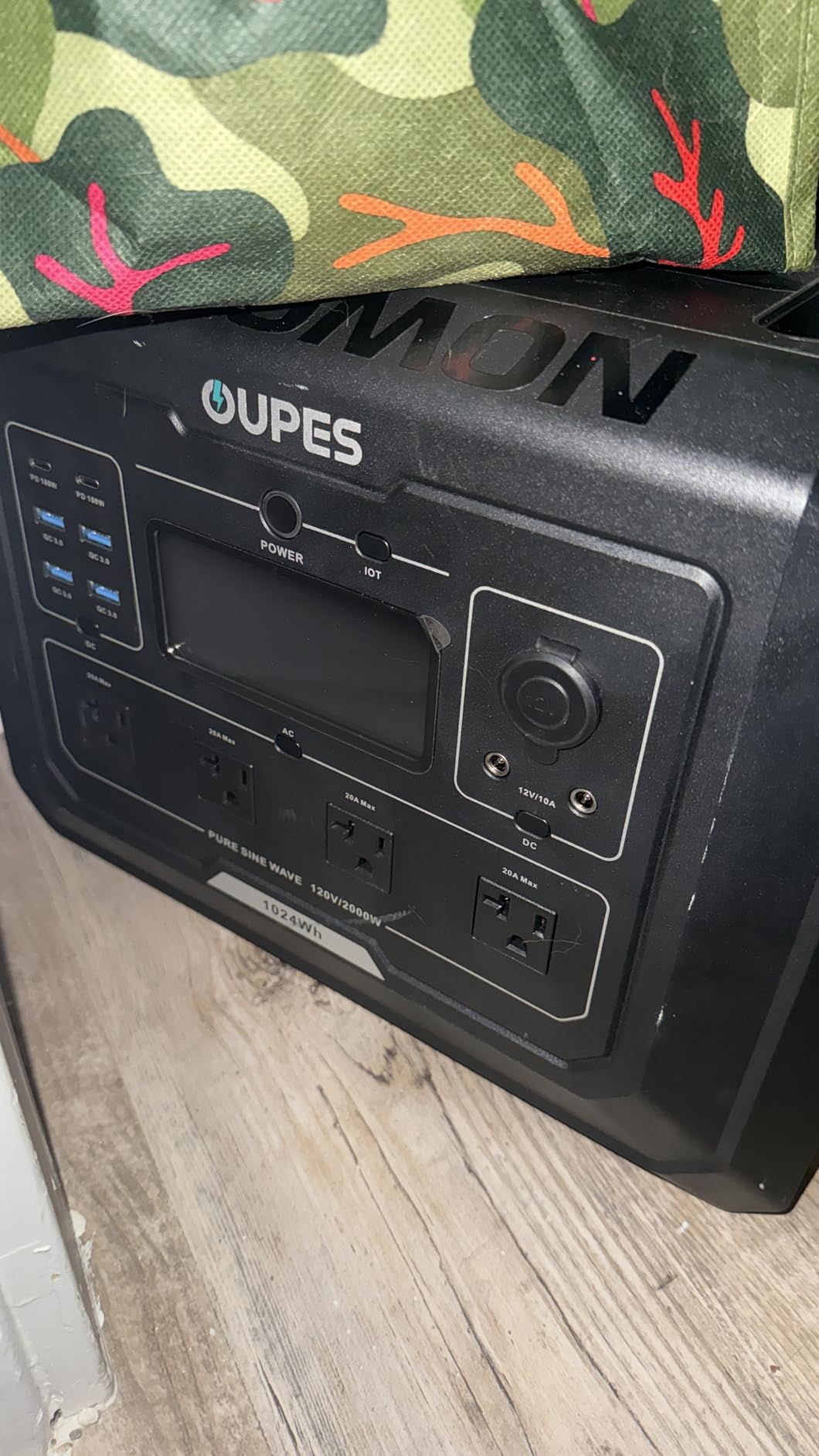
Value buyers point to the outlet layout: four AC outlets with real spacing between them, twin 100W USB-C PD ports and four QC3.0 USB-A. Spacing matters more than outlet count – a row of outlets you cannot fit a wide plug into is a design failure, and this one avoids it.
At 27.8 lb it is not a light carry, but it is manageable by one person for a ground-floor setup. Portability is a secondary concern for anyone buying expansion batteries anyway; you are planning to leave this where it lives.
Why it suits a long outage
Expansion is the whole argument. Every other 1kWh station here is a fixed ceiling, and a fixed ceiling is what forces people into multi-day rationing. The Mega 1 lets you buy capacity only when you need it.
The fast recharge also matters more over a long event. Thirty-six minutes to 80% means you can recover a day of runtime during a lunch break rather than overnight.
Where the review record is mixed
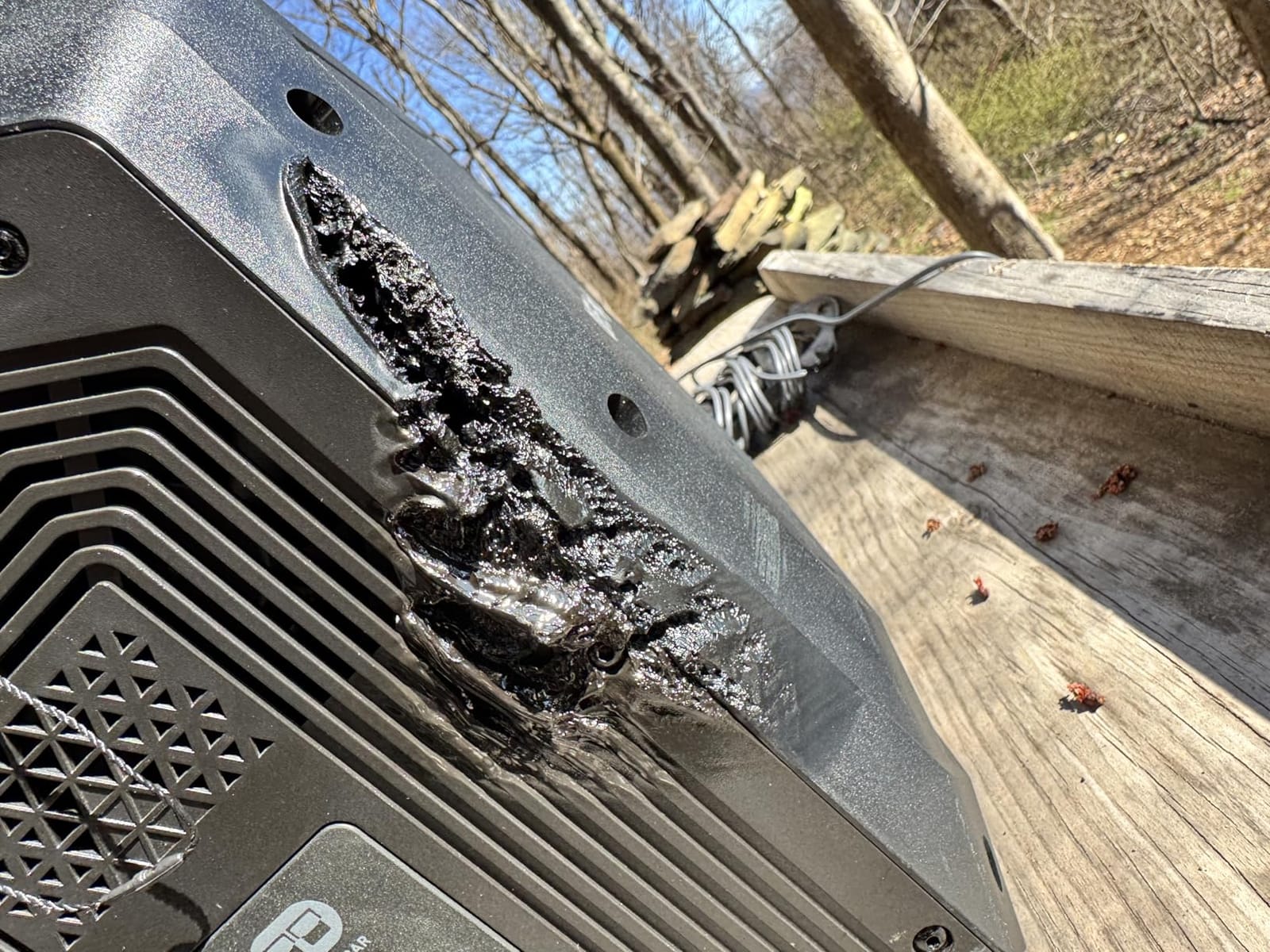
This has the most divided review set in the roundup. One reviewer measured the 4,500W surge rating as optimistic and reported the inverter tripping somewhere around 2,050 to 2,200W, and owners do report loud cooling fans under heavy load and fast AC charging.
Wi-Fi connectivity in the app is reported as unreliable while Bluetooth works consistently, and the proprietary charging cable is described as hard to source a replacement for. Support responses to defects are described as proactive, which softens the defect reports considerably.
6. Jackery Explorer 2000 v2 – Best for Multi-Night Outages
Jackery Explorer 2000 v2 Portable Power Station, 2042Wh, 2200W AC Output
2,042Wh LFP
2,200W AC output
3 AC ports
39.5 lb
20ms UPS switching
Pros
- Largest capacity in the roundup at 2042Wh
- 0 to 80% in 66 minutes and full charge in 102 minutes
- Silent charging mode holds noise under 30dB
- UL1778 test certified for UPS use
Cons
- Highest cost per watt in the group
- Three AC outlets is the fewest among the 2000W options
- 39.5 lb needs two people to move safely
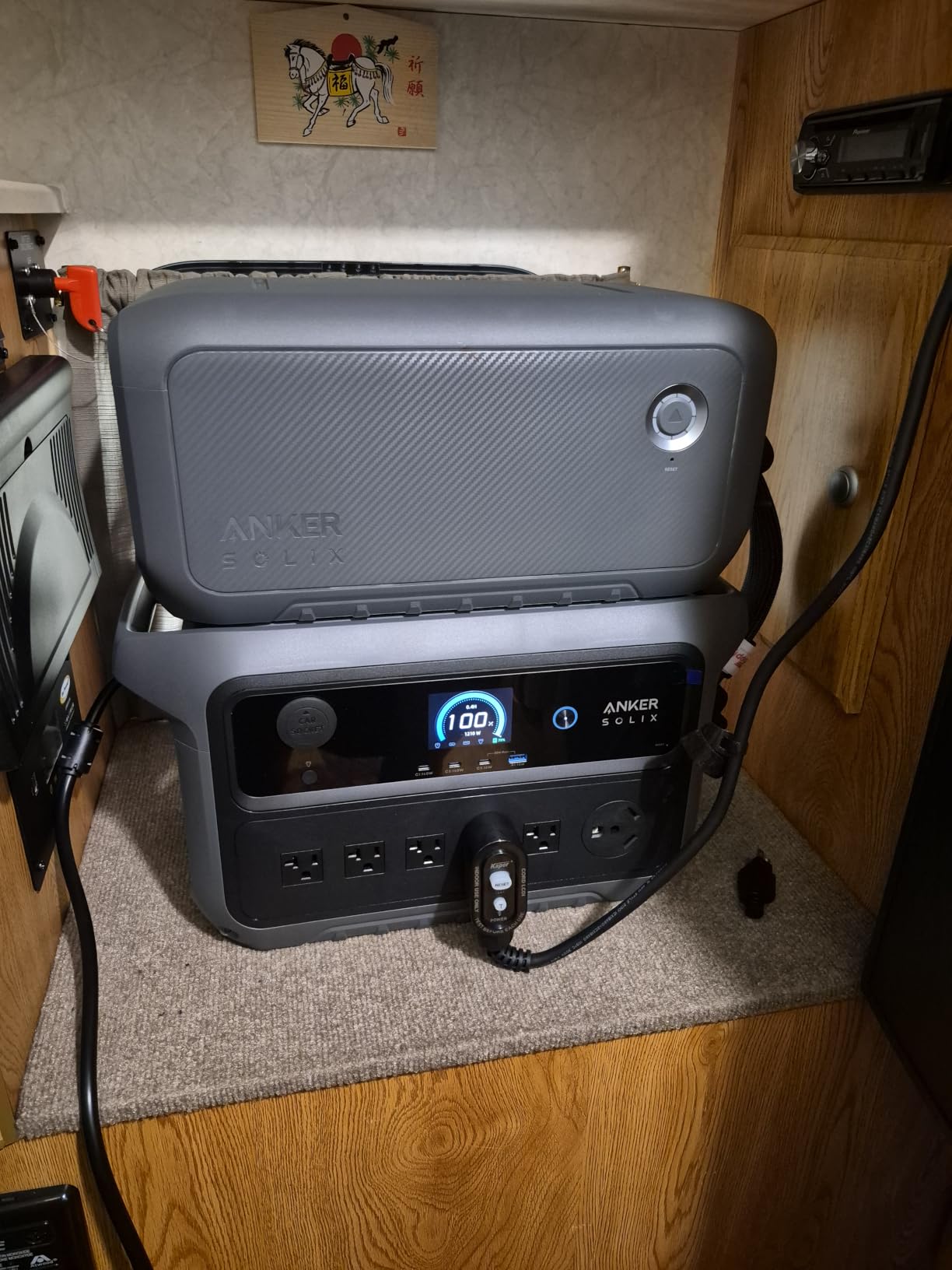
At 2,042Wh this is the largest single-station capacity in the group, and it pairs that with 2,200W of AC output. Roughly 1,735 usable watt-hours covers a refrigerator, a router, a modem, lighting and a CPAP machine for a full day without any expansion battery at all.
What is genuinely unusual is the weight. Jackery made this 41% lighter than a typical 2kWh design, landing at 39.5 lb – still the second-heaviest here, but a real improvement over the 60-plus lb units it replaces.
Charging is quick: 0 to 80% in 66 minutes on standard AC fast charge, and a full charge in 102 minutes in the emergency super charging mode. The silent charging mode holds fan noise under 30dB, which matters if it lives in a bedroom or a study.
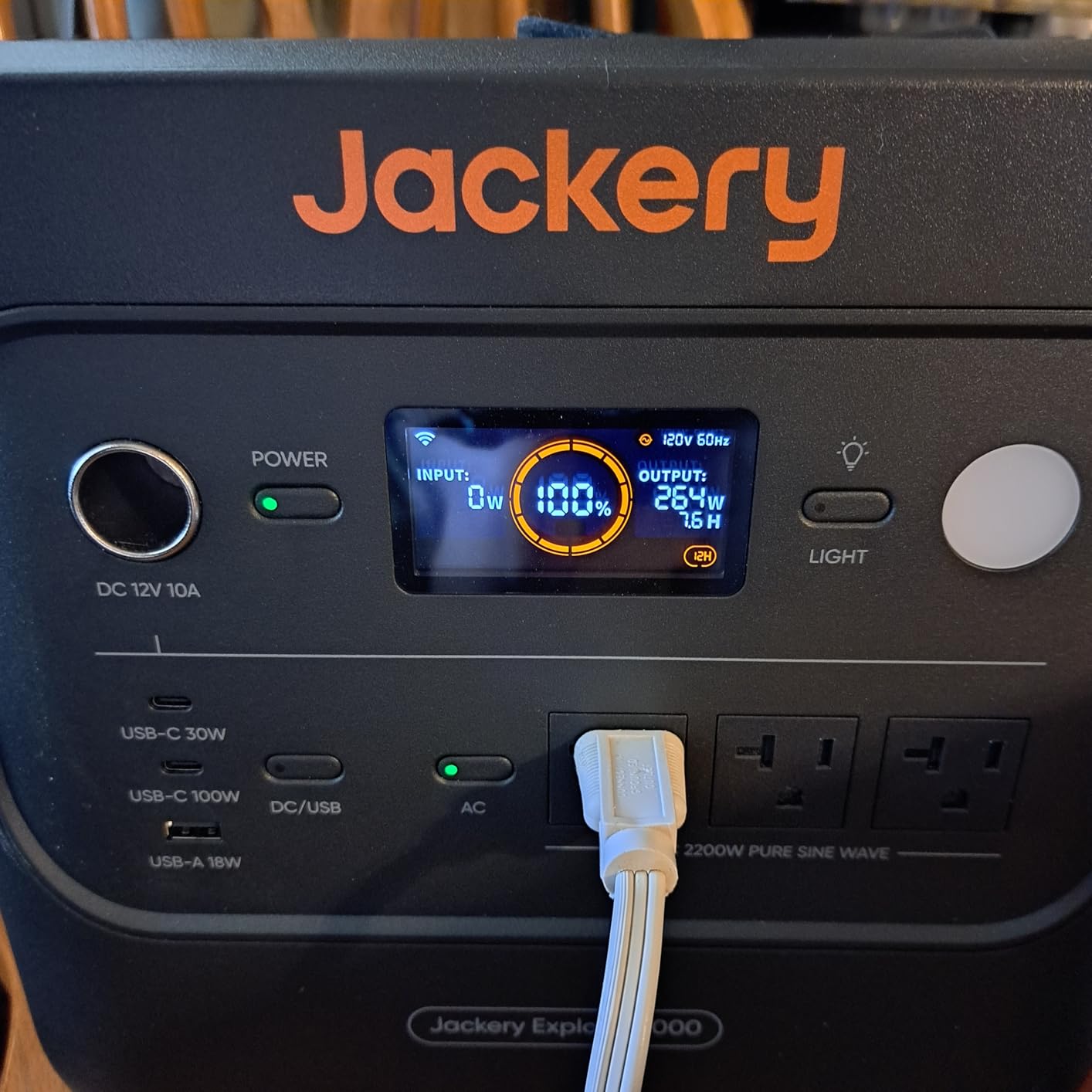
The 20ms switchover is UL1778 test certified for UPS use, so network equipment stays up through short interruptions. A 100W USB-C PD port means you can charge a laptop without carrying an adapter, which is the kind of detail that quietly saves space in a go-bag.
There is no expansion path, though. 2,042Wh is what you get. For an outage measured in weeks rather than days, that is still a ceiling, and the OUPES Mega 1 is the better answer. Reviewers do flag the cost per watt as the highest in this group, so the capacity has to justify itself.
Where it makes sense
If your household has already decided to commit to a station, and your load is a refrigerator plus network gear plus lighting, this single box covers more hours than any other pick in the list. Fewer devices to charge, fewer failure points.
Fewer devices to charge also means fewer failure points, and there is no expansion battery to add and no proprietary cable to source. That simplicity is part of what you are paying for at this capacity.
Where the review record pushes back
This has the lowest average rating in the roundup at 4.4, with 79% five-star reviews and an 8% one-star share – the highest critical share here, on the smallest review base at 869 reviews. The critical reviews cluster around weight and cost per watt.
Three AC outlets is the fewest among the 2,000W-class picks. With a refrigerator, a router and one other device, that is workable; add a second heavy load and you are shopping for a power strip, which partially defeats the surge protection story.
7. Jackery Explorer 300 – Best for Lights and Phone Charging
Jackery Explorer 300 Portable Power Station,292Wh
292Wh LiFePO4
300W rated output
600W surge
7.1 lb
2 year warranty
Pros
- Lightest large-review-base option at 7.1 lb with an integrated handle
- Over 4000 charge cycles before reaching 70% capacity
- Pure sine wave 300W output with 600W surge
- Reaches 80% in about 2.8 hours on a 100W panel
Cons
- 292Wh is small so runtime on larger draws is limited
- Solar panel not included
- Only two AC outlets
With 11,273 reviews at a 4.6 average, this is the most owner-tested power station in the roundup by a wide margin. That volume matters on a product category where spec sheets routinely oversell, because a decade of accumulated owner reports is its own form of testing.
At 292Wh it is not a household backup. It is a lights-and-charging station: a couple of LED lamps, a phone or two, a router, and a small medical device if the math works out. The 7.1 lb weight and integrated handle mean one person can carry it from a closet to a kitchen without a second pair of hands.
Runtime at roughly 248 usable watt-hours: a phone charges several times over, a 25W router and modem run close to nine hours, and two 10W lamps manage around 12.
Reviewers consistently praise the LFP chemistry claim of more than 4,000 cycles before reaching 70% capacity, and the pure sine wave output is appropriate for sensitive electronics despite the small size.
Why it still earns a place on the list
The floor matters. Not every household needs a refrigerator running; plenty need lights, internet and charged phones for a night or two, and a 7.1 lb box is the tier that actually gets used rather than stored in a garage.
Two AC outlets plus a 100W USB-C PD port, two USB-A ports and a 120W car port cover the common cases. Community members lending equipment to neighbours during outages tend to reach for this size class first.
Where the limits bite
292Wh is genuinely small. The moment you add a load above about 40W, hours collapse to single digits, and the most common complaint in the reviews is exactly this – the capacity limits it to smaller devices rather than household backup loads.
The 2-year manufacturer warranty is the shortest in this roundup, and the solar panel is not included, so a complete solar setup costs more than the comparison suggests. If you need fridge runtime, step up a class.
8. Anker SOLIX C300 – Best for Quiet Indoor Use
Anker SOLIX C300 Portable Power Station, 288Wh Solar Generator for Camping
288Wh LFP
300W rated output
600W surge
25dB operation
5 year warranty
Pros
- Operates at only 25dB from 3.3 ft
- Recharges to 80% in about 50 minutes from a wall outlet
- Eight outputs including dual 140W two-way USB-C
- 15% smaller than comparable designs
Cons
- 288Wh suits devices rather than appliances
- Shoulder strap sold separately
- Not compatible with Anker SOLIX PS30 PS200 or PS400 panels
The C300’s differentiator is a measured 25dB operation from about 3.3 ft. That is the quietest figure in this roundup, and it is the reason a reviewer with a sleeping child or a home office picks this unit over competitors with identical capacity.
Port layout is generous for the size: eight outputs including three AC outlets, a 120W car socket, two USB-C ports at 140W each, a 15W USB-C and a USB-A. Two 140W USB-C ports is the kind of specification that quietly removes a wall of chargers from a nightstand.
Recharge to 80% in about 50 minutes from a wall outlet is quick for a 288Wh pack, and the LFP cells are rated for 3,000 cycles with smart temperature control. The 5-year warranty is longer than most rivals in the sub-300Wh class.
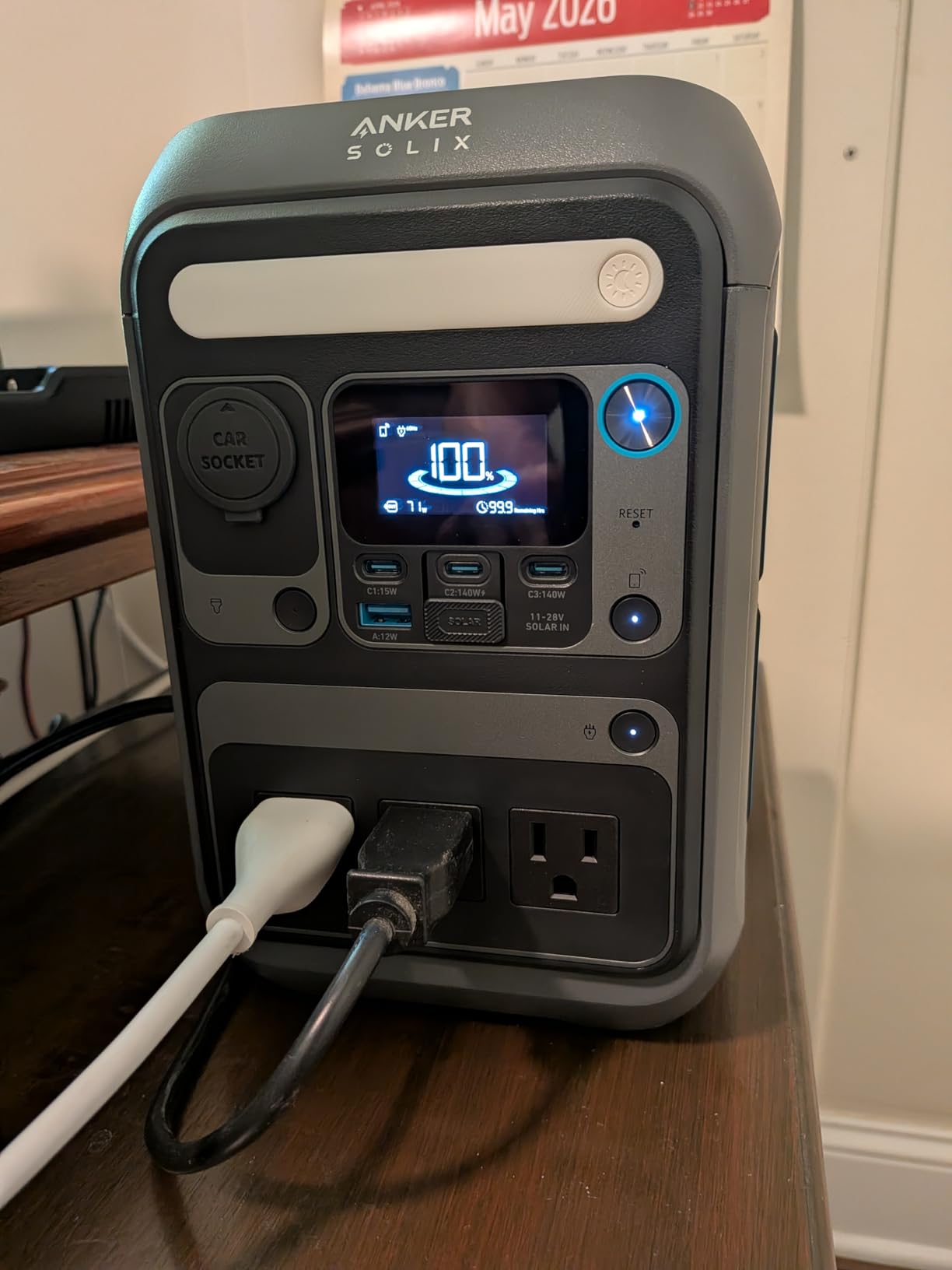
At 288Wh, usable capacity is roughly 245 watt-hours. Two phones, a router and a lamp draw about 35W combined, which is around seven hours. That is a full evening of essential connectivity, not a night of household backup.
Buyers who understand the class use it exactly that way – phones, cameras, laptops and small essentials – and reviews reflect that understanding rather than disappointment. People who expected appliance runtime tend to be the unhappy ones.
What quietness buys you
At 25dB the C300 sits in a bedroom or a home office without being the thing you keep thinking about. That is a real quality-of-life difference over a station whose fan spins audibly under a moderate load.
It is also 15% smaller than comparable designs, which matters more than it sounds when the outlet you plan to use is behind a desk.
What you give up
288Wh is among the smallest capacities here, so it suits devices rather than appliances. Anything with a compressor is out of the question.
Two compatibility details catch people out. The shoulder strap is sold separately, which is a small thing until you are carrying it up three flights. And it does not work with Anker SOLIX PS30, PS200 or PS400 panels, so an existing Anker solar setup may not do what you expect.
9. BLUETTI Elite 30 V2 – Best for Home Servers and Small Loads
BLUETTI Elite 30 V2 Portable Power Station 288Wh 600W LFP Solar Generator
288Wh LFP
600W continuous output
4.5W standby draw
9.5 lb
10ms UPS
Pros
- Highest continuous output in the sub-300Wh class at 600W
- Only 9.5 lb for storm-time carrying
- 4.5W standby draw cuts consumption roughly 50%
- 0 to 80% in 45 minutes on a 380W wall charger
Cons
- 288Wh depletes quickly on sustained loads
- No USB communication port for PC auto-shutdown
- UPS and Pro modes need app configuration
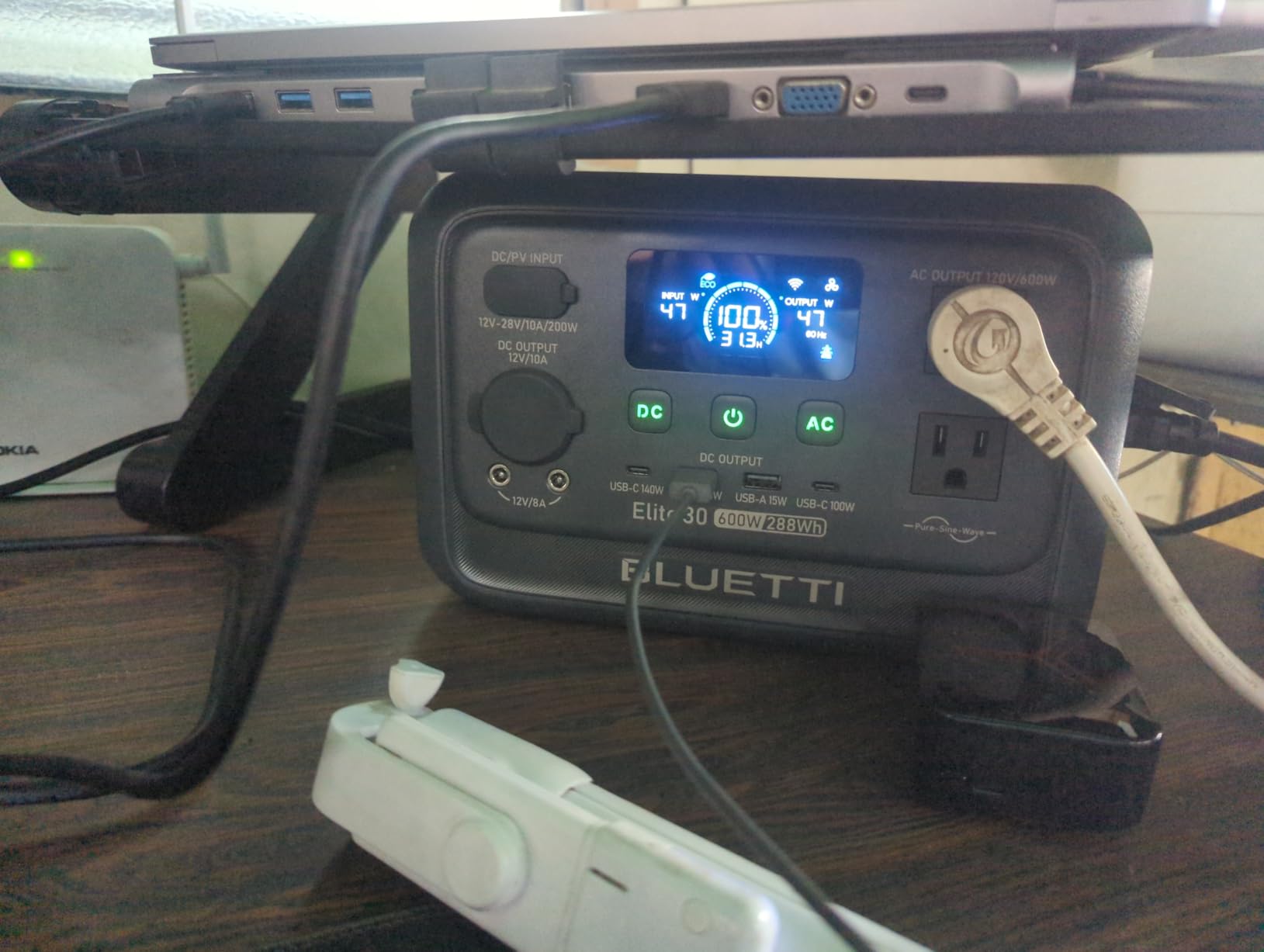
Most sub-300Wh stations manage 200W to 300W. The Elite 30 V2 manages 600W continuously, with a 1,500W power lifting mode on top. That extra headroom is what separates a device charger from a genuine small-appliance unit.
The efficiency claim is the quiet star. A 4.5W standby draw, 5W on DC and 8W on AC amounts to roughly a 50% cut in idle consumption against comparable designs, and on a 288Wh pack that difference translates directly into usable hours on a light load.
Owners running home servers and networking gear report the 10ms UPS switchover working cleanly, and the pure sine wave waveform is the right choice for that equipment class. Recharge is 0 to 80% in 45 minutes and 0 to 100% in 70 minutes on a 380W wall charger.
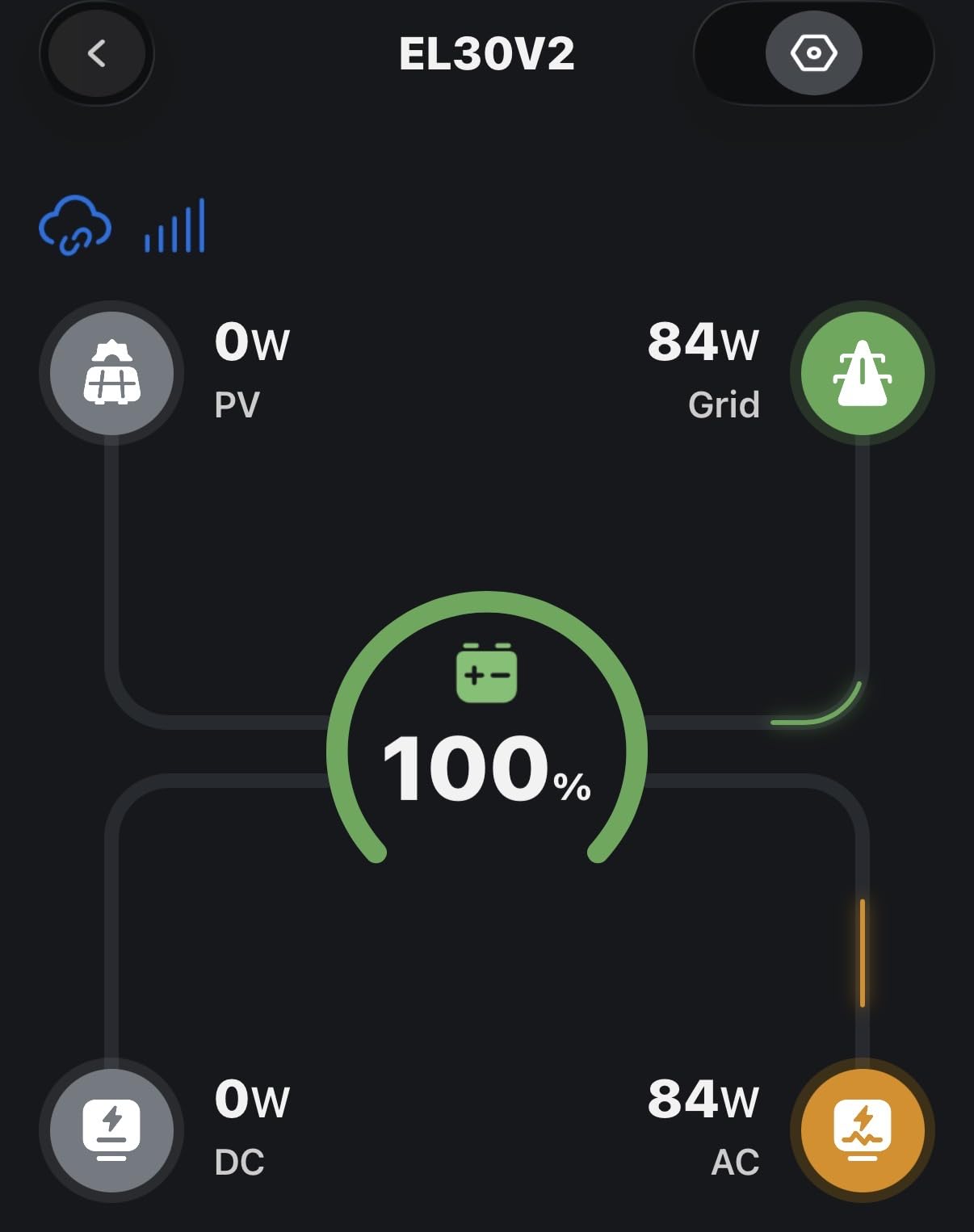
At 9.5 lb this is one you can carry one-handed while rain comes sideways, which the review record treats as a genuine advantage when the outage starts during a storm.
Eight charging modes cover AC, solar, car and battery-saver paths, so you can trickle-charge from a vehicle over a long outage rather than draining the pack in an evening.
Where the 600W ceiling pays off
A home server, a router and a switch draw far less than most people assume once idle spinning is accounted for, but a 300W inverter on a 600W startup spike is exactly the kind of mismatch that causes shutdowns. This unit removes the guesswork.
For a network closet or a small home office, that combination of low idle draw, 600W output and 10ms switching is hard to beat at this capacity.
Where the complaints cluster
At 288Wh, sustained loads drain it faster than the watt-hour math suggests – one owner reported faster-than-expected depletion running a CPAP machine overnight. The arithmetic works; the margin is just thin.
There is no USB communication port for PC auto-shutdown the way a traditional UPS provides, so your server will not be told to shut itself down gracefully. UPS mode and Pro mode also require app configuration, including setting a default passcode, which is friction at the moment you least want it.
10. DaranEner NEOZ – Best Budget Grab-and-Go Backup
DaranEner Portable Power Station, 192Wh LiFePO4 Battery Backup Solar Generator with w/2 300W (Peak 600W) AC Outlets, USB-C PD 60W Fast Charge, Power Bank for Camping, Outdoor, Home,Emergency
192Wh LiFePO4
300W pure sine wave
600W surge
5.7 lb
LED flashlight
Pros
- Lightest option at 5.7 lb and small enough to fit a standard ammo can
- LiFePO4 cells rated 3500+ cycles with a smart BMS
- Built-in MPPT accepts up to 60W of solar input
- Integrated LED flashlight with four brightness modes including SOS
Cons
- Cannot run appliances above 300W or with high startup surge
- Solar panel and car cable are not included
- One owner measured a 75W air mover draining it in about two hours
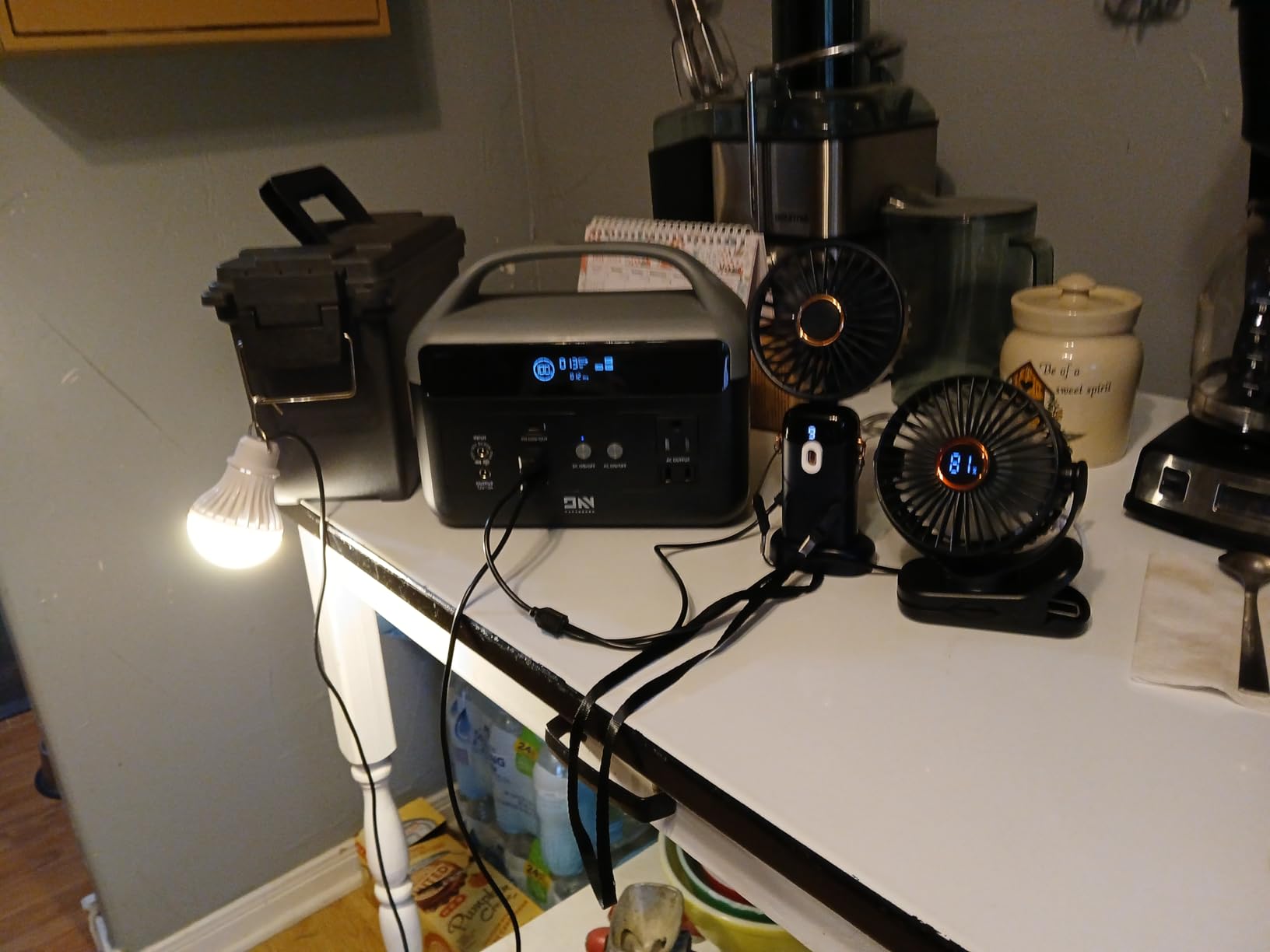
The NEOZ is the entry point, and it is a legitimate one rather than a token entry. At 5.7 lb in an ABS housing with a fold-down handle, it is the easiest unit in this roundup to move at a moment’s notice, which matters more than raw capacity when the outage starts while you are not home.
It delivers 300W of pure sine wave output with 600W surge from 192Wh, and it will run six devices at once across two AC outlets, a 60W USB-C PD port, two USB-A QC3.0 ports and a 12V DC socket. The LFP cells are rated for 3,500+ cycles behind a BMS that guards against overcharge, overheating and short circuits.
Roughly 163 usable watt-hours is the budget. A phone charges several times, a CPAP machine at 40W runs about four hours, and a small fan is the upper limit of what makes sense to attach.
Several owners specifically praise the replacement service after a USB-side failure, which tells you something about how the brand handles a problem that is small in dollars and large in inconvenience.
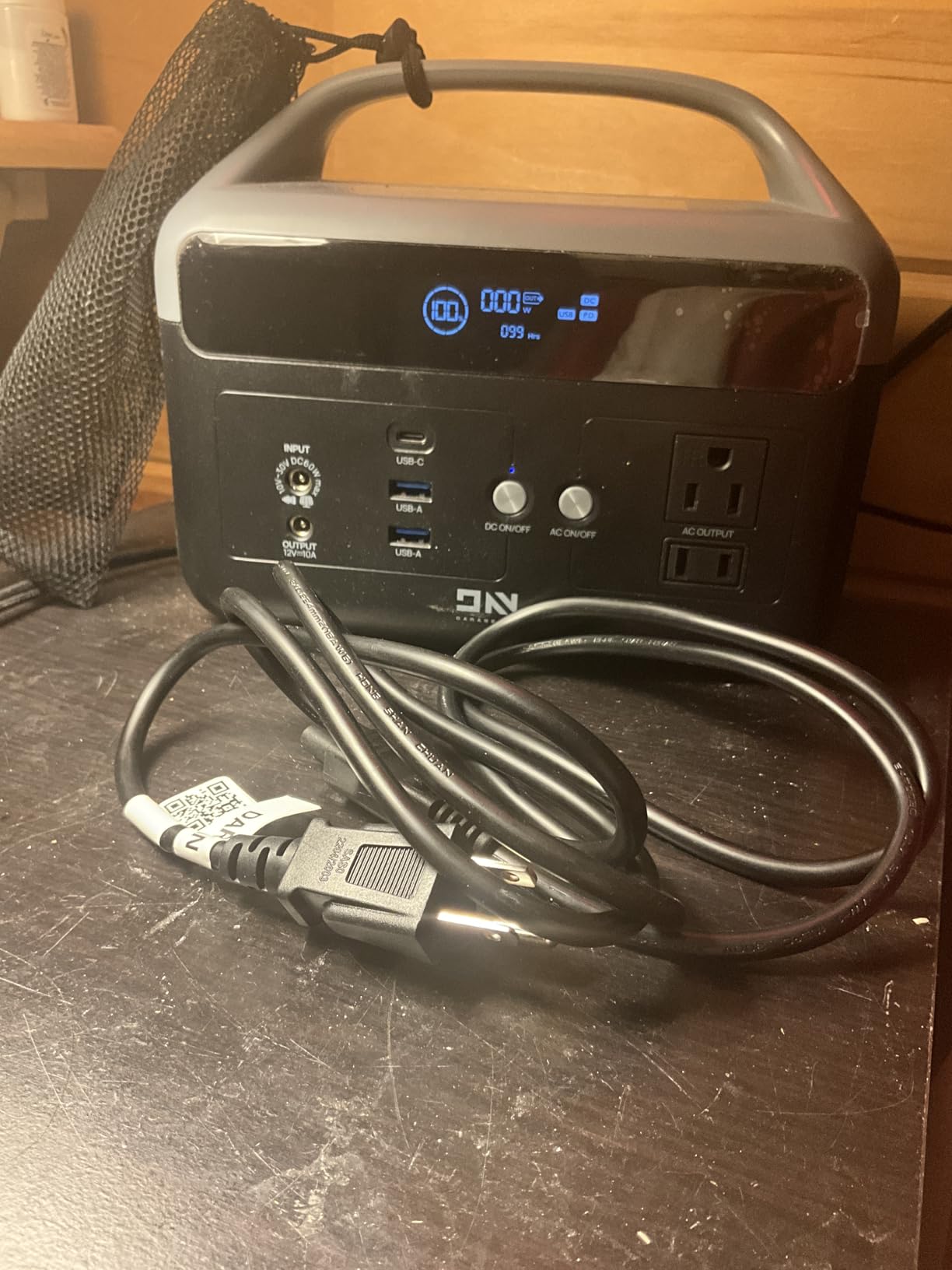
The built-in MPPT controller accepting up to 60W of solar and 100W of AC wall input means it can be trickle-refilled almost anywhere. The LED flashlight with four brightness modes including SOS is a genuinely useful detail at three in the morning.
Reviewers treat this unit as a grab-and-go power bank rather than an appliance station, and the review distribution reflects that – 73% five-star, the weakest spread here, on the smallest review base at 437 reviews.
Who it suits
Anyone who wants a first backup device rather than a household system. Keep it by the door, in the car, or in a go-bag, and it covers the scenario where you are away from home when the outage starts.
The 300W pure sine wave output is also enough for a CPAP machine, which is why it appears in the small medical-device conversations. Confirm compatibility with your device manufacturer as always.
Where it stops
It cannot run appliances above 300W or anything with a high startup surge – rice cookers, hair dryers and mini-fridges are all out. The 192Wh pack also depletes quickly once several devices are connected, which is the recurring criticism.
Solar panel and car charging cable are not included, so a complete setup costs more than the headline suggests. And some owners needed a replacement after a DC-side failure. For lights, phones and a night of CPAP, it does the job; for anything else, save up a class.
How We Chose and What We Verified
We built this list around one hard filter: a station that cannot start a refrigerator compressor is not an outage product, no matter how good its other specifications look. That single requirement eliminates a large share of what circulates in this category.
From there we compared continuous AC output against surge ratings, checked nameplate watt-hours against the 85% usable-capacity rule, and weighed idle draw, because a station that burns 15 to 20W just to stay switched on is quietly expensive on light loads.
We also read the review record, not just the spec sheet. Owner-reported measurements – actual surge trip points, harmonic distortion, idle consumption, how long a CPAP machine really lasts – carry more weight for a purchase like this than any manufacturer claim, because they describe the machine in use.
Where we disagreed with marketing language, we said so. Power Lifting and Power Boost modes are short-duration features that let an inverter briefly exceed its continuous rating; they are not continuous output, and planning a refrigerator around one would be a mistake. We use the same discipline on UPS and EPS labels, which describe switchover behaviour rather than zero-interruption transfer.
Finally, we scored certification and warranty, because a station is a ten-year purchase. Every pick here carries a 4-year or 5-year warranty, and the two with UPS function carry published test certification for that use.
What Size Portable Power Station Do I Need for a Power Outage?
Add up the running watts of everything you want alive, decide how many hours you need to cover, then divide by 0.85 to account for inverter losses. That number is your required watt-hour capacity, and your required continuous output is the highest single running watt in the group plus three times that figure for startup surge on anything with a motor or compressor.
Here is the method we use, and it takes about fifteen minutes with a notebook.
Step 1: List the loads, not the wish list. Write down everything you genuinely need – typically a refrigerator, a router and modem, LED lighting, a CPAP machine, phone charging, maybe a laptop. Leave out the space heater, the microwave and the well pump unless you truly need them during the event.
Step 2: Find each device’s running watts. Nearly every appliance has its running wattage printed on a label, usually near the power cord. For a router or a modem, check the adapter’s output label, which understates by 20 to 30% once you include the device itself.
Step 3: Record startup demand separately. Compressors and induction motors draw two to four times their running wattage for a fraction of a second. A 150W refrigerator can pull 400W to start; a 100W power tool can pull 300W. This is the number that trips cheap inverters, and it is why an outlet-count-only comparison misleads.
Step 4: Decide how many hours you are covering. Four hours covers a typical overnight event. Twelve covers an overnight plus a workday. Forty-eight assumes a serious storm and means you need a recharge plan, not a bigger battery alone.
Step 5: Convert to watt-hours and apply the 85% factor. Multiply running watts by hours, divide by 0.85. A 60W essentials load for 12 hours needs about 847Wh of nameplate capacity – which lands you squarely in the 1kWh class.
Step 6: Check every output limit, not just the headline number. Your continuous output must exceed the largest running watt, and your surge rating must clear the largest startup spike. A 700W station running a 700W microwave with no surge headroom will trip every time.
Step 7: Choose a recharge path. Wall outlet, 12V car outlet, solar, or a combination. Solar is a recharge strategy rather than extra capacity – a 400W panel in good sun returns roughly 1.2kWh over a day of full sun, so plan around that rather than expecting overnight recovery from a single panel.
Step 8: Test the carry. Put the station where it will live, then walk it to where you will use it. A 39.5 lb unit that lives upstairs is a different product from a 39.5 lb unit stored in a ground-floor closet, and you can only find out which one you have before the outage.
How Long Will a Power Station Run Your Appliances?
Runtime in hours equals nameplate watt-hours multiplied by 0.85, divided by average load watts. The 0.85 factor covers inverter conversion loss, the unit’s own idle draw, fan operation and display consumption. It is a planning number, not a promise, and it is deliberately conservative.
Example one: essentials only. A router and modem at 25W, two LED lamps at 20W combined, and two phones charging intermittently average about 55W. On a 1,070Wh station: 1,070 x 0.85 = about 910 usable watt-hours, divided by 55W, gives roughly 16 hours. That is an overnight event covered with margin.
Example two: adding a refrigerator. A 150W fridge does not run continuously. A duty cycle of about 40 percent brings the effective draw to roughly 60W, so the same 1,070Wh station gives you around 15 hours. Add a CPAP machine at 40W and the combined figure rises to 100W, dropping runtime to about nine hours. Realistic, but no longer a two-night event.
Example three: a two-night CPAP event. A CPAP machine at 40W across 8 hours a night is 320Wh per night, call it 400Wh with overhead. Two nights need 800Wh, so a 1,024Wh station such as the Anker SOLIX C1000 Gen 2 covers it with roughly 20% left over. The same math on a 288Wh station covers a single night and then stops.
Owner reports add a caveat the arithmetic misses. Reviewers running CPAP machines overnight report faster-than-expected depletion on 288Wh packs, and that is usually the idle draw plus a warm humidification stage rather than the machine’s nameplate draw. On small packs, the margin for error is thin.
For multi-day budgeting, the alternative to a bigger battery is a recharge plan. Members of a Seattle community group described lending power stations and vehicles to neighbours during a long outage, and the practical version of that is simple: drive to a house with a wall outlet, or run a 300W inverter from a car battery to top up a station over several hours. Our dedicated guide to portable power for van life covers the vehicle-side setup in more detail.
How to Run a Refrigerator on a Portable Power Station
A refrigerator is the single most requested outage load, and it is also the one people size wrong most often. Three numbers decide whether it works: the compressor’s running watts, its startup surge, and the duty cycle.
Most household refrigerators run between 100W and 200W when the compressor is active, and pull two to three times that for the first second or two of each cycle. A station with 700W continuous and 1,400W surge handles an average kitchen fridge comfortably. One with 300W and 600W surge handles a mini-fridge, and very little else.
Duty cycle is the part that surprises people. A fridge in a closed kitchen runs its compressor perhaps 30 to 50 percent of the time once it has stabilised. Plan with 40 percent and your runtime estimate will be close; plan with 100 percent and you will size a station twice as large as you need.
Two practical habits extend the run. Keep the door shut – each opening pulls in room-temperature air that the compressor must then remove, and on a battery budget that costs real hours. Keep the unit in an interior room rather than a garage or an unheated space, because battery chemistry performs poorly in the cold and heat shortens cycle life.
On a 2,042Wh station such as the Jackery Explorer 2000 v2, roughly 1,735 usable watt-hours divided by an effective 60W draw gives close to 28 hours on the fridge alone. On a 1,004.8Wh unit like the BLUETTI Elite 100 mini, the same calculation gives about 14 hours – which is why the 700W output ceiling on that model is worth checking against your actual fridge before you buy.
Power Station vs Gas Generator for Backup Power
For most households, a battery station wins on safety and convenience and a generator wins on duration. The deciding factor is how long the outage lasts and whether anyone in the house has a medical device that cannot tolerate a noisy restart.
Runtime is the biggest gap. A power station holds a fixed number of watt-hours. A gas generator runs as long as you have fuel, and refuelling is a fifteen-minute job at any service station. If your area routinely sees multi-day outages, that difference is decisive.
Output is the second gap. Even a portable generator produces 2,000W to 4,000W, which is enough for a space heater, a large microwave or power tools. Nothing in this roundup competes with that. If your load includes heating, a generator or a standby system is the honest answer.
Safety strongly favours the battery. A gas generator produces carbon monoxide and must run outdoors, at least twenty feet from open windows, every single time the power goes out. In a storm at night, in a hurry, that instruction is harder to follow than it sounds, and carbon monoxide deaths after outages are a recurring and entirely preventable problem. A power station produces no exhaust and runs indoors, beside a bed, next to a CPAP machine.
Noise favours the battery too. Generators are loud enough to wake the household and to prevent sleep. The stations in this roundup run between 25dB and under 30dB in their quiet modes, which is quieter than a refrigerator in the next room.
Maintenance favours the battery by a mile. Oil changes, spark plugs, fuel stabiliser, stale gasoline and a carburetor that gums up after a season of disuse are all gas-generator problems. A LiFePO4 station wants a top-up charge every few months and a dry storage location.
Community experience lines up with the spec comparison. A long-term gas generator owner described a small 1,200W unit as entirely reasonable while noting that battery stations carry no fuel, oil or maintenance burden at all. The pragmatic answer many households land on is both: battery for the first twelve to twenty-four hours, generator only if the outage continues and you can run it safely outdoors.
If you want the full comparison, our guide to portable generators for backup power covers the other side.
How to Choose a Portable Power Station
Watt-hours first, always. It is the number that determines hours, and the number buyers misread most. Divide nameplate capacity by 0.85 for planning, and remember that a station with a high idle draw loses more than that in practice. The gap between a 1,000Wh unit with an 8W standby draw and one with a 20W draw is roughly three extra hours on a light load.
Continuous output, then surge. Continuous output is what a device draws while running. Surge is what it needs for a second at start. Plan continuous at or above your heaviest running device and surge at roughly three times that if the device has a compressor or motor.
Battery chemistry. LiFePO4 is the standard worth insisting on. It tolerates deeper discharge, holds capacity better in heat and cold, and survives several times the charge cycles of the older NMC chemistry. Every pick in this roundup uses LFP cells, with cycle claims ranging from 3,000 to 6,000+.
Port mix. Count USB-C PD ports first, since they replace the most chargers. A single USB-C port is a complaint that shows up repeatedly in this category. Then check AC outlet count and whether the outlets are spaced widely enough for real plug bodies.
Expansion. If your outage risk is multi-day, expansion is worth paying for. Only some models add capacity later, and one of the 1kWh picks in this roundup dropped the capability entirely in a hardware revision. Confirm the expansion battery is for the exact model you are buying, since some units only accept charge from a second pack rather than expanding natively.
UPS mode and transfer time. If you plan to back up a router, a NAS, a home office or medical equipment, switchover time matters. 10ms to 20ms is the useful range. A UPS label on its own tells you very little, so check the published number.
Solar input. Check both the wattage ceiling and the voltage window. A panel that exceeds the voltage ceiling will not work at all, and several units here accept only their own brand’s panels. Treat solar as a recharge strategy, not additional capacity.
Weight and handling. This is where most households discover a mismatch. A station that cannot be moved by one person in the dark is not portable, regardless of what the spec sheet says. Our rule: if you cannot carry it from storage to the kitchen in under a minute, it is in the wrong place.
Warranty and certification. Look for four to five years and published safety certification. For a device with lithium cells sitting in a closet or a garage for a decade, the warranty term is a reasonable proxy for the manufacturer’s confidence in the cell supply.
App quality. Check review comments, not the app store rating. Connection drops on Wi-Fi are a recurring complaint, and Bluetooth is usually the more reliable of the two control paths on these devices.
Pre-Outage Setup and Maintenance Checklist
Thirty minutes spent now is worth more than any spec on this page. Run this drill once a year, and again the moment you buy a new station.
Top the battery to full and record the date. Batteries left at zero or left plugged in indefinitely both degrade. Store between roughly 20% and 80% if you are not using it, and top it up every two to three months.
Run a real load test, not a phone charge. Plug in the actual refrigerator or CPAP machine you plan to run and confirm it starts. A station that has never been asked to handle a compressor surge is an untested assumption.
Measure your own runtime. Start the load at a known battery percentage and note the time and the end percentage. That personal number beats any published runtime figure, and it costs you one evening.
Label your cables and your outlets. Masking tape and a marker. In a dark house at 3am, the difference between finding the right adapter and searching for it is the difference between a calm and a panicked morning.
Test the carry, alone, in the dark. Walk it from storage to where you will use it. If it takes two people, plan for two people or move it to a better location.
Verify UPS behaviour on your own gear. If you rely on it for a router, a NAS or medical equipment, confirm the switchover does not interrupt the device. Do this once, deliberately, rather than discovering it during the real event.
Store it somewhere dry, temperate and ventilated. Not a hot garage in summer, not an unheated shed in winter, not directly under a leaking roof. Extreme temperature is the biggest controllable cause of early battery failure.
Check the power station warranty terms for long storage. Some manufacturers require periodic charging to keep the warranty valid, and the requirement is in the manual rather than on the box.
If you rely on a CPAP machine or any other powered medical device, review our portable power stations for CPAP machines guide alongside this one, and confirm every compatibility question with your device manufacturer or care team.
Frequently Asked Questions
What size portable power station do I need for a power outage?
Add up the running watts of the devices you want to keep alive, multiply by the hours you need to cover, then divide by 0.85 for inverter losses. For a typical overnight outage covering a router, modem, lights and a refrigerator, you need roughly 850 to 1,100 watt-hours. For a refrigerator, a CPAP machine and lighting across a full day, 2,000Wh or more is the realistic starting point.
How many watt hours do I need for a power outage?
The figure depends on your load and your hours, but the tiers are consistent. Under 500Wh covers phones, lights and a router for several hours. Around 1,000Wh adds a refrigerator or a CPAP machine for most of a night. Around 2,000Wh carries a refrigerator, networking gear and a medical device through a full day. Multiply your average load in watts by your required hours, then divide by 0.85 to get the nameplate capacity you should buy.
Will a 1000W power station run a refrigerator?
Yes, as long as you account for startup surge. A 1,000W continuous rating with 2,000W or more of surge handles most household refrigerators, which typically run at 100 to 200W and pull two to three times that for a second when the compressor starts. Remember that refrigerators cycle on and off, so a 40 percent duty cycle roughly doubles your effective runtime compared with planning for continuous draw.
Is it worth getting a portable power station?
It is worth it if you would otherwise lose internet, refrigeration, lighting or medical equipment support for several hours. It is not worth it if your household already has a working generator you can operate safely outdoors. The value comes from the first twelve to twenty-four hours, which is exactly the window a generator is hardest to run in bad weather.
What is the best power source to use during a power outage?
For most households a battery-powered station is the safer and easier choice, because it runs indoors with no exhaust and no carbon monoxide risk. A gas generator wins on total duration and raw output, but it must run outdoors, is loud, and requires fuel, oil and maintenance. The practical combination many households choose is battery power for the first night and a generator only if the outage continues.
Can I leave a portable power station plugged in?
It depends on the unit and its instructions. Most modern stations have battery management systems that stop charging at full and switch to a maintenance float, so leaving one connected to a wall outlet is generally fine. Storing one permanently at 100% or at 0% is what shortens cell life, and if you are leaving one plugged in for months, check the manufacturer requirements because some tie the warranty to periodic charging.
Can a portable power station power a space heater?
Technically yes, if the heater draws less than the station’s continuous output, but it is a poor use of the battery. A 1,500W space heater on a 1,070Wh station gives you about 45 minutes after losses, which is rarely enough to matter. Heat is the highest-draw load in a home, so a space heater is a generator load rather than a power station load.
What is the best portable power bank for emergencies?
A power bank charges phones and nothing else. For emergencies you want a portable power station, which adds AC outlets so you can run a router, a lamp, a refrigerator or a medical device. If your goal is strictly keeping phones alive through a multi-day event, a large power bank is cheaper and lighter. If you want the Wi-Fi and the fridge to stay on, choose a station in the 1,000Wh class.
Bottom Line: Which Portable Power Station Should You Buy?
For most households the Jackery Explorer 1000 v2 is the right answer. It pairs 1,070Wh with 1,500W of continuous output, refills in an hour, and carries the second-highest owner rating in this roundup on thousands of reviews – the balance of capacity, output and recharge speed that actually matters during an event.
If you run powered medical equipment, the Anker SOLIX C1000 Gen 2 is the stronger choice on two specific numbers: 10ms UPS switchover and 2,000W of continuous output from a 1,024Wh pack. Confirm compatibility with your device manufacturer first.
If your outage risk runs to several days, look at the OUPES Mega 1, which expands to 5,120Wh, or the Jackery Explorer 2000 v2 if you would rather not manage expansion batteries. If you only need lights and internet, the Jackery Explorer 300 covers that tier at 7.1 lb, and the BLUETTI Elite 30 V2 or Anker SOLIX C300 if silence is your priority.
Whatever you choose, run the 30-minute drill before you need it. The best portable power stations for power outages are the ones already charged, already labelled and already carried to the right room.