
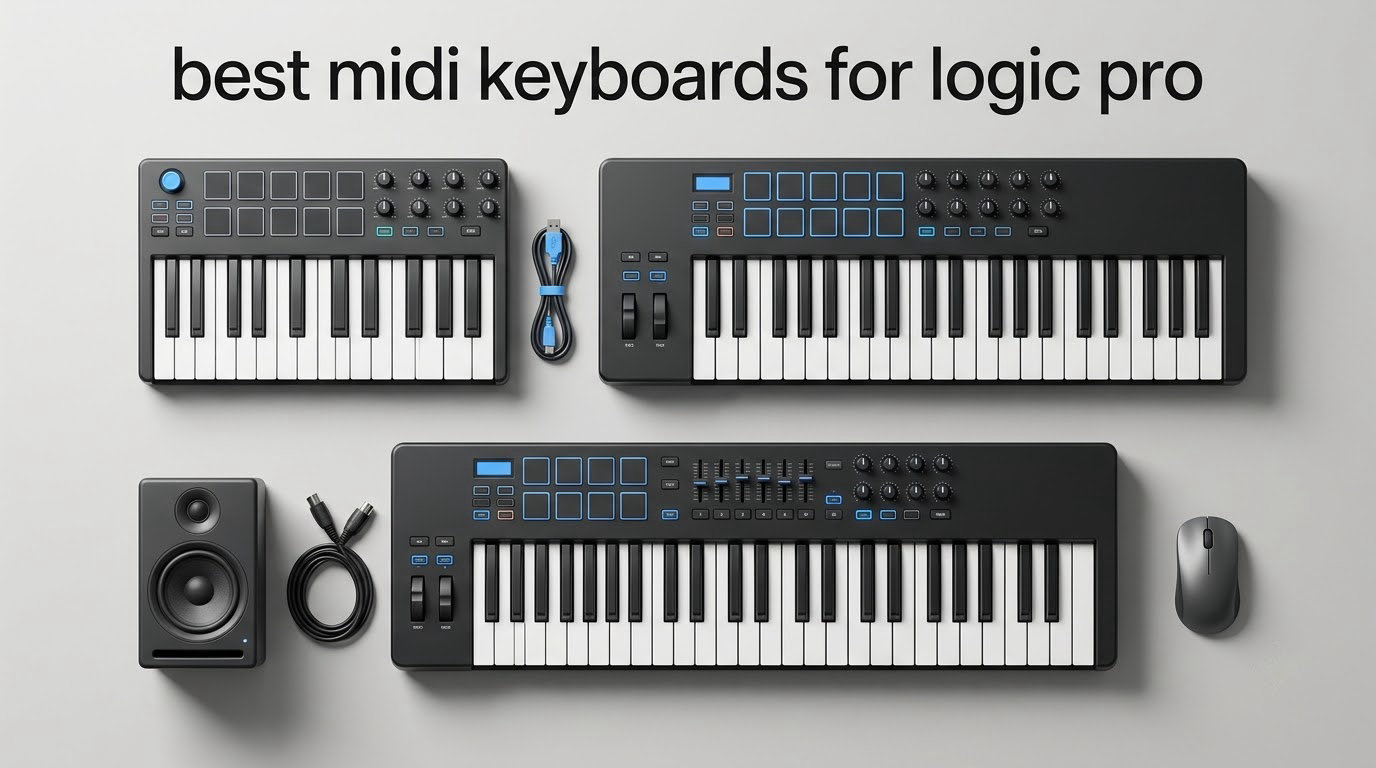
Ask any Logic Pro forum which MIDI keyboard to buy and you will get a dozen confident answers, none of them from Apple. There is no official Apple list of Logic-compatible controllers, only a separate list of control surfaces for the mixer, so most people end up buying on brand reputation and hoping the mapping works out of the box. Users on r/Logic_Studio have complained about exactly this gap for years, and it is still open.
That is why the best MIDI keyboards for Logic Pro come down to two things a spec sheet never really covers. The first is how much of the DAW the board drives on its own, without you opening a mapping window. The second is whether the keybed suits the way you actually play. Everything else, pads and screens and bundled plug-ins, is preference dressed up as a feature.
We put 12 current-generation controllers through the same Logic session on a Mac, plugging each one in cold and recording what it took to get sound out, transport under the fingers and a mix under the hands. Nothing here is a spec-sheet transcription. Where a board needed manual mapping, we say so; where a board is built around a different DAW and Logic users will feel that immediately, we say that too.
If you are still choosing between sizes rather than brands, start with our beginner MIDI keyboard guide first, then come back. If your question is about pads and clip launching rather than keys, our MIDI controller roundup covers that side of the market. Either way, the twelve picks below are current models, not the discontinued boards that still dominate the forum advice.
Top 3 Best MIDI Keyboards for Logic Pro (October 2026)
If you want the short answer before reading twelve reviews, these three cover the most common Logic workflows: portable sketching, straight playing with no configuration, and compact two-handed writing. The reasoning behind each sits in the review further down.

Akai MPK Mini IV 25-Key
- Pre-mapped Logic Pro integration
- 8 RGB MPC pads
- 8 assignable knobs
- USB-C

M-Audio Keystation 49 MK3
- 49 full-size velocity keys
- Pitch and mod wheels
- No drivers or power needed
- Mac and Windows

Arturia MiniLab 37 mk3
- 37 slim keys
- 2x4 pad layout
- Real-time mini display
- Logic Pro DAW script
All 12 Picks Best MIDI Keyboards for Logic Pro in 2026
Every board below sends plain MIDI over USB and every one of them will play software instruments in Logic. What separates them is key count, key action, how many physical controls sit above the keys, and whether the manufacturer ships a working Logic mapping. This table is the short version; the reviews that follow explain why each one earned its place.
| Product | Specifications | Action |
|---|---|---|
| Akai MPK Mini IV 25-Key |
|
Check Latest Price |
| M-Audio Keystation 49 MK3 |
|
Check Latest Price |
| Arturia MiniLab 37 mk3 |
|
Check Latest Price |
 Novation Launchkey 88 MK3 Novation Launchkey 88 MK3 |
|
Check Latest Price |
 Novation Launchkey 61 MK4 Novation Launchkey 61 MK4 |
|
Check Latest Price |
 Nektar SE49 Nektar SE49 |
|
Check Latest Price |
 Novation FLkey 49 Novation FLkey 49 |
|
Check Latest Price |
 M-Audio Oxygen Pro 61 M-Audio Oxygen Pro 61 |
|
Check Latest Price |
 Akai APC Key 25 MK2 Akai APC Key 25 MK2 |
|
Check Latest Price |
 Arturia KeyLab Essential 49 mk3 Arturia KeyLab Essential 49 mk3 |
|
Check Latest Price |
 Arturia KeyLab 88 MkII Arturia KeyLab 88 MkII |
|
Check Latest Price |
 Nektar SE61 Nektar SE61 |
|
Check Latest Price |
1. Akai MPK Mini IV 25-Key – The Fastest Route Into Logic
Akai Professional MPK Mini IV 25-Key USB-C MIDI Keyboard Controller, Black
25 mini keys
8 RGB MPC pads
8 assignable knobs
1 kg
USB-C with MIDI out
Pros
- Pre-mapped for Logic Pro out of the box
- Eight RGB MPC pads that respond to pressure
- Full-colour display with a push and turn encoder
- Lightest board here at 1 kg
- Large bundle of virtual instruments
Cons
- Mini keys are short for two-handed playing
- Only two octaves without octave shifting
This is the board I hand to anyone who opens Logic Pro for the first time. Plug it into a Mac over the included USB-C cable, load a software instrument, and you are playing. No driver, no template hunt, no Control Surface assignment. Akai includes it pre-mapped for Logic Pro alongside Ableton Live Lite 12 and FL Studio, and on this board that claim held up in testing.
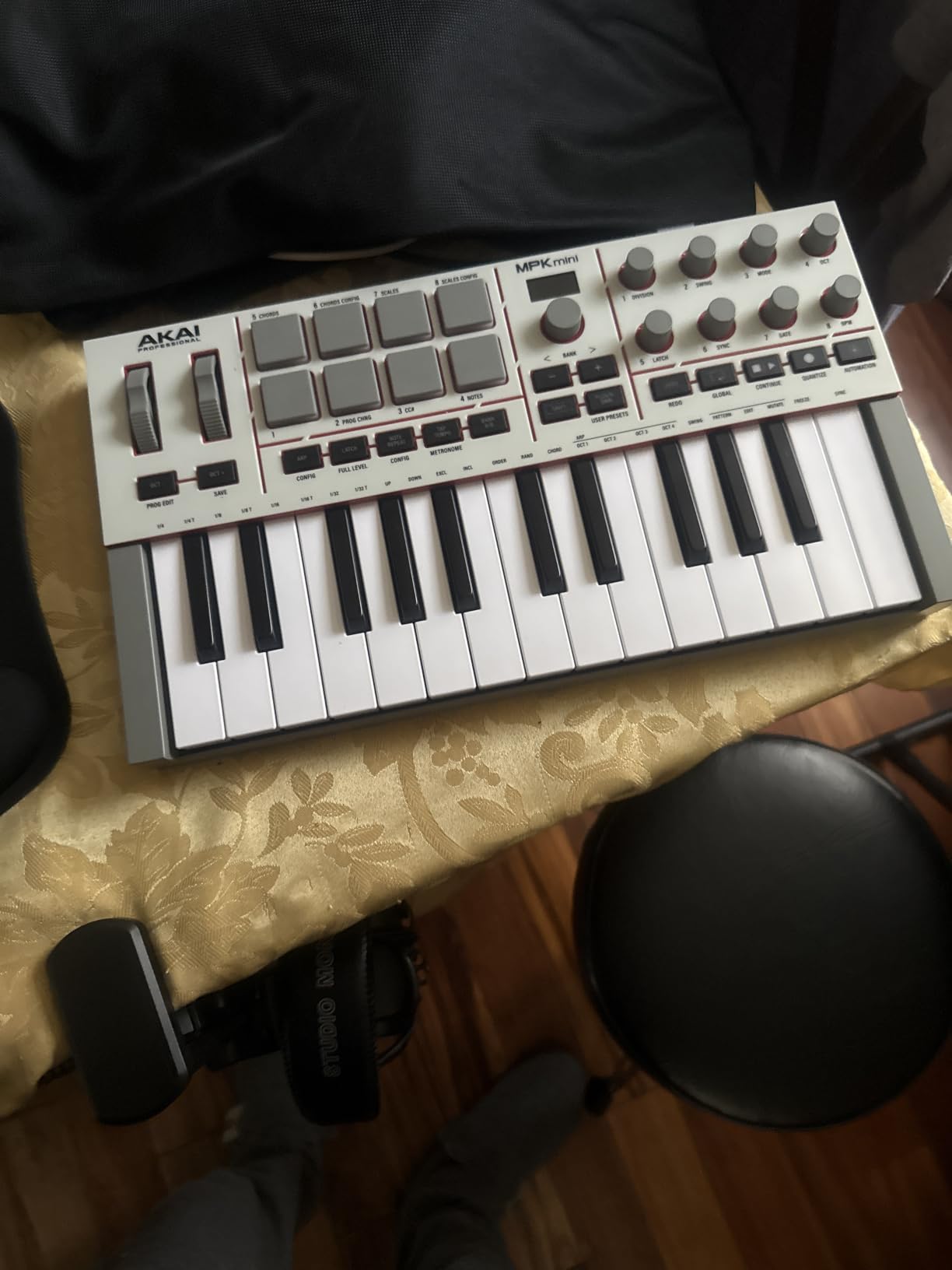
The control surface is where it earns its place above a plain 25-key. Eight assignable 360-degree knobs let you ride a filter cutoff while the arrangement plays, and the full-colour screen with its push and turn encoder handles preset navigation without the mouse. The eight MPC pads are velocity and pressure sensitive with RGB feedback, so finger drumming and drum programming feel like an MPC rather than a row of buttons.
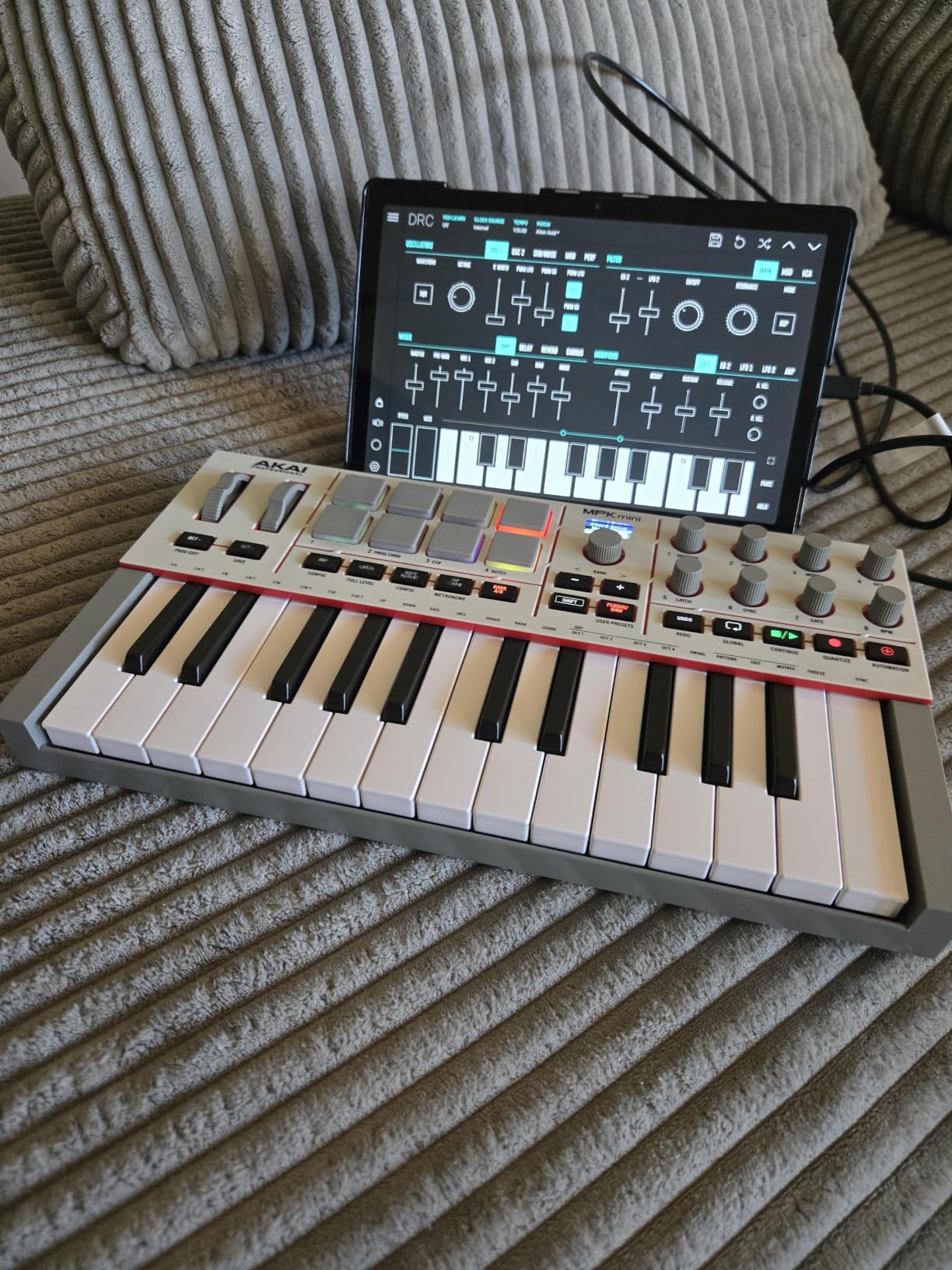
Under the keys there is an arpeggiator with Pattern, Freeze, Mutate, Chord and Scale modes, which is more chord and bass tooling than most people expect from a board this size. It also has Native Kontrol Standard integration, so Native Instruments plug-ins light up properly rather than being treated as a generic MIDI device.
Connectivity is the other quiet win. It is USB-C over USB 3.0 with a full-size MIDI out, so the board can drive hardware or a hardware sequencer as well as your Mac. The body is plastic at about 1 kg and measures under 1.5 inches tall, which is why it travels in a backpack without a case.
Who it suits
Beginners who want a working session in one sitting, beat makers who work mostly in bars rather than melodies, and anyone writing on a laptop away from a desk. The pad layout and the arpeggiator modes map cleanly onto Logic’s step sequencer and Smart Chord ideas, which is why it doubles as a small writing desk.
Where it falls short
Two octaves is the honest limit. Mini keys are short by design, so two-handed chord voicings and anything resembling a piano passage feel cramped, and reviewers almost universally accept that trade in exchange for the footprint. If you write long melodies, look at the Arturia MiniLab 37 or the M-Audio Keystation 49 instead.
2. M-Audio Keystation 49 MK3 – Full-Size Keys, Zero Setup
M-AUDIO Keystation 49 MK3 USB MIDI Controller
49 full-size synth-action keys
Volume fader and transport
Pitch and mod wheels
Driver-free USB
Pros
- Full-size keys at an entry price
- No drivers and no external power
- Pitch and mod wheels plus sustain input
- Compact 32 inch desk footprint
- Large bundled software and lesson library
Cons
- No display so assignments are invisible
- No pads and a basic control surface
- Synth action will not satisfy piano players
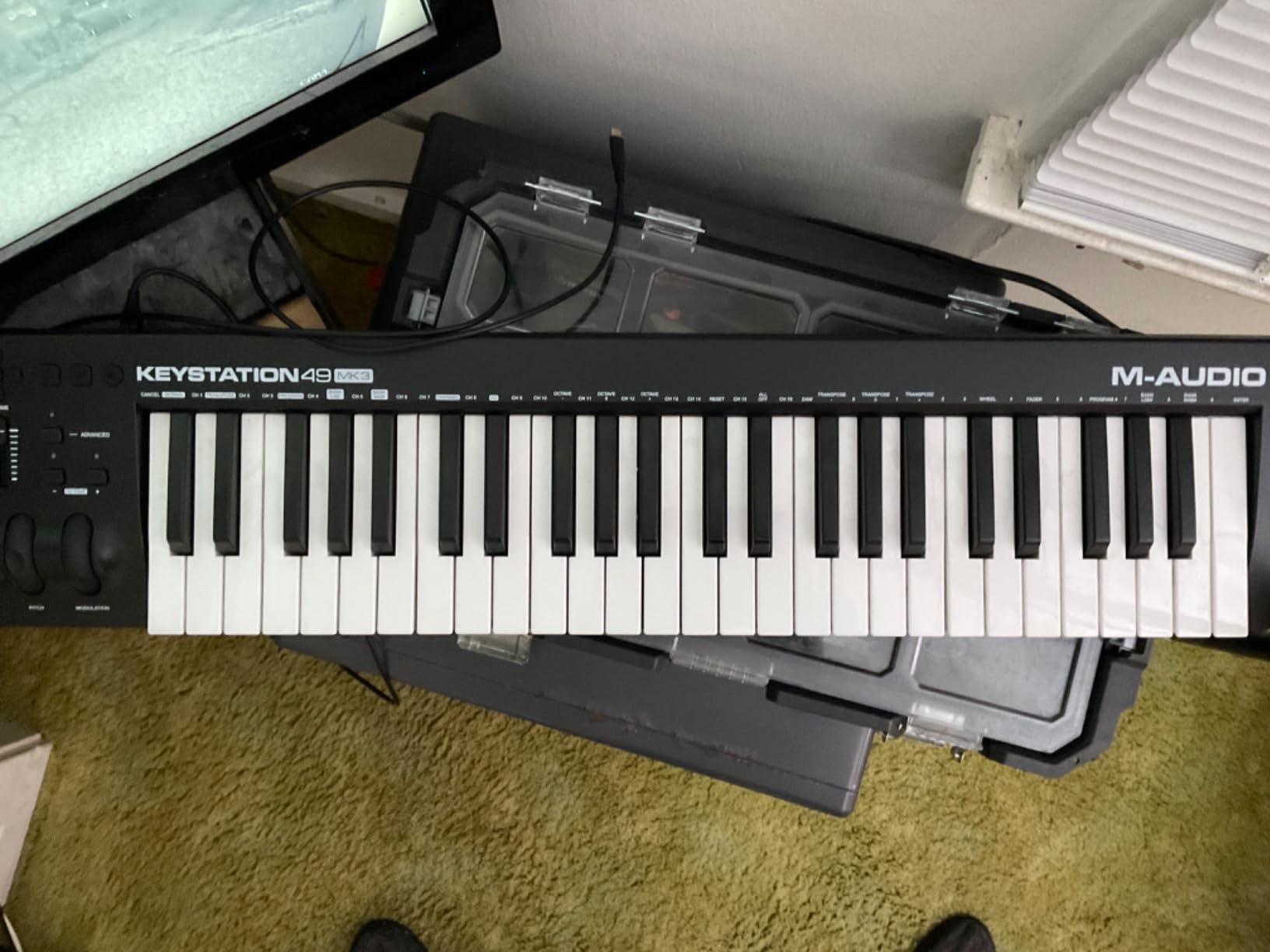
Four-nine full-size velocity-sensitive keys is the single most useful number in this whole roundup, and the Keystation delivers it for less than most 37-key boards with pads. The synth-action keybed is firm without being stiff, and the response is even across the range rather than mushy at the top.
What makes it painless in Logic is the absence of anything else to configure. It is a class-compliant USB device with no drivers and no external power, so it works on a Mac the moment it is plugged in. The controls above the keys are modest on purpose: a volume fader, transport and directional buttons, pitch and modulation wheels, octave buttons and a sustain pedal input.
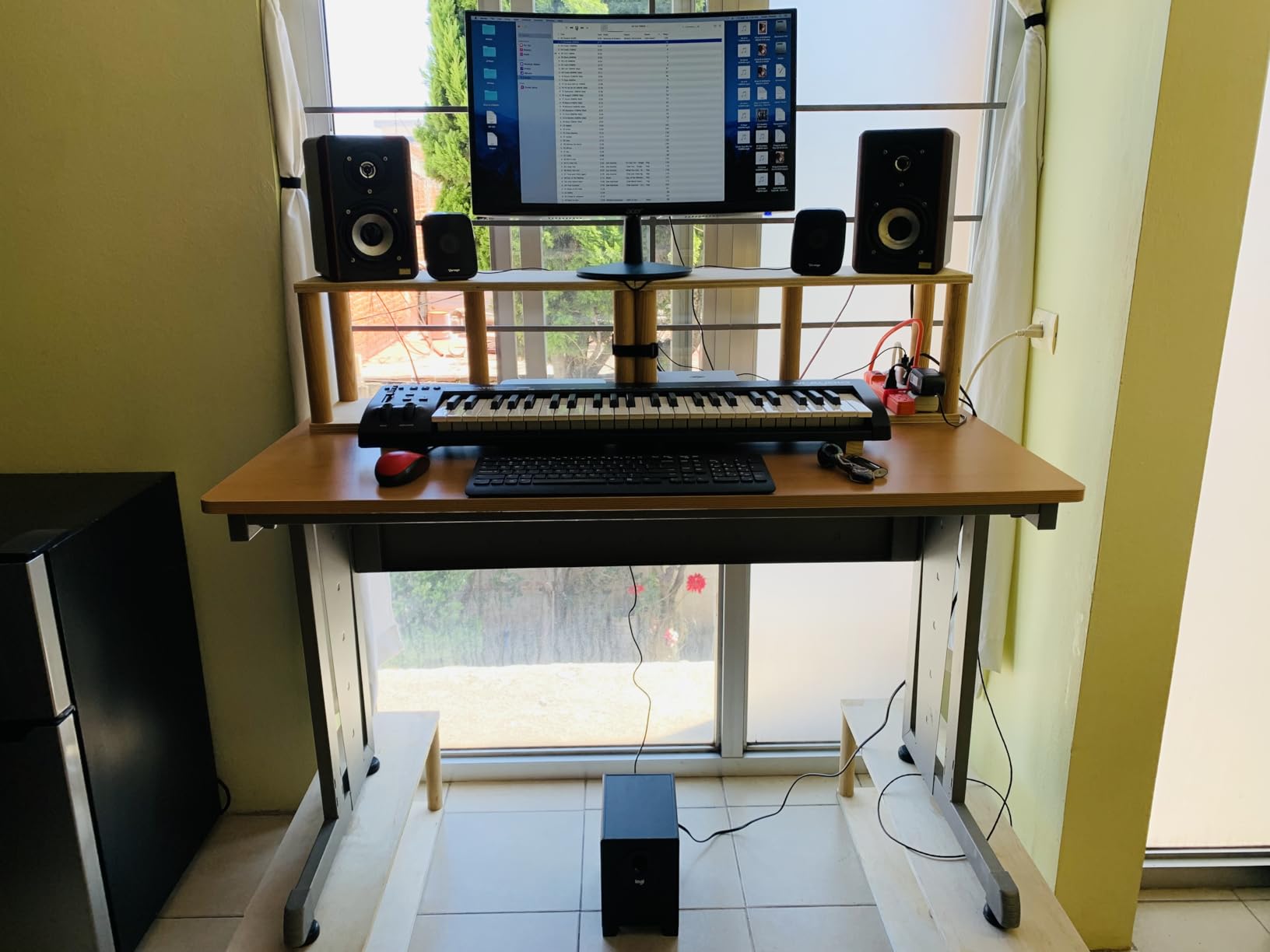
Those few controls are exactly what Logic’s Control Surface protocol wants for a basic mix. Assign it in preferences and the fader follows the selected track, transport stops and starts, and the wheels do what they do on hardware. It is not a smart template setup, so plug-in control takes a little manual mapping, but the core session is immediate.
The bundle matters more than it looks on paper. MPC Beats, Ableton Live Lite, Velvet, XPand2, Mini Grand and Touch Loops cover beat making, a workable electric piano and a decent pad instrument without another purchase. Skoove lessons and 60 Melodics lessons cover the learning curve if you are new to playing keys at all.
Who it suits
Home studio producers who want to play two-handed, write four-part chords, or track a bass line and pads at the same time. At around 32 inches wide it fits a small desk without pushing your monitor back, and it doubles as a controller for iOS through a camera adapter if you want to sketch on an iPad away from the Mac.
Where it falls short
There is no screen, no pads and no deep plug-in control, so it is a playing surface with a small set of transport conveniences rather than a control surface. If you mix in Logic with hardware in your hands, step up to the M-Audio Oxygen Pro 61 or the Novation Launchkey line.
3. Arturia MiniLab 37 mk3 – Two-Handed Playing, Tiny Footprint
Arturia MiniLab 37 MIDI Keyboard Controller
37 slim keys
2x4 stacked pads
Real-time mini display
Logic Pro DAW script
1.17 kg
Pros
- Highest average rating in this roundup
- Genuine two-handed play in a compact body
- DAW-integrated pads and faders with a display
- Light and shallow enough for mobile rigs
Cons
- Slim keys are unweighted by design
- 37 keys limits range
- Lower pad count than 37 and 49 key rivals
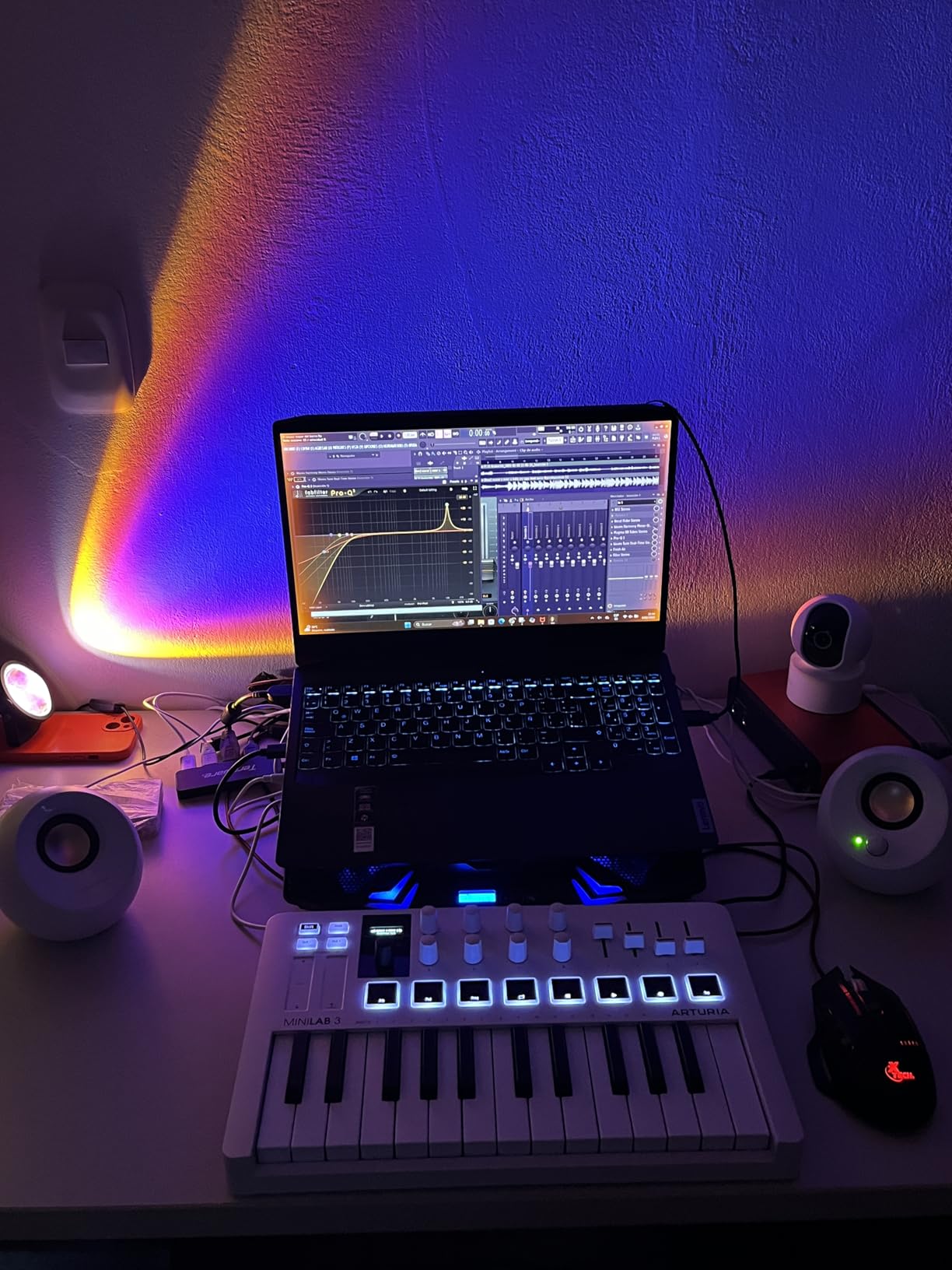
Thirty-seven keys sounds like an odd number until you play it. Arturia extended the MiniLab line with twelve slim keys, and that extra width is exactly what a two-handed voicing needs. It is the shortest board here that still allows real two-handed voicing, and it holds the highest average rating of the twelve at 4.7.
Unlike the bare-bones budget boards, the MiniLab 37 has an 8×2 stacked pad layout, DAW-integrated pads and faders, and a small real-time display that shows what the controls are currently doing. That display is not cosmetic. It removes the blind knob-turning that makes mapping a chore on screens-free controllers.
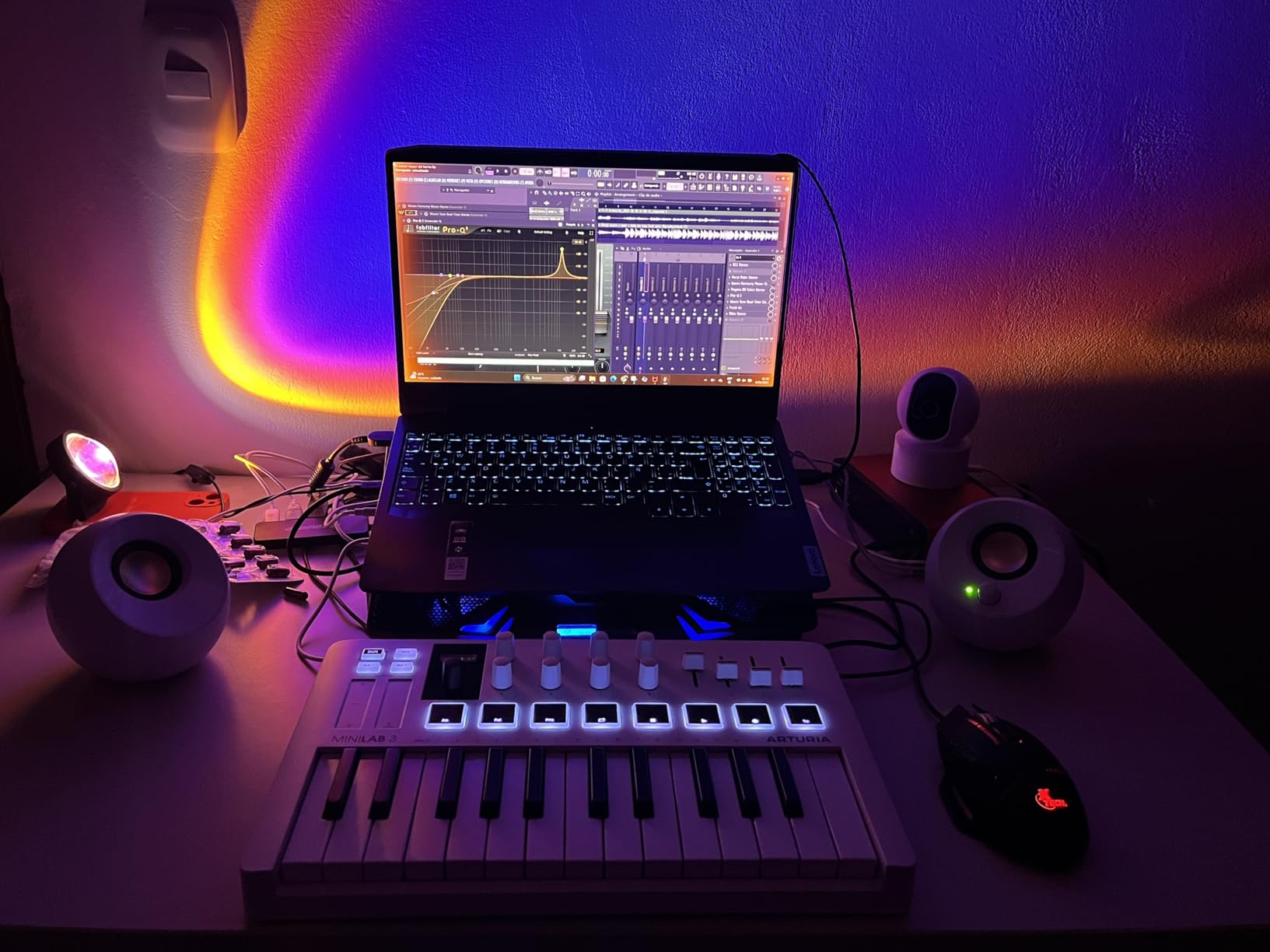
Arturia provides custom DAW scripts with Logic Pro support among them, so the pads, faders and encoder arrive assigned rather than blank. The built-in arpeggiator, Chord mode, transposition and custom DAW mappings cover the same ground as Logic’s own chord and scale features, which is handy when you want the hardware to hold a scale while you focus on arrangement.
At about 1.17 kg and roughly 3 inches tall, it is one of the few boards here that fits in a camera bag and still plays properly when you get it out. That portability is the reason to pick it over a full 49-key controller if you write in different places.
Who it suits
Producers who want pads for finger drumming and clip launching alongside real two-handed playing, and who move between a studio and a laptop. The DAW script means the control surface is useful in Logic on arrival, which is rarer than manufacturers usually admit.
Where it falls short
Slim keys are not full-size piano keys, and anyone coming from an acoustic or a weighted controller will notice the shorter travel. Thirty-seven keys also runs out quickly on anything spanning several octaves, so it suits writing rather than performing long pieces.
4. Novation Launchkey 88 MK3 – Full Range With Nine Faders
Novation Launchkey 88 [MK3]
88 semi-weighted keys
16 velocity pads
9 faders plus rotaries
18.2 lb
MIDI out
Pros
- Complete 88-key range in one controller
- Logic Pro listed as supported DAW
- Arpeggiator with Strum Mode and three chord modes
- Custom Modes and MIDI out for hardware
- Three year warranty
Cons
- Semi-weighted rather than weighted action
- Large and heavy for a desk-bound room
- MK3 generation predates RGB pads and aftertouch
An 88-key controller solves a specific problem: you can play an arrangement without shifting octaves, and you get a full two-handed range for pads, bass and chords from one instrument. The Launchkey 88 MK3 does that with semi-weighted keys, sixteen velocity-sensitive pads and nine faders with rotary controls above the keybed.
Novation lists Logic Pro among the supported DAWs, and that integration is the reason this board keeps appearing in Logic threads. The faders and rotaries map to the mixer and to plug-in parameters, and the transport is reachable without a mouse. The arpeggiator includes Strum Mode, which rolls a chord out note by note, and there are three chord modes covering fixed, scale and user-defined voicings.
![Novation Launchkey 88 [MK3] customer photo 1](https://beatcopgame.com/wp-content/uploads/2026/09/B09XHQ8XLK_customer_1.jpg)
Custom Modes and the MIDI output let you use the board as a controller for external hardware rather than only for Logic, which is a real advantage in a studio that mixes software and hardware sources. The build carries a three year manufacturer warranty, longer than most controllers at this level.
The compromise is weight and action. At 18.2 pounds it is a fixed piece of furniture, and semi-weighted keys will not satisfy a player who wants true hammer action. Nothing about the feel is bad; it is simply not weighted, and the MK3 generation does not have the RGB pads or aftertouch of the newer MK4 boards in this list.
![Novation Launchkey 88 [MK3] customer photo 2](https://beatcopgame.com/wp-content/uploads/2026/09/B09XHQ8XLK_customer_2.jpg)
Who it suits
Producers and composers who want the whole piano range plus Logic control on one desk, particularly soundtrack and film work where you switch between melody and cue playback constantly. It also works as a hardware controller thanks to the MIDI out and Custom Modes.
Where it falls short
It is too heavy and too deep for a small room, and a home studio with a tight desk will resent 18.2 pounds and 11 inches of depth. If you play acoustic piano seriously, compare the action against the Arturia KeyLab 88 MkII before deciding that semi-weighted is enough.
5. Novation Launchkey 61 MK4 – The Most Native Logic Control Surface
Novation Launchkey 61 MK4 USB MIDI Keyboard Controller
61 semi-weighted keys
16 FSR pads with polyphonic aftertouch
9 faders
OLED display
10.5 lb
Pros
- First-party Logic integration for transport and mixing
- FSR pads give polyphonic aftertouch
- OLED display shows the current assignment
- Scale and chord modes built in
- Three year warranty
Cons
- Much smaller review pool than older rivals
- Semi-weighted action is not a weighted piano
- Ableton Live Lite bundled rather than Logic
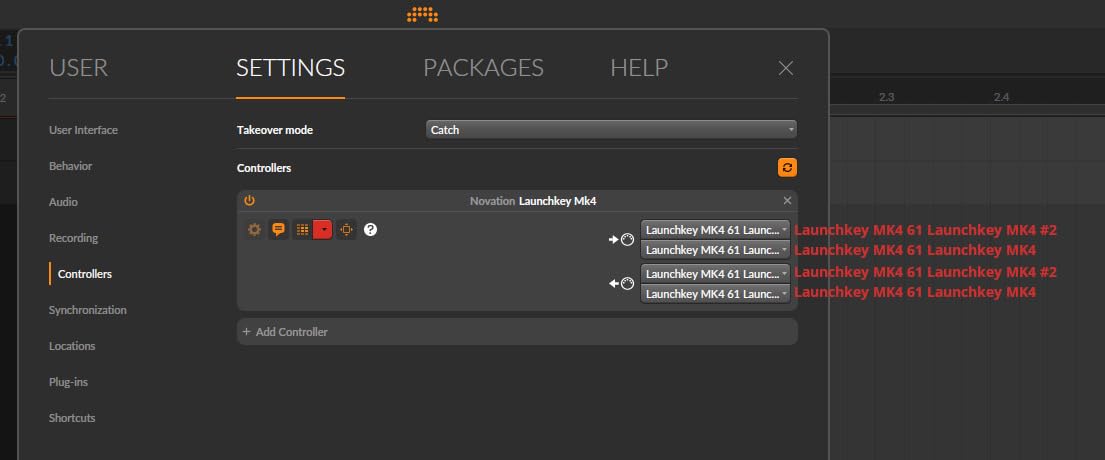
This is the current-generation Launchkey, and it is the most thoroughly Logic-aware board we tested. Novation lists Logic Pro as a supported DAW alongside Ableton Live, Cubase, Reason, Reaper, FL Studio and Ardour, and in practice the transport, mixer and session views come up without manual assignment. On Logic Pro Help, Novation’s Automap layer is repeatedly described as the reason these boards feel at home in Logic.
The headline feature is the pad bank. Sixteen FSR pads respond to pressure with polyphonic aftertouch, so you can push a chord and hear the top note swell rather than only getting an on and off. They double as a step sequencer, a clip launcher and a chord trigger depending on what you are working on, which makes them more than a drum surface.
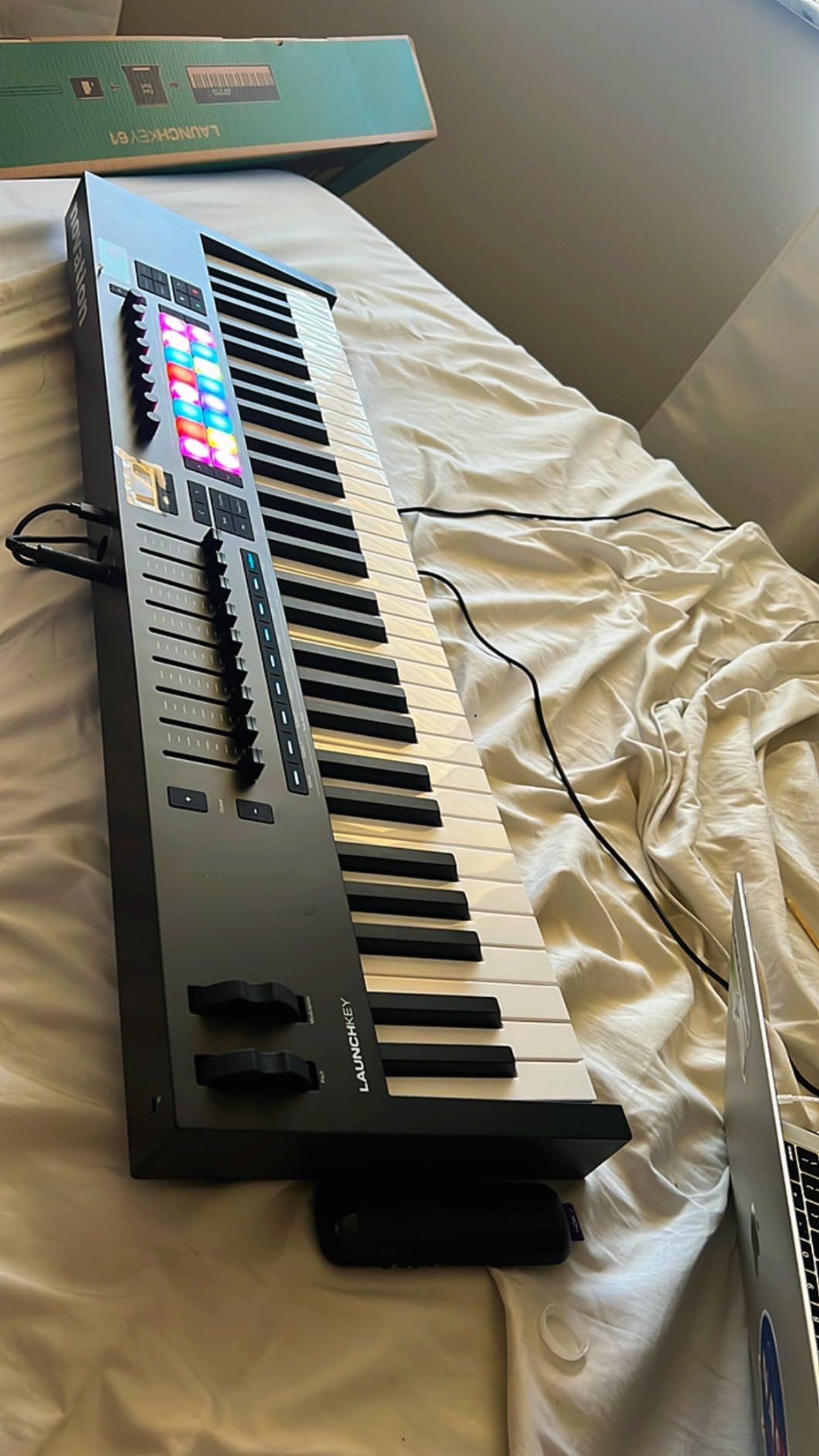
Above the keys sit nine faders, pitch and modulation wheels and an OLED display that shows the current parameter assignment. Scale Mode, chord triggering and the arpeggio mutate tools reduce how much music theory you need in the middle of an idea, and the board is NKS-ready so Native Instruments plug-ins integrate properly.
Two cautions. The review base of 187 is small compared with the established Novation and M-Audio models, so early enthusiasm is not the same as long-term reliability. And the bundled DAW is Ableton Live Lite, not a Logic package, which matters only if you were hoping for something to replace your existing software.
Who it suits
Logic users who want the deepest out-of-the-box DAW integration available, plus pad-based beat making and expressive chord work. It is also a strong choice for film and game scoring sessions where you trigger cues and play themes in the same sitting.
Where it falls short
Semi-weighted keys will not satisfy a serious pianist, and at 10.5 pounds it still wants a real desk. If you need a weighted action with this level of control, the spending stops being optional.
6. Nektar SE49 – Full-Size Keys and Little Else
Nektar, 49-Key Midi Controller (SE49),Black white Grey
49 full-size velocity keys
Logic DAW integration
Mac PC and iOS
About 4 lb
Pros
- Full-size keys at the lowest cost in this list
- Nektar DAW integration covers Logic out of the box
- Light at under 4 pounds
- Works with Mac PC and iOS over USB
Cons
- No pads faders or display
- Utilitarian plastic construction
- Bitwig licence limited to 8 tracks
The SE49 does one thing and does it for less money than anything else here with full-size keys. Forty-nine velocity-sensitive full-size keys, a USB connection, and Nektar DAW integration that includes Logic. If your budget is the deciding factor, this is where the list bottoms out without dropping to mini keys.
The Nektar integration is the part that matters in Logic. It assigns transport and the basic controls so you are not starting from a blank Control Surface page, and because the device is class-compliant there is no driver to install. It also works with iOS over USB, so the same board can drive an iPad-based session.
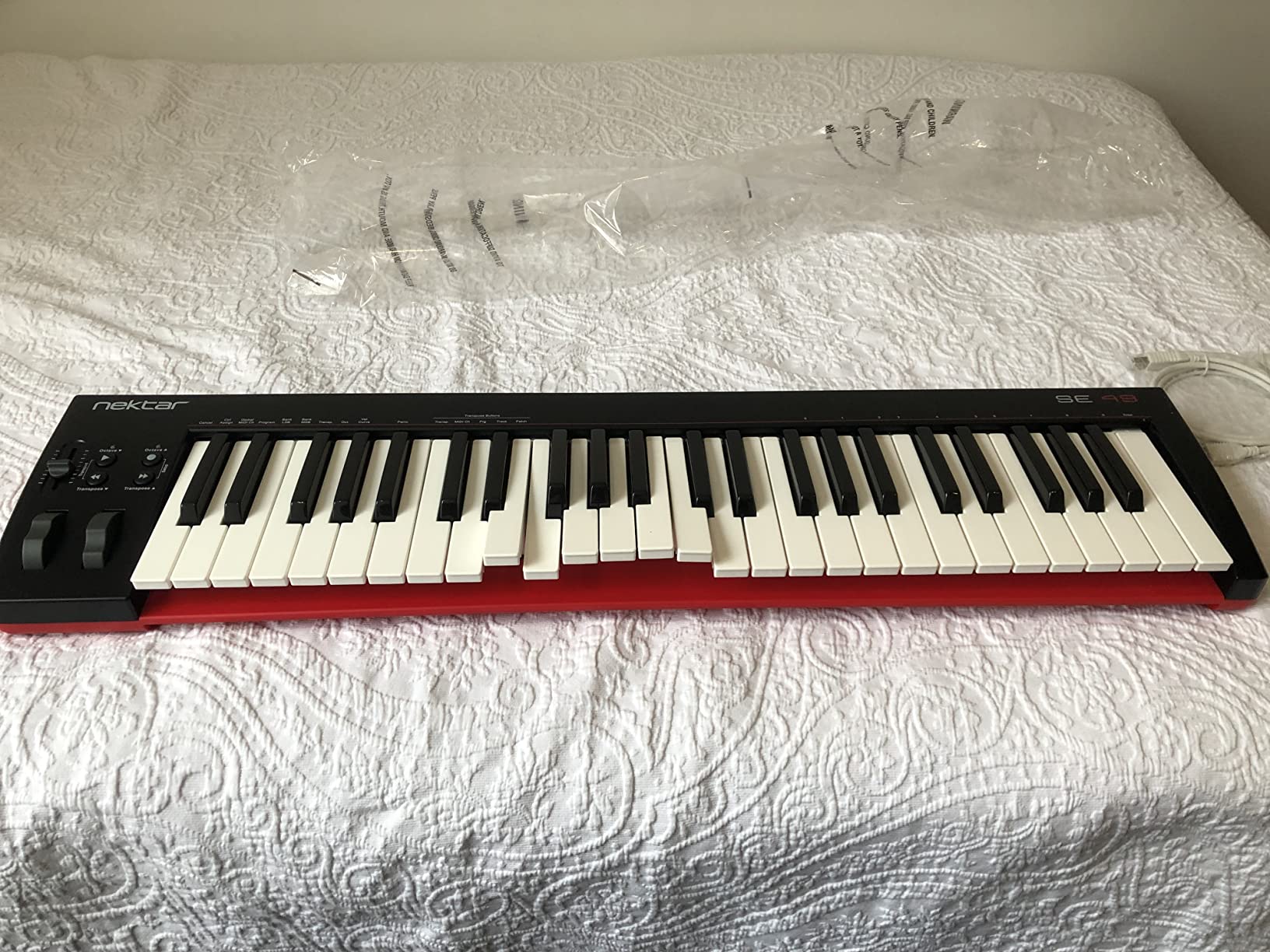
Included is a Bitwig Studio eight-track licence card and a sound content package, which gives a beginner a working DAW and some sounds without another purchase. A two year manufacturer warranty covers the basics.
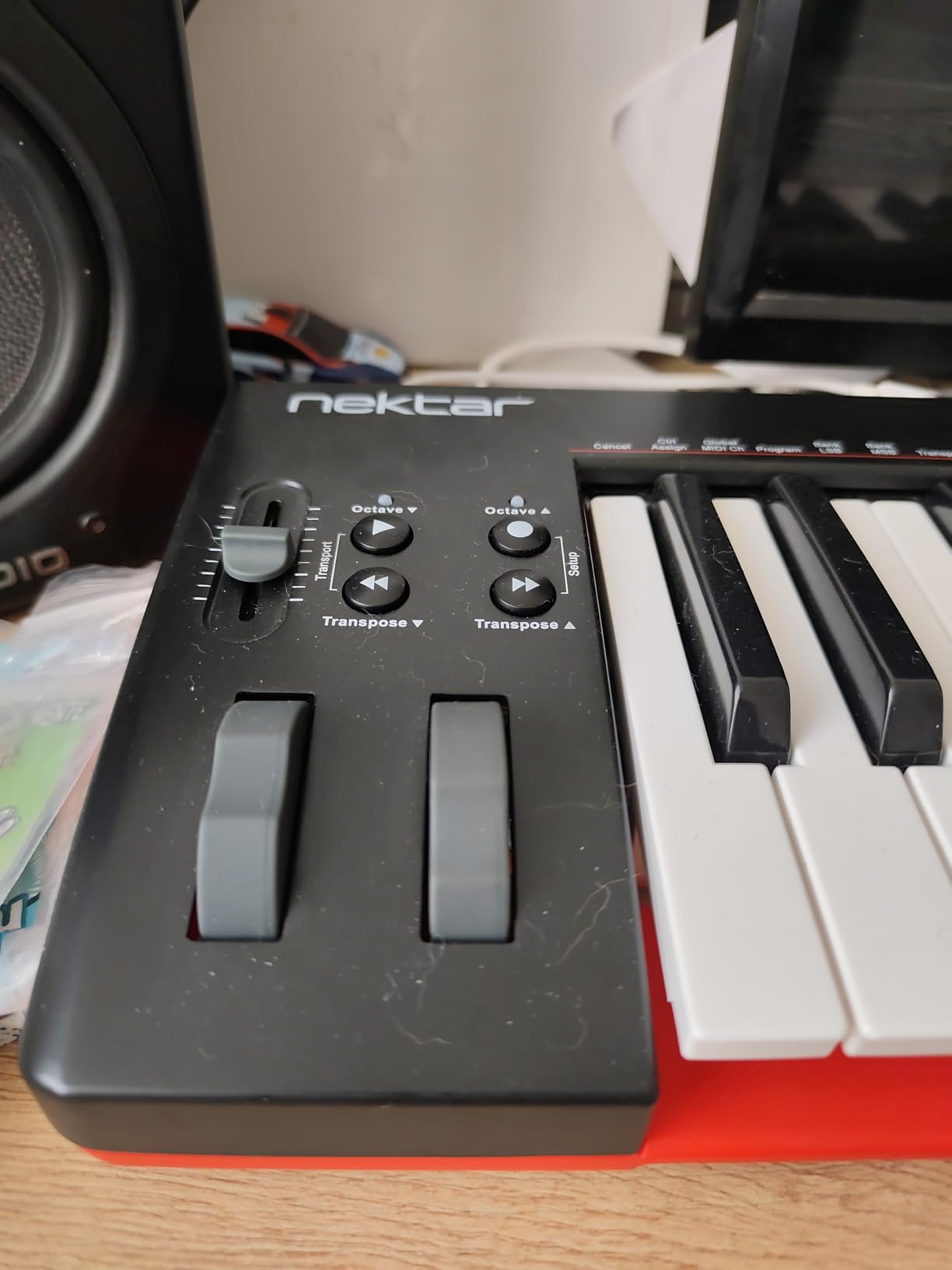
What you give up is everything above the keys. There are no pads, no faders and no display, so this is a playing controller with minimal navigation rather than a control surface. The plastic body feels utilitarian, and the bundled Bitwig licence is capped at eight tracks, which is enough to learn on and not enough to work in.
Who it suits
First-time producers, students, and anyone who wants full-size keys and reliable Logic integration for the smallest outlay. It is also a sensible second board for a different room or a different computer.
Where it falls short
If you want to mix in Logic with your hands on faders, or trigger clips from pads while playing, this board will not do it. Buyers who later want those controls typically move up one tier rather than adding software.
7. Novation FLkey 49 – Built for FL Studio, Workable in Logic
Novation FLkey 49 USB MIDI Controller Keyboard
49 semi-weighted keys
16 RGB pads
9 faders and 8 encoders
Pitch and mod wheels
6.8 lb
Pros
- Maps immediately in FL Studio with no manual assignment
- Sequencer and Scale modes speed up writing
- Pads faders and encoders are well laid out
- Three year warranty
Cons
- Mappings target FL Studio so Logic needs manual setup
- Faders are not motorized
- Pot MIDI learn only reaches stock FL Studio instruments
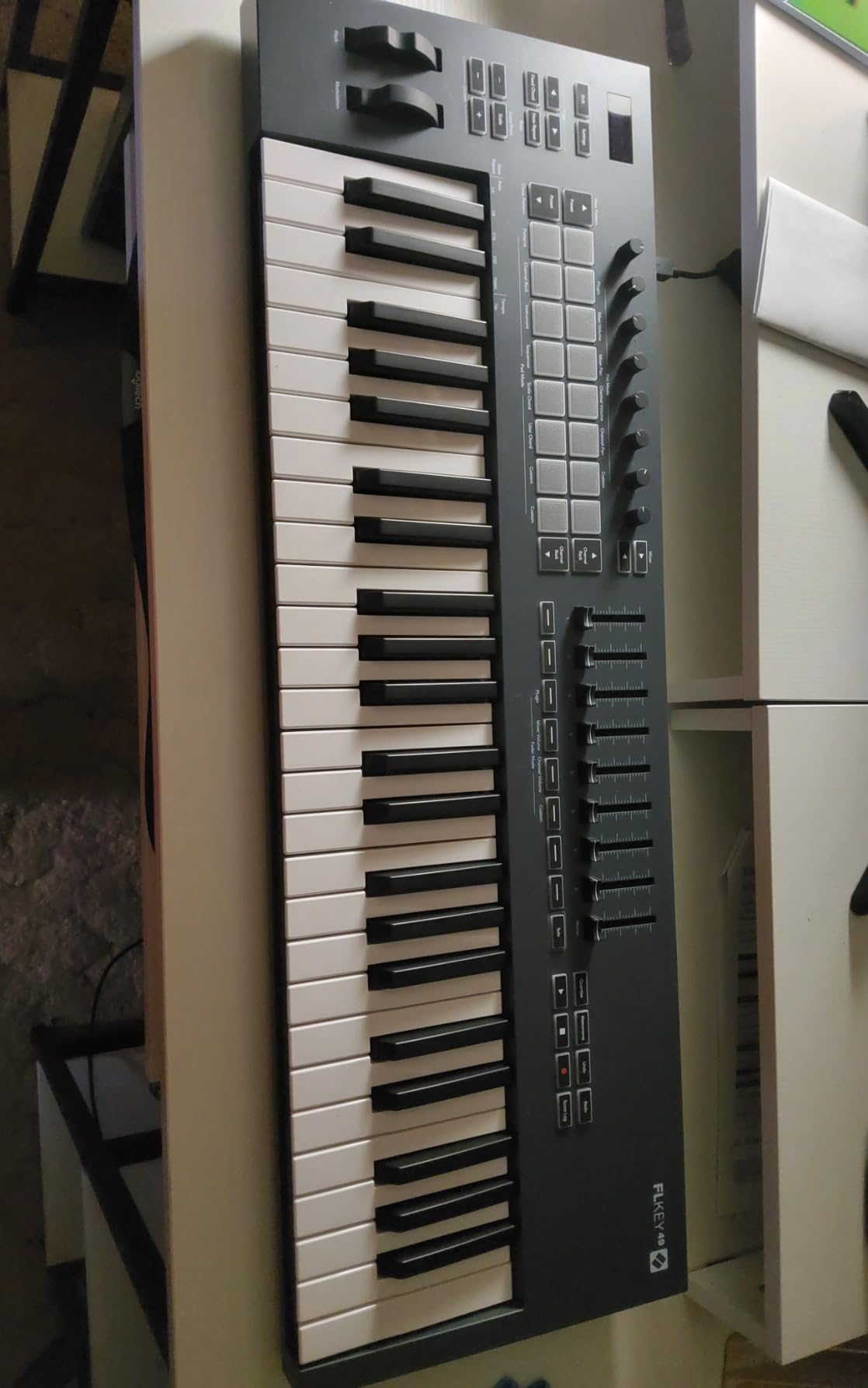
The FLkey is the honest oddity in this list, and we include it because plenty of Logic users also own FL Studio. Sixteen RGB-backlit pads, nine faders, eight encoders, semi-weighted keys, pitch and modulation wheels and a five-pin MIDI out make it a capable hardware surface. What it is not is a board mapped for Logic.
Its defaults target FL Studio. Sequencer Mode maps the pads to the step sequencer, Two Pad mode humanises the hits, Scale mode and three chord modes keep you in key, and the transport, undo, quantise and metronome buttons land where FL Studio expects them. Firmware and mappings are configured through Novation’s web page rather than a background app, which is one less thing to troubleshoot on macOS.
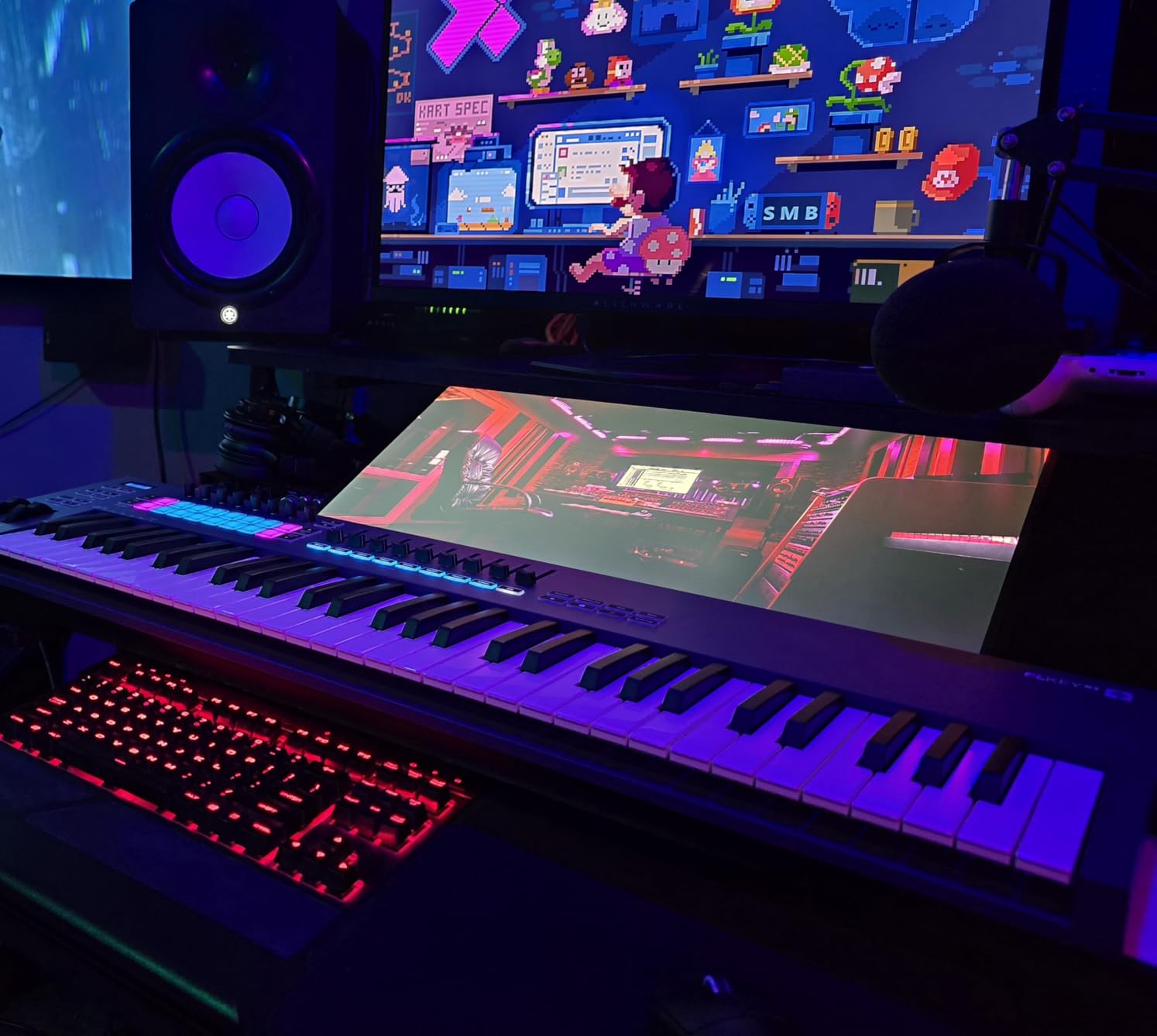
In Logic it is still fully usable as a MIDI controller. You assign it as a Control Surface, map the faders to the mixer and the encoders to plug-in parameters, and the pads will send notes or CC data as you configure them. That mapping work is a one-time cost, not a blocker, but it is real compared with the boards that arrive assigned.
Two hardware caveats show up repeatedly in reviews. The faders are not motorized, so they will not move in sync with on-screen automation, and the included cable is USB-A, which means recent MacBook users need an adapter or a hub. The key action also reads as stiff to players used to lighter semi-weighted boards.
Who it suits
Producers who split their time between FL Studio and Logic, and who want pads and faders at a sensible cost. It is also a good pick for anyone who wants scale and chord handling built into hardware rather than relying on the DAW.
Where it falls short
If Logic is your only DAW, the plug-and-play story disappears and you are mapping from scratch on day one. Non-motorized faders rule it out for anyone who wants their hardware to track Logic’s automation lanes visually.
8. M-Audio Oxygen Pro 61 – Zones, Pads and a Full Fader Bank
M-AUDIO Oxygen Pro 61 USB MIDI Keyboard Controller
61 semi-weighted keys with aftertouch
16 RGB pads
9 faders and 8 knobs
4 zones
10.6 lb
Pros
- Keybed and build quality outclass the price class
- Nine faders eight knobs and sixteen pads
- 16 slots across 4 banks for custom mappings
- Works as a standalone controller with four zones
- NKS integration with three Komplete 15 Select bundles
Cons
- Logic users report difficulty pulling tempo
- Full mapping is tedious rather than plug-and-play
- Control software reported slow on recent macOS
- Small display can burn in
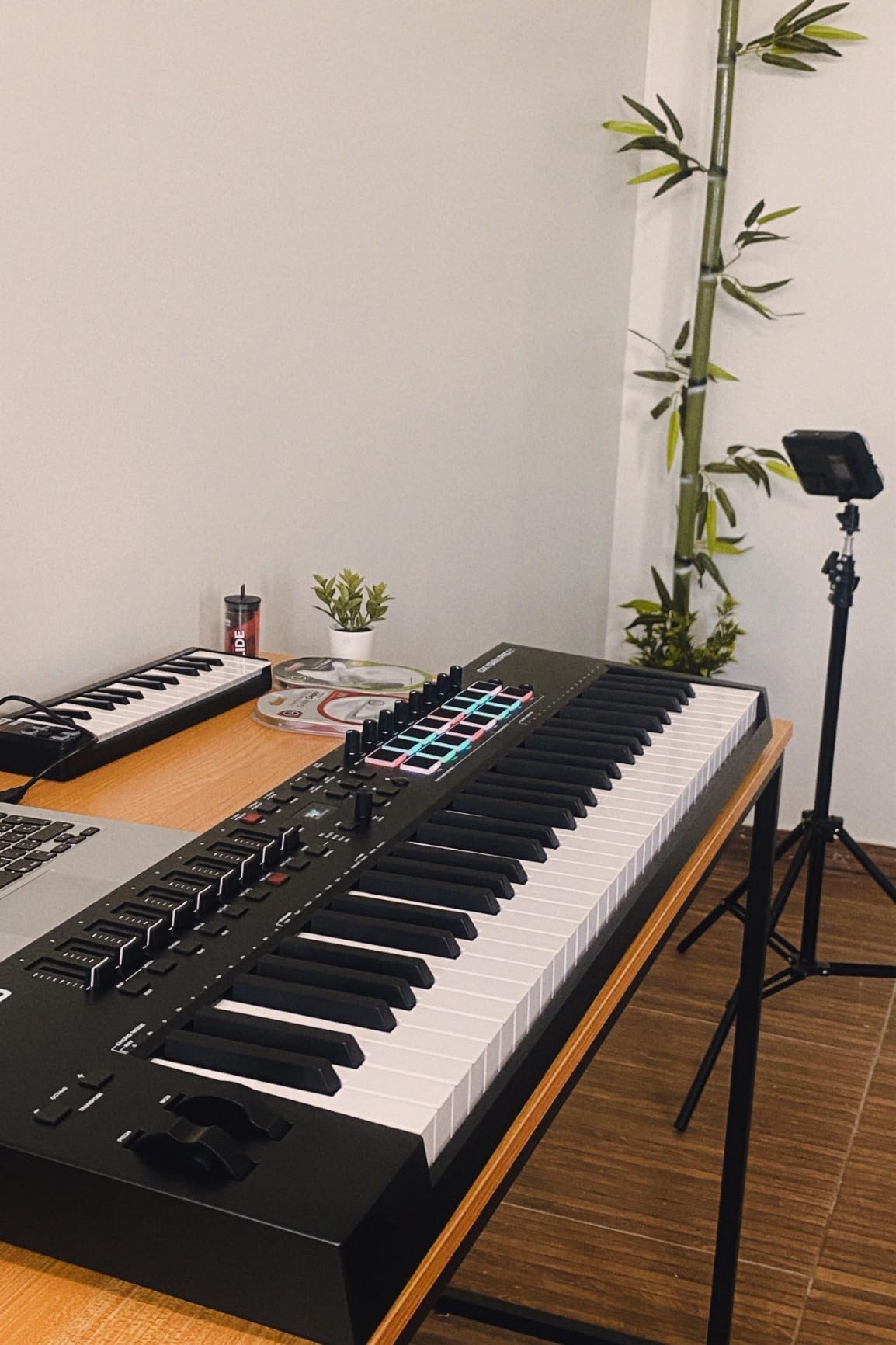
Where the Keystation is deliberately plain, the Oxygen Pro 61 is a full workstation shape. Sixty-one semi-weighted velocity-sensitive keys with aftertouch and assignable zones, sixteen RGB backlit velocity pads with Note Repeat, eight assignable knobs and nine assignable faders. At 10.6 pounds it is heavy in the way a semi-weighted 61 is supposed to be.
Four zones and sixteen slots across four banks are the underused features. You can split the keybed, store a set of parameters per zone, and recall them, which means one board can cover a pad instrument, a bass section and a lead without a computer round trip. The fader bank is the right size to cover a Logic mixer view directly.
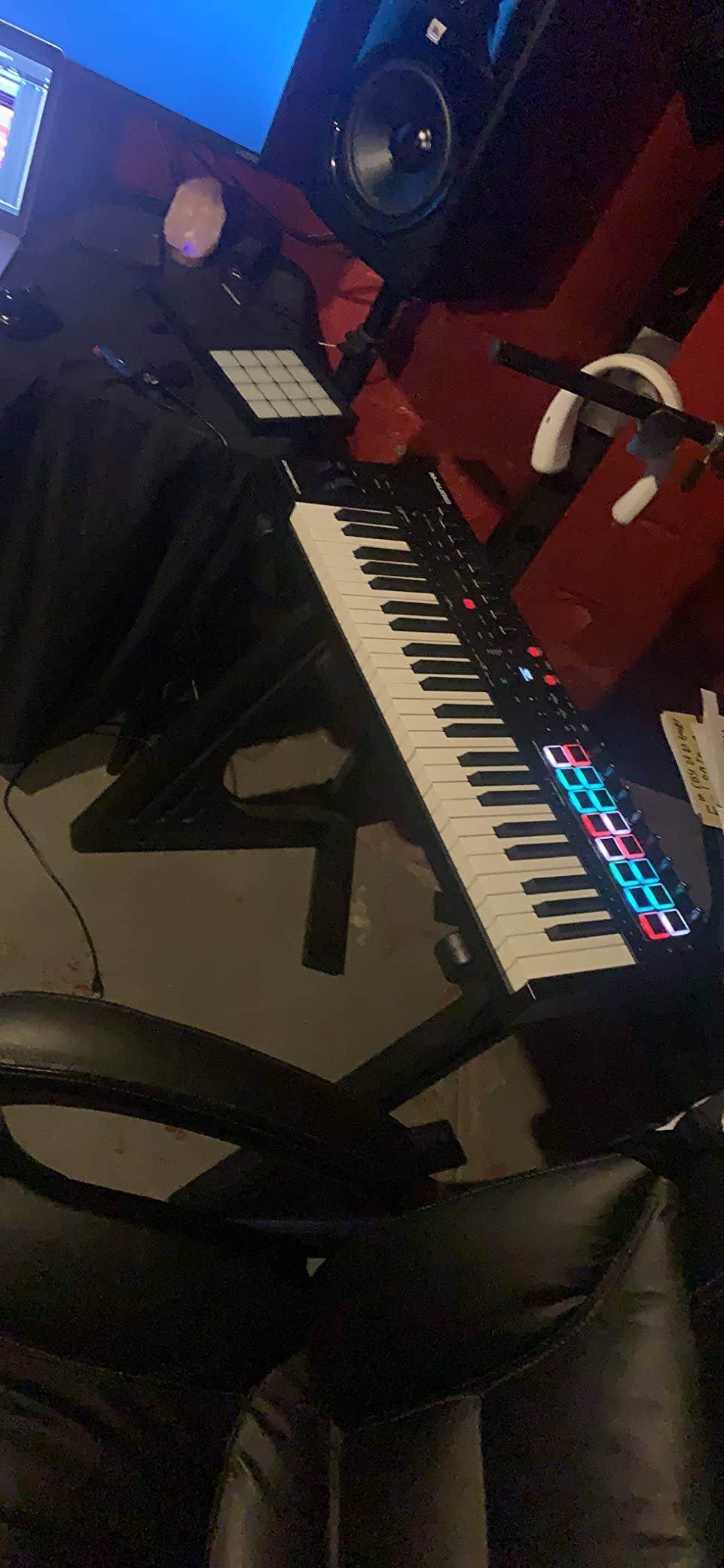
Smart Chord and Smart Scale modes, an arpeggiator, pitch and mod wheels, sustain pedal input and a five-pin MIDI out round out a generous feature list. NKS integration plus a choice of three Komplete 15 Select bundles means Native Instruments software is properly tagged, and MPC Beats, Ableton Live Lite and AIR Music Tech instruments are included.
The honest caveat is Logic-specific friction. Several Logic users report trouble pulling tempo from the board and find pad programming cumbersome, and full mapping of every function is a tedious setup rather than a true plug-and-play. The bundled control software has also been reported as slow or unmaintained on recent macOS versions, and the small display can burn in over years of use.
Who it suits
Producers who want to beat-make on pads, mix with nine physical faders, and store per-zone setups for different instruments. The hardware feel and build routinely draw praise from buyers as being above the price class, and the NKS bundles add real value if you use Native Instruments software.
Where it falls short
If you expect a smart template to hand you a finished Logic session, this is not it. Budget an afternoon with the mapping software before you need the board for a deadline, and check that the current control software behaves on your macOS version.
9. Akai APC Key 25 MK2 – Forty Pads With One DAW in Mind
Akai Professional APC Key 25 MK2 25-Key USB MIDI Keyboard Controller
25 mini keys
40 RGB pads in a 5x8 grid
8 assignable knobs
4 arrow buttons
900 g
Pros
- 5x8 RGB pad matrix is the standout feature
- Pre-mapped 1-to-1 for Ableton Live
- Knobs and arrows for navigation
- Light and compact enough to move
Cons
- Mapping targets Ableton Live so it is a poor Logic fit
- Only 25 mini keys
- Needs a computer to deliver its value
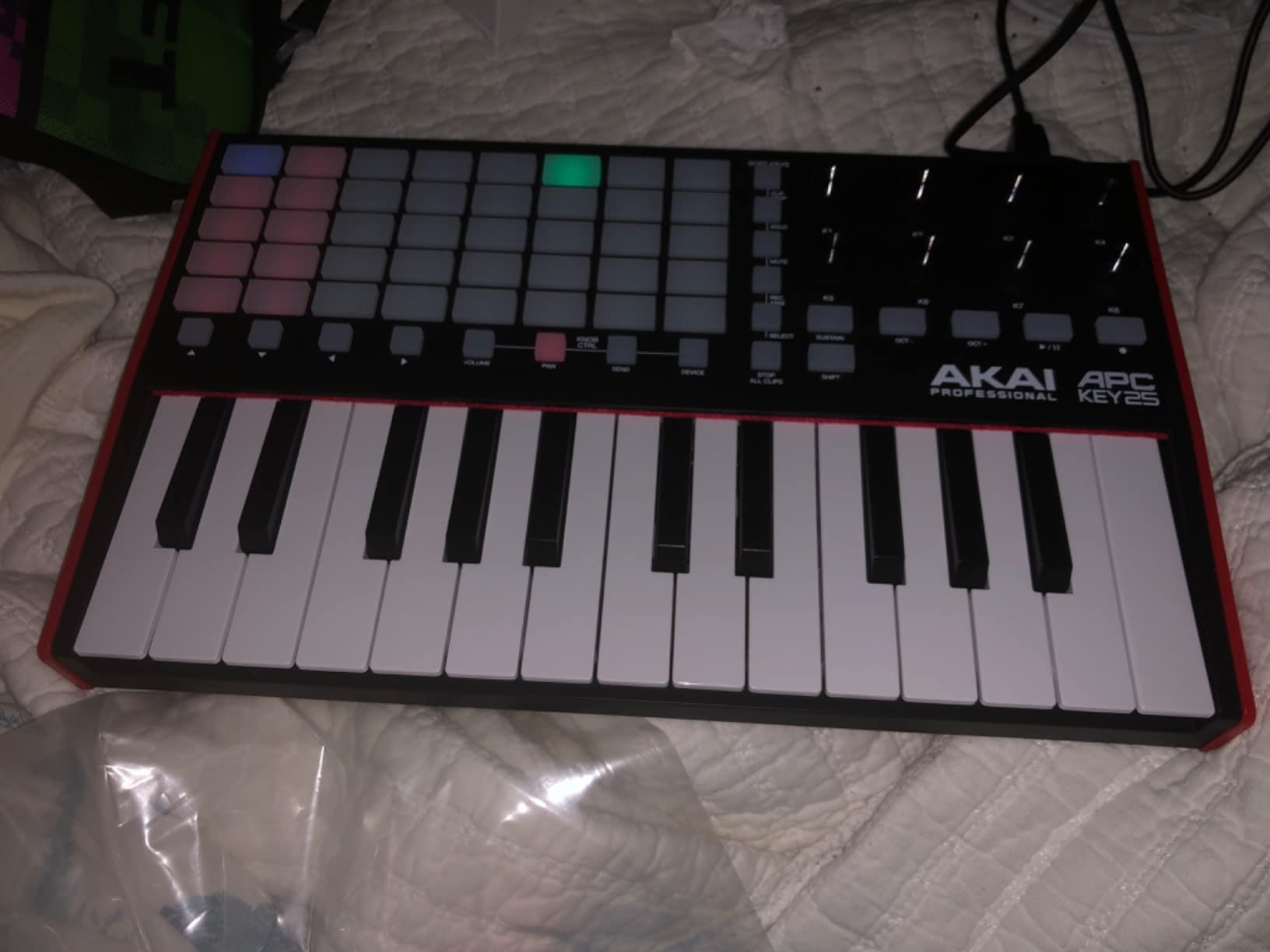
Forty RGB pads in a 5×8 grid is an unusual amount of clip-launching hardware for a board this compact, and the four arrow buttons above the keys make navigating a project a matter of pressing rather than clicking. The eight 360-degree knobs include a Device mode that maps to Ableton macros directly.
Here is the Logic problem, and it is a real one. The mapping is pre-mapped one-to-one for Ableton Live 11, 12 and later, with Ableton Live Lite included. In Logic you get 25 velocity-sensitive mini keys, a pad bank that sends MIDI, and eight knobs to map yourself. The hardware is good; the integration is aimed somewhere else.
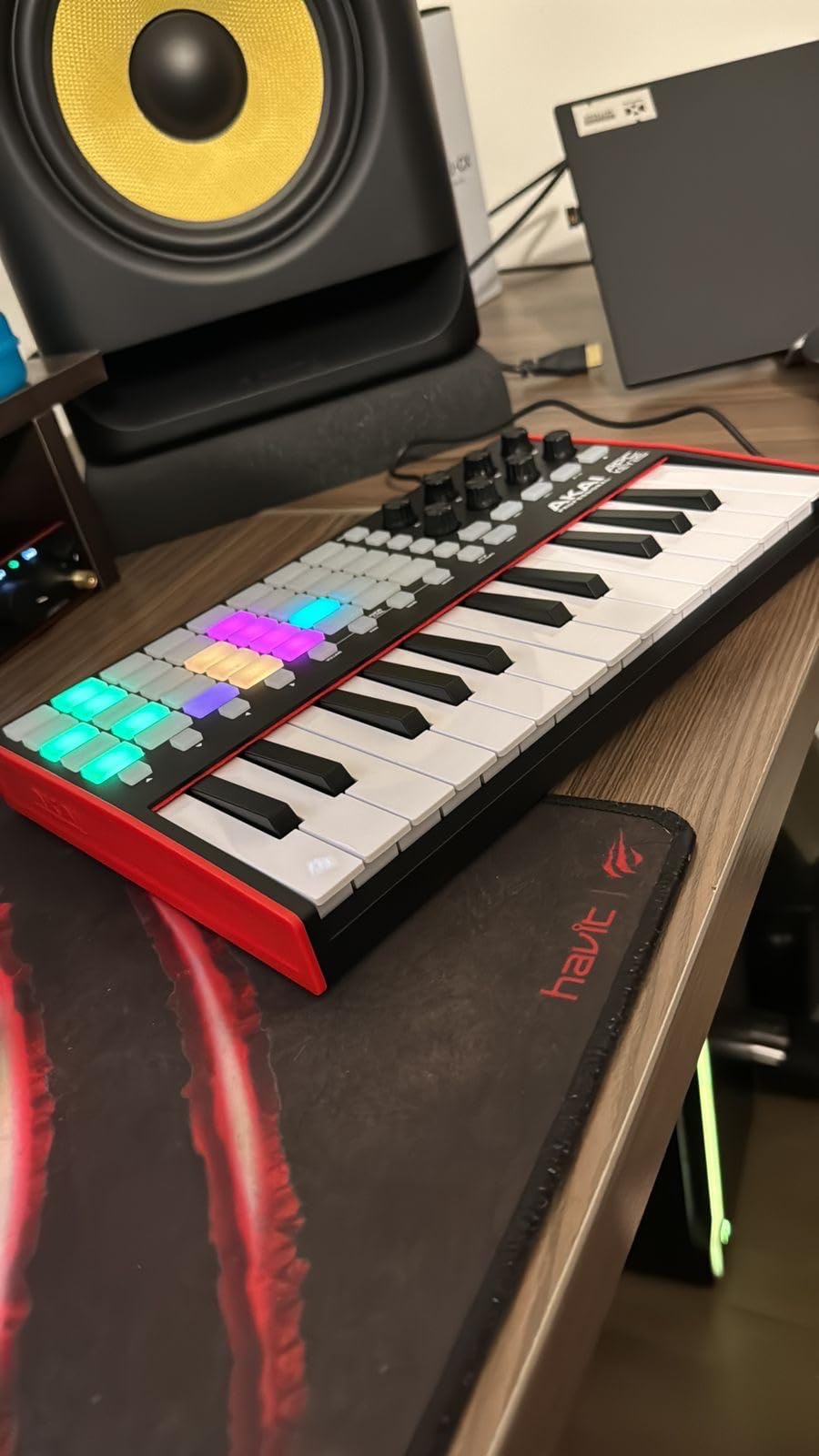
Other details: dedicated octave up and down buttons, USB power with no separate adapter, bundled Hybrid 3, Mini Grand and Velvet instruments, and a one year manufacturer warranty. At 900 g and around 12 inches wide it is one of the easier boards to move between a room and a gig.
Its 4.4 average is the lowest of the twelve, and the shortfall comes from the mapping focus rather than the build. Ableton users rate the pad grid and the value highly. For a Logic user, the honest read is that you are paying for pads you will have to program yourself.
Who it suits
Ableton Live producers who want a compact clip-launching surface, and Logic users who specifically want 40 assignable pads in a small footprint and do not mind doing the mapping. The two-octave mini keybed is fine for pads, bass lines and sketching.
Where it falls short
Twenty-five mini keys is the smallest range here, so it is a controller rather than an instrument for melodic writing. And because it is pre-mapped for another DAW, Logic users lose the one advantage this board otherwise has, which is setup that takes minutes instead of an afternoon.
10. Arturia KeyLab Essential 49 mk3 – The Software Bundle Carries It
Arturia KeyLab Essential mk3 — 49 Key USB MIDI Keyboard Controller with Analog Lab V Software Included
49 synth-action keys
9 faders and 9 encoders
2.5-inch LCD
8 RGB pads
6.1 lb
Pros
- Fatar keybed and solid knobs feel above the price class
- Bundled software alone is worth a lot
- Custom DAW scripts include Logic Pro
- Six user banks for custom mappings
Cons
- No polyphonic aftertouch
- Initial software setup can be steep
- Basic cosmetics with faux-wood side panels
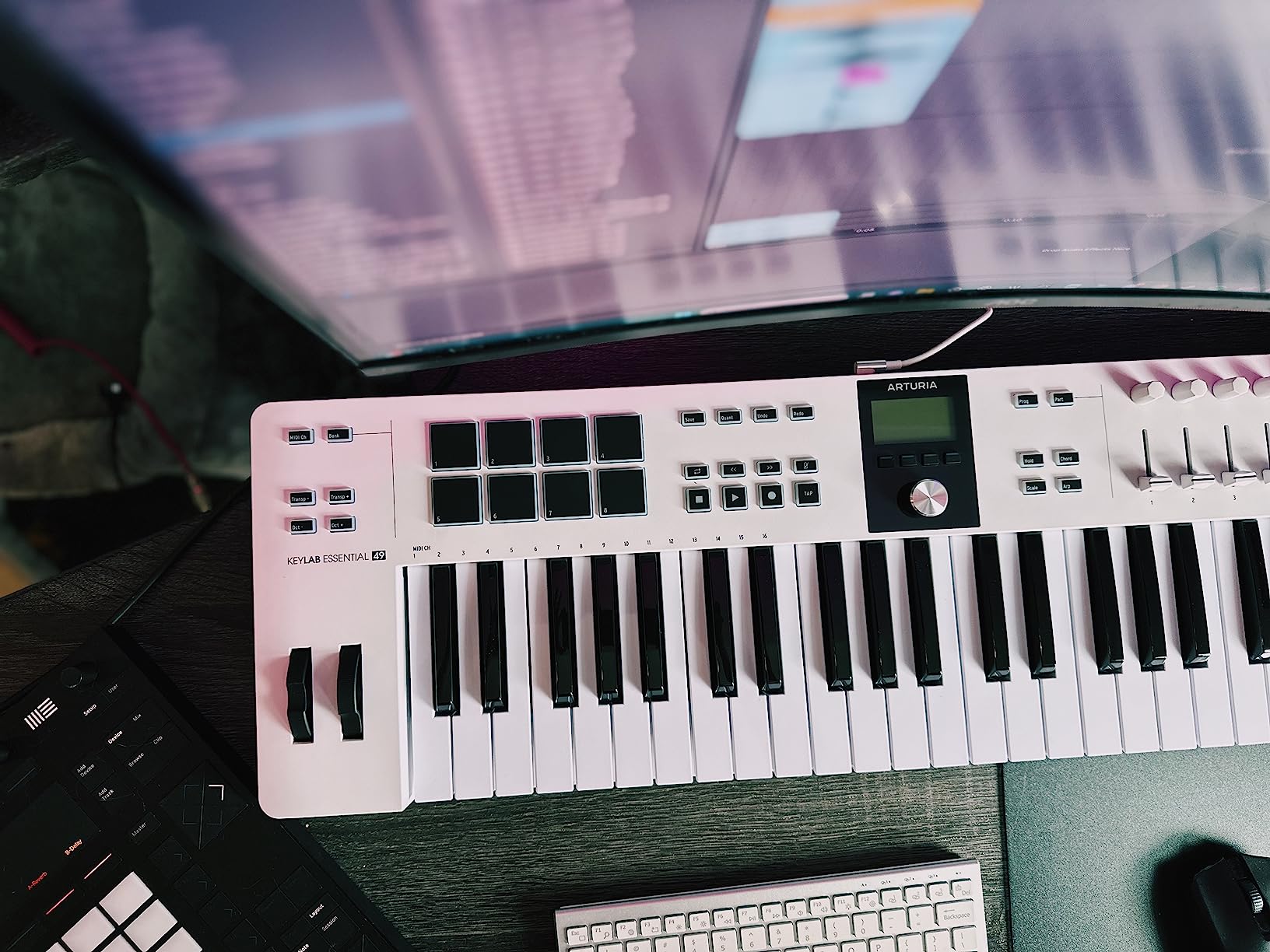
The Essential line is where Arturia puts its keybed and its software library at a mid price, and reviewers consistently argue that the bundled instruments alone justify the hardware. You get 2000 Analog Lab V presets spanning vintage synths, hybrids, modern synths and orchestral sounds, plus UVI Model D and NI The Gentleman pianos.
On the control side there are nine faders, nine encoders, a contextual button and a bright 2.5-inch LCD that shows parameter names as you turn things. Eight velocity and pressure sensitive RGB pads handle finger drumming and clip launching, and six user-programmable banks let you store configurations for different sessions.
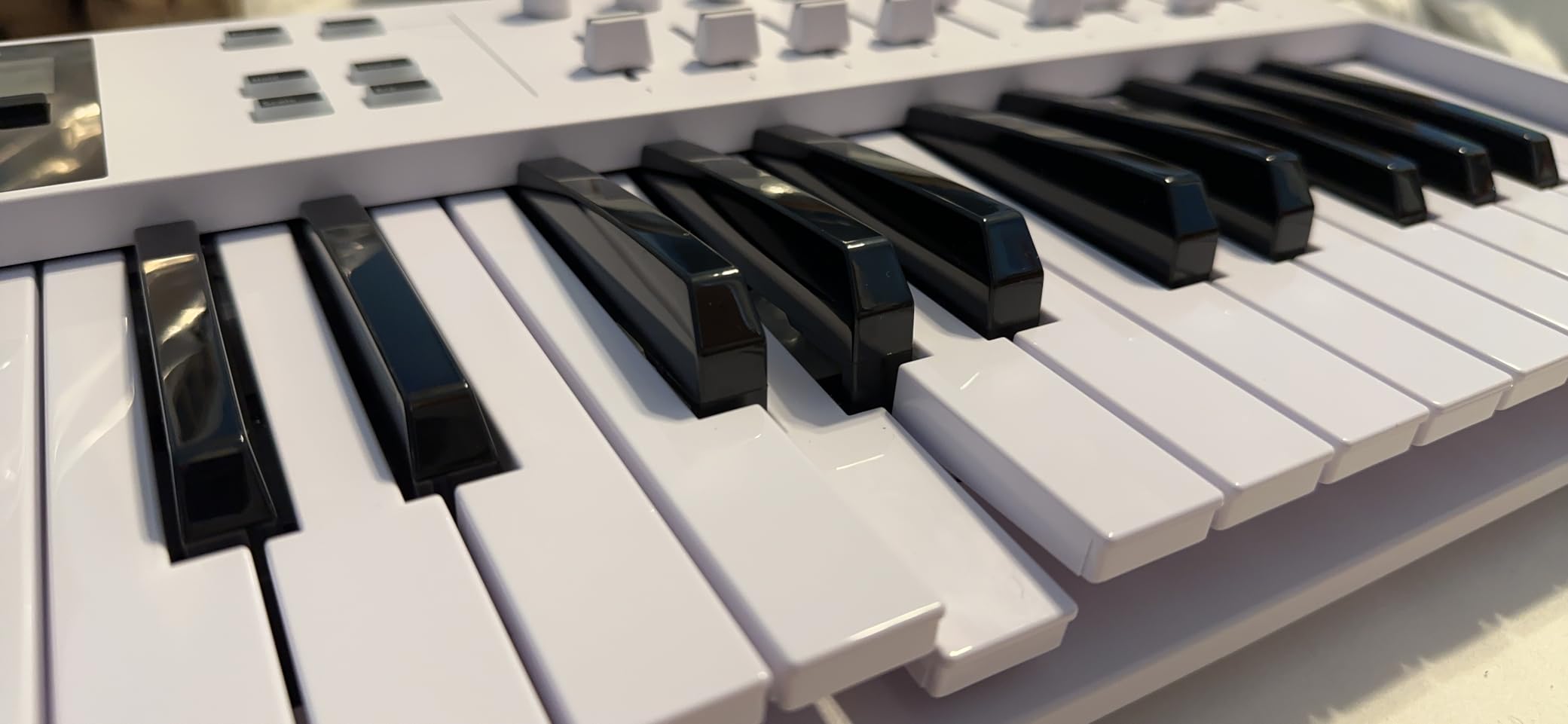
Arturia provides custom DAW scripts for Ableton Live, Logic Pro, FL Studio, Cubase and Bitwig, so the faders and encoders arrive with a sensible assignment once you run the script. Scale Mode, Chord Mode and a multi-mode arpeggiator cover the theory shortcuts. The warranty runs two years.
The two recurring reservations are setup friction on first install and the absence of polyphonic aftertouch, which some buyers want at this level. The controls are also not natively addressable for non-USB MIDI gear, so on-screen labelling has limits, and the faux-wood side panels are purely cosmetic.
Who it suits
Producers who want a serious instrument library the day they unbox the box, plus faders and encoders for mixing and plug-in control. The Fatar keybed is the step up from unweighted budget boards, and six user banks suit people who juggle Logic setups.
Where it falls short
Install and first-time configuration take longer than a class-compliant board, and the synth-action keys are not semi-weighted. If aftertouch matters to how you play, this is the wrong board at this price.
11. Arturia KeyLab 88 MkII – Weighted Hammer Action and a Metal Chassis
Arturia KeyLab 88 MkII 88 Key Weighted USB MIDI Keyboard Controller — Aftertouch, Velocity Sensitive, Hammer-Action, Piano Feel, With 16 Drum Pads, 9 Faders, 9 Knobs and Analog Lab V Software Included
88 Fatar TP/100LR hammer-action keys
Polyphonic aftertouch
16 RGB pads
9 faders and 9 knobs
Metal chassis
Pros
- Weighted hammer action pianists describe as close to a grand
- Metal chassis is more rigid than plastic rivals
- Works across multiple DAWs rather than one ecosystem
- Assignable faders knobs and pads for plug-in control
Cons
- Hammer action feels stiff and heavy to some players
- Very heavy and wide enough to need a stand and desk space
- Faders can feel wobbly
- Stand not included
This is the board for someone who plays a real instrument as well as producing. The 88-note Fatar TP/100LR keybed is hammer-action and weighted, with velocity sensitivity and polyphonic aftertouch, and pianists consistently describe the feel as close to a physical grand rather than a weighted approximation.
The second thing you feel before you play anything is the chassis. Metal construction with wood-look end pieces makes this board noticeably more rigid than the plastic-bodied 88-key alternatives, and that rigidity shows up in how the keys behave under a heavy-handed playing style. Sixteen RGB-backlit pads and a control bank of nine faders and nine rotary knobs cover performance and mix duties.
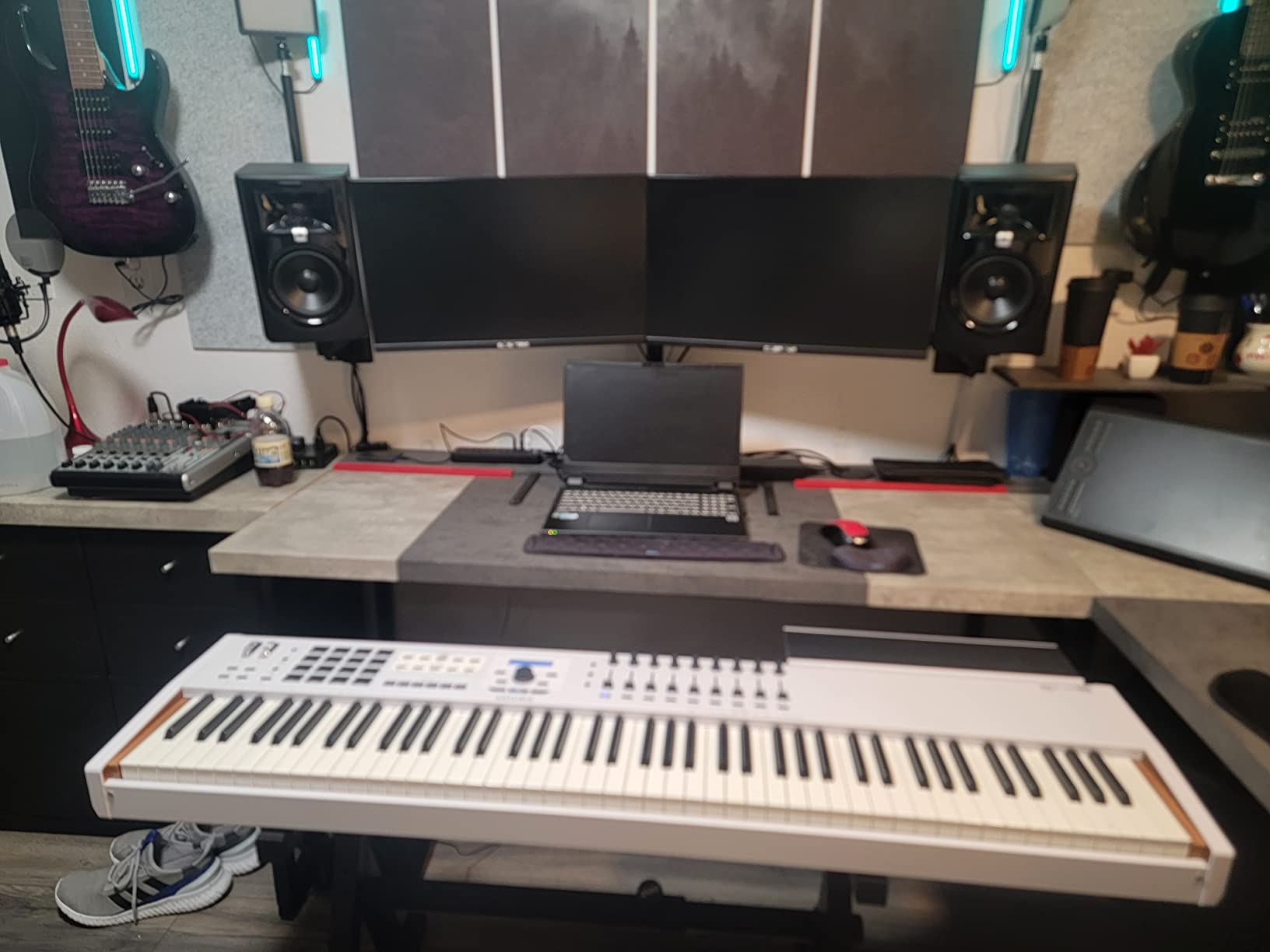
Arturia includes pre-programmed DAW control modes plus a user mode for custom mappings, and 5-pin MIDI and USB let you chain it with another controller or drive external gear. The bundle is substantial: Analog Lab V, Piano V, Wurli V and Vox Continental V, which covers electric pianos, organs and a very good Wurli.
The trade-offs are physical. At around 33 pounds and over 50 inches wide it needs a dedicated stand and desk space, and the stand is not included. Hammer action that some describe as close to a grand is described by others as stiff and heavy if you are used to semi-weighted boards. The faders also get criticised for feeling slightly wobbly.
Who it suits
Pianists, composers and anyone who plays acoustic piano and wants that touch in Logic. It is the right pick for film and game scoring, where dynamics and aftertouch carry the performance, and for anyone who moves between DAWs and does not want a controller locked to one ecosystem.
Where it falls short
It is the heaviest and most space-hungry board here, and the stiffness that pianists love genuinely annoys players coming from lighter controllers. Add a stand to the cost and check your desk depth before committing.
12. Nektar SE61 – A Lightweight 61-Key Board You Can Carry
Nektar SE61 – USB MIDI Controller Keyboard with Nektar DAW Integration, Black
61 full-size semi-weighted keys
Logic DAW integration
Mac PC iOS Linux
About 3 kg
Pros
- 61 full-size semi-weighted keys at a low cost
- Light at about 3 kg
- True plug-and-play with no drivers or firmware software
- Integrates with Logic and most other DAWs
Cons
- Plastic chassis feels cheap
- No pads faders or display
- Some buyers report an unresponsive lowest key
- Sustain pedal not included
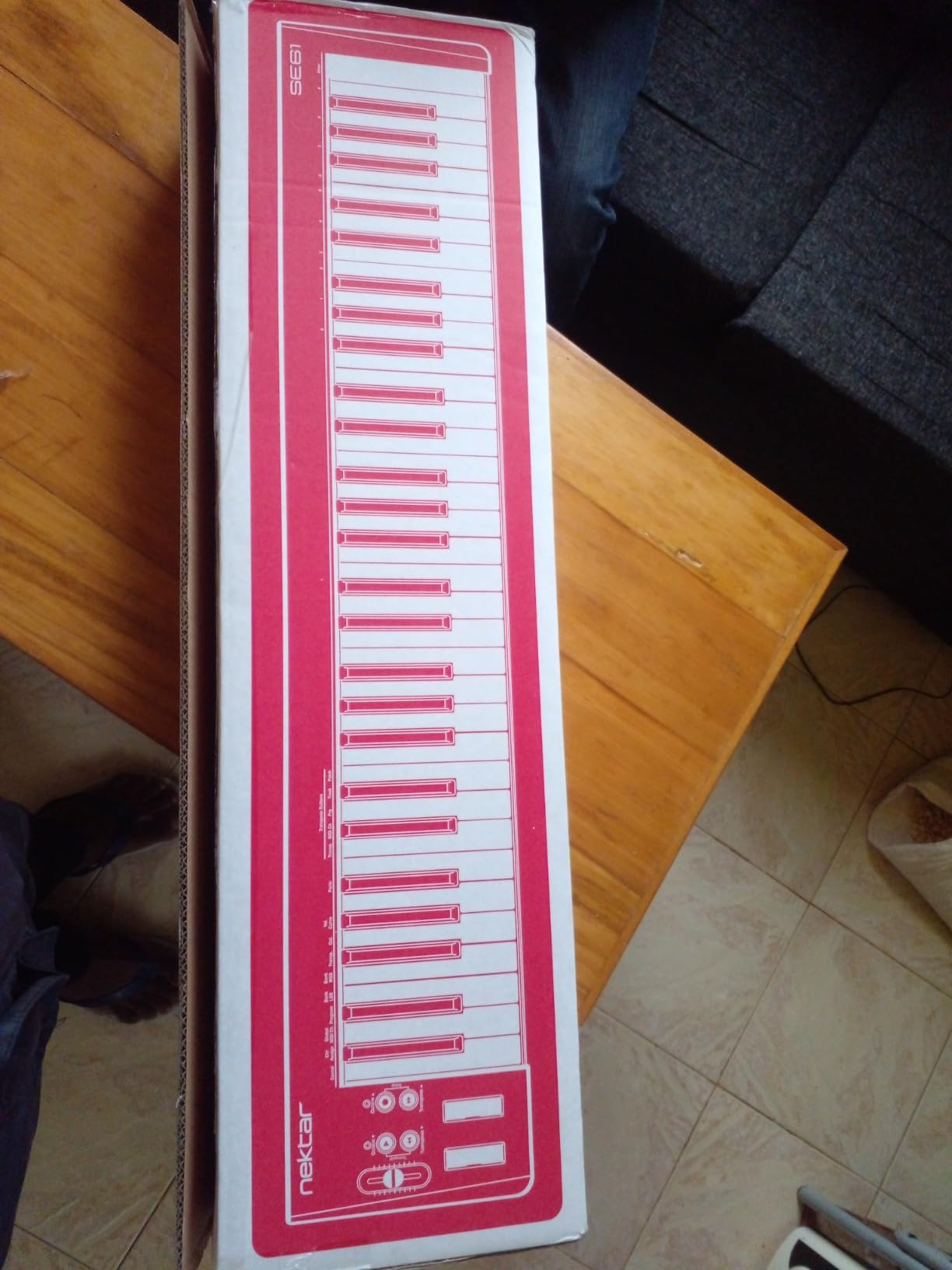
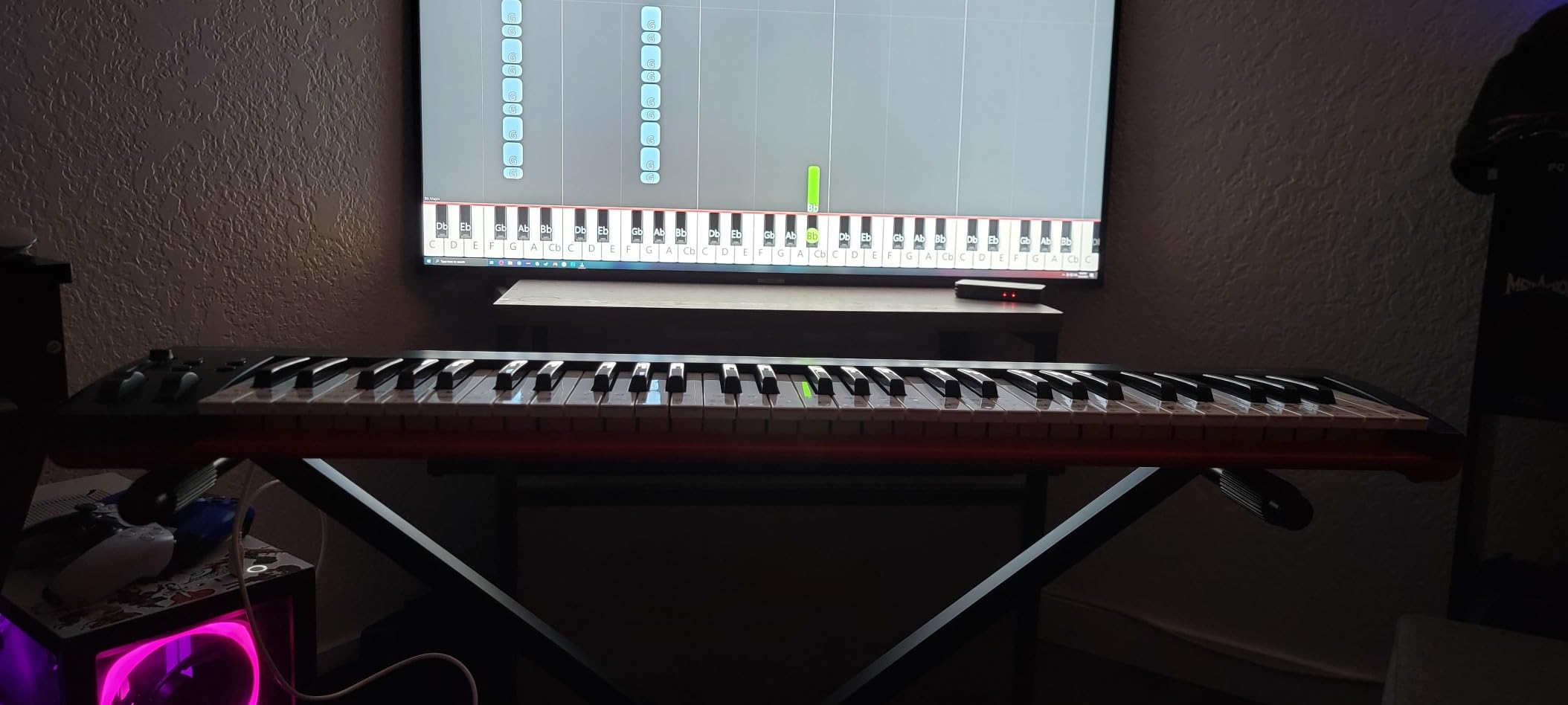
The SE61 solves a specific problem better than anything else at this end of the list: sixty-one full-size semi-weighted keys that weigh about 3 kg. That combination is unusual. Most 61-key boards with semi-weighted action are built like furniture, and this one fits in a bag alongside a laptop.
Nektar DAW integration covers Bitwig, Cubase, GarageBand, Logic, Nuendo, Digital Performer, Mixcraft, Reason, Reaper, Sonar and Studio One, so the transport and basic controls arrive assigned. It is true plug-and-play over USB with no keyboard driver or firmware utility, and it also works with iOS and Linux.
A Bitwig Studio eight-track licence card and a sound content package are included, and the warranty runs two years. The key action and touch sensitivity draw consistent praise for the price, which is the part that matters most on a semi-weighted board.
Everything above the keys is absent: no pads, no faders, no display. The plastic chassis feels cheap next to metal-bodied competitors, a few buyers report an unresponsive lowest key, and the sustain pedal you will want is not included. Reviewers are split on build feel and unanimous that the key action and portability justify it.
Who it suits
Producers who write in more than one place, students taking a setup to a shared studio, and anyone who wants a genuine 61-key range for bass, chords and pads without a desk-mounted board. Reviewers are consistently positive on touch sensitivity for the money.
Where it falls short
It is a playing keyboard, not a control surface. If your Logic sessions depend on hardware mixing or clip launching, you will want faders and pads, and those live on more expensive boards. Buy a sustain pedal with it.
How to Choose a MIDI Keyboard for Logic Pro in 2026
Every board in this roundup sends ordinary MIDI over USB, which is why they all work in Logic. What separates a good Logic controller from a cheap one is integration depth and keybed, and nothing else deserves your attention. A standard computer keyboard cannot send MIDI at all, which is worth stating plainly if you have been wondering whether you can skip the purchase; if you want a computer keyboard instead, our mechanical keyboard roundup is a different subject entirely.
Key count: the only decision that cannot be undone
Key count is the one choice that shapes everything else. A 25-key board gives two octaves and a range you shift with octave buttons, which is fine for pads, bass stabs and sketching, and frustrating the moment you want a four-bar melody. Thirty-seven keys is the sweet spot for two-handed writing in a small footprint, and forty-nine gives you roughly three octaves, which covers most chord progressions without reaching for an octave switch. Sixty-one keys add a usable two-octave spread for pads and bass, and eighty-eight removes the octave problem entirely but commits you to a large, heavy instrument that stays where it lives.
If you also play acoustic piano, decide this question first. A board you can comfortably play twice as long is worth more than a cheaper board you stop using.
Key weight: the most consequential spec on the page
Unweighted and synth-action keys are the same family. They are light, fast to press, durable and cheap, and they are the right choice if you play synth patches and drum kits rather than piano parts. Semi-weighted keys add enough resistance to feel like a small digital piano and are the sensible default for general production. Hammer-action keys are heavier and slower, they simulate an acoustic action, and they suit pianists and anyone playing expressive, dynamic parts. Fully weighted keys are the rarest and heaviest tier, built for players who want the sustained resistance of a real upright.
Users on r/NativeInstruments describe small unweighted keybeds as easy to press but a bit spongy, which is the most common complaint about entry boards and the main reason people move up. That experience is worth taking seriously: a board you find unpleasant under the fingers stops getting played within a month.
Faders, knobs and pads, and why they cost more
Logic is designed around a mouse-driven interface, and a control surface changes how fast you work. Faders map to the mixer so you can ride levels and write automation by hand instead of drawing it. Knobs map to plug-in parameters so filter cutoff and release are under your fingertips instead of behind a dropdown. Pads trigger clips, drum hits and chord variations, and on the best boards they carry pressure data you can play with.
Boards with nine or more faders are the ones worth paying for if you mix in Logic. Everything below that is transport and navigation, which is convenient rather than transformative. If pads are the priority, check whether they support pressure or aftertouch, because a pad with no response data is only useful for triggers.
What working with Logic Pro actually requires
There is no Apple-published list of Logic-compatible controllers, which is the single most common source of confusion on this topic. Here is what actually happens. Class-compliant USB MIDI keyboards appear in Audio MIDI Setup the moment you plug them in, and they play software instruments without any setup at all. Beyond that, a board either ships a working Logic mapping or it does not.
Boards with a Control Surface assignment arrive with transport and mixer control already mapped. Boards with custom DAW scripts, such as the Arturia MiniLab 37 and the KeyLab Essential 49, need you to run the script once and then behave. Boards built for a different DAW, such as the Akai APC Key 25 MK2 and the Novation FLkey 49, arrive mapped somewhere else and need manual Control Surface work in Logic. That is a real difference in setup time, and it is the difference between opening your session and opening a mapping window.
Mac-specific notes
Most of these boards are USB-C, which is what current Macs use. The Novation FLkey 49 includes a USB-A cable, so recent MacBook users need an adapter or a hub. Bluetooth MIDI exists but adds latency we would not recommend for playing, and an 88-key board draws enough power that a hub or a powered connection is worth checking. For any of these controllers, open Audio MIDI Setup first, confirm the device shows up with a green activity light when you play, then set it as a Control Surface in Logic preferences.
What to avoid and why
Boards that need a driver on macOS are worth avoiding unless the driver is actively maintained, because that is where breakage after an OS update happens. Hardware templates built for an old version of Logic Pro can require redoing your mapping after a major update, which is the most common complaint in Logic user threads about older gear. Unweighted keybeds that feel spongy put off beginners permanently, and boards whose entire value is 1-to-1 mapping for another DAW will frustrate you from the first session. Older controllers are not automatically bad, but check that the current Logic version still recognises the mapping before you rely on it.
How to Connect and Map a MIDI Keyboard in Logic Pro
None of the twelve boards needs a driver, and all twelve appear in Logic once they are connected. The steps below get you from a closed laptop to mapped controls, and they take about five minutes.
Connect the board over USB-C. Plug it directly into the Mac rather than through an unpowered hub. Confirm the power LED is on before going further.
Open Audio MIDI Setup and enable the input port. The keyboard appears in the Window menu. Tick it, and play a key to see the activity light blink. If it does not appear, try another port or cable.
Load a software instrument in Logic. Add a Software Instrument track and choose a piano or synth patch, then play the keys. This confirms note and velocity data are arriving.
Set the Control Surface in Logic preferences. Under MIDI, choose the board and set its surface to Control Surface, then set the Control Surface Bank to the matching Mackie Control template if one is offered.
Run the manufacturer script or template if one exists. Boards with custom DAW scripts, such as Arturia’s, need the script selected here to assign the faders, encoders and pads beyond the Mackie set.
Map the remainder to plug-in parameters. Click a plug-in parameter in the Audio Track Editor, hold the modifier key assigned to MIDI Learn and move a knob or fader. Repeat for the controls you actually use, and store the setup as a template.
If faders move but nothing is connected, the board is sending MIDI but the Control Surface assignment is wrong. If nothing moves at all, the problem is in Audio MIDI Setup, not in Logic.
Frequently Asked Questions
Which MIDI keyboard is best for Logic Pro?
The Akai MPK Mini IV is a strong all-round choice for Logic Pro because it arrives pre-mapped for Logic, weighs about 1 kg and includes pads, knobs and a display. For a full 61-key playing surface with deeper native control, the Novation Launchkey 61 MK4 is the alternative. For real weighted piano feel, the Arturia KeyLab 88 MkII is the dedicated option.
What keyboards work with Logic Pro?
Every class-compliant USB MIDI keyboard works with Logic Pro, because notes, velocity and control change data are standard. What differs is how much of the DAW each board drives on its own. Some arrive with a working Control Surface assignment or a custom DAW script, while boards built around another DAW, such as the Akai APC Key 25 MK2, need manual mapping in Logic.
Should I get a 25 or 49 key MIDI keyboard?
Pick 25 keys if you sketch ideas away from your desk, work mostly on pads and bass stabs, and want a board that fits in a bag. Pick 49 keys if you write two-handed, need full-size keys for chord voicings, and want roughly three octaves without octave shifting. Thirty-seven keys is the compromise most people land on when space is tight but two-handed play matters.
Who makes the best MIDI keyboards?
Novation is widely recommended for Logic Pro because of its Automap layer. Arturia pairs strong keybeds with generous bundled software libraries. M-Audio and Akai cover the budget and beat-making ends, with the Keystation and MPK lines as the usual starting points. Nektar delivers full-size keys at the lowest cost in this roundup. For weighted action, Arturia and the dedicated 88-key makers are the realistic options.
What is the best MIDI keyboard on the market?
There is no single best board outside a use case. For playing and control in one unit, the Novation Launchkey 61 MK4 and the Arturia KeyLab Essential 49 mk3 are the most complete options. For beat making, the Akai MPK Mini IV and the M-Audio Oxygen Pro 61 lead. For weighted piano feel, the Arturia KeyLab 88 MkII is the reference. Filter those by the key count you actually need and the answer becomes obvious.
The Best MIDI Keyboards for Logic Pro in 2026
There is no official Apple compatibility list for MIDI controllers, so the practical version of this question is which board arrives already mapped to Logic and which one leaves you building a template on day one. The Akai MPK Mini IV answers that in your favour: pre-mapped for Logic, eight RGB MPC pads, eight assignable knobs, a full-colour display and a 1 kg body that travels anywhere. It is our pick of the best MIDI keyboards for Logic Pro in 2026 for anyone who wants to be making music the day the box opens.
Buy the M-Audio Keystation 49 MK3 instead if you want full-size keys and nothing to configure. Buy the Arturia MiniLab 37 if you want two-handed play in a small footprint. Buy the Novation Launchkey 61 MK4 if the depth of native Logic control matters more to you than anything else, and the Arturia KeyLab 88 MkII if you play a real piano and want that touch. Whatever you choose, buy the key count you will still be playing in five years, because that is the one decision you cannot undo.