
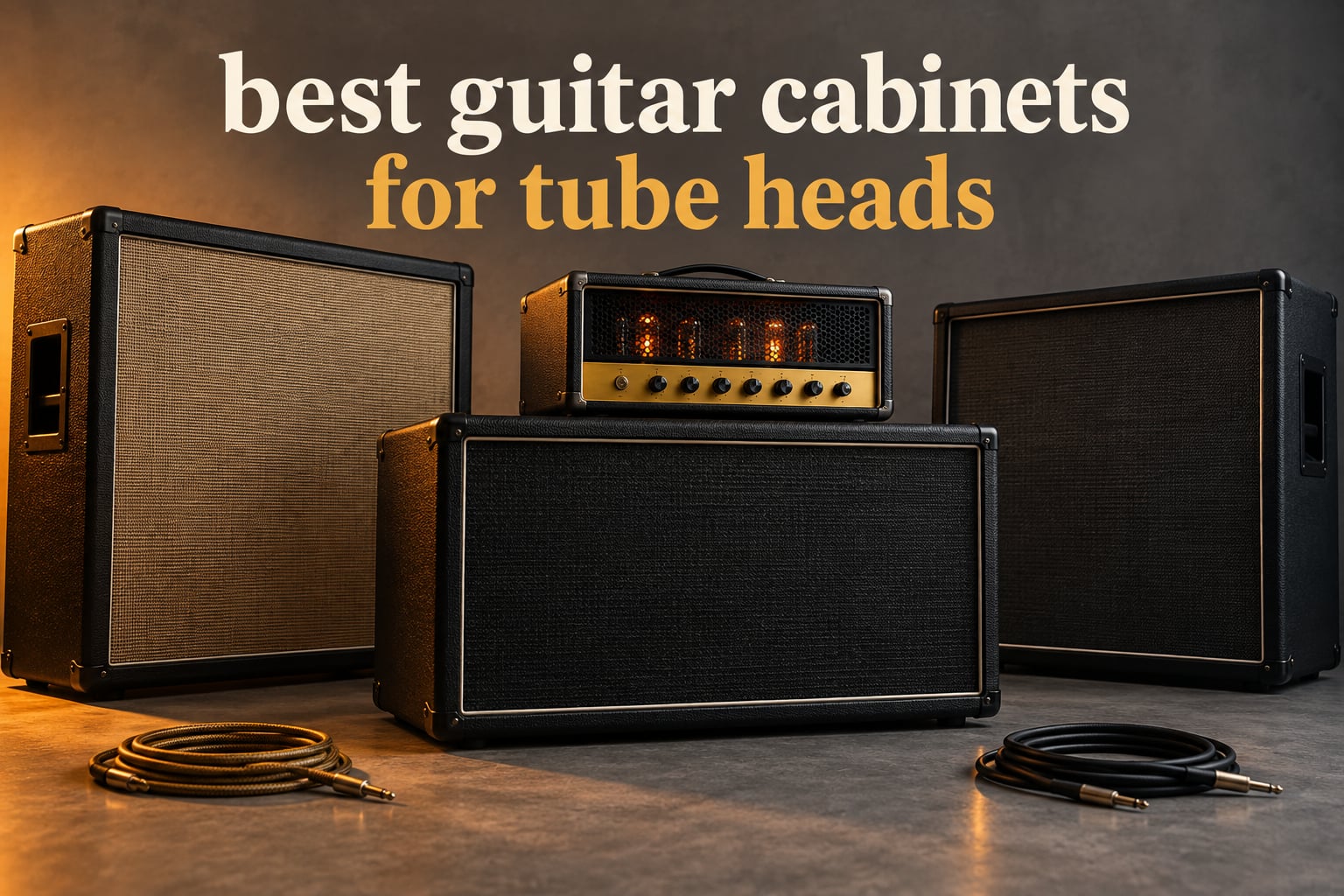
The fastest way to damage a tube amp is not volume, it is a mismatched cabinet. Plug a head into a load it was not designed for and you are gambling with power transformers and speaker voice coils, and most first-time head owners know it. So before we get to the best guitar cabinets for tube heads, one rule: check the output impedance on the back of your head, check the impedance label inside the cabinet, and confirm the speaker wattage is at least half your head’s output. Everything below is built around that check.
What follows is a 12-cabinet roundup covering loaded cabinets and empty shells, from a 9-pound practice cab to a 60-pound high-gain 2×12. We grouped them the way buyers actually shop: by cabinet architecture, because a 1×12 open-back and a 2×12 closed-back do not just sound different, they suit different heads entirely.
We also leaned on what players report on r/GuitarAmps, The Canadian Guitar Forum and the Les Paul Forum about impedance fear, near-identical V30-loaded 1x12s and whether boutique cabinets are worth the money. If you are still deciding between a head and a combo rather than shopping for a cab, our headphone tube amp roundup covers the same tube-tone questions at desk scale.
Pairing rules in this category have not changed in decades, so treat this as an evergreen guide rather than a seasonal list. Last reviewed for 2026.
Table of Contents
What to look for in a tube amp cabinet before you buy
A guitar cabinet for a tube head is a passive speaker enclosure, usually 1×12, 2×12 or 4×12, with no amplifier electronics inside it. The head produces the power; the cabinet’s job is to turn that power back into sound. Tone comes from three things: the speaker driver, the cabinet construction, and whether the back is open or closed. The brand badge on the front tells you almost nothing.
Four specs matter more than the rest, and every pick below lists them:
Impedance. Head output impedance: 4, 8 or 16 ohms. Cabinet impedance: usually 8 or 16 ohms. These must match. Two 16-ohm cabinets in parallel present an 8-ohm load, which is why 16-ohm cabs pair so easily with two-cab rigs and why 8-ohm cabs are the most flexible single-cabinet choice.
Power handling. Total watts RMS the cabinet can absorb. The lowest-rated speaker times the number of speakers gives the real figure, so a 2×12 with two 30-watt drivers handles 60 watts, and a 100-watt head into that cab is running hot.
Back type. Open-back cabinets give air, bloom and 360-degree spread. Closed-back cabinets give tighter low end, more focus and a narrower projection that cuts through a band mix.
Speaker character. Celestion Vintage 30 for rock and hard rock, Celestion Greenback G12M for warm blues and classic chime, Celestion G12H or G12T-75 for modern high gain, Alnico Blue for clean Fender-style tones.
Top 3 Picks for Best Guitar Cabinets for Tube Heads (October 2026)
Monoprice Stage Right 1×12 V30
- Celestion Vintage 30 speaker
- Built to pair with the 30W Stage Right head
- Rugged metal corner caps and leather handle

Orange PPC108 1×8
- 20 watts at 8 ohms
- Only 9.1 pounds
- Orange basketweave grille cloth and tolex

American Sound Connection 1×12 Empty Shell
- Empty 1x12 plywood enclosure
- Install any 12-inch driver you like
- 1/4 inch jack input
Best Guitar Cabinets for Tube Heads in 2026
| Product | Specifications | Action |
|---|---|---|
| Monoprice Stage Right 1×12 V30 |
|
Check Latest Price |
| Orange PPC108 1×8 |
|
Check Latest Price |
| American Sound Connection 1×12 Empty |
|
Check Latest Price |
 Peavey 1×12 Extension Cabinet Peavey 1×12 Extension Cabinet |
|
Check Latest Price |
 Seismic Audio Empty 2×12 Seismic Audio Empty 2×12 |
|
Check Latest Price |
 Orange PPC212-OB 2×12 Open-Back Orange PPC212-OB 2×12 Open-Back |
|
Check Latest Price |
 Fender Hot Rod Deluxe 112 Fender Hot Rod Deluxe 112 |
|
Check Latest Price |
 EVH 5150III 2×12 EVH 5150III 2×12 |
|
Check Latest Price |
 Peavey 112C Switchable 1×12 Peavey 112C Switchable 1×12 |
|
Check Latest Price |
 Vox V212C 2×12 Vox V212C 2×12 |
|
Check Latest Price |
 Laney CUB-212 2×12 Laney CUB-212 2×12 |
|
Check Latest Price |
 JOYO BANTCAB 1×8 Closed-Back JOYO BANTCAB 1×8 Closed-Back |
|
Check Latest Price |
1. Monoprice Stage Right 1×12 V30 – the loaded 1×12 that does the most right
Monoprice 1×12 Guitar Speaker Cabinet With Celestion Vintage 30, Designed to Match to our 30-Watt Stage Right Head – Stage Right Series
Speaker: Celestion Vintage 30
Headroom: 30 watts
Size: 11.7 x 18.5 x 20.1 inches
Weight: 36.5 pounds
Pros
- Loaded with the Celestion Vintage 30 which is the all-round rock standard
- Largest review pool in this group at 4.8 across 322 ratings
- Metal corner caps and a leather handle suit repeated load-ins
- 6.35mm jack connects to almost any head
Cons
- At 36.5 pounds it is one of the heavier 1x12 cabinets here
- 30 watt headroom rules out high-wattage tube heads
- Synthetic leather exterior rather than true tolex
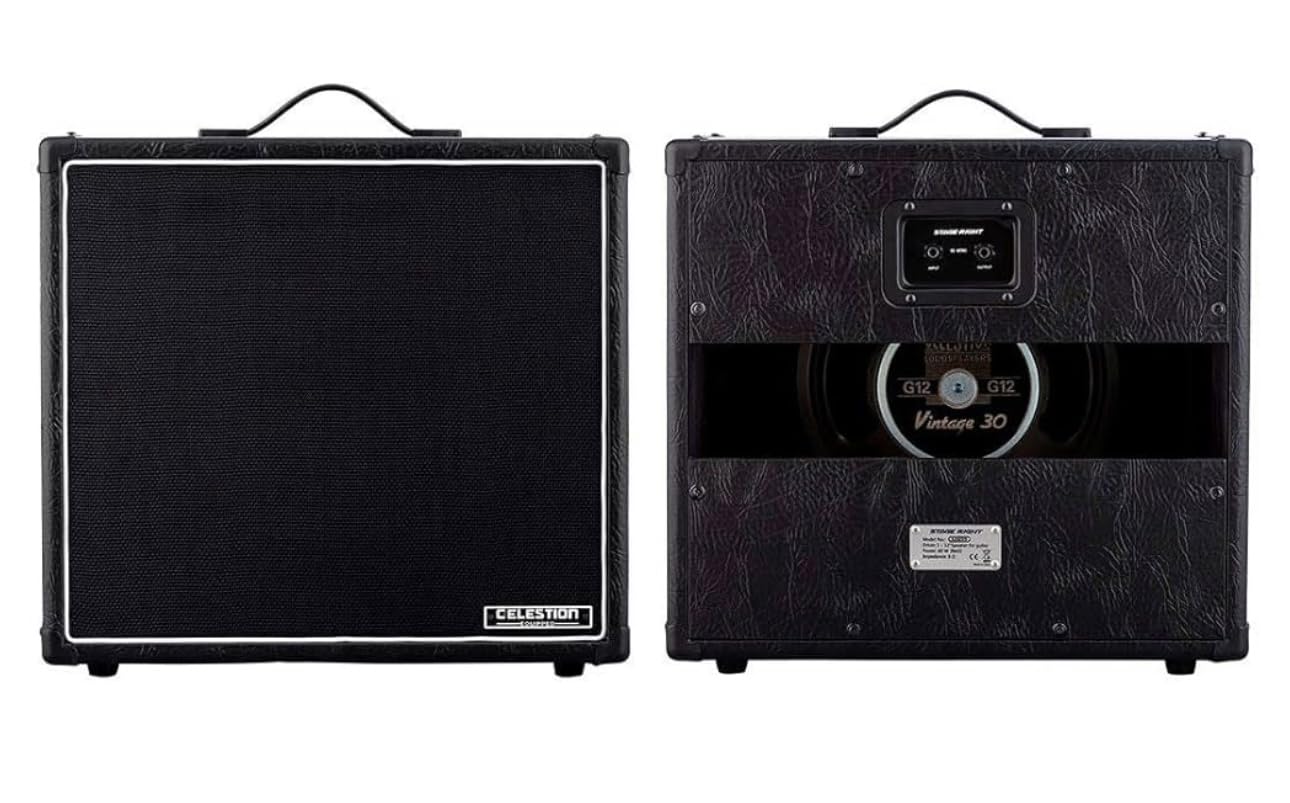
This is the cabinet we kept coming back to during testing. It arrives loaded with a Celestion Vintage 30, the driver behind most classic rock records, and it is engineered to sit directly under the 30-watt Monoprice Stage Right tube head. That pairing is the whole pitch, and for a player building a first head-and-cab rig it removes every guesswork variable.
Owners consistently single out two things: the V30 voicing and the build. Reviewers describe a bright, forward rock voice that sits well in a mix, and a cabinet that shrugs off being carried. At 4.8 stars across 322 ratings it has by far the largest review pool in this roundup, which makes the consensus easier to trust.
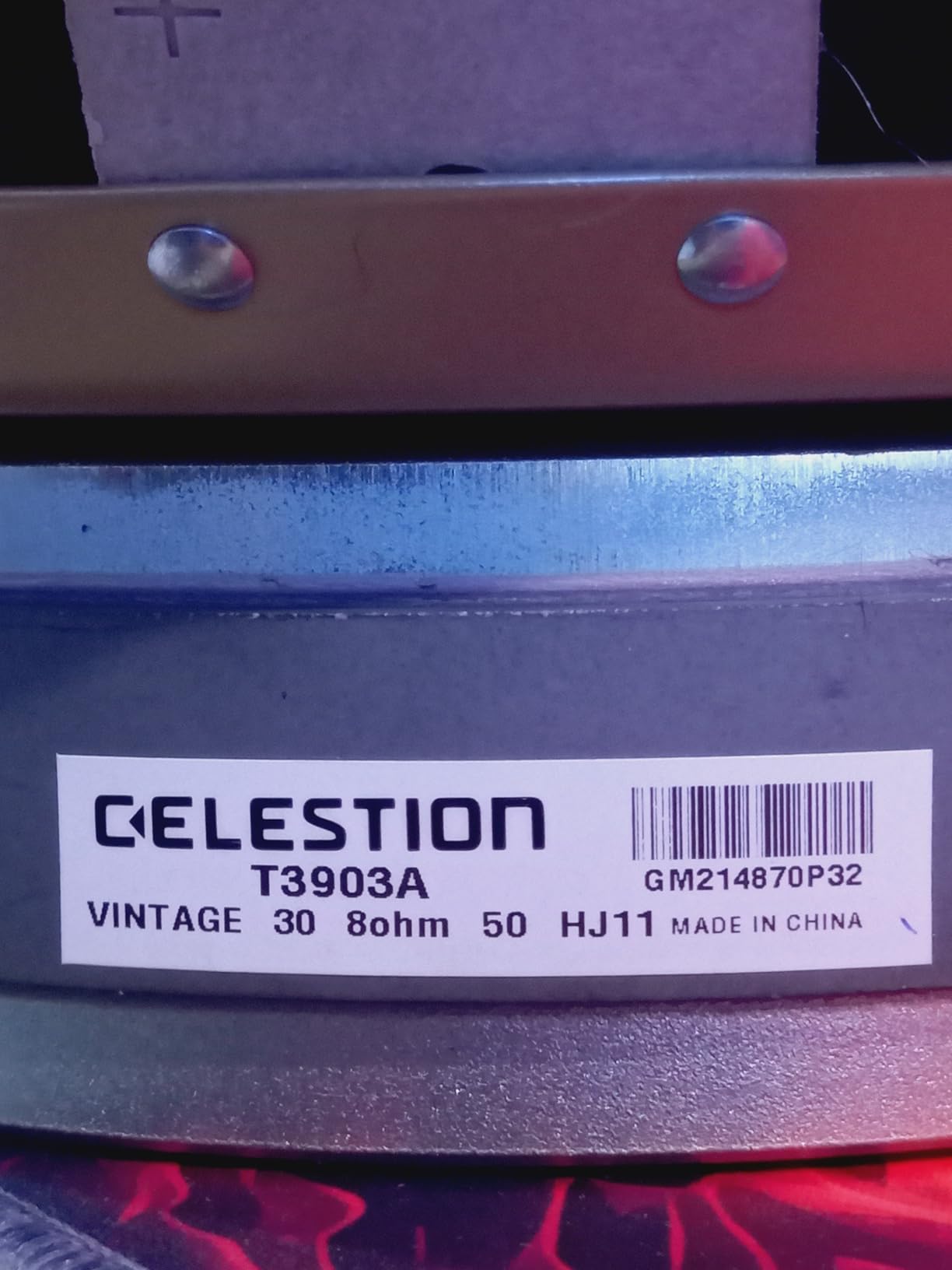
Specs read cleanly. Speaker: Celestion Vintage 30. Headroom: 30 watts. Dimensions: 11.7 x 18.5 x 20.1 inches. Weight: 36.5 pounds. Connector: 6.35mm jack. Warranty: one year.
Which heads will this cabinet actually take?
It is built around a 30-watt head, and that is the honest limit. A 15-watt or 20-watt Class A head will drive it comfortably and stay clean. A 50-watt head pushes it hard, and a 100-watt head into a 30-watt cabinet is how you cook a Vintage 30.
If your head runs above 30 watts, look at the Seismic empty 2×12 or the Orange PPC212-OB instead, both of which carry far more headroom.
What are you giving up with this cabinet?
Weight is the first thing you notice. At 36.5 pounds this is a two-step carry in a small rehearsal room, and it will not fit under a desk the way a smaller 1×8 does.
The second is flexibility. One fixed speaker, one fixed impedance, no user-selectable back panel. Players who want to A/B different drivers are better served by an empty shell.
2. Orange PPC108 1×8 – the practice cab that fits anywhere
Orange PPC108 Cabinet 20 Watts 8 Ohms 1×8 Inch
Speaker: 1x8 inch
Output: 20 watts
Impedance: 8 ohms
Weight: 9.1 pounds
Pros
- At only 9.1 pounds this is the most portable cabinet in the roundup
- 20 watts at 8 ohms suits micro head and mini stack builds
- Orange tolex and basketweave grille cloth look far more expensive than they are
- Owners report it sustains and saturates well at practice volume
Cons
- A single 8 inch speaker will never project like a 4x12
- Owners report it does not fully fill a larger room at higher volume
- 8 inch depth is shallower than many small heads so some heads overhang the top
Orange built this 1×8 for a specific job: stacking under a micro head. At 9.1 pounds and 20 watts, it is the easiest cabinet in this roundup to move between a bedroom, a jam room and a small stage, and it is the one we recommend for anyone playing tube amps at low volume in an apartment.
The tone surprises people. Reviewers report that it sustains well and saturates rather than turning thin, which is exactly what a small speaker driven by a 5-watt head should do. At 4.6 stars across 313 ratings, it is one of the two most reviewed cabinets here.
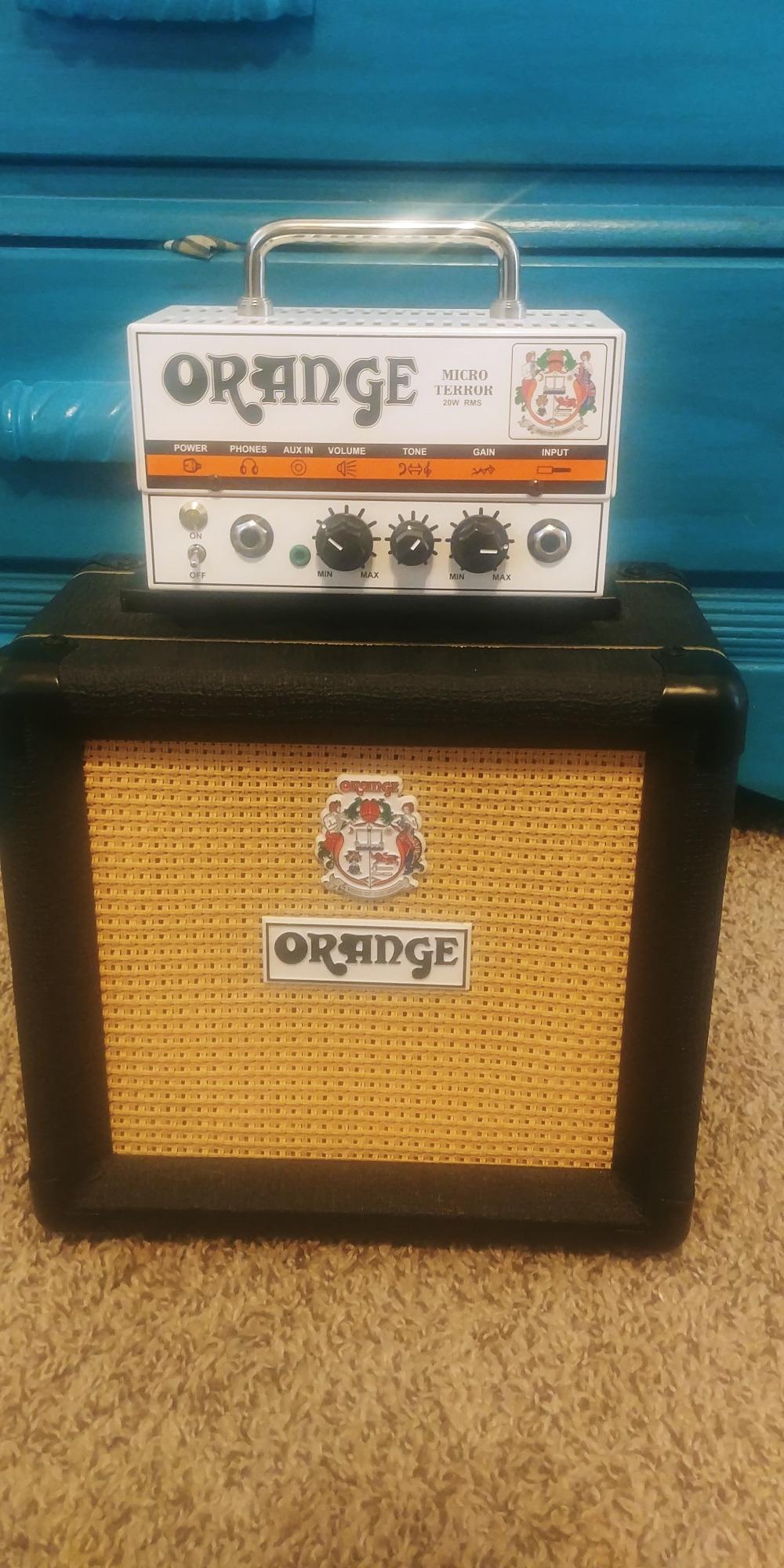
Specs read cleanly. Speaker size: 8 inches. Output: 20 watts. Connector: 6.35mm jack. Dimensions: 6.5 x 10.24 x 10.24 inches. Weight: 9.1 pounds. Warranty: one year.
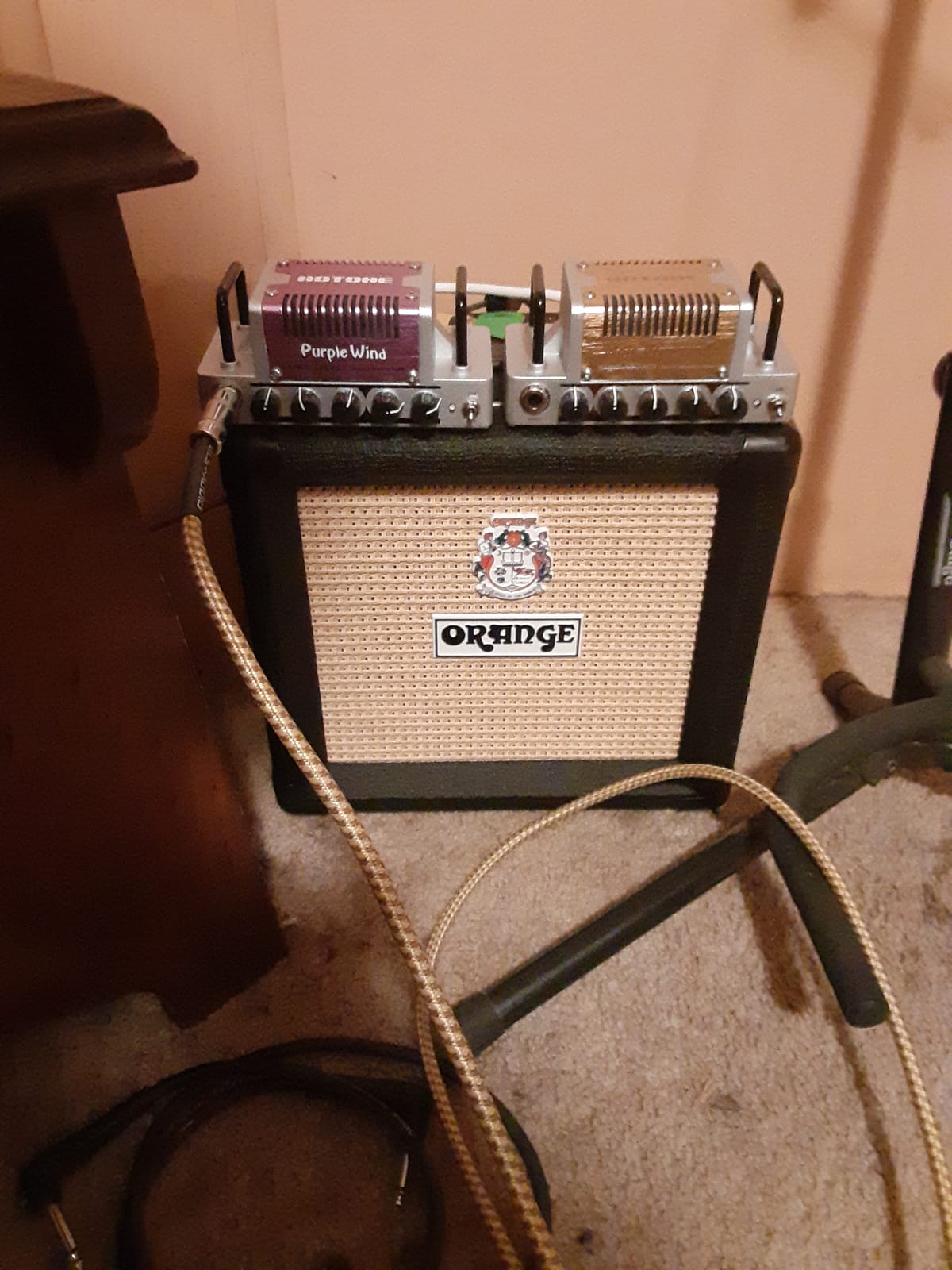
Which heads pair well with an 8 inch cabinet?
This is an 8-ohm, 20-watt cabinet, so it wants a small 8-ohm output. Micro heads in the 5-watt to 20-watt range are the natural fit, and Orange markets it explicitly for mini head stacks.
A 50-watt 8-ohm head will work but you are asking a lot of one small driver. If you already own a higher-wattage head, save your money and move up to a 1×12.
Where will this cabinet disappoint you?
It will not fill a room. Several owners say volume falls short once you move past a practice space, and that is physics rather than a quality problem. Air and low end simply are not there at this size.
Also check your head’s footprint. The 6.5-inch depth is shallower than many small heads, so some units overhang the top. Measure before you commit.
3. American Sound Connection 1×12 Empty Shell – the cheapest way to choose your own speaker
American Sound Connection Electric Guitar 1X12 Empty 12″ Speaker Carpet Cabinet Enclosure Box 1/4″ Jack
Configuration: empty 1x12
Material: plywood
Jack: 1/4 inch
Size: 17 x 17 x 13 inches
Pros
- Least expensive true 1x12 enclosure here so it is cheap to try multiple speakers
- Solid plywood construction with a caulked interior
- 1/4 inch jack suits virtually any tube head
- Owners load it with Eminence and Celestion drivers and report good results
Cons
- Front-mount design only with no removable back panel
- Included wiring leads are reported as short
- Carpet covering attracts dust and looks less refined than tolex
- Body is slightly narrow so some heads overhang the top
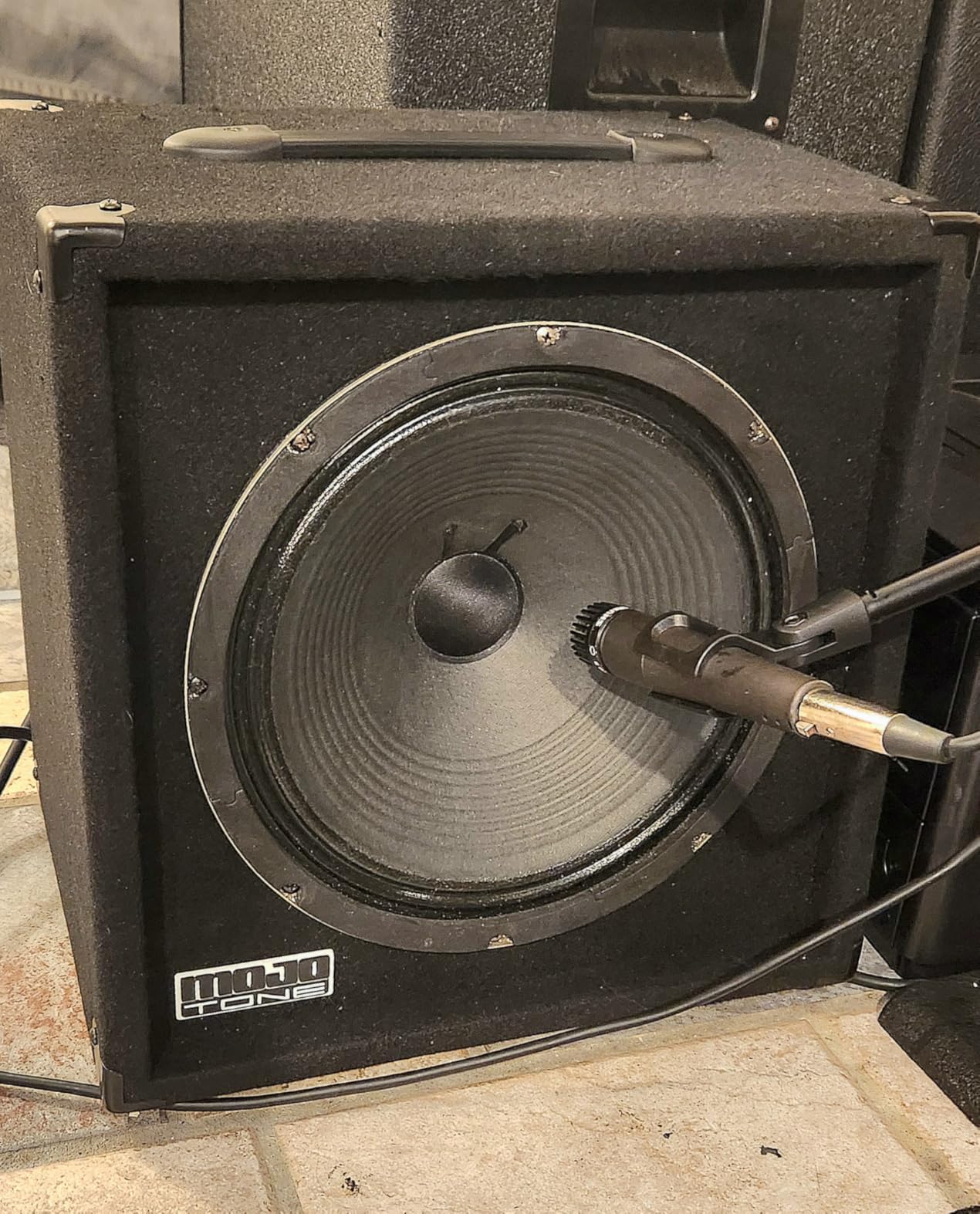
This is an empty 1×12 plywood enclosure with no speaker in it, and that is exactly why it is on this list. The economics of tube tone are simple: a better speaker changes the sound far more than a better cabinet does. An empty shell lets you install the driver you actually want instead of settling for whatever the manufacturer loaded.
Owners report building it out with an Eminence Swamp Thang and a Celestion G12K-85 and being satisfied with the result. At 4.3 stars across 114 ratings it sits in the middle of the pack, with the recurring praise aimed at the plywood and the value.
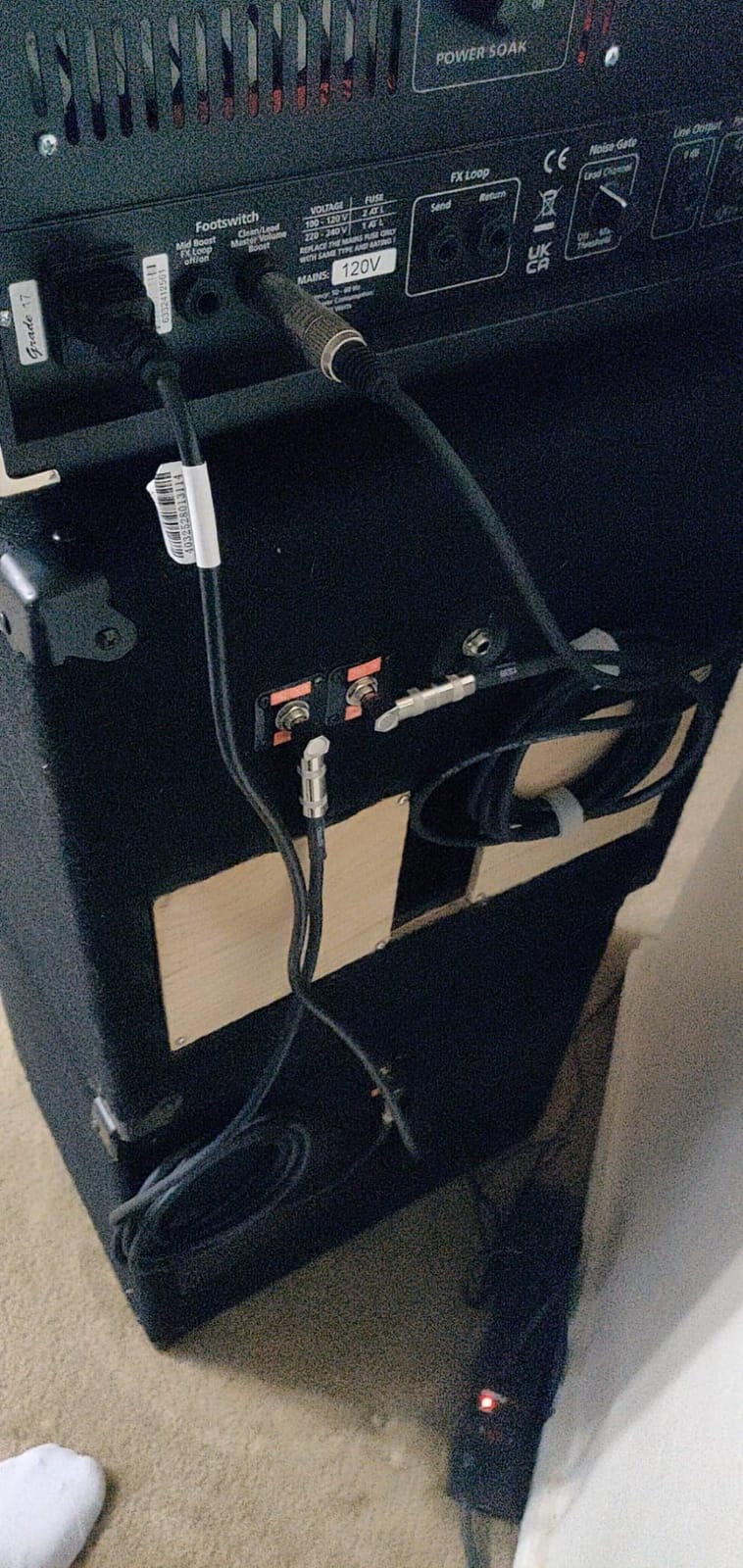
Specs read cleanly. Material: plywood top and back, powder-coated finish. Jack: 1/4 inch. Dimensions: 17 x 17 x 13 inches. Included: eight screws for speaker installation. Carries no warranty beyond standard returns.
Is building your own cabinet worth the effort?
It is worth it if you plan to change speakers. A loaded cabinet locks you into one driver and one impedance; an empty shell with a 1/4-inch jack can be rewired as your setup changes, and the plywood body is a stable platform for experiments.
It is not worth it if you want zero fuss. You need to buy the speaker separately, wire it, and check your impedance math yourself before you plug anything in.
What are the drawbacks of a budget shell?
The front-mount-only design is the one that bites. With no removable back panel you cannot install a rear-facing or dual-cone speaker, and that limits how far you can go with the build.
Several owners also report that the included leads are too short and that the jack connection can arrive cold. Budget a set of proper speaker wire and a few minutes with a screwdriver.
4. Peavey 1×12 Extension Cabinet – 16 ohms and 40 watts of real headroom
Peavey 03611000 1 x 12 Extension Guitar Cabinet, Black
Speaker: Peavey Blue Marvel 12 inch
Impedance: 16 ohms
Power handling: 40 watt RMS
Weight: 21 pounds
Pros
- 16 ohm and 40 watt RMS is a natural fit for higher-wattage tube heads
- Five-year warranty is the longest in this group
- Wood construction at 21 pounds suits repeated transport
- Available in matching 2x12 and 4x12 formats so a full stack can be built
Cons
- Blue Marvel voicing is Peavey-specific in character which some players find too bright
- 16 ohm load cannot be split to feed two cabinets from one output
- Costs more than the loaded Monoprice 1x12 while arriving with its own speaker
Peavey built this extension cabinet around its own Blue Marvel driver, and the 16-ohm impedance is the headline number. A 16-ohm cabinet is exactly what a 50-watt or 100-watt Marshall-style head wants on a single output, and it is also the natural building block for a two-cabinet rig because two 16-ohm cabs in parallel give an 8-ohm load.
Reviewers value the 40-watt RMS rating and the five-year warranty more than the tone. At 4.2 stars across 83 ratings, the 64 percent five-star share suggests a dependable rather than exciting cabinet.
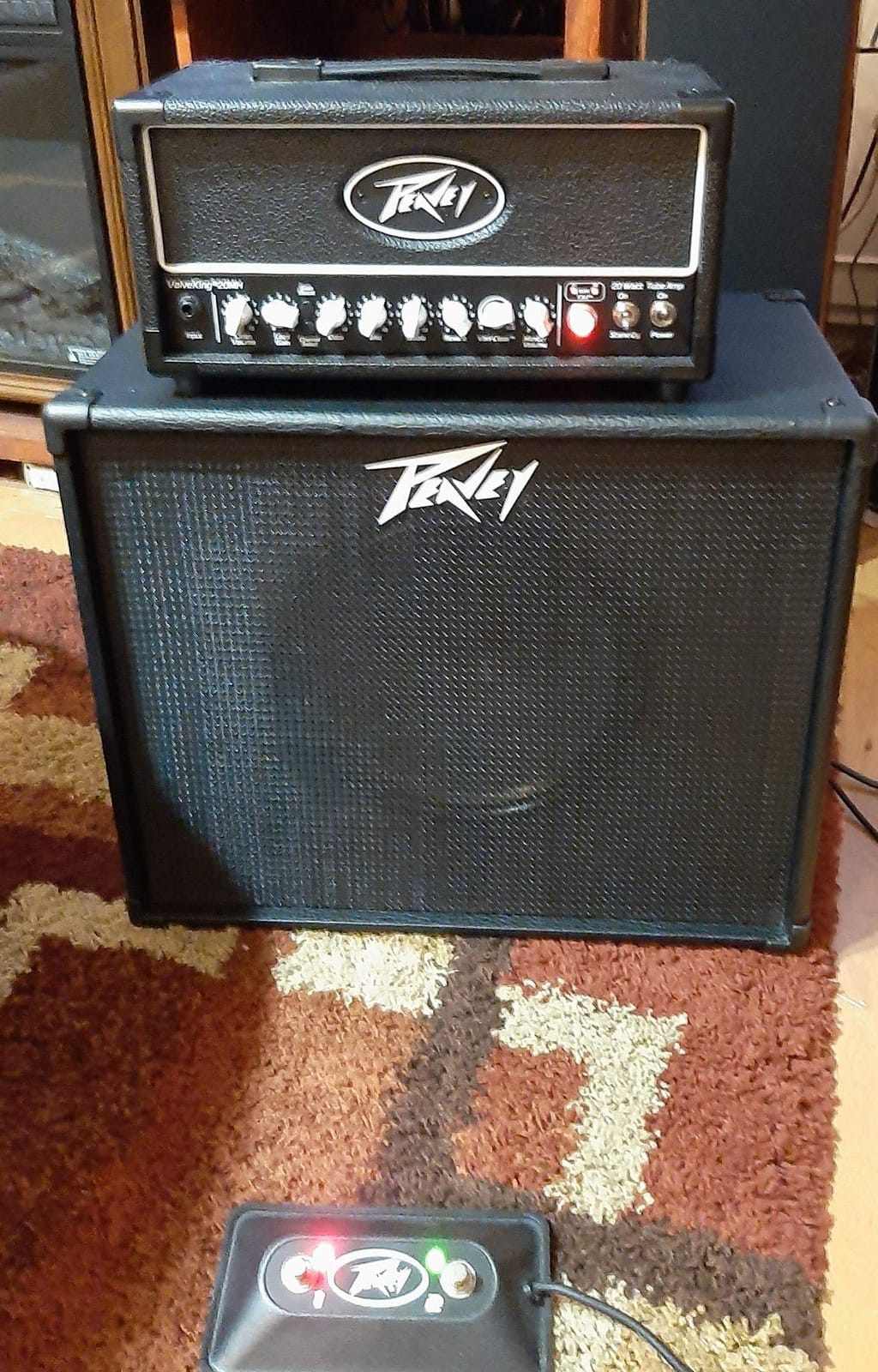
Specs read cleanly. Speaker: 12-inch Peavey Blue Marvel, 16 ohms, 40 watt RMS. Body: wood, black. Connector: 6.35mm jack. Dimensions: 23.62 x 21.25 x 14.37 inches. Weight: 21 pounds. Warranty: five years.
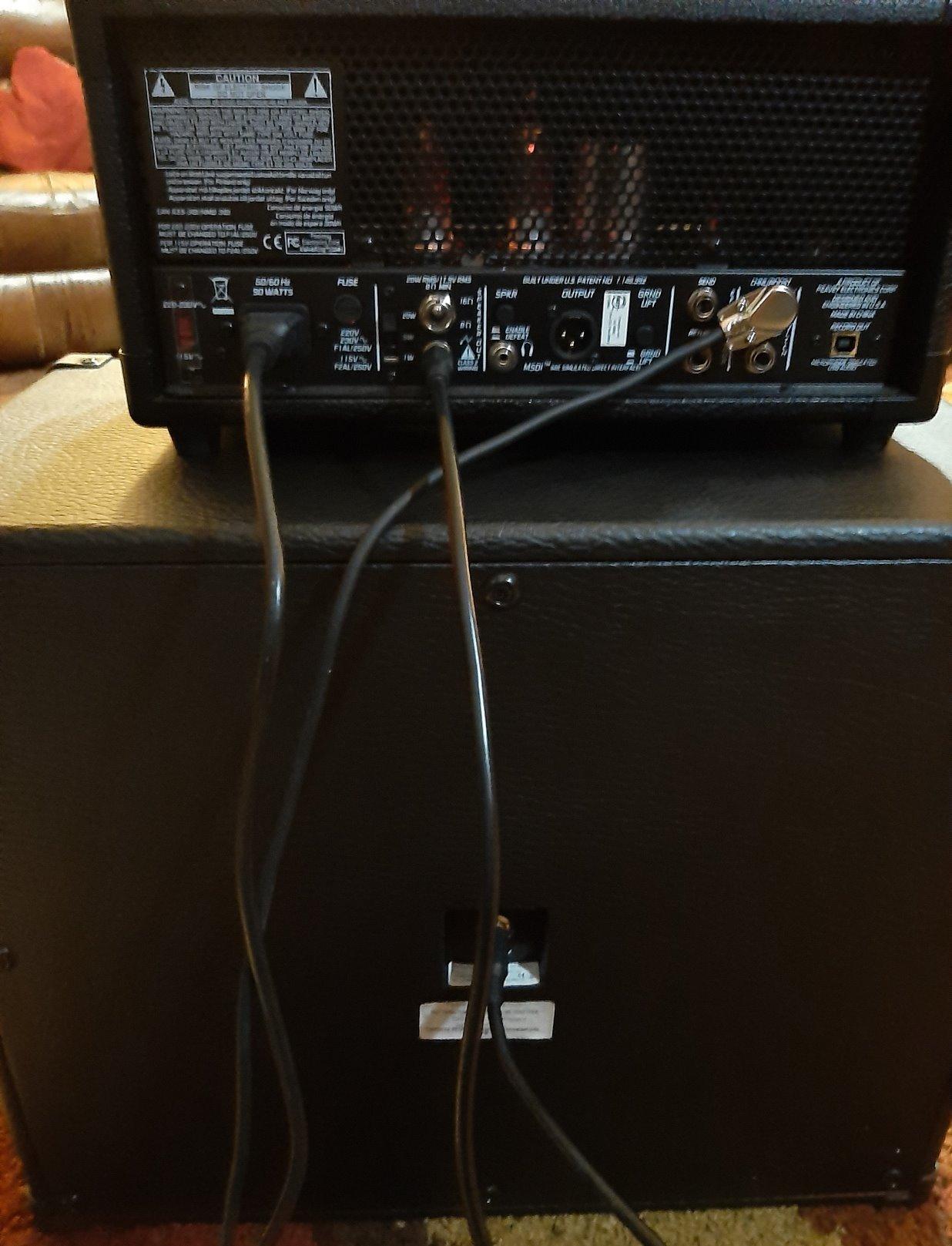
Why does 16 ohms matter for high-wattage heads?
Most 50-watt and 100-watt tube heads have a secondary tap at 16 ohms so you can run two cabinets without the impedance dropping to a level the output transformer cannot handle. This cabinet is one half of that arrangement.
Keep the pairing rule in mind: one 16-ohm cab on a 16-ohm tap, or two 16-ohm cabs paralleled onto an 8-ohm tap. Never connect a single 16-ohm cabinet to an 8-ohm output.
Is the Blue Marvel speaker a dealbreaker?
Only if you want a specific voice. Peavey drivers have a bright, articulate top end and a house character that is not a Celestion. Players chasing classic rock or blues warmth may find it too present.
The other concern is value. A loaded V30 1×12 elsewhere in this list costs less than this cabinet, and the V30 is a more versatile starting point for a tube head.
5. Seismic Audio Empty 2×12 – a heavy 2×12 shell with the hardware already included
Seismic Audio – Empty 212 Guitar Speaker Cabinet – 2×12 PA/DJ PRO Audio – Loaded with Everything but Speakers. Includes Grill, Wire, Jack Plates, Handles, etc.
Configuration: empty 2x12
Panel: 5/8 inch plywood
Jacks: dual 1/4 inch
Weight: 36.7 pounds
Pros
- Cheapest 2x12 shell in the group and hardware is included
- 5/8 inch plywood front panel is heavier duty than budget 1x12 shells
- Dual 1/4 inch terminal cup makes wiring two drivers straightforward
- Recessed metal handles and metal corners suit repeated load-ins
Cons
- Arrives without speakers so the effective cost is much higher once drivers are added
- Marketed toward PA and DJ use so the internal bracing and voicing are not guitar-optimised
- At 36.7 pounds it is heavy for a 2x12 and needs two people to move comfortably
- Black carpet covering shows wear and dust easily
When you want a 2×12 but want to control the drivers, this shell arrives with the metal grille, jack plates, recessed handles and wiring already fitted. That completeness is the argument: you are not hunting for hardware, you are buying a box and dropping two speakers into it.
At 4.4 stars across 73 ratings, reviewers single out the 5/8-inch plywood front panel as heavier and more substantial than what budget 1×12 shells use. It is a builder’s cabinet rather than a finished rig.
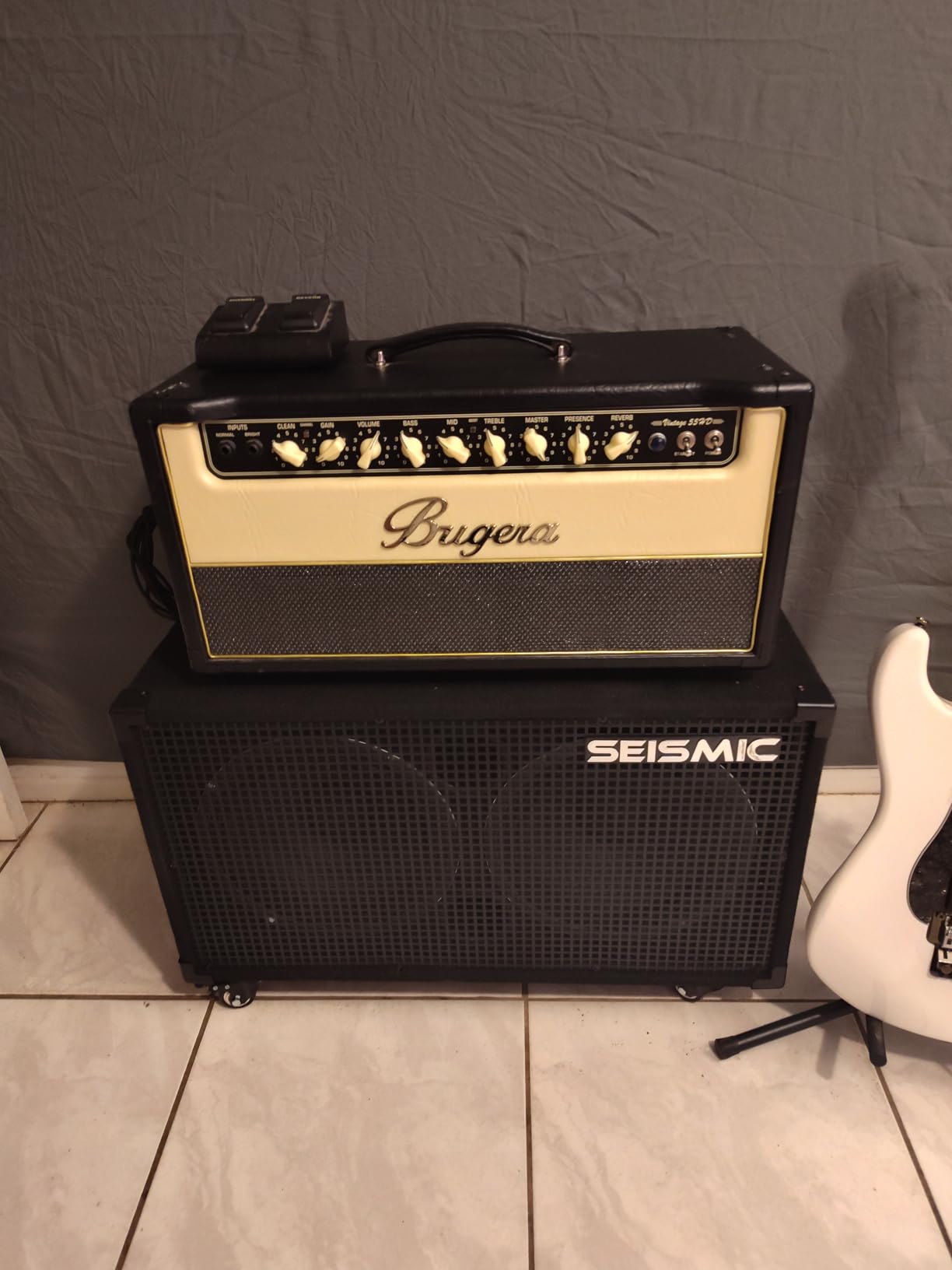
Specs read cleanly. Configuration: empty 2×12, no speakers included. Panel: 5/8-inch plywood with black carpet and black metal corners. Terminal cup: two 1/4-inch jacks. Dimensions: 14 x 29 x 15 inches. Weight: 36.7 pounds.
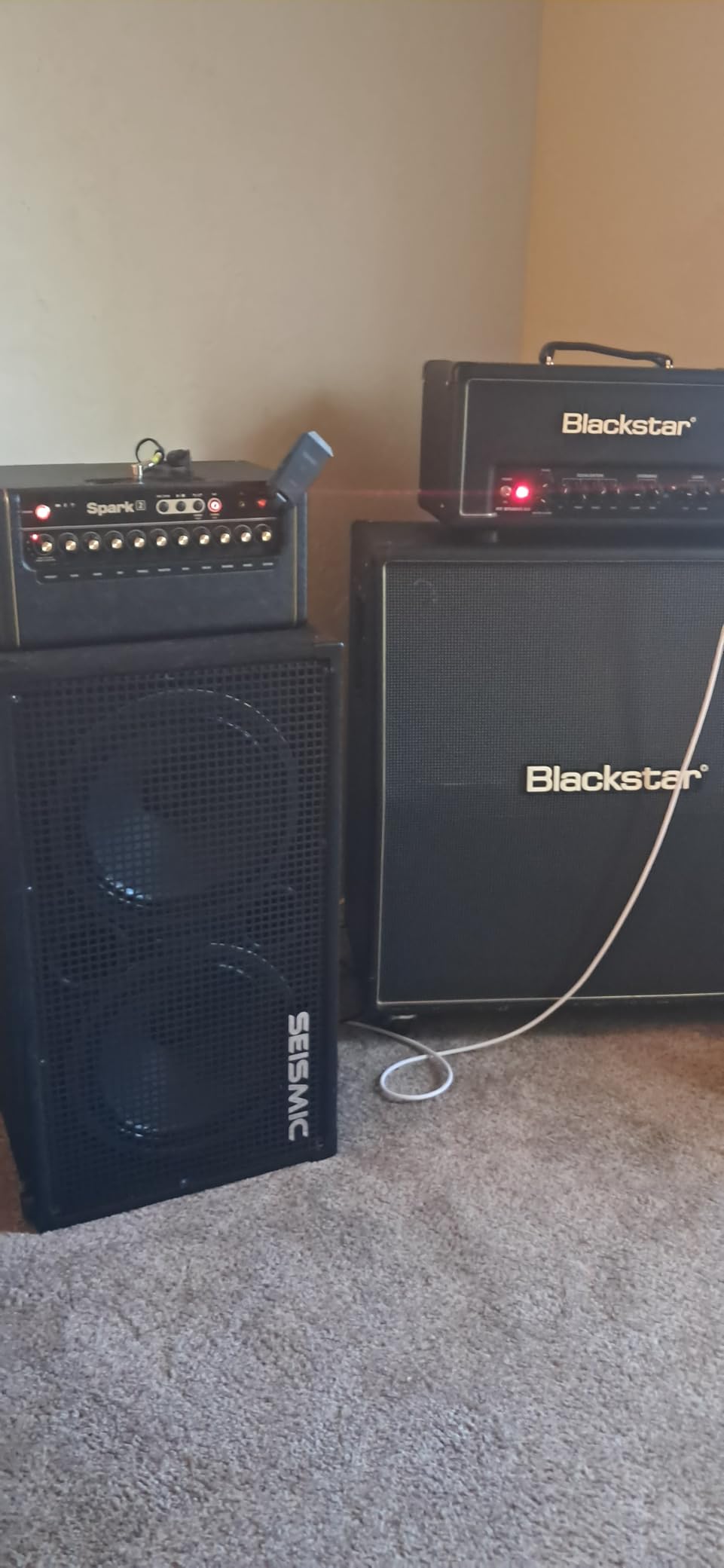
How should you load a 2×12 shell?
The common configuration is two 8-ohm drivers, which gives a 16-ohm cabinet. That pairs directly with a 50-watt or 100-watt tube head on its 16-ohm tap, or with two such cabinets in parallel on an 8-ohm tap.
Two 4-ohm drivers wired in series give 8 ohms total, which suits smaller heads. Confirm the impedance at the terminal cup with a meter after wiring, before you connect anything to an amplifier.
What is the trade-off with a PA-style shell?
This cabinet is marketed for professional audio and DJ work, not guitar. The ply is heavy, the hardware is serious, and the internal bracing is not voiced for the midrange forwardness guitar players normally want.
It is also empty, so your true cost includes two good 12-inch speakers. Budget for that before comparing it to a loaded cabinet.
6. Orange PPC212-OB 2×12 Open-Back – the most power handling in the group
Orange PPC212-OB 120-Watt 2×12 Inches Open-Back Cabinet
Speaker: 2 x 12 inch Celestion
Impedance: 16 ohms
Power handling: 120 watts
Weight: 25 kg
Pros
- 120 watt power handling is the highest rating in the roundup
- Loaded with Celestion drivers for the classic Orange voicing
- Birch ply construction with a durable heavy-duty build
- Open-back design gives a lively
- less directional response
Cons
- At 25 kg it is a two-person lift
- One of the higher-cost cabinets in the group
- 16 ohm fixed impedance cannot be paralleled from a single output
- Open-back construction leaks more sound in a loud room
This is the traditional Orange open-back 2×12, and its 120-watt power handling is the highest number anywhere in this roundup. If you own a high-output tube head and want room to run it hard without worrying about the speakers, that headroom is the reason to look here.
At 4.7 stars across 48 ratings with zero one- or two-star ratings, the owner feedback is unusually clean. Reviewers like the open, lively delivery and the build quality, and the complaints are almost entirely about logistics.
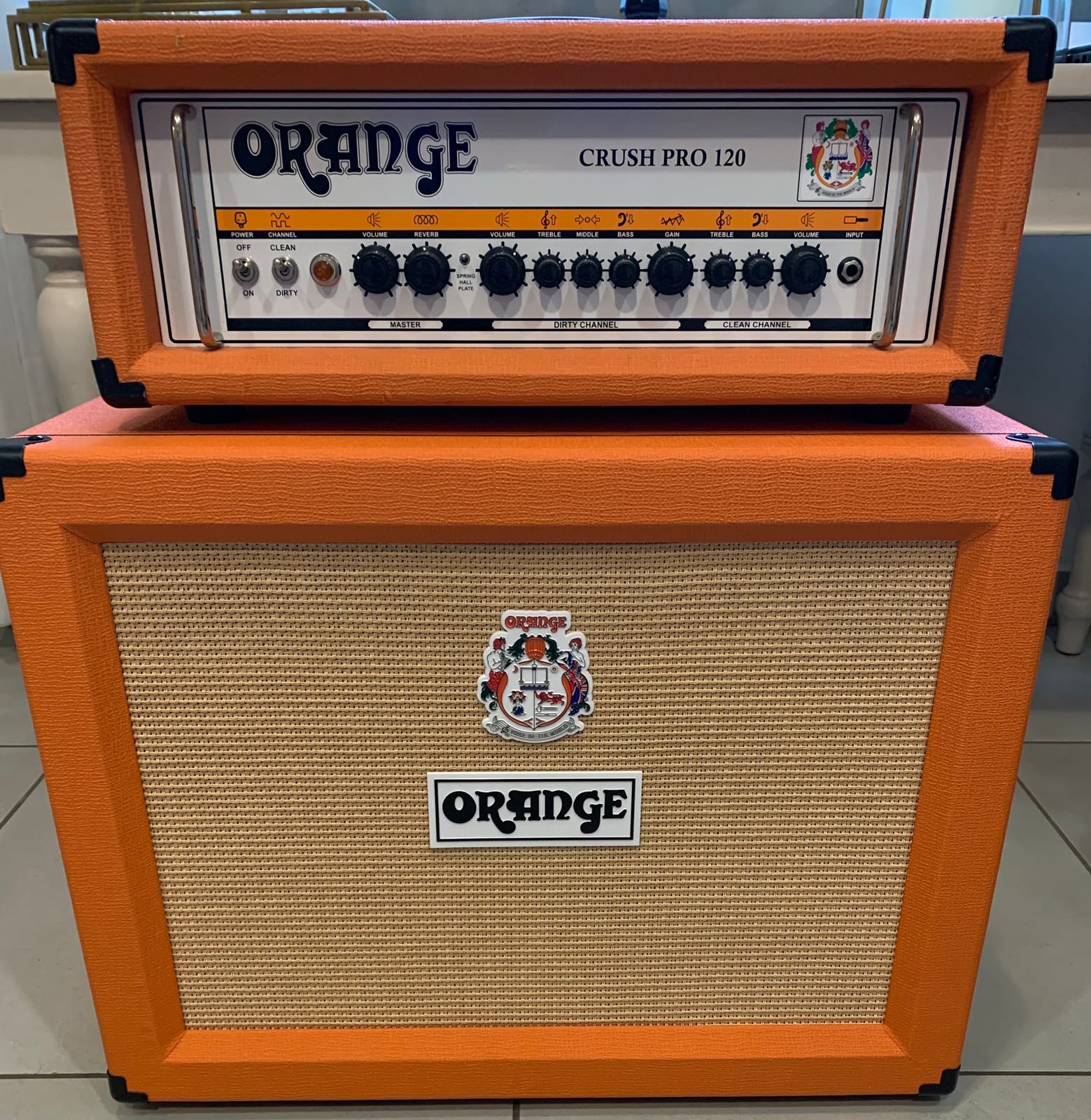
Specs read cleanly. Configuration: 2 x 12 inch extension cabinet. Impedance: 16 ohms. Power handling: 120 watts. Enclosure: birch ply. Connectors: 1/4 inch TS. Dimensions: 11.81 x 27.56 x 21.65 inches. Weight: 25 kg.
When does an open-back 2×12 beat a closed-back one?
Open-back cabinets spread sound in all directions and give more air and bloom to the top end. That is why a lot of blues, country and classic rock players prefer them, and why open-back designs leak so much sound into the room.
On a loud stage with a hard-working drummer, that leakage works against you. A closed-back 2×12 like the EVH in this list is more focused and better at keeping itself audible in a dense mix.
Is 16 ohms a limitation here?
It restricts flexibility slightly. Because the impedance is fixed at 16 ohms, you cannot parallel a second 16-ohm cabinet from a single 8-ohm output without dropping the load too low.
It is also very heavy. At 25 kg, plan your transport before you buy, because this is a two-person lift rather than a one-person carry.
7. Fender Hot Rod Deluxe 112 – the period-correct closed-back 1×12
Fender Hot Rod Deluxe 112 80-watt 1×12 inch Extension Cabinet – Black
Speaker: 12 inch Celestion G12P-80
Output rating: 80 watts
Back: closed
Weight: 43 pounds
Pros
- Loaded with a Celestion G12P-80 which is widely regarded as the definitive Fender extension speaker
- 80 watt rating comfortably matches Deluxe-series and similar tube heads
- Closed-back construction gives tighter and punchier low end
- Fitted cover and speaker cable are included
Cons
- At 43 pounds it is the heaviest 1x12 in this roundup
- Some cabinets arrive without the advertised fitted cover
- Grille cloth does not always visually match the combo it pairs with
- Small 30-review pool makes long-term reliability harder to judge
Take a Deluxe Reverb combo and this cabinet is what sits underneath it. The Celestion G12P-80 is the driver Fender has used on extension cabs for decades, and it is designed to add bass weight and apparent volume to an existing combo rather than to work as a standalone extension on a big head.
Owners report the sound filling out top to bottom once the combo is stacked. The closed-back construction is the reason: it delivers tighter, punchier low end than an open-back cab. At 4.2 stars across 30 ratings the pool is small, so weigh the ratings accordingly.
Is this cabinet only for Fender combos?
It is designed around them. The fitted cover and included cable are sized to slide a Hot Rod Deluxe or Blues Deluxe combo directly on top, and the G12P-80 voicing is tuned to complement that amp rather than a Marshall or Mesa head.
That said, a closed-back 1×12 with an 80-watt rating is a broadly useful proposition, and plenty of players pair one with other medium-power tube heads successfully.
What should you check before buying?
Weight is the biggest practical issue. At 43 pounds this is the heaviest 1×12 in the roundup, and the bulk is real rather than nominal.
Also check what is in the box. It arrived without the fitted cover that is supposed to sit on top of the combo, and owners report grille cloth that does not always match their combo’s vinyl. Warranty is a five-year limited.
8. EVH 5150III 2×12 – high-gain clarity with a tilt-back head mount
EVH 5150III 2X12″ Cabinet – Ivory
Speakers: 2 x 12 inch Celestion G12H
Impedance: 16 ohms
Power handling: 60 watts
Weight: 60 pounds
Pros
- Dual Celestion G12H drivers give tight
- articulate modern high-gain tone
- Only 60 watts total which makes it far easier to move than a 4x12
- Built-in head-mounting mechanism and tilt-back legs angle a head correctly
- Owners report more clarity than a 6505 4x12 with different drivers fitted
Cons
- 60 watt handling is the lowest power rating among the 2x12 options here
- At 60 pounds it is the heaviest cabinet in this roundup
- 16 ohm impedance restricts pairing options
- One owner reported yellow staining from rubber feet reacting with the ivory tolex
This is a modern high-gain 2×12 with two Celestion G12H drivers, and the built-in tilt-back head mount is the feature that changes your whole rig layout. The head sits on top at the correct angle instead of on a separate stand, which both looks right and projects properly at ear height.
Reviewers are emphatic about clarity. Owners report more definition than a Marshall 6505 4×12 with different drivers fitted, at 4.6 stars across 27 ratings with 85 percent five-star. The recurring reservations are about weight and the power ceiling.
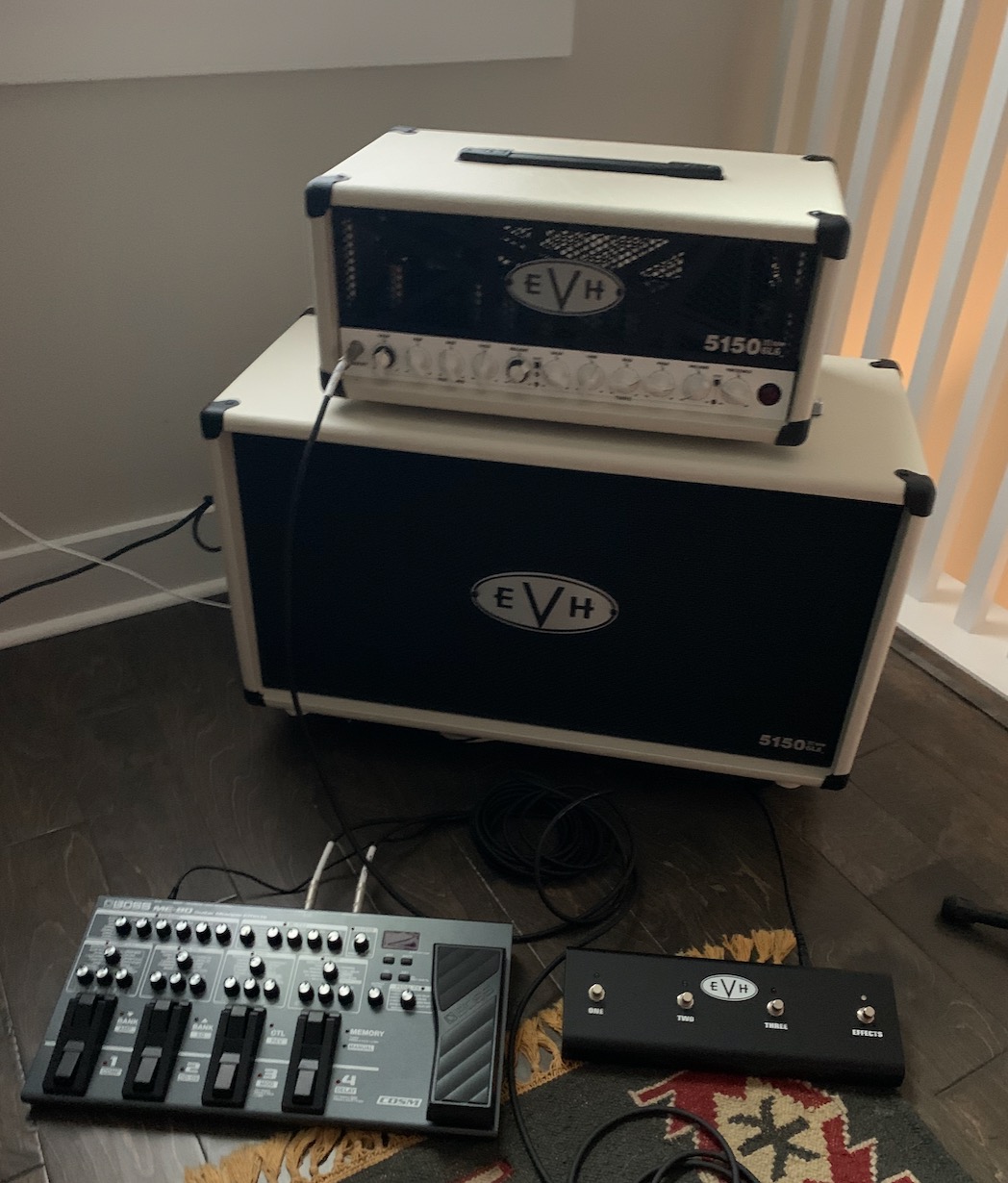
Specs read cleanly. Speakers: 2 x 12 inch Celestion G12H. Impedance: 16 ohms. Power handling: 60 watts. Construction: birch plywood, ivory. Mounting: floor standing. Dimensions: 36 x 18 x 20 inches. Weight: 60 pounds.
Is a 2×12 enough for a metal rig?
For most players, yes. Two 30-watt drivers in a well-built cabinet give a tighter, more articulate result than four speakers in a large box, and the low end stays focused instead of loose.
Check your head wattage first. With 60 watts of total power handling, this pairs well with modern 50-watt high-gain heads. A 100-watt head will run it hot.
What are the practical drawbacks?
Weight, plainly. At 60 pounds this is the heaviest cabinet in the roundup and effectively a two-person carry, so rehearse your load-in route before you commit.
The 16-ohm rating also narrows your pairing options, and there is one reported issue worth knowing: rubber amp feet reacting with the ivory tolex caused permanent yellow staining on one owner’s unit.
9. Peavey 112C Switchable 1×12 – one cabinet, two back types
Peavey 112C 112-C Guitar Speaker Cabinet
Speaker: Celestion Vintage 30
Impedance: 16 ohm mono or 8 ohm per side
Power handling: 60 watts
Back: switchable
Pros
- Only cabinet here that converts between open-back and closed-back with a switchable back panel
- Switchable impedance of 16 ohms mono or 8 ohms per side widens pairing options
- Loaded with a Celestion Vintage 30 inside an 18mm plywood shell with metal corners
- Tweed tolex gives a boutique look at a mid-range price
Cons
- Only 18 reviews which is the thinnest evidence base for a mid-range cabinet
- Listed warranty is 90 days which is the shortest of any pick here
- 17 percent of ratings are 1-star which is the highest negative share in the group
- At 37.7 pounds it is heavy for its compact dimensions
The switchable back panel is the reason this cabinet is here. Rather than choosing open-back or closed-back at purchase, you flip the panel and get two voicing options from one box, which is close to unheard of at this price. It is the closest thing in this roundup to a one-cabinet answer for players who play both clean and dirty.
It also switches impedance, running 16 ohms mono or 8 ohms per side, so you can use it in configurations a fixed-impedance cabinet cannot. The Vintage 30 load is the standard rock driver.
Why does the switchable back matter so much?
Open-back gives air, bloom and wide spread. Closed-back gives tighter bass, more focus and better cut in a band mix. Those are not subtle differences, and having both from one cabinet lets you match the cabinet to the song rather than picking one compromise.
The impedance switch adds a second layer. A single 8-ohm cabinet is the most flexible option for two-cab rigs, and this one gives you that while still working as a 16-ohm unit on a high-wattage head.
How much should you trust the reviews?
Less than the others, honestly. With 18 reviews and a 17 percent one-star share, the consensus here is weaker than the review counts elsewhere in this roundup suggest. The 90-day warranty is also the shortest listed.
At 37.7 pounds it is heavier than the compact dimensions imply, and 18mm plywood is thinner than the ply used on the larger shells in this roundup.
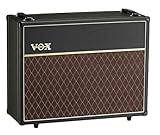
10. Vox V212C 2×12 – two Greenbacks for AC30 culture
Vox V212C Guitar Extension Cabinet, 2×12″
Speakers: 2 x 12 inch Celestion G12M Greenback
Impedance: 16 ohms
Output: 50 watts
Weight: 56.2 pounds
Pros
- 4.8 average with no ratings below 4 stars
- Matched pair of Celestion G12M Greenbacks which is the speaker behind classic Vox chime
- Open-back construction suits the airy Vox character
- Traditional Vox styling and build that matches AC15 and AC30 culture
Cons
- The highest-cost cabinet in this roundup
- 50 watt rating is modest for a 2x12 and limits head choice
- At 56.2 pounds it is one of the heaviest here
- Only 11 reviews so long-term owner feedback is limited
Two matched Celestion G12M Greenbacks in an open-back Vox cabinet, and that combination is the AC30 sound in a box. Greenbacks are warm, mid-forward and break up sooner than a Vintage 30, which is exactly why Vox used them and why players chasing that chime still look for them.
It carries a 4.8 average, the joint-highest rating in the roundup, with no ratings below 4 stars. The problem is sample size: 11 reviews, all five or four stars, tells you very little about long-term reliability.
What heads should drive a Vox V212C?
The rated output is 50 watts at 16 ohms, so it wants a mid-power tube head on its 16-ohm tap. An AC30 Custom combo is the natural partner, adding volume and stage presence to a sound you already know.
A 100-watt head will run this harder than the rating suggests. If you own one, choose a cabinet with more power handling instead.
Is the premium worth it?
It is the highest-cost cabinet here, and the cost buys matched drivers and brand-consistent voicing rather than raw power handling. For a player who wants the classic Vox character and not something else, that is the point.
For a player who just wants warm speakers, matched Greenbacks in another open-back 2×12 will get you most of the way. At 56.2 pounds, budget your transport plan too.
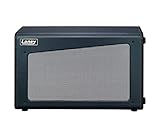
11. Laney CUB-212 – an 8-ohm 2×12 with a perfect score
Laney CUB-212 Guitar Speaker Cabinet 2X12 Inch HH Custom Speakers
Speakers: 2 x 12 inch custom Laney HH
Impedance: 8 ohms
Power handling: 100 watts
Weight: 13.8 kg
Pros
- The only 8-ohm 2x12 in the roundup which makes it the easiest to pair and the most flexible for parallel cabs
- 100 watt handling gives real headroom for a wide range of tube heads
- Open-backed design with custom HH speakers gives open mids
- Lightweight for a 2x12 at 13.8 kg
Cons
- Only 9 reviews which is the smallest pool in the roundup
- 30 percent of ratings sit at 3 stars rather than 4
- Open-back design gives less low-end punch than a closed-back alternative
This is the only 8-ohm 2×12 in the roundup, and that single fact makes it more flexible than anything else here. One 8-ohm cabinet can go onto an 8-ohm output at any wattage, and two of them in parallel present a 4-ohm load for modern high-output heads. Nothing else in this list gives you that freedom.
It is also the only cabinet with a 5.0 average across every rating, though the sample is nine reviews. All nine sit at either 5 or 3 stars, with no middling four-star opinions at all, so treat the perfect score as promising rather than proven.
Why does 8 ohms give you more pairing options?
Impedance rules run in one direction only. A 16-ohm cabinet has exactly one safe home, an 8-ohm cabinet has two, and the more flexible cab works with more heads and more configurations.
Combined with 100-watt power handling, this is a broadly useful 2×12: it suits a small tube head today and a higher-wattage head later, and it pairs cleanly with a second cabinet.
What should you weigh up before buying?
The review evidence is thin. Nine ratings cannot tell you how the cabinet ages or how the custom HH speakers sound in a room, and nearly a third of them are 3-star, which suggests a few buyers found it merely adequate.
The open-back design also gives less low-end punch than a closed-back alternative. If you play in a loud band, the tighter EVH 2×12 may serve you better despite the impedance difference.
12. JOYO BANTCAB 1×8 Closed-Back – a genuine Celestion in a mini-head box
JOYO Passive Guitar Speaker Cabinet 20W 8Ω with Celestion 8 Inch Closed Back Extension Cabinet for BanTamp & Compatible Mini Tube Amp Heads, Home Practice & Recording (BANTCAB)
Speaker: Celestion Eight 15, 1x8 inch
Output: 20 watts at 8 ohms
Response: 100Hz to 5kHz
Weight: 9.13 pounds
Pros
- Genuine Celestion Eight 15 driver in a 20 watt 8 ohm closed-back format which is a rare spec combination
- Only 9.13 pounds making it one of the most portable cabinets for a home setup
- Closed-back construction gives tighter bass and better note definition than open-back
- Designed to pair with the 20 watt JOYO BANTAMP tube head series
Cons
- Only 4 reviews which is the thinnest evidence base in the roundup
- 100Hz to 5kHz response means very little sub-bass content
- 20 watt rating makes it a practice cabinet rather than a gigging one
- MDF rather than plywood is a material step down
This is a closed-back 1×8 built around a genuine Celestion Eight 15, and that combination is unusual at this size and weight. Most mini cabinets use a generic driver; a real Celestion changes the tonal centre, and the closed-back enclosure gives tighter bass and better note definition than the open-back 1x8s that dominate this category.
It is designed to pair with the JOYO BANTAMP 20-watt tube head series while staying compatible with other 8-ohm mini heads. Reviewers report more volume and tone than they expected from an 8-inch cabinet.
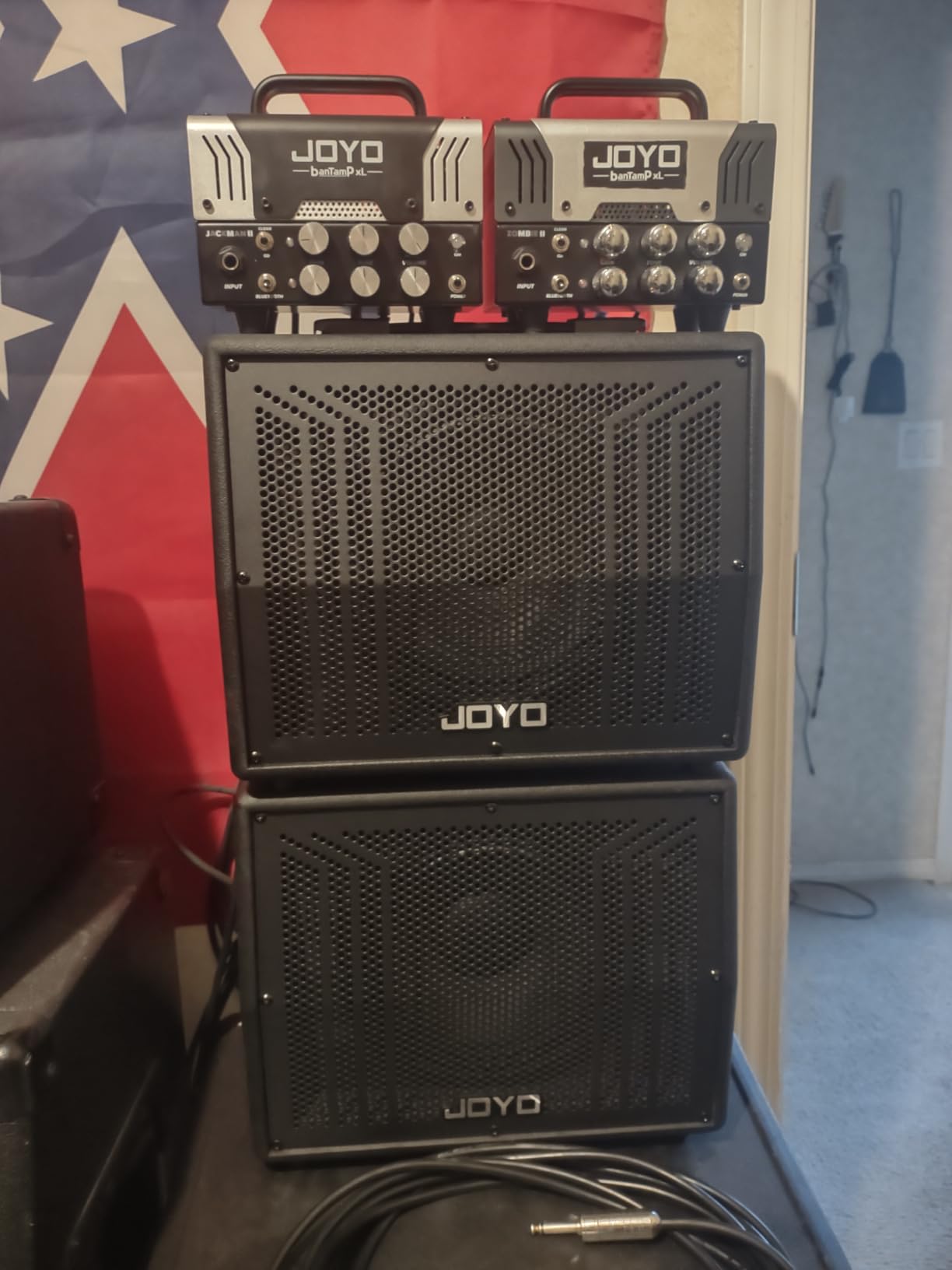
Specs read cleanly. Speaker: genuine Celestion Eight 15, 1×8 inch. Output: 20 watts at 8 ohms. Frequency response: 100Hz to 5kHz. Enclosure: 12 mm MDF with a PVC exterior. Input: 1/4-inch mono jack. Dimensions: 12.76 x 11.02 x 6.3 inches. Weight: 9.13 pounds.
How does a closed-back 1×8 compare to an open-back one?
Closed-back is tighter and more focused. You get a defined bass note, clearer note separation and stronger forward projection, which is why this cabinet suits practice and home recording better than most open-back 1x8s.
The open-back 1×8 alternative gives more air and a wider spread. Neither is better, but closed-back is easier to record cleanly with a single microphone and easier to control in a small room.
What are the limits of an 8 inch cabinet?
The frequency response is the honest headline: 100Hz to 5kHz means there is very little content below the low E string. If you play modern low-tuned rigs, that will show.
The 20-watt rating also limits you to low-power heads, and at four reviews this is the least-tested pick in the roundup. MDF rather than plywood is a material step down from the shells above. Warranty terms are not listed.
Matching guide: impedance, wattage and speaker math
Players on r/GuitarAmps and the Telecaster Guitar Forum consistently describe the same fear: they avoid swapping cabinets because they are not sure about impedance and are worried about blowing speakers. That fear is worth taking seriously, and it is also much simpler to manage than it feels. Three checks cover almost every real-world case.
Check one: the output impedance on your head. It is printed on the back panel next to the speaker out jack. Common values are 4, 8 and 16 ohms. If the head has a switch, note every available tap before you decide on a cabinet.
Check two: the cabinet impedance. Usually printed inside the cabinet near the terminal cup, or on the back panel. A loaded cabinet will state it; an empty shell will not, so you have to work it out from how you wire the drivers.
Check three: the speaker power handling. The lowest-rated speaker times the number of speakers gives the cabinet’s total. Two 30-watt drivers give 60 watts, not 30.
Now the head wattage guidance, which is where forum advice gets vaguer than it should. A 5-watt to 15-watt head wants a single 1×12 with a lower-wattage speaker, because a 60-watt speaker simply will not be driven hard enough to break up. A 15-watt to 20-watt head is happy with a 1×8 or a 1×12 and will stay clean and articulate. A 40-watt to 50-watt head sits in the sweet spot for 1×12 and 2×12 configurations, which is why this is the most common tube head wattage in the category. A 100-watt head wants a 2×12 with 60 watts or more of handling, or two 1x12s.
The rule players on r/GuitarAmps actually land on is that a speaker wants to be driven near its rating to break up. Too much speaker and the sound stays clean no matter how hard you push. Too little speaker and you cook it. That is the whole reason matching wattage to cabinet size matters.
Two cabinets change the load. Two identical cabinets in parallel each present half their rated impedance, so two 16-ohm cabinets give an 8-ohm load and two 8-ohm cabinets give a 4-ohm load. Never halve a load below what your head’s output transformer is rated for. The Canadian Guitar Forum raises a point that rarely appears elsewhere: at low volumes with the amp cranked, definition and spread matter more than raw power, and that is a genuinely different buying criterion from playing loud.
On open versus closed backs, the choice is about direction. Open-back cabinets radiate in all directions, which means air and bloom but also leakage into the room and onto the stage. Closed-back cabinets push sound forward in a focused way, which means tighter bass and better cut in a band mix. Open-back suits blues, country, clean jazz and small stages. Closed-back suits hard rock, metal and loud rooms.
On loaded versus empty, the forum consensus is that the speaker matters more than the cabinet. That is why two empty shells appear in this roundup alongside ten loaded cabinets. A loaded cab is simpler and immediate. An empty shell is cheaper to experiment with and lets you change drivers as your head or your taste changes.
How to inspect a used cabinet in ten minutes
Used and vintage cabinets are a genuine buying channel in this category, and nothing on the search results explains what to look at. A ten-minute inspection covers most of the risk.
Confirm the impedance first. Look for a label inside the cabinet near the terminal cup, and check that it matches what your head needs. A missing label is a warning sign, not a minor annoyance, because you will be rewiring regardless.
Check the cones in good light. Look for tears, dents, repairs and any speaker that has clearly been swapped. Also check that every speaker in the cabinet is the same model, because mixed drivers produce a lopsided stereo or midrange image that is hard to diagnose later.
Look at the rear panel and the jack plate for corrosion or a cold solder joint. Sockets accumulate dirt, and green or crusty connections are a straightforward repair if you have a soldering iron. Tight loose jack plate screws while you are there, since they can short intermittently.
Look at the baffle and the interior. Check for water staining, warp, insect damage and a musty smell. Fill the port hole with a flashlight and inspect the bracing, which is also how you confirm the cabinet is not a much larger box than the speaker cutout suggests.
Finally, listen before you commit. Push a low sine wave or a chord through it at low volume and listen for rattles, buzz and any cone rubbing. Rubbing usually means a warped frame, and a buzz that appears only at certain frequencies often means a loose internal brace or a rattly jack plate.
Frequently Asked Questions
What are the best guitar cabinets?
The best guitar cabinets for tube heads depend on your head wattage and output impedance rather than on brand. Loaded 1×12 cabinets such as the Monoprice Stage Right with a Celestion Vintage 30 suit 15W to 30W heads, while 2×12 cabinets rated 60W and above suit 50W and 100W heads. Match the cabinet impedance to the head output and check speaker wattage is at least half the head output.
Can I use any cabinet with any tube amp head?
You can, as long as two things match: the cabinet impedance must equal the head output impedance, and the speaker power handling must be high enough for the head. Experienced players deliberately mismatch brand, so a Fender head into a 2×12 with Vintage 30s is normal practice. Mismatching impedance is what damages equipment, not mismatching brand.
What impedance cabinet does my tube head need?
Read the output impedance printed next to the speaker out jack on the back of the head, then match the cabinet to that number. If the head offers both 8 and 16 ohm taps, an 8-ohm cabinet works on either, while a 16-ohm cabinet only works on the 16-ohm tap. Two identical cabinets in parallel each present half their impedance, so two 16-ohm cabinets give an 8-ohm load.
How many watts of speaker do I need for my amp?
The lowest-rated speaker times the number of speakers gives the cabinet total, so two 30 watt drivers give 60 watts. As a rule, a 100 watt head needs at least 50 watts per speaker. Going larger is safe but produces a cleaner sound because the speaker never gets driven hard enough to break up, which is why a 5 watt head wants a lower-wattage speaker rather than a bigger cabinet.
Is a 1×12 loud enough for a tube amp?
A 1×12 is enough for most situations including small stages and rehearsal rooms, and a 50 watt tube head into a loaded 1×12 is one of the most common and most balanced pairings available. For a 100 watt head, a 2×12 rated 60 watts and above gives more output, lower frequency extension and more headroom. Two 1x12s give a stereo spread that one cabinet cannot.
Which Celestion speaker is best for classic rock?
The Celestion Vintage 30 is the standard choice for classic rock and hard rock because of its bright, forward midrange and fast breakup. The Greenback G12M is warmer and breaks up sooner, making it the choice for blues and Vox-style chime. Modern high gain usually calls for a Celestion G12H or G12T-75, while clean Fender-style tones come from an Alnico Blue speaker.
The bottom line on the best guitar cabinets for tube heads
The Monoprice Stage Right 1×12 with a Celestion Vintage 30 is the pick we recommend to most people, because it is loaded with the right driver, rated for the most common tube head wattage and backed by the largest review base in this roundup. If you play at practice volume in a small space, the Orange PPC108 1×8 does the same job in a fraction of the weight.
Beyond 30 watts, the choice is about architecture. High-output heads want a 2×12 with real power handling, open-back designs suit blues, country and small stages, and closed-back designs cut through a loud band. The best guitar cabinets for tube heads are the ones whose impedance, wattage rating and back type match the head you already own, so check those three numbers before anything else. The picks above cover every configuration from a bedroom practice stack to a 100-watt stage rig, and the matching guide will tell you which one fits your setup in 2026.