
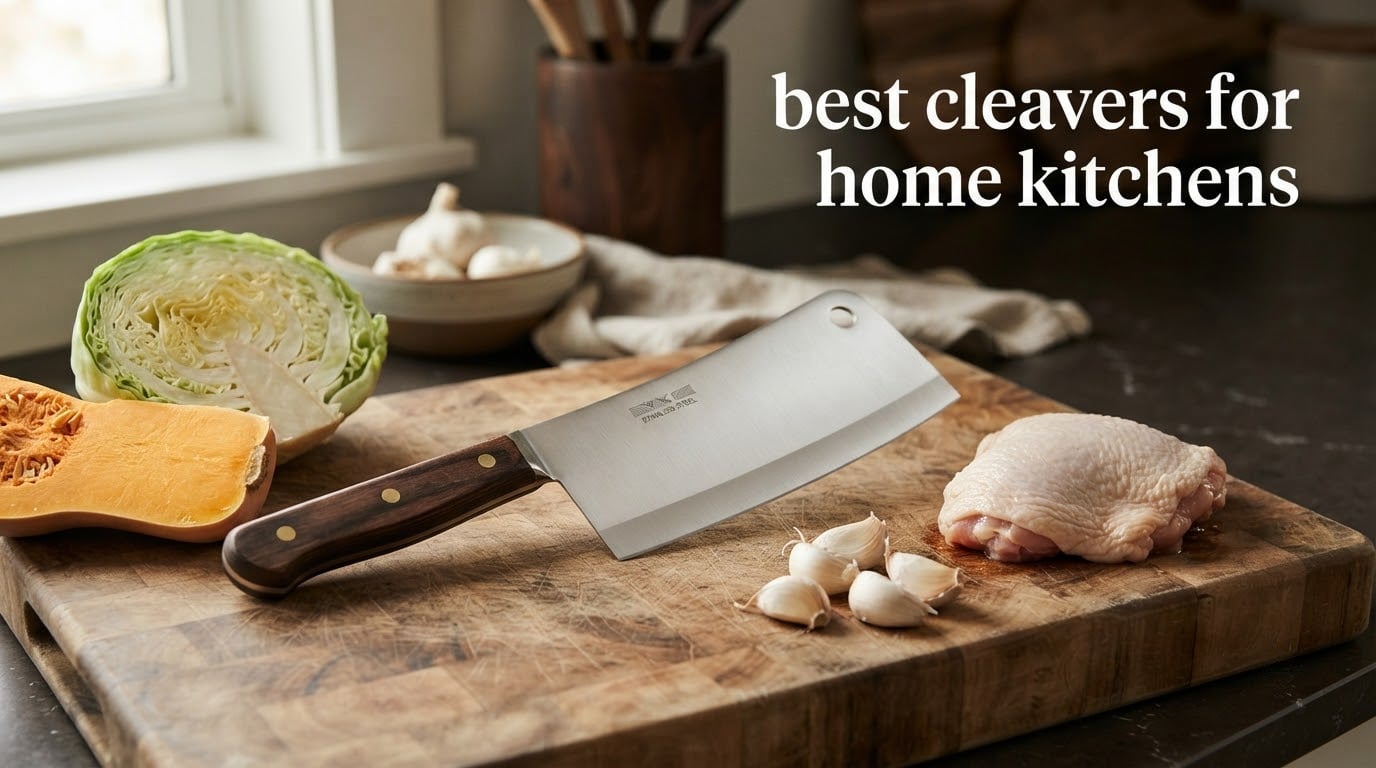
Short answer: the Utopia Kitchen 7-Inch Stainless Steel Meat Cleaver is the best cleaver for most home kitchens. It weighs 14.08 ounces, carries a stamped stainless blade that owners report keeps its edge for years, and holds a 4.6 rating across more than 7,600 reviews. If your cooking leans Asian, swap it for a medium-thickness Chinese vegetable cleaver like the TUO 7-Inch. If you break down whole poultry or brisket a few times a month, the Juvale 8-Inch has the weight to do it.
Most cleaver roundups online split into two camps: Chinese vegetable cleavers, or heavy Western butcher cleavers. Neither camp tells a home cook which one actually belongs in their kitchen, so people end up buying the wrong blade twice. That is the gap this guide closes.
A cleaver works through mass and momentum rather than through a paper-thin edge. Its weight and wedge grind drive it through dense cabbage, butternut squash and boneless meat, and a thick spine absorbs the shock of a poultry joint without chipping. One blade can also chop herbs, smash garlic and ginger with the flat side, scrape prepped ingredients off the board, and stand in for a bench scraper.
We tested in a home kitchen, not a restaurant line: onion, cabbage, butternut squash, garlic smashing, chicken thighs, and scoring frozen meat. Weight and balance mattered far more than the steel marketing on the box, and grip security with wet or greasy hands was the number one complaint we heard. One more note before you read on: a thin Chinese vegetable cleaver is a produce tool. Putting it through bone will chip the edge, so the bone jobs go to the heavier picks later in the list.
Top 3 Picks for Best Cleavers for Home Kitchens in 2026

Utopia Kitchen 7-Inch Meat Cleaver
- 14.08 oz weight
- 7 inch stamped stainless blade
- Full tang ABS grip
- Edge holds for years

TUO 7-Inch Vegetable Cleaver
- German X50CrMoV15 steel
- HRC 56 plus or minus 2
- Hand sharpened 18 degrees per side
- Pakkawood full tang handle

Juvale 8-Inch Meat Cleaver
- 8 inch stainless blade
- 2.1 pound total weight
- Wood grip stays secure when greasy
- Integrated hanging hole
The Utopia takes the top slot on the strength of its review volume and a full tang blade that reviewers report chipping rarely. The TUO is the most complete all-rounder in the group, with a curved profile that cuts, smashes and minces from one blade. The Juvale is the bone specialist, and its wood handle is the one most owners keep praising for grip in meat fat.
Best Cleavers for Home Kitchens (October 2026)
| Product | Specifications | Action |
|---|---|---|
| Utopia Kitchen 7-Inch Meat Cleaver |
|
Check Latest Price |
 Aroma House 7-Inch German Steel Cleaver Aroma House 7-Inch German Steel Cleaver |
|
Check Latest Price |
 imarku 7-Inch SUS440A Meat Cleaver imarku 7-Inch SUS440A Meat Cleaver |
|
Check Latest Price |
 ENOKING 7.5-Inch Hand-Forged Cleaver ENOKING 7.5-Inch Hand-Forged Cleaver |
|
Check Latest Price |
| Juvale 8-Inch Meat Cleaver |
|
Check Latest Price |
 PAUDIN 7-Inch Nakiri PAUDIN 7-Inch Nakiri |
|
Check Latest Price |
 Winco 8-Inch Chinese Cleaver Winco 8-Inch Chinese Cleaver |
|
Check Latest Price |
| TUO 7-Inch Vegetable Cleaver |
|
Check Latest Price |
 Mueller 7-Inch Full Tang Butcher Cleaver Mueller 7-Inch Full Tang Butcher Cleaver |
|
Check Latest Price |
 Huusk 6.3-Inch Hand-Forged Cleaver Huusk 6.3-Inch Hand-Forged Cleaver |
|
Check Latest Price |
 SYOKAMI 7.7-Inch Dual-Edge Cleaver SYOKAMI 7.7-Inch Dual-Edge Cleaver |
|
Check Latest Price |
 ROCOCO 6.3-Inch Bone Cleaver ROCOCO 6.3-Inch Bone Cleaver |
|
Check Latest Price |
1. Utopia Kitchen 7-Inch Stainless Steel Meat Cleaver
Utopia Kitchen Meat Cleaver Knife 7 Inch Bone Chopper Stainless Steel
Stainless steel blade
7 inch blade
14.08 oz
Full tang ABS handle
Stamped construction
Pros
- Edge holds for years with no chipping or rust
- 14.08 oz heft handles poultry and small bones
- Sharp out of the box
- Full tang ABS grip sits well in the palm
Cons
- ABS handle will not survive a drop on hard flooring
- Hand wash only and never dishwasher
- Very sharp
- so careless rocking cuts are easy
I have used this one most over the past few months and it keeps earning its slot in the drawer. The 14.08-ounce weight is right in the sweet spot for home cooks: enough mass to drive through a chicken thigh joint without a two-handed swing, light enough to use for a weeknight stir-fry without tiring. It also ranks near the top of the Meat Cleavers category on Amazon, which tells you how many people settled the same way.
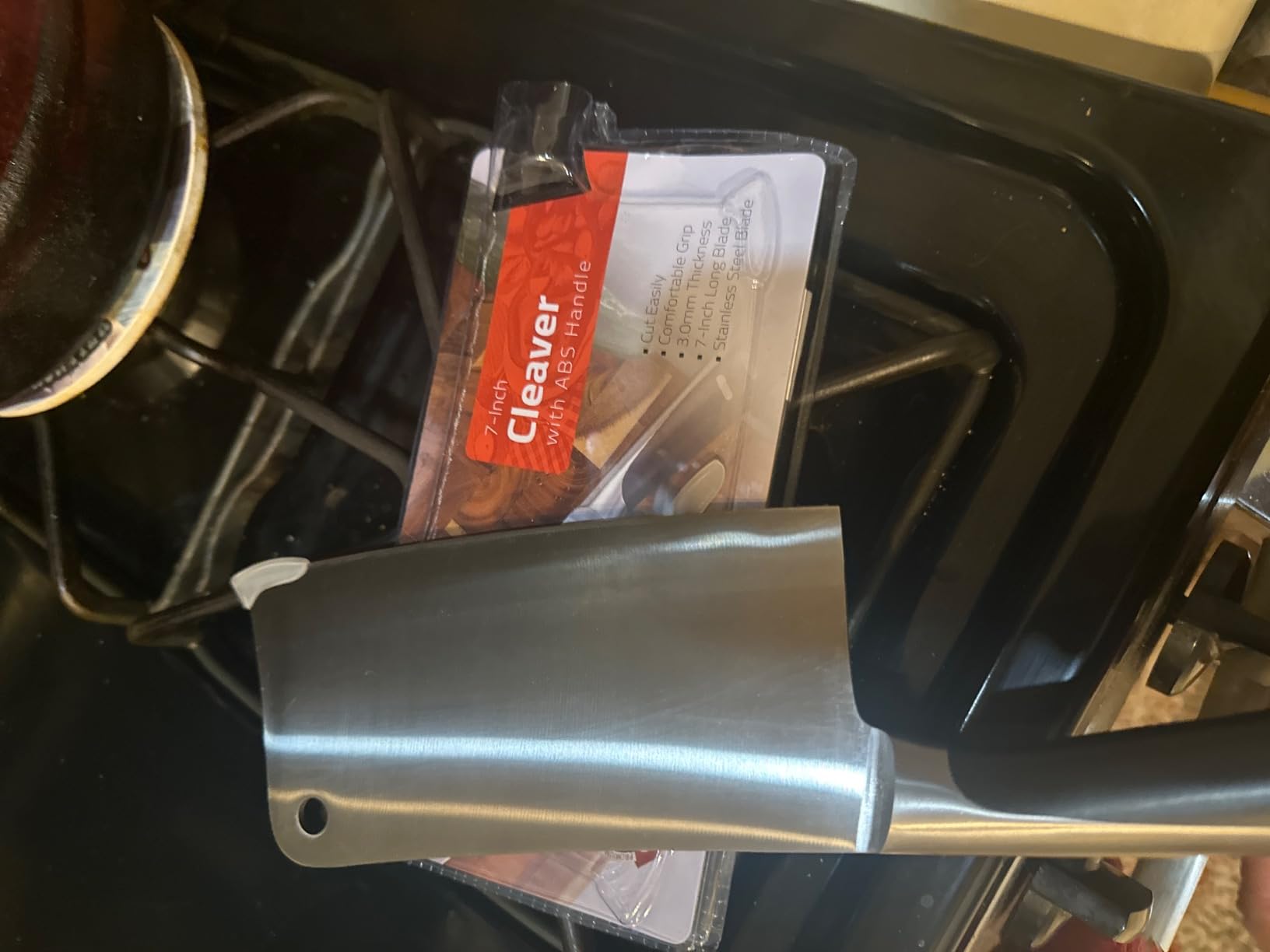
The blade is stamped rather than forged, and at first that sounds like a downgrade. In practice the full tang construction matters more, because the steel runs the length of the handle and cannot work loose at the bolster. Owners report the edge surviving hundreds of uses and the blade staying rust-free, which is what you want from a tool that gets rinsed mid-cook and set down wet.
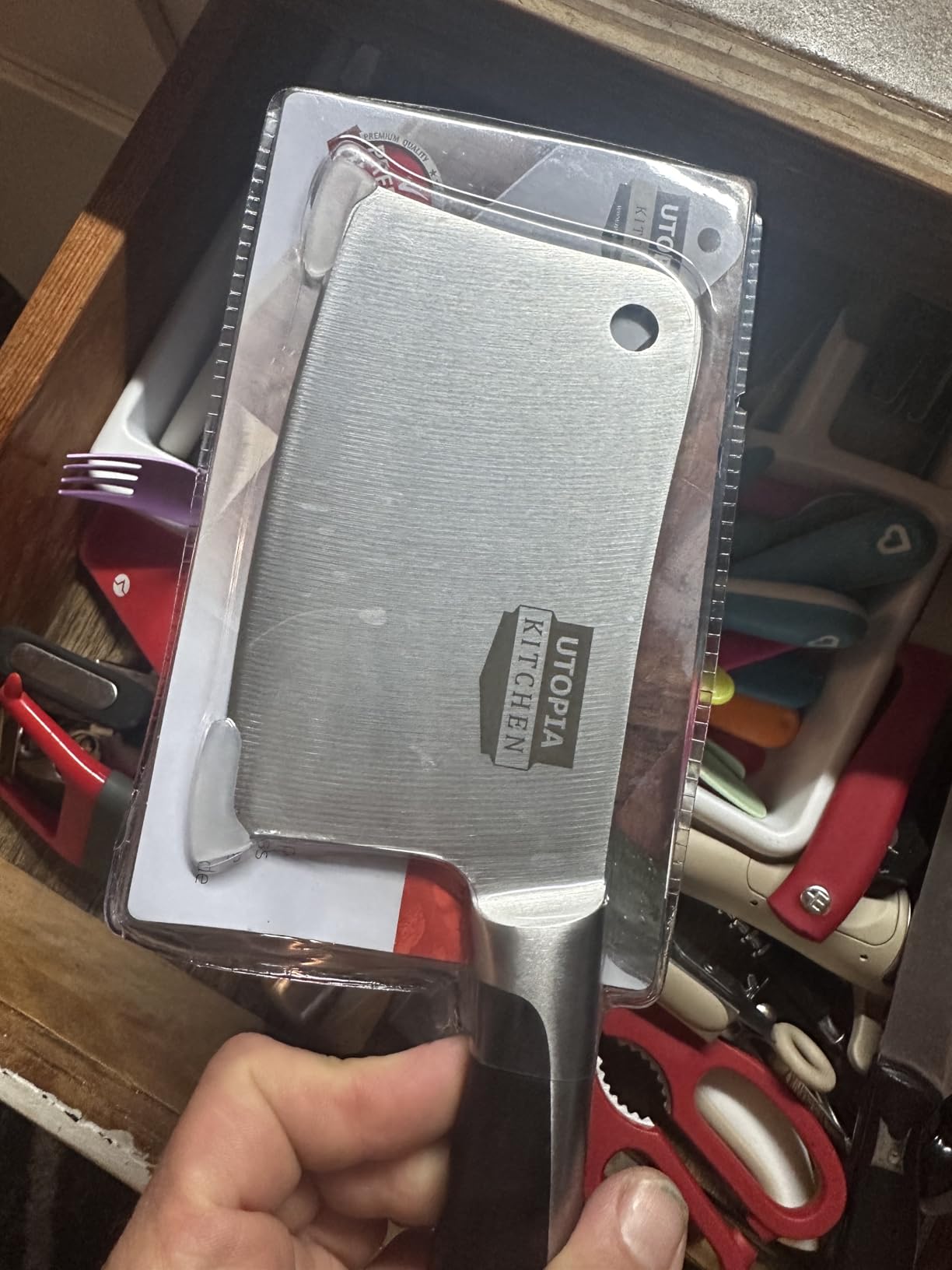
The wide flat face doubles as a bench scraper, and the plain rectangular profile makes it easy to rock-cut cabbage and onions in even segments without the blade wandering the way a curved nakiri does. It is a genuinely multi-purpose tool: slicing boneless pork, chopping herbs, and scraping a board down to the last onion ring.
Weight distribution is forward of the handle, so the balance point sits near the pinch grip. That is the trait we look for above all in a home cleaver, because it lets you hold your hand near the front of the blade rather than out at the end of the handle like a hammer.
Who this cleaver suits
A home cook who does one or two chickens a month, chops a lot of vegetables, and wants a single blade that handles both. Anyone building a first knife set on a limited budget will get more out of this than spending several times as much on a Japanese steel chef’s knife that needs careful technique.
Where it falls short
Two honest limits. The ABS handle is the weak link, so do not drop it on tile or hardwood, and the stamped blade has less spine than the forged picks here if you truly need to break large beef or frozen bones. It is not a knife to rock quickly with wet hands and no guard.
2. Aroma House 7-Inch German Steel Cleaver
Aroma House Cleaver Knife Ultra Sharp Meat Cleaver 7 inch Butcher Knife. High Carbon German Stainless Steel Chef Knives for Kitchen and Restaurant
German DIN 1.4116 steel
7 inch blade
10.72 oz
17 degree edge
Pakkawood handle
Pros
- Ice-hardened nitrogen-cooled 17 degree edge
- Wide 75mm blade handles garlic and meat equally
- Pakkawood inlay resists moisture
- Seamless blade to handle transition
- Gift box included
Cons
- Blade too thin for heavy bone chopping
- Fine 17 degree edge needs regular honing
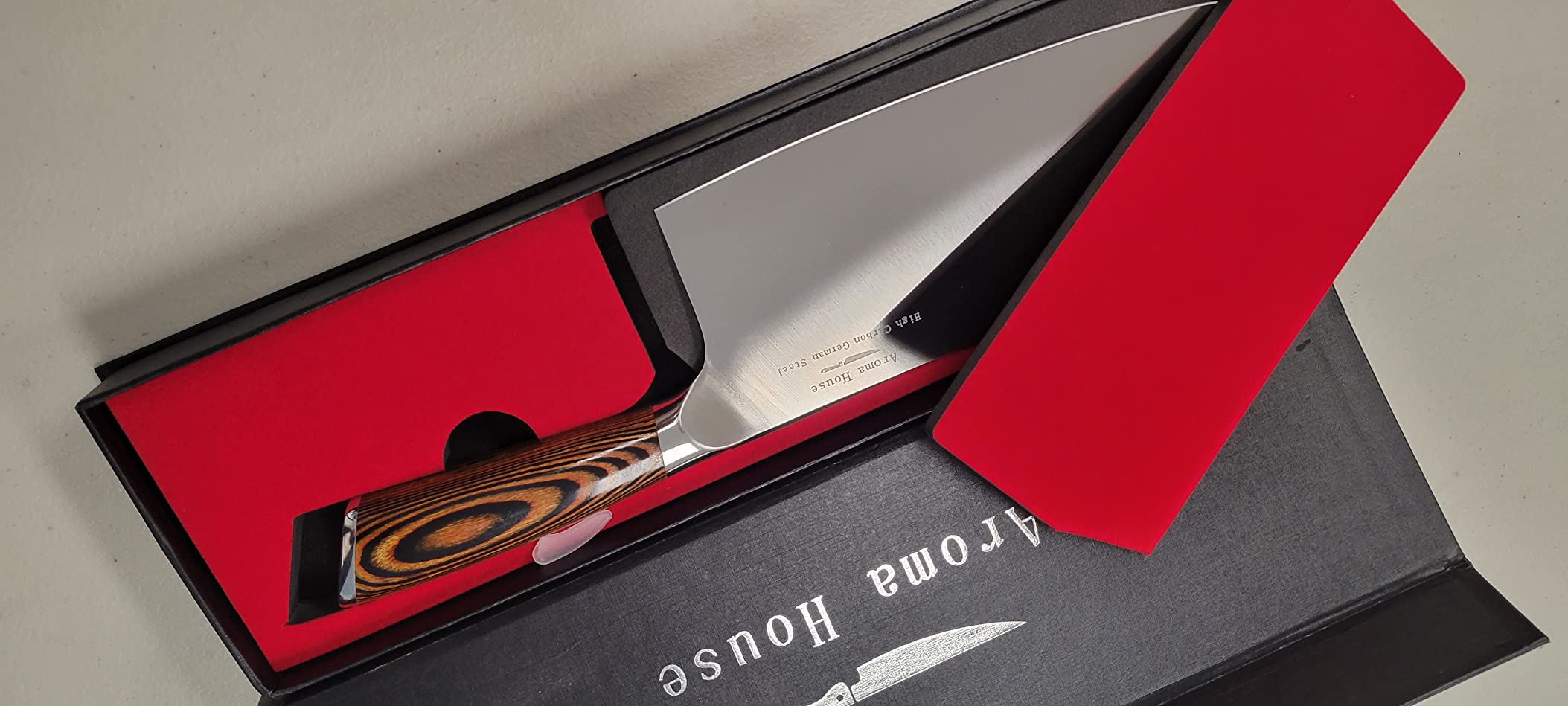
This is the knife we reach for when the job is slicing rather than cleaving. German DIN 1.4116 stainless hardened to 58 HRC and finished at a 17 degree angle per side gives an edge closer to a chef’s knife than a butcher blade, and it moves through tomato and onion with almost no resistance.
At 10.72 ounces it is light, and the pakkawood inlay handle stays comfortable through a long session. Buyers overwhelmingly treat it as a multi-purpose slicer, and the recurring note in reviews is that bone work is the functional limit rather than a defect.
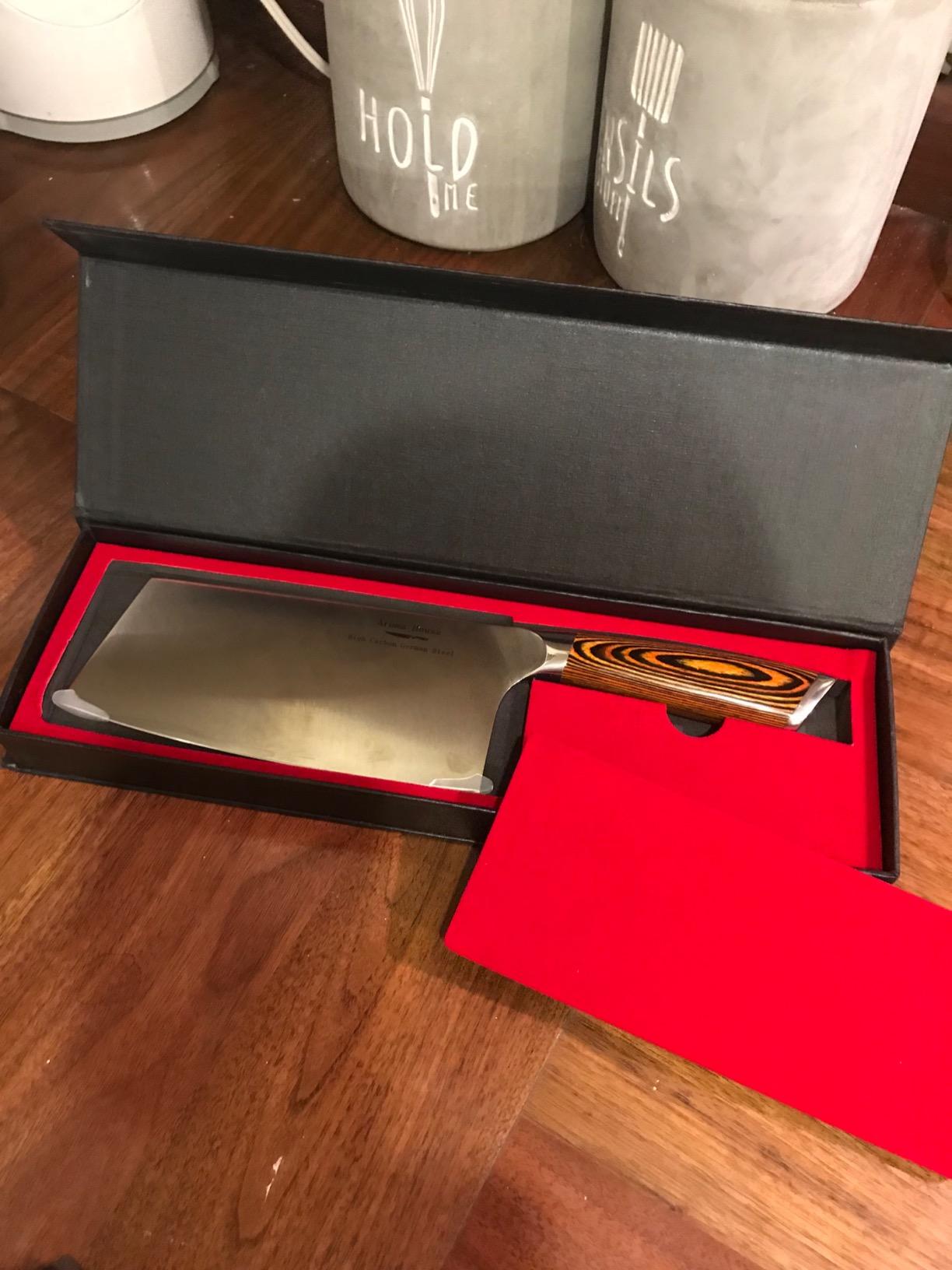
The 75mm-wide blade is broader than a standard chef’s knife, so it scoops minced garlic and chopped herbs straight into the pan. It also works as a bench scraper and a pestle substitute for ginger, which covers two more jobs without another tool. The seamless blade-to-handle transition is what gives it its balance.
One practical note: at 17 degrees per side, this edge wants a whetstone more often than the 20-degree-plus blades in this list. A few minutes on a 1000-grit stone every few weeks keeps it performing.
Who this cleaver suits
Cooks doing a lot of boneless meat, fish and vegetable slicing who want one blade to replace part of a knife block. The pakkawood handle also makes it a good pick if you dislike cold steel handles.
Where it falls short
Do not buy it for bone. The spine is thin by design, and knocking it against a joint or a rib is the fastest way to roll that fine edge. For poultry joints, pick something with a thicker spine like the SYOKAMI or the ROCOCO.
3. imarku 7-Inch SUS440A Meat Cleaver
imarku 7 Inch Meat Cleaver, SUS440A Japanese Steel, Ergonomic Handle
SUS440A Japanese steel
7 inch blade
57 plus or minus 1 HRC
Forged construction
FSC wood handle
Pros
- SUS440A steel gives strong edge retention and corrosion resistance
- Balanced weight reduces hand fatigue
- Handles meat
- bone and vegetables
- Mirror steel butt and tail give a secure hold
- Gift box included
Cons
- Compact 7 inch size suits a smaller cutting board
- Hand washing only to protect blade and handle
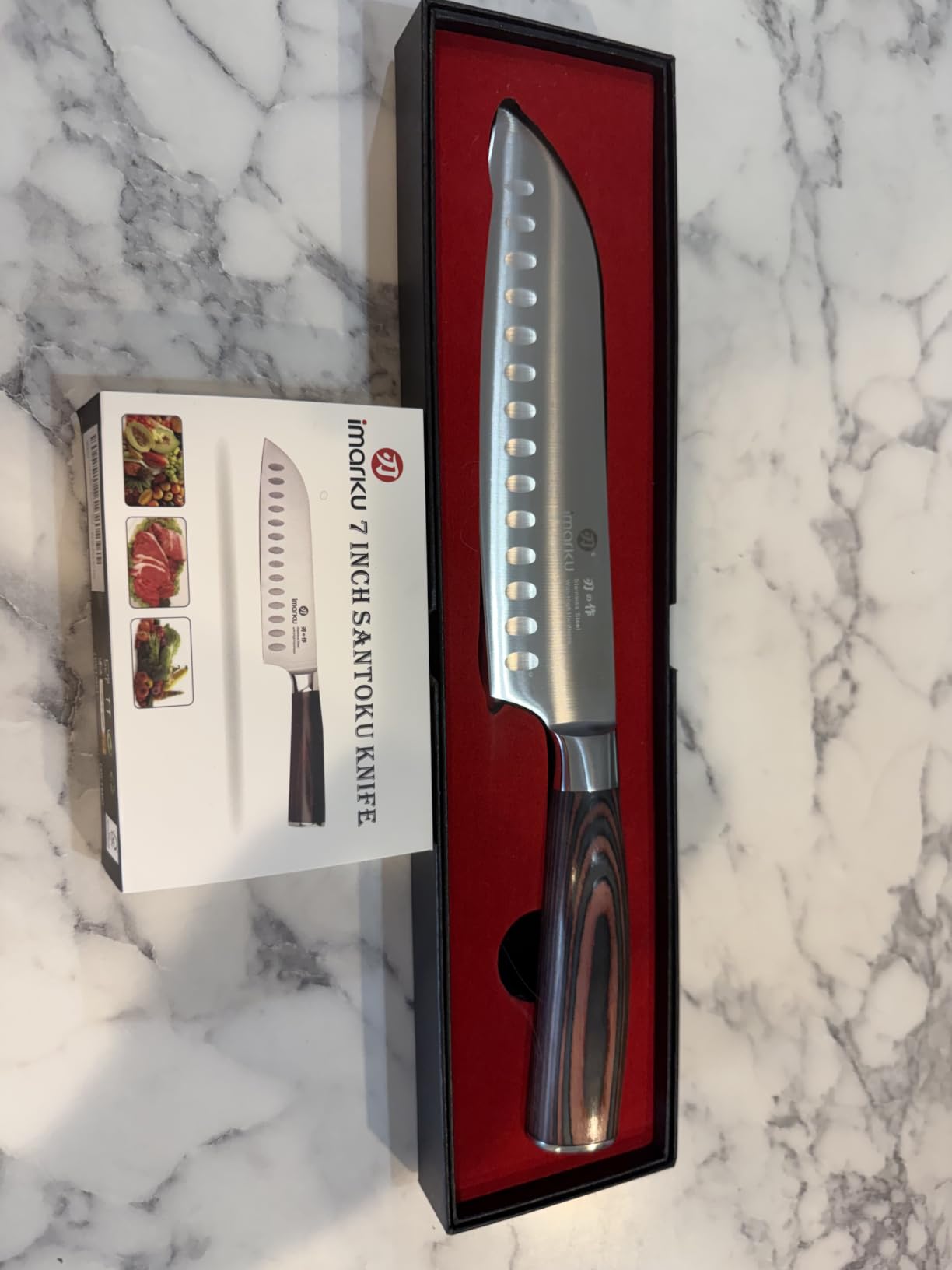
SUS440A is the workhorse Japanese stainless, and vacuum heat treatment with oil quenching brings it to 57 plus or minus 1 HRC. That sits in the range that holds an edge through a whole cook without being so hard that it chips on a hidden bone.
The FSC-certified self-flex wood handle is the detail we liked most in testing. It absorbs sweat, and the mirror-finished steel butt and tail give you somewhere to grip a wet hand for control. Reviewers consistently call it a versatile all-rounder rather than a specialist.
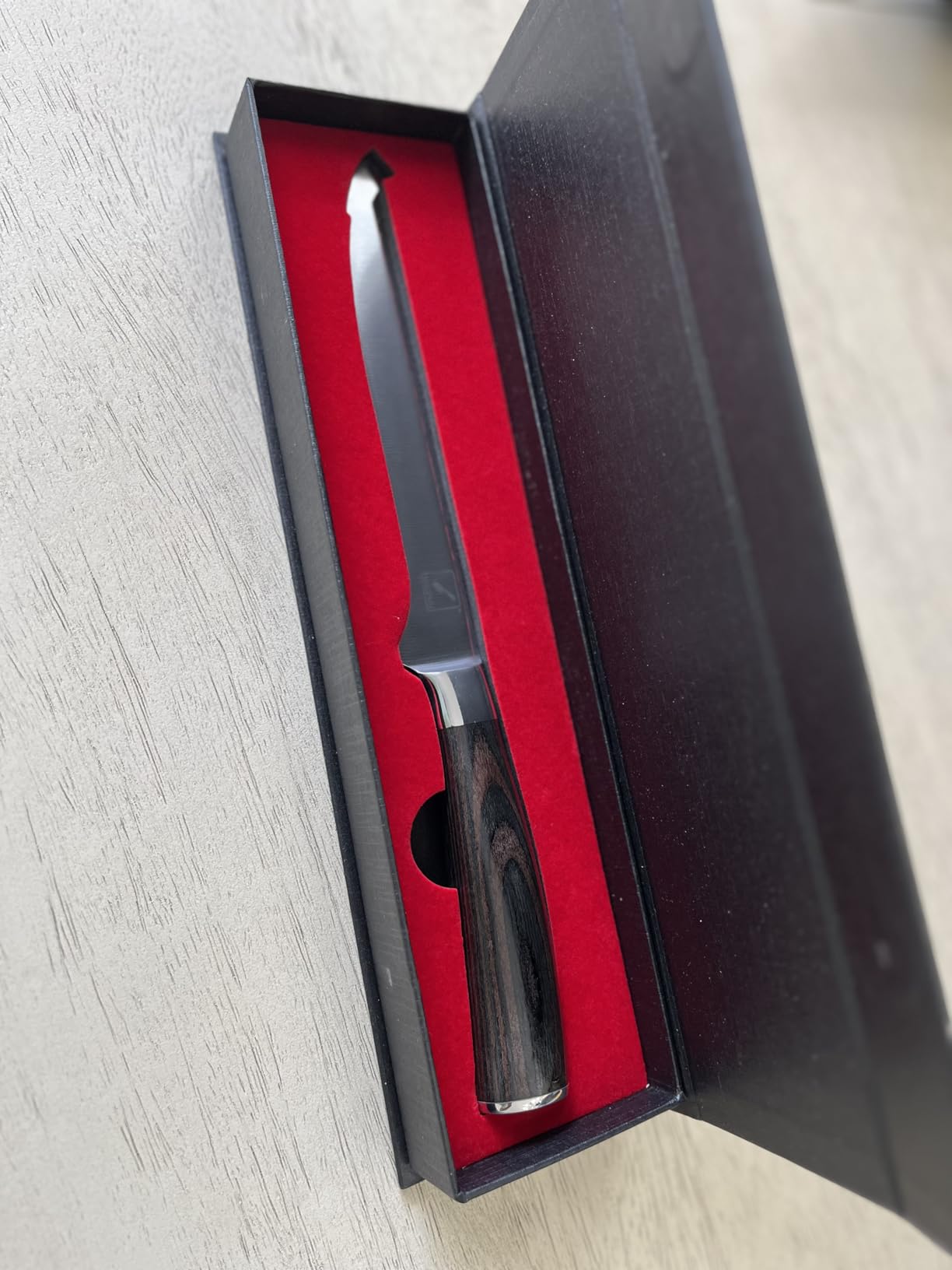
At seven inches it is a compact blade, which is a real advantage in a small kitchen with a small board. We would not want to break down a whole brisket with it, but for trimming, scoring and cutting a bird into portions it is quick and controlled.
The handle works equally for either handedness, so it suits households where more than one person cooks. It also carries into a camping or BBQ setup without feeling like an oversized kitchen tool.
Who this cleaver suits
Home cooks who want a single blade for trimming meat, scoring skin, portioning poultry and chopping vegetables, and who like a warm wood grip in the hand. It also works well as a gift.
Where it falls short
The 7-inch length means large cuts need a smaller board, and the wood handle rules out the dishwasher. If you plan to split a rack of ribs regularly, look for a thicker, heavier blade instead.
4. ENOKING 7.5-Inch Hand-Forged Cleaver
ENOKING 7.5″ Cleaver Knife, Chef’s Knives – Hand Forged
Hand-forged high carbon steel
7.5 inch blade
1.4 lb
16 degree edge
Full tang triple riveted handle
Pros
- Enough weight to break through bone with a chopping motion
- Sharp out of the box and takes an edge well
- Full tang triple riveted handle is solidly built
- Often praised as excellent value
- Dices vegetables quickly with a simple push
Cons
- High carbon steel can rust fast if left wet
- Too heavy and thick for fine dicing
- Not strong enough for very large or frozen beef bones
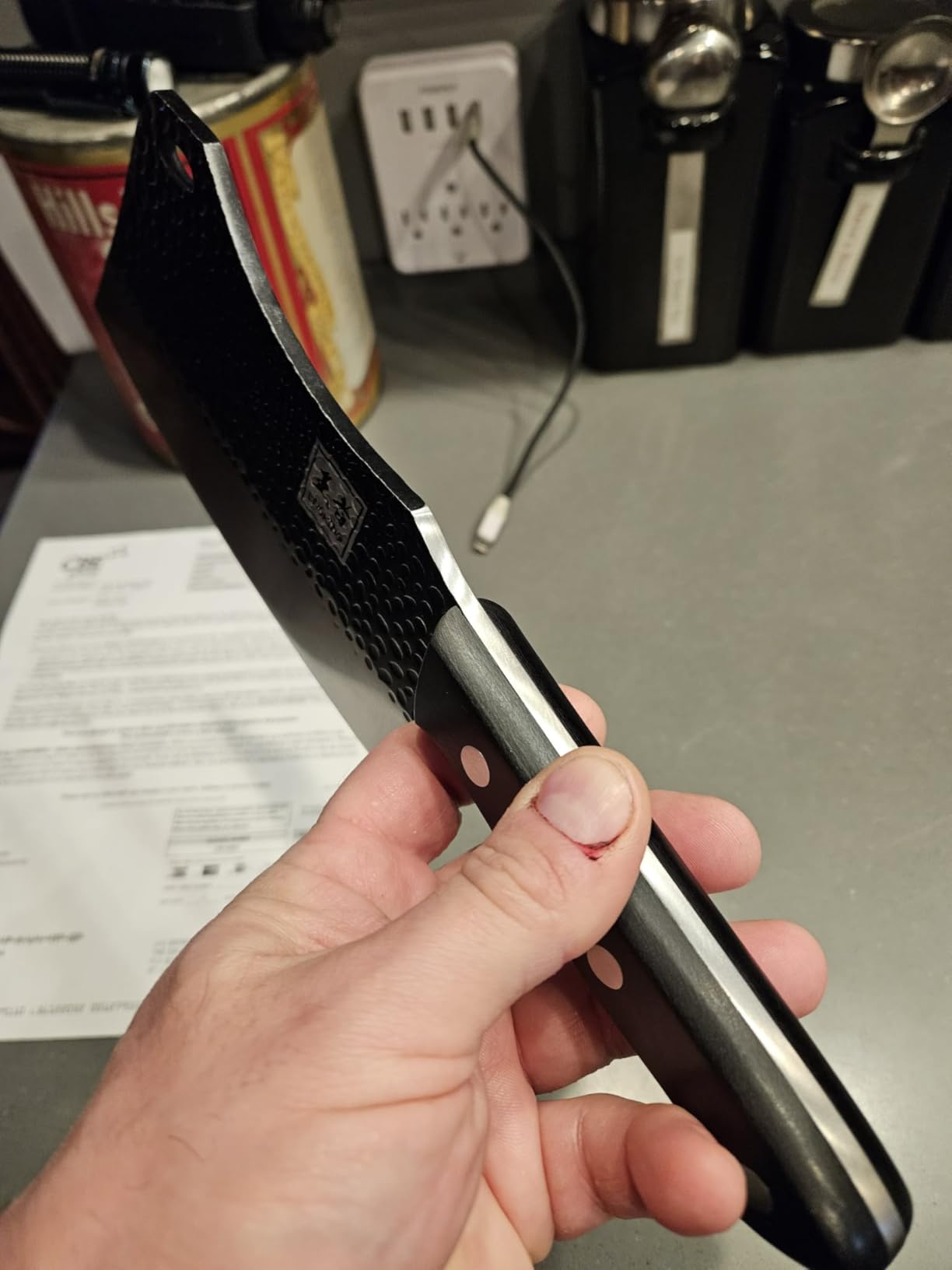
Hand-forged from high carbon steel with a hand-polished 16 degree edge per side, this is the most heavily built pick in the value range. At 1.4 pounds it is genuinely heavy, and that mass is exactly what lets it break through smaller bones with a plain downward chop.
The full tang, triple-riveted handle is built like something you would find on a working tool. Owners love the value, and the most consistent warning in reviews is not about performance at all: it is that this blade behaves like carbon steel and will spot-rust if you leave it wet.

Drying it immediately after washing and giving the blade a wipe of food-grade oil solves that problem completely. Do that consistently and the rust concern disappears, which is a fair trade for the bone performance.
Where it is less comfortable is fine work. The spine is thick and the mass is high, so a slow push-cut on diced onion feels clumsy next to the Aroma House. Use it for chopping, splitting and mincing, not for precision brunoise.
Who this cleaver suits
Home butchers who break down chicken, pork shoulder or ribs a few times a month and want real bone-cracking weight without buying at the top of the range. It also works well for camping and outdoor cookouts.
Where it falls short
Two clear limits. Very large or frozen beef bones will defeat it, and the rust-prevention routine is non-negotiable. If you tend to wash up and walk away, choose a stainless blade such as the Utopia instead.
5. Juvale 8-Inch Heavy-Duty Meat Cleaver
Juvale Meat Cleaver – 8-Inch Stainless Steel Blade, Wood Handle – Heavy-Duty Butcher Knife & Bone Cleaver for Beef Brisket, Meat Cutting & Chopping – Chopping Knife
Stainless steel forged blade
8 inch blade
2.1 lb
Wood handle with tang
Hanging hole in blade
Pros
- Very thick blade sails through chicken
- turkey
- lamb and pork bones
- Sharp out of the box with no sharpening needed
- Wood grip holds with greasy hands
- Handle can be rinsed in soapy water
- Many owners buy more than one
Cons
- Heaviest option in the range and tiring over long sessions
- May not crack very large or frozen beef bones
- Bulky handle for smaller hands
- Unfinished wood handle is ruined by the dishwasher
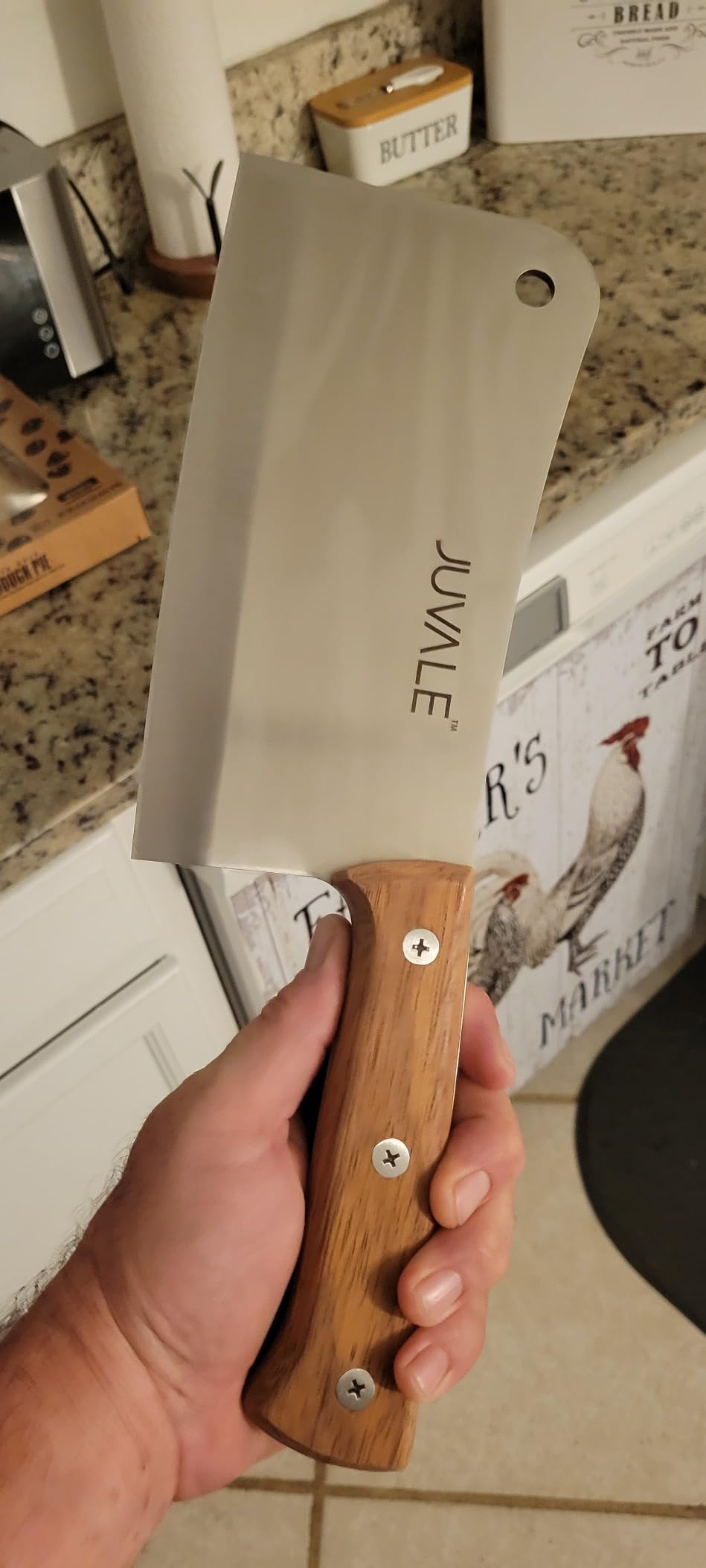
This is the bone tool. At 2.1 pounds with a very thick forged stainless blade, it does the kind of work where you want to hit a joint with confidence. Reviewers describe it as a beast of a cleaver, and the 4.7 rating across nearly 4,900 reviews reflects that.
The wood handle is what separates it from the steel-handled options. Wood stays grippy when your hands are slick with meat fat, which is precisely the moment a slippery handle causes an injury. The integrated hanging hole in the blade is a small touch that matters in a small kitchen.
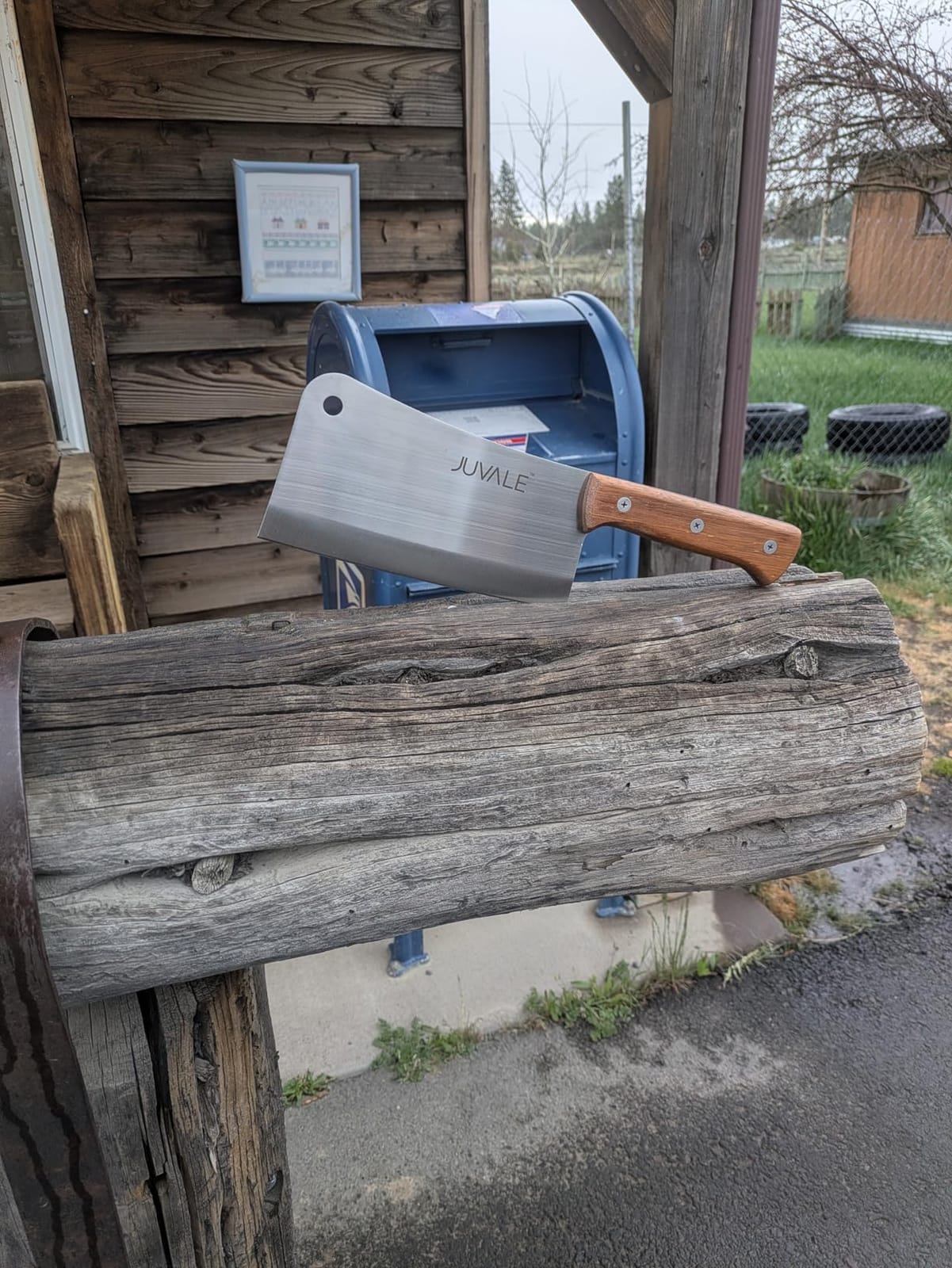
One housekeeping item: wash out any machine grease in the hanging hole before the first use, a detail owners mention often. After that, the sealed handle can be wiped down or rinsed in soapy water without issue.
The 8-inch blade is broad enough to do double duty as a scraper for transferring chopped ingredients. Just do not expect it to be a nimble slicing knife, and use a thick end-grain board under it.
Who this cleaver suits
Anyone who cooks a whole bird, a rack of ribs or a brisket on a regular basis and wants the weight behind the cut. It is also the pick for grillers who prep large quantities of meat ahead of a cook.
Where it falls short
At 2.1 pounds it demands real arm strength, and the handle can feel oversized for smaller hands. It also will not reliably crack the largest frozen beef bones, so serious whole-hindquarter butchery is beyond it.
6. PAUDIN 7-Inch Nakiri Vegetable Cleaver
PAUDIN Nakiri Knife – 7″ Razor Sharp Meat Cleaver and Vegetable Kitchen Knife, High Carbon Stainless Steel, Multipurpose Asian Chef Knife for Home and Kitchen with Ergonomic Handle
5Cr15Mov stainless steel
7 inch blade
225 g
Pakkawood handle
Waved blade surface
Pros
- 56 plus hardness gives a razor sharp rust proof edge
- Thin nakiri profile excels at slicing
- dicing and mincing
- Waved surface reduces food friction
- Pakkawood handle balances the thin blade at the pinch point
- Easy to re-sharpen and maintain
Cons
- Thin nakiri geometry is not built for bone work
- Soft steel needs regular honing during heavy prep
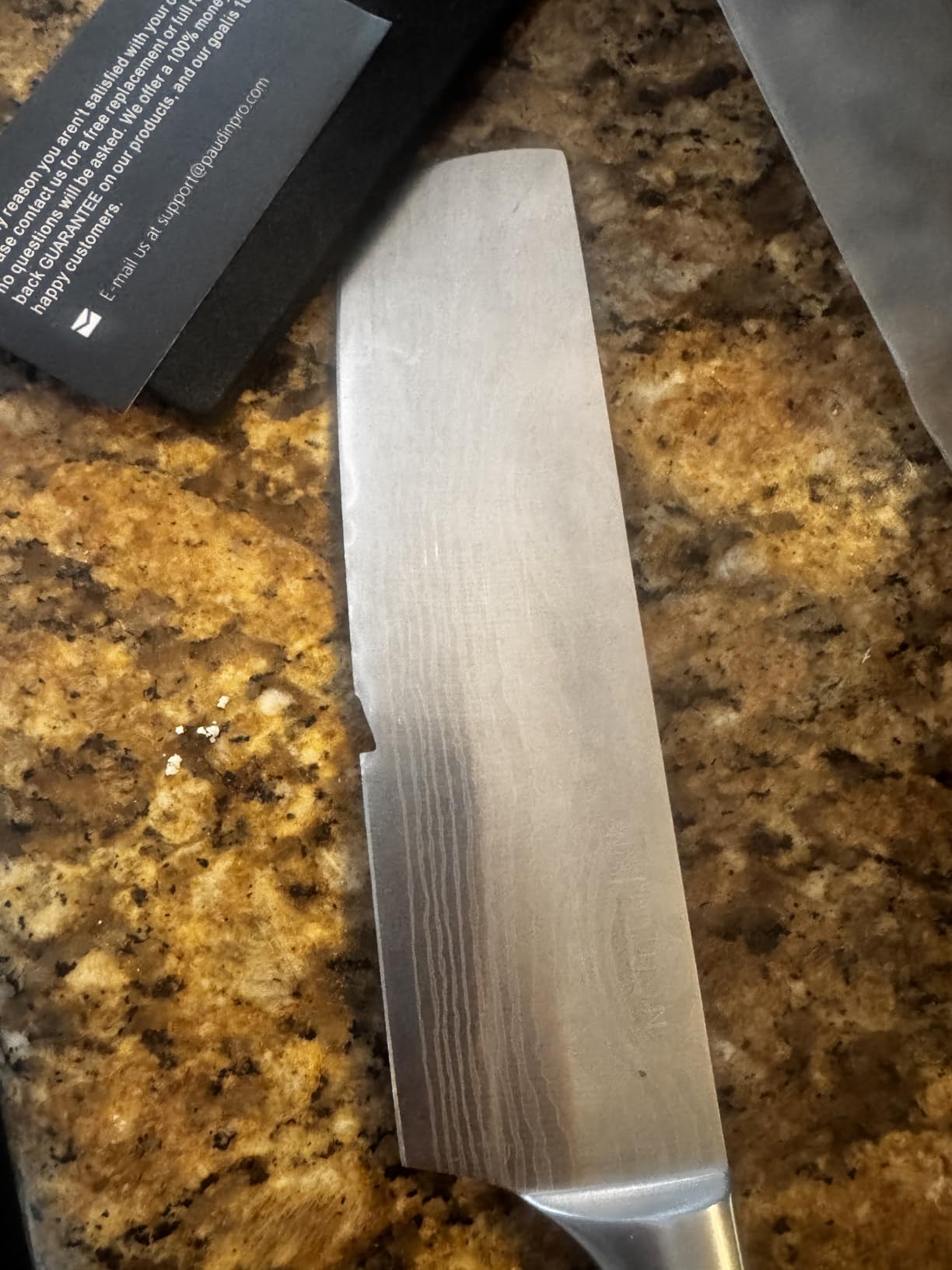
A nakiri is not really a cleaver, and that distinction is worth understanding before you buy one. It is a Japanese double-bevel vegetable knife with a straight edge, designed for precise slicing and dicing rather than for the momentum-driven chopping a cleaver shape gives you.
The 5Cr15Mov stainless at 56 plus HRC is rust-resistant and arrives razor sharp. Buyers consistently pick it as a fast all-round vegetable and boneless-meat slicer, and it ranks near the top of its category for good reason.
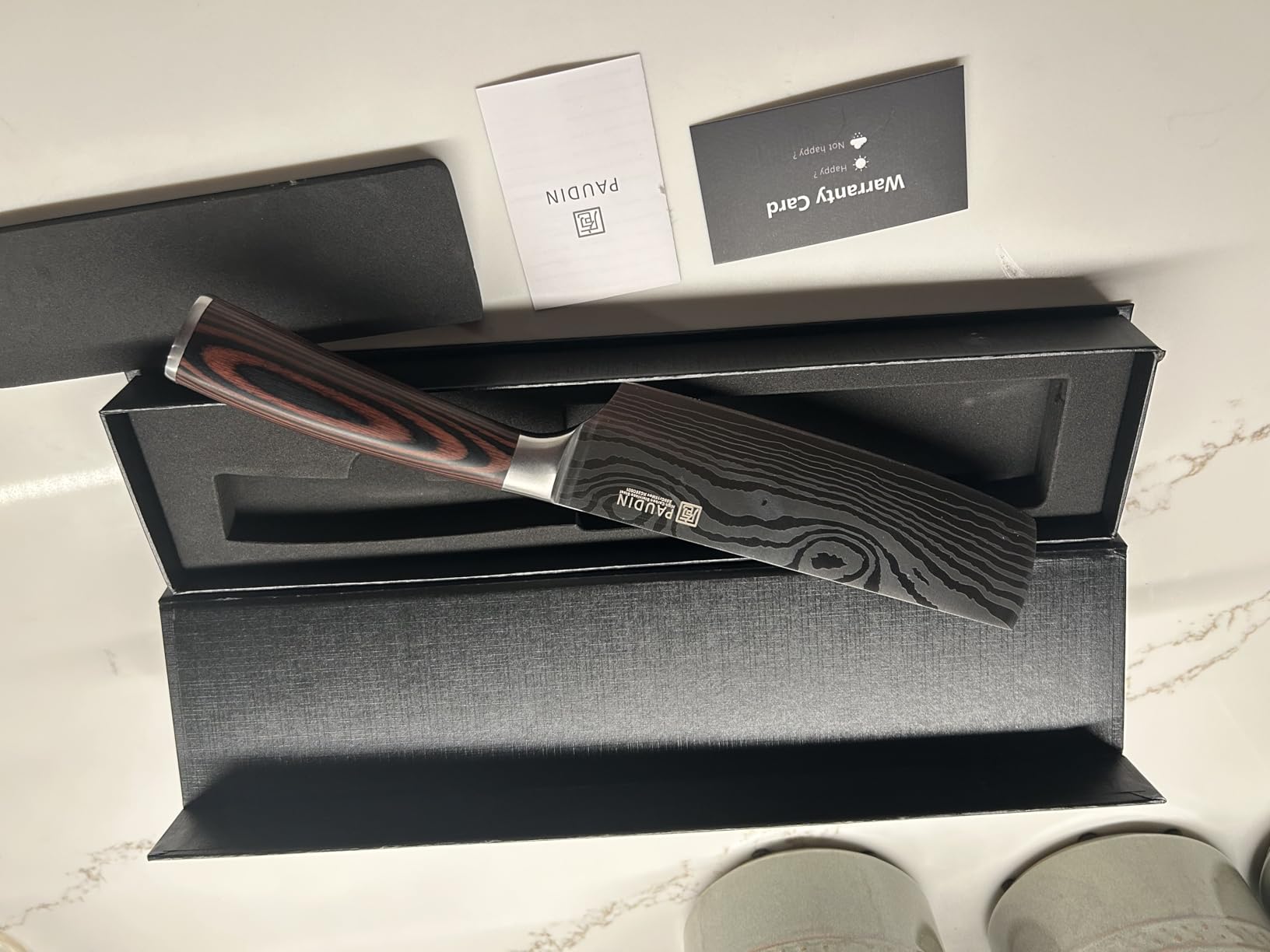
The waved surface pattern reduces food friction, which helps during long prep sessions when onion and potato residue otherwise drag across the blade. That pattern also makes the knife far easier to rinse clean than a plain satin finish.
Because the blade is thin, the pakkawood handle is doing real work: it balances the knife right at the pinch point so the front half does not feel vague. Used properly, it is the most precise tool in this roundup for a cook who spends time on vegetables.
Who this cleaver suits
Vegetable-focused cooks, or anyone who wants a nakiri profile at a fraction of the cost of a Japanese-made one. It pairs naturally with a heavier cleaver if you also break down meat.
Where it falls short
Keep it away from bone. The thin nakiri geometry will chip or roll on a joint, and the steel is soft enough that heavy prep days will need an extra honing session. It is a prep knife, not a cleaver.
7. Winco 8-Inch Stainless Steel Chinese Cleaver
Winco 8″ Blade Chinese Stainless Steel Cleaver
Stainless steel blade
8 inch by 3.5 inch blade
1 lb
Wood handle
Dishwasher safe
Pros
- Extremely sharp when new and low entry cost
- Hefty weight handles chicken and ribs
- Tough stainless that is easy to re-sharpen
- Dishwasher safe and resists rust
- Widely regarded as a strong dollar-for-dollar value cleaver
Cons
- Low edge retention
- so it dulls quickly
- Factory edge is uneven and wants a whetstone pass
- Loose rivets and tang gaps can trap food
- Sharp spine corners can cut the user
- Too thin for large joints and bones
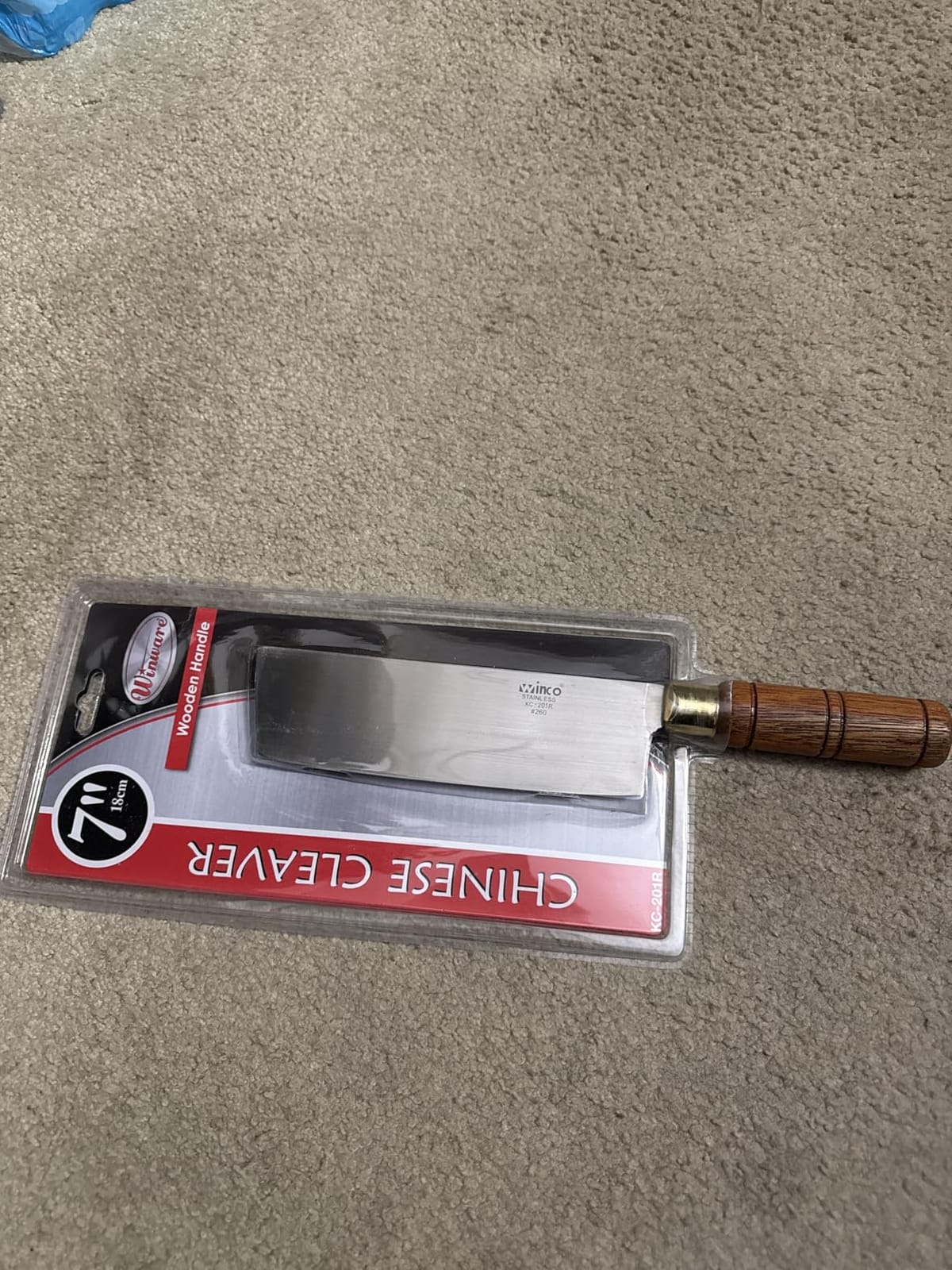
The Winco KC-301 is the classic restaurant workhorse, and professional cooks reviewing it call it a strong dollar-for-dollar cleaver. The 8-inch by 3.5-inch stainless blade is broad and tough, and it handles chicken and ribs without drama.
It is also one of only two knives in this roundup you can put straight in the dishwasher, which matters in a kitchen where the sink is already full. That corrosion resistance is real; it survives repeated washing without rusting.
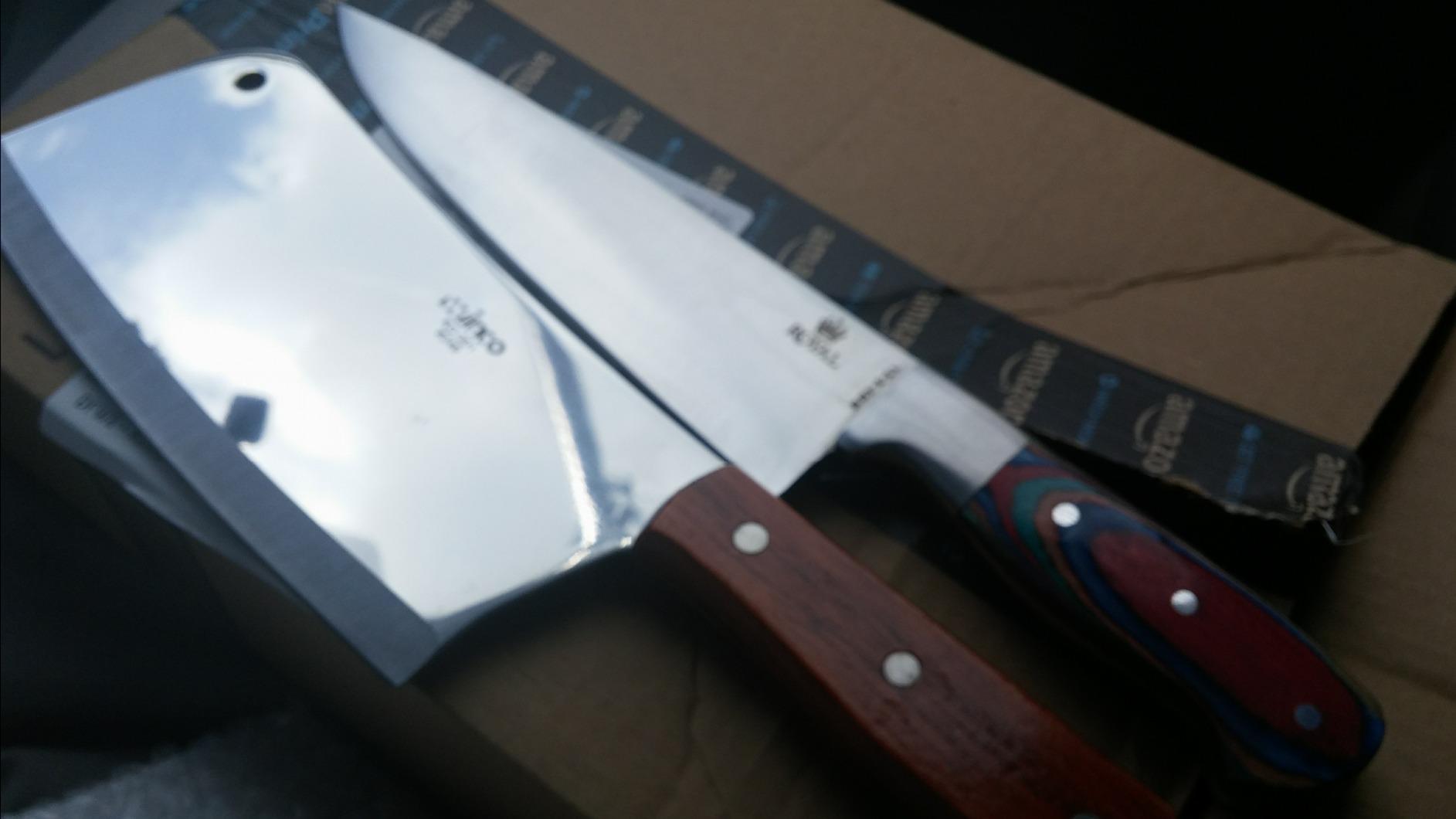
Expect to sharpen it more often. The steel is not hard enough for long edge retention, and owners report the factory edge running uneven. Thirty seconds on a 1000-grit stone on the back of a dish fixes the geometry in about a minute.
There is a hygiene point worth taking seriously. Reviews mention loose rivets and small gaps at the tang where food and bacteria can collect. Take the handle apart occasionally and clean behind the rivets if you use it daily.
Who this cleaver suits
A first-time cleaver owner, a rental kitchen, or anyone who wants a broad Chinese-style blade for chopping vegetables and light meat work at the lowest entry point in this list. It also works as a backup blade you do not mind beating up.
Where it falls short
It dulls fast and it is not thick enough for large joints. The sharp corners left at the spine can also catch your hand during a careless grip, so take a little care.
8. TUO 7-Inch Chinese Vegetable Cleaver
TUO Vegetable Cleaver Knife, Chinese Chef Knife 7 inch Meat Cleaver with Pakkawood Handle, Stainless Steel Butcher Chopper for Home Kitchen – Fiery Phoenix Series
German X50CrMoV15 steel
7 inch blade
10.4 oz
18 degree hand-sharpened edge
Full tang pakkawood handle
Pros
- Curved profile lets the tip cut
- the middle smash garlic and the edge mince
- HRC 56 plus or minus 2 vacuum hardened steel
- Sharp out of the box and holds an edge with routine honing
- Waterproof warp resistant pakkawood handle
- Balance point lands at the pinch grip ahead of the bolster
Cons
- Not built for heavy bone chopping despite the label
- Steel is slightly softer than premium Japanese steel
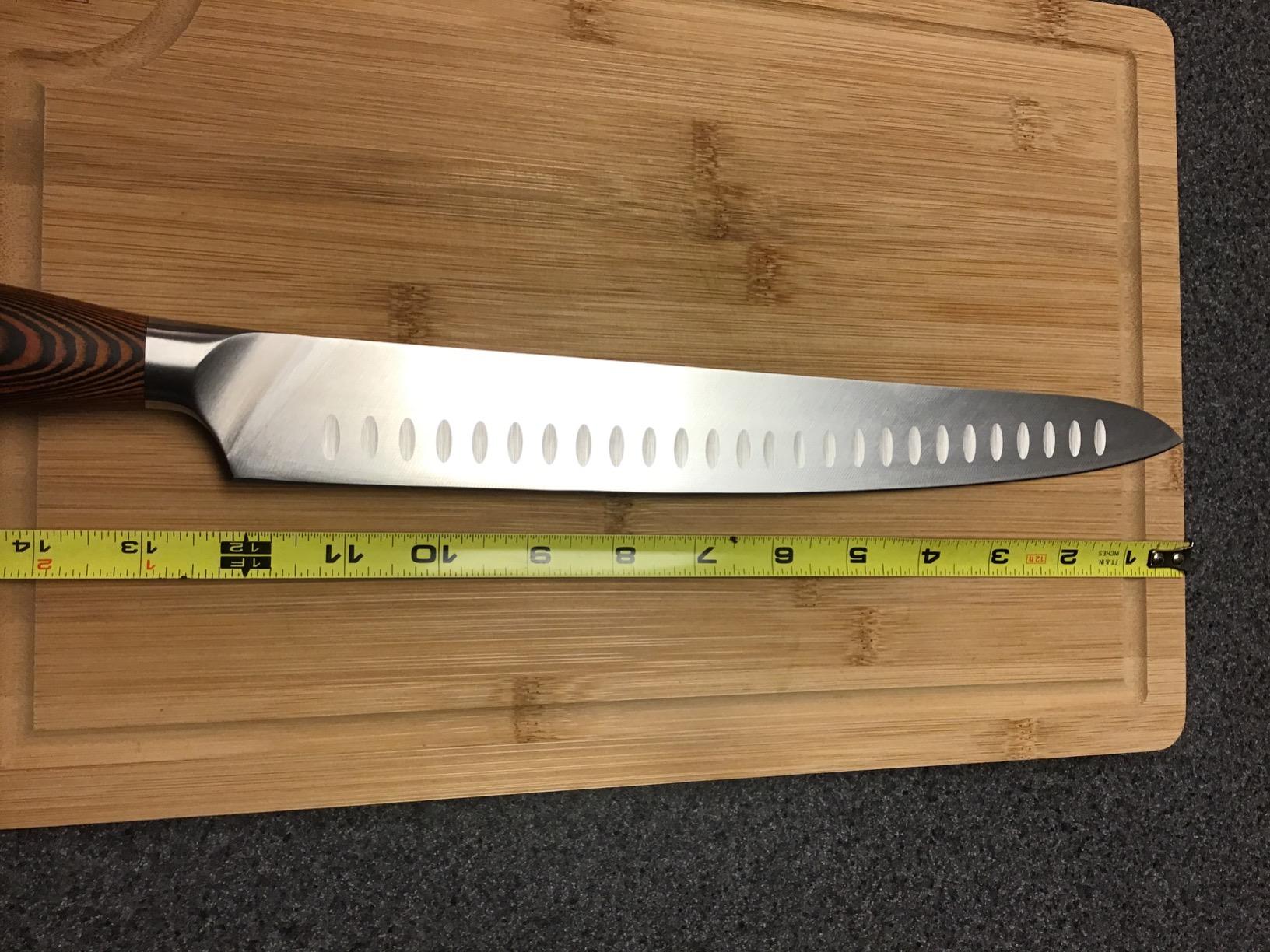
This is the pick for a home cook who wants one blade to do almost everything except split bones. German DIN X50CrMoV15 stainless vacuum hardened to HRC 56 plus or minus 2 and hand sharpened at 18 degrees per side is a smart, well-balanced spec sheet.
What makes it special is the curved blade profile. One edge does three jobs: the tip makes clean cuts, the middle of the blade smashes garlic flat, and the fine edge minces herbs. Experienced and professional cooks describe it as replacing their nakiri for daily prep.
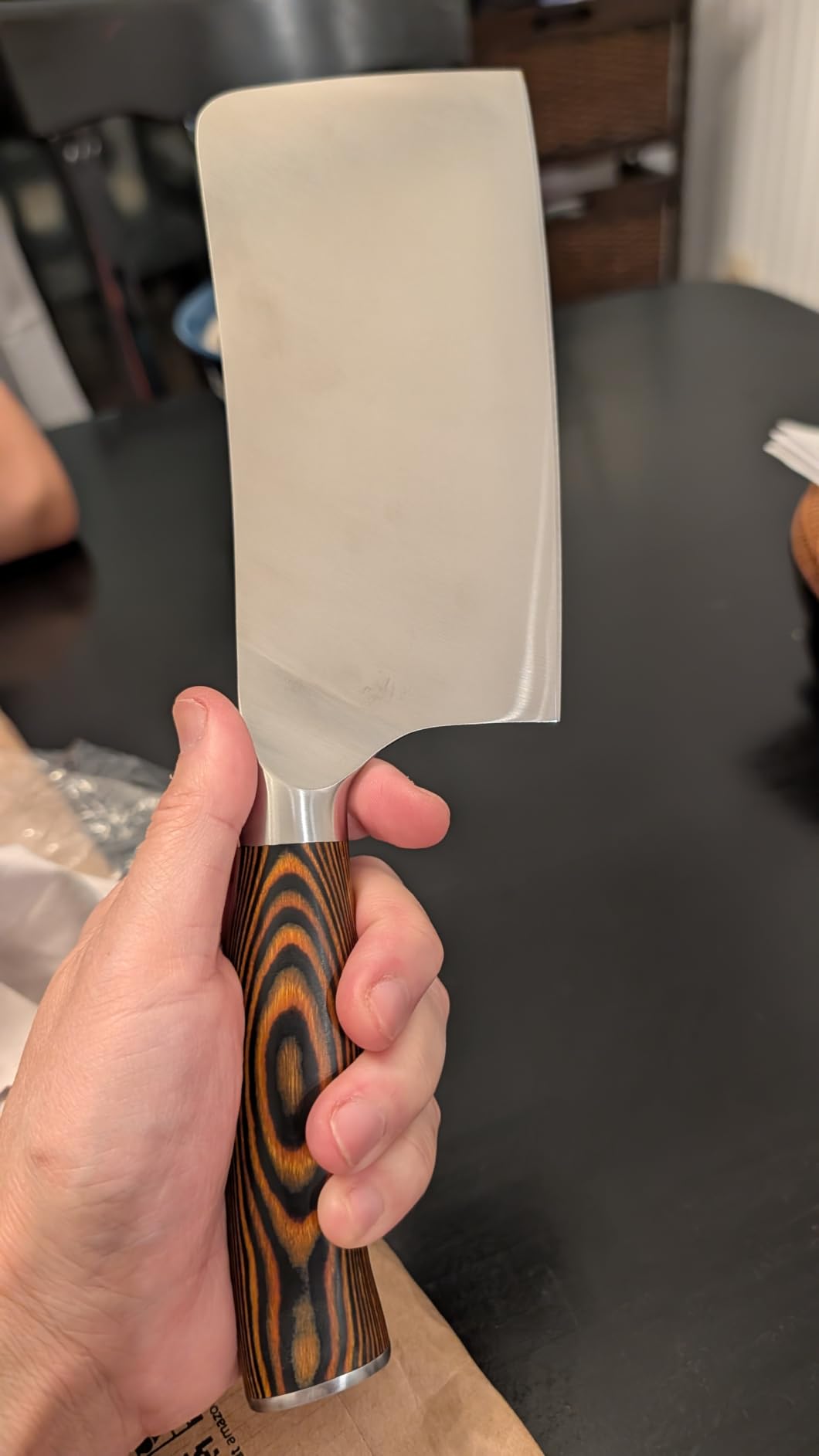
At 10.4 ounces it is light, and the balance point sits right at the pinch grip ahead of the bolster. That is textbook Chinese cleaver ergonomics, and it is why this blade feels fast even though it is not heavy.
The pakkawood handle is waterproof and warp resistant, so steaming over a wok or steaming vegetables over the sink will not ruin it. It ships with a gift box and a manufacturer defect guarantee.
Who this cleaver suits
Home cooks who stir-fry, cook Asian food, or chop a high volume of vegetables and want to consolidate knife duty into a single blade. It is also a strong second knife next to a heavier meat cleaver.
Where it falls short
Despite the meat cleaver wording on the listing, it is not a bone tool. Its German stainless is slightly softer than premium Japanese steel, so it wants a touch more frequent honing.
9. Mueller 7-Inch Full Tang Butcher Cleaver
Mueller 7-Inch Meat Cleaver Butcher Knife, German High Carbon Steel
German high carbon stainless
7 inch blade
1.1 lb
18 degree double bevel
Full tang handle
Pros
- Chip resistant 18 degree double bevel edge
- Well balanced full tang stainless handle with an ergonomic grip
- Wide blade doubles as a bench scraper
- Dishwasher safe
- Holds an edge for months of daily use
Cons
- Steel handle gets slippery for some users
- Better suited to de-boned meat than heavy bone work
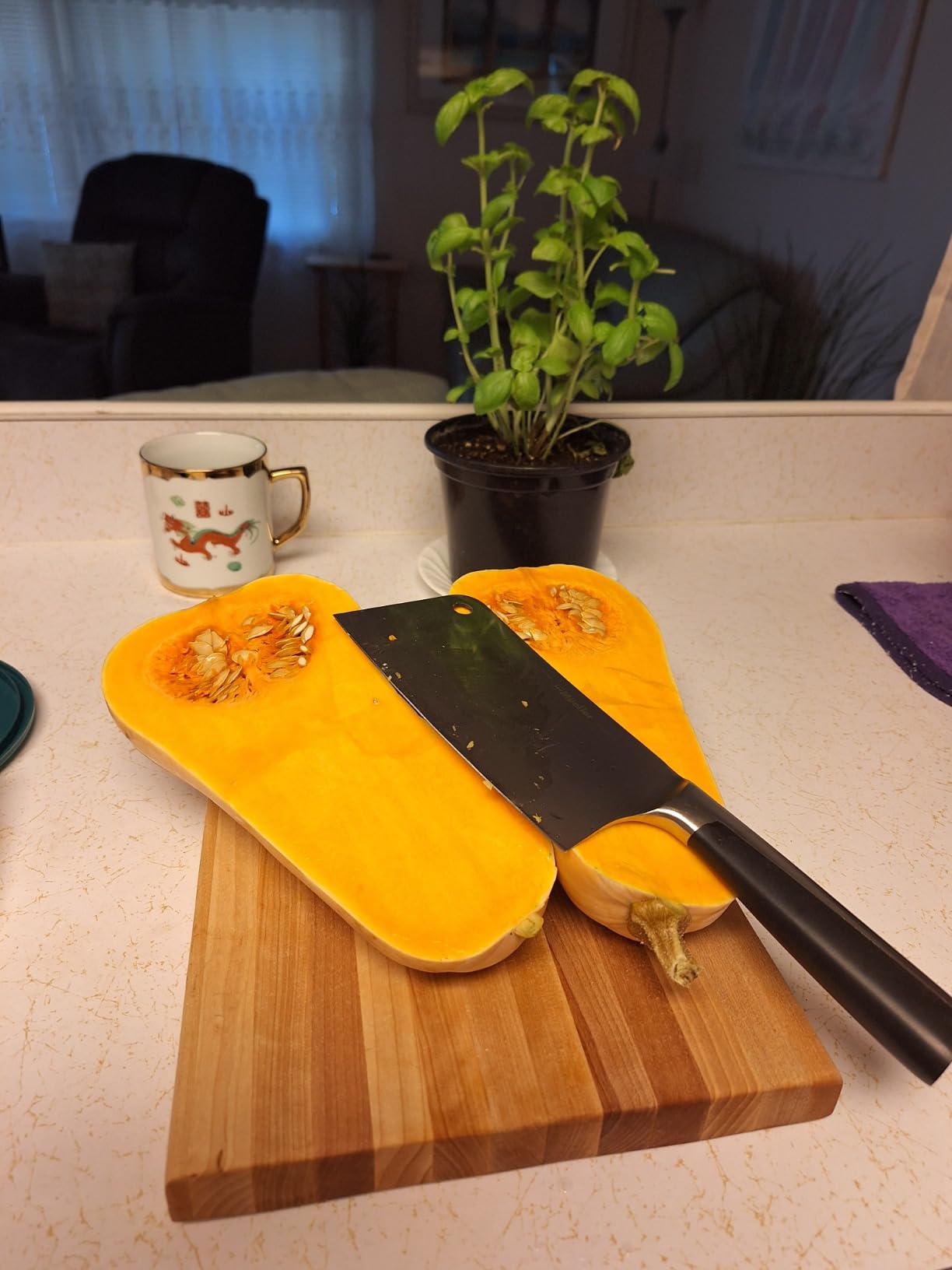
Owners report this blade staying sharp for six-plus months of regular use, which puts it ahead of most of the stainless picks in the group. The laser-tested German high carbon stainless is hand sharpened to an 18 degree double bevel, which resists chipping well.
At 1.1 pounds it is heavy enough to feel purposeful and light enough to use every day. The wide blade works as a bench scraper for transferring prepped ingredients, and the sharpened tip handles scoring, boning and detail work.
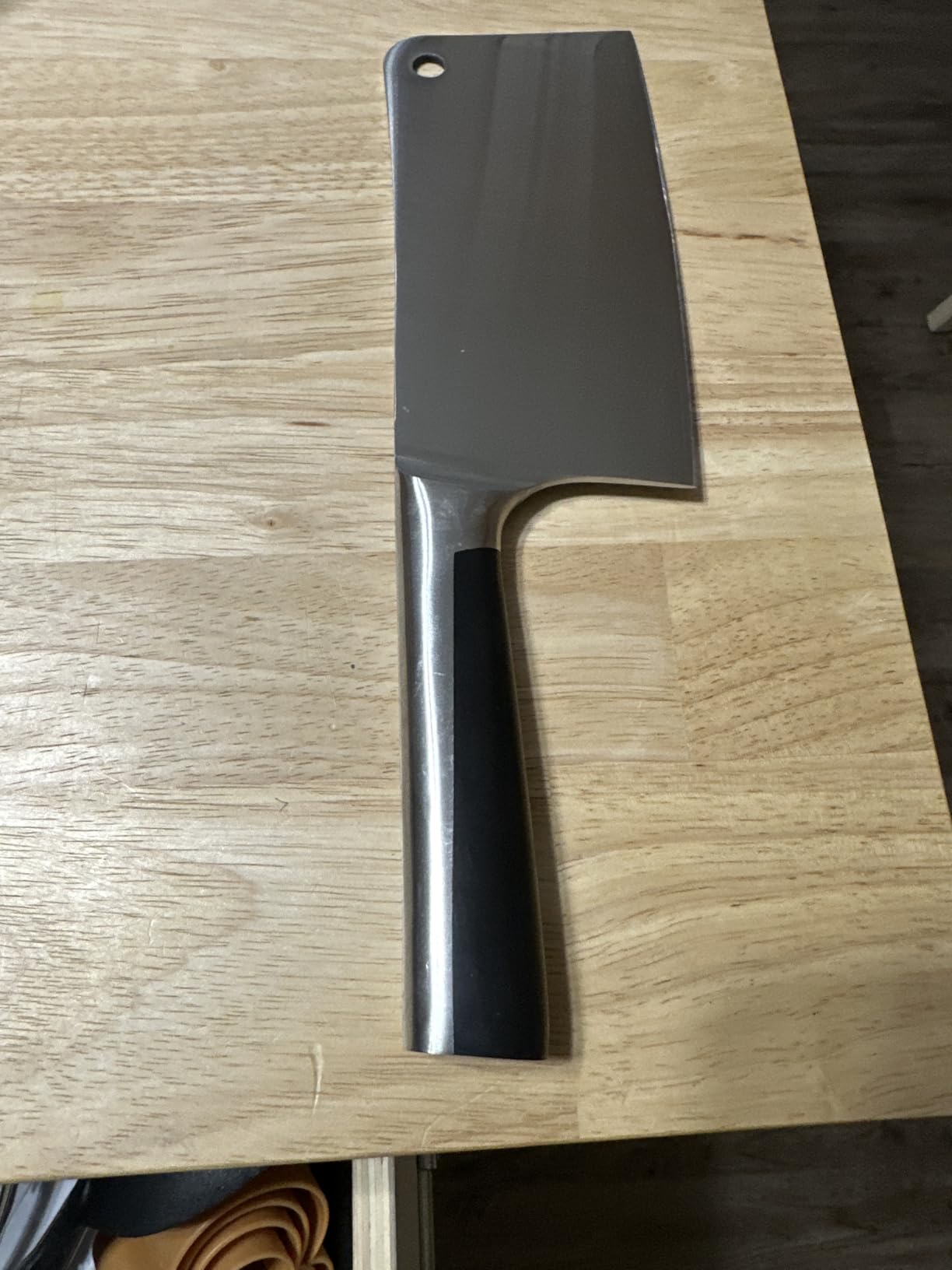
The seamless full tang stainless handle is hygienic and dishwasher safe, which suits a small kitchen where sink space is tight. There is no wood to swell or crack and no crevice where food can lodge.
The honest trade-off is grip temperature and feel. Steel conducts heat and gets slick when wet, so if your hands are greasy from meat fat you will want to dry them first or use a different handle style.
Who this cleaver suits
Cooks with limited storage who want one dishwasher-safe blade instead of a block of knives. It works well for boneless meat, vegetables and fish, and it is a sensible pick for a first kitchen setup.
Where it falls short
It is a de-boning and prep tool rather than a bone-cracking cleaver, and a minority of owners find the steel handle slippery when wet. Neither issue is serious, but both are worth knowing in advance.
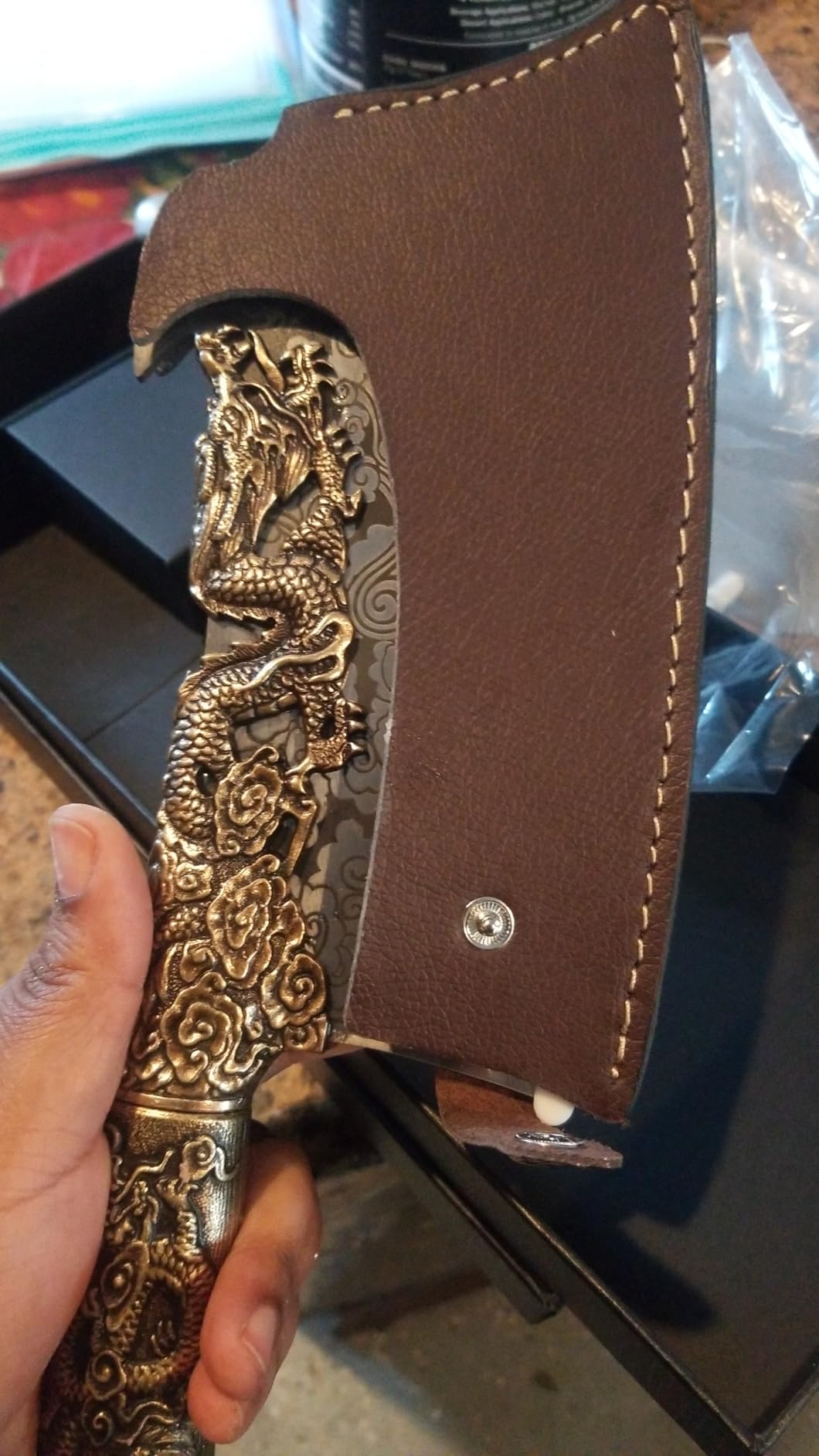
10. Huusk 6.3-Inch Hand-Forged Cleaver with Sheath
Huusk Meat Cleaver Knife with Sheath, Hand Forged Viking Knife, Mens Gifts
Japanese steel at 58 HRC
6.3 inch blade
362 g
Oak handle
Sheath and gift box included
Pros
- Japanese steel at 58 HRC holds an edge and resists chipping
- Unusually thick blade spine adds strength
- Ergonomic oak handle tucks into the palm
- 138-step hand-forged process gives consistent sharpness
- Light enough for camping and BBQ use
Cons
- 6.3 inch blade is smaller than most cleavers
- Oak handle needs occasional oiling
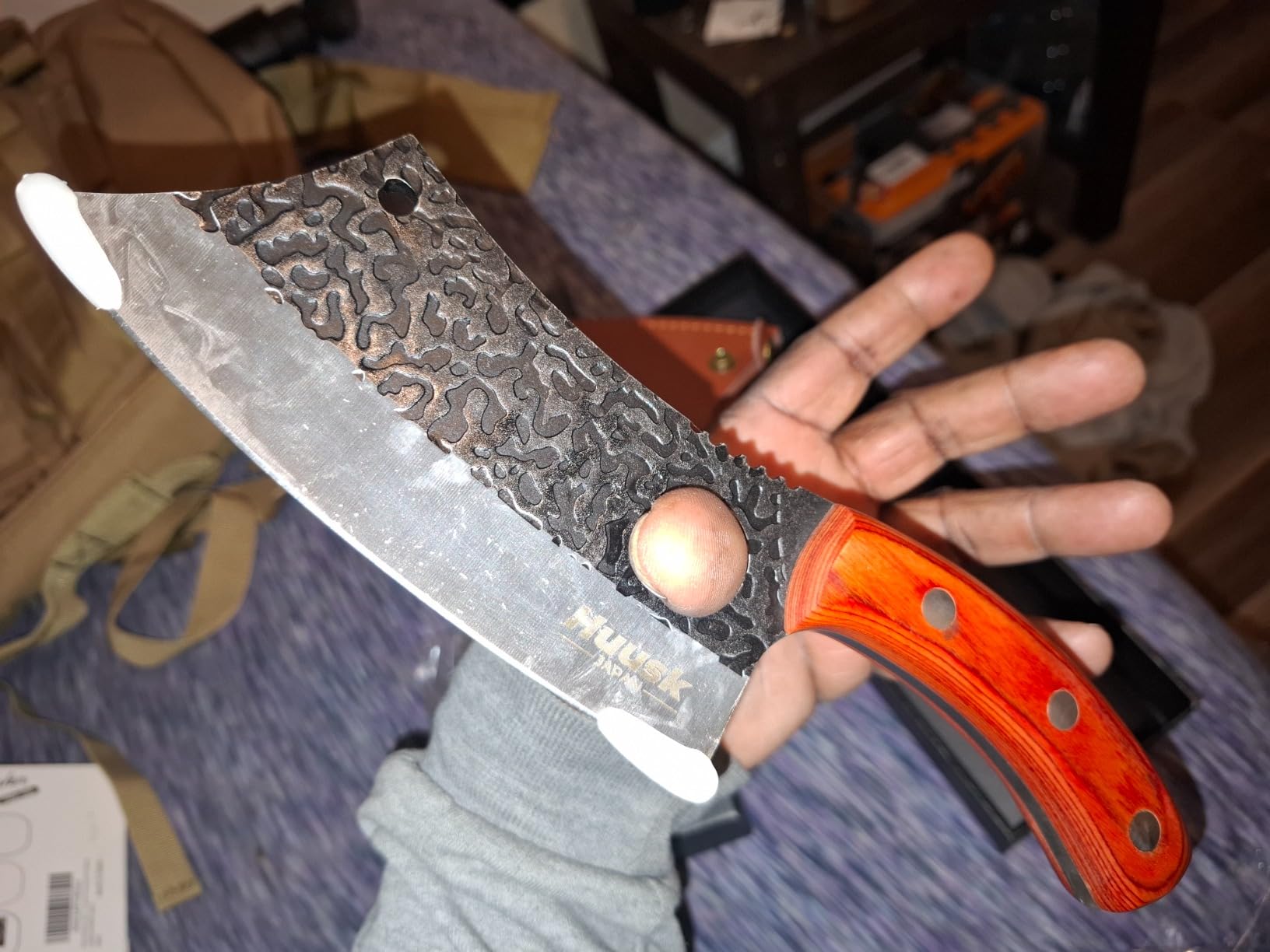
Japanese steel rated at 58 plus or minus 2 HRC, produced through a 138-step hand-forged process and sharpened by blacksmiths. That is a lot of process for a compact blade, and it shows up in a noticeably thick spine.
At 362 grams this is one of the lighter knives here and the easiest to pack. The oak handle has an arc that tucks into the palm, which keeps it from rolling when you are working on a folding table rather than a proper counter.
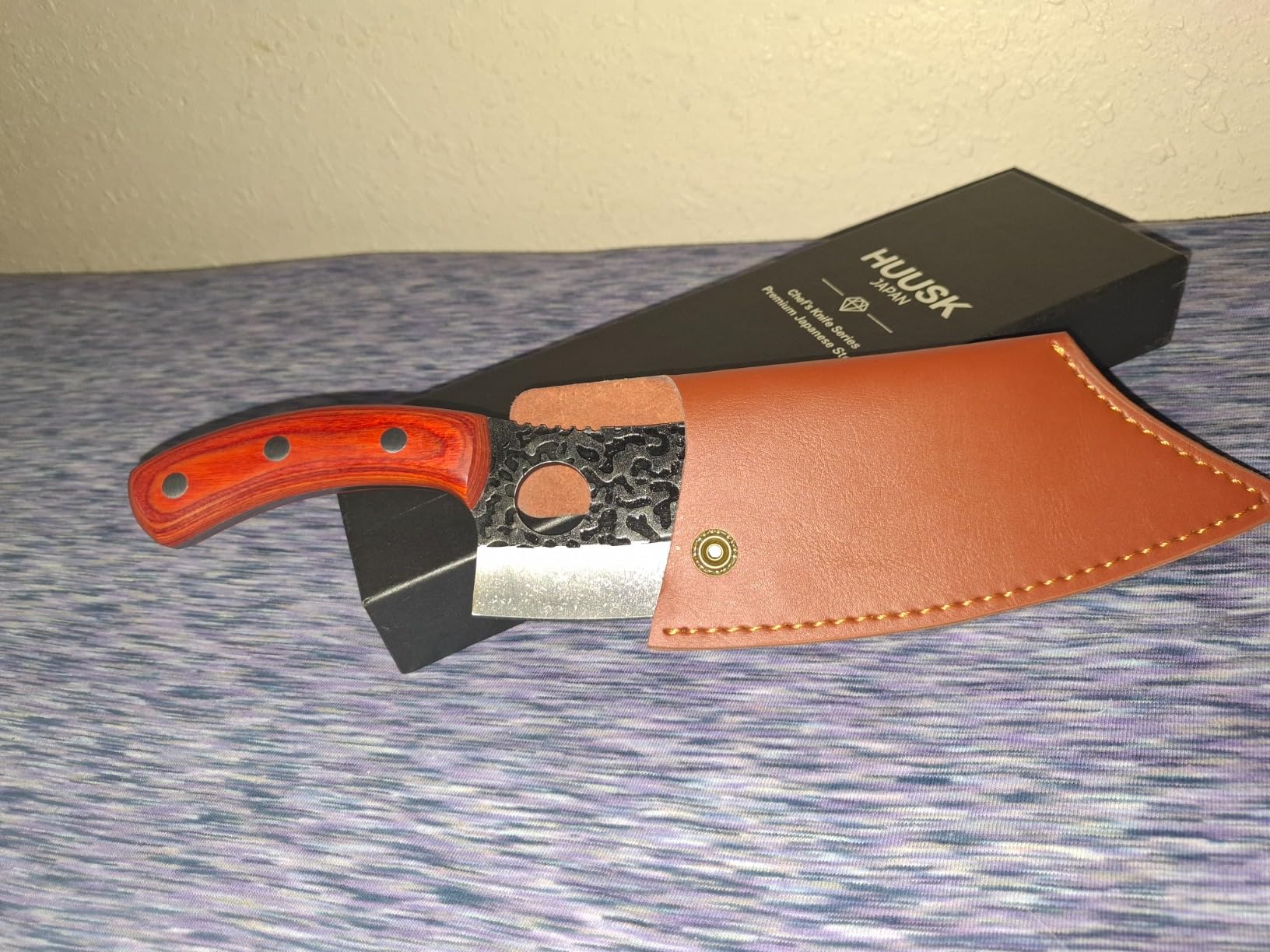
The included sheath and gift box make it a natural gift, and the sheath is what makes it practical for a cookout or a camping trip where you would rather not carry an exposed blade.
The extra thick spine is the useful part. It is what lets the blade take on hard cutting tasks without flexing or breaking, which is why buyers describe it as a well-balanced multipurpose knife for kitchen and outdoor prep.
Who this cleaver suits
Campers, hikers, and anyone prepping meat away from a kitchen. It also suits home cooks who want a sturdy, easy-to-store blade without giving up edge retention.
Where it falls short
The 6.3-inch blade is short compared with the rest of this list, so large boneless meat sections need a couple of passes. The oak handle wants a little oil now and then to stay in good shape.
11. SYOKAMI 7.7-Inch Dual-Edge Multifunction Cleaver
SYOKAMI Meat Cleaver Chef Knife with Sheath, 7.7 Inch Butcher Knife
High carbon stainless steel
7.7 inch blade
1.1 lb
15 degree and 30 degree edges
Wenge wood handle
Pros
- Dual edge pairs a 15 degree slicing zone with a 30 degree bone chopping zone
- Shock absorbing holes reduce harsh rebound
- Textured FSC wenge handle stays secure with wet hands
- Wide blade transfers ingredients and crushes garlic
- Integrated 3 hole herb stripper
Cons
- Two bevel angles take practice to use correctly
- Wood handle requires hand washing
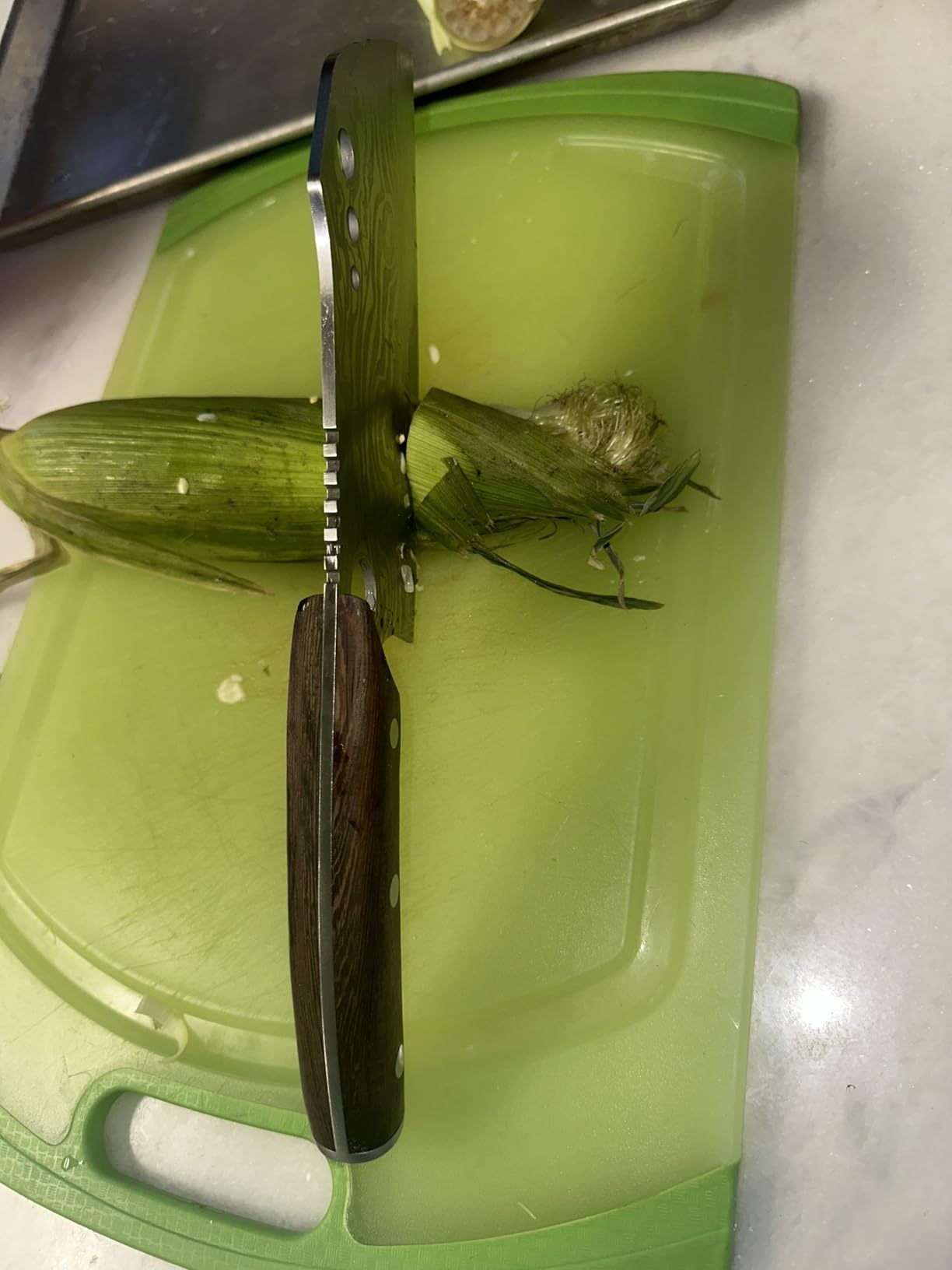
The cleverest design in this roundup is the two-zone edge. The front is sharpened to 15 degrees per side for slicing, and the spine side carries a 30 degree grind for bone chopping, so one blade covers both jobs that normally force you to own two knives.
Shock-absorbing holes drilled through the blade reduce the harsh rebound you feel when the edge stops on a joint. In practice that means less jarring in the wrist, which matters if you are working through a rack of ribs.
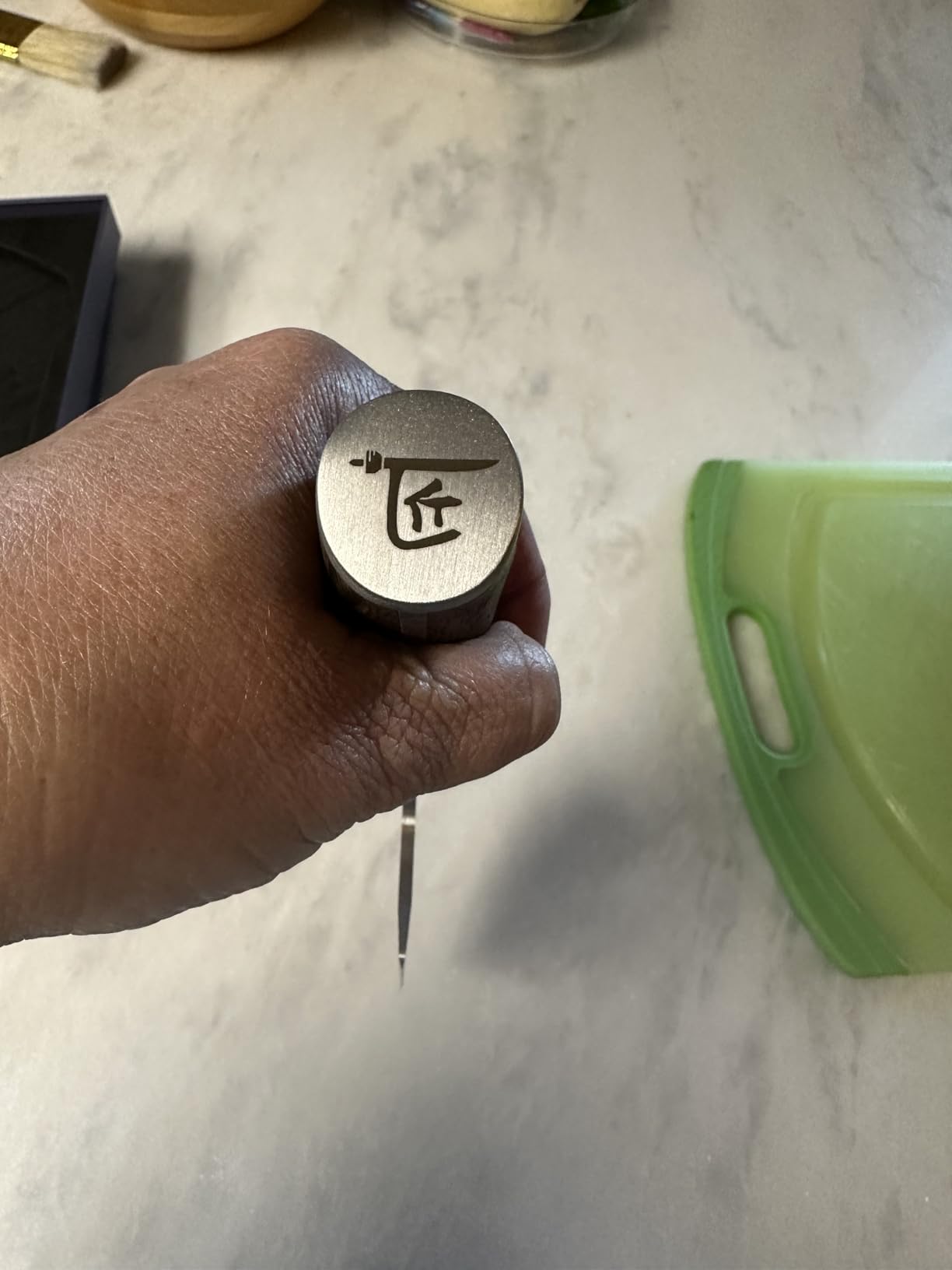
The gear-textured FSC wenge handle is the other standout. It stayed secure with wet hands in our testing, which is the exact condition that sends lesser handles sliding. The wide blade also doubles for ingredient transfer and garlic crushing.
A 3-hole herb stripper section handles thyme, rosemary and kale stalks quickly. The sheath and gift packaging are included, which is useful if you plan to keep it out of a knife block.
Who this cleaver suits
Cooks who genuinely want both slicing precision and bone capability from one knife, and who will spend a few sessions learning which half of the edge to use. It also works well as a gift.
Where it falls short
The two bevel angles need practice, and using the 15-degree front half on bone is how you roll that edge. The wenge handle rules out the dishwasher.
12. ROCOCO 6.3-Inch Hand-Forged Bone Cleaver
ROCOCO Meat Bone Cleaver Knife – Silver Heavy Duty Butcher Kitchen Axes
High carbon stainless steel
6.3 inch blade
2.2 lb
5mm thick blade
25 degree V edge
Pros
- Hand forged 25 degree V edge resists chipping
- 5mm blade integrated with a full tang handle and no soldering
- Balanced non-slip wood grip reduces fatigue
- Heavy enough for ribs
- poultry
- frozen food and wood
- Oxford cloth cover included
Cons
- Very heavy at over 2 pounds and tiring for smaller hands
- Must be cleaned and dried after each use to prevent rust
- 6.3 inch blade is short for large boneless sections
The ROCOCO is the heaviest knife in the roundup at 2.2 pounds, and the 5mm hand-forged blade with a 25 degree V edge is built like a small axe. Owners treat it as a serious bone and outdoor tool rather than a kitchen slicer.
Because the blade is integrated with the full tang wood handle and not soldered on, it is structurally sound in a way that glued handles are not. The balanced non-slip grip reduces fatigue across longer chopping sessions.
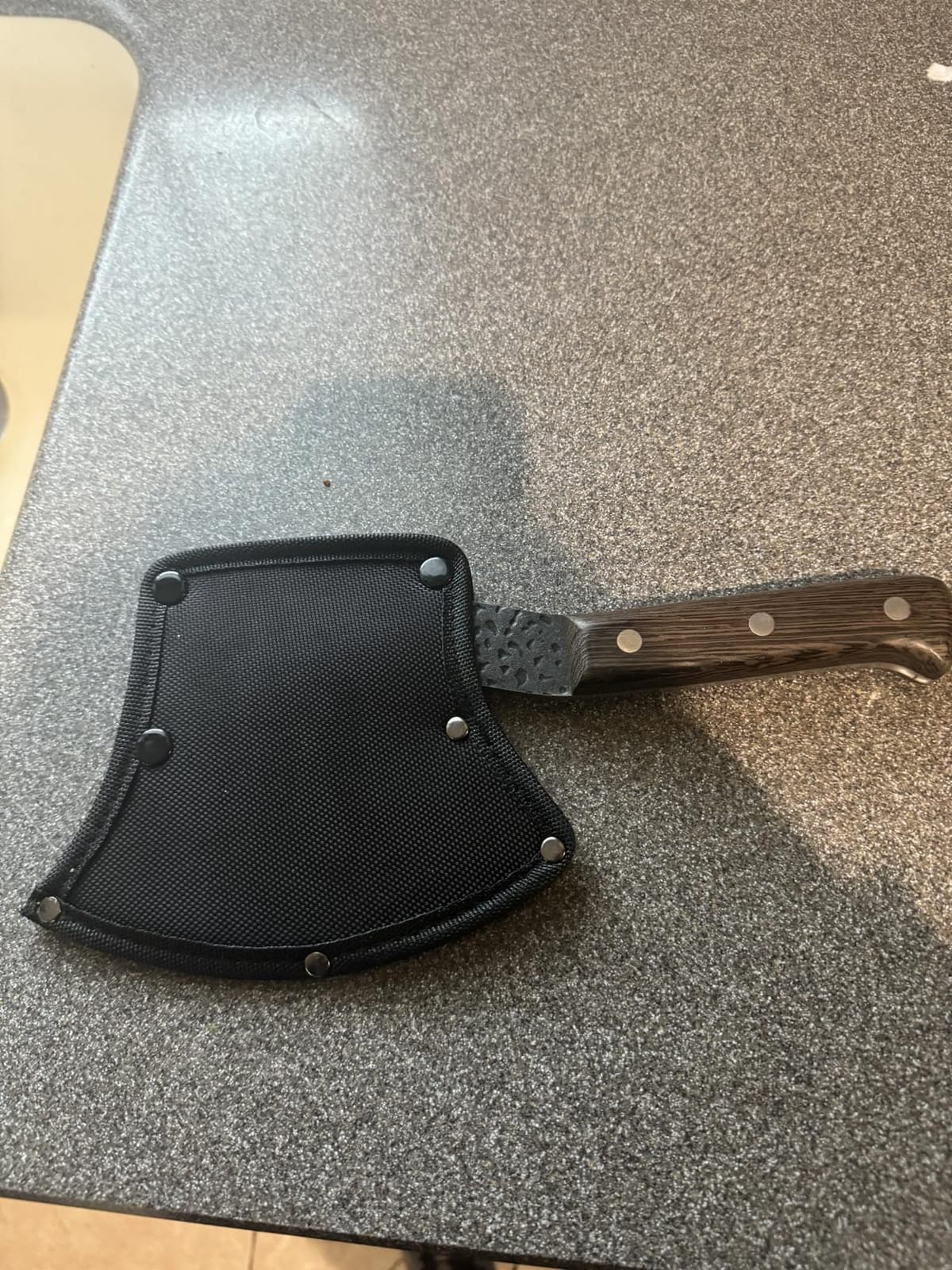
It handles ribs, poultry, frozen food and even splitting small kindling. The Oxford cloth cover makes it portable for camping, hiking and hunting, which is where the raw materials for this weight come from.
Two rules keep it happy. Clean and dry it straight after use, or the high carbon steel will spot-rust, and keep the 6.3-inch blade in mind, since large boneless meat sections will need more than one pass.
Who this cleaver suits
Serious home butchers, hunters, and outdoor cooks who regularly deal with frozen meat and thick bones. It is a specialist tool, and it works best with a thick end-grain board.
Where it falls short
Over 2 pounds tires smaller hands quickly, and the rust-prevention habit is required. For everyday vegetable prep it is uncomfortable, so it works best alongside a lighter blade.
Do You Need One Cleaver or Two?
Most home cooks need exactly one cleaver, and for the majority it is a medium-thickness Chinese vegetable cleaver between 7 and 8 inches. You need two only if you break down bone regularly. Here is the terminology that makes the choice clearer.
A caidao is the vegetable cleaver most Chinese home cooks buy. The blade is roughly 2mm thick, the edge takes a fine slice, and it handles cabbage, squash, garlic, herbs and boneless meat. This is your default home cleaver.
A chopper is thicker, usually 3 to 4mm, and sits between the caidao and a Western cleaver. It chops more aggressively, still smashes garlic, and can handle light poultry joints. Several picks in this roundup fall in this middle band.
A gudao, or S-blade cleaver, is the heavy Chinese butcher blade. It is thin but tall, with a spine that curves up, designed for splitting large bone. Very few home cooks need one.
A nakiri is a Japanese vegetable knife rather than a cleaver. It has a straight double-bevel edge for precise slicing and dicing, no rocking motion, and it must never touch bone. It is a specialist partner to a cleaver, not a replacement for one.
Our practical rule: buy the TUO or a similar caidao for daily prep, and add the Juvale or ENOKING only if you break down whole poultry, ribs or brisket on a regular basis. For most home kitchens that is a two-knife setup at most, and frequently it is just the one. If your kitchen is tight on storage, our picks for small kitchens cover that angle too.
How to Choose a Cleaver You Will Actually Use
Blade steel. For a home kitchen, high carbon stainless such as 1.4116, X50CrMoV15, 5Cr15Mov or SUS440A is the sweet spot. It holds an edge through a cook, resists rust when you rinse mid-prep, and does not demand careful drying. Plain carbon steel takes a finer edge but rusts unless you oil it, and very hard Japanese or patterned steels chip more readily when they meet bone.
Rockwell hardness (HRC). Aim for 54 to 58. Below 54 dulls too quickly for daily use. Above 60 the blade holds an edge beautifully but becomes brittle, which is exactly where chipping complaints come from. The 56 to 58 figures on most picks here sit in the durable middle.
Weight and balance. Fourteen to eighteen ounces is the useful home range for a cleaver you will use for vegetables. Bone work wants more, closer to a pound or above. Balance matters more than raw weight: a well-balanced knife lets you grip the blade near its front, which reduces fatigue and improves control.
Blade length. For home use, 7 to 8 inches is the range most cooks land on. Six-inch blades are more portable but need more passes on a large roast. Nine inches and up gets unwieldy over a kitchen sink. You also want a board with room to swing, so measure your board before you commit to a wide blade.
Full tang versus partial tang. A full tang means the steel runs the full length of the handle. It is stronger, cannot work loose, and is what we look for on any cleaver that will see bone. A partial tang is acceptable on a vegetable-only knife where you mostly want lightness.
Forged versus stamped. Forged blades are shaped from thicker steel and are heavier at the spine, which helps with bone. Stamped blades are pressed from sheet steel, making them lighter and cheaper. Stamped full tang construction is perfectly fine for a home vegetable and boneless meat cleaver.
Handle material. Pakkawood and rosewood absorb moisture and feel warm, stainless is hygienic and dishwasher safe, and G10 or fiberglass is tough and light. The real test is grip with wet or greasy hands, and wood usually wins that test. If your kitchen runs small, a compact setup like our stand mixer picks for small kitchens mindset applies here too: fewer, better tools that fit the space.
Blade angle. A 15 to 18 degree edge per side slices beautifully and needs frequent sharpening. A 20 to 22 degree workhorse edge holds longer and suits daily use. Anything above 25 degrees is built for bone and will feel blunt on a tomato.
How to Hold, Use and Sharpen a Cleaver
Use a pinch grip. Pinch the blade between the pad of your index finger and the pad of your thumb, with the knife handle resting in the remaining three fingers. This puts your hand on the spine where you control it, and it is the difference between controlled chopping and a slip.
Rock, do not stab, for vegetables. Keep the tip on the board and let the heel rise and fall in a smooth arc. For dense produce like cabbage, a steady forward push with the whole weight of the blade works better than a raised-heel rock.
Use the flat side for garlic and ginger. Lay the blade broadside over a clove and press down with your palm, then use the blade edge to scoop the paste into a pan. The wide face also works as a bench scraper for collecting chopped ingredients.
Keep bone work separate. Use a cleaver only for the bone job it is built for, and use a dedicated knife for boneless prep. Mixing a fine 17-degree edge into a rib joint is how edges chip and how fingers get hurt.
Sharpen at a workhorse angle. A few passes on a 1000-grit whetstone at roughly 20 to 22 degrees per side will keep a cleaver working for years. A honing rod between sessions realigns the edge without removing metal.
Care, Cleaning and a Maintenance Schedule
Hand wash and dry immediately. The dishwasher cycle’s heat and detergent strip handle glue and dull edges faster than anything else you can do to a knife. Rinse, towel dry, then air dry standing on its edge or spine.
Oil carbon steel. If you own the ENOKING or the ROCOCO, wipe the blade with a food-grade oil after every wash and store it dry. Skipping this on high carbon steel is the single reason those blades spot-rust.
Make wood handle care routine. Wipe pakkawood, oak and wenge handles with a damp cloth and dry them standing up. The dishwasher is the fastest way to crack, fade or swell a wooden handle.
Follow a maintenance rhythm. Hone before every major cook session, sharpen roughly every three to six months for daily use, and clean the rivets and tang gaps monthly if the handle is riveted. That schedule is enough to keep any knife in this roundup working.
Know when a chip is repairable. A rolled edge or a small chip can often be restored with a few firm strokes on a coarse stone followed by your normal 1000-grit pass. Deep chips, cracks in the spine, or a warped blade mean replacement, not repair. Thin nakiri-style knives need the most caution here.
Frequently Asked Questions
Which cleaver is the best?
The Utopia Kitchen 7-Inch Stainless Steel Meat Cleaver is the best all-round choice for most home kitchens, with a 14.08 oz weight, a full tang stamped stainless blade that holds its edge for years, and a 4.6 rating across more than 7,600 reviews. For Asian-style cooking, the TUO 7-Inch Chinese vegetable cleaver is the better single blade.
What type of steel is best for a meat cleaver?
High carbon stainless steel between 54 and 58 HRC is the best all-round choice for a home cleaver. Steels like German 1.4116, X50CrMoV15, 5Cr15Mov and Japanese SUS440A hold an edge through a cook, resist rust during a mid-prep rinse, and do not chip the way very hard patterned steel does. Carbon steel takes a finer edge but needs oiling to avoid rust.
What is a meat cleaver best used for?
A meat cleaver is best used for heavy chopping tasks: splitting poultry joints, cutting through small bones and ribs, chopping dense vegetables like cabbage and squash, mincing, and crushing garlic or ginger with the flat of the blade. It is a broad prep tool as much as a butchery tool, and it doubles as a bench scraper for moving chopped ingredients.
Can I use a Chinese vegetable cleaver on bone?
You should not. Thin Chinese vegetable cleavers and nakiri knives are designed for produce and boneless meat, and their fine edges chip or roll when they hit bone. If you regularly break down poultry, ribs or brisket, add a thick-spined cleaver such as the Juvale 8-Inch or the ENOKING 7.5-Inch rather than using a vegetable blade for the job.
What is the difference between a chef’s knife and a cleaver?
A chef’s knife has a narrow, curved blade built for precision slicing and controlled cuts. A cleaver has a broad, rectangular blade where weight and momentum do the work, which makes it faster on dense vegetables, herbs, boneless meat and small bones. A cleaver can also crush garlic, scrape a board and smash ginger, so it covers jobs a chef’s knife cannot.
The Last Word: Who Should Buy Which Cleaver
Buy the Utopia Kitchen 7-Inch if you want one dependable blade for everything from onion to a chicken thigh. Buy the TUO 7-Inch if you cook Asian food, stir-fry often, or want a Chinese vegetable cleaver whose curved profile cuts, smashes and minces. Buy the PAUDIN nakiri if vegetables are most of your prep and you want precision over momentum.
Add a second knife only for bone: the Juvale 8-Inch for regular poultry and brisket, the ENOKING 7.5-Inch if you want bone power with a smaller footprint, the SYOKAMI 7.7-Inch if you want slicing and bone capability in one blade, or the ROCOCO 6.3-Inch if frozen meat and heavy outdoor work is your thing.
That is the whole decision for the best cleavers for home kitchens in 2026: one broad Chinese-style blade for daily prep, plus a heavy cleaver only if bone regularly appears on your cutting board. Whichever route you take, buy it on grip and balance rather than on steel marketing, hand wash it, and keep a whetstone in the drawer. If your kitchen is short on counter space, our countertop dishwasher picks for small kitchens and compact espresso machine guide cover the rest of the layout problem.