
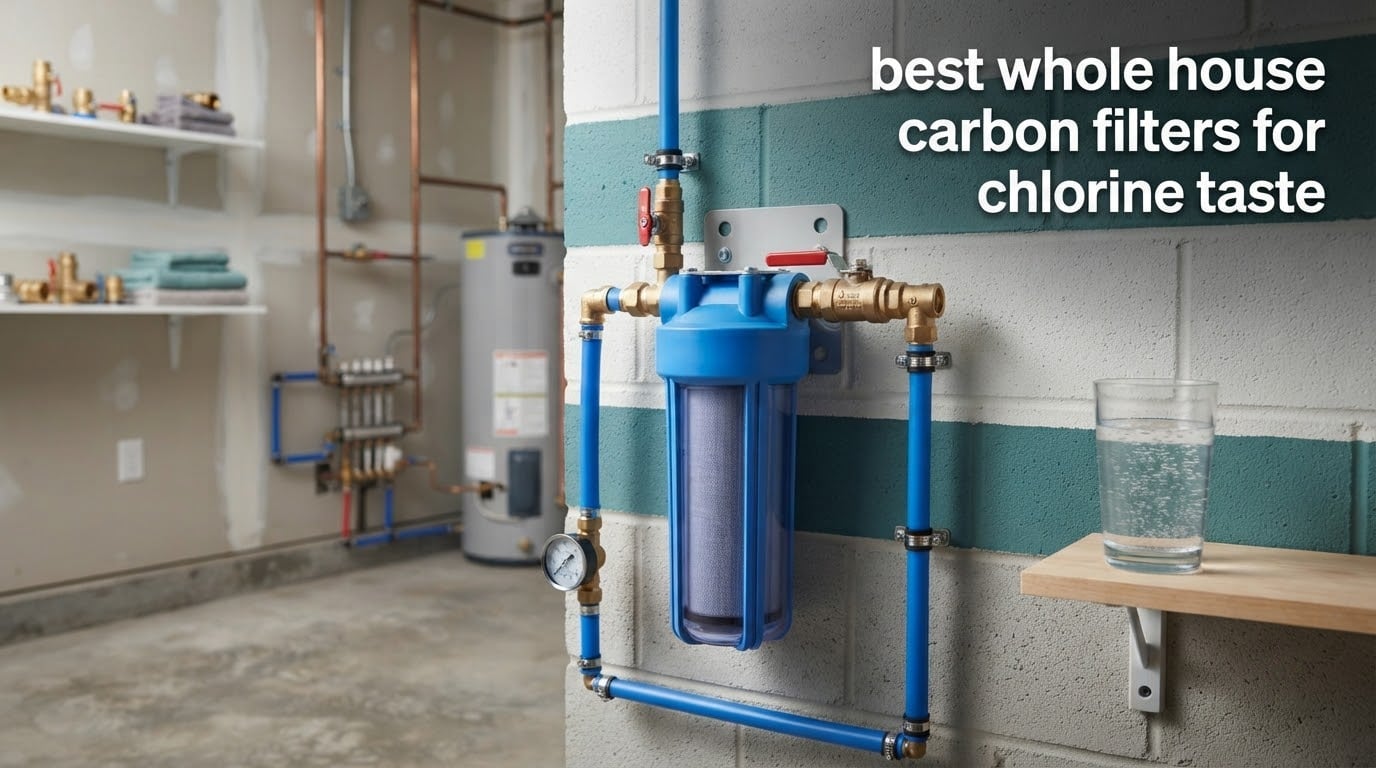
If you can smell chlorine the moment you run a glass of tap water, the fix usually lives on your cold main line rather than in a pitcher on the counter. I have spent the last few months going through whole house carbon water filter options side by side, and this roundup of the best whole house carbon filters for chlorine taste covers every format that shows up in real homes: spin-on cartridge housings, multi-stage cartridge stacks, and backwashable carbon tanks with a Fleck-style control valve.
Why bother treating the whole house instead of a single faucet? Chlorine is added at the treatment plant and travels through the entire plumbing system, so the taste shows up in your ice maker, your shower, and your coffee as easily as it does at the kitchen tap. Filtering at the point of entry treats every fixture at once, and it also puts a chemical barrier between your water and a softener resin or a tankless heater gasket.
That said, a whole house carbon filter is the wrong tool for several common water problems, and a cartridge system is the wrong format for a lot of households. This guide lays out what carbon can and cannot do, how to size a system, and where the real complaints live, so you can tell whether one of the ten picks below actually fits your line. If you want the wider picture of point-of-entry equipment first, our guide to the best whole house water filters covers softeners, UV, and iron systems too.
Table of Contents
Does a Carbon Filter Actually Remove Chlorine Taste?
Yes. Activated carbon adsorbs chlorine onto its enormous internal surface area, which is why a properly sized whole house carbon water filter neutralizes chlorine taste and odor at every tap, along with chlorine by-products such as trihalomethanes. The catch is media type: standard granular activated carbon handles free chlorine well, while chloramine needs catalytic carbon. Carbon does not remove hardness, nitrates, arsenic, or bacteria.
That short answer is the whole mechanism, and it matters because chlorine is a disinfectant, not a mineral. Utilities add it at the treatment plant to kill bacteria in the distribution system, and the residual that reaches your tap is what you taste. Its molecular size and chemistry let it stick to the carbon’s pore walls almost immediately, which is why taste improvement is often noticeable within days of install rather than months.
Chlorine at normal utility levels is not considered a health hazard, and a chlorine taste in municipal water is common and usually harmless. It matters more for taste, odor, hair and skin feel, and for protecting resin and gaskets downstream. That is also why carbon is a taste and odor solution, not a purification system.
Top 3 Best Whole House Carbon Filters for Chlorine Taste (October 2026)
The three below are the picks we keep coming back to: the highest-rated option with the deepest review history, the widest multi-contaminant coverage, and the strongest budget buy.
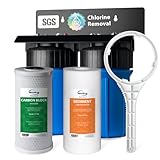
iSpring WGB21B 2-Stage System
- Two-stage sediment plus CTO carbon block
- 5000 gallon capacity
- 15 GPM flow
- Removes over 90% of chlorine

Express Water 3-Stage System
- Chlorine plus heavy metal and scale stages
- 17 GPM flow rate
- 100000 gallon capacity
- Stainless steel frame
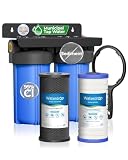
Waterdrop WHF21-BG 2-Stage System
- 99% chlorine reduction
- NSF/ANSI 372 certified
- 50000 gallon capacity
- Compact 12 GPM footprint
All 10 Best Whole House Carbon Filters Compared in 2026
Every system below sits on the cold main line. The single biggest difference between them is format, and format drives everything else: whether you replace cartridges by hand, whether the media can backwash itself, and what the ongoing cost looks like over ten years.
| Product | Specifications | Action |
|---|---|---|
| iSpring WGB21B 2-Stage Whole House Water Filtration System |
|
Check Latest Price |
| Express Water Whole House Water Filter System 3-Stage |
|
Check Latest Price |
| Waterdrop WHF21-BG 2-Stage Whole House Water Filter |
|
Check Latest Price |
 Aquasana WH-1000 Whole House Carbon and KDF System Aquasana WH-1000 Whole House Carbon and KDF System |
|
Check Latest Price |
 iSpring WGB12B 1-Stage Carbon Block System iSpring WGB12B 1-Stage Carbon Block System |
|
Check Latest Price |
 iSpring WF1054 Granular Carbon and KDF Tank iSpring WF1054 Granular Carbon and KDF Tank |
|
Check Latest Price |
 Waterdrop WHF3T-PG 3-Stage Whole House System Waterdrop WHF3T-PG 3-Stage Whole House System |
|
Check Latest Price |
 LiquaGen Catalytic Carbon and KDF 55 Tank LiquaGen Catalytic Carbon and KDF 55 Tank |
|
Check Latest Price |
 3M Aqua-Pure AP904 Whole House Filtration System 3M Aqua-Pure AP904 Whole House Filtration System |
|
Check Latest Price |
 iFilters 4.5 x 20 Two-Stage Sediment and Chlorine System iFilters 4.5 x 20 Two-Stage Sediment and Chlorine System |
|
Check Latest Price |
Two of these are worth calling out before the individual reviews. The Aquasana WH-1000 and the LiquaGen tank both claim a 1,000,000 gallon media life, which is not the same measurement as the 50,000 to 100,000 gallon figures quoted for cartridge systems. Tank media is measured in cubic feet and pounds, and the gallon number is a theoretical ceiling; a cartridge number assumes you swap media on schedule, which most owners do not. Treat the tank figure as the optimistic end and the cartridge figure as the realistic one.
1. iSpring WGB21B 2-Stage System for Steady Chlorine Removal
iSpring WGB21B 2-Stage Whole House Water Filtration System, 50000 Gallons
Sediment plus CTO carbon block
50000 gallon capacity
15 GPM flow
26 x 19 x 11 inch
Pros
- Reduces over 90% of chlorine taste and odor
- Thick-walled housings that handle heavy loading
- Bracket reverses to match existing flow direction
- Responsive US-based support that supplies parts at no cost
Cons
- Threaded fittings are leak-prone and need careful sealing
- Replacement cartridges add ongoing cost
- A housing can arrive with damaged threads
This is the pick I keep recommending first. With more than four thousand ratings behind it, the WGB21B is the most widely reviewed two-stage carbon housing in this group, and the pattern in the reviews is consistent: people notice better-tasting water and fewer water spots on dishes within a few weeks of switching it on.
The design is deliberately plain. A 5 micron polypropylene sediment stage sits ahead of a CTO carbon block rated at 50,000 gallons and 12 months, which is roughly a year of water for a family of four. That sediment stage is not optional decoration. It catches rust, sand and pipe scale so the carbon block downstream does not foul early, and putting it first is the single most important installation habit for keeping the carbon performing.
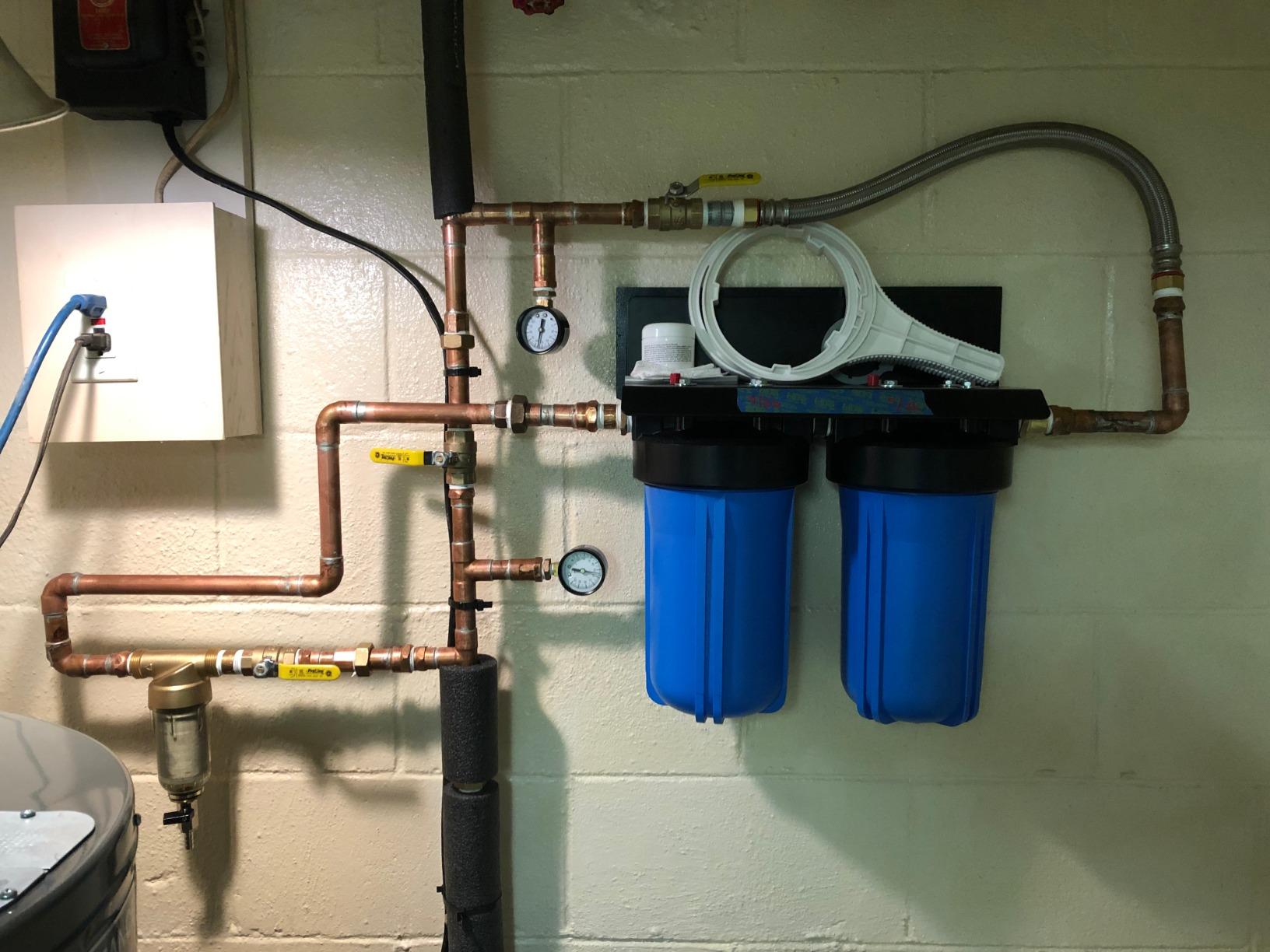
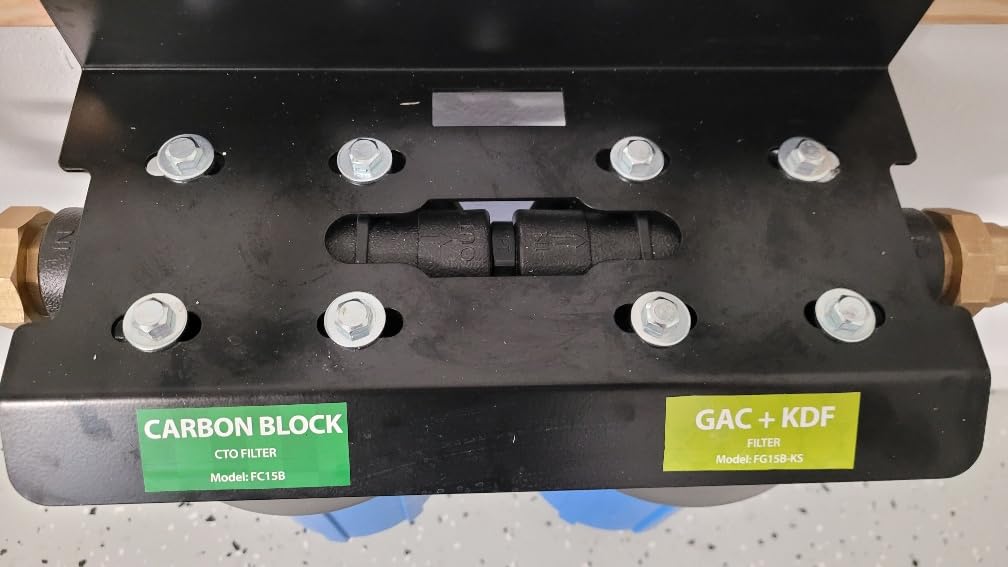
Flow is rated at 15 GPM, which is comfortable for a typical household, and the reversible bracket is a small detail that saves real annoyance: you can flip the assembly so it matches the direction of your existing plumbing instead of re-plumbing the run. The included filter wrench and pressure release valve make the annual swap a ten-minute job.
It retains minerals and does not reduce TDS, which is exactly what you want from a taste and odor system. Anyone buying this to soften water will be disappointed, and buyers who need to strip out heavy metals should look at a system with a dedicated KDF stage.
Who this fits best
A home on municipal water where the goal is a straightforward taste fix and the owner wants a single order to place. Two housing caps, one sediment stage, one carbon stage, no electricity, no drain line.
It also makes a sensible first carbon stage in front of a water softener, because softening resin is damaged by chlorine and a carbon block ahead of the softener is the cheapest way to prevent that.
Where it falls short
The most common complaint across reviews is sealing at the threaded inlet and outlet fittings, and over-tightening can crack the plastic housing rather than fix a leak. Take your time with the tape and hand-tighten plus a fraction.
At 50,000 gallons the carbon is gone in roughly a year on a busy household, and buying replacement cartridges is a permanent line item. Owners also report the occasional housing arriving with damaged threads, so inspect the box on arrival.
2. Express Water 3-Stage System for Chlorine Plus Heavy Metals
Express Water Whole House Water Filter System, Ultimate Protection, 3-Stage
Carbon plus KDF plus polyphosphate
17 GPM flow
100000 gallon capacity
Stainless steel freestanding frame
Pros
- Three stages cover chlorine heavy metals and scale together
- Stainless steel bracket and freestanding frame add durability
- Pressure gauges and release buttons aid monitoring
- 17 GPM suits larger homes
Cons
- Freestanding frame needs floor space
- Cartridges must be replaced as a set
- Heaviest unit here at 63 pounds
If your chlorine complaint comes with a question about lead or scale, this is the most complete cartridge stack in the group. It runs a carbon stage, a KDF heavy metal stage, and a laboratory packed polyphosphate anti-scale stage, which is why reviewers describe the coverage rather than the taste alone as the selling point.
Rated at 17 GPM, it has the second-highest flow of any cartridge system here, and the 100,000 gallon rating covers roughly two years for a typical family. The stainless steel bracket and freestanding frame are a real upgrade over plastic-only brackets, especially on a tankless heater feed where vibration is a factor.
Note that the Express Water listing carries no verified customer photos, which is unusual for a system with this many ratings. The review text is still detailed enough to be useful, and owners consistently mention a clear difference in taste and odor within a few weeks of install.
Watch the weight. At 63 pounds this is by far the heaviest unit in the roundup, and the free-standing frame needs a floor area you can actually reach later when you are swapping cartridges.
Who this fits best
Households that want chlorine, heavy metal, and scale protection handled by one box instead of stacking separate components. It is the pick if you are starting from scratch and want the broadest cartridge coverage on the main.
Those with a larger home and a wider main will appreciate the flow headroom, which leaves margin when several fixtures run at once and a low-flow filter would start dropping pressure.
Where it falls short
Polyphosphate anti-scale media is a surface treatment, not a removal method. It slows scale accumulation but does nothing for hardness already in solution, so it is not a substitute for a softener.
Set-based cartridge replacement means you buy all three elements even if only one is spent, which raises the cost of an emergency change on a Sunday. Plan ahead rather than reacting to a taste complaint.
3. Waterdrop WHF21-BG 2-Stage System for Chlorine on a Budget
Waterdrop WHF21-BG 2-Stage Whole House Water Filter System, NSF/ANSI 372
Grooved PP plus CTO carbon
99% chlorine reduction
50000 gallon capacity
12 GPM flow
Pros
- Third-party tested 99% chlorine reduction
- NSF/ANSI 372 certified for lead-free compliance
- Grooved PP stage with 2.2x filtration area
- Passed 100000 water hammer cycle testing
Cons
- Lowest flow rate here at 12 GPM
- Cartridge replacement recurs every year or so
The WHF21-BG is the cheapest serious carbon system in this roundup and the one I recommend to renters and to anyone who wants a one-afternoon install. It pairs a grooved polypropylene sediment cartridge with a third-party tested CTO carbon block, and the manufacturer claims 99% chlorine reduction.
What separates it from the cheapest single-housing units is the certification detail. The first stage meets NSF/ANSI 372 and 61, and the second stage is listed to 372, 42, and 61 plus RoHS and REACH. That is a stronger paper trail than most products at this tier, and buyers on the certification question mention it as the reason they chose this over alternatives.
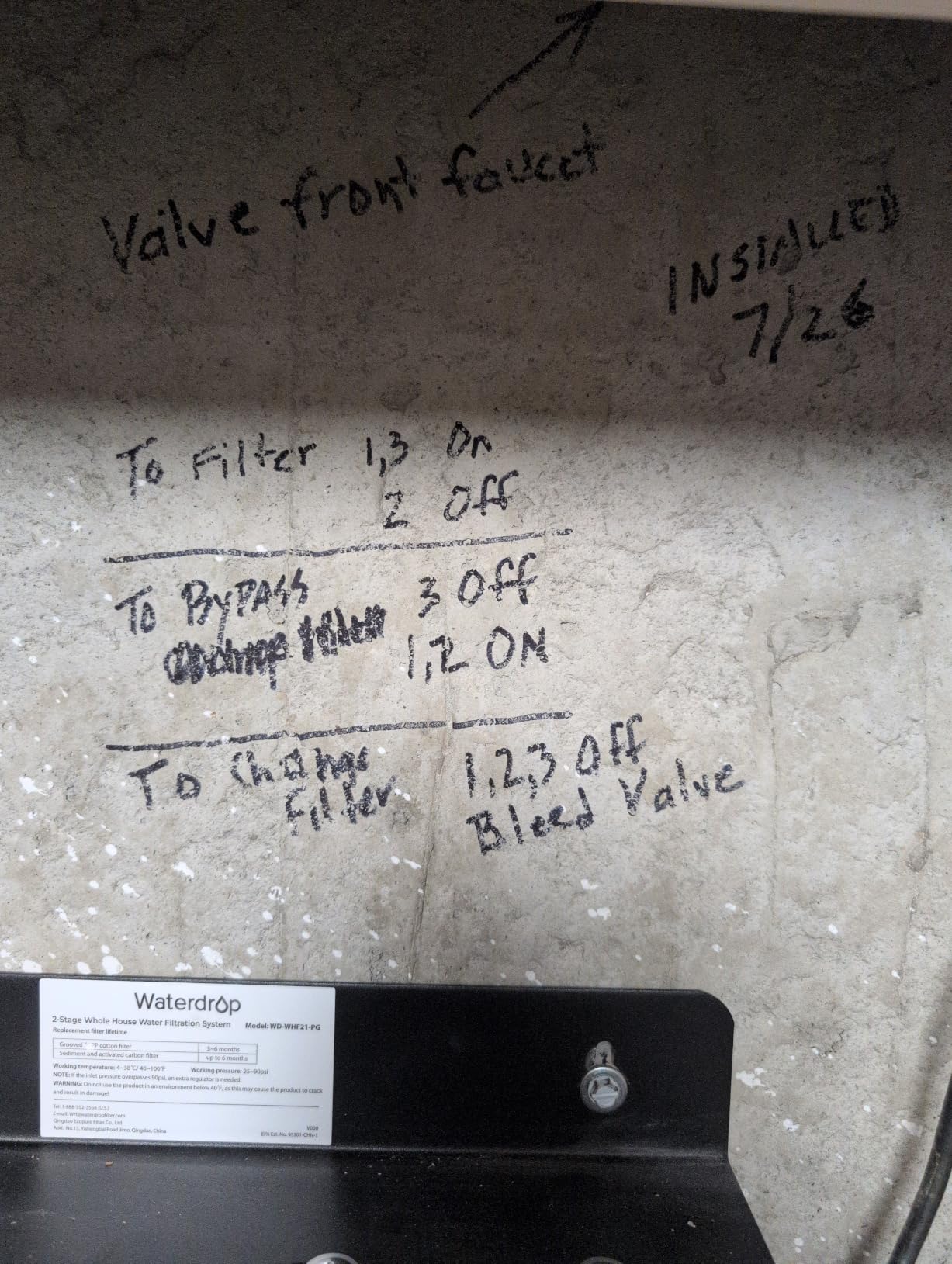
The grooved PP cartridge is claimed to carry 2.2 times the filtration area of a standard element, which is a meaningful difference on municipal water where the sediment stage does most of the dirty work. The double-layer sealing ring and 100,000 water hammer cycle test are also directly relevant to the leak complaints that dominate reviews of this category.
At 12 GPM this has the lowest rated flow of the ten systems here. For a two to three person home that is fine, and it is also rated for RV and yacht use with 1 inch FNPT connections.
Who this fits best
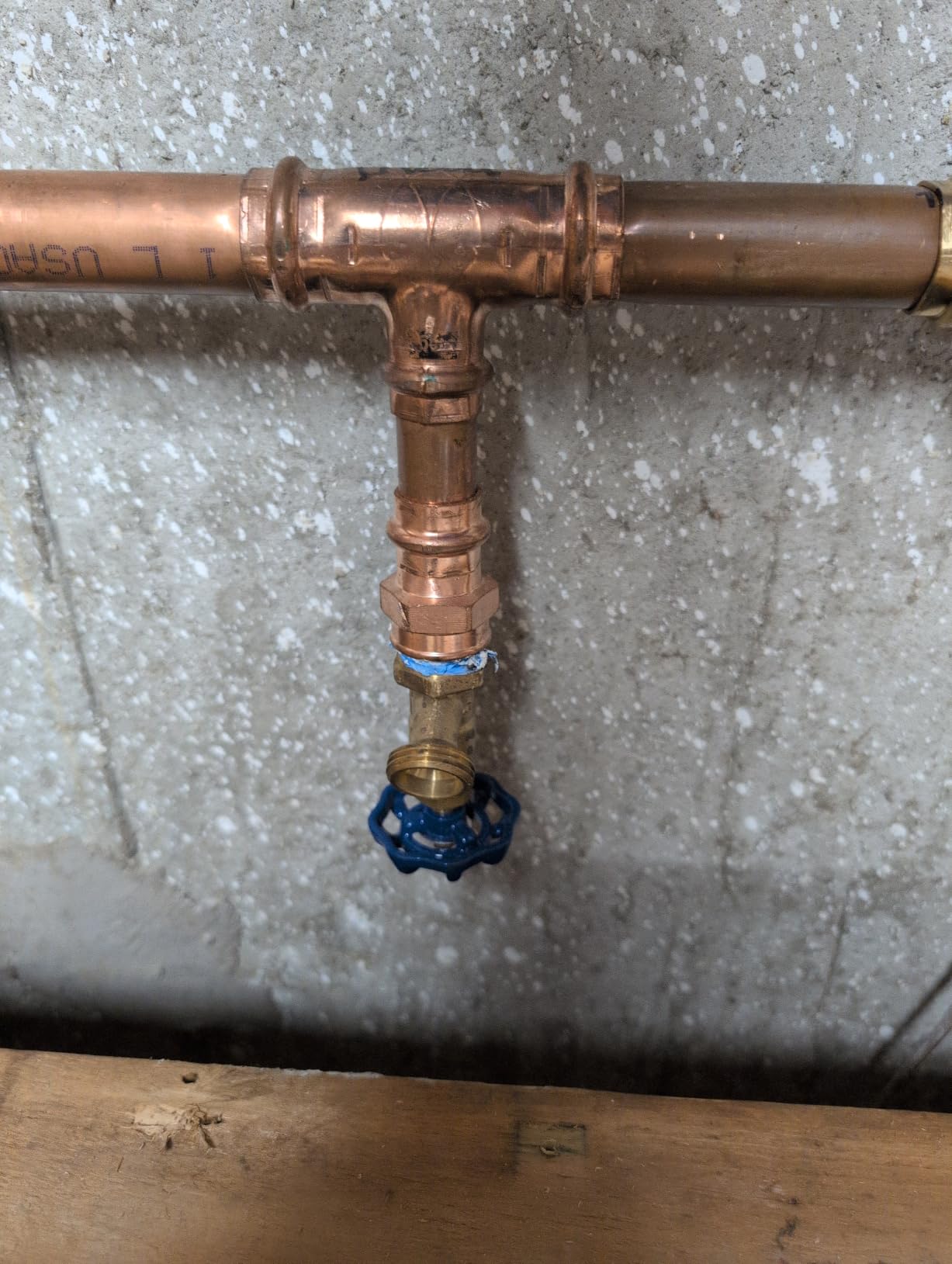
Anyone whose main objective is taste and odor and whose budget is the first constraint. Two housings, a small footprint at under 16 inches tall, and a straightforward install.
It is also a good pick if you want a certified second stage as part of a split plan, pairing it with a softener while keeping the carbon upstream.
Where it falls short
Flow is the trade. In a house with three or more simultaneous fixtures, a shower and a laundry cycle together, 12 GPM is the first thing you will notice as a pressure drop.
The 50,000 gallon rating means annual cartridge spending on a busy household, and the carbon block alone does nothing about chloramine, so it is the wrong pick if your utility has switched disinfectants.
4. Aquasana WH-1000 Carbon and KDF Tank for a Ten-Year Media Life
Aquasana Whole House Water Filter System | 1M Gal | Carbon & KDF | WH-1000
Carbon and KDF dual tank
1 million gallon rating
10 year media life
14.6 GPM flow
Pros
- Reviewers report complete removal of chlorine smell and taste
- Ten year media life cuts long-run replacement cost
- No electricity drain line or backflush needed
- Improvements in hair and skin feel
Cons
- Plastic threaded connections leak unless brass is used
- Warranty void on owner installation
- Carbon fines can persist in the post filter
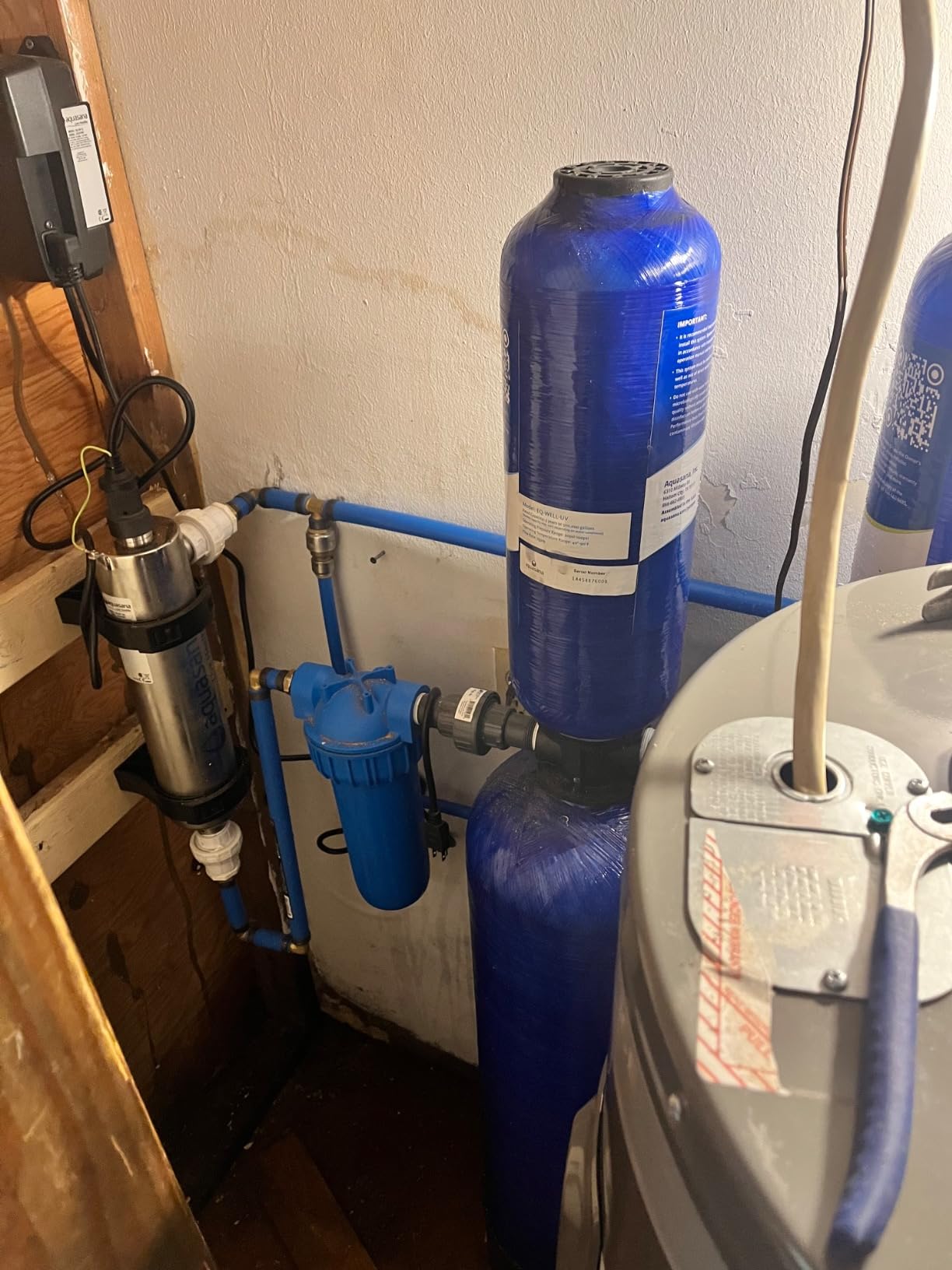
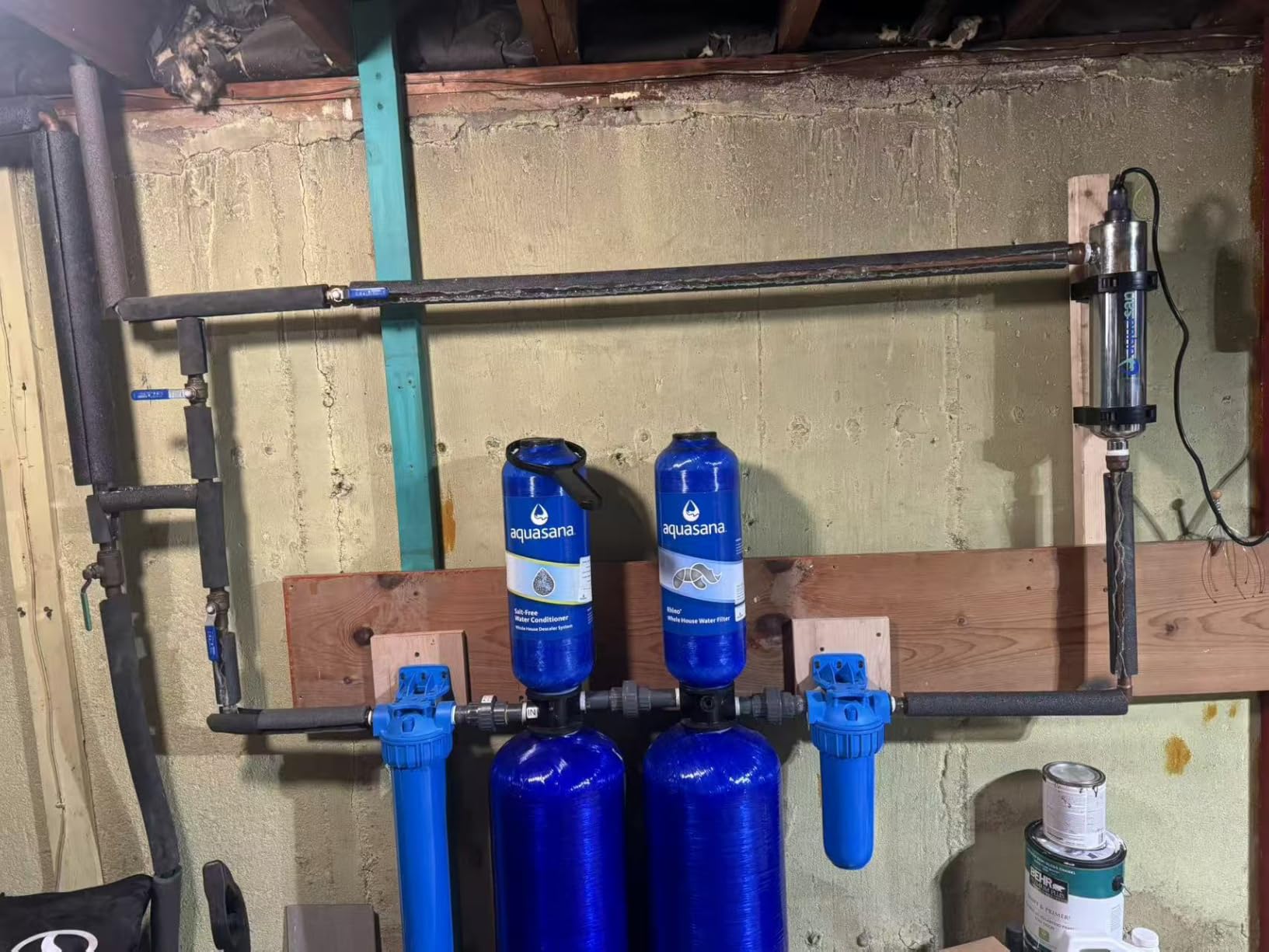
The WH-1000 is the tank format in its simplest form: a 20 inch pre-filter, a carbon and KDF media tank, and a 10 inch post-filter, with no control valve and nothing electrical. It is rated for 1,000,000 gallons or 10 years, and the manufacturer states it is independently tested to NSF/ANSI Standard 42.
That longevity is the reason it earns a place here. If you are the kind of owner who will forget a cartridge schedule for three years, a media tank that needs no annual swap is a better fit than anything with a spin-on element, even though the sticker price is higher and the footprint is 46 inches tall.
KDF is the copper-zinc media that handles chlorine and heavy metals together, and combining it with carbon is why the media blend is rated to reduce 97% of chlorine while leaving minerals in the water. Owners also report reduced hard water staining around fixtures, which is more likely a byproduct of cleaner water than a hardness change.
Operating range is 20 to 100 psi and the ceiling temperature is 90 F, both narrower than the plastic-housing cartridge systems, so measure your install clearance carefully. It fits 3/4 inch or 1 inch lines and includes Schedule 80 PVC components.
Who this fits best
Households that want a decade of serviceable filtration with no annual maintenance habit required. Two people, an older home, and no interest in annual cartridge swapping is the ideal case.
It is also a good match for anyone who cannot accept a small taste improvement now and wants the strongest long-run value story rather than the lowest upfront spend.
Where it falls short
This unit carries the lowest star rating in the roundup at 4.2. The recurring complaints are all installation-side: all-plastic threaded connections that leak unless replaced with brass, and a warranty that is void if the owner installs rather than a professional.
Carbon fines escaping into the post filter are also reported, which means the post filter needs repeated flushing. And the media life figure is a ceiling, not a schedule, so taste should be your trigger.
5. iSpring WGB12B 1-Stage Carbon Block System for Simple Setups
iSpring WGB12B 1-Stage Whole House Water Filtration System w/ 20” x 4.5” Carbon Block Filter – Reduces up to 99% Chlorine
Single carbon block housing
15000 gallon capacity
15 GPM flow
1 inch NPT connections
Pros
- Simplest way to hit up to 99% chlorine reduction
- Sturdy housing and mounting bracket
- Light 13 pound unit that is easy to handle
- Responsive support that replaces damaged units
Cons
- Bracket size differs from the 3-stage iSpring bracket
- Listed dimensions exclude the mount so clearance must be measured
- Not for freezing environments
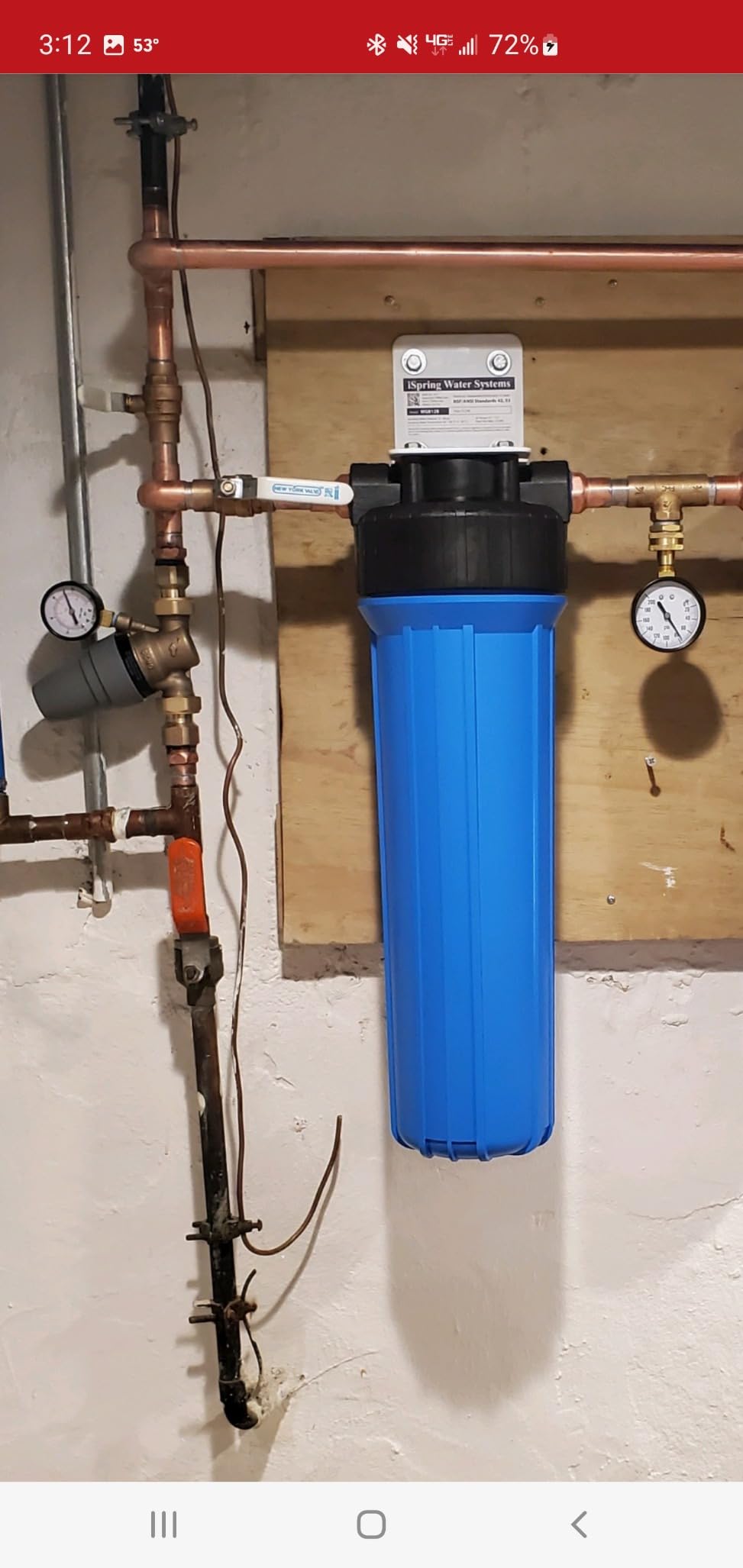
Sometimes the honest answer is that one housing is enough. The WGB12B is a single 20 inch by 4.5 inch carbon block in a 1 inch NPT housing, rated at 15 GPM, and it uses a third-party tested coconut shell CTO block. If your only problem is chlorine taste, this does that job with one cartridge change a year.
At 13 pounds it is the easiest unit in the roundup to handle, which matters when you are working in a crawlspace or a tight mechanical room. Reviewers consistently describe the housing as very sturdy and the install as simple.
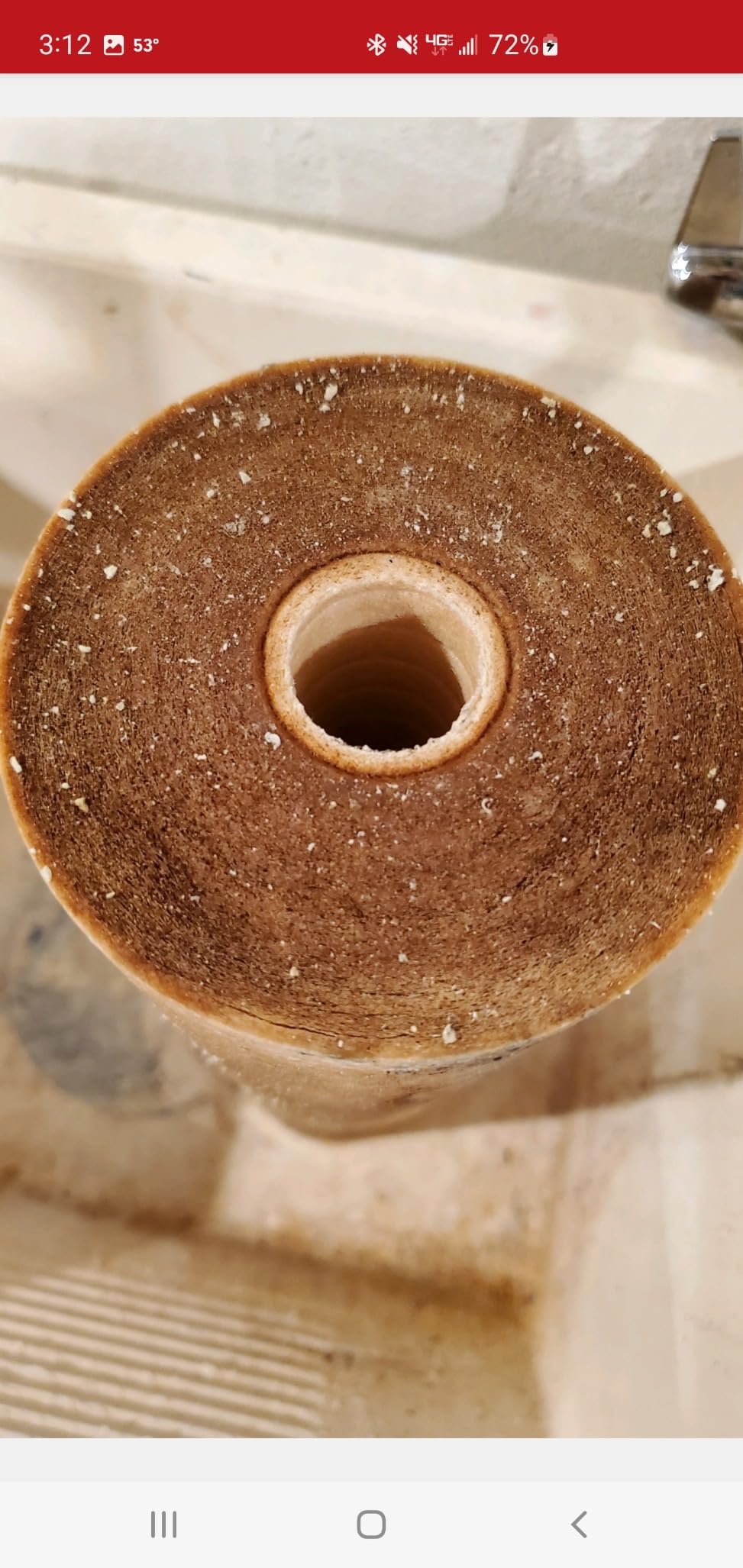
The coconut shell block is the piece worth knowing about here. Coconut shell carbon generally carries a higher iodine number than coal-based carbon, which is the standard measure of how much chlorine it can hold, and it is less prone to shedding fines.
Two practical notes from the reviews. The bracket on this model is a different size from the 3-stage iSpring bracket, so you cannot mount the two flush in a row, and the listed dimensions exclude the bracket, so measure your clearance rather than trusting the product page.
Who this fits best
A condo, apartment, or small home where there is one obvious chlorine complaint and no sediment problem to solve. It also works as a dedicated drinking line carbon stage in a larger setup.
Buyers who want a carbon system they can install in under an hour without a plumber will find this the least demanding option in the group.
Where it falls short
There is no sediment stage. On water with any suspended rust or scale, the carbon block will clog and channel long before its 15,000 gallon rating is reached.
Do not install it in an unheated space where the housing can freeze, and note that the fittings are US standard, which complicates installs outside North America.
6. iSpring WF1054 Carbon and KDF Tank for High Flow
iSpring Whole House Water Filter System, Reduces Chlorine, Chloramine, Lead, Water Filter Lasts up to 5 Years, Model: WF1054
KDF and coconut shell carbon
26 GPM flow
5 year filter life
150000 gallon rating
Pros
- Handles chlorine and chloramine in one media blend
- Highest flow rating in the group at 26 GPM
- Five year filter life
- Stainless steel tank construction
Cons
- Most expensive unit in the roundup
- 85 pound tank needs a solid footprint
- Marketed for municipal water only
- Does not reduce TDS
The WF1054 is the flow winner. At 26 GPM rated with little to no pressure drop, it is the system to look at if you have a large home, a lot of outdoor fixtures, or a household that has historically complained about low water pressure after adding filtration.
The media is KDF plus coconut shell granular activated carbon, and the manufacturer claims it handles taste and odor compounds, chlorine, chloramine, and up to 98% of water-soluble heavy metals. That chloramine capability is the differentiator versus standard GAC, and it comes from the catalytic behavior of the blend rather than from ordinary adsorption alone.
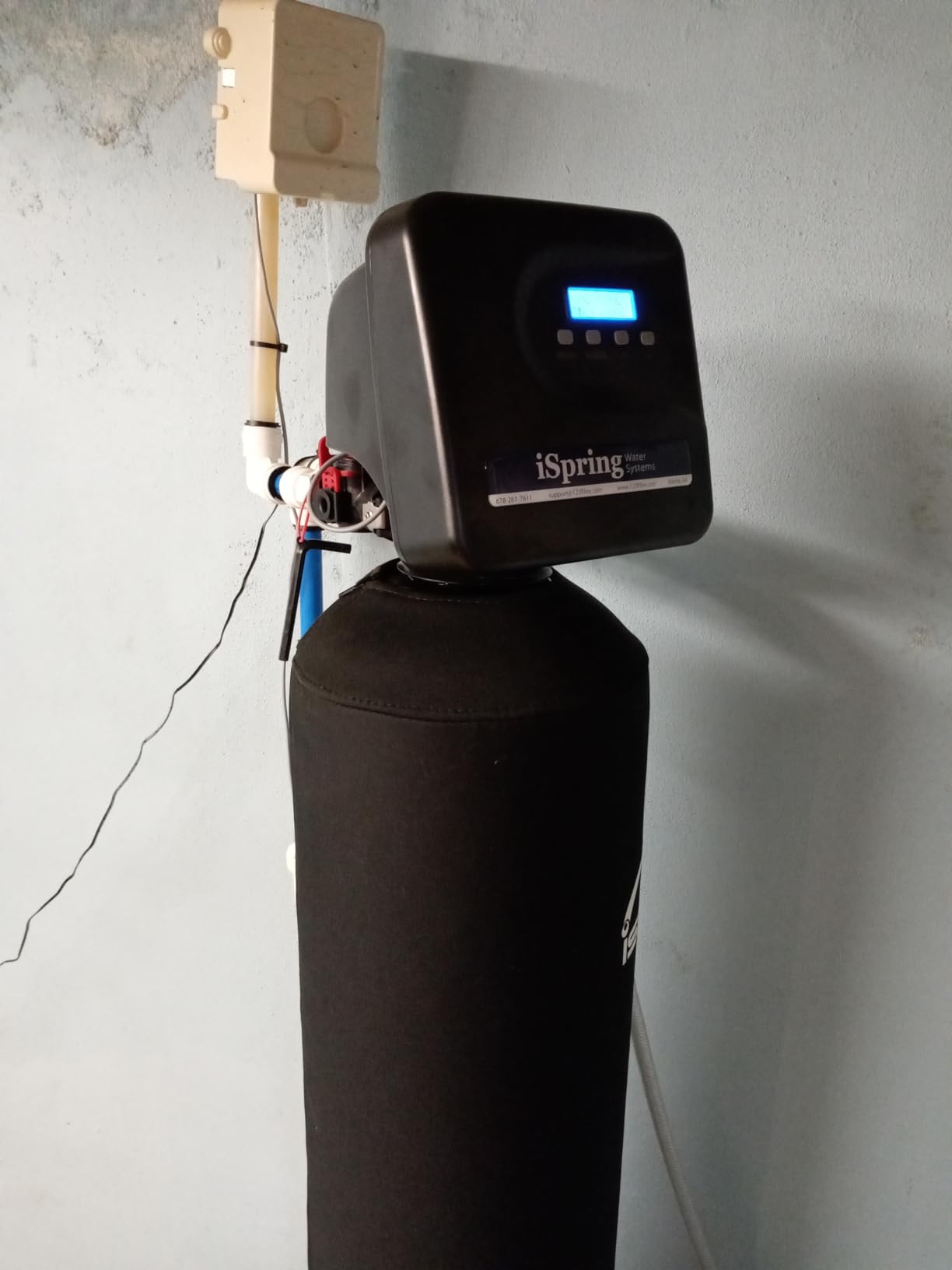
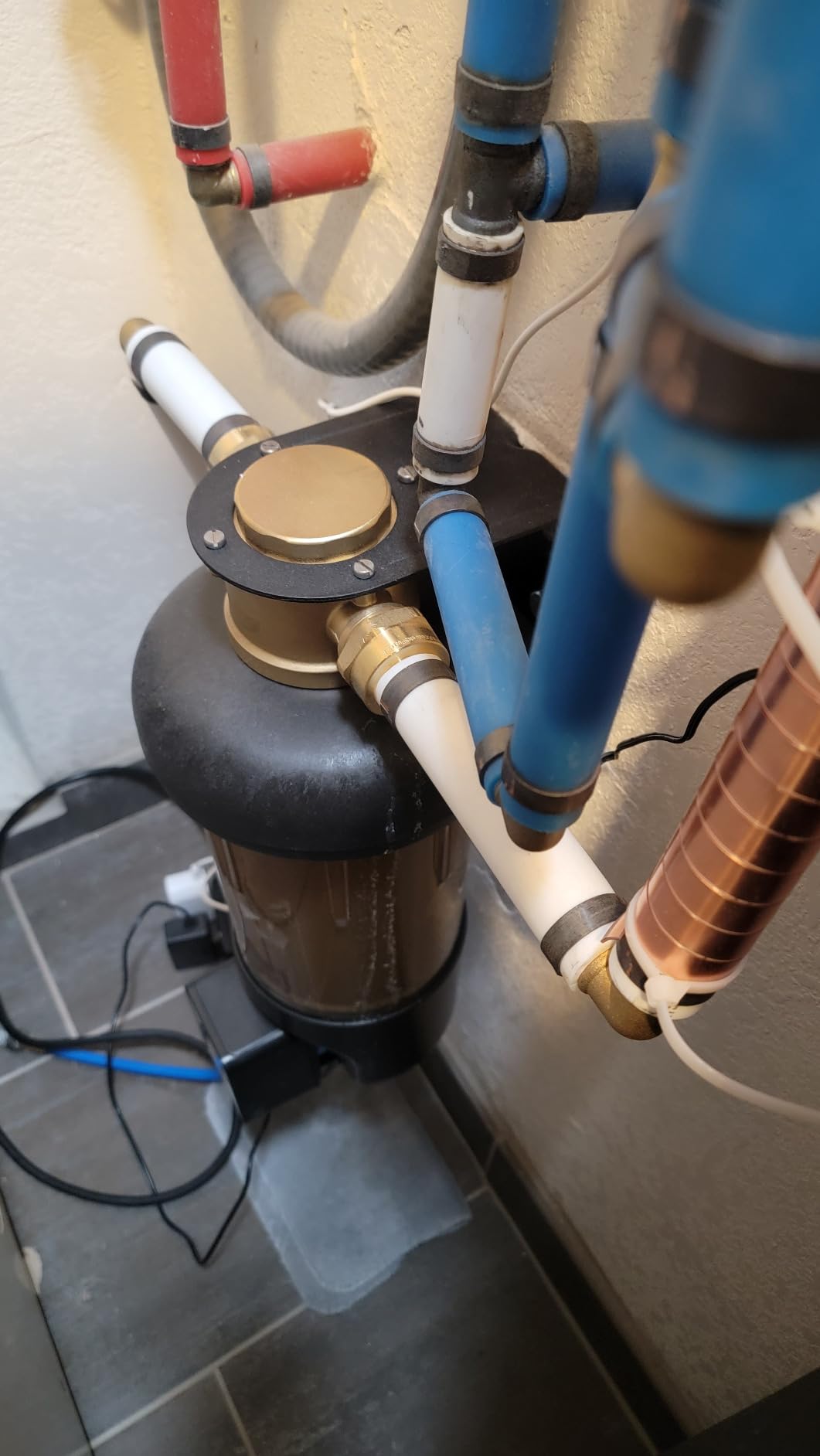
It runs at 150,000 gallons or five years, uses quick-fit 3/4 inch or 1 inch connectors, needs no power supply and no drain hole, and arrives as a 56.5 inch tall stainless steel tank weighing 85 pounds. Owners pair it with sediment and UV stages when they are assembling a more complete treatment train.
Two limits are stated plainly by the manufacturer. It is intended for municipal water and is not suitable for a microbiologically unsafe source, and it does not reduce TDS. Treat those as hard boundaries rather than fine print.
Who this fits best
Large households on chloraminated municipal supply who want chlorine and chloramine in a single vessel without wiring a backwash valve. The five year life also suits owners who do not want to schedule annual work.
Anyone with an existing softener who has watched resin degrade faster than expected will appreciate putting carbon ahead of it, since chloramine and chlorine both attack resin.
Where it falls short
It is the most expensive pick here by a wide margin, and the 85 pound tank needs a real mounting footprint rather than a shelf. If your water is fine on 15 GPM, the flow rating is money you are not using.
The municipal water restriction is genuine. On a well, the same money is better spent on iron, sulfur, or bacteria treatment, none of which this unit addresses.
7. Waterdrop WHF3T-PG 3-Stage System for Measured Chlorine Reduction
Waterdrop WHF3T-PG 3-Stage Whole House Water Filter System, 5 Micron
KDF composite plus GAC carbon
97.72% chlorine reduction
100000 gallons
15 GPM flow
Pros
- Measurable 97.72% chlorine reduction claim
- Brass lined inlet and outlet housings
- Reviewers report chlorine smell gone plus softer hair and skin
- Prefilter design extends cartridge life
Cons
- Threaded fittings can leak and need careful taping
- Supporting bracket can bend under cartridge weight
- Replacement cartridges only sold as a set of three
The WHF3T-PG is the most transparent cartridge system in the roundup about what it does. It pairs a KDF composite filter with a GAC filter wrapped in carbon fiber, and the stated chlorine reduction figure of 97.72% is specific enough to be testable rather than a round number.
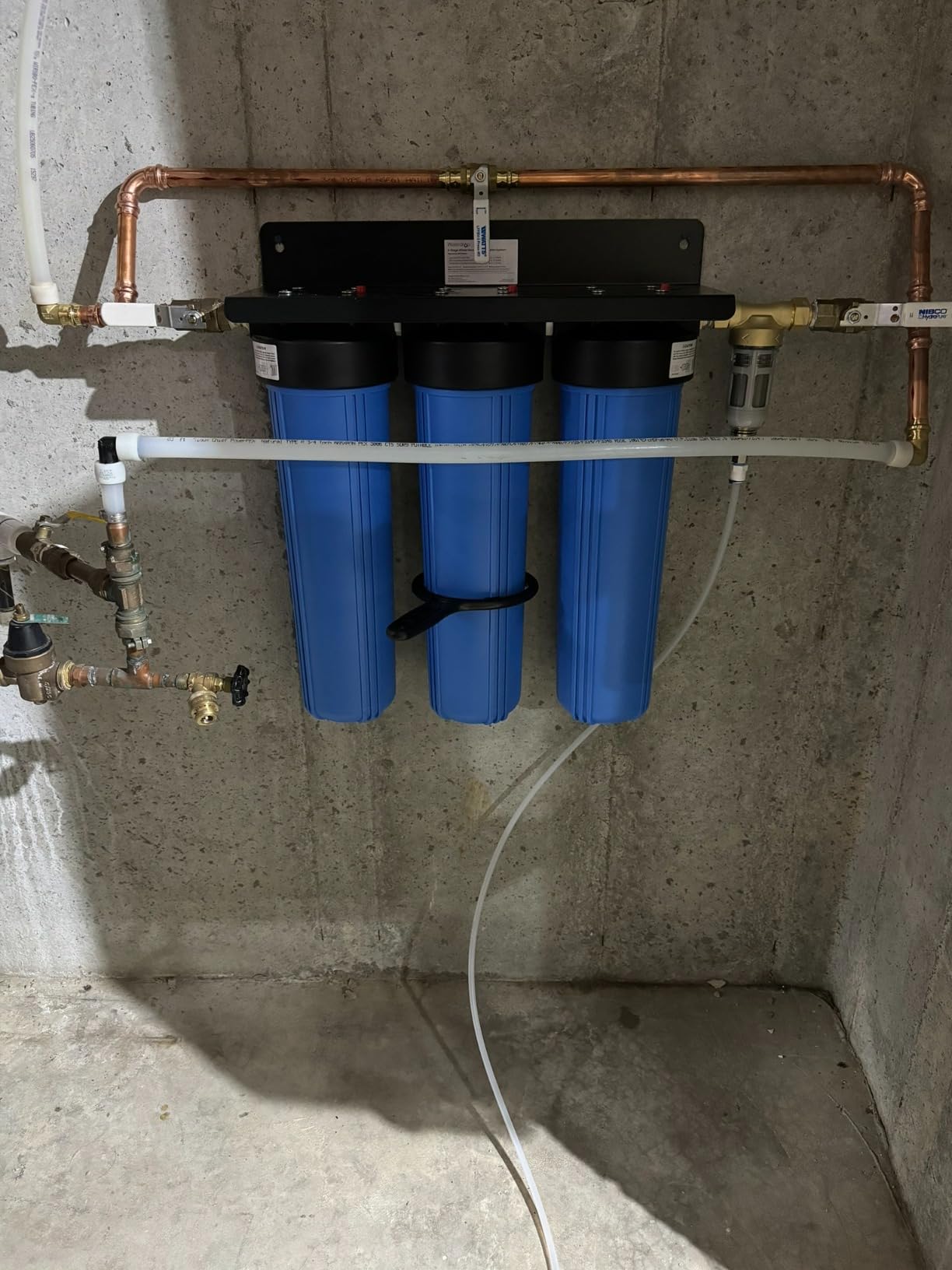
Brass lined inlet and outlet housings are worth noting because threaded plastic is the most common failure point in this category, and buyers call these housings out as durable. The 7 stage filtration path and the prefilter design both work toward extending cartridge life, which matters on a 100,000 gallon rating.
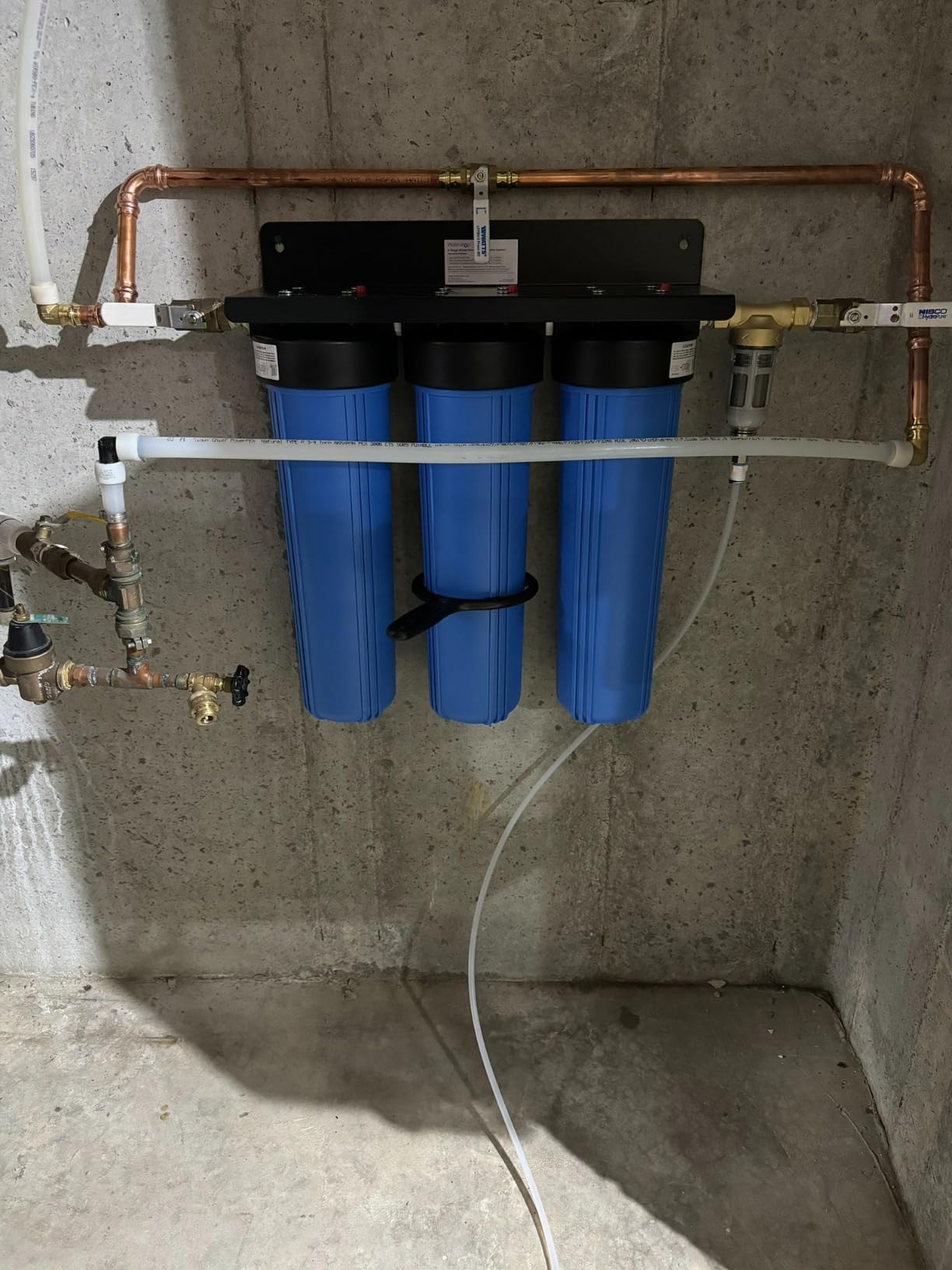
Flow is rated at 15 GPM with an operating range of 40 to 100 F, and the system is listed for both well and municipal sources. The KDF stage adds heavy metal capability that a plain CTO block does not offer, so it overlaps with the Express Water system but in a narrower package.
Owners report the chlorine smell disappearing within weeks, along with softer hair and skin. That last effect is the one people notice most after the taste itself, because chlorine binds to skin and hair.
Who this fits best
Buyers who want a stated, checkable chlorine reduction number and who value brass fittings over a lowest-cost listing. It is a good middle step up from a two-housing cartridge system.
If you also want lead reduction, the KDF stage gives you a claim that a straight CTO block cannot, and this is the lighter, cheaper way to get it than a full tank.
Where it falls short
Even with brass housings, reviewers report leaks at the threaded fittings and recommend generous Teflon tape and careful tightening. The bracket bending under cartridge weight is a separate annoyance that makes changes messier.
Buying all three cartridges at once is mandatory, so a single failed stage still costs you a full set. The 12 month filter life also means annual spending.
8. LiquaGen Catalytic Carbon Tank for Chloramine and PFAS
LiquaGen Whole House Water Filtration System — Catalytic Carbon & KDF 55 Media | City Water Filter for Chlorine, Chloramine, PFAS & Sediment Removal (10″ x 54″)
Catalytic carbon with KDF 55
Automatic backwash valve
1 million gallon rating
12 GPM in 10 x 54 config
Pros
- Automatic backwash removes manual cartridge changes
- Media life rated at 10 years or 1 million gallons
- FRP tank resists corrosion and pressure
- Fleck style control valves are rebuildable
Cons
- Some reviews describe the received item as a control valve component
- No instructions included in the box
- Tall tank needs vertical clearance and a drain line
This is the only backwashing catalytic carbon system in the roundup, and that combination matters for two specific contaminants. Catalytic carbon is treated to catalyze the destruction of chloramine, which standard GAC handles poorly, and it is the only media here marketed for PFAS alongside chlorine.
Unlike the non-backwashing tanks in this list, it has a Fleck 5600 control valve that runs a scheduled backwash. That means no cartridge wrench, no annual lifting, and no channeling, which is the failure mode that quietly ruins most non-backwashable carbon.
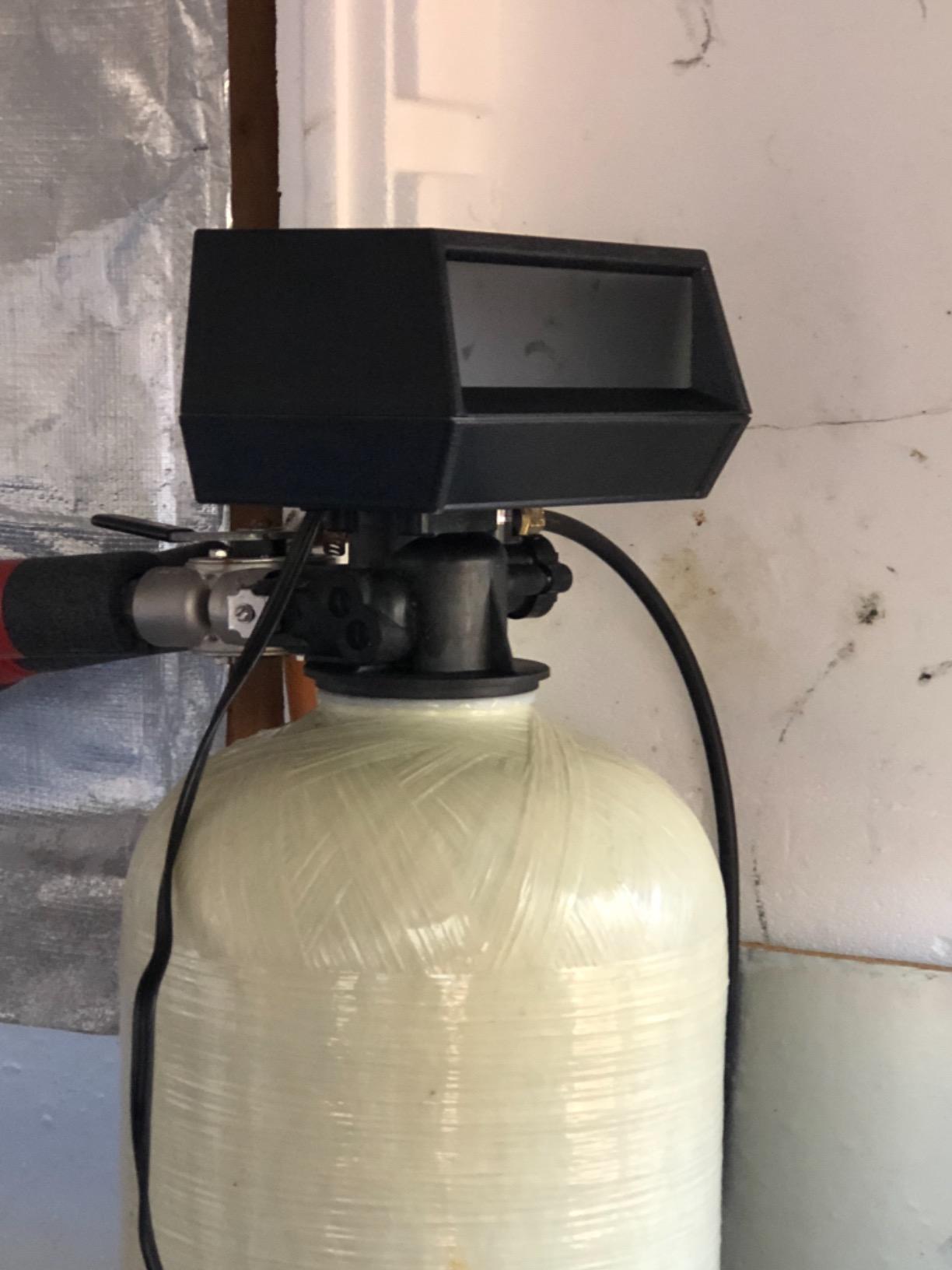
Three tank sizes are offered: 9 by 48 inch at 9 GPM, 10 by 54 inch at 12 GPM, and 13 by 54 inch at 20 GPM. The 10 by 54 inch configuration is what the listed flow of 12 GPM refers to, so double check which size arrives in the box.
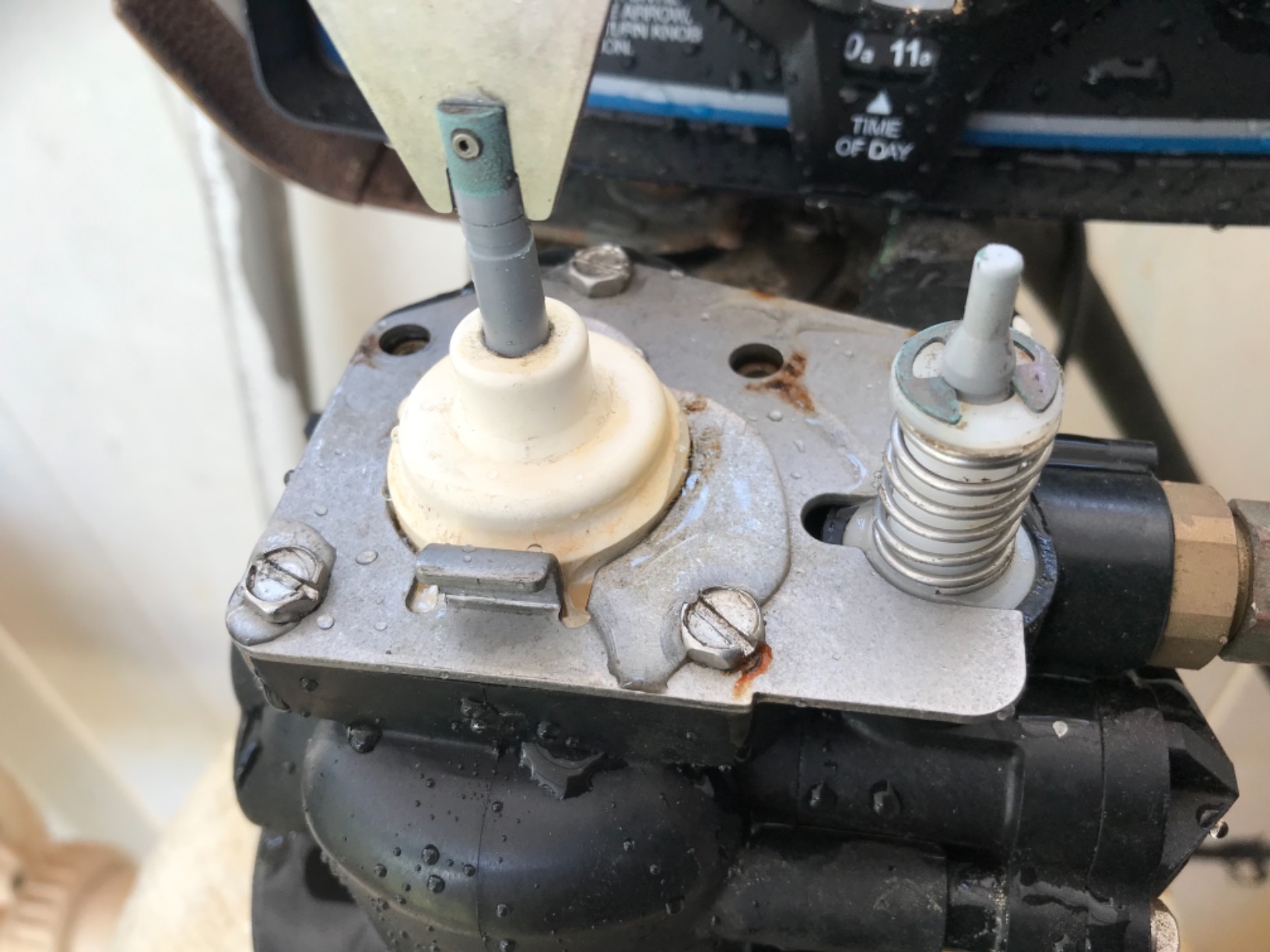
Before you buy, read the recent reviews carefully. A recurring theme is that some buyers received the Fleck 5600 control valve and evaluated it as a replacement part rather than a complete carbon system, and others noted missing paperwork. Confirm the package contents with the seller before ordering.
Who this fits best
Homes on a chloraminated municipal supply. That is the single clearest reason to choose this over every other system in the roundup, because a standard GAC bed will eventually leak chloramine back through as it exhausts.
It also suits owners who want cartridge-free operation over a decade and who have a floor drain or can run a drain line for the backwash discharge.
Where it falls short
The listing confusion is the practical problem. Verify you are receiving the media-loaded tank and not a bare control valve, and expect no instructions in the box.
The backwash needs a drain, and the tank is tall enough that vertical clearance in a cramped mechanical room is a real risk. If you cannot route a drain, a non-backwashing tank is the simpler path.
9. 3M Aqua-Pure AP904 System for Verified Certification
3M Aqua-Pure AP900 Series Whole House Water Filtration System AP904
Activated carbon block and pleat
100000 gallon capacity
Up to 20 GPM
NSF 42 and 372 certified
Pros
- Sanitary Quick Change cartridges make swaps fast and clean
- Stainless steel head and NSF 42 and 372 certification
- Slim 4.5 inch housing fits tight spaces
- High flow up to 20 GPM
Cons
- Replacement cartridges are proprietary to the AP900 series
- Lowest star rating in this group at 4.3
- Does not treat microbiologically unsafe water
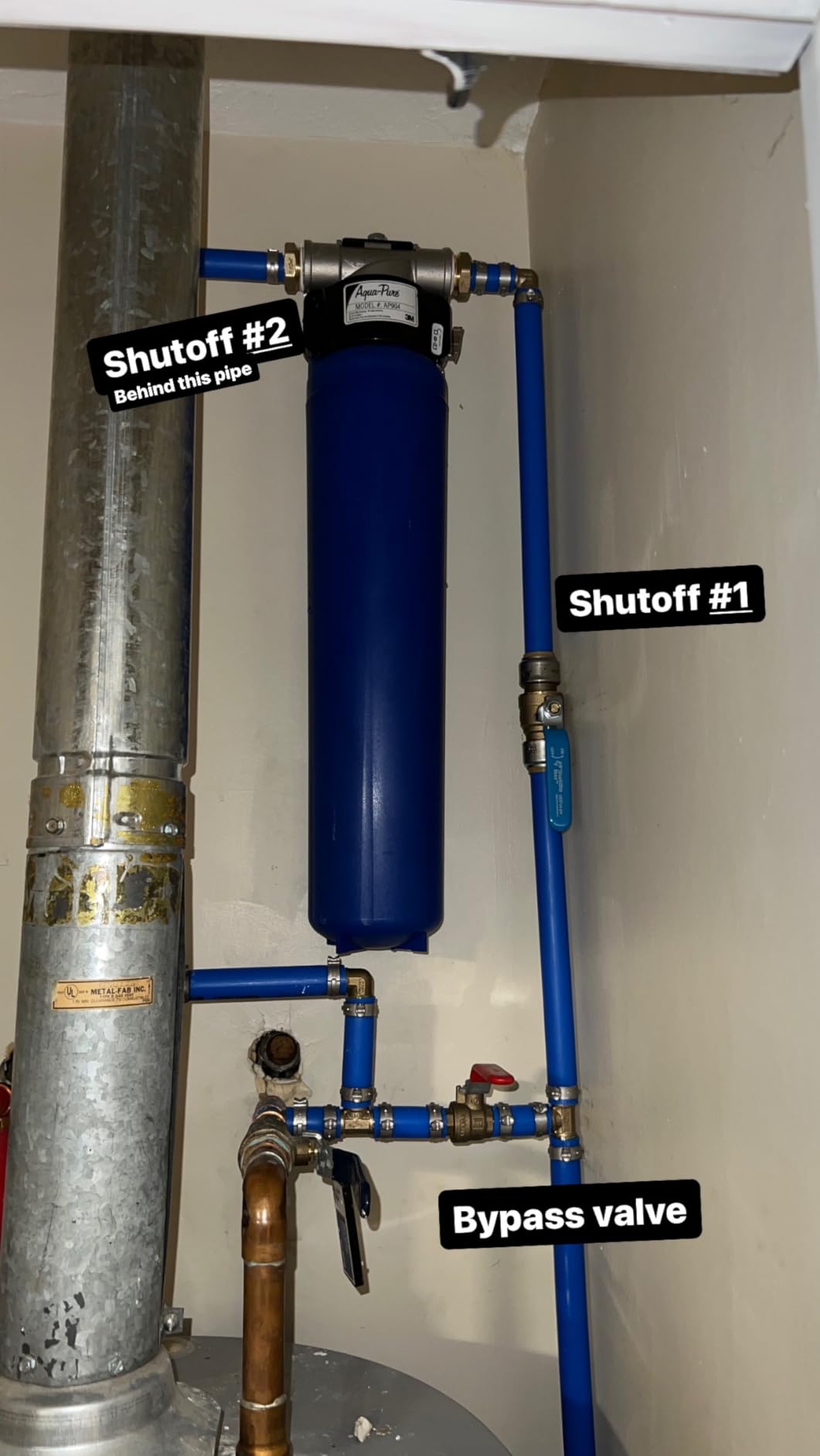
The AP904 is the pick for buyers who care most about certification. It is listed to NSF Standard 42 and 372, the head is 304 stainless steel, and it works on both chlorinated and non-chlorinated supplies. Only two systems in this roundup carry a named NSF Standard 42 listing on the whole assembly.
The Sanitary Quick Change design is its practical signature. You twist the housing, swap the element, and lock it up with no wrench and no contact between your hands and the media, which matters for a system a plumber installed in your basement.
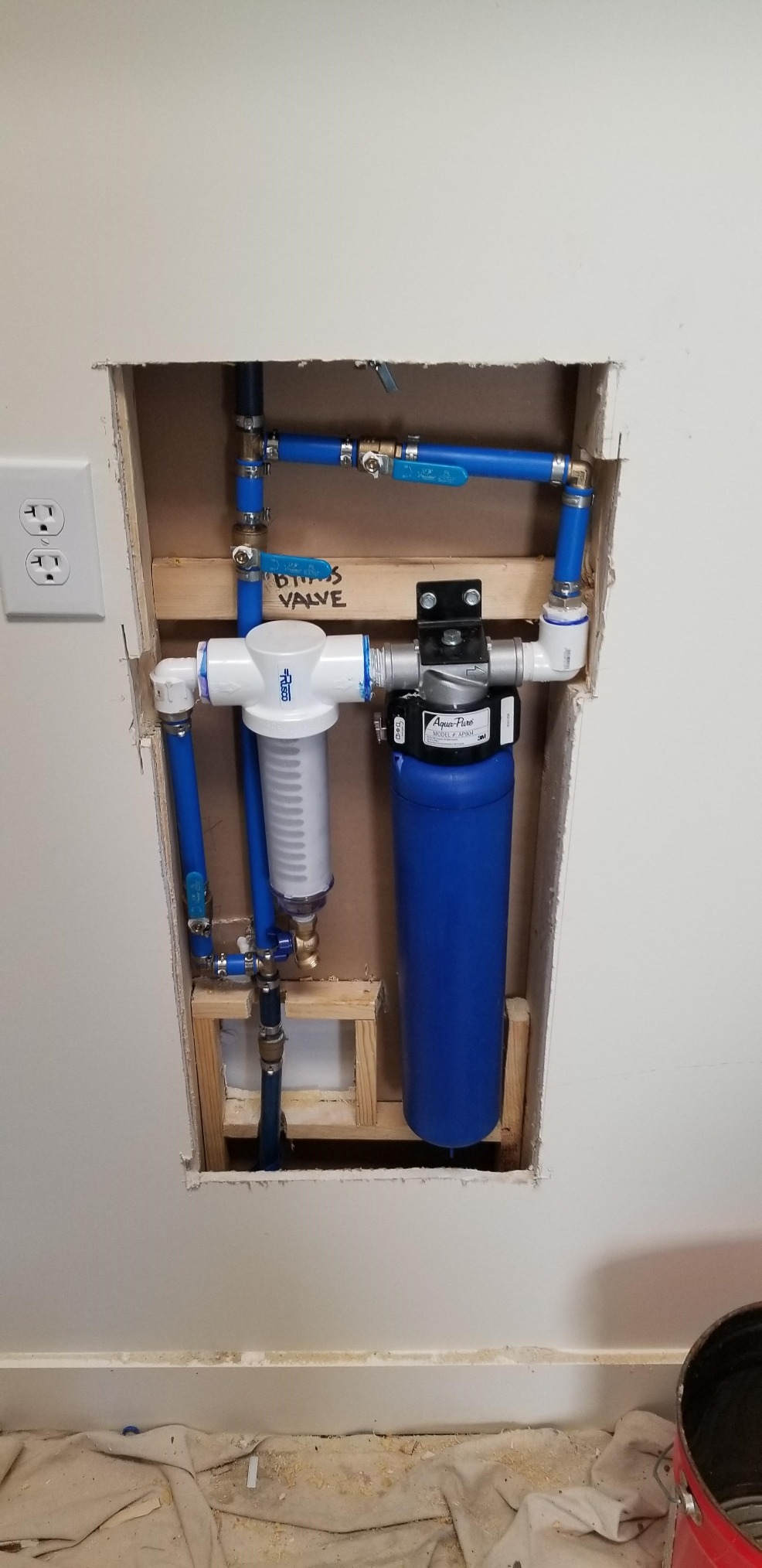
It handles sediment, chlorine taste and odor, and scale in one 4.5 inch wide cartridge, rated at 100,000 gallons and up to 20 GPM. The slim profile solves the clearance problem that trips up bigger housings in tight mechanical rooms.
At under 11 pounds it is also one of the lighter systems, and the listing notes it inhibits lime scale growth and extends appliance life, which is a reasonable secondary reason to install it ahead of a water heater.
Who this fits best
Buyers who want documented certification rather than a marketing claim, and who have already got a sediment stage elsewhere. The 20 GPM rating also gives real headroom in a busy home.
It is a natural first filter ahead of a tankless water heater or a softener, where chlorine and chloramine both attack gaskets and resin.
Where it falls short
The cartridge is proprietary to the AP900 series. There is no third-party equivalent, so replacement cost and availability are entirely on one manufacturer, which is the most common complaint in the reviews.
It carries the lowest star rating here at 4.3, with owners split on how much chlorine reduction they perceive over the cartridge’s life. And it does not treat unsafe water, so it is not a well water solution.
10. iFilters 4.5 x 20 Two-Stage System for Commercial-Style Housings
iFilters 4.5 x 20 2-Stage Sediment & Chlorine Whole House Filtration System
String-wound plus CTO carbon
100000 gallon rating
4.5 x 20 inch housings
1 inch ports
Pros
- Commercial grade housings hold more dirt than smaller filters
- Coconut shell carbon block handles taste and odor
- Straightforward install with 1 inch ports
- Lifetime US-based technical support
Cons
- Listed maximum flow rate of 1.5 GPM conflicts with the 15 GPM feature copy
- Professional installation is specified
- Does not reduce TDS
The iFilters system uses the smaller 4.5 by 20 inch Big Blue style housings, which is the format plumbers reach for when a 20 inch housing will not fit. Owners call out the commercial grade construction and the higher dirt-holding capacity compared with slim 4.5 inch single-stage heads.
The media pairing is a string-wound sediment cartridge ahead of a coconut shell carbon block, rated for 100,000 gallons or 12 months. The included housing wrench and pressure relief valves are sensible inclusions for a system specified for professional installation.
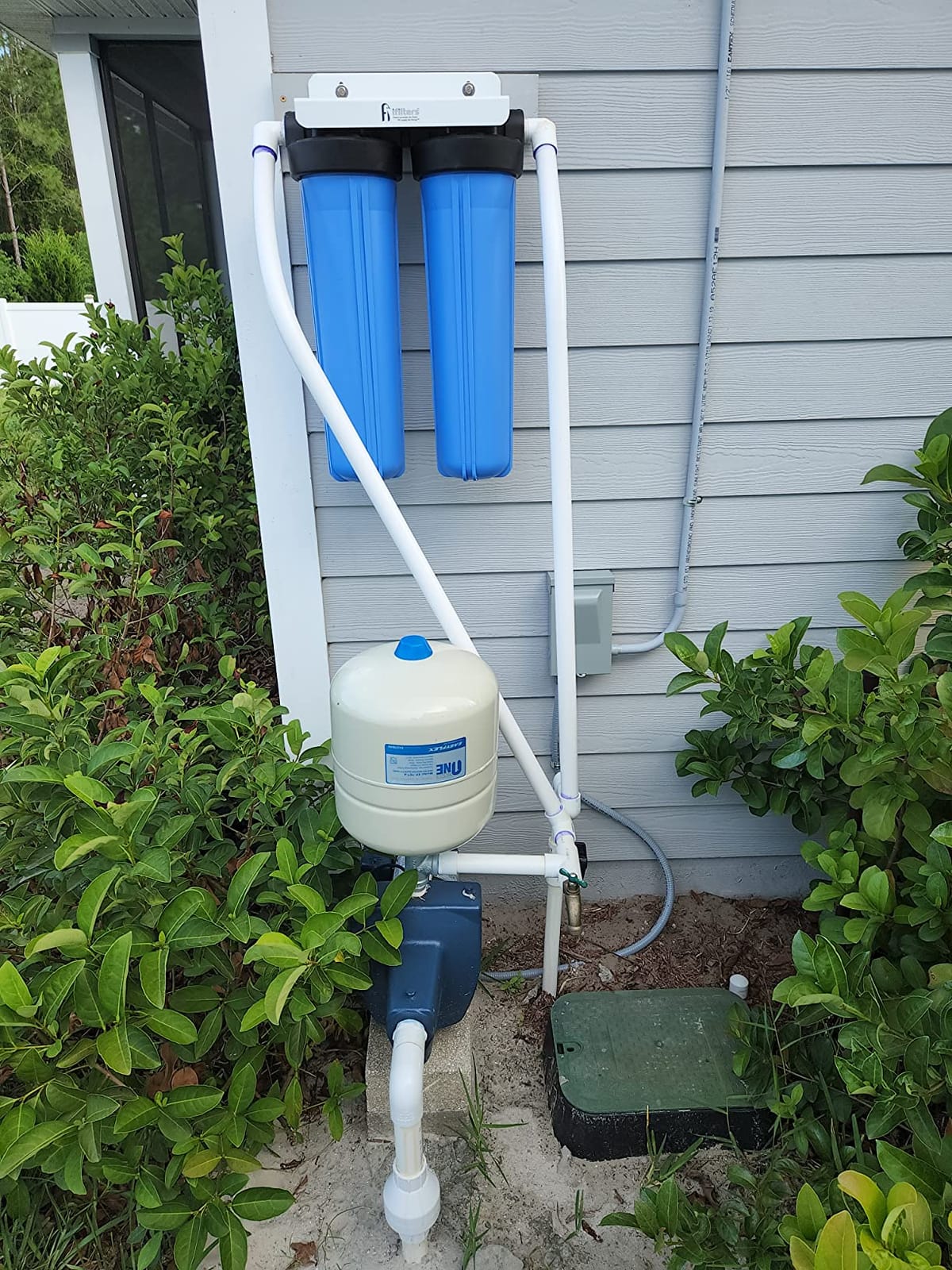
It is also framed for city and well water, covering sediment, rust, sand, silt, chlorine taste, and odor, and the listing states it helps protect plumbing lines, valves, water heaters, washing machines, and dishwashers.
Here is the number to check before you buy. The technical specifications list a maximum flow rate of 1.5 GPM, while the feature copy claims up to 15 GPM. That contradiction is the single most significant issue flagged in the reviews, and it is worth resolving with the manufacturer if your household needs real flow.

Who this fits best
Installers working in tight spaces where 20 inch housings will not go, and owners who prefer a format that is easy to source parts for. The 1 inch ports are standard.
It works as a straight chlorine and sediment stage in a chain of treatment, protecting downstream appliances from sediment and taste.
Where it falls short
Resolve the 1.5 GPM versus 15 GPM conflict first. Buying a system whose flow rating is uncertain means discovering the answer from a pressure drop in the shower.
Professional installation is specified rather than sold as a straightforward DIY job, and it does not reduce TDS. On a well with iron or sulfur, the carbon stage will not address what is actually causing the odor.
Chlorine vs Chloramine: How to Tell and What to Buy
Free chlorine and chloramine are different chemicals with different removal requirements, and figuring out which one your utility uses is the most important fact to establish before you buy anything. A standard GAC bed or a CTO block handles free chlorine very well and chloramine poorly.
Three practical ways to identify your disinfectant. Call your water utility and ask directly, which takes two minutes. Read your annual water quality report, which lists the disinfectant used. Or call the chlorine test line number listed on your tap and ask, which is the same question answered by the lab that runs your municipal samples.
If it is free chlorine, every system in this roundup will work, and the decision becomes format and budget. If it is chloramine, narrow the field to the catalytic carbon options: the LiquaGen catalytic carbon and KDF 55 tank, and the iSpring WF1054 whose KDF and coconut shell blend is claimed to handle both.
Chloramine is also slower to show up. It is less volatile, so the shower odor is milder, but it is more aggressive on softener resin and on nitrile gasket material in tankless heaters. If your water tastes fine but your softener keeps losing resin, that is a chloramine signature worth taking seriously.
How to Size a Whole House Carbon Filter for Your Home
Sizing is where most whole house carbon mistakes happen, and the error is usually undersizing rather than oversizing. Carbon removal depends on contact time, and contact time is roughly the volume of media divided by the flow through it. Push too much water through too little carbon and the chlorine comes back.
Start with peak flow, not average. A two-bathroom home with a laundry room and a dishwasher can briefly draw 8 to 12 GPM even though daily consumption is modest. Your filter should be rated comfortably above that peak, and in this roundup the spread runs from 12 GPM on the Waterdrop WHF21-BG to 26 GPM on the iSpring WF1054.
Then look at media volume if you are buying a tank. A household of four on municipal water is generally served well by a one cubic foot carbon bed, and a larger family or a home with more than three bathrooms benefits from going up a size. Carbon does not care about your gallons per day as much as it cares about how fast water moves through the bed.
Finally, install on the cold main only, ahead of the water heater. Filtering hot water wastes capacity and can damage the media, and putting carbon ahead of a softener is the cheapest way to protect resin from chlorine attack. Our broader whole house water filter guide covers where each component belongs in the chain.
What a Carbon Filter Cannot Remove
Carbon is a taste and odor tool with a narrow contaminant list. Being clear about this saves people from buying a filter twice, once for chlorine and again after discovering their actual problem was something else.
Carbon does not remove hardness, which is dissolved calcium and magnesium, so it will not soften water and cannot replace a softener. It does not remove nitrates, arsenic, or fluoride at meaningful rates, and it does not remove bacteria, viruses, or parasites, so it is not a well water disinfection solution.
It also does not reduce total dissolved solids, a claim several products in this roundup make explicitly and honestly. And on well water, iron and hydrogen sulfide odors are not chlorine problems. Those need oxidation-based media, and a carbon filter placed ahead of them can even become a biofilm surface. If that is your situation, the softener, iron, and UV options in our whole house water filter roundup are the relevant comparison.
PFAS is the partial exception. Carbon with sufficient contact time and adequate media can reduce some PFAS, and two of the systems here make that claim, but it is the least predictable removal in the category and not a reason to buy carbon instead of a dedicated treatment.
NSF/ANSI 42, 53 and 372: What to Actually Verify
Three standards get quoted in this category and they mean different things. NSF/ANSI 42 covers aesthetic effects, which includes chlorine taste and odor. NSF/ANSI 53 covers health-related contaminants, which is the one that matters for lead, mercury, and cryptosporidium.
NSF/ANSI 372 is a separate lead-free standard covering the materials in contact with drinking water. It is common on newer products and says nothing about filtration performance, so a 372 badge on a box is not evidence that chlorine is removed.
Check the certificate, not the box. A listing should point to a certification number you can look up in the NSF or WQA database for the specific model, not for the brand. In this roundup, the 3M Aqua-Pure AP904 and the Aquasana WH-1000 both carry a named NSF Standard 42 listing, and the two Waterdrop systems list 372 certification for their materials.
Where you find nothing, treat the chlorine claim as a manufacturer statement. That does not make it false, it just means you are relying on the seller rather than an independent lab, and you should weigh that accordingly.
Maintenance, Flushing and Replacement Schedule
Cartridge systems need a scheduled change, not a reactive one. Owners on city water commonly run 3 to 4 changes a year and describe that as routine. Set a reminder tied to the filter’s own rated capacity, and for a family of four that works out to roughly annual for a 50,000 gallon cartridge.
Do not wait for a taste change as your trigger. Unlike a sediment filter, an exhausted carbon block often does not slow your water down noticeably, so the flow stays fine while your water quality quietly goes backwards. This is the most common complaint in whole house filtration forums, and it is the single most avoidable mistake in this category.
After any cartridge change, flush the new carbon before you use it. Run the cold line at full flow for five to ten minutes, or until the water runs clear, because carbon fines come off a fresh element. Skipping the flush is why people occasionally taste a faint bitterness in the first day after a change.
Tank systems invert the habit. The Aquasana WH-1000 and the iSpring WF1054 have no cartridge schedule, so check taste annually and expect a media replacement decision somewhere in year five to ten. The LiquaGen tank backwashes on a programmed cycle and needs a drain, but the media is still a long-life item rather than an annual purchase.
Downsides of Whole House Carbon Filtration
Being straight about the drawbacks is more useful than a list that only flatters the products. Whole house carbon filtration has real limits, and they are the reason some buyers end up spending twice.
Cartridge systems have no flow-drop signal, so they get run past exhaustion. They channel over time as water finds the easiest path through a spent block, which reduces effective contact time and is why some owners report that a cartridge filter never works as well as a tank. And cartridges are sold as sets on several of the systems here, so one failed element still costs a full replacement.
Non-backwashable tanks have their own failure mode, with carbon fines migrating downstream and needing repeated post filter flushing. Backwashing systems need a floor drain and vertical clearance. Larger tanks reduce hardness-related staining only as a side effect and never touch hardness itself.
None of these systems reduce TDS, none of them treat unsafe water, and a whole house install needs a plumber in most municipalities. If your only problem is a chlorine taste in one glass of water, a countertop or pitcher filter is a fraction of the commitment and may genuinely be the right call.
Frequently Asked Questions
Does a charcoal filter remove chlorine?
Yes. Activated carbon adsorbs chlorine onto its large internal surface area, which is why a properly sized whole house carbon filter neutralizes chlorine taste and odor at every tap. Standard granular activated carbon handles free chlorine well, while chloramine requires catalytic carbon. Carbon does not remove hardness, nitrates, arsenic, or bacteria.
Does activated carbon remove chlorine gas?
Carbon does not bind chlorine gas, because that is a safety hazard carried in air rather than a contaminant in water. What it removes is dissolved residual chlorine, the form utilities add to disinfect the distribution system. Activated carbon adsorbs that residual chlorine and the disinfection by-products it forms, which is what causes the taste and odor at your tap.
What are the downsides of using a carbon water filter?
Cartridge systems give no flow-drop warning when exhausted, so owners run them past their useful life, and the media channels over time as water finds the easiest path through a spent block. Cartridges are often sold as sets, so one failed element still costs a full change. Non-backwashable tanks can release carbon fines downstream, backwashing systems need a floor drain, and no carbon filter reduces hardness, nitrates, or bacteria.
Is it bad if my water tastes like chlorine?
At normal utility levels chlorine is not considered a health hazard, and a chlorine taste in municipal water is common and usually harmless. It matters for taste, odor, and the way it binds to skin and hair, and because chlorine and chloramine both damage water softener resin and tankless heater gaskets over time.
How long should I run water through a new filter after a change?
Run the cold main at full flow for five to ten minutes, or until the water runs clear, after any carbon cartridge change. Fresh carbon blocks shed fines on first use, and flushing them clears the initial bitterness or cloudiness. Skipping the flush is a common reason people think a new filter tastes worse than the old one.
Final Verdict: Which Whole House Carbon Filter to Buy in 2026
Start with the iSpring WGB21B. It pairs a sediment stage with a coconut shell carbon block, carries the deepest review history in this roundup, and does the core job of fixing chlorine taste at every tap without asking you to change your habits. For broader contaminant coverage on municipal water, the Express Water three-stage system adds KDF and anti-scale stages in one box.
Move up a format rather than up a price if you want fewer maintenance decisions. The Aquasana WH-1000 trades annual cartridge work for a ten-year media life, and the LiquaGen catalytic carbon tank is the one to buy if your utility uses chloramine or you want automatic backwashing. Set your replacement reminders by capacity, not by taste, and install ahead of the softener every time.