
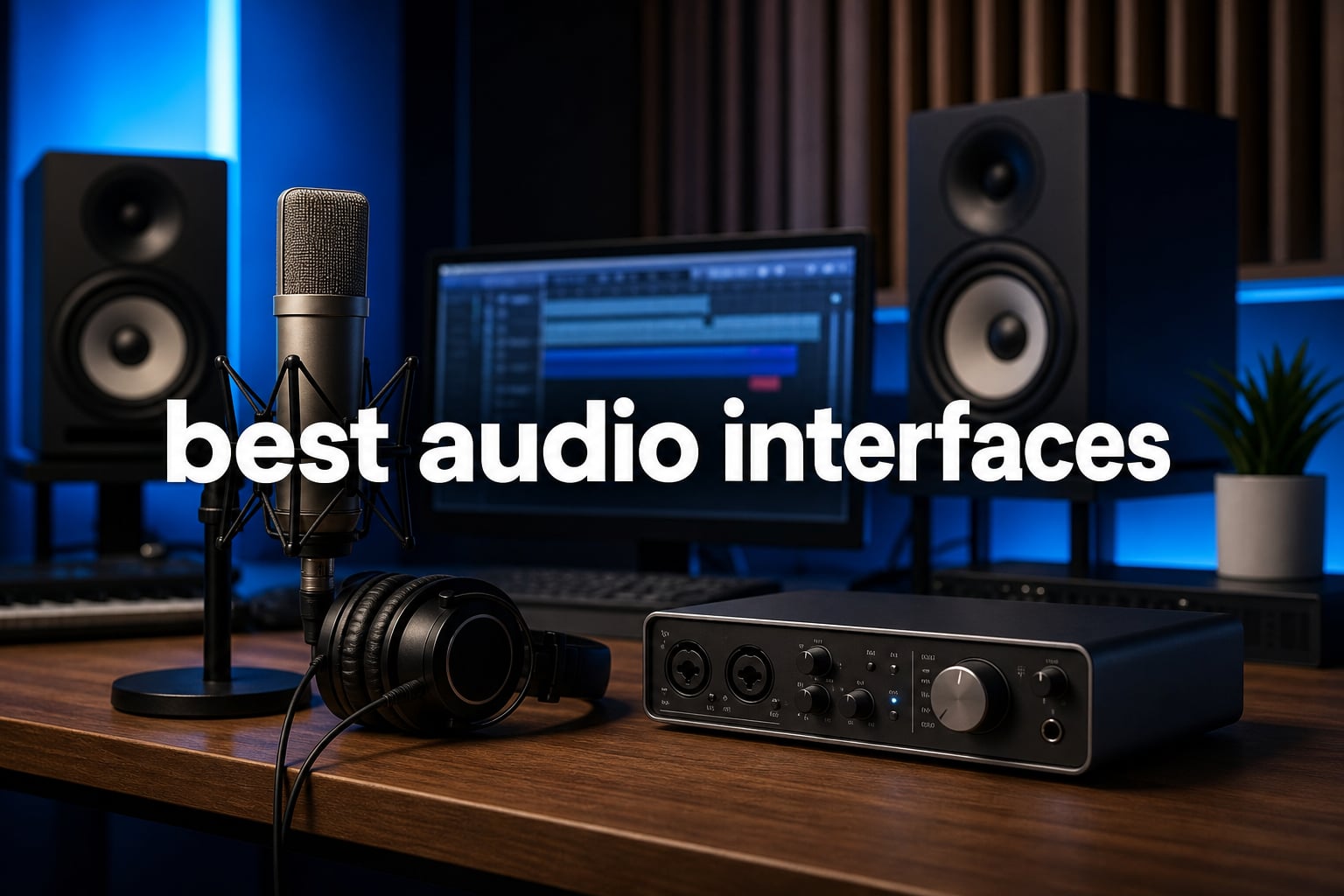
The best audio interfaces turn a microphone, guitar, or keyboard into a clean signal your computer can record, while giving you proper headphone and speaker monitoring. For most home creators in 2026, the right pick is not the one with the longest spec sheet; it is the one with enough inputs, dependable computer support, and controls you can reach while recording.
An audio interface is an external converter and preamp: it raises a microphone signal, converts it to digital audio for your DAW, then converts playback back for monitors or headphones. That means lower-noise recording, 48V phantom power for compatible condenser mics, instrument inputs for guitar, and direct monitoring that a built-in computer sound card usually cannot provide.
I narrowed this list to ten supplied interfaces across solo recording, podcasting, streaming, guitar tracking, and multi-input studio work. The SSL 2+ MKII is my broadest desktop recommendation for its 32-bit/192 kHz conversion, four balanced outputs, MIDI, and two separate headphone outputs; the Scarlett 2i2 4th Gen is the simplest all-round starting point; and the M-Audio M-Track Duo HD covers a straightforward two-input setup with 192 kHz recording.
Plan the rest of the signal path before choosing. Our guides to best studio monitors for your audio interface setup and monitoring headphones for recording can help you match the outputs on an interface to the gear you will actually hear through.
Table of Contents
Top 3 picks answer the most common recording needs
Choose the SSL 2+ MKII for a compact desk setup that needs flexible outputs and dual headphone monitoring, the Scarlett 2i2 4th Gen for guided gain control and a broad software package, or the M-Track Duo HD when two combo inputs and a direct-monitor switch cover the job. All three offer 48V phantom power, but the number of connected sources and the workflow features differ sharply.
Best audio interfaces in 2026 compare inputs, monitoring, and expansion
The comparison below puts all ten choices in one place. Treat the first decision as an input-count decision: a single voice or guitar part can work with one input, a vocalist and guitarist working together need two, and a multi-person or hardware-heavy setup benefits from added line, digital, or MIDI connections.
| Product | Specifications | Action |
|---|---|---|
 SSL 2+ MKII SSL 2+ MKII |
|
View on Amazon |
 Focusrite Scarlett 2i2 4th Gen Focusrite Scarlett 2i2 4th Gen |
|
View on Amazon |
 Arturia MiniFuse 1 Arturia MiniFuse 1 |
|
View on Amazon |
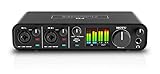 MOTU M4 MOTU M4 |
|
View on Amazon |
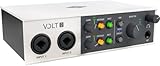 Universal Audio Volt 2 Universal Audio Volt 2 |
|
View on Amazon |
 Focusrite Scarlett 16i16 4th Gen Focusrite Scarlett 16i16 4th Gen |
|
View on Amazon |
 Neumann MT 48 Neumann MT 48 |
|
View on Amazon |
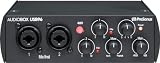 PreSonus AudioBox 96 PreSonus AudioBox 96 |
|
View on Amazon |
 M-Audio M-Track Duo HD M-Audio M-Track Duo HD |
|
View on Amazon |
 UA Apollo Twin X Duo USB UA Apollo Twin X Duo USB |
|
View on Amazon |
1. SSL 2+ MKII delivers the most complete compact desktop routing
Solid State Logic 2 MKII Plus USB-C Audio Interface 2×4
2 mic preamps
4 balanced outs
32-bit/192 kHz
MIDI I/O
Pros
- Legacy 4K enhancement
- Dual headphone outputs
- Four balanced outputs
- MIDI I/O
Cons
- Two mic preamps only
- Drivers may be needed
I would put the SSL 2+ MKII at the center of a desk where recording and playback both matter. Its two SSL microphone preamps, two line or Hi-Z inputs, four balanced DC-coupled TRS outputs, and two discrete headphone outputs give a small studio much more routing flexibility than a basic two-in/two-out box.
The important practical benefit is that two people can monitor from separate headphone outputs without passing a splitter around. Four balanced outputs also leave room for a pair of monitors plus other output assignments, while the 5-pin MIDI connections keep an older keyboard controller or drum machine in the same interface-centered setup.
Its 32-bit/192 kHz AD/DA converters, 48V operation, zero-latency monitoring, stereo loopback, and high-pass filters cover modern voice, instrument, and streaming tasks. The Legacy 4K analog enhancement is the distinguishing sound-shaping control here; it is available when you want an added character option rather than a completely plain capture path.
I also like that it is bus powered, because that reduces cabling on a compact workstation. The supplied data does say drivers may be needed on some systems, so I would confirm the current Windows or macOS support before making it the permanent hub of a time-sensitive session.
Its routing suits creators who monitor more than one way
This is a strong fit for a songwriter who records vocals and guitar, a producer with MIDI hardware, or a streamer who wants loopback and separate headphone listening. It is also sensible when balanced outputs are part of the plan from day one instead of an upgrade for later.
I would choose it over a simpler two-channel unit when its extra outputs and second headphone feed will be used regularly. Those connections are the reason to select it, not merely the higher converter figure.
Its two microphone channels set a clear ceiling
It cannot record a full multi-mic drum kit or several guests on independent mic channels by itself. Creators who already know they need digital expansion, many simultaneous mics, or more than two tracked sources should start with the Scarlett 16i16 instead.
The controls and enhanced analog mode make sense for an active desk, but a one-person voice setup may not need all of this I/O. In that case, a smaller single-input or basic two-input unit may be easier to justify.
2. Focusrite Scarlett 2i2 4th Gen makes first recordings less intimidating
Focusrite Scarlett 2i2 4th Gen USB-C Audio Interface
2 preamps
120 dB range
Auto Gain
Loopback
Pros
- Auto Gain
- Clip Safe
- Air mode
- Large software bundle
Cons
- Two inputs only
- Check cable included
The Focusrite Scarlett 2i2 4th Gen is the best audio interface for beginners who want two inputs without giving up useful recording safeguards. Its two ultra-low-noise microphone preamps accept instrument and line sources, and its 120 dB dynamic range gives it a capable conversion specification for a small home studio.
Auto Gain can set a recording level for you, while Clip Safe watches for overloads and adjusts gain to avoid clipping. Those two controls address a common first-session problem: a singer or guitarist gets louder after levels were set, and the recording becomes hard to repair.
Air mode is an extra option for vocal and guitar presence, and loopback is useful for routing computer audio into a stream or capture. Focusrite also lists Pro Tools Intro+, Ableton Live Lite, Cubase LE, and the Hitmaker Expansion among the supplied software, making the interface a workable starting point for someone who does not yet own a DAW package.
The 2i2 works with Mac OS, Windows OS, and iOS according to the product data. Community discussions do mention Windows driver frustration around Focusrite products, so I would install current software, confirm buffer behavior with your DAW, and test it during the return window rather than assuming every PC will behave the same way.
Its guided gain features help solo creators start faster
I would hand this model to a vocalist, guitarist, podcaster, or streamer who wants two sources and plain front-panel guidance. Auto Gain and Clip Safe are especially useful when you are operating the computer, microphone, and recording software by yourself.
Two inputs also make a practical guitar-and-vocal recording setup: one XLR microphone plus one instrument connection. That is a far more useful layout for most home songs than a single input.
Its channel count limits sessions with multiple people
Two inputs are enough for one or two sources, not a four-person podcast with isolated microphones or a band tracking several drums. Buying a two-input device because it is familiar can create an immediate bottleneck when the recording plan expands.
Its connector is USB, but the connector alone does not settle latency or stability. Use sensible buffer settings, direct monitoring when suitable, and current drivers to assess the behavior of your computer and DAW combination.
3. Arturia MiniFuse 1 keeps a solo recording rig small and capable
Arturia MiniFuse USB Audio & MIDI Interface, MiniFuse 1
1 combo input
110 dB range
Loopback
MIDI I/O
Pros
- Compact body
- Five-year warranty
- Loopback
- Creative software
Cons
- One input channel
- No direct monitoring listed
The Arturia MiniFuse 1 is the compact choice for a creator recording one source at a time. Its USB-C connection, one combo mic, instrument, or line input, 48V phantom power, headphone output, stereo outputs, and 110 dB dynamic range make a focused setup rather than a stripped-down one.
I would use its single input for voiceover, a solo vocal pass, direct guitar recording, or a travel songwriting rig. The body is small and weighs 0.9 pounds, so it can live beside a laptop without taking over the table.
Loopback is useful when a tutorial, stream, or podcast needs audio from an app mixed into the captured program. The listed 5-pin MIDI input and output connections also give hardware-controller owners a direct path without a separate MIDI adapter, while the USB Type-A hub can supply up to 250 mA to a peripheral.
The included software list is unusually wide for a simple interface: Ableton Live Lite, Analog Lab Intro, Arturia FX, NI GUITAR RIG 6 LE, Auto-Tune Unlimited, and a Splice Creator Plan are all specified. A five-year warranty is another standout point, though the product data does not list direct monitoring, so I would not assume that feature is present.
Its one-input layout works when recording is genuinely solo
This interface fits a mobile musician, a voiceover beginner, or a producer who records one microphone or instrument at a time. It also makes sense for an Arturia software user who will put the supplied creative tools to work immediately.
I would select it for portability and software breadth, not for tracking two performers together. A compact interface is helpful only if the source count matches the way you record.
Its single channel rules out paired live sources
You cannot capture a vocalist and a guitar on separate channels at the same time through this unit. You also cannot build an isolated two-mic podcast around it without recording people one after another.
Since no direct monitoring function is listed in the supplied specifications, plan to monitor carefully through the DAW and manage buffer size if you choose it. Users who need a simple hardware monitor control should consider the MOTU M4, AudioBox 96, or M-Track Duo HD.
4. MOTU M4 gives four-by-four flexibility with visible metering
Motu M4 4×4 USB-C Audio Interface
4-in/4-out
2 mic preamps
LCD screen
Loopback
Pros
- Hardware monitoring
- Four I/O
- LCD feedback
- Loopback
Cons
- Software bundle is smaller
- Two mic preamps
The MOTU M4 is the step up I would make when a two-channel interface feels cramped but a large rack-style unit is unnecessary. It is a USB-C four-in/four-out interface with two microphone preamps, hardware monitoring, an LCD screen, loopback, and a two-year warranty.
Its front-panel LCD feedback matters because recording levels are easier to assess when you can see them without moving into a software window. Hardware monitoring gives a direct path for listening while recording, which is the practical fix for the distracting delay that forum users repeatedly report when monitoring only through a DAW.
Four inputs and four outputs provide breathing room for sources and playback routing beyond a conventional two-in/two-out format. I would look at this for a small podcast station, a producer with a pair of mics and additional line sources, or a musician who needs another connection ready instead of swapping cables between takes.
MOTU includes Performer Lite, Live Lite production software, and more than 6 GB of content according to the supplied listing. The bundle is less broad than some rivals, but its physical monitoring and visual feedback are tangible workflow features rather than extras hidden in a download account.
Its hardware monitoring solves a common tracking problem
Choose the M4 when you want to hear your voice or instrument without relying solely on a low DAW buffer. Direct hardware monitoring can make a session feel immediate even if the project grows heavy with plug-ins.
It is also a sound choice for a creator who needs loopback for streaming or remote work. The four-by-four layout is more flexible than it first appears when playback and capture both need dedicated paths.
Its two preamps do not replace a multichannel recording rig
Although it is four-in/four-out, the supplied data lists two microphone preamps. Do not mistake its total I/O count for four ready-to-go microphone channels when planning a band recording session.
Creators who need ADAT, S/PDIF, or a 16-channel workflow should look to the Scarlett 16i16. If your real need is only one vocal or guitar source, the M4’s added connections may remain unused.
5. Universal Audio Volt 2 adds a selectable vintage preamp character
Universal Audio Volt 2 USB Audio Interface
Vintage mode
24-bit/192 kHz
LUNA support
iOS support
Pros
- 610-style Vintage mode
- LUNA integration
- UAD ecosystem
- Cross-platform support
Cons
- One-year warranty
- Mobile use needs power
The Universal Audio Volt 2 is for the home recordist who wants a choice between a clean path and a more colored front end. Its Vintage mode is designed around the classic 610 preamp sound, while its converters support up to 24-bit/192 kHz recording.
I would reach for the Volt 2 when the creative appeal of its preamp character and the Universal Audio software world matter as much as raw I/O. It works with macOS, Windows, iPad, and iPhone according to the listing, and it supports LUNA plus UAD plug-ins and instruments.
Its included software is aimed at making music rather than only capturing a signal: Ableton, Melodyne, Virtual Drummer, Marshall, and Ampeg are listed. That makes this a good guitar-and-vocal interface for someone who will use amp or instrument tools as part of the writing process.
There are limits to keep in view. The warranty is one year, and the supplied product information says mobile use requires an external power supply; iOS users may also need an Apple Lightning to USB Camera Adapter, depending on their device connection.
Its Vintage mode suits writers who want a character option
Pick the Volt 2 if you want to vary the front-end tone of a vocal, guitar, or bass part without adding a separate preamp. The switchable character is the main reason this interface stands apart from plain two-input designs.
I would also consider it for a creator using more than one device type. Its stated Mac, Windows, iPad, and iPhone support creates options for a computer desk and a compatible mobile writing setup.
Its mobile requirements need checking before travel recording
Do not assume a portable device alone will power every mobile session. The listing specifically notes an external power supply for mobile use and a possible adapter need for iOS, so pack and test the complete connection chain.
A one-year warranty is shorter than the coverage listed for the Scarlett 2i2, MiniFuse 1, and MOTU M4. If warranty length is your deciding factor, those alternatives deserve a closer look.
6. Focusrite Scarlett 16i16 4th Gen gives a growing studio room to expand
Focusrite Scarlett 16i16 4th Gen USB-C Audio Interface
16-in/16-out
69 dB gain
ADAT and S/PDIF
MIDI
Pros
- Extensive I/O
- ADAT expansion
- 122 dB range
- Auto Gain and Clip Safe
Cons
- Two mic preamps
- External power supply
The Focusrite Scarlett 16i16 4th Gen is the right answer when a studio has outgrown two inputs but does not need to jump to a specialist rack system. It provides 16 inputs and 16 outputs across two mic preamps, Hi-Z, line inputs, ADAT, S/PDIF, and MIDI I/O.
Its 4th Generation preamps supply 69 dB of gain, and the 24-bit/192 kHz converters are specified at 122 dB dynamic range. That combination gives low-output microphones a meaningful gain figure while keeping the conversion and connectivity suitable for a larger project setup.
I like the way this interface separates today’s needs from tomorrow’s. You can use the two onboard preamps now, then add sources through the digital expansion options as the studio accumulates hardware, without replacing the core interface just because the source count changes.
Air modes offer presence and harmonic drive, while Auto Gain and Clip Safe carry over the recording safeguards found in smaller 4th Gen Scarlett models. It includes an external power supply and USB cable, and the product data lists Mac OS, Windows OS, and iOS compatibility plus a three-year manufacturer warranty.
Its digital connections support a studio that will add hardware
Choose this model for a producer with external preamps, digital gear, MIDI instruments, or plans for more inputs than a standard desktop box offers. ADAT and S/PDIF are not decorative labels; they are the connections that make later expansion possible.
It is also useful when routing several playback destinations or hardware effects matters. The 16-by-16 design is a foundation for a more involved signal flow, not just a larger version of a two-input interface.
Its two onboard preamps still shape the immediate mic setup
Despite the 16-in/16-out designation, it begins with two microphone preamps. A session that needs many microphones at once will need appropriate external equipment through the expansion paths.
I would not recommend it to a solo voiceover creator who only needs one microphone and headphones. Its power and connection options are best for a setup that can take advantage of them.
7. Neumann MT 48 targets demanding conversion and monitoring workflows
Neumann MT 48 US – Premium USB-C Audio Interface with Touchscreen Control, AES67, MIDI Interface, & ADAT/S/PDIF Expansion Connectivity
136 dB range
DSP processing
AES67
4 mixers
Pros
- 136 dB dynamic range
- Integrated DSP
- Four mixers
- AES67 and ADAT
Cons
- Windows only
- Niche compatibility
The Neumann MT 48 is the high-end option here for a creator whose priority is specified conversion performance, deep monitoring control, and professional connectivity. It lists 136 dB dynamic range, two premium mic or line preamps, two line or instrument inputs, four line or monitor outputs, and two ultra-low-impedance headphone outputs with adjustable crossfeed.
I would treat its touchscreen and DSP as workflow tools, not as an excuse to ignore recording basics. The onboard processing includes EQ, dynamics, and reverb, while four independent mixers with integrated talkback can support different monitoring requirements without making every listener share the same balance.
USB, ADAT, AES67, MIDI, and S/PDIF expansion make this a connection-rich interface. AES67 is particularly relevant to audio-over-IP environments, whereas ADAT and S/PDIF cover familiar studio digital connections; it makes sense only if your existing or planned gear will use those paths.
The data lists Windows as its operating system and describes the model as Windows only, so it is not a choice for a Mac-first workflow. It also carries a smaller review base than the mainstream picks, which is a reminder to evaluate its specialized capabilities against your actual routing needs.
Its DSP and separate mixers serve complex monitoring needs
This is a natural match for a professional room with artists, engineer, and talkback requirements that cannot be handled by one shared headphone feed. The adjustable crossfeed and two headphone outputs add further control for critical monitoring.
I would pick it when the 136 dB dynamic-range specification, DSP, and network-capable AES67 connection fit the work. It is purpose-built for a more demanding chain than a standard beginner recording desk.
Its Windows-only specification excludes many otherwise suitable studios
Mac users should remove this model from the short list rather than expecting a workaround. System compatibility is a first filter, and a strong converter specification cannot compensate for an unsupported main computer.
Its advanced routing can be excessive for one mic and one pair of headphones. A creator who will never use the extra mixers, digital connections, or DSP may have a simpler path with another interface in this guide.
8. PreSonus AudioBox 96 covers simple portable two-channel recording
PreSonus AudioBox 96 25th Anniversary USB Audio Interface
2 Class-A preamps
24-bit/96 kHz
MIDI I/O
Bus powered
Pros
- Class-A preamps
- Direct monitor mixer
- MIDI I/O
- Bus powered
Cons
- 96 kHz maximum
- Two channels only
The PreSonus AudioBox 96 is a direct, portable two-channel USB 2.0 option with two Class-A mic preamps, two high-headroom instrument inputs, MIDI I/O, 24-bit/96 kHz recording, and balanced quarter-inch TRS outputs. Its USB bus-powered design avoids an external supply for a basic laptop recording setup.
For a new recorder, its hardware mixer control is a useful feature because it provides zero-latency monitoring. That lets you blend the input and computer playback in a practical way, instead of trying to solve monitoring delay only by pushing a computer buffer lower.
The 25th Anniversary package lists Studio One Artist, Ableton Live Lite, and the Studio Magic Plug-In Suite, alongside a USB Type-A to Type-B cable. It also states compatibility with Studio One Pro, Ableton Live, FL Studio, Cubase, Pro Tools, Logic Pro, Reaper, and many other DAWs.
I would frame the AudioBox 96 as a dependable basic-recording layout rather than a maximum-resolution chase. Its 96 kHz ceiling is lower than several other listed interfaces, but the I/O and physical monitor control are clear, useful features for voice, guitar, and small mobile sessions.
Its mixer control makes direct monitoring easy to understand
This works well for a musician who wants two channels and a physical way to hear the input without a distracting echo. It is also a logical fit when MIDI hardware is part of a very simple recording rig.
Its bus-powered design helps a laptop session stay compact. You can connect a microphone or instrument, headphones, and the computer without adding another power brick to the desk.
Its 96 kHz limit matters only for specific workflow requirements
Creators who require a 192 kHz recording option should choose another product in this list. The limit is plainly stated, so it should be weighed before software and cable accessories influence the decision.
It also has only two channels, making it unsuitable for a multi-person show or drum tracking without other equipment. Assess the number of sources you will record at once before choosing its convenient small format.
9. M-Audio M-Track Duo HD gives two-source recording a current USB-C foundation
M-AUDIO M-Track Duo HD USB-C Audio Interface
2 combo inputs
55 dB gain
24-bit/192 kHz
Direct monitor
Pros
- Two combo inputs
- 55 dB gain
- Direct monitor
- Broad device support
Cons
- Two channels only
- Small desktop footprint
The M-Audio M-Track Duo HD is a focused two-in/two-out USB-C audio interface with two combo inputs for microphone, guitar, bass, or line-level sources. It supports 24-bit/192 kHz resolution, has Crystal preamps with 55 dB of gain, and includes switchable 48V phantom power for condenser microphones.
I would recommend this layout to a guitarist and vocalist who need separate tracks, or a beginner podcaster working with two microphones. The dedicated headphone output has independent level control, which is a small but important convenience when you need to adjust listening volume without changing the captured signal level.
The Direct/USB monitor switch provides zero-latency monitoring, making the listening path easy to choose at the hardware level. That is useful when tracking vocals or guitar, because performers can hear themselves immediately while the DAW handles recording.
Its product data specifies compatibility with Windows, iOS, macOS, and Android devices, plus Ableton Live Lite, MPC Beats, and a six-month Reason+ subscription. Compatibility still depends on the complete device, adapter, and app setup, so I would test the exact mobile or desktop chain early.
Its two combo inputs cover the common guitar-and-vocal session
This is a sensible entry-level choice when you need two flexible inputs rather than one dedicated microphone channel. Either input can take the type of source listed, which makes changing from a guitar lesson to a podcast less complicated.
I also like the direct-monitor switch for creators learning why DAW delay happens. It offers an immediate hardware alternative instead of making every tracking decision dependent on software settings.
Its compact two-channel design does not add future expansion
The M-Track Duo HD is not intended to grow into a multichannel studio hub. A third microphone, extra digital inputs, or a more complex hardware route means moving beyond this interface’s basic two-channel framework.
The desktop footprint may be attractive for travel and small spaces, but some users prefer larger controls. Decide whether physical knob spacing and more outputs matter to your daily work before settling on a compact model.
10. Universal Audio Apollo Twin X Duo USB tracks through UAD processing on Windows
Universal Audio Apollo Twin X Duo USB Heritage Edition Audio Interface
10 x 6 USB 3
DUO Core
Unison
Talkback mic
Pros
- DUO Core processing
- Unison modeling
- Heritage plug-ins
- Built-in talkback
Cons
- Windows only
- One-year warranty
- Lower review rating
The Universal Audio Apollo Twin X Duo USB Heritage Edition is the specialist pick for a Windows producer who wants to track through UAD processing. It is a desktop 10 x 6 USB 3 interface with 24-bit/192 kHz conversion, UAD-2 DUO Core processing, Unison modeling, a built-in talkback microphone, and support for major DAW plug-in formats.
Its main distinction is that the DUO Core can run supported UAD processing with near-zero latency while you record. Unison technology models classic tube and transformer-based preamps, guitar amps, and stompboxes, so the interface is built around a processed tracking workflow rather than only a clean capture-and-mix-later approach.
The Heritage Edition plug-in bundle includes Teletronix LA-2A and 1176 compressor collections, the 610 B Tube Preamp and EQ Collection, Pultec Passive EQ Collection, and Pure Plate Reverb. For an artist committed to those tools, the bundled software and processor shape the value of the full system.
There are important filters before buying: this USB model is listed as Windows only, its warranty is one year, and the supplied review data shows a 4.0 average rating with an 18% one-star share. I would treat that feedback as a reason to read current compatibility notes and make a careful system-specific decision.
Its onboard processing suits creators committed to UAD plug-ins
Choose this model when recording through modeled preamps, compressors, EQs, tape machines, or amps is central to your sound and you use a supported Windows workflow. The processing is the defining capability, not simply an extra effect option.
The built-in talkback microphone also supports a recording room where communication with a performer matters. Its 10 x 6 design and software bundle are aimed at a more involved desktop production environment.
Its Windows-only status and review pattern demand caution
Mac users should not select this particular USB version, because the supplied product details list it as Windows only. Windows users should still validate their DAW, plug-in formats, USB setup, and driver configuration before committing to the workflow.
The one-star review share is materially higher than several other products in this list. That does not erase its feature set, but it makes careful compatibility checking more important than with a straightforward two-input interface.
Buying the right interface starts with the sources you record
Count simultaneous sources, not the instruments you own. One narrator, singer, or guitar part can use one input; a singer and guitarist need two independent inputs; a pair of podcast guests need two mics; and drums, group sessions, or multiple hardware instruments quickly need more.
The biggest buying mistake is choosing a device based on a future fantasy studio while ignoring the next session. A two-input model is easier to run and enough for many people, but a creator who regularly records groups should move directly to an interface with the I/O and expansion paths required.
Inputs and preamps determine what can be captured together
An XLR input is intended for microphones, while an instrument or Hi-Z input is designed for the high-impedance output of guitar or bass. Combo inputs accept compatible XLR or quarter-inch sources, but the exact input mode should be selected correctly before recording.
Microphone preamp gain matters with quieter sources and microphones. The Scarlett 16i16 specifies 69 dB of gain, the M-Track Duo HD specifies 55 dB, and the product data for the remaining interfaces describes their preamp types or quality rather than presenting a directly comparable gain number.
Do not assume that a four-in/four-out label means four microphone preamps. The MOTU M4, for example, lists two microphone preamps alongside its four-by-four I/O, while the Scarlett 16i16 lists two preamps and adds digital expansion. Read the actual connector and preamp list before planning a multi-mic session.
Phantom power is for compatible condenser microphones
48V phantom power sends DC voltage through an XLR connection to power many condenser microphones. The SSL 2+ MKII, Scarlett 2i2, MiniFuse 1, AudioBox 96, and M-Track Duo HD all list phantom-power capability in the supplied data.
Switch phantom power on only when a microphone calls for it and the cable route is appropriate. It is not a sound-quality boost, and it is not something to activate casually just because the button is available.
A dynamic microphone generally does not need phantom power, while a condenser microphone often does. Check the microphone’s own manual first, particularly when working with sensitive or unusual equipment.
Direct monitoring prevents the delay performers notice
Latency is the short delay between making sound and hearing it back after computer processing. Buffer size, computer load, drivers, and plug-ins affect it, which is why a setup can feel responsive in a blank project but delayed in a large mix.
Direct, hardware, or zero-latency monitoring lets you hear the input from the interface rather than waiting for it to pass through the DAW. The SSL 2+ MKII, MOTU M4, AudioBox 96, and M-Track Duo HD list hardware or zero-latency monitoring functions, while the Scarlett 2i2’s monitoring should be configured around its current software and hardware options.
For headphone checks while recording, a capable interface output is only half the system. Consider in-ear monitors for critical listening when isolation and a compact monitoring option are useful, but avoid judging a mix solely through a new set of earphones.
USB-C names a connector shape, not a guaranteed performance level
USB-C describes the physical connection, not a universal promise about speed, latency, or driver quality. The MiniFuse 1, MOTU M4, Scarlett 16i16, and M-Track Duo HD use USB-C connections, while the Apollo Twin X Duo USB specifies USB 3 and the AudioBox 96 specifies USB 2.0.
Thunderbolt can offer a different connection path on supported systems, but it is not automatically necessary for home recording. Look first at the interface’s supported operating system, the computer ports, driver availability, input requirements, and whether its monitoring method suits you.
Forum conversations repeatedly highlight Windows driver issues and confusion around USB versions. I would install the current driver, connect directly rather than through an uncertain hub when possible, test the DAW at practical buffer settings, and keep the interface firmware and operating system within the maker’s supported range.
Converters and sample rates should serve the project instead of marketing
Bit depth and sample rate describe different aspects of digital recording. The products here commonly offer 24-bit recording, while the SSL 2+ MKII lists 32-bit/192 kHz conversion, the Neumann MT 48 lists 136 dB dynamic range and a 1.54 MHz maximum sample rate, and the AudioBox 96 tops out at 24-bit/96 kHz.
Higher figures do not cancel out poor microphone placement, room noise, overloaded gain, or an unsuitable input. Start with the resolution required by the project, then spend attention on gain staging and a reliable monitoring setup.
Dynamic range is useful as a converter-performance indicator, but numbers from different product listings should not be treated as a complete listening test. The 120 dB figure for the Scarlett 2i2, 122 dB for the Scarlett 16i16, 110 dB for the MiniFuse 1, and 136 dB for the MT 48 describe different supplied specifications within different product designs.
Outputs and routing should match what you hear through
Balanced quarter-inch outputs are a common way to connect studio monitors with reduced susceptibility to noise over cable runs. The SSL 2+ MKII lists four balanced DC-coupled outputs, the AudioBox 96 lists balanced TRS outputs, and other models offer their own monitor-output arrangements.
If the interface will also feed a casual desktop setup, see our picks for computer speakers for audio interface output. For a living-room playback chain, home theater receivers with audio interface inputs can help you think through the receiver side, though studio-monitor connections and consumer receiver connections may use different signal paths.
Separate headphone outputs are valuable when two listeners need different level control. The SSL 2+ MKII has two discrete headphone outputs, and the Neumann MT 48 has two ultra-low-impedance headphone outputs with adjustable crossfeed; that is a meaningful difference from a basic one-headphone-output unit.
Software bundles help only when they fit the way you create
Included DAWs and plug-ins can reduce the friction of a first recording session. Focusrite lists Pro Tools Intro+, Ableton Live Lite, Cubase LE, and Hitmaker Expansion for the Scarlett 2i2; Arturia lists a broad production bundle; PreSonus lists Studio One Artist and Studio Magic; and M-Audio lists Ableton Live Lite, MPC Beats, and a Reason+ subscription.
Universal Audio takes a different route with LUNA, UAD tools, and, on the Apollo, dedicated UAD-2 processing. Decide whether you want a straightforward bundled starting point or a specific creative ecosystem before treating software as a deciding feature.
Driver stability is more important than an unused bundle. A consistent interface that records, monitors, and reconnects without interrupting work has more day-to-day benefit than an impressive list of downloads you never open.
Audio interface FAQs answer the most searched buying questions
What is the highest quality audio interface?
For the supplied products, the Neumann MT 48 has the most ambitious published conversion and routing specification: 136 dB dynamic range, DSP, four independent mixers, AES67, ADAT, and two premium mic or line preamps. It is Windows only, so the highest-spec choice is not automatically the right choice for every studio.
What is the best audio interface for sound on sound?
For recording one new part while listening to existing tracks, choose an interface with direct or hardware monitoring and enough inputs for the new source. The MOTU M4, PreSonus AudioBox 96, and M-Audio M-Track Duo HD each list a hardware or zero-latency monitoring feature that can reduce audible delay during overdubs.
What is the best home audio interface for 2026?
The Focusrite Scarlett 2i2 4th Gen is the strongest general home choice in this list because it combines two low-noise preamps, 120 dB dynamic range, Auto Gain, Clip Safe, Air mode, loopback, and a broad starter software package. Choose the SSL 2+ MKII instead if four balanced outputs, dual headphones, MIDI, and 32-bit conversion fit your setup better.
Which interface is better than Focusrite?
Better depends on the job rather than the logo. The SSL 2+ MKII adds four balanced outputs and dual headphone outputs, the MOTU M4 adds four-by-four I/O with hardware monitoring, and the Neumann MT 48 adds high-end DSP and AES67, while the Scarlett models remain strong for guided gain features and expansion options.
The best audio interfaces are the ones that fit the next recording session
The SSL 2+ MKII is my leading all-round compact desktop choice because it pairs strong conversion with four balanced outputs, dual headphones, MIDI, loopback, and a real analog-character option. The Scarlett 2i2 4th Gen is the easiest broad recommendation for new home recordists, while the Scarlett 16i16 is the smarter starting point when expansion is already part of the studio plan.
For a tiny solo rig, choose the MiniFuse 1; for four-by-four flexibility and hardware monitoring, choose the MOTU M4; and for UAD-based Windows tracking, consider the Apollo Twin X Duo USB after checking system compatibility. The best audio interfaces in 2026 do not need every possible feature: choose the input count, monitoring method, operating-system support, and output routing you will use first.