

The best acoustic electric guitars give you two useful options in one instrument: a real acoustic voice at home and a direct signal for an amp, PA, or recording rig. I narrowed this list to eight current models with verified details on woods, body format, pickups, preamps, tuners, and included gear, rather than filling it with models that merely look the part.
An acoustic-electric guitar is still an acoustic guitar first. Its pickup senses the string or body vibration, the preamp shapes that signal when fitted, and the output sends it through a cable to an acoustic amplifier, mixer, PA, or interface.
For 2026, the right choice comes down to where you play and what you need the electronics to do. A compact carbon-fiber guitar answers a very different problem than a full-size dreadnought cutaway, while a 12-string asks more from your fretting hand than a standard six-string.
I put natural amplified tone, useful controls, physical comfort, and the practical details people raise in guitar communities ahead of a long feature list. Feedback at a loud band rehearsal, a hard-to-reach battery compartment, and a pickup that sounds thin through a PA can matter far more than a finish color.
Table of Contents
The three strongest acoustic-electric picks cover balanced playing, first-guitar basics, and travel use

Fender California Debut Redondo CE
- Piezo under-saddle pickup
- Built-in tuner
- 25.5 inch scale
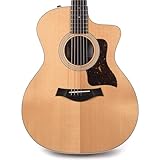
The Taylor 214ce is my all-round recommendation because its grand auditorium format, walnut back and sides, ebony fingerboard, and Expression System 2 make a coherent package. The Fender Redondo CE is the more straightforward six-string for a new player who wants a piezo pickup and tuner, while the Enya serves travelers who need low weight, weather resistance, effects, and direct USB recording.
These eight acoustic-electric guitars make the current shortlist
| Product | Specifications | Action |
|---|---|---|
| Taylor 214ce Grand Auditorium |
|
Check Latest Price |
 Fender Acoustasonic Standard Telecaster Fender Acoustasonic Standard Telecaster |
|
Check Latest Price |
 Taylor GS Mini-e Mahogany Taylor GS Mini-e Mahogany |
|
Check Latest Price |
| Fender California Debut Redondo CE |
|
Check Latest Price |
 Washburn WA90CE Kit Washburn WA90CE Kit |
|
Check Latest Price |
 Enya NOVA GO SP1 Enya NOVA GO SP1 |
|
Check Latest Price |
 Ibanez PC50WSCE Ibanez PC50WSCE |
|
Check Latest Price |
 Vangoa VEG120 Pro 12-String Vangoa VEG120 Pro 12-String |
|
Check Latest Price |
The table is a fast way to separate conventional wood-bodied instruments from the Enya travel format and the Acoustasonic hybrid shape. It also shows why pickup language matters: “electronic” can mean a simple under-saddle piezo, a named system such as Taylor ES2, or a unit with onboard effects and recording functions.
1. The Taylor 214ce is the balanced choice for regular amplified acoustic playing
Taylor 214ce Grand Auditorium Acoustic-electric Guitar – Natural
Spruce top
Walnut back and sides
Expression System 2
25.5 inch scale
Pros
- Expression System 2 electronics
- Warm balanced woods
- Ebony fingerboard
- Structured gig bag
- 2-year warranty
Cons
- Premium positioning
- Not Prime eligible
I would start with the Taylor 214ce when the goal is one acoustic electric guitar for home writing, rehearsal, and a direct stage connection. The listing pairs a spruce top with walnut back and sides and describes the sound as balanced, clear, and warm, which is the kind of broad middle ground that suits singing as well as instrumental parts.
The Grand Auditorium body is the main reason this model sits at the top of the list instead of being a specialist pick. A player who needs one instrument to move from open chords to picked lines benefits from that general-purpose direction more than from a body chosen only for maximum low-end push.
Taylor fits Expression System 2 electronics here, a named system rather than a vague “pickup included” line. It uses a standard 1/4-inch mono output, so the connection path is familiar whether you are plugging into an acoustic amp, a DI box, or a PA channel.
The 25.5-inch scale and 1.68-inch nut are concrete fit details worth checking before ordering. The ebony fingerboard, Neo-Tropical Mahogany neck, and included structured gig bag round out a guitar aimed at someone who expects to carry and play it often.
The Taylor 214ce fits players who need one dependable guitar across several settings
This is the sensible pick for a singer-songwriter who alternates between unamplified practice and small amplified sets. I also like it for players who do not want to buy a travel instrument, a writing instrument, and a stage instrument separately.
Its materials and full-length scale point toward a standard adult guitar feel rather than a reduced-size compromise. The published sound description is balanced rather than bass-heavy, so it is a particularly logical match for rhythm parts that must leave room for vocals.
The Taylor 214ce asks buyers to confirm their preferred amplified character first
Expression System 2 is a central part of the appeal, but it is still wise to try the guitar through the amp or PA you use if possible. Pickup systems react differently to EQ, monitor volume, and room acoustics, and a good acoustic sound in the room does not predict every amplified result.
I would also check the control layout and battery access at the time of purchase because those details are not listed in the supplied specifications. That small check saves a lot of stress when a battery expires before a rehearsal or a set.
2. The Fender California Debut Redondo CE is the approachable first amplified six-string
Fender California Debut Redondo CE Series Beginner Acoustic Guitar,Sunburst
Spruce top
Basswood body
Piezo under-saddle pickup
Built-in tuner
Pros
- Beginner-focused design
- 826 reviews
- Fender Play subscription
- Built-in tuner
- 2-year warranty
Cons
- Laminate construction
- Not Prime eligible
The Fender California Debut Redondo CE makes the strongest case for a beginner who wants to plug in without adding another accessory right away. Its verified piezoelectric under-saddle bridge pickup and built-in tuner cover the basic electronic jobs clearly, and the package includes access to Fender Play.
Its 25.5-inch scale is a familiar full-size measurement, so a new player is not learning on a shortened travel scale only to make another adjustment later. The spruce top, basswood body, nato neck, and walnut fingerboard place it in a practical wood-and-laminate construction rather than a fragile showpiece.
An under-saddle piezo hears vibration at the bridge, then sends that information to the guitar’s electronic path. That directness is useful for an open mic or home amp, though I would treat a piezo as a starting sound and use the amp or PA EQ carefully instead of expecting every room to flatter it automatically.
The high review count in the analyzed listing is meaningful context for a newer buyer comparing models with very little owner feedback. It does not replace a hands-on fit check, but it gives this Redondo CE a broader customer record than several entries in this roundup.
The Redondo CE gives beginners the core tools for learning and plugging in
A beginner who needs a tuner, electronics, and a normal six-string layout in one guitar should put this near the top of the list. I would especially consider it for someone attending lessons, joining casual jams, or taking an instrument to a school or community performance.
The included learning subscription is relevant if you are starting from zero and want structured material after the guitar arrives. It is also a reminder that early progress is more likely to come from steady practice and a comfortable setup than from chasing advanced electronics.
The Redondo CE works best when you accept laminate construction as a practical trade-off
The listing identifies laminate construction as a limitation compared with solid wood, so this is not the model I would select purely for acoustic depth. Its strengths are direct usability and an uncomplicated pickup-and-tuner setup, not a claim of premium wood complexity.
Before a louder band rehearsal, start with moderate monitor volume and use the PA’s EQ rather than turning up every frequency at once. The common gigging complaint is feedback, and a careful gain setting is more useful than assuming any acoustic guitar will stay quiet at high volume.
3. The Enya NOVA GO SP1 is the compact travel pick with unusually broad electronic tools
Enya NOVA GO SP1 Carbon Fiber 35-Inch Smart Acoustic-Electric Travel Guitar
Carbon-fiber body
35 inch travel size
SP1 effects pickup
USB recording
Pros
- Humidity-resistant carbon fiber
- Built-in reverb and delay
- Bluetooth speaker
- USB recording
- 4-pound weight
Cons
- Small 35 inch size
- Effects differ from amp tone
- Only six strings
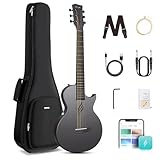
The Enya NOVA GO SP1 is not trying to imitate a traditional dreadnought in every respect. It is a 35-inch, 4-pound carbon-fiber acoustic-electric guitar built around portability, with the company’s SP1 pickup system, onboard reverb, delay and fusion effects, Bluetooth playback, and USB On-The-Go recording.
I would choose this model for the player who spends time in changing humidity or temperature, travels by car or plane, or wants a guitar that can live close to a desk recording setup. Carbon fiber across the top, body, back, neck, and fretboard is a clear departure from the wood models here.
The USB connection is the standout practical feature. It opens a direct recording route without an external audio interface, while the included USB cable and instrument cable give you two connection options from the start.
The SP1 system adds built-in effects, but I would think of those as creative tools rather than a replacement for a well-set acoustic amp. The listing itself notes that the effects speaker sound may not match a traditional amplifier tone, and that is a fair expectation to set before buying.
The NOVA GO SP1 solves travel and quick-recording problems better than full-size guitars
This is the strongest choice for travelers, apartment players, campers, and anyone who wants to sketch a part directly into a USB-capable device. Its compact 23.12-inch scale and four-pound weight address portability in a way a standard full-size body simply cannot.
I also see a good use case for a songwriter who wants reverb or delay during a quick idea capture. The Bluetooth speaker function can play backing material, which keeps a casual practice setup compact.
The NOVA GO SP1 requires comfort with a reduced-size feel and a modern sound path
A 35-inch instrument may feel too small for players accustomed to a larger acoustic body, especially if they want a strong traditional acoustic response under the right arm. The compact dimensions are the reason to buy it, not a detail to overlook.
The adjustable truss rod and zero fret add useful setup and tuning-related details, but no guitar is maintenance-free. I would keep the supplied hex wrench in the gig bag and make measured adjustments only when a setup change is genuinely needed.
4. The Fender Acoustasonic Standard Telecaster is the electric-leaning hybrid option
Fender Acoustasonic Standard Telecaster Acoustic-electric Guitar – Black
Nyatoh body and neck
Rosewood fingerboard
H pickup
Asymmetrical bridge
Pros
- Fender craftsmanship
- Nyatoh body and neck
- Modern asymmetrical bridge
- Balanced sound
- 2-year warranty
Cons
- No customer review images
- Not Prime eligible
The Fender Acoustasonic Standard Telecaster is the least conventional-looking model in this group, and that is its point. It brings a Telecaster-form acoustic-electric format with a nyatoh body and neck, rosewood fingerboard, H pickup configuration, and modern asymmetrical bridge.
I would put this on the shortlist for a player coming from electric guitar who wants a different physical concept from a deep traditional acoustic body. Its listed dimensions are 45.3 by 16 by 4.8 inches and its listed weight is 11 pounds, so it is a substantial instrument rather than a tiny crossover novelty.
The product details describe the sound profile as balanced. Fender does not list a named piezo system in the analyzed data, so it would be wrong to assign it one; the reliable description is simply that it uses the listed H pickup configuration and a standard 1/4-inch jack.
That distinction matters when you compare it with a guitar carrying a named preamp or a visibly specified under-saddle pickup. Players who care about a particular amplified acoustic character should ask for a live demonstration of the exact model rather than inferring the whole signal path from its silhouette.
The Acoustasonic Standard Telecaster suits electric players who want an acoustic-electric role
This model is the answer for a guitarist who already feels at home with Fender’s Telecaster identity and wants an acoustic-electric voice in that family. I would consider it for set lists that move between electric-oriented and acoustic-oriented parts without asking for a traditional dreadnought experience.
The rosewood fingerboard and modern asymmetrical bridge are useful decision details for a player comparing hardware and touch points. The stated balanced sound profile also makes it a reasonable candidate for accompaniment where an exaggerated bass response would crowd a mix.
The Acoustasonic Standard Telecaster needs a hands-on comparison with a conventional acoustic
The shape, construction, and listed pickup configuration put it in a different lane from the Taylor 214ce or Washburn WA90CE. I would play seated and standing before deciding, then listen through the same amp or PA channel you expect to use.
Because the supplied details do not specify onboard tuner, battery location, or controls, confirm those practical points with the retailer. Those are not minor details when an instrument is intended for a rehearsal schedule or recurring gigs.
5. The Taylor GS Mini-e Mahogany is the compact wood-bodied choice for travel and practice
Taylor GS Mini-e Mahogany Acoustic-electric Guitar – Natural
Mahogany top
Layered sapele back and sides
Expression System S
Compact GS Mini
Pros
- Compact travel size
- Warm mahogany top
- Includes gig bag
- Expression System S
- 2-year warranty
Cons
- Small body may not suit everyone
- Not Prime eligible
The Taylor GS Mini-e Mahogany offers a different compact route from the carbon-fiber Enya. It has a mahogany top, layered sapele back and sides, an ebony fingerboard, a mahogany neck, Expression System S electronics, and an included gig bag in a small-format body.
I would look here when you want a smaller guitar but still prefer a familiar wood construction and Taylor’s named electronics. The listed 42-inch overall length makes it shorter than the full-size entries, though it is still a real six-string instrument built for regular playing rather than a toy-sized practice prop.
Mahogany is described in the listing as supporting a warm tone, while the guitar’s recorded sound profile is balanced. Those descriptions are useful directionally, but I would still judge the actual sound through your own hands, picks, strings, and amplifier settings.
Its 41 listed customer reviews give it a more established ownership record than the small-review-count entries here. The compact form and supplied bag also make it a sensible instrument to keep available for spontaneous practice rather than leaving a full-size guitar at home.
The GS Mini-e Mahogany works for players who need a smaller wood acoustic without losing plug-in ability
Travelers, younger players, and adults with limited storage should have this model on their list. I would also recommend trying it to anyone who finds a full-size acoustic cumbersome but does not want a synthetic-material body.
Expression System S gives this model a stated electronic identity instead of a generic “pickup configuration” label. That helps the buyer compare it more clearly with the 214ce’s ES2 system, though the two guitars differ in body size and materials as well.
The GS Mini-e Mahogany is not the choice for players who want full-size body response
The smaller size is a strength only if it suits the player and the setting. A guitarist who wants the broader physical feel and acoustic air movement of a full-size dreadnought should compare it directly against the Washburn or Ibanez instead.
For gigging, check the output, onboard controls, and battery access before relying on it for a full set. Community discussions repeatedly flag battery changes as a real-world annoyance, and the analyzed listing does not document the compartment position.
6. The Washburn WA90CE is the all-in-one dreadnought cutaway starter package
Washburn WA90CE Acoustic-Electric Guitar Kit Tobacco Burst
Dreadnought cutaway
Barcus Berry LX4 preamp
Built-in tuner
Starter kit
Pros
- Complete accessory kit
- Cutaway upper-fret access
- LX4 preamp and tuner
- Online lessons
- Limited lifetime warranty
Cons
- Laminate construction
- Not Prime eligible
The Washburn WA90CE is the practical package pick because it combines a dreadnought cutaway guitar with a Barcus Berry LX4 preamp and built-in tuner, then adds a gig bag, clip-on tuner, strap, picks, extra strings, string winder, folding stand, and online lessons. That is a long list of the small essentials a new player otherwise has to source separately.
The guitar itself uses an okoume body and neck, linden top, black walnut fingerboard, a fixed bridge, and a 1/4-inch jack. Its dreadnought cutaway format gives a beginner one of the most familiar acoustic outlines while preserving access to higher frets through the cutaway.
I would prioritize the integrated Barcus Berry LX4 over the extra accessories when comparing it against other starter instruments. The preamp and tuner are part of the actual guitar, while the stand and picks are convenient additions that will wear out or be replaced over time.
The listed eight-pound weight is worth considering if a young player expects to carry it often. It is also sensible to plan for a professional setup if the action does not suit your hand, because setup quality can change the playing experience far more than an included spare string set.
The WA90CE answers the needs of a new player who lacks every basic accessory
This is a good starting point for someone buying a first amplified dreadnought rather than adding to an existing guitar collection. I would also consider it for a family or school situation where a stand, strap, picks, and a bag need to be ready from day one.
The cutaway is useful for players who plan to learn melodies beyond first-position chords. It does not make upper frets automatically easy, but it gives your fretting hand physical access that a non-cutaway dreadnought does not.
The WA90CE is best when kit convenience matters more than solid-wood construction
The listing identifies laminate construction, so buyers focused only on the acoustic nuance associated with solid wood should look at the Vangoa’s verified solid spruce top or consider a different class of instrument. In this case, the proposition is a usable full setup with a named preamp and tuner.
At a band practice, begin with a moderate preamp level and bring the PA channel up gradually. If feedback starts, reduce the problem frequency or reposition from the speaker rather than adding more gain; a feedback suppressor or notch filter can help when the venue system offers one.
7. The Ibanez PC50WSCE is the straightforward full-size option with onboard basics
Ibanez PC50WSCE Acoustic-electric Guitar – Open-pore Natural
White Siris top
Meranti neck
Preamp and tuner
Full-size body
Pros
- White Siris top
- Open-pore natural finish
- Meranti neck
- Preamp and tuner
- Fixed bridge
Cons
- Limited review count
- Some material details unspecified
- Not Prime eligible
The Ibanez PC50WSCE takes a conventional full-size route: a White Siris top, Meranti neck, fixed bridge, 1/4-inch audio jack, onboard preamp, and tuner. Its open-pore natural finish is a visual detail, but the more important buying facts are the electronics and full-size dimensions.
I would put this in front of a player who wants a traditional-looking acoustic electric guitar with the fundamental plug-in functions already fitted. At 6.35 pounds, it is lighter on the listing than the eight-pound Washburn kit guitar and the 11-pound Fender hybrid, though instrument balance matters as much as the number alone.
The analyzed listing reports some body and back material fields as unspecified, so I would not invent a wood recipe for this review. That uncertainty is exactly why I would ask the seller for a current build sheet if those materials are central to your buying decision.
The product page has 19 recorded reviews, which is useful but a much smaller sample than the Fender Redondo CE or Vangoa 12-string. I would give extra weight to a careful hands-on inspection of fretwork, neck relief, tuning stability, and setup when the published owner record is limited.
The PC50WSCE serves a player who wants a normal full-size plug-in guitar without extra gadgets
A player who wants preamp, tuner, and a standard cable output without onboard effects or an oversized accessory pack should consider the Ibanez. I would call it a clean, traditional choice for home practice, lessons, and small amplified settings.
The fixed bridge supports straightforward string changes and stable hardware expectations. Pair it with an acoustic amp or a DI into a PA, then set the input gain conservatively to retain headroom for heavier strumming.
The PC50WSCE needs a closer spec and setup check before a final decision
Because the supplied material details are incomplete and the review count is modest, I would not buy this one solely from a bullet list. Confirm the exact materials, control layout, and battery-compartment arrangement with the retailer, then inspect the neck and fret ends on arrival.
Open-pore finishes can show the character of the wood grain, but they also deserve normal care. Wipe the guitar after playing, store it in its case or bag when practical, and avoid treating it as though a natural finish removes the need for routine maintenance.
8. The Vangoa VEG120 Pro is the 12-string choice for a broader chorus-like texture
Vangoa 12 String Guitar Solid Wood, Twelve String Acoustic Electric Guitar Kit with Premium Spruce Top, Mahogany Body, Upgraded EQ, Bone Nut, Saddle, Classical Brown
Solid spruce top
Mahogany body
12 strings
Adjustable EQ
Pros
- Solid spruce top
- Mahogany body
- Rich 12-string voice
- Adjustable EQ
- Bone nut and saddle
Cons
- 12 strings challenge beginners
- Short warranty period
- Limited availability
The Vangoa VEG120 Pro is not a direct substitute for the six-string guitars above; it is a 12-string acoustic-electric built for a richer paired-string sound. Its verified solid spruce top, mahogany body and back, bone nut and saddle, fixed bridge, and upgraded EQ give it a distinct identity within this eight-model group.
I would choose a 12-string only when that wider, chiming texture is specifically wanted for rhythm parts, accompaniment, or recorded layering. Twelve phosphor-bronze strings create more work for tuning and fretting than six, but they can make a single guitar part feel more expansive without adding a second player.
The rounded fret ends and curved fretboard are listed as playability features, which matters because 12-string tension and the doubled courses can be demanding. The 10-pound listed weight is another practical point for anyone planning to stand through a long rehearsal or performance.
The adjustable EQ is more than a marketing line if you plug into varied rooms. It gives the player a way to shape the signal before it reaches the amp or PA, though it cannot replace careful gain staging or speaker placement when feedback begins.
The VEG120 Pro is for musicians who specifically want an acoustic-electric 12-string voice
This is the natural choice for a player who wants doubled-string shimmer for folk, rock rhythm, or a fuller solo accompaniment sound. I would also consider it for recording a separate texture beside a standard six-string track.
The solid spruce top and mahogany body are the important construction facts here, while the mother-of-pearl soundhole inlay and classical brown finish are secondary. Focus first on whether your hands enjoy a 12-string neck and whether your music actually benefits from the denser sound.
The VEG120 Pro is not the easiest starting point for a first-time guitarist
A new guitarist can learn on one, but the paired strings make tuning, finger pressure, and restringing more involved than on a six-string. I would steer an absolute beginner toward the Fender Redondo CE or Washburn WA90CE unless the 12-string sound is the non-negotiable goal.
Plan regular care around the extra strings: tune gradually, change strings in orderly pairs, and check neck relief if the feel changes. Its listed 30-day guarantee is shorter than the warranty periods reported for several other models, so inspect it promptly and retain the purchase documentation.
The right acoustic-electric guitar comes down to its pickup, body, fit, and real playing setting
The clearest way to choose is to begin with the situation, not the brand name. A singer playing a quiet open mic needs natural, controllable amplification; a traveler needs durability and low weight; a beginner needs comfort and a setup that encourages daily practice; a 12-string buyer needs that specific sound enough to accept the extra work.
A piezo pickup, named electronic system, or onboard preamp changes the signal you send
Most conventional acoustic-electric systems start with a piezoelectric or under-saddle pickup. It detects vibration at the bridge area and sends an electrical signal onward, often through a preamp that can add volume, EQ, a tuner, phase control, or a battery-powered output stage.
The Fender Redondo CE states its under-saddle piezo pickup plainly, while Taylor identifies Expression System 2 on the 214ce and Expression System S on the GS Mini-e. Washburn names the Barcus Berry LX4 preamp, Enya names the SP1 and its effects, and the Vangoa lists upgraded EQ; those specifics are much more useful than treating all “plug in guitar” systems as identical.
For a PA, I would start with the guitar’s output at a moderate level, set the mixer gain so hard strums do not clip, and use small EQ moves. A direct box or an acoustic preamp can give the sound engineer a cleaner, more controllable signal than a long unbalanced cable alone.
A body size and scale length decide how the guitar feels before electronics enter the picture
A dreadnought acoustic-electric such as the Washburn emphasizes the familiar large-body format and has a cutaway for higher-fret access. The Taylor 214ce Grand Auditorium is a balanced all-purpose format, while the GS Mini-e and 35-inch Enya reduce the physical footprint for travel and storage.
Players asking which acoustic guitar plays most like an electric should first try smaller bodies or hybrid designs rather than assuming a pickup changes the neck feel. The Acoustasonic Standard Telecaster is the most electric-oriented form in this group, but comfort is personal enough that a seated and standing trial matters.
Use the listed scale length as a factual starting point. The Taylor 214ce and Fender Redondo CE list 25.5-inch scales, while the Enya lists a 23.12-inch scale; neither measurement tells the whole story about action, nut width, or neck profile, so playability still needs a real check.
A feedback plan matters more than maximum volume for a live acoustic set
Feedback happens when the guitar and its amplified sound feed into each other, often around a resonant frequency. It is a repeated pain point in player discussions because simply raising the volume can turn a workable acoustic sound into a ringing howl.
Start by standing away from the speaker face, lowering monitor volume, and reducing a narrow troublesome frequency with the mixer or acoustic preamp. A phase switch, notch filter, feedback suppressor, or soundhole cover can help in the right setup, but none substitutes for sensible stage position and controlled gain.
Do a brief soundcheck with the exact guitar, cable, DI, amp, and monitor route you will use. This is especially helpful when you change from solo playing to a band, because drums and bass often encourage players to add volume beyond what an acoustic pickup can handle comfortably.
A battery and care routine keeps the electronics ready when you need them
Many preamp-equipped acoustic-electric guitars use battery power, while the analyzed product pages do not document a compartment location for every model. Before a first gig, find the battery access point, learn how it opens, carry the correct spare, and remove or replace an exhausted battery promptly.
For wood-bodied instruments, a stable storage environment and a case or gig bag help reduce avoidable knocks and humidity swings. Wipe strings and the body after playing, use a suitable guitar stand or case, and schedule a setup if action, buzzing, or tuning stability changes.
The Enya’s carbon-fiber construction is specifically described as resistant to humidity and temperature changes, but its truss rod still deserves measured adjustment. Whether the guitar is wood or carbon fiber, a rushed setup tweak can create a worse problem than the one you started with.
A focused first decision makes the eight-model comparison easier
Choose the Taylor 214ce for a balanced full-size acoustic with named ES2 electronics; choose the Fender Redondo CE for uncomplicated beginner basics; choose the Enya for travel, built-in effects, and USB recording. The Washburn makes sense when a dreadnought cutaway and a broad starter kit are the main draw.
Choose the GS Mini-e if compact wood construction and a gig bag matter, the Acoustasonic if the Telecaster-form hybrid appeals, the Ibanez if you want a conventional full-size preamp-and-tuner model, and the Vangoa when a 12-string sound is the actual target. That choice-first approach keeps features tied to a musical need.
These common acoustic-electric guitar questions have clear answers
What are the top 5 best acoustic guitars?
For amplified acoustic use, the first five models to compare here are the Taylor 214ce for balanced all-round use, Fender California Debut Redondo CE for beginners, Enya NOVA GO SP1 for travel and USB recording, Fender Acoustasonic Standard Telecaster for an electric-leaning hybrid format, and Taylor GS Mini-e Mahogany for a compact wood-bodied option. The right choice depends on body fit and the electronics you need.
Which acoustic guitar plays most like an electric?
The Fender Acoustasonic Standard Telecaster is the most electric-oriented form in this roundup because it uses a Telecaster-style hybrid format. A smaller body or shorter scale can also feel less imposing than a dreadnought, but pickup type alone does not make an acoustic play like an electric guitar.
Which is the No. 1 acoustic guitar brand?
There is no single No. 1 brand for every guitarist. Taylor is a strong choice in this list for named electronics and compact or full-size options, while Fender covers beginner, hybrid, and familiar electric-oriented formats. Fit, sound through your own amplification, and reliable setup should lead the decision.
What’s the best sounding acoustic-electric guitar?
The Taylor 214ce is the best all-round sound choice in this group based on its listed spruce top, walnut back and sides, balanced clear warm sound profile, and Expression System 2 electronics. Sound is still subjective, so test it through the amp or PA you use before making a final call.
What is the best $1,000 acoustic guitar?
The Taylor 214ce is the closest fit to that search because it combines a Grand Auditorium body, spruce top, walnut back and sides, ebony fingerboard, 25.5-inch scale, and Expression System 2 electronics. Confirm current availability and the exact configuration with the retailer before buying.
The best acoustic electric guitars are the ones that match your hands and signal path
For most players, I would begin with the Taylor 214ce because its full-size Grand Auditorium design, walnut body materials, ebony fingerboard, and Expression System 2 form the most balanced package. The Fender Redondo CE is the easier beginner starting point, the Enya NOVA GO SP1 is the travel and recording specialist, and the Vangoa should only lead the list when the 12-string sound is what you want.
Use this best acoustic electric guitars guide as a shortlist, then play the finalists through the same amp or PA route you expect to use. In 2026, that simple comparison of fit, pickup response, controls, feedback behavior, and maintenance access will tell you more than a logo or feature count alone.