
Most people buy a sharpening stone, set it on the kitchen counter, and start working. Twenty strokes in, the stone has quietly walked three inches sideways and the edge they are producing is a wavy mess. That is the single most common thing going wrong at a home sharpening station, and it is also the cheapest thing to fix.
That is what this guide is about. We compared 12 sharpening stone holders for home use on the only criteria that matter once water is involved: whether the base grips a wet granite counter, whether the stone stops wobbling, whether the working height is comfortable, and whether anything on the thing will rust beside your sink. Every pick below was checked against its own customer reviews and published specifications, and every one of them arrives as a holder or tray rather than a stone-and-holder bundle unless noted.
A short note before we start: a holder does not make a bad edge good. It stops your blade angle from changing mid-stroke, which is a different job entirely. If you are sharpening a single 8 inch stone on a dry wooden board, a folded damp towel will do most of the job for free. If you are working with waterstones on a polished counter, a proper clamping base is the difference between a consistent edge and a wasted afternoon.
Table of Contents
What Is a Sharpening Stone Holder?
A sharpening stone holder is a base, clamp or sink bridge that grips your whetstone so it cannot slide while you sharpen, and in the better designs also grips the countertop underneath, so the whole setup stays put. Most clamp between two rubber jaws, most bases use a rubber or silicone foot, and sink bridges span your basin so the slurry goes down the drain.
So do you need one? If you sharpen on anything smoother than a wooden cutting board, yes. Granite, quartz, stainless steel and laminate worktops all take the friction away that a bare stone depends on, and water makes it worse. If you already work over a sink bridge or a wet towel, a holder is a comfort upgrade rather than a rescue.
One terminology point that trips people up. A whetstone is a stone you sharpen on with water or oil. A sharpener is a device with a fixed abrasive surface, like a rod or a honing steel. A holder is neither. It is furniture for your stone, and it is the one piece of the setup people skip.
Why Your Sharpening Stone Keeps Moving
Four causes account for almost every slipping stone we read about, and they stack on top of each other rather than appearing alone.
A smooth worktop. Granite and quartz are polished to a finish the stone cannot bite into. Laminate and stainless steel behave the same way. A stone sitting on one of these is balanced on a slick surface and any sideways force during a stroke will move it.
Water or oil underneath. A single film of liquid between the stone and the counter destroys friction instantly. This is why the moment a counter gets a bit wet the slipping starts, and it is why holders are judged on wet surfaces rather than dry ones.
Uneven support. A stone propped on its case, a folded towel or a thick book rocks under pressure. A rock under one corner changes your angle without you noticing, and the wobble compounds every stroke.
The plastic stone case used as a base. This is the most common beginner mistake and the most convincing. The moulded case looks exactly like a purpose-made platform, sits at the right height, and slides the moment you push the blade across it. It is a lid, not a base.
Top 3 Best Sharpening Stone Holders for Home Use (October 2026)
These three cover the widest range of home situations. The rest of the list expands on them for specific stones, sinks and storage needs.

POWERTEC 71013 Adjustable Holder
- Adjustable 5-1/2 inch to 9 inch grip
- Non-slip rubber body
- Chrome-plated corrosion-resistant arms

Steelex D1091 Sharpening Stone Holder
- Rubber base grips wet surfaces
- Adjusts 5-1/2 inch to 9 inch
- Zinc-plated steel resists rust
SCOTTCHEN Stainless Sink Bridge
- Spans the sink so slurry drains away
- Fits stones 3-1/4 inch to 14-1/4 inch
- 304 stainless steel and solid rubber
12 Best Sharpening Stone Holders for Home Use in 2026
Here is the full lineup in one place, ordered by how well each one handles the wet, slippery situations that home sharpeners actually run into.
| Product | Specifications | Action |
|---|---|---|
| POWERTEC 71013 Adjustable Stone Holder |
|
Check Latest Price |
| Steelex D1091 Sharpening Stone Holder |
|
Check Latest Price |
| SCOTTCHEN Stainless Sink Bridge |
|
Check Latest Price |
 Kota Japan Stainless Stone Holder Kota Japan Stainless Stone Holder |
|
Check Latest Price |
 DMD 1012P Adjustable Diamond Holder DMD 1012P Adjustable Diamond Holder |
|
Check Latest Price |
 SHARPAL 149H Silicone Stone Tray SHARPAL 149H Silicone Stone Tray |
|
Check Latest Price |
 S SATC 3221 Adjustable Holder S SATC 3221 Adjustable Holder |
|
Check Latest Price |
 SHARPAL 160H Two-Pack Holder and Case SHARPAL 160H Two-Pack Holder and Case |
|
Check Latest Price |
 Naniwa A-902 Stone Holder Naniwa A-902 Stone Holder |
|
Check Latest Price |
 QWORK QS8616 Universal Holder QWORK QS8616 Universal Holder |
|
Check Latest Price |
 DMT B8250-MBA DuoBase with MagnaBase DMT B8250-MBA DuoBase with MagnaBase |
|
Check Latest Price |
 Tuyotue Adjustable Sink Bridge Tuyotue Adjustable Sink Bridge |
|
Check Latest Price |
1. POWERTEC 71013 – the adjustable rubber-base holder most home sharpeners start with
POWERTEC Sharpening Stone Holder – Adjustable Whetstone Stone Holder 5.5″ to 9″, Non-Slip Rubber Base for Secure Knives Sharpening for Kitchen w/knife Sharpener, Wet, Diamond Stone(71013)
Rubber body, chrome-plated arms
Fits stones 5-1/2 to 9 inch
1.1 lb, 12 x 3.5 x 1.5 inch
Pros
- Adjustable non-marring grip holds many stone types
- Works with waterstones
- oil stones
- diamond and Japanese stones
- Corrosion-resistant chrome-plated arms
- Lowest price per feature in the category
Cons
- Rubber and knobs wear with prolonged water exposure
- 5-1/2 to 9 inch range excludes shorter and longer stones
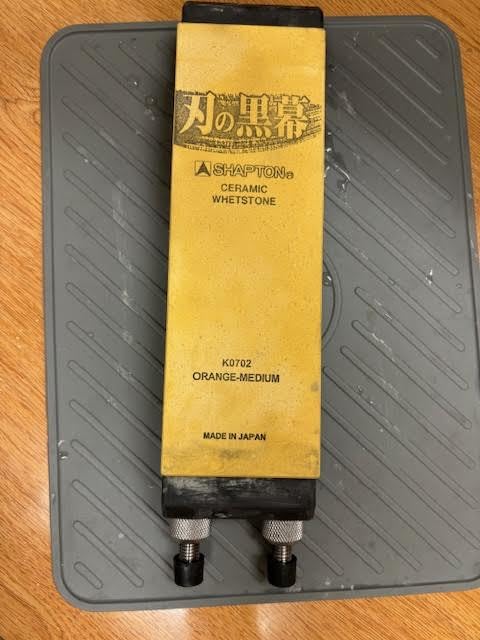
The POWERTEC 71013 is the holder I keep coming back to, and it is the first one I hand to friends who are setting up a first station. The body is moulded rubber, the arms that carry the clamping pressure are chrome-plated, and the whole frame adjusts from 5-1/2 inch to 9 inch stones with two ridged knobs.
That wide rubber contact area is what separates it from the metal-only designs. The rubber wraps the base as well as the jaws, so the friction between holder and counter is distributed across the whole footprint rather than a small steel foot. On a damp granite counter it stays planted through aggressive strokes, which is the test that knocks most cheap holders out.
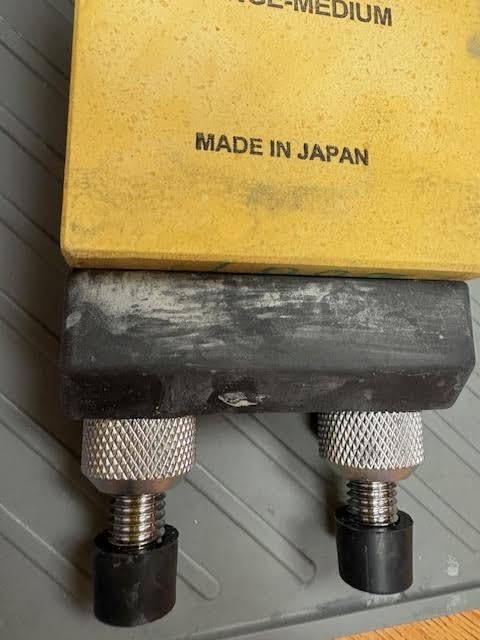
With over 2k ratings averaging 4.7, the feedback is unusually consistent. Buyers credit the adjustable grip, the rubber body, and how many stone types it takes. The repeated complaint is durability rather than function: rubber does not love standing water forever, and the knobs are the first thing to go.
It measures 12 inch by 3.5 inch by 1.5 inch and weighs 1.1 pounds, so it has enough mass to feel planted without being awkward to move. My one caution is fit. A holder adjusted to its limit on a 9 inch stone will not take a 10 inch plate, and short 4 inch stones need a different frame entirely.
What works about it day to day
It handles every stone family a home user owns, from diamond plates through Japanese waterstones to oil stones, without swapping parts. The ridged knobs are usable with wet fingers, which sounds minor until you have tried to adjust a smooth knob with soapy hands.
Rinsing it under the tap and standing it on its side to air dry is the whole maintenance routine. I do that after every wet session and the arms still look new.
Where it falls short
Prolonged water exposure is the honest limit. The rubber body and the plastic knobs degrade faster than steel, and if you leave a waterstone sitting in the holder overnight you will shorten their life noticeably.
The adjustment range is the other constraint. Anything longer than 9 inch or shorter than 5-1/2 inch will not fit, so measure your plates before you order if you own an oversized stone.
2. Steelex D1091 – a solid plated build with a grippy rubber foot
Steelex – D1091-BRK D1091 Sharpening Stone Holder, 1.5 pounds, black
Chrome-plated steel construction
Rubber base resists slipping
Adjusts 5-1/2 to 9 inch, 1.5 lb
Pros
- Rubber base stays put on wet surfaces
- Zinc-plated parts resist rust with waterstones
- Adjusts across a wide stone size range
- Heavier build reduces wobble
Cons
- Zinc plating shows wear with repeated wet use
- Fixed adjustment range
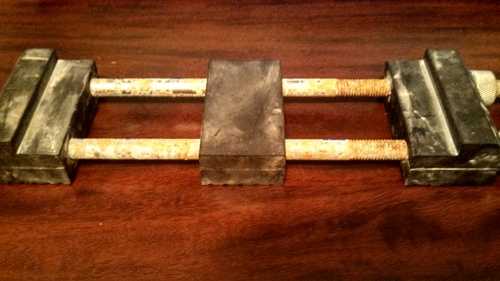
The Steelex D1091 is the one to consider if you sharpen in a workshop rather than a kitchen. It weighs 1.5 pounds, which is the heaviest single-stone holder here, and that mass does more for stability than any amount of rubber. A heavy base does not need to fight the stone to stay put.
Construction is chrome-plated steel with a rubber base, and it adjusts from 5-1/2 inch to 9 inch. The plating is what reviewers single out as the reason it tolerates waterstone work: the steel underneath is sealed, so slurry sitting in the tray overnight does not immediately bloom into orange.
Across 709 reviews at a 4.4 average, the praise is almost entirely about grip and the ease of moving between stone sizes. The lower-rated reviews cluster on finish wear. Plated surfaces look beautiful for a few years and then the plating thins at the contact points, which is a cosmetic issue more than a functional one.
It is a sensible upgrade over a light plastic frame if you work on a bench and do not move your setup around. It is also a less interesting choice for a kitchen user who sharpens once a month, because the weight is dead weight in a drawer.
What works about it day to day
Wet-surface grip is the headline here. The rubber foot is wide enough to resist the sideways pull of a full-length stroke on a wet surface, which is exactly the failure that pushes people off plastic cases.
It also suits mixed collections. If you alternate between a coarse waterstone and a fine diamond plate, swapping between them takes a few seconds with no tools.
Where it falls short
Plated finishes wear. Buyers who rate it lower usually describe cosmetic corrosion appearing after years of wet use rather than a sudden failure, so it is a slow decline rather than a deal breaker.
It is also the widest adjustment of the mid-size holders, which is good, but it still does not cover the 10 inch plates that some sharpening systems ship with. Check your stone lengths first.
3. SCOTTCHEN Sink Bridge – the only design that puts your slurry down the drain
SCOTTCHEN 17-3/4” Sink Bridge Whetstone Holder – Heavy Duty 304 Stainless Steel Sharpening Stone Base for Kitchen Sink – Adjustable Non-Slip Rubber, Rust-Proof Fits Stones 3-1/4″ to 14-1/4″
304 stainless steel, solid rubber
Spans 6-3/4 to 17-3/4 inch sinks
Fits stones 3-1/4 to 14-1/4 inch
Pros
- Slurry
- water and filings wash straight down the drain
- 304 stainless poles resist constant wet use
- Elevated design gives knuckle clearance
- Adjustable screws cover a huge stone range
Cons
- Requires a sink basin within a specific width range
- Not a freestanding tabletop unit
- Measure the basin before buying
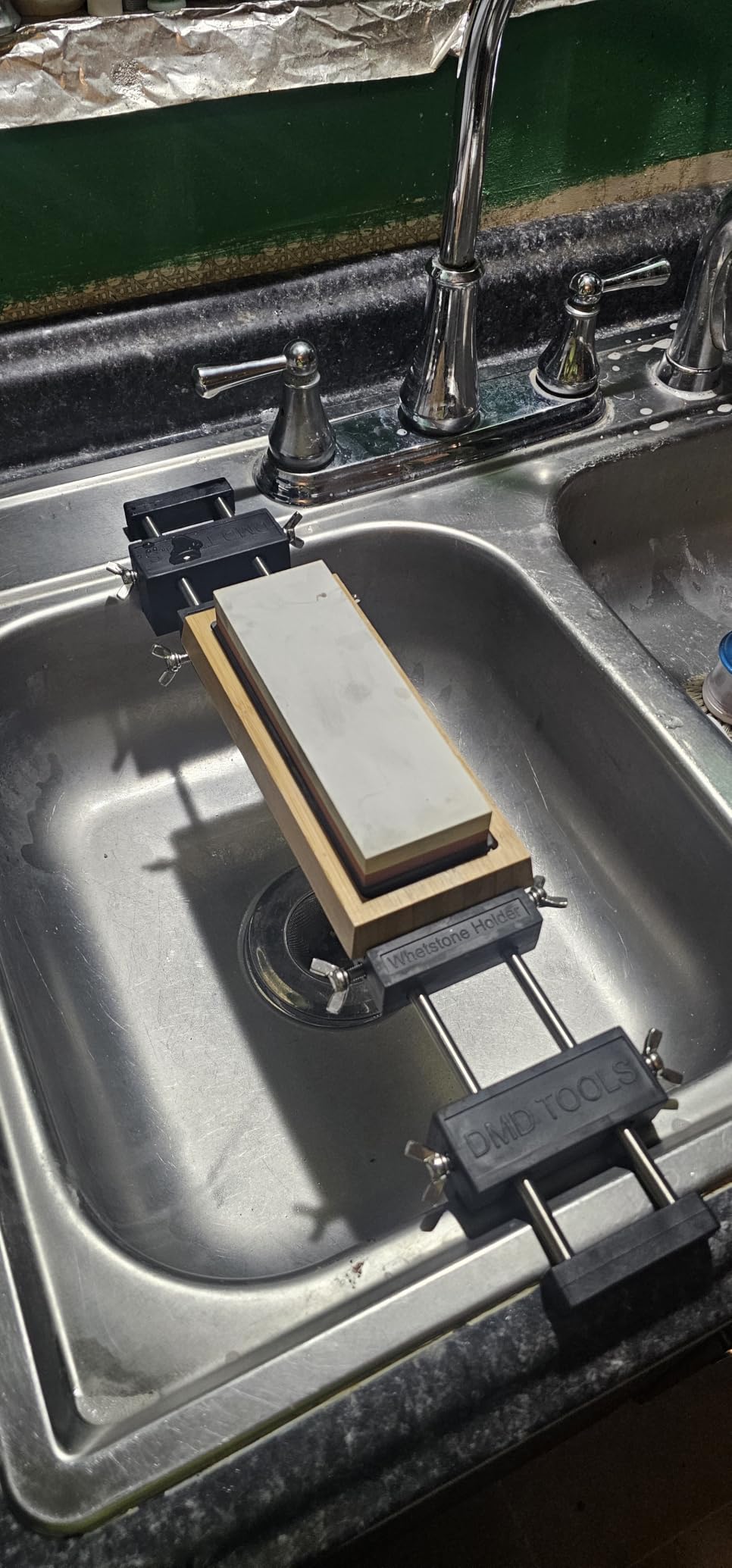
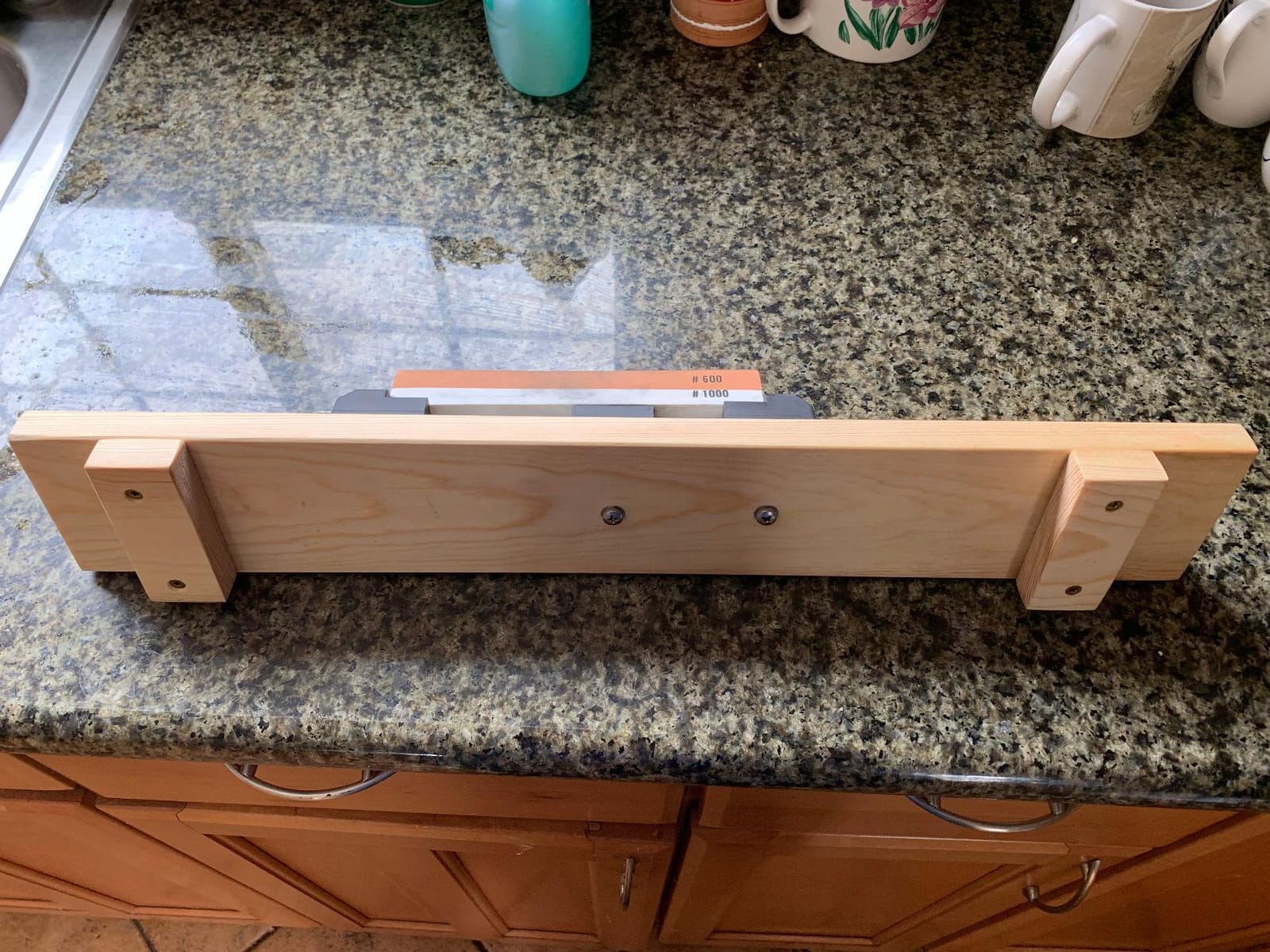
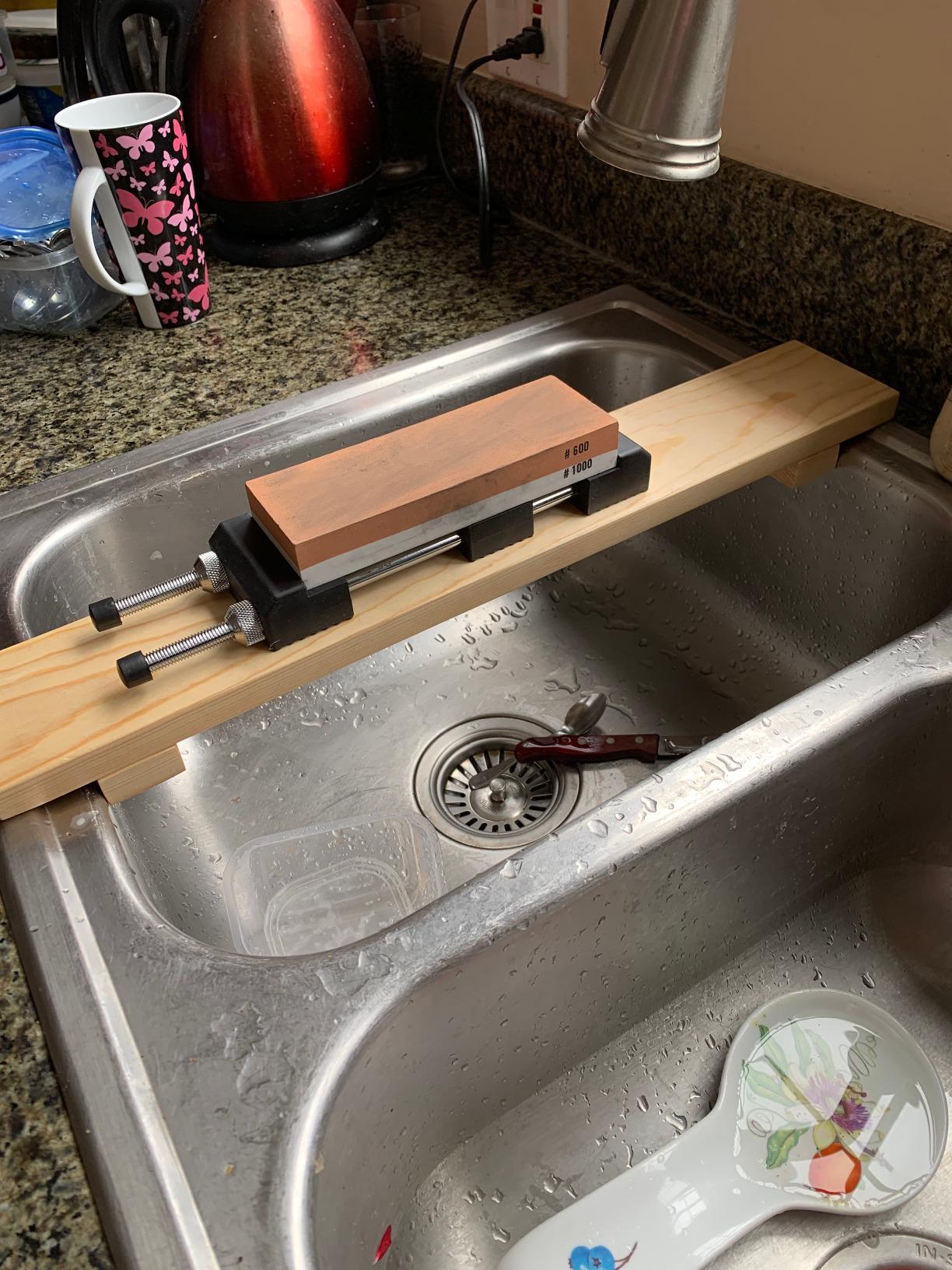
A sink bridge solves a different problem from every other holder on this list. Instead of stopping water landing on your counter, it makes sure the water never lands there. You lay the bridge across the basin, the stone sits between two rubber-lined arms, and everything you rinse off runs into the drain.
This one is 304 stainless steel throughout, with a solid rubber body creating friction against the stone and adjustable screws that take stones from 3-1/4 inch all the way to 14-1/4 inch. That range is the widest of anything here, which means it can carry a full-size 210mm stone and a small plate with the same frame.
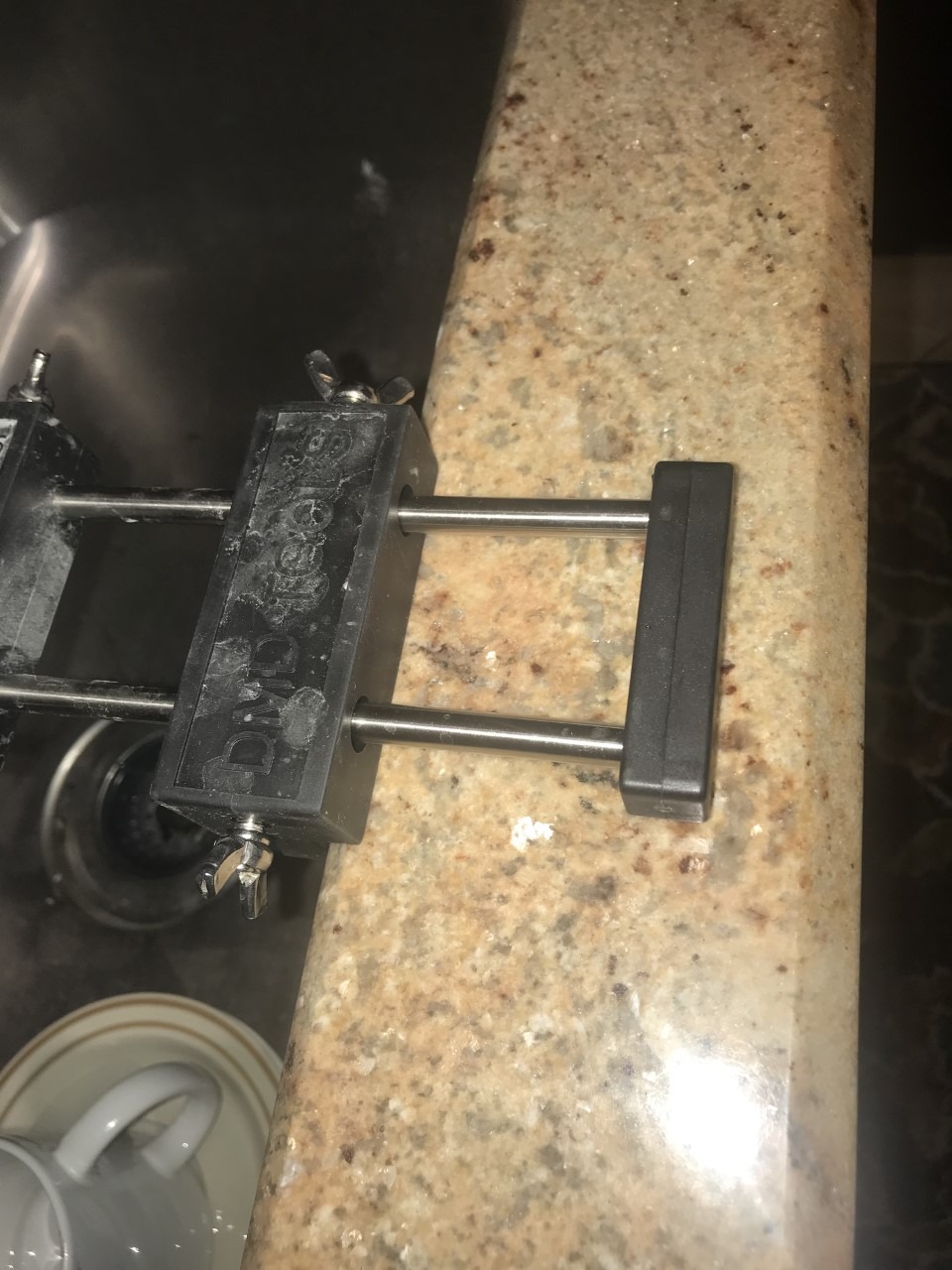
At 4.7 stars from 639 reviews, with 84 percent five-star, the feedback centres on the mess-free workflow and how much the elevated position helps with hand clearance. The elevated working height is a real ergonomic win: your knuckles clear the rim, so a long session does not end with a sore wrist.
The caution buyers repeat is measurement. The bridge fits a basin between 6-3/4 inch and 17-3/4 inch wide, and reviewers who skipped that step are the ones sending them back. The rubberised ends are there to stop the steel scratching a stainless sink.
This is also not a freestanding countertop unit in this configuration. It is built to span a sink, and if you do not have one, skip to a clamp base instead of trying to improvise.
What works about it day to day
Cleanup becomes almost free. A rinse under the tap is the entire maintenance routine because there is no tray to scrub, and there is no slurry drying into a film on your worktop.
For anyone who uses waterstones rather than diamond plates, this is the single biggest quality-of-life change in the list. Wet sharpening is a slurry process, and a bridge treats it as one.
Where it falls short
You need a sink. That is the whole trade-off, and it is a hard one for households that sharpen on a table in a small kitchen or a flat with a half sink.
Owners also note that some stones need a bit of thought when positioning. Set it once, get the arms square over the basin, and the whole session stays put; rush that and you will be chasing the stone.
4. Kota Japan – a narrow stainless holder that suits granite counters
Kota Japan Stainless Steel Whetstone Holder, Non-Slip, Fits 6-8.5 in Stones
Stainless steel frame with rubber base
Fits 6 to 8.5 inch stones
12 x 3 x 1 inch, weighs 1.3 lb
Pros
- Stainless steel outlasts plastic holder bodies
- Non-skid rubber base holds on polished granite
- Reduces wobble for a consistent angle
- Fits most standard stones
Cons
- Adjustment range limited to 6 to 8.5 inch stones
- Spare hardware not sold separately
The hardest surface in a home kitchen is polished granite, and the Kota Japan is built specifically for that problem. The base is a non-skid rubber foot on a stainless frame, and at 1.3 pounds it carries real weight without taking up much counter space at 12 by 3 by 1 inch.
Reviewers consistently credit the reduced wobble. That matters more than raw grip because a stone that rocks changes your angle a degree or two, and a degree or two is the difference between a straight edge and a wavy one. The stainless construction is the second thing people mention, and it is why this outlasts plastic-bodied holders in a wet kitchen.
It holds stones from 6 inch to 8.5 inch, which covers most 8 inch plates and most kitchen knife stones. The 461 reviews at 4.7 stars, with 81 percent five-star, describe it as sturdy, quiet and consistent, with very few complaints beyond the size range.
My reservation is the narrow window. If your collection includes a small 4 inch stone or a full 210mm plate, you will need a second holder. For a single-stone setup on granite, though, it is hard to argue with.
What works about it day to day
It stays where you put it on a wet polished counter, which is the whole reason to buy anything in this category. No stone movement means no re-centering mid-session and no creeping across the kitchen.
Cleaning is a wipe down. Stainless does not pit the way rubber does, and there are no plastic knobs to swell or crack.
Where it falls short
The 6 to 8.5 inch window is the limit. Multi-stone collectors should look at a wider frame or accept that this one is the countertop companion and not the full kit.
It also does not contain water. Sharpening with a waterstone still means slurry on your counter, so pair it with a tray or a towel if mess bothers you.
5. DMD 1012P – the pick bundled with angle guides and a diamond plate
DMD Adjustable Diamond Sharpening Stone Holder
Stainless frame with rubber blocks
Adjusts 5-13/16 to 8 inch
11-7/16 x 2-13/16 x 1-3/16 inch
Pros
- Bundled 400/1000 grit diamond plate cuts fast
- Three angle guides for repeatable edge angle
- Stainless frame is stable and well weighted
- Compact footprint suits a workbench
Cons
- Rubber blocks can feel slightly soft
- Not a sink bridge
- for dry flat surfaces only
- Diamond plate cuts aggressively before breaking in
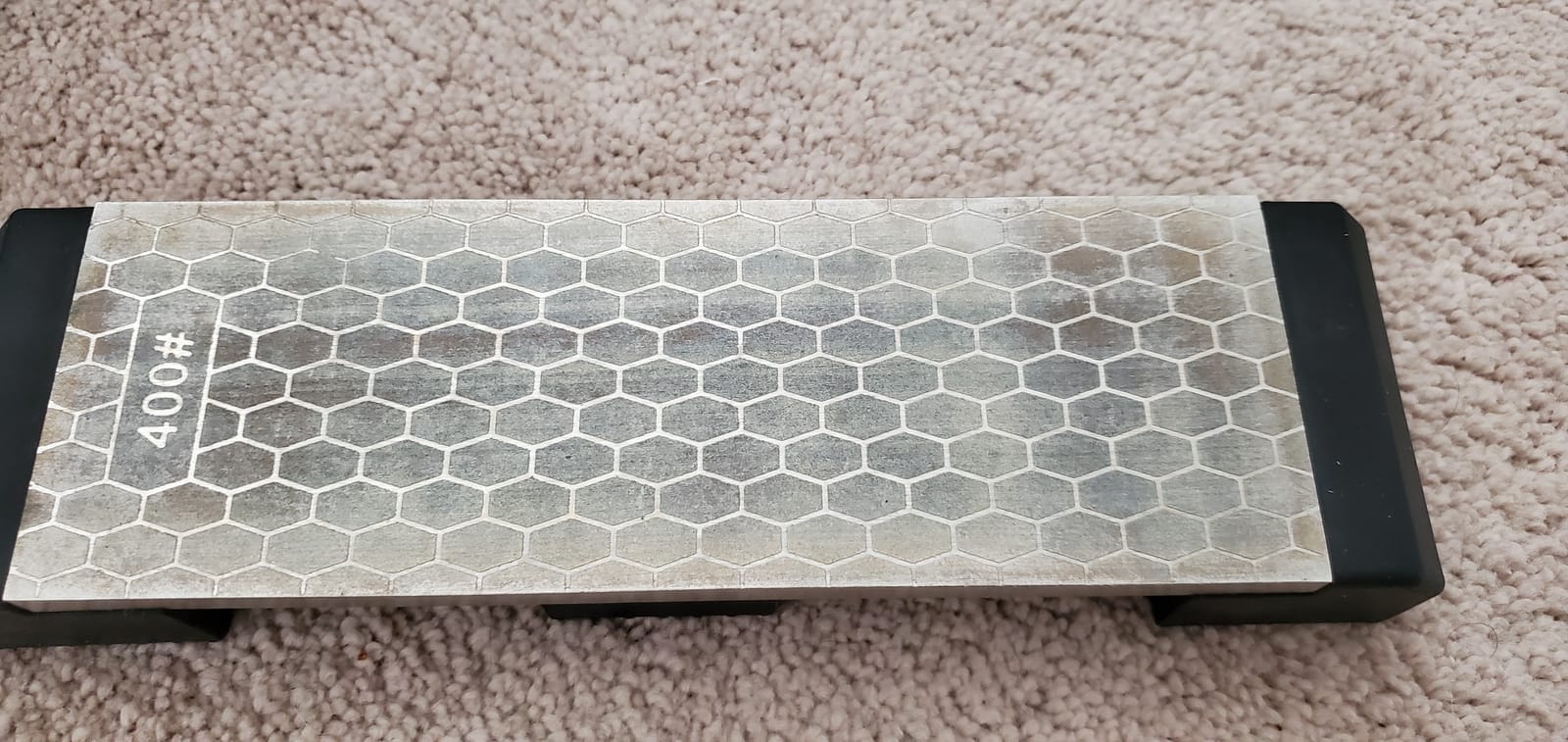
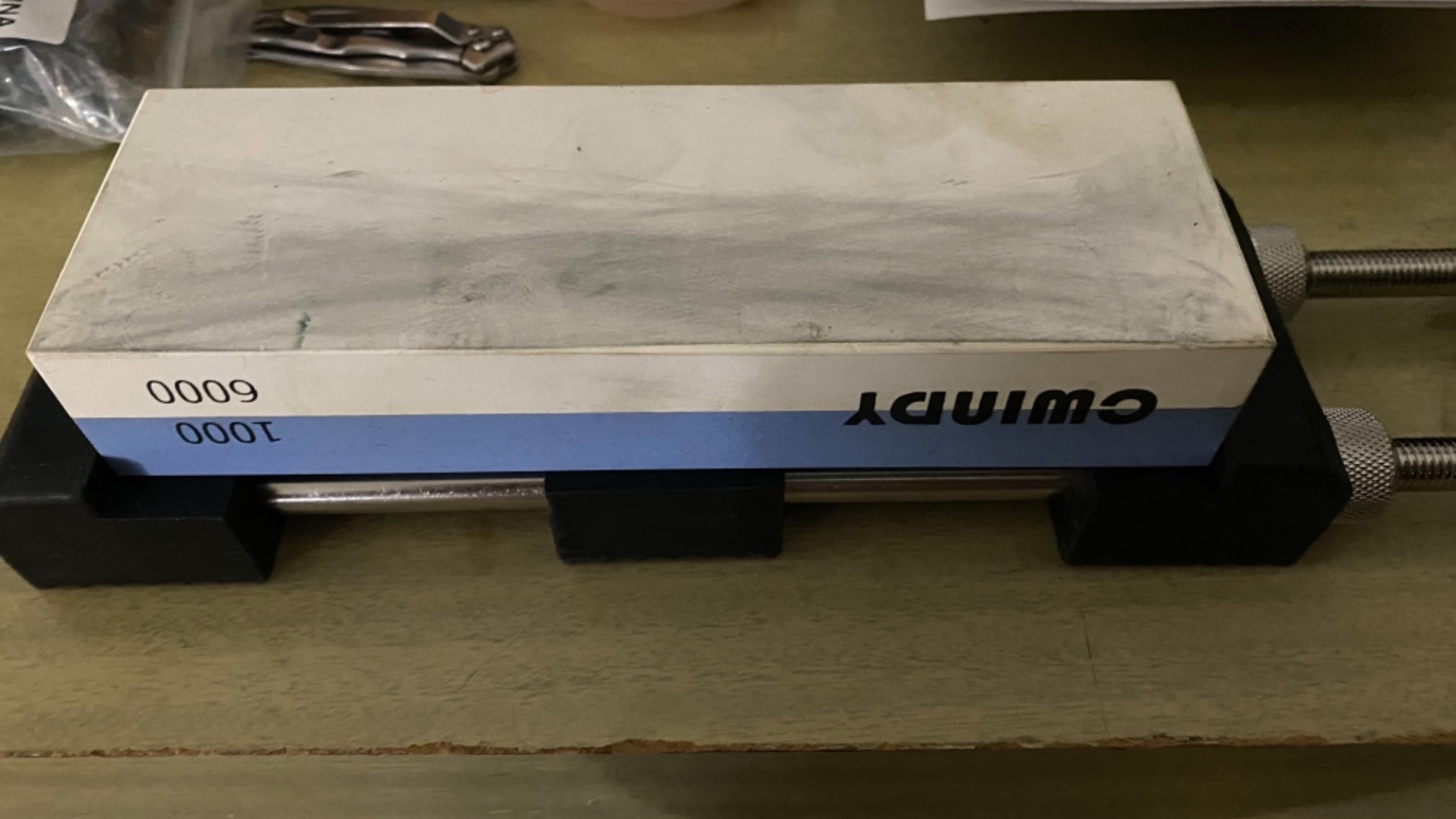
The DMD 1012P is the only pick here that arrives as a working set rather than a bare accessory. You get the adjustable holder, a 400/1000 grit diamond plate and three angle guides, which makes it the fastest route from unboxing to a sharp edge for a beginner who does not already own a stone.
The holder itself is a stainless frame with solid rubber support blocks and threaded adjustment screws, spanning 5-13/16 inch to 8 inch. It is built for flat, dry work surfaces and workbenches, and it is designed to keep a contained setup in a small footprint at just over 11 inch long.
Across 247 reviews at 4.6, buyers describe it as solid, well weighted and stable, and they rate the angle guides highly because they make a consistent edge angle far easier for a first-timer. The bundled diamond plate gets credit for sharpening quickly and holding up over many tools.
The criticism is fair and specific: the rubber blocks feel slightly soft on some surfaces, and the included diamond plate bites harder than expected until it is broken in. Neither is a deal breaker, but both are things to know before you start.
One practical note. This is a tabletop unit, not a sink bridge. If your workflow is wet sharpening over a basin, the geometry is wrong and you want a different product.
What works about it day to day
The angle guides remove the hardest part of learning. Rather than eyeballing a 15 or 20 degree angle, you rest the spine on the guide and sweep, and the repeatability is immediate.
Diamond stones need no water at all, so the whole setup stays dry, fast and clean. For a household that sharpens a few knives a month, that changes how often you will bother to do it.
Where it falls short
It is not a wet-sharpening product. Do not expect it to manage slurry, water or a sink basin; it is designed for a dry bench.
Because the plate is included, the package is heavier than a bare holder. If you already own several stones, you are paying for hardware you will not use.
6. SHARPAL 149H – a silicone tray when mess matters more than clamping
SHARPAL 149H Sharpen-No-Mess Silicone Sharpening Stone & Whetstone Tray
BPA-free silicone, 17 x 14 inch
800 mL water capacity
320 g, rolls up for storage
Pros
- Captures water
- slurry and metal filings
- Stopper bar and textured surface hold the stone
- Rolls flat in a drawer for compact storage
- Built-in hanging hole
Cons
- Soft silicone can be cut by a dropped blade
- Tray lip can foul a chisel when flattening
- Very flexible so liquid sloshes when emptying
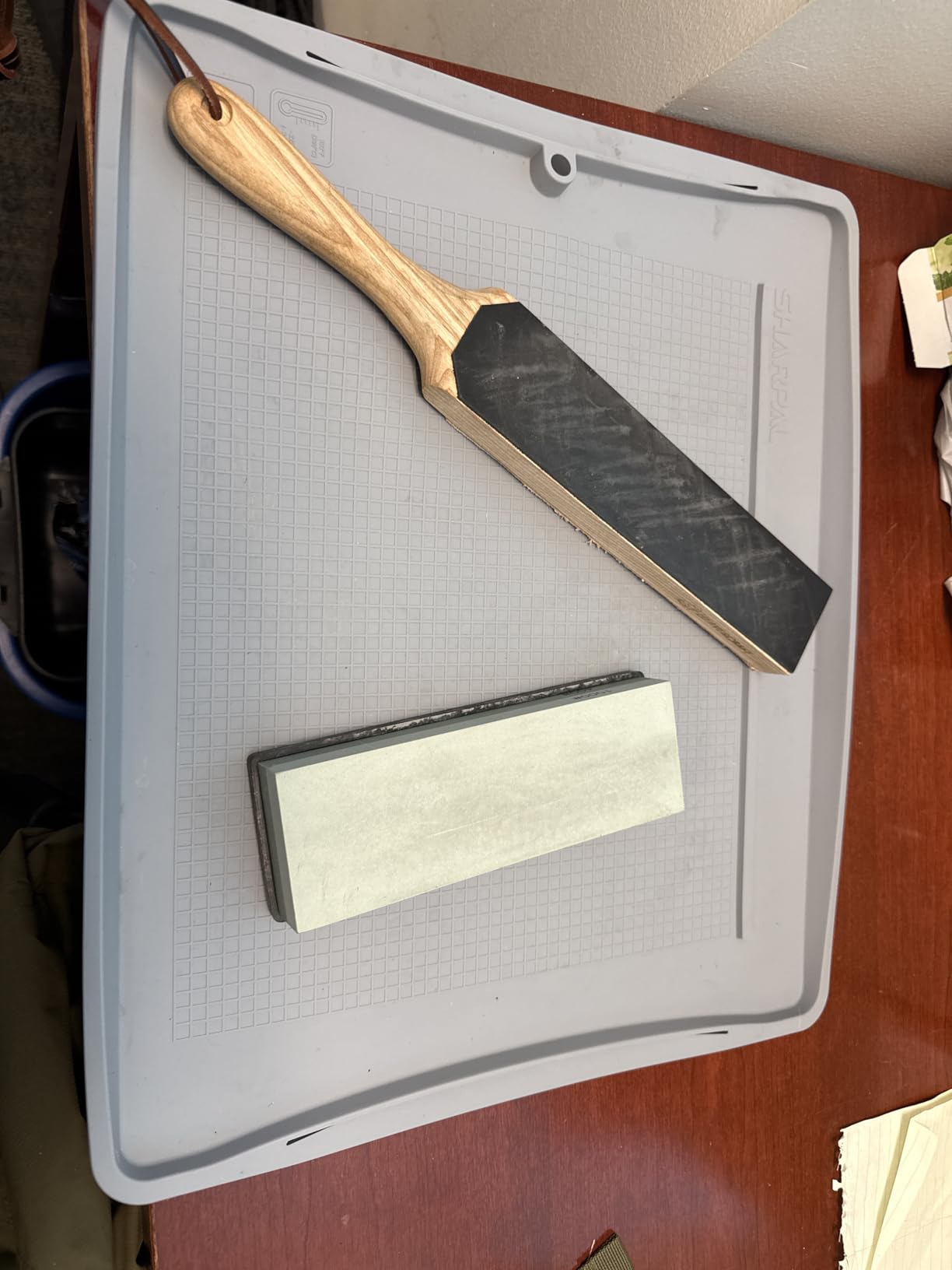
The SHARPAL 149H takes a completely different approach. It is a silicone tray rather than a clamp, and the point is not to grip the stone at all. It is to catch everything. At 17 by 14 inch with a capacity of 800 mL, it holds the water, the slurry and the metal filings that a waterstone session generates.
Stone stability comes from anti-slip textures moulded into the surface plus a stopper bar that the stone rests against. You are not clamping down, you are giving the stone a textured floor and a wall to lean on. That is a gentler approach, and it is why the tray works with stones of almost any size.
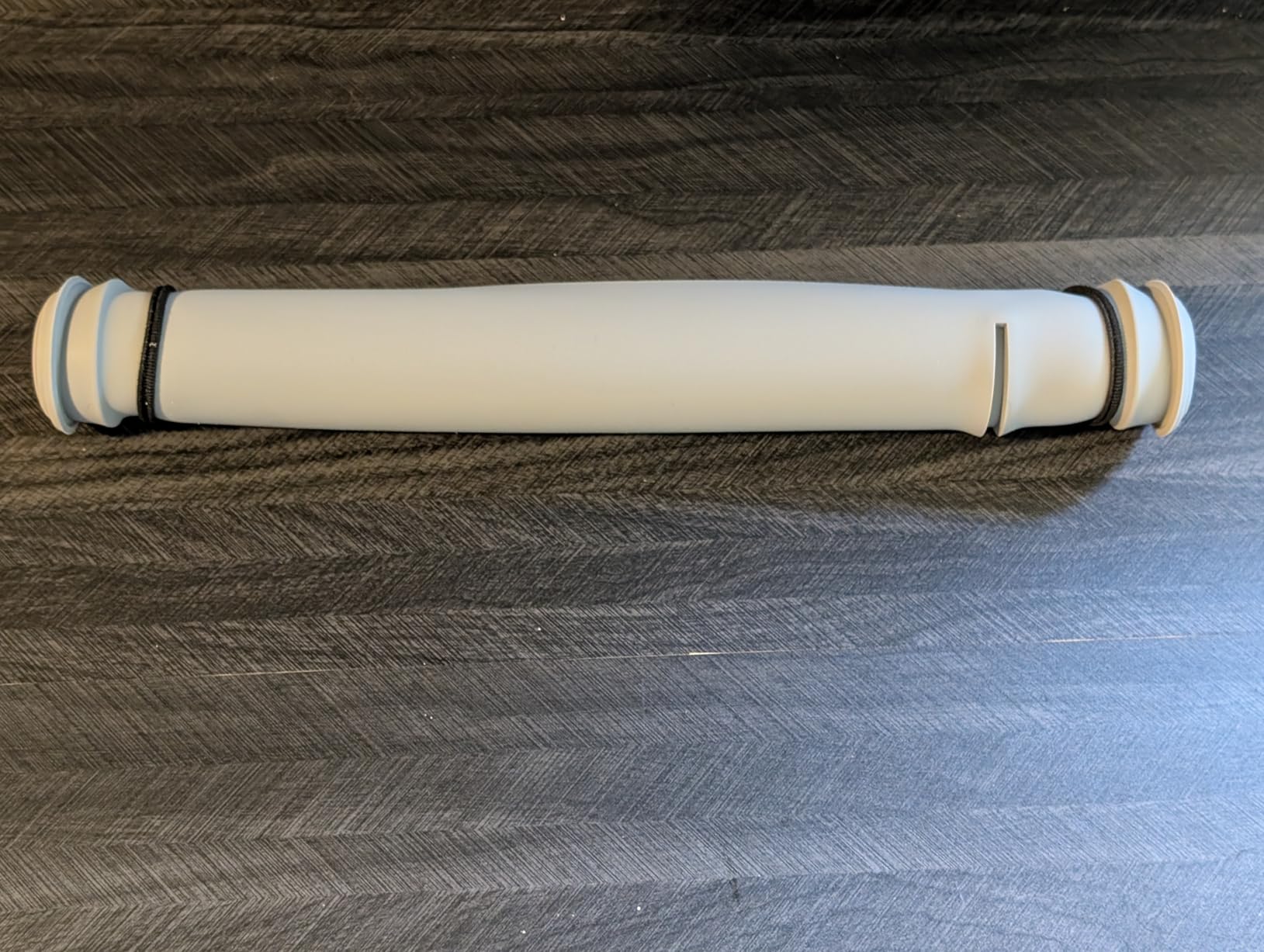
At 4.6 stars from 230 reviews, with 74 percent five-star, the feedback is strongly practical: the counter stays clean, stones do not slide, and the tray rolls up for storage. The basket-style handles let you carry the wastewater out without walking it across the kitchen.
The real weakness is the material itself. Silicone is soft, and a dropped chef knife or a stray screwdriver will cut it. Reviewers also point out that the flexible sheet sloshes when you tip out the water, and the raised lip gets in the way when you are flattening the back of a stone with a chisel.
What works about it day to day
For wet sharpening, it removes the argument entirely. Nothing reaches the counter, so there is no wiping down the worktop with a rag afterwards, which is the step most people skip and then resent.
It doubles as a bench protector. Flatten a stone, dress a bevel, do a little metalwork, and the silicone takes the wear instead of your worktop.
Where it falls short
It does not clamp, so it is not the right answer if your main problem is a stone that rocks. Pair it with a clamping base if you have both a wobble issue and a mess issue.
Care for it as a consumable. Inspect for cuts periodically, and keep sharp tools away from the surface when it is not in use.
7. S SATC 3221 – extra stone height and firm rubber jaws
S SATC Sharpening Stone Holder,Adjustable 5-1/2 Inch to 9 Inch,Rubber Stainless Steel No-Slip Sharpening Stone Base for Diamond Stones
Stainless frame with rubber jaws
Adjusts 5-1/2 to 9 inch
11.42 x 2.76 x 2 inch, 1.3 lb
Pros
- Elevates the stone for better hand clearance
- Good heft keeps it planted under hard strokes
- Tool-free adjustment between stone lengths
- Works with diamond stones
Cons
- Metal parts need washing and drying after wet use
- Base can creep on very smooth surfaces
- Over-tightening the jaws can crack a stone
The S SATC 3221 is the one to look at if you sharpen in long blocks. It measures 2 inch tall, which puts the stone meaningfully higher than a typical flat rubber base, and that extra working height means your hand clears the frame instead of folding over it. Knuckle clearance is an underrated comfort factor and it shows up after twenty minutes.
The frame is stainless steel with solid rubber jaws that grip the stone edges rather than pinching them, and it adjusts from 5-1/2 inch to 9 inch without tools. At 1.3 pounds it has the heft to stay put under aggressive strokes, which reviewers mention more often than you would expect.
With 175 reviews at 4.6 and 81 percent five-star, buyers describe it as solidly built with a grippy patterned base and useful added height. The pattern on the underside is doing real work: it resists sliding rather than relying on weight alone.
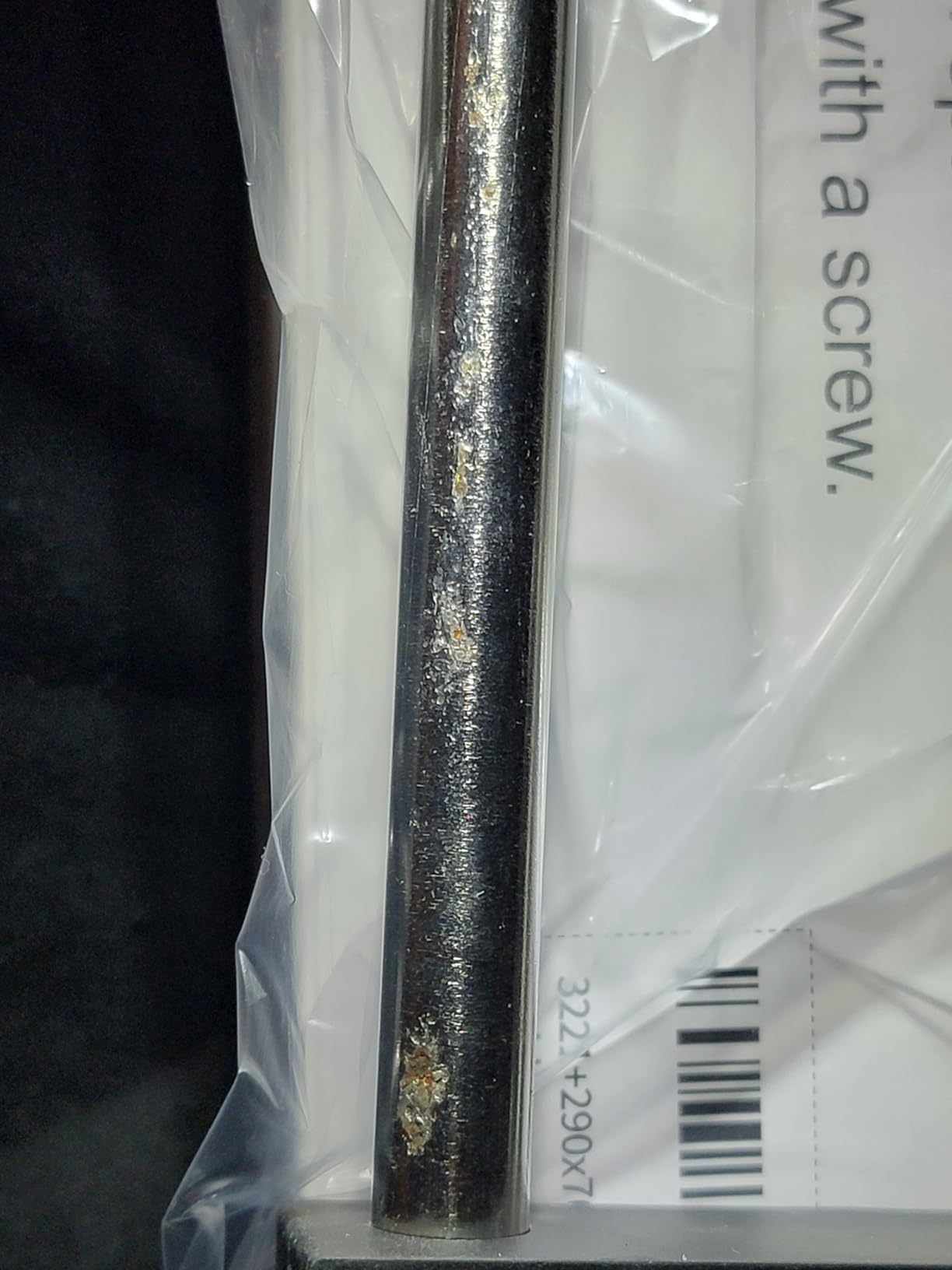
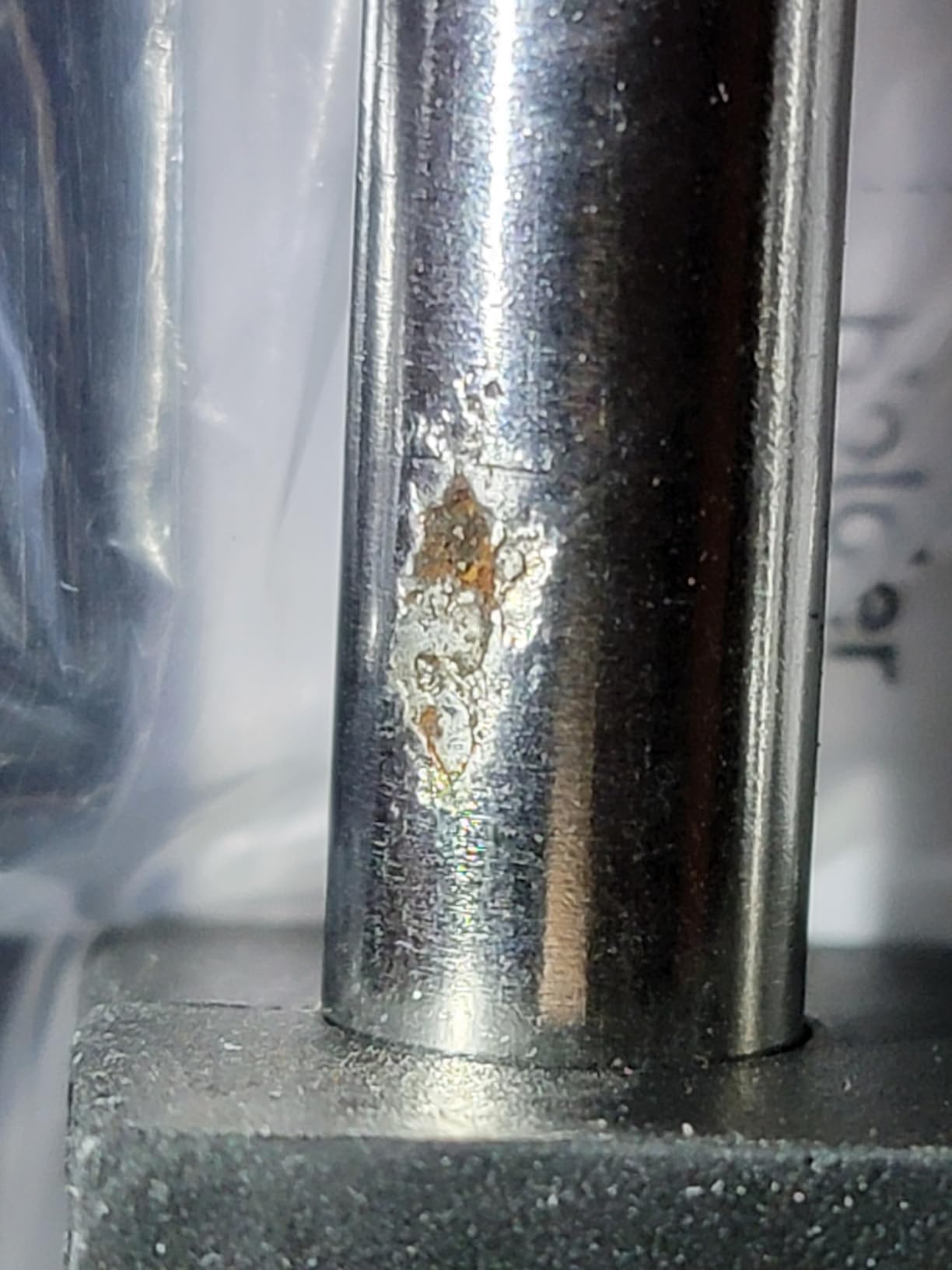
The consistent caution is corrosion management. Stainless near a water basin needs rinsing and drying, and leaving slurry pooled in the frame invites scum and eventually rust at the joints. It is a two-minute habit, not a flaw.
One safety note worth repeating: the jaws grip the edges, so tighten until the stone is held, not until the frame is at maximum. Owners report that over-tightening can crack a stone or squeeze it out of shape.
What works about it day to day
The elevated height is the standout. It reduces wrist and knuckle fatigue over a long session, and it makes it easier to keep a consistent stroke angle because your hand is not dropping down onto the surface.
Tool-free adjustment means swapping between two stones takes seconds, so a full progression from coarse to fine flows without breaking your rhythm.
Where it falls short
On a very smooth surface the base can creep slightly under heavy pressure. The pattern helps, but if you push hard on a polished counter, expect to re-seat it occasionally.
The rubber jaws are firm by design. That is good for grip and bad for very thin or brittle plates if you over-tighten, so treat the adjustment as a grip setting rather than a tension setting.
8. SHARPAL 160H – a two-pack that doubles as stone storage
SHARPAL 160H 2PCS 2-in-1 Whetstone and Sharpening Stone Holder&Storage Case
Two clear plastic cases, 8.3 x 3.5 x 1.95 inch
Fits plates to 7.95 x 2.95 x 1.1 inch
Textured rubber top and anti-skid base
Pros
- Holds and protects in the same unit
- Transparent so you can see contents
- Light and compact for drawers and knife bags
- Strong snap-on closure for transport
Cons
- Interior lets thinner stones rattle
- Larger plates such as 3x8 DMT or Atoma will not fit
- Plastic body is too light for heavy grinding or re-apexing
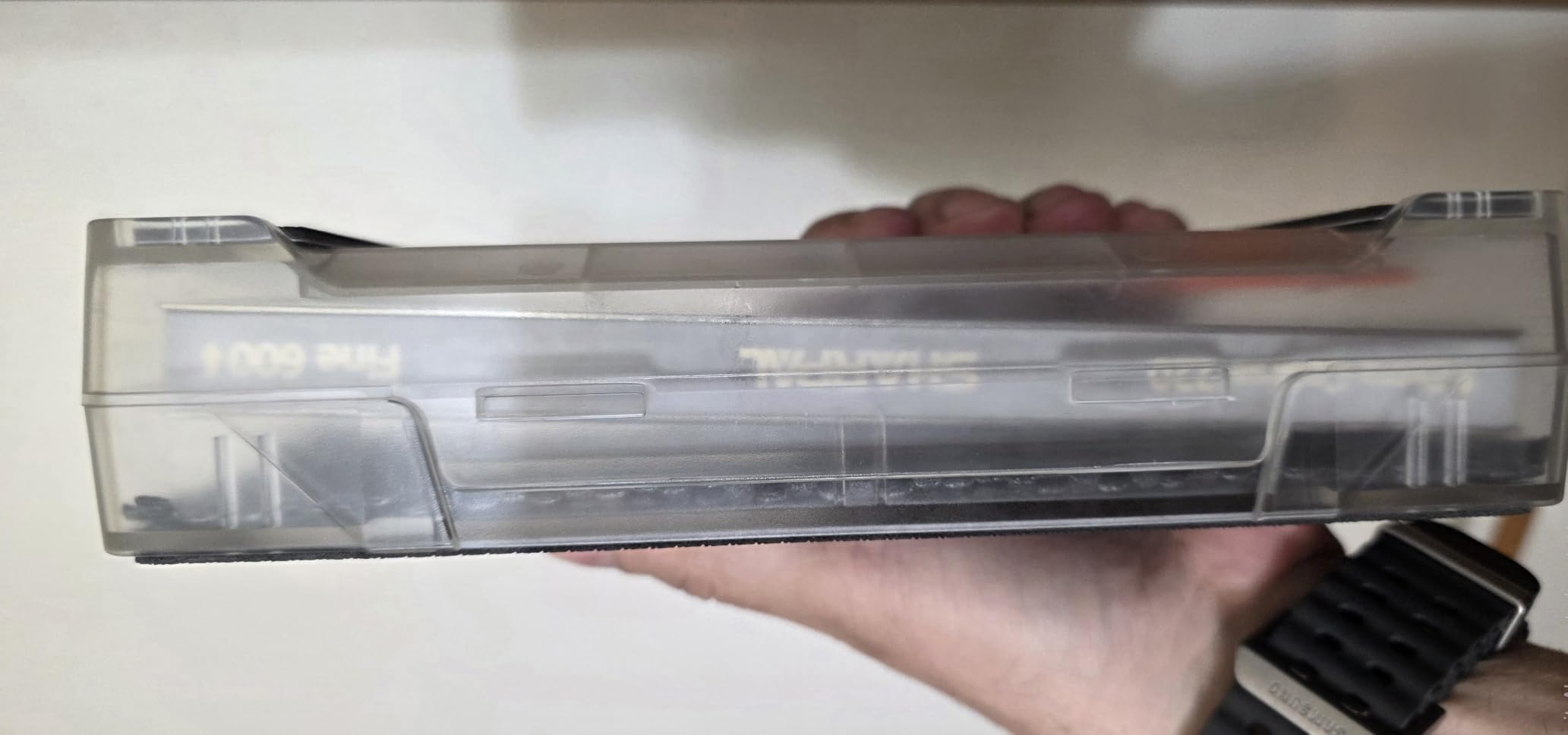
The SHARPAL 160H is sold as a two-pack of clear cases that work as holders while you sharpen and as storage boxes when you are done. That dual purpose is the whole appeal. One object covers the sharpening session and the tidy-up, which removes the single most common complaint about buying dedicated stone storage.
Inside each case is a textured rubber top surface and an anti-skid base, and the interior fits stones up to 7.95 by 2.95 by 1.1 inch. The textured top gives the stone something to bite into, so the case holds a plate for the duration of a session rather than only protecting it in a drawer.
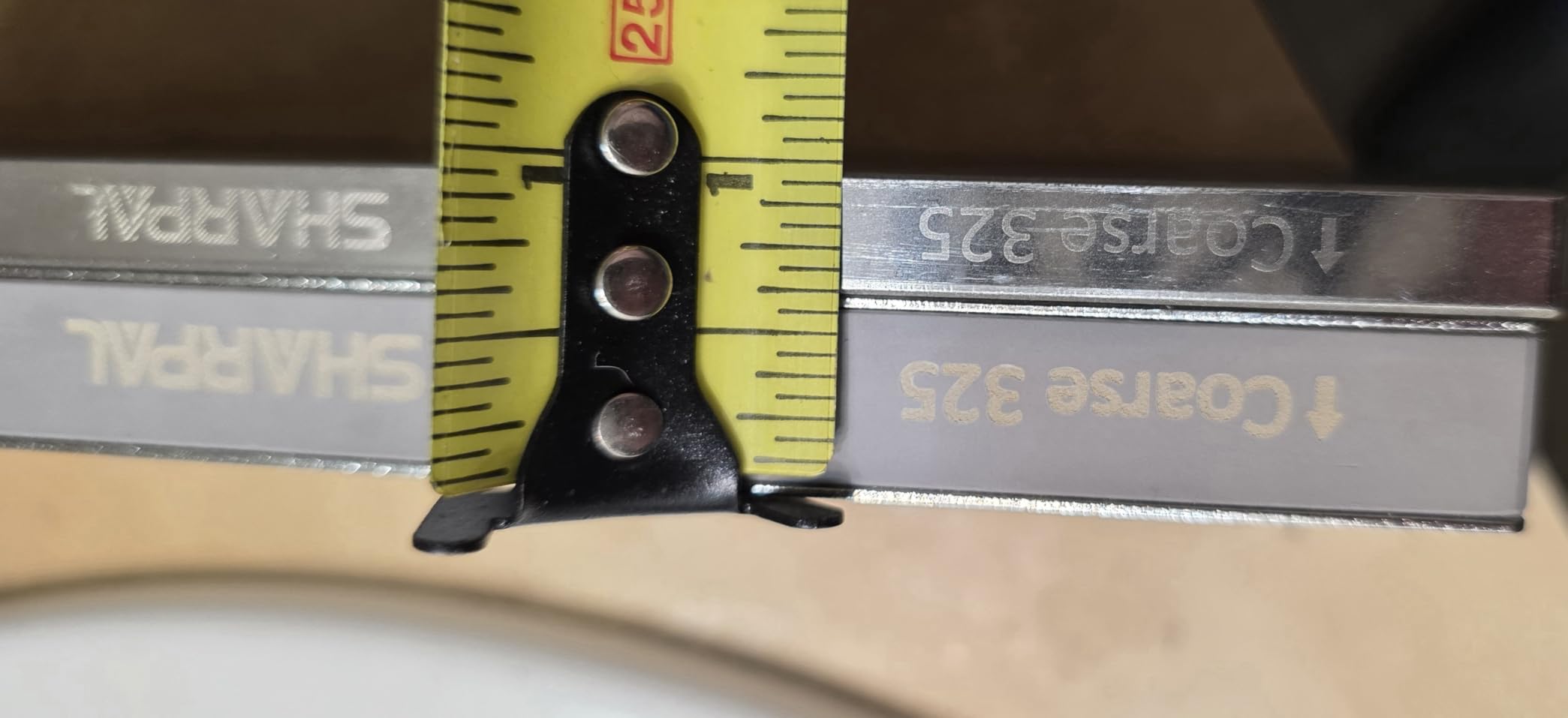
At 4.6 stars from 155 reviews, with 77 percent five-star, buyers like the dual function, the non-slip footing, and the clear body that means you can see what is inside without opening anything. The snap closure is genuinely strong, which matters if the case travels.
The complaints are consistent and reasonable. The snap latch is stiff when new and takes real force to open at first. Thin stones rattle inside the moulded interior because the cavity is sized for a standard plate. And anything larger than a standard plate, including 3 by 8 inch DMT or Atoma style stones, will not fit at all.
It is a plastic body, so it is not an axe re-apexing platform. For knife and chisel edges, it is fine.
What works about it day to day
Portability is the standout feature. At 0.2 kg per case, two of them fit in a drawer or a knife bag without thinking about it, which makes it easy to keep a stone with the tools you actually use rather than locked in a workshop.
Because the case is also the storage, there is nothing to misplace. Open, sharpen, close, done.
Where it falls short
It is sized for standard kitchen plates. Larger diamond plates will not fit, and thin plates rattle unless you add a layer of tissue paper or foam inside.
Do not try to use it as a heavy-duty grinding base. The plastic body has no rigidity for that, and forcing it risks cracking the case around a loaded stone.
9. Naniwa A-902 – the tallest, quietest holder in the group
Sharpening Stone Holder A-902 NANIWA
Rubber and stainless steel build
11.34 x 2.99 x 1.42 inch, 0.65 kg
Narrow rubber end stops
Pros
- Most solid-feeling holder here
- rocks the least
- Stainless and rubber will not rust with slurry
- Firm jaws keep a stone from popping out
- Thin end stops expose more usable stone surface
Cons
- Highest price point in the category
- Not adjustable so the stone must match the frame
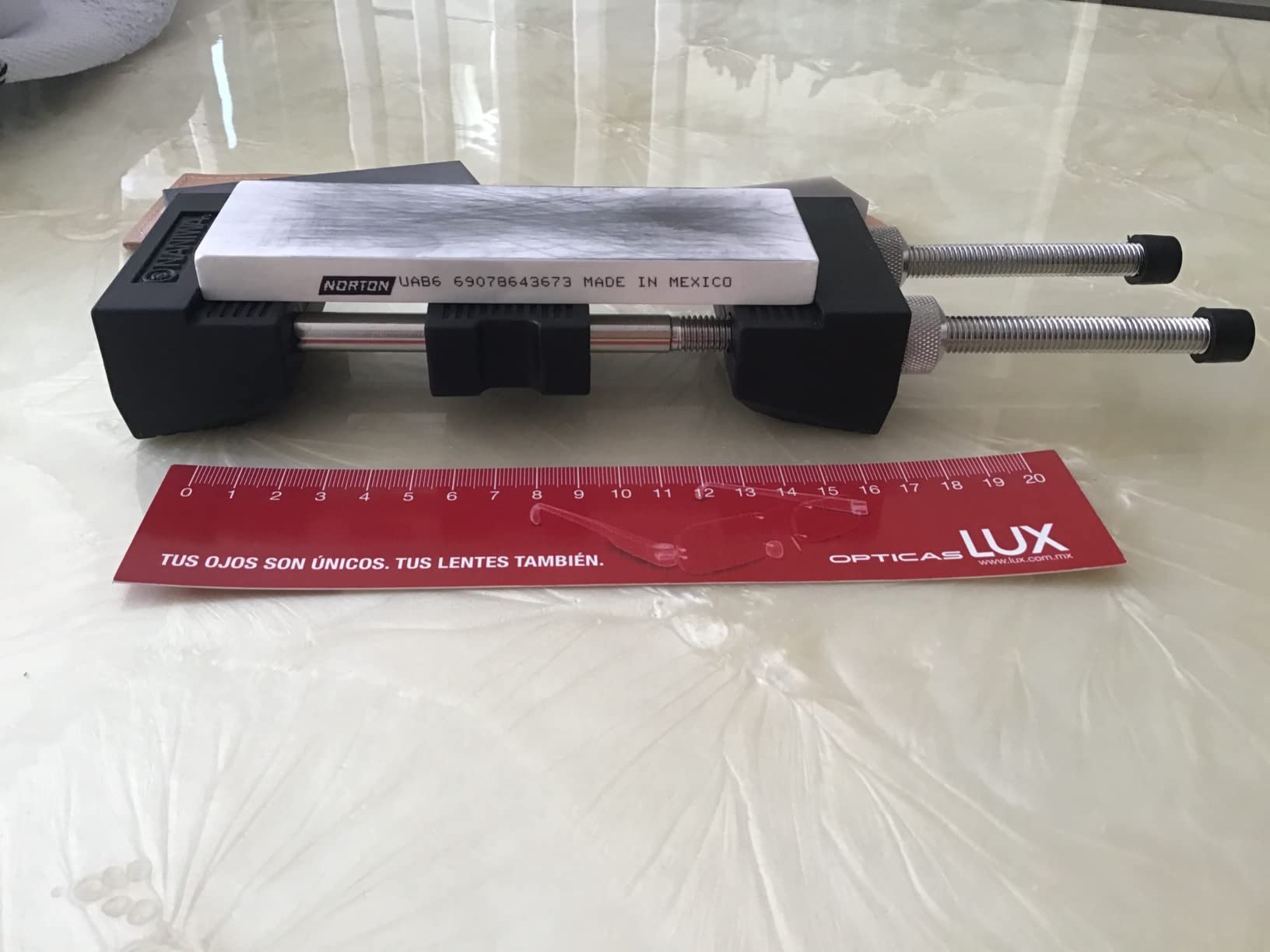
The Naniwa A-902 is the one people describe as feeling like a piece of equipment rather than an accessory. It is a fixed frame, rubber and stainless steel, and at 0.65 kg it barely moves when you push a blade hard across it. Owners consistently call it the most solid-feeling and quietest holder they have used.
Two design details matter more than they look. The jaws grip firmly enough that a stone never pops out mid-stroke, which is exactly what you want with a long, hard Japanese natural stone. And the rubber end stops are thin, so they cover very little of the stone face, leaving more usable surface exposed to water and pressure.
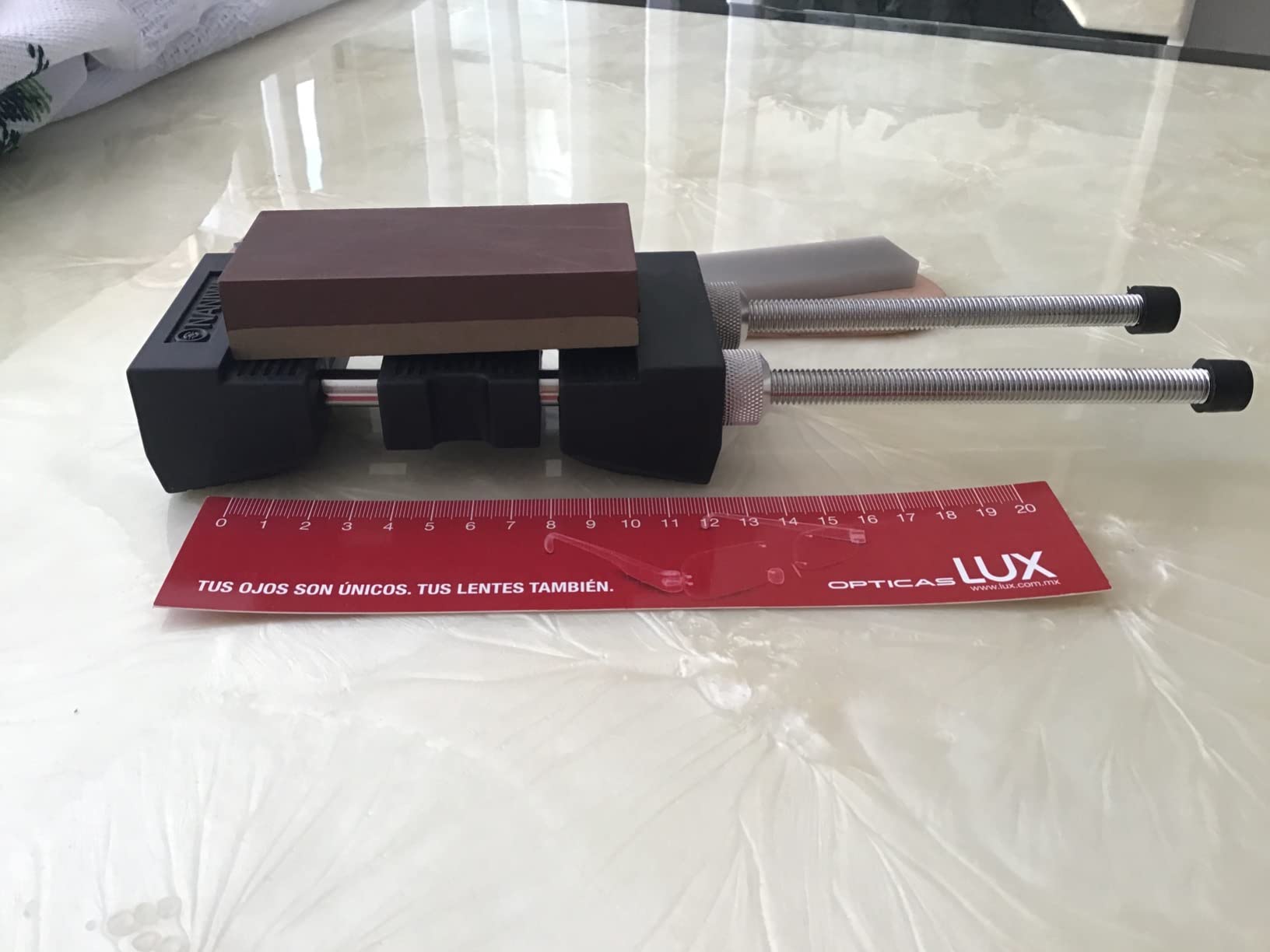
At 4.6 stars from 138 reviews with 82 percent five-star, the feedback repeats the same three things: solid, rust-resistant, and better knuckle clearance than most competitors because of the taller profile. The only recurring drawback named in reviews is the price, which is the highest in the group.
The important limitation is that it is not adjustable. Stone length has to match the frame, so this is a deliberate purchase for a specific stone rather than a universal one to grow with. Check the frame width against your stone before you commit.
What works about it day to day
It stays put under pressure without any adjustment during the session. Nothing to loosen, nothing to drift, no re-centering between grits, which is what makes long natural stones workable rather than frustrating.
Stainless steel and rubber means water and slurry cause no rust problems, and a rinse is the entire cleanup.
Where it falls short
It is the most expensive holder here, and for a beginner sharpening one 8 inch stone it is difficult to justify purely on performance. It pays off if you already own hard stones or sharpen frequently.
The fixed frame is the other issue. If you later add a different stone length, this holder will not grow with you.
10. QWORK QS8616 – silicone grip on a slim chrome-plated frame
QWORK Sharpening Stone Holder, Universal Sharpening Whetstone Holder, Adjustable from 5-1/2 to 9 Inches, No-Slip Sharpening Stone Base, for Various Whetstone, Oils Stone or Diamond Stones
Chrome-plated iron with silicone base
Adjusts 5-1/2 to 9 inch
0.57 kg
Pros
- Silicone base grips a wet counter well
- Fully adjustable across common stone sizes
- Works with diamond
- oil and water stones
- Light enough to move between counters easily
Cons
- Adjustment screws can be fiddly at first
- Middle block can fail to fully support some stones
- Iron frame needs wiping down to prevent rust
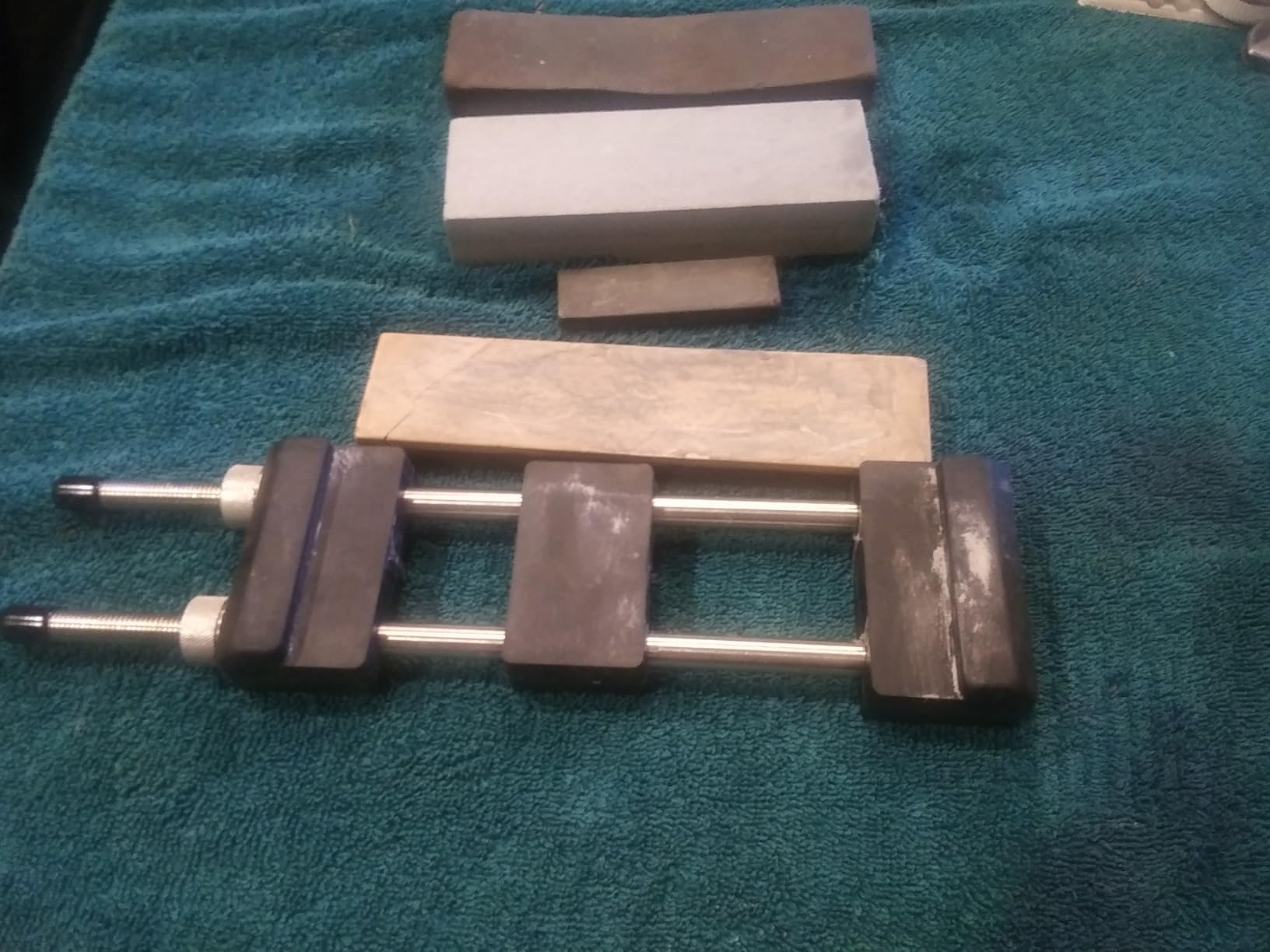
The QWORK QS8616 is the value pick here, and the rating on it is higher than its price position suggests at 4.7 stars from 125 reviews. The construction is chrome-plated iron with a silicone non-slip base, and it adjusts from 5-1/2 inch to 9 inch, which is the same window as most of the metal frames here.
The silicone base is the part worth paying attention to. Reviewers single out the rubber base as the reason it holds position on a countertop, and the same attribute is what causes the single most common complaint in this whole category: the base is grippy on the counter but the screws are awkward to set.
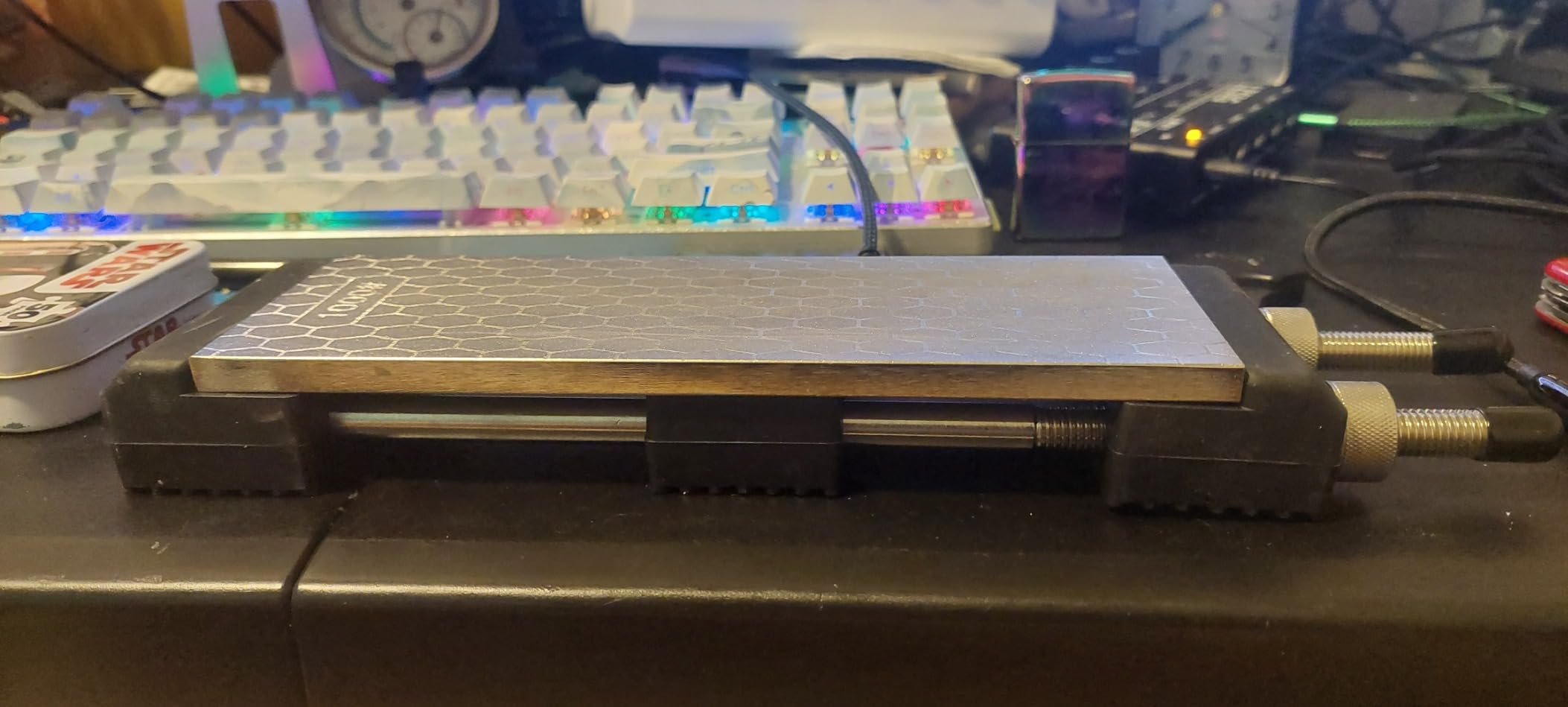
Buyers also praise the stability and call out good value against similar products, plus the fact that it handles scissors, chisels and other metal tools as well as knives. The negatives are specific: the middle support block can slide and fail to fully support certain stones, and the iron frame needs to be wiped down after wet use to keep rust from starting.
At 0.57 kg it is the lightest framed holder on the list, which makes it easy to carry between a kitchen and a workshop but means it relies on its base grip rather than on weight to stay planted.
What works about it day to day
The adjustment covers the most common stone sizes, and the silicone base holds on a wet surface without needing a rubber mat underneath. For a single-stone setup, that combination is enough.
It is also the most flexible of the budget frames, handling diamond, oil and water stones without any change to the setup.
Where it falls short
Chrome-plated iron is the least durable material in this category. It is fine for regular home use, but it will show wear and eventually corrosion faster than stainless, and it needs a wipe-down after every wet session.
Expect a short adjustment period. The screws take some getting used to, and the middle block needs a quick check after each size change to make sure the stone is fully supported.
11. DMT B8250-MBA – magnetic stone changes for DMT bench stones
DMT B8250-MBA Duo Base Bench Stone Accessory with Magna-Base Adapter
Magnetic base with MagnaBase adapter
2 inch knuckle clearance
Weighs 1.3 lb, fits 6 x 2 inch bench stones
Pros
- Magnetic retention lifts and swaps plates fast
- 2 inch knuckle clearance is the most generous here
- Works with DuoSharp and Dia-Sharp bench stones
- Underside handle helps move over large workpieces
Cons
- Plastic body feels cheap to some users
- Magnetic surface is soft and can be nicked
- Not for handheld use with the adapter
- Only useful if you own DMT stones
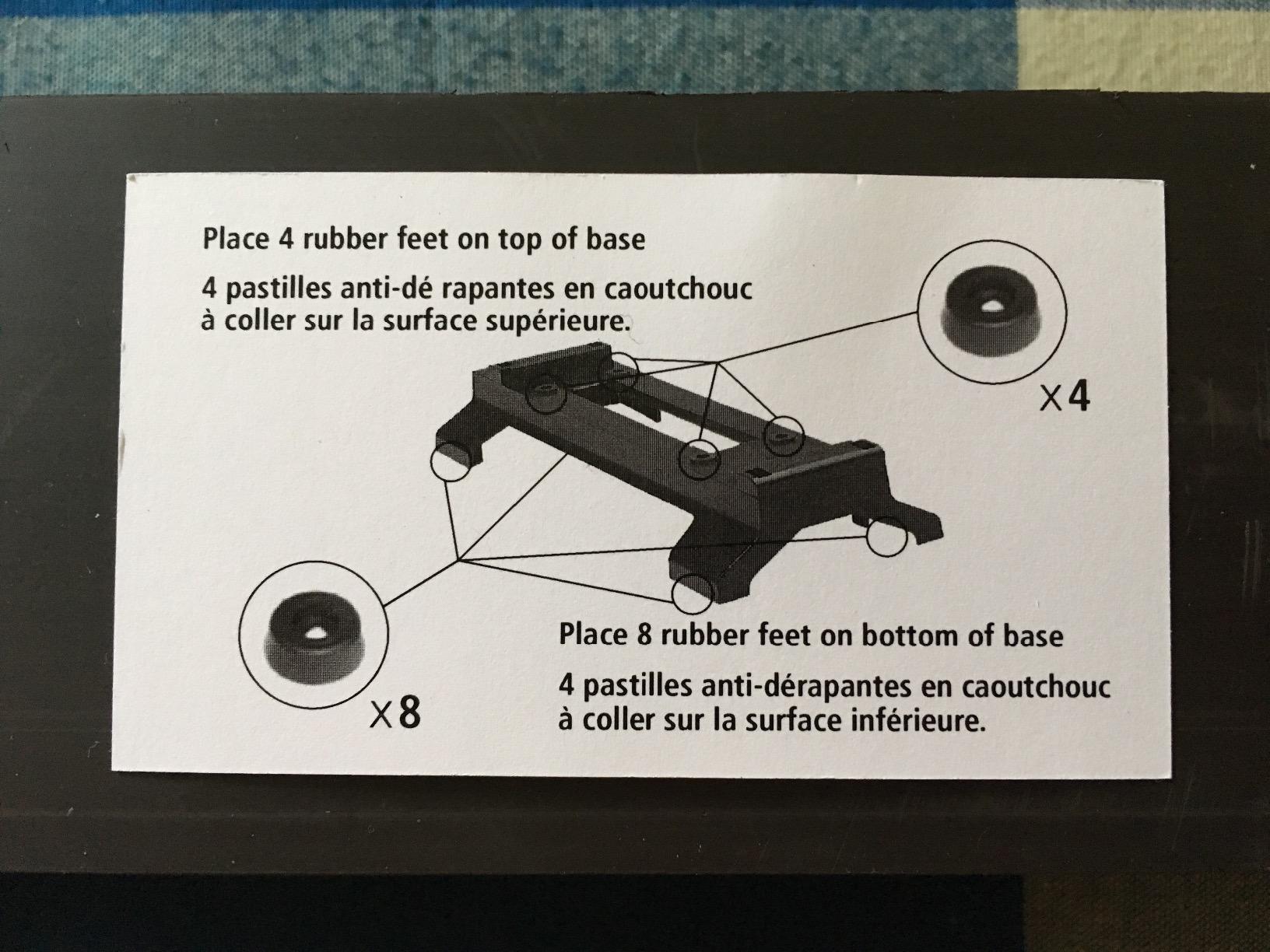
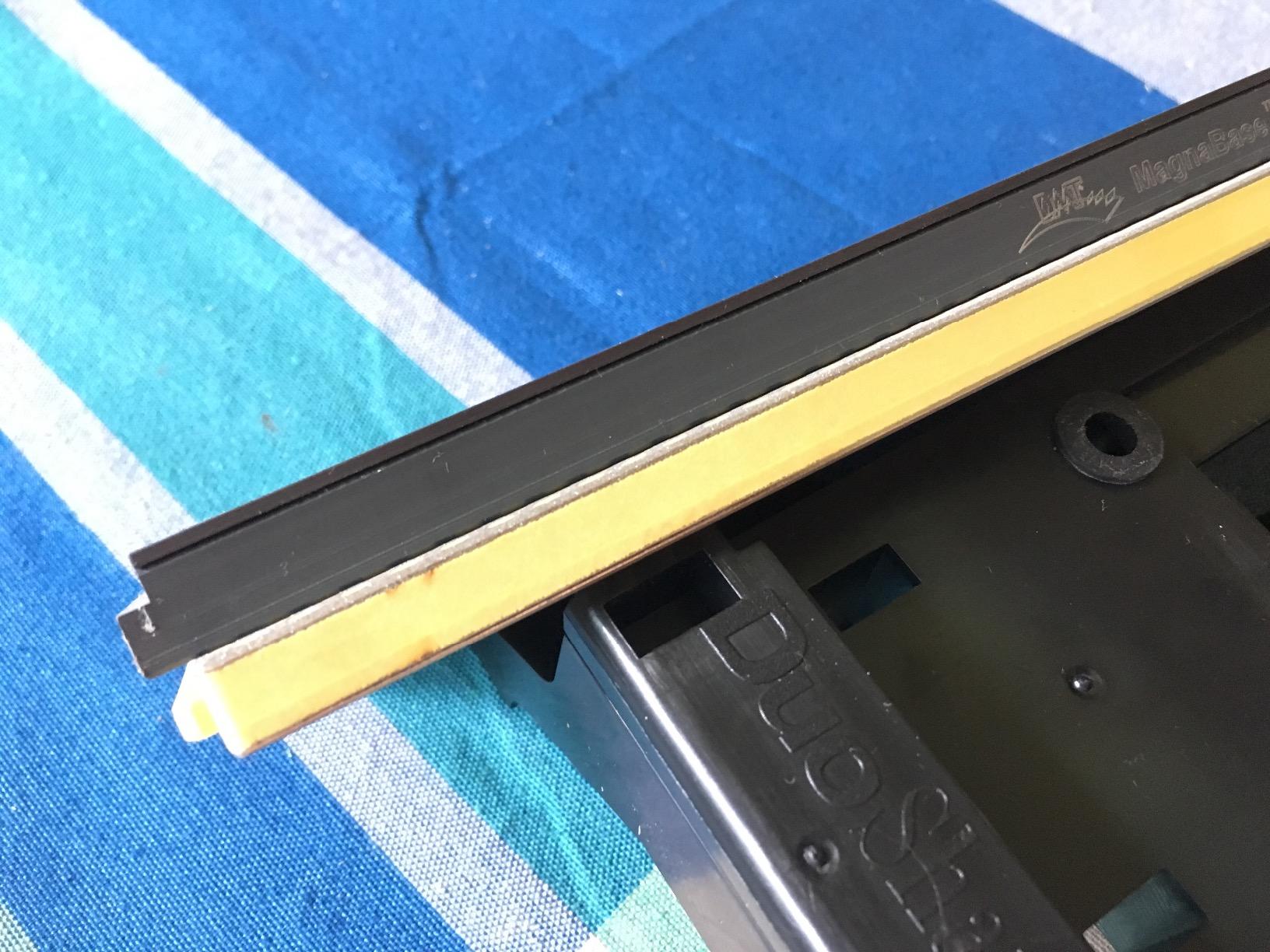
The DMT DuoBase with MagnaBase adapter works on a completely different principle from everything else here. Instead of clamping, it holds a diamond plate magnetically. You lift the stone straight off and drop a different grit on, which is the fastest grit change available in this category.
It is designed as a bench stone accessory for 6 by 2 inch DuoSharp stones, and the MagnaBase adapter covers the Dia-Sharp plates too. The underside handle exists so you can move the stone over a large workpiece, and the 2 inch knuckle clearance is the most generous in the group.
It is also the lowest-rated pick at 4.1 stars across 103 reviews, and the reasons are consistent. The plastic body feels cheap in the hand, the magnetic surface is soft and can be nicked during sharpening, and the adapter is not recommended for handheld use. One reviewer received a base without the magnetic adapter included, which is an assembly and packaging issue rather than a design flaw.
The honest framing is that this is not a general-purpose whetstone holder. If you do not own DMT diamond bench stones, it does nothing for you. If you do, it is the most pleasant way to move between grits.
What works about it day to day
The swap speed is unmatched. Lift, flip, replace, resume. No screws, no knobs to find with wet hands, and the plate is held firmly enough to take a full sharpening stroke.
The knuckle clearance is a genuine comfort win for long sessions, and the built-in handle makes repositioning over a large workpiece simple.
Where it falls short
Brand lock-in is the main limitation. It is designed around DMT plates and does not adapt to conventional whetstones, so it is an addition to a collection rather than a foundation for one.
Take care of the magnetic face. Diamond particles on a plate will nick it, and a scarred magnetic surface grips less predictably over time.
12. Tuyotue 007 – a compact sink bridge for smaller basins
Whetstone holder Sharpening Stone Base – Stainless Steel Adjustable Whetstone Holder Sink Bridge for 10″-17″ Sink Length, Stone Length 3.5″-9″
Stainless steel sheet construction
Spans 10 to 17 inch sinks
Holds 3.5 to 9 inch stones, 12.8 oz
Pros
- Light and easy to lift into position
- Spans most standard kitchen sink widths
- Keeps wet sharpening mess in the basin
- Single thumbscrew makes setup quick
Cons
- Stainless lips sit high against some Shapton stones
- Can be slippery on the sink surface without a towel
- Sharp corners may need filing
The Tuyotue 007 is the light sink bridge, and at 12.8 ounces you can lift it into place with one hand while holding a wet stone in the other. The SCOTTCHEN bridge is the sturdier of the two sink options here, but this one folds down conceptually into a smaller kitchen and adjusts across 10 to 17 inch sink widths.
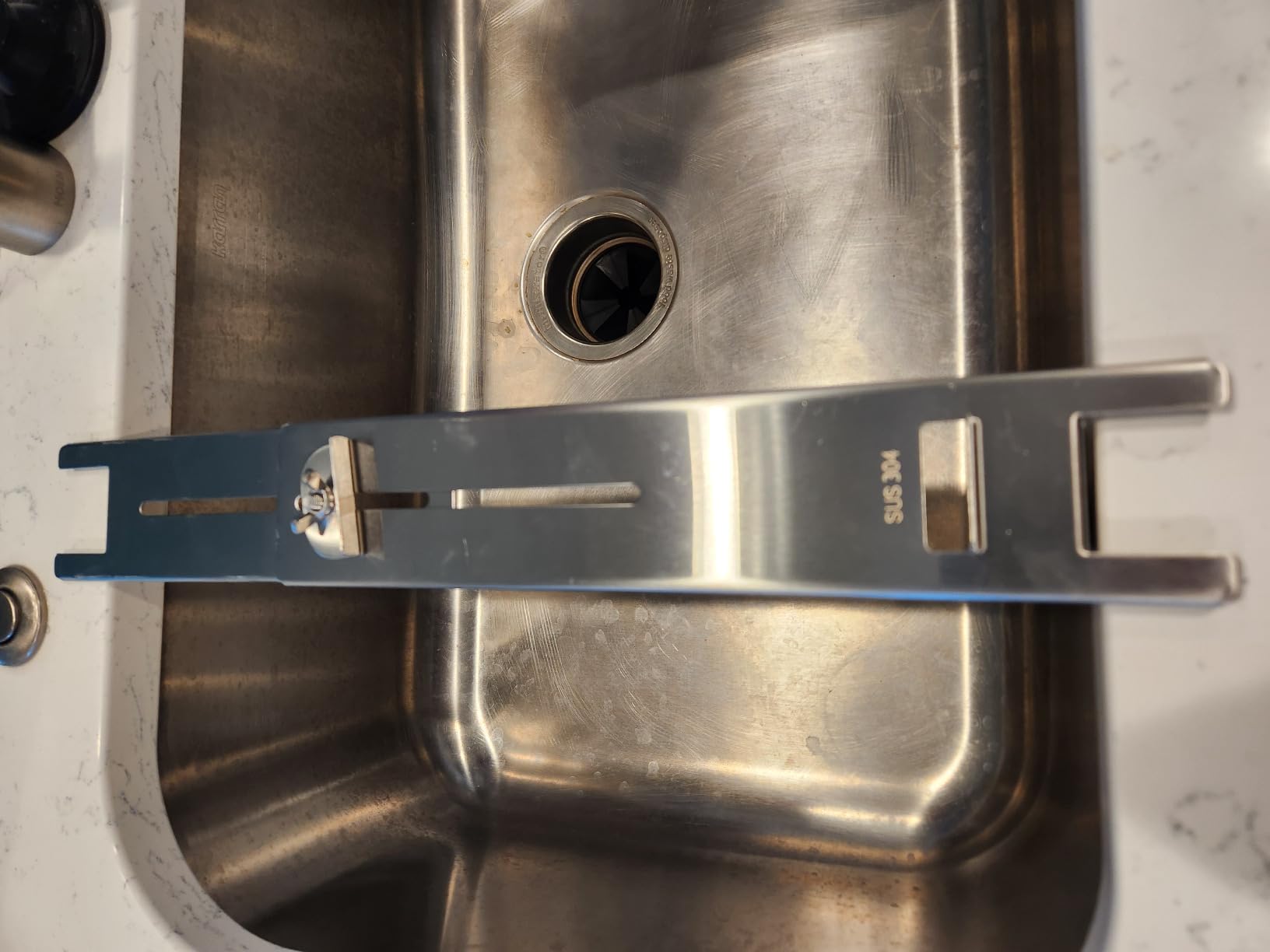
It holds stones from 3.5 inch to 9 inch and uses a single thumbscrew for setup, which keeps the whole adjustment to one movement. The frame is sheet stainless steel with bent edges for rigidity, so there is very little to break.
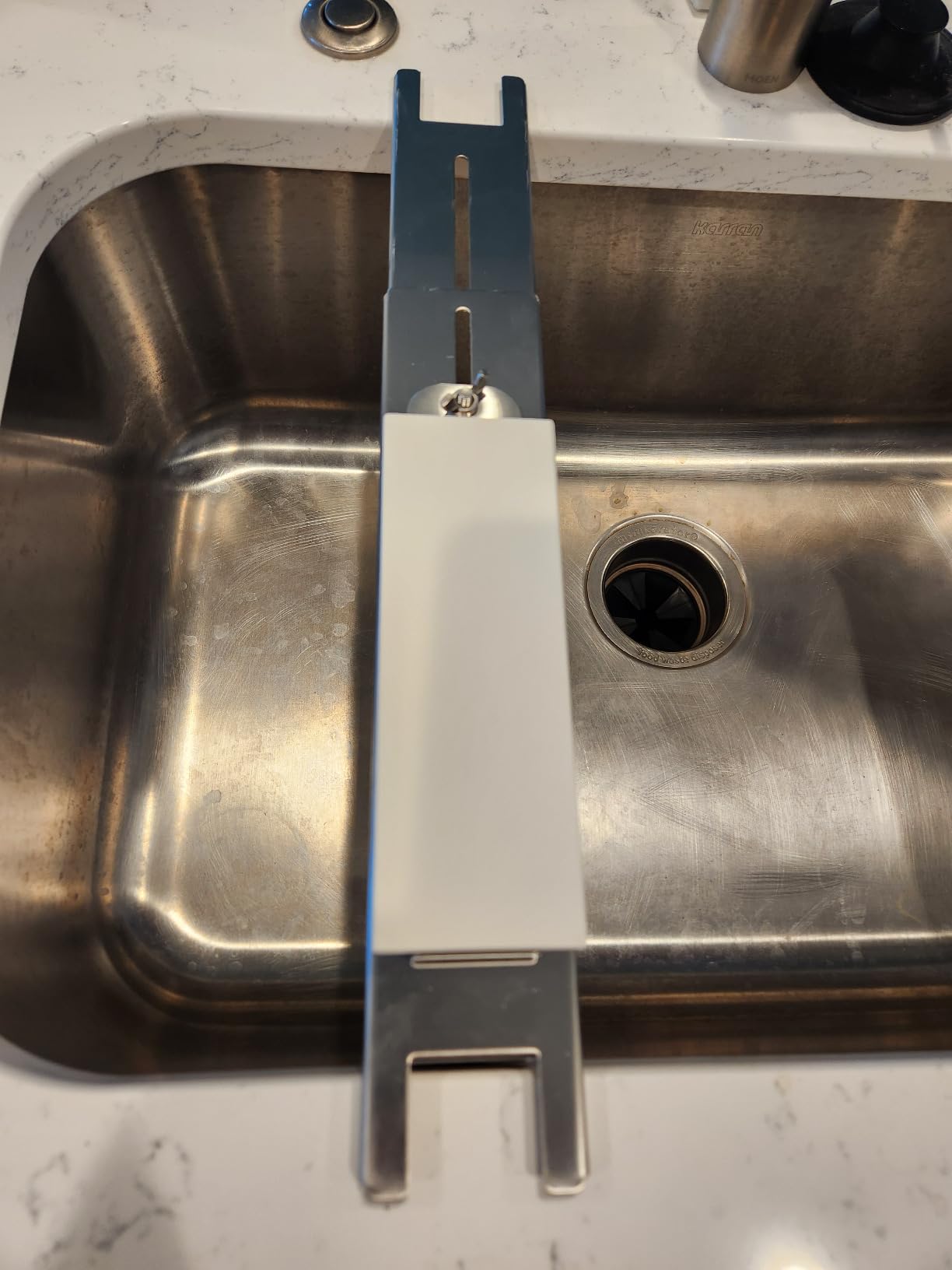
At 4.4 stars from 50 reviews, the small sample size is worth noting. The feedback is warm on build quality and on how well it contains wet sharpening mess, and several buyers explicitly recommend adding rubber pads to stop the steel scratching the sink.
The real limitations are compatibility ones. The stainless lips sit high against some Shapton Glass stones, which may need spacers. And over a wet sink the bridge itself can be slippery, so users suggest laying a wet towel underneath. The single locking nut also controls both the stone clamp and the bridge position, which is a design shortcut with a learning curve.
What works about it day to day
It does the job a sink bridge exists to do: the water, the slurry and the filings go into the basin instead of onto the counter. Set it once with a towel underneath and the whole session stays contained.
The single thumbscrew means setup is genuinely quick, and the low weight makes it easy to move when you need the sink for something else.
Where it falls short
Sheet metal is thinner than solid bar, so it feels less rigid under a hard stroke than the heavier bridge design. If you press aggressively, expect some movement at the stone clamp.
Check your stone brand before buying. Higher-profile stones with thin bodies can sit proud of the lips, and the sharp bent corners are worth a quick file if you have an enamelled or coated sink.
Holder Types Explained: Sink Bridge vs Clamp Base vs Tray vs Station
Every holder on this list falls into one of four families, and choosing between them is mostly a question of what your kitchen looks like rather than what your stones are made of.
Clamp bases are the general-purpose answer. A frame with two rubber jaws grips the stone edges, and a rubber or silicone foot grips the counter. They work anywhere, hold the stone firmly, and do not care whether you have a sink. Most of this list is clamp bases. Their weakness is that they do nothing about water.
Sink bridges span your basin. The stone sits between rubber-lined arms and every rinse runs into the drain. They are the cleanest wet-sharpening option by a wide margin, and the least portable, since the whole architecture depends on having a sink of the right width.
Trays and mats do not clamp at all. A silicone tray catches slurry, and moulded textures keep a stone from sliding. The trade is precise: you give up firm clamping and gain complete mess control. For households that wet-sharpen, that is often the better trade.
Cases and stations solve storage and portability. A holder-case does both jobs in one object, and a magnetic bench base keeps multiple plates accessible for rapid grit changes. These are collection accessories rather than countertop solutions.
One clarification on the word adjustable. Most holders in this category adjust stone length or width, not angle. Holders that claim angle adjustment are a different product family, and a few of them work well, but they are not what you are buying here.
Free and DIY Alternatives That Actually Work
Before spending anything, know that the most-repeated answer across sharpening forums is that a wet towel is enough. Multiple practitioners confirm it costs nothing and it works. Fold a kitchen towel, wet it thoroughly, wring it out, and lay it flat on the counter. The stone sits on the damp fabric, the fabric grips the stone and the counter at the same time, and you have solved both halves of the problem.
A silicone baking mat is the upgraded version of that idea. It is waterproof, larger than cut-to-size cabinet liner, and it survives being wet repeatedly. Members like them, though genuine branded silicone mats cost enough that generic equivalents often make more sense.
A rubber bar mat is an underrated find. Practitioners who borrow one from a bartender report that it works brilliantly and holds both the stone and the dirty water in one place. A cut section of hard rubber horse mat works the same way and folds down small enough to live in a knife bag, which makes it the best portable option we found described anywhere in this category.
For a custom fit, a 3D printed holder is genuinely viable. You can size the cradle to your exact stone, and designs that slide along a bridge rail for water access are described by their makers as doubling as standalone holders. The limitation is print-layer texture, which is fine for holding a stone and not worth worrying about.
What none of the free options solve well is working height. A towel gives you a stable base at counter level, and if you sharpen for more than ten minutes at a stretch, the raised profile of a real holder is worth the spend.
How to Choose a Sharpening Stone Holder
Start from your stones, not from the product. Measure the length and thickness of every stone you own, then check the holder’s adjustment window against the widest of them. A 5-1/2 to 9 inch range covers most 8 inch kitchen stones and misses anything shorter or longer, and that mismatch is the number one reason a holder ends up unused.
Next, think about your surface. Granite and quartz are the hardest, and they need a rubber or silicone base with real contact area rather than a hard plastic foot. Laminate and sealed timber are more forgiving. If you have no sink and a polished counter, a clamp base with a wide rubber footprint is the combination that works.
Then test working height honestly. Most holders here sit between 1 and 2 inch tall. The taller models give your knuckles clearance and reduce wrist fatigue over a long session, which is worth more than most people expect. The S SATC and the Naniwa are the two to look at if you sharpen in blocks rather than occasionally.
Clamp pressure deserves a specific warning. Stiff squeeze-action and spring-loaded clamps can chip or crush long, hard Japanese natural stones. A screw or knob clamp that you tighten until the stone stops moving is far safer than one that yanks the stone into a fixed gap. If you own natural stones, favour adjustable grip over fixed clamping.
Rust resistance is the second most asked-about filter after grip. Solid stainless steel and 304 stainless will sit beside a sink indefinitely. Chrome-plated steel is adequate with a wipe-down. Chrome-plated iron is the weakest of the three and will show wear fastest. Nothing made of bare steel should be left standing in standing water.
Water containment decides whether you need a tray or a bridge. If you sharpen with waterstones, you will generate slurry, and something needs to catch it. A sink bridge handles it perfectly if you have a sink. A silicone tray handles it well if you do not. A clamp base on its own leaves you wiping the counter afterwards.
For budget, the low end of this category is where the value sits. A clamp base with a rubber body covers the common stone sizes and does the job properly. The middle band is where you get stainless construction and wider adjustment. The premium end buys you fixed-frame solidity, brand-specific magnetic retention or a much wider stone range, and it is only worth it if you already sharpen several stones regularly.
One last filter, and it is the one most shopping pages skip: buy the base that grips a wet surface. Not a dry one, not a clean one. Wet. Every product in this list was judged on that basis, and it is the difference between a holder you use and one you work around.
Setting Up and Caring for a Home Sharpening Station
A station that works needs three things: a stable base, a way to deal with water, and somewhere to put the stones afterwards. That is it. A damp towel plus a plastic hotel pan of water set beside the counter covers the water side of the problem for nothing, and it pairs well with a clamp base.
Layout matters more than people expect. Give yourself enough counter depth for your hands to travel with the blade, keep the towel or tray directly under the working end, and put your water container on the side you are not reaching across. If you are sharpening at a sink, keep the bridge square over the basin from the first stroke.
Maintenance splits between the holder and the stone. For the holder, the routine is rinse, wipe, and stand it on its side to air dry. Air drying is the part people skip, and it is the part that decides whether steel survives. For stainless, that is enough. For plated steel and chrome-plated iron, a dry cloth afterwards keeps corrosion from starting.
For the stone, put it somewhere flat and stable with no load on the face. A stone stored on edge, or with a case lid pressing on it, will develop a dished surface, and a dished stone will never produce a flat bevel. Mold is almost always a function of standing water rather than the stone itself, and soap and water cleaning handles it.
If a stone has gone dull, oily or contaminated, it can usually be rescued rather than replaced. A medium-fine diamond plate will resurface most stones, and WD-40 can lift an oil-loaded surface. If you are working through sharpening equipment guides like our home kitchen equipment picks or our storage and handling roundup, the same principle applies. Nothing in a sharpening setup is truly consumable if it is stored dry.
Frequently Asked Questions
What is the best sharpening stone holder?
For most home kitchens, an adjustable clamp base with a wide rubber or silicone foot is the best all-round choice, because it grips a wet counter and fits the common 8 inch stones. Choose a sink bridge instead if your main frustration is slurry and water on the worktop and you have a suitable sink. A silicone tray is the best pick if mess control matters more than firm clamping, and a wet towel is a genuinely good free baseline to start from.
Do I need a sharpening stone holder?
You need one if you sharpen on anything smoother than a wooden board. Granite, quartz, laminate and stainless worktops give the stone almost no friction, and a film of water makes that worse. If you already work over a sink bridge or a damp towel, a holder becomes a comfort upgrade rather than a necessity. It will not make a mediocre edge good; it will make a good technique consistent.
Why does my sharpening stone keep moving?
Four causes account for most of it. The worktop is too smooth, usually polished granite or quartz. A film of water or oil sits between the stone and the counter and destroys friction instantly. The stone is supported unevenly, often on its plastic case or a folded towel, so it rocks under pressure. Or the plastic stone case itself is being used as the base, which looks correct and slips within seconds. Fix the support and the edge follows.
What is the main difference between a whetstone and a sharpener?
A whetstone is a flat stone of abrasive grit that you sharpen a blade across, using water for waterstones or oil for oilstones. A sharpener is a device with a fixed abrasive surface, such as a honing rod or an integrated angle-guiding system, that you draw the blade along. A whetstone gives you full control over the edge angle and finish; a sharpener is faster and far more forgiving but limited to the geometry it was built for.
What can I use instead of a sharpening stone?
A folded damp kitchen towel is the most recommended free substitute in sharpening forums, and it genuinely works because the fabric grips both the stone and the counter. Beyond that, a silicone baking mat, a rubber bar mat, a cut section of hard rubber horse mat, or a 3D printed cradle sized to your exact stone all work. For a different result rather than a free substitute, a diamond plate sharpens faster and needs no water at all.
Can I use WD-40 on my sharpening stone?
Yes, as a rescue step rather than a routine one. If a stone has been used with oil and has become slick and will not respond to water, WD-40 will lift the contaminated surface so the grit can work again. It is not a lubricant you should use during normal sharpening, since it leaves an oily film that defeats the point of a clean wet surface. Resurfacing a badly loaded stone with a medium-fine diamond plate is often the better fix.
Can a sharpening stone go bad?
Stones do not wear out quickly, but they can be ruined by storage and by neglect. A stone stored under load, on edge, or with a case lid pressing on it will dish, and a dished stone will not produce a flat bevel. Standing water in a tray encourages mold, and mold is a function of the water rather than the stone itself. Store stones flat, dry and unloaded, and clean them with soap and water when needed.
What is the best knife sharpening system for home use?
For most households, a complete waterstone set in a proper holder with a tray or sink bridge is the most capable option, and a single 1000 grit stone with a 400 or 600 companion covers almost everything you will sharpen. If you want less fuss, a diamond plate system needs no water and no stone flattening, which makes it far easier to keep up with. Add an angle guide if you are new, since a repeatable angle matters more than grit choice.
Final Verdict on the Best Sharpening Stone Holders
The POWERTEC 71013 takes the top spot among these best sharpening stone holders for home use because it solves the actual problem: its moulded rubber body grips a wet counter and grips the stone at the same time, it fits the stone sizes most people own, and it does it without asking anything about your kitchen. It is the holder we would put in front of someone setting up their first station.
Buy the SCOTTCHEN sink bridge instead if water and slurry on the counter is the thing that stops you sharpening, and you have a sink between 6-3/4 and 17-3/4 inch wide. Buy the SHARPAL silicone tray if you do not have a sink but still want the mess contained. And if you own hard Japanese natural stones, the Naniwa A-902 is the one that will not let go of them.
Start with a damp towel this week and see whether your edges improve. If they do not, the gap is almost always support rather than technique, and any of the twelve above will close it. Whatever you pick, rinse it, stand it on its side to dry, and put the stone somewhere flat and unloaded before you walk away from the counter.