
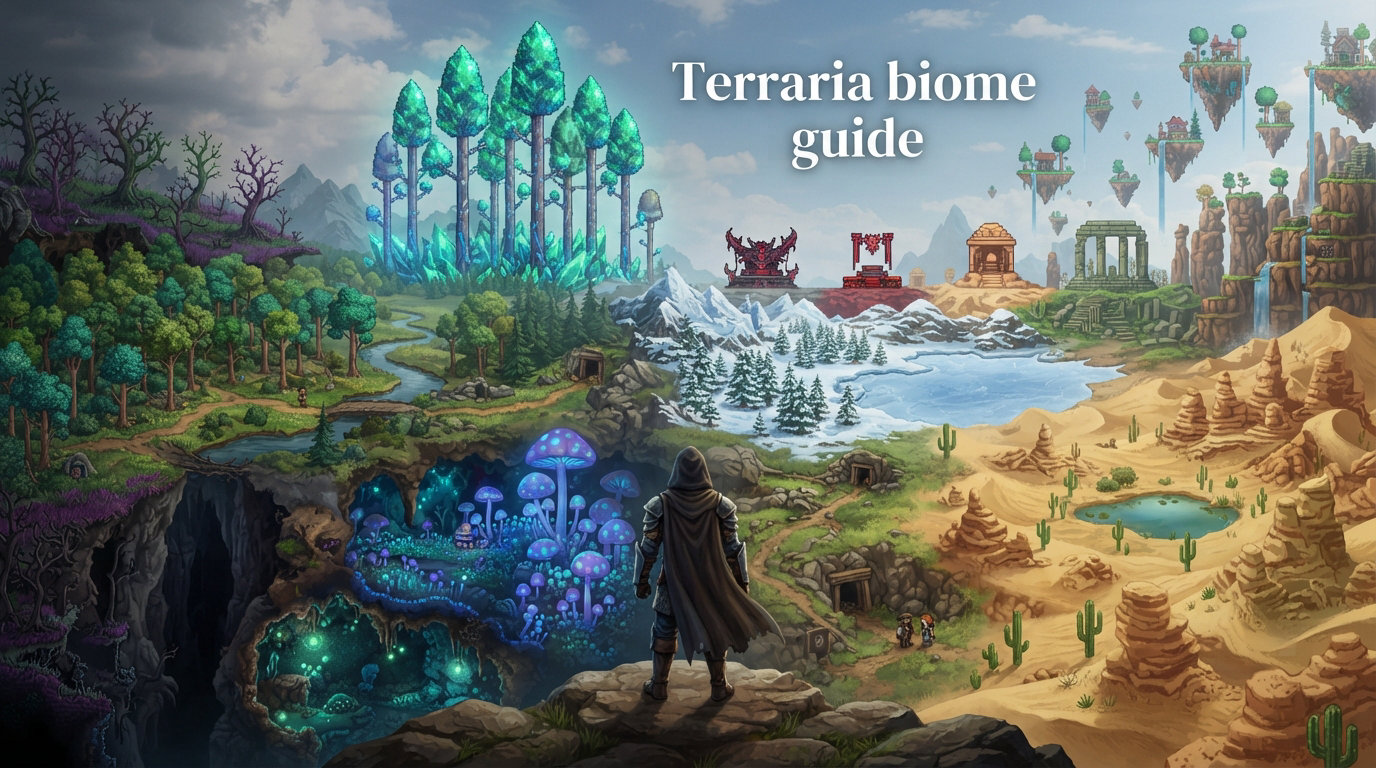
In Terraria, biomes are distinct regions that define the terrain, enemies, music, and resources you will encounter as you explore. Each biome has its own unique character and challenges, making exploration one of the most rewarding aspects of the game. This Terraria biome guide covers everything you need to know, from the peaceful Forest to the dangerous Underworld, so you can plan your progression and make the most of every world you create.
A Terraria biome guide becomes essential once you realize that certain items, enemies, and NPCs are exclusive to specific biomes. The game features over a dozen distinct biomes across pre-hardmode and Hardmode, each with its own tile requirements and spawning rules. Whether you are building your first base or optimizing for NPC happiness, understanding these zones will transform your gameplay.
This guide organizes biomes by their in-game locations and layer depths. You will find detailed breakdowns of surface biomes, evil biomes, underground variants, and the game-changing Hardmode additions. By the end of this Terraria biome guide, you will know exactly where to find rare items, how to prevent unwanted biome spread, and which biomes offer the best farming opportunities.
Table of Contents
Surface Biomes in Terraria
The surface layer sits above the underground and serves as your primary exploration area during early game. Each surface biome has a specific background, enemy roster, and music theme that changes as you approach its boundaries. The game generates five main surface biomes alongside smaller mini-biomes that appear within them.
Forest Biome
The Forest is your starting zone in every new world. This peaceful biome covers the majority of your initial spawn area, featuring green grass, dirt, and relatively tame enemies like Slimes and Birds. The Forest biome works well for your first base because it lacks harsh environmental hazards like freezing water or endless sandstorms.
You can build freely in the Forest without worrying about special tile requirements. The main drawback is that you will not find rare exclusive drops here, but it offers quick access to the Merchant, Golfer, and other early-game NPCs. Many players choose to establish their main base in the Forest before venturing into more dangerous territories.
Desert Biome
Deserts generate as dry, sandy regions with cacti and Antlion enemies. The above-ground Desert has its own background but shares enemies with other biomes until you dig deeper. Underground Deserts, however, contain unique enemies like Mummies and rare items like the Pharaoh’s Set that cannot be found anywhere else.
Hardmode introduces sandstorms to above-ground Deserts, which can damage you over time if you lack the Sandstorm in a Bottle accessory. The Desert is essential for obtaining Sand Blocks for glass-making and contains the Antlion Queen boss arena if you choose to fight that optional encounter.
Snow (Tundra) Biome
The Snow biome features ice blocks, freezing water, and a distinct winter aesthetic that many players find visually appealing. According to community feedback, the Snow biome ranks among the most popular biomes for building projects because the white and blue tones create beautiful structures. The area generates with Pine Trees and presents calm, consistent enemy spawns.
Walking into water in a Snow biome will freeze it around your feet, trapping you if you are not careful. The Underground Ice variant generates below snow layers and contains unique frozen-themed enemies. Ice Mages, Frozen Crates from fishing, and the Snowman Cannon are all tied to this frigid zone.
Jungle Biome
The Jungle biome stands out as one of the most resource-rich environments in Terraria. It generates with dense foliage, Bamboo, and Hive structures containing Queen Bee enemies. The Jungle contains essential items like the Bee Gun, Honey Gun, and the ability to summon Queen Bee for her valuable drops including the Bee Mount and Honeyed Goggles.
However, the Jungle faces significant danger in Hardmode. Flying enemies specifically target and destroy Jungle grass, turning this valuable biome into one of the most attacked areas once you defeat the Wall of Flesh. Building a Plantera arena in the Jungle becomes crucial for Hardmode progression, but protecting the biome itself requires careful planning.
Ocean Biome
Oceans appear at the far left and far right edges of your world, distinguished by their deep waters and unique enemy roster. The Ocean biome provides the best fishing opportunities in the game, with rare catches like the Crimson Tigerfish that cannot be found elsewhere. Angler quest rewards scale with your fishing power, making Ocean access vital for progression.
The main challenge of the Ocean is navigation. The water is deep enough to spawn Sharks and other aquatic threats, and reaching certain areas requires the Ocean Crate or special gear like the Neptune’s Shell. The Duke Fishron boss also spawns in the Ocean during Hardmode, offering some of the most challenging content tied to a specific biome.
Evil Biomes: Corruption vs Crimson
Terraria generates exactly one evil biome per world, but it manifests in two possible forms. Your world will contain either the Corruption or the Crimson, never both. This choice affects enemy types, item drops, and visual themes throughout your playthrough. Both biomes share similar mechanical functions but differ significantly in aesthetics and specific encounters.
The Corruption
The Corruption features Ebonstone blocks with a dark purple-black appearance. It generates with Chasm entrances that lead down into underground Corruption, containing Shadow Orbs that you can smash to obtain useful items including the Musket (pre-Hardmode) and components for the Worm Scarf. The Corruption’s boss, the Eater of Worlds, guards access to valuable resources.
Corruption spread works by converting adjacent grass to Corruption grass and spreading thorns that damage players walking through them. In Hardmode, Corruption spreads more aggressively and can quickly consume large portions of your world if left unchecked. Containment strategies involve digging quarantine lines or using Clentaminator solutions to halt the spread.
The Crimson
The Crimson presents a red, fleshy alternative with Crimstone blocks and Creeper-facing architecture. Instead of Shadow Orbs, you will find Crimson Hearts that drop the Vilethorn (early game) and resources for powerful equipment. The Brain of Cthulhu serves as the Crimson equivalent of the Eater of Worlds, generally considered harder due to its faster movement and healing mechanics.
Community discussions suggest the Crimson tends to be more difficult for new players because the Brain of Cthulhu chases you aggressively while summoning minions. However, both evil biomes ultimately provide comparable access to Hardmode ores and progression items, so the choice between them primarily affects early-game experience rather than endgame capability.
Corruption vs Crimson: Which Is Harder?
The debate between Corruption and Crimson difficulty has raged since both biomes were added to the game. The general consensus among experienced players leans toward Crimson being slightly harder in pre-Hardmode due to Brain of Cthulhu’s aggressive AI compared to the Eater of Worlds’ worm segments that can be kited more easily.
For Hardmode progression, both evil biomes offer equivalent challenges and rewards. Your world seed determines which one generates, and trying to force a specific evil biome requires using world edit tools or creating multiple worlds until you get your preferred variant. This Terraria biome guide recommends accepting whatever your world generates and learning its specific mechanics.
Dungeon and Glowing Mushroom Biome
Beyond the standard surface and evil biomes, Terraria features special locations that require specific progression milestones to access. The Dungeon and Glowing Mushroom biome offer exclusive content that makes them essential stops for any serious player. These biomes have unique entry requirements and reward careful preparation with powerful gear.
Dungeon Biome
The Dungeon sits at the far left or right edge of the map below surface level and remains locked until you defeat Skeletron. This restriction prevents early access to some of the best pre-Hardmode equipment, making Skeletron a crucial boss for progression. The Dungeon contains Bone Blocks, dungeon-specific wall backgrounds, and dangerous enemies like Dungeon Spirits and Dark Casters.
Inside the Dungeon, you will find Golden Chests containing rare items like the Shotgun, Handgun, and various coolers. The Old Man NPC grants you access to the Dungeon after you defeat Skeletron, and the Dungeon serves as the only source of certain Pylon types for NPC happiness optimization. Clearing the Dungeon also enables the Tavernkeep for Endless Yeoman arrows.
Glowing Mushroom Biome
The Glowing Mushroom biome generates underground in worlds with pure corruption or crimson, appearing as clusters of bioluminescent mushrooms. This unique environment features Mushroom Grass that spawns specialized enemies like the Spore Zombie and Fungo Fish. The Truffle NPC will only move in if you have a house in a Glowing Mushroom biome, providing access to powerful late-game equipment.
The Glowing Mushroom biome offers the Autohammer crafting station, which is essential for crafting Shroomite Bars from Chlorophyte. This makes the biome valuable for endgame armor and weapon crafting. The visual aesthetic of glowing mushrooms combined with the ambient music creates one of the most atmospheric zones in the entire game.
Underground and Underworld Biomes
The underground layers contain as much content as the surface, with specialized biomes appearing at different depths. Understanding underground biome distribution helps you locate rare resources, plan mining routes, and build secondary bases in protected locations. The cavern layer and underworld represent the deepest and most dangerous areas of any Terraria world.
Underground Layer Biomes
Below the surface, you will encounter several distinct underground biomes. The Underground Desert contains Mummies and the Ancient Nil光 Ring. The Underground Jungle features dense vegetation, moss, and Bamboo with increased enemy spawns. Spider Nests generate with cobweb-heavy architecture and Wall Creepers, offering Silk and the Staff of the Frost Hydra.
Granite and Marble caves appear as mini-biomes within the underground, featuring unique enemy types and themed aesthetics. Thin Ice patches spawn in underground snowy areas and collapse when you walk on them, dropping you into water or air below. These environmental hazards make underground exploration risky without proper equipment like the Magic Missile or Gravitation Potion.
The Underworld (Hell)
The Underworld sits at the absolute bottom of the map and represents the final pre-Hardmode challenge. This zone features Ash Blocks, lava lakes, and the massive Wall of Flesh boss that initiates Hardmode. The Underworld generates with distinctive orange and red coloring, ancient buildings made of Lesos Blocks, and the hardest pre-Hardmode enemies including Fire Imps and Magma Slimes.
Preparing for the Underworld requires molten equipment, fire resistance accessories like the Star in a Bottle, and adequate building materials for the boss arena. The Underworld contains Hellstone ore (among the strongest pre-Hardmode resources) but mining it requires defeating the Wall of Flesh first or carefully managing lava hazards. The Underworld also features the Guide to Plant Fiber Cordage for botanical crafting.
Hardmode Biomes and the Hallow
Defeating the Wall of Flesh transforms your world permanently. Hardmode introduces new biomes, aggressive spread mechanics for existing evil biomes, and significantly increased difficulty across all zones. Planning your Hardmode strategy around biome management becomes essential for maintaining access to valuable resources like the Jungle.
The Hallow
Hardmode introduces the Hallow, a magical biome with pearlescent blocks and rainbow-themed enemies. The Hallow generates between your evil biome and the opposite side of the world in a V-shaped pattern, creating a buffer zone that prevents immediate Corruption or Crimson spread to your base. This new biome contains Unicorns, Pixies, and Light Mummies with unique drops.
The Hallow spreads similarly to evil biomes, converting normal blocks to its magical variants. Hallowed keys drop from enemies in the Hallow (and corresponding underground variants) and unlock Golden LockBoxes when used with the respective Key Molds. These boxes contain powerful equipment, making Hallow farming valuable for endgame progression.
Hardmode Biome Spread Mechanics
Both Corruption/Crimson and the Hallow spread by converting adjacent blocks to their biome types. This spread happens in both above-ground and underground layers, with the rate increasing as more biome blocks exist nearby. The V-shaped generation pattern means containment strategies must address both horizontal and vertical spread directions.
To prevent unwanted biome spread, you can dig 4-block-wide channels around valuable biomes or use the Clentaminator with purification solutions to revert corrupted blocks. Players commonly build Jungle preservation walls before Hardmode because flying enemies will attack Jungle grass relentlessly. Understanding spread mechanics saves your most valuable biomes from destruction.
Underground Hardmode Variants
Hardmode generates underground versions of all major biomes including Underground Hallow, Underground Corruption, and Underground Crimson. Each variant has its own enemy roster and block composition. The Underground Corruption contains Ebonstone instead of Stone, while Underground Hallow features Pearlstone and Crystal blocks.
These underground variants also drop biome-specific keys for LockBox farming. The concentrated enemy spawns in underground biomes make them efficient farming locations once you have adequate equipment. Underground Hallow contains Pixies and Unicorns, while Underground Corruption spawns Corruptors that drop the Vilethorn component.
Mini-Biomes and Micro-Biomes
Beyond the major biomes, Terraria generates smaller zones called mini-biomes and micro-biomes that appear within other biomes. These smaller areas add variety to exploration and often contain unique enemies or resources that make them worth seeking out during your adventures.
Mini-Biomes
Mini-biomes include structures like Bee Hives (within Jungle), Spider Nests (underground), Granite Caves, Marble Caves, and Oasis pools (within Desert). The Aether also generates as a floating island mini-biome in worlds with Hallow. Each mini-biome has specific tile requirements and contains themed enemies that spawn within its boundaries.
Meteorite crash sites generate as temporary mini-biomes when you break a Shadow Orb or Crimson Heart in Hardmode. These contain Meteorite ore for space-age equipment but disappear after enough Meteorite Blocks are mined. The Graveyard mini-biome generates when you have multiple Ghost NPCs present, enabling the ectoplasm crafting material.
Micro-Biomes
Micro-biomes are smaller environmental variations that appear as patches within other biomes. Glowing Moss patches generate in underground caves with four color variants corresponding to seasonal themes. Thin Ice patches appear in underground water near Snow biomes. Campfire-generated camps create small safe zones with reduced enemy spawn rates.
Treasure rooms generate within Dungeon structures and contain Golden Chests with specific loot tables. These micro-biomes use special wall backgrounds and music that differ from the surrounding dungeon area. Understanding micro-biome generation helps you locate specific resources like the Dungeon steal target or plan efficient farming routes.
How to Create Artificial Biomes in Terraria
Creating artificial biomes lets you control enemy spawns, NPC happiness, and farming efficiency without traveling across your world. An artificial biome requires a minimum tile count of the appropriate block type and specific background walls to register as the target biome. This technique opens up powerful farming strategies and housing optimization options.
The basic process involves clearing an area, filling it with the required number of biome-specific blocks, and adding matching background walls if necessary. Most surface biomes require around 1000 tiles to register properly, though some mini-biomes need fewer. The game checks biome detection in a radius around the player, so the shape of your artificial biome matters less than its total tile count.
Artificial biomes serve three main purposes. First, they enable NPC housing in non-standard biomes for happiness optimization. Second, they create concentrated enemy spawn areas for efficient drop farming. Third, they provide access to fishing quests in biomes that do not generate naturally near your base. The most commonly artificial biomes are the Jungle (for Plantera arena access), Hallow, Corruption, and Crimson.
Common issues with artificial biomes include insufficient tile count, missing background walls, or the biome being too close to a naturally generating version of the same type. Using the Biome Sight potion helps you see which biome the game registers in specific areas. If your artificial biome is not working, try adding more tiles or checking that no natural version of that biome overlaps your build area.
Terraria Biome Progression Guide for Beginners
New players often struggle with knowing which biomes to tackle and in what order. This Terraria biome guide recommends a progression path that balances access to powerful equipment with manageable difficulty spikes. Following this order helps ensure you have adequate gear for each new challenge.
Start by establishing your base in the Forest near your spawn point. Explore enough to gather basic resources and defeat the Eye of Cthulhu boss. Next, venture into the Corruption or Crimson to obtain Demonite or Crimtane ore for early Hardmode preparation. The Dungeon should be your third major milestone, requiring Skeletron defeat but rewarding excellent equipment.
The Jungle becomes accessible once you have molten armor and good movement accessories. Queen Bee provides the Bee Mount and summoning items for later bosses. The Underworld requires full molten gear, multiple health potions, and a proper boss arena. Only after conquering the Underworld should you face the Wall of Flesh to initiate Hardmode, as this transition permanently changes your world.
In Hardmode, prioritize defeating the three Mechanical Bosses before tackling Plantera. Protect your Jungle base during this phase by building containment walls. The Hallow and new underground biomes become your primary exploration targets. Finally, defeat Plantera to access the Temple keys and prepare for the Lunar Events that conclude the game’s main progression.
Biome Tips for Farming, Fishing, and Building
Each biome offers unique advantages depending on your goals. This section of the Terraria biome guide covers the best strategies for farming, fishing, and building in different zones, helping you optimize your gameplay based on what you want to achieve.
Best Biomes for Enemy Farming
Enemy farming works best in biomes with high enemy spawn rates and access to rare drops. The Corruption and Crimson offer some of the best pre-Hardmode farming because you can find Biome Masks and Tokens for merchant summoning. In Hardmode, the Underground Hallow and Underground Corruption provide concentrated enemy spawns for key farming.
For pure drop farming, the Ocean biome spawns Shark enemies that drop Finn Fins. The Jungle biome in Hardmode spawns enemies that drop Jungle Key Molds. The Dungeon remains relevant even in Hardmode because its unique enemy roster does not scale with progression, allowing you to farm early equipment indefinitely.
Best Biomes for Fishing
Fishing works in any water source, but certain biomes offer quest fish exclusive to their area. The Ocean provides the highest variety of rare catches and serves as the primary source of Ocean Crates for early Hardmode preparation. The Jungle offers unique jungle-themed catches like the Bass.
The Glowing Mushroom biome fishing provides access to the Oyster creature and specific fungal catches. The Dungeon contains flooded sections where you can fish for dungeon-themed items. Using Crates at their respective biome types yields better results, so having access to multiple biomes improves your overall crate farming efficiency.
Best Biomes for NPC Housing and Building
Building in Terraria often centers on aesthetic preferences, but NPC happiness mechanics add strategic depth to biome selection. Each NPC has preferred and disliked biomes that affect their happiness bonus when placed in pylon-enabled housing. The Guide appreciates Forest housing, the Merchant prefers Snow, and the Painter enjoys the Hallow.
According to community feedback, the Snow biome ranks as the most popular building location due to its clean visual palette and calm atmosphere. The Ocean provides excellent beachfront building opportunities. The Jungle offers lush greenery but faces Hardmode destruction risks. Planning your base layout around NPC preferences maximizes your pylons’ teleportation efficiency.
Frequently Asked Questions
What is the best biome in Terraria?
There is no single ‘best’ biome in Terraria since each serves different purposes. The Forest is best for starting bases, the Jungle provides the most resources, the Ocean offers superior fishing, and the Dungeon contains exclusive equipment. Your playstyle determines which biome delivers the most value.
What are all the biomes in Terraria?
Terraria contains over 14 distinct biomes including Forest, Desert, Snow, Jungle, Ocean, Corruption, Crimson, Dungeon, Glowing Mushroom, Underworld, Hallow, plus various underground variants and mini-biomes like Spider Nests, Granite Caves, and Marble Caves.
What is the hardest biome to live in?
The Underworld is generally considered the hardest pre-Hardmode biome due to lava hazards, Fire Imps, and the Wall of Flesh boss encounter. In Hardmode, the Crimson is often considered harder than the Corruption due to Brain of Cthulhu’s aggressive AI compared to the Eater of Worlds.
How do biomes spread in Terraria?
Biomes spread by converting adjacent blocks to their biome type. Corruption and Crimson spread through grass conversion and thorny growth, while the Hallow spreads by converting stone to its magical variants. The Clentaminator can revert spread biomes, and digging 4-block channels prevents further spread.
How to create artificial biomes in Terraria?
To create an artificial biome, you need approximately 1000 tiles of the target block type, proper background walls if required, and enough space for enemies to spawn. The Biome Sight potion shows which biome the game detects in an area. Common artificial biomes include Jungle, Hallow, Corruption, and Crimson for farming and NPC happiness.
What biome should I start in Terraria?
You automatically start in the Forest biome when creating a new world. The Forest provides safe early-game exploration and serves as the recommended location for your first base. From there, explore Corruption or Crimson for progression ore, then tackle the Dungeon and Jungle before facing the Underworld.
How to stop biome spread in Terraria?
To stop biome spread, dig 4-block-wide quarantine channels around areas you want to protect, or use the Clentaminator with green solution to purify corrupted blocks. Building walls of non-spreading blocks like ash or non-grass blocks also prevents conversion. Containment should be established before Hardmode begins.
Conclusion
This Terraria biome guide has covered every major biome in the game, from the peaceful Forest where you spawn to the dangerous Underworld that challenges even experienced players. Understanding biome distribution, tile requirements, and spread mechanics transforms how you approach progression in Terraria.
The key takeaways from this Terraria biome guide are: protect your Jungle in Hardmode, use containment strategies for evil biomes, create artificial biomes for efficient farming, and explore underground variants for rare resources. Each biome offers unique rewards that justify the challenges of reaching and surviving in those environments.
As you continue your Terraria journey, refer back to this biome guide when you need to locate specific resources or plan your progression path. The world generation may randomize biome placement, but the fundamental rules governing each zone remain consistent. Good luck with your exploration, and may your worlds generate exactly the biomes you need.