
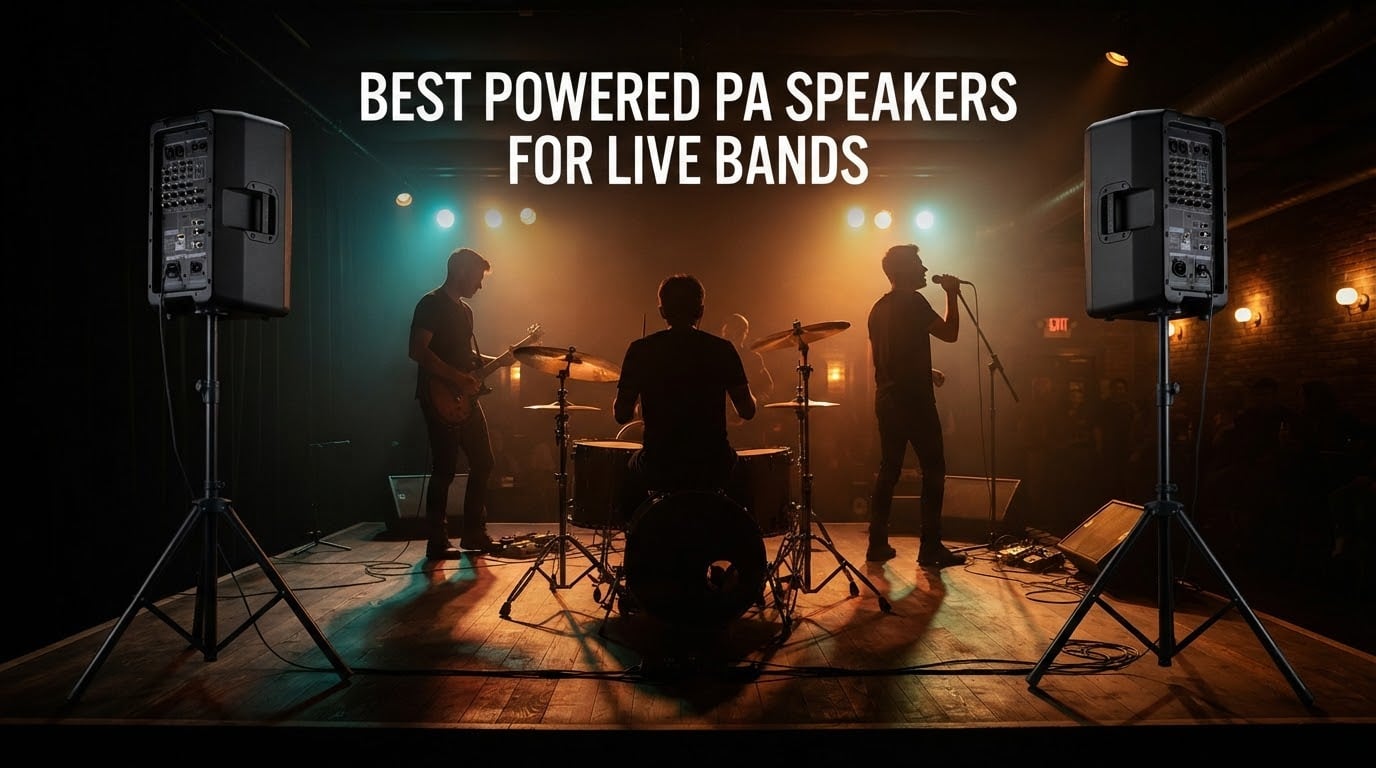
Most “best PA speaker” lists are written for a solo acoustic act, a DJ or a presenter with one microphone. This one is written for the other group entirely: the three, four or five-piece band with a guitar amp, a vocal mic, a kick pedal and a van full of cables. We spent the last few weeks comparing the best powered PA speakers for live bands, reading spec sheets against each other and cross-checking owner feedback from bands who actually gig with them.
A powered PA speaker, sometimes called an active speaker, is a 2-way cabinet with a Class D amplifier and a small onboard mixer built into the back panel. You plug mics and instruments straight into combo XLR and 1/4-inch jacks, set the gain, and the box does the rest. Nothing else in the van, which is the whole reason bands gravitate to them.
What you’ll learn here:
The six specs that actually matter to a band: max SPL, real XLR inputs, a Mix Out for linking, weight at load-in, onboard feedback suppression and DSP you can reach without an app.
Why manufacturer wattage is the least useful number on the spec sheet, and what to read instead.
Whether a 12-inch or a 15-inch woofer fits your room and your crew.
How to link two mains, when a sub earns its place in the budget, and whether the same box works as a wedge.
Where the ALTO TS4 series, JBL EON and IRX, Mackie Thump and SRM, Yamaha DBR, Electro-Voice ZLX and QSC K.2 each sit in that picture.
If you are still working out what you need before a speaker exists, our PA system buying guide covers the wider rig, and our general powered PA roundup covers the consumer and party end of the market where our list does not.
Our Top 3 Best Powered PA Speakers for Live Bands (October 2026)
Ten cabinets went into this list and three came out on top. The short version: buy the ALTO TS415 if you want the most low end and the simplest signal path, the JBL IRX112BT if you want the most capable box for the least outlay, and the Mackie Thump215 if you play loud and want feedback control that is already switched on.

ALTO TS415
- 2500W TrueSonic power
- 15 inch woofer
- 3-channel onboard mixer
- Wireless stereo linking

Those three are the picks we would put in a van tomorrow. Everything below them is here because it wins a specific fight the leaders do not: smaller rooms, smaller budgets, smaller crews, or a different idea of what a band needs from a PA.
All 10 Best Powered PA Speakers Compared in 2026
This table is the fast version. Driver size and weight decide load-in, max SPL decides headroom, and the rest tells you whether the signal path will survive a real stage. The line array PA roundup covers a different category entirely for anyone scaling to bigger rooms.
| Product | Specifications | Action |
|---|---|---|
| ALTO TS415 |
|
Check Latest Price |
 ALTO TS410 ALTO TS410 |
|
Check Latest Price |
 JBL EON715 JBL EON715 |
|
Check Latest Price |
| Mackie Thump215 |
|
Check Latest Price |
 Yamaha DBR12 Yamaha DBR12 |
|
Check Latest Price |
 Electro-Voice ZLX-12P-G2 Electro-Voice ZLX-12P-G2 |
|
Check Latest Price |
 QSC K12.2 QSC K12.2 |
|
Check Latest Price |
 JBL IRX112BT JBL IRX112BT |
|
Check Latest Price |
 Mackie SRM215 V-Class Mackie SRM215 V-Class |
|
Check Latest Price |
 QSC K10.2 QSC K10.2 |
|
Check Latest Price |
Two quick notes before the reviews. Only three of these cabinets publish a max SPL figure, which is why the wattage column looks messy and the honest comparison lives in the buying guide instead. And the review counts vary widely, so we leaned on the larger installed bases when two boxes felt equal on paper.
How We Picked the Best Powered PA Speakers for Live Bands
We built this list around what a band asks about in practice, which is almost never “how many watts”. These are the criteria we scored on, in the order that mattered to us.
Headroom and output. Max SPL when the manufacturer publishes it, and the size and type of the low-frequency driver when it does not. A band that runs out of clean level is the single most common failure we heard about.
Real input panel. Combo XLR and 1/4-inch jacks for every mic and instrument, an XLR Mix Out or loop out for linking a pair, and gain controls that reach line-level sources.
Onboard processing that works without an app. Feedback suppression, ducking and usable EQ are worth more than a long feature list buried behind a phone app.
Load-in weight. The real constraint for a four-person band without a lift. Two speakers plus a sub plus cases adds up fast.
Mounting and wedge options. Pole socket, M10 points, and whether the cabinet can sit on its angled face as a stage monitor so you do not buy a second pair.
Warranty and owner data. Long coverage and a large installed review base both tell you something about how a box holds up after a year of van life.
We also normalised the power claims before comparing anything. Manufacturer wattage is measured differently brand to brand, so two cabinets both labelled 2000W can behave like different products. The useful comparison is output level, driver size and clean headroom, and the buying guide below explains how to read those.
1. ALTO TS415 – our editor’s choice 15 inch mains
ALTO TS415 2500W 15″ Powered PA Speaker
15 inch woofer with 1.4 inch driver
2500W TrueSonic active power
3-channel mixer with combo inputs
20.8 kg
Pros
- Very deep powerful low end for a PA top
- Generous high SPL headroom for rehearsals and small-to-medium venues
- Integrated 3-channel mixer with dual XLR and 1/4 inch combo inputs
- Reliable Bluetooth streaming and wireless stereo linking of two TS4 cabinets
- Useful app EQ and four speaker use modes
Cons
- Slightly bright or harsh in the 1k-5k range at high volume with dense mixes
- App parametric EQ is clunky to operate
- Heavier than smaller cabinets at load-in
The TS415 is the pick we keep coming back to because the bass is the whole argument. A 15-inch low-frequency driver paired with a 2500W TrueSonic amplifier gives you the kind of low end that carries a bar without a sub in the budget, and owners consistently describe it as loud and clean straight out of the box.
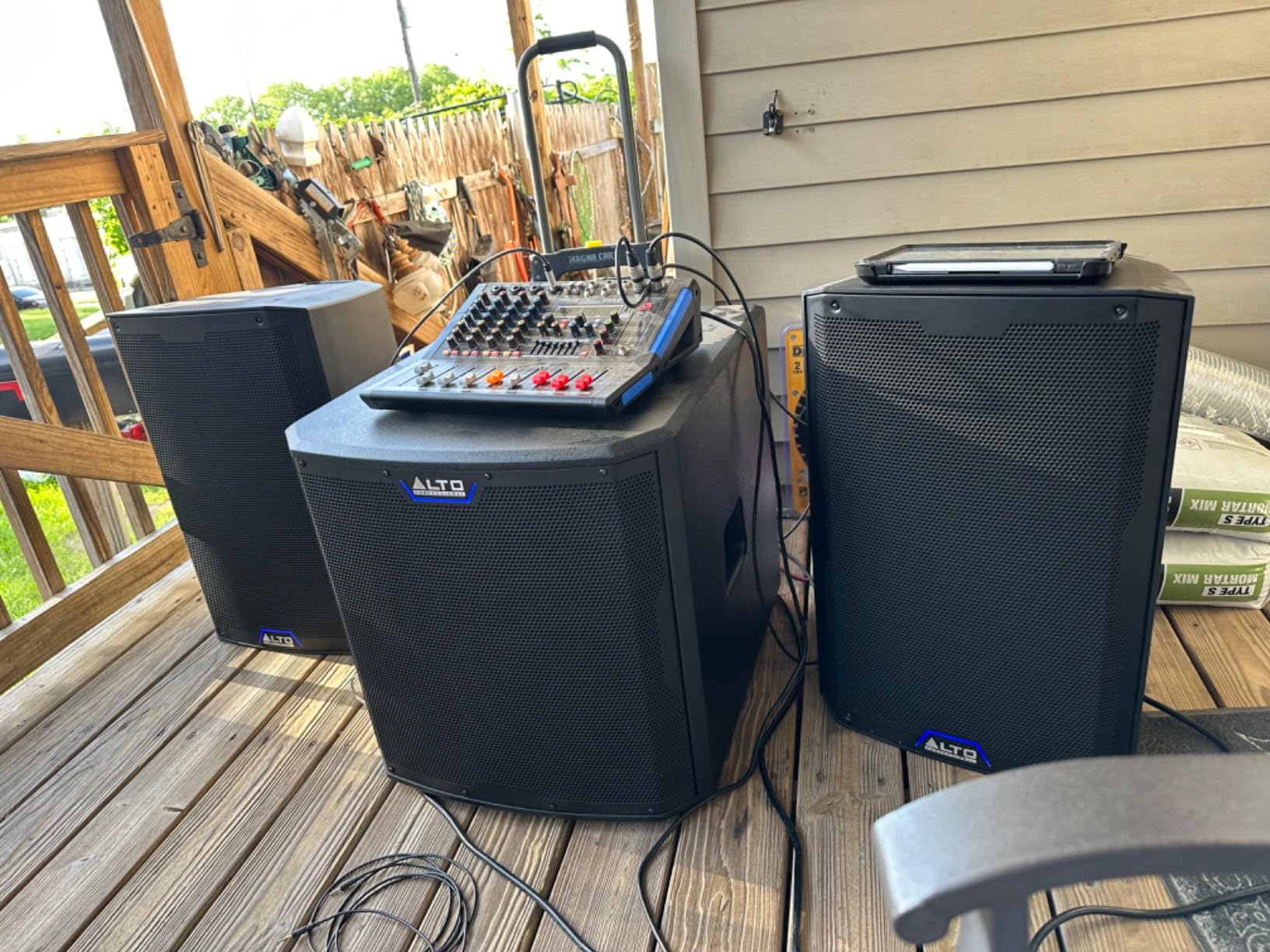
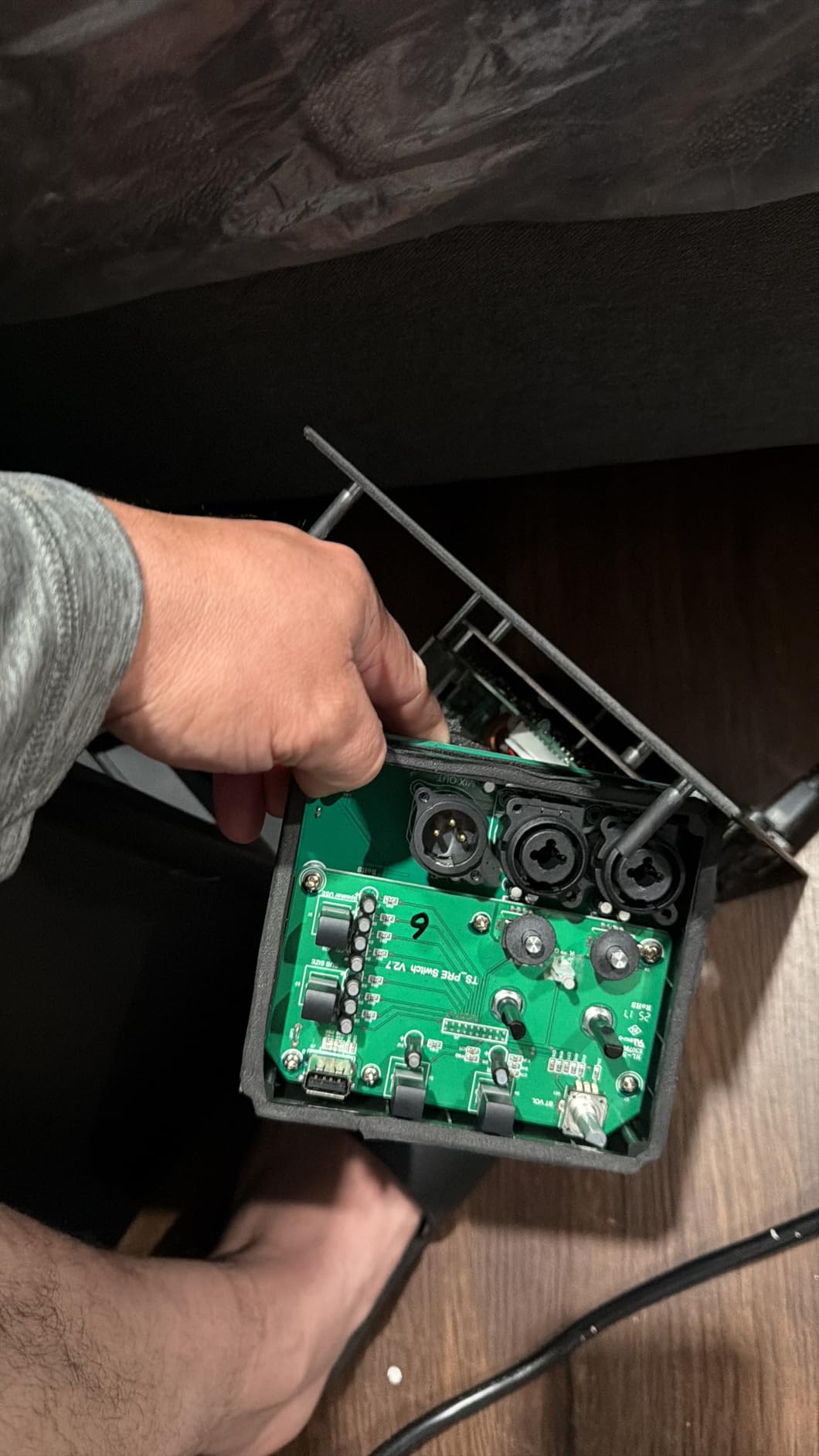
What makes it a band tool rather than a party speaker is the back panel. The integrated 3-channel mixer has dual XLR and 1/4-inch combo inputs with mic and line switches and independent level controls, plus an XLR Link output. That is vocals, guitar, keys or a DI in one box, with a spare channel when the bass player brings a DI of their own.
Mounting covers every position we have needed. The 36 mm pole socket, the integral M10 suspension points and the wedge monitor position mean one cabinet can be a main, a fill or a floor monitor depending on the room.
What to check before you commit
The honest weakness is the top end. Several owners describe the speaker as slightly bright or harsh between 1k and 5k when a dense mix is pushed hard, which is a voicing choice rather than a fault. If your band has three guitars and a loud vocal, spend ten minutes on the EQ before the first set.
The app is where the depth is. The ALTO app handles Bluetooth level, the four speaker use modes, sub size selection and custom EQ, but reviewers describe the parametric EQ as clunky to operate, so plan to dial it in once rather than live. There is also a recurring note that input gain feels attenuated and may need a boost from a line-level source.
Who should skip it
Skip the TS415 if your crew is two people and your gigs are acoustic sets in rooms under a hundred people. At 20.8 kg, two cabinets plus cases is a two-person lift that gets old fast, and a 10-inch or 12-inch box covers that work at half the weight.
Also skip it if your budget is genuinely tight. There is a lot of output per unit here, but cheaper 12s on this list give you two of them for the money, and two 12s will out-cover one 15 in a room where you can actually push them.
2. ALTO TS410 – the lightest cabinet in the group
ALTO TS410 2000W 10″ Powered PA Speaker
10 inch woofer with 1.4 inch driver
2000W TrueSonic active power
3-channel plug-and-play mixer
14.5 kg
Pros
- Compact and genuinely lightweight for a 2000W powered cabinet
- Onboard 3-channel mixer removes the need for a separate small mixer
- Bluetooth streaming and wireless stereo linking work reliably
- Strong value for rehearsals
- parties and small gigs
Cons
- 10 inch driver has less low-end extension than 12 inch or 15 inch alternatives
- Factory EQ can sound slightly bright and needs adjustment
- Limited headroom compared with larger drivers at high SPL
The TS410 is the answer to “we need something a band can carry, and we need it now”. At 14.5 kg it is the lightest cabinet in this roundup by a wide margin, and it still ships with a 2000W TrueSonic amplifier and a full 3-channel mixer on the back.
Reviewers consistently frame it as a value-first portable box: easy to carry, simple to connect and surprisingly loud for its size. With 893 reviews on file it is also one of the most proven cabinets here, which matters if you are buying a rig you intend to keep.
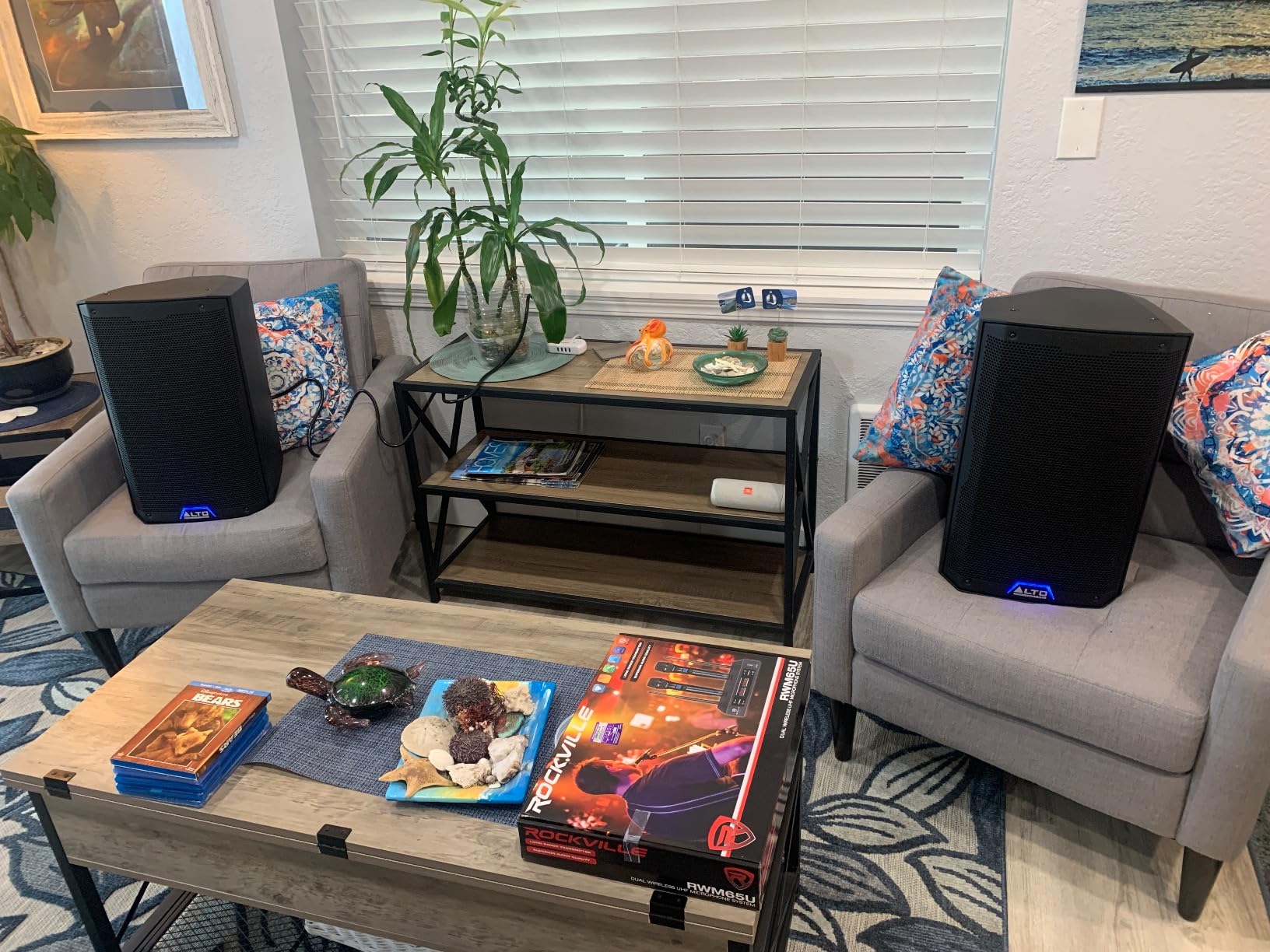
Mounting options again cover everything: freestanding, wedge monitor position, pole-mounted or flown via the M10 points. Two of these pair wirelessly through the ALTO app for stereo, which solves the “one speaker now, match it later” problem that comes up constantly in band forums.
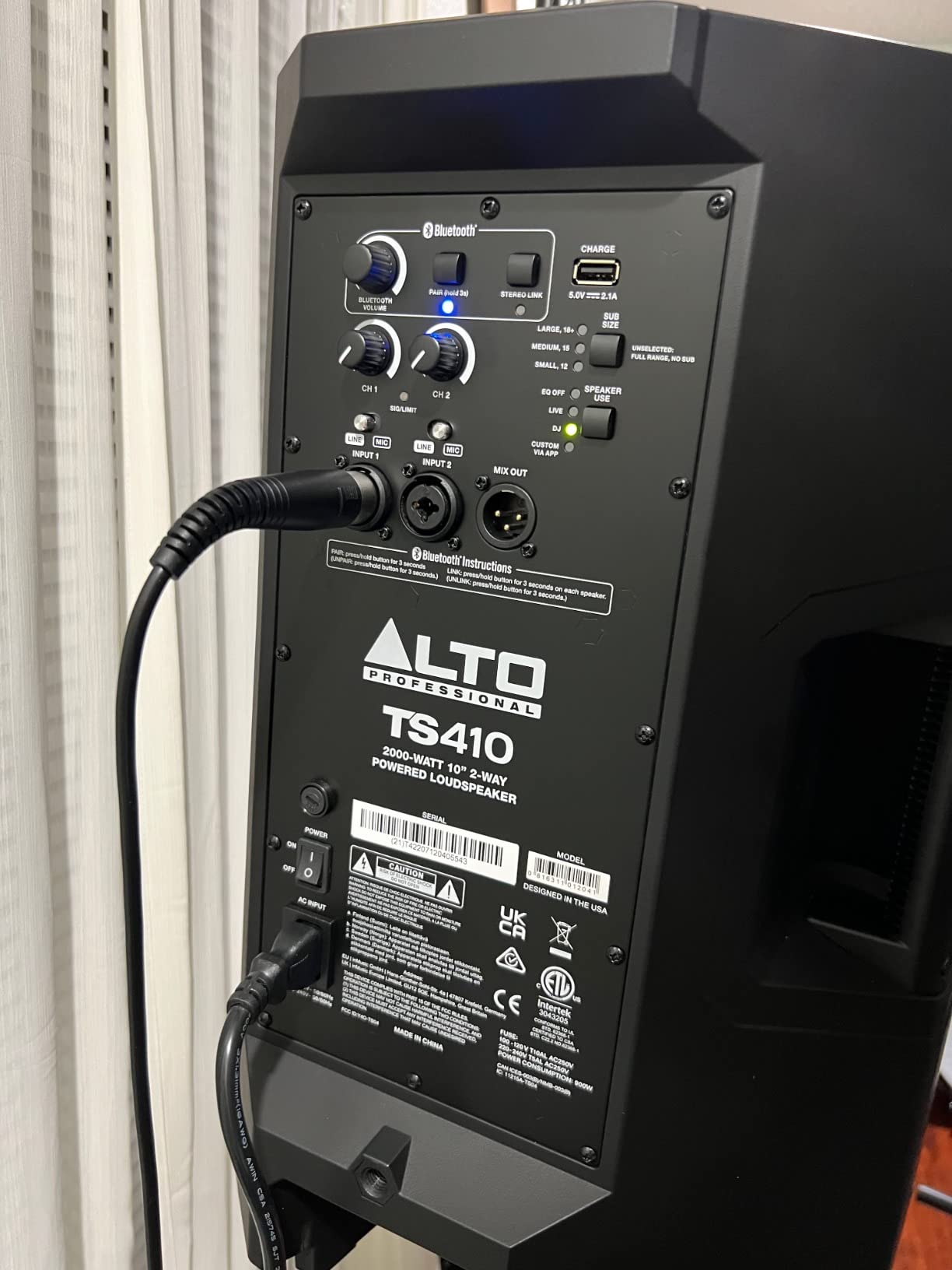
The 3-channel mixer has dual XLR and 1/4-inch combo inputs with mic and line switches. For a duo with a vocal mic and a guitar, that is the entire front end. There is also a USB Type A charging port on the panel for phones that run out of battery mid-gig.
What to check before you commit
The 10-inch driver is the trade you are making. Low-end extension is well below the 12s and 15s here, and headroom at high SPL is more limited, so in a room that gets loud this is the cabinet that will tell you first.
Plan on touching the EQ. The factory tuning skews bright according to owners, and the app is where the four use modes and custom EQ live. Set it once for the room you play most and you will not think about it again.
Who should skip it
Skip the TS410 if you play amplified rock or anything with a loud rhythm section and a demanding kick. It is built for rehearsal rooms, parties, acoustic sets and small bars, and pushing a 10-inch driver for a full band is asking it to do a job the chassis was not shaped for.
It is also the wrong pick as your only PA if you already know a sub is part of the plan, because the money is better spent on a 12 that pairs with a sub later.
3. JBL EON715 – waveguide coverage for loud rooms
JBL Professional EON715 Powered PA Speaker, 15 inch, 1300 Watt, Black
15 inch 2-way powered cabinet
1300W amplification
JBL Waveguide coverage
46.5 lb
Pros
- Crisp clear sound with bass you can feel
- Strong output for small and medium venues
- Pairs easily with a second unit and integrates with mixers
- Comfortable two-handle cabinet design for load-in
Cons
- Companion app is poorly regarded by users
- Some units need repeated re-pairing with a device
- Stereo and TWS mode has shown connection glitches on some firmware
- Heavy at 46.5 lb for a portable cabinet
The EON715 is the JBL answer to the loud-room question, and its defining feature is the waveguide. That horn shape controls how the high frequencies spread, which is why reviewers describe the output as consistent from the front of a small club to the back of a medium one instead of hot in the middle and gone at the edges.
On the low end, the 15-inch driver delivers the kind of bass you can feel, and 1300W of amplification is more than most bands will ever ask of it in a bar. Pairs easily with a second unit and integrates with external mixers without complaint.
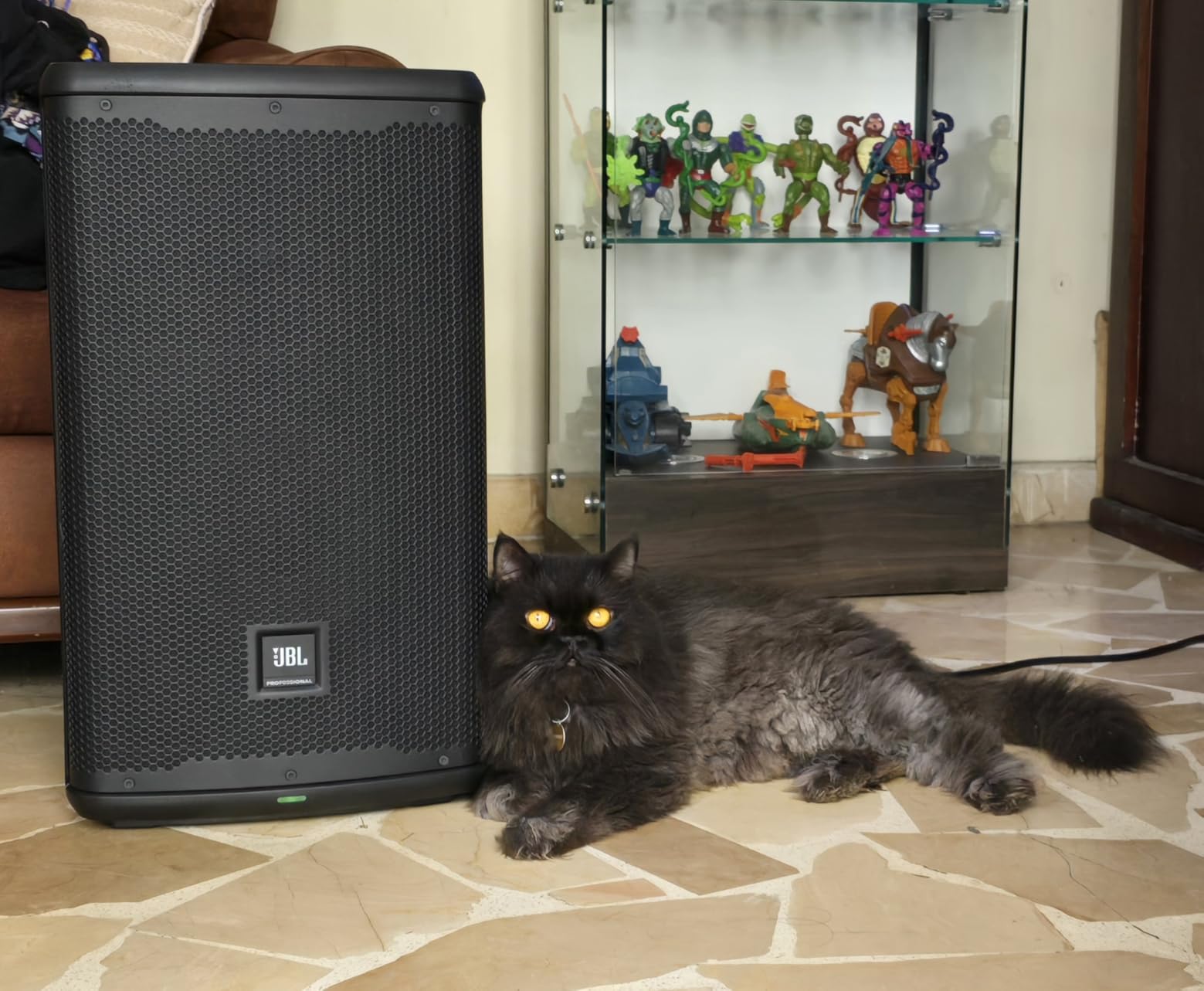
Mechanically it is a straightforward 15-inch cabinet with a two-handle design, a metal grille over a polypropylene enclosure, and pole-mount readiness. The handles are the detail that matters at load-in because they are the difference between one person carrying a speaker and two people carrying a speaker.
Bluetooth is built in with stereo pairing, and JBL lists official limited warranty coverage when purchased through authorised dealers, which is worth having on a touring box.
What to check before you commit
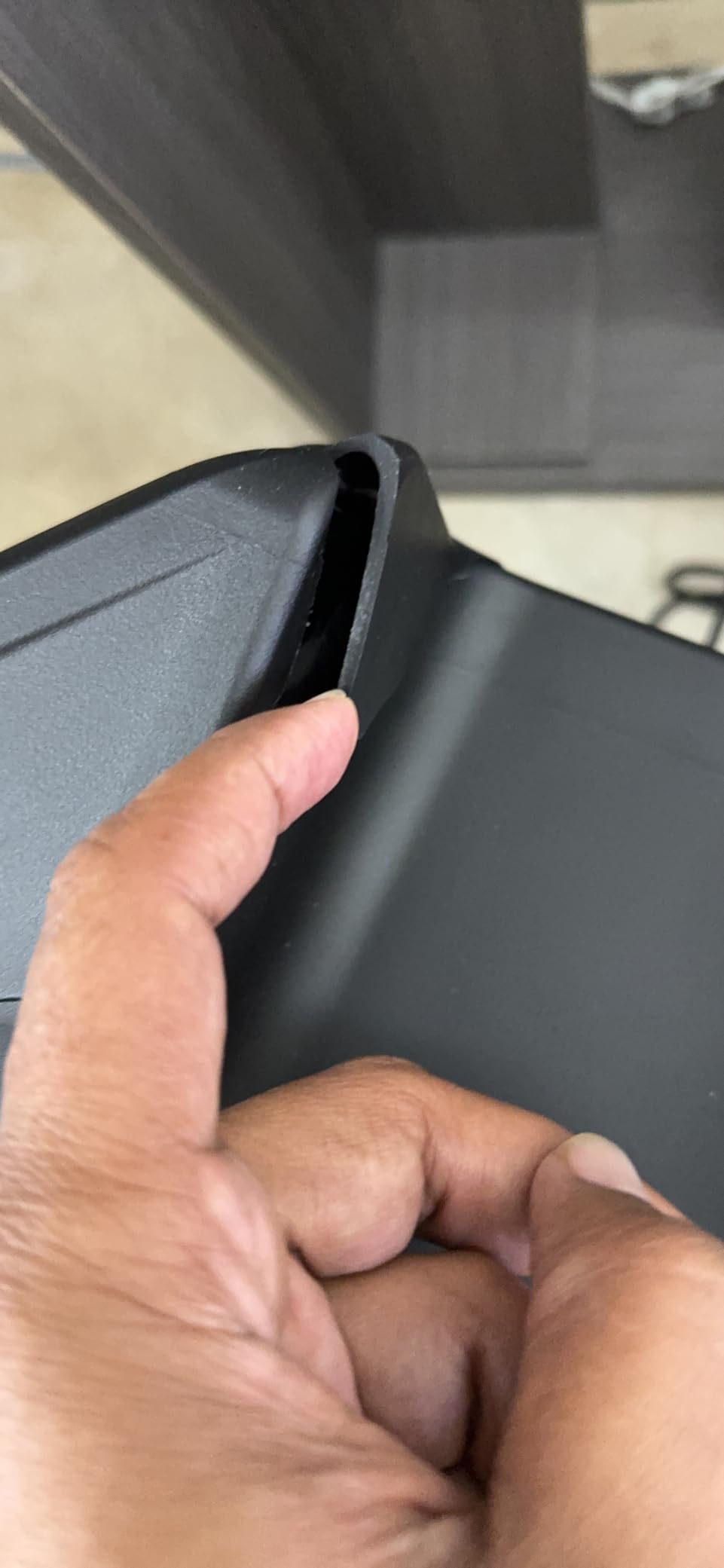
Bluetooth is the weak point and it is worth being clear about. Owners repeatedly report needing to re-pair a device, and some units have shown stereo or TWS connection glitches on certain firmware. If you run backing tracks over Bluetooth, test the pairing at a rehearsal before the night you need it.
Weight is the other one. At 46.5 lb this is one of the heavier cabinets here, and two of them plus cases is a proper load-in for a small crew. Plan a dolly or a two-person lift.
Who should skip it
Skip the EON715 if your crew cannot move 46.5 lb boxes comfortably or if you are gigging small rooms with a four-piece band that does not need a 15. A 12-inch cabinet gives you two units for the money and more consistent coverage in a tight space.
Also skip it if you rely entirely on the app for EQ. The companion app is one of the more criticised in the category, so plan to run the box from its physical controls and treat the phone as a convenience.
4. Mackie Thump215 – feedback eliminator and ducking built in
Mackie Thump215 15″ 1400W Powered Loudspeaker with Heavy-Duty Drivers
15 inch heavy-duty driver
1400W ultra-efficient Class D
129 dB max SPL
34.8 lb
Pros
- Punchy 15 inch low end at a mid-range price point
- Onboard feedback eliminator and music ducking genuinely useful for live bands
- Lightweight for a 15 inch powered cabinet
- Integrated 2-channel mixer with gain controls and built-in limiters
Cons
- Fewer onboard DSP and EQ presets than competing models
- Not weather resistant for outdoor use
- Some users feel the high-frequency character is dark versus waveguide-based boxes
The Thump215 is the most band-specific box on this list, and the reason is in the technical details rather than the driver. It has a built-in feedback eliminator and a music ducking mode, which are two problems that would otherwise cost you an outboard processor or a mic mishap mid-set.
Underneath that is a 1400W ultra-efficient Class D amplifier driving a 15-inch heavy-duty low-frequency driver, with a published max SPL of 129 dB and a frequency response of 40 Hz to 23 kHz. That is real output data, which is more than most of this roundup publishes, and it makes the box easy to place against the others.
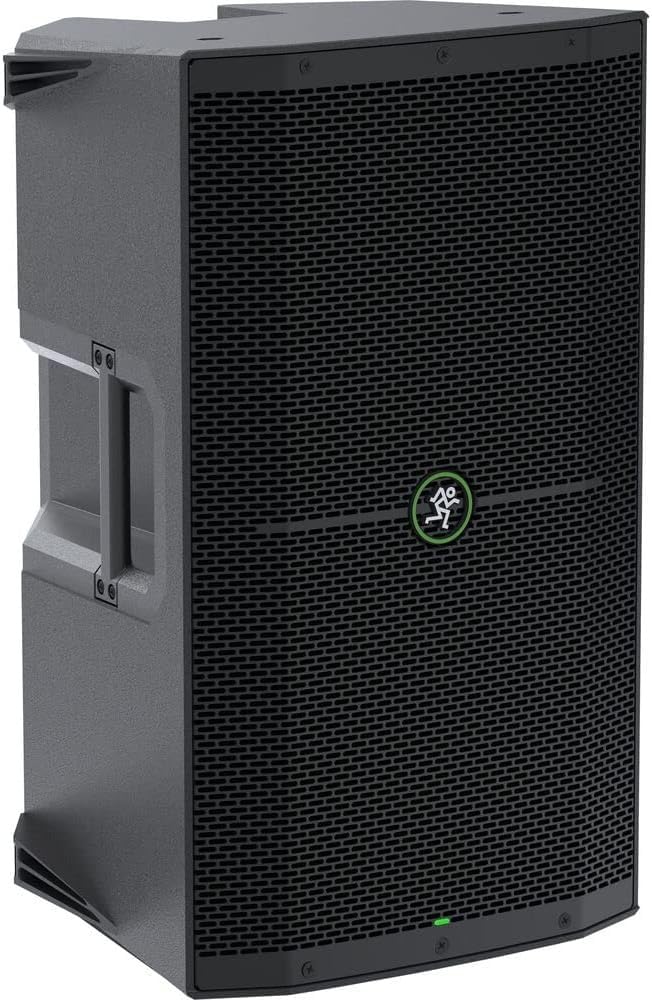
The 2-channel mixer with gain controls and built-in limiters is a small thing that saves a small thing. The limiters are what stop a bass player from folding the PA when they lean into a hot DI, and the gain structure means you can run a vocal and an instrument without an external desk.
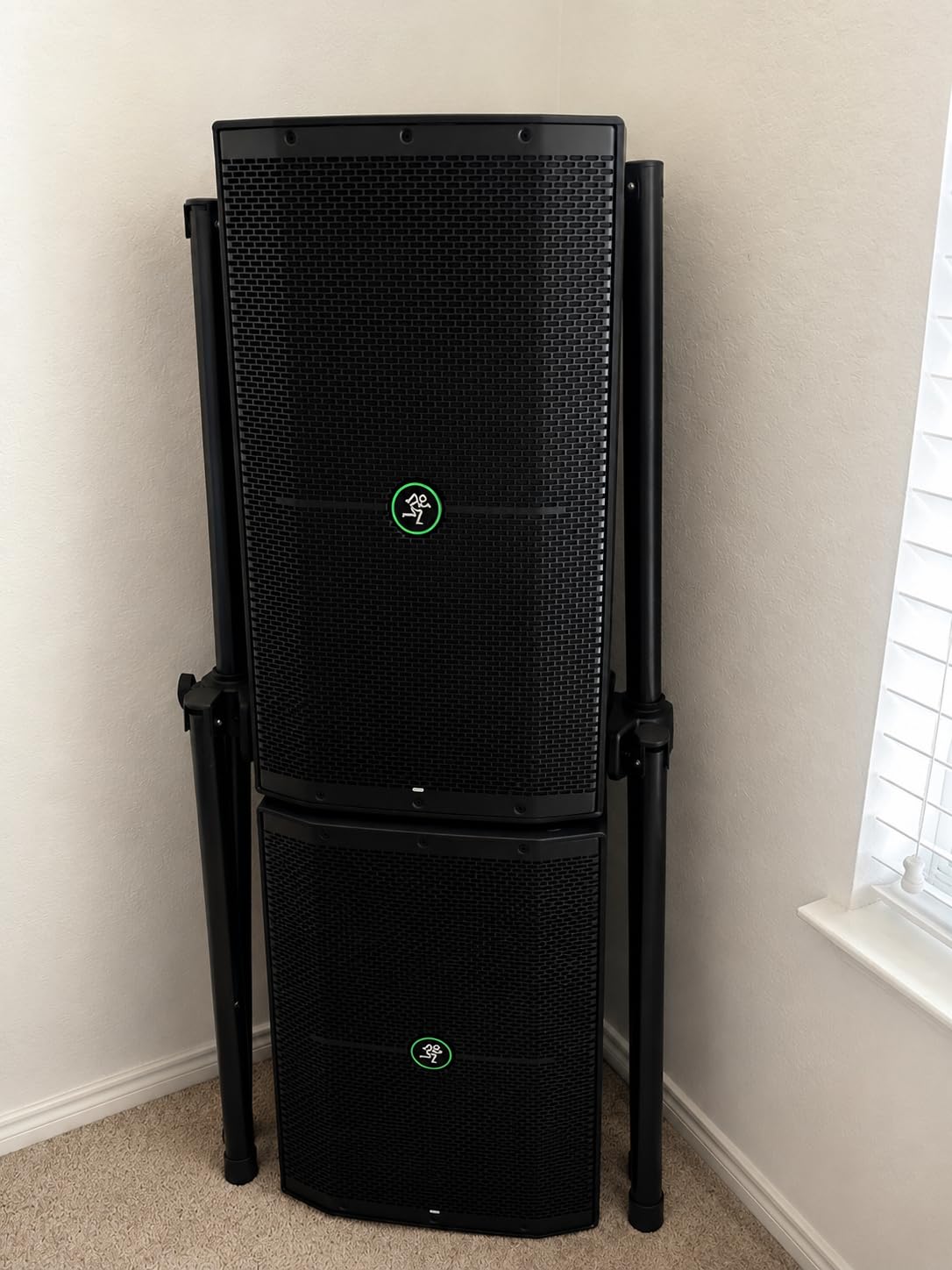
At 34.8 lb it is the lightest 15-inch powered cabinet here by a considerable margin, which is the entire argument for it if your crew is small. Owners frame it as a good value step up from 10-inch and 12-inch models for rehearsals and small-to-medium gigs.
What to check before you commit
Onboard processing is shallower than the feature-hungry boxes. There are fewer DSP and EQ presets than competing models, so if you like to shape the sound heavily you will be doing more of it by hand. That is a feature when you want predictable results at sound check.
Two things to plan around. It is not weather resistant, so keep it under cover at outdoor slots, and some users feel the high-frequency character is dark next to a waveguide box like the JBL EON. If your vocal is getting lost, that is likely why.
Who should skip it
Skip the Thump215 if you need deep parametric EQ or app-based control from a phone, or if the majority of your gigs are outdoors in weather. It is also not the first choice for a keyboard-led or acoustic act that will not use the feedback eliminator at all.
For a rock or blues band in a small-to-medium room, though, it is very hard to argue against. The processing is aimed at exactly your problems.
5. Yamaha DBR12 – 131 dB max SPL and long warranty coverage
Yamaha DBR Series DBR 12″ Powered Speaker Cabinet
12 inch bi-amplified bass-reflex cabinet
1000W digital power and 131 dB SPL
FIR-X tuning
Mains or floor monitor
Pros
- FIR-X tuning gives clear well-controlled output for mains or stage monitor use
- 131 dB max SPL from 1000W of digital amplification
- Yamaha build quality and long warranty coverage on the series
- Consistent voicing across the whole DBR range
Cons
- Listed weight is inconsistent with the physical cabinet
- XLR-only input on the rear panel limits casual connectivity
- No wireless or app control in this configuration
The DBR12 earns its place on one number: 131 dB max SPL. That is the highest published figure in this roundup, and it means a 12-inch cabinet here that can out-shout several of the 15s when the band needs it. Yamaha gets there with 1000 watts of clean digital power through a bi-amplified 2-way bass-reflex design.
FIR-X tuning is the other part of the story. It is Yamaha’s voicing system, and its job is to keep the tone consistent between models so a DBR12 and a DBR15 in the same rig sound like the same speaker. Owners describe the output as clear, well-controlled and predictable.
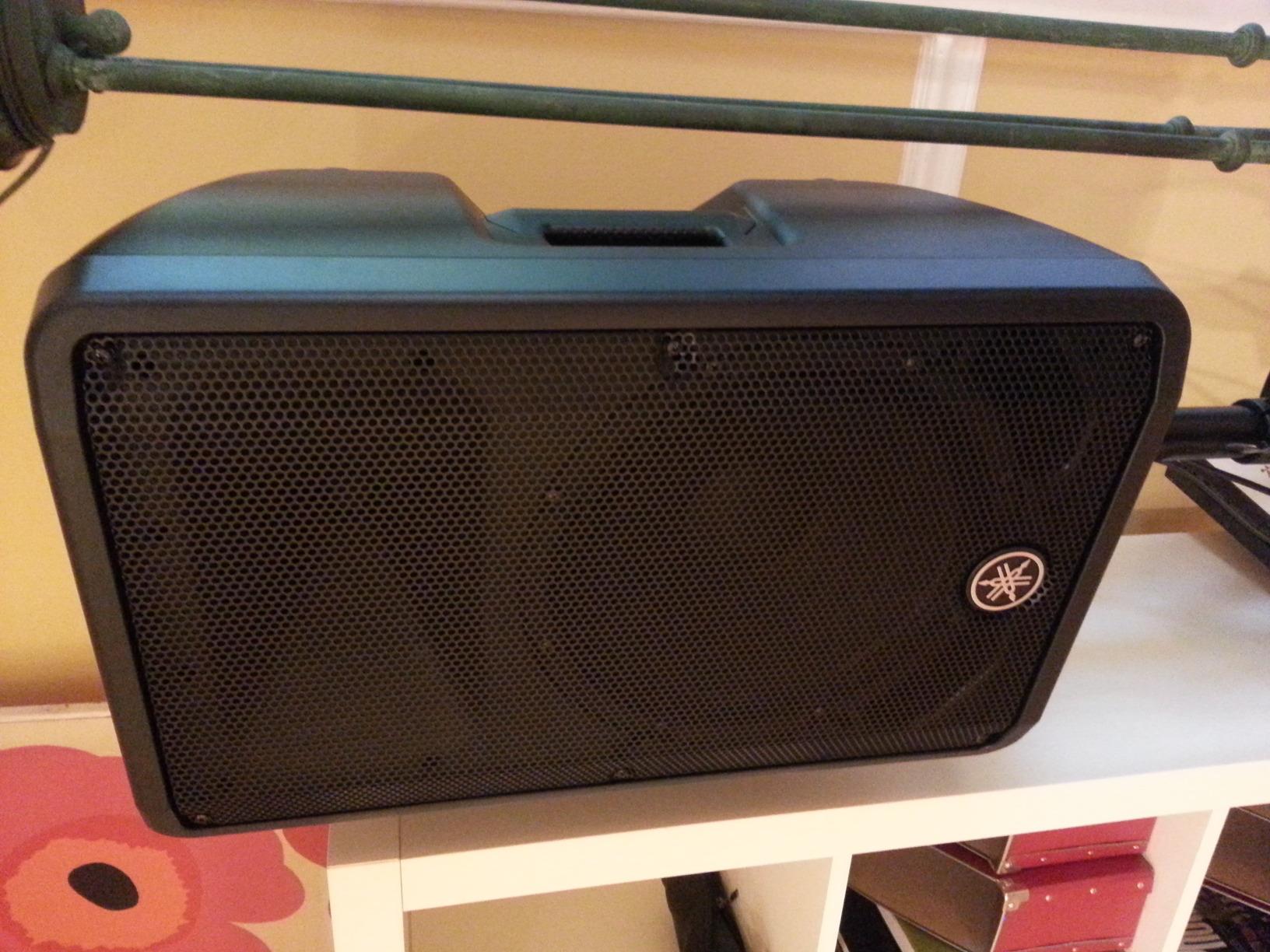
The cabinet works as a main PA or as a floor monitor, which is genuinely useful when a band wants to spend its money on mains instead of wedges. Yamaha lists a 7-year warranty on the DBR series, the longest coverage in this group by some distance, and build quality is the reason people keep coming back to the brand.
For a worship band, a bar band or a cover band playing regular sets, a pair of these with the long warranty is a rig you may never think about again. That reliability is worth more to a working band than any app.
What to check before you commit
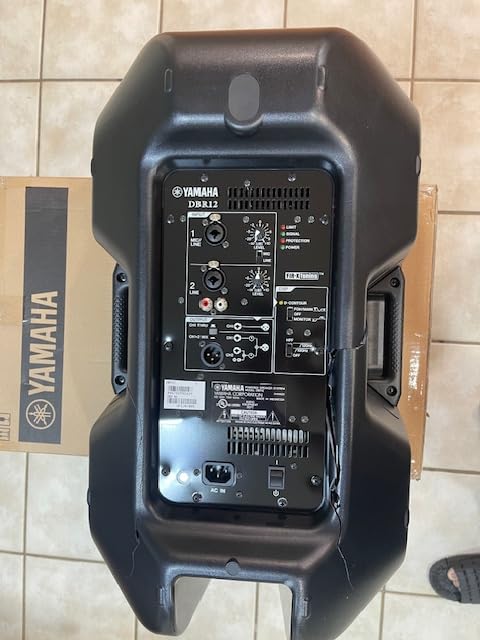
The rear panel is XLR-only in this configuration. No wireless, no app control, and the connectivity is limited if you are the kind of player who wants to stream backing tracks. Plan your mixer accordingly, because this is a wired instrument.
There is also a documentation issue worth flagging: the listed weight of 2 kg does not match the physical cabinet, and the dimensions listing has been called out by owners too. Take the weight from a retailer listing rather than the spec sheet, and measure before you plan a flight case.
Who should skip it
Skip the DBR12 if you rely on Bluetooth backing tracks or phone-based control, or if your band changes rooms every week and needs flexible input options on the back of the cabinet. It is a wired, set-and-forget speaker, which is a strength and a limitation depending on your rig.
It is also the wrong pick if low-end extension is the priority. The bass-reflex tuning favours clarity and output over deep sub-bass, so a band that wants chest-thump on a 15 should look elsewhere.
6. Electro-Voice ZLX-12P-G2 – DYNACORD DSP with PEQ and ducker
Electro-Voice ZLX-12P-G2 12in. 2-Way Powered Loudspeaker with Bluetooth
12 inch 2-way powered cabinet
Second generation ZLX series
DYNACORD DSP amplifier
QuickSmart app control
Pros
- Extended frequency response and higher max SPL than the first-generation ZLX
- Automatic feedback suppression with a ducker and PEQ in the DSP
- Reliable Bluetooth stereo streaming plus QuickSmart Mobile app control
- Lightweight ergonomic cabinet that is easy to move between shows
Cons
- Newer model has a smaller installed review base than JBL and QSC equivalents
- Onboard DSP features require the app for deeper adjustment
- Not weather resistant for outdoor touring
The ZLX-12P-G2 is the second generation of Electro-Voice’s workhorse 12-inch, and the generation jump is the reason to look at it over the older model. Electro-Voice states increased maximum SPL output and extended frequency response compared with the first generation, and owners agree that it is a step up rather than a reissue.
The real differentiator is the DYNACORD DSP amplifier. It packs in a built-in digital mixer, effects, PEQ, a ducker and automatic feedback suppression. That is a genuinely deep feature set, and for a band that wants surgical control on vocals it is more than the JBL and Mackie boxes offer.
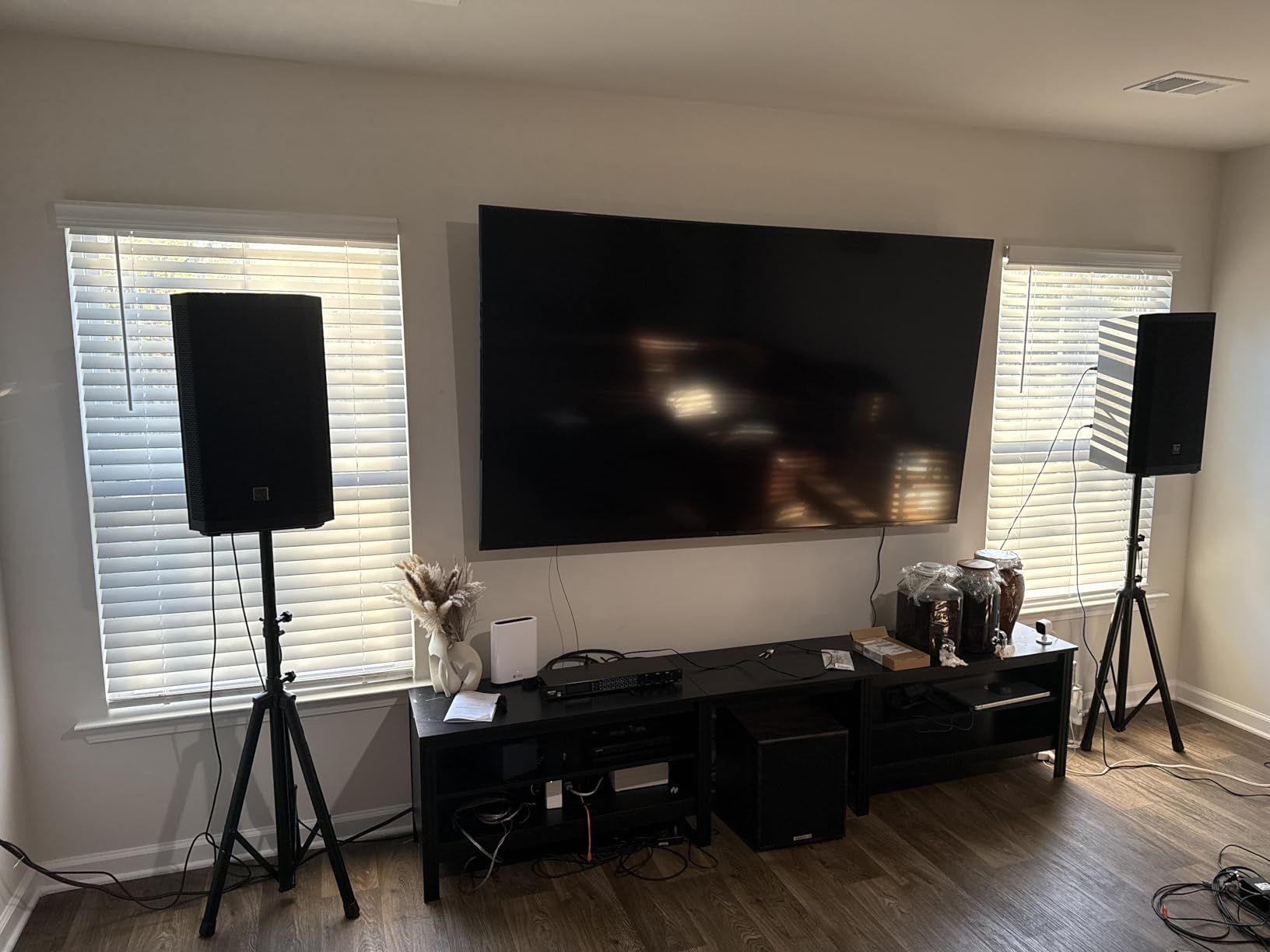
Bluetooth stereo streaming and QuickSmart Mobile app control handle the wireless and configuration side, and the polypropylene cabinet is described as robust and ergonomic with an easy transport profile. Owners rate the tuning, output and app highly, with 82 percent five-star ratings across the reviews on file.
This is the pick for a band that has outgrown a single mixer. Between the digital mixer and the PEQ, you can run a rehearsal room rig from two cabinets and change it when the room changes.
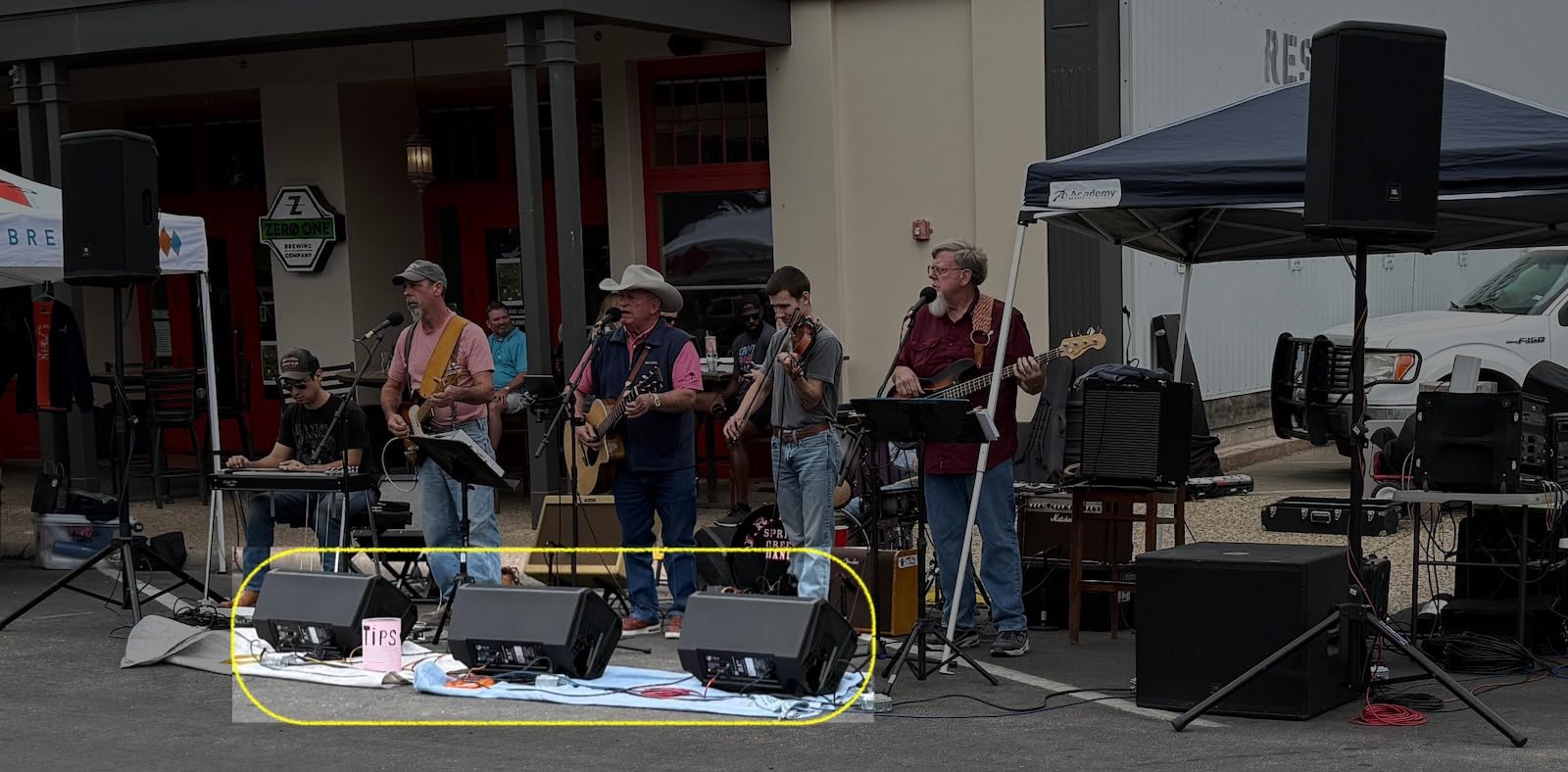
What to check before you commit
Plan for the app. The deeper EQ and effects settings need the QuickSmart Mobile app, so if you are the kind of player who wants to adjust a band on a sticky backstage floor, that is a friction point. Set the tone from a laptop or phone before the show and the cabinets will just work.
Two more honest notes. The installed review base of 113 is small next to the JBL, QSC and Mackie boxes here, so there is less long-term owner data behind it, and it is not weather resistant for outdoor touring. Budget for a cover or an indoor slot.
Who should skip it
Skip it if you want zero phone dependency, if you tour outdoors, or if you would rather not own the newest generation while it is still proving itself. A band that is patient and buying once would get more comfort from a more established model with a larger user base.
It is also more than you need for a two-person acoustic act. The DSP depth is wasted on a set with one vocal and a guitar.
7. QSC K12.2 – presets and scenes for fast sound checks
QSC K12.2 Active 12″ Powered 2000 Watt Loudspeaker
2000W Class D amplifier
12 inch 2-way powered cabinet
Savable scenes and factory presets
3-year warranty
Pros
- Consistent high-output sound with generous headroom for live bands
- Factory presets and recallable scenes speed up sound checks
- Built-in digital display and app control for system management
- Backed by a 3-year warranty
Cons
- Firm price point puts it above most 12 inch competitors
- Heavy at nearly 48 lb so two units need a proper dolly
- Fan cooling adds some operational noise at very low levels
The K12.2 is the speaker that comes up most often when working bands ask each other what to buy, and the reason is the workflow rather than the spec sheet. Factory presets plus savable and recallable scenes mean you can store a vocal tune, a band tune and a speech tune and recall them in seconds.
Under the hood it is a 2000W Class D amplifier module driving a 12-inch two-way portable powered loudspeaker, with Intrinsic Correction loudspeaker management handling voicing. Owners describe the sound as consistent and high-output with generous headroom, and 80 percent of reviews on file are five-star.
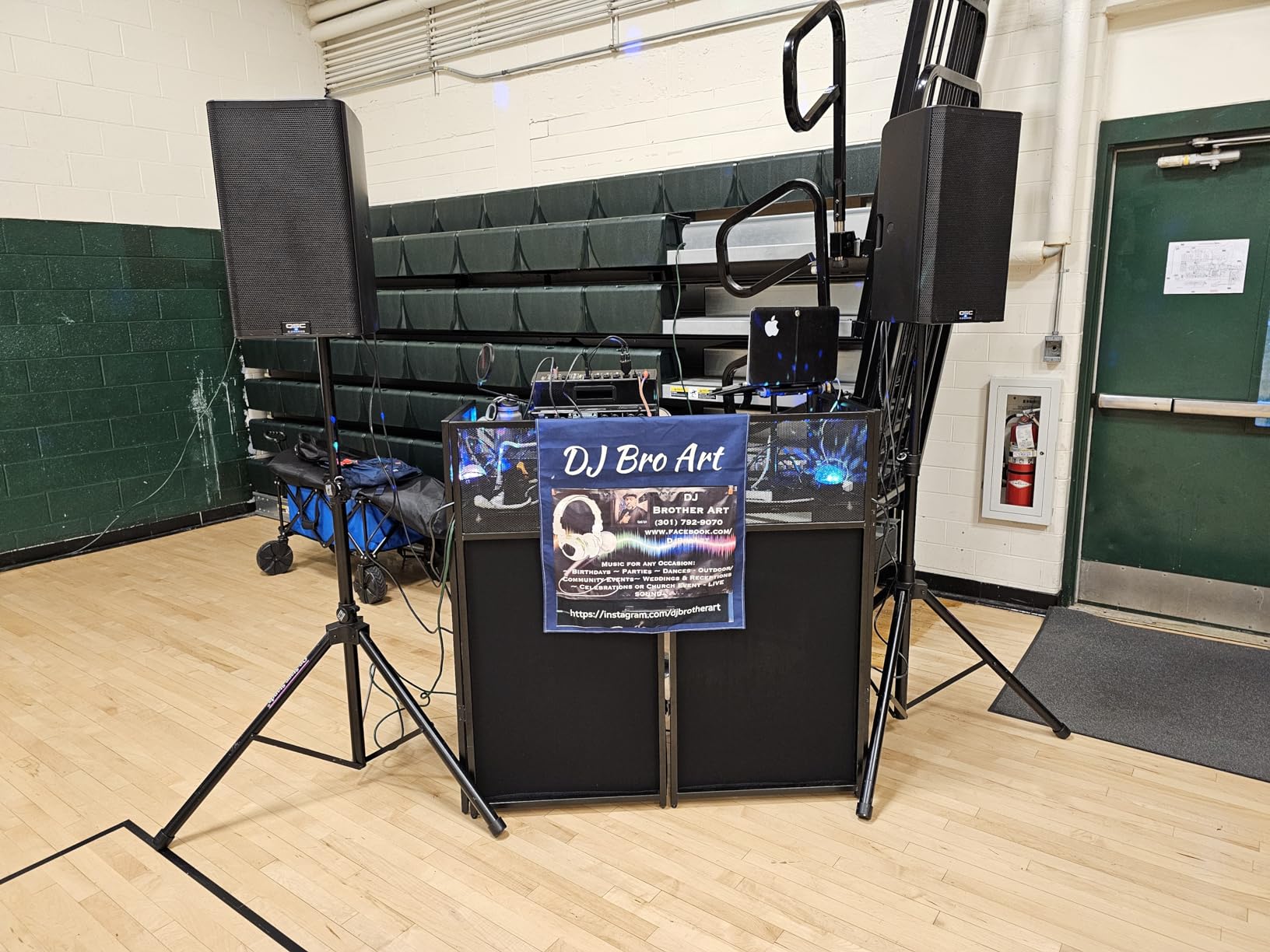
The multi-function digital display on the back is the part that saves time. You can see what the speaker is doing and select functions without guessing, and the app handles system management when you want a wider view. Low-noise variable-speed fan cooling is a thoughtful detail in a box that will run all night.
Build is a steel and plastic enclosure with a 3-year warranty, which is real coverage for gear that gets loaded into vans. If you gig regularly, the warranty length matters more than most buyers expect.
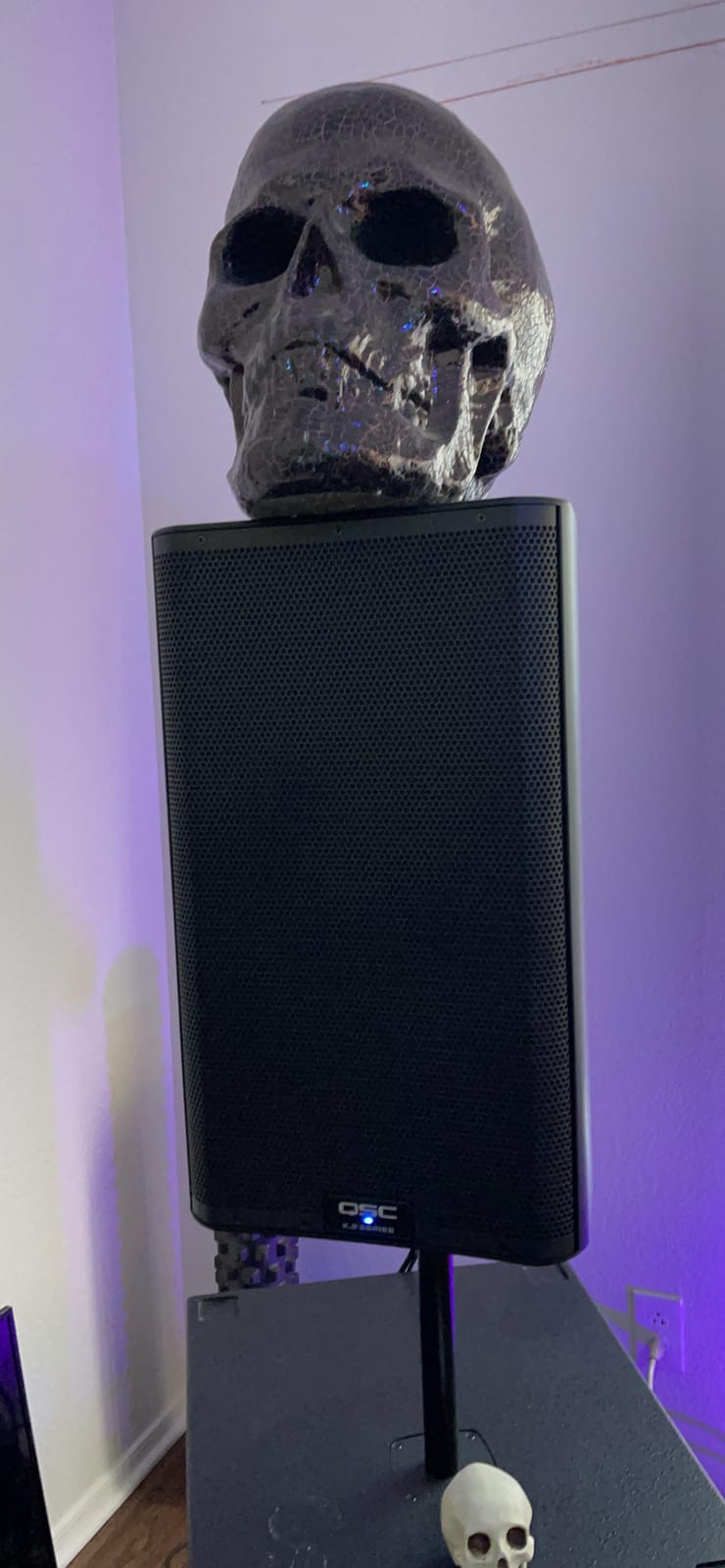
What to check before you commit
Two things stand out. The price sits above most 12-inch competitors here, so a band buying two cabinets is making a serious commitment. And at nearly 48 lb it is the second-heaviest box in this roundup, which means two units need a proper dolly or a lift.
There is also minor fan noise at very low levels. In a quiet room between sets you can hear it, and in a loud band setting nobody will. Do not use that as a reason to skip a speaker that solves every other problem.
Who should skip it
Skip the K12.2 if the budget is the deciding factor, because you can buy two alternatives for the money. It is also the wrong pick for a small crew moving gear by hand, and for a band that does its own tuning with a hardware EQ and will never open the scenes.
For a working band with regular sound checks, though, the time it saves is the reason it has the reputation it does.
8. JBL IRX112BT – best value 12 inch for small rooms
JBL Professional IRX112BT Powered PA Speaker, Portable Loudspeaker with Bluetooth, 10 Inch Woofer, 1300 Watt, Mobile DJ, Musicians, Small Venues, Ceremonies and Sports Events, Black
Powered 12 inch two-way cabinet
1300W peak and 127 dB max SPL
dbx DriveRack feedback suppression
27.3 lb
Pros
- Clear punchy sound that carries well for small and mid rooms
- Automatic feedback suppression and ducking simplify live band setups
- Bluetooth holds a stable connection and links two speakers for stereo
- Lightweight rugged polypropylene cabinet with built-in handles
- Four one-touch EQ presets make tuning fast for newcomers
Cons
- Limited bass extension without a subwoofer
- Mains powered only with no internal battery
- Occasional reports of manufacturing defects on individual units
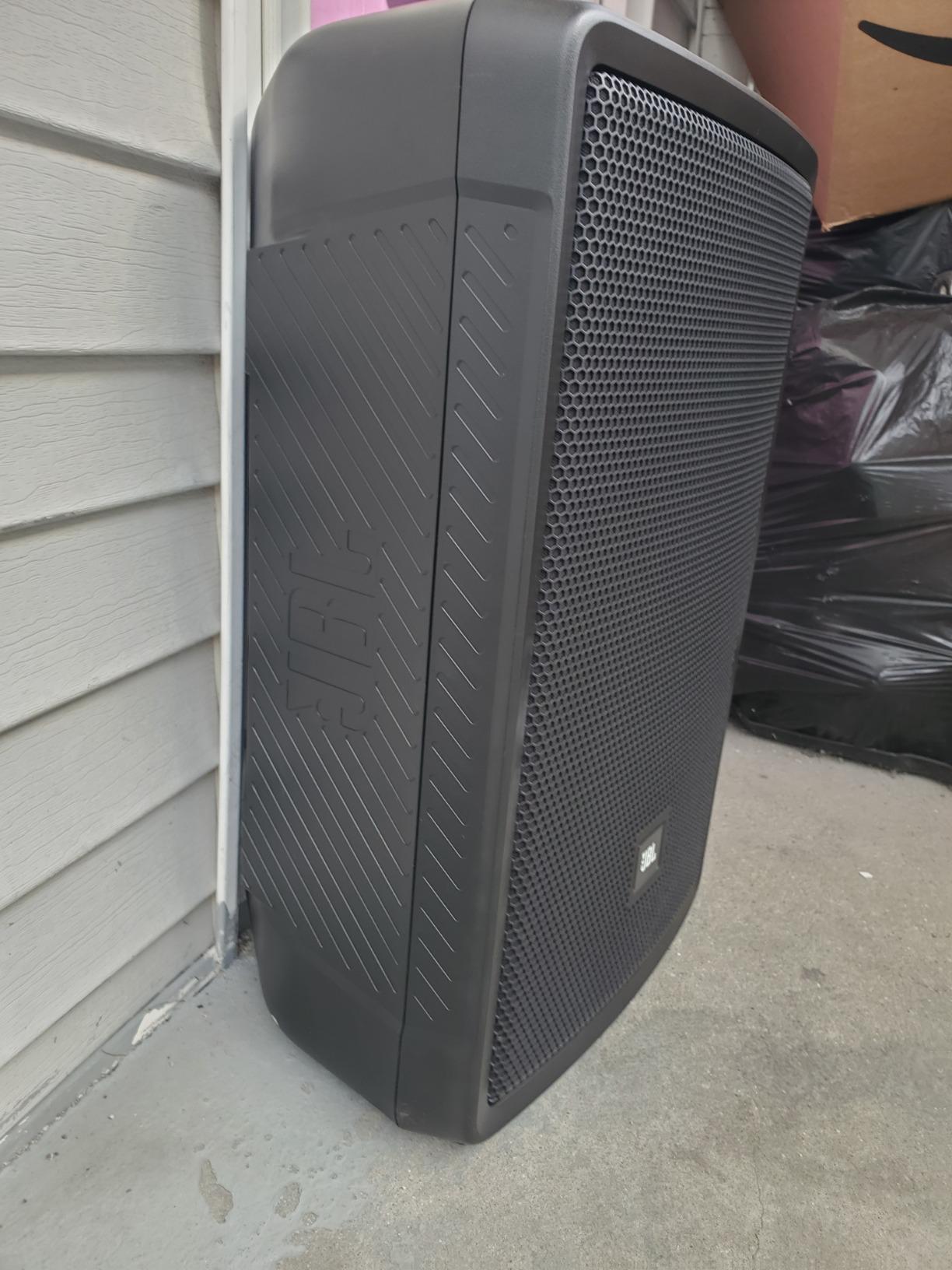
With 848 reviews on file, the IRX112BT is the most widely owned cabinet in this roundup, and owners are consistent about why: it produces clear vocal reproduction, it is genuinely easy to move, and the onboard processing does the work for you. For a band covering small and mid rooms, that combination is very hard to argue with.
The technical line is 1300W peak into a 12-inch JBL woofer, 127 dB max SPL, and a frequency response of 53 Hz to 20 kHz. dbx DriveRack technology brings automatic feedback suppression, and Soundcraft-designed one-touch automatic music ducking handles the moment a band member starts talking over the set.
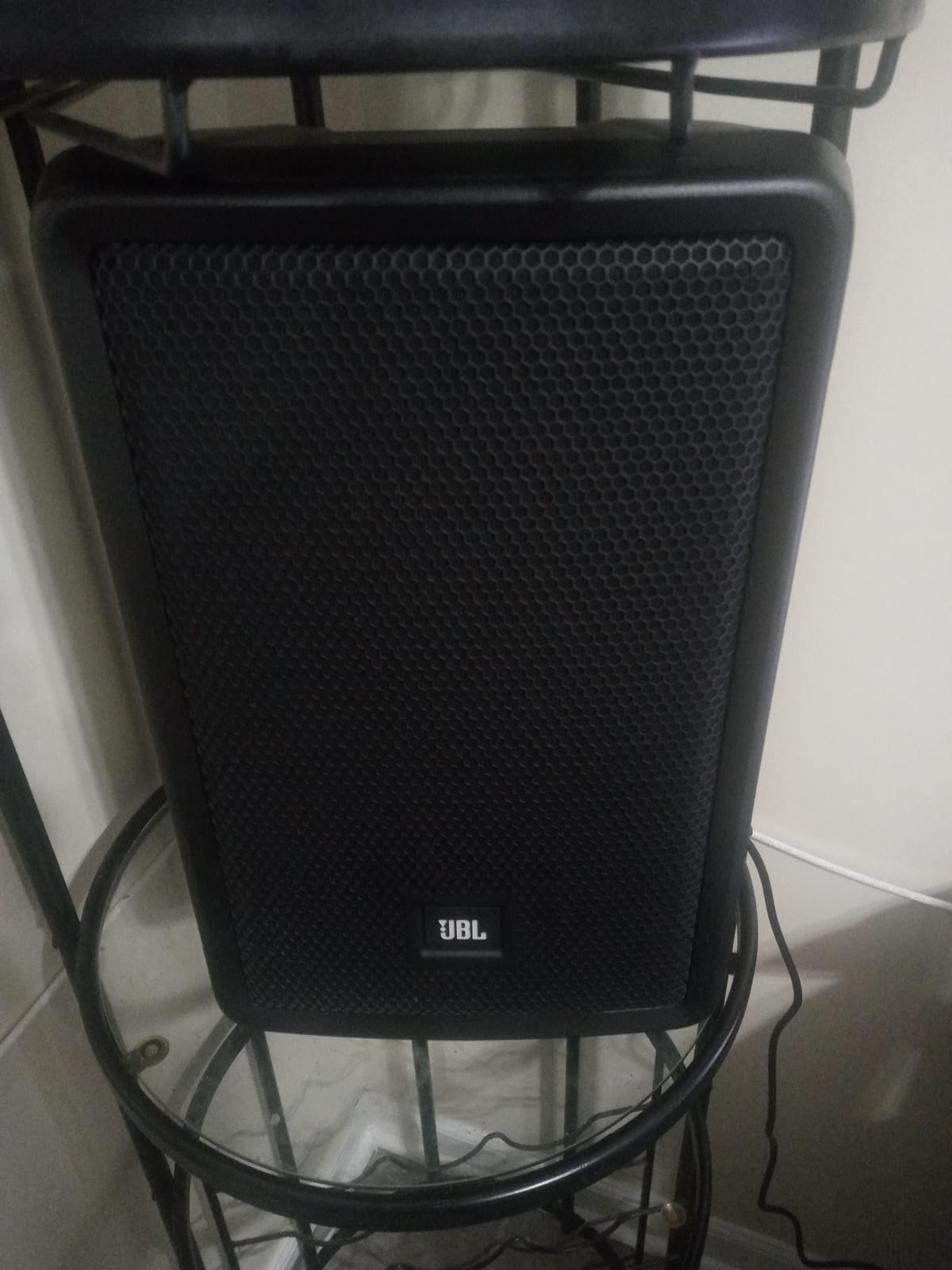
The input panel is the part that matters for a band: two XLR and TRS combo inputs plus an XLR loop-out, which means a matched pair links properly instead of needing an external box. Four real-world EQ presets on the front panel make tuning fast for a band that has never done a proper sound check.
At 27.3 lb with built-in handles and a 35 mm pole socket, this is the easiest load-in in the group. Two of them plus a sub is a complete small-venue rig that two people can carry.
What to check before you commit
Bass extension is the limit. Owners routinely pair it with a subwoofer for full-band music output, which is the correct approach, but it means the budget for a full rig is bigger than the speaker cost suggests. The 53 Hz low point is useful but not chest-thump.
It is mains powered only, with no internal battery, and a small minority of reviews report early unit failures. Expect to receive a unit, test it hard at rehearsal, and know your return window.
Who should skip it
Skip the IRX112BT if you play a style built on low end and you cannot add a sub, or if you play outdoors and need battery operation. It is also not the pick for a band that wants deep parametric EQ, because the DriveRack presets are not that.
For a bar band, a church band or a party band that needs reliable vocal clarity and easy transport on a budget, it is very difficult to beat.
9. Mackie SRM215 V-Class – 4-channel mixer in a 15 inch box
Mackie SRM215 V-Class 2000W 15 inch Powered Speaker
2000W powered 15 inch driver
1.4 inch high-frequency driver
4-channel digital mixer
22.2 kg
Pros
- 15 inch driver delivers strong low-end extension for a powered top
- 4-channel onboard digital mixer and DSP reduce external gear needs
- Bluetooth streaming plus app control
- 2-year warranty
Cons
- Highest price in this roundup for a single 15 inch cabinet
- Smallest review base among the cabinets listed so long-term reliability data is thinner
- Heaviest class of cabinet here at 22.2 kg
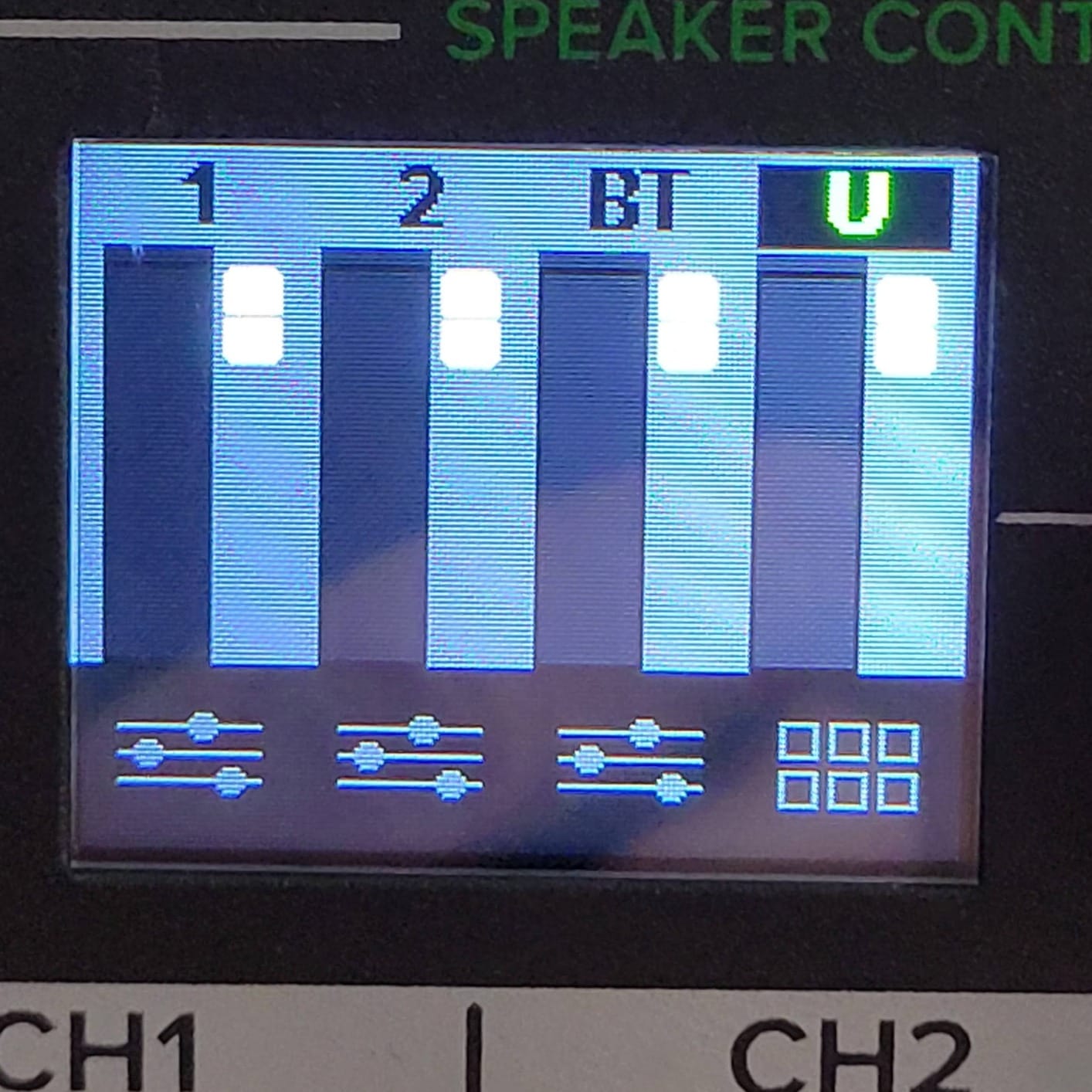
The SRM215 V-Class is the only cabinet here with a 4-channel onboard digital mixer, and for a four-piece band that is a structural advantage rather than a feature-list item. Four real input channels means vocals, guitar, bass DI and keys each get their own fader without an external desk.
The driver is a 2000W powered 15-inch low-frequency driver with a 1.4-inch high-frequency driver, which is a large woofer on a genuinely powerful amplifier. Owners single out the low-end extension as the headline, and Bluetooth streaming with app control handles the rest.
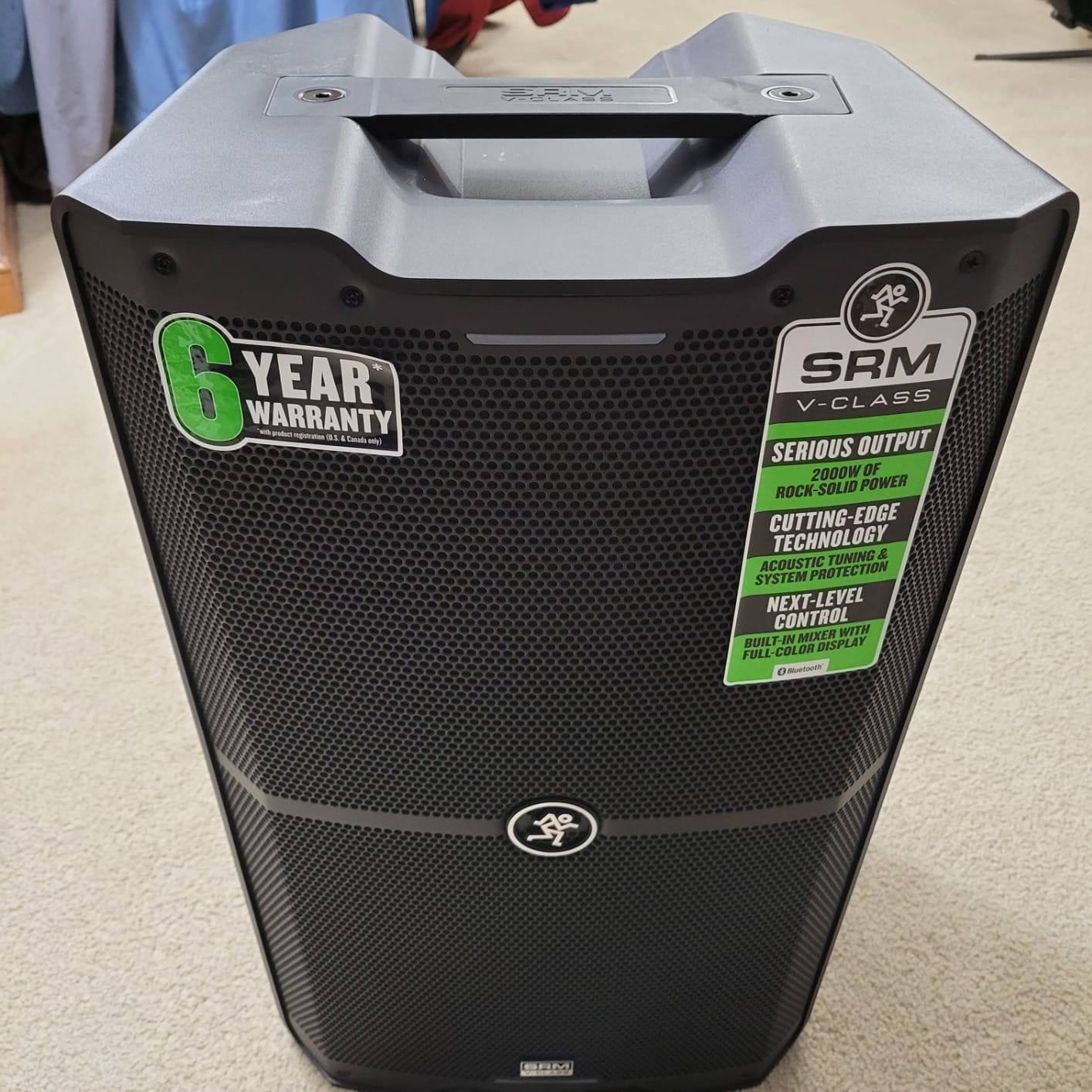
Onboard digital signal processing means the box is configurable, which matters for a band that moves between rooms. The 2-year warranty is solid coverage, and the stand-mount format suits a main or a side-fill position.
If your budget stretches and your crew is bigger than three, this is a genuinely different proposition from the other 15s here. You are buying a mixer and a speaker in one cabinet, and that changes the total cost of the rig.
What to check before you commit
It is the most expensive single 15-inch cabinet in this roundup, and the price is the reservation owners mention most often. Combine that with the smallest review base at 117, and you have less long-term reliability data behind this model than anything else on the list.
Weight is also the issue. At 22.2 kg it is in the heaviest class here, so a pair is a genuine two-person lift and needs a dolly. Budget for that before you commit.
Who should skip it
Skip it if you are a trio or a duo, because four channels of mixer is more than you will use and the money is better spent on two smaller cabinets. Also skip it if the price is stretching you, since cheaper 12s on this list give you more coverage for the outlay.
It is worth it if you specifically want to avoid carrying a separate mixer, and if you play in rooms where a 15-inch low end is the difference between filling out a room and fighting it.
10. QSC K10.2 – compact mains, fill and monitor box
QSC K10.2 Active 10″ Powered 2000 Watt Loudspeaker
2000W Class D amplifier
10 inch two-way powered cabinet
Intrinsic Correction tuning
6-year warranty with registration
Pros
- Reliable 2000W output in a compact 10 inch format for fills
- mains or monitors
- Presets and recallable scenes streamline sound check
- Intrinsic Correction voicing keeps the box consistent across the K.2 range
- 6-year warranty once registered
Cons
- Limited low-end output compared with 12 inch and 15 inch models without a sub
- Premium pricing for a 10 inch powered cabinet
- Heavier than most 10 inch competitors at 38.8 lb
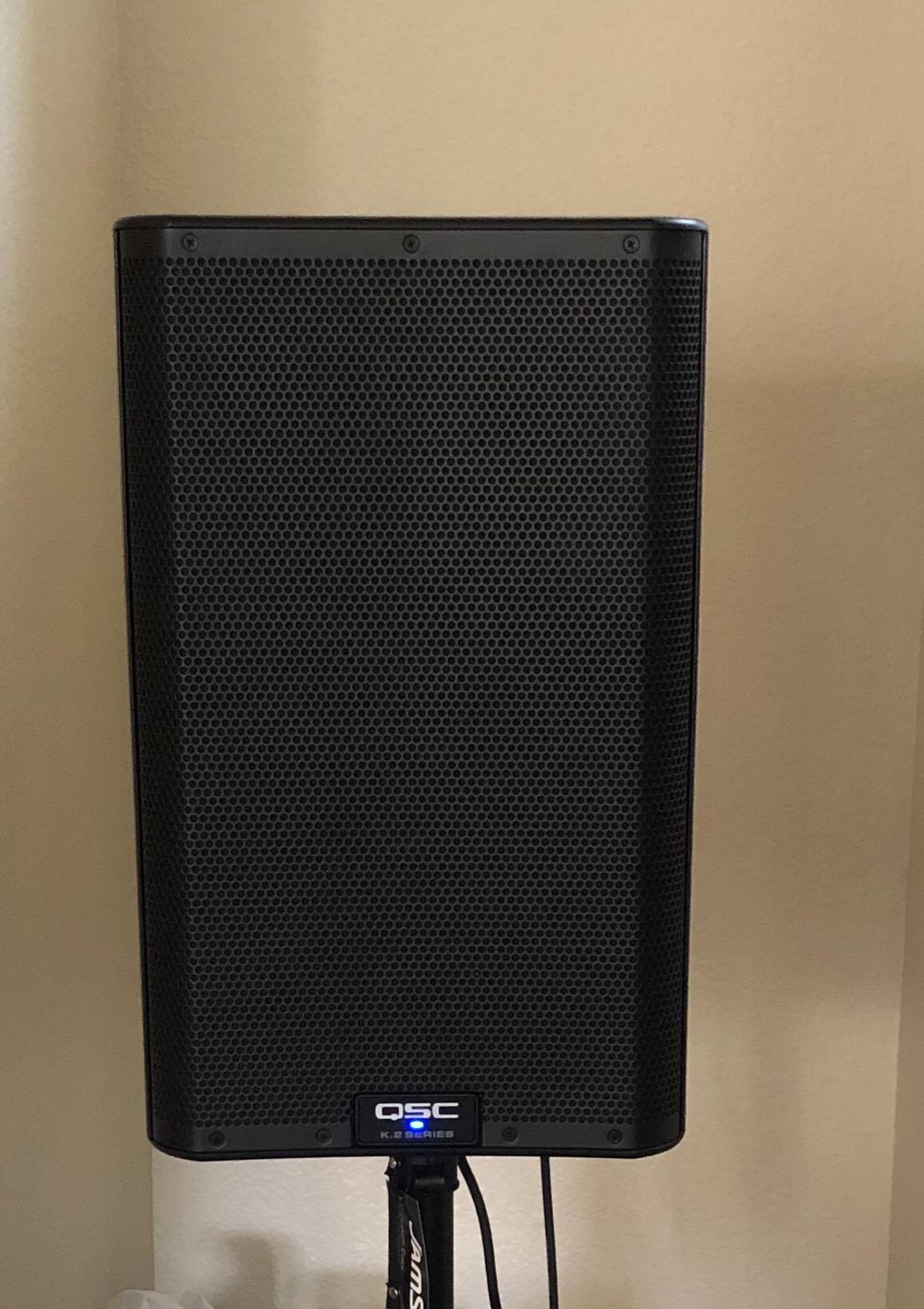
The K10.2 is the odd one out in this roundup and that is exactly why it is here. It is a 10-inch powered cabinet with the same 2000W Class D amplifier module and the same Intrinsic Correction voicing as the K12.2, so a band that already owns a K12.2 can add a matching K10.2 for side fills or stage monitors without a second system.
Owners position it best as a mains or stage-monitor box in smaller rooms, and the presets and recallable scenes make sound check quick. Intrinsic Correction keeps the voicing consistent across the K.2 range, which is the whole point of a matched system.
The warranty is the standout. QSC lists 3 years of coverage, extending to a global 6-year warranty with product registration, and that is the longest coverage on this list once you spend five minutes registering the speaker.
For fills, for monitors, for a small bar room, or as the first step of a system you will grow into, it does a specific job very well. Nominal coverage is a 90 degree axisymmetric pattern, which is textbook for a compact fill.
What to check before you commit
Low-end output is the limitation. The frequency response runs 56 Hz to 20 kHz and reviewers are clear that it needs a subwoofer to cover a full band. A 10-inch driver simply does not move the same air as a 12 or a 15.
Two more caveats. It is a premium price for a 10-inch powered cabinet, and at 38.8 lb it is heavier than most competing 10s, which undercuts the compact-speaker advantage you were buying it for.
Who should skip it
Skip the K10.2 if the 15s and 12s on this list fit your budget better, because you get more output per pound. It is also the wrong main PA for a full band without a sub, and a buyer starting from zero would be better served by a 12.
Buy it deliberately: as a match to a K12.2, as a pair of wedges, or as side fills in a room that is too big for one speaker.
Band Rig Checklist – Linking Mains, Adding a Sub and Setting Wedges
This is the section that decides whether your new powered PA speakers for live bands actually work on a stage. Everything here comes from the questions bands ask each other in forums, and none of it is in the manual.
1. Position the mains before you power up
Put the two cabinets at the front corners, angled slightly inward so they cross at the back of the room rather than spraying past the last row. On a pole, aim the cabinet’s vertical axis at the ears of the band, not at the ceiling. Doing this before the first note saves you twenty minutes of arguing with the EQ afterwards.
2. Link stereo through the Mix Out, not Bluetooth
Nearly every powered box in this roundup has an XLR link or loop output, and that is the correct way to run a matched pair. Take the Mix Out or loop out of speaker one into an input on speaker two, set them to a stereo or left-right link mode, and you get two cabinets covering the room instead of two covering the same space.
Wireless linking is the fallback, not the plan. Every one of the ten cabinets here supports some form of Bluetooth linking, and the owners of the EON715 and the IRX112BT specifically report pairing hiccups. If a show depends on stereo, use the cable.
3. Gain stage in the right order
Set your mixer output, then the speaker input trim, then the master level, and do not touch the channel gain last to fix problems. Bands that run the input trim hot and the master low get noise; bands that run the master near the top get the DSP protection engaging at the wrong moment. If your band is loud and the room is loud, this is where the “sound falls apart” complaint usually starts.
4. Use the feedback eliminator as insurance, not as a fix
The Thump215, the ZLX-12P-G2 and the IRX112BT all ship with automatic feedback suppression, and it is a genuine safety net in a small room with a loud vocal. It is not permission to point a mic at a speaker. Set the eliminator as a floor, keep the mic behind the horn, and fix the real problem before the show.
5. Decide between a sub and a second main
This is the budget argument nobody settles. The honest version: if your band is in rooms of a hundred people or more and you play anything driven, a sub adds more than a third main will. If you are in small rooms, doubling up on 12s gives you more consistent coverage and more headroom, and you can add a sub later.
There is a practical test. If your mains are clipping or the limiter is engaging when the room hits full, buy output. If they are clean but the room feels thin at 100 Hz, buy a sub. A matched sub that links through the same Mix Out is a far better use of money than a preamp upgrade.
6. Wedges versus mains on the same cabinet
The TS415, the TS410, the DBR12 and the ZLX-12P-G2 all have wedge positions, and using mains as monitors saves the cost of a separate pair. The catch is coverage: a wedge on the stage floor needs to reach the drummer, who is usually the hardest position in the band to serve.
If the budget exists, one small fill or monitor per player beats turning your main PA into a monitor system. If it does not, put a single speaker behind the vocalist aimed back at the band, which solves the most common complaint in the cheapest way.
Buying Guide – 12 Inch vs 15 Inch, Headroom and Inputs
What is the 83% rule for speakers?
The 83% rule is a rule of thumb about amplifier headroom, not a brand-specific setting. The idea is that a speaker driven at roughly 83 percent of its rated continuous capacity stays cleaner and lasts longer than one run flat out, because you leave the amplifier room to reproduce transients without clipping.
For a band, the practical version is simple. If you can hit the level you need with the output LED well below maximum, you are inside the rule. If you are riding the limit light every chorus, you are asking the amplifier to do work it was not sized for, and the result is the harshness and vocal loss that people describe as the speaker falling apart.
Why manufacturer wattage is the least useful number
Wattage figures are not measured the same way between brands. One manufacturer quotes peak output, another quotes RMS, a third quotes the sum of the amplifier’s ratings across both channels. Compare a 2000W label from one brand with a 2000W label from another and you are comparing marketing, not engineering.
Max SPL is the number to compare because it is an output level rather than an input rating. Of the ten cabinets here, three publish one: the Mackie Thump215 at 129 dB, the Yamaha DBR12 at 131 dB and the JBL IRX112BT at 127 dB. Where a figure is missing, read driver size and amplifier class instead, and accept that you are estimating.
12 inch or 15 inch for a band?
Twelve-inch cabinets are the working band default, and the reason is coverage rather than bass. Two 12s are easier to carry than two 15s, sit closer together as a stereo pair, and give you more headroom per pound. A 15 gives you more low end from a single box, which is why it wins in larger rooms and loses in small ones where the crowd is close.
Our rule of thumb: bars, small clubs, churches and rehearsal rooms, two 12s. Medium rooms and outdoor slots with a driven band, 15s or 12s plus a sub. If the band is a duo, a 10-inch like the TS410 or the K10.2 is plenty.
Which inputs do you actually need?
Combo XLR and 1/4-inch jacks are the minimum for a band. A vocal mic on XLR, a guitar through a DI on XLR, a stereo keyboard on RCA, and a loop out to the second speaker. Any cabinet without an XLR link output will limit how you grow the rig, so treat it as a deal breaker rather than a nice-to-have.
Bluetooth is a convenience for backing tracks, not a band input. The DBR12 has no wireless at all and is still one of the best speakers here, which tells you how much the wireless feature is worth. Read the general powered speaker roundup if your use case is streaming rather than performing.
Who makes the best powered PA speakers?
Six brands cover almost every working band’s needs, and each one wins a different fight. QSC, JBL, Electro-Voice, Yamaha, Mackie and Alto Professional are the shortlist that comes up repeatedly across band forums, and the honest answer is that the best brand is the one whose weakest feature you can live with.
QSC for presets, scenes and fast sound checks, with the longest warranty coverage once registered.
JBL for waveguide-controlled coverage and the largest installed base of owners to ask for advice.
Electro-Voice for the deepest onboard DSP, with PEQ, ducker and automatic feedback suppression.
Yamaha for tuning consistency, build quality and warranty length on a wired, set-and-forget box.
Mackie for band-specific processing, with a feedback eliminator and ducking on an affordable 15-inch.
Alto Professional for output per pound, with the deepest bass in the lightest class of cabinet here.
On the two most common head-to-heads: QSC and JBL are close, with QSC winning on workflow and warranty and JBL winning on coverage control and owner support. EV and QSC are harder to separate, with EV offering more DSP and QSC offering a lighter software experience. If you already own one, the strongest argument is matching it.
Frequently Asked Questions
What is the best PA system for gigging?
The best PA system for gigging is a matched pair of powered 12-inch cabinets with XLR combo inputs and an XLR Mix Out, driven from a small mixer. Buy one good speaker now and match it later, because a lone speaker cannot cover a room in stereo. Our pick for most bands is the JBL IRX112BT for value or the ALTO TS415 for output.
Which speaker is best for live performances?
It depends on the room. A 12-inch powered cabinet such as the JBL IRX112BT, Yamaha DBR12 or Electro-Voice ZLX-12P-G2 covers small clubs and bars, while a 15-inch such as the ALTO TS415 or Mackie Thump215 gives you more low end in medium rooms. Judge the box on max SPL and real XLR inputs, not on the wattage printed on the label.
What is the 83% rule for speakers?
The 83% rule says a speaker driven at about 83 percent of its rated continuous capacity stays cleaner and lasts longer. For a band, the practical version is to run your levels with the output indicator well below maximum. If the limiter is engaging every chorus, the box is being pushed past what its amplifier can do cleanly.
Who makes the best powered PA speakers?
QSC, JBL, Electro-Voice, Yamaha, Mackie and Alto Professional are the brands that come up most for working bands. QSC leads on presets and warranty, JBL on waveguide coverage control, Electro-Voice on DSP depth, Yamaha on tuning and build, Mackie on band-specific processing and Alto Professional on output per pound.
What is the best 15-inch powered PA speaker?
The ALTO TS415 is our best 15-inch powered PA speaker for live bands, with a 15-inch driver, 2500W of TrueSonic power, a 3-channel mixer and dual combo inputs. The Mackie Thump215 is the value alternative at 34.8 lb with a built-in feedback eliminator, and the Mackie SRM215 V-Class adds a 4-channel digital mixer for larger bands.
Which 12-inch active PA speaker is the best?
The Yamaha DBR12 publishes the highest max SPL in this group at 131 dB and carries long warranty coverage. The JBL IRX112BT is the best value pick with automatic feedback suppression and a 27.3 lb weight, and the Electro-Voice ZLX-12P-G2 has the deepest DSP with PEQ, a ducker and automatic feedback suppression.
Which is better, QSC or JBL?
QSC and JBL are close, and the difference is workflow rather than sound quality. QSC wins on savable scenes, fast sound checks and warranty length, while JBL wins on waveguide-controlled coverage and a much larger installed base of owners. If you already own one brand, matching it is usually the smarter move than switching.
What are some good alternatives to the QSC K12.2?
The JBL IRX112BT is the closest alternative and is considerably cheaper, with automatic feedback suppression and a lighter 27.3 lb cabinet. The Electro-Voice ZLX-12P-G2 offers deeper DSP with PEQ and a ducker, the Yamaha DBR12 publishes the highest max SPL at 131 dB, and the Mackie Thump215 gives you 15-inch low end with a feedback eliminator built in.
Final Verdict – the best powered PA speakers for live bands
The best powered PA speakers for live bands are the ALTO TS415 for outright output and low end, the JBL IRX112BT for the most capable rig per pound, and the Mackie Thump215 for bands that play loud and want the processing already built in. Those three are where we would start, in that order, for most working bands.
Match your pair through the Mix Out, run your levels inside the headroom the box gives you, and buy the second speaker when the money allows. Our PA system guide covers the mixer and sub decisions that come next, and both of these lists will still be here when you are ready to add a channel.