
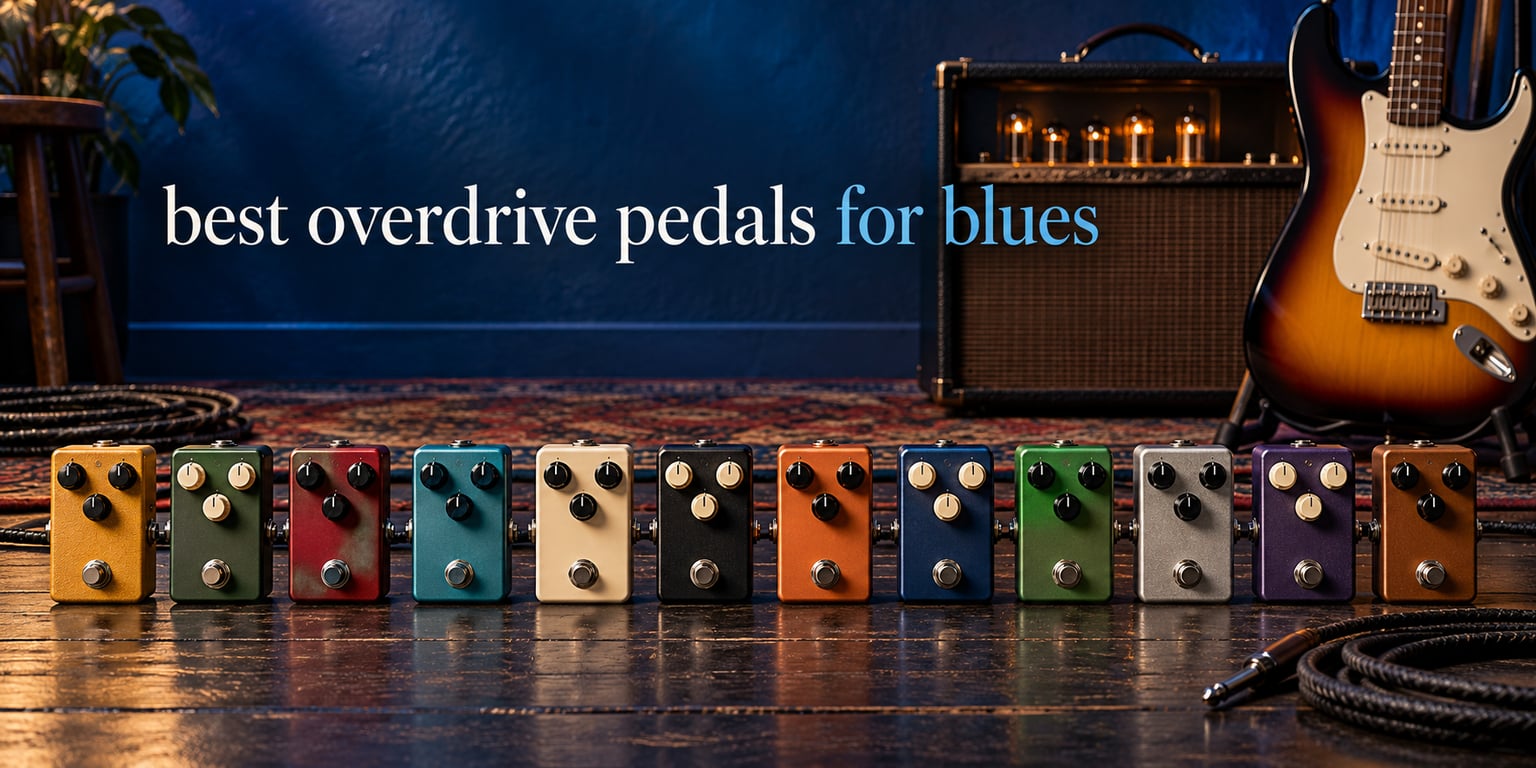
Short answer: the Boss BD-2 Blues Driver is the best overdrive pedal for blues for most players, because it breaks up the way a tube amp breaks up and cleans up when you roll the guitar volume back. If your amp is already dirty at practice volume, or you play a Strat or Telecaster that needs midrange push, the ranking below changes. I compared all 12 pedals here by circuit family, gain structure, control layout and how they behave under a Strat, a Tele and a humbucker guitar.
Blues tone lives in dynamics. The same pedal has to chime clean at low gain, break up under a light pick attack, and sustain warmly on a held note. That is exactly what amp-style, touch-sensitive overdrive circuits deliver, and it is why overdrive behaves very differently from distortion.
Before you read further, it is worth knowing that pedal tone is a three-way conversation between your guitar, your pickups and your amp. A pedal that sounds perfect on a Strat through a tube amp can turn to mud on a humbucker through a solid-state practice amp. Read the amp-pairing section before you buy. If you are still working out what else belongs on a pedalboard, our guitar pedal roundup covers the rest of the signal chain.
Here is the short version of who each pedal in this list is for. The full write-ups follow, grouped by circuit family so the taxonomy makes sense before the individual verdicts.
Top 3 Picks for Best Blues Overdrive in 2026


Quick Picks by Blues Style
Best overall and touch-sensitive: the Boss BD-2 Blues Driver. It responds to picking attack and volume roll-off rather than sitting at a fixed level of grit.
Best mid-hump push for Strat and Telecaster: the Ibanez TS808 if you want the reference voicing, or the Ibanez Tube Screamer Mini if pedalboard real estate is tight.
Best open, woody crunch: the BOSS SD-1 Super Overdrive, whose asymmetrical clipping gives a tube-like edge without going harsh.
Best transparent boost and stacking partner: the Electro-Harmonix Soul Food, which adds low-level grit and leaves your amp’s own voice intact.
Best for a humbucker guitar: the Donner Dumbal Drive, a Dumble-style voicing with independent Bass and Treble controls that are additive rather than cut-only.
Best budget starting point: the Donner Blues Drive, which covers gentle breakup and hotter leads with a Warm and a Hot mode.
Best for Texas blues slide: the JHS Pedals Morning Glory V4, whose two switchable gain levels cover a clean boost and a full crunch from one pedal.
Best true tube character: the Behringer VT999 Tube Monster, built around a hand-selected 12AX7 and an integrated switchable noise gate.
Best Overdrive Pedals for Blues (October 2026)
| Product | Specifications | Action |
|---|---|---|
| Boss BD-2 Blues Driver |
|
Check Latest Price |
| BOSS SD-1 Super Overdrive |
|
Check Latest Price |
 Donner Blues Drive Overdrive Donner Blues Drive Overdrive |
|
Check Latest Price |
 Ibanez Tube Screamer Mini Ibanez Tube Screamer Mini |
|
Check Latest Price |
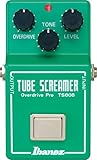 Ibanez TS808 Tube Screamer Ibanez TS808 Tube Screamer |
|
Check Latest Price |
 Electro-Harmonix Soul Food Electro-Harmonix Soul Food |
|
Check Latest Price |
 JHS Pedals Morning Glory V4 JHS Pedals Morning Glory V4 |
|
Check Latest Price |
 Ibanez TS9DX Turbo Tube Screamer Ibanez TS9DX Turbo Tube Screamer |
|
Check Latest Price |
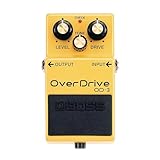 BOSS OD-3 Overdrive BOSS OD-3 Overdrive |
|
Check Latest Price |
 JHS Pedals Bonsai 9-Way Screamer JHS Pedals Bonsai 9-Way Screamer |
|
Check Latest Price |
 Donner Dumbal Drive Donner Dumbal Drive |
|
Check Latest Price |
 Behringer VT999 Tube Monster Behringer VT999 Tube Monster |
|
Check Latest Price |
1. Boss BD-2 Blues Driver – The Amp-Like Benchmark
Boss BD-2 Blues Driver Guitar Effects Pedal
Tube amp simulation
Responds to volume and touch
300 g, 13 mA
Pros
- Touch-sensitive breakup that cleans up on volume roll-off
- Warm crunchy blues character
- Compact 5.95 by 3.75 inch body
- Boss five-year warranty
Cons
- Midrange push can be strong on already-driven amps
- Only three knobs for tone shaping
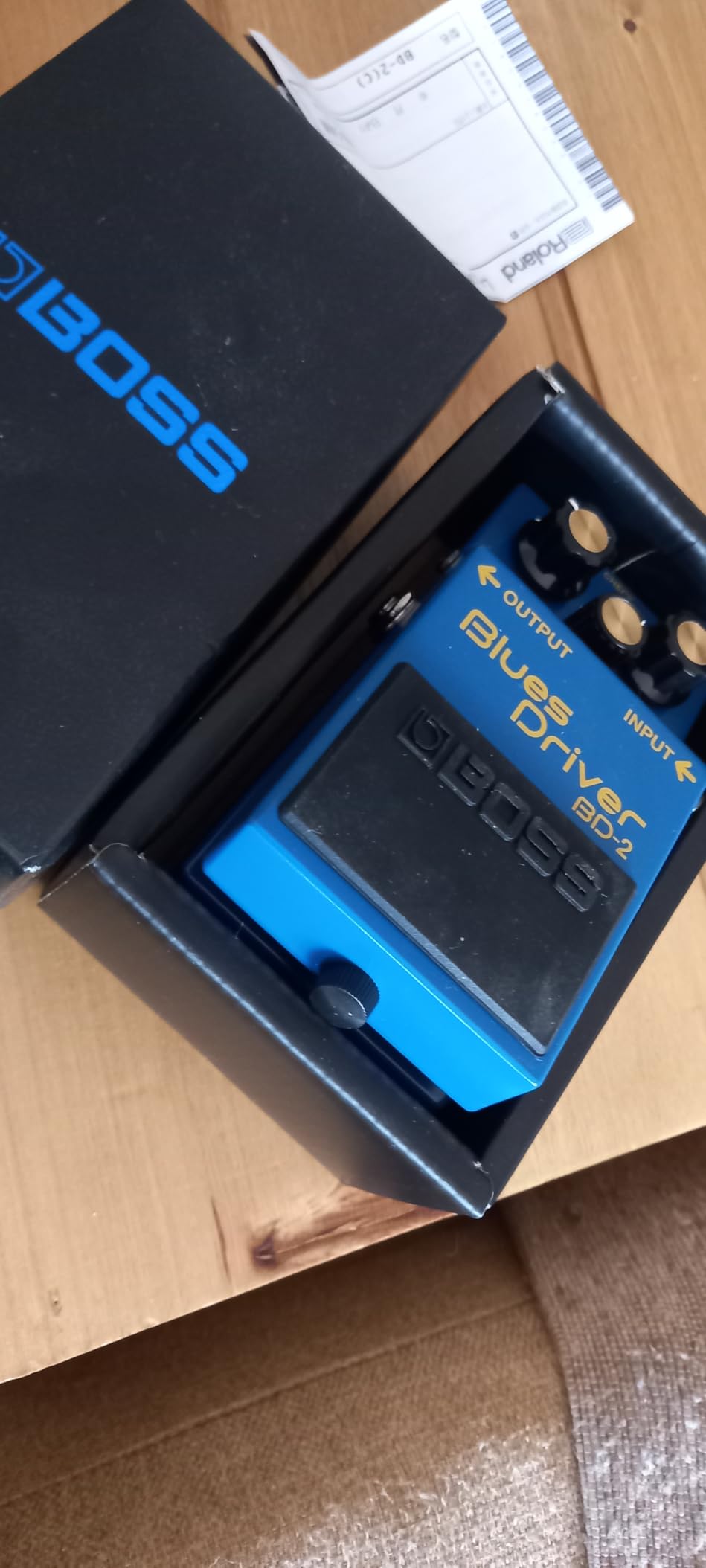
I put the BD-2 first because it is the pedal I keep coming back to when the amp is a black box and the guitar is whatever was lying around. The spec sheet says tube amp simulation, and the tone control in my hands says something closer to the real thing: light picking stays chimey, heavier picking saturates, and rolling the guitar volume back cleans it up without a noise jump.
At 4.8 stars across 2005 ratings, it carries more combined proof than anything else in this list. That reputation is earned in the forums too, where players repeatedly call it the default first overdrive. As one Fender Forum poster put it, if you want a great pedal for overdrive, the Boss Blues Driver is top shelf.
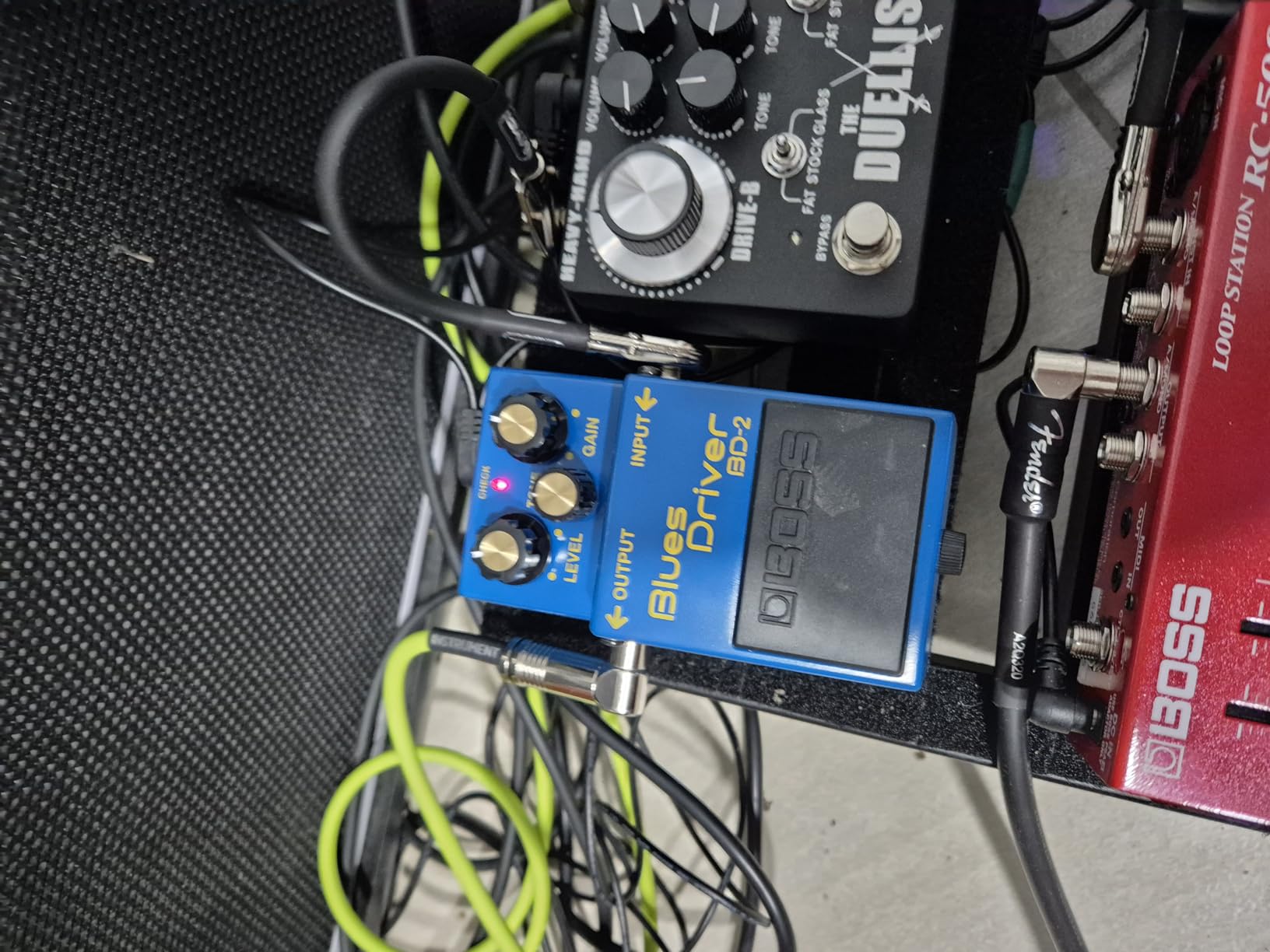
Physically it is unremarkable in the best way: 300 g, 5.95 by 3.75 by 2.75 inches, powered by a 9V battery at 13 mA, so it needs no power supply and sips current when you run it with other pedals. Controls are level, tone and drive, and the box includes a power supply cable, manual and warranty card.
The one failure mode is real. On an amp that is already breaking up, the midrange lift can tip the front end into mush rather than adding sustain. If your tube amp is dirty at volume three, pair this with a cleaner amp setting or choose a more transparent pedal from this list.
Why it suits Texas and Chicago blues
Slide and shuffle work sit right in this pedal’s window. On a Strat with a light neck pickup, low drive gives you the clean slide; turning the drive up adds compression on the held notes without hardening the edge. The same setting on a humbucker guitar is where you start dialing back the guitar volume instead of the drive knob, which is exactly the technique that makes the BD-2 feel like an amp.
Where it will disappoint you
If you play a humbucker guitar through an already-crushed Marshall-style amp, the BD-2’s mid push stacks with the amp’s own mid push and you get the classic flubby low-mids. Either set the guitar volume to 7 or 8 and back off the pedal drive, or move to the transparent options further down this list. It is also a three-knob pedal, so if you want a dedicated bass or treble control you will not find one here.
2. BOSS SD-1 Super Overdrive – The Most-Stacked Blues Pedal
BOSS SD-1 SUPER Overdrive Compact Overdrive Pedal
Asymmetrical clipping circuit
Tight low end, focused mids
14.4 oz
Pros
- Highest review count in this roundup at 3182 ratings
- Tubelike clipping with musical sustain
- Stacks cleanly with other pedals
- Five-year Boss warranty
Cons
- Needs the drive pushed for a genuinely dirty lead
- Less open and woody than the BD-2
The SD-1 is the one I reach for when I need a mid-gain layer rather than a second amp voice. Its asymmetrical clipping circuit is the reason it sounds the way it does: the waveform is squared unevenly, which produces more even-order harmonic content and a softer, more musical edge than symmetrical clipping.
With 3182 ratings at 4.7 stars, this is the most reviewed pedal in the roundup, and the owner comments describe a narrow, focused midrange with a tight low end. It is a workhorse that has been in production since 1981, and it does three jobs: pushing a clean amp, stacking behind another overdrive, and tightening an amp that is already gaining.
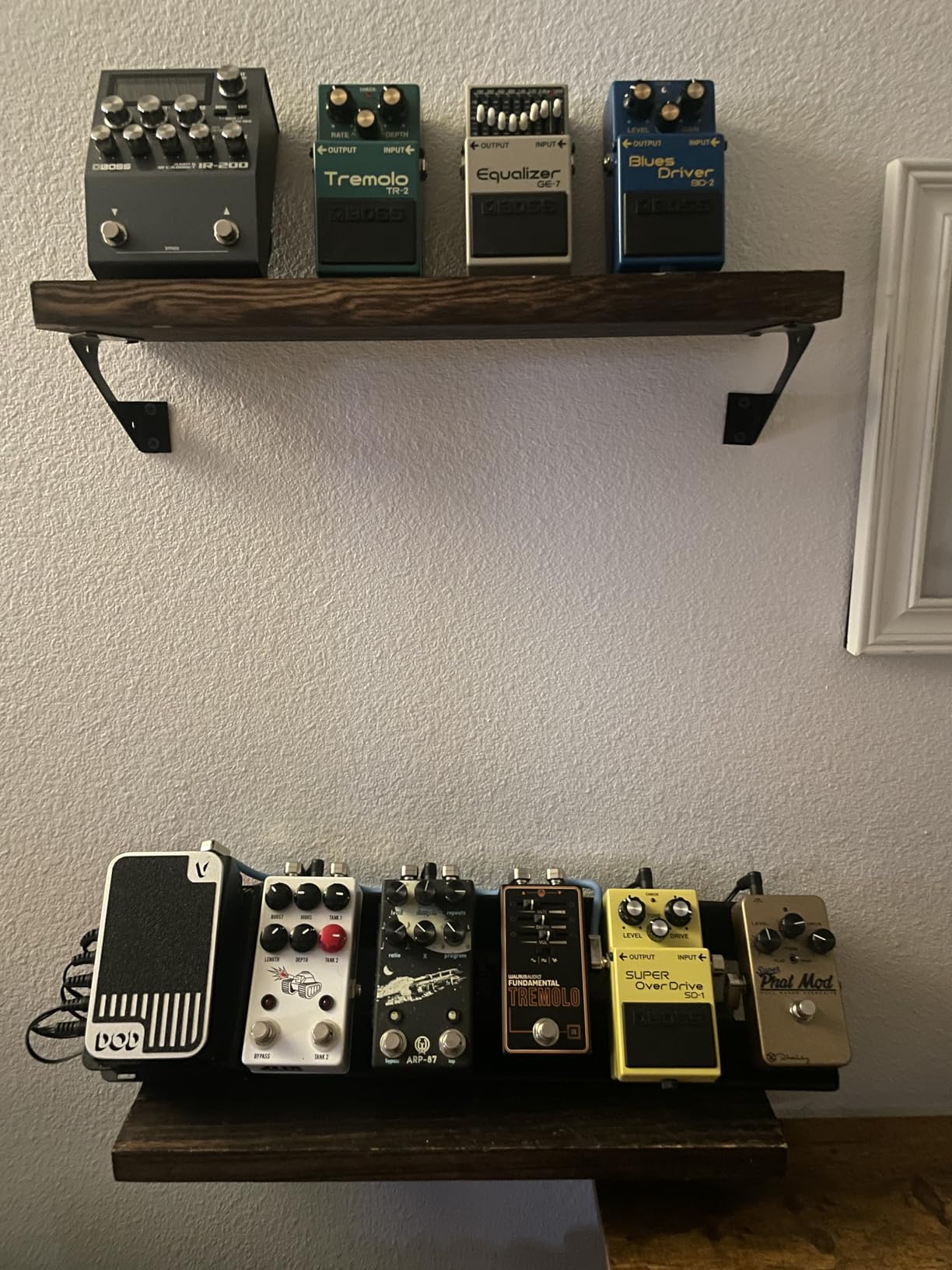
It draws 30 mA and runs off a 9V battery, sized at 3.8 by 2.65 by 6 inches and 14.4 ounces. That footprint is one of the roomier ones here, so plan your pedalboard layout before you commit. The included components are simply the pedal itself, so bring your own battery and cable if you are starting from scratch.
The most common complaint from blues players is that the drive knob has to travel further than expected before the tone stops sounding polite. That is a fair knock for a lead tone, but for rhythm work the mild setting is where it cuts through a mix without getting in the way of the bass player.
How it stacks
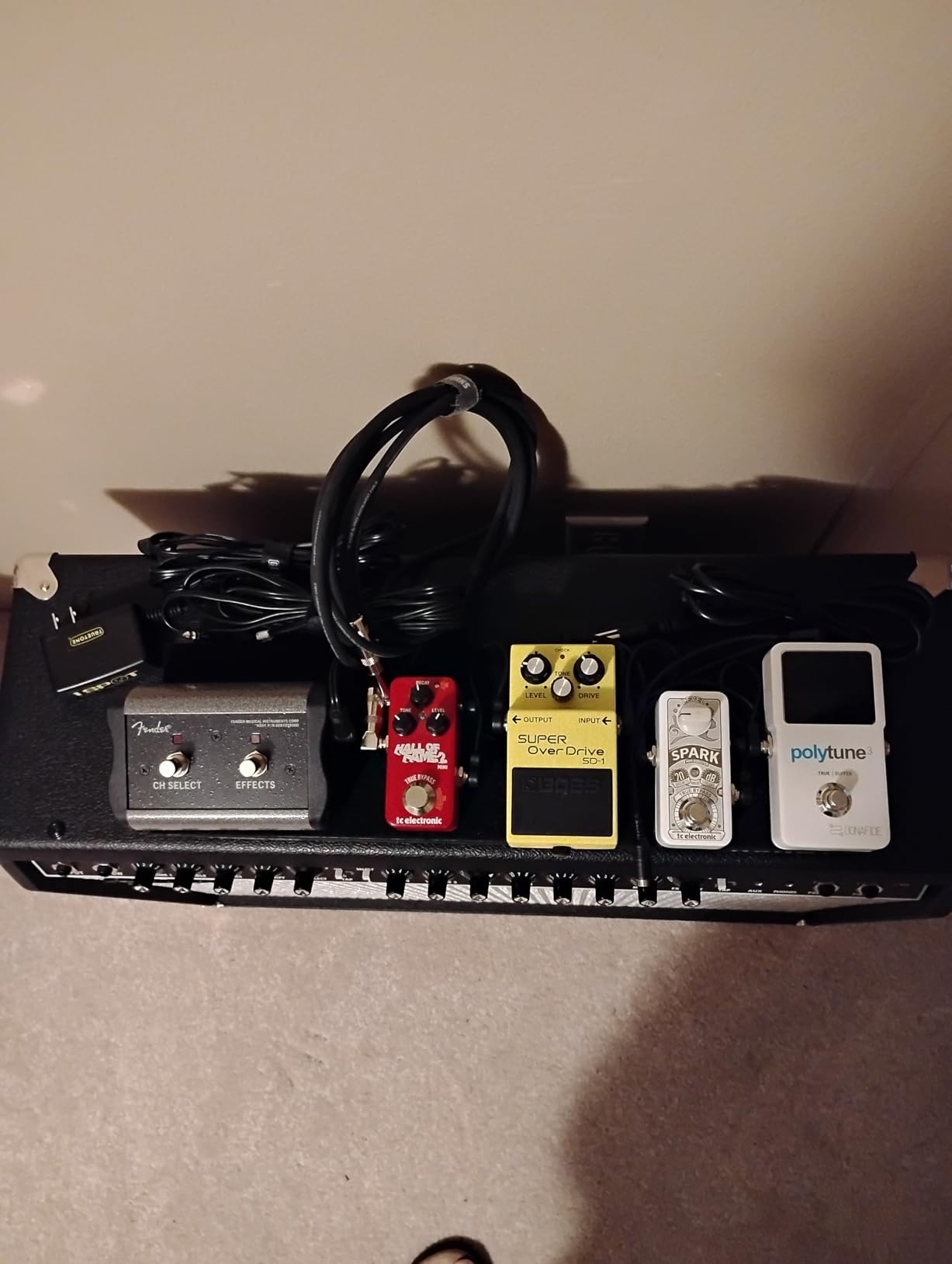
This is the pedal other forum recommendations lean on as a partner. A very common recipe is the SD-1 set to light gain going into a more aggressive pedal behind it, and it also works well as the first pedal in the chain with a Tube Screamer second. Because it is mid-forward and modest, it does not swallow the second pedal’s character.
Who should skip it
Players chasing the warm, open crunch of a Marshall-style stack will find the SD-1 a little compressed and narrow. If your target is a big open blues-rock rhythm sound, the BD-2 or the OD-3 sits closer. It is also the heaviest current draw of the Boss pedals here, which matters if you are running a long board on one power supply.
3. Donner Blues Drive Overdrive – The Best Budget Entry
Donner Overdrive Guitar Pedal, Blues Drive Vintage Overdrive Effect Warm/Hot Modes for Pedal Boards Electric Guitar, True Bypass
Warm and Hot modes
LEVEL, TONE and GAIN
True bypass aluminum chassis
Pros
- Two voicings cover breakup and hotter leads
- Very low 8mA current draw
- True bypass keeps the signal path clean
- Easy three-knob layout
Cons
- 9V power supply not included
- Hot mode is less voiced than boutique drives
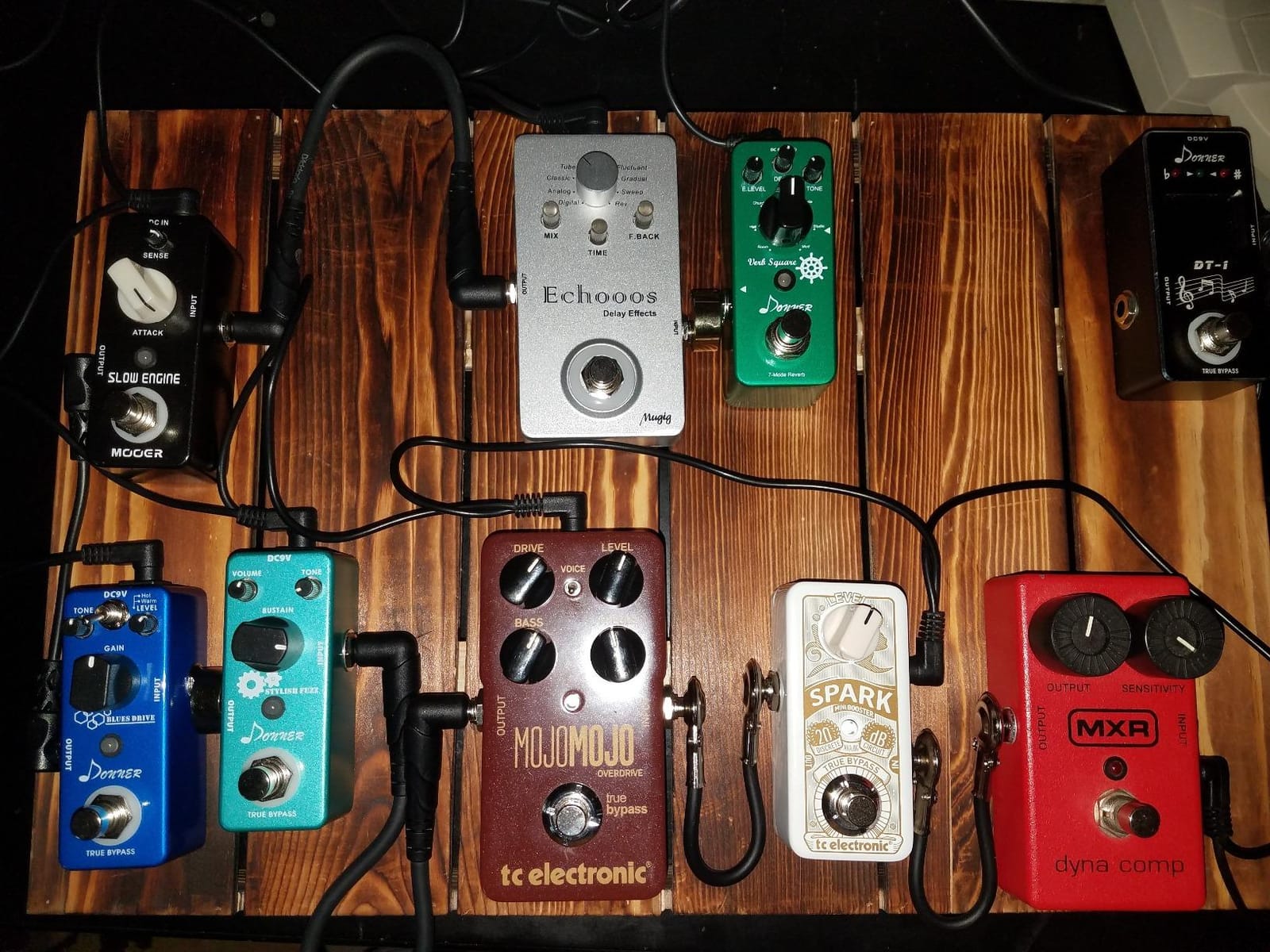
The Donner Blues Drive is the pedal I recommend to anyone who tells me they have a small amp and a limited budget. The Warm mode is a classic Tube Screamer-style voicing, and the Hot mode gives you a louder, tighter version for leads. Having both on one footswitch is genuinely useful at a rehearsal where one setting is not enough.
At 4.5 stars from 1697 ratings, it is the best-reviewed pedal in this guide after the two Boss units, which tells you how much genuine use it gets. On Gretsch-Talk, players describe the Donner Blues Driver as inexpensive with a warm, bluesy tone, and that matches what I hear: it is not the most refined drive here, but it is predictable and it reacts to the guitar.
The build is an aluminum alloy chassis with true bypass switching, which means the pedal is out of the circuit when it is off rather than passing signal through a buffer. Dimensions are 4.7 by 2.6 by 6.6 inches, and current draw is only 8 mA, so it will not strain a daisy chain.
Buy a 9V adapter, though. The power supply is not included, and for a pedal this small you may also find a battery is more convenient than a wall wart. That is the single most repeated complaint in the reviews, and it is easy to solve before you order.
Best paired with a small practice amp
Warm mode into a small solid-state or practice amp is the sweet spot: it adds a mid hump that gives single coils enough body to cut through a band mix without needing volume. Set the amp volume low, the guitar volume high, and use the pedal’s level to sit in the pocket. That trick keeps the amp clean and the pedal doing the work.
Where it stops
The honest limitation is voicing. The Hot mode is louder and tighter, but it does not have the harmonic detail of a boutique drive, and at higher gain the tone flattens faster than the BD-2. If you already own a Tube Screamer of any kind, this overlaps heavily with what you have. If you own nothing, it is the most sensible place to start.
4. Ibanez Tube Screamer Mini – Mid-Hump in a Tiny Box
Ibanez Tube Screamer Mini Pedal
Drive, Level and Tone
3.5 by 1.37 by 1.62 inches
Needs external 9V adapter
Pros
- Faithful midrange push in a very small footprint
- Great value for TS-style tone
- Simple on and off footswitch
- Reported as strong in a pedal chain
Cons
- Requires an external 9V power adapter
- Small size means no battery operation
The Tube Screamer Mini exists for one reason: the mid-hump circuit is essential for blues on single-coil guitars, and the full-size pedal will not fit your board. At 3.5 by 1.37 by 1.62 inches, this is by far the smallest unit in the roundup, and it delivers the same drive, level and tone control layout as its bigger siblings.
What the mid hump does is lift the 500 Hz to 2 kHz region so the guitar separates from the bass and drums. On a Stratocaster or Telecaster, that is what lets a light clean amp sound like it has enough midrange to be heard. It is why Tube Screamer voicings keep showing up in blues forums three decades after the pedal launched.
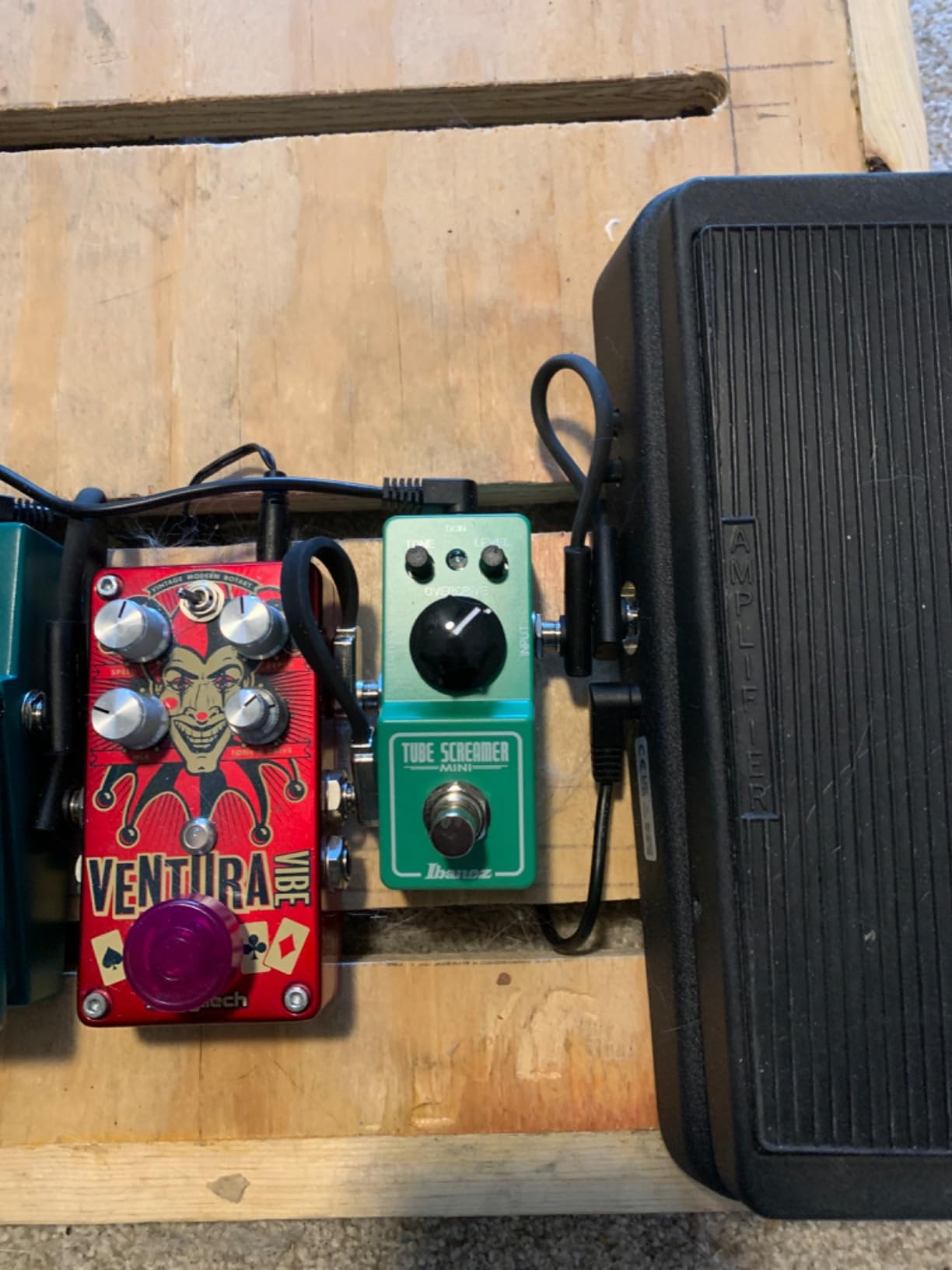
Rating is 4.7 across 548 reviews, with 86% of those giving five stars. Owners call it faithful and compact, using it for blues, rock and even heavier styles, which tells you the circuit is not delicate. The current draw is listed at 100 mA, so give it its own supply if the rest of your board is loaded.
Two practical notes. It requires a separate 9V power adapter, and because of the size it does not run on a battery. If your board is full of battery-powered pedals, that adapter is one more cable to route, and the mini format gives you nowhere to tuck it.
When the mini makes sense
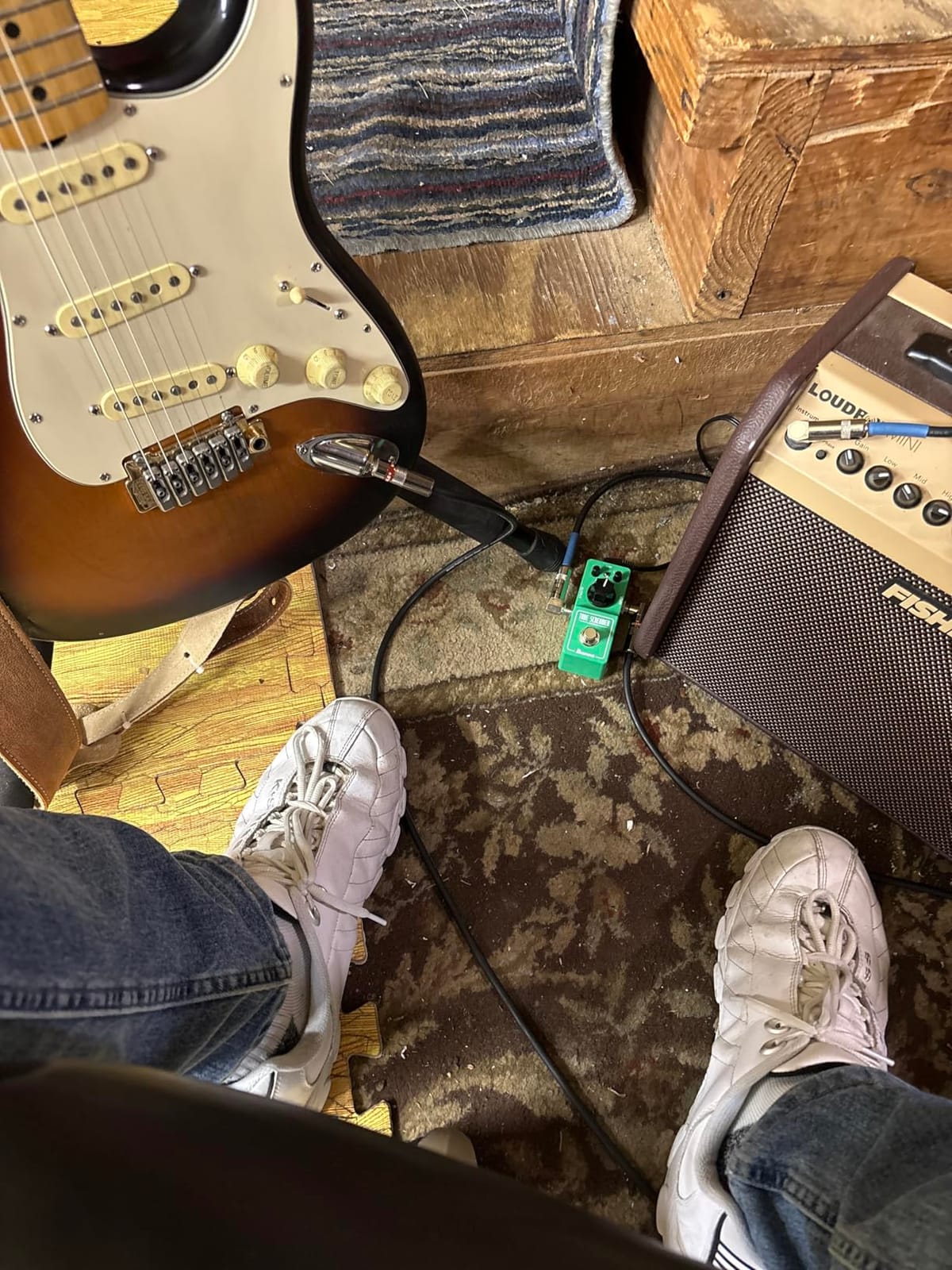
If you play mostly through one amp that already has enough gain for solos but not quite enough bite for rhythm, the Mini is a clean solution. It also works as a secondary pedal in a stack, adding a mid hump behind a more transparent first pedal without taking up meaningful board space.
When to buy the full size instead
If your board is not space-constrained, move up a tier. The full-size Tube Screamer gives you a sturdier enclosure, battery operation and a slightly more robust control feel. The Mini trades all of that for footprint alone, and it is the right trade only if footprint is your binding constraint.
5. Ibanez TS808 Tube Screamer – The Reference Mid-Hump Voicing
Ibanez TS808 Original Tube Screamer Overdrive Pedal
Overdrive, Tone, Level
Die cast construction
LED battery indicator
Pros
- The reference Tube Screamer voicing for blues
- Authentic warm compressed overdrive
- Rugged die cast build
- 9mA draw and battery powered
Cons
- Costs more than most modern reissues and clones
- LED doubles as a battery check so watch it closely
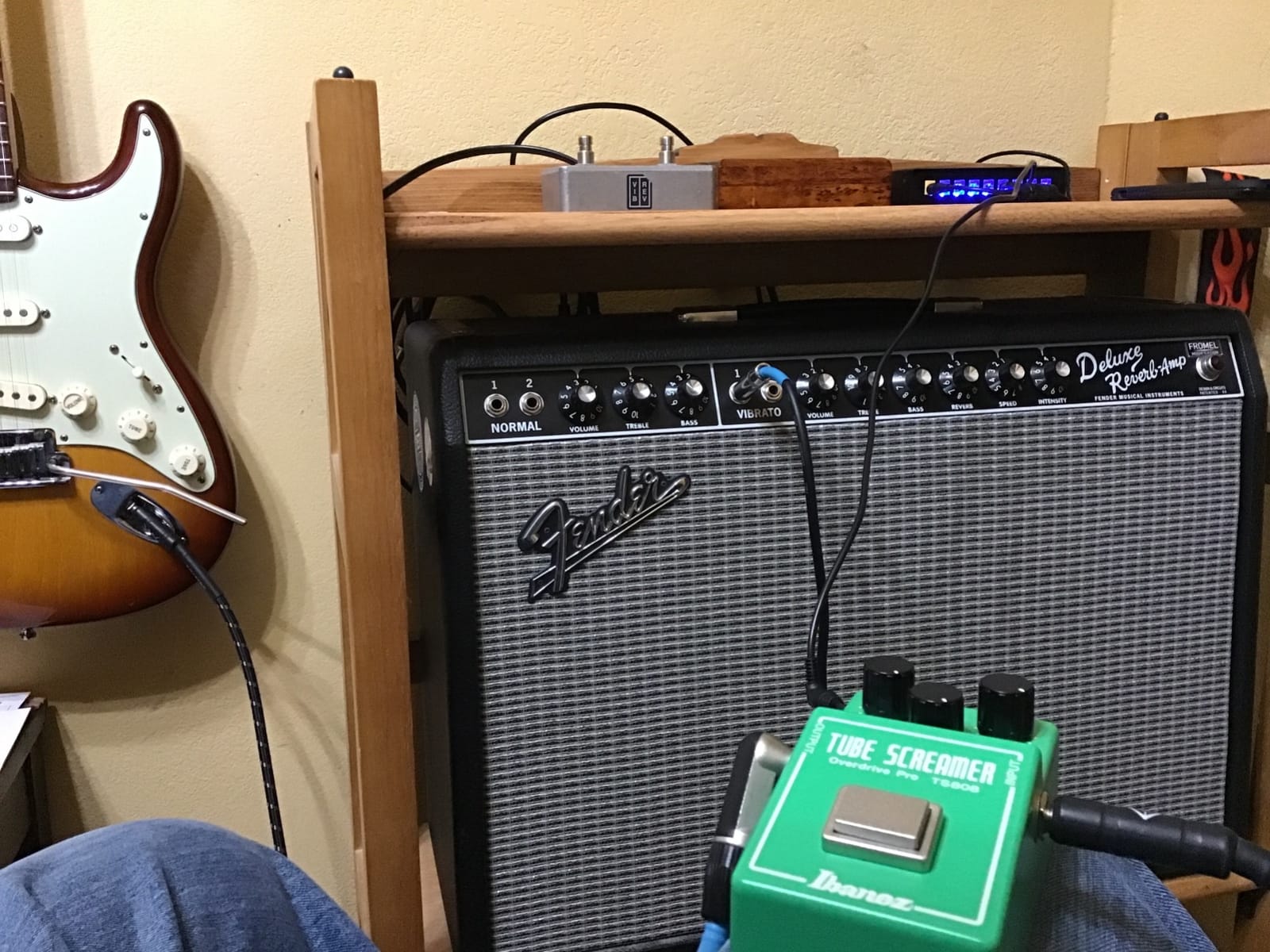
The TS808 is the pedal the whole mid-hump category is measured against. Where later Tube Screamers brighten and thin out as you push them, the 808 stays warm and compressed across its range, and that compression is precisely what a blues rhythm player wants: notes even out in level so single notes sit at the same volume as chords.
It is the one pedal in this list I would describe as having a fixed character. The overdrive, tone and level controls shape it, but the voicing is what you are buying. Reviews treat it as a reference blues overdrive, valuing authentic compression and the midrange lift, and at 4.6 stars from 643 ratings the satisfaction is consistent rather than polarised.
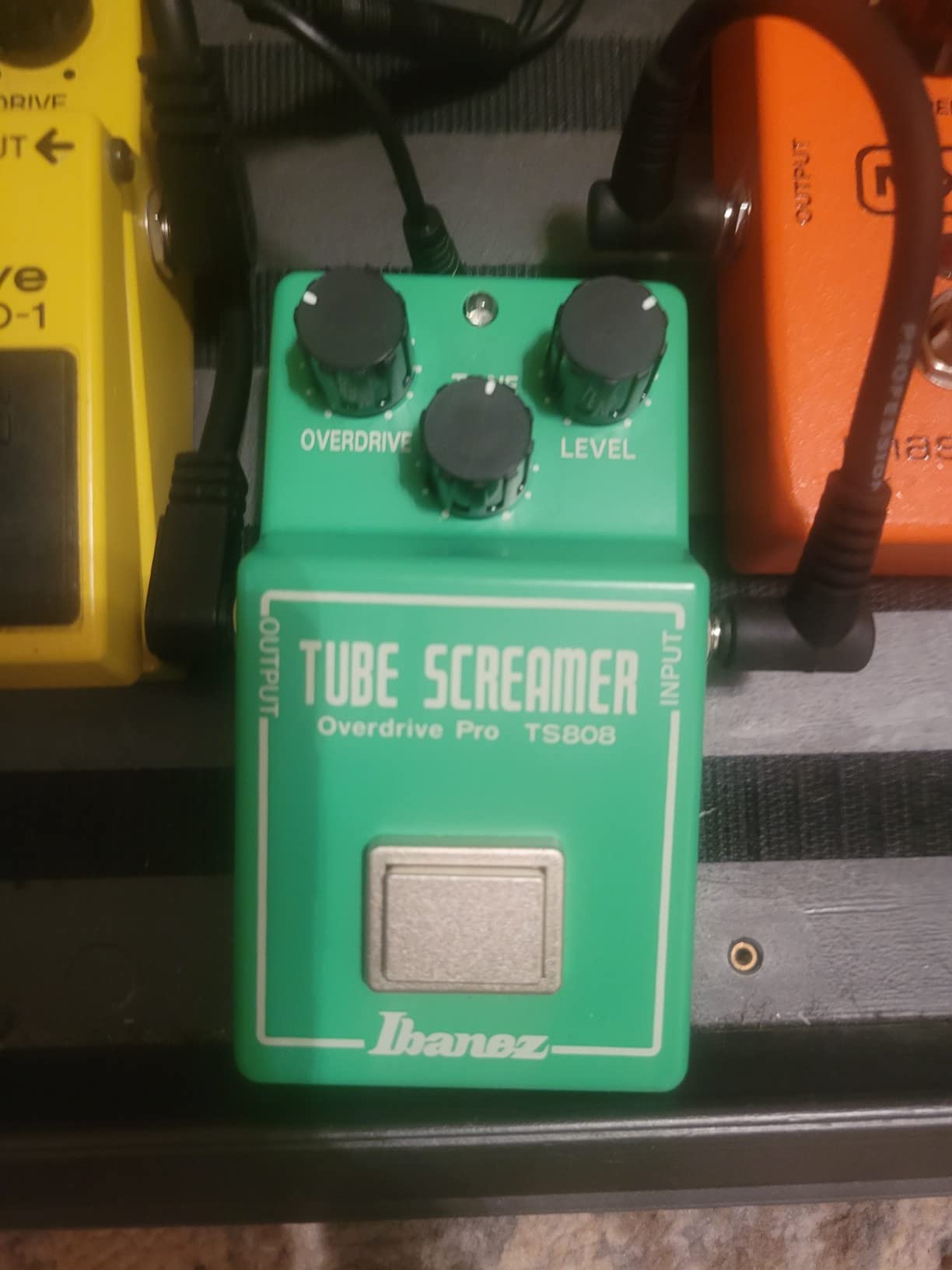
Physically it is the heaviest of the Ibanez units here at 1.4 pounds, sized 6 by 2 by 3 inches in a die cast housing with a rugged rubber stopper. That is over twice the weight of the Mini, which tells you it will stay put under a stomping foot. Current draw is 9 mA, so it is one of the friendliest pedals on a daisy chain.
The blue LED shows effect status and doubles as a battery condition check, which is a genuinely useful feature on a pedal that is otherwise identical to dozens of others. A power adapter and documentation are included in the box, and it also runs on a 9V battery.
Best for rhythm work on a Telecaster or Strat
Set the level near the back of its travel, the tone mid, and the overdrive at 9 o’clock. That gives you a mid push that lifts a clean amp into light breakup without squaring off the peaks. It is also the pedal to reach for when you are playing shuffle and want every note to sit at an even volume.
When to spend the extra money
The honest case against the TS808 is price. It costs more than most modern reissues and third-party clones of the same circuit, and you are partly paying for the original voicing and build rather than a functional difference. If your budget is tight, the Donner Blues Drive gives you a comparable mid-hump idea for a fraction of the outlay. Buy the 808 when you want one pedal you never have to think about.
6. Electro-Harmonix Soul Food – Transparent Grit and Clean Boost
Electro-Harmonix Soul Food Transparent Overdrive Pedal
Boosted power rails
True or buffered bypass
Includes 9.6DC-200 supply
Pros
- Preserves the amp's own voice
- Boosted power rails give real headroom
- Switchable true or buffered bypass
- Includes a power supply
Cons
- Very low gain range suits subtle blues breaks
- Less sustaining than a mid-hump pedal
Soul Food is the pedal I recommend to players who are afraid of colouring their amp. It adds low-level grit and nothing else, which sounds like a weakness on paper and in practice is the whole point. A Strat through a tube amp keeps its chime; a Tele keeps its snap; the pedal just moves the amp closer to its breaking-up point.
Boosted power rails are the technical headline here, and they matter: the circuit has enough voltage headroom to run as a genuine clean boost for solos, not just a weak overdrive. Reviews highlight that headroom alongside touch sensitivity, and at 4.6 stars from 627 ratings the consensus is that it behaves exactly as advertised.
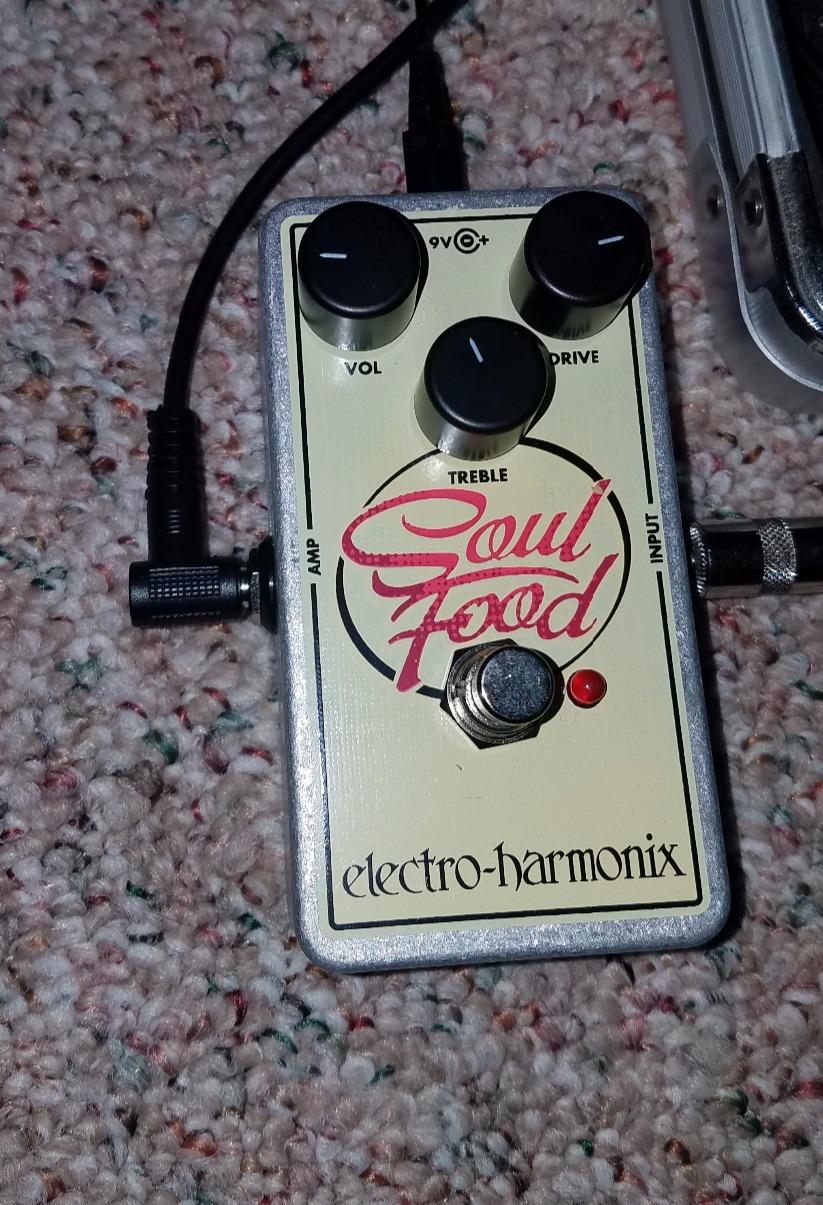
The bypass switching is the other feature that shows up repeatedly. A side toggle selects true bypass or buffered bypass, so you can place the pedal at the front of a chain of true-bypass pedals without loading the signal, or at the end of a long cable run where a buffer actually helps. It is 12 ounces, 4.5 by 2.75 by 2.1 inches, and draws 40 mA.
A 9.6DC-200 power supply is included, which removes one of the most common first-day problems. It is also corded electric rather than battery, so plan on powering it from a supply.
Best as a stacking partner
Transparent pedals are the ones that stack cleanly, and Soul Food is the most obviously transparent unit in this roundup. Put it first with a low setting as your boost, then let a Tube Screamer or Blues Driver behind it supply the mid hump. Because it adds so little of its own colour, the second pedal keeps its character instead of being buried.
What you give up
Gain range. This is a low-gain pedal and it stays one, so if you want sustained, harmonically rich lead tones you will need a second pedal behind it. For blues rhythm and for pushing an amp into a sweet spot, that is a feature. For a single-pedal solution covering every lead in a solo, it is not.
7. JHS Pedals Morning Glory V4 – Two Gain Stages in One Pedal
JHS Pedals Morning Glory V4 Overdrive Guitar Effects Pedal, Gold
Two switchable gain levels
Side-mounted bright cut
Full-frequency boost
Pros
- Extremely transparent and touch responsive
- Two-stage gain covers clean boost to crunch
- Bright cut tames harsh high frequencies
- High headroom for boost duty
Cons
- Premium pricing above most overdrives
- Single-knob layout limits tone shaping
The Morning Glory is described by JHS as one of the most transparent overdrives available, and in practice the two gain levels are what make it interesting for blues. A low setting behaves like a clean boost that adds mid-to-low grit and tube-like touch response; turning up the gain takes a crunchy tone into thicker sustain without the mid hump that would fight a Strat.
That combination is why it works as a soloing pedal as well as a rhythm pedal. At 4.7 stars across 524 ratings with 87% five-star scores, owners consistently point to touch response, the two-stage gain and boost utility, and the reviews note it boosts a crunchy tone into thicker sustain rather than replacing it.
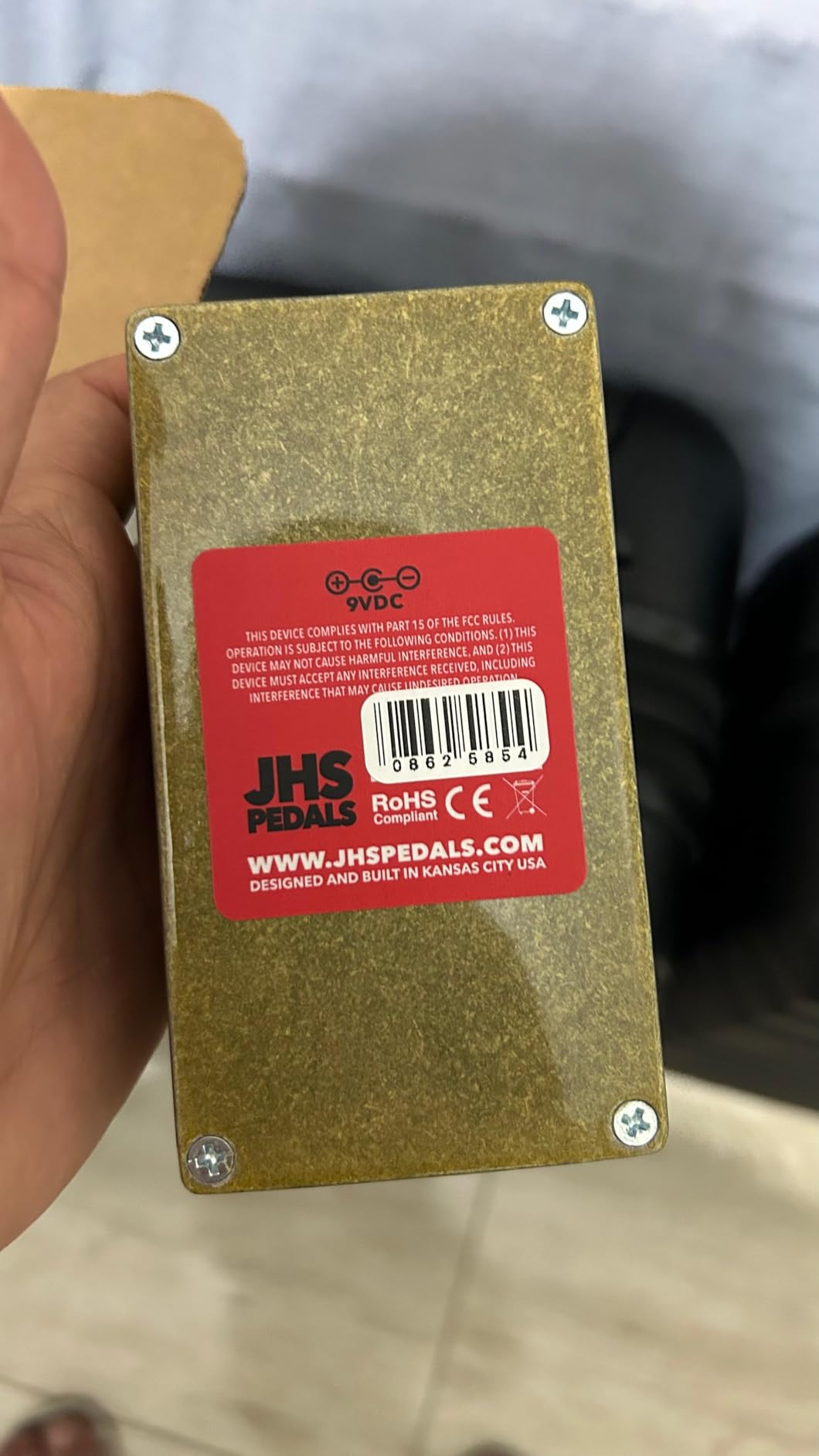
The control layout is deliberately minimal: gain and volume, plus a side-mounted bright cut switch that removes harsh high frequencies from a bright amp or a bright bridge pickup. Current draw is 100 mA, so plan a separate supply for it on a large board. Dimensions are 3 by 3 by 6 inches and the weight is 0.34 kg, which is a normal stomp pedal footprint.
You are paying for the voicing and the build rather than for an unusual control set, so know what you are buying. If you want a passive tone stack to shape the pedal itself, this is not it; if you want the amp’s own EQ to do the work, that is an advantage.
Best paired with a Telecaster for slide
Slide guitar wants compression and a clean note underneath the bend. Set the first gain stage off or barely engaged for the slide, then switch into the higher stage for sustained melodic lines. The bright cut switch is worth having on a Tele bridge pickup, which is naturally the hottest combination on that guitar.
Where it is not the answer
It sits at the premium end of this list, and the control layout is sparse. If you are on a tight budget or you specifically want a mid-hump circuit for a Strat, a Tube Screamer is the cheaper and more direct route. The Morning Glory earns its cost when you want transparency and switchable gain, not when you want one specific hump of midrange.
8. Ibanez TS9DX Turbo Tube Screamer – Extra Heft for a Pushed Amp
Ibanez TS9DX Turbo Tube Screamer Overdrive Pedal
Increased low end crunch
Hot switch adds gain range
1.3 pounds
Pros
- Adds noticeable low-end crunch to single-coil leads
- Turbo mode gives more gain for an already-driven amp
- Familiar Tube Screamer character with extra weight
Cons
- Hot mode too aggressive for clean-amp blues at low settings
- Sold without a power adapter
The TS9DX is a Tube Screamer built for the situation where your amp is already broken up and you need more sustain, not more midrange. The increased low end crunch is the defining trait, and it is what makes leads on a Strat or Tele sound thicker through an amp that has already been pushed.
The Hot switch is the second feature that matters. It adds another step of gain range beyond the standard TS9 behaviour, which is exactly what you want when the amp is at the edge of breakup rather than sitting clean. Players favour it for sustained blues leads, and at 4.7 stars from 336 ratings the response is consistent.
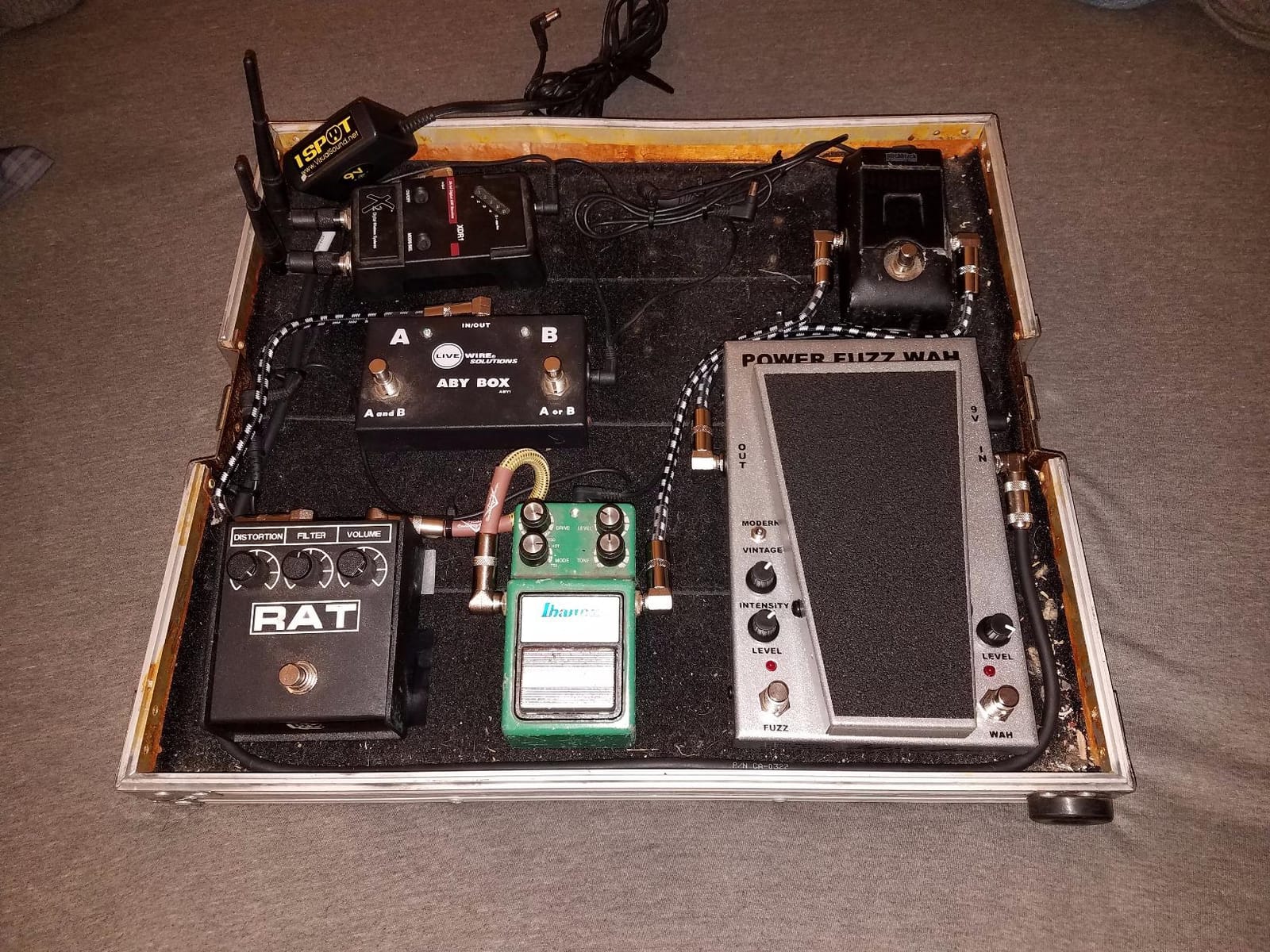
It is a solid state overdrive with bass and mid-range focused voicing, sized 2.91 by 2.09 by 4.88 inches and weighing 1.3 pounds. The listed current draw of 509 milliamps is the highest in this roundup by a wide margin, so do not put it at the end of a long daisy chain without checking your supply.
Only the main unit is included, with no power adapter in the box. It runs on a 9V battery, which is the sensible way to use it and the reason the current figure rarely bites in practice.
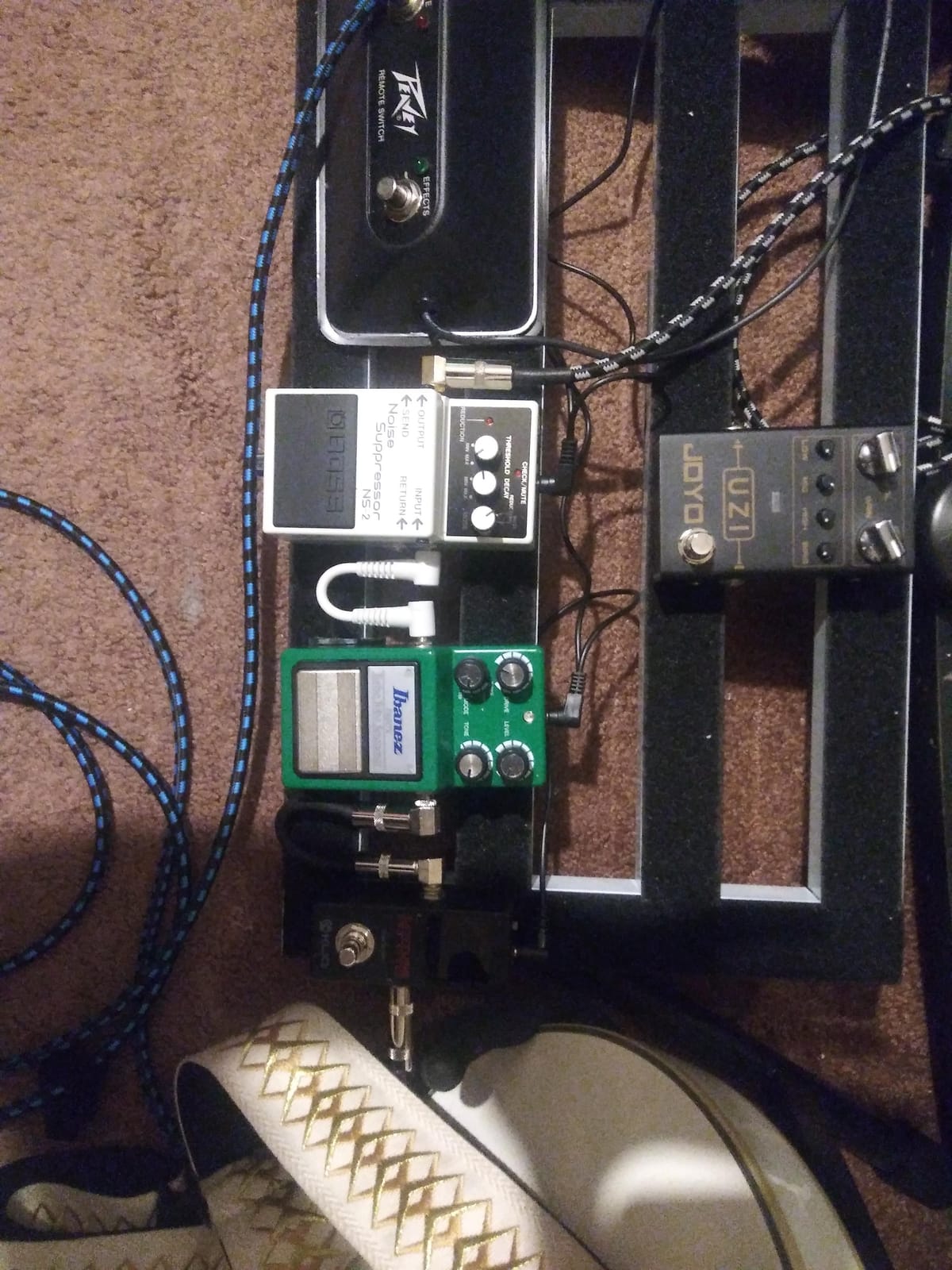
When a pushed amp is what you have
Set your amp so that it breaks up when you push the guitar volume all the way up, then engage the pedal at low gain. The added low-end crunch and sustain will carry a slide or a sustained lead over a band mix without the flubbiness you would get from adding a mid-hump pedal on top of the same amp.
Why it is the wrong pick for a clean amp
For a clean Fender-style amp at low volume, the Hot mode is too aggressive at the settings most blues players reach for first, and you will be chasing the sound rather than finding it. The TS808 or the standard Tube Screamer voicing gives you a gentler ramp. Save this one for a genuinely dirty amp.
9. BOSS OD-3 Overdrive – Sustain and Compression First
BOSS OD-3 | Compact Overdrive Pedal | Unique Overdrive Circuitry | Warm, Dynamic Tone with Amp-Like Feel | A Pedalboard Essential | Perfect for Classic Rock, Metal & More | Easy-To-Use Controls
Dual-stage overdrive circuit
Smooth compression
14 ounces
Pros
- Long sustain and smooth compression
- Open dynamic tones that are not muffled
- Responds well to a light touch
- Five-year Boss warranty
Cons
- Less mid-forward than dedicated blues drives
- More mixed owner feedback than the other picks
The OD-3 is built around a dual-stage overdrive circuit, and that staging is why it sustains longer and compresses more smoothly than the single-stage Boss pedals. Notes held for two or three seconds stay at full volume instead of fading, which is the single most useful property for a blues lead tone.
Boss describes the result as dynamic, non-muffled tones reminiscent of classic overdriven stack amps, and increased dynamics that yield a bigger sound than previous Boss overdrives. That matters on a clean amp: the pedal responds to how hard you pick rather than sitting at one level of crunch, and the tone stays open instead of closing in as the drive increases.
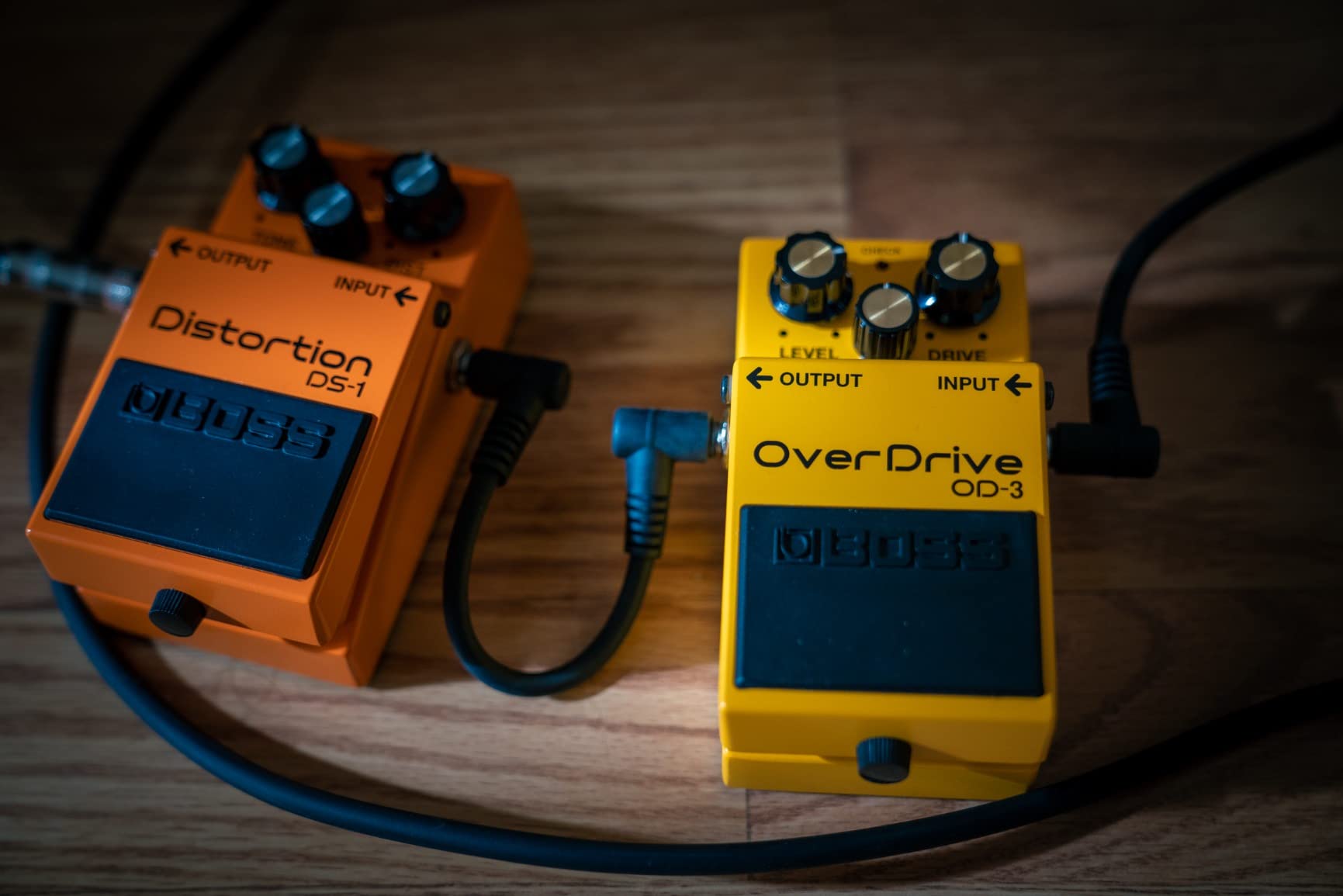
It is rated at 4.5 stars from 228 ratings, the smallest review pool here, so treat the consensus with slightly more caution than the 3000-plus on the BD-2 and SD-1. Even so, 81% of ratings are five stars, and the recurring theme in the reviews is smooth compression, sustain and an amp-like openness.
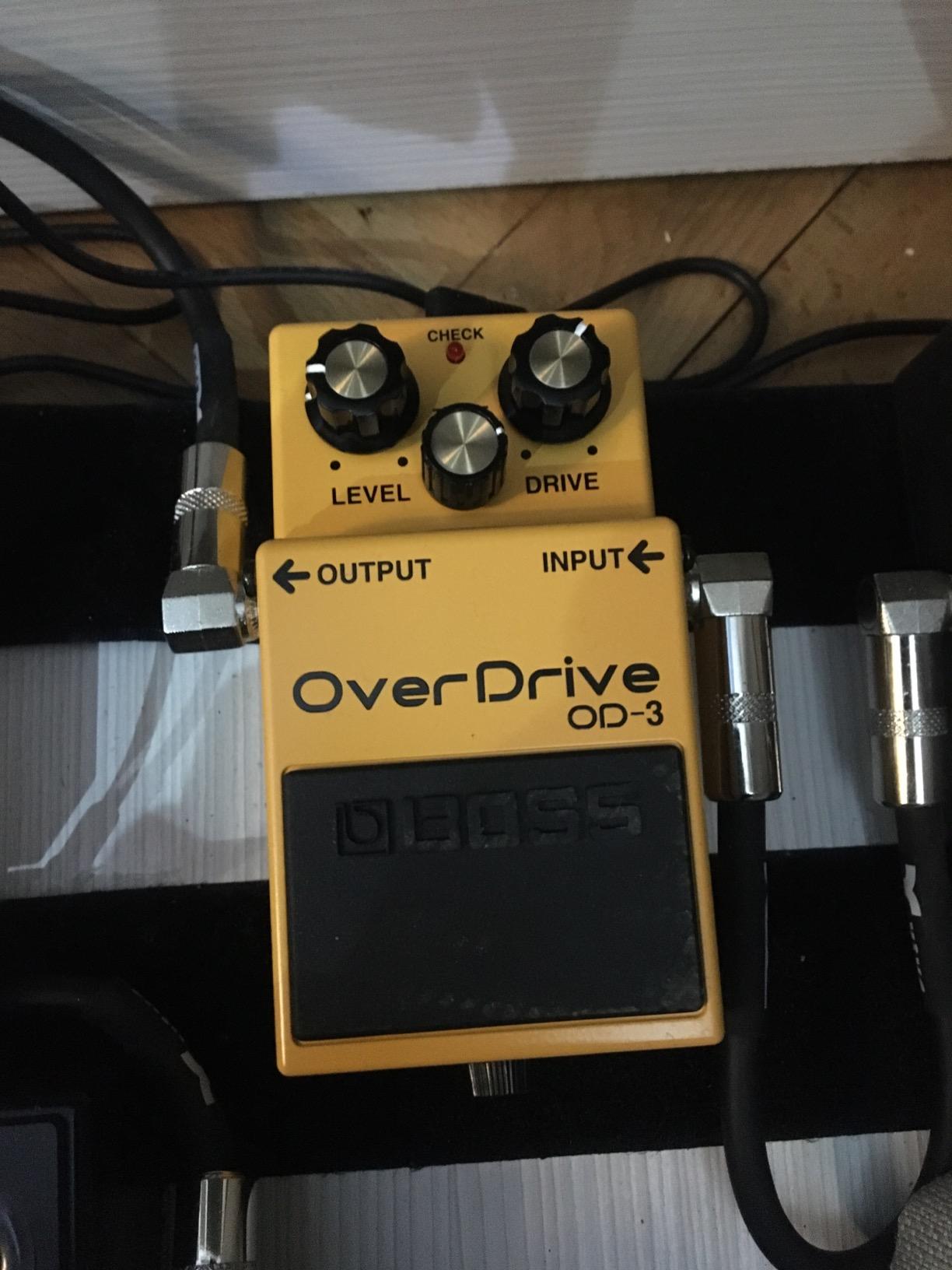
The box is 5.95 by 3.8 by 2.7 inches at 14 ounces, with level, tone and drive controls and a Boss five-year warranty. It draws 30 mA on 9V, so it will live happily on a shared supply. The same circuit is also voiced for bass, which is unusual for an overdrive in this price class.
Best for sustained leads on a humbucker guitar
Humbuckers produce more low-mid energy than single coils, and a mid-hump pedal on top of that is where mud starts. The OD-3 does not add a hump, so on a Les Paul-style guitar it gives you sustain and compression while leaving the low end intact. Set the level to bring the front of the amp to the edge and leave the guitar volume up.
The honest drawback
Players who want a dedicated blues character often find this pedal less mid-forward than the Blues Driver, and the owner feedback is more divided than for the other picks on this list. If your amp is already thick, the missing mid push can leave the tone sounding flat rather than driven. Check that you can hear the difference before you commit to it over the BD-2.
10. JHS Pedals Bonsai 9-Way Screamer – Nine Voicings, One Box
JHS Pedals Bonsai 9-Way Screamer Overdrive Guitar Effects Pedal, Green
Nine Screamer voicings
Component switching per mode
12.8 ounces
Pros
- Covers everything from TS808 to later Screamer tones
- Analog component switching not digital modeling
- Works as a standalone drive or a front-end push
- Limited lifetime warranty
Cons
- Highest price in this roundup
- Several modes sound similar until you adjust knobs
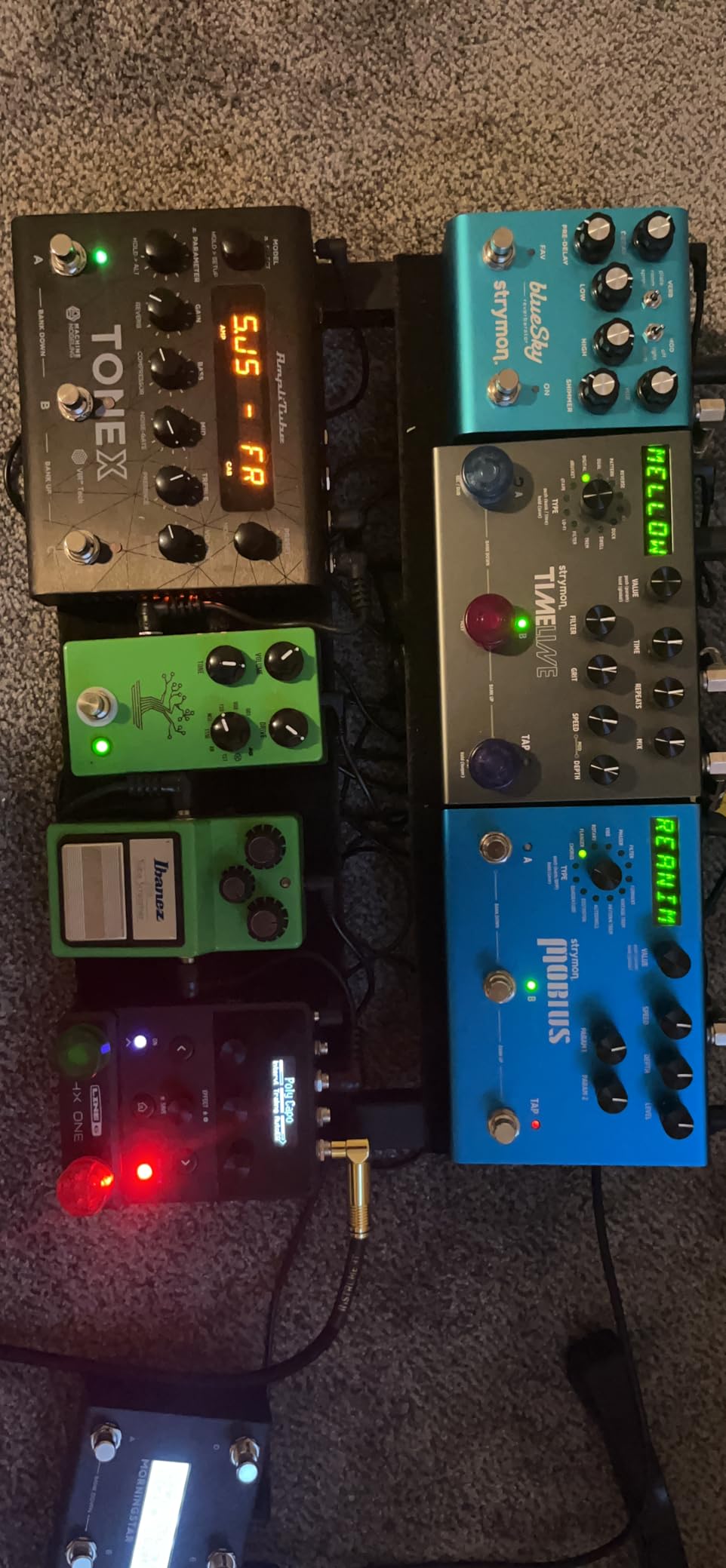
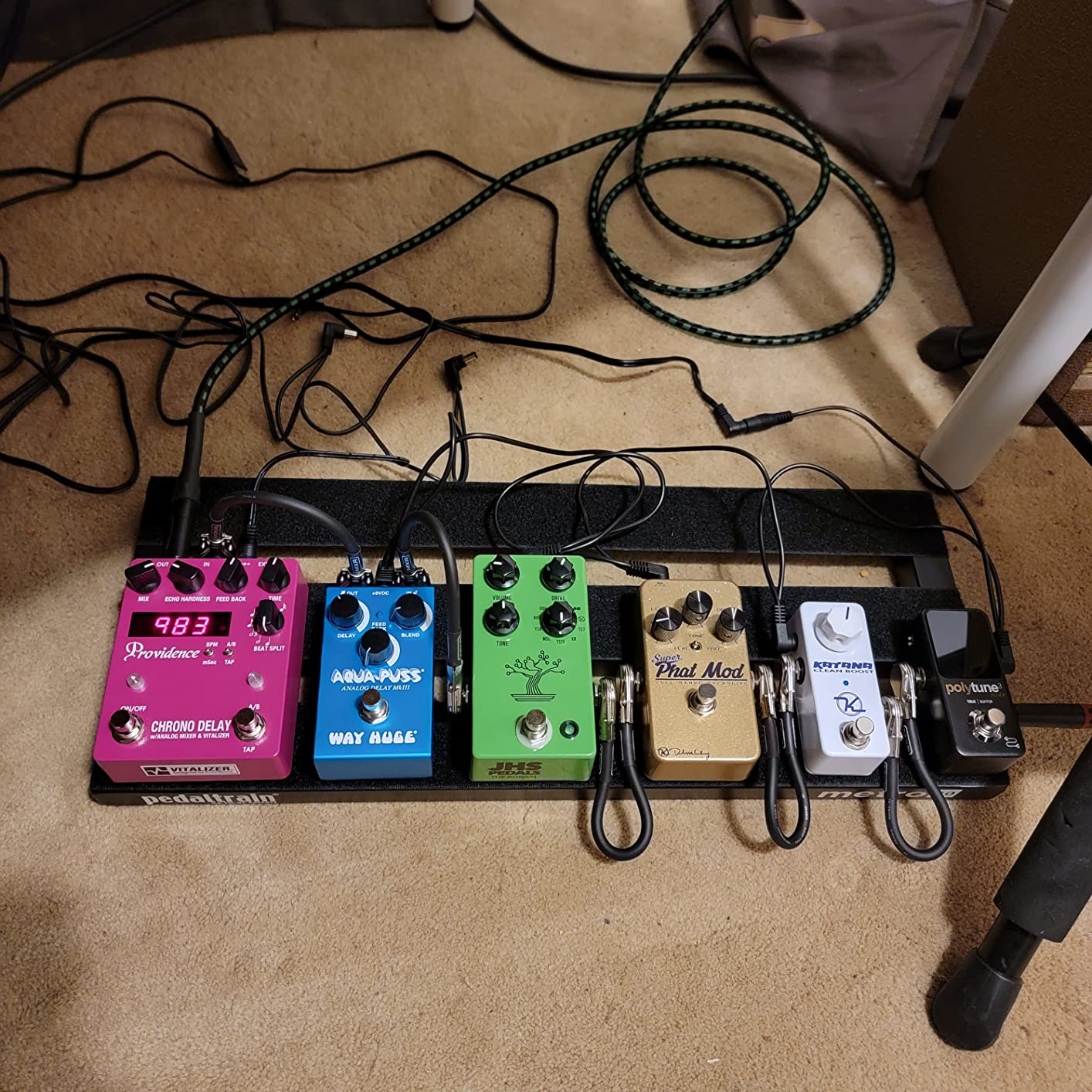
The Bonsai takes the Tube Screamer family and puts nine of them in one enclosure, selected by a rotary knob. This is not digital modelling: choosing a mode physically activates components specific to the emulated unit, so each voicing behaves like a real pedal on the bench rather than a processed approximation.
That is a real advantage for blues players who are still deciding where they sit on the Screamer spectrum. The modes include standard versions alongside rare and vintage ones, covering everything from a TS808 character to later, brighter Screamers, and reviews describe it as a desert island pedal that captures the character of real Screamer units.
At 4.5 stars from 339 ratings, it sits mid-list, with 79% five-star scores. The recurring advice is that every mode needs its own knob settings: presets that sound similar out of the box separate once you set level and tone per mode. Owners also note the top end is slightly less silky than vintage original components.
It measures 3 by 3 by 6 inches at 12.8 ounces, a standard stomp footprint, and it carries a limited lifetime warranty. The enclosure is 3 Series JHS build, so expect a robust metal box rather than the thin shells used on budget pedals.
Best used as a front-end push
Set a higher-gain Screamer mode and use it to push a tube amp that is already on the edge. The Screamer topology is good at that job because the mid hump interacts well with an amp that has its own gain structure. It also works standalone into a clean amp if you want one pedal to cover several amp voices.
When one pedal is the wrong answer
This is the most expensive pedal in the roundup, and paying premium prices for presets that need adjusting is only sensible if the alternative is buying two or three separate pedals. If you have the budget for one excellent overdrive and no interest in dialling in modes, a single-voicing pedal like the TS808 is a better use of the money.
11. Donner Dumbal Drive – Transparent Crunch with Real EQ Control
Donner Dumbal Drive Overdrive Pedal for Electric Guitar – Dumble Style With 2 Band EQ Boost Effect, Pure Analog True Bypass
Dumble-style voicing
GAIN, VOL, BASS, TREBLE
Three clipping modes
Pros
- Transparent low-gain drive that also works as a clean boost
- Additive Bass and Treble controls are unusual at this price
- Three clipping modes with different compression characters
- True bypass with no noise
Cons
- Gain must be turned high to be obvious on solid state
- EQ and volume interact and can cost you output
- Power supply not included
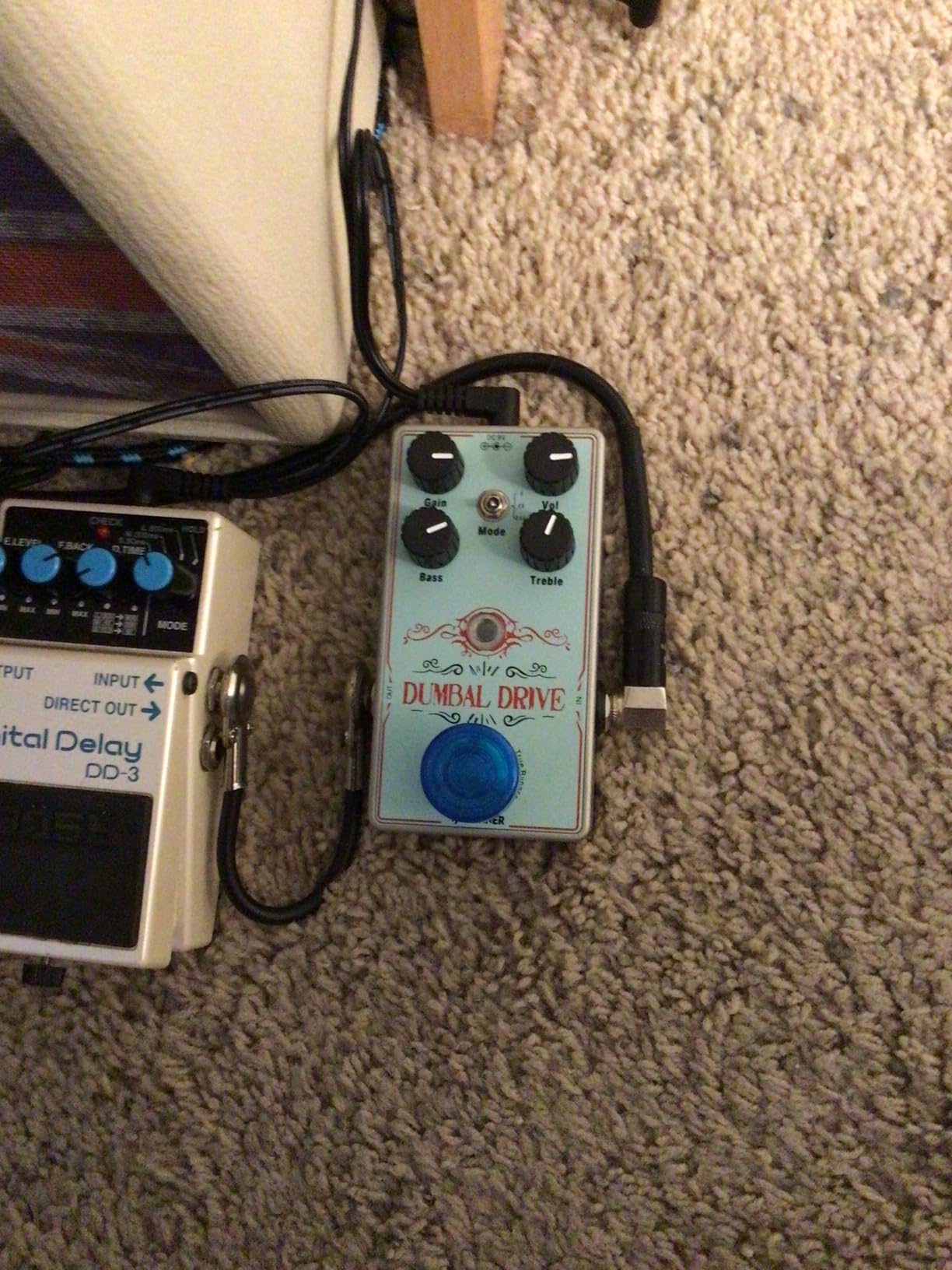
The Dumbal Drive is modelled on the Dumble ODS amps, which is a specific and characterful voicing: a low-gain overdrive that stays fairly transparent while adding a gritty edge. On a tube amp it sings, and on a humbucker guitar it adds bite without the mid hump that would turn the low end to mud.
What separates it from other budget pedals is the control set. Instead of a single tone knob, GAIN, VOL, BASS and TREBLE give you a two-band EQ, and both bands are additive, meaning you can boost presence or thicken the low end rather than only cutting them. Very few pedals in this price range offer that.
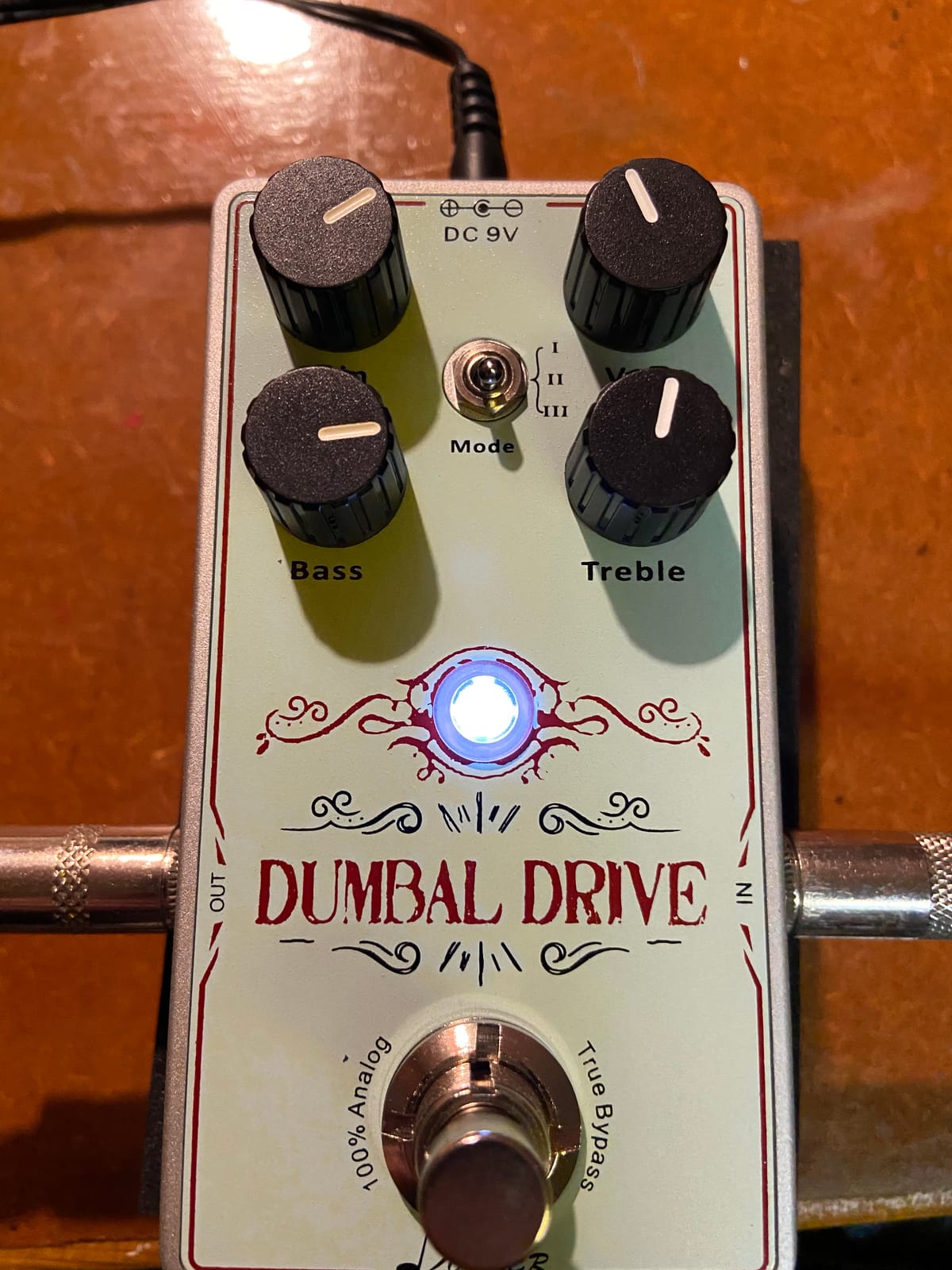
There are also three practical clipping modes ranging from smooth to sparkly and brilliant, which changes the compression character rather than just the volume. True bypass switching means the signal path is clean when the pedal is off, with no popping or buzzing. The body is 4.5 by 2.1 by 2.6 inches at 260 g.
It is also the lowest-rated pedal in this roundup at 4.3 stars from 412 ratings, with 63% five-star scores, so manage expectations. The 4.3 reflects real complaints rather than defects: reviewers like the transparency, the additive EQ and the value, but several note the modest gain range and the way the EQ interacts with gain and volume.
Best for humbucker players
Independent Bass and Treble controls solve a problem mid-hump pedals create on humbuckers. Turn the bass down, lift the treble, and you can add edge to a thick low-mid-heavy guitar without the mud. The three clipping modes also let you pick a smoother response for rhythm and a brighter one for leads.
Setting it up properly
Because the EQ is additive and interacts with gain and volume, set the gain and volume first, then make small EQ moves. On solid-state amps the gain needs to go further than you expect before the effect becomes obvious, so do not judge the pedal on a clean practice amp alone. The 9V DC supply is not included, so budget for that as well.
12. Behringer VT999 Tube Monster – Real 12AX7 Preamp Character
Behringer VINTAGE TUBE MONSTER VT999 Classic Vacuum Tube Overdrive Instrument Effects Pedal
Hand-selected 12AX7 valve
Switchable noise gate
Gain, 3-band EQ, Master
Pros
- Genuine 12AX7 preamp character
- Very wide gain range from warm breakup upward
- Built-in switchable noise gate
- Three-band EQ plus master control
Cons
- At 3 pounds it is the heaviest pedal here by far
- Tubes need warm-up time and periodic replacement
The VT999 is the only true tube pedal in this roundup, built around a hand-selected 12AX7. That valve does the clipping rather than diodes or op-amps, which is why the character sits closer to a real preamp stage and why the response to picking attack is so pronounced.
Where other pedals here cover a narrow slice of gain, this one sweeps from warm blues overdrive to heavier distortion. That breadth is useful if your amp is quiet and clean and you need to go from rhythm grit to a lead tone at a rehearsal without changing pedals. The integrated switchable noise gate with adjustable threshold keeps the higher-gain settings usable.
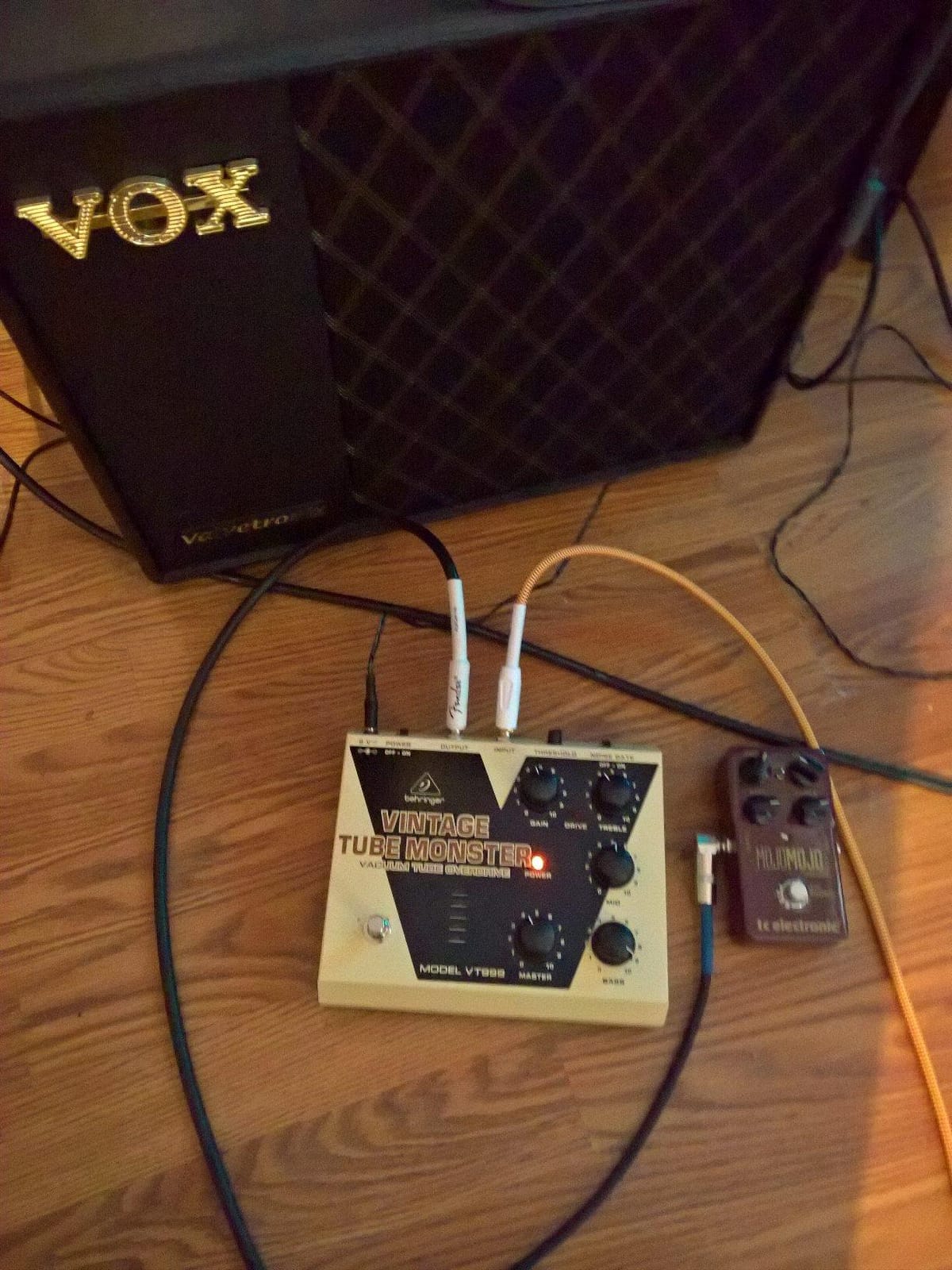
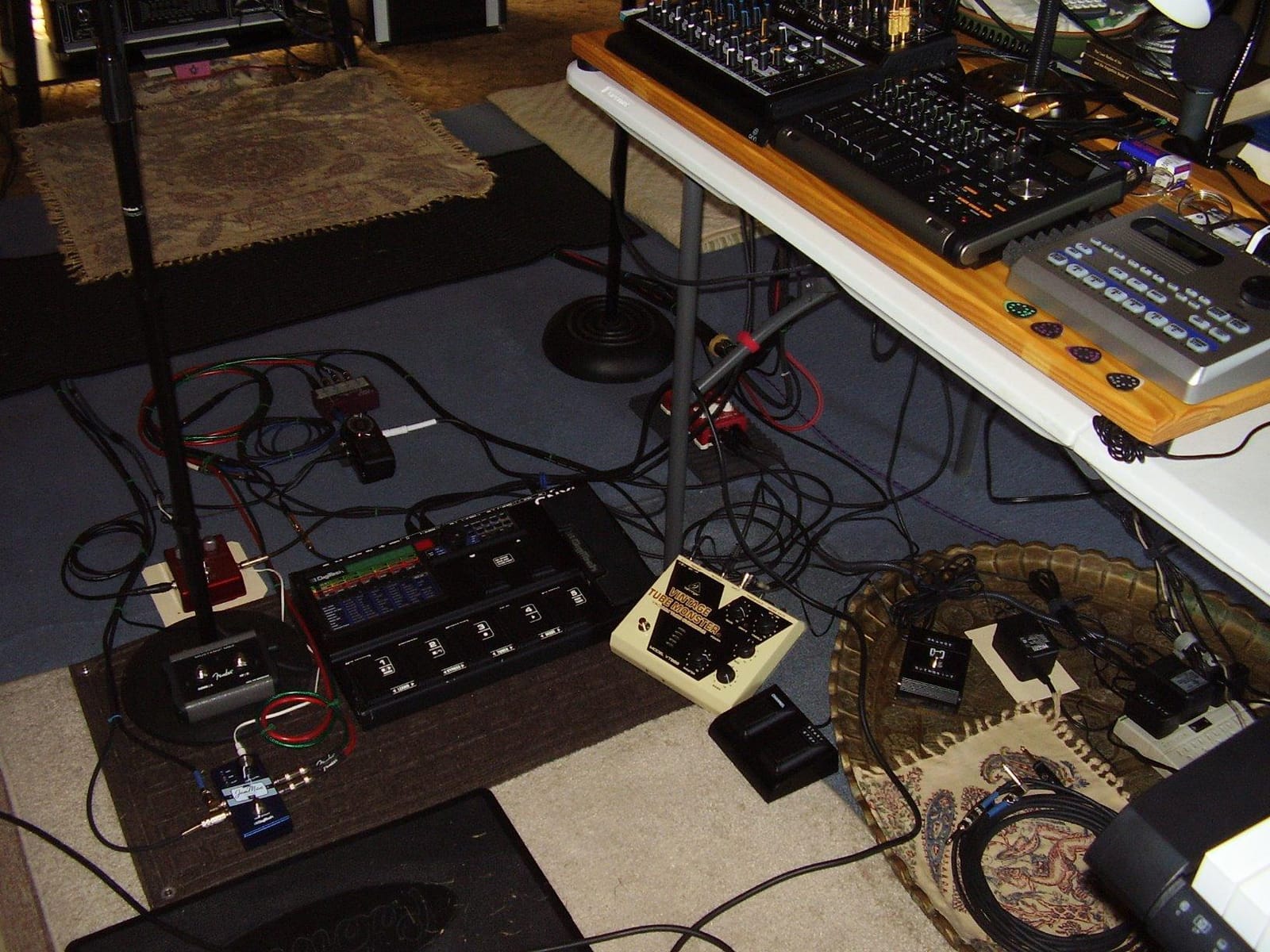
Gear-wise it is generous for the class: dedicated gain, three-band EQ and master controls, plus a blue status LED that shows effect on and off and doubles as a battery check. It is battery powered and draws 250 mA, which is the second-highest figure in this list and worth checking against your power supply.
At 4.5 stars from 434 ratings, with 73% five-star scores, it is rated slightly lower than the solid-state options, and the reviews explain why: buyers value the valve character, the gain range and the noise gate, but the bulk and the tube maintenance come up constantly as drawbacks.
Best for a quiet amp and a big board
If you practise on a small amp that cannot get loud enough to break up, a valve pedal gives you the compression of a driven preamp stage without the volume. It also handles the case where you want more gain than any solid-state pedal here provides while still stopping well short of distortion.
Is the size and maintenance worth it
At 3 pounds and 8.66 by 6.77 by 2.4 inches, it is the heaviest and by far the largest pedal in this list, and it will dominate a board. Tubes also need warm-up time before the tone settles and periodic replacement. If your board is small or you travel with a lightweight setup, a solid-state option is the more practical choice.
How to Choose a Blues Overdrive Pedal
Start with your amp, not the pedal. Play at the volume you use in practice and note whether the amp stays clean or already breaks up. This single question eliminates half the wrong purchases. If the amp is clean, you want a pedal that pushes it: a mid-hump, a transparent boost or an amp-in-a-box. If the amp is already dirty, you want a transparent or low-gain pedal that adds sustain without stacking a second mid hump on top of the first.
Then match the circuit to the guitar. Single-coil guitars, so Stratocaster and Telecaster, are the natural home for mid-hump circuits because the missing low-mid energy is exactly what the hump supplies. Humbucker guitars produce plenty of low mids already, so a hump risks mud and a low-gain or transparent pedal is usually better. The guitar volume knob is the final control: rolling back to 7 or 8 tames a mid-hump pedal on a humbucker far more effectively than any setting on the pedal itself.
Understand the four families. The mid-hump design, which the Tube Screamer defined, lifts the 500 Hz to 2 kHz range to give a single-coil guitar presence in a band mix. The amp-in-a-box design, which the Blues Driver represents, tries to imitate a driven amplifier and gives touch-sensitive breakup that cleans up on volume. The transparent design adds low-level grit while leaving the amp’s voice intact, making it the best stacking partner. The low-gain Bluesbreaker-style design delivers an open, woody crunch without a mid hump. Knowing which family you are buying prevents most buyer’s regret.
The naming trap: a Blues Driver is not a Bluesbreaker. This is the most common misunderstanding in the category. A Bluesbreaker-style pedal refers to the sound of the Marshall Bluesbreaker amplifier, which is an open, low-gain overdrive with no mid hump. The Boss pedal named Blues Driver is an amp-in-a-box design that simulates a tube amp and has a mild mid emphasis. Players wanting Bluesbreaker character should look at a low-gain pedal such as the Donner Dumbal Drive; players wanting the simulated-amp response should look at the BD-2. Forum threads mix these two up constantly, and buying by name alone is how people end up with the wrong circuit.
Map the sub-style to the circuit. Texas blues slide and clean single-note lines want low compression and a singing sustain, which points to a transparent pedal with a second gain stage, such as the JHS Pedals Morning Glory. Chicago shuffle and shuffle-chords want note-evenness and mid push, which is mid-hump territory, so a Tube Screamer voicing. British blues, with its thicker cranked-amp character, suits a low-gain Bluesbreaker-style tone. Blues rock wants an open, dynamic crunch that sits on top of a rhythm section, which is the Blues Driver’s home ground.
Pair the pedal with the amp you actually own. With a Fender-style blackface or silverface amp such as a Deluxe Reverb or a Twin Reverb at low volume, a mid-hump or amp-in-a-box pedal pushes it over the edge cleanly. With a Blues Junior, players on r/GuitarAmps frequently recommend a clean boost to push the amp at lower volumes, and a transparent pedal with real headroom like the Electro-Harmonix Soul Food does that job without adding an unwanted hump. With a Marshall JCM800-style amp already on high gain, use a transparent or low-gain pedal for lead boost, because another mid-hump just produces mud. With a solid-state practice amp, overdrive becomes essential rather than optional, since the pedal has to supply all the sustain and clipping the amp will not. With a modeling amp, check whether it has a dedicated drive input, because a pedal on the normal input can fight the amp’s own gain modelling.
Stacking two overdrives: put the lower-gain pedal first. The rule is not about brand, it is about order of gain. A low-gain or transparent pedal goes first because it is designed to pass signal and add a small amount of compression. The mid-hump or higher-gain pedal goes second, where it sees a hotter signal and produces its own character. A concrete recipe we recommend: a transparent boost first at a low setting, then the Ibanez TS808 behind it with the level backed off. Forum consensus agrees with the logic, and one common suggestion is a Blues Driver doing light gain going into a higher-gain pedal behind it. The reverse order buries the second pedal and produces the muddy stacks players complain about.
Overdrive and fuzz can be stacked, with care. Fuzz sits after the overdrive, never before, because a fuzz pedal needs a relatively clean input to generate its own unstable character. Turn the fuzz volume down and the overdrive level up so the fuzz is working on a compressed rather than a raw signal, and put a noise gate in front of the fuzz if your board has one. The Behringer VT999 already includes a switchable noise gate, which is a useful example of why.
Overdrive goes before the amp in the signal chain. The order on the board runs from the guitar outward: tuner, then overdrive, then modulation, then delay, then reverb. Overdrive belongs early because it shapes the signal before time-based effects run. When stacking, keep the lower-gain overdrive closest to the guitar.
Watch the noise floor and the power supply. Overdrive circuits amplify noise along with signal, so a high-gain setting with a noisy power supply is the usual culprit. The pedals here draw between 8 mA and 509 mA, and that spread matters: a single daisy chain that runs a Tube Screamer Mini, a TS9DX and a Tube Monster together will not have enough current for all three. A high-current isolated supply solves most of the hum people blame on the pedal itself.
Dialing in a blues overdrive tone takes four moves. First, set the amp so that turning the guitar volume to 10 stays clean or barely breaks up. Second, set the pedal drive low and the level to match your amp’s volume. Third, set the tone control to the middle and move it in small steps while playing, because a tone knob set by ear in a quiet room rarely survives a band rehearsal. Fourth, set the guitar volume to 7 and use the pedal level to sit in the mix, so the pedal cleans up under your hand the way an amp would.
Glossary of the terms you will meet. Mid-hump means a boost to the middle of the frequency range, usually 500 Hz to 2 kHz. Transparent means the pedal adds drive without significantly altering the amp’s own tone. Amp-in-a-box means a pedal designed to imitate a driven amplifier. True bypass means a hardwired relay path that leaves the signal completely untouched when the pedal is off. Buffered bypass means the signal passes through an internal buffer, which helps with long cable runs and multiple true-bypass pedals. Soft clipping means the waveform is compressed gradually, which is warm and amp-like. Hard clipping means it is squared off sharply, which is louder and more aggressive. Asymmetric clipping means the positive and negative halves of the waveform clip differently, producing more even-order harmonics and a more musical edge. Touch response means the tone changes with picking attack. Stacking means running two or more pedals in series.
Still deciding what else your board needs? Our broader guitar pedal roundup covers tuner, compressor and delay options that pair with any of these overdrives.
Frequently Asked Questions
What is the best overdrive pedal for blues music?
For most players the Boss BD-2 Blues Driver is the best overdrive pedal for blues. It uses tube amp simulation and responds to picking attack and the guitar volume knob, so it stays chimey on light playing and compresses when you dig in. If your amp already breaks up at practice volume, pair it with a transparent pedal like the Electro-Harmonix Soul Food instead.
Which pedal is considered the best bluesbreaker-style pedal?
A Bluesbreaker-style pedal reproduces the open, low-gain crunch of the Marshall Bluesbreaker amplifier, with no mid hump. In this roundup the Donner Dumbal Drive is the closest fit, offering a transparent low-gain Dumble-style voicing with independent Bass and Treble controls. The key difference from a Tube Screamer is that a Bluesbreaker-style circuit does not push the midrange.
What kind of overdrive is a blues driver?
A blues driver is an amp-in-a-box design. The Boss BD-2 uses tube amp simulation to imitate the breakup of a driven amplifier, which is why it feels touch-sensitive and cleans up when you roll the guitar volume back. It is not a Bluesbreaker circuit, despite the similar name. That naming trap is the most common misunderstanding in the pedal world.
Which is better, Tube Screamer or Blues Driver?
The Tube Screamer wins if you play single-coil guitars and want midrange push to cut through a band. The Blues Driver wins if you want a broader, more touch-sensitive sound that adds sustain without a mid hump, which makes it safer on humbucker guitars and already-driven amps. Players often run one behind the other, with the lower-gain pedal first.
In what order should I stack overdrive pedals?
Put the lower-gain or more transparent pedal first, closest to the guitar, and the higher-gain or mid-hump pedal second. The first pedal compresses gently and passes signal; the second sees a hotter input and adds its own character. A reliable recipe is a transparent boost first at a low setting, then a Tube Screamer behind it with the level backed off.
Can you stack overdrive and fuzz?
Yes, but the fuzz pedal goes after the overdrive, never before, because fuzz needs a relatively clean input to generate its unstable character. Turn the fuzz volume down and the overdrive level up so the fuzz works on a compressed signal. If your board is noisy, a noise gate in front of the fuzz helps more than lowering the fuzz volume.
Do I need an overdrive pedal if my amp is already overdriven?
Only if you want more sustain or a lead boost, and in that case a transparent pedal is the right choice. Adding a mid-hump pedal on top of an already-driven amp stacks two mid boosts and produces mud rather than sustain. Set the guitar volume to 7 or 8 to get headroom from the amp itself before you reach for another pedal.
Which overdrive pedal works best for humbucker guitars?
Low-gain and transparent circuits work best, because humbuckers already produce plenty of low-mid energy that a mid hump would turn to mud. The Donner Dumbal Drive and the Electro-Harmonix Soul Food both suit humbucker guitars, and the BOSS OD-3 works well when sustain matters most. Rolling the guitar volume down to 7 or 8 is the fastest fix for any pedal on a humbucker guitar.
How do I make my guitar sound more like blues?
Play with your picking hand harder and softer rather than only turning knobs. An overdrive that responds to touch will sound like blues at low gain and like lead at high gain, which is the dynamic range blues tone depends on. Set your amp so it stays clean with the guitar volume fully up, use the pedal to add mid push or touch response, and back the guitar volume off for lead tones.
What 5 pedals should every guitarist have?
For most players the five worth owning first are a tuner, a compressor for clean rhythm, one overdrive, a delay and a reverb. The overdrive slot is best filled by something that matches your amp: a mid-hump pedal such as a Tube Screamer for single coils, or a transparent pedal such as the Soul Food for humbuckers. Buy the effects before upgrading an overdrive you already enjoy.
Final Verdict
After working through all 12, the best overdrive pedals for blues split cleanly by circuit rather than by budget. The Boss BD-2 Blues Driver takes the top spot for touch response, sustain and how rarely it disappoints across guitar and amp combinations. The BOSS SD-1 Super Overdrive is the best value and the most reliable stacking partner, and the Donner Blues Drive is the cheapest sensible place to start.
Match the family to your rig rather than the badge. Mid-hump for single coils pushing a clean amp, transparent for humbuckers or an already-dirty amp, amp-in-a-box for touch-sensitive all-round tone, and low-gain Bluesbreaker-style for an open woody crunch. Pick one, dial it in at your practice volume, and you have covered the core of blues tone for years.