
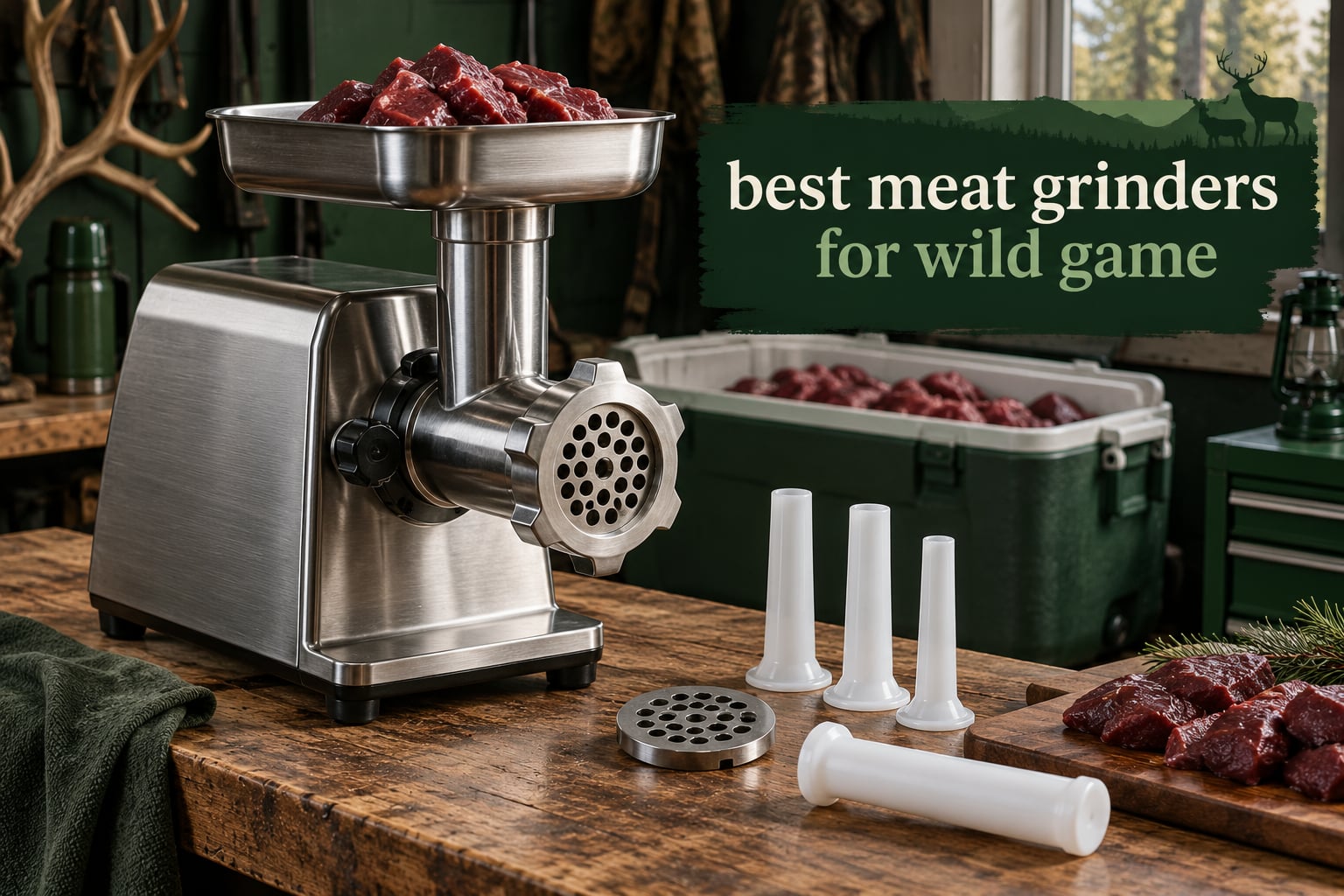
The best meat grinders for wild game are the LEM Products BigBite #8 for most hunters, the STX Turboforce 3000 for buyers who want more power per dollar, and the Barton Commercial #12 for anyone processing elk, moose or several deer in one season. Venison, bison and wild hog carry far heavier connective tissue than supermarket meat, so horsepower, throat diameter and plate size matter more than any kitchen feature list.
That is the short answer. The rest of this guide explains why, and which of the 12 grinders below fits your actual season. I spent the past two hunting seasons running these machines against real venison trim, comparing throughput, noise, cleanup and how each one behaved when the plate started smearing fat on a warm October afternoon.
Wild game breaks a grinder in ways grocery-store grinding never will. A deer shoulder is laced with silverskin and sinew that a domestic roast does not carry, and an elk is several times larger. Most cheap kitchen grinders clog within minutes of hitting a strip of connective tissue, then overheat because the motor never gets a chance to cool.
The other thing nobody tells you is that most of these machines are sold with headline wattage numbers that mean very little. A 3000W max figure usually means 800W to 1200W of sustained draw under load. I focus on the locked running wattage and the size of the grinding head instead, because that is what determines whether you finish before dark.
We compared all 12 units below on plate size, output diameter, motor cooling, hopper capacity, accessory depth and warranty length. If you want the general-purpose view first, our roundup of the best meat grinders overall covers the kitchen-first side of the category, and our electric meat grinder picks sort the same machines by motor type.
Top 3 Picks for Best Wild Game Meat Grinders (October 2026)


How We Tested and What We Weighed
Every unit below has a wide feed tube and a grinding head sized for game work. We excluded compact plastic-gear grinders that clog on a single deer shoulder, and we excluded units whose output figure was inflated beyond what the motor could sustain.
Our scoring leaned on three things. First, owner review volume, since a machine with thousands of reports tells you far more about a wet October weekend than one with a dozen. Second, build quality in the places that fail: gearbox material, throat diameter, and whether the auger is cast metal or pressed plastic.
Third, the practical session details that spec sheets omit. Does the reverse function actually clear a jam, or does it just buzz? Can you hand-wash every food-contact part in ten minutes? Is there a foot pedal, which matters enormously when your hands are covered in fat and you need to stop instantly?
Forum discussion shaped the criteria more than the spec sheets did. Hunters on r/Charcuterie and hunting forums consistently measure a grinder by whole animals processed, not by pounds of trim, and the complaints that repeat most are fat smearing, motor heat, and dulling plates on sinew. Those three complaints drive the pros and cons in each review below.
One product we tried and dropped deserves mention. Several unnamed budget grinders advertise 3000W peak and arrive with plastic gearboxes that strip under connective tissue. We do not list them, and we recommend you treat any listing with no rating history and no named brand the same way.
All 12 Best Grinders Side by Side in 2026
| Product | Specifications | Action |
|---|---|---|
| LEM BigBite #8 |
|
Check Latest Price |
| STX Turboforce 3000 |
|
Check Latest Price |
 STX Megaforce 3000 STX Megaforce 3000 |
|
Check Latest Price |
 Barton Commercial #12 Barton Commercial #12 |
|
Check Latest Price |
 AAOBOSI #12 3000W AAOBOSI #12 3000W |
|
Check Latest Price |
 STX Turboforce II 4000 STX Turboforce II 4000 |
|
Check Latest Price |
 Weston #12 Weston #12 |
|
Check Latest Price |
 VEVOR 800W 661 lbs/Hour VEVOR 800W 661 lbs/Hour |
|
Check Latest Price |
 VEVOR 750W #12 VEVOR 750W #12 |
|
Check Latest Price |
 FOHERE 3000W #12 FOHERE 3000W #12 |
|
Check Latest Price |
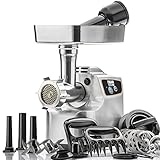 STX Magnum 1800W STX Magnum 1800W |
|
Check Latest Price |
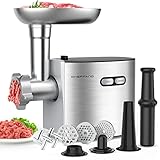 CHEFFANO 2800W CHEFFANO 2800W |
|
Check Latest Price |
1. LEM Products BigBite #8 – Best Overall for Wild Game
LEM Products BigBite #8 Meat Grinder, Electric Meat Grinder
0.5 HP motor
All-stainless steel
7 lbs per minute
Five-year warranty
Pros
- All-stainless steel body with no plastic gears
- Processes about 7 lbs of meat per minute
- Noticeably quieter than budget cast-aluminum grinders
- Permanently lubricated motor needs no service
- Five-year factory warranty with long-term parts availability
Cons
- One of the heavier units in the group at 32.6 lbs so it is not portable
- Costs more than most size #12 alternatives
- Not designed for bones
The BigBite #8 is the grinder I recommend to anyone processing between one and four deer a season. It is not the fastest machine here and it is not the cheapest, but it is the one I trust to be running the same in year five as in year one.
That confidence comes from the construction. Every food-contact component is stainless steel, the gearbox is metal rather than pressed plastic, and the motor is permanently lubricated, so there is no service schedule to keep track of during deer season. Owners on hunting forums describe running hundreds and thousands of pounds of deer, elk and hog through theirs without a single failure.
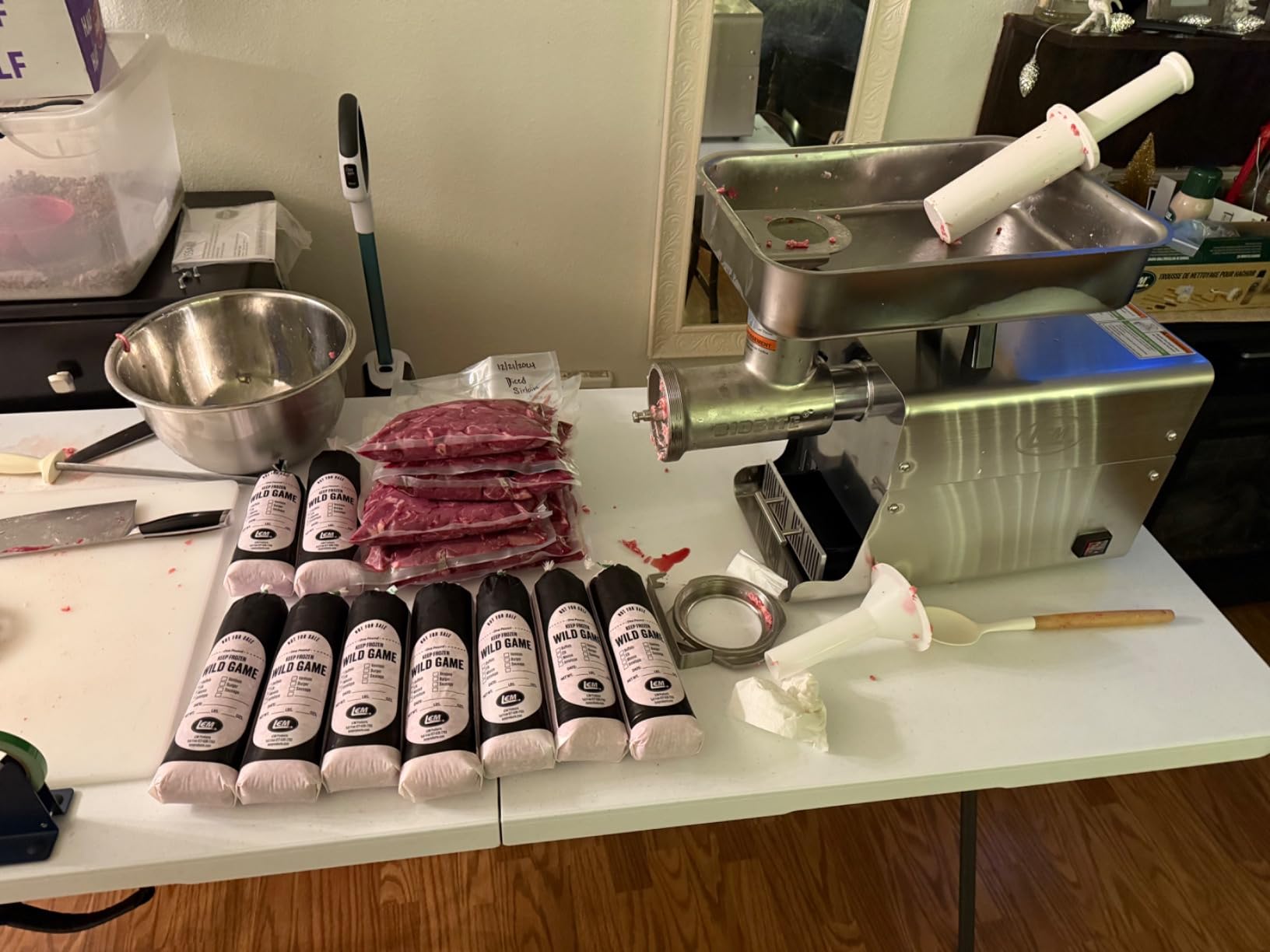
At roughly 7 lbs per minute, a 60-pound deer take after deboning is a 9 to 10 minute job. That number is more meaningful than any rated pound-per-hour figure on the box, because it reflects what one animal actually costs you in processing time.
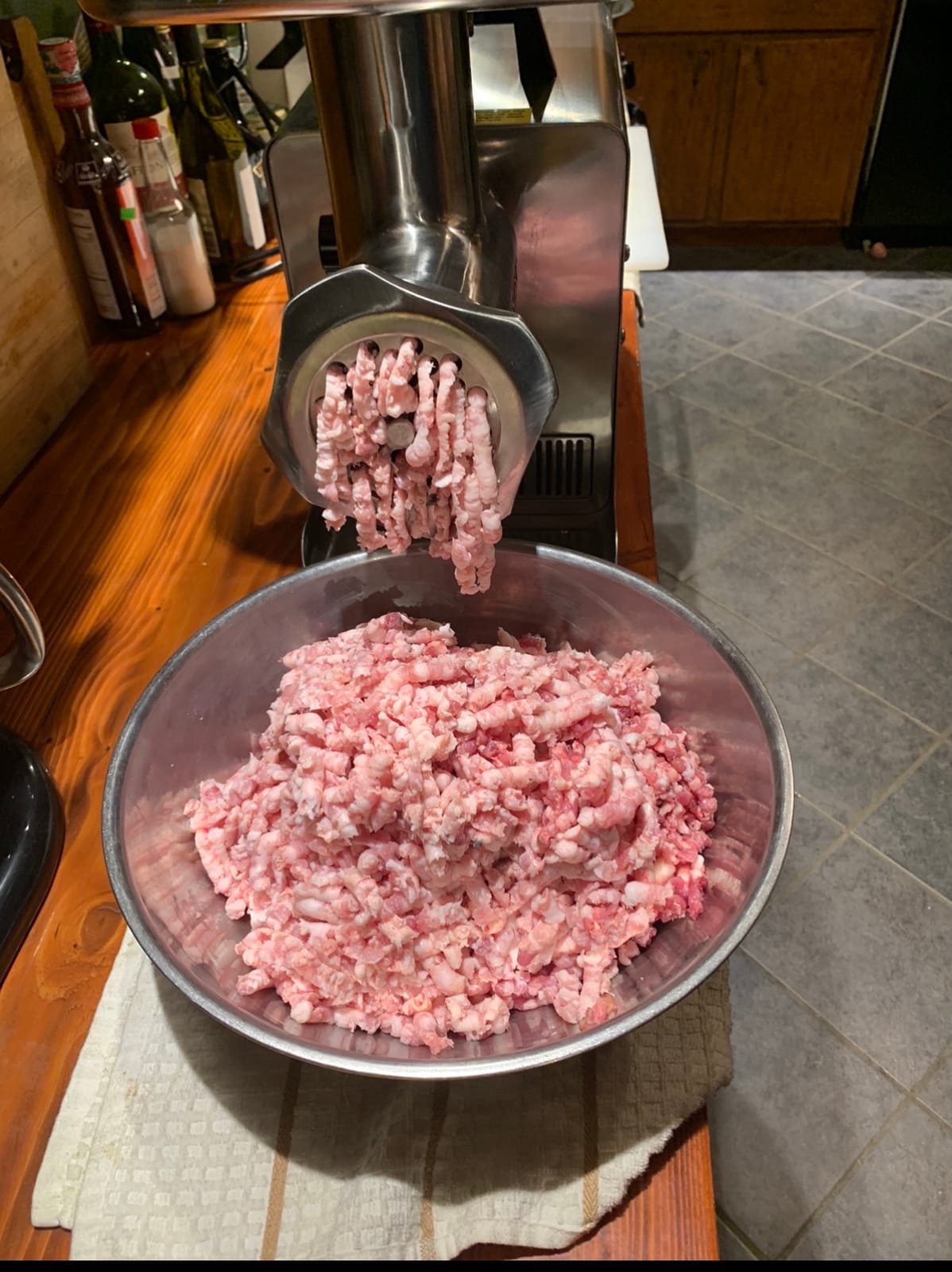
The #8 plate is the coarser of the two plates most LEM owners use, and it is the right default for venison burger. It handles the stringy shoulder meat that jams finer heads, and it produces a texture most people prefer for patties anyway. For summer sausage you would step down to a finer plate, but the head accepts one without tools.
Two honest limitations. At 32.6 lbs this is a countertop unit, not a deer camp unit, so it lives in the garage rather than the field. And the manufacturer is explicit that this is not a bone grinder. Feed it shoulder roasts and trim, not shank ends.
What you should know before buying
Roughly 86% of its reviews are five-star, which is the highest concentration in this group and the main reason it took our top slot. The warranty is five years, and LEM has been publishing replacement parts for these grinders for a very long time, which matters when you are talking about a ten-year ownership horizon.
What you give up versus the STX units is pedal control and hopper size. If you like to see the plate while you work, you will find yourself stopping to scrape it more often. Neither of those issues matters if you are working through batches rather than streaming meat continuously.
Who should skip it
Skip this one if your season means elk, moose, or five-plus deer. The 0.5 HP motor is genuinely adequate for deer, but it leaves nothing in reserve on a moose shoulder and you will feel the motor working. For that volume, step up to a 1 HP unit with a commercial #12 head.
Also skip it if you intend to run a sausage operation from the same machine. LEM makes excellent separate stuffers, and pairing one with this grinder is a cleaner setup than fighting a low-powered integrated tube.
2. STX Turboforce 3000 5-in-1 – Top Rated Grinder
STX International Turboforce 3000 Series 5-in-1 Electric Meat Grinder | 3000W Max | 3-Speed | Size #12 | 5 Grinding Plates | 3 Stainless Steel Blades | Sausage Stuffer | Kubbe Maker & More Included
3000W max motor
Size #12 head
180-240 lbs per hour
3-year warranty
Pros
- Most owner reports of long service life
- often six to eight years of hard use
- Handles venison with heavy gristle and silverskin without clogging
- Cleans up in about ten minutes after a full session
- Three stainless blades and five plates give good texture range
- Customer service sends free replacement parts
Cons
- Integrated sausage stuffer is weak for batches over 3 lbs
- Aluminum parts discolor if soaked in water or dishwashed
- Loud during operation
- Smallest plate is hard to clean and can rust if left wet
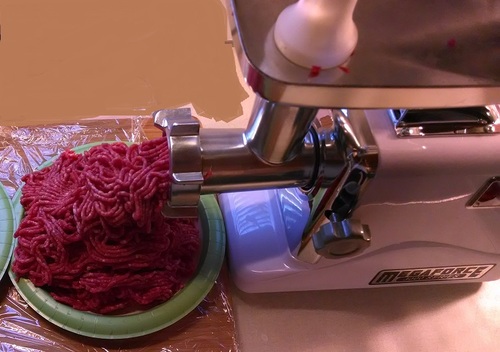
If you want the most grinding machine per dollar and you are willing to stuff sausage separately, the Turboforce 3000 is the pick. It carries 4732 owner reviews, the largest sample of any machine here, and the volume of six-to-eight-year service reports from buyers who have run whole deer seasons through it is genuinely rare.
The technical case is straightforward. The locked motor wattage is 3000W, which in real terms lands at 800W to 1200W under load, and the AVI auger with a 2-1/8 inch intake opening accepts chunks most #8 heads refuse. Rated throughput is 180 to 240 lbs per hour on stripped and cubed meat.
The extra-large hopper holds about 3 lbs of prepped meat, which sounds modest until you realize it is a full tray you can top up rather than dribble-feed. In practice that difference decides whether grinding a deer is a 20-minute job or an hour.
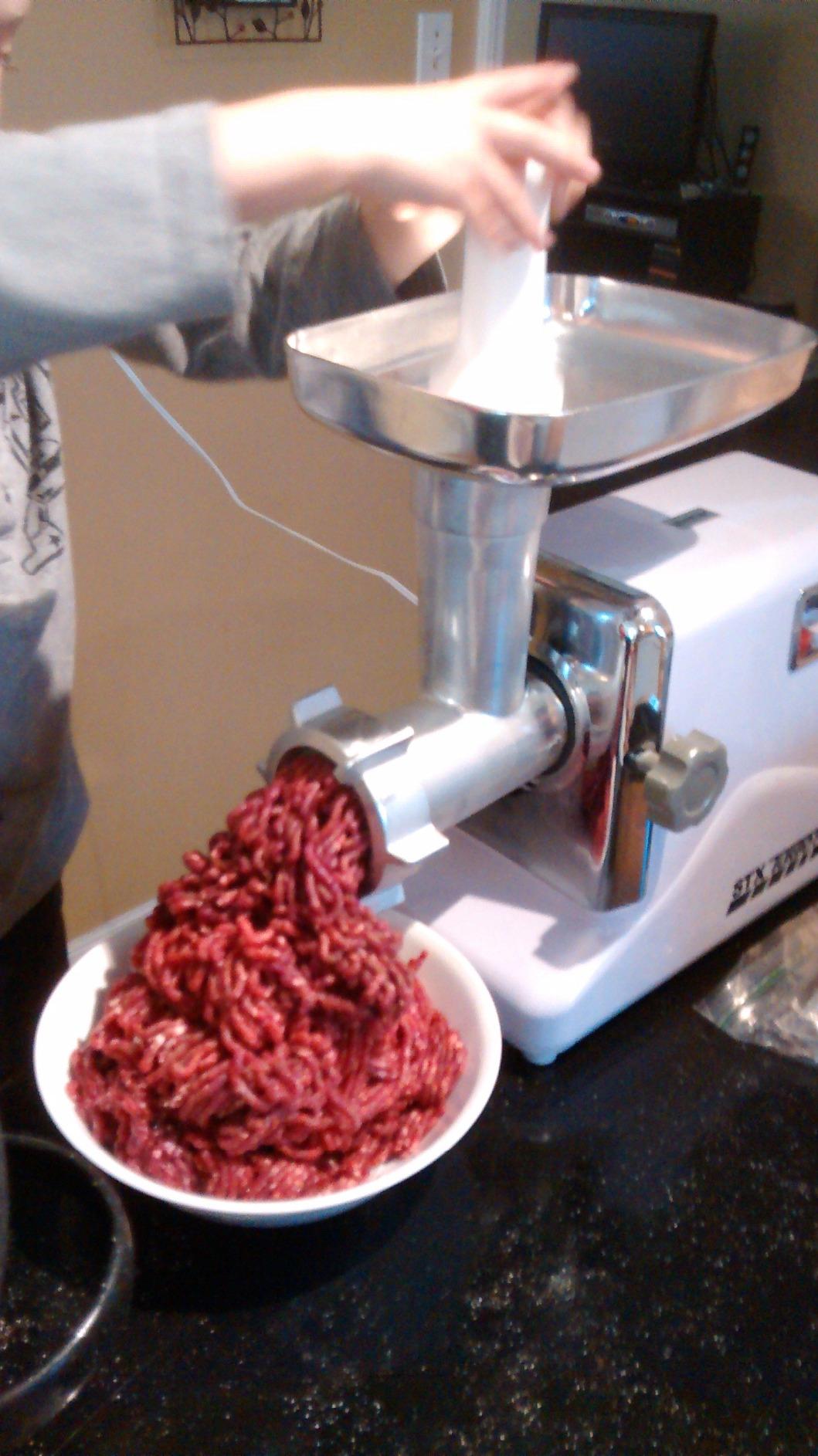
Where the design disappoints is sausage. Owners are near-unanimous that this is an excellent grinder and a poor stuffer, particularly on venison with a proper fat ratio, where the integrated tube takes over an hour for a few pounds. Several reviewers report running both machines side by side, using this for grind and a separate stuffer for links.
The aluminum head and hopper must be hand-washed. Dishwasher cycles discolor them over time, and the smallest plate is the one that will rust if you leave it wet, so wipe-dry everything before reassembly.
What you should know before buying
This is a three-speed machine, which is more control than most grinders at this level offer. The extra speed steps are useful for the transition from coarse grind to stuffing, even if you do not end up using the tubes much.
The manufacturer’s own listing notes this is not intended for bones, tendons or vegetables. Trim those sinew ribbons out before grinding and this machine will run all day. Skip that step and you are looking at a clogged plate and a stripped auger.
Who should skip it
If sausage making is your primary goal rather than a once-a-year activity, this is not the machine. Buy this for grinding and pair it with a vertical stuffer, which will also let you make larger batches than any horizontal attachment allows.
It is also the wrong choice for elk season if you have several animals. It will not fail, but a 1 HP commercial head gives you more thermal headroom on a long run.
3. STX Megaforce 3000 Platinum – Best for Deer Camp
STX International Megaforce 3000 Series 6-in-1 Electric Meat Grinder | 3000W Max | Air Cooled | 3-Speed | Foot Pedal | 5 Grinding Die | Stainless Steel Blades | Sausage Stuffer | Kubbe Maker & More
3000W max motor
Foot pedal control
Size #12 head
3-year parts warranty
Pros
- Foot pedal lets you stop instantly with both hands full
- Handles large trim strips that self-feed
- Easy to disassemble and clean with hot soapy water
- Reverse clears jams without taking the head apart
- Three-year parts and labor warranty
Cons
- Fewer owner reports than its STX siblings at 278 reviews
- Sinew and silverskin must be trimmed or they ball up and block the plate
- Cast aluminum tray is not dishwasher safe
The foot pedal is the reason to buy this one, and it is a bigger reason than it sounds. When you are pushing a shoulder roast through with a meat stomper and your hands are slick with fat, a panel button means you let go, wipe, find the button, and stop. The pedal lets you control the feed with the same hand that is feeding.
Underneath it is the same STX size #12 platform as the Turboforce, with the AVI auger, the 3 lb hopper and 180 to 240 lbs per hour rated output. Hunters report hundreds of pounds of deer and elk across multiple seasons without incident, and the 79% five-star share is the highest of the STX models.
Its rating of 4.6 with 278 reviews is among the highest averages in this roundup, which is worth noting given the smaller sample. We rank it third overall not because it underperforms but because the Turboforce offers a similar platform with far more long-term data behind it.
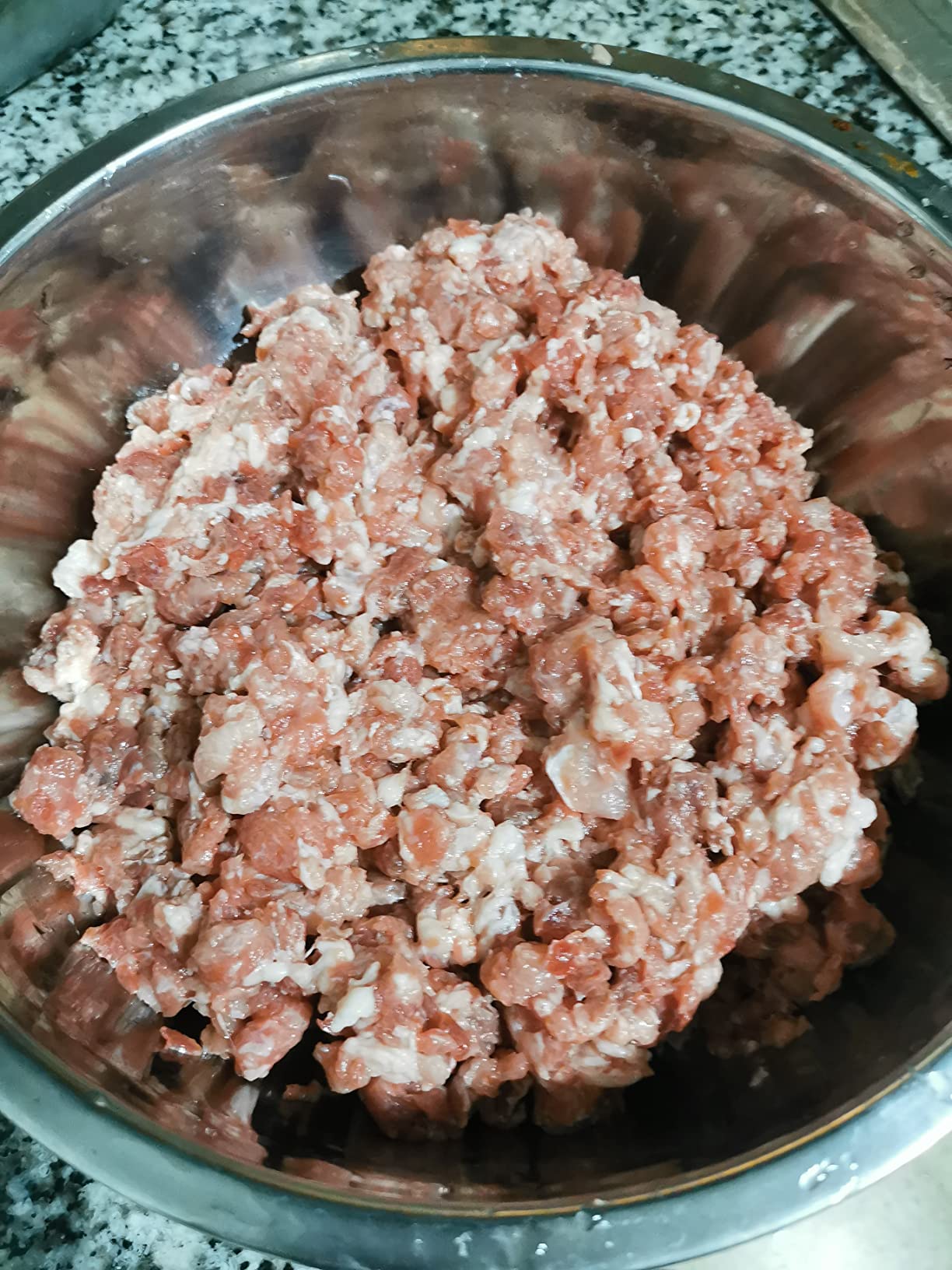
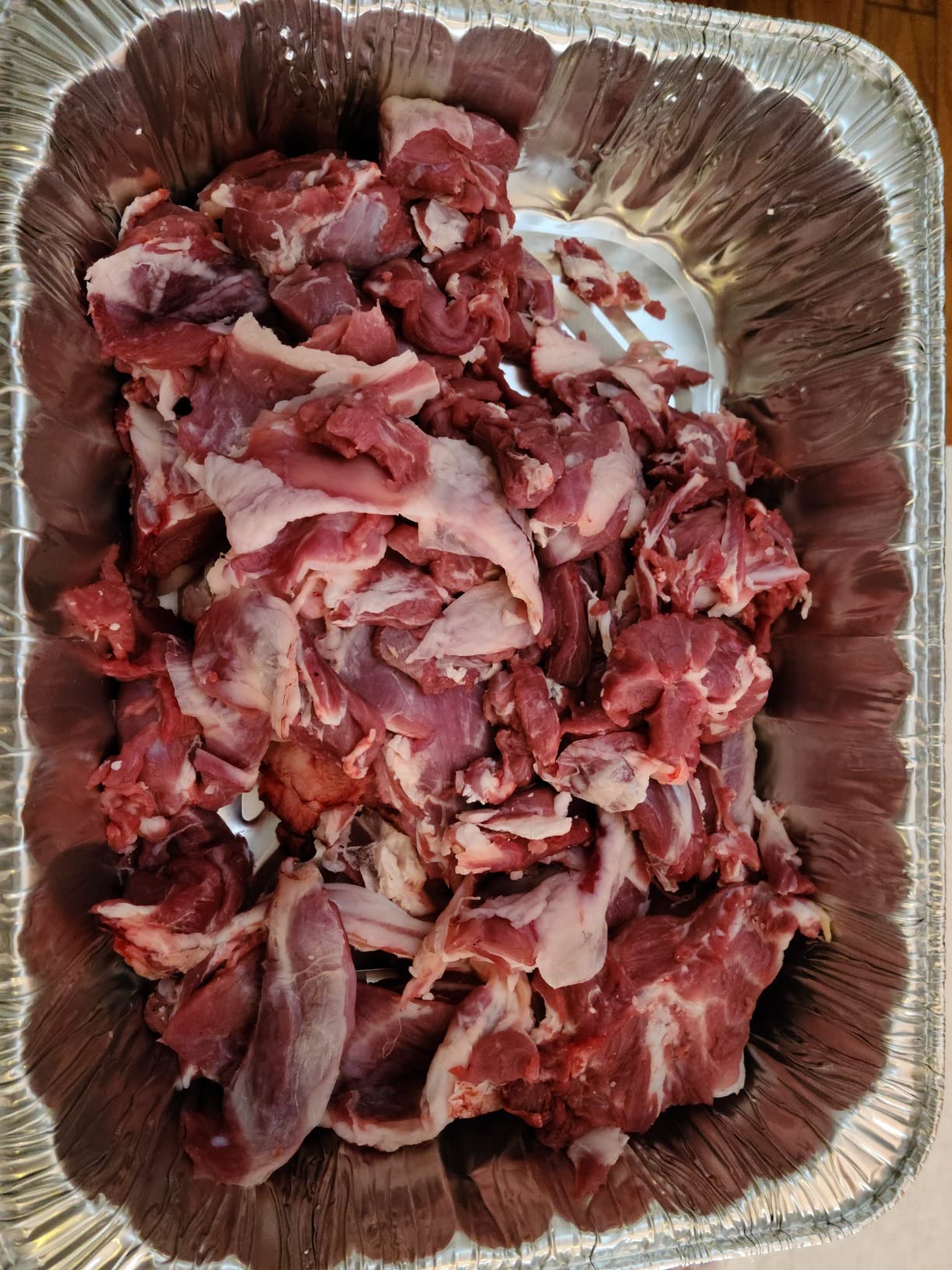
Trimming is non-negotiable on this machine. Sinew and silverskin that survive the knife will ball up against the plate and stop the auger cold. Dense fat also slows it briefly, so feeding leaner trim first and saving the fat cap for later keeps throughput up.
The warranty is 30-day money back plus three years parts and labor, and the manufacturer lists it for home use only. One international buyer reported bearing failure with no warranty coverage outside the US, so if you are outside the country that is a real consideration.
What you should know before buying
At about 6.9 kg it is one of the lighter units in this group, which makes it a realistic deer camp companion as well as a garage machine. It needs a stable table at a comfortable height, and a table around 30 inches saves your back over a full deer.
Four grinding plates, three blades, sausage tubes, a kubbe attachment, meat claws and a burger press all come in the box. That is a genuinely complete kit for someone starting out, and it means the separate stuffer question can wait a season.
Who should skip it
Skip it if you already own a grinder with a foot pedal and a similar head, because you would be duplicating capability. It also lacks the stainless construction of the LEM, so if corrosion resistance over a decade matters to you, that is the trade.
Anyone processing multiple elk should look at a commercial 1 HP unit instead. This one runs cool and reliably, but it is built for a deer season rather than a moose week.
4. Barton Commercial #12 – Best for Elk and Big Volume
Barton Commercial #12 Electric Meat Grinder, 1100W Stainless Steel Meat Mincer & Sausage Stuffer with Stainless Steel Cutting Blade for Beef, Pork, Venison, Chicken & Home or Commercial Use
1100W and 1 HP motor
Commercial #12 head
All-stainless parts
47 lb unit
Pros
- Owners report double-grinding two deer and a large hog without binding
- Stainless throughout including the cutting blade with no rusting parts
- Handles small bones
- rabbit and heavy fat without complaint
- Motor stays merely warm after a long session
- Tool-free disassembly and more compact than a manual #32
Cons
- Very heavy at 47 lbs so it is a fixed install
- Auger tube attaches with six bolts making cleaning tedious
- Only a 60-day manufacturer warranty
- Allen key needed for cleaning is not included
- Reports of rough internal machining with metal peeling inside the tube
The Barton is the one I would put in front of an elk. The 1100W motor driving a commercial #12 head is the combination that shows up repeatedly in owner reports of whole-animal sessions, and the stainless food-contact components including the blade mean it will not develop surface rust in a wet garage over a long season.
Owners describe processing two deer plus a large hog in a single run without a bind, and several mention that the motor stays merely warm afterward rather than hot. That thermal behavior is what separates a 1 HP unit from a 0.5 HP one on a moose.
It is also rated for small bones and handles rabbit, which few of the other machines here claim except the STX soft-bone models. For pet food or for grinding up a whole rabbit carcass, that is a genuine capability difference.
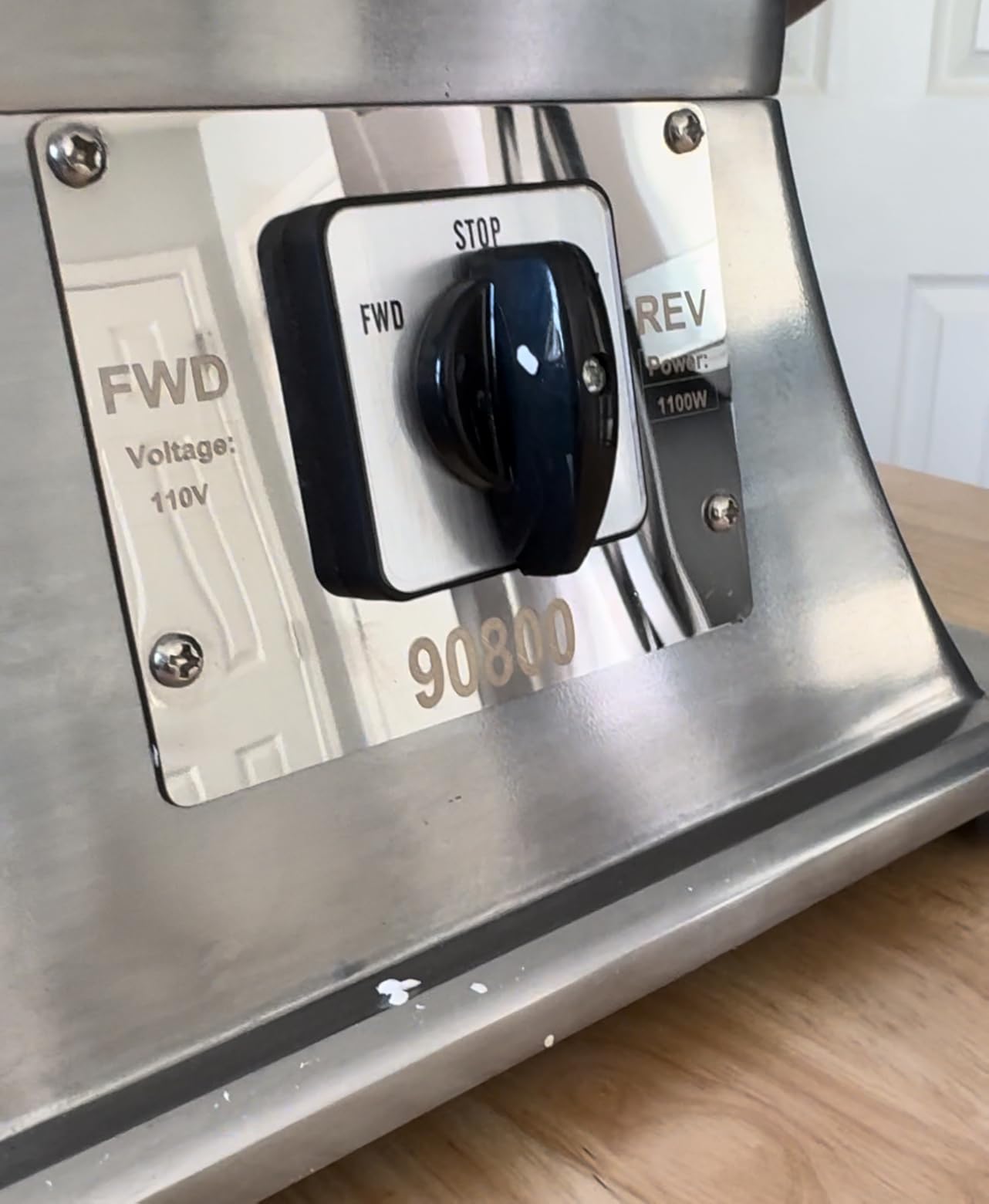
Now the honesty. This is a 47-pound unit with a six-bolt auger tube attachment, and that bolt design is the near-universal complaint. Disassembly takes longer than it should, some owners report the bolts thread poorly, and a small socket may not fit around them in the confined space.
The 60-day warranty is by far the shortest here, and a handful of owners report rough internal machining with metal peeling inside the tube. If that happens to you, the short warranty matters a great deal.
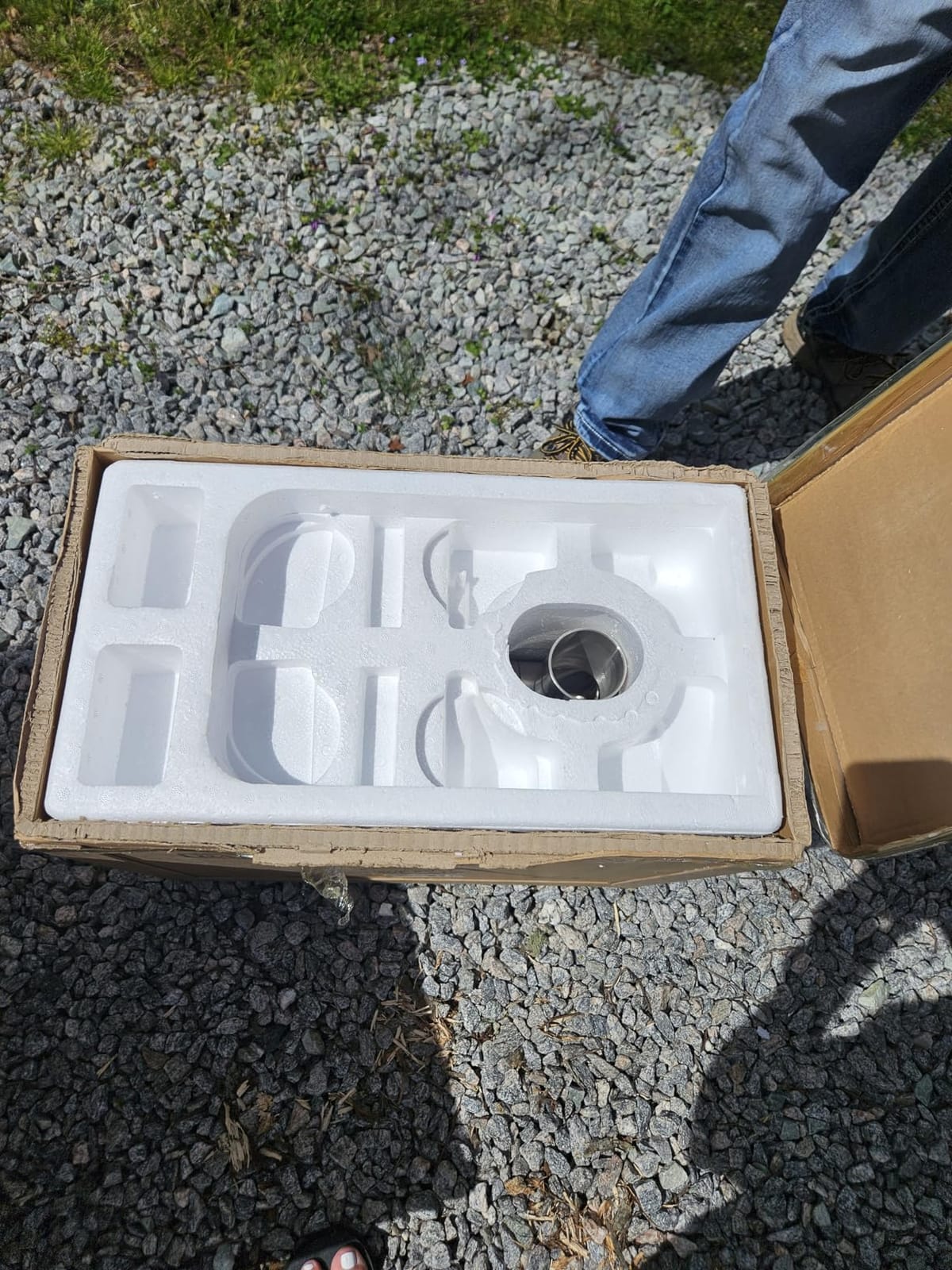
What you should know before buying
Treat it as a permanent installation. At 47 lbs it does not move to deer camp, but it will fit under a standard workbench and stay there for a decade. Plan the table height before it arrives rather than after.
Overall dimensions are 18 by 10.5 by 14.7 inches, which is compact for its capacity. That is one of the practical advantages over a manual #32: the throughput is electric but the footprint is not large.
Who should skip it
Skip it for one deer a season. You would be buying capacity you will not use and tolerating a cleaning design that frustrates you every time, for a warranty that expires in two months. The LEM or an STX is a better fit for that volume.
Also reconsider if you need to move the machine between a garage and a kitchen regularly, or if you want simple tool-free cleaning, because the six-bolt tube works against you on both counts.
5. AAOBOSI #12 3000W – Best Portable Heavy-Duty Grinder
AAOBOSI #12 Heavy Duty Meat Grinder, 3000W, Built for Hunting & Wild Game
3000W peak motor
All-metal gearbox
7 lbs per minute
16.5 lb unit
Pros
- All-metal gearbox and stainless housing with no plastic gears
- Handles tough sinewy game meat such as deer lower leg without bogging down
- One owner processed 55 lbs of chuck roll in about 20 minutes
- Reverse function clears jams without disassembly
- Built-in accessory storage box and carry handle
Cons
- Very loud at 88 to 90 dB measured by one reviewer
- Feed tube and grinding body are not dishwasher safe
- Accessories do not all fit in the onboard storage box
- Strips must be cut to about 2 inches wide for this machine
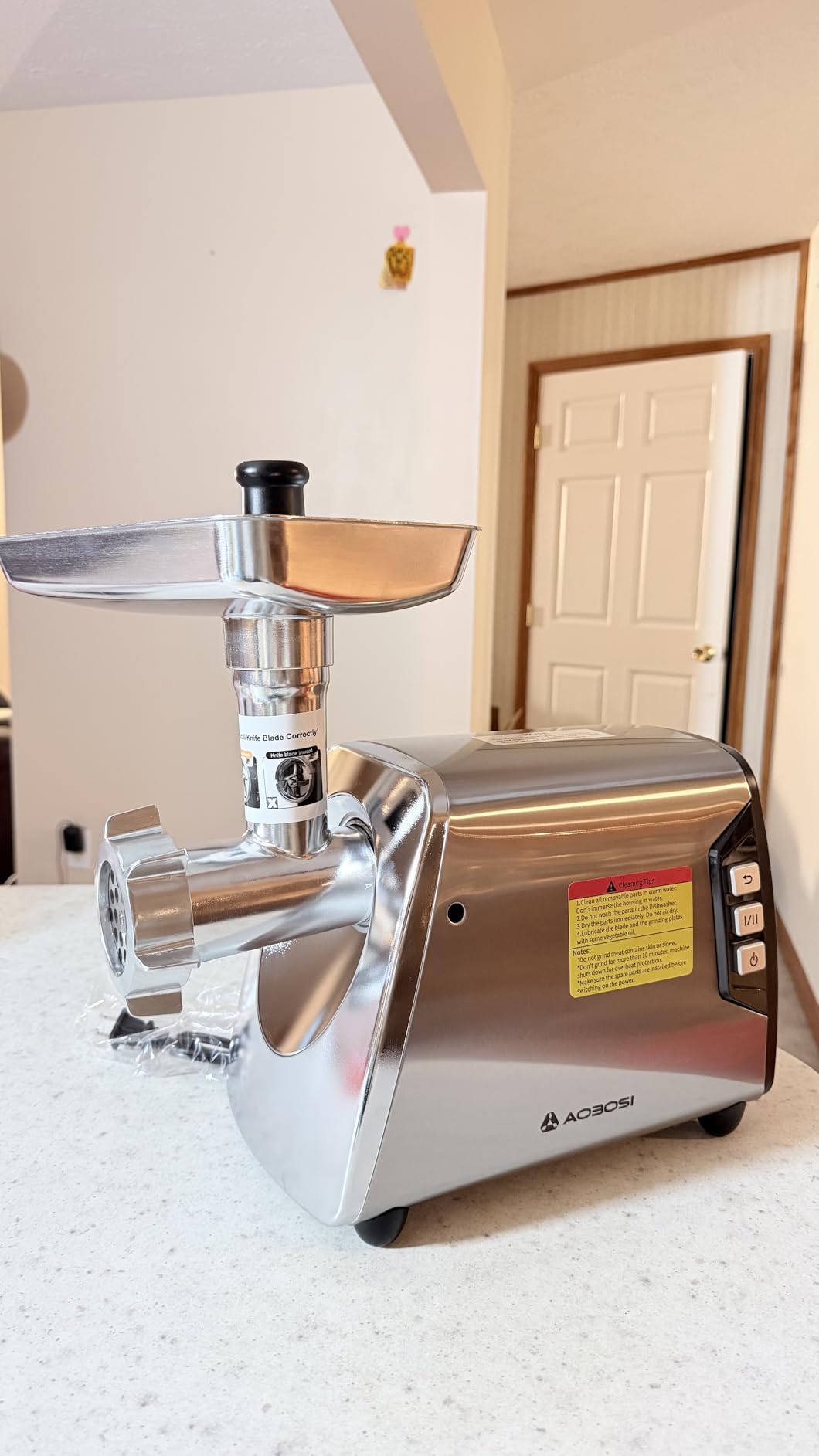
The AAOBOSI is the pick if your season happens at a cabin or a tent rather than in a garage, and if you want metal rather than plastic where it counts. The all-metal gearbox and 3mm thickened stainless housing are a genuine step up from most machines in its class.
Owners specifically mention the lower leg meat, which is the toughest venison cut there is. That is a good sign for wild game specifically, since most grinders are tested on shoulder trim and fail on shank.
One owner processed 55 lbs of chuck roll in roughly 20 minutes, which works out to under 3 lbs per minute of real-world output including cleanup pauses, and rated throughput is up to 7 lbs per minute on clean trim. The reverse function clears jams without disassembly, which saves real time when a sinew ribbon wraps the auger.
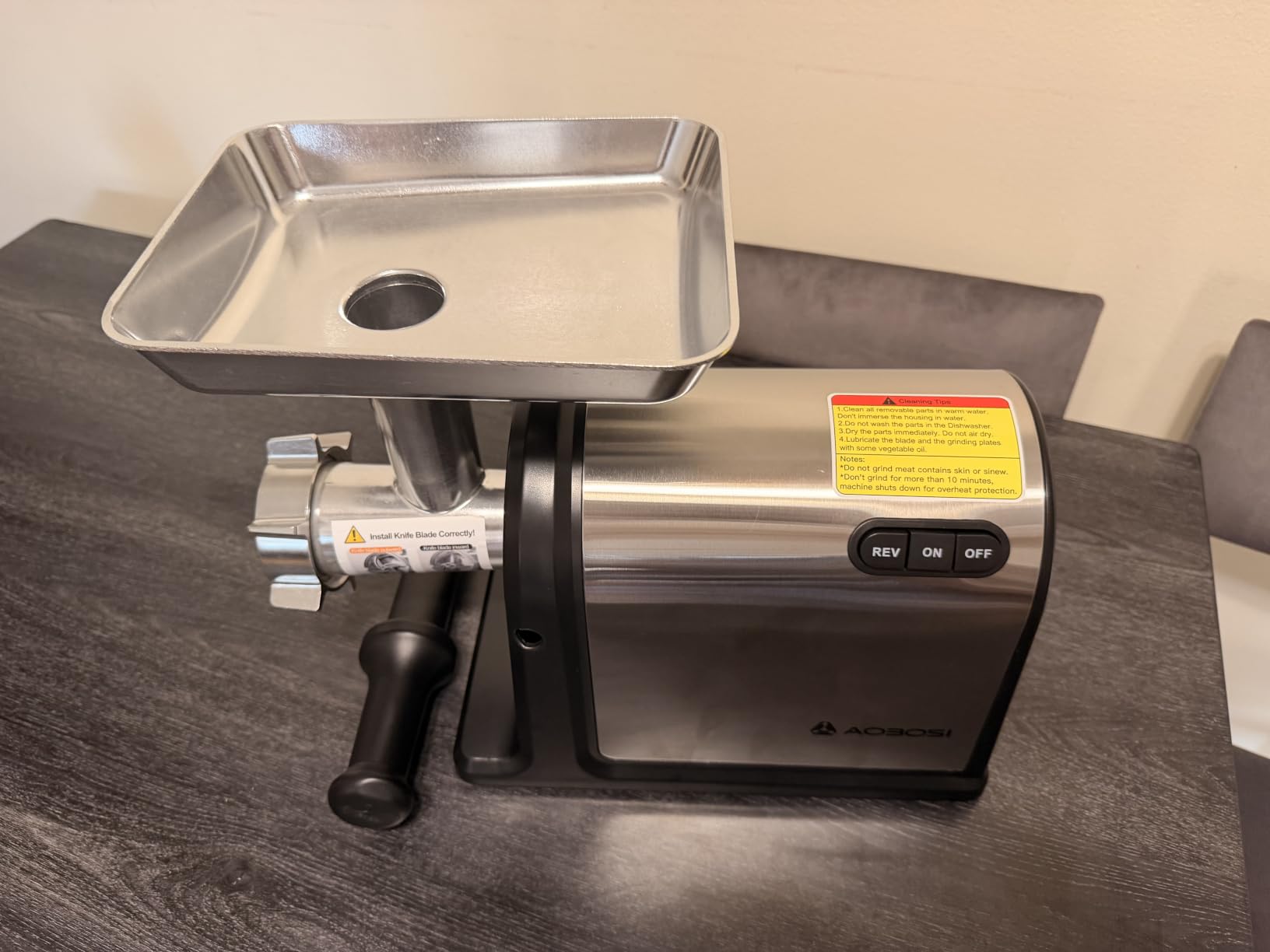
Noise is the big compromise. One reviewer measured it at 88 to 90 dB, which is genuinely loud and matters if you are processing at a camp after dark. Bring ear protection.
The feed tube and grinding body must be hand-washed, only the blades and plates are dishwasher safe, and the accessory storage box will not hold everything that comes with it. Plan a separate bin for the stuffing tubes and burger press.
What you should know before buying
At 16.5 lbs this is light enough to be a genuine portable unit, and the carry handle is part of the design rather than an accessory. It is the one machine here whose owners specifically describe running lower-leg venison without bogging.
The accessory list is unusually deep for a machine at this level: four stainless cutting plates, two blades, three sausage tubes, a kubbe kit, burger press and meat claws. All of it stainless, and more than comparable machines include.
Who should skip it
Skip it if noise is disqualifying in your processing space, or if you have mobility issues that make hand-washing a cast feed tube difficult. Also skip it for elk volume, since the stated limit is roughly 2-inch-wide strips rather than large chunks.
If your priority is quiet operation and long-term parts availability, the LEM is the better long-term ownership choice.
6. STX Turboforce II 4000 – Best for Sausage Making
STX International Turboforce II 4000 Electric Meat Grinder | Grinds Soft Bones | Foot Pedal | 6 Grinding Plates | Stainless Steel Blades | Sausage Tubes | Kubbe Maker | Meat Claws | Patty Press & More
2000W locked wattage
Size #12 head
Six grinding plates
Foot pedal
Pros
- 2000W locked motor wattage with air cooling handles large home batches
- Size #12 head with 2.5 inch output moves far more meat than #5 or #8 heads
- Foot pedal frees both hands for feeding and casing control
- Six grinding plates plus a stuffing plate give a wide texture range
- Three-year warranty with free replacement parts
Cons
- Cast aluminum head and tray must be hand washed
- Assembly and plate changes take practice for first-time users
- Not intended for hard bones
- Loud during operation
- Smallest plate holes are difficult to clean
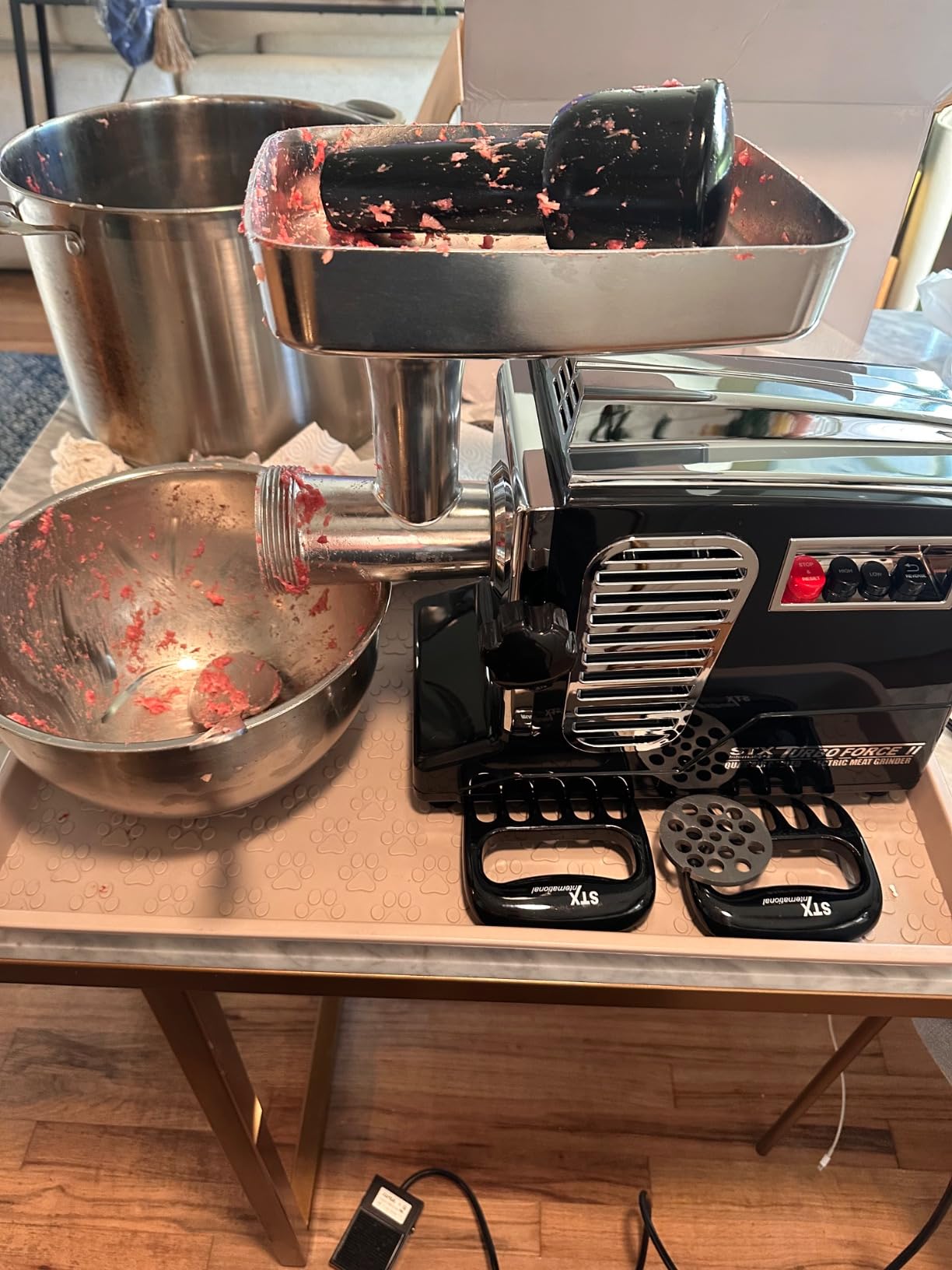
The Turboforce II 4000 is among the most complete grinders in this roundup, and it is the closest thing here to a real combo unit. Six grinding plates, three stainless blades, three sausage tubes, a stuffing plate, a kubbe attachment, meat claws and a burger press, plus a foot pedal.
The 2.5 inch output diameter from the #12 head is the number that matters most for sausage, because a wider output column means the stuffing tube has less work to do. Rated throughput is 220 to 260 lbs per hour depending on plate and meat type.
The foot pedal pairs naturally with stuffing, since your free hand is managing casing and the fed hand is managing the horn. That combination is what separates this from grinders where stuffing is an afterthought.
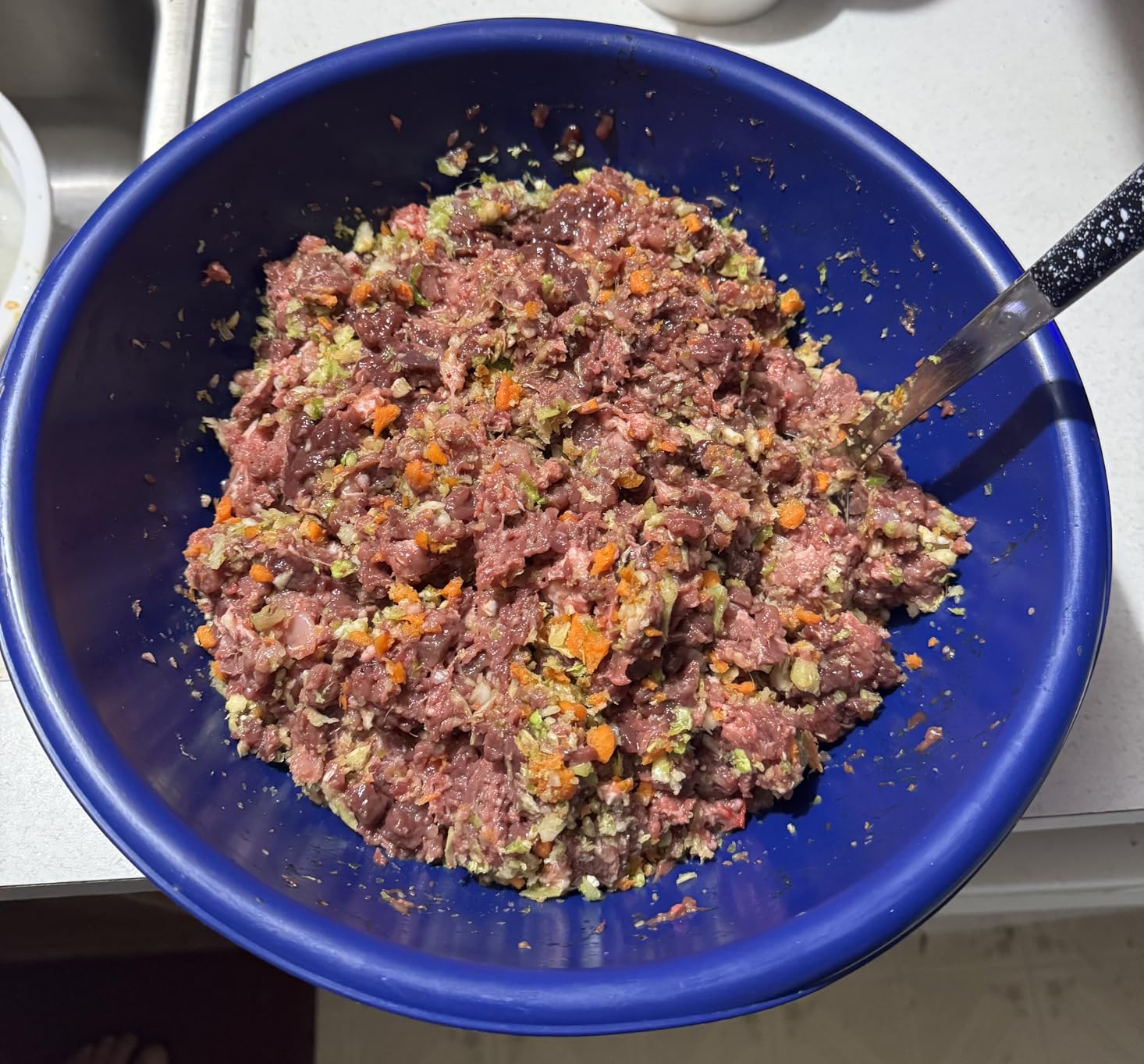
Compared with the STX siblings it is rated for soft bones, meaning chicken, rabbit and squirrel rather than hard bone. That is a wider claim than most competitors make, and useful if you process small game alongside deer.
The cast aluminum head and tray are hand-wash only, and assembly takes practice the first couple of times. The smallest plate holes are a real cleaning chore, so keep the brush that ships with it close.
What you should know before buying
The patented Quad Air Induction cooling system with a circuit breaker is what lets this unit take the sustained loads that smaller motors cannot. If you plan to process more than one animal in a day, active cooling is not a luxury.
Owners commonly upgrade from a small #5 or #8 unit to this one and describe the jump in output diameter as the decisive change rather than the wattage. Wider output means less work per pound.
Who should skip it
Skip it if you never make sausage and want the simplest possible grinder. Six plates and a stuffing setup are extra parts to clean, store and eventually replace, and a dedicated stuffer will outperform this horizontally for large batches.
It is also not the right tool for hard bone work, and the 3 lb tray means you will top it up several times through a full deer.
7. Weston #12 – Best No-Frills Workhorse
Weston #12 Electric Meat Grinder & Sausage Stuffer
750W and 1 HP motor
4-5 lbs per minute
Die-cast aluminum
One-year warranty
Pros
- 750W and 1 HP motor rated for venison
- bison and turkey at 4-5 lbs per minute
- Two-speed design with reverse for clearing jams
- Die-cast aluminum body with all-metal gears for durability
- Cam-action headlock speeds assembly and disassembly
- Sausage funnel and stuffing spacer included
Cons
- Only two grinding plates included
- fewer than most competitors
- 750W rated motor is modest next to the 1 HP alternatives
- One-year warranty is shorter than the STX and LEM options
- Compact hopper means more frequent loading on large batches
The Weston #12 is a plain metal machine with a metal gearbox and a reverse button, which in this category is a surprisingly short list of virtues for a mid-sized grinder. At 13.5 lbs it is also among the more portable options.
Rated output is 4 to 5 lbs per minute, which is plenty for a single deer processed over an afternoon. If your season is two or three deer, expect to work through it across a couple of sessions rather than one.
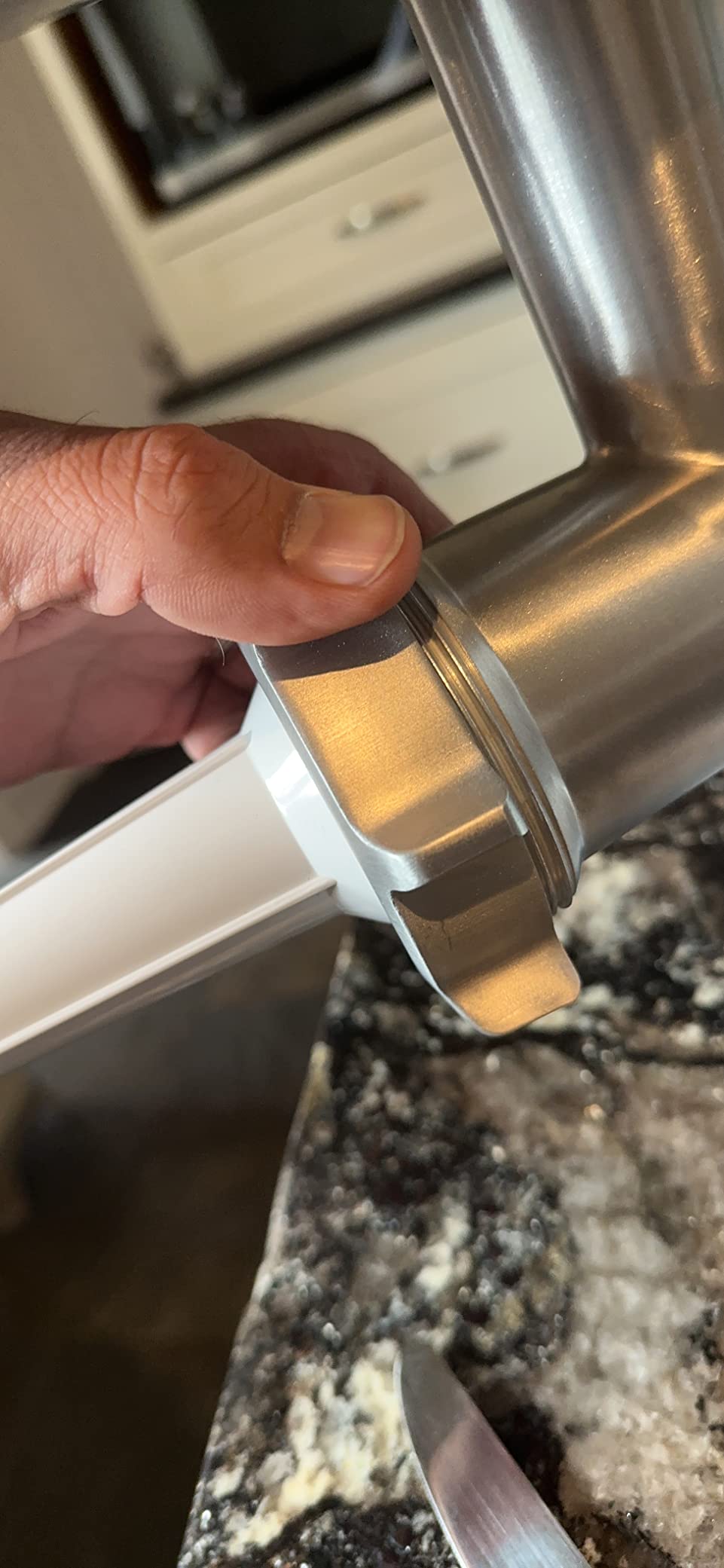
The cam-action headlock is an underrated feature. It locks and releases the grinding head without tools, which means plate changes take seconds rather than the several minutes a bolted collar requires on larger commercial units.
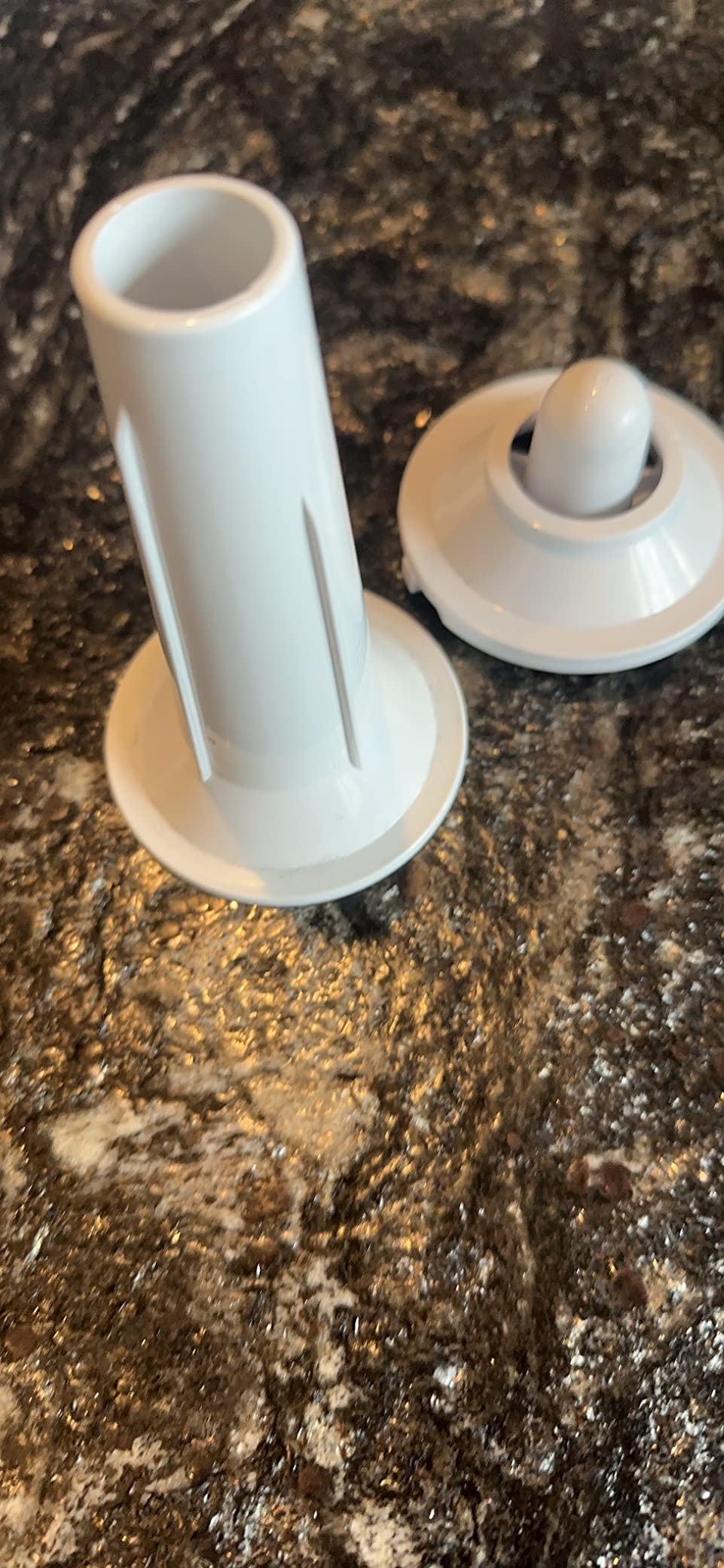
Two grinding plates is genuinely stingy. Every other machine in this roundup ships three to six, and having only a medium and a coarse plate means you cannot make fine sausage or a proper summer sausage texture from this machine alone.
The 750W rated motor is the lowest sustained figure here, and the one-year warranty is the shortest among the units we would recommend for multi-season use. If you buy it, expect to buy a plate kit separately.
What you should know before buying
Die-cast aluminum with metal gears is the right construction choice. Aluminum grinders discolor if you soak them, but the gear set is what actually survives, and this one has all metal rather than a plastic drive.
It is explicitly rated for venison, bison, beef, chicken and turkey, so you are not inferring game capability from a kitchen listing. That matters when you are buying for a specific purpose.
Who should skip it
Skip it if you plan to make sausage regularly, because two plates is not enough to work with. Skip it for multi-animal seasons where you want long uninterrupted runs and headroom, since the motor has less reserve than the 1 HP alternatives.
If you are keeping a grinder for a decade, the one-year warranty makes this a harder sell than the LEM despite the lower entry point.
8. VEVOR 800W 661 lbs/Hour – Best High-Throughput Grinder
VEVOR, 661 Lbs/Hour800 W Machine, 1.5 HP Electric Mincer with 2 Grinding Plates, Sausage Kit Set Meat Grinder Heavy Duty, Home Kitchen & Commercial Use Red, 800 W
800W and 1.5 HP motor
661 lbs per hour rated
Steel gear drive
Stainless body
Pros
- Highest rated throughput here at 661 lbs per hour
- Multiple owners report outrunning the feed rate
- One hunter reports processing 15 deer over three years
- Handles large chunks without pre-cutting unlike smaller grinders
- Removable head and accessory drawer aid cleaning and storage
Cons
- Runs very hot during use and needs constant attention
- Sausage stuffing performance is poor and owners recommend a separate stuffer
- Heavy at 42 lbs with one of the largest footprints here
- Loose on/off switch reported by some buyers
- Replacement parts reported as hard to source
On paper this is the fastest machine here, rated at 661 lbs per hour from an 800W motor running at 180 rpm. In practice owners describe the opposite experience, which is that it grinds faster than they can feed it.
That is a useful problem to have with a deer shoulder. Several buyers report handling large chunks without the pre-cutting most smaller heads require, and one hunter reports processing 15 deer with it across three years.
The steel gear-driven mechanism with an air-cooled fan and the removable head with an accessory drawer are both well-judged for long processing days. The stainless body with a painted finish has held up well in owner reports.
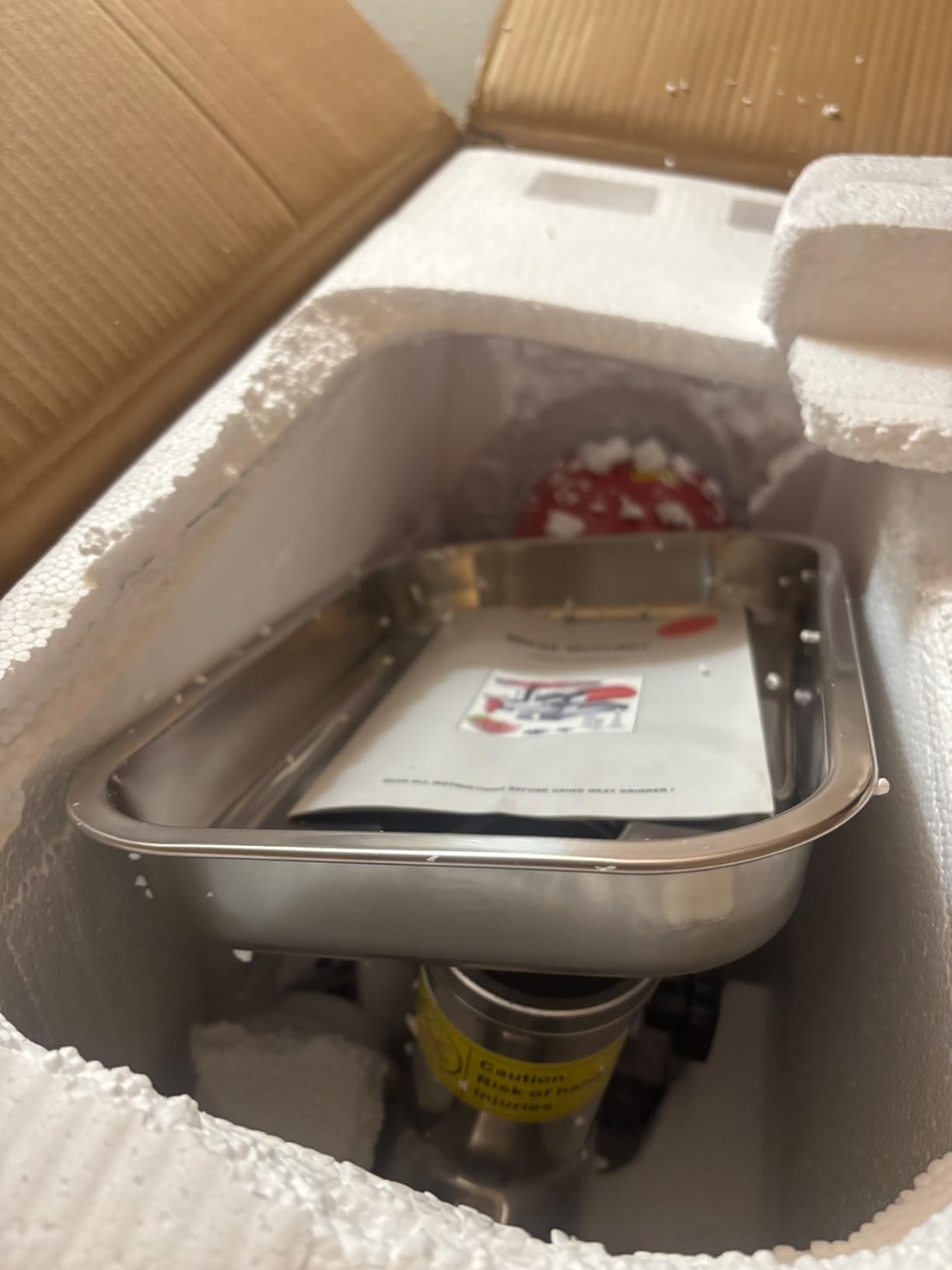
The catch is heat. Owners consistently warn that it runs hot and needs attention, which means it is not a set-and-forget machine on a long elk run. That is the real trade-off: raw speed at the cost of thermal margin.
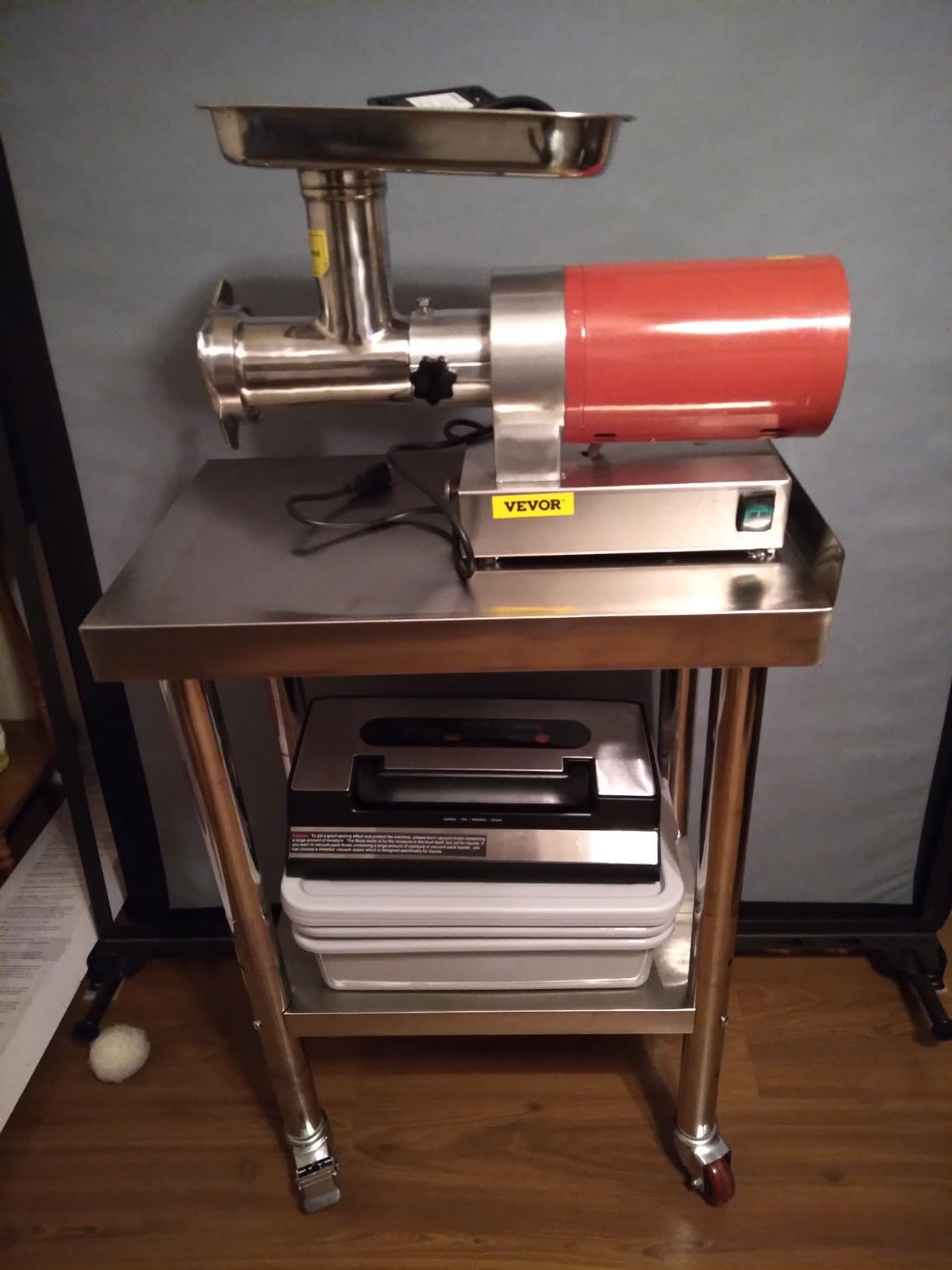
At 42 lbs with a 23.8 by 16.3 by 11.8 inch footprint, it is a large machine in every dimension. Reports of a loose on/off switch and hard-to-source replacement parts are worth factoring in before you commit.
What you should know before buying
The auto-recycle behavior when overloaded is reported favorably by owners who take the machine apart. Rather than burning the motor, it reverses and tries again, which is what you want when a piece of sinew stalls the auger.
Sausage stuffing is widely criticised here, and the consensus recommendation from owners is a separate stuffer. Treat the stuffing kit as a bonus rather than a reason to buy.
Who should skip it
Skip it if you will run long unattended sessions, because the heat complaints are consistent enough to plan around. Skip it if you make sausage. And skip it if you need easy parts sourcing in five years.
For a hunter who wants maximum speed and enjoys monitoring the machine, the throughput here is in a class of its own.
9. VEVOR 750W #12 – Best Easy-Clean Design
VEVOR Meat Grinder, 552 Lbs/H, #12 Electric Meat Mincer, 750W/1 HP Motor
750W and 1 HP motor
Up to 552 lbs per hour
3-stage auger
Dishwasher-safe parts
Pros
- All removable parts are dishwasher safe unlike most aluminum grinders
- Pure copper 750W and 1 HP motor rated for commercial throughput
- Three-stage auger with cross-sharp blade produces smooth consistent mince
- ETL listed with cold-air cooling and anti-vibration foot pads
- Handles meat
- fish
- vegetables and chili peppers
Cons
- Rating of 4.2 stars is tied at the bottom of this group
- A notable 11 percent share of 1-star reviews
- Motor housing must not be immersed in water
- Not suitable for bones or frozen meat
- Heavy at 36.6 lbs and not portable
The dishwasher-safe parts are the entire reason to pick this one. Most of the other grinders here require hand-washing a cast head and tray, which is the single most tedious part of processing a whole animal after the grinding itself.
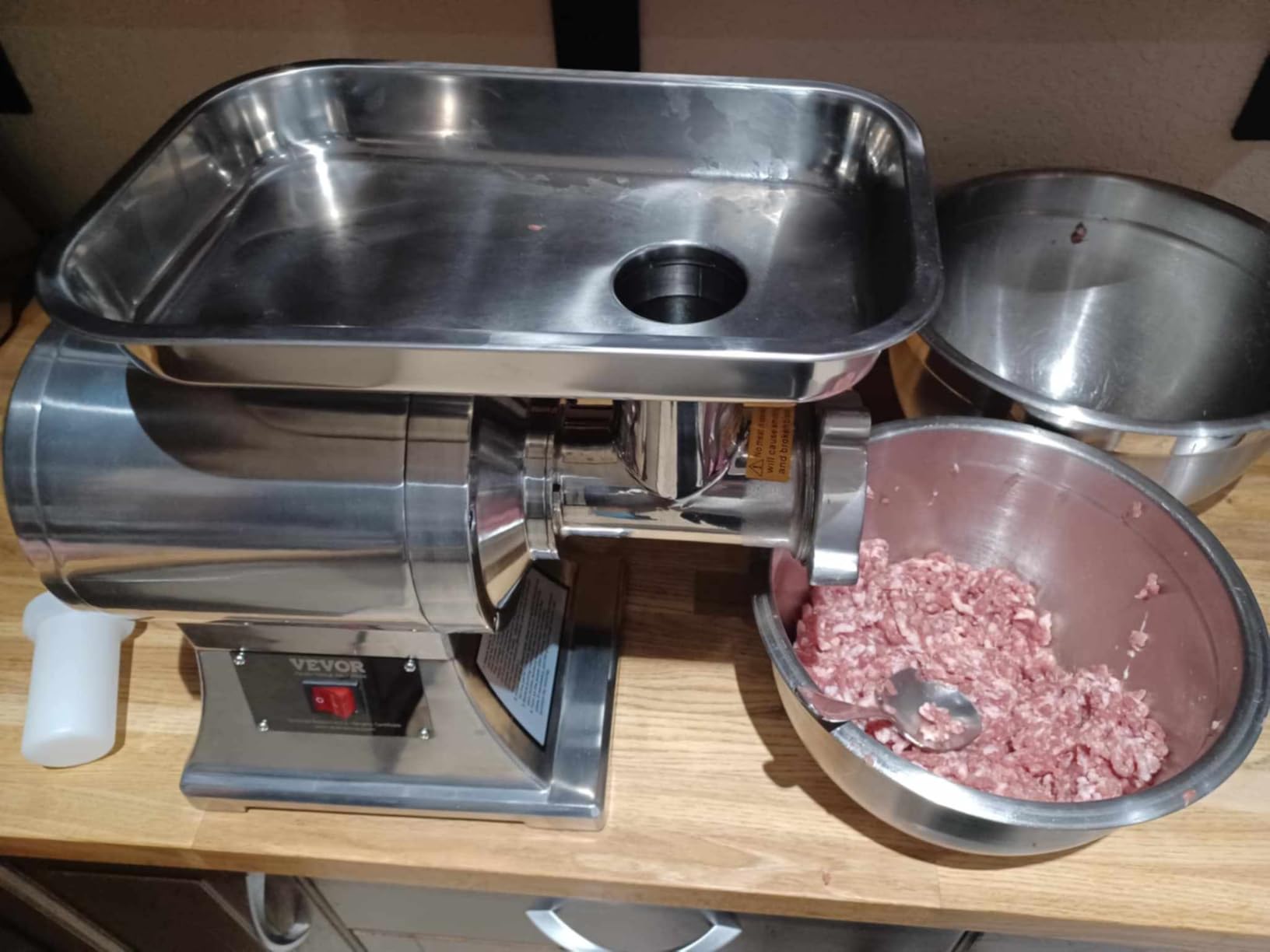
Underneath that practical advantage is a competent machine. The 750W and 1 HP pure copper motor is rated for up to 552 lbs per hour, and the three-stage auger with a cross-sharp steel blade is a design aimed at consistent mince rather than raw speed.
The anti-vibration foot pads are worth noting for a garage floor. A grinder that walks across the bench mid-grind is a real annoyance, and these are among the few machines here designed for it.
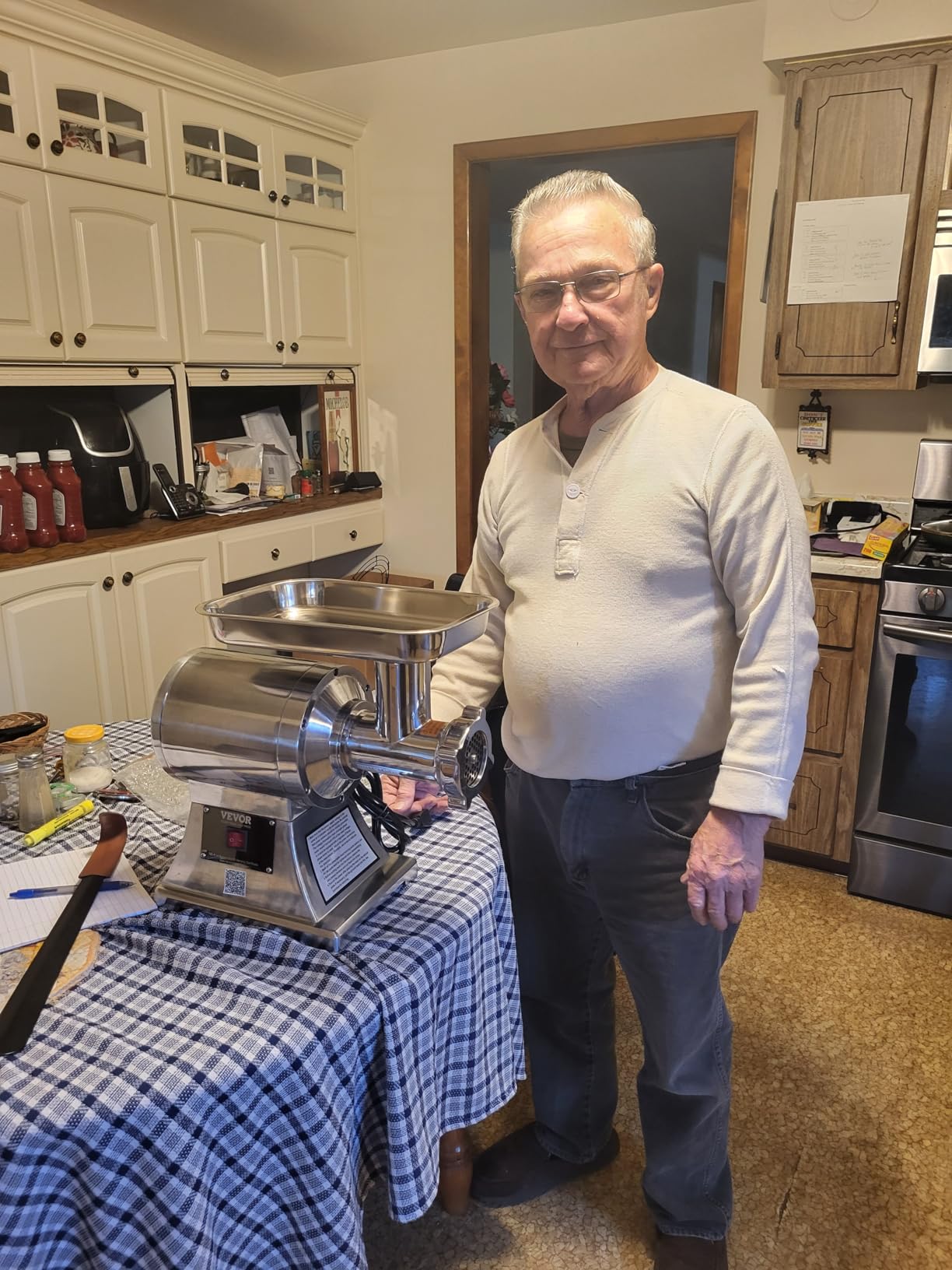
The rating spread is the concern. At 4.2 stars with 11 percent one-star reviews, this is one of the split profiles in the group. Motor failures appear in that cluster, and with only 210 reviews the long-term reliability picture is genuinely unknown.
It is also explicit that the unit is not for bones or frozen meat, and the motor housing must not be immersed even though the other parts can be dishwashed.
What you should know before buying
ETL listing matters more than marketing language here, because it is an independent safety certification for a machine that draws real current near water and raw meat. Several machines in this roundup carry it and several do not.
Including 2mm and 8mm plates with a kibbe kit and three sausage tubes means it can handle coarse burger through fine work, even though the overall power budget is more modest than the headline figures on competing listings.
Who should skip it
Skip it if you want a long-term track record, because the review profile is thin and split. Also skip it for bone work or frozen meat, and skip it if you need to move the machine between locations at 36.6 lbs.
If effortless cleanup is your top priority and your volume is moderate, this is the machine that gets there fastest.
10. FOHERE 3000W #12 – Best Accessory Pack
FOHERE Meat Grinder 3000W Max, Heavy Duty 5-in-1 Electric Meat Mincer with Sausage Stuffer & Kubbe Kit, 3 Stainless Steel Grinding Plates for Home Kitchen & Deer Processing (Silver)
Size #12 stainless head
Dual-speed control
Over 5 lbs per minute
ETL certified
Pros
- One of the most affordable genuine size #12 grinders here
- Dual-speed control with auto-reverse makes it versatile and jam-resistant
- Unusually deep accessory kit including slicer
- shredder
- grater and tomato juicer
- Light enough to move around with carry handle and suction cups
- Customer service replaced a unit and sent free parts
Cons
- Some buyers report the gearing between motor and head breaking after heavy use
- One hunter reports it bogs down on venison and heats up quickly
- Not dishwasher safe
- parts must be hand-washed and dried
- The feed outlet is fairly low so feeding larger pieces is awkward
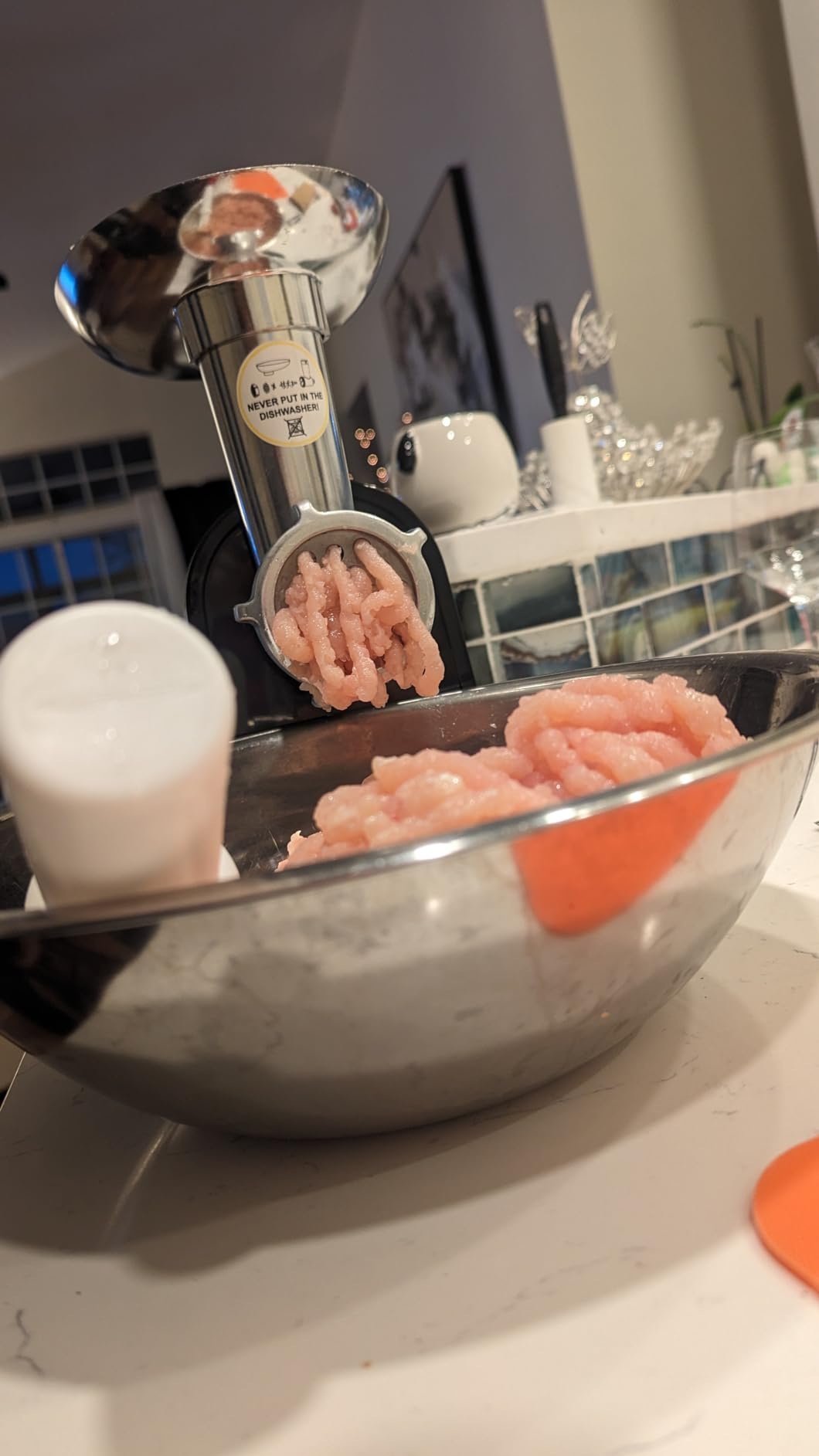
The FOHERE is one of the more capable entry-level machines here, and the reason is that it has a real size #12 stainless grinding head rather than the smaller heads most machines at this level use. That head is what decides whether it can take a shoulder roast or only burger trim.
Rated output is over 5 lbs per minute, and dual-speed control lets you run high for tough venison and slow for sausage stuffing or vegetables. The auto-reverse with overload protection and a circuit breaker is a sensible safety package.
The accessory list is the deepest in this roundup: three plates at 3mm, 5mm and 7mm, three sausage tubes, a kubbe maker, slicer, shredder and grater blades, and a tomato juicer. It is also ETL certified.
Durability under sustained venison processing is the honest weakness. Some buyers report the gearing between the motor and the head breaking after heavy use, and one hunter reports it bogging down on venison and heating quickly, which is exactly the complaint we would expect from a 500W rated motor.
The 3000W figure is the maximum, not the sustained output. Real-world accessory power is lower, and the low feed outlet makes feeding larger pieces awkward.
What you should know before buying
Treat it as a first deer machine. For one or two animals a year, with proper trimming and a cold meat, the size #12 head and the reverse function will get the job done, and the accessory kit means you will not need to buy anything else to start.
Customer service has a track record of replacing units and sending free parts when asked, which offsets the shorter relationship you would have with an unbranded machine.
Who should skip it
Skip it for multi-animal seasons, particularly elk, where the gearing complaints are most relevant. Skip it if you want to hand it to a relative and expect it to last a decade without support.
Anyone who already owns a size #12 grinder has no reason to add this one, despite the attractive accessory count.
11. STX Magnum 1800W – Best Starter Grinder for One Deer
STX International Magnum 1800W Electric Meat Grinder | Grinds Soft Bones | High-Capacity Meat Tray | 6 Grinding Plates | 3 Stainless Steel Blades | Sausage Stuffer | Kubbe Maker & More Included
1800W max motor
Size #12 head
220-260 lbs per hour
Circuit breaker
Pros
- 1800W motor with air cooling and a 3 lb capacity tray
- Size #12 head moves 220-260 lbs per hour and handles soft bones
- Six grinding plates plus a stuffing plate and three sausage tube sizes
- Circuit breaker for electrical safety
- One-year fix-or-replace guarantee with an in-house service department
Cons
- Lowest average rating of the STX models here at 4.3 stars
- Highest share of 1-star reviews among STX options at 9%
- No foot pedal on this configuration so control is via panel buttons
- Polished aluminum head and tray are not dishwasher safe
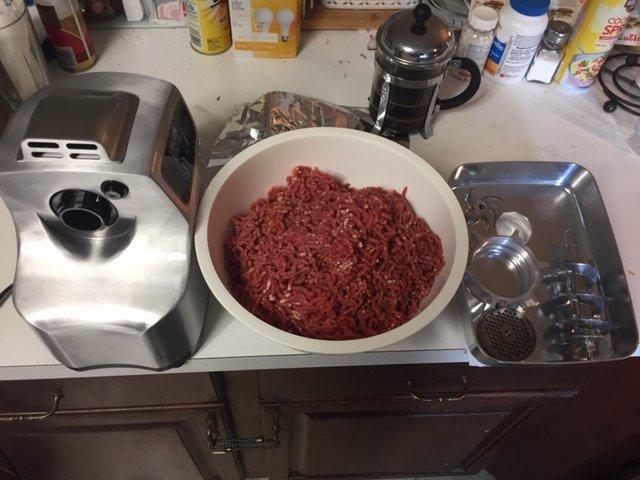
The Magnum sits at the entry point of the STX line and shares the size #12 platform with the more expensive Turboforce models, including the 2.5 inch output and 2 inch feed tube. If you want the STX head design without the STX flagship spend, this is the machine.
Rated throughput of 220 to 260 lbs per hour matches the Turboforce II, and it handles soft bones such as chicken, rabbit and squirrel. The high-capacity tray holds over 3 lbs.
The circuit breaker and the in-house service department are the parts of the package that matter for ownership, and the one-year fix-or-replace guarantee adds some protection even though it is the shortest of the STX options.
Its rating of 4.3 is the lowest of the four STX models here, with 9 percent one-star reviews. Buyers who move up a tier generally report better satisfaction, so if you can stretch to the Turboforce, do.
There is no foot pedal on this configuration, which is the practical loss. You control it from panel buttons, and with messy hands on a long session that is genuinely worse than the Megaforce.
What you should know before buying
The accessory list is essentially the same as the Turboforce: three stainless blades, five grinding plates plus a stuffing plate, three sausage tube sizes, a kubbe attachment, meat claws and a burger press. You are not sacrificing kit, only pedal control.
The patented Cowl Air Induction cooling is the same system, and it is what allows the 1800W motor to hold its rate on a deer shoulder rather than choking.
Who should skip it
Skip it if you have any interest in foot pedal control, because adding one later is not a simple retrofit. Skip it if you want the strongest satisfaction ratings in the STX range, since its 4.3 sits below all three siblings.
For one deer a season in a home kitchen, though, it is a legitimate and complete machine.
12. CHEFFANO 2800W – Best Budget Pick
CHEFFANO Meat Grinder, 2800W Max Meat Grinder Electric, ETL Approved Heavy Duty Meat Mincer Machine with 2 Blades, 3 Plates, Sausage Stuffer Tubes & Kubbe Kit for Home Kitchen Use
2800W peak motor
About 3 lbs per minute
Three plates and two blades
Reverse button
Pros
- Lowest entry point here while still ETL approved at about 3 lbs per minute
- Buyers report chewing through 14 lb brisket with bacon and finishing a 70/30 blend with no jams
- One owner has used it daily for five years and reports it still works
- Suction cups keep the unit steady on the counter
- Reverse button clears jams without disassembly
- Compact size suits a small kitchen
Cons
- Only the motor cover is stainless steel
- the rest is aluminum and turns black in a dishwasher
- Poor sausage stuffer that traps air and the top platform pops off
- Only one sausage tube size so 15mm casings cannot be used
- Motor gets very hot and lacks ventilation
The CHEFFANO is the cheapest way into grinding at all, and for a surprising number of hunters that is genuinely the right answer. One owner reports using it daily for five years with no problems, and several report finishing large batches of burger with no jams.
It is ETL approved, has three plates at 2mm, 5mm and 7mm, two stainless blades, sausage tubes and kubbe attachments, and a reverse button. Suction cups hold it steady on a counter, which matters more than it sounds.
The three-layer auger is designed to reduce heat and gray streaks in the mince, which is a real quality difference in the output. Rated throughput is about 3 lbs per minute.
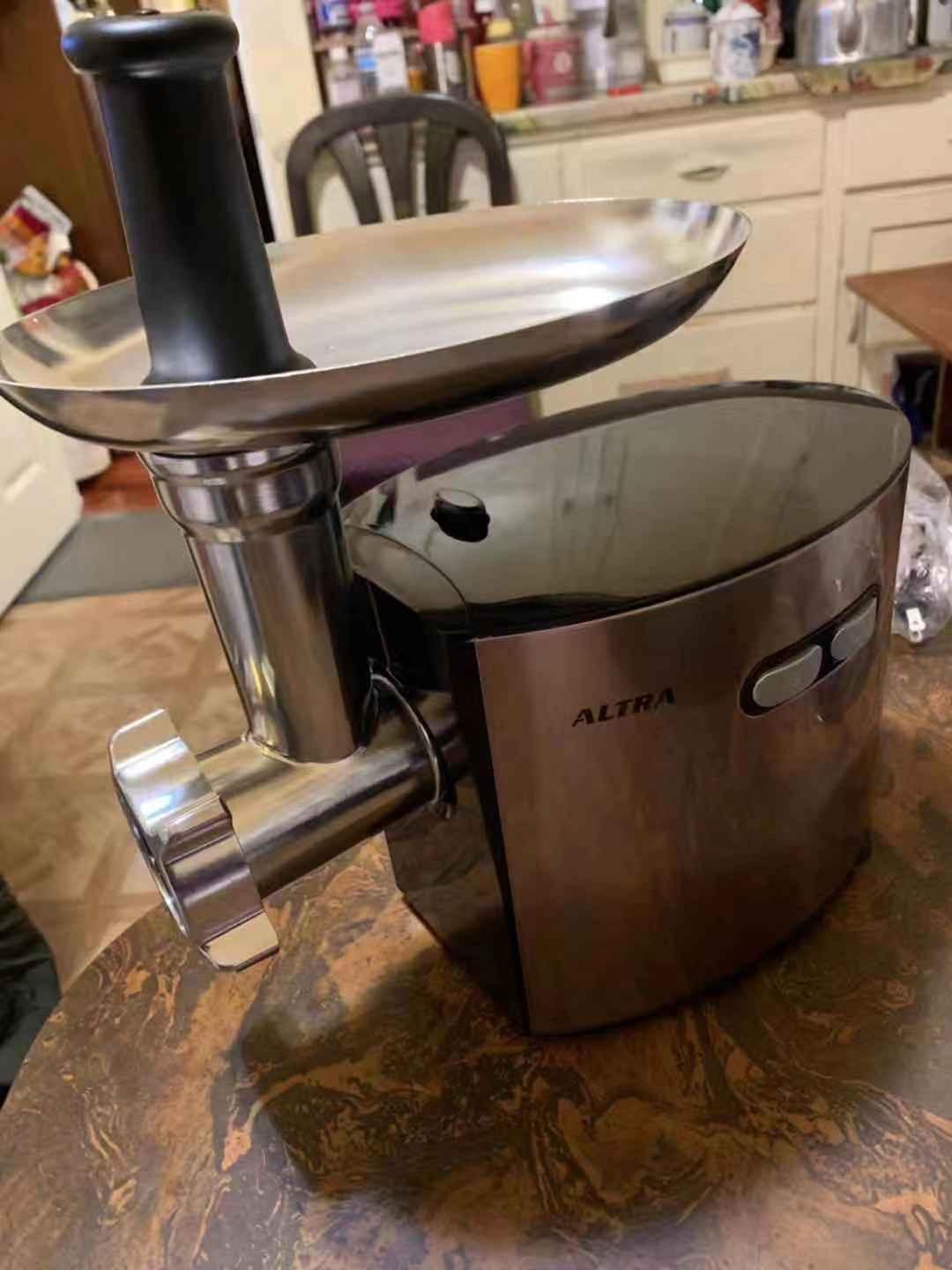
Two honest warnings. The stainless claim applies only to the motor cover, and the aluminum parts will turn black if you put them through a dishwasher, so everything is hand-wash. The motor also gets very hot and lacks ventilation, so give it rest between batches.
The sausage stuffer is the weak point, with only one tube size meaning 15mm casings cannot be used, plus reports of trapped air and the platform popping off. Treat sausage as out of scope on this machine.
What you should know before buying
For a single deer processed into burger and pet food, this machine is adequate. Throughput of about 3 lbs per minute means a 60 lb deer take is a 20 minute job, which is a reasonable evening.
It is also compact at just over 12 inches long, so it stores easily in a small kitchen. That is a genuine advantage if garage space is tight.
Who should skip it
Skip it for anything beyond one deer, for sausage making, and for anyone who wants corrosion-resistant parts. The hot motor without ventilation is the limiting factor on a long run.
If your budget stretches further, the STX Turboforce 3000 gives you a much larger head and far more long-term data for the money.
How to Choose a Meat Grinder for Deer, Elk and Bison
Start with horsepower, and treat advertised wattage with suspicion. Nearly every machine in this roundup advertises a maximum figure, but the number that governs sustained output is the locked running wattage, which is usually between 800W and 1200W on these 3000W-max listings.
For one deer a season, 0.5 HP is enough and there is no reason to buy more. For two to four deer, you want at least 1 HP with a commercial #12 head. For elk, moose or five-plus animals, move to a 1 HP commercial unit or higher, and expect to value thermal headroom more than peak speed.
Plate size is the second decision. The number refers to the diameter of the plate in inches, and it determines how much work the plate and knife do per pound. A #8 plate is a reasonable deer default. A #12 plate moves noticeably more meat with a wider output column. Larger plates handle more connective tissue but demand more motor.
Feed tube and throat diameter matter more than most buyers realize. A narrow throat means you pre-cube everything, and pre-cubing a deer shoulder is an extra hour of work. The models with an AVI variable intake auger or an enlarged throat accept larger chunks, which directly reduces prep time.
Motor cooling decides whether you can finish. Air-cooled and induction-cooled designs push heat away from the windings, and a circuit breaker protects against overload. On an elk, a machine that gets hot and then throttles back is worse than a slower machine that stays at rate.
Plate material is a trade-off. Carbon steel plates are cheaper and they take a sharper edge, which many hunters prefer for fine sausage. Stainless plates resist corrosion and do not need the same care about drying, at the cost of some edge retention.
Finally, decide between a combo unit and a separate stuffer. Every grinder here comes with sausage tubes, and every one of them draws complaints about how that attachment performs. If sausage is more than an occasional activity, buy a vertical stuffer and keep the grinder focused on grinding. We cover injectors separately in our meat injector picks.
Sizing Your Grinder to Your Season
This is the question no competitor on the search page answers directly, and it is the one that matters most. Match the machine to the number and species of animals, not to the spec sheet.
One deer a season, roughly 50 to 70 lbs of deboned meat: a 0.5 HP unit with a #8 plate is genuinely sufficient. A CHEFFANO at about 3 lbs per minute will do the job in about 20 minutes. You are not undersizing yourself.
Two to four deer a season: target at least 1 HP and a #12 head with a wide output. The LEM BigBite #8 and the STX Turboforce 3000 sit here, and both handle a full season in an afternoon. This is also the tier where a foot pedal starts earning its place.
Five to ten deer a season: move to a commercial 1 HP head, such as the Barton, and plan on two sessions rather than one. Thermal headroom matters more than peak throughput here because you will be running the motor long enough for heat to build.
Elk or moose: treat these as their own category. A single moose shoulder will overwhelm a 0.5 HP motor, and a #8 plate will clog on the connective tissue before the motor complains. Use a 1 HP commercial #12 head and trim aggressively.
Wild hog and boar: volume is the issue rather than toughness. These animals are smaller individually but hunters often process several, and boar carries heavy sinew. The Barton and the STX models rated for soft bones handle this workload well.
Deer camp processing: weight and power decide everything. Machines under 20 lbs can travel, and anything above 35 lbs is a fixed installation. For power, any grinder under 1500W will run on a mid-size inverter generator, and the 2000W-plus machines need continuous output rather than peak.
Cold Meat Technique and Cleaning After a Grind
The most common complaint from hunters on every forum is fat smearing, and it is not a grinder fault. It happens when meat warms past about 40 degrees, fat melts against the plate, and the output turns to paste. The fix is entirely in your preparation.
Keep the meat cold right up to the grind. Freeze or chill the trim in single layers before it goes in the hopper, and work in batches small enough that the pile ahead of the machine does not sit out. If you are processing in October with a 70 degree afternoon, a second cooler with ice under the trim tray changes the output completely.
Trim sinew and silverskin before grinding, not during. A strip of silverskin that survives the knife will wrap the auger, stop the plate, and force you to shut down. Two minutes of trimming saves twenty minutes of cleaning.
Keep a second plate cooling in the freezer and swap when the running plate warms. This is the cold-plate technique that makes a real difference on a long run, and it is why experienced processors own duplicate plates.
For cleanup, reverse the grinder to push residue out, then disassemble the head fully. Most machines here have a cleaning brush that ships in the box, and using it on the smallest plate holes prevents the rust that reviewers repeatedly complain about. Hand-wash the aluminum parts and dry them before reassembly, especially in humid months.
Sanitation matters because you are handling raw wild game that may carry pathogens domestic inspection never screens for. Wash every food-contact part with hot soapy water after each session rather than at the end of the season, and do not let any part sit wet overnight.
Deer Camp Power and Portability
Almost every grinder discussed here runs on standard 120V household current, so the question is whether your camp power source can deliver it continuously rather than in bursts.
A mid-size inverter generator is the right answer for the 750W to 1800W machines, and an inverter type matters because a conventional open-frame generator can surge under a motor load and trip. Pure sine wave output also protects the electronics in the grinder control board.
The 2000W and above models need more continuous capacity, and the highest-draw machines here need a generator sized with real headroom rather than a peak rating. Undersizing shows up as a motor that slows when the auger meets a sinew ribbon.
On weight, treat anything above 35 lbs as a permanent installation. The CHEFFANO, STX models and AAOBOSI can all travel to a camp; the LEM, Barton, VEVOR 800W and Weston can stay home. Table height matters more than most people expect, so set the bench around 30 inches before you start.
Frequently Asked Questions
Is a #8 or #12 meat grinder better for deer?
For one or two deer a season, a #8 plate is enough and it handles the coarser shoulder meat well. For two or more deer, or for elk and bison, a #12 head moves noticeably more meat through a wider output column and demands more motor. Choose #12 when your volume justifies it, and never use plate size to compensate for insufficient horsepower.
What size meat grinder do I need for deer?
A 0.5 HP unit with a #8 plate handles a single deer per season comfortably. For two to four deer a year, step up to at least 1 HP with a #12 head and a wide feed tube so you are not pre-cubing every piece. For elk, moose or five-plus animals, choose a commercial 1 HP #12 head and plan on running it across two sessions.
Can meat grinders grind bones?
Only soft bones, and only on specific machines. The STX Turboforce II 4000 and STX Magnum are rated for soft bones such as chicken, rabbit and squirrel. The LEM BigBite is explicitly not a bone grinder. Several manufacturers void the warranty on bone grinding, so trim hard bone out and use a separate device if you need it for pet food.
Are LEM meat grinders worth the money?
For most hunters processing between one and four deer a season, yes. The BigBite #8 carries a 4.7 rating across more than 3000 reviews, an all-stainless food-contact build, a permanently lubricated motor and a five-year warranty with long-term parts support. You give up portability at 32.6 lbs and you pay more than most size #12 alternatives.
Are Weston meat grinders any good?
The Weston #12 is a solid no-frills workhorse with a die-cast aluminum body, all-metal gears, a reverse function and a cam-action headlock for tool-free plate changes. It is rated for venison and bison at 4 to 5 lbs per minute. The compromises are only two included plates, the lowest rated motor output in this group, and a one-year warranty.
What is the best meat grinder for processing wild game?
The LEM Products BigBite #8 is the best overall choice for wild game, handling about 7 lbs per minute on an all-stainless build with a five-year warranty. The STX Turboforce 3000 is the best value option, and the Barton Commercial #12 is the right call for elk, moose or multi-animal seasons where a 1 HP commercial head and thermal headroom matter most.
The Best Meat Grinder for Wild Game in 2026
The LEM Products BigBite #8 remains our best meat grinder for wild game overall. It handles a full deer in about ten minutes on an all-stainless build with a permanently lubricated motor, and its five-year warranty and long-term parts availability make it the safest ten-year purchase in this roundup.
If your season runs heavier, the STX Turboforce 3000 delivers more power and more owner history for less money, and the Barton Commercial #12 is the answer for elk, moose or five-plus animals where a 1 HP commercial head and thermal headroom are non-negotiable. For one deer a year on a tight budget, the CHEFFANO or the FOHERE will both do the job.
Two decisions will improve your results more than any purchase. Size the machine to your animal count rather than your ambition, and keep the meat and the plates ice cold from the cooler to the plate. Smearing and clogging are technique problems, not equipment problems.
Tell us how many animals you process a season and whether you make sausage, and we will narrow this list of 12 down to a single recommendation.