
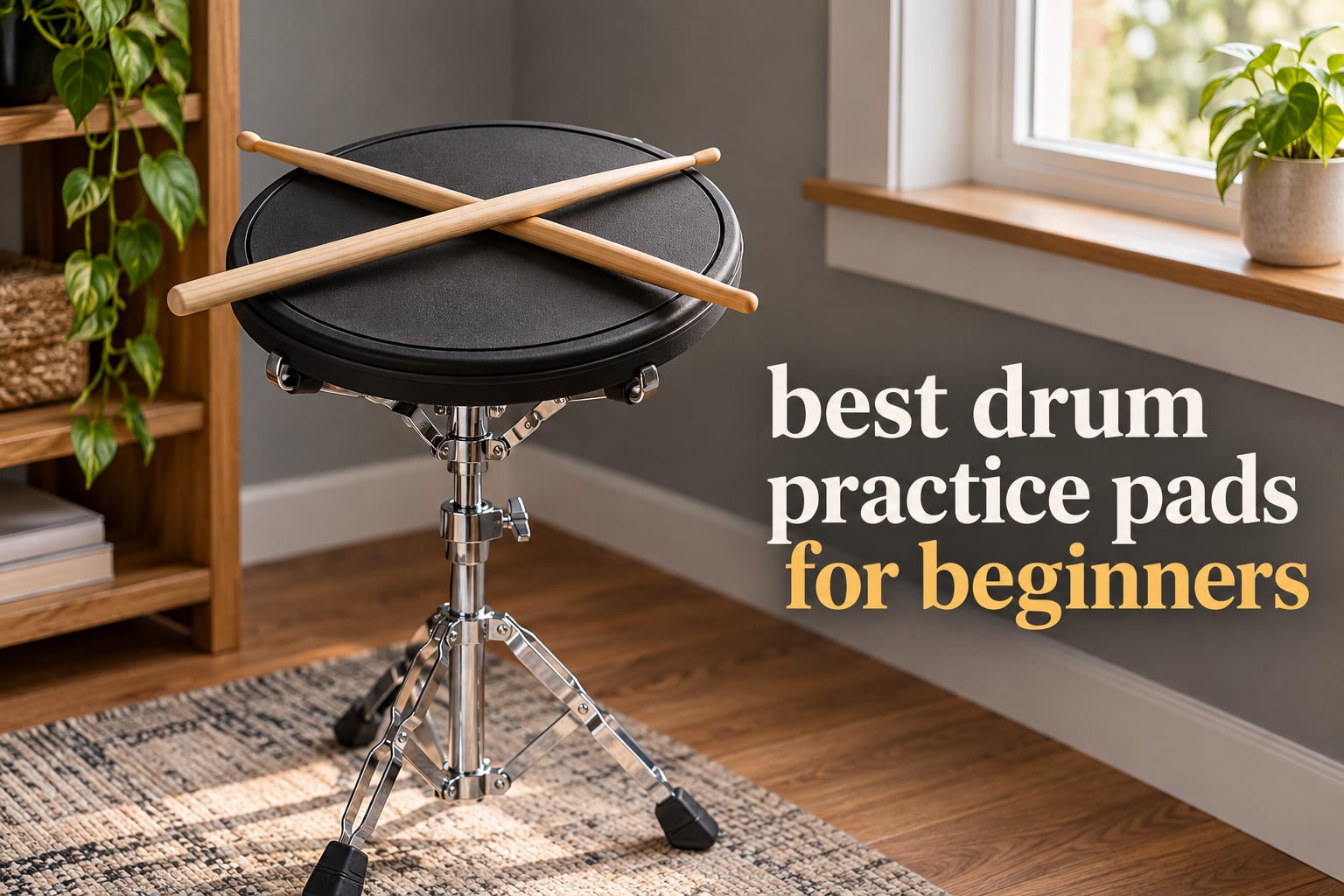
The Evans RealFeel 12 inch double-sided pad is the best drum practice pad for beginners because it gives you a realistic gum rubber surface for stick rebound work, a second firmer side for quieter endurance playing, and a weighted base that stays put on a table or a lap. If you want one complete starter setup instead of a bare pad, the Donner snare stand set with a 12 inch pad is the better buy.
That matters because a pad is the cheapest drum tool you will ever own and the one that decides whether you actually practise. A pad lets you work on sticking, timing and rudiments every day in a flat, a dorm or a bedroom, without the volume of a kit and without waiting until you can afford one. I have spent the last two months going back and forth between all eight pads below, mostly at a snare height, mostly with 5A sticks, mostly on the same carpet and the same table.
Our team compared the eight pads on the things beginners actually notice: how much the stick comes back, how loud the pad is at arm’s length, whether it slides, whether it fits a standard snare basket, and whether the rubber edges were still flat after weeks of daily use. Every pick below states its diameter, its weight, and what comes in the box, because those three details decide more purchases than any feel description. We also leaned on what drummers report in the forums, where the questions are blunter: is my pad too low, does it smell, does it slide, do the edges curl.
If you are still deciding between a pad, a mesh kit and a quiet acoustic kit, the short version is that a pad wins in year one because it is quiet, cheap and instant. You can read our electronic drum set guide for quiet practice if you think you will outgrow a pad within a few months, and our drum throne picks once you have a kit and need somewhere to sit for long sessions.
Top 3 Picks for Best Beginner Drum Practice Pads (October 2026)

Evans RealFeel 12 Inch 2-Sided
- Gum rubber and firmer recycled rubber
- Weighted base at 1.65 kg
- Quiet enough for apartments

Donner 12 Inch 2-Sided with Sticks
- Two playing surfaces
- Maple sticks included
- Lightweight wood and rubber build
Donner 8 Inch 2-Sided
- Compact 8 inch face
- Works on lap or table
- Quiet shared-wall practice
Best Drum Practice Pads for Beginners in 2026
All eight pads below are rubber or drumhead designs sold for practice rather than performance. We sorted them by what they are best at, not by price, so you can jump straight to the one that matches your room, your hands and your patience.
| Product | Specifications | Action |
|---|---|---|
| Evans RealFeel 12 Inch 2-Sided |
|
Check Latest Price |
| Donner 12 Inch 2-Sided with Sticks |
|
Check Latest Price |
| Donner 8 Inch 2-Sided |
|
Check Latest Price |
 Evans RealFeel 12 Inch Single-Sided Evans RealFeel 12 Inch Single-Sided |
|
Check Latest Price |
 Evans RealFeel Apprentice 7 Inch Evans RealFeel Apprentice 7 Inch |
|
Check Latest Price |
 Remo RT 10 Inch Red Tunable Remo RT 10 Inch Red Tunable |
|
Check Latest Price |
 Donner Snare Stand Set with 12 Inch Pad Donner Snare Stand Set with 12 Inch Pad |
|
Check Latest Price |
 Remo RT 6 Inch Red Tunable Remo RT 6 Inch Red Tunable |
|
Check Latest Price |
1. Evans RealFeel 12 Inch Double-Sided – Best Overall Practice Pad for Beginners
Evans RealFeel – Drum Practice Pad – Drum Pad – Drummer Practice Pad – Gum Rubber & Neoprene, 2 Sided, 12 Inch
12 inch two-sided pad
Gum rubber plus firmer rubber
1.65 kg weighted base
13.4 inch wide
Pros
- Two surfaces so you can switch rebound styles
- Realistic rebound on the gum side
- Heavy base stays put while playing
- Surface resists stick marks
- Works in a standard snare basket
Cons
- Heavier than a lap pad feels like
- Not mountable on a standard stand
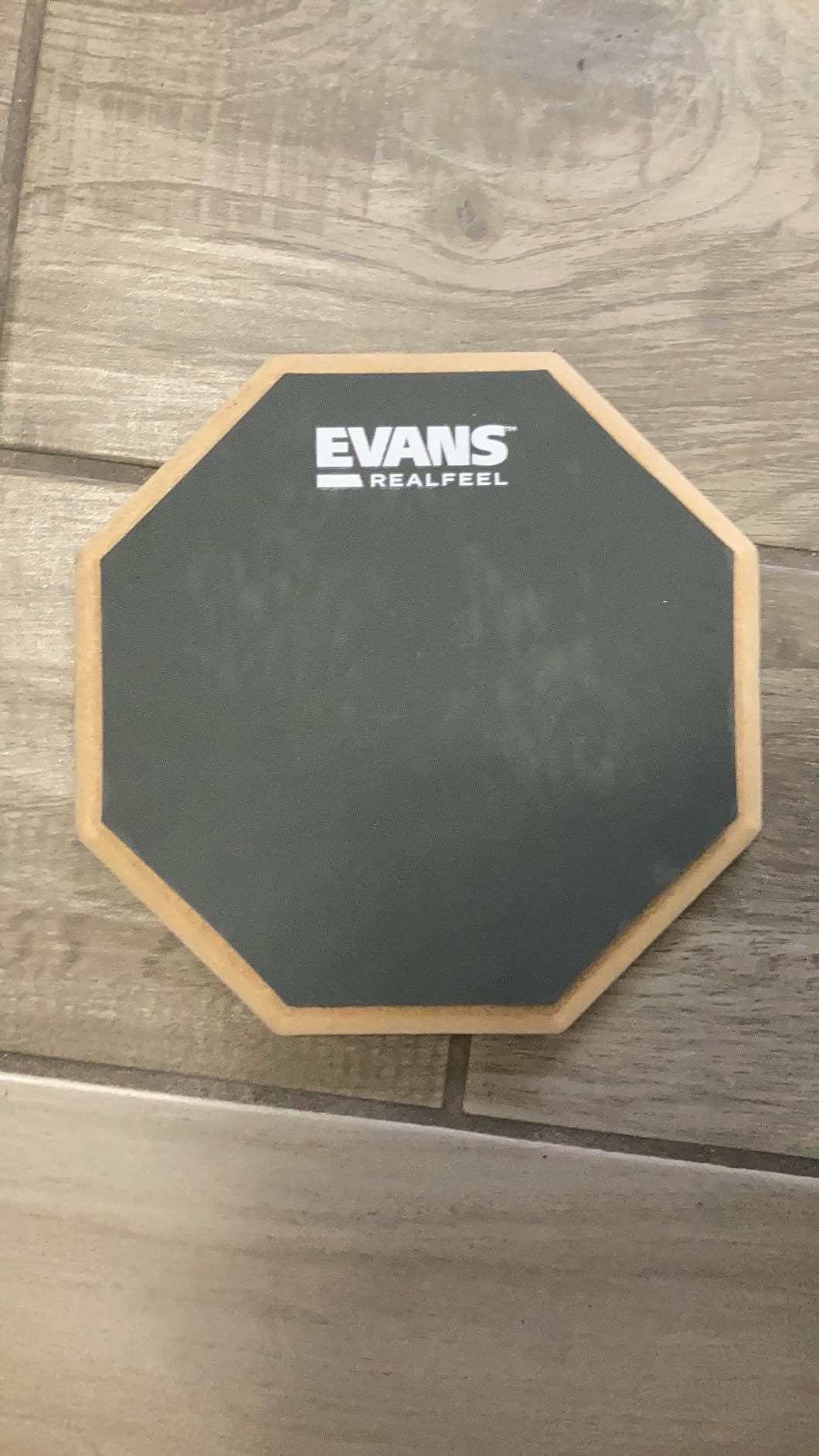
This is the pad I keep coming back to after trying the others. The gum rubber side gives back a stick almost the way a worn snare head does, which means your rebound drills at home transfer to the kit instead of teaching you something you have to unlearn. The second side is a harder recycled rubber with much less give, and that side is where the endurance and control work happens.
At 1.65 kg the base is heavier than most people expect for a practice pad, and that turned out to be the best thing about it. It stayed planted on a folding table, on carpet and on my lap through full rudiment sets, with no sliding and no need for a non-slip mat underneath.
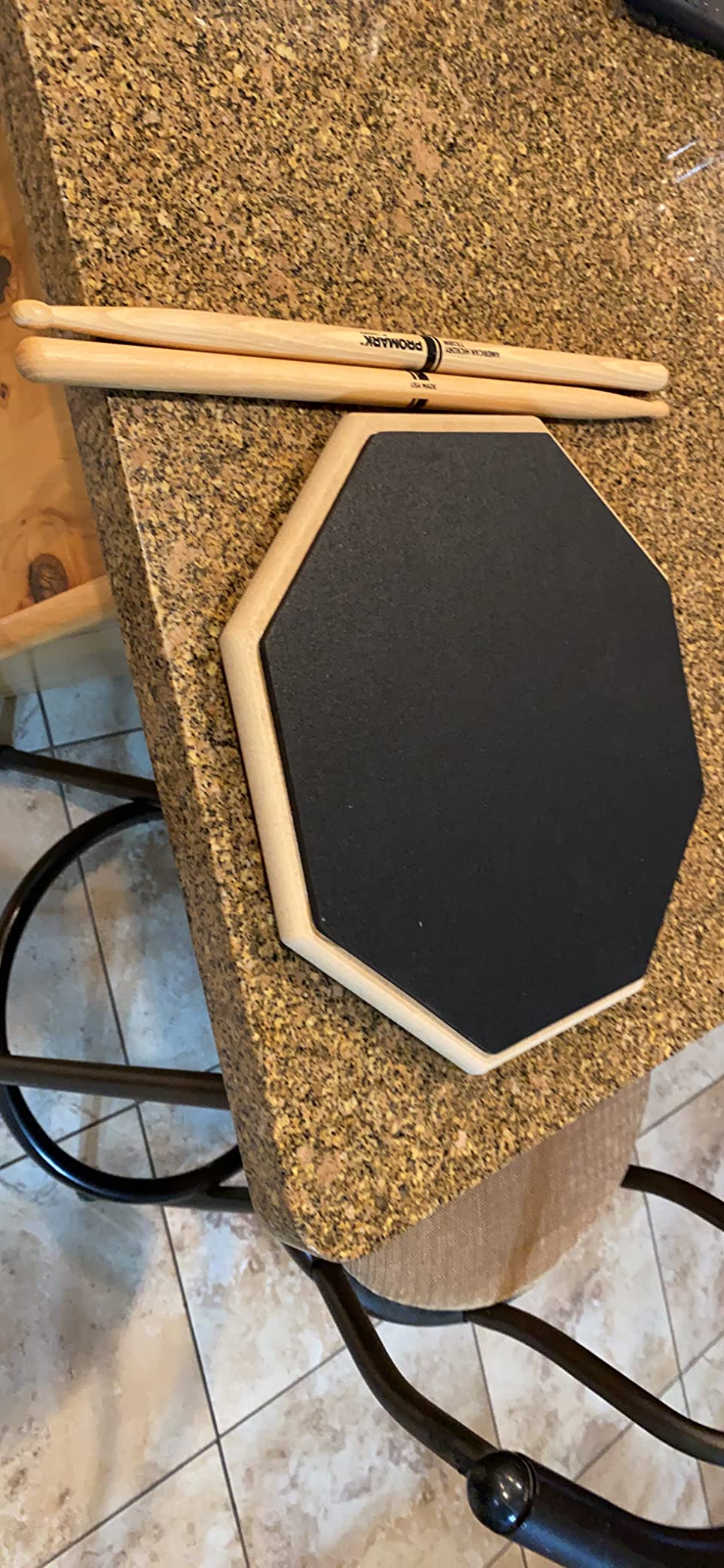
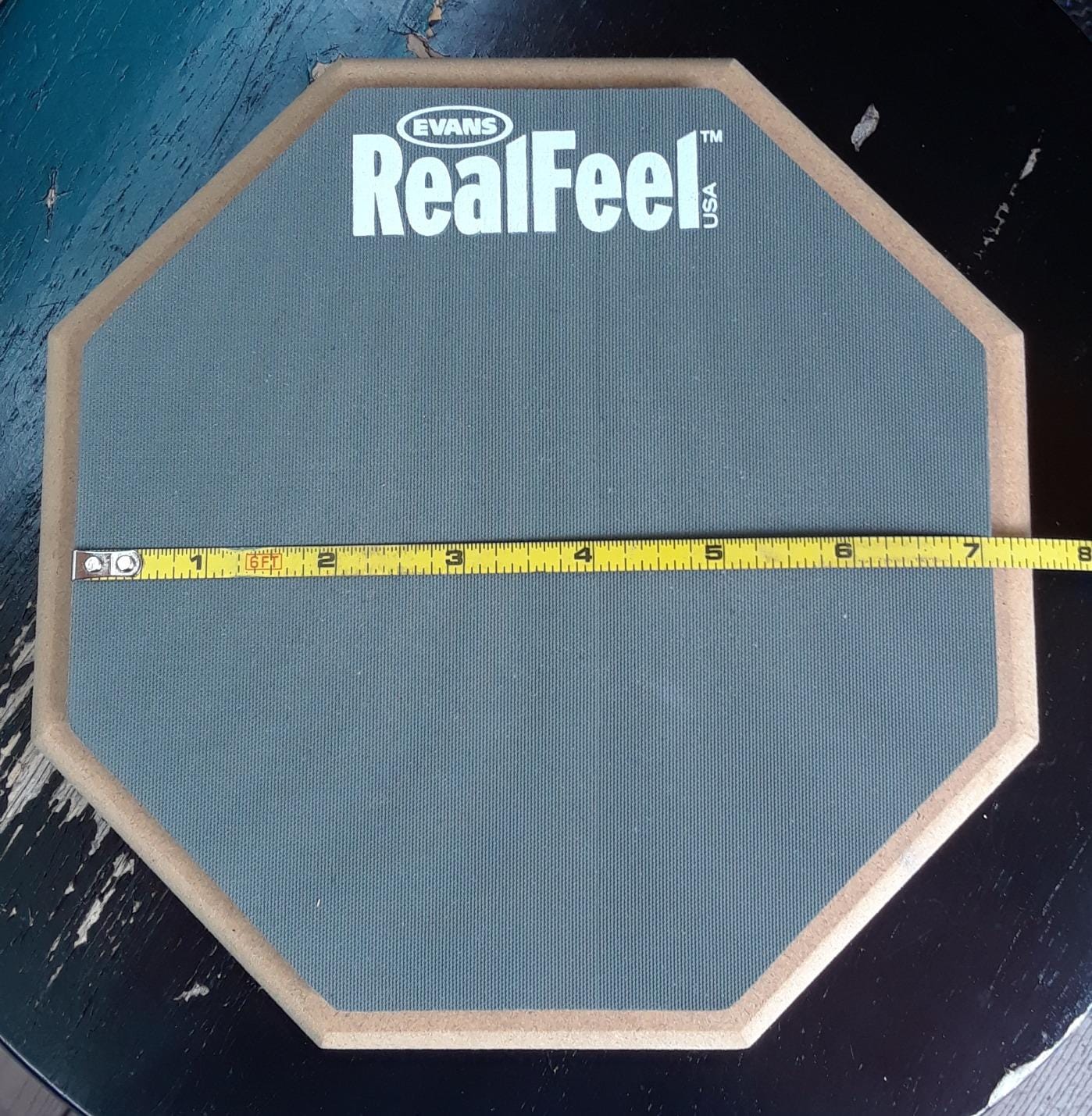
Two details I wish the listing explained better. The pad is listed at 13.39 by 13.39 by 1.57 inches, so it is a touch wider than the 12 inch figure on the box, and it does not thread onto a standard snare stand, so plan on a table, lap, snare basket or a floor tom hoop for mounting. Long-term owners in the reviews report the surface still resisting stick marks after heavy use, and the wear-resistant dark gray fabric finish is the reason.
For most beginners this is the only pad you will need for the first year. It covers loud-enough rebound work, quiet control work and warm-ups before a lesson, and it is the pad most often named first in drumming forum threads asking which pad to buy.
Who this pad suits
This suits anyone in a shared home, a flat with thin walls, or a bedroom where a kit is not an option. It is quiet enough to play full stroke rolls at controlled volume after the neighbours have gone to bed, and the two sides let you match the surface to the time of day.
It also suits players who want their technique questions answered honestly. High rebound on the gum side, low rebound on the firm side, same pad, no shopping required.
Who should skip it
If you need a pad that mounts on a stand for a proper playing height, this one is the wrong shape of product. Snare basket mounting works, threaded mounting does not, and beginners who want a low setup should look at the Donner stand bundle further down instead.
It is also a weighty pad compared with the 1.4 lb single-sided Evans, so if you want to practise on a sofa cushion or in the car on a long trip, a smaller model will serve you better.
2. Donner 12 Inch Double-Sided with Drumsticks – Best Value
Donner 12 Inches Drum Practice Pad Silent Drum Pad Set Blue 2-Sided With Drum Sticks
12 inch two-sided pad
Sticks included,Wood and rubber build
2.9 lb weight
Pros
- Ready to play with sticks in the box
- Two playing surfaces
- EVA mat base grips and cushions
- Quiet in shared spaces
- Available in 8 and 12 inch
Cons
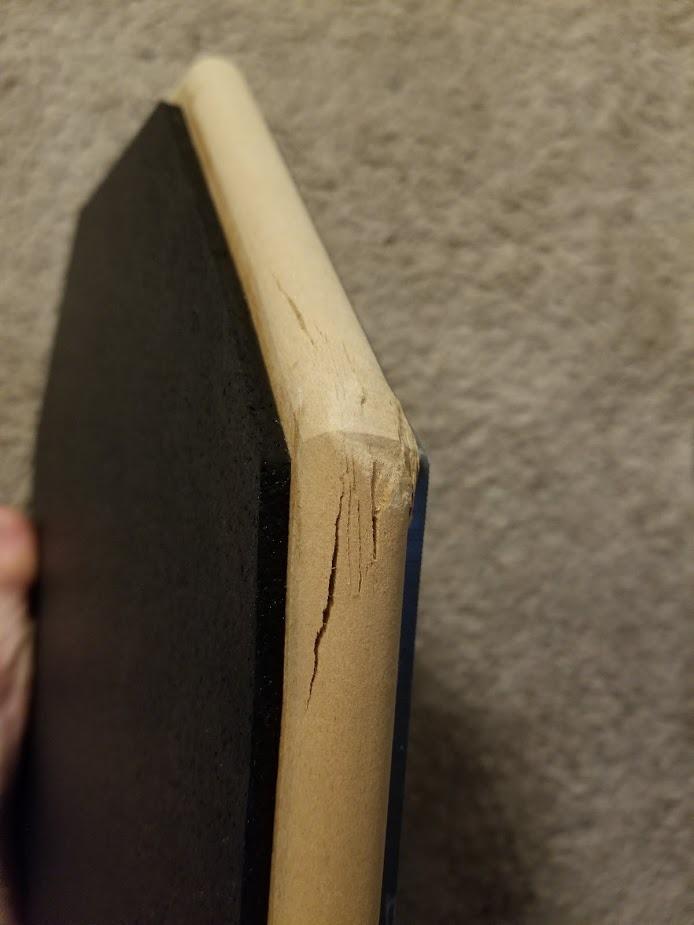
- Bundled sticks are light duty
- Back side feels cheaper than the top
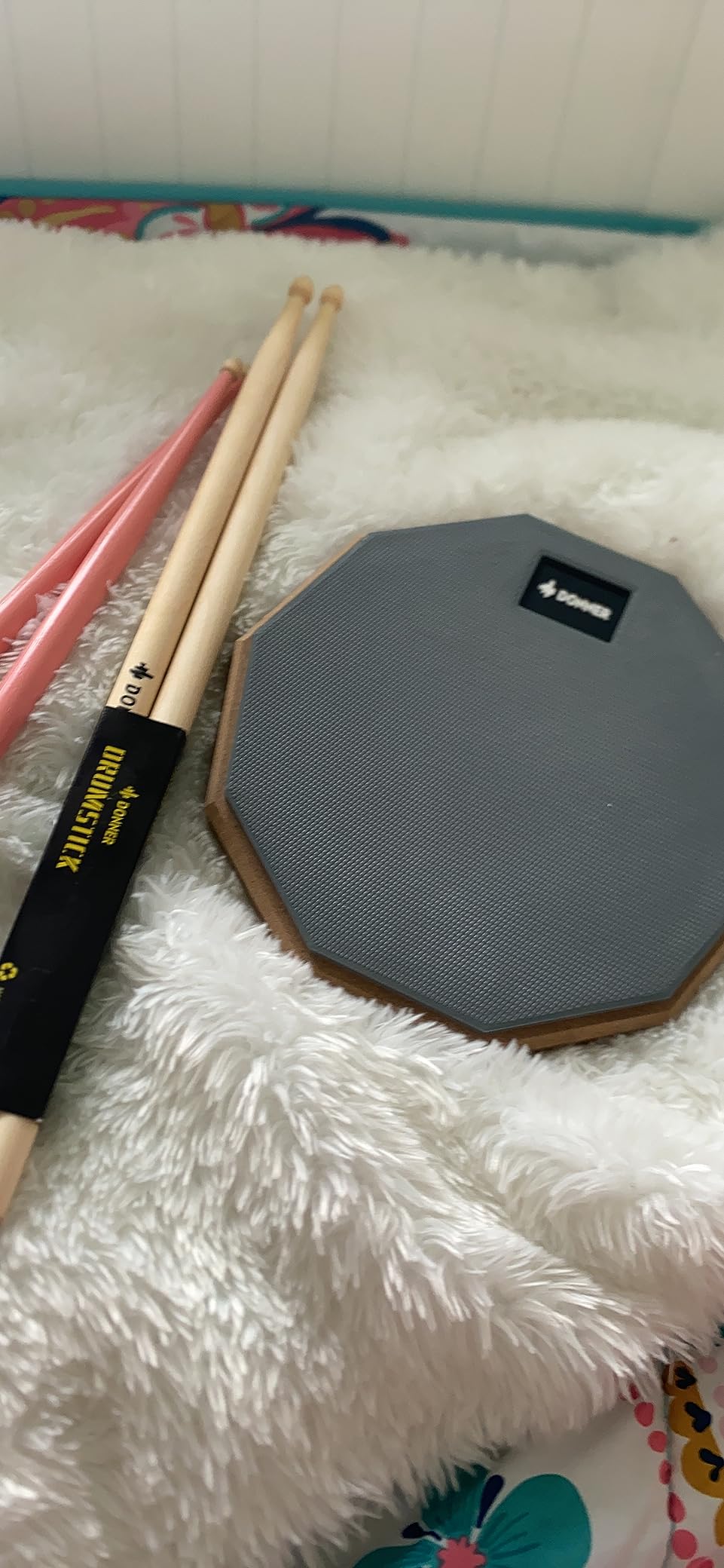
This is the pad I recommend to students and to anyone starting lessons who wants to press play and practise the same afternoon. The box includes a pair of maple sticks, so there is no separate first purchase, and the 12 inch face is roomy enough that stroke spacing feels close to a real snare.
The rebound surprised me more than I expected from a wood and rubber build. The high-density elastic rubber face gives back a genuine bounce, and the EVA polymer mat underneath grips the table and takes the sting out of long sessions. Music teachers in the reviews say they buy these in multiples for school band rooms, which matches what I found.
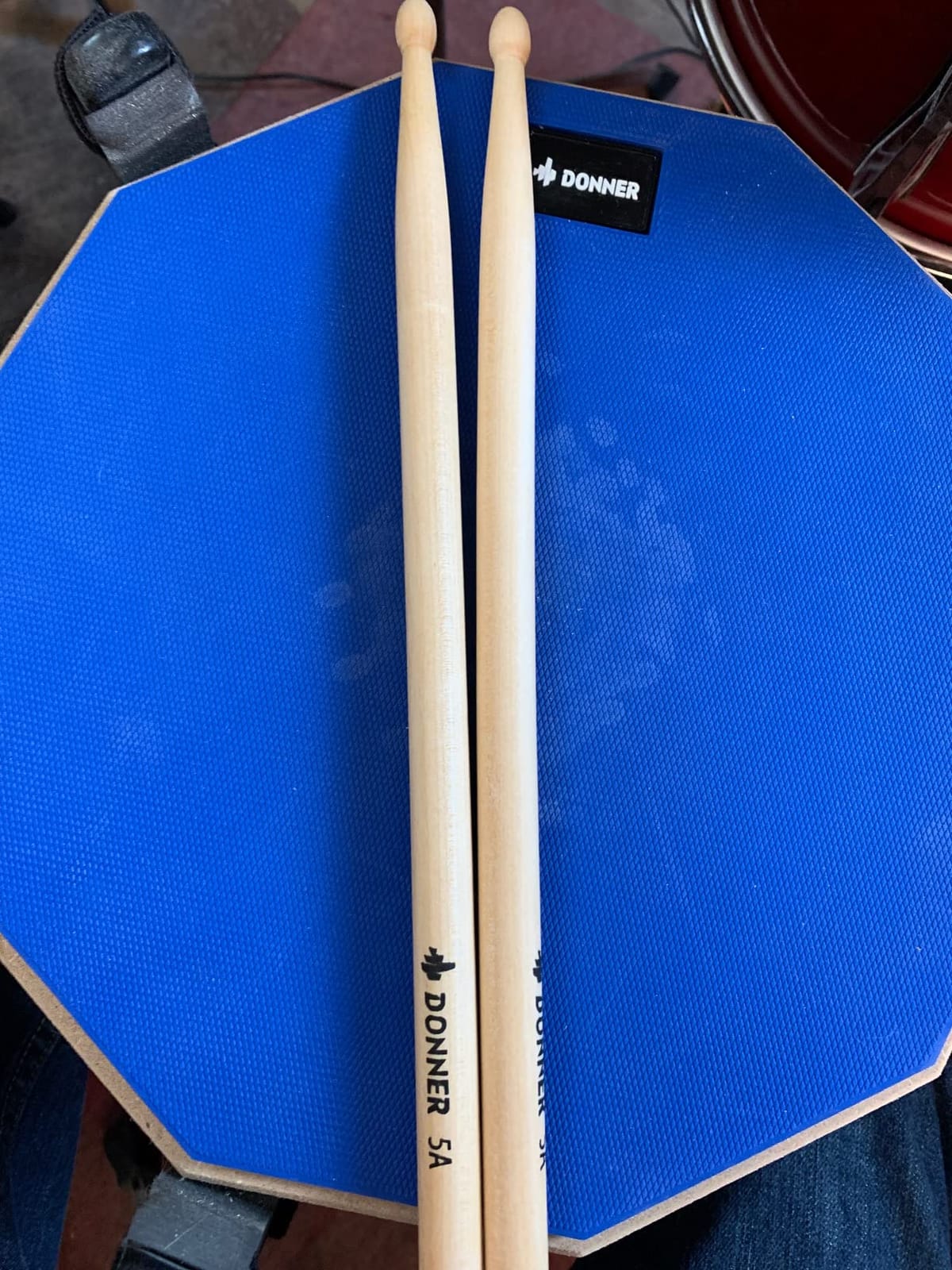
The honest drawback is the sticks. They are light, they flex more than a 5A, and they wear quickly, so treat them as a placeholder until you develop a preference. The reverse face is also the weaker half of the pad, but for a beginner practising rudiments and single stroke rolls that matters much less than the price of entry.
The underside has a cavity that lets you screw the pad onto a stand, so this one is a genuine option if you want a proper height later. Coming in at 2.9 lb it is also light enough to move between a table and a lap.
Who this pad suits
Students, first-year players, and anyone who wants a full 12 inch face without spending serious money. It is the best drum practice pad for beginners who care more about practising daily than about owning a premium surface, and the two-sided layout gives you quiet and louder options on one pad.
It also suits anyone who has been put off by pads that arrived with no sticks and no way to mount them.
Who should skip it
Players who are already working on serious technique and care about surface feel should step up to a gum rubber pad, where the rebound curve is more even. The bundled sticks are also not the place to settle on your preferred weight and tip shape.
If your floor space is tight, the 8 inch version of the same pad covers the same use case in a smaller footprint.
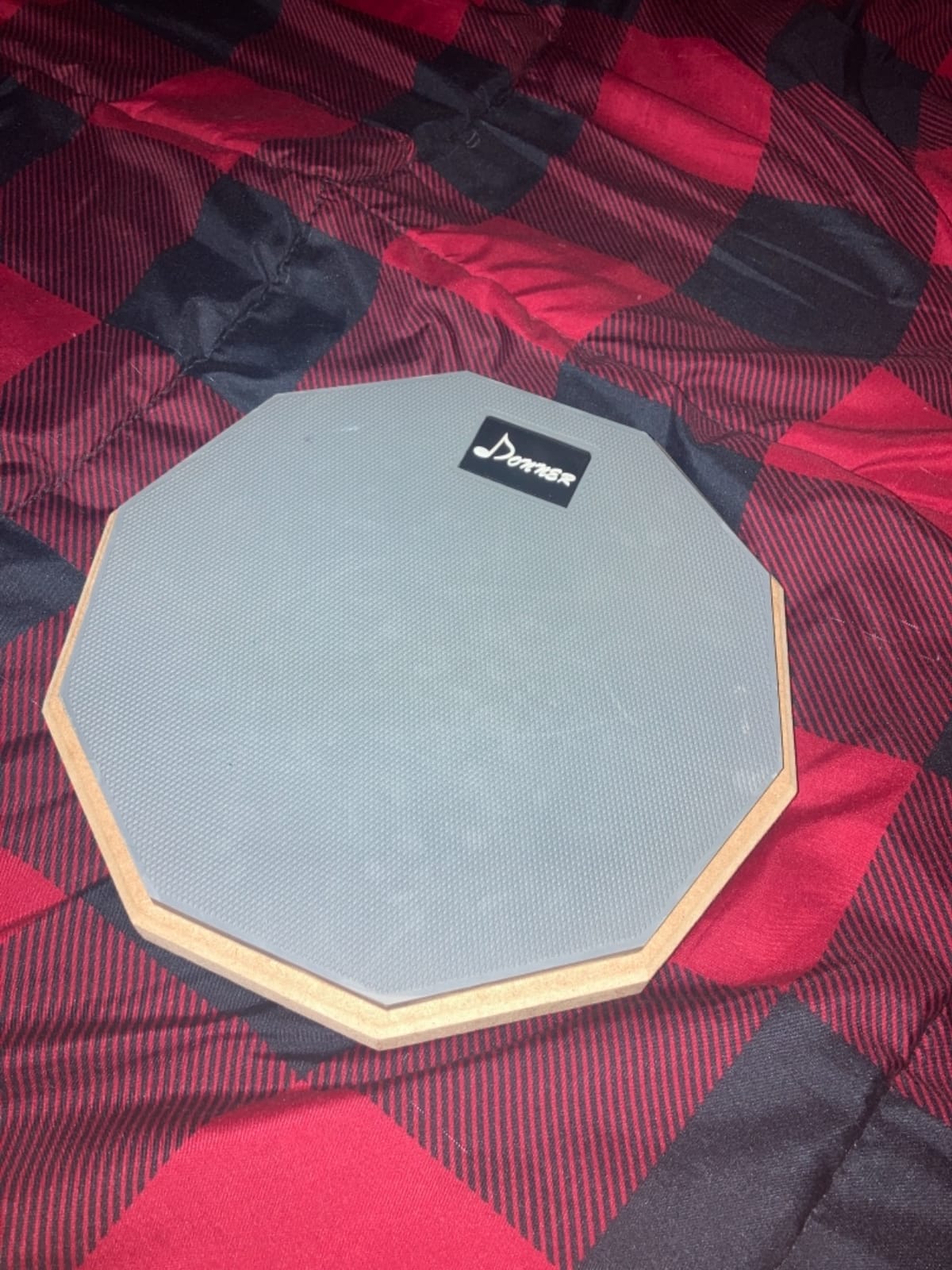
3. Donner 8 Inch Double-Sided – Best for Small Rooms and Kids
Donner Drum Practice Pad 8 Inches, Silent Practice Drum Pad 2-Sided
8 inch two-sided pad
Lightweight at 1.76 lb
Sticks included
Pros
- Small enough for a closet or a bag
- Quiet with other people in the room
- Real rebound for wrist control
- Two sizes and colours available
- Maple sticks in the box
Cons
- Bundled sticks are light duty
- Cramped for full-size stroke spacing
Diameter is the whole story with this one. At 8 inch it stores in a closet, rides in a backpack and fits on a small table in a room where a 12 inch pad feels like furniture. The two-sided layout and the same elastic rubber face as the larger Donner model mean you are not playing on a toy surface, just a smaller one.
I found the rebound genuinely useful for timing work. Because the face is smaller, missed notes are obvious, which makes it a good pad for paradiddle accuracy and for building wrist control. Reviews describe beginners using exactly this pad to develop control through casual short sessions.
At 1.76 lb it is the easiest of the Donner pads to move, and like its larger sibling it has an EVA mat underneath for grip and shock absorption plus a cavity in the underside for stand mounting. The 8 inch version shares the rating profile of the 12 inch one, and the listing covers blue and grey colour options in both sizes.
The limitation is stroke spacing. Once your technique improves, a smaller face makes wide spacing between strokes feel cramped, and long passages across the head become harder to read. For the first few months of playing, that is rarely a problem.
Who this pad suits
Kids and younger beginners with smaller hands, anyone in a very small room, and anyone who wants a pad that lives in a school bag. It is the pick I would make for a child starting lessons, because the size stops the pad feeling overwhelming.
It suits dorm practice too, where storage space and neighbours matter more than headroom for rudiments.
Who should skip it
Adults working on wide stroke spacing, double stroke roll control and anything that requires the full width of a snare head. Move up to the 12 inch Donner or the Evans 12 inch instead, both of which give you room to move.
Anyone who expects a serious primary pad rather than a student or backup instrument should know that teachers and experienced players consistently rate this as a solid starter rather than a long-term main surface.
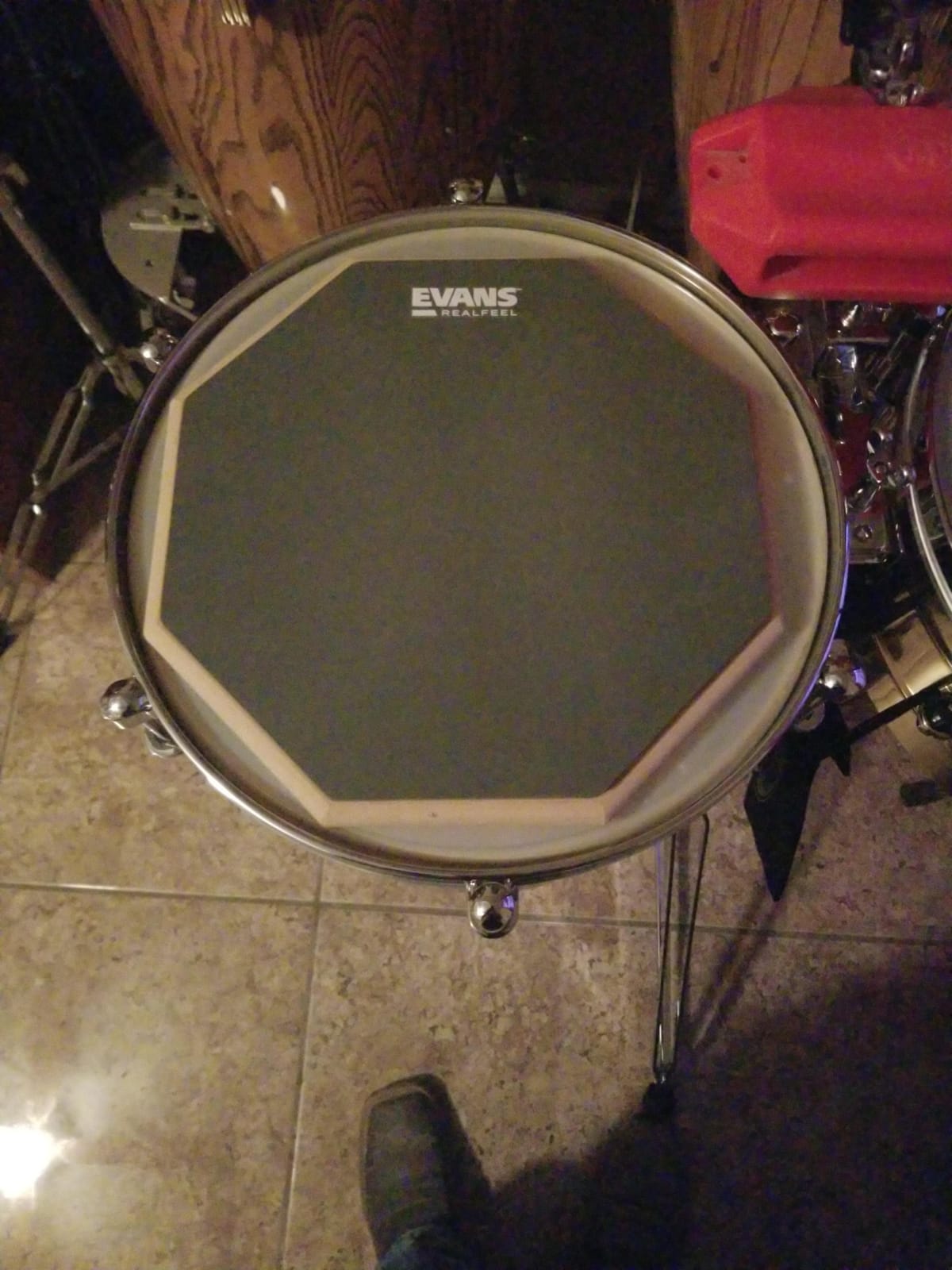
4. Evans RealFeel 12 Inch Single-Sided – Best Single-Surface Gum Rubber Pad
Evans RealFeel Single-Sided Drum Practice Pad, 12 Inch
12 inch single-sided pad
Natural gum rubber surface
1.4 lb weight
Pros
- Benchmark rebound for realism
- Dark gray finish resists wear
- Roomy 12 inch face
- Very quiet
- Long-term owners report years of use
Cons
- No harder second surface for endurance work
- Costs more than most rivals
- Not mountable on a standard stand
This is the pure gum rubber answer. If you want one surface that behaves like a real drumhead and do not care about switching between playing styles, this is the most commonly recommended single-surface gum rubber pad, and reviewers consistently compare it favourably to cheaper rubber pads and even to a worn acoustic head.
At 1.4 lb it is lighter than the double-sided Evans but still stable enough to stay put on a table. The 12 inch face is described in reviews as roomy enough for kids to hit without feeling cramped, and the sound is quiet enough that controlled strokes still feel like a snare rather than a thud.
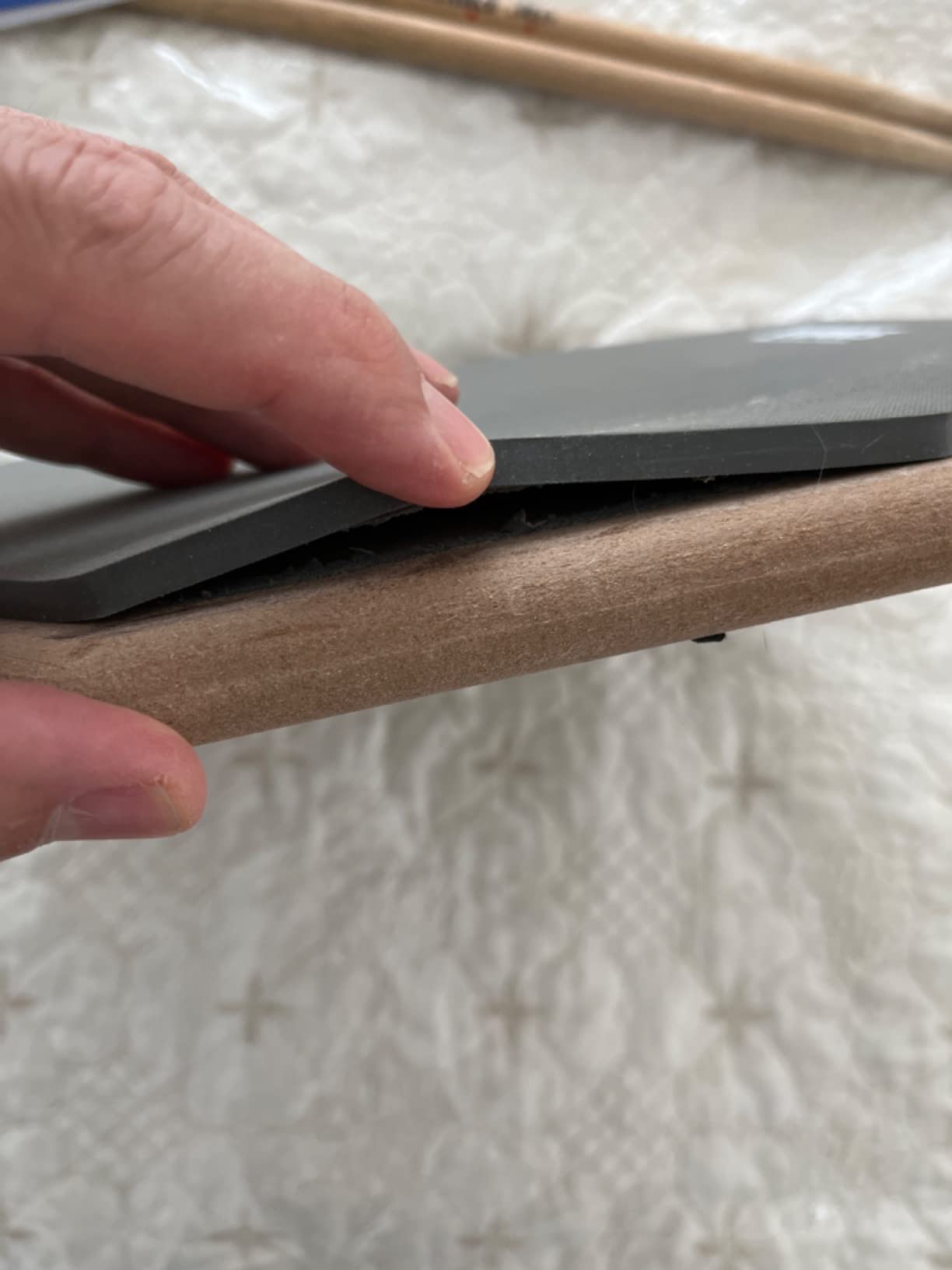
The trade-off is depth. With a single surface you get consistency but you lose the option of a low-rebound side for quieter hours or harder work, which is the feature most often cited as the reason to spend more on a double-sided pad. Long-term owners in the reviews report the pad lasting years, so durability is not the concern.
Like the 12 inch double-sided model, it is not mountable on a standard stand, so treat it as a table, lap and snare basket pad.
Who this pad suits
Players who want one honest surface and do not need variety. Drummers coming back to the instrument after a break use pads like this to rebuild muscle memory quietly at a desk, and the even 12 inch diameter helps with that.
It suits anyone who has already tried cheap rubber pads and felt they were fighting the surface rather than the drum.
Who should skip it
Beginners who practise at inconsistent hours and need a quiet option for late sessions, since there is no second side to switch to. Households where a single loud surface would be a problem should look at the double-sided options.
Budget-first buyers should note that this pad costs more than most of the generic alternatives in this list, which is the single most common complaint in its reviews.
5. Evans RealFeel Apprentice 7 Inch – Best for Kids and Small Hands
Evans RealFeel Apprentice Drum Practice Pad, 7 Inch
7 inch single-sided pad
Natural gum rubber
Lightweight at 1.22 lb
Pros
- Right size for small hands
- Authentic gum rubber response
- Fits standard snare baskets
- Quiet enough for a car or studio
- Backed by a long production history
Cons
- Single-sided with no harder surface
- Smaller striking area than 12 inch
The Apprentice size exists for a reason. Seven inches is a dedicated apprentice size, built for players who cannot yet cover a 12 inch face comfortably, which makes it the first pad I would put in front of a child aged six to nine rather than an adult beginner.
Despite the size, the surface is the same natural gum rubber as the larger models, so the feel and the rebound are authentic rather than a compromise. It weighs 1.22 lb, it is quiet, and it fits inside a standard snare basket, which means a child can get proper playing height without a special mount.
The same trade-off as the single-sided 12 inch applies. One surface, no harder option for endurance work, and a smaller striking area for anything that needs full stroke spacing. Reviews position it as a starter or travel pad rather than a long-term workhorse, and the large review base reflects years of use in music rooms and homes.
The dark gray fabric finish resists wear and tear on the playing side, which matters for a pad that gets dropped, stored in a closet and carried to lessons.
Who this pad suits
Children starting lessons, players with smaller hands, and anyone who wants a compact pad that travels easily in a car. The gum rubber surface means a young player learns the same stick response they will meet on a real snare later.
It is also a sensible second pad for an adult who wants a quiet surface for warm-ups in places where a 12 inch pad will not fit.
Who should skip it
Anyone working on wide stroke spacing, rolls that need a full head, or double stroke control drills. The hitting area is simply too small for that work, and fighting the edge teaches bad habits rather than good ones.
Players who want two surfaces in one pad should note this model is single-sided, so there is no quiet or firm option to switch between.
6. Remo RT 10 Inch Red Tunable – Best for Real Drumhead Feel
Remo RT-0010-58 10″ Red Tunable Practice Pad with Ambassador Ebony Drumhead
10 inch tunable pad
Real coated drumhead
8 oz weight
Pros
- Real drumhead bounce and feel
- Head tension is tunable
- Fits standard snare stands
- Protective rubber base
- Owners report multi-decade use
Cons
- Louder than a silent rubber pad
- Not thread-mounted for every stand
- Sticks in listing photos are not included
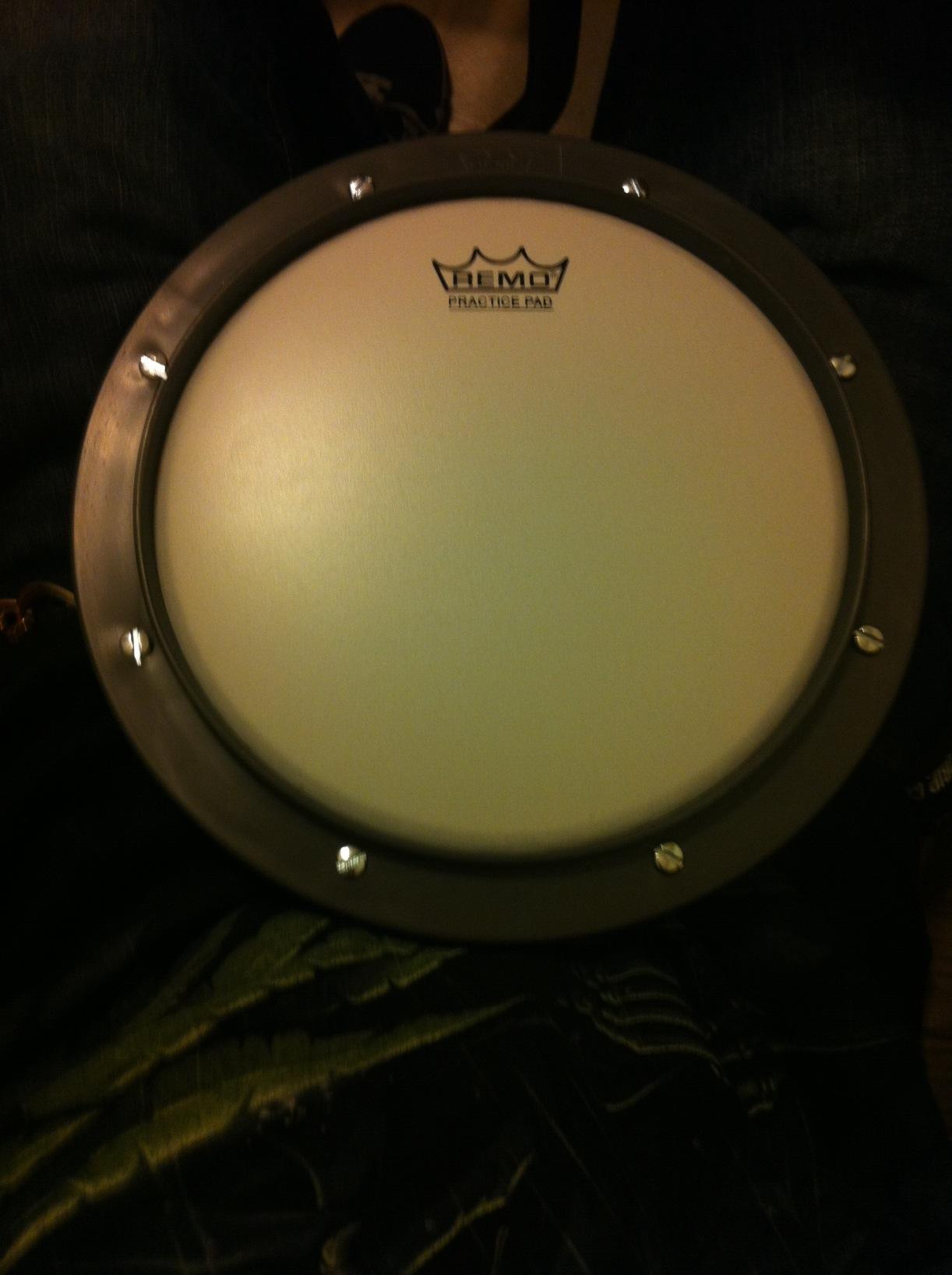
This pad takes a different approach. Instead of rubber it uses a real replaceable Ambassador Coated drumhead, and that changes everything about the practice: you are playing a genuine drumhead tuned to a tension you set, which makes roll control and dynamics far more accurate.
It is also the lightest pad in this roundup by a wide margin at 8 oz, and at 10 inch it is the size most often recommended for mounting on a standard snare stand. If you care about playing height and you also want your pad to behave like part of a kit, this is the one to buy.
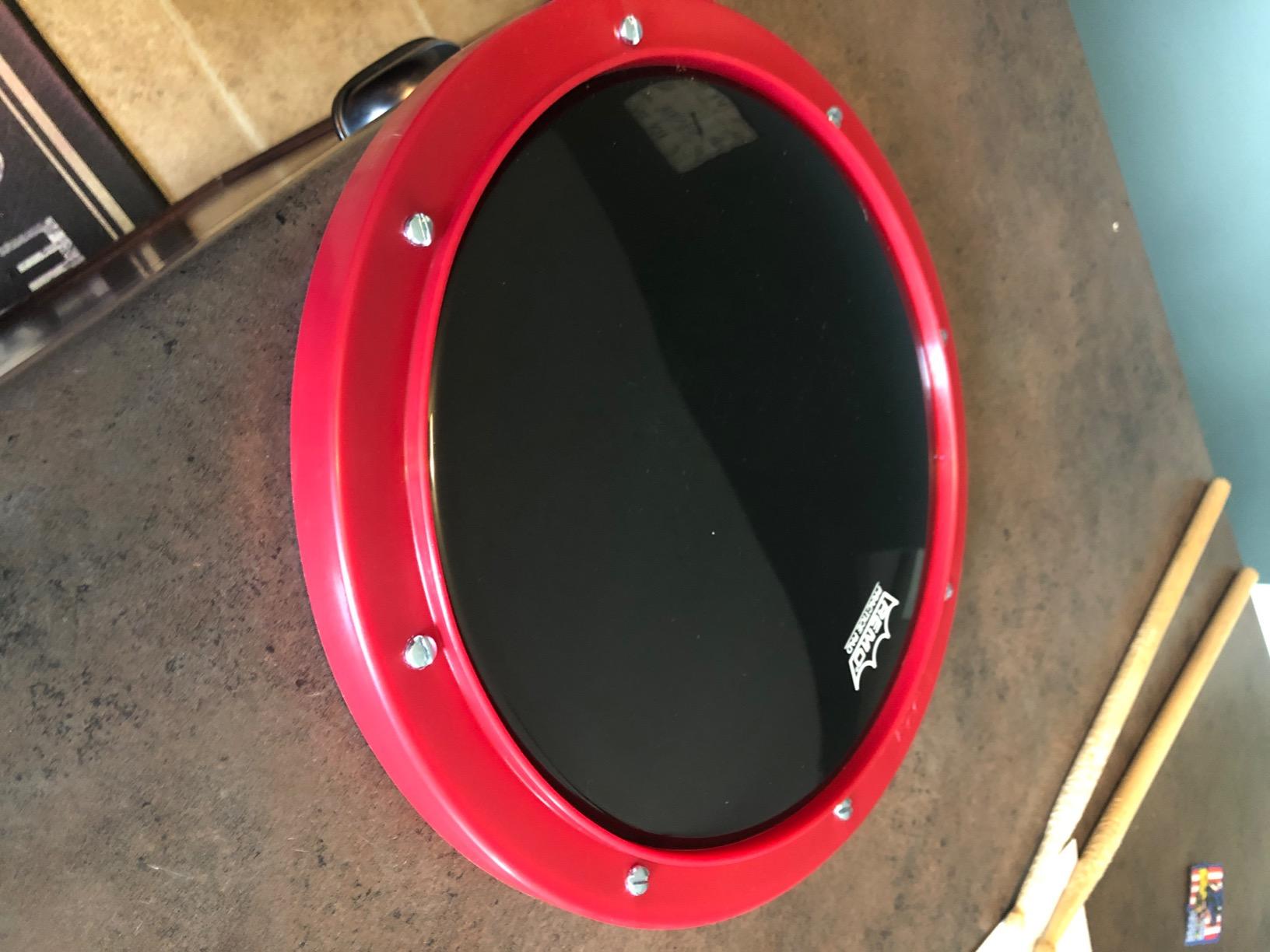
Now the part beginners should hear clearly: it is louder than a rubber practice pad. That is a design feature rather than a flaw, and drummers credit the audible feedback with helping them judge dynamics, but if you need near-silence at midnight this is the wrong choice. Users who need silence treat the sound level as a drawback, and users who want feedback treat it as the whole point.
Long-term owners report these pads lasting for decades and passing them down, and the replaceable head means you are not replacing the pad when the surface eventually wears. Sticks shown in the listing photos are not included, so plan to buy your own.
Who this pad suits
Beginners who want to practise the same response they will get on a kit, especially for rolls, accents and dynamics. It suits anyone with a stand already, since 10 inch is the size most snare baskets accept comfortably.
It also suits players who find rubber pads too dead, and musicians who want to hear what they are playing while they work on timing.
Who should skip it
Anyone in a shared home or a bedroom where a drumhead sound at any hour is a problem. Neighbours and family are the most common reason beginners buy a pad, and this one does not solve that.
Travel-light players should also note the weight relative to the tiny rubber pads, even though it is light by drum standards.
7. Donner Snare Stand Set with 12 Inch Pad – Best All-in-One Kit
Donner Snare Drum Stand Set with Drum Practice Pad, 12” Double-sided Silent Drum Pad set, Drumsticks, Backpack Adjustable Stand Fits 10”-14” Dia Drums
12 inch pad plus stand
Sticks, bag and gels included
3.8 kg total
Pros
- Everything a beginner needs in one box
- Adjustable double-braced stand
- Backpack for lessons and gigs
- Double-sided 12 inch pad
- Quick to assemble
Cons
- Stand max height is low for taller players
- Bundled maple sticks wear quickly
- Bulkier to store than a pad
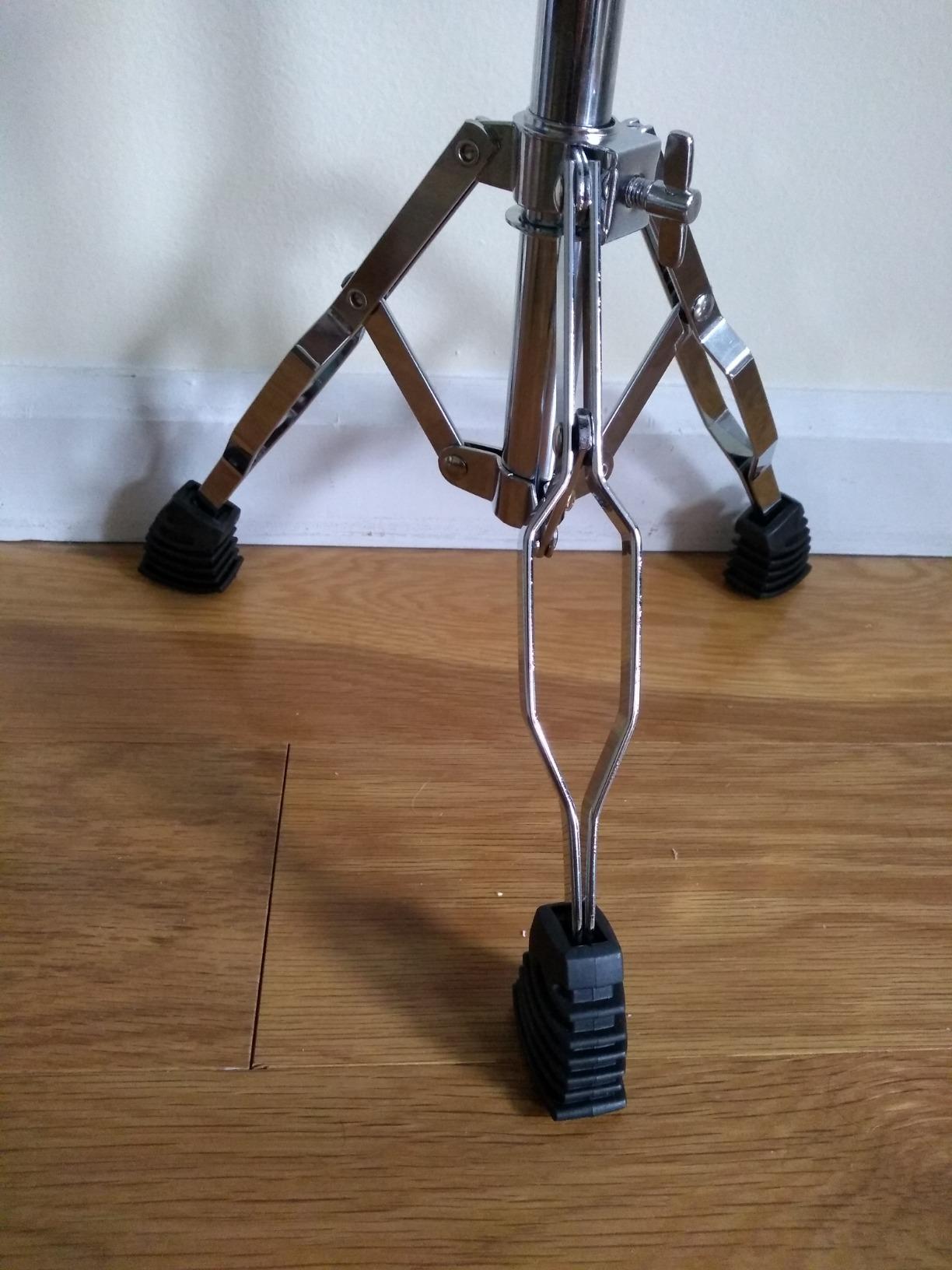
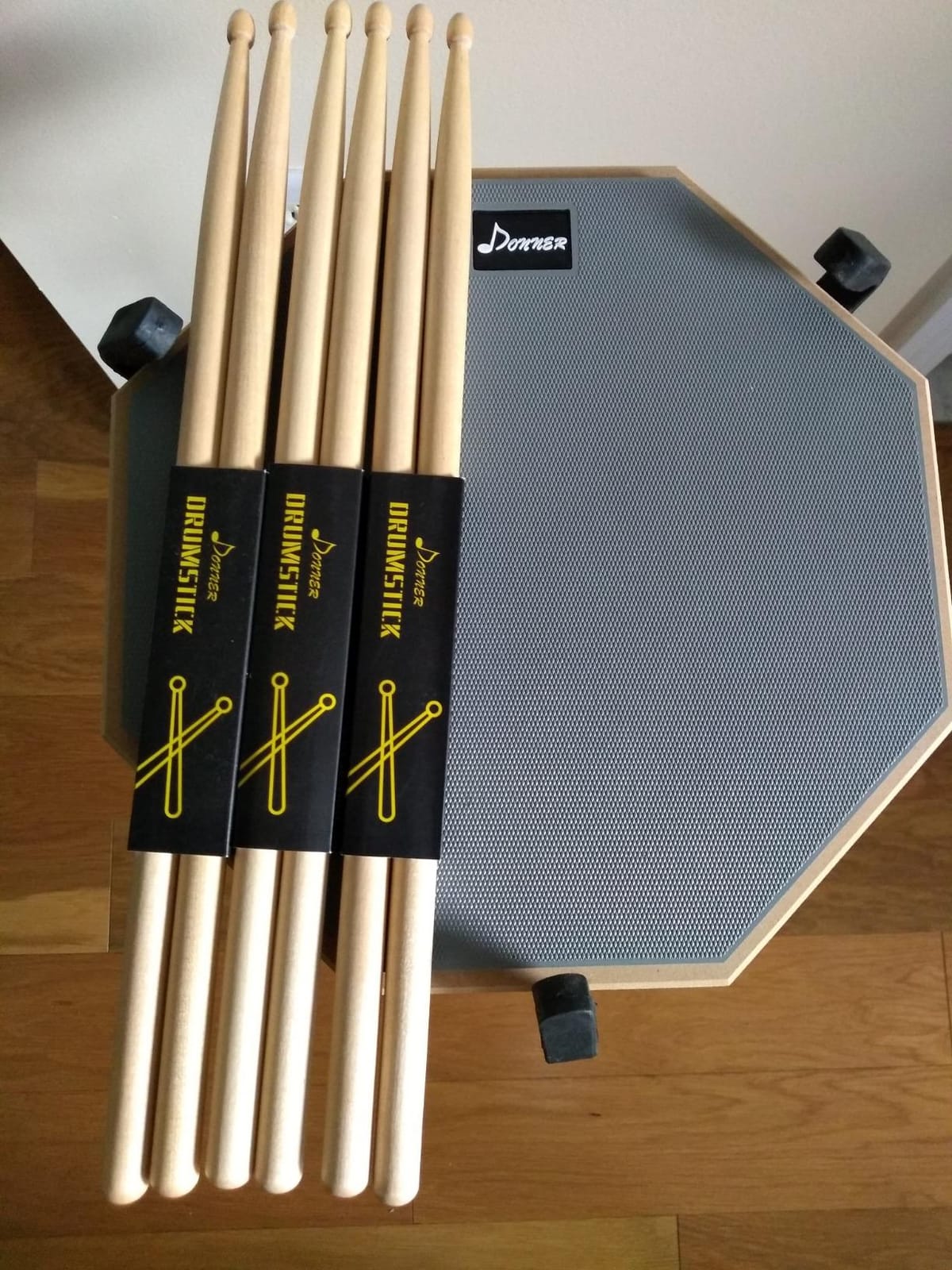
This is the one to buy if the reason you have not started is that you do not own a stand. The box holds a 12 inch double-sided pad, a double-braced tripod snare stand, three pairs of drumsticks, drum gels, a stick bag and a backpack, which is everything a beginner needs to start playing on day one.
The stand adjusts from 14.2 to 22.8 inches and its basket fits drums from 10 to 14 inches, so the pad sits at a real playing height instead of a table edge. That single fact removes the most common beginner complaint in drumming forums, where people ask whether their pad is too low and nobody answers.
The reviews describe exactly that use case: beginners in flats, condos and shared homes who cannot have a kit, and teachers who buy it for students. The backpack means the whole set moves to lessons and back again, and reviewers stress that the kit packs away into a closet or onto a hook.
The most repeated complaint is the stand’s maximum height, which taller players found too low. The bundled maple sticks also wear quickly, so buy proper 5A sticks once you know what you like. At 3.8 kg for the set it is bulkier to store than a bare pad, which matters in a small flat.
Who this kit suits
Absolute beginners who want a correct playing height immediately, families sharing one practice space, and anyone whose main blocker is gear rather than motivation. Double-sided 12 inch means you have a realistic rebound side and a quieter side without buying a second pad.
It suits players who travel to lessons or gigs, since the whole set goes into the supplied bag.
Who should skip it
Taller drummers, because the stand’s top setting is the most criticised part of this package. If you are over roughly six feet, check your required height before committing.
Anyone with very limited storage space should weigh the full size of the stand against a single small pad, which takes up almost nothing and still works on a snare basket.
8. Remo RT 6 Inch Red Tunable – Best for Travel and Tip Placement
Remo RT-0006-58 6″ Red Tunable Practice Pad with Ambassador Ebony Drumhead
6 inch tunable pad
Real coated drumhead
0.39 kg weight
Pros
- Real drumhead bounce and feel
- Small enough for table or lap
- Great for stick-tip placement
- Tunable tension
- Non-scratch rubber base
Cons
- Louder than a silent rubber pad
- Small striking area
- Sticks in listing photos are not included
The six inch Remo is the smallest genuine drumhead pad here, and that is exactly why parents and instructors like it. When the head is that small, every stroke is judged by where the tip lands, so bad habits show up immediately instead of hiding on a wide surface.
It mounts on standard stands and can even sit on a xylophone stand, weighs 0.39 kg, and works on a table or a lap thanks to the protective rubber base that will not scratch furniture. It is the pad I would pack for focused work on tip placement and accuracy.
The sound is real rather than silent, so it shares the loudness trade-off with the 10 inch Remo. It shares the same 4.6 rating and review base as its larger sibling, and the listing covers grey and red finishes in 6, 8 and 10 inch sizes.
Who this pad suits
Anyone drilling stick-tip placement, rudiment accuracy and hand position, plus parents who want a small pad on a table rather than a large object in the living room. It is a genuinely good travel pad because it takes up almost no space.
It also suits beginners who want a real drumhead feel at the lowest commitment of the head-based options.
Who should skip it
Players who need a bigger striking surface, since a 6 inch head is the smallest of the three Remo sizes and leaves little room for stroke spacing. If you want head-based play with more space, take the 10 inch model.
Anyone needing silence for late-night practice should rule out all head-based pads, not just this one, and read the noise section below before deciding.
Are Drum Practice Pads Good for Beginners?
Yes, and most drummers would argue a pad is the single most useful thing you can own in your first year. It lets you practise every day without noise, and it isolates hand technique so bad habits do not get locked in before you ever touch a kit.
The main caveat is that a pad teaches you control, not volume. Start on a controlled stick height, keep strokes low and even, and let the surface tell you where your rebound is inconsistent. Beginners who treat a pad as a toy end up with tense wrists, which is exactly the complaint that comes up again and again in drummer forums and in the video discussions on this topic.
What to Look for in a Drum Practice Pad
The three things that decide whether a pad works for you are surface material, size and portability. Everything else is preference. If you get those three right, you can practise happily for a year before you need anything else.
Surface material: gum rubber gives the most realistic stick rebound and the slowest hand fatigue, harder rubber gives less rebound and teaches control, and a coated drumhead gives the truest drum feel with real sound. Cheaper foam-style pads are quiet but teach less.
Size: 6 inch and 7 inch pads suit kids, small hands, tight rooms and travel. 8 inch is the compact all-rounder. 12 inch is the standard for adults because it matches the width of a snare head and gives you room for stroke spacing.
Portability: pads around 1.4 pounds or less move between a table, a lap, a car and a lesson without thinking about it. Heavier weighted pads stay put better but are a chore to carry.
Two secondary checks matter just as much in practice. Look for a non-slip bottom or base, because a sliding pad ruins every drill, and check whether the pad fits a standard snare basket, because that is the cheapest way to get a proper playing height without buying a stand.
Finally, read what is in the box. Sticks included is a genuine saving for a first purchase, and a stand included removes the most common beginner regret.
Pad Size: 6 Inch vs 8 Inch vs 12 Inch
Size is the first decision most beginners get wrong, and the simple rule is that the pad should be comfortably larger than your hand span. A pad that is too small forces you to crowd your strokes, which is the exact habit you are trying to avoid.
For a child under about ten, or a player with small hands, the 7 inch Evans Apprentice is the right fit and carries the same 4.8 rating as the two larger Evans pads. The 6 inch Remo is smaller still and works as a focused practice surface rather than a full kit substitute.
The 8 inch Donner is the compact all-rounder and the easiest pad to store in a small flat. The two 12 inch pads, both Evans RealFeel models, give you a full snare-sized face for stroke spacing, rolls and wide rudiments, and they are the default choice for adults.
One practical note on the 12 inch Evans pads: they are wider than their nominal size in the published dimensions, and they do not thread onto a standard stand. If a stand matters to you, look at the Donner kit or the 10 inch Remo instead.
Do You Need a Stand, and How High Should the Pad Sit?
You do not strictly need a stand, but you will practise more if the pad sits near snare height. Sitting at a table edge or on a lap works for the first few weeks, then it starts teaching a raised-arm posture you will have to unlearn.
Most pads fit inside a standard snare basket, which solves the problem for almost no money. The most useful trick in the drumming forums for getting exact height is to mount your real snare in the basket first, set the stand to the height you want, then take the snare off and lay the practice pad on top of the snare head. The pad then sits exactly where the drum would.
Two of the pads in this roundup ship with a way to mount directly. The Donner 8 inch and 12 inch pads have a cavity in the underside that screws onto a stand, and the Remo 6 inch and 10 inch models mount on standard stands and even on a xylophone stand.
If you want the full setup in one purchase, the Donner snare stand set gives you an adjustable double-braced stand with the pad, sticks and a bag, adjusted from 14.2 to 22.8 inches. Check the maximum height against your own height first, because that is the most common complaint about that stand.
How Loud Is a Drum Practice Pad, Really?
Rubber pads are genuinely quiet. On a carpet or a rug the Evans and Donner rubber models produce a soft muted thud with very little frequency range, which is why they are the default answer for apartments, dorms and late-night practice.
Head-based pads are a different category. The Remo tunable pads use a real coated drumhead, so they produce a real drum sound at a fraction of the volume of a kit. Many drummers treat that as a feature because you can hear your dynamics, but if the goal is near-silence, a head-based pad is the wrong choice no matter how quiet the listing claims it is.
Honest volume descriptions matter more than the word silent. Users in the forums are blunt about this: they want to know what a pad actually sounds like in a room, not what the marketing says. Between these two categories, choose the rubber pad for quiet and the Remo for feedback.
One free improvement for either type is the surface underneath. A rug or foam mat under the pad cuts the low-end thud that carries through floors and shared walls more than any pad choice does.
Pad Surface, Rebound, and Your Hands
Rebound is how much the stick comes back after a stroke, and it is the most important thing about a pad for a beginner. A surface that throws the stick high invites you to grip harder and lift more, and that is where wrist strain and hand fatigue come from.
Low-rebound surfaces ask for more control from you, which is why they are the better choice for endurance work and for playing quietly. High-rebound gum rubber feels closer to a real head and is useful for warm-ups and for rebuilding muscle memory, but it is not a licence to play harder. The discipline is the same on both: keep the stroke height low and let the stick return naturally.
Calluses build from consistent light contact, not from forcing volume through rubber. Beginners who practise twenty controlled minutes a day on a firm surface tend to progress faster and complain less about their hands than beginners who hammer a high-rebound pad every evening.
If your hands or wrists ache, the first fix is usually a lower-rebound side, which is the strongest practical argument for a double-sided pad like the Evans RealFeel 12 inch or either Donner model in this list.
Which Drumsticks to Use With a Practice Pad
Start with 5A sticks, the standard beginner weight and the size most teachers hand out. They are balanced enough for technique work and durable enough that you will not change them every month.
Younger players with small hands do better on lighter sticks, which is a common recommendation in drumming forums, and thinner sticks are easier on a small pad like the 7 inch Evans Apprentice. Brushes and rods are worth adding later for control work, but neither teaches a beginner anything a stick does not.
Be careful with bundled sticks. Both Donner pads include maple sticks, and reviewers consistently describe them as light duty and quick to wear. They are good enough to start, but replace them with a proper pair once you have a feel for the pad, because cheap sticks teach a heavy grip that then has to be corrected.
A Simple Four-Step Beginner Practice Routine
Twenty minutes, four steps, most days. This works on any of the pads in this roundup and is built to keep the noise low and the hands relaxed.
Warm-up strokes, 5 minutes. Single strokes at a comfortable height, metronome at a slow tempo, focusing on matching rebound on every hit rather than speed.
Sticking, 5 minutes. Work through rudiments on one playing surface, quarter notes then eighths, stopping whenever the spacing looks uneven in the air.
Control work, 5 minutes. Flip to the firmer or quieter side if your pad is double-sided, and play the same pattern at a lower stroke height. This is where wrists learn to stay loose.
One song, 5 minutes. Play something you like at a steady tempo. Ending on a win is what makes you come back tomorrow.
Our practice net picks follow the same principle for a completely different sport: short, repeatable, and finished with something that feels good.
Frequently Asked Questions
Are drum practice pads good for beginners?
Yes. A practice pad lets you work on sticking, timing and rudiments every day without noise, and it isolates hand technique so bad habits do not get locked in before you play a real kit. Keep stroke heights controlled and treat the surface as a control tool rather than something to hit hard.
What is the best drum practice pad for beginners?
The Evans RealFeel 12 inch double-sided pad is the best overall choice for beginners because it combines a realistic gum rubber surface for rebound work with a firmer second side for quieter control work, on a weighted base that stays put on a table or lap.
What is the best drum practice pad for quiet practice?
The rubber pads are the quiet options, and the Evans RealFeel models lead that group. The Remo tunable pads use a real coated drumhead, which sounds like an actual drum and is better for hearing your dynamics but worse for apartments, dorms and late-night practice.
Are Remo practice pads good?
Yes, for a different reason than rubber pads. The Remo RT tunable models use a replaceable coated drumhead, so they give the bounce and feel of a real drum and let you practise rolls and dynamics accurately. They are also louder, so they suit players who want feedback rather than silence.
What is a good drum practice routine for a beginner?
Twenty minutes in four steps works well: warm-up single strokes with a metronome, then rudiment sticking, then control work on a lower-rebound surface, then one song you enjoy. Consistency matters far more than session length in the first year.
What is the 80/20 rule in drumming?
It means roughly 80 percent of your practice time should reinforce the 20 percent of skills you are weakest at. For a beginner that usually means rudiments and hand technique rather than playing songs start to finish, which is exactly what a practice pad is built for.
Final Verdict
Buy the Evans RealFeel 12 inch double-sided pad. It is the best drum practice pad for beginners in 2026 because two surfaces in one pad cover everything the first year asks of you, and the weighted base means you can start practising tonight without solving a stand problem first.
If you would rather have everything in one box, take the Donner stand set and get the height right from day one. If you are working in a small flat, pick the 8 inch Donner or the 7 inch Evans Apprentice. Whatever you choose, set it up at snare height and give it twenty minutes a day.