
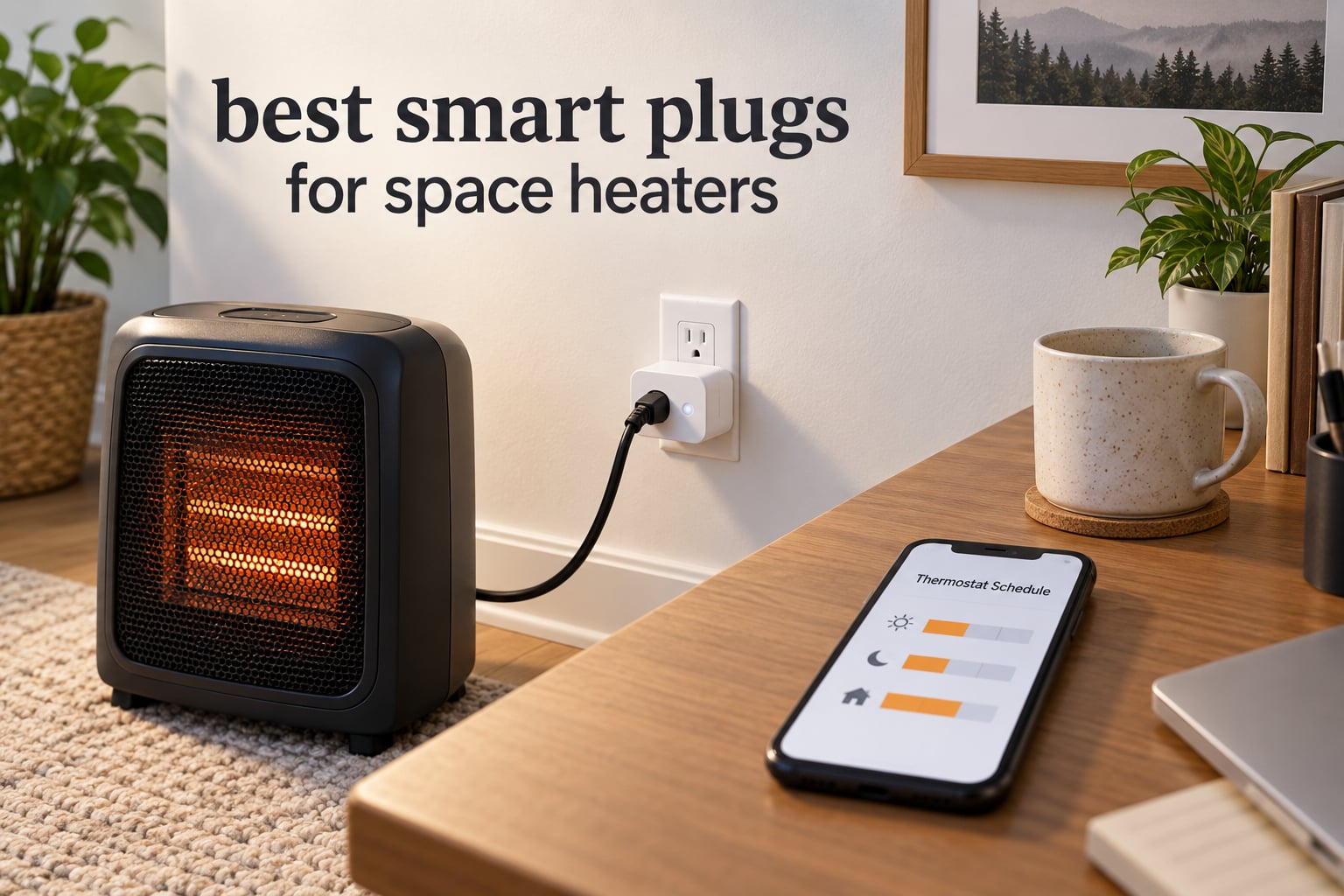
A 15-amp smart plug can run a 1,500-watt space heater, but you should hold sustained heating near 1,440 watts. That is the honest safety verdict, and it is the yardstick I used to rank every plug in this best smart plugs for space heaters roundup. A 15A device is rated for 1,800 watts of instantaneous draw and about 1,440 watts when you treat it as a continuous load, which is how a portable heater runs for hours.
The reason that distinction matters is simple: a space heater is the single most common source of winter electrical fires in the home, and almost every one of those fires traces back to the same three mistakes. Plugging the heater into a power strip or extension cord, sharing a circuit with other high-draw appliances, and walking away from a heater nobody switched off. A smart plug fixes the third problem completely. It cannot fix the first two, and no app in the world can.
What I did for this roundup: I compared ten mainstream Wi-Fi smart plugs on published amp rating, wattage ceiling, operating temperature range, energy reporting, protocol support and the real complaints owners report after months of use. Each pick below tells you whether it can carry a 1,500W heater continuously, whether it needs a hub, and who should skip it. If you have not settled on a heater yet, my guides to the best space heaters and the best space heaters for large rooms break down the units themselves.
Top 3 Picks for Best Smart Plugs for Space Heaters (October 2026)

Kasa Smart Plug HS103P4
- 15A/1800W UL certified
- Schedules and countdowns
- Alexa and Google Assistant

Kasa Smart Plug Ultra Mini EP10
- 15A/1800W compact body
- Schedules and countdowns
- Operating range to 104F
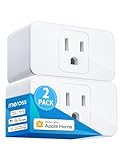
meross Smart Plug 15A
- Apple HomeKit support
- 15A/1800W ETL certified
- Sunrise and sunset schedules
The Kasa HS103P4 tops this list because it is the only plug here with both a 15A/1,800W published rating and a six-figure review history, which means the failure modes are well documented rather than hypothetical. The Kasa EP10 is the same electrical rating in a body small enough to fit most tight receptacles. The meross plug earns its place because it is one of the few budget options with native Apple HomeKit support.
Best Smart Plugs for Space Heaters in 2026
Every plug below publishes a maximum wattage. Only the ones rated 15 amps belong on a full-size 1,500W heater, and even those should be treated as 1,440 watts for continuous use.
| Product | Specifications | Action |
|---|---|---|
| Kasa Smart Plug HS103P4 4-Pack |
|
Check Latest Price |
| Kasa Smart Plug Ultra Mini EP10 |
|
Check Latest Price |
| meross Smart Plug 15A 2-Pack |
|
Check Latest Price |
 EIGHTREE Smart Plug ET01 4-Pack EIGHTREE Smart Plug ET01 4-Pack |
|
Check Latest Price |
 Govee Smart Plug H5080 4-Pack Govee Smart Plug H5080 4-Pack |
|
Check Latest Price |
 GHome Smart Plug Mini WP3 GHome Smart Plug Mini WP3 |
|
Check Latest Price |
 Tapo Smart Plug P115 4-Pack Tapo Smart Plug P115 4-Pack |
|
Check Latest Price |
 GHome Smart Plug WP3-A GHome Smart Plug WP3-A |
|
Check Latest Price |
 Govee Smart Plug H5086 2-Pack Govee Smart Plug H5086 2-Pack |
|
Check Latest Price |
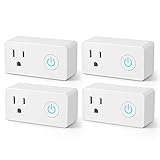 BN-LINK WiFi Heavy Duty Smart Plug BN-LINK WiFi Heavy Duty Smart Plug |
|
Check Latest Price |
Is It Safe to Run a Space Heater on a Smart Plug?
Yes, when three conditions hold: the plug is rated 15 amps, the heater plugs directly into the plug rather than into a power strip, and the heater sits alone on that receptacle. A 15A plug handles 1,800 watts of peak draw at 120 volts. Electricians and safety guides apply an 80 percent derating rule for continuous loads, which lands at roughly 1,440 watts. Most portable heaters top out at 1,500 watts, so they sit just under that ceiling.
Electricians on r/AskElectricians are consistent on the next point: never combine a space heater with other appliances on one outlet or circuit. A toaster oven, hair dryer or portable air conditioner on the same receptacle is how circuits trip and how receptacles heat up.
GFCI protection matters too. If the outlet you are using is in a bathroom, garage, basement, laundry room or outdoor area, code requires ground-fault protection, and you should not back a heater onto a non-GFCI surface receptacle. For a bedroom or office on an interior wall, the bigger question is whether the circuit is shared. Electricians on r/AskElectricians will tell you to have a qualified electrician confirm it rather than guessing.
What not to plug into a smart plug: power strips, surge protectors, extension cords, and any daisy-chained adapter. Never plug a heater into a power strip, no matter how many outlets the strip has. Never use an extension cord with a heater either. Also skip unattended auto-on scheduling, since a heater that starts itself while nobody is home is exactly the scenario that turns a small problem into an emergency.
One more hazard deserves a mention. Users on Reddit have reported rapid relay flipping on high-load appliances stressing plug contacts over time. That is why a plug marketed for lamps should never be trusted with a heater, and why I would rather see you pick a 15A model and leave a little headroom than max out a 10A one.
Finally, plan for power outages. If your plug defaults off, your heater stays off after the power returns, which is the safe outcome. If it defaults on, the heater can restart unattended. Check the restart behavior in the app before you trust an automation with a heating load.
1. Kasa Smart Plug HS103P4: Best Overall for Space Heaters
Kasa Smart Plug HS103P4, Smart Wi-Fi Outlet, Touch Actuator, Works with Alexa, Echo, Google Home, No Hub Required, 15 Amp, UL Certified, 4-Pack, White
Rated 15A and 1800W
UL certified, 2 year warranty
1.57 x 1.5 x 2.62 inch, 4 oz
2.4GHz Wi-Fi, no hub
Pros
- Published 15A and 1800W rating with UL certification
- Works with Alexa and Google Assistant
- Schedules countdowns groups and away mode
- Keeps working from the physical button when Wi-Fi drops
Cons
- No Apple HomeKit support
- Loud relay click on switching
- Bulky on some power strips
This is the plug I recommend first, and the reason is the review volume. At more than 150,000 reviews averaging 4.6 stars, the Kasa HS103P4 has the deepest documented history of any plug in this roundup. Multiple Reddit users on r/homeautomation specifically report running a Kasa plug with a space heater for one to two years with no problem.
The electrical numbers are what matter for a heating load. This model publishes a 15-amp, 1,800-watt rating, UL certification, and a 2-year manufacturer warranty. Copper contacts and a normally open contact type are the right construction for a resistive load like a heater coil.
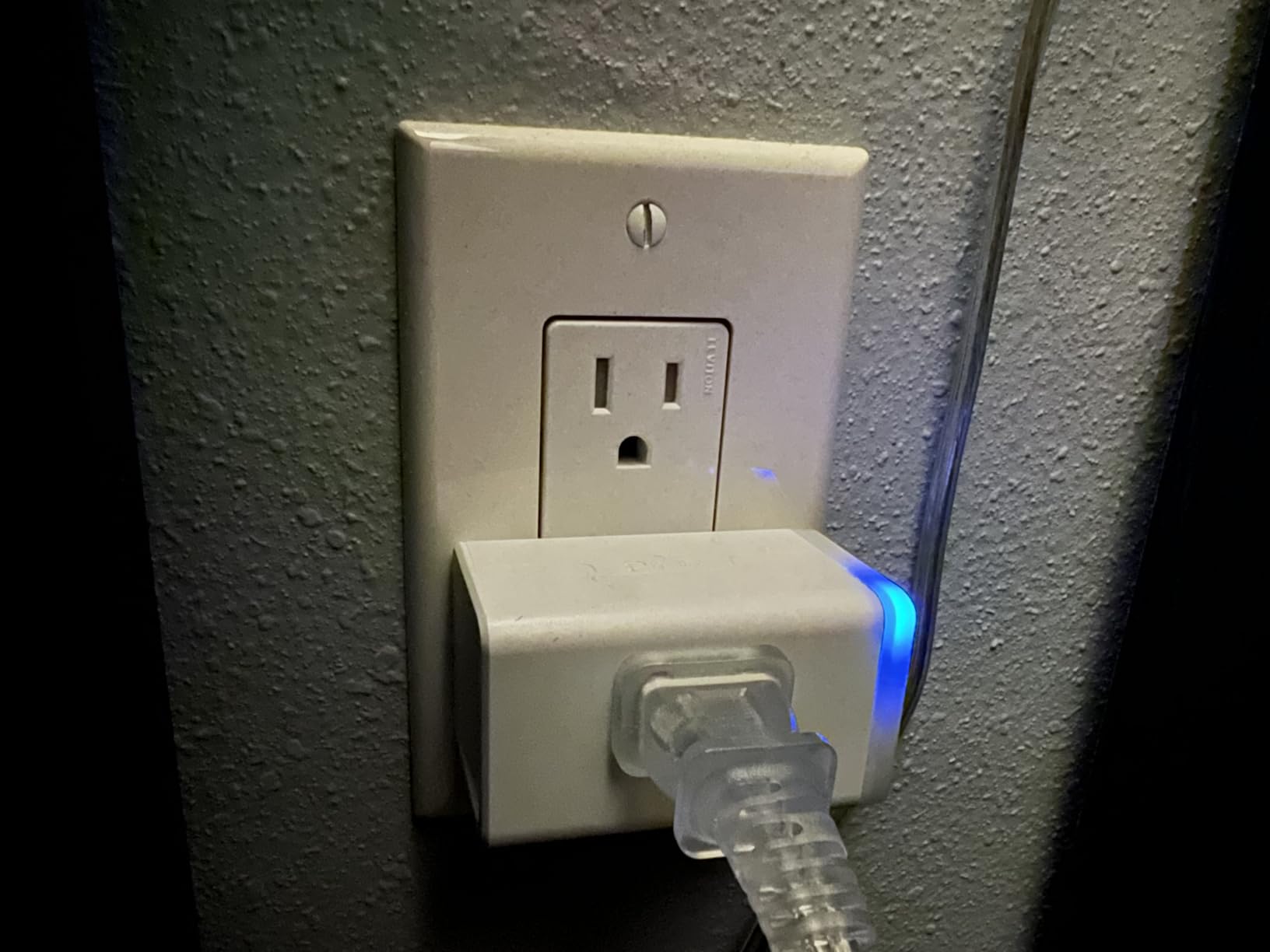
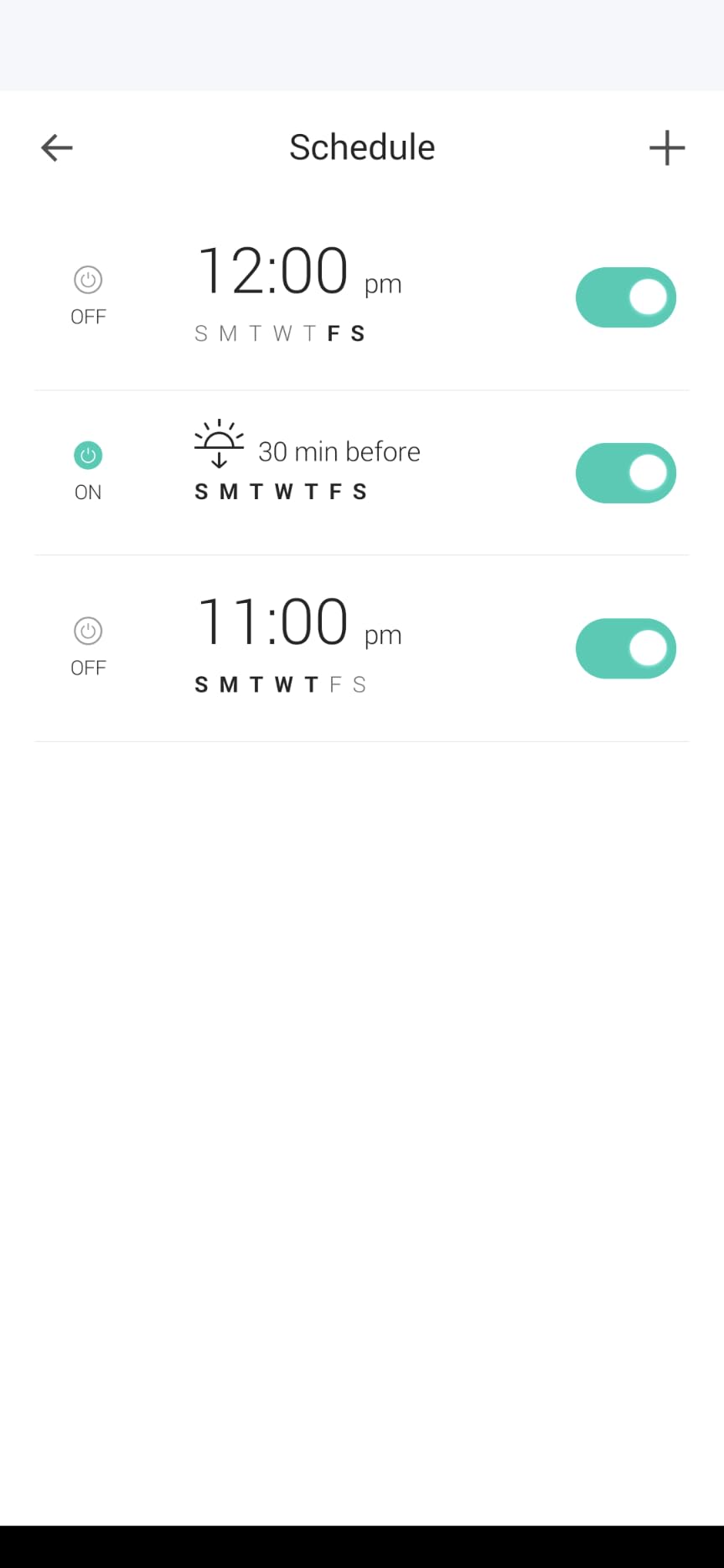
Setup is the fastest path I found in the Kasa app, and once the first plug is provisioned the rest of the four-pack connect quickly. Schedules, countdowns, groups and away or random modes are all built in, which covers the main reason people buy a plug for a heater: switching it off when you leave the house.
Owners also report reliable reconnection to the network, and the physical touch actuator keeps working when the internet drops. That matters if your schedule depends on a hub that has gone down.
What to check before you buy
The body is 1.57 by 1.5 by 2.62 inches, so on some power strips it will not sit flush and it can crowd the adjacent receptacle. If your heater outlet has a tight second socket, note the dimensions before ordering.
This plug runs on 2.4GHz Wi-Fi only. If your router runs 5GHz alone, you will need to enable the 2.4GHz band before pairing. The IP20 rating also confirms it is an indoor plug, which is correct for a bedroom or office.
Who should skip it
If your household runs Apple Home and you refuse to use the Kasa app, this is the wrong plug. There is no HomeKit support on this model, and the Kasa app is the only way to manage schedules.
The relay click is loud enough that reviewers mention it repeatedly, which matters if the heater sits in a bedroom. If noise is the deciding factor, the EP10 below is quieter and physically smaller.
2. Kasa Smart Plug Ultra Mini EP10: Best Value for a Single Heater Outlet
Kasa Smart Plug Ultra Mini 15A, EP10, Smart Home Wi-Fi Outlet
Rated 15A and 1800W
Operating range 32F to 104F
2.36 x 2.03 x 1.5 inch, 2.08 oz
2-year warranty, UL certified
Pros
- Published 15A and 1800W rating
- Compact enough that two fit one duplex receptacle
- Stable connection that survives router reboots
- Setup typically under five minutes
Cons
- Bright status LED that cannot be disabled in Kasa app
- Some plugs need repeated pairing attempts
- Google Home linking takes extra steps
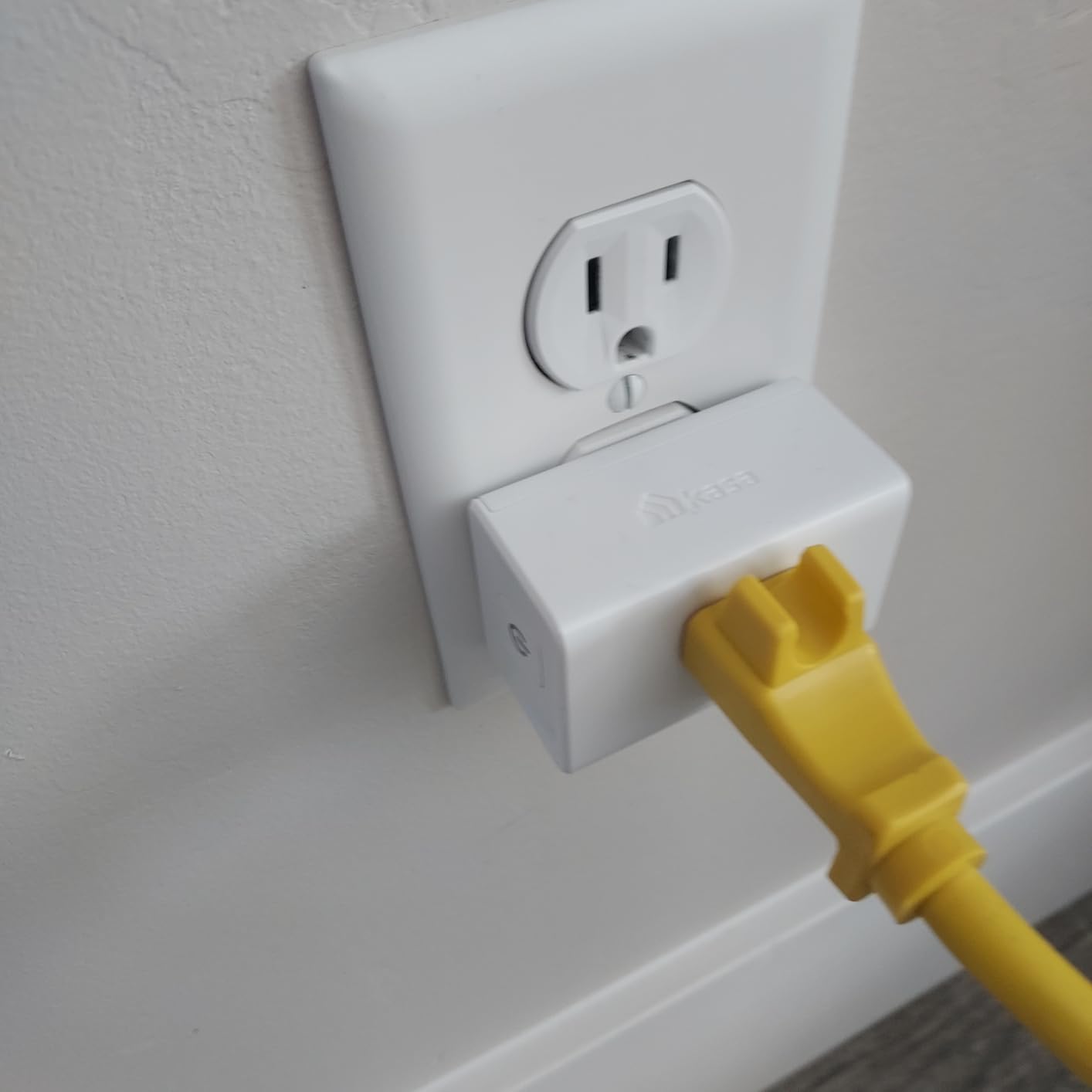
The EP10 is the same 15A and 1,800-watt rating as the HS103P4 in a body weighing 2.08 ounces. For a single heater in a bedroom with a tight receptacle, that size difference is the whole argument.
Two specs stand out for heating duty. The published operating range runs from 32F to 104F, which is one of the few explicit temperature ratings in this group. Owners on smarthome.community recommend checking temperature ratings before pairing any plug with a heat source, and this one is documented.
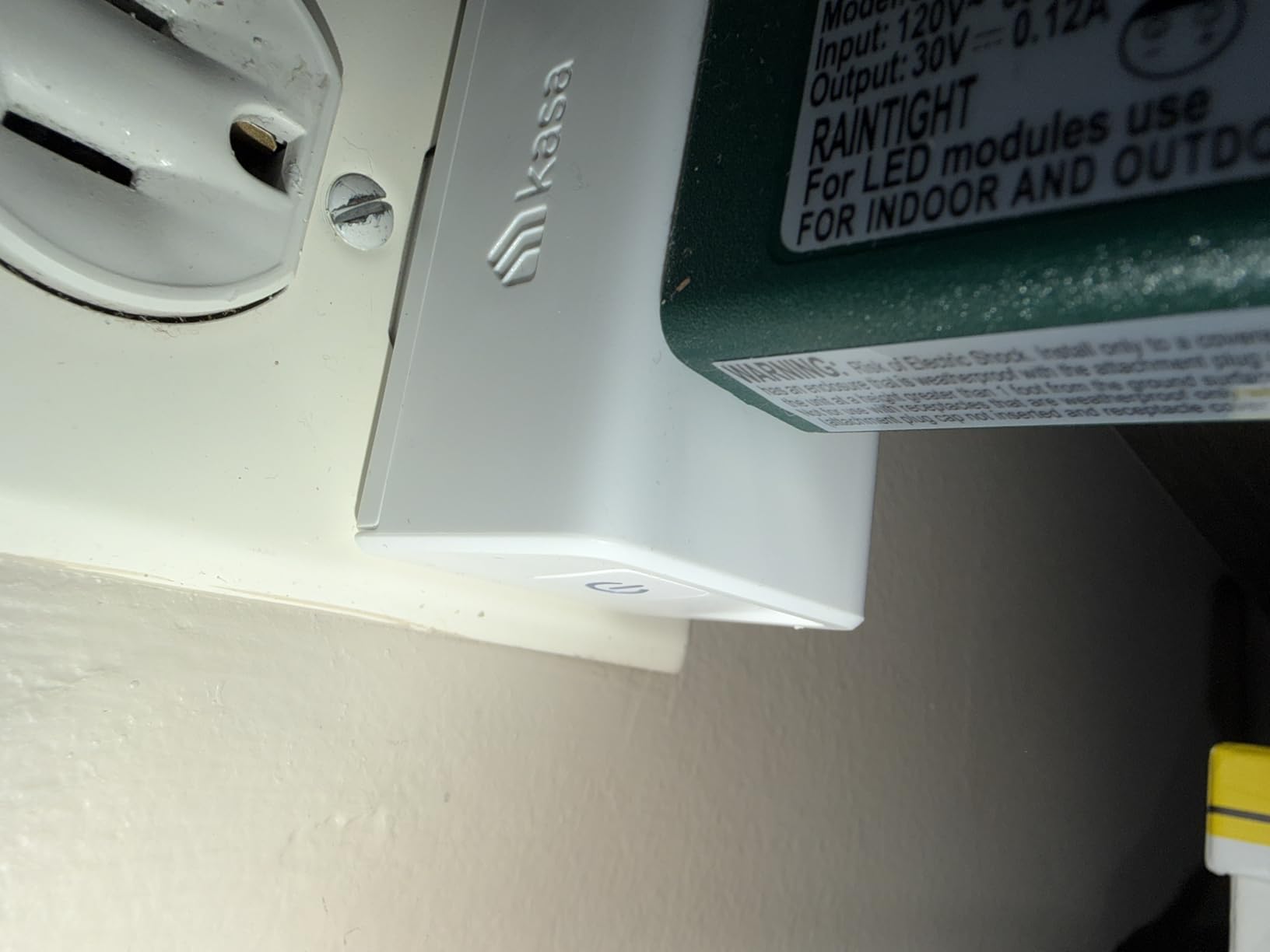
Reviews describe a small, inexpensive plug that sets up fast and then works for years, with several owners replacing bulkier or less stable models. Scheduling and countdowns work reliably for lamps and small appliances, and it supports Alexa, Google Assistant and IFTTT.
One design detail deserves attention: the contact type is normally open, meaning the circuit is open when the plug is off. That is the safe resting state for a heating load.
What to check before you buy
The status LED is on by default and cannot be switched off inside the Kasa app. Users report that turning it down requires the separate Watt app, which is an extra step most people never take.
It is a single outlet with on and off only, no dimming. That is fine for a heater but worth knowing if you were planning to reuse it for lamps.
Who should skip it
A small share of owners report plugs that never complete pairing and need the setup sequence repeated several times. If your 2.4GHz signal at the heater outlet is weak, fix that before you buy, because a retry loop will not fix itself.
There is no Apple HomeKit support here either. Choose the meross pack below if Siri control matters to you.
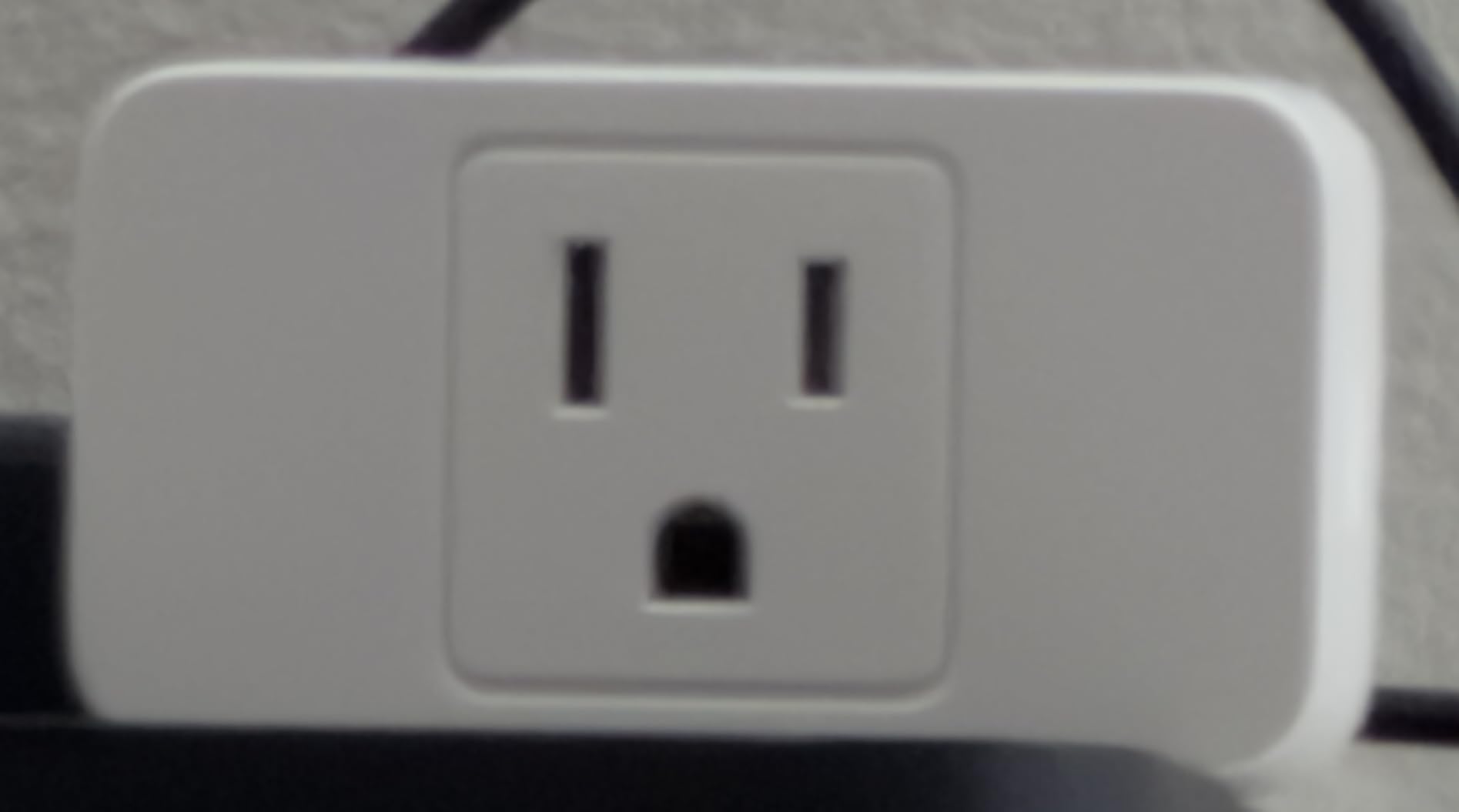
3. meross Smart Plug 15A: Best for Apple Home Users
meross Smart Plug 15A, Works with Apple HomeKit, Voice & APP Control 2 Pack
15A and 1800 watts
ETL and FCC certified, polycarbonate body
2-pack, 140 g
Siri, Alexa and Google Assistant
Pros
- Native Apple HomeKit support at a low price
- Compact enough that two fit one outlet
- Sunrise and sunset scheduling
- Stable across a large HomeKit network
Cons
- No energy usage monitoring
- Meross app needed for firmware updates
- HomeKit pairing can be finicky
Apple Home users often find their only budget options lack HomeKit, and this is the plug that solves it. It carries a 15-amp rating, ETL and FCC certification, and a flame-retardant polycarbonate body, which is a reasonable spec sheet for a 1,500W heater.
Remote control runs through Apple HomeKit, which needs a HomePod, Apple TV or iPad acting as a bridge. Voice control also works with Siri, Apple Watch, CarPlay, Alexa and Google Assistant, so it is not locked to one ecosystem in practice.
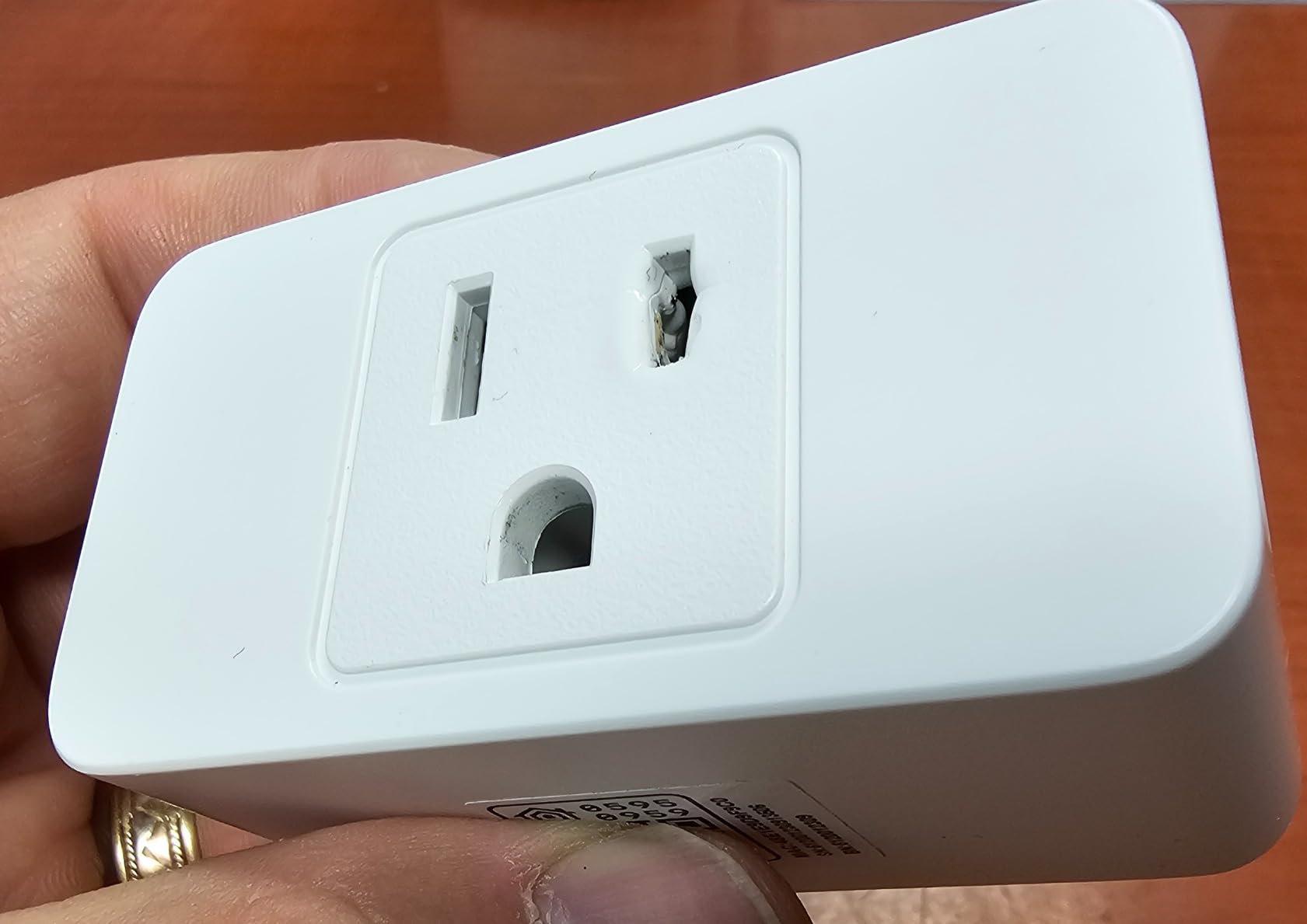
Setup is quick through the meross app or by scanning the HomeKit code. Owners report stable performance across a large HomeKit network with dozens of devices, and the compact body lets two plugs stack in one outlet.
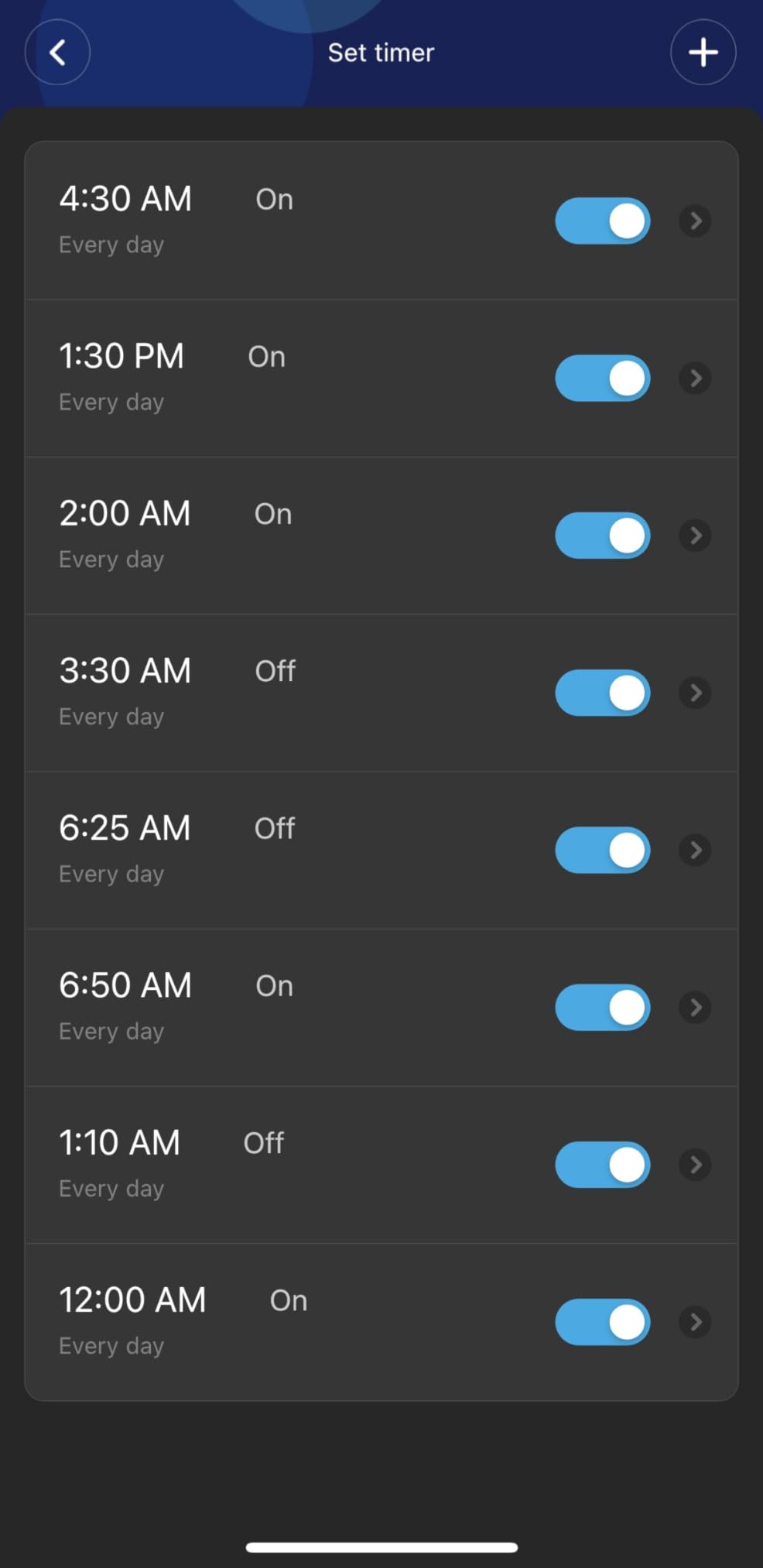
Scheduling includes sunrise and sunset triggers, which pairs well with a heater schedule that follows your commute rather than a fixed clock.
What to check before you buy
There is no energy usage monitoring on this plug. If you want to know what your heater actually costs per hour, you will need one of the Tapo or Govee energy plugs further down instead.
The meross app is required for firmware updates and reviewers describe it as clumsy to navigate. You can still run schedules from HomeKit itself, so treat the app as a maintenance tool rather than a daily one.
Who should skip it
HomeKit pairing can be finicky, and your phone needs to be close to the plug during setup. If your heater outlet is in a garage or basement with a weak phone signal, expect friction.
A small but real number of owners report plugs that stopped powering devices or dropped offline after a few weeks, and support emails can bounce back, which makes warranty service slow.
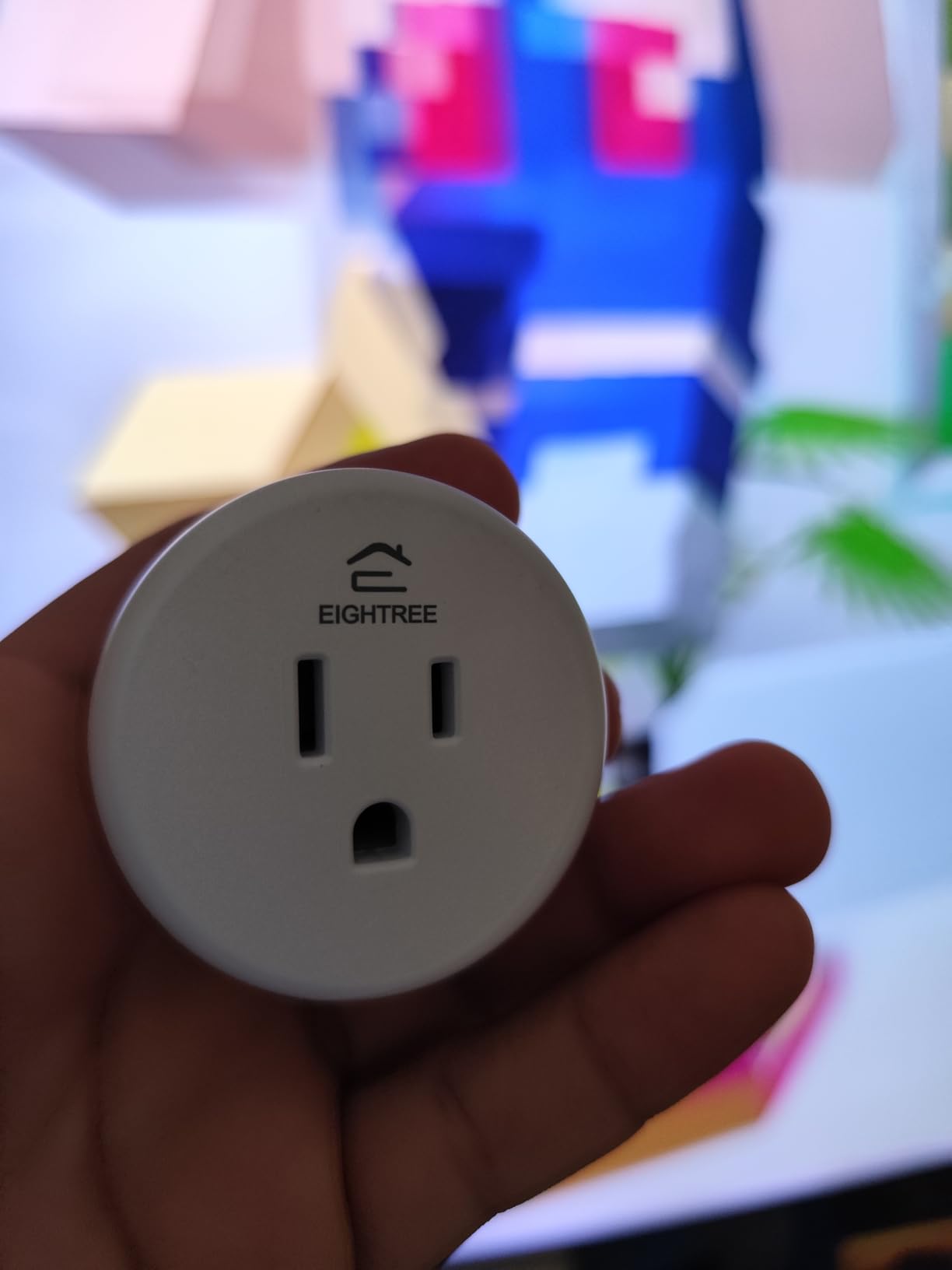
4. EIGHTREE Smart Plug ET01: Best Budget 4-Pack for Multiple Rooms
EIGHTREE Smart Plug WiFi Outlet Works with Alexa & Google Home, 15A, 4-Pack
Rated 15A and 1800 watts
ETL and FCC certified, 4-pack
1.96 x 1.96 x 2.03 inch, 1.92 oz
Smart Life app, 2.4GHz
Pros
- Rated 15A and 1800 watts with ETL and FCC certification
- Very fast pairing with Bluetooth-assisted setup
- Compact round body fits tight spaces
- Timers countdowns cycles and random schedules
Cons
- Must link through Smart Life before voice assistants see it
- No way to reuse a default config across plugs
- Difficult beside an L-shaped adapter
The ET01 publishes a 15-amp, 1,800-watt rating and ETL plus FCC certification, so it clears the bar for a full-size heater on paper. The four-pack format is the reason to consider it: owners running heaters in several rooms can schedule all of them from one app.
Bluetooth-assisted setup in the Smart Life app means pairing often works within a couple of minutes of unboxing. The round compact body is a real advantage in older homes with shallow receptacles.
Long-term owners report units still working after a year or more with no need to reboot. Timers, countdowns, cycles and random schedules cover the away-mode patterns most people want for heating.
Works with Smart Life, Alexa, Google Assistant and SmartThings, and the seller has replaced failures under warranty according to reviewers.
What to check before you buy
Alexa and Google Home will not see the plug until you link it through Smart Life first. That is an extra provisioning step, and if you are not comfortable in the Smart Life app, it is a support burden.
The app has no way to save and reuse a default configuration across plugs. With four plugs and four rooms, you will set up each one separately.
Who should skip it
Some plugs have burned out within weeks. The seller replaced them, but that is still a reliability signal worth weighing against the Kasa packs with six-figure review histories.
The body is difficult to fit alongside an L-shaped adapter on the lower socket. If your heater shares a receptacle with another adapter, measure before ordering.
5. Govee Smart Plug H5080: Best for Bluetooth Backup Control
Govee Smart Plug 15A WiFi Bluetooth Outlet 4 Pack, Remote Group Control
Rated 15A and 120 volts
ETL certified, fire-resistant ABS
1.34 x 2.57 x 1.49 inch, 4-pack
Works with Alexa and Google Assistant
Pros
- Wi-Fi plus Bluetooth gives a fallback path when the network is down
- 15A and 120V handles higher-draw appliances
- One-tap group control for multiple plugs
- Fire-resistant construction
Cons
- 5GHz Wi-Fi not supported
- Govee Home account required before voice control
- Automations need an active Wi-Fi connection
The H5080 stands out for connectivity rather than raw amperage. It is rated 15 amps at 120 volts with ETL certification and a fire-resistant ABS body, which is a sound combination for a resistive heating load.
Dual Wi-Fi and Bluetooth connectivity gives you a fallback path for control when the network is down. For a heater, that is more than a convenience feature. It means you can still cut power locally without waiting for a router reboot to finish.
Owners emphasize stable dual-mode connectivity, straightforward scheduling, and a form factor that occupies a single outlet at a time. Customized schedules and one-tap group control across four plugs suit a multi-room heating setup.
The published highlight explicitly names higher-draw appliances such as coffee makers as a supported use, which tells you the manufacturer rates this above lamp-level loads.
What to check before you buy
5GHz Wi-Fi is not supported, so a dual-band router still needs its 2.4GHz band enabled. The Govee Home app account is required before voice control will work at all.
Automation features may require an active Wi-Fi connection while basic timers do not. If your router or internet goes down, schedules tied to automations will not fire.
Who should skip it
The plug protrudes from the wall, so adjacent plug positions can be tight. In a duplex receptacle where you also need to charge a phone, that is an annoyance every night.
If you specifically need energy cost readings, this model reports run time and status but not detailed kilowatt-hour data. The Tapo P115 or Govee H5086 are the choices for that.
6. GHome Smart Plug Mini WP3: Fine for Lamps, Not for a 1,500W Heater
GHome Smart Plug Mini, WiFi Smart Outlet Plug Works with Alexa and Google Home, Timer Outlet with APP Control, Smart Plugs Only Supports 2.4GHz Network, No Hub Required, ETL FCC Listed, White
Rated 10A and 1200 watts
ETL and FCC listed, 2-pack
2.03 x 1.97 x 1.97 inch, 3.2 oz
2.4GHz only, no hub
Pros
- Compact and reliable over long periods
- Timers plus circular and random schedules
- Works reliably at long range from the router
- Group control for multiple outlets
Cons
- Rated only 10A and 1200W
- Blocks an adjacent outlet
- App has typos and unpredictable home location
- Occasionally drops off schedule
I am including this plug because its limitation is the single most useful thing in this roundup. It is rated at 10 amps and 1,200 watts. A 1,500W heater draws about 12.5 amps, which puts it above this plug ceiling. For a 1,000W heater you would be close to the limit rather than under it.
Where it does work well is smaller loads. Owners report some running eight years on lamps and small appliances, with fast pairing, timers, circular and random schedules, and group control across the two-pack.
Connectivity is 2.4GHz only, and it must be provisioned in the GHome app before Alexa or Google Home can be linked. Several reviewers describe the app itself as rough around the edges, with typos and a home-location feature that behaves unpredictably.
That matters for a heater setup more than it would for a lamp, because a schedule that silently stops firing is the failure you are trying to prevent in the first place.
What to check before you buy
Confirm your heater nameplate wattage and divide by 120 to get amps. If the number is above 10, this plug is not for the job, no matter how good the app looks.
The plug protrudes from the wall and can block an adjacent outlet, which is a problem in an outlet you also need for a lamp or a phone charger.
Who should skip it
Anyone running a full-size 1,500W heater. The amperage gap is not a rounding error, and no amount of app polish closes it.
It also occasionally drops off schedule and needs reprogramming. For a device you rely on to prevent a fire risk, that is the wrong failure mode.
7. Tapo Smart Plug P115: Best for Tracking What Your Heater Costs
Tapo Smart Plug Wi-Fi, Energy Monitoring, P115(4-Pack), 15A
Rated 15A and 1800 watts
ETL, FCC and RoHS, 4-pack
Real-time energy and cost reports
Schedule relative to sunrise and sunset
Pros
- Energy monitoring with real-time daily monthly and per-period cost
- Auto-shutoff at a configurable wattage limit
- Sunrise and sunset scheduling with offset
- Setup often completes in about a minute
Cons
- Some plugs stop communicating after weeks and need reinstalling
- Instructions may point to the wrong pairing method
- 2.4GHz only
The P115 is the pick for anyone who wants numbers rather than guesses. It publishes a 15-amp, 1,800-watt rating and carries ETL, FCC and RoHS certification, so the electrical side clears the bar for a full-size heater.
Energy tracking runs from real-time wattage through daily, monthly and per-period cost reporting, with charts and estimated bill integration. Data can be exported, which matters if you are building a record of what heating actually costs you over a season.
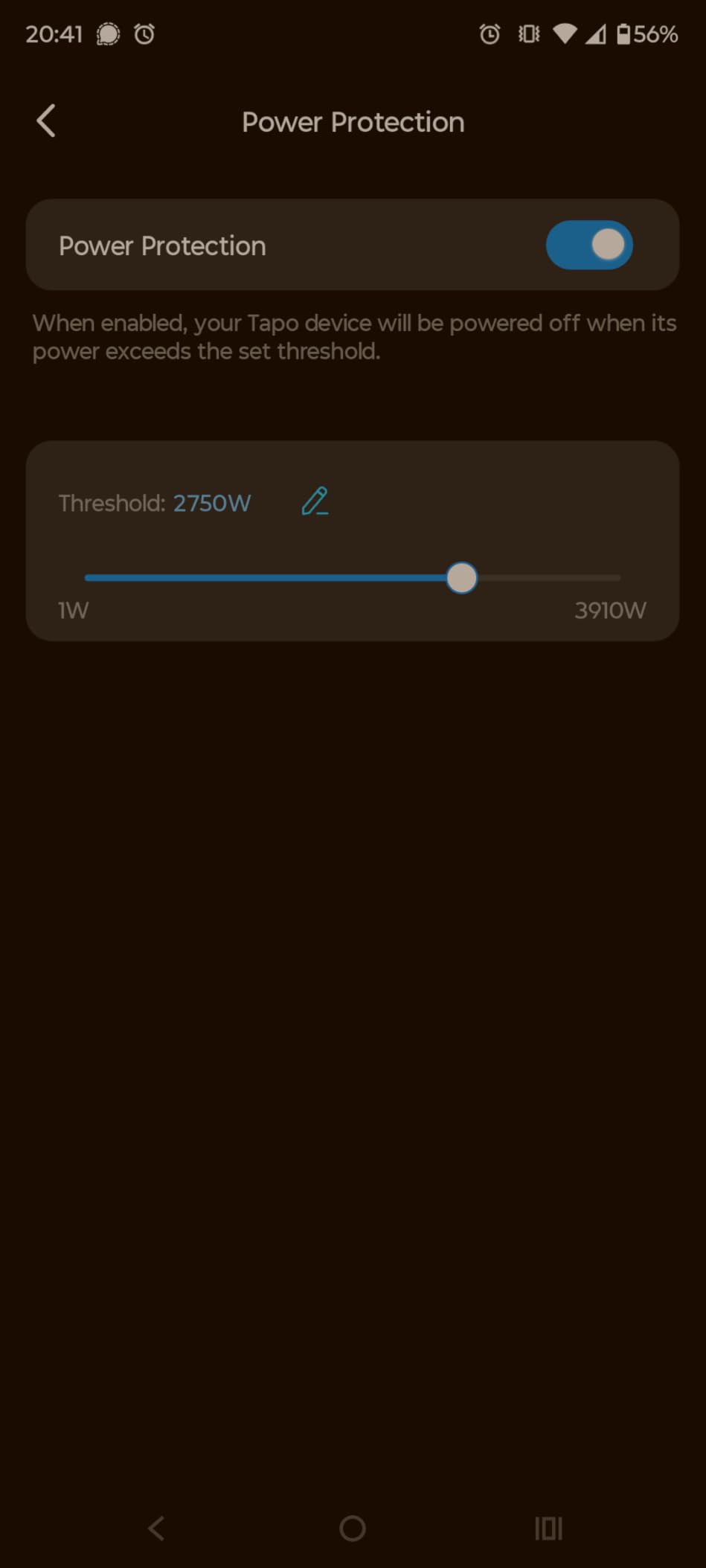
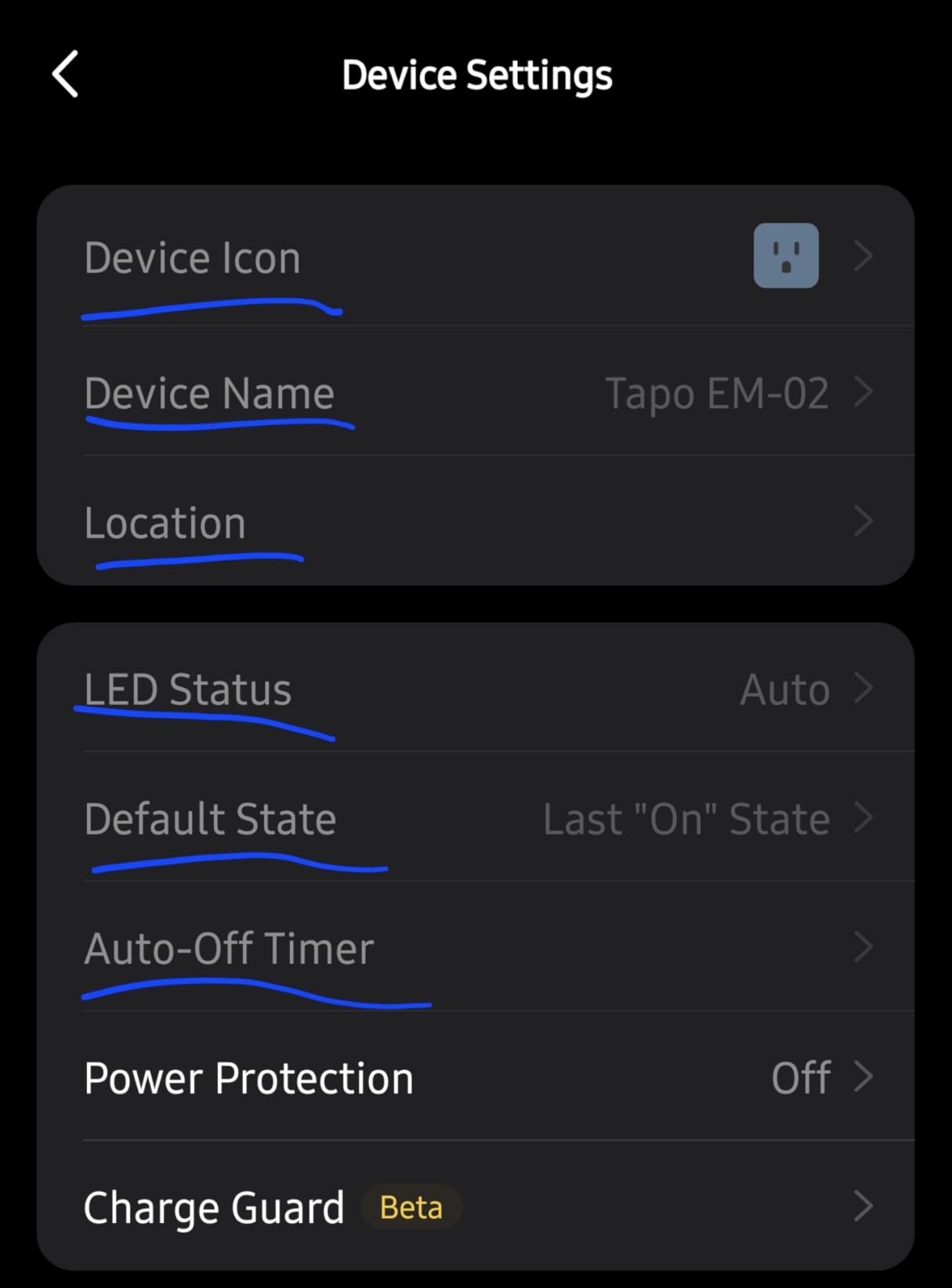
Two safety features stand out for heating loads. Auto-shutoff cuts power at a wattage limit you configure, so a faulty heater cannot sit drawing power indefinitely. Charge Guard cuts power once a connected device reaches a battery threshold you set, which is less relevant to heaters but useful on the same circuit for tools.
Scheduling supports sunrise and sunset with an offset, plus timed auto-off. Alexa, Google Assistant and SmartThings are all supported from the Tapo app.
What to check before you buy
Reliability is the main reservation. Owners running eight plugs report two dropping out after a few weeks, forcing reinstalls and occasionally losing logged history. If your energy history matters to you, that data loss is a real cost.
Setup instructions may reference the wrong pairing method, and Bluetooth pairing is often needed instead of Wi-Fi. The plug also does not appear as a Wi-Fi hotspot during setup, which trips people up.
Who should skip it
If you only want an on and off schedule and never intend to look at the numbers, this is more plug than you need. The Kasa packs are simpler and have a much longer service history.
It is also 2.4GHz only, and one plug in a multi-pack has arrived defective for some buyers.
8. GHome Smart Plug WP3-A: Best When Your Network Is 5GHz Only
GHome Smart 5G 15A WiFi Smart Plug Compatible with Alexa and Google Home, Outlet Timer Smart Home WiFi Outlet Timer with Remote Control, 5GHz and 2.4GHz Wi-Fi Sockets, ETL FCC Listed, White, 1 Pack
Rated 15A and 1800 watts at 120 volts
ETL and FCC certified
2.1 x 2.1 x 1.1 inch
Dual-band 2.4GHz and 5GHz plus Bluetooth
Pros
- Dual-band 5GHz and 2.4GHz support
- 15A and 1800W suits heavier appliances
- Bluetooth-assisted setup streamlines pairing
- Compact mini form factor fits tight positions
Cons
- Must be connected in GHome app before voice assistants
- Compact body covers only part of the socket face
- Reported at 4.4 stars with a smaller review base
Almost every competing plug in this roundup is 2.4GHz only. The WP3-A is rated 15 amps and 1,800 watts at 120 volts with ETL and FCC certification, and it adds dual-band Wi-Fi, so it joins either the 2.4GHz or 5GHz network. That removes the single most common pairing complaint in the category.
Bluetooth-assisted setup streamlines the initial configuration, and the normally closed contact type means the circuit is closed when the plug is off. Verify that behavior in the app before you automate a heater with it, since your preference should be a safe resting state.
Timers, schedules, app remote control and group control are all present, with voice control through Alexa and Google Assistant after linking. The upper temperature rating is listed at 104F, matching the Kasa EP10.
The compact mini form factor measures 2.1 by 2.1 by 1.1 inches, which helps in older outlets where a full-size plug will not seat.
What to check before you buy
Alexa and Google Home can only be linked after the plug is set up in the GHome app. That is the standard pattern for the brand and takes a few extra minutes.
The review base is smaller than the Kasa packs, at just over a thousand reviews averaging 4.4 stars. That is not a red flag, but it is less history than the leaders.
Who should skip it
The compact body means the plug occupies only part of the socket face. If you need the second receptacle position more than you need dual-band Wi-Fi, the Kasa EP10 is a better shape.
There is no energy monitoring here either. Pair it with the Tapo P115 if you want cost data from a heater.
9. Govee Smart Plug H5086: Best for Pairing With Temperature Sensors
Govee Smart Plug with Energy Monitoring, WiFi Bluetooth Outlet, 2 Pack
Rated 15A and 1800 watts
FCC certified, 2-pack
2.68 x 2.36 x 1.5 inch
Works with Alexa Google and IFTTT
Pros
- Real-time power current and voltage readings with history
- Acts as a gateway for Bluetooth-only Govee sensors
- Custom power alerts when a device exceeds a threshold
- Works over both Wi-Fi and Bluetooth
Cons
- 5GHz Wi-Fi not supported
- No peak readings and no field for your utility rate
- Awkward shape on power strips
The H5086 is rated at 15 amps and 1,800 watts and certified to FCC, so the load rating is fine for a full-size heater. What makes it different is that it doubles as a gateway for Bluetooth-only Govee sensors, including temperature and humidity probes.
That gateway role is the interesting part for heating. Plug-in thermostats and temperature sensors on the smarthome.community forums are the standard way people cut heat at a setpoint. This plug lets a Bluetooth probe report into the same ecosystem as the outlet and trigger the off command.
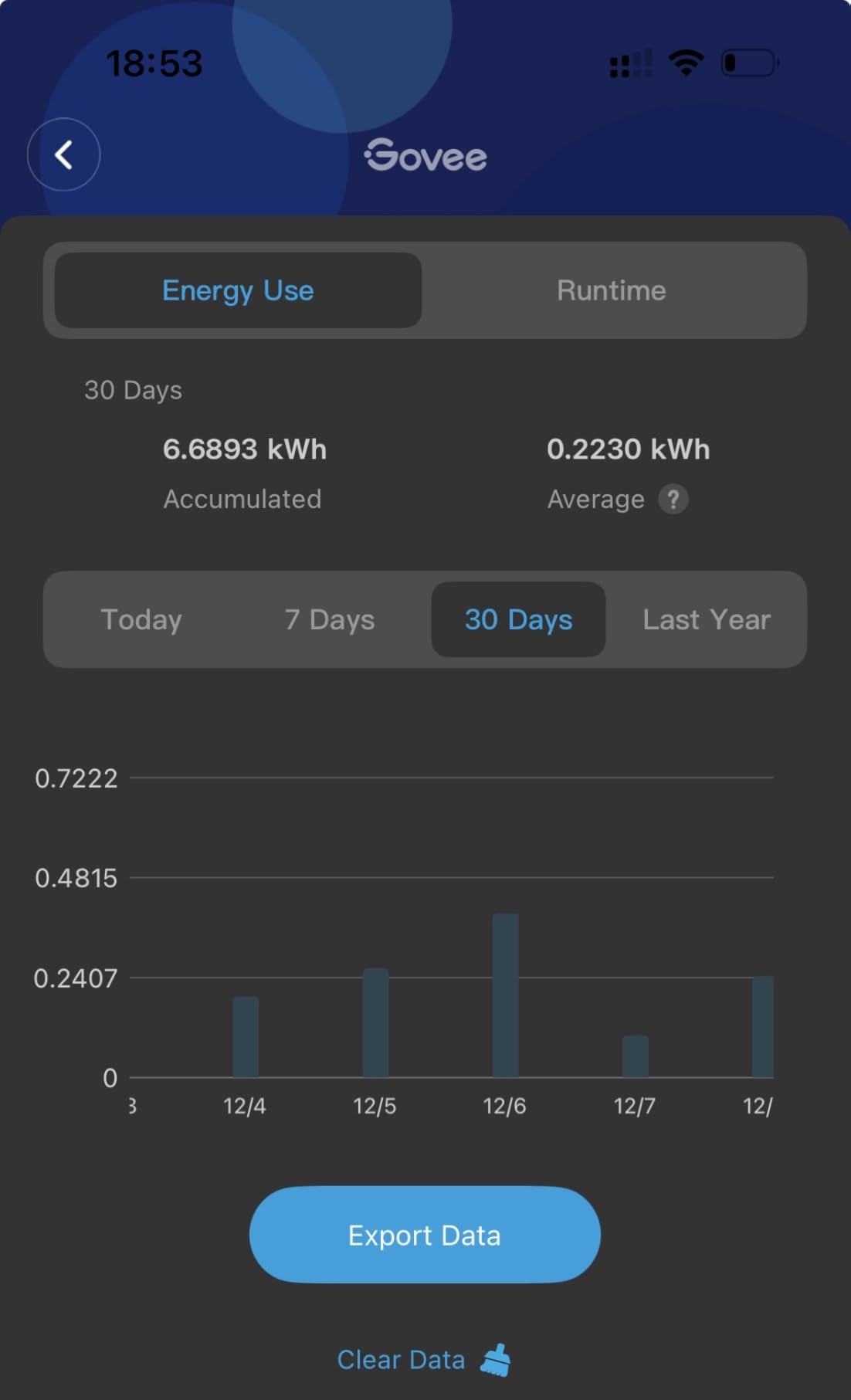
Monitoring here is deeper than a token readout. You get real-time power, current and voltage readings with daily, weekly, monthly and yearly history, plus custom power alerts when a connected device exceeds a threshold you set.
Setup uses automatic discovery in the Govee Home app, and control works over both Wi-Fi and Bluetooth, so local control survives a network drop.
What to check before you buy
There is no peak voltage, current or wattage reading, and no field to input your utility rate. Cost estimates are therefore less accurate than the Tapo P115, which does let you set rates and export data.
Automations require an active Wi-Fi connection while timers work regardless. Keep that distinction in mind if you build a temperature-triggered routine.
Who should skip it
If you are not running Govee Bluetooth sensors, the gateway feature adds nothing. The Tapo P115 gives cleaner energy reporting for a similar class of cost.
The shape is awkward on power strips, and the app has some grammar and interface polish issues that reviewers mention repeatedly.
10. BN-LINK WiFi Heavy Duty Smart Plug: Highest Published Wattage
BN-LINK WiFi Heavy Duty Smart Plug Outlet, Work with Smart Life, 2.4G Only
Rated 15A and 1875 watts at 125 volts
ETL certified, 4-pack
3 x 2 x 2 inch, 12 oz
Smart Life app, 2.4GHz only
Pros
- Heavy-duty 15A and 1875W rating for higher-draw loads
- ETL certified
- Works with Smart Life alongside Alexa and Google
- Group and share control across family members
Cons
- Lowest rating in this roundup at 4.2 stars
- Bulky body that can block adjacent outlets
- Some units drop Wi-Fi and need reconfiguration
This plug publishes the highest wattage figure in the group at 15 amps and 1,875 watts at 125 volts, and reviewers specifically choose it for space heaters and other higher-draw loads. ETL certification is present.
That headline number deserves a caveat. Sustained use still belongs under roughly 1,440 watts on a 15A device, so the extra 75 watts is peak headroom rather than permission to run a heater harder. It does, however, give a little more margin at startup inrush on fan motors and oscillators.
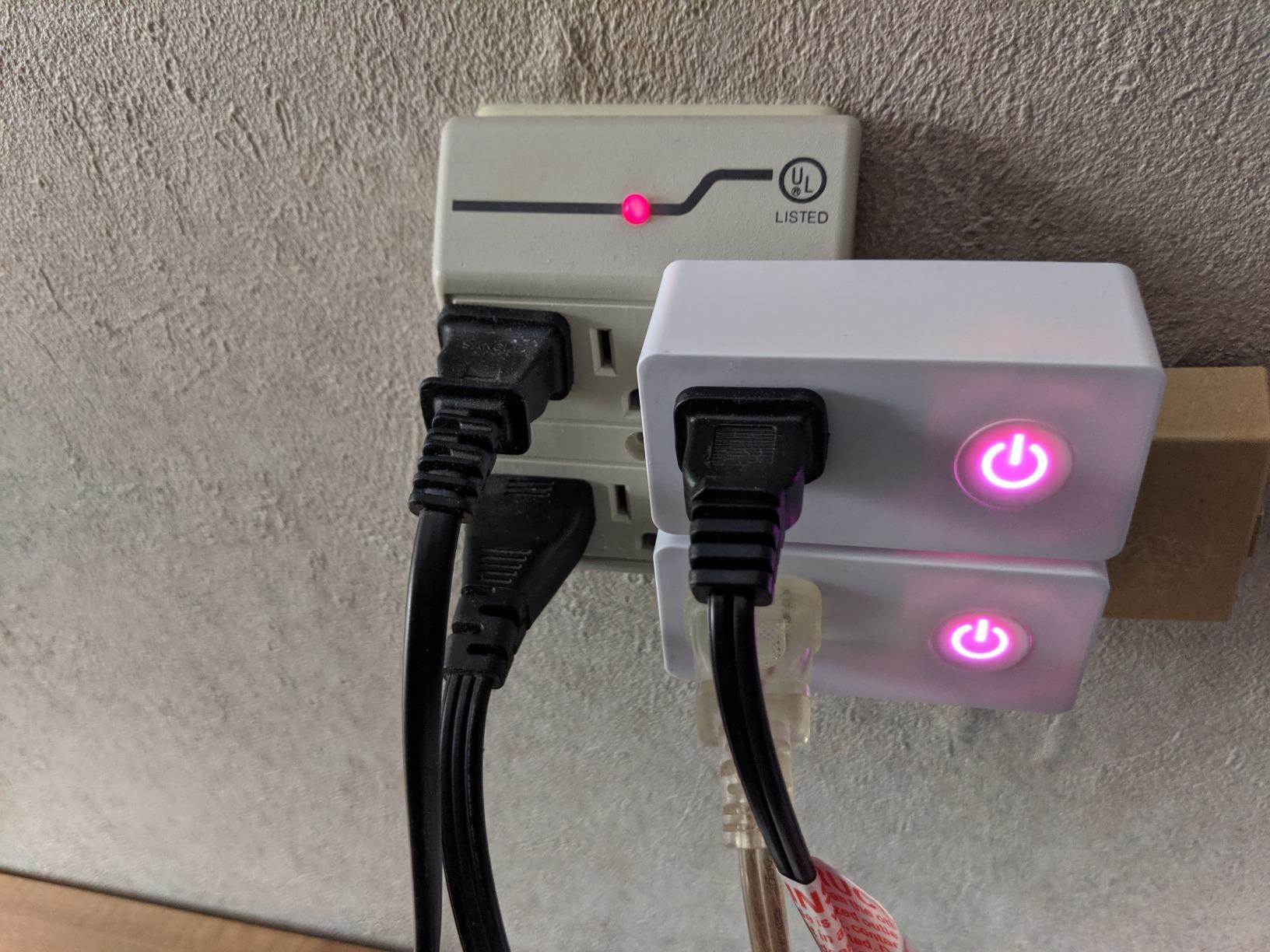
It works through the BN-LINK SMART app or Smart Life, alongside Alexa and Google Assistant with no hub required. Group and share control lets several family members manage plugs together, which suits a house running heaters in multiple rooms.
Scheduling and timers are present for lamps, fans and humidifiers.
What to check before you buy
This is the bulkiest plug in the roundup at 3 by 2 by 2 inches and 12 ounces, and reviewers note it can block adjacent outlets. On a duplex receptacle shared with another device, that is a constant irritation.
A 2.4GHz network is required, and setup reliability varies. Some plugs need repeated pairing attempts.
Who should skip it
At 4.2 stars it carries the lowest average rating here, with 10 percent of reviews at one star. Several owners report plugs that drop their Wi-Fi connection and require reconfiguration, and reconfiguration is exactly what you do not want with a heating load.
If reliability matters more than the extra 75 watts of peak rating, the Kasa HS103P4 is the safer pick.
How to Choose a Smart Plug for a High-Wattage Heater
Start with amperage, because everything else is secondary. Read the wattage on the heater nameplate, divide by 120 to get amps, then confirm the plug rating is above that number. A 1,500W heater is about 12.5 amps. A 1,000W heater is about 8.3 amps. Any plug rated 10 amps has almost no margin for the larger heaters.
Then apply the continuous load rule. A 15-amp plug is rated for 1,800 watts, but sustained heating should stay near 1,440 watts. This is not a marketing caveat; it is standard electrical guidance for loads that run for hours rather than minutes. If your heater is rated above 1,440 watts, you want a heavier-duty solution than a plug, such as a hardwired heavy-duty smart switch.
Energy monitoring versus run-time tracking is the distinction buyers most often miss. Some plugs report only how many hours and minutes a device has been on. Others report real watts, current, voltage and kilowatt-hours, and let you enter your utility rate for a cost estimate. If you want to know what a heater costs per hour, you need the second kind. Only the Tapo P115 and Govee H5086 in this group deliver genuine electrical readings.
On protocols, most of these plugs need no hub at all. They run on 2.4GHz Wi-Fi and connect straight to Alexa, Google Assistant or the brand app. The exception is the meross plug, which needs a HomePod, Apple TV or iPad as a bridge. If you already run Zigbee or Z-Wave, a plug on that protocol avoids the Wi-Fi dependency entirely, but none of the picks here use those protocols.
Check the network band before you buy. Nine of these ten plugs are 2.4GHz only, so your router needs that band enabled. The GHome WP3-A is the one model here that joins 5GHz as well.
Think about recovery after a power outage. Smart plugs differ in whether they default to on or off when power returns, and for a heater that choice matters a great deal. A plug that restarts a 1,500W load unattended is the scenario this whole category is supposed to prevent. Some users on Reddit set their plug to remain off by default and accept the small inconvenience of a manual restart.
Measure the receptacle, especially in a rental. Compact models such as the Kasa EP10 and GHome WP3-A are the ones that fit when the adjacent socket is already occupied. If you cannot change the outlet, a plug-in adapter is your only option, and a bulky one may block the second receptacle you need.
What does a 1,500W heater cost to run? A 1,500-watt heater on high uses 1.5 kilowatt-hours per hour. At 12 cents per kilowatt-hour that is roughly 18 cents an hour, or about 4.30 dollars for a full day of continuous running. At 22 cents it climbs to about 33 cents an hour. Cutting it off for eight hours overnight is where the savings live, which is exactly what a schedule does.
Finally, consider whether a smart plug is the right tool at all. A plug-in thermostat with a temperature sensor is a safer alternative for heating, because it switches the load at a setpoint rather than on a clock. Several people in SmartThings community threads pair a sensor with a plug and run the heater at maximum until the room reaches temperature, then cut power. The H5086 is the pick here if you want that arrangement in one ecosystem.
Frequently Asked Questions
Is it safe to put a space heater in a smart plug?
Yes, as long as the plug is rated 15 amps, the heater plugs directly into it, and the heater is alone on that receptacle. A 15A plug handles 1,800 watts of peak draw, and sustained heating should stay near 1,440 watts under the 80 percent continuous load rule. Never use a power strip, extension cord, or adapter with a heater, and never share the outlet with another high-draw appliance.
What is the best smart plug for high-power appliances?
For a 1,500W space heater, the best smart plug for high-power appliances is a 15-amp, 1,800-watt model from a brand with a long service record. The Kasa Smart Plug HS103P4 leads our list for its 15A rating, UL certification and six-figure review history. The Kasa EP10 offers the same rating in a smaller body, and the Tapo P115 adds real energy monitoring.
Which smart plug is the most reliable?
Reliability tracks the size of the review history and how few owners report dropouts. The Kasa Smart Plug HS103P4 has the largest review base in this roundup at more than 150,000 reviews, with owners reporting reliable reconnection and continued operation from the physical button when Wi-Fi drops. Several Reddit users report running a Kasa plug with a space heater for one to two years without problems.
What are the disadvantages of smart plugs?
Common disadvantages of smart plugs include no energy monitoring on many models, 2.4GHz-only networking that needs the slower band enabled, and app-only scheduling with no physical schedule control. Bright status LEDs cannot always be disabled. Some plugs also drop off schedule or need repeated pairing, which matters more when the device is a space heater and unattended.
What devices should never be used with smart plugs and why?
Never connect a space heater through a power strip, surge protector or extension cord, because those add connection points that heat up under a sustained high load. Skip any adapter that shares the receptacle with another high-draw appliance. Also avoid unattended auto-on scheduling, since a heater that starts itself while nobody is home creates the exact risk the plug is meant to prevent.
Can I use a smart plug without a smart home hub?
Yes, most of the plugs in this roundup need no hub. They connect directly to 2.4GHz Wi-Fi and work through the brand app plus Alexa or Google Assistant. The exception is the meross plug, which uses Apple HomeKit and needs a HomePod, Apple TV or iPad acting as a bridge. Plug-in thermostats or Zigbee devices may still need a hub of their own.
Final Verdict: Which Smart Plug Wins for Space Heaters
The Kasa Smart Plug HS103P4 is the best smart plug for space heaters in 2026, because it pairs a published 15A and 1,800-watt rating with the deepest reliability record in the category. The Kasa EP10 is the better buy when the receptacle is tight, and the Tapo P115 is the one to choose if you want to see what the heater is costing you.
Whatever you pick, plug the heater directly into it, keep sustained draw near 1,440 watts, and skip the power strip. That single habit matters more than any feature on the spec sheet.