
A pitcher-style hand water pump pulls water up by suction, and that creates a hard physical ceiling: roughly 25 feet. Above that, you are not choosing a better pump, you are choosing a different class of pump with a drop pipe and a lever arm, because no amount of quality fixes a lift the physics will not allow. This is the single fact that decides most of the buying decisions below, and it is the reason so many cheap hand pumps end up sitting in a garage unable to prime.
That constraint also explains the shape of this roundup. The best hand water pumps for wells fall into two groups that barely overlap: above-ground pitcher pumps for shallow wells, drive points, rain barrels and cisterns, and deep-well hand pumps with a 100 foot drop line for the drilled wells most people actually own. Picking wrong in either direction wastes money, so I grouped the picks by well depth and use case rather than by brand.
I spent the last several weeks reading spec sheets, owner review patterns and forum install reports on manual well pumps, then comparing every listing in the category on build material, stated maximum lift, connection size, weight and how much owner history actually exists behind it. Ten pumps made the cut. All of them lift real water with no electricity, no fuel and no electronics, and all of them need one honest caveat about drinking untreated groundwater before you fill a glass.
One thing worth saying up front: if your well already has a submersible or jet pump, a hand pump is almost never a replacement. Owners in long-running threads on Survivopedia and r/preppers consistently describe installing one alongside the existing pump as outage insurance rather than a swap, and that is how I have framed every pick here. If you are still choosing an electric pump for the well itself, start with our well pump roundup and layer the manual option on top.
Top 3 Best Hand Water Pumps for Wells (October 2026)
These are the three that earned the most owner history in this group. The Simmons leads because it is the only one here with close to a thousand ratings behind it, the VEVOR is the strongest budget cast iron option, and the SWP 300 carries the highest average rating in the set.

Simmons 1160 No.2 Pitcher Pump
- Close-grain cast iron
- 25 ft max lift
- 10 gpm listed
- 999 ratings

VEVOR 25 ft Cast Iron Pitcher Pump
- Cast iron
- 25 ft max lift
- NPT 1-1/4 in
- rust-resistant coating

All 10 Hand Water Pumps at a Glance in 2026
Every pump below pulls water with no power source at all. Max lift is the manufacturer’s stated figure under ideal static conditions, and all connection sizes are threaded NPT, so they mate with standard pipe and hose bibb fittings.
| Product | Specifications | Action |
|---|---|---|
| Simmons 1160 No.2 Pitcher Pump |
|
Check Latest Price |
| VEVOR 25 ft Cast Iron Pitcher Pump |
|
Check Latest Price |
 XtremepowerUS Vintage Pitcher Pump XtremepowerUS Vintage Pitcher Pump |
|
Check Latest Price |
 Locci Stainless Steel Hand Pump Locci Stainless Steel Hand Pump |
|
Check Latest Price |
| SWP 300 Cast Iron Pitcher Pump |
|
Check Latest Price |
 Merrill PUMP125 No-Lead Pitcher Pump Merrill PUMP125 No-Lead Pitcher Pump |
|
Check Latest Price |
 Boshart Antifreeze Cast Iron Pump Boshart Antifreeze Cast Iron Pump |
|
Check Latest Price |
 HFS 25 ft Cast Iron Pitcher Pump HFS 25 ft Cast Iron Pitcher Pump |
|
Check Latest Price |
 Legacy Premium 100 ft Emergency Kit Legacy Premium 100 ft Emergency Kit |
|
Check Latest Price |
 timiland Stainless Steel Hand Pump timiland Stainless Steel Hand Pump |
|
Check Latest Price |
Read the max lift column before anything else. Nine of these ten stop at 25 to 30 feet, which covers shallow wells, drive points, cisterns and rain barrels. Only the Legacy Premium kit ships with a drop line long enough to reach water sitting far down a drilled well.
How Deep a Well Can a Hand Pump Work
A pitcher pump works on suction, so it reaches roughly 25 feet and no further. Below that depth, the column of water in the pipe is heavier than the pump can pull, and no quality tier changes the outcome.
That gives you three practical bands. Pitcher and shallow-well pumps cover 0 to 25 feet and handle drive points, dug wells, cisterns and rain barrels. Force and cistern pumps move water out of above-ground containers, barrels and pond edges, and they do not care about depth at all. Deep-well lever pumps send a drop pipe down the casing, and quality models reach 100 feet or more.
One type that gets grouped with hand pumps but behaves nothing like them is the ram pump. It needs a flowing water source and about 3 feet of vertical drop, and it discards roughly half the water it moves, so it will not work from standing water in a dug well. One reader made exactly that correction in a Survivopedia comment thread, and it is the assumption I would most want to head off before someone spends a weekend on it.
Before you buy anything, find your static water level, which is the depth at which water stands in the well when nothing is pumping. That single number, not the pump listing, decides which band you are shopping in. If you do not know it, that is a job for your well contractor, not a guess.
1. Simmons 1160 No.2 Pitcher Pump – The One With Real Owner History
Simmons 1160/PM500 No.2 Pitcher Pump
Close-grain cast iron
25 ft max lift
10 gpm listed
6.8 lb
Pros
- Close-grain cast iron with reinforced bolt lugs
- Cap adjusts for a wide range of handle positions
- Primes easily and holds prime with an in-line check valve
- 10 gpm flow figure listed
- Deepest owner history in this group
Cons
- Leather and gasket seals can dry out and lose prime
- Handle linkage cotter pins and tension bolt reported missing
- Seal kit parts often needed soon after purchase
This is the pump I kept coming back to while comparing the category, and the reason is the review count rather than any single spec. At 999 ratings it has more than forty times the owner history of the next pump on the list, which means the failure modes below are not speculation. Owners know exactly which part to order and when.
The body is close-grain cast iron with reinforced bolt lugs, and the cap adjusts so you can set handle height for the person using it. The listed flow figure is 10 gpm, though like every figure in this category that number assumes a shallow static level and a proper well tip. Owners report smooth pumping with modest effort once the tip is right.
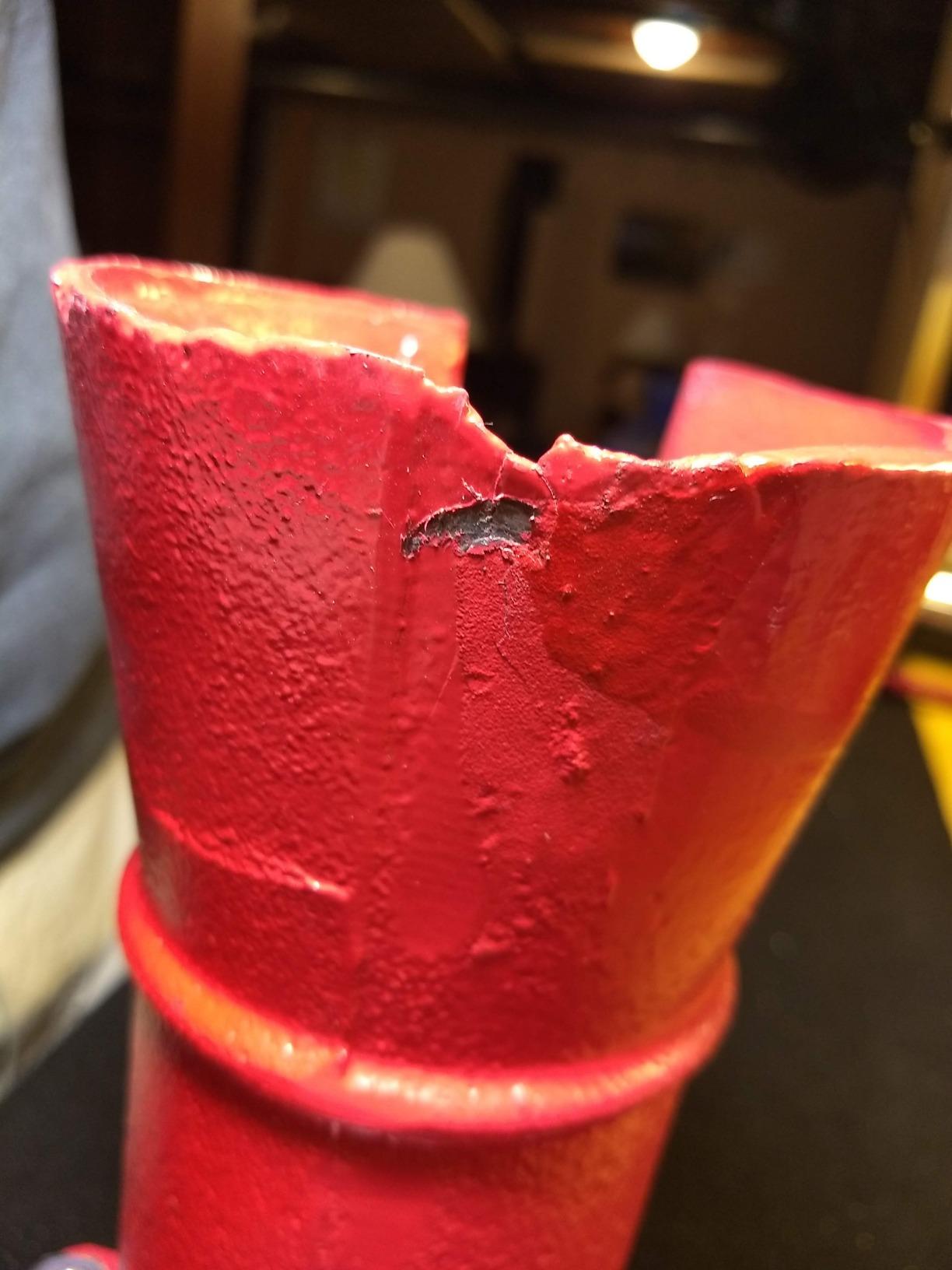
Two things to plan around. The factory leather and gasket seals dry out and deform, and that is the number one reason owners lose prime after a dry spell, so a spare seal kit is worth having on the shelf from day one. Several buyers also report the handle linkage cotter pins or the top tension bolt arriving missing or failing to hold under heavy pumping, so check the hardware bag before you walk away from the box.
The fix that solves the prime-loss problem for most people is an in-line check valve fitted underneath the pump. It is a five dollar part that turns this from a pump you have to re-prime constantly into one you leave ready to go. My own approach with this model would be to order the seal kit at the same time as the pump rather than after the first failure.
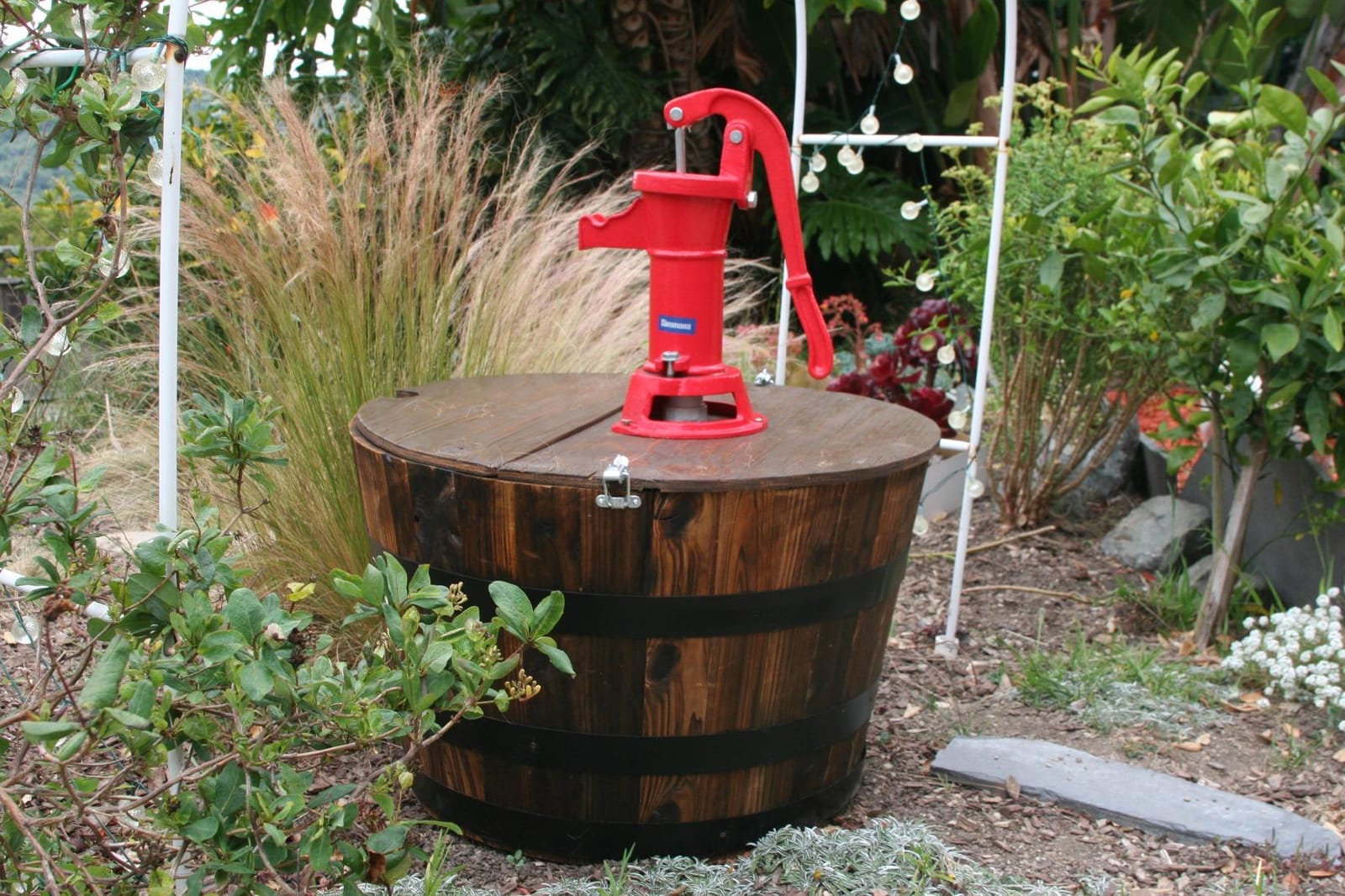
When the Simmons is the right call
Choose it when you have a shallow well, a drive point or a rain barrel, and you want something that has already proven itself over years rather than months. It is also the pick for anyone who values being able to order a replacement seal in a decade over saving twenty dollars today.
Its 10 gpm listed flow also makes it the most sensible of the pitcher pumps for filling a stock tank or a watering can on a smallholding, where you want volume per stroke rather than decoration.
When it is the wrong call
It cannot reach past 25 feet, so if your static water level sits lower it will simply refuse to prime no matter how well it is built. The leather seals also mean it is not the pick for a drinking-water application you want zero maintenance on, unless you are comfortable replacing them.
If you are in a hard-freeze climate and the pump will sit outside all winter with water in it, look at the antifreeze-equipped option further down instead.
2. VEVOR 25 ft Cast Iron Pitcher Pump – Best Budget Cast Iron
VEVOR Well Hand Pitcher Pump, 25 ft Maximum Lift, Antique Cast Iron Manual Hand Water Pump, NPT 1-1/4 in Connection, Easy Installation, Old Fashioned for Outdoor Garden, Pond, Backyard, Farm, Red
Cast iron
25 ft max lift
NPT 1-1/4 in
12.9 lb
Pros
- Retro cast iron styling that doubles as garden decor
- Rust-resistant coating and thickened pipe
- Palm-curved handle makes strokes smooth
- NPT 1-1/4 in installs with a screwdriver
- Hook spout holds a bucket without splashing
Cons
- 25 ft ceiling limits it to shallow wells and well points
- 12.9 lb of cast iron is awkward to reposition
VEVOR dominates this category in search results, and the reason is straightforward: it hits the right combination of cast iron heft, an easy install and a low cost, with 400 ratings behind it. If you want a garden pump that looks like an antique and pulls water from a shallow well, this is the most proven of the inexpensive options.
The manufacturer states thickened pipe rated to withstand hammer impact and harsh weather, and a rust-resistant coating over the cast iron body. The handle is shaped to the curve of the palm, which is a small design choice that shows up as noticeably smoother strokes than a straight bar.
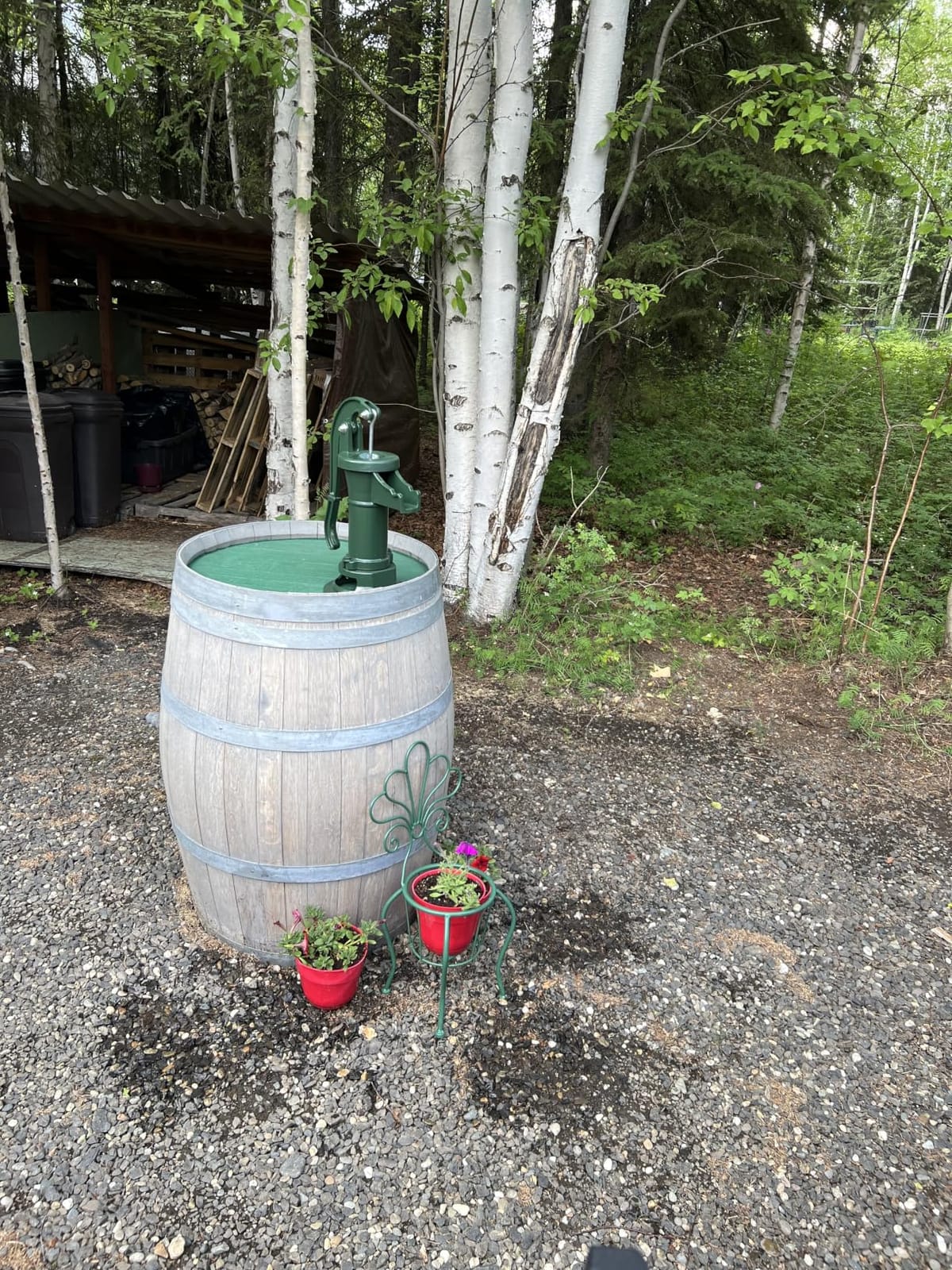
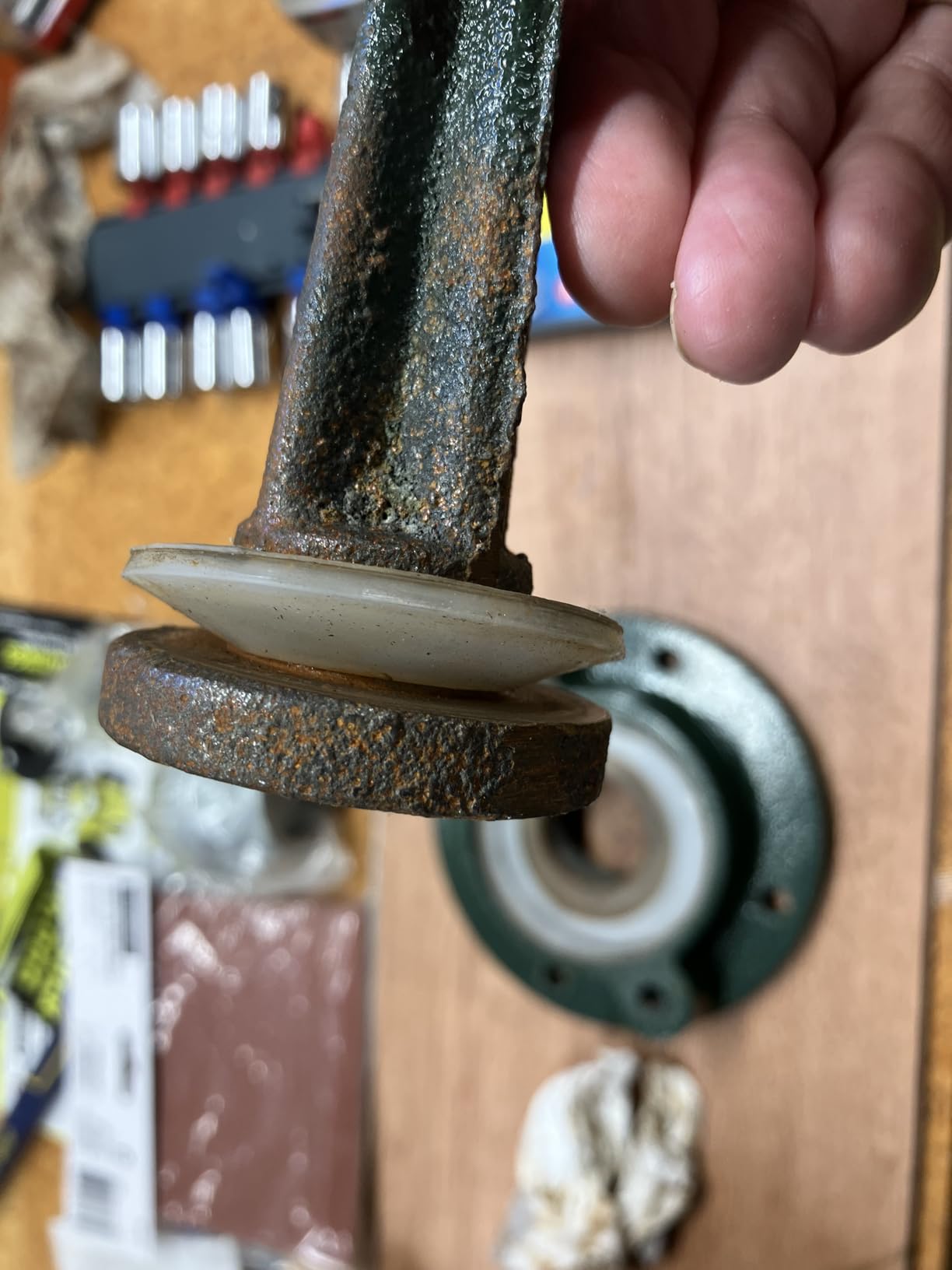
Installation is genuinely a screwdriver job. The NPT 1-1/4 in connection is the standard pipe size for hand pumps, so it mates with ordinary galvanized pipe, PVC and garden hose without adapters. The hook spout is angled so a bucket hangs without the handle you have to fight when you tip it.
Owner photos in the reviews show it mounted on cinder blocks, beside a pond and on a post at the end of a garden bed, which tells you it is at home in decorative duty as much as functional duty. That matters if the pump is going to sit in view of the house.
When the VEVOR is the right call
It suits a shallow well, a pond or a rain barrel where you want visible, classic styling at the lowest sensible cost. The palm-curved handle makes it a good choice for a garden where a family member or a visitor will be pumping, since it stays comfortable over repeated strokes.
It is also the pick for decorative fountains and barrel features that occasionally need to actually work as a pump, which the reviews suggest it does reliably.
When it is the wrong call
At 12.9 lb it is one of the heavier units here, and repositioning it once mounted is a two-person job on anything other than a workbench. More importantly, 25 ft is the absolute ceiling, so a drive point is realistic but a shallow drilled well with a low static level is a gamble.
If the pump will be exposed to hard freezes with water inside, the manufacturer coating helps against weather but does not replace winterizing.
3. XtremepowerUS Vintage Pitcher Pump – Best for Ponds and Fountains
XtremepowerUS Well Hand Pitcher Antique Pitcher Manual Hand Pump Operated up to 25′ ft Max Lift Patio Water Well Fountain for Outdoor Garden, Pond, Backyard, Farm
Cast iron and aluminum
25 ft max lift
NPT 1-1/4 in
9.5 x 8.5 x 19 in
Pros
- Vintage retro design that works as yard decor
- Rust-resistant coating for outdoor durability
- Ergonomic handle reduces strain
- NPT 1-1/4 in installs in 2-3 minutes with a screwdriver
Cons
- 25 ft limit restricts it to shallow wells and well points
- No flow rating published by the manufacturer
- Rating spread is wider than the cast iron peers
This one sits between the very cheapest imports and the heavier cast iron units, and the 279 ratings give it more evidence base than most of its price peers. Owners buy it for ponds, campsites, farms and yard decoration, and the recurring theme is that it simply works for those.
The body mixes cast iron with an aluminum element, which is part of why it is easier to carry than the heavier all-iron units in this roundup. Stated dimensions are 9.5 by 8.5 by 19 inches, so it mounts low and takes up little space against a wall or a shed.
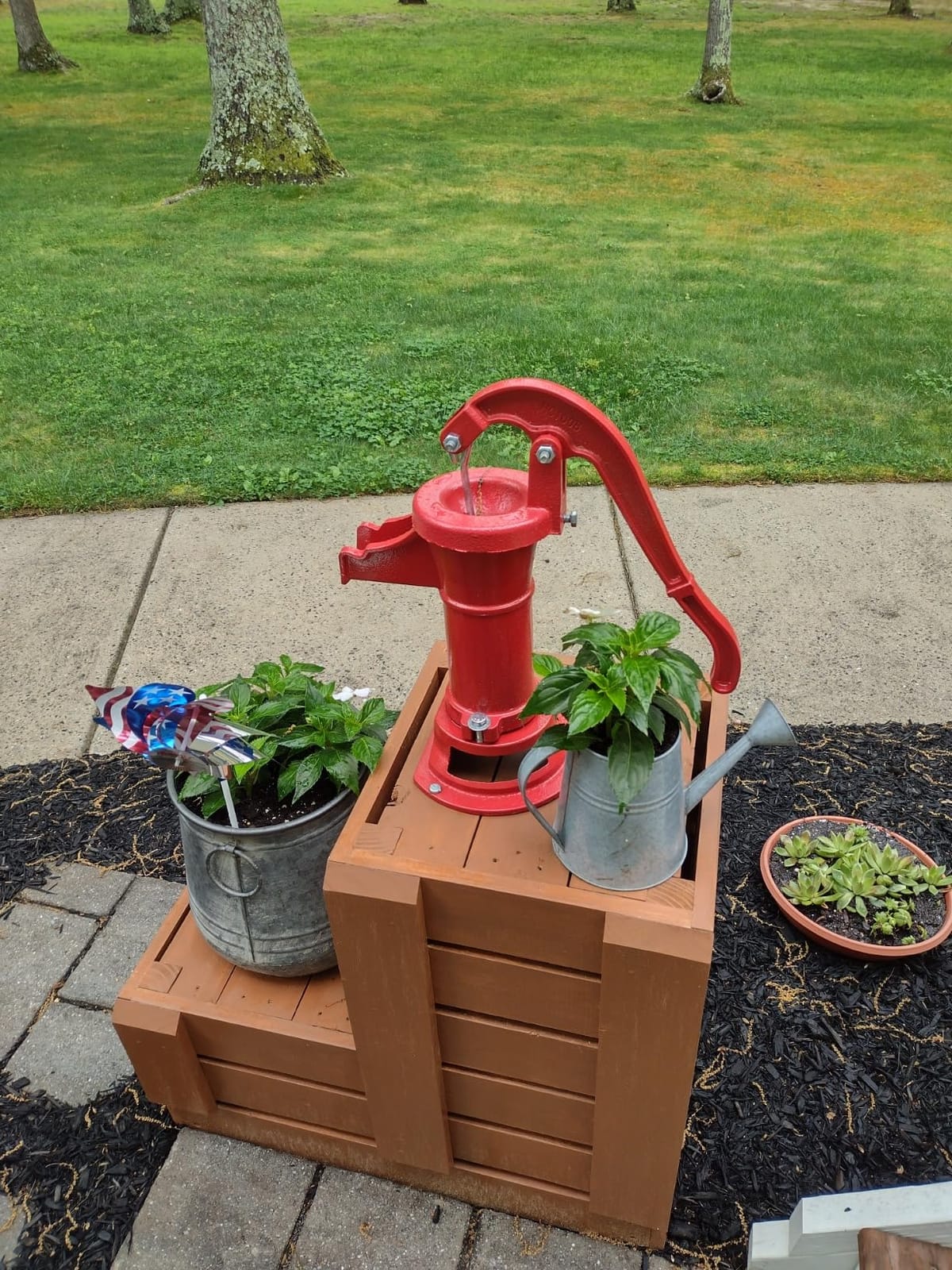
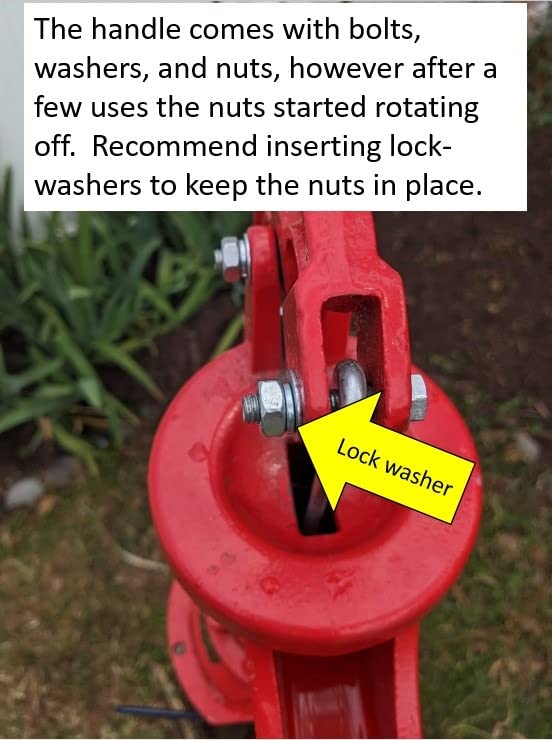
Two honest notes. No flow rate is published, so unlike the Simmons you have no manufacturer number to plan around, and the rating spread among owners is wider than for the cast iron pumps above it, with a cluster of reviews mentioning assembly and sealing quirks typical of this price band.
Installation is described by owners as a two to three minute job with a screwdriver, which tells you how standard the 1-1/4 in connection has become across the category. If you have never fitted a hand pump before, this is about as forgiving a first one as you will find.
When it is the right call
It is well suited to pond edges, garden features and campsite water where the pump is a working prop as much as a utility. The lighter mixed-metal build also makes it the easier option to move around if you are not permanently mounting it.
For anyone who wants a vintage silhouette without the full weight of a 13 to 16 lb iron casting, this is the sensible middle.
When it is the wrong call
With no published flow figure and the widest rating spread in the group, it is a weaker choice than the Simmons if you intend to move a meaningful volume of water rather than fill cans and buckets. The 25 ft ceiling applies here too.
For a livestock or irrigation duty where volume per stroke matters, look at a pump with a stated gpm figure instead.
4. Locci Stainless Steel Hand Pump – Best for Wet and Coastal Climates
Locci Stainless Steel Manual Hand Well Pump, Heavy Duty Deep Well Hand Pitcher Pump with Integrated Base Design, Corrosion-Resistant Water Pump for Farm, Garden, Homestead & Emergency Water Supply
Stainless steel
26 ft max lift
4 lb
14.96 in tall
Pros
- Stainless body resists rust and corrosion in daily outdoor use
- Reinforced one-piece integrated base improves stability
- No electricity needed for off-grid use
- Spares kit includes five leather bowls and five sealing pads
- Only 4 lb to lift and reposition
Cons
- Widest rating spread with a notable share of 3-star reviews
- Some owners find priming and seal seating finicky
- 26 ft is a suction ceiling and not a deep-well rating
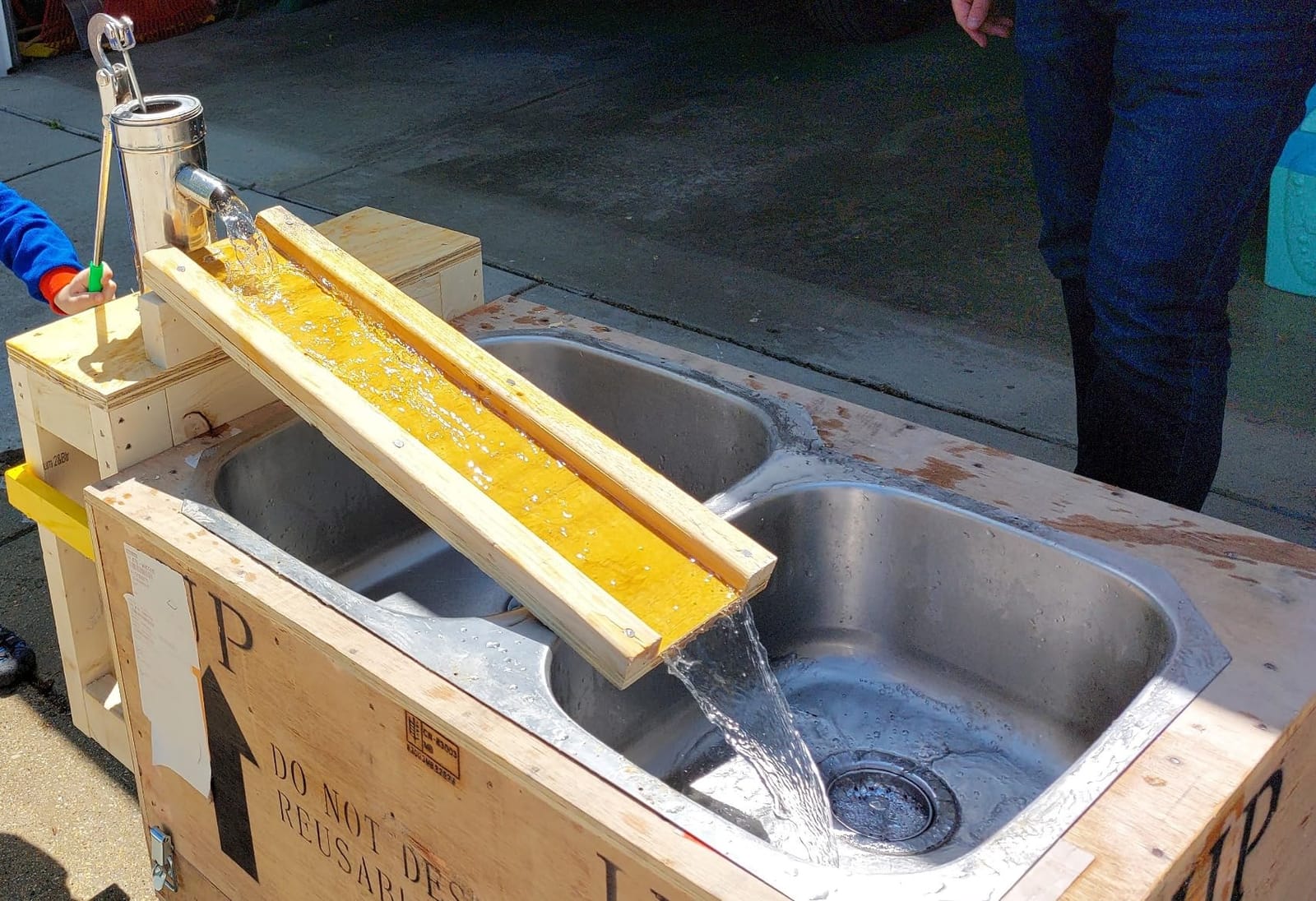
Everything else in this roundup that clears a foot of water is cast iron, which is why this one stands out. Stainless steel does not red-rust and pit the way painted iron does, and at 4 lb it is the easiest pump here to reposition when you want to move it between a garden bed and a livestock pen.
The listed max lift is 26 feet, so it is still firmly in the pitcher class rather than a deep-well pump. The integrated one-piece base is the detail owners mention most, because it stiffens the whole assembly and stops the body shifting while you are pumping, which is what makes cheap pumps feel wobbly.
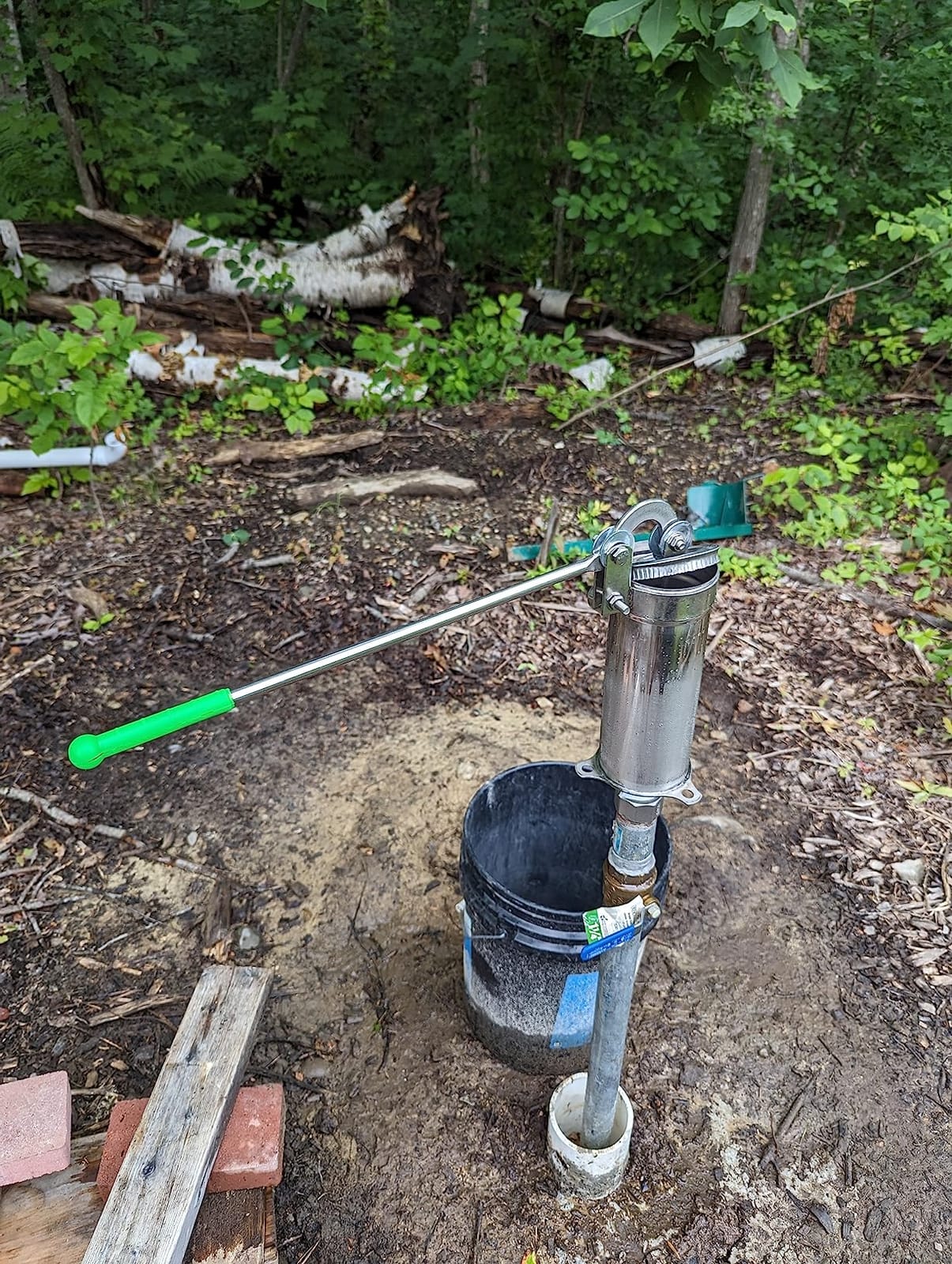
The spares kit is unusually generous for the money: five leather bowls, five water stopping pads, fixing screws, PTFE tape, a PVC direct connector and a conversion handle. In a category where consumable seals are the main thing that wears out, arriving with five replacements is genuinely useful.
The honest weakness is the review distribution. It sits at 4.1 with 235 ratings, and a meaningful share of those are three stars or lower, concentrated on initial setup and seal performance rather than on the pump failing outright. Budget an afternoon for the first prime.
When it is the right call
Coastal, riverside and high-rainfall properties are where this earns its place, and it is a strong pick for a cabin, a homestead or a small farm where the pump lives outside permanently. At 4 lb it is also the right choice if the pump has to be moved regularly.
Pick it when a stainless body that will not pit matters more to you than the heft and settled feel of cast iron.
When it is the wrong call
The 26 ft limit makes it a shallow pump only, and a static water level below that will stop it priming no matter how good the seal. The cluster of three-star reviews on setup means it is not the model to hand to someone who has never primed a hand pump and expects it to work first try.
For drinking water contact, check the listing materials first, since this category splits on lead-free status and this one does not advertise it.
5. SWP 300 Cast Iron Pitcher Pump – Highest Rated, Heaviest Build
6699 Durable Cast Iron Pitcher Pump Antique Manual Hand Shake Suction Well Pump Water Transfer Pump 25ft Maximum Lift Easy Installation for Outdoor Garden Pond Backyards SWP 300 Black
Cast iron
25 ft lift
3 inch cylinder
1-1/4 in NPT
16 lb
Pros
- 4.5 star average with very few one-star reviews
- Painted cast iron body resists rust and deformation
- Anchor and screw hardware included in the box
- Works as a real pump and as a decorative feature
- 3 inch cylinder with max 300 GPH listed
Cons
- Cork plunger needs about 30 minutes soaking before first use
- Manufacturer advises emptying the pump in winter
- Heaviest unit here at 16 lb
This carries the highest average rating in the group at 4.5 across 202 ratings, with only a small share of one-star feedback, which is unusual in a category where thin review counts and mixed ratings are the norm. Owners describe solid heavy construction, easy setup and reliable output on hand-dug wells, cisterns and irrigation wells.
At 16 lb it is the heaviest pump here, and that weight is the point rather than a drawback. It has a 3 inch cylinder, a 1-1/4 in NPT pipe connection and a stated maximum of 300 GPH, so there is a real flow figure to plan around, which is rare at this end of the market.
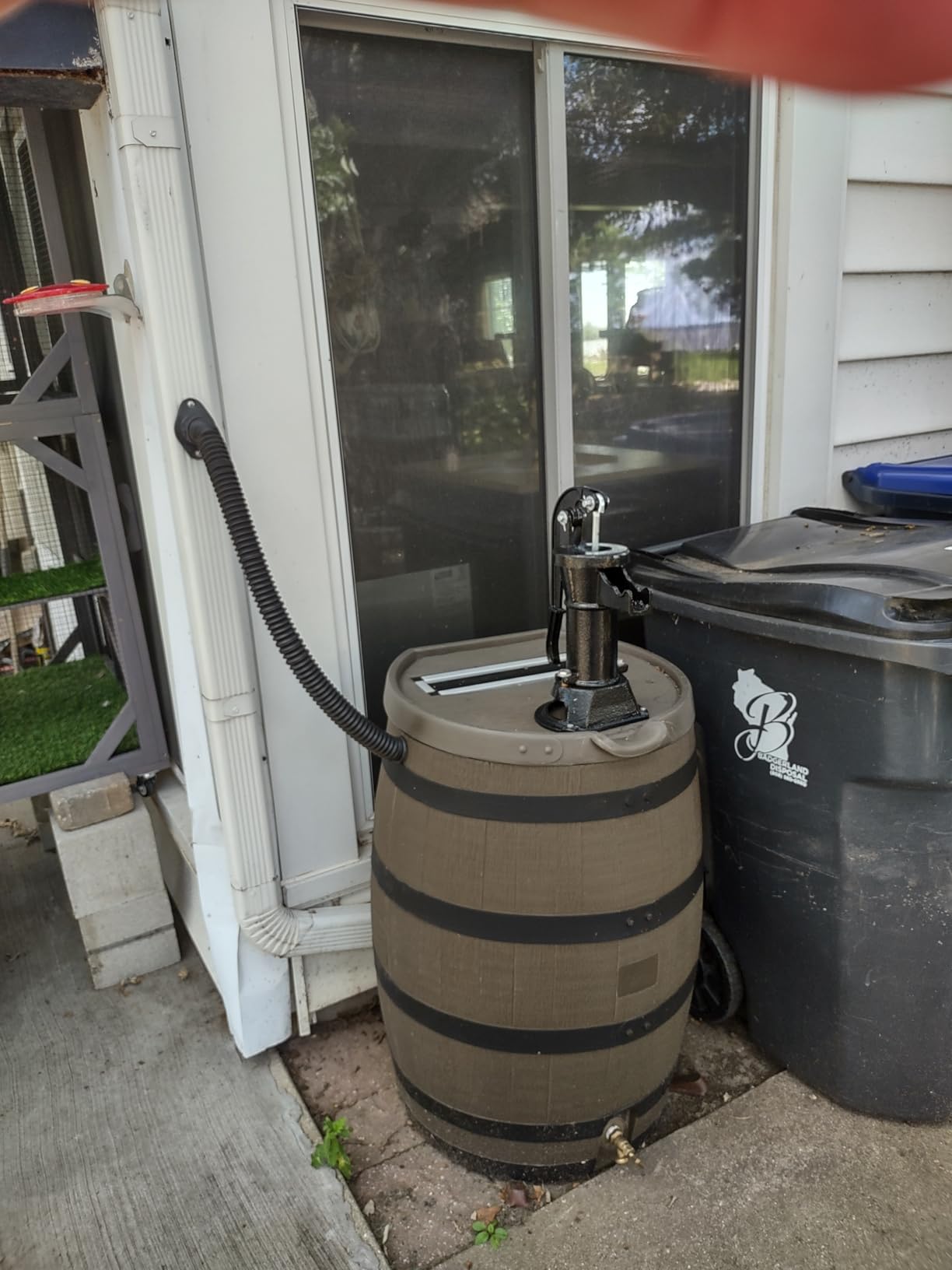
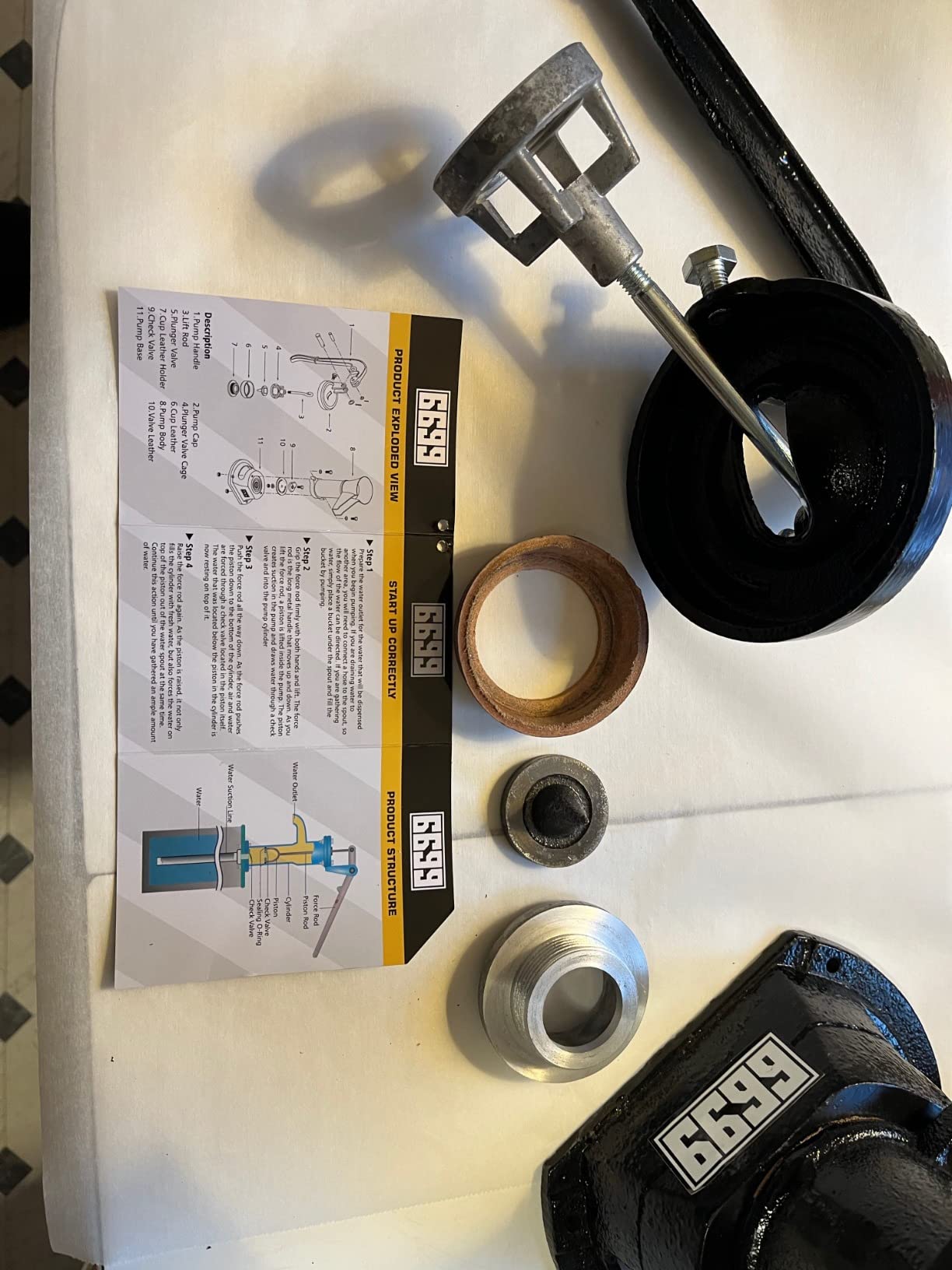
The one tip owners repeat without exception is to soak the cork plunger in water for about 30 minutes before first use so it swells and seals properly. Skip that and the pump will look broken when it is just thirsty. Mounting hardware, including anchors and screws, comes in the box.
The winter note is real rather than theoretical: the manufacturer advises emptying the pump to prevent freezing damage. On a hand-dug well that means remembering to drain it every autumn, and if you will forget, that is an argument for a model with a drain valve instead.
When it is the right call
It suits a hand-dug well or a cistern where the water is close and you want real volume per stroke, and the included hardware means you are not hunting for anchors on mounting day. The 300 GPH figure makes it the most defensible choice here for irrigation or stock tank duty.
For anyone who wants the single best-rated pump at a garden-friendly price, the 4.5 average with a 202-rating base is the most comfortable evidence in the list.
When it is the wrong call
Sixteen pounds is genuinely awkward to move, so it wants a permanent mounting spot rather than a pump you carry between the garden and the barn. The 30 minute cork soak and the winter draining are both easy to forget, and the second one causes damage if you do.
It also still stops at 25 ft, so it belongs on a drive point or a shallow well, not a deeper casing.
6. Merrill PUMP125 No-Lead Pitcher Pump – Best Where Water Contacts Drinking
Merrill PUMP125 Hand Water Pump, No-Lead Cast Iron Pitcher Pump – 1-1/4″ Pipe Connection, Shallow Well/Rain Barrel/Garden Use, Max Lift 25–30 ft
No-lead cast iron
25-30 ft max lift
1-1/4 in connection
7.5 x 7.5 x 15.38 in
Pros
- No-lead cast iron suitable for drinking water contact
- Works with shallow wells and drive points
- Reinforced body built for long-life service
- Adjustable cap for a range of handle positions
- Spout designed to hold a pail
Cons
- Lowest sales rank in this roundup
- California Prop 65 warning applies
- No published flow rate
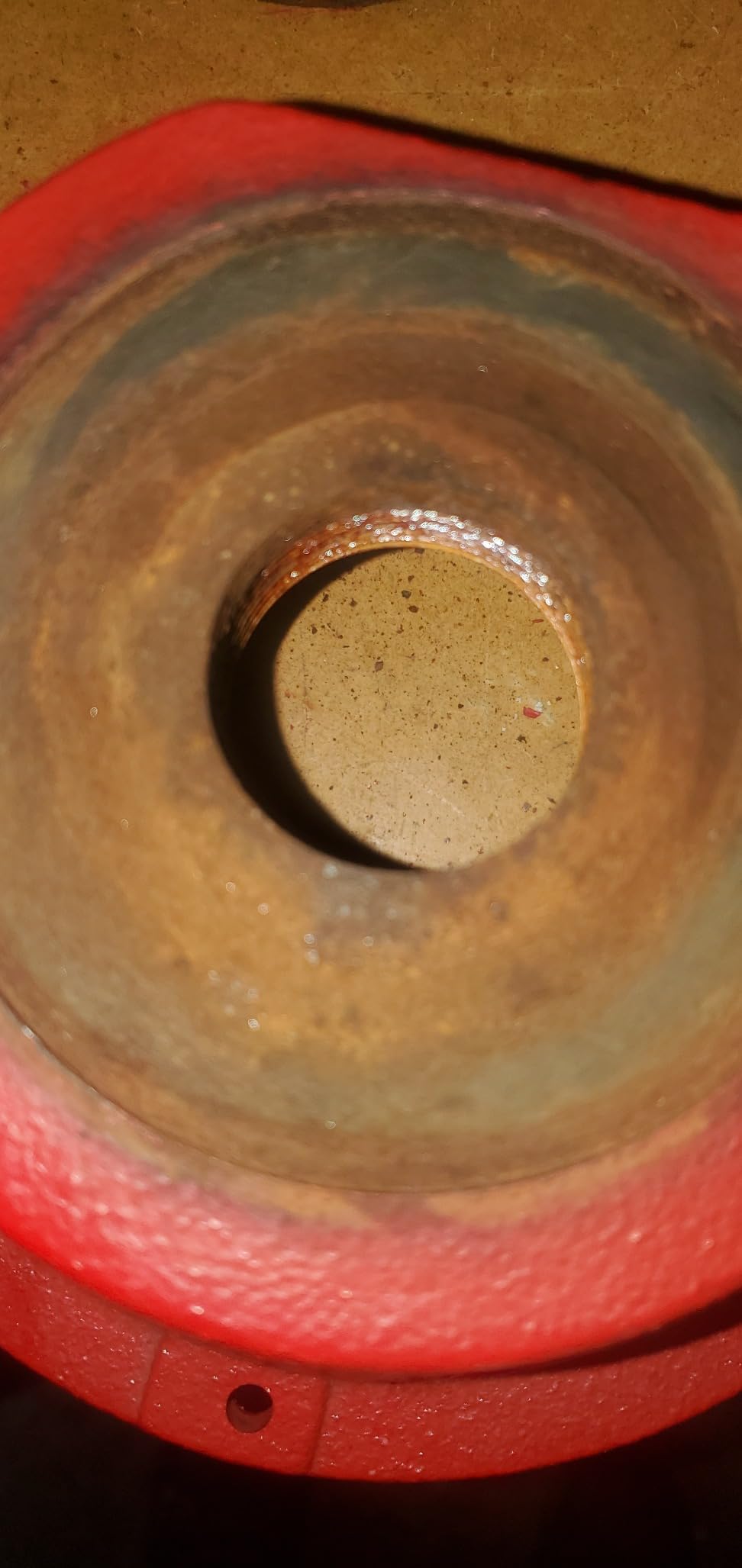
Most pumps in this category never address lead content, so the no-lead cast iron body is the reason to look here. If the pump is going to sit on a cistern or rain barrel that also feeds a drinking line, that is a real specification rather than a nice-to-have.
It is built for exactly the three jobs most homes need it for: shallow wells, drive points and rain barrels. The adjustable cap lets you set handle height, and the spout is shaped to hold a pail so filling does not require holding a bucket under a stream with one hand while pumping with the other.
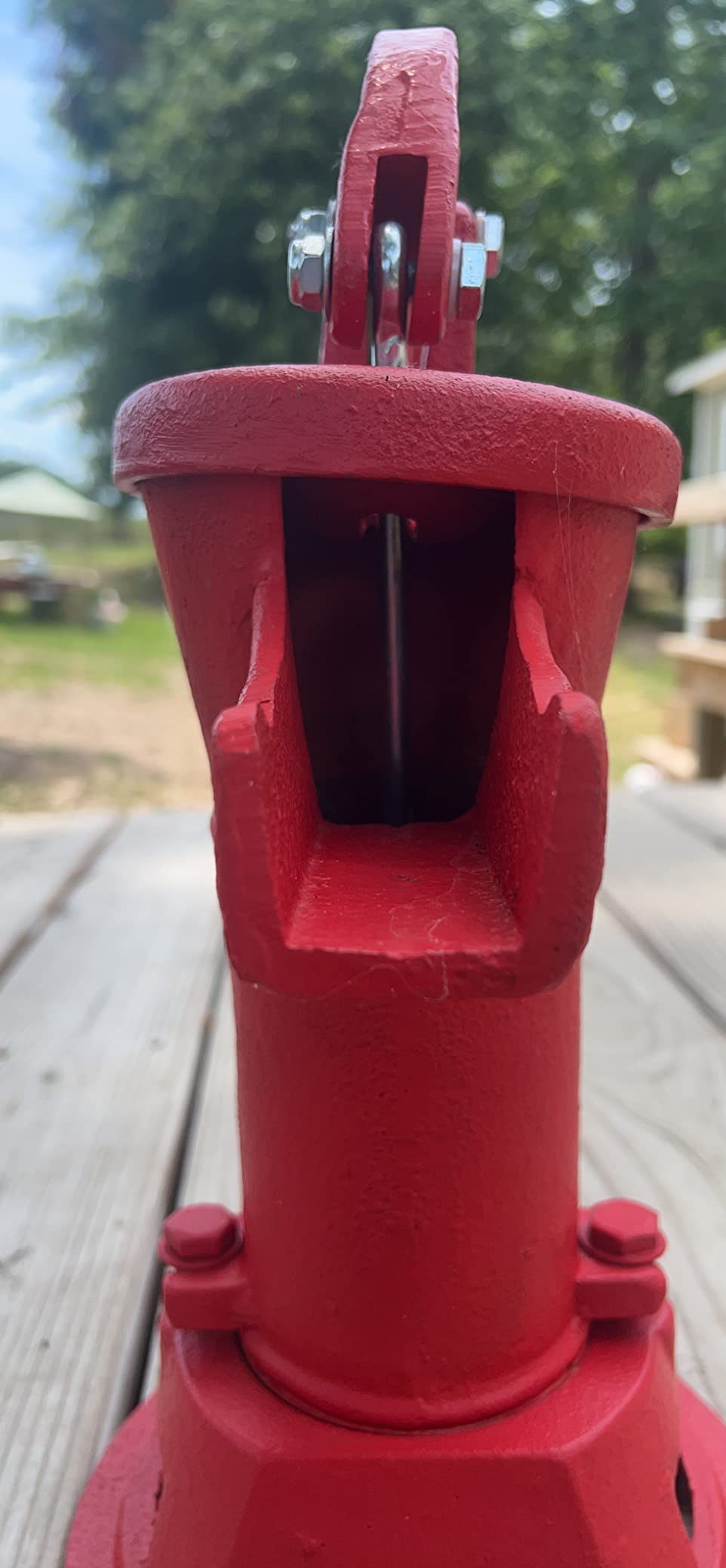
Owners rate it as a traditional workhorse rather than a feature-rich pump, which is fair. It does the basic job without fuss, the reinforced body is built for long service, and there is nothing to learn before using it.
Two things to plan for. It has the lowest sales rank in this roundup, so you will find the least community advice about it, and a California Prop 65 warning applies, which is a labeling requirement rather than a defect but worth understanding before you buy in that state.
When it is the right call
It is the pick for a drive point or a rain barrel barrel-to-barrel setup where no-lead construction matters and you want a proven American-made casting rather than an unbranded import. The adjustable handle height is useful in a household with more than one person pumping.
At 25 to 30 ft stated lift it covers the shallow end comfortably, and the pail-holding spout makes it a good choice where children or older family members are the ones filling containers.
When it is the wrong call
There is no published flow rate, so it is a weaker choice for irrigation or livestock than a pump with a stated gpm figure. It also sits at the bottom of the sales ranking in this set, so if you want a large owner community to troubleshoot with, the Simmons is the better bet.
And while no-lead casting is a real advantage, any groundwater still needs to be treated before drinking regardless of the pump. Our UV water purifier guide covers the treatment side.
7. Boshart Antifreeze Cast Iron Pump – Best for Cold Climates
Pe-Hp(110) Cast Iron Pitcher Pump 033308 Boshart
Cast iron, antifreeze equipped
Wells under 30 ft
3 inch cylinder
1-1/4 in tap
Pros
- Antifreeze equipped for cold-climate wells
- Winterizing is a single handle movement
- Rated for cisterns and wells under 30 ft
- 3 inch cylinder with a 1-1/4 inch standard pipe tap
Cons
- Costs far more than the other cast iron options
- Only 66 ratings and no published flow rate
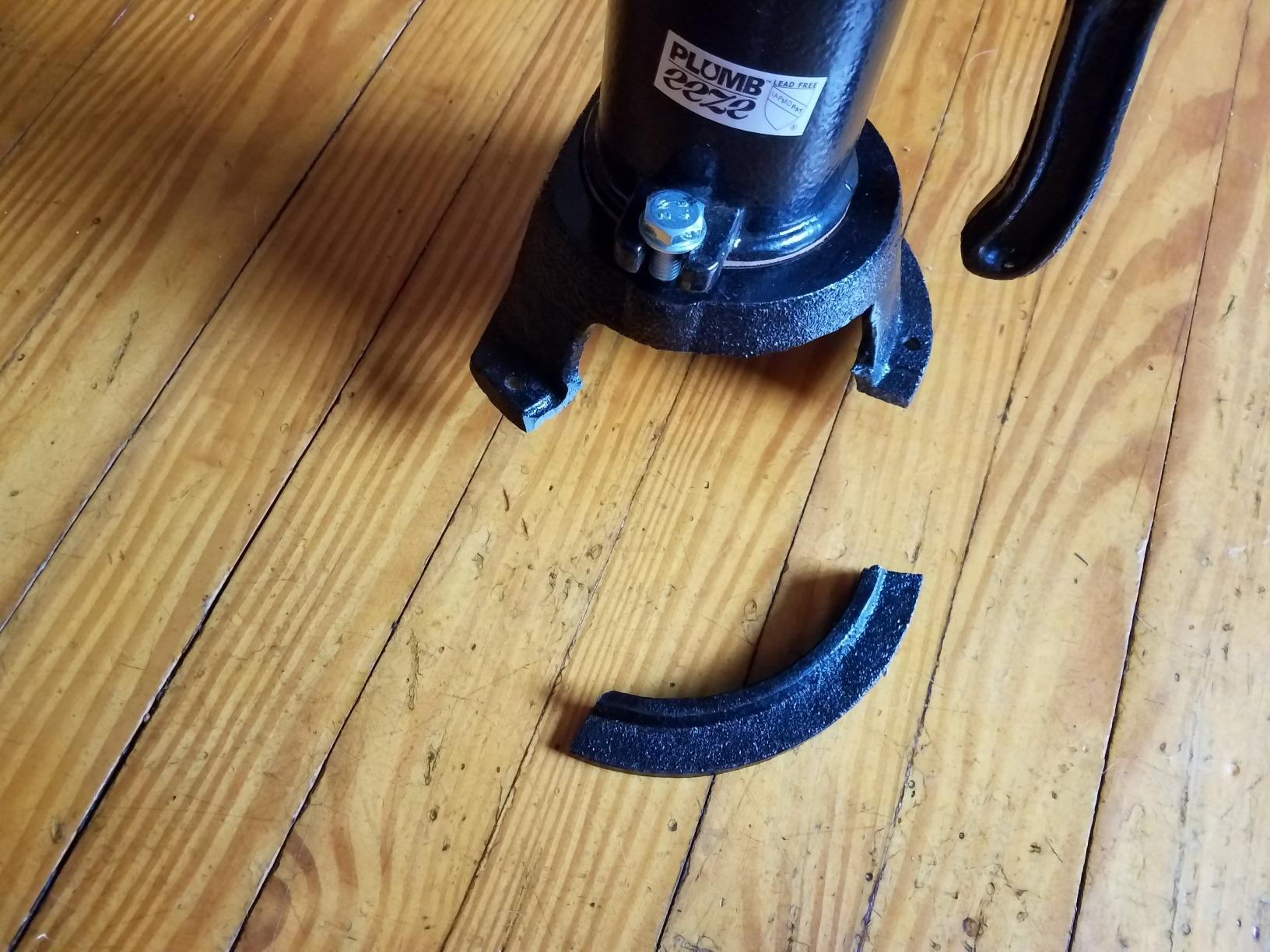
This is the one to look at if the pump lives outdoors through winter in a place that actually freezes. It is antifreeze equipped, and the winterizing procedure is about as simple as it gets: raise the handle to its extreme height and the valve trips, draining the pump without tools or a blowtorch.
Everything else is a conventional cast iron pitcher pump with a 3 inch cylinder and a 1-1/4 inch standard pipe tap, listed for rural and off-grid supply and for wells under 30 feet. The 66 ratings sit at a solid 4.4, so sentiment is good, but the base is thin.
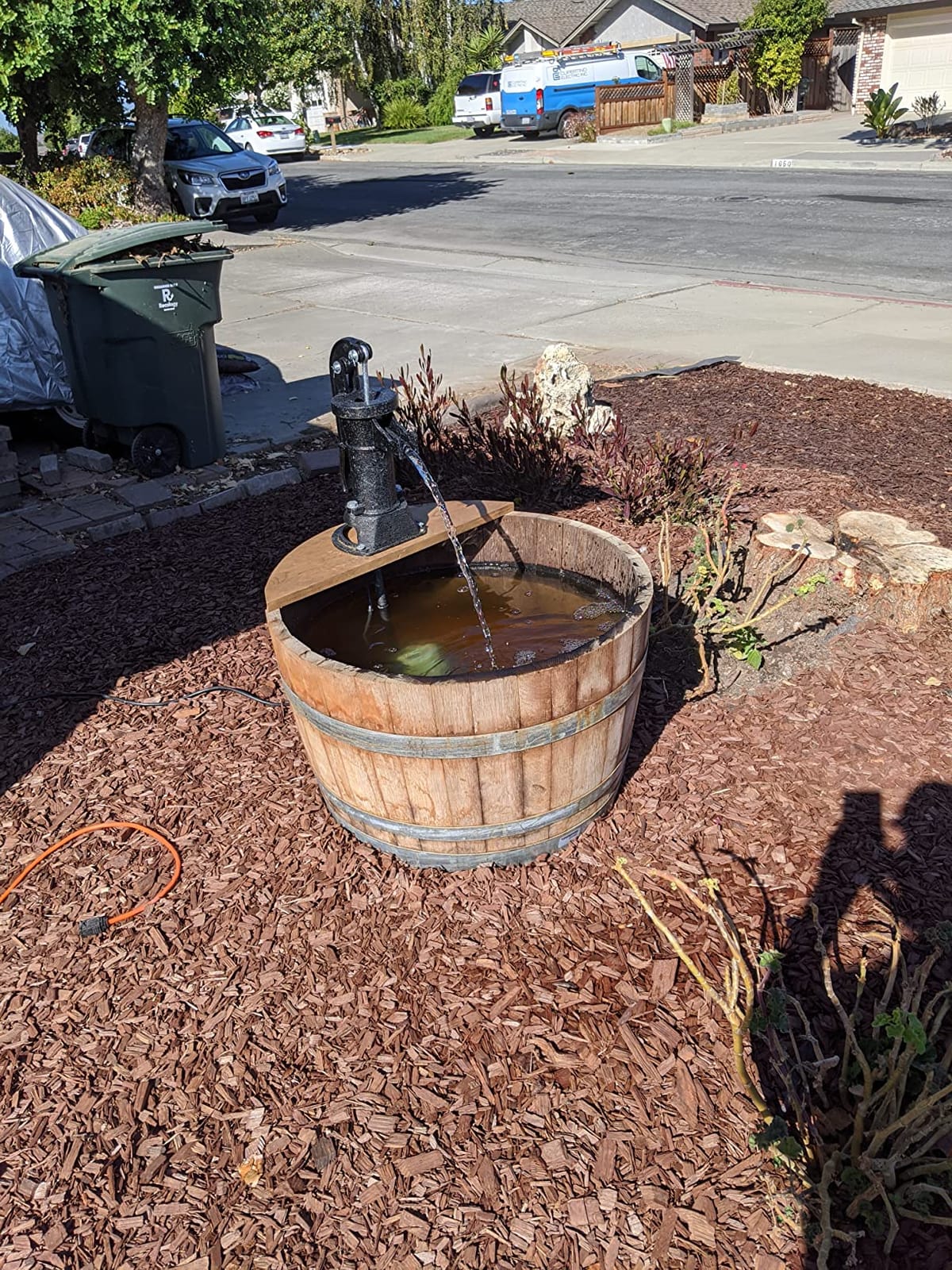
Be clear-eyed about what those 66 ratings mean. It is the smallest owner history of the picks, so there is less community troubleshooting advice available, and no flow rate is published, so planning volume is guesswork. It costs considerably more than the other cast iron options in this roundup, and you are paying mostly for the antifreeze provision and the drain valve.
That expense only makes sense if you would otherwise be doing the same job with a cheaper pump plus an annual blowout and a tarp. If your pump is under a porch or in a pump house, you are paying for a feature you will never trigger.
When it is the right call
It fits an exposed shallow well or cistern in a climate where the pump will freeze if left full. The one-motion drain removes the most common winter damage cause, which is an easy annual task turning into a forgotten one.
It is also a reasonable choice for a remote off-grid property where you cannot get back to winterize anything, because the damage happens whether you are there or not.
When it is the wrong call
The cost is hard to justify for a pump mounted under cover. With 66 ratings and no flow figure, it is also the pick with the least evidence behind it, so if you are matching a stated gallonage requirement for livestock or irrigation you will have nothing to compare against.
And at 30 ft it remains a shallow pump, so the deep static level problem is unchanged.
8. HFS 25 ft Cast Iron Pitcher Pump – Best for Camps and Picnic Sites
HFS(R) Hand Water Well Pump Manual Pitcher Pump Antique 25 FT Max. Lift Red Cast Iron for Home, Yard, Garden, Farm, Pond
Cast iron and aluminum
25 ft lift
12 oz per stroke
1-1/4 in NPT
14 lb
Pros
- Painted cast iron with aluminum base and handle for rust resistance
- Hooked spout makes bucket hanging convenient
- Ergonomic handle gives a comfortable grip
- Publishes stroke volume and flow figures
- Works as yard decor and a pump
Cons
- Recurring reports of loose hardware and a chipped spout
- Some units leak from the bottom after brief use
- Needs priming after every dry spell
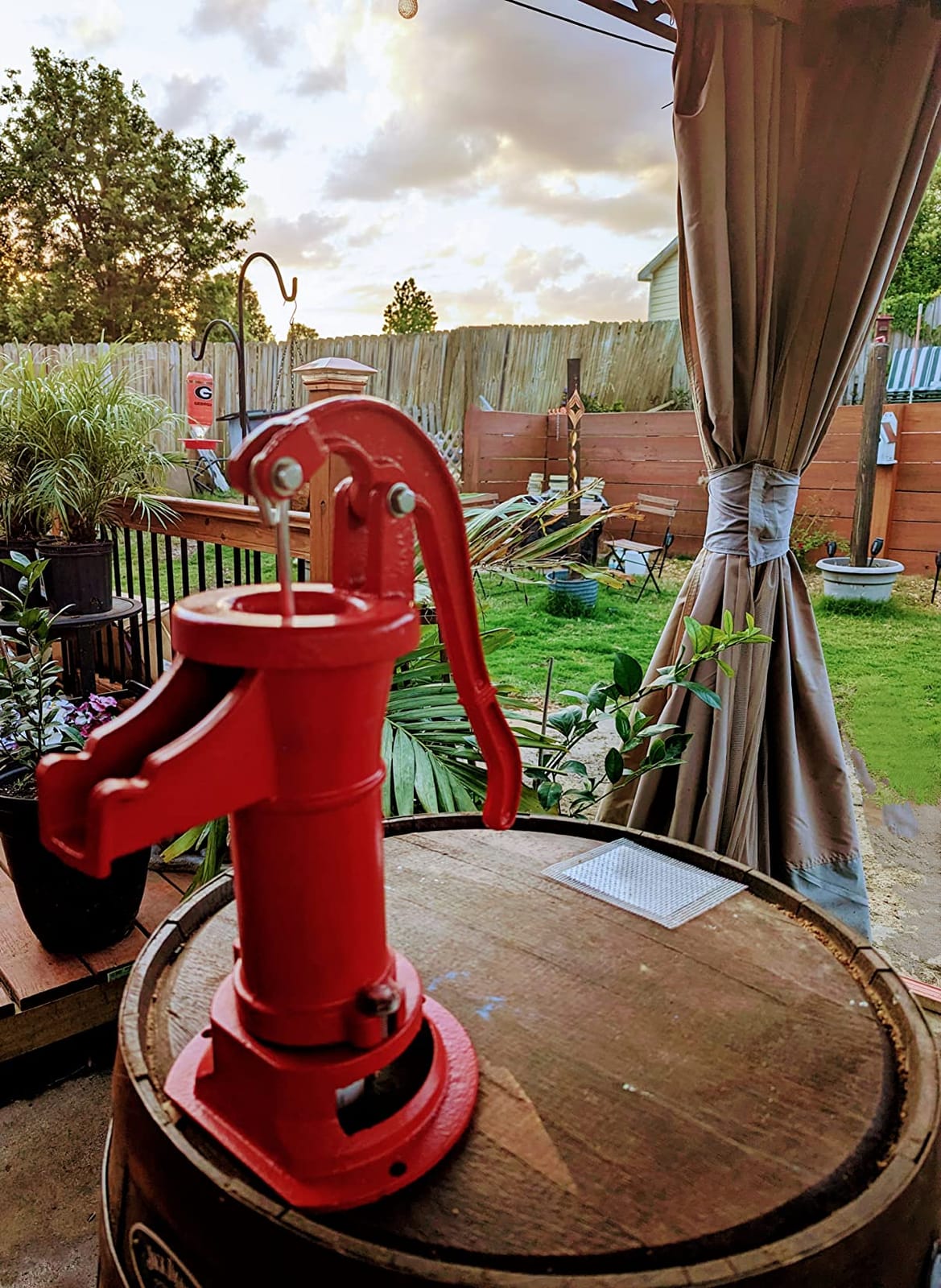
This is the only pump in the roundup that publishes a per-stroke volume, at 12 oz, alongside a stated flow rate. For anyone sizing a pump for camp use, a picnic area or a garden where a specific volume matters, that number is more useful than the vague heavy or high output language used everywhere else.
The build mixes painted cast iron with an aluminum alloy base and handle, which brings the weight to 14 lb and gives you rust resistance on the parts most exposed to rain. The 1-1/4 in NPT inlet is the standard connection size found across this whole roundup.
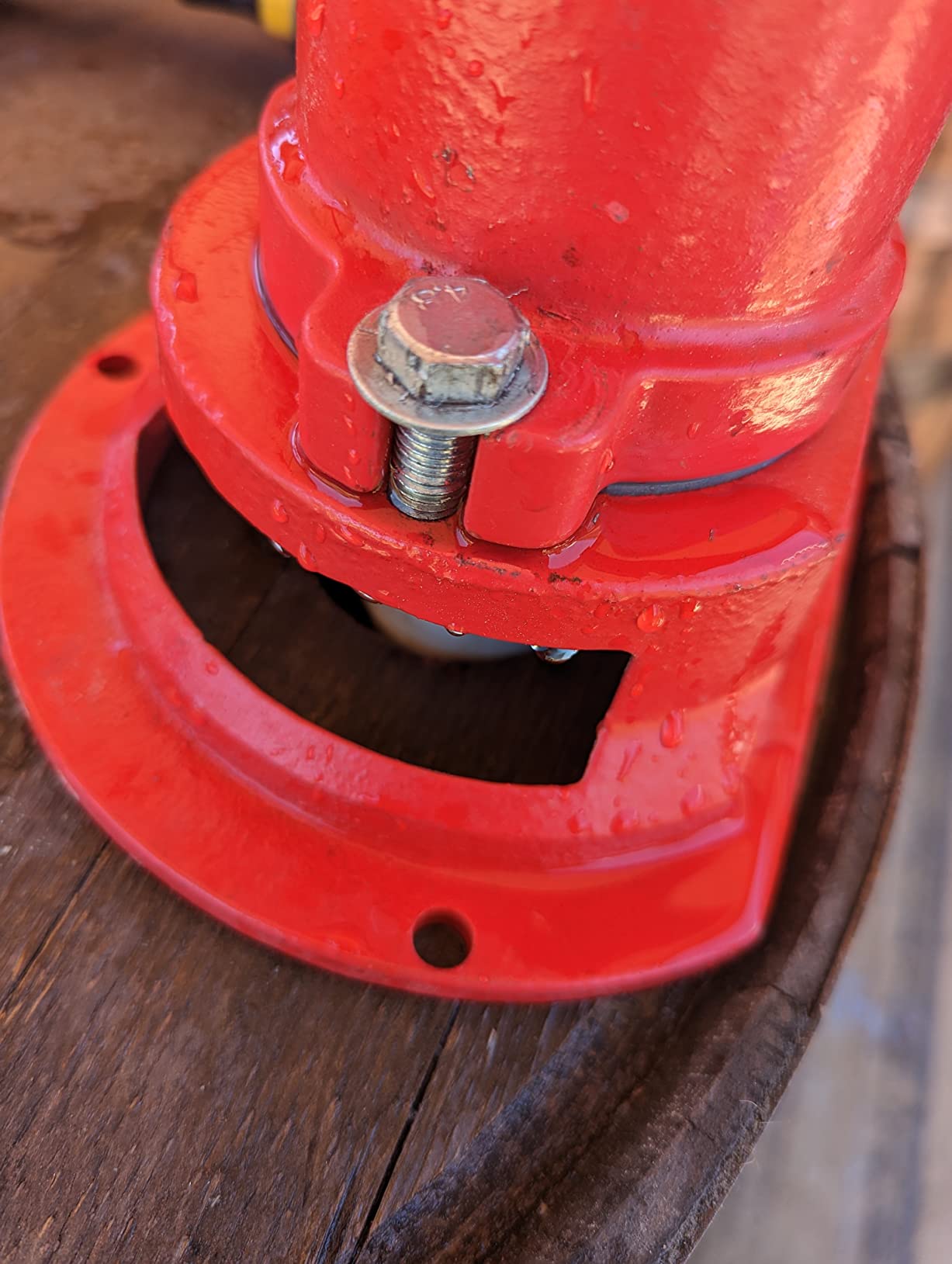
The critical reviews here are worth reading before you buy. Owners report loose or missing bolts and nuts, a spout chipped in transit and shipped under paint, leaks from the bottom after brief use, and internal plastic and leather parts that feel lower quality than the iron casting. Several also note it needs priming after every dry spell, which is a real inconvenience at a camp site you visit occasionally.
None of that means it does not work, and plenty of owners are happy with it. But this is a quality-control-lot-dependent pump, so inspect the hardware and the spout on arrival rather than assuming the listing photos represent what shows up.
When it is the right call
It suits a campground, picnic area or yard where the pump is decorative and used occasionally, and the published 12 oz per stroke makes it the pick if you want to calculate how long a fill actually takes. The aluminum handle is easier on the hands in bare-handed work.
It is a fine second pump for a property that already has a working unit, where the role is garden and yard water rather than anything critical.
When it is the wrong call
Do not make this the only water source on a property you rely on. The recurring hardware and leak reports, combined with a need to prime after every dry spell, make it a poor choice for a pump you will not be standing next to when you need it.
At 58 ratings the owner history is also thin, so there is limited evidence to draw comfort from when something goes wrong.
9. Legacy Premium 100 Foot Emergency Kit – Best for Grid-Down Backup
Emergency Hand Water Well Pump – 100 Foot PEX Pipe – Easy Manual Backup – Flexible – Fully Assembled, Essential for Emergency Preparedness, Heavy-Duty Design
Stainless steel
100 ft PEX drop pipe
15 lb
one-piece assembled
Pros
- Ships fully assembled as a one-piece design
- 100 ft of flexible PEX that can be shortened
- Stainless steel keeps the kit light for storage
- Built specifically as a manual backup water source
Cons
- Only 22 ratings so long-term feedback is thin
- Bulky 35 in by 35 in footprint for storage planning
This is the only pick that solves the deep-well problem, and it does it in a way that requires almost no assembly. Rather than a pitcher pump, it is a manual pump head paired with 100 feet of flexible PEX drop pipe that can be cut to fit, so it can reach water sitting far down a drilled well without you building a rigid column first.
It weighs 15 lb and is stainless steel, so it moves between a storage shelf and a well cap without the corrosion concerns of painted iron. The stated lifting height is 100, which matches the drop pipe length and is the reason the pipe can be shortened to suit a shallower installation.
I want to be straight about the evidence here. Twenty-two ratings at 4.3 is a small base, so treat the score as provisional rather than proven. Buyers are purchasing a complete backup system rather than a garden pump, and the cost reflects the pipe and the assembly, not a better pump head than the cast iron units.
The 35 by 35 inch footprint is a genuine storage consideration. In a home with a tidy garage this is not a shelf-edge item, and where you put it matters because a backup pump that is awkward to reach is a backup you will not reach for.
When it is the right call
It fits a household with a drilled well deeper than 25 feet that wants outage water without running new plumbing, and the fully assembled design means you can get it into service rather than sourcing pipe, fittings and rod couplings separately. The shorten-to-fit PEX is what makes a non-standard depth workable.
For households that also track grid-down gear, it pairs naturally with a hand crank radio and stored water rather than standing in isolation.
When it is the wrong call
If your well is a shallow drive point, a cistern or a rain barrel, this is a large amount of money spent solving a problem you do not have, and a pitcher pump will do the same job for a fraction of it. Twenty-two ratings is also not enough history to lean on for a purchase at this level of commitment.
And a drop pipe down a drilled casing is a two-person job on most installs, particularly if an electric pump already occupies the casing, so factor in help rather than treating it as a solo weekend project.
10. timiland Stainless Steel Hand Pump – Best Lightweight Setup
TIMILAND Manual Well Pump – Upgraded Integrated Base Design, Stainless Deep Well Hand Pitcher Pump for Garden Yard Farm, 10M Suction Range
201 stainless steel
Best results to 26 ft
4.5 lb
spare parts kit
Pros
- Upgraded one-piece base with a lengthened
- thickened stainless body
- Cow tendon leather bowls wear better than rubber cups
- Best results to 26 ft depth
- Spare seal kit included in the box
- 30 day assurance and a 1 year product guarantee
Cons
- Cannot be connected to a plastic hose
- Manual states the pump is not intended for drinking water
- Only 26 ratings
At 4.5 lb this is the second-lightest option here and the smallest by some margin among the stainless models, which is the entire reason to consider it. The upgraded design uses a one-piece integrated base with a lengthened and thickened body, both of which the manufacturer credits for service life.
The seal is the interesting part. It uses cow tendon leather crystal bowls rather than rubber cups, and the claim is that they wear better over time. Three spare bowls and three sealing pads ship in the box along with tape, screws and both connectors, plus a 30 day quality assurance period and a one year product guarantee.
There are three limitations the listing states outright, and unusually, it states them clearly. It cannot be connected to a plastic hose, so you need stainless steel, iron, PVC or steel wire. The manual says the pump is not intended for drinking water. And mineral-rich groundwater can yellow the welded and screwed joints, which the seller says is normal.
That transparency is worth something in a category full of vague listings, but you should plan around the hose restriction before you buy, because most garden setups reach for a plastic hose by reflex. The 26 ratings are thin, and roughly a fifth of them sit at three stars, which maps to buyers who did not get the priming and sealing performance they expected.
When it is the right call
It suits a smallholding or farm where the pump gets carried between the garden, the yard and the livestock area regularly, and where a 4.5 lb unit is the difference between a pump you actually use and one that stays in the shed.
The spare leather bowls are the deciding factor for a pump in constant use, since replacements are included before you need them, and the one year guarantee gives a little confidence on a thin review base.
When it is the wrong call
It is not a drinking water pump by the manufacturer’s own statement, so it is out for any setup that feeds a tap. The hose restriction rules out the plastic hose most people reach for, and the best-result depth of 26 ft keeps it in the pitcher class rather than making it a deep-well option.
If you want the deepest owner history rather than the lightest body, the Simmons at 999 ratings is the more settled bet.
How to Choose a Hand Water Pump for Your Well
The pumps above look interchangeable until you measure against your well. These are the decisions that actually gate the purchase, in the order they should be made.
Step 1: Know your static water level before anything else
Static water level is the depth at which water stands in your well when the pump is off. It is the number that decides your pump class, and it is the single most common failure in this category, because people buy a shallow pump for a well whose water sits far below the suction limit and it simply will not prime.
Measure it or have it measured. If you do not know the number, ask your well contractor rather than guessing from the depth of the casing, because the casing usually goes far deeper than the water does. From there the mapping is simple: under 25 feet means a pitcher pump, and over 25 feet means you need a deep-well lever pump with a drop pipe.
The three hand pump types, and where a ram pump fits
Most sources describe three types, and the boundaries between them are the whole classification. Pitcher and shallow-well pumps sit on top and suck, with a hard ceiling of about 25 feet. Force, lift and cistern pumps move water out of above-ground containers, barrels and pond edges, where depth is irrelevant. Deep-well lever pumps lower a drop pipe and rod assembly into the casing and reach far beyond the suction limit.
Some sources use a four-way split that adds ram pumps, and that is where confusion starts. A ram pump is not a hand pump in the way the other three are. It is a water-hammer design driven by its own flow, it needs running water feeding it and roughly 3 feet of vertical drop, and it wastes about half the water it moves. It will not work in an underground dug well or from standing water, which is exactly the situation most people are trying to solve when they ask about one.
Casing diameter, drop pipe and installing alongside an electric pump
Yes, you can put a hand pump on an existing well, and the normal arrangement is inside the same casing as the electric pump rather than in a second well. What you need to confirm first is the casing diameter and whether the drop pipe, rod and any fittings clear alongside the existing drop pipe. A well professional can verify that in minutes and it is worth the call before you buy anything.
Be realistic about the install. Owners report needing a second person, and a deep drop pipe in a drilled casing is generally a two-person job rather than a solo weekend project. The common approach documented by owners in long-running forum threads is to set the hand pump lower than the static level, hook a hose to the house inlet, and pressurize the household pressure tank by hand so normal fixtures work during an outage.
Spout size, priming and the pressure tank method
Nine of the ten pumps here use a 1-1/4 in NPT connection, which is the standard across the category and mates with standard pipe, fittings and hose bibbs without adapters. The exception worth noting is the timiland model, which explicitly cannot be connected to a plastic hose.
Priming means filling the pump body and drop pipe with water before it will flow, and how often you have to do it depends heavily on the seal. Pumps with leather seals, including the Simmons, often need an in-line check valve underneath to hold prime. Leather bowls should be soaked before first use, and the cork plunger on the SWP 300 needs about 30 minutes in water to swell and seal.
Here is the method that makes a hand pump serve a whole home, and it comes from owner reports rather than spec sheets. A 50 gallon pressure tank holds roughly 30 to 35 usable gallons. Pump the tank full, then run household fixtures normally for a while, and conserve once it drops. You are not keeping up with unlimited use, but for a shower and a toilet during an outage it works. If you have never handled a pressure tank before, our pump troubleshooting guide covers the basics of tank behaviour.
Freeze protection and the honest drawbacks
If the pump sits outdoors above a well cap, it needs a plan for freezing. Winterize it by draining it, keep it under cover, or choose one of the antifreeze-equipped models where raising the handle trips the valve. A Yesterday’s Tractors poster described an old motor-driven pump in a completely exposed well house that worked fine, which is a useful counterpoint to the fear, but it was a protected mechanism in a structure rather than a bare cast iron pump on a post.
The drawbacks are worth stating plainly. A hand pump is slow, and the lift rather than the volume is what wears you out. One person cannot pump while standing in the shower, which is why owners who research this for years recommend a model that also accepts a wind or generator drive. Sized for livestock, a hand pump is a genuinely poor answer, since herd demand is a multiple of household use. And all of this water is untreated groundwater, so boil or filter it before drinking regardless of which pump filled the glass.
Repairability is the last thing to check, and it favours the established American castings over unbranded imports. A pump whose gasket, plunger and rod couplings you can still order in a decade is a better long-term bet than one whose parts exist only while the seller is trading.
Frequently Asked Questions
How deep of a well will a hand pump work?
A pitcher-style hand pump reaches about 25 feet and no further, because it works by suction. Below that, you need a deep-well lever pump with a drop pipe. Most of the pumps in this roundup stop at 25 to 30 feet, which covers drive points, dug wells, cisterns and rain barrels.
Can you put a hand pump on an existing well?
Usually yes, and it is the normal arrangement. A deep-well hand pump fits inside a standard drilled casing, commonly alongside the electric pump, so you do not need a second well. Confirm your casing diameter and drop pipe clearance with a well professional first, and plan on a second pair of hands for the install.
What are the three types of hand pumps?
There are three: pitcher and shallow-well pumps with a hard 25 foot suction limit, force, lift and cistern pumps that work on above-ground containers and pond edges, and deep-well lever pumps with drop pipes that reach well past 25 feet. A fourth type, the ram pump, needs running water and about 3 feet of vertical drop, so it does not work from standing water in a well.
Can I use a deep well pump on a shallow well?
Physically it will work, but it is the wrong tool. A deep-well lever pump on a shallow well wastes effort, can be harder to prime and needs a drop pipe longer than the well requires. Matching the model to your actual depth is cheaper, faster to install and easier to prime.
What are the disadvantages of using a manual water pump?
A hand pump is slow, and the lift rather than the volume is what tires you out. One person cannot pump while another showers. It is a poor match for livestock, where demand is a multiple of household use. It needs periodic sealing maintenance, must be protected from freezing, and the water is untreated groundwater that must be boiled or filtered before drinking.
Which Hand Water Pump to Buy
For most households with a shallow well, drive point or rain barrel, the Simmons 1160 is the pick, because 999 ratings is owner history no other pitcher pump in this roundup can match, and an in-line check valve fixes the prime-loss problem owners report most. If you want a lower-cost cast iron pump for garden and pond duty where looks matter, the VEVOR is the proven budget option, and the SWP 300 is the best-rated of the bunch with a 4.5 average and a real 300 GPH figure behind it.
Match the class to the depth and nothing else matters. Under 25 feet, any of the pitcher pumps above will serve you. Over 25 feet in a drilled well, the Legacy Premium 100 foot kit is the only pick here with a drop line long enough to reach the water, and it is worth treating as outage insurance alongside your electric pump rather than a replacement for it. Stainless steel homes in wet climates want the Locci, cold regions want the antifreeze-equipped Boshart, and anything touching drinking water wants the no-lead Merrill casting, with boiling or filtering the water either way.
Measure your static water level first. That one number decides everything else on this page.