
The best TVs for PS5 pair a 4K panel with 120Hz support, HDMI 2.1, VRR, and ALLM. My first pick is the 55-inch LG OLED evo AI C5 because its four HDMI 2.1 inputs, 0.1ms response time, VRR support, and up-to-144Hz gaming specification make the PS5 feature checklist unusually simple.
A good PS5 gaming TV is not just a large 4K screen. It needs to accept a 4K/120Hz signal, switch into a low-latency mode, and handle changing frame rates without distracting tearing; HDR performance and room brightness then decide whether OLED, QLED, or Mini-LED makes more sense for you.
I put the emphasis on the features the eight analyzed listings actually document, rather than treating every 120Hz label as the same thing. If you also play on another console or a PC, our guide to the best 4K TVs for gaming gives you a broader display shortlist, while a dedicated 4K gaming monitor for PS5 can suit a desk setup better.
Here is the quick answer for a first-time buyer: choose OLED for pixel-level black and fast response in a dim room, choose Mini-LED or QLED when bright-room punch is higher on your list, and do not skip 4K/120Hz plus VRR if you want the console’s faster modes. All eight TVs below have a 4K resolution and four HDMI inputs, but their panel technology, verified gaming features, HDR support, and screen sizes are meaningfully different.
Table of Contents
The top 3 PS5 TV picks cover OLED quality value and a lower-cost QLED option
The LG C5 is the broadest fit for a PS5 owner who wants OLED contrast, four HDMI 2.1 ports, and documented VRR support. Its 55-inch size also works for many living-room setups without making the seating-distance decision unnecessarily hard.
The TCL QM6K is the value pick because it combines QD-Mini LED, a native 144Hz refresh rate, Dolby Vision formats, four HDMI inputs, and Game Accelerator 240 VRR. The TCL T7 is the less elaborate QLED route, with a 120Hz panel, HDR PRO+, and four HDMI inputs for a player who wants the core checklist without moving to Mini-LED or OLED.
The best TVs for PS5 in 2026
| Product | Specifications | Action |
|---|---|---|
 LG OLED evo AI C5 55-Inch LG OLED evo AI C5 55-Inch |
|
Check Latest Price |
 TCL QM6K 55-Inch TCL QM6K 55-Inch |
|
Check Latest Price |
 TCL T7 55-Inch TCL T7 55-Inch |
|
Check Latest Price |
 Samsung S90F 65-Inch Samsung S90F 65-Inch |
|
Check Latest Price |
 LG QNED85A 55-Inch LG QNED85A 55-Inch |
|
Check Latest Price |
 Samsung S85F 55-Inch Samsung S85F 55-Inch |
|
Check Latest Price |
 iFFALCON U85 55-Inch iFFALCON U85 55-Inch |
|
Check Latest Price |
 Sony BRAVIA 3 II 55-Inch Sony BRAVIA 3 II 55-Inch |
|
Check Latest Price |
Use this overview as a compatibility screen, not a substitute for matching the TV to your room. OLED leads this group for self-lit pixels and listed response speed, while the Mini-LED and QLED choices give you other combinations of brightness-oriented technology, local dimming approaches, and gaming modes.
A PS5 tops out at 120Hz, so a listing’s 144Hz mode is headroom for compatible equipment rather than extra PS5 frames. The part that matters most for PS5 is documented 4K/120Hz support, VRR, and ALLM, followed by the number of ports you need for the console, sound system, and other devices.
1. The LG OLED evo AI C5 is the best overall PS5 TV for fast OLED gaming
LG 55-Inch Class OLED evo AI 4K C5 Series Smart TV w/Dolby Atmos, Dolby Vision, HDR10, AI Super Upscaling 4K, Filmmaker Mode, Wow Orchestra, Alexa Built-in (OLED55C5PUA, 2025)
55-inch OLED
4 HDMI 2.1
0.1ms response
up to 144Hz
Pros
- OLED self-lit pixels
- Four HDMI 2.1 inputs
- 0.1ms response time
- VRR support
- Dolby Vision
Cons
- OLED is premium
- 55-inch size only here
The LG OLED evo AI C5 is my clear all-round recommendation because the product data joins the features PS5 players commonly have to hunt down one by one. It is a 55-inch 4K OLED with a 120Hz listed refresh rate, gaming support up to 144Hz, four HDMI 2.1 inputs, NVIDIA G-Sync, AMD FreeSync Premium, and VRR.
Its OLED panel has 8.3 million self-lit pixels, and LG specifies a 0.1ms response time. That combination speaks directly to dark-room games where black areas, quick camera pans, and small highlight details all matter more than a generic “gaming” badge.
In the analyzed customer feedback, the C5 holds a 4.5 rating from 1,402 reviews, with 80% recorded as five-star reviews. Picture quality, the OLED panel, and gaming performance are recurring positives, which lines up with the hardware specification rather than asking us to infer performance from the brand name.
For the best tvs for ps5 search, it is the easiest model to recommend when you want one screen for fast multiplayer, cinematic single-player games, and movies. Dolby Vision, HDR10, HLG, Dolby Atmos, FILMMAKER MODE, and the Alpha 9 AI Processor Gen8 round out the non-gaming side.
The LG C5 is best when dark-room contrast and connection flexibility matter
Four HDMI 2.1 inputs are unusually convenient when your PS5 shares the TV with a current console, a receiver or soundbar, and a PC. You are less likely to be forced into routine cable swapping, although your audio connection plan still deserves a check before wall mounting.
The C5 also lists a Brightness Booster and UL-verified Discomfort Glare Free capability. That does not turn an OLED into a Mini-LED, but it gives a buyer with some daytime viewing a relevant feature to weigh alongside the panel’s black-level advantage.
The LG C5 is less suited to buyers who prefer Mini-LED brightness characteristics
OLED is a panel choice, not an automatic answer for every room. If your main gaming space stays very bright or you prefer a Mini-LED backlight approach, compare the TCL QM6K, LG QNED85A, and iFFALCON U85 below before deciding.
LG’s supplied data describes only this 55-inch configuration, so it is also wise to measure the seating position rather than presume that any C5 size will fit the same way. The TV has a one-year parts-and-labor warranty in the listing data.
2. The TCL QM6K is the best-value PS5 TV with QD-Mini LED and 144Hz
TCL 55 Inch Class QM6K Series | Mini LED QLED 4K HDR | 55QM6K, Latest Model | 120HZ-144HZ High Brightness Smart Google TV Dolby Atmos Onkyo Audio | Voice Remote Alexa Gaming Streaming Television
55-inch QD-Mini LED
144Hz native
Game Accelerator 240 VRR
4 HDMI
Pros
- QD-Mini LED picture
- 144Hz native refresh
- Game Accelerator 240 VRR
- Dolby Vision formats
- Onkyo 2.1 audio
Cons
- Blooming reports
- Edge LED configuration
The TCL QM6K makes a strong case for players who want a 120Hz gaming TV but prefer a Mini-LED and quantum-dot combination over OLED. The 55-inch set has a 4K QD-Mini LED display, a 144Hz native refresh rate, four HDMI inputs, Dolby Vision support, and Game Accelerator 240 VRR.
TCL describes its HALO CONTROL SYSTEM as a way to improve blacks and sharpen detail. That is useful context for HDR gaming, where bright interface elements and lights can sit beside dark scenes; it also gives the QM6K a more specific pitch than simply calling it a QLED for PS5.
The reviewed listing averages 4.4 from 1,796 reviews, with 77% five-star feedback. Value, picture quality, and gaming features appear in the positive feedback, though the same review insights flag some reports of blooming in dark scenes.
The built-in Onkyo 2.1 speaker system includes a subwoofer, which separates it from the many TV listings that only state generic audio support. It is not a replacement for planning a sound system, but it is a documented advantage for someone starting with TV speakers.
The TCL QM6K is best when bright HDR color and gaming value lead the decision
The stated QD-Mini LED technology combines Mini LEDs and Quantum Dot color, while the 144Hz native panel goes beyond what a PS5 itself outputs. For PS5 play, the practical focus remains its VRR gaming feature, 4K resolution, and ability to show the console’s 120Hz modes.
Google TV, Bluetooth 5.4, and Alexa and Google Assistant compatibility make it a practical living-room screen outside game time. It supports Dolby Vision, HDR10+, HDR10, and HLG, providing a wider listed HDR format mix than several other choices here.
The TCL QM6K needs a blooming tolerance in dark scenes
Mini-LED displays use a backlight rather than OLED’s self-lit pixels, so their behavior around high-contrast highlights can be part of the buying decision. The product feedback specifically reports minor blooming concerns, and that is information I would not brush aside if you mostly play in a dark room.
Its listing says edge LED backlight configuration even as the feature set describes QD-Mini LED and halo control. Read the exact seller specifications for the unit you are considering, particularly if backlight construction is the factor that decides the purchase.
3. The TCL T7 is the best lower-cost QLED choice for core PS5 features
TCL 55 Inch Class T7 Series | 4K QLED HDR Lag-free Smart Google TV | 55T7, Latest Model | 120Hz-144Hz High Brightness, Dolby Atmos, Alexa Voice Remote AI Streaming Gaming Television | Amazon Exclusive
55-inch QLED
120Hz panel
HDR PRO+
4 HDMI inputs
Pros
- 120Hz panel
- QLED Quantum Dot color
- Dolby Vision
- Four HDMI inputs
- Google TV
Cons
- Direct LED backlight
- 20W audio
The TCL T7 is the uncomplicated pick for a PS5 owner who wants a 55-inch 4K QLED panel and a 120Hz specification without stepping into the more elaborate Mini-LED category. It is a Google TV model with four HDMI inputs, Dolby Atmos support, and a 120Hz panel refresh rate.
Its Quantum Dot technology is meant to produce rich color, and the listing says it covers nearly the entire DCI-P3 color space. HDR PRO+ supports Dolby Vision, HDR10+, HDR10, and HLG, so it carries a broad set of named HDR formats for games and streamed content.
This model has a 4.4 average from 582 reviews, with 77% five-star feedback. The analysis calls out solid picture quality and value, while noting that the direct LED backlight is a limitation compared with the QM6K’s Mini-LED-oriented feature set.
The AIPQ Pro Processor and Motion Rate 480 with MEMC frame insertion appear in TCL’s listed features. For PS5 shopping, I would treat the native 120Hz panel as the core fact and view processing features as secondary, because the console’s 120fps modes are what a 120Hz display can directly show.
The TCL T7 is best when a 120Hz QLED is enough for your PS5 setup
A 120Hz panel is the basic screen specification to seek if supported PS5 games at 120fps are part of your plan. The T7 combines that figure with 4K resolution and four HDMI inputs, giving a simple starting point for a living-room PS5 compatible TV.
Google TV, Chromecast built-in, Apple AirPlay 2, Alexa compatibility, and Google Assistant compatibility add streaming and casting flexibility. Its 20-watt maximum audio output is documented, so plan around that if audio is a priority.
The TCL T7 is less suited to buyers who want Mini-LED local-dimming benefits
The T7 uses a direct LED backlight rather than Mini-LED, and its listed speaker output is lower than the QM6K’s Onkyo 2.1 system. Neither point prevents PS5 use, but both explain why this model is a different kind of value choice.
If you want VRR explicitly called out in the listing, the TCL QM6K names Game Accelerator 240 VRR, while the iFFALCON U85 spells out VRR and ALLM. Compare documented gaming terms rather than assuming they transfer across the TCL range.
4. The Samsung S90F is the best 65-inch OLED option for a larger PS5 room
Samsung 65-Inch Class OLED S90F 4K Smart TV (2025 Model) NQ4 AI Gen3 Processor Upscaling Pro HDR +, Motion Xcelerator 144Hz, Vision Alexa Built-in
65-inch OLED
144Hz
4K 144Hz VRR
NQ4 AI Gen3
Pros
- 65-inch OLED
- 4K 144Hz VRR
- 144Hz motion
- NQ4 AI Gen3 processor
- 40W 2.1 audio
Cons
- HDR10+ only
- Higher energy use
The Samsung S90F is the large-screen OLED recommendation in this group, with a 65-inch 4K OLED panel, a 144Hz refresh rate, and VRR gaming listed up to 4K 144Hz. The PS5 cannot send a 144Hz signal, but its 4K and VRR capability still makes the specification relevant for a multi-device home.
Samsung includes the NQ4 AI Gen3 Processor with 128 neural networks, AI upscaling, and Motion Xcelerator 144Hz. It also lists powerful brightness and deeper contrast in every pixel, which describes the display priorities Samsung is aiming for rather than an outside measurement claim.
The S90F has a 4.4 rating across 515 reviews, with 77% five-star feedback in the analyzed record. Review insights point to the AI processing and gaming features as strengths, which fits the listed 4K 144Hz VRR function.
Its 2.1-channel, 40-watt audio system provides more stated output than the T7 and S85F listings. It runs Tizen and includes four HDMI ports, two USB ports, Bluetooth 5.3, Ethernet, Wi-Fi, and Alexa built-in.
The Samsung S90F is best when 65 inches matches your viewing distance
A 65-inch screen puts a more cinematic image in front of you, especially for story-driven games and 4K movie watching. It is not automatically better than 55 inches; moving too close can make the image tiring, so measure the seating distance and viewing angle first.
This is the one 65-inch model among the analyzed eight, making it the straightforward option if that physical size is non-negotiable. Its 49.6-pound listed weight and 56.9-inch width should be part of any wall-mount or furniture check.
The Samsung S90F is less suited to Dolby Vision-focused buyers
The supported HDR format in its listing is HDR10+, while Dolby Vision is not listed. PS5 HDR gaming decisions should still start with the screen’s 4K/120Hz and VRR support, but HDR format preferences can matter for the streaming and movie side of ownership.
The record also lists higher energy consumption than the other Samsung OLED in this roundup. That does not say anything about gaming responsiveness, but it is a real specification difference worth considering for a TV used many hours a day.
5. The LG QNED85A is the best LG Mini LED alternative with Game Optimizer
LG 55-Inch Class QNED evo AI QNED85A Series Mini LED 4K Smart TV w/AI Picture, AI Sound, HDR10, AI Super Upscaling 4K, Filmmaker Mode, Wow Orchestra, Alexa Built-in (55QNED85AUA, 2025)
55-inch Mini LED
120Hz
VRR up to 144Hz
LG Game Optimizer
Pros
- Mini LED precision dimming
- 100 percent color volume
- 120Hz with VRR
- LG Game Optimizer
- webOS
Cons
- Limited HDR formats
- 2.0 audio
The LG QNED85A is the LG choice to consider when you want Mini LED with precision dimming instead of an OLED panel. It is a 55-inch 4K LED TV with Dynamic QNED Color, a 120Hz refresh rate, VRR listed to 144Hz, four HDMI ports, and LG Game Optimizer.
Its Alpha 8 AI Processor Gen2, HDR10 Pro, FILMMAKER MODE, and webOS platform cover both picture processing and everyday use. LG also lists 100% Color Volume, which is a specific color claim from the supplied product features.
The available feedback shows a 4.4 average from 301 reviews and 73% five-star reviews. Users identify it as a solid mid-range option with useful AI features, while the review analysis also points to trade-offs in backlight technology and HDR support.
This is a practical reminder that an LG-branded gaming TV does not have to be OLED. The QNED85A includes GeForce NOW and Xbox Cloud Gaming, AirPlay 2, Google Cast, and Bluetooth 5.3, adding choices for households that use more than one gaming ecosystem.
The LG QNED85A is best when LG Game Optimizer and Mini LED appeal to you
Game Optimizer is a named LG gaming feature, and VRR up to 144Hz is listed alongside the 120Hz refresh rate. For the PS5, look at the 120Hz capability first, then use the extra refresh-rate support as flexibility for other compatible sources.
Mini LED with precision dimming gives this set a different visual approach from the C5’s self-lit OLED pixels. It makes sense for a shopper comparing the two panel types while keeping webOS and LG’s gaming interface in the picture.
The LG QNED85A is less suited to buyers who need broad HDR-format support
HDR10 and HLG are the HDR formats stated in the product details, and the review analysis notes the absence of Dolby Vision. If Dolby Vision is part of your streaming preference, the LG C5, TCL QM6K, TCL T7, iFFALCON U85, and Sony BRAVIA 3 II list it.
The 2.0-channel audio specification is less substantial on paper than the 2.1-channel choices in this guide. WOW Orchestra and AI Sound Pro are listed features, but an external audio plan remains sensible if immersive sound is a top goal.
6. The Samsung S85F is the best 55-inch Samsung OLED with straightforward Game Mode
Samsung 55-Inch Class OLED 4K S85F Series, Vision AI Smart TV (2025 Model, 55S85F) Object Tracking Sound Lite w/Dolby Atmos, NQ4 AI Gen2 Processor, Contour Design, Color Booster Pro, Alexa Built-in
55-inch OLED
120Hz
Game Mode
NQ4 AI Gen2
Pros
- OLED display
- 120Hz motion
- Game Mode
- Pantone-validated colors
- Four HDMI ports
Cons
- HDR10+ only
- 20W speakers
The Samsung S85F is a 55-inch OLED path for a buyer who likes Samsung’s Tizen platform and wants a listed 120Hz refresh rate with Game Mode. Its NQ4 AI Gen2 Processor uses 20 neural networks for AI-powered 4K upscaling, and Samsung also lists Pantone-validated colors and Color Booster Pro.
It carries four HDMI ports, two USB ports, Bluetooth, Ethernet, Wi-Fi, Dolby Atmos, and Alexa built-in. The product details list a 20-watt multi-channel speaker system with top-firing speakers, plus Object Tracking Sound Lite.
The S85F has a 4.4 average from 191 reviews and a 79% five-star share in the analyzed data. The review summary identifies strong satisfaction with its Pantone-validated colors and AI-enhanced upscaling, although this is a smaller review sample than the C5 or QM6K.
For a PS5 gaming TV that also handles day-to-day streaming, the Contour Design, Tizen OS, screen mirroring, and mobile content sharing features keep the package focused on ordinary living-room use. Game Mode is the relevant listed setting for players who do not want to hunt through menus every session.
The Samsung S85F is best when you want a 55-inch OLED and Tizen
OLED gives the S85F the self-emissive panel type many dark-room players seek, while 120Hz aligns with the PS5’s maximum output. That makes it a sensible alternative to the LG C5 if Samsung’s smart-TV system and feature mix fit the rest of your setup.
Its display dimensions are 48.2 inches wide and it weighs 27.8 pounds, useful details when replacing an existing 55-inch screen. The listed VESA mount standard is 300 by 200 mm.
The Samsung S85F is less suited to Dolby Vision and high-output audio priorities
Samsung lists HDR10+ for this model and does not list Dolby Vision. HDR preferences do not erase the benefit of OLED and 120Hz, but they can settle a close choice between otherwise similar televisions.
The 20-watt speaker output is modest beside the iFFALCON U85’s stated 50-watt 2.1 setup or the S90F’s 40-watt 2.1 system. If you plan to use a soundbar, check your preferred audio path and HDMI-port allocation before purchase.
7. The iFFALCON U85 is the most explicitly PS5-focused MiniLED feature package
iFFALCON 55″ 4K MiniLED Smart TV | Compatible with Xbox & PS5, 4X HDMI 2.1 | Hotel, Home & Office Use | 144Hz VRR 240Hz, Dolby Vision Gaming, Dolby Atmos, IMAX Enhanced, Google TV, Alexa | 55U85
55-inch MiniLED
4 HDMI 2.1
144Hz VRR
Dolby Vision Gaming
Pros
- Four HDMI 2.1 ports
- Dolby Vision Gaming
- ALLM and VRR
- 50W Dolby Atmos audio
- FreeSync Premium Pro
Cons
- No Ethernet listed
- limited review sample
The iFFALCON U85 places its gaming credentials unusually plainly in the product data: it lists PS5 compatibility, four HDMI 2.1 ports, a 144Hz MiniLED panel, VRR, ALLM, FreeSync Premium Pro, and Dolby Vision Gaming. For a buyer tired of decoding vague gaming labels, that direct feature list is a real strength.
Two of the HDMI 2.1 ports are specified for 4K at 144Hz, while the other two are specified for 4K at 60Hz. A PS5 does not output 4K at 144Hz, yet the documented 4K/120Hz-class connection capability and ALLM are the points that matter for console use.
The set is rated 4.3 from 154 reviews, with 74% five-star feedback. The supplied review insight describes strong gaming performance with low input lag, but the smaller review base means I would weigh that feedback alongside the detailed feature list rather than give it the same confidence as a four-figure review count.
It also lists 1,000 nits maximum display brightness, a 6,000:1 contrast ratio, Dolby Vision IQ, IMAX Enhanced, Google TV, and Google Cast. Its 2.1-channel 50-watt audio with Dolby Atmos and DTS Virtual:X is the most powerful stated audio specification in this eight-TV set.
The iFFALCON U85 is best when HDMI 2.1, ALLM, and Dolby Vision Gaming are non-negotiable
HDMI 2.1, VRR, and ALLM are named rather than implied, which makes compatibility screening far less stressful for a first-time PS5 buyer. VRR aligns the display refresh with the console’s output to reduce tearing, while ALLM signals the TV to move into a low-latency game setting.
The combination of MiniLED, 144Hz, and 50-watt 2.1 audio is compelling for players who want a specification-heavy package from one 55-inch TV. Google TV, Alexa and Google Assistant support, AirPlay 2, and Chromecast built-in add living-room versatility.
The iFFALCON U85 is less suited to buyers who require wired-network confirmation
The listing names Bluetooth and Wi-Fi but does not mention Ethernet, while several other models here explicitly list Ethernet. If a wired network is part of your plan for game downloads or streaming, verify the exact connection details before choosing this TV.
It also has hotel mode and IP/IR control, which may be useful in commercial or managed locations but will not affect most home PS5 setups. Availability is described as limited in the analyzed listing, so confirm current stock at the time you shop.
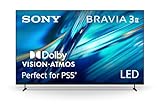
8. The Sony BRAVIA 3 II is the best pick for PS5 Auto HDR Tone Mapping
Sony 55 Inch BRAVIA 3 II LED 4K HDR Smart Google TV with Gemini K-55XR30M2
55-inch LED
4K 120 VRR ALLM
Auto HDR Tone Mapping
4 HDMI 2.1
Pros
- PS5 Auto HDR Tone Mapping
- PS5 Auto Genre Picture Mode
- 4K 120 VRR ALLM
- Dolby Vision
- Google TV
Cons
- 4.0 rating
- smaller review sample
The Sony BRAVIA 3 II is the direct answer for a player whose priority is Sony’s stated PS5 integration. It lists HDMI 2.1 with 4K/120, VRR, and ALLM, plus PS5 Auto HDR Tone Mapping and PS5 Auto Genre Picture Mode.
Auto HDR Tone Mapping is designed to match HDR calibration between a compatible PS5 and TV, while Auto Genre Picture Mode switches between game and other picture modes based on activity. These PS5-specific functions are the main reason to put this 55-inch LED TV on a PS5-only shortlist.
The BRAVIA 3 II carries a 4.0 rating from 71 reviews, with 67% five-star feedback and a 17% one-star share in the analyzed results. That lower rating and smaller sample are important counterweights to its excellent on-paper PS5 feature set.
For non-gaming viewing, Sony lists the XR Processor with AI scene recognition, XR Clear Image upscaling and noise reduction, XR Triluminos Pro, Dolby Vision, Dolby Atmos, Google TV with Gemini, AirPlay 2, and Google Cast. Its 120Hz refresh rate is paired with Motionflow XR.
The Sony BRAVIA 3 II is best when PlayStation-specific automatic settings matter most
The TV’s supplied technical details explicitly name every PS5 connection feature many buyers ask about: 4K/120, VRR, ALLM, Auto HDR Tone Mapping, and Auto Genre Picture Mode. That makes it a particularly easy recommendation for someone who wants the PS5 and TV to recognize each other’s gaming context.
It has four HDMI ports and names HDMI 2.1, so it also avoids the single-port bottleneck that can complicate a console-plus-soundbar setup. The 55-inch display size suits buyers deciding between a medium living-room TV and a desktop monitor.
The Sony BRAVIA 3 II needs closer review-score scrutiny before purchase
The customer feedback is materially less positive than the ratings recorded for the other televisions here. A 4.0 average, 71-review sample, and stated 17% one-star portion do not disqualify it, but they make it sensible to read recent owner feedback and seller terms carefully.
This is an LED television with a direct LED backlight configuration, not an OLED or MiniLED model. Buyers chasing OLED black levels or MiniLED backlight behavior should compare Sony’s PS5 modes against the panel advantages offered by the LG C5, TCL QM6K, or iFFALCON U85.
The PS5 TV features that matter are HDMI 2.1, 4K at 120Hz, VRR, and ALLM
The shortest buying rule is simple: a PS5 TV should support 4K at 120Hz, VRR, and ALLM through HDMI 2.1 if you want access to the console’s high-frame-rate modes and low-latency behavior. A 4K screen alone is not the full answer, because a 60Hz TV cannot display a 120fps mode as 120 distinct updates each second.
Forum discussions show why this topic feels more confusing than it should. First-time buyers regularly ask whether older HDMI cables work, whether 120Hz is needed, and whether the expensive panel types make a visible difference; the useful response is to check the complete signal path instead of focusing on one specification.
HDMI 2.1 is the connection standard that carries PS5 4K at 120Hz
HDMI 2.1 provides the bandwidth associated with a 4K/120Hz signal from a PS5. Look for the feature in the TV’s documentation and connect the console to the correct input, because not every HDMI port on every TV necessarily carries the same capability.
The LG C5 and iFFALCON U85 explicitly list four HDMI 2.1 inputs. The Sony BRAVIA 3 II explicitly lists four HDMI 2.1 ports with 4K/120, VRR, and ALLM, while the other reviewed TVs list four HDMI inputs but differ in how much gaming detail their product data provides.
An older HDMI cable may still work for a standard signal, but a cable should not be assumed to support every high-bandwidth mode you plan to use. If 4K/120Hz, VRR, or intermittent screen behavior matters, use a cable rated for the target signal and check the PS5 video-output screen after setup.
VRR and ALLM are the features that make fast games feel cleaner and quicker
VRR means Variable Refresh Rate. It lets the television match its refresh behavior to the console’s changing frame output, which helps reduce screen tearing when game performance is not fixed at a single frame rate.
ALLM means Auto Low Latency Mode. When supported by the TV and source, it requests a low-latency game setting automatically, reducing the chance that you are playing in a movie-oriented picture mode with extra processing.
The key is not to treat either abbreviation as decoration. The LG C5 lists VRR, the TCL QM6K lists Game Accelerator 240 VRR, the QNED85A lists VRR to 144Hz, the iFFALCON U85 lists both VRR and ALLM, and Sony explicitly lists VRR and ALLM with its PS5 features.
OLED is best for black levels, while QLED and Mini-LED can suit brighter rooms
OLED panels such as the LG C5, Samsung S90F, and Samsung S85F use self-lit pixels. This is why OLED is commonly sought for dark-room gaming: a pixel can control its own light rather than depend on a backlight behind the whole panel.
QLED and Mini-LED are different LCD-family approaches. The TCL T7 lists QLED Quantum Dot technology, while the TCL QM6K combines QD-Mini LED and Quantum Dot technology; the LG QNED85A and iFFALCON U85 also bring Mini LED into the decision.
There is no panel label that wins every room. I would start with OLED when dark-scene contrast and quick pixel response lead the list, then compare Mini-LED or QLED when room brightness, stated brightness characteristics, and a backlit display approach feel more appropriate.
A 55-inch TV is the default choice, while 65 inches needs more seating distance
Seven of the eight analyzed products are 55-inch models, which makes 55 inches the sensible baseline for this particular roundup. It is large enough to make 4K detail meaningful in many rooms without requiring the furniture and wall space of a 65-inch screen.
The 65-inch Samsung S90F makes sense for viewers sitting farther back or wanting a bigger movie-and-game presentation. Before choosing, measure the TV stand width or mounting surface, the screen’s listed dimensions, and the normal seating spot rather than relying on a diagonal-size number alone.
Players who sit very close at a desk should also compare a television against our best 4K gaming monitors for PS5 and PC guide. A smaller monitor can be the more comfortable screen even if a television looks more dramatic in a showroom.
PS5 Auto HDR Tone Mapping is a Sony advantage, not a requirement for great HDR
PS5 Auto HDR Tone Mapping is explicitly listed on the Sony BRAVIA 3 II. With a compatible PS5, the feature is designed to align the console’s HDR calibration with the TV, removing a setup step that otherwise asks the player to adjust HDR screens manually.
Auto Genre Picture Mode is also listed for the Sony and is intended to change between game and other picture modes by activity. These are worthwhile convenience features, but they should not override the base requirements of 4K/120Hz, VRR, ALLM, screen size, and panel type.
PS5 Pro owners should apply the same checklist. A TV with 4K/120Hz support and VRR is ready for compatible high-frame-rate modes, while a well-chosen OLED, QLED, or Mini-LED panel helps determine how the game’s HDR image looks in your actual room.
Audio and accessories complete a PS5 setup after the display is chosen
TV speakers vary widely in the supplied records, from 20-watt systems on the TCL T7 and Samsung S85F to the iFFALCON U85’s listed 50-watt 2.1 system. The LG C5 lists 2.2-channel sound with Dolby Atmos, and the TCL QM6K lists an Onkyo 2.1 system with a built-in subwoofer.
Many players will still prefer a headset for late-night sessions, team chat, or positional sound. Our roundup of the best gaming headsets for PS5 is a useful companion when you have chosen the screen but still need personal audio.
Plan port use before adding a soundbar, receiver, or capture device. Four HDMI inputs give more flexibility, but eARC and the exact HDMI capability of each port should be verified against the equipment you already own.
These PS5 TV FAQ answers cover the panel, refresh-rate, and screen-choice questions
What type of TV is best for PS5?
An OLED, QLED, or Mini-LED TV is a good PS5 choice when it supports 4K at 120Hz, HDMI 2.1, VRR, and ALLM. OLED suits dark-room contrast and fast pixel response, while QLED and Mini-LED can be preferable for a brighter room.
Is OLED or QLED better for PS5?
OLED is better for PS5 players who prioritize self-lit pixels, deep black levels, and fast response in a dark room. QLED or Mini-LED can be a better fit for a brighter room or for buyers who prefer a backlit panel; in either case, look for 4K at 120Hz, VRR, ALLM, and HDMI 2.1.
Do I really need a 120Hz TV for PS5?
You need a 120Hz TV to see supported PS5 games running at up to 120fps as 120Hz output. A 60Hz 4K TV can still play PS5 games well, but it cannot show the console’s 120Hz modes at their full refresh rate.
What is the best TV screen for PS5?
The LG OLED evo AI C5 is the best all-around screen in this list because it has a 4K OLED panel, four HDMI 2.1 inputs, a listed 0.1ms response time, VRR support, and gaming support up to 144Hz. The best screen for your home still depends on room brightness, screen size, and HDR preferences.
The LG C5 is the best overall choice, while the TCL QM6K and Sony BRAVIA 3 II serve specific needs
The LG OLED evo AI C5 is the best TV for PS5 in 2026 if you want the most complete combination of OLED pixels, four HDMI 2.1 inputs, 0.1ms response time, VRR, and up-to-144Hz gaming support. The TCL QM6K is the stronger fit when QD-Mini LED, 144Hz, Game Accelerator 240 VRR, and broad HDR format support are your priorities.
Choose the TCL T7 for a straightforward 120Hz QLED, the Samsung S90F when a 65-inch OLED is the right physical size, or the Sony BRAVIA 3 II when Auto HDR Tone Mapping and Auto Genre Picture Mode matter most. Read the gaming specifications for the exact TV size and seller listing, connect the PS5 to the correct HDMI input, and then set up 4K/120Hz, VRR, HDR, and Game Mode from the console and TV menus.