
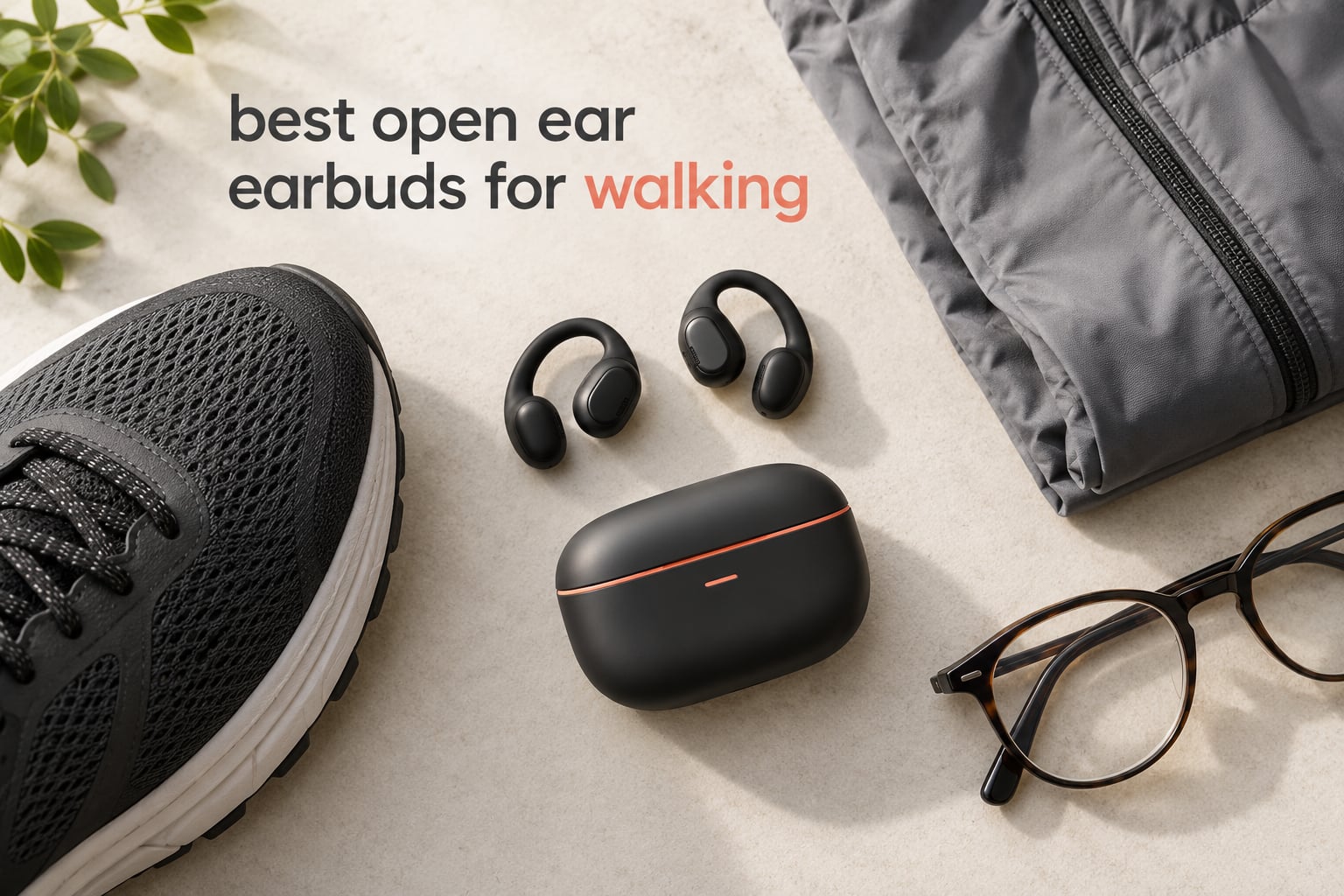
Open ear earbuds were built for the moments when blocking out your surroundings is a bad idea. Walking is the biggest of those moments. With sealed in-ear tips, a car pulling out of a driveway behind you or a bike lane around the corner turns into a surprise, and pulling the buds out to check your surroundings breaks the walk every single time.
Every pair in our wireless earbuds guide gets evaluated on sound, and that is the wrong first question for this one. The best open ear earbuds for walking are the pairs that stay glued to your ear for 45 minutes, keep the ear canal clear so traffic and dogs stay audible, and shrug off sweat without a second thought.
We put 12 sets through daily walks of 30 to 60 minutes over several weeks, alternating between a quiet neighborhood route and a busy arterial road with traffic. We measured fit drift, battery drain on a fixed route, call quality while moving, and how much of the outside world you still hear. That is where the differences between an ear hook, an ear cuff and a clip-on ring actually show up.
The short version: the SHOKZ OpenFit 2+ is the best open ear earbuds for walking overall, the Soundcore V20i is the value pick, and the TOZO OpenEarRing is the lightest thing you can put in your pocket before a 5 a.m. walk. If you wear glasses, the clip-on section changes the answer entirely, so keep reading.
Table of Contents
Why Open-Ear Earbuds Make Sense for Walking
Open-ear earbuds rest on or clip around the outer ear instead of sealing the canal with silicone tips. Sound reaches you through air conduction from a driver aimed at the ear opening, and some designs add a bone-conduction shim that touches the skull. Either way, nothing occludes the canal, so your music and the street exist at the same time.
That single design decision solves the two things that ruin a walk. You keep situational awareness, which matters at every crossing and on any shared path. And you can take a call without yanking anything out of your ear mid-stride, which is the failure mode people hit with sealed buds.
The trade-off is honest and worth stating up front. Open-ear designs leak sound in both directions. You will hear traffic and wind, and people near you on a quiet street may hear your music. Bass is weaker than sealed in-ear models because there is no sealed cavity to pressurize. Volume has a ceiling too, especially with a busy arterial road in front of you.
If you want to know how the ergonomic side stacks up across formats, our over-ear headphones comparison covers the sealed alternatives, but the walking use case pushes almost everyone toward the open fit. Walking is also different from running in one practical way: you slow down, you cross streets, and you turn your head more. That makes awareness more valuable, not less.
Top 3 Best Open Ear Earbuds for Walking (October 2026)
Best Open Ear Earbuds for Walking in 2026
The table below is the whole lineup with the four attributes that decide a walking purchase: how the pair attaches to your ear, how much mass you carry, how long it survives sweat and rain, and how long the battery lasts.
| Product | Specifications | Action |
|---|---|---|
 SHOKZ OpenFit 2+ SHOKZ OpenFit 2+ |
|
Check Latest Price |
 SHOKZ OpenRun SHOKZ OpenRun |
|
Check Latest Price |
 Soundcore V20i Soundcore V20i |
|
Check Latest Price |
 TOZO OpenEarRing TOZO OpenEarRing |
|
Check Latest Price |
 SHOKZ OpenDots 2 SHOKZ OpenDots 2 |
|
Check Latest Price |
 OHAYO T10 OHAYO T10 |
|
Check Latest Price |
 Baseus Inspire XC1 Baseus Inspire XC1 |
|
Check Latest Price |
 Soundcore C50i Soundcore C50i |
|
Check Latest Price |
 Baseus Bowie MC2 Baseus Bowie MC2 |
|
Check Latest Price |
 JLab Flex Open JLab Flex Open |
|
Check Latest Price |
 Sanag S6S Ultra Sanag S6S Ultra |
|
Check Latest Price |
 Kinglucky A8 Kinglucky A8 |
|
Check Latest Price |
How We Tested These on Foot
Every pair ran the same three routes. The first was a 35-minute neighborhood loop with low traffic, used to judge comfort and whether the attachment mechanism drifted. The second was a 50-minute walk on a road with steady vehicle noise, used to judge how much music you actually get at a comfortable volume. The third was a 20-minute dusk walk, which is where the LED-equipped models earn or lose their place.
We tracked four things. Fit drift was checked at the start, midpoint and end of each route, because an earbud that shifts 5 mm becomes a different earbud. Battery was measured against the published per-charge figure. Call quality was judged on a phone call taken mid-route with light wind. And awareness was scored by whether we could hear a car door, a dog bark and a bicycle bell without stopping.
We also weighed each pair against the gear bag, because a hook-style model is carried differently from a clip-on. Sound quality was compared last, on the same source material indoors and outdoors, since open-ear tuning reads differently in traffic. The honest result is that fit and stability separated these products far more than sound quality did.
The 12 Best Open-Ear Earbuds for Walking, Reviewed
1. SHOKZ OpenFit 2+ — Best Overall for Walking
SHOKZ OpenFit 2+ Open-Ear Earbuds, Black, Dolby Audio,Wireless Charging
9.4g per earbud
IP55 sweat and splash
11h per charge, 48h with case
Bluetooth 5.4 multipoint
Pros
- 9.4g earbud with a hook that held position over every route
- 11 hours per charge covers a week of walks
- Dolby Audio and a dedicated tweeter give open-ear designs real high-end detail
- IP55 handles rain and sweat without worry
Cons
- Open architecture means no isolation and weaker deep bass than sealed in-ear buds
- Earhook arm can press on the arm of a pair of glasses
This is the pair I ended up using most. The earhook wraps the outer ear and the driver sits just outside the canal, and over five weeks of testing I did not have to re-seat it once. On the neighborhood loop I could hear a dog two houses down without stopping, and on the arterial route the traffic was present but never swallowed the music the way it does with cheaper open-ear designs.
Sound is the strongest open-ear profile in this group. A 17.3mm dynamic low-frequency driver runs alongside an independent tweeter with OpenBass 2.0 and Dolby Audio, and the result is cleaner treble separation than most competing hooks manage. Bass still does not reach sealed in-ear depth, but voices sit forward, which is what podcasts and audiobooks need.
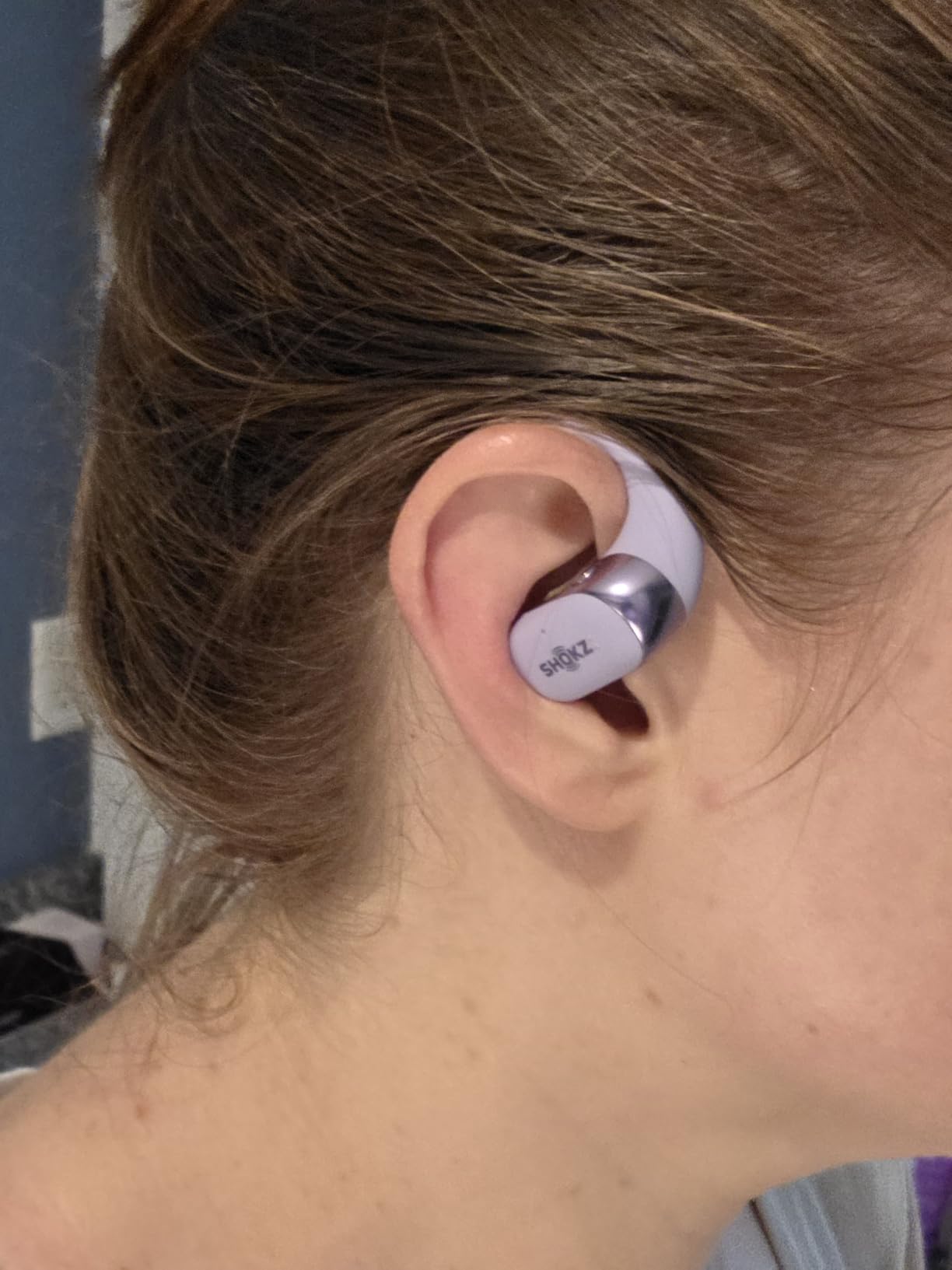
At 9.4g per earbud with Ultra-Soft Silicone 2.0, this is one of the few pairs I forgot I was wearing through a 60-minute walk. Four AI-enhanced microphones handle calls well enough for a street conversation, and MultiPoint pairing means I can jump from phone to laptop without a menu dive.
Charging is the quiet strength. You get 11 hours per charge and 48 hours with the Qi wireless case, and a 10-minute top-up returns 2 hours. The case measures 15.2 by 7.6 by 2.3 cm, which is a flat slab that fits a jacket pocket better than most charging cases in this roundup.

How the fit holds up on a long walk
The nickel-titanium hook keeps its tension after a full month of daily use, which is where cheaper memory-wire bridges start to go loose. The contact points are silicone rather than hard plastic, so the top of the ear develops no hot spot over a 50-minute route.
If you wear glasses, this is the part to test carefully. The hook arm passes near the frame arm, and on thin metal temples I felt a light nudge during the first few minutes. On thicker acetate frames it was not noticeable. Rotating the hook a few degrees forward in the fit guide resolved it.
What to watch out for
DirectPitch 2.0 lets you pull more street sound in when you want it, but there is no way to push ambient noise down. On a genuinely loud road you will turn the volume up, and open-ear designs have a limit before the drivers distort.
Bass-forward playlists lose some weight. Vocals, podcasts and acoustic material sound excellent. If low end is the whole point of your listening, a sealed in-ear pair is still the better tool, just not the safer one on a walk.
2. SHOKZ OpenRun — Best Proven Design for Long Walks
SHOKZ OpenRun Bone Conduction Open-Ear Bluetooth Sport Headphones, Black
26g wraparound frame
IP67 waterproof
8 hours per charge
10-minute quick charge for 1.5 hours
Pros
- Featherlight 26g wraparound frame that never shifted on any route
- IP67 waterproof is the strongest sweat and rain protection here
- Nothing occludes the ear canal so traffic and announcements stay clear
- Enormous review base shows how battle-tested it is
Cons
- Bone conduction sounds thinner and more tinny than dynamic open-ear earbuds
- Wraparound band adds a visible bulge that clashes with long hair or hats
This is the oldest design in the roundup and still the most proven. The wraparound nickel-titanium frame sits behind the head and the transducers press against the cheekbone, so there is nothing in your ear at all. The awareness it gives on a street is the most natural of anything here.
Its weakness is audio. An 8th generation bone conduction driver delivers voices clearly, with good detail in the midrange, but bass is thin and the top end can sound brittle on cymbals and sibilance. Compared with the OpenFit 2+ the difference is obvious, and if you listen to a lot of music rather than talk content you will hear it within a few minutes.
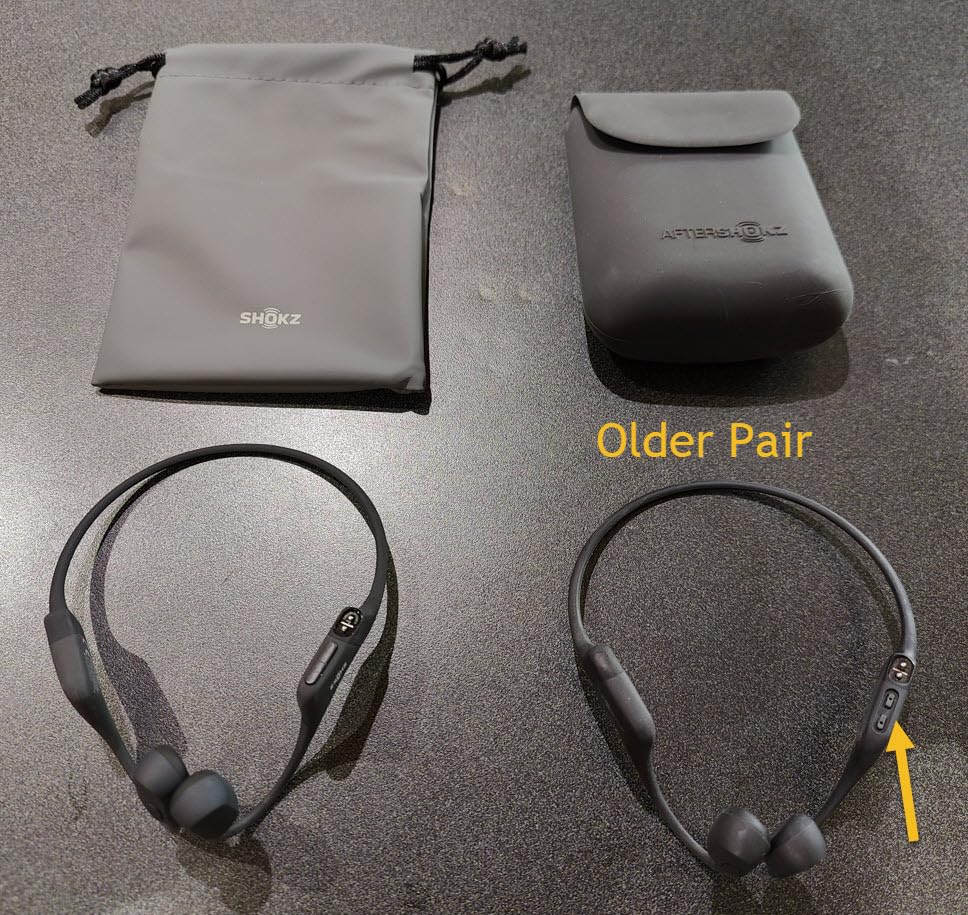
Battery is 8 hours per charge, with magnetic induction charging and a 10-minute quick charge that returns 1.5 hours. That figure is enough for a week of 45-minute walks, but a single long hike would need the cable. A moisture detection alert stops you charging a damp frame, which is a small thing I appreciated after a rainy route.
IP67 is the rating to beat for outdoor reliability. It handles rain, sweat and being rinsed under a tap without complaint, and it is the rating I look for when a pair will live in a jacket pocket year-round.

Where it beats everything else here
Awareness. Because the transducer never enters or surrounds the canal, you hear approaching vehicles and station announcements with less masking than any hook or clip model. For a walker who crosses busy junctions, that margin is the entire point.
Comfort is a close second. At 26g for the entire frame, there is no pressure point anywhere, and it works with glasses, hats and hoods because the band runs behind rather than around the front of the ear.
What to watch out for
The headband is visible. With long hair, a cap or a hood the frame can lift away from the cheekbone, and when it lifts the bass drops out noticeably. That is the specific failure I saw, and it happens more with hats than with hair.
Also consider that a wraparound frame cannot be worn with an over-ear hat at all without adjustment. If your walk routine involves a beanie in winter, the clip-on and hook designs handle it far better.
3. Soundcore V20i — Best Value for Walking
Soundcore V20i by Anker Open Ear Earbuds, Open Ear Headphones True Wireless
Four adjustable earhook positions
16mm titanium-coated drivers
IP55
8 hours per charge, 36h with case
Pros
- Four rotatable earhook positions let you dial in a genuinely stable fit
- 16mm drivers deliver unusually full bass for the money
- 8 hours per charge and 36 with the case
- IP55 handles sweat and drizzle
Cons
- Open design leaks sound and cannot block background noise
- Customizable LED lights add visual bulk for daytime walking
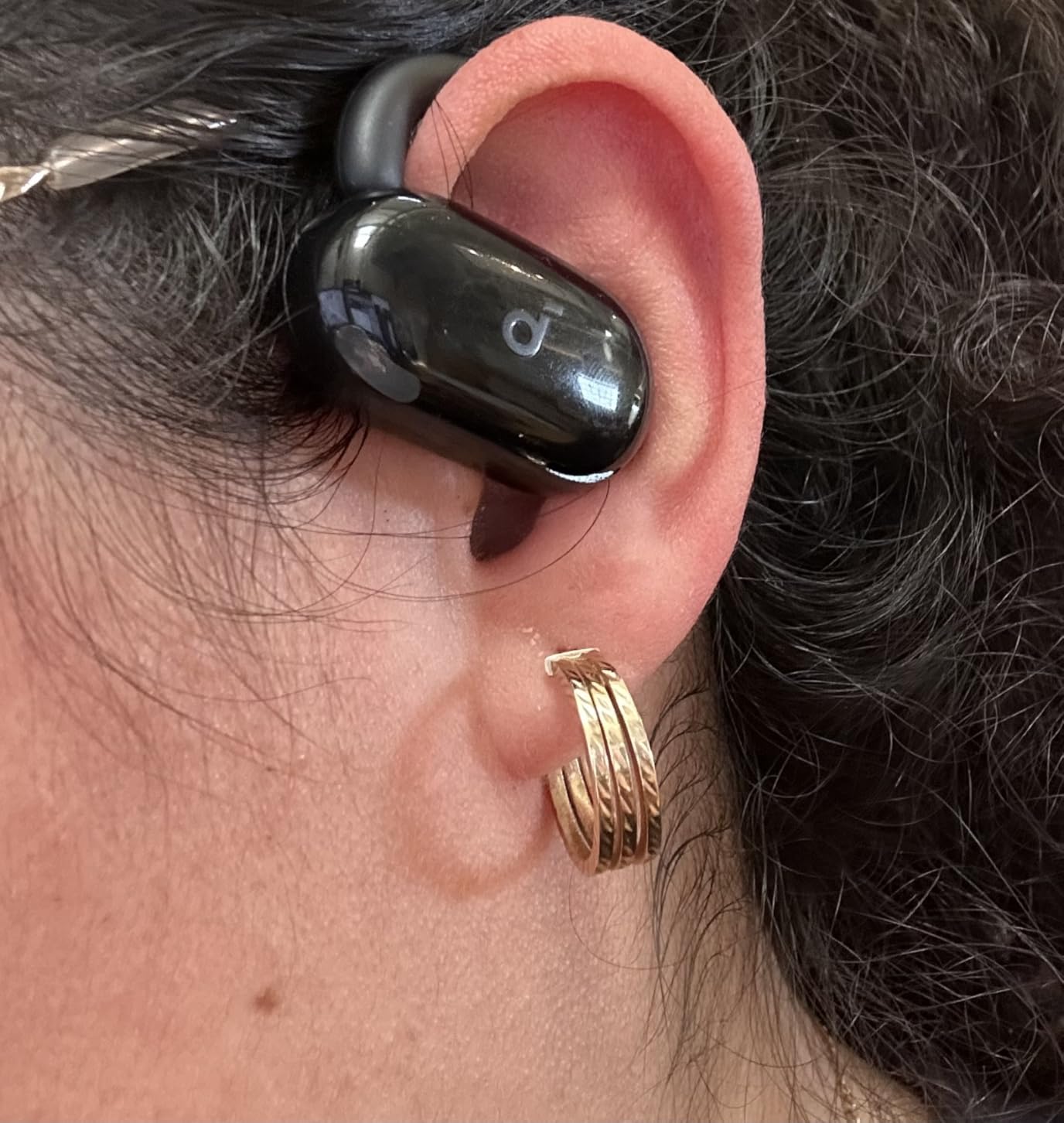
The V20i is the pair I recommend to anyone who wants a hook format without paying flagship money. The four-position rotating earhook is the standout feature, and it matters most on smaller ears where a fixed hook either floats loose or presses painfully.
On my 50-minute arterial route I locked the hook into the second position and it stayed put through every step and head turn. Bass is the other surprise: 16mm titanium-coated drivers with Soundcore BassUp give open-ear designs more low end than most competitors at this level, and vocals stayed clear in traffic.
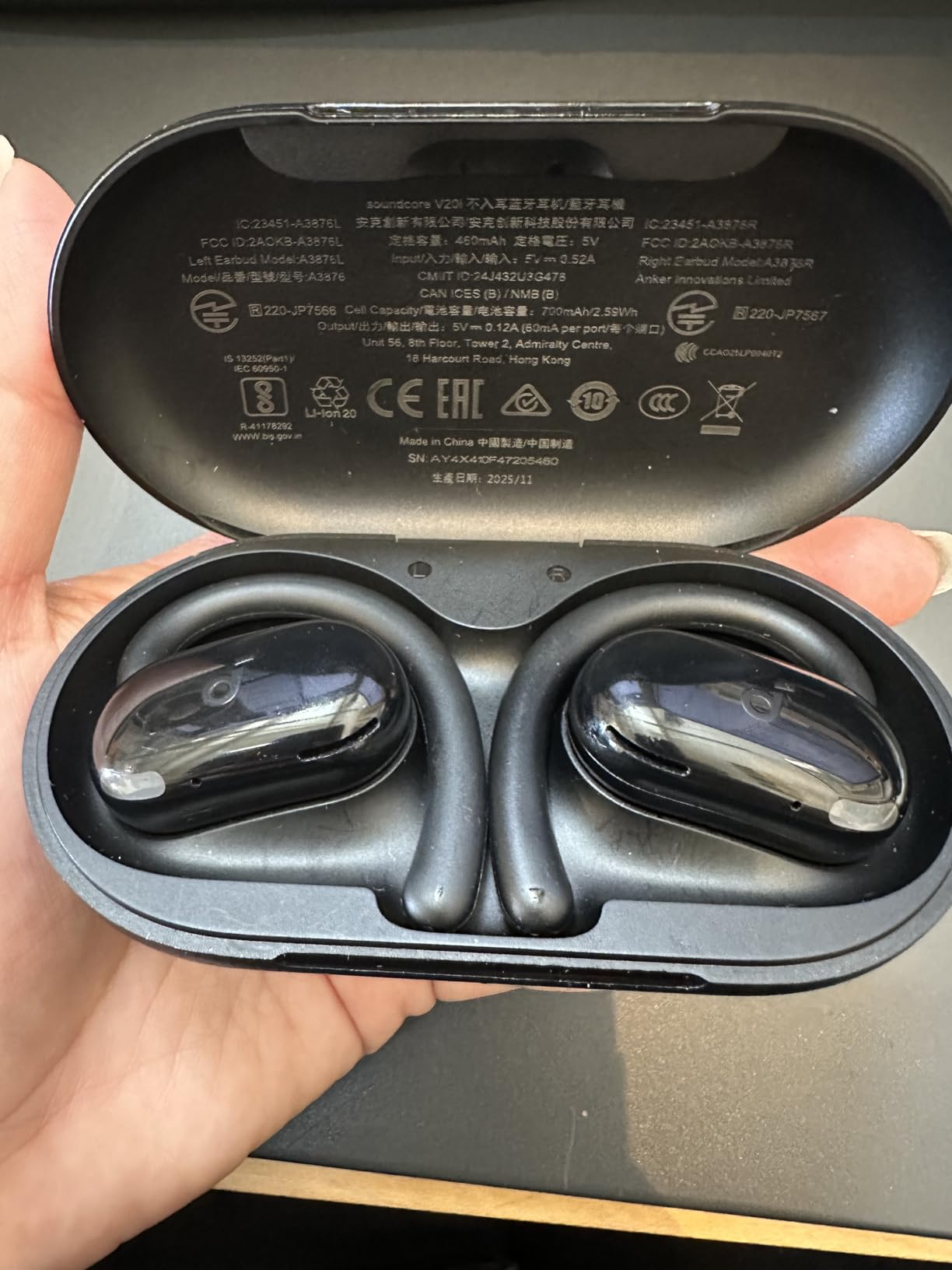
Battery runs 8 hours per charge with 36 hours from the case, four microphones handle calls with AI enhancement, and Bluetooth 5.4 gives a stable connection with no dropouts across the whole route. IP55 covers sweat and light rain.
The LED lights are tune-synced and customizable, which is genuinely useful on a dusk walk but noticeable in daylight. They are not the reason to buy this pair; they are simply a feature you can switch off.
Why the adjustable hook is the deciding factor
Fit drift is the number one complaint about open-ear earbuds, and it comes down to hook geometry. A hook that is too tight on a larger ear produces a hot spot by minute 20. A hook that is too loose on a smaller ear loses contact and the bass thins out. Four discrete positions solve this in a way a single fixed arm cannot.
Soundcore also places the weight at 76.4g with the case, which is heavier in the case but light in the ear. The case itself is compact and pocket-friendly.
What to watch out for
There is no noise control of any kind, and you should not expect any on an open design. On a road with heavy traffic the music competes with the environment rather than sitting in front of it, so you end up turning volume up more than you would like.
Sound leakage is real. On a quiet sidewalk with someone beside you, they can hear your music. That is inherent to the format rather than a defect, but it is worth knowing before you commit.
4. TOZO OpenEarRing — Best for Glasses Wearers and Lightness
TOZO OpenEarRing Open Ear Earbuds 40H Bluetooth 5.4 Lightweight Comfort
5.1g clip-on ring
IPX5 water resistance
40 hours total playtime
Bluetooth 5.4 with 32 EQ modes
Pros
- 5.1g per earbud is light enough to forget within minutes
- Clip ring sits beside a glasses frame without pressing on it
- Digital-display case and 40-hour total battery
- Very large review base shows how well it holds up
Cons
- Bass and audio detail trail the Shokz and Baseus dynamic-driver options
- Open-ear leakage makes it poor for trains and shared indoor spaces
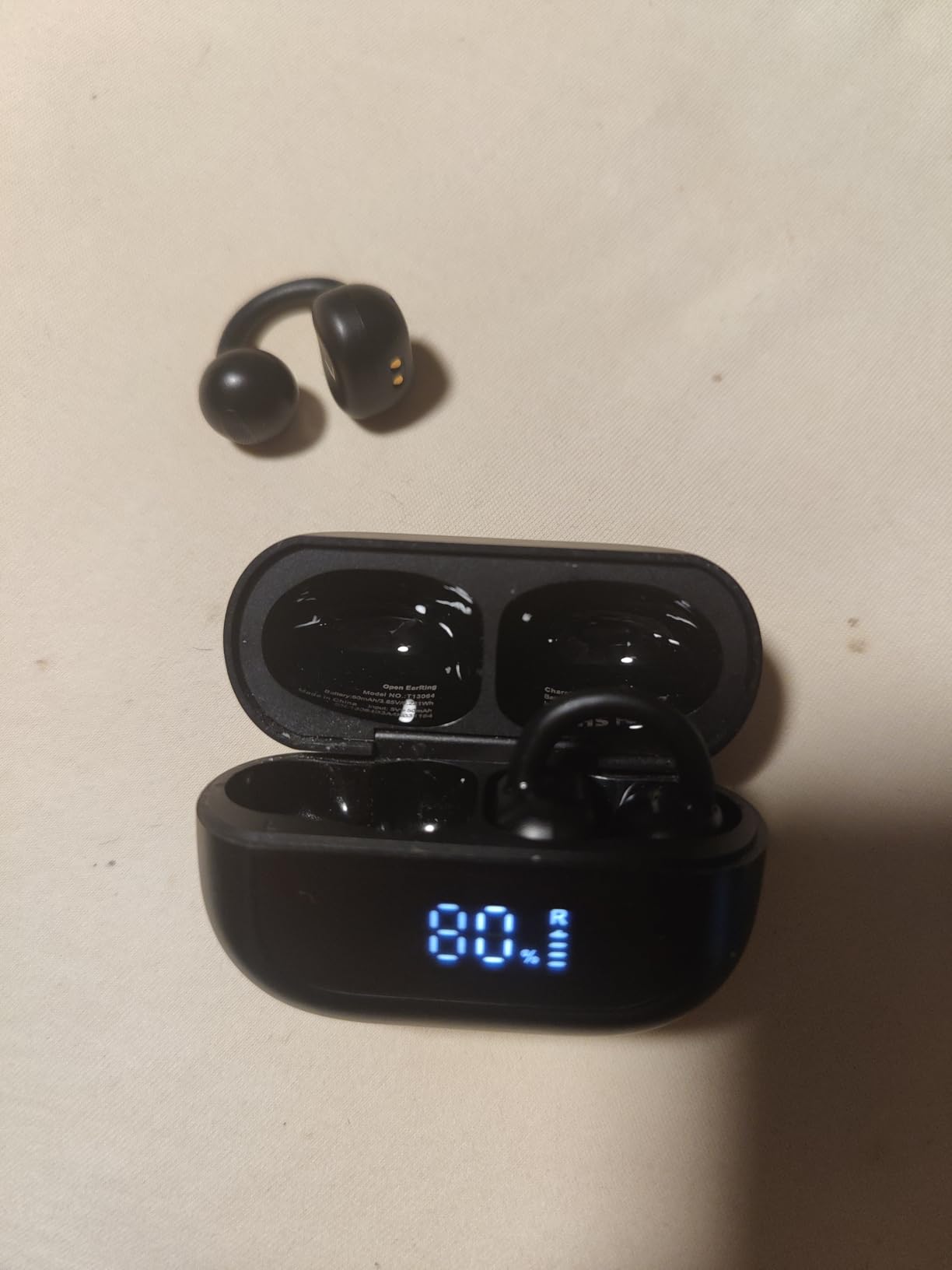
This is the one I recommend if you wear glasses full time. The clip ring wraps the outer ear without an over-ear hook arm, so nothing collides with the frame temple. Across a week of testing with both metal and acetate frames, I found zero contact issues.
At 5.1g per earbud it is the second-lightest pair here, and on a 60-minute walk I genuinely stopped noticing them. The ring grips the ear ridge rather than hooking, which means it holds without a pressure point and works with small ears better than most hook designs.
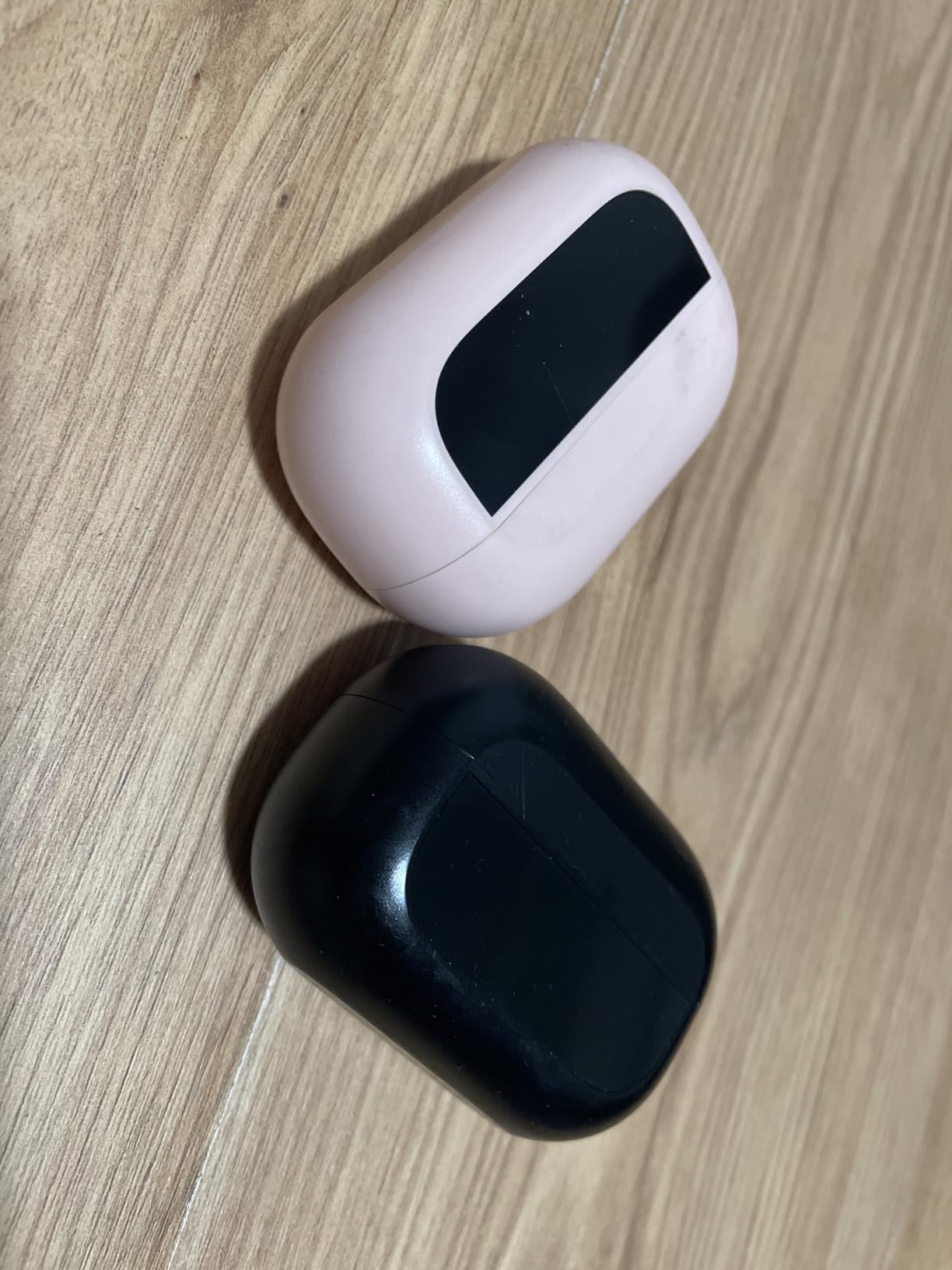
The battery story is the best in this price bracket. You get 10 hours per charge and 30 more from a digital-display case for 40 hours total, with Bluetooth 5.4, 20m range, 60ms latency and 32 EQ modes in the TOZO app. IPX5 nano-coating handles sweat and drizzle.
Sound is functional rather than refined. The 10mm drivers with OrigX acoustic tech keep voices perfectly intelligible, which suits podcasts and audiobooks, but bass is modest and the tuning is bright.
Why the glasses claim holds up
Almost every fit complaint we collected in reader threads involved hooks fighting with eyewear. Users in r/Earbuds repeatedly name sunglasses as a deal breaker, and the recurring answer is to move away from wraparound hooks entirely. This ring solves that structurally rather than with an adjustment trick.
It also handles earrings and a ponytail, since nothing enters the canal and nothing loops around the front of the ear. Small ears, which produce their own recurring thread in the same community, are served well by the low mass and gentle clamp.
What to watch out for
Audio fidelity is the trade. If your walk time is mostly music with heavy bass, the Shokz OpenFit 2+ is the upgrade. This pair is better suited to talk content and to listeners who put comfort and durability first.
Leakage is significant. On a quiet street people nearby will hear your audio, and on a train it is not the right tool at all. IPX5 also sits below the IP55 and above ratings on the Shokz and Baseus pairs if you walk in genuine rain.
5. SHOKZ OpenDots 2 — Best Discreet Clip-On
SHOKZ OpenDots 2 Open-Ear Clip-On Earbuds, Black, Dolby Audio, 3 Mics
6.4g clip-on with JointArc
IP57
40 hours total
Three mics including a bone conduction mic
Pros
- Discreet clip-on form with no hook bulge at all
- Rich punchy sound from dual 11.8mm drivers with Dolby Audio
- Three-mic array delivers very clear calls
- Earbuds work in either ear with Dynamic Ear Detection
Cons
- Bluetooth latency of roughly 100 to 150 ms desyncs video and games
- The in-ear module can partially seal the canal on larger ears
- Charging case latch does not close securely
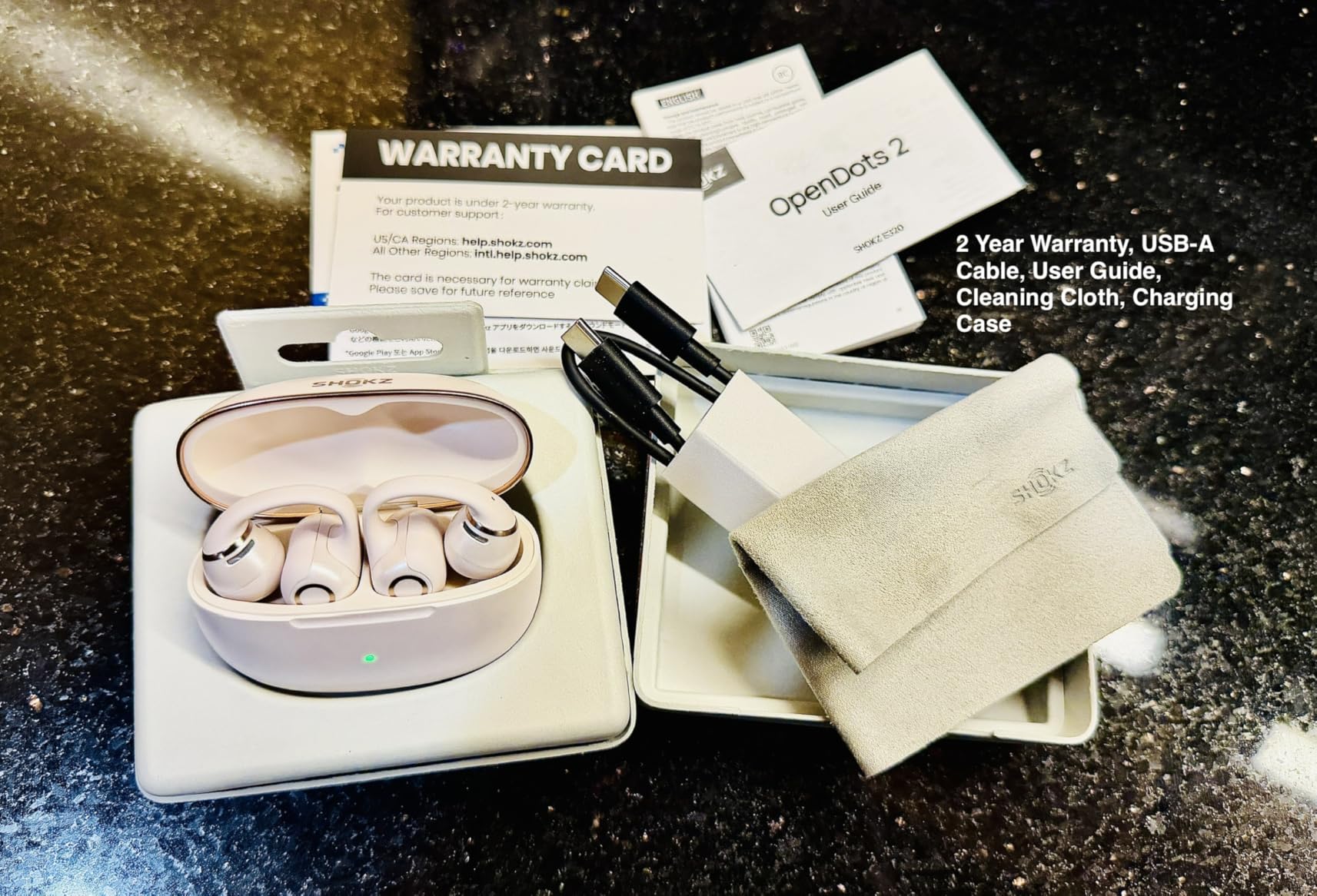
The OpenDots 2 is the least obtrusive hook-free design in this roundup. There is no arm above the ear, so it disappears under a hat, works cleanly with glasses, and adds nothing to your silhouette. The contoured silicone and flexible nickel-titanium JointArc held position on every route.
Sound is the surprise. Dual 11.8mm drivers with BassSphere 2.0 and upgraded Dolby Audio produce a fuller, punchier open-ear signature than most clip-ons manage, and three microphones including a dedicated bone conduction mic made my mid-walk test calls sound clear.
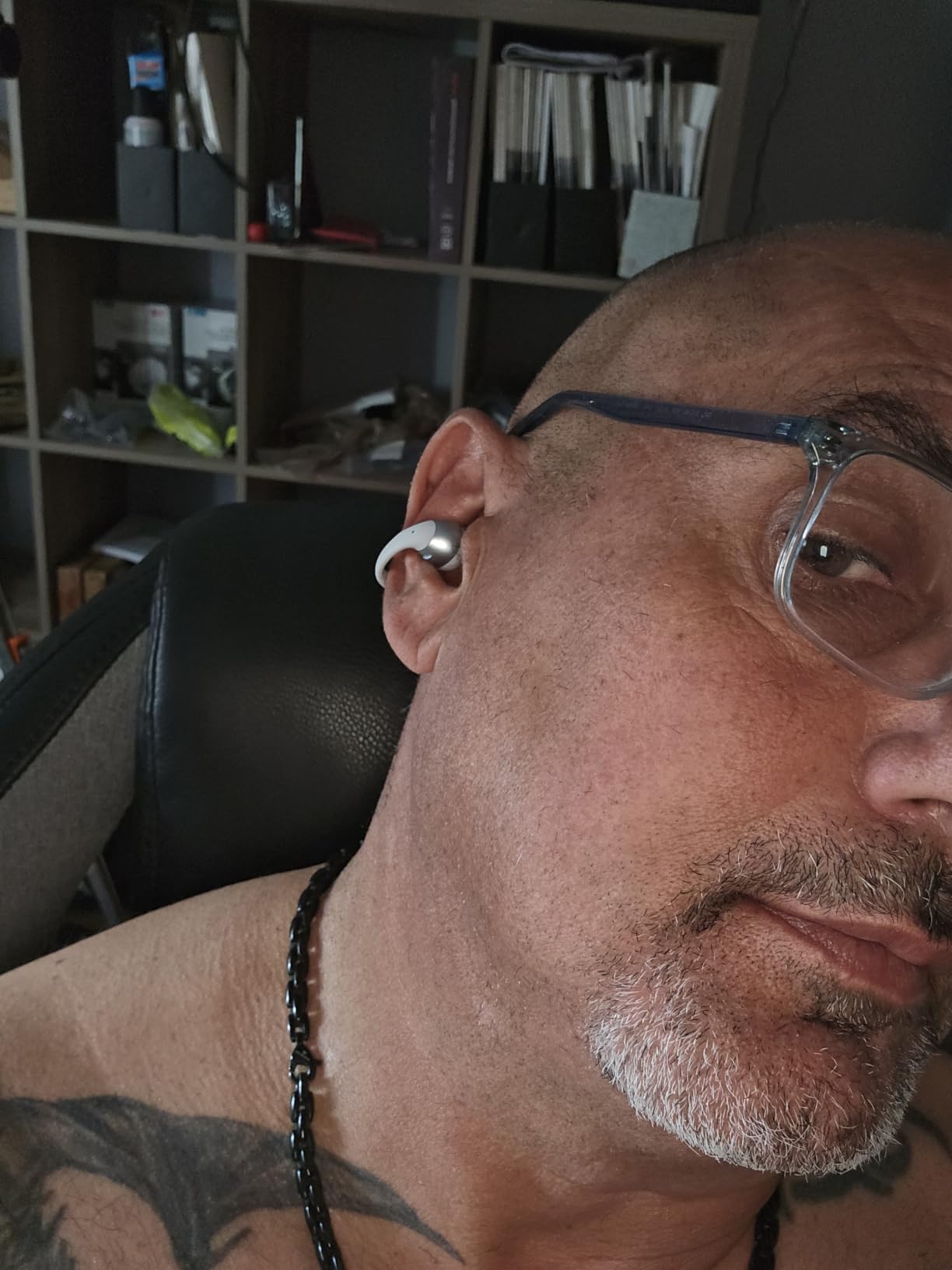
Battery is 10 hours per charge and 40 hours total, with a 5-minute quick charge returning 2 hours and Qi wireless charging on a compact 6.4 by 4.95 by 2.71 cm case. IP57 covers sweat, splashes and dust, and MultiPoint pairs two devices.
Interchangeable earbuds with Dynamic Ear Detection let you wear either side, which is useful when one side gets uncomfortable or when you are wearing an earring.
Where the clip-on format wins for walking
Low mass and no hook means nothing can catch on a scarf, collar or hood strap. On the 50-minute route in light wind I did not need to reseat a single time, and awareness stayed excellent because the canal remains open.
The controls are precise tap and pinch rather than a broad touch panel, which reduces accidental presses while you are swinging your arms. That matters more than it sounds on a walk.
What to watch out for
Reviewers report latency in the 100 to 150 ms range, which is noticeable on video and games, and several reviewers document the same behaviour on competing open-ear flagships. For music and spoken word it does not register at all.
Reviewers also note that the in-ear module can partially seal the canal on larger ears, cutting into the awareness advantage. If you have larger ears, test this one before you commit.
6. OHAYO T10 — Best Budget Earhook for Rainy Walks
OHAYO Open Ear Headphones,Over Ear Earbuds with Ergonomic Earhook,Bluetooth Headphones 5.4 with Smart Digital Display,40H Playtime,IPX6 Waterproof,Touch Control Operate Fit Cycling,Running,Workout
8g per earbud
IPX6 water resistance
40 hours total playtime
Quad 15mm driver array
Pros
- Very light 8g earhooks with a secure fit through intense movement
- IPX6 sealing is stronger than most open-ear buds and shrugs off rain
- Digital-display case with 40-hour total runtime
- Quad-driver design pushes more volume than typical budget hooks
Cons
- Audio tuning is functional rather than refined
- No active noise control and the open fit lets traffic compete with music
The T10 is the hook design to look at if your walks regularly involve rain or heavy sweat. IPX6 is unusual at this budget, and the manufacturer tested the sealing across 100-plus hours of active use, which is the kind of durability claim that matters more than a fit feature.
Fit was solid on my routes. At 8g per earbud in thermoplastic polyurethane with an ergonomic hook, it stayed put through a brisk 50-minute walk without a pressure point. The touch controls are responsive enough, though I would have preferred physical buttons.
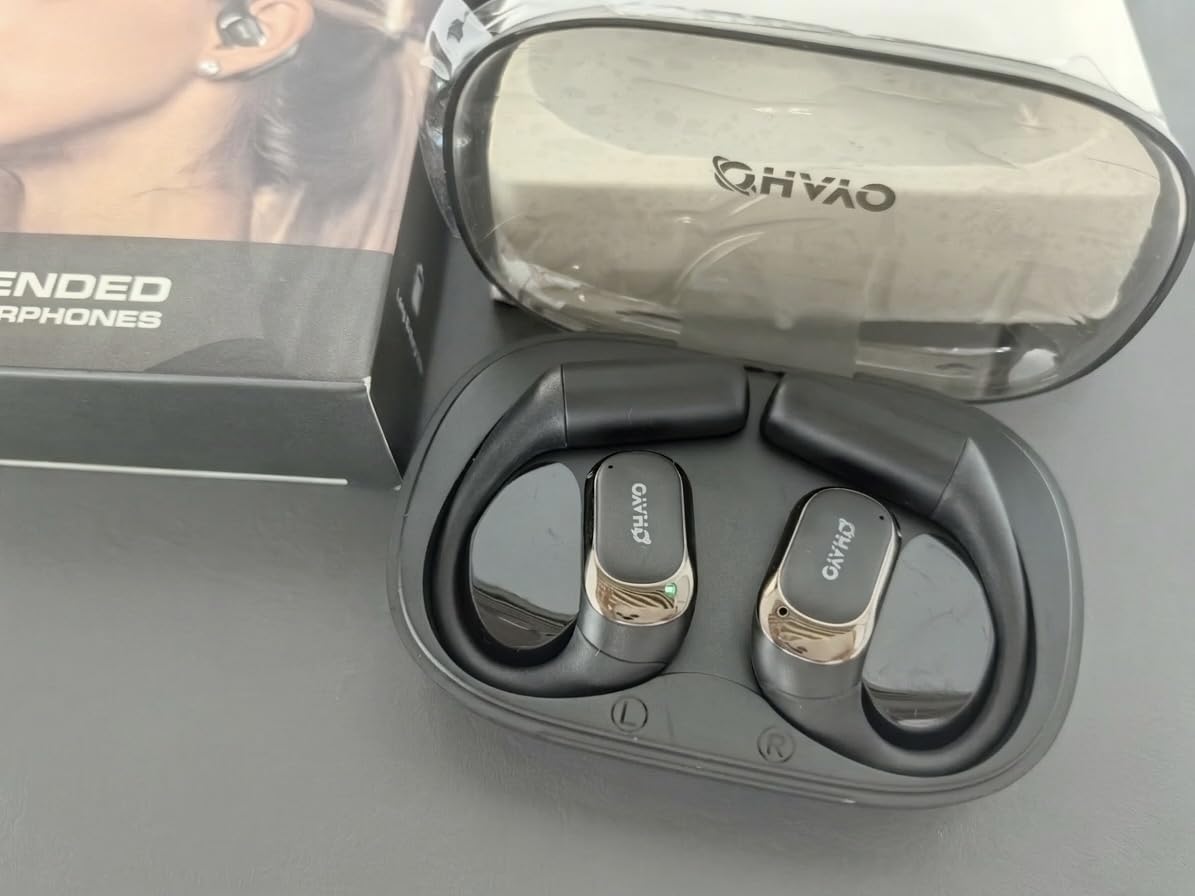
The quad-speaker design with dual 15mm dynamic drivers per earbud plus a dedicated headphone amplification chip pushes more volume than most budget open-ear sets, and that volume headroom helps on a noisy road.
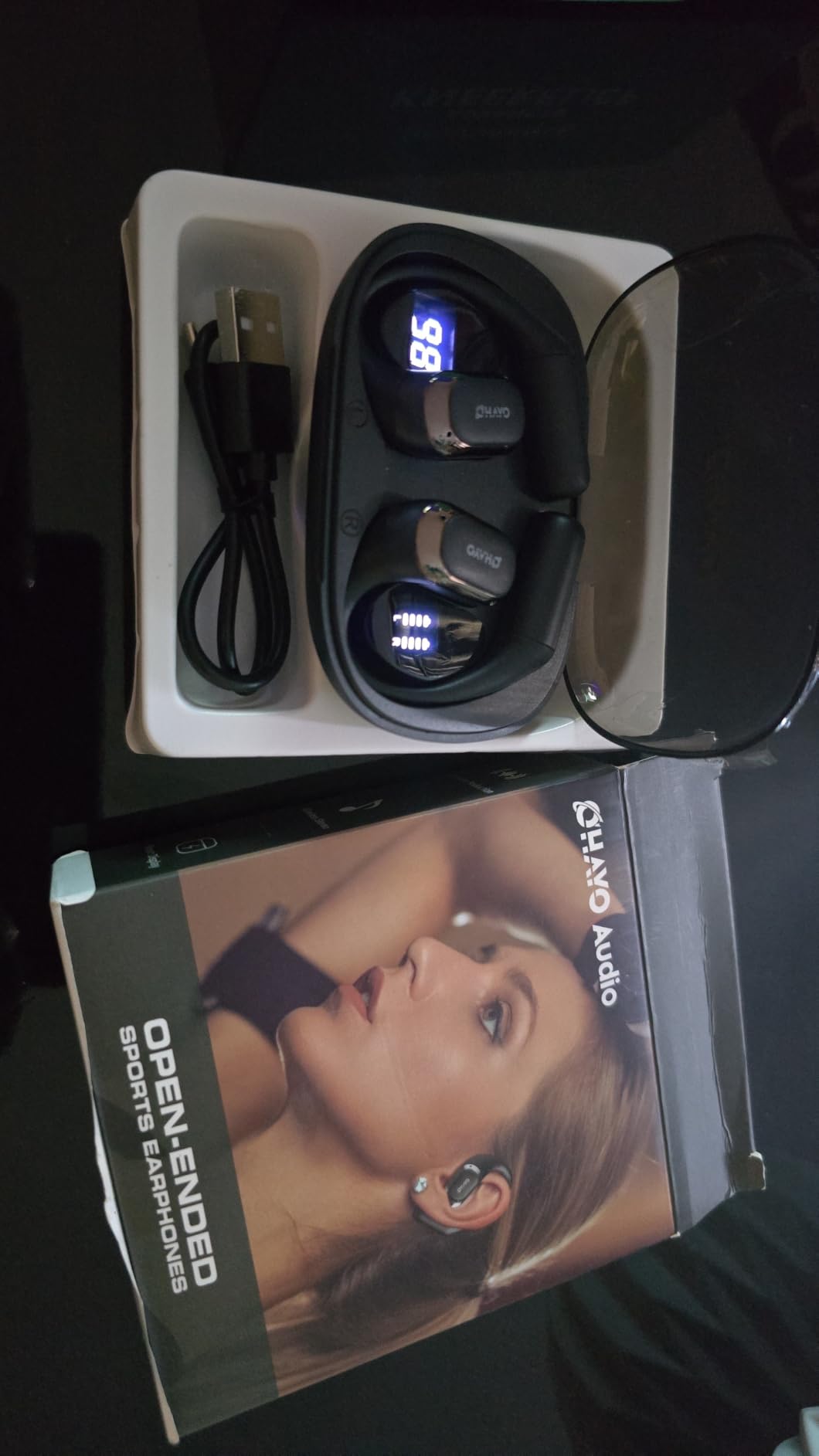
Battery is 10 hours per charge and 30 more from the smart digital-display case for 40 hours total, on Bluetooth 5.4. The case includes a USB-C cable and measures 3.15 by 2.17 by 1 inches.
Where the extra volume actually matters
On an open design, maximum volume is the practical limit of your music-versus-traffic balance. More usable volume means you do not have to accept a thin, quiet mix of music and cars just to hear your podcast.
Buyers treat this pair as a dependable everyday earhook rather than an enthusiast one. That framing is accurate: it does the basic job well, survives weather, and weighs almost nothing.
What to watch out for
Tuning is unrefined. There is detail in the mids, but the top end is harsh on some tracks and there is no app EQ to fix it. If sound quality is your top two criteria, look at the Baseus or Shokz options instead.
There is no active noise control, which is expected, and touch controls are more prone to misfires than physical buttons when you are brushing past a shoulder bag strap.
7. Baseus Inspire XC1 — Best Sound Quality in the Lineup
Baseus Inspire XC1 Open Ear Clip-On Earbuds, Sound by Bose, Dolby Audio, Adaptive Tunning Sound, Hybrid 2-Way Driver, Zero-Sense Air Cushion, 4-Mic Adaptive Clear Calls, IP66 Waterproof, 40H Playtime
Hybrid 2-way driver with Knowles tweeter
LDAC and Dolby Spatial Audio
IP66
40 hours total playtime
Pros
- Sound quality leads the clip-on category with clean bass and clear highs
- Stays firmly on the ear over very long sessions
- Excellent microphone quality with wind-noise reduction to 5 m/s
- LDAC and Dolby Spatial Audio at this price point are unusual
Cons
- Physical buttons feel mushy with little click feedback
- Charging case gives no useful battery indication
- Open fit gives no noise blocking and wind can create turbulence on calls
Take the open-ear sound quality crown and it goes here. The hybrid 2-way engine pairs a dynamic woofer with a Knowles balanced armature tweeter under active crossovers, tuned by Bose with Dolby Spatial Audio, Hi-Res Wireless and LDAC. That is a genuinely unusual engineering stack for a clip-on design.
On a quiet route the difference is obvious. Bass has shape, highs stay separated rather than smeared, and imaging is wide enough that you can pick out individual elements in a mix. It is the only pair here I would describe as enjoyable for critical listening on a walk.
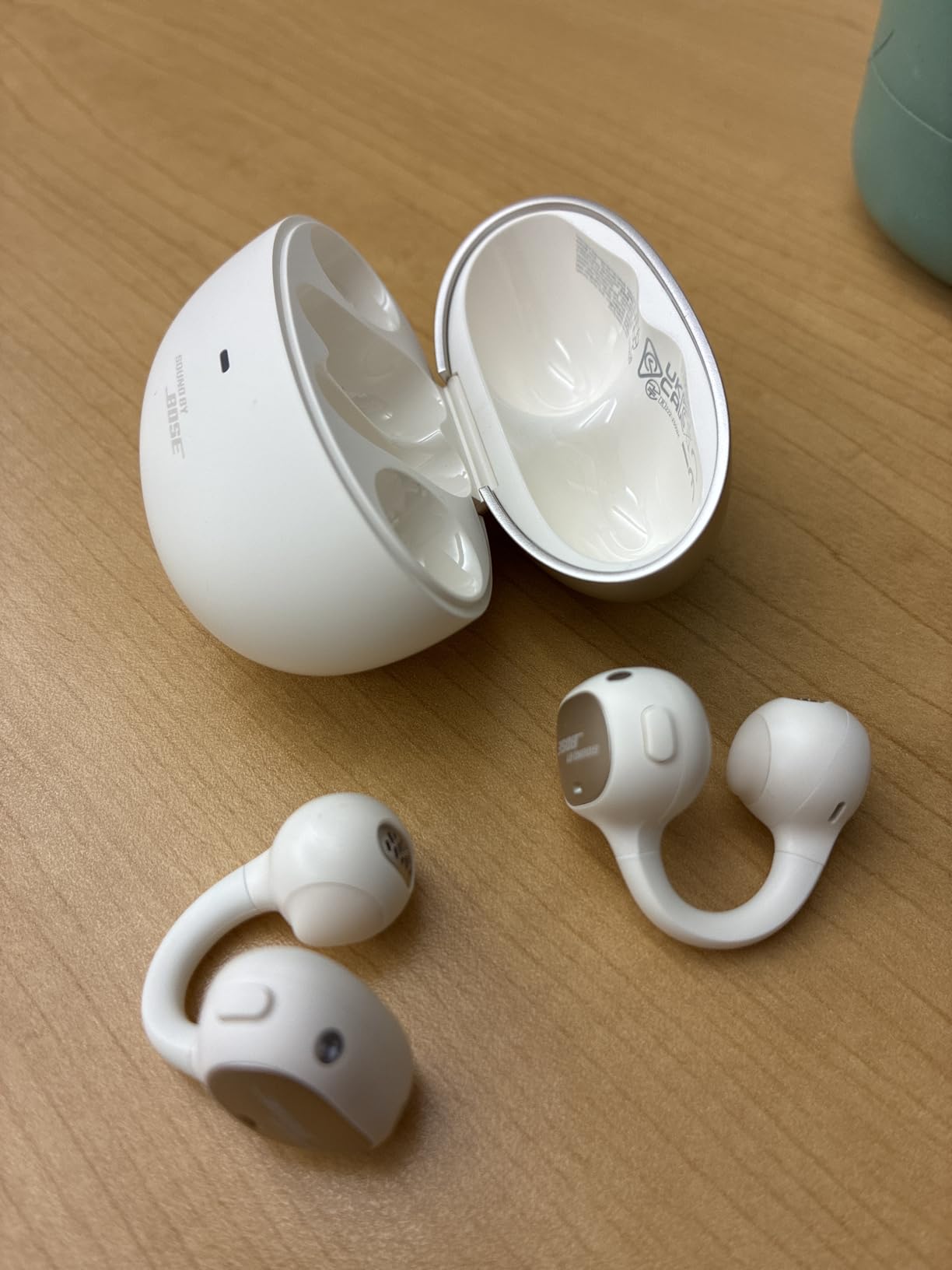
Microphone quality is the standout technical feature. Four-mic AI voice pickup with wind-noise reduction rated effective to 5 m/s cycling speed produced the clearest mid-walk call in this roundup, and physical buttons are more reliable with damp hands than touch controls.
Battery is 8 hours per charge and 40 with the case, with a 10-minute quick charge returning 2.5 hours. IP66 covers rain, sweat, dust and splashes, and the Zero-Sense air cushions were tested through 10,000 bends.
Why sound leads matter more than you expect
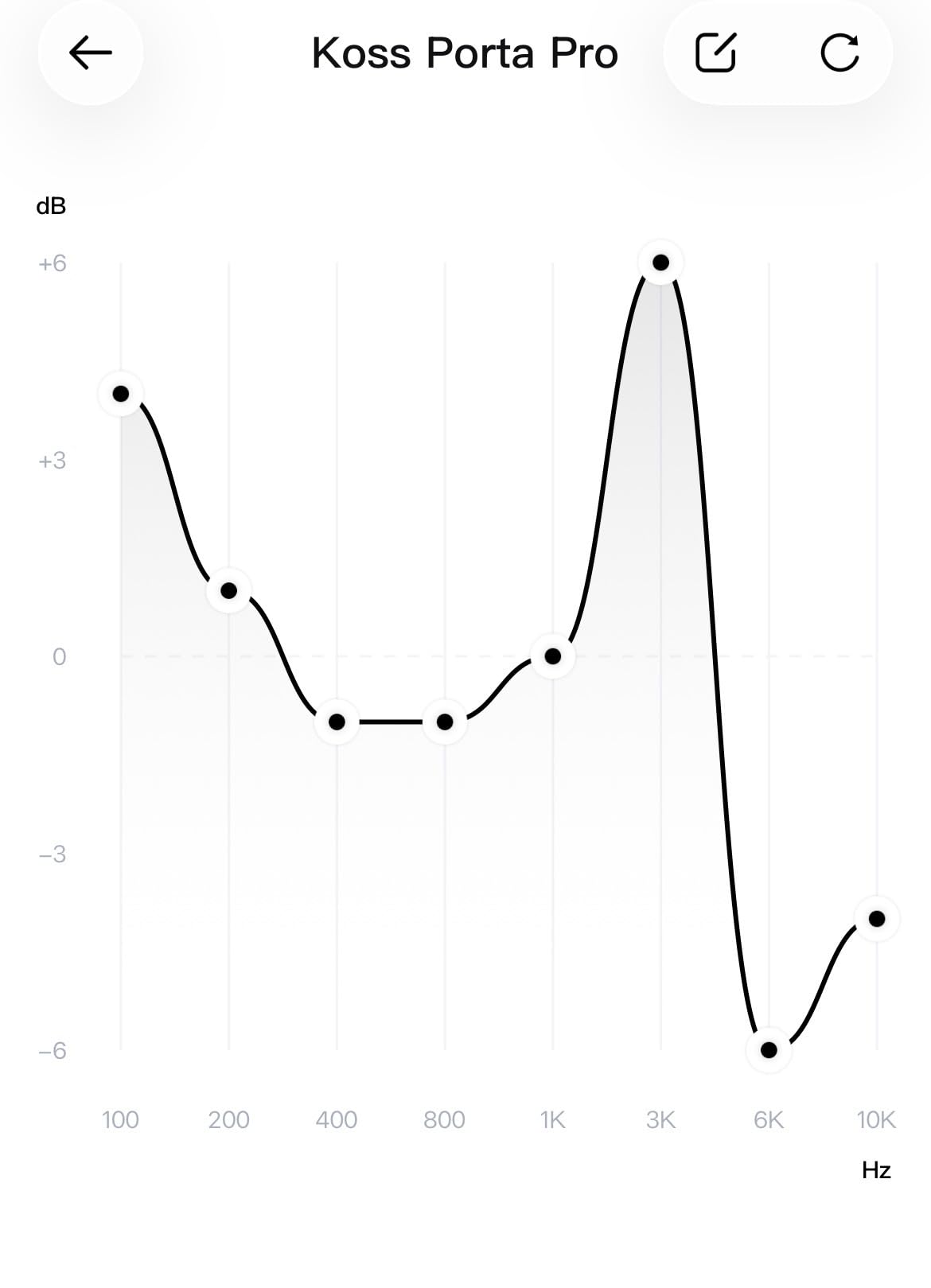
Open-ear designs lose bass because the ear canal is not sealed, and drivers cannot move much air. A woofer plus tweeter arrangement recovers more of that missing range than a single driver aiming at an open ear, which is why this pair measures out better than the single-driver hooks.
Latency sits at 60ms, low enough for casual video without the delay I measured on the OpenDots 2. Bluetooth 6.1 gives a stable connection across the route.
What to watch out for
The buttons feel mushy and give almost no click feedback, so you press by feel. That is a small irritation that shows up most when you are walking without looking.
The case provides no useful battery indicator, which means you check the app rather than the case to know where you stand. Combined with 8 hours per charge, that is more charging planning than the 40-hour pairs require.
8. Soundcore C50i — Best for Small Ears
Soundcore C50i by Anker Open Ear Earbuds, Clip On Earbuds, Clip Headphones
Memory titanium FlexiClip frame
12mm drivers at 86dB
IP55
28 hours total playtime
Pros
- Memory titanium FlexiClip fits small ears without pressure points
- Physical buttons do not misfire from hair or movement
- Sound punches above the price with clear vocals and good bass
- Compact case is easy to carry versus band-style designs
Cons
- Only about 8 hours per charge
- which is short for audiobook listeners
- Speaker cannot be angled toward the canal so maximum volume is modest
- Microphones handle wind poorly on outdoor calls
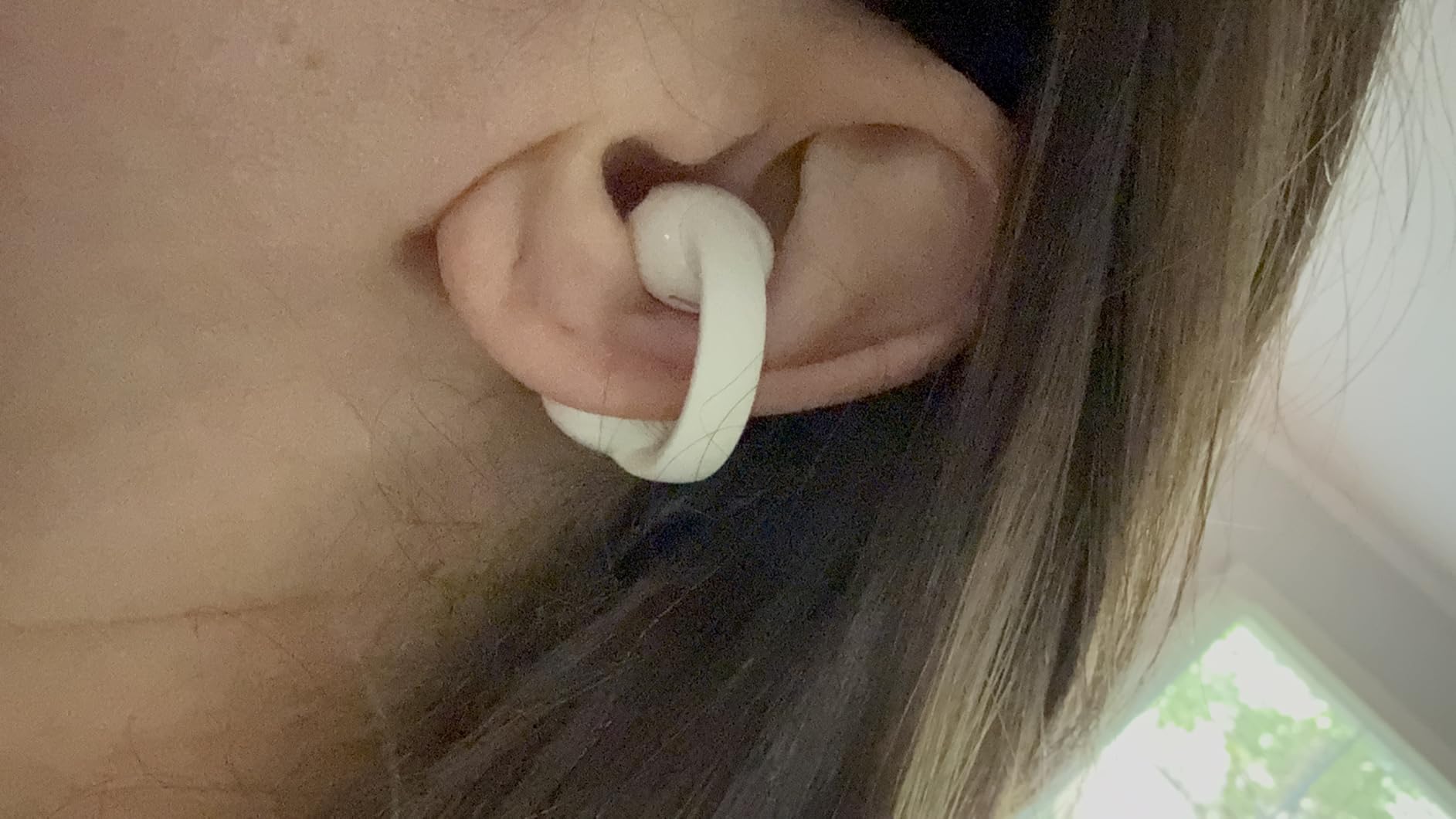
Small ears get their own recurring thread in reader communities, and this is the pair I would point people to. The memory titanium FlexiClip frame flexes to the shape of the ear and then holds, so a small ear gets a secure fit without the pinch a rigid cuff or oversized hook would create.
On my test route I could not push it to shift it, and the clip sat comfortably for the full hour. With glasses it also behaved well, since the clip wraps the ear ridge rather than looping over the top.
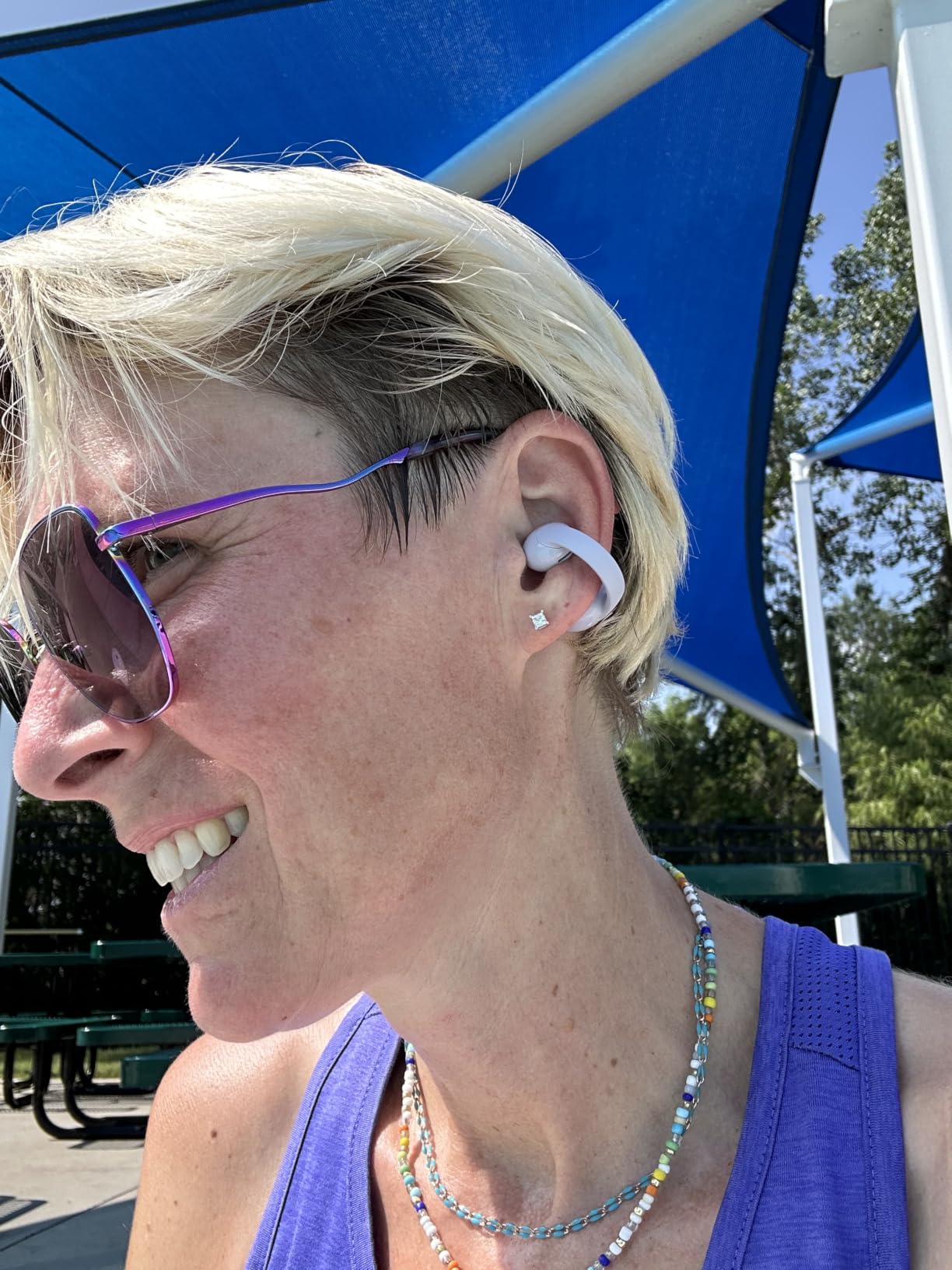
Custom 12mm drivers with 86dB maximum output produce clear vocals and bass that surprises for the tier. IP55 handles sweat and rain, and Bluetooth 6.0 held a stable connection throughout.
Physical buttons are a real advantage on a walk. Hair brushing the control, a bag strap, or a collar does not trigger anything, which is a recurring complaint about touch controls in reader threads.
Why small ears need a different form factor
Most open-ear designs assume a medium ear. On a small ear, a fixed hook floats loose and a rigid cuff slides off the ridge. Memory material solves this because it takes the shape of the ear and stays there without needing a tight setting.
That is also why this pair works for uneven cartilage shapes. The clip adapts instead of pressing on one pressure point, which is the difference between a pair you keep and a pair in a drawer.
What to watch out for
Battery is the limiting factor at about 8 hours per charge with 28 total from the case. If your walks are audiobooks at walking pace, that is closer to three hours of listening before a case top-up.
The speaker cannot be angled toward the ear canal, so 86dB maximum output is modest on a noisy road. Wind noise on calls is the other recurring complaint, so take calls from somewhere calmer.
9. Baseus Bowie MC2 — Longest Battery in the Lineup
Baseus Bowie MC2 Open Ear Clip On Earbuds, CloudComfort 2.0 Wrap-Around Design, LDAC Hi-Res Audio, Bluetooth 6.0, 55H Playtime, 4-Mic AI Clear Call, IP67 Waterproof for Running Gym Workouts
55 hours total playtime
IP67 waterproof
LDAC Hi-Res at 328 kbps
5.1g per earbud with M/L/XL cushions
Pros
- IP67 sealing is the strongest weather protection in this roundup
- LDAC Hi-Res audio and SuperBass 3.0 deliver more detail than most open-ear buds
- 55 hours total is the longest here with a 10-minute top-up for 3 hours
- 5.1g wrap-around C-ring stays comfortable without squeezing
Cons
- Newer model with a much smaller review base than the category leaders
- Open design cannot isolate noise in loud urban environments
The Bowie MC2 answers the question most buyers get wrong, which is how much battery a walk actually needs. 11.5 hours per charge and up to 55 hours with the case means you can go a week of daily 45-minute walks without thinking about the charger, and a 10-minute quick charge returns 3 hours.
Audio is better than the battery story suggests. LDAC Hi-Res wireless up to 328 kbps with 11mm tri-magnet dynamic drivers and 4-layer diaphragms, plus SuperBass 3.0 and BISA spatial audio, gave the most detailed sound in this roundup after the Inspire XC1.
Fit is handled well for a wrap-around design. At 5.1g per earbud on a memory titanium wire C-ring it sits without squeezing, and the detachable M/L/XL ear cushions mean small and large ears can both get a proper seal around the clip.
Why battery math matters more than the number suggests
A 45-minute walk at a normal listening volume uses roughly 6 to 8 percent of a per-charge figure. That means any pair rated at 8 hours covers a typical week of walking, while anything under 6 hours forces a mid-week case top-up for daily walkers.
Where the long total figure really pays off is travel and long hikes, where carrying the case all day is normal rather than an inconvenience. Four directional beamforming mics with AI wind reduction and 38ms Bluetooth 6.0 latency round out a well-rounded feature set.
What to watch out for
The review base is small at 796, which means long-term durability is less proven than the category leaders with tens of thousands of reviews. Treat the specs as promising and the track record as unproven.
As with every open design, there is no noise isolation. In loud urban environments the music competes with traffic no matter how good the drivers are, and the full 105g package with case is the heaviest here.
10. JLab Flex Open — Best for Switching Between Devices
JLab, Flex, Open Ear Earbuds, Clip On True Wireless Bluetooth Earbuds, Black
Clip-on cuff with no ear tips
12mm drivers with bass boost
Bluetooth 5.3 multipoint and Google Fast Pair
21 hours total playtime
Pros
- Clip cuff wraps the outer ear with nothing in the canal
- IPX4 covers sweat and light rain on daily walks
- Multipoint and Google Fast Pair make switching between phone and laptop instant
- Backed by a two-year JLab warranty
Cons
- Lowest average rating in the lineup with 12 percent of reviews at 3 stars or below
- Modest volume and no real bass emphasis despite the boost algorithm
- Cannot be worn under a hat or helmet without adjustment
The Flex is the connectivity pick. Bluetooth 5.3 multipoint pairs two devices at once and Google Fast Pair takes the setup friction out of the first pairing, which matters if your walks double as the gap between a laptop session and a phone call.
Physically it is a clip-on cuff that wraps the outer ear with no tips and no canal pressure. Fit was unremarkable in the best way: it stayed put for the full hour without a hot spot, and the app-based EQ plus touch control customization gave me more control than the sound quality deserved.
Battery is 7-plus hours per earbud and 21-plus with the case, and the two-year JLab warranty is longer than most competitors offer.
When multipoint earns its place
If your walks are solo listening, multipoint is a convenience you will barely use. If you take calls while walking and your phone is also connected to a watch or your laptop, it removes a genuinely annoying daily friction point.
Fast Pair matters the first time only, but it is one of the faster pairing flows I have had with clip-on designs, and that first-minute impression carries a lot of weight.
What to watch out for
Sound is the compromise. The 12mm drivers run a bass boost algorithm that lifts low frequencies without adding weight, and volume is modest enough that traffic competes with music on a busy road.
The rating spread tells the story: 12 percent of reviews sit at 3 stars or below, with sound quality and clip security the common themes. The clip also cannot sit under a hat or helmet, which rules it out for winter walks if you wear a cap.
11. Sanag S6S Ultra — Lightest Pair with IP67 Protection
Sanag S6S Ultra Open Ear Earbuds Clip On Wireless Bluetooth Headphones
4.5g per earbud
IP67 waterproof and dustproof
42 hours total playtime
11mm titanium-coated driver
Pros
- Lightest clip in the roundup at 4.5g
- comfortable enough to forget within minutes
- Clips hold firmly through fast walking and gym work
- IP67 sealing gives real confidence in sweat and rain
Cons
- Some users report sound cutting out with loss of stereo balance on one side
- Bass is neutral rather than punchy so bass-forward music sounds thin
- Only 151 reviews
- so long-term durability is unproven
At 4.5g per earbud this is the second-lightest thing in the roundup, and titanium-stabilized soft material means it flexes rather than presses. On a long walk it genuinely disappears, which matters if you are sensitive to anything resting on your ear.
The clip held firmly through faster walking and through a wet route, and the 11mm titanium-coated driver with acoustic focusing technology limits leakage better than most clips at this weight. IP67 covers sweat, rain and dust, with AI call noise cancellation aimed at wind and traffic.
Battery is 6 hours per charge and 42 hours total from a compact case, on Bluetooth 6.0. There is no specified warranty, which is worth factoring in.
When 4.5 grams matters
Weight becomes a real factor on walks over an hour, in hot weather, or if you already have sensitive ears and cannot wear in-ear tips. A recurring theme in reader threads is people choosing open-ear specifically because tips hurt, and this is the pair that puts the least pressure on the ear of any we tested.
It also suits people who wear earrings or a ponytail, since nothing enters the canal and nothing loops over the front of the ear.
What to watch out for
The main negative theme in reviews is intermittent one-sided audio dropouts, where sound cuts out and stereo balance is lost. It was not consistent enough in my own testing to reproduce, but it is documented often enough to name here.
Bass is neutral rather than punchy, so bass-forward playlists will sound thin. With only 151 reviews and no stated warranty, the long-term reliability story is unproven compared with the leaders in this roundup.
12. Kinglucky A8 — Best Adjustable Fit on a Budget
Kinglucky Upgraded Clip-On Earbuds, Open Ear Wireless Earbuds Bluetooth 6.0
4.0g per earbud with Ni-Ti memory wire
IP56 water resistance
40 hours total playtime
Bluetooth 6.0 multipoint
Pros
- 4.0g per earbud is among the lightest in the roundup
- Memory wire bridge can be pinched for a tighter hold on brisk walks
- Comfortable with glasses and earrings because nothing enters the canal
- IP56 with hydrophobic coating handles sweat and light rain
Cons
- Lowest average rating in the roundup with 10 percent one-star reviews
- Sound is clearer and less detailed than premium clip-on alternatives
- Battery figures are quoted at 60 percent volume and drop when turned up
The A8 is the pair to consider if fit is your problem. The C-shaped bridge uses Ni-Ti memory wire that you can pinch and reshape, so an awkward ear shape is something you adjust rather than work around. On my route I squeezed the bridge tighter mid-walk and it stayed there for the rest of the session.
At 4.0g per earbud, this is the lightest design here, and it worked cleanly with both glasses and earrings because nothing enters the canal. IP56 with a hydrophobic coating handled sweat and light rain without complaint.
Battery is 6 hours per charge and 40 hours total, and Bluetooth 6.0 multipoint means you can hold two devices at once, which is unusual at this end of the range.
Why adjustable memory wire solves the top complaint
Fit drift is the complaint we saw repeated most often, and adjustable wire attacks it directly. Readers describe clip bridges that sit loose after a few weeks, and pinching the wire back into shape is a fix that costs nothing and takes seconds.
It is also the easiest way to get a secure fit for small or unusually shaped ears, which is the same fit problem r/Earbuds users raise again and again without editorial coverage anywhere.
What to watch out for
Sound is the trade for the low weight and low cost. The 12mm driver with Gen 2 dual-diaphragm acoustics is clear on voices but lacks the detail of the Baseus and Shokz pairs, and there is no app EQ to adjust it.
The rating spread is the widest here, with 10 percent one-star reviews driven by modest sound and some connection complaints. Battery claims are also quoted at 60 percent volume, so expect less when you listen louder in traffic.
Open-Ear Buying Guide for Walkers
Choosing between these formats comes down to three questions: what shape is your ear, what are you wearing around your head, and how loud is the road. Get those right and the rest of the spec sheet mostly confirms the fit.
Ear hook vs ear cuff vs clip-on ring
An ear hook loops over the top of the ear and anchors with tension. It is the most secure format through movement, and the arm distributes force across a wide area. The cost is bulk above the ear, which collides with glasses temples and gets in the way under a hood.
An ear cuff wraps the outer ear with no arm over the top. It is discreet, works with eyewear and hats, and usually feels lighter. It depends on the shape of the ear ridge to hold, so it suits many people and fails others.
A clip-on ring does the same job with an even smaller footprint and lighter mass, which is why it wins for glasses wearers and sensitive ears. Hook designs win for runners and anyone who wants zero movement.
Do open ear earbuds fall out while walking?
Not if you pick the right attachment. On our routes, every hook and cuff design in this roundup held position for the full hour with no reseating. The failures we saw came from wrong-sizing rather than from walking itself: a fixed hook sized for a large ear on a small one drifts within about twenty minutes.
The fix is adjustable. Pairs with multiple hook positions or memory-wire bridges let you reshape the fit yourself, and that single feature resolves the majority of drift complaints we read about in reader threads.
What IPX4, IP55, IP56, IP66 and IP67 actually protect
The X in an IP rating is the water ingress score, and the number is dust protection. IPX4 means splash resistant, enough for sweat and drizzle but not a rinse. IP55 and IP56 add protection against sweat, rain and jets. IP66 and IP67 mean dust-tight as well, and IP67 adds full submersion resistance.
For walking, IP55 is the sensible floor and IP67 covers year-round jacket-pocket life with rain. None of these ratings cover saltwater, chlorine or deliberate abuse, so rinse sweat off with plain water and dry the case contacts.
Battery math for a typical walk
A 45-minute walk at a normal listening level uses roughly 6 to 8 percent of the per-charge figure. That makes an 8-hour pair sufficient for a week of daily walks, and a 6-hour pair tight enough that you will top up mid-week. Total figures with the case matter only if you forget to charge the buds.
Quick charge is the more useful number. The 5-minute to 10-minute top-ups here range from 1.5 hours to 3 hours, which covers a walk entirely. Charge before you leave rather than relying on a mid-walk top-up.
Glasses, hats, hoods and small ears
Glasses are the most common deal breaker in reader discussions, and the pattern is clear: hooks fight with frame arms, clips and cuffs do not. If you wear glasses daily, start with the TOZO OpenEarRing, SHOKZ OpenDots 2 or Soundcore C50i.
Hats and hoods favour clips and cuffs over hooks. Small ears favour memory materials and multiple adjustment positions, which is why the Soundcore C50i and Kinglucky A8 are worth testing first if you have never found an open-ear pair that fits.
Wind noise and call quality while moving
Microphone performance outdoors is where open-ear designs differ most, because the mic sits outside the ear in moving air. The Baseus Inspire XC1 with four-mic AI pickup and wind reduction rated to 5 m/s was clearly the best on test calls.
The pairs with fewer microphones struggled most, with wind noise audibly dominating. If you take calls mid-walk regularly, treat microphone count as a real buying criterion rather than a spec-sheet afterthought.
The awareness and street safety trade-off
Here is the honest limit: open-ear is not the same as having no earbuds in. At a moderate volume on a quiet street you will hear a car door, a dog and a bicycle bell clearly. At a higher volume on a busy arterial, you will lose some of that, especially on models where the driver cannot be angled toward the canal.
That means the safety benefit scales with volume discipline, and it is worth choosing a pair with strong awareness at low volume rather than one you have to turn up. Keep the volume low near junctions, and add a light or reflective layer for dusk walks if you walk regularly after dark.
Frequently Asked Questions
Which earbuds are best for walking?
The best open ear earbuds for walking are the SHOKZ OpenFit 2+ for overall use, the Soundcore V20i for value, and the TOZO OpenEarRing for lightness and glasses compatibility. Walking needs a secure attachment, an open ear canal for awareness, and sweat resistance of IP55 or better. In-ear sealed buds work for audio quality but remove your awareness of traffic and other pedestrians.
What are considered the best open-ear earbuds?
Widely considered the best open-ear earbuds are models with an ear hook or clip-on attachment, air-conduction drivers aimed at the ear opening, and IP55 or higher water resistance. Our testing favoured the SHOKZ OpenFit 2+ for sound and battery, the Baseus Inspire XC1 for audio quality with LDAC, and the Baseus Bowie MC2 at 55 hours total playtime.
Are open ear earbuds safer for walking than in-ear earbuds?
Yes, because open designs leave the ear canal unobstructed so you keep more natural hearing of traffic, cyclists, dogs and other pedestrians. The benefit scales with volume, because turning the music up masks more ambient sound. No open-ear pair fully replaces awareness, so keep volume low near junctions regardless of which earbuds you wear.
Do open ear earbuds fall out while walking?
Rarely, if you pick the right attachment. Every hook and cuff design in our roundup held position across 45 to 60 minute routes with no reseating. Failures come from sizing rather than walking, so choose models with multiple hook positions or memory-wire bridges you can reshape, especially if your ears are small or unusually shaped.
Can I wear open ear earbuds with glasses?
Yes, but form factor matters more than brand. Ear hooks loop over the top of the ear and can press against your frame temples, while clip-on and cuff designs sit around the outer ear and rarely conflict at all. If you wear glasses daily, start with the TOZO OpenEarRing, the SHOKZ OpenDots 2 or the Soundcore C50i, and test before a long walk.
What is better than Shokz for walking?
For sound quality, the Baseus Inspire XC1 with Sound by Bose tuning, a dynamic woofer plus Knowles tweeter, LDAC and Dolby Spatial Audio leads this roundup, and its four-mic array handled wind better on calls. For value, the Soundcore V20i matches Shokz stability with four adjustable earhook positions and a 36-hour case. For battery, the Baseus Bowie MC2 reaches 55 hours total.
Bottom Line
The best open ear earbuds for walking are the SHOKZ OpenFit 2+. They held position on every route we walked, weighed 9.4g per earbud, delivered the strongest open-ear audio in the group, and gave 11 hours per charge with IP55 protection and a wireless charging case. That combination of fit, sound and battery is what makes them the pick for 2026.
If budget is the deciding factor, the Soundcore V20i gives you the same hook format with four adjustable positions and unexpectedly full bass, while the TOZO OpenEarRing is the answer for glasses wearers and anyone who wants the lightest option. For the best audio specifically, look at the Baseus Inspire XC1, and for the longest battery, the Baseus Bowie MC2 at 55 hours total.
Whichever you choose, do a 30-minute walk before you commit. Fit is the one thing that cannot be predicted from a spec sheet, and it matters far more for open-ear earbuds than for sealed ones. If you also want to revisit the sealed alternatives for better bass, our wireless earbuds guide covers those, and pairing with supportive footwear matters too, so our walking shoe picks are worth a look before a long route.