
Most parents buy kids’ headphones and then spend the next two years shouting “not that loud.” A volume button on a small pair of headphones is a dial, not a safety feature. What you actually want is a pair where the ceiling is built into the hardware, so that even a determined seven-year-old holding the volume key down all afternoon cannot push the sound past a level that hurts.
That is the entire idea behind the best headphones for kids with volume limits in this roundup. Every pair below has a limiter circuit inside the earcup that stops output at a fixed decibel level regardless of which buttons get pressed, and every one of them lists the exact cap on the spec sheet. I read those caps, compared the driver sizes, weights, battery figures and warranty terms, and noted what reviewers say actually breaks first.
None of these sets use active noise cancelling. That is not an oversight, it is what the volume-limited kids’ category looks like right now: wired and Bluetooth plastic headphones with a hard cap and little else. Where sound blocking matters, I have leaned on passive isolation and the size of the earcups. Our wider picks for general kids’ audio are covered in the best kids headphones roundup, and the wireless travel cases get their own breakdown in kids Bluetooth headphones for travel.
Table of Contents
What Decibel Limit Is Safe for Kids?
The recommended maximum is 85dB, with roughly 70dB as the ideal everyday listening level. A child’s ear canal is shorter than an adult’s, which puts the eardrum closer to the sound source, and the auditory nerve is still developing. Adult headphones commonly peak near 115dB, where permanent damage can happen in minutes. A hard 85dB cap removes that risk without anyone policing a volume button.
Two rules matter as much as the number. The first is duration: roughly two hours of continuous listening per day, broken up, is the moderation rule most parents find workable. The second is the type of limiter. A hardware cap cannot be defeated. A software cap set on a tablet can be swiped away by a seven-year-old in about four seconds, which is why every pick here limits in hardware rather than through an app.
Top 3 Picks for Best Headphones for Kids with Volume Limits (October 2026)

MIDOLA Bluetooth Kids Headphones
- 85dB and 94dB hardware modes
- 68 hour battery
- Key lock
- Works wired or wireless


EarFun K1 Wired Kids Headphones
- 85/94dB limiter
- 18-month warranty
- Sharing jack
- Braided cable
Best Headphones for Kids with Volume Limits in 2026
All ten pairs below share a hardware volume limiter and a stated decibel ceiling. Battery life applies to the wireless models only; the wired sets need no charging at all.
| Product | Specifications | Action |
|---|---|---|
| MIDOLA Bluetooth Kids Headphones |
|
Check Latest Price |
| Riwbox CT-7S Cat Ear Bluetooth |
|
Check Latest Price |
| EarFun K1 Wired Kids Headphones |
|
Check Latest Price |
 Nabevi Wired Over-Ear Kids Headphones Nabevi Wired Over-Ear Kids Headphones |
|
Check Latest Price |
 POWMEE P20 Wired School Headphones POWMEE P20 Wired School Headphones |
|
Check Latest Price |
 awatrue AT2 Kids School Headphones awatrue AT2 Kids School Headphones |
|
Check Latest Price |
 JBL Junior 320 Wired Headphones JBL Junior 320 Wired Headphones |
|
Check Latest Price |
 QearFun Unicorn Bluetooth Headphones QearFun Unicorn Bluetooth Headphones |
|
Check Latest Price |
 Acer HK03 Wired Kids Headphones Acer HK03 Wired Kids Headphones |
|
Check Latest Price |
 QearFun Wired Headphones with Mic QearFun Wired Headphones with Mic |
|
Check Latest Price |
1. MIDOLA Bluetooth Kids Headphones – Best Overall for the Volume Limiter That Cannot Be Bypassed
Kids Bluetooth Headphones Wireless Over-Ear,68Hrs,Volume Limit 85/94dB Blue
85dB and 94dB hardware modes
Bluetooth 5.4 or 3.5mm wired
68 hours per charge
4-level headband, ages 2+
Pros
- One-key toggle between 85dB and 94dB with a key lock
- 68 hours of wireless playback from a two hour charge
- Works wired through 3.5mm when the battery runs out
- 4-level adjustable headband fits toddlers to teens
- Built-in mic for classes and calls
Cons
- No active noise cancelling
- Takes a standard 5V charger rather than a fast charger
The thing that sold me on this pair is the dedicated decibel button. Pressing it switches the output between an 85dB mode and a 94dB mode that the box describes as parental-guidance level, and a key lock stops anyone from leaving it on the higher setting by accident. The limiter lives in the earcup, not in an app, so borrowing someone else’s tablet does not remove it.
Battery life is the other headline figure. The listed runtime is 68 hours of wireless playback, with a ten-minute quick charge returning up to four hours, and a two hour full charge from empty. It also falls back to a 3.5mm cable, which matters on a long flight when you would rather not think about power at all.
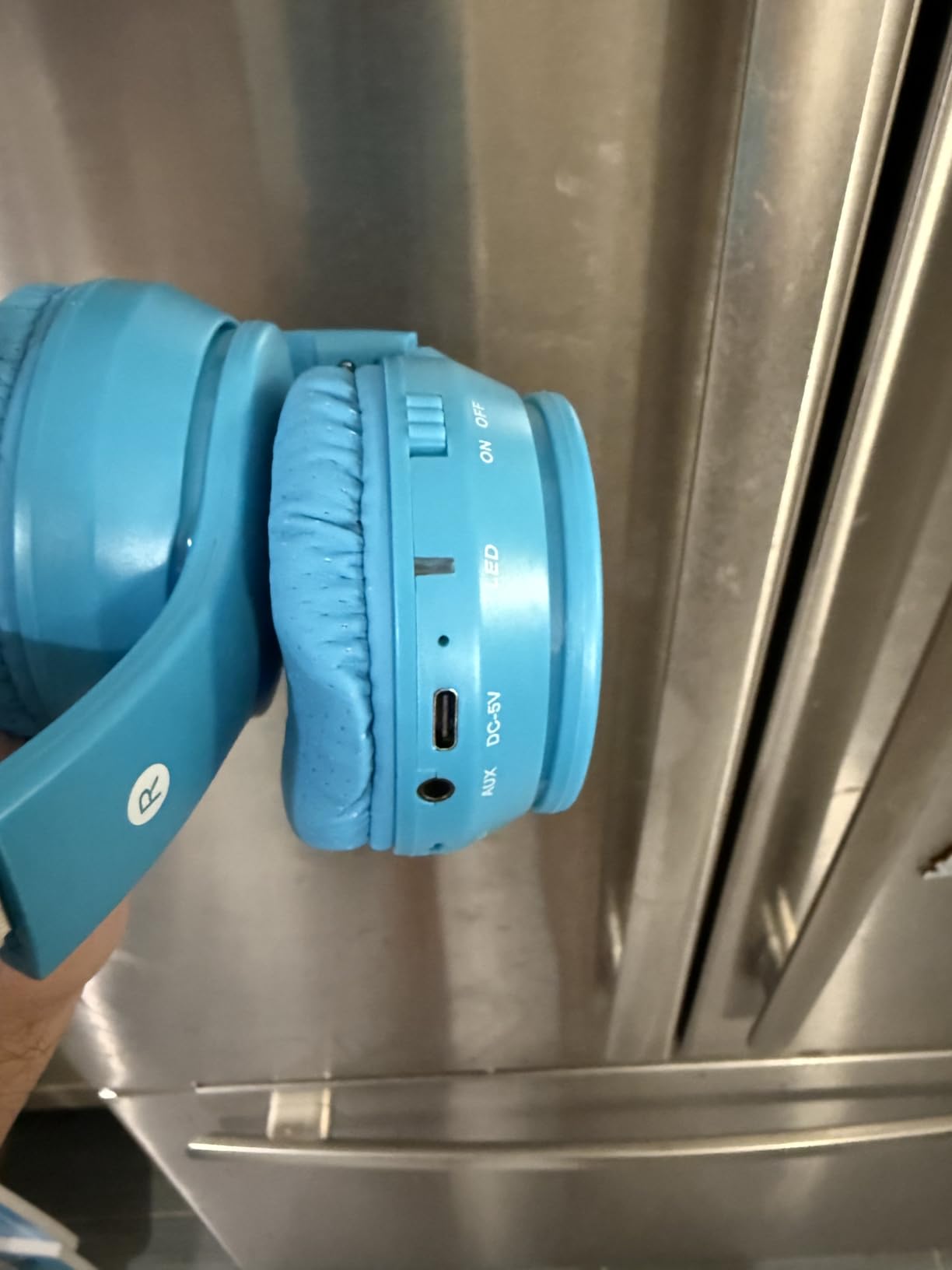
Weight is 8.96 ounces, which is heavier than several sets here, and the 4-level adjustable headband is what keeps that from being a problem across a growth spurt. The drivers are 40mm with a listed sensitivity of 85 db, Bluetooth is version 5.4, and audio latency runs 40 milliseconds. That latency is fine for music and video and slightly loose for fast-paced games.
Reviewers are consistent about the same two things: the battery genuinely lasts, and the fit adjusts across a wide age span in one household. The recurring complaint is the absence of noise cancelling, which leaves the set dependent on the passive seal of the over-ear cups. Reviewers also note it wants a standard 5V/1A charger, and a fast charger plugged into the wrong port will not do much.
When the 94dB mode is worth using
Set the switch to 94dB on a noisy car journey or a long-haul flight where ambient cabin noise is fighting the audio, and drop back to 85dB for study sessions at home. Two levels make the pair usable across more situations than a single fixed cap, and the key lock means the higher mode stays a deliberate choice.
When to skip it
If your child is sensitive to sound or you need real cancellation in a loud room, this pair does not offer it and the price gap to an ANC model is real. For a single child on a tablet at home, the wireless half is more than you need, and the wired sets further down cover the same cap for less.
2. Riwbox CT-7S Cat Ear Headphones – Best for Kids Who Refuse to Wear Headphones
Riwbox Kids Wireless Headphones, CT-7S Cat Ear Bluetooth, 85dB Volume Limiting, LED Light Up Over Ear with Microphone for Laptop/PC/TV (Purple&Green)
85dB volume limiting
Bluetooth 5.3 with 40 hour battery
5.6 ounces
Built-in microphone
Pros
- LED cat ears change color with the music and a glowing cartoon on the cup
- 85dB hardware limiter
- 40 hour battery with USB-C charging
- Works wired or wireless
- Light at 5.6 ounces
Cons
- LEDs can be distracting and are hard to switch off on some units
- Maximum volume is soft even at the top setting
- Multifunction button can trigger a call to the last number
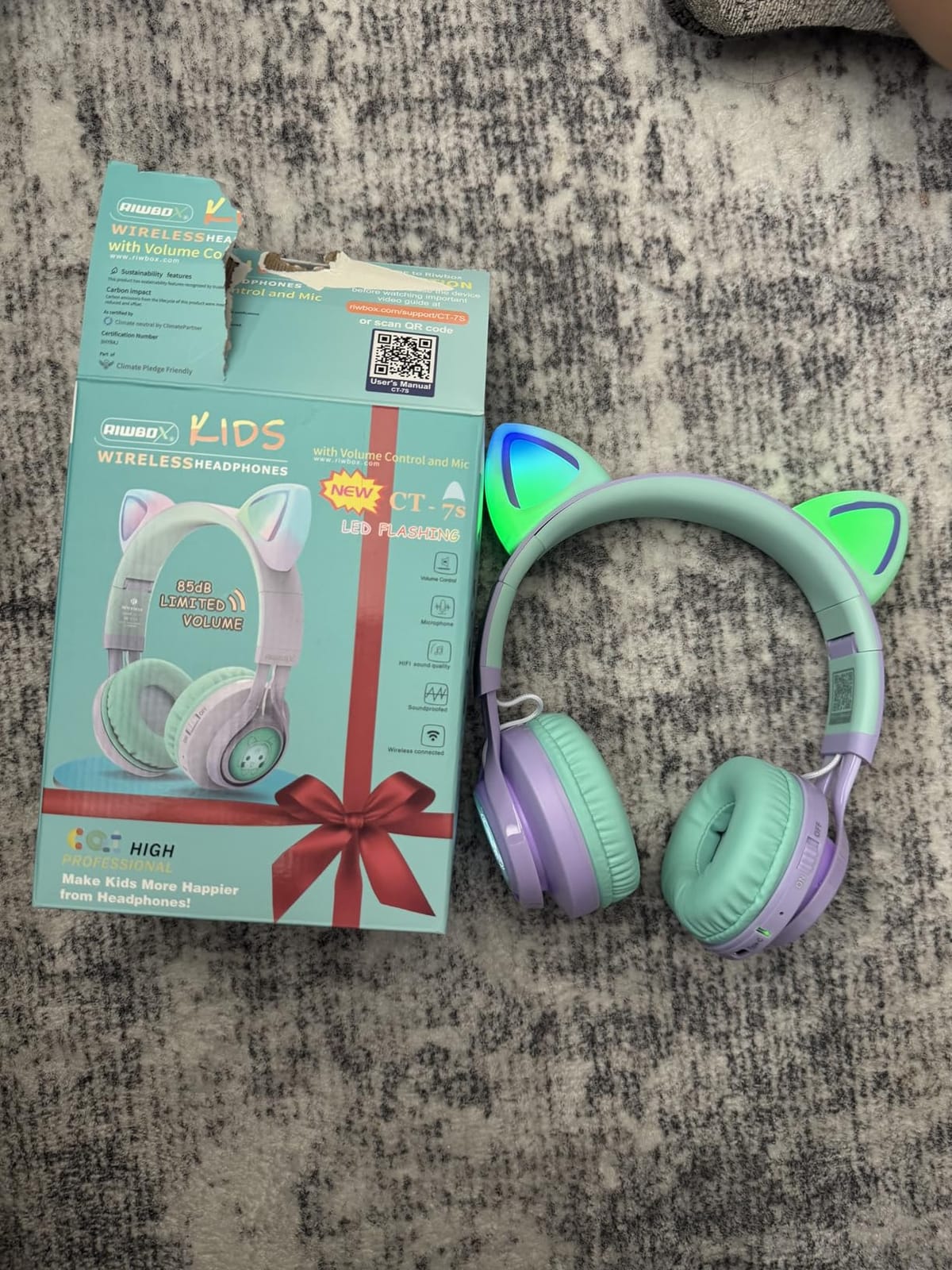
The design does the persuading. Cat ears with red, blue and green LEDs that blink in time with the audio, plus a glowing cartoon figure on the ear cup, turn the pair into an object a child asks for rather than endures. Holding the M button for three seconds toggles the lights if they become too much.
Underneath the styling the safety story is straightforward: an 85dB hardware limiter, Bluetooth 5.3, 40mm drivers, and 40 hours of battery from a two hour USB-C charge. At 5.6 ounces this stays light on a small head, and the listed sensitivity is 85 db with passive noise control.
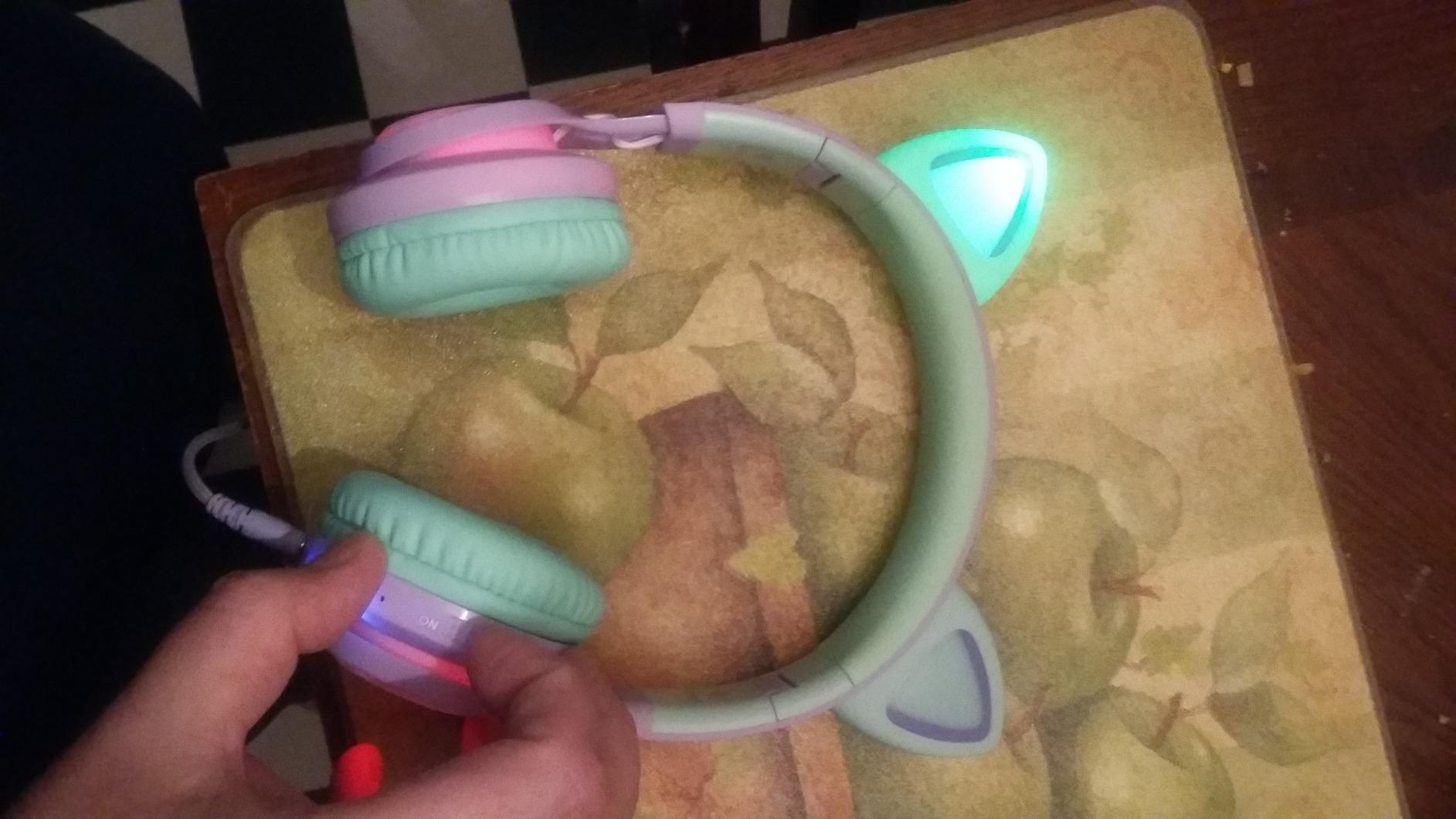
The microphone is the reason this one lands in an online-class context. Parents buying for video calls and language apps mention that the mic is clear and picks up a child’s voice from a desk without fuss, and the foldable design plus included D1 braided cable mean it also works as a wired headset when the battery is dead.
Two gripes come up repeatedly in reviews. Maximum volume reads as soft at the top of the range, which matters more for a tween than for a five-year-old, and the multifunction button is easy to hit by accident, which has placed calls to the last number in the phone. Budget an afternoon of button training.
Who this suits for school and video calls
A child doing online lessons, language apps or calls with relatives gets a usable microphone, a light 5.6 ounce weight, and a 40 hour battery that survives a week of lessons. The wired fallback keeps the microphone working even when the charge is gone, which is a genuine advantage over wireless-only sets in a house with unreliable charging habits.
Who should look elsewhere
Skip it if the flashing lights are a trigger rather than a treat, or if a quiet maximum output would read as a fault to an older child. EarFun K1 below is the calmer-looking alternative with the same limiter and a similar microphone.
3. EarFun K1 Wired Kids Headphones – Best for Two Kids on One Device
EarFun K1 Kids Headphones Wired with Mic, Volume Limit Headphones for Kids
85/94dB hardware limiter
3.5mm sharing jack for two listeners
198 g
Nylon braided cable
Pros
- Sharing jack lets two children listen from one device with no splitter
- 85/94dB limiter switched in hardware
- Nylon braided cable resists twisting and tugging
- 18-month warranty is the longest here
- CPC-certified recycled materials
Cons
- No wireless option at all
- Occasional reports of a used unit arriving
The sharing jack is the feature that changes household logistics. A 3.5mm jack on the left earcup lets a second pair plug in and hear the same audio, so one device serves two children without a splitter, extra hub or second tablet. For families who have been buying two pairs and one cable, that is the argument for this set.
The rest is a well-made wired headphone: 85/94dB volume limiting in hardware, 40mm drivers, an HD microphone on the cable with in-line play, pause, call and track controls, and a foldable frame with adjustable sliders and ultra-soft ear caps. The 18-month EarFun warranty is the longest of the ten picks here.
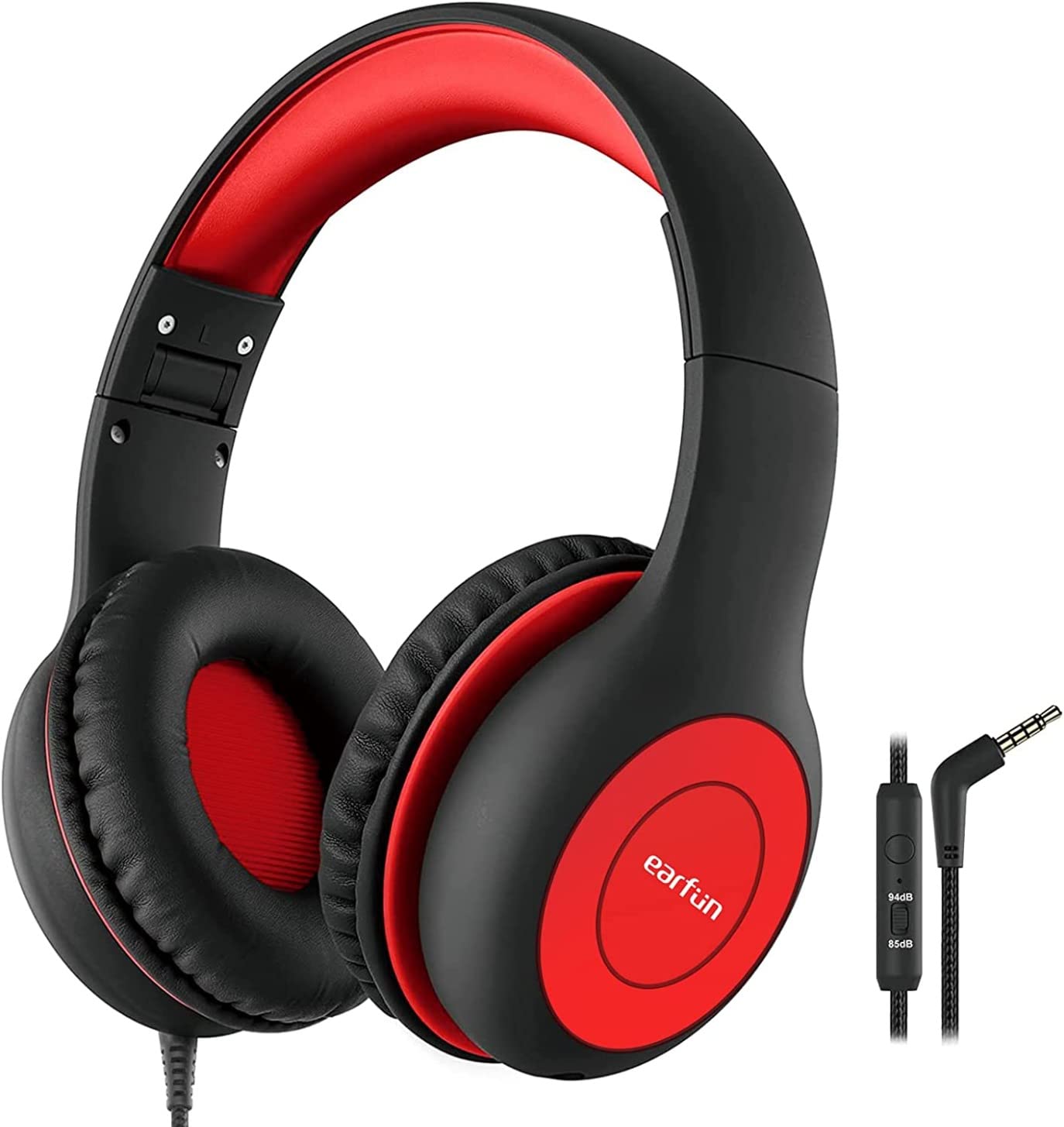
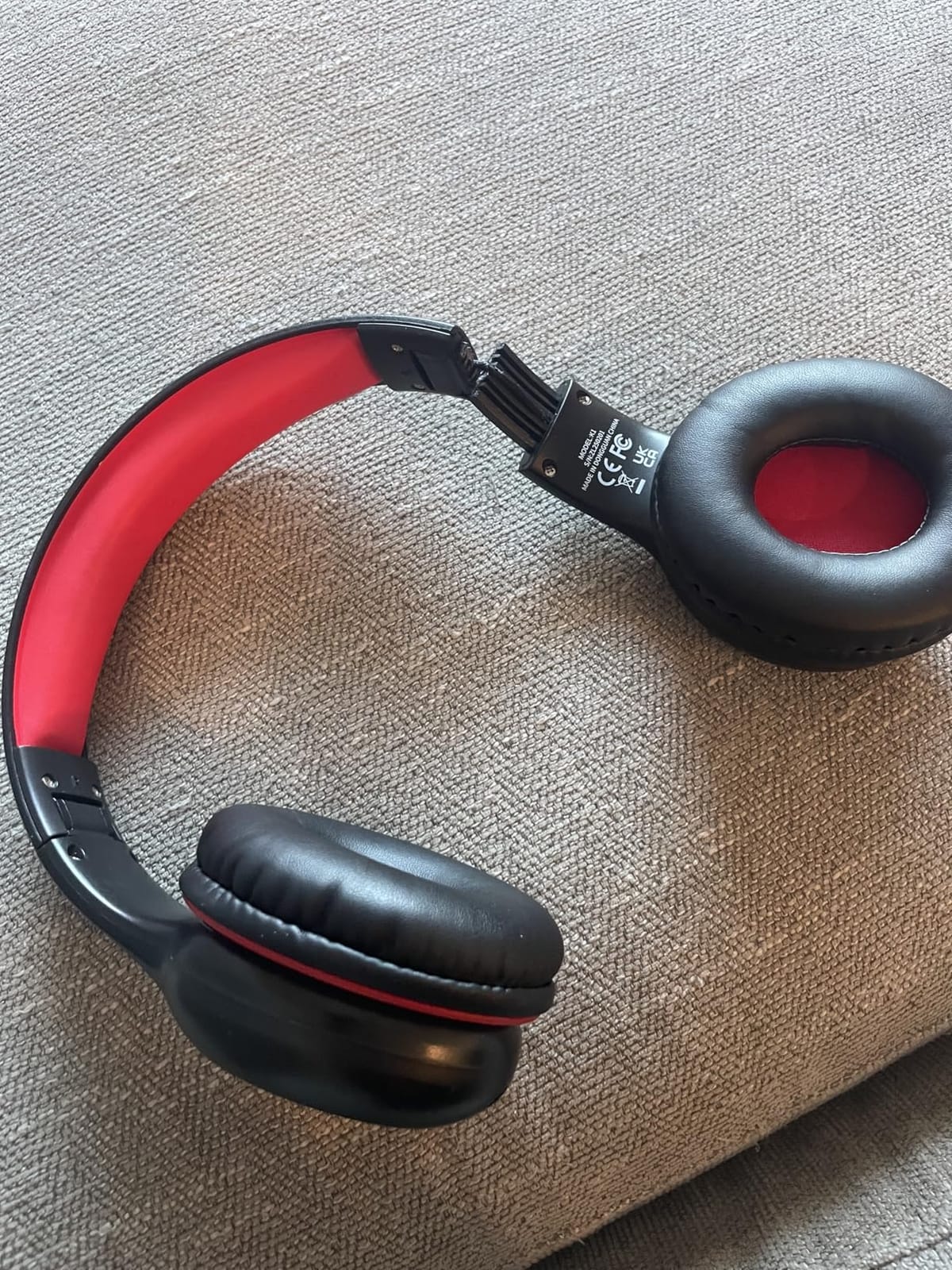
Durability is where wired sets normally fail, and the nylon braided cord is built for that specific abuse. Reviewers mention the braid and the sharing jack as the two things that hold up to daily school-bag treatment, and comfort is consistently described as good for long sessions at 198 g.
The honest limitation is that there is no wireless mode, so this belongs on a desk or a lap with a device in reach. A small number of reviews also report a unit arriving in a condition that was not new, which is a fulfilment issue rather than a build issue, but worth knowing if you need it immediately.
How the sharing jack works in practice
Plug the main cable into a tablet, then run a second pair into the sharing jack on the first pair. Both children hear the same audio at the same fixed 85dB ceiling, and neither can turn their own pair up past it.
Why the build details matter more than usual
Kids’ headphones fail at the cable-to-earcup joint and at the plastic hinge. A braided cable resists the twisting that splits a thin jacket, and the 18-month warranty gives a full year beyond the industry-standard twelve months, which is meaningful when a pair has to last a school year plus a summer.
4. Nabevi Wired Over-Ear Kids Headphones – Best for Full School Days
Nabevi Kids Headphones with Cord, Over-Ear Headphones for Kids with Microphone, 85/94dB Volume Limit, Headset for Kid Boys Girls with Shareport, Wired Toddler Headphone for School/Tablet/iPad/Travel
85dB and 94dB modes
Soft foam and protein leather cushions
200 g metal-free build
SharePort and microphone
Pros
- Soft breathable protein leather cushions work through long sessions
- Metal-free build keeps the weight down at 200 g
- Sharing port for two listeners
- Built-in microphone for online learning
- Folds flat for bags and suitcases
Cons
- No metal parts means less rigidity over heavy long-term use
- Older children can find 85dB too quiet
This is the pair I would hand to a child who wears headphones from drop-off to pickup. The oval over-ear cushions use soft foam under breathable protein leather, and the seal is complete enough that reviewers describe them as staying comfortable for hours rather than an hour. The listed weight is 200 g with no metal in the frame.
The safety control is a switchable 85dB and 94dB mode with a listed sensitivity of 94 db, implemented in hardware rather than software. There is a sharing jack for a sibling pair, a built-in microphone that reviewers single out for online learning, and a body that folds flat into a school bag or a suitcase.
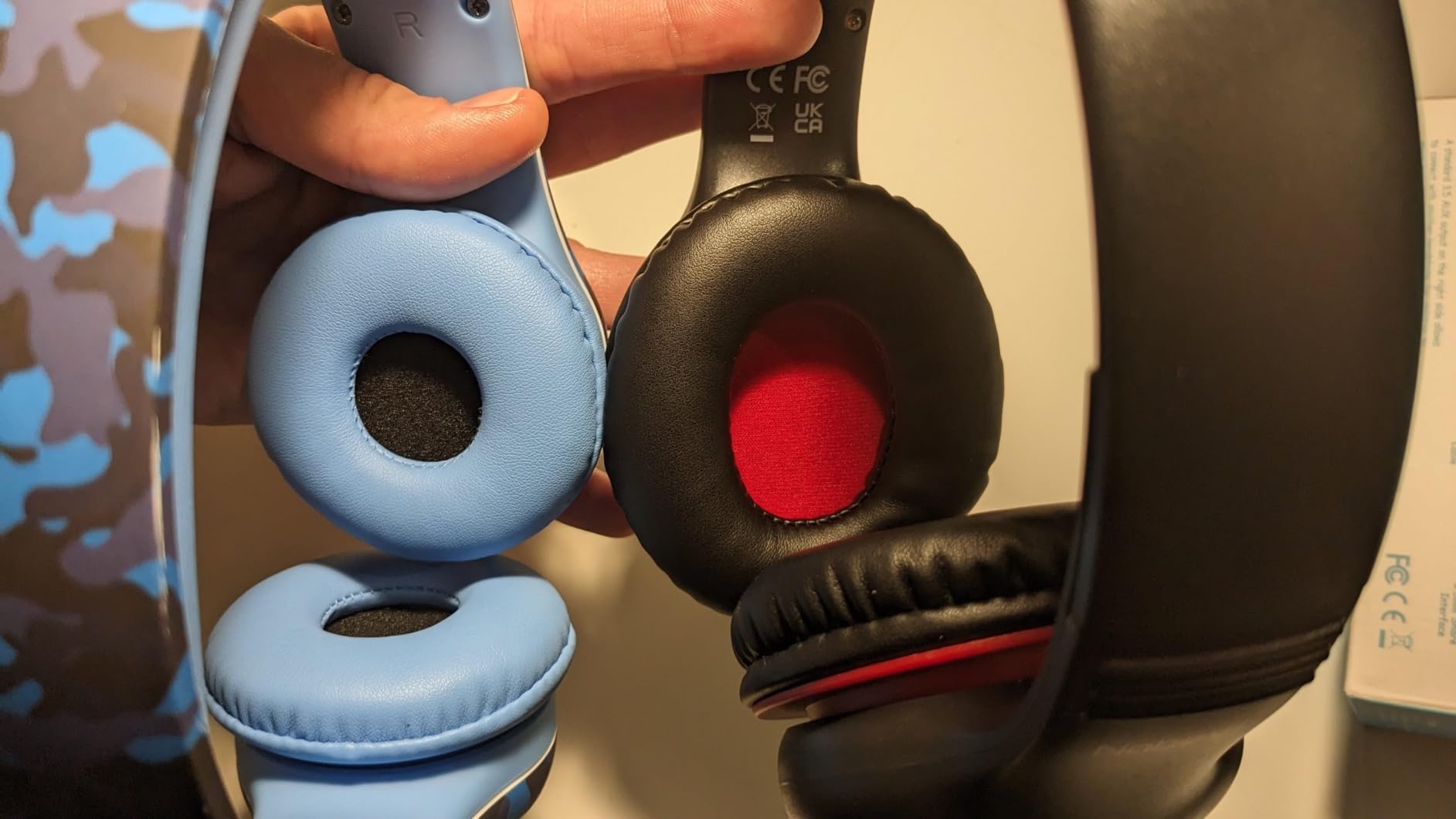
Two trade-offs show up in reviews. The metal-free construction, which keeps the pair light and free of sharp corners, also means less structural rigidity over long heavy use. And older kids, particularly teens, sometimes judge the 85dB setting as quiet. Both are consequences of choosing comfort and lightness, and both are visible in the spec sheet rather than a surprise later.
The shape is deliberately free of hard 90-degree corners, which reviewers with younger children and sensory-sensitive users mention approvingly. A tangle-free cable and a standard 3.5mm connector cover tablets, laptops and phones without an adapter.
When comfort beats durability
If your child wears one pair all day and the failure mode you are worried about is a complaining head rather than a broken hinge, the cushion depth and full over-ear seal here are the priority. One pair for the whole school day is exactly the scenario this design serves.
When the light build works against you
Pass on this one for a child who yanks cables, drops headphones onto hard floors, or passes them between siblings roughly. The all-plastic frame absorbs that treatment less well than the braided-cable sets, and a teen who thinks 85dB is too quiet will remind you of it constantly.
5. POWMEE P20 Wired School Headphones – Best No-Frills School Pick
POWMEE P20 Kids Headphones for School, Kids/Teens/Boys/Girls with Safe 94dB Volume Limited, 3.5mm Jack Wired Cord Over-Ear for Fire Tablets/Travel/PC/Phones(Blue)
94dB safe volume limiting
90-degree swivel earcups fold flat
4.2 foot retractable cable
Ages 2 and up
Pros
- Genuine 94dB limiter at the entry level
- 90-degree swivel cups fold flat for storage
- Soft oval pads fully cover the ear and block outside noise
- Works with any 3.5mm device including Fire tablets and Chromebooks
Cons
- No microphone and no inline controls of any kind
- Retractable cable section is a snag point
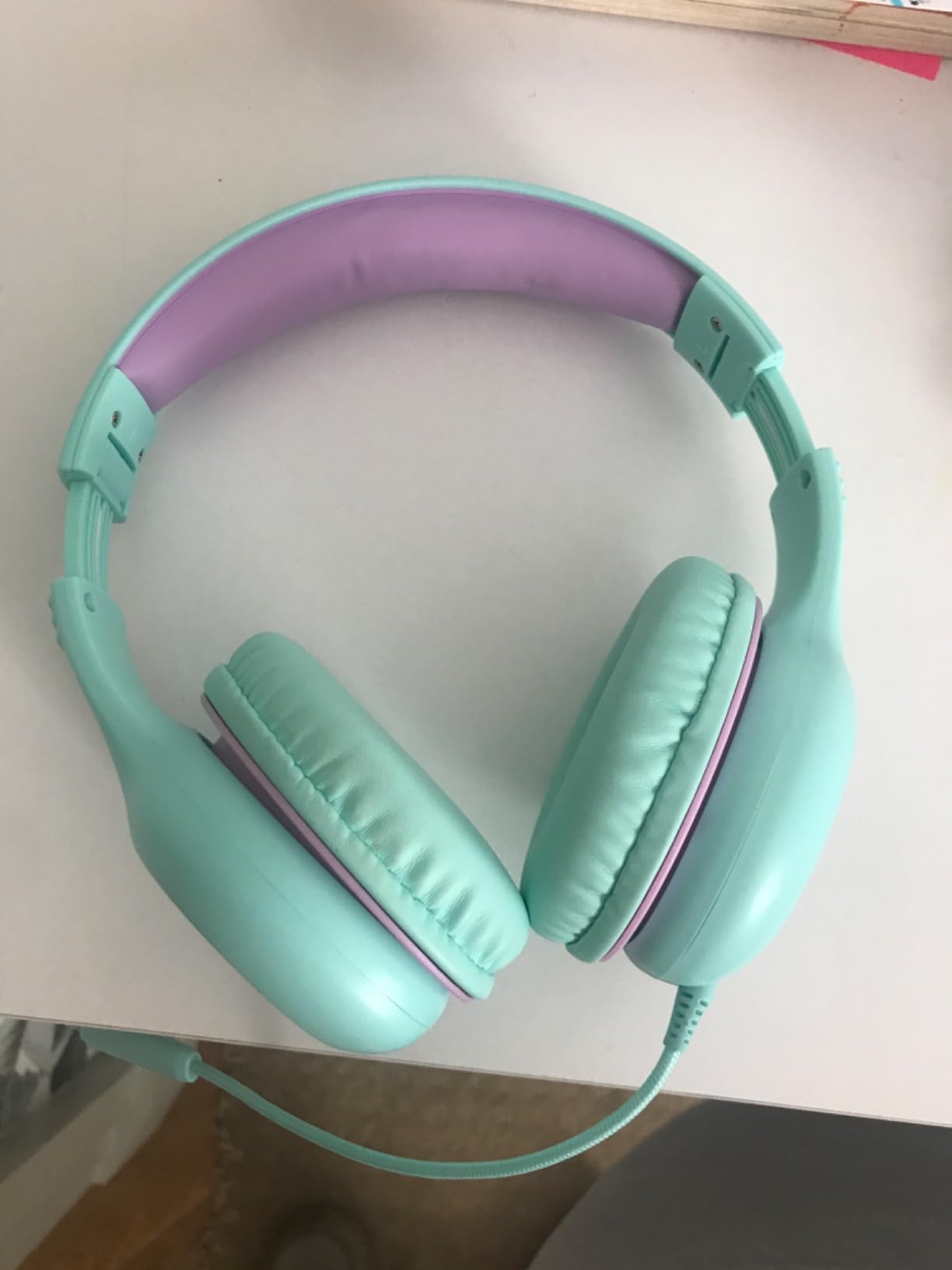
This pair does one job: it plays audio from a 3.5mm socket at a capped 94dB and it folds flat afterwards. The 90-degree swivel earcups mean the pair rotates to sit in a bag without the cups taking the space, and the soft oval pads fully cover the ear, which reviewers credit with both comfort and solid passive blocking of background noise.
At 0.22 kg with an adjustable headband listed for ages 2 and up, it is light enough for the youngest end of the range and light on the wallet. The cable is a tangle-free 4.2 feet with a retractable section, and the enclosure is nylon, which is why the whole thing folds and survives a backpack.
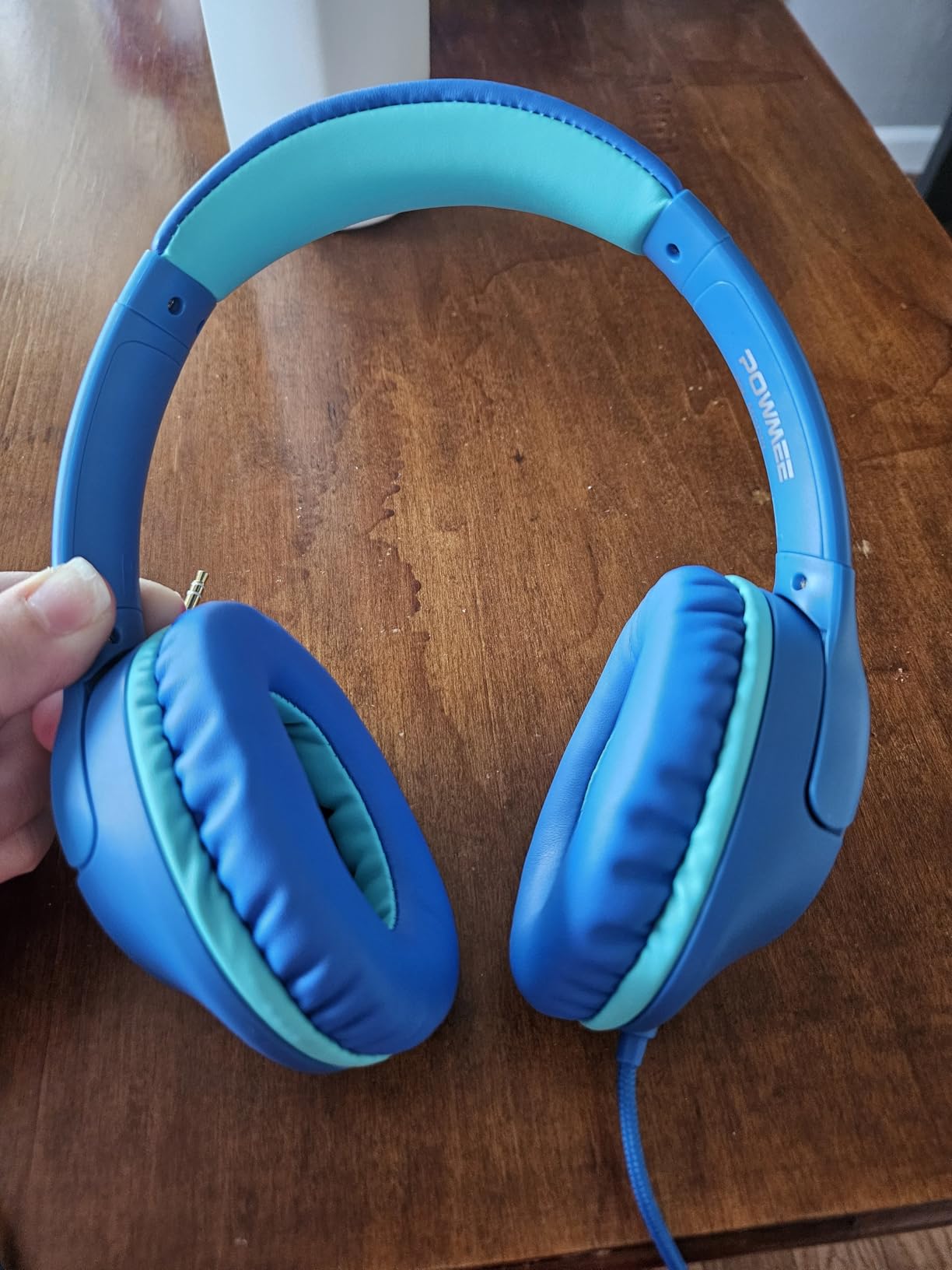
The decisive limitation is the complete absence of a microphone, remote or in-line volume control. Reviewers say buyers wish they had checked that first. For audiobooks, offline games and lesson videos played on a tablet with its own microphone, that is a perfectly good headphone. For a child who needs to talk back in an online class, it is the wrong tool.
There is also a level choice to think about. The cap here is 94dB rather than 85dB, so for a child in the youngest tiers you may want to keep the device volume low and treat the cap as a ceiling rather than a target.
Check the microphone requirement first
Before anything else, ask whether your child needs to speak. Video calls, language apps and teacher check-ins all need a microphone, and this pair has none, so the device has to supply it. If listening only is the use case, the missing mic costs you nothing and the swivel folding design is a genuine daily convenience.
What breaks first on a set like this
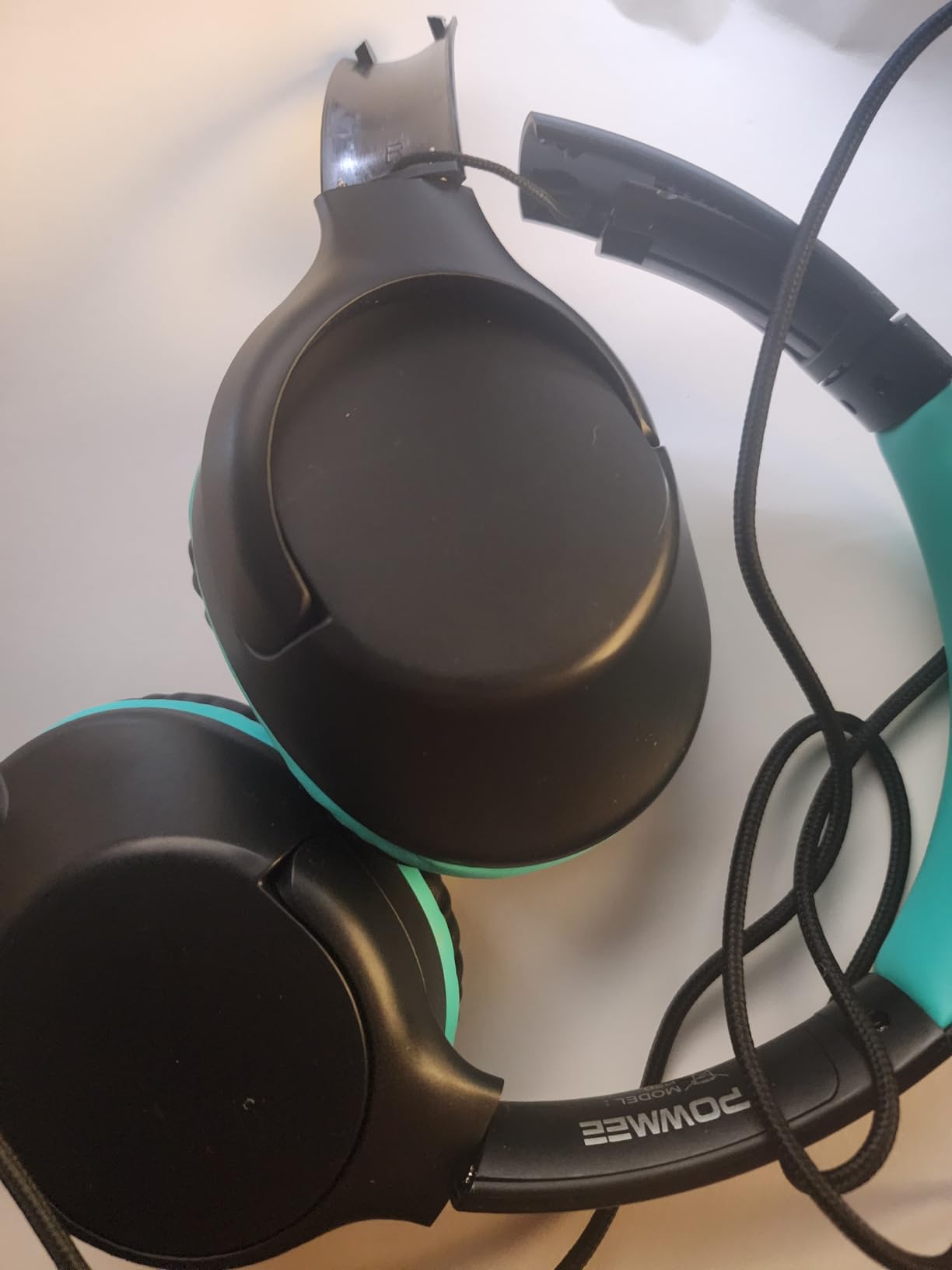
The swivel is the part to watch. Folding cups depend on a joint, and a nylon frame flexes before it breaks. Treat the fold as a storage convenience rather than something to do daily in a school bag, and the pair tends to outlive the device it was bought for.
6. awatrue AT2 Kids School Headphones – Best Fit Across Ages 2 to 15
awatrue AT2 Kids Headphones for School with Mic, 85/94dB Safe Volume Limit
85dB study and 94dB travel modes
Built-in microphone
5.2 ounces
Adjustable headband ages 2-15
Pros
- Headband is specified to fit ages 2 through 15 on one frame
- 85dB study mode and 94dB travel mode
- Built-in microphone with clear voice for calls and language apps
- Sharing jack for two kids
- CPC-certified sturdy PP construction
Cons
- Cable joint at the earcup can fail after heavy use
- An older child can defeat 85dB by raising device volume
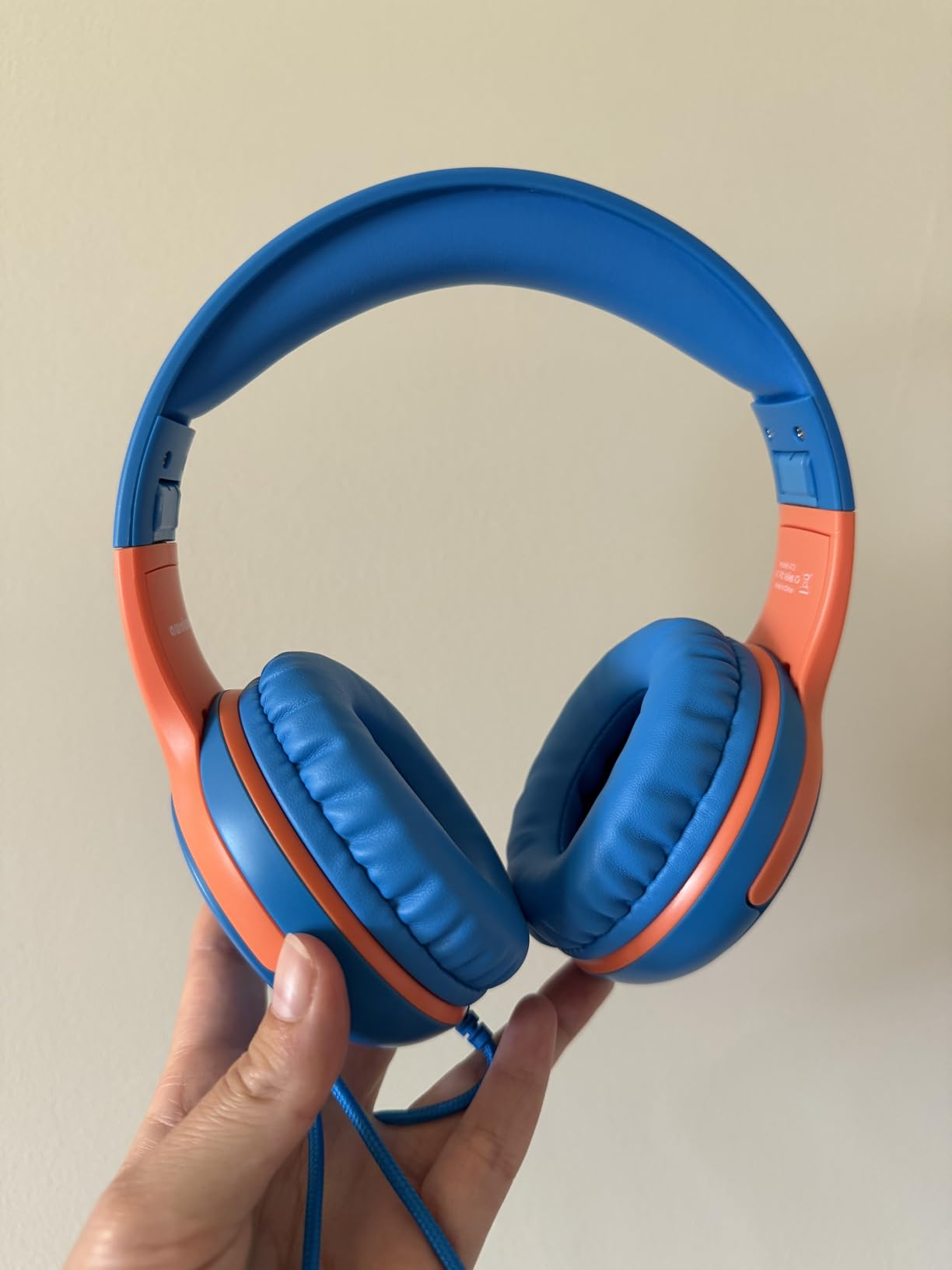
The selling point is the span. The adjustable headband is specified for ages 2 to 15, which means one purchase can cover a toddler through early high school, and at 5.2 ounces it is one of the lightest pairs here. That solves the repeat-purchase frustration that shows up constantly in parent discussions about growing out of kids’ headphones.
Two limiter modes are labelled for their context: an 85dB study mode and a 94dB travel mode. Both switch in hardware. The pair also carries a built-in microphone that reviewers describe as clear for Zoom calls and language apps, plus a 3.5mm sharing jack so two children can use one device.
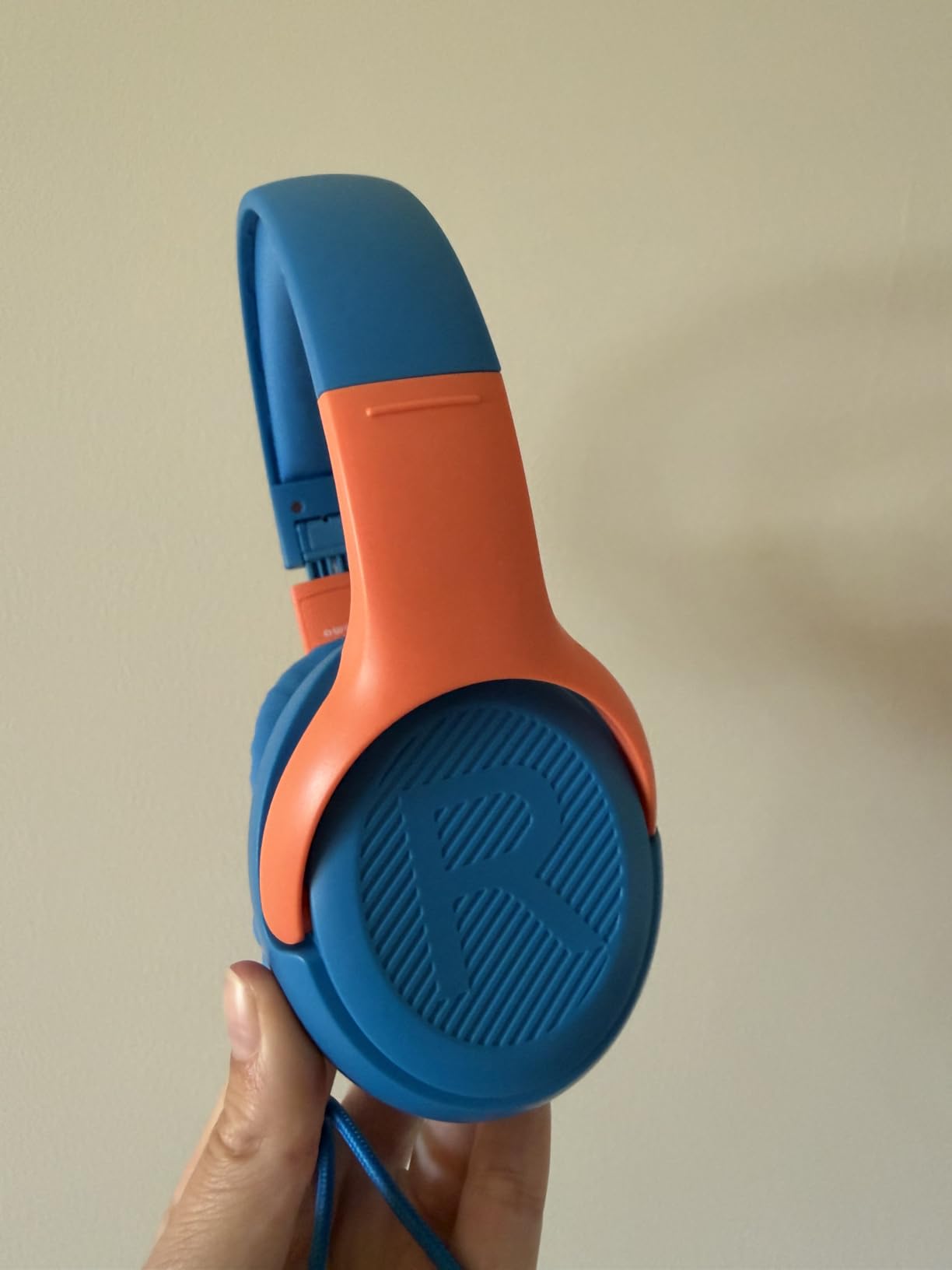
Construction is sturdy PP plastic, described as resisting twisting and bending, with ultra-soft breathable protein leather cushions and BPA-free materials. Frequency response runs 20 Hz to 20,000 Hz through 40mm drivers, and there is a one year warranty.
The honest weakness is at the cable-to-earcup entry point, where a few reviewers report the joint popping out after heavy use. A second caveat is worth raising with older children: they can defeat the 85dB mode by simply raising the device volume, because the limiter sets a ceiling rather than forcing the level. Pair it with parental controls on the device for a tween who tests limits.
How to handle a child who outgrows pairs quickly
Measure the gap between siblings before you buy. If you have a four-year-old and a nine-year-old, an age 2-15 frame like this one may genuinely cover both, which is a different kind of saving from buying the cheapest pair twice. Ear cup size on a small head matters as much as the headband range.
Why the mode switch matters in practice
Keeping 85dB for homework and 94dB for a noisy bus gives you a defensible answer when a child says it is too quiet. You are not arguing about whether the headphone is broken, you are explaining a setting you chose deliberately for the environment.
7. JBL Junior 320 Wired Headphones – Best Branded Wired Pick
JBL Junior 320 Kids Headphones, Wired, Volume-Limited – Purple
JBL Safe Sound below 85dB
Built-in microphone
Folds flat
32mm drivers, 116.8 g
Pros
- Safe Sound limits output below 85dB without dulling the audio
- Soft 12mm padded headband and round cups grip small heads
- Single-sided cable avoids twin-wire tangles
- Folds flat into a bag
- Includes a sticker set for personalization
Cons
- Earcup padding can detach after light use
- Fit runs tight on some heads
- Non-detachable cord
JBL is the name on this one, and Safe Sound is the limiter. It caps output below 85dB, which reviewers note does not dull the audio the way some capped sets do. The soft 12mm padded headband and round earcups are sized to stay put on smaller heads and reduce sound leaking out, which also cuts how much noise comes back in.
At 116.8 g with 32mm drivers and a listed sensitivity of 78 db, this is one of the lighter pairs here. The single-sided cable avoids a common kid-headphone frustration, since twin wires wrapping around each other in a bag tends to happen on most sets.
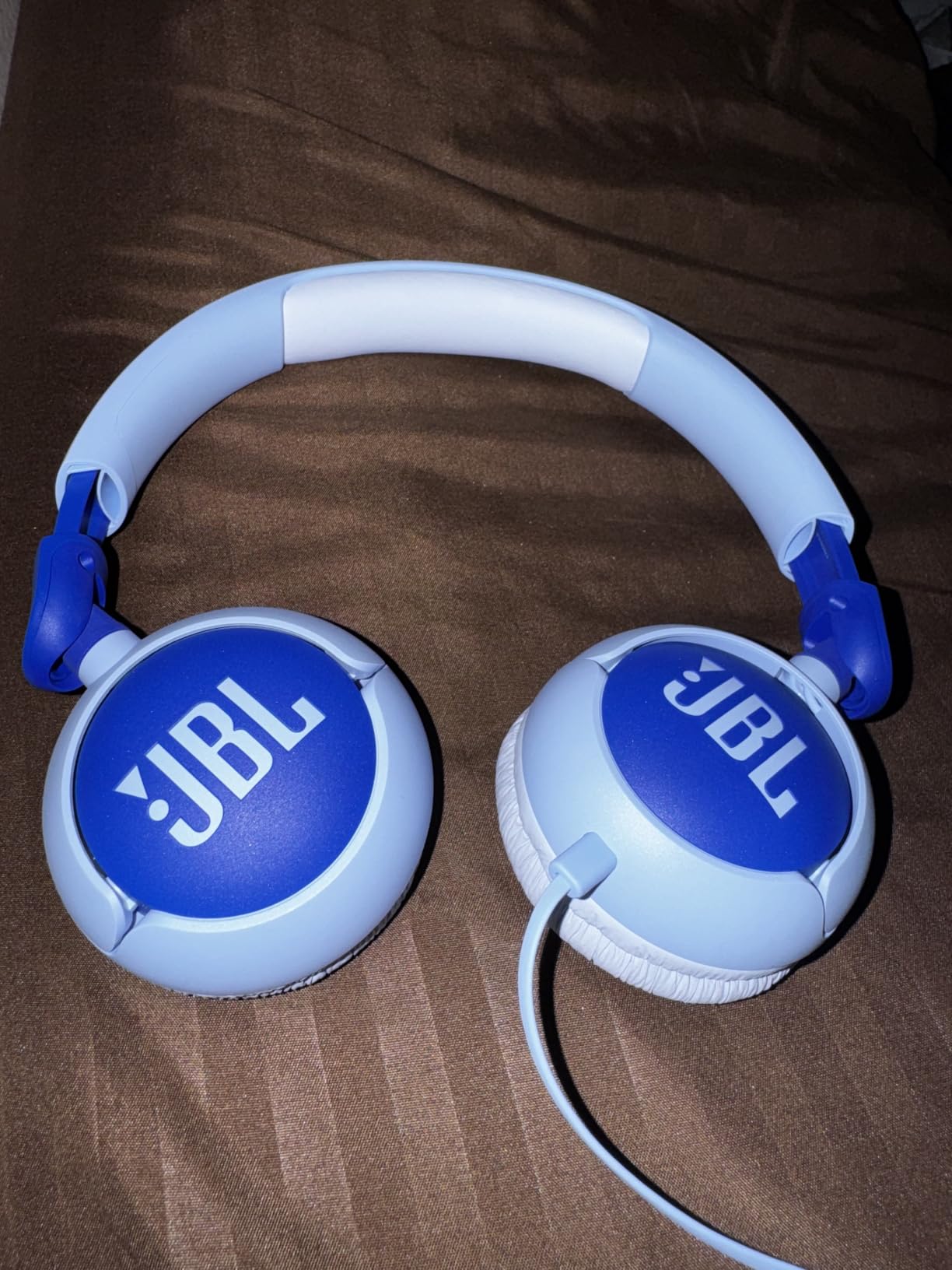
The included sticker set does more work than it sounds. Making the pair their own gives a child ownership, and reviewers treat the personalization as part of why the headphones get worn rather than tolerated.
The recurring complaint in reviews is the earcup padding detaching after light use, plus fit complaints on wider heads since the cups are round and closer together. The cord is fixed, and modern devices without a 3.5mm socket need an adapter. Those four points are why the rating sits at 4.4 rather than higher.
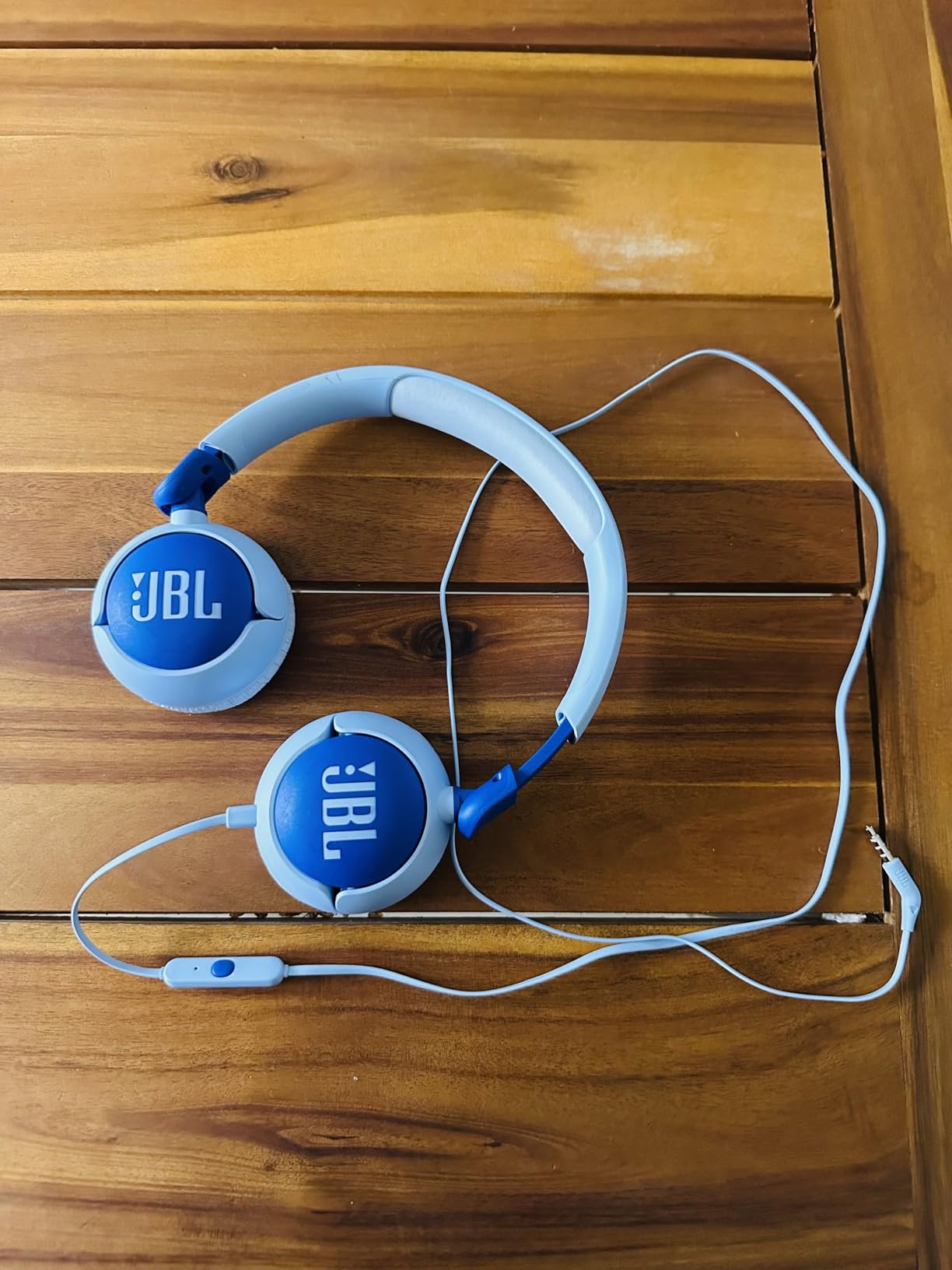
Why the single-sided cable matters more than it looks
Twin-wire cables twist and snag on door handles. A single cable running to one side is far easier for a child to manage and easier to check when something gets pulled.
Where the brand premium is and is not
The Safe Sound limiter and the driver tuning are where the brand earns its place, and the fold-flat shape works well in a school day bag. What it does not buy you is a detachable cable, adjustable earcup sizing or a wireless mode, so if your child breaks things, the sets below are the safer structural bet.
8. QearFun Unicorn Bluetooth Headphones – Best for Phone-Free Listening on Trips
QearFun Unicorn Kids Bluetooth Headphones, 85dB Safe Volume Limit
85dB volume limit
Three modes: Bluetooth, wired, TF card
24 hour battery
Mic included
Pros
- TF card mode plays audio with no phone or tablet in the room
- 85dB parent-approved hardware limit
- 24 hours of battery from a one to two hour charge
- Foldable with a unicorn gift box for gifting
Cons
- TF memory card is not included
- Bluetooth range limited to about 10 meters
- Shorter battery than the other wireless sets
Three playback modes is unusual at this level and it is the reason to buy this pair. Alongside Bluetooth 5.0 and a 3.5mm wired connection, it will play audio straight from a TF memory card, which means a car journey can run audiobooks or music with no phone in the cabin and no screen in front of the child.
The limiter is a parent-approved 85dB cap in hardware. Battery life is listed at 24 hours from a one to two hour charge, there is a built-in microphone for online learning, and the headband adjusts for ages 3 to 16 across a set of seven colour LED options. The foldable design and the included unicorn gift box make it an easy present.
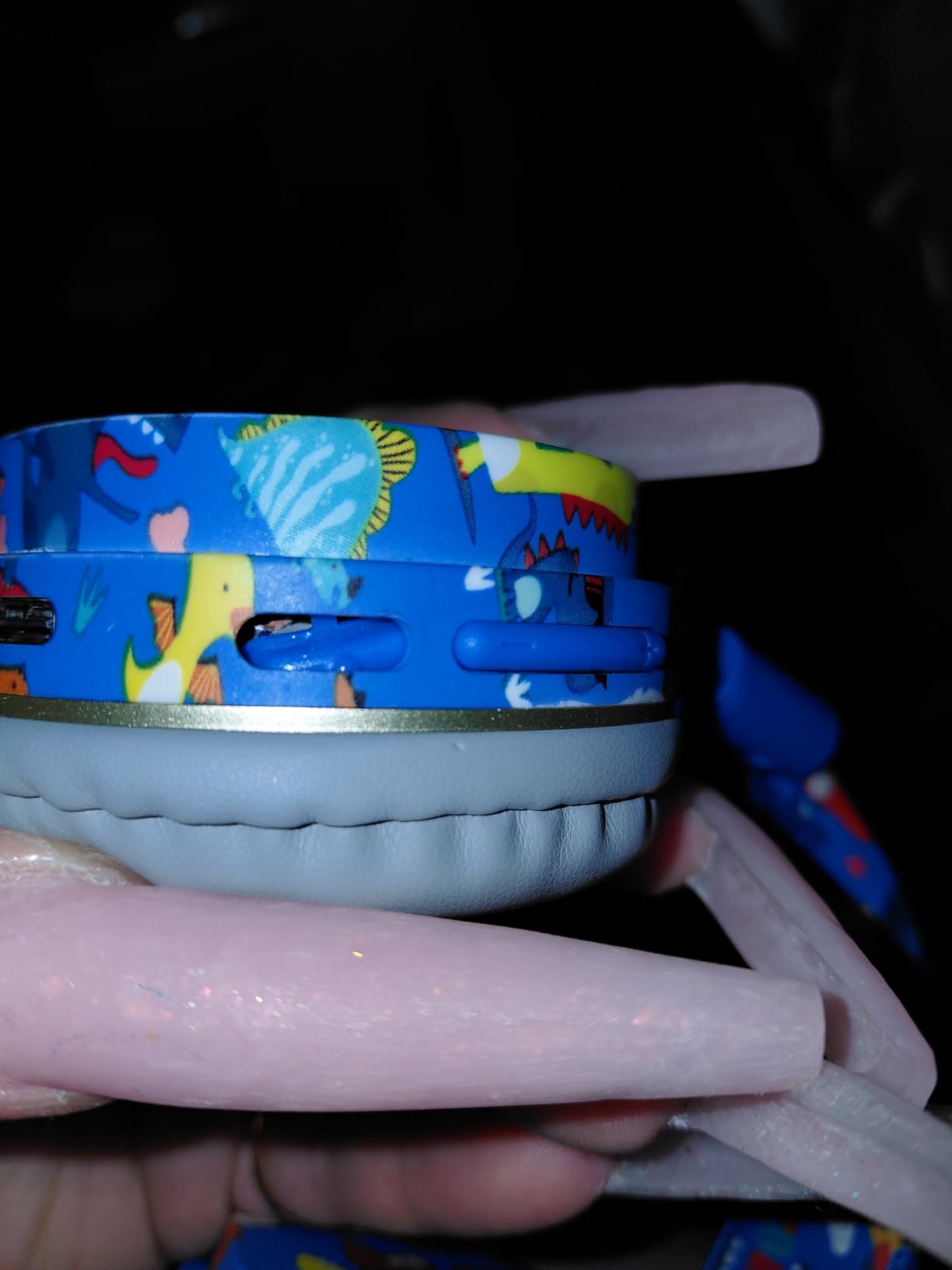
Weight is listed at 4 ounces including the carrying case, and the ear pads are described as pillow-soft. Reviewers respond strongly to the styling and to the combination of the cap with enough battery for a trip.
Three limitations come up. The TF card is not supplied, so you need to buy one. Bluetooth range is about 10 meters, which is shorter than the Riwbox and can drop if a child walks out of the room mid-video.
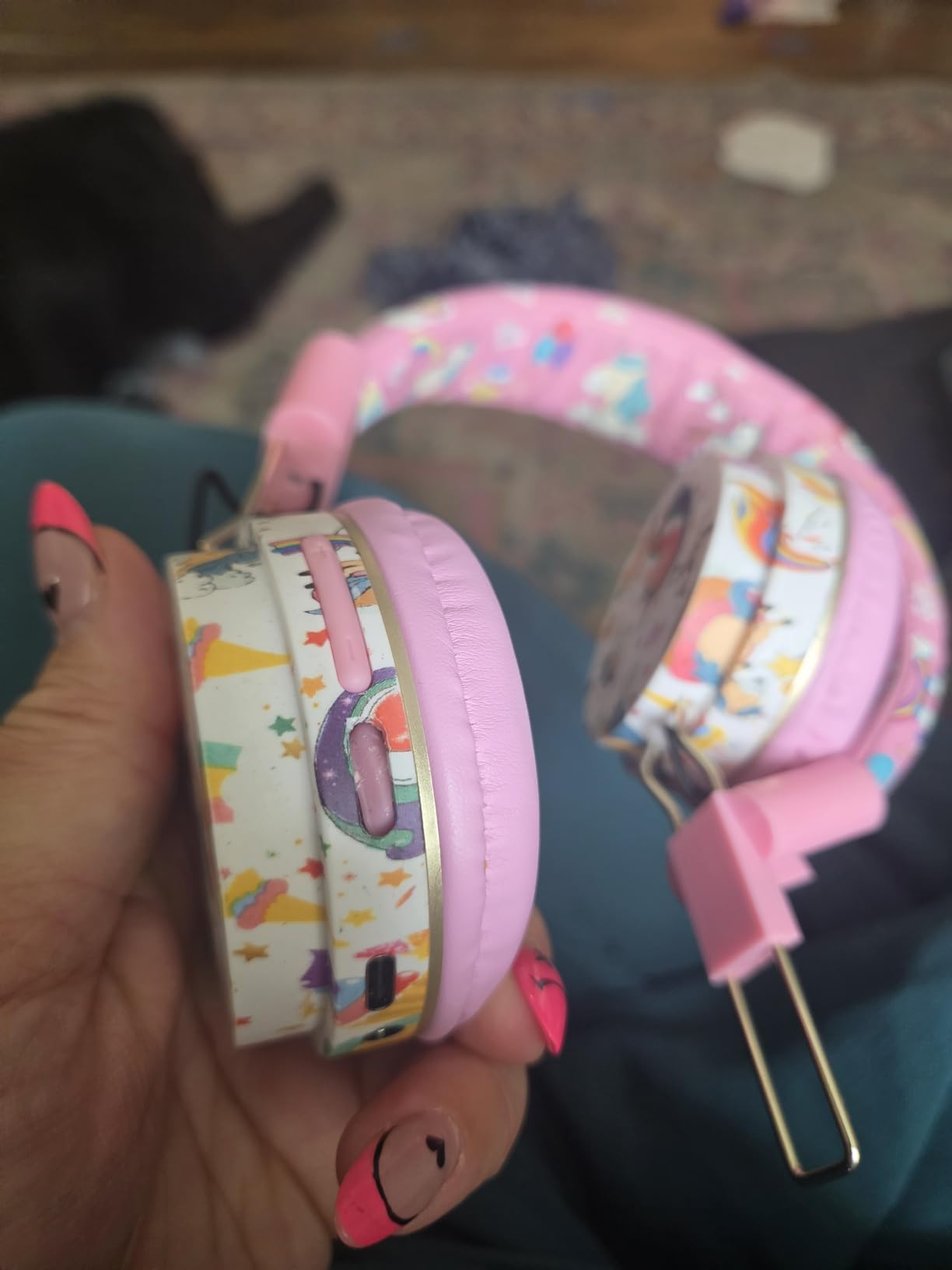
Card playback is the feature no other pick here has
Load an audiobook or a playlist onto a TF card and the headphones work with nothing else in the room. For long drives and flights it removes the screen-time argument entirely, and it keeps working if a device battery dies because it does not need one. Budget for the card, which is sold separately.
Choose the MIDOLA instead if battery is the priority
The battery gap is the deciding factor for long trips. This pair is rated at 24 hours per charge against 68 hours for the MIDOLA wireless set in this roundup, and the Bluetooth range here is shorter than the Riwbox delivers. If the child travels without a reliable charger, the longer runtime wins.
9. Acer HK03 Wired Kids Headphones – Best Fit for Growing Heads
Acer Kids Headphones for School, 85-94dB Limiter, 3.5mm Jack, w/Mic HK03
Dual 85dB and 94dB modes
CPSIA-approved materials
40mm drivers
5.2 ounces, foldable
Pros
- Roomy rather than snug fit suits children who are still growing
- CPSIA-approved hypoallergenic materials
- Built-in microphone and multi-function button that work reliably
- Reinforced tangle-free cord reaches the back seat
- Folds flat for a backpack
Cons
- Runs oversized on very small heads
- Some buyers report the package not matching the listing
The design intent is a looser fit. Reviewers describe the headphones as running true to size for four to eight year olds and staying comfortable for hours, with a fit that is roomy rather than snug. For a child on a growth spurt, that headroom means the pair stays wearable for longer than a tightly sized set, which is exactly the frustration that drives repeat purchases.
Safety is dual-mode 85dB and 94dB limiting in hardware, with 40mm drivers and passive noise blocking through over-ear cushions. Materials are CPSIA-approved and described as hypoallergenic, and the foldable frame collapses neatly into a backpack.
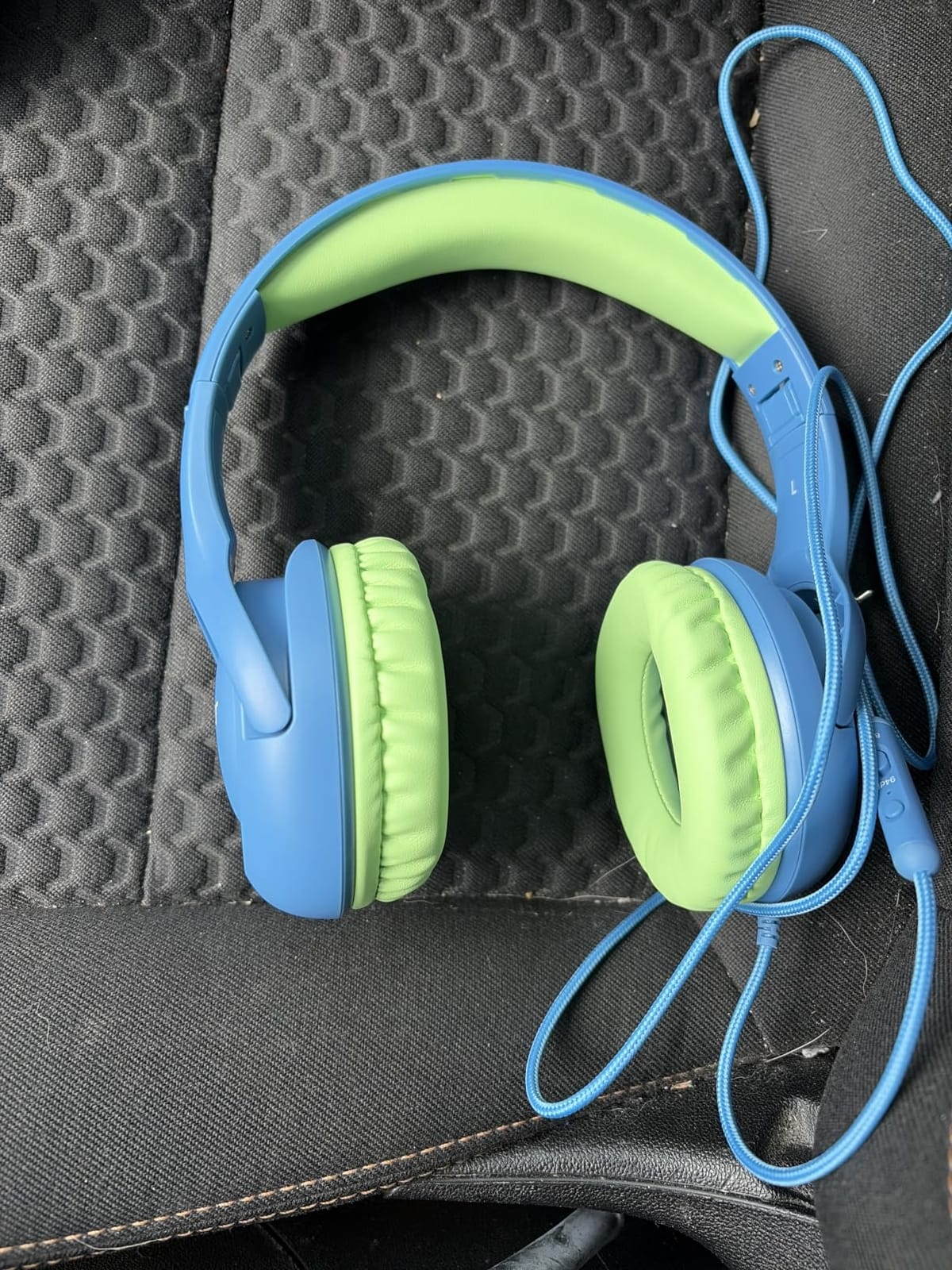
At 5.2 ounces this is among the lightest pairs here, and the reinforced tangle-free cord is long enough for back-seat tablet listening. The built-in microphone and multi-function button are reported as working reliably, which teachers and parents both mention approving of for class use.
Two caveats. A very small head may find the fit oversized, the opposite problem to most of the sets in this roundup. And a number of buyers report the delivered package not matching the listing description, which is the main reason the otherwise strong 4.6 rating is not higher. Check the box before you rely on the sticker colours or accessories.
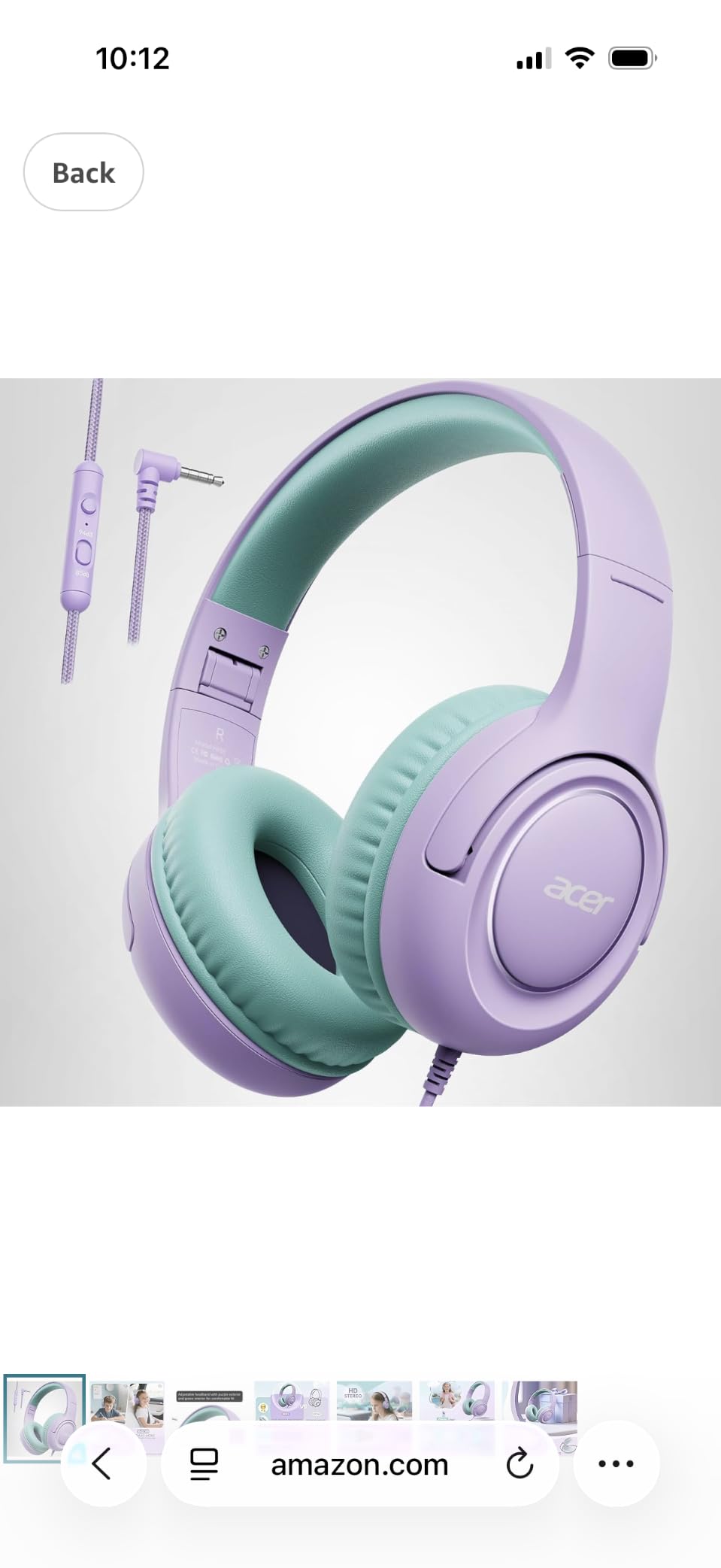
Choosing by head size rather than age
Measure from the top of the head down to just above the ear and compare it against the ear cup width before you buy. This pair suits a looser fit, so a toddler with a small head will find it oversized where the JBL Junior 320 is built closer in. Age labels are a rough guide; head measurement is the real one.
What the reinforced cord actually fixes
Standard thin cables split at the jacket where they meet the earcup after a few months of being pulled. A reinforced section holds that junction, which is the part reviewers flag as the first failure point on budget kids’ headphones. It does not make the pair indestructible, but it moves the failure point later.
10. QearFun Wired Headphones with Mic – Most Colorful Pick
QearFun Kids Headphones with Cord with Mic, 85/94dB Safe Volume Limit
85dB and 94dB dual limit with on-off switch
40mm drivers
Sharing jack
0.21 kg, foldable
Pros
- Electroplated gradient finish with a rainbow headband
- 40mm drivers with clear stereo and deep bass
- 85dB and 94dB modes switched on the headphone
- Mic and in-line controls for classes and calls
- Sharing jack plus braided cable
Cons
- Several reports of the mic wire joint failing within months
- Volume drifting on some pairs
- Sound stopped working for some owners after about a school year
This is the brightest set in the roundup: an electroplated gradient finish across the earcups with a rainbow headband, over a pink aurora colourway. The drivers are 40mm and reviewers describe the stereo as clear with decent bass, and the foldable on-ear frame weighs 0.21 kg.
The limiter is a genuine dual 85dB and 94dB mode with an on-off switch on the headphone itself. There is a built-in microphone with in-line controls for classes and calls, a 3.5mm sharing jack for two listeners, and a tangle-free braided nylon cord. On features this pair is well equipped.
The durability record is what holds it back. Across reviews there are repeated reports of the microphone wire joint or the cable failing within months, volume drifting on its own on some units, and sound stopping altogether after roughly a school year. That pattern is why it sits at number ten rather than higher.
The durability pattern to weigh
The failures described are not random. They cluster around the cable joint near the microphone, which is where a child’s hand pulls when something snags. If a child will use this pair daily in a bag with loose contents, expect the microphone joint to be the weak point within a school year or two.
Who should still consider it
A child who is careful with equipment, or a pair bought as a gift or seasonal addition where the styling matters more than longevity, gets a lot of capability here: two limiter modes, a mic with in-line controls, a sharing jack and braided cable. For heavy daily school use, the EarFun K1 and awatrue AT2 are the safer structural choices.
How to Choose Headphones for Kids with Volume Limits
Hardware limiting beats software limiting, every time
A hardware limiter is a circuit in the earcup that cuts the signal once it reaches the cap. It holds whether the audio comes from a tablet, a laptop, a game console or a borrowed phone. A software limit lives on the device, which means it is one settings screen away from gone and a seven-year-old can find that screen. Every pair in this roundup limits in hardware for that reason.
Hardware does not mean unlimited either. A cap sets a ceiling, not a floor, and an older child can still raise device volume until the limiter becomes the limiting factor. Pair a capped pair with parental controls on the tablet or laptop so both layers agree. Reviewers note this specifically on the awatrue AT2, where older children will happily defeat the 85dB mode by turning the source up.
Pick by age tier rather than by design
Toddlers from about two need the smallest cups and the lightest weight on the head; the awatrue AT2 and POWMEE P20 both start at age 2. Four to eight year olds can wear a fuller over-ear seal, which is why the MIDOLA, Nabevi and Acer sets cover that band comfortably. Tweens and teens are where the 85dB ceiling starts to feel like a fault rather than a feature, so an adjustable 85/94dB switch matters most there; MIDOLA, Nabevi, EarFun K1, awatrue and Acer all have one.
Earbuds are the line most parents and audiologists draw for young children, and none of the ten picks here are earbuds. Every one is on-ear or over-ear, which keeps the drivers outside the ear canal.
Wired or wireless, and what each costs you
Wired sets have no battery to fail and no charging routine to remember, and the MIDOLA and Riwbox both keep a 3.5mm cable in the box as a fallback. Wireless buys freedom from a device cable at the cost of a charge: 68 hours on the MIDOLA, 40 on the Riwbox, 24 on the QearFun Unicorn. For a child who will lose headphones down a seat gap mid-flight, wired is the lower-risk choice. For a child moving around a room, wireless is the one they will actually keep wearing.
Active noise cancelling is not in this category yet
None of these ten use active noise cancelling. What they use is passive isolation, which is a physical seal: larger over-ear cups and closed padding block more outside sound than small on-ear cups. If your child needs real cancellation in a loud environment, our lightweight noise cancelling picks are the place to look, with the understanding that you will need to add volume control yourself.
Sharing one device between two children
Four pairs here include a 3.5mm sharing jack or SharePort: the EarFun K1, the Nabevi, the awatrue AT2 and the QearFun wired set. The first pair plugs into the device and the second plugs into the first, so one tablet serves two children with no splitter and both children share the same hardware ceiling. A single-device splitter works too, but it adds a failure point and often a second unprotected pair.
Verify the cap yourself with a phone app
Claims are cheap, so test the pair you receive. Install a sound pressure level meter app on your phone, open an audio track or a test tone, set the headphone to its loudest setting, and hold the phone microphone close to the driver with the cup partly uncovered. If the reading climbs well past 85, the limiter is not doing what the box claims. Do it once for each mode. It takes two minutes and it is the only verification any buyer in this category really has.
What breaks first, and what to look for
The pattern across owner reports is consistent: cable-to-earcup joints, plastic hinges, and padding that detaches. A braided nylon cord resists the twisting that splits thin jackets, so the EarFun K1 and the QearFun wired set are the ones to pick if a child is rough with equipment.
For active use rather than long wear, our sports headphone picks cover sweat and movement in a way none of these sets are built for.
Frequently Asked Questions
What is the decibel limit for safe headphones for kids?
85dB is the recommended maximum cap for children’s headphones, with roughly 70dB as the ideal everyday listening level. A child’s ear canal is shorter than an adult’s, which places the eardrum closer to the sound, and the auditory nerve is still developing. Adult headphones commonly peak near 115dB, where permanent damage can occur in minutes.
Is 85 dB safe for kids?
Yes, 85dB is the widely recommended ceiling for children, provided listening time is moderated. Most safety guidance pairs that number with a limit of around two hours of continuous use per day, broken into shorter sessions. A hardware-capped pair at 85dB is a safe default for school, travel and everyday listening.
How to increase volume limit on headphones?
On a hardware-capped pair you generally cannot, and that is the point. The limiter lives in the earcup rather than in an app, so no button press or settings change raises it. If a child says the volume is too quiet, the adjustable answer is to choose a pair with a switchable 85dB and 94dB mode and to raise device volume instead, while keeping parental controls in place.
Should kids use wired or wireless headphones?
Wired sets never run flat and suit a child who loses headphones in a seat gap or travels without a reliable charger. Wireless sets suit a child who moves around a room and will keep wearing headphones without a cable attached. Battery life across the wireless picks here ranges from 24 to 68 hours, so check whether the runtime covers a long trip before choosing.
What are the best headphones for a 7-year-old?
Most of the sets in this roundup fit a seven-year-old well. Look at ear cup size more than the age label, choose an adjustable headband for growth, and decide early whether a microphone is needed for online classes. The awatrue AT2 spans ages 2 to 15 on one frame, while the Acer HK03 runs deliberately roomy for a child who is still growing.
Can a 9 year old use adult headphones?
They can physically use them, but adult headphones commonly peak near 115dB and most carry no limiter at all, which is why parents in headphone forums treat that as a risk. If an older child wants adult styling, a large kids’ pair with an adjustable 85/94dB mode is the safer substitute, plus parental controls on the device.
How long can kids wear headphones per day?
Around two hours of continuous listening per day, broken into shorter sessions, is the moderation rule most families use alongside a capped pair. Duration matters as much as level: the same 85dB ceiling that is fine for a school day becomes a problem when it runs for six hours straight. Volume breaks and screen-time limits do more than any single setting.
What headphones block out the most sound?
In this category the answer is passive isolation rather than active noise cancelling. Closed over-ear cups with full cushions, such as those on the POWMEE P20 and the Nabevi set, block more background sound than small on-ear designs. None of these ten picks use ANC, so for genuine cancellation in loud environments you would move to a cancellation-focused category instead.
Conclusion
The best headphones for kids with volume limits are the ones where the cap cannot be argued with. Every pair in this roundup limits in hardware, and the difference between them is what surrounds that limiter: a 68 hour battery and a key lock on the MIDOLA, a microphone and a sharing jack on the EarFun K1, all-day cushion comfort on the Nabevi, and an age 2 to 15 headband on the awatrue AT2.
Start from the two questions that matter most for your child: does a microphone get used, and how long is the battery or how short the cable. Pick the limiter mode that fits the environment, set parental controls on the device to match, and keep listening time near two hours a day. That combination does more for your child’s hearing than any single specification on the box.