
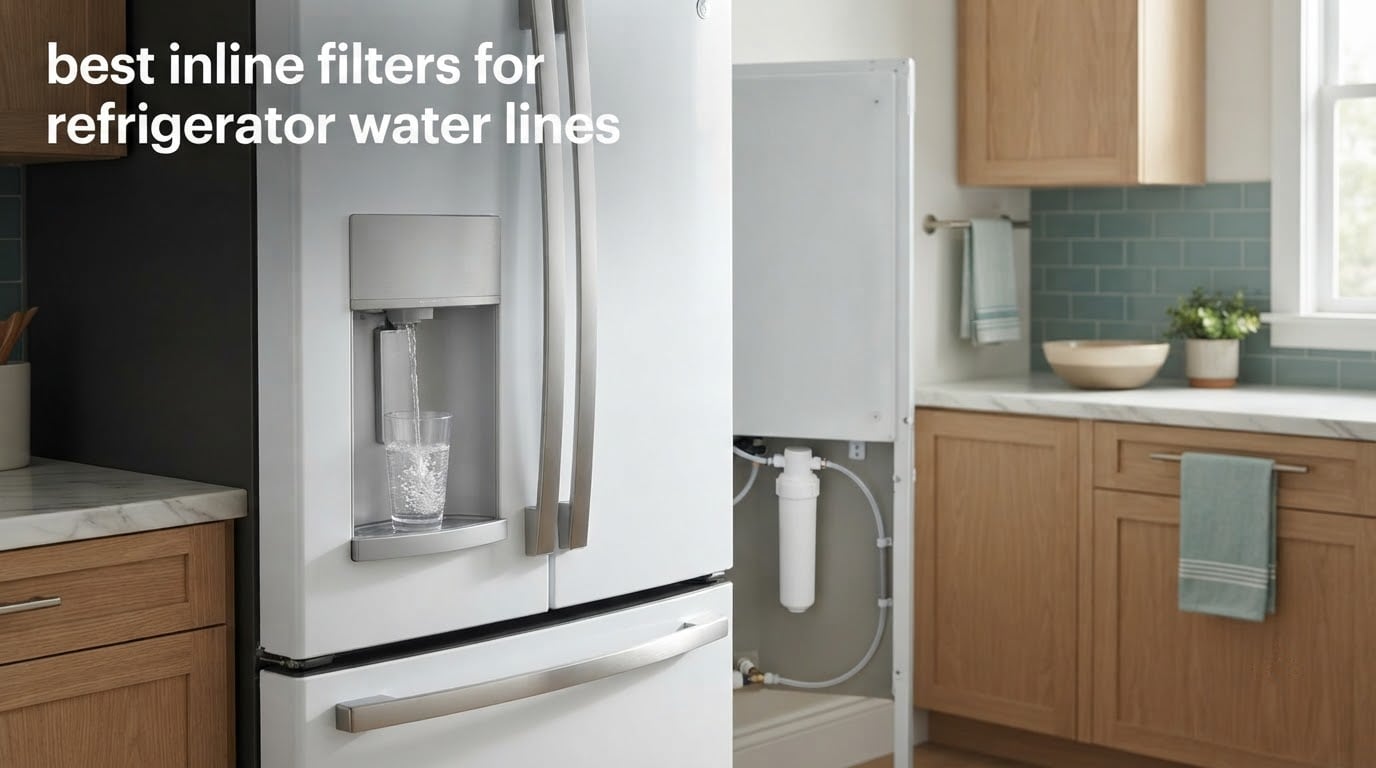
If your refrigerator water dispenser tastes like a swimming pool and your ice cubes have a faint metallic edge, the fix usually lives in the 1/4-inch supply line behind the fridge, not inside the appliance. The best inline filters for refrigerator water lines slot into that line between the shutoff valve and the fridge inlet, and they work on fridges that never had a factory filter housing in the first place.
We compared 10 of the most widely reviewed inline refrigerator filters on certification scope, service life, flow behaviour, fitting compatibility and clearance behind the appliance. The EcoPure EPINL30 came out ahead on the combination of a five-year rating, the largest review base on the list and tool-free installation, so it is our top pick again this year.
One expectation needs setting before the picks. An inline filter polishes what is already good municipal water: chlorine taste, odor, rust flecks and sediment. It will not lower total dissolved solids, it does not soften water, and a logo that says “NSF certified” without a standard number is worth very little. We name the standard number in every section below, because that is the single most useful thing on the box.
If you want the wider picture rather than just the fridge line, our best water filters roundup covers pitcher, under-sink and whole-house options in one place.
Top 3 Picks for Best Inline Refrigerator Water Filters (October 2026)

EcoPure EPINL30
- 5-year or 5000 gallon life
- NSF/ANSI 42 certified
- Compression and push-to-connect fittings included
- Universal fit

AQUA CREST INL
- 0.5 micron coconut carbon block
- 5-year or 5000 gallon life
- BPA-free and lead-free
- PE tubing and both fitting types included
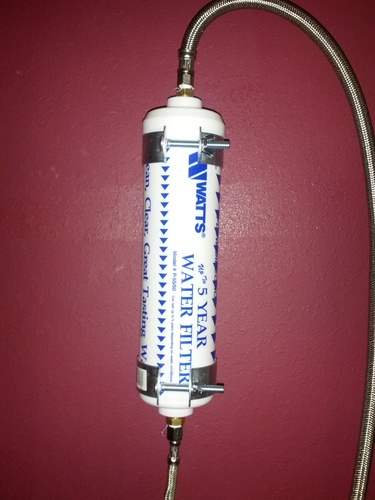
Watts Premier 20000 Gallon
- 20000 gallon capacity
- KDF media reduces chlorine and scale
- 1/4 inch brass connectors
- ANSI and NSF certified
Best Inline Filters for Refrigerator Water Lines in 2026
Every filter below is a genuine inline cartridge, which rules out pitcher filters and anything that needs a faucet hole. The certification column is the one to read first: NSF/ANSI 42 covers taste and odor, NSF/ANSI 53 covers named health contaminants such as lead, and NSF/ANSI 372 means the materials are lead-free, which is a different claim entirely.
| Product | Specifications | Action |
|---|---|---|
| EcoPure EPINL30 5-Year In-Line Filter |
|
Check Latest Price |
| AQUA CREST INL 5-Year Inline Filter |
|
Check Latest Price |
| Watts Premier 20000 Gallon Inline Filter |
|
Check Latest Price |
 Membrane Solutions T33 2-Pack Membrane Solutions T33 2-Pack |
|
Check Latest Price |
 LASCO 37-1821 Ice Maker Inline Filter LASCO 37-1821 Ice Maker Inline Filter |
|
Check Latest Price |
 Waterdrop INL Inline Filter Waterdrop INL Inline Filter |
|
Check Latest Price |
 Hydronix ICF-10Q 3-Pack Hydronix ICF-10Q 3-Pack |
|
Check Latest Price |
 PureWater Filters Inline Kit PureWater Filters Inline Kit |
|
Check Latest Price |
 Frizzlife MS99 Inline System Frizzlife MS99 Inline System |
|
Check Latest Price |
 GE GXRTDR Exterior Filter GE GXRTDR Exterior Filter |
|
Check Latest Price |
The table is a starting point, not a verdict. Two products on it accept push-to-connect fittings only and will not work on a compression line at all, and several of them are rated for six months of use, so the simplest option on the shelf is not always the one that costs the least over five years.
1. EcoPure EPINL30 – Best Overall Inline Refrigerator Filter
EcoPure EPINL30 5-Year In-Line Refrigerator Water Filter – Universal Fit for Most Fridges, Ice Makers, RVs & Boats – Reduces Chlorine Taste & Odor – Easy DIY Install with 1/4″ Fittings
5 year or 5000 gallon life
NSF/ANSI 42 certified
13.5 inch wide body
Includes both fitting types
Pros
- Five-year or 5000 gallon rating
- Universally fits Samsung
- GE
- LG
- Whirlpool and Frigidaire lines
- Compression and push-to-connect fittings in one box
- USA built
- Tool-free install
Cons
- Push-in fittings rather than threaded
- 3 inch diameter is wider than most inline bodies
- Real service life depends on local water quality
This is the filter we keep coming back to because it removes the two things that trip people up. The box contains both 1/4 inch compression fittings and push-to-connect fittings, so you do not need to know which style your line uses before you start, and the five-year or 5000 gallon rating means one install covers most households for years.
It is NSF/ANSI 42 certified, which is a taste-and-odor standard. That is exactly what most people are chasing when they complain about their ice, and it is not a lead reduction claim. Buyers on r/Appliances say the realistic benefit is chlorine taste and smell, which matches what the certification actually covers.
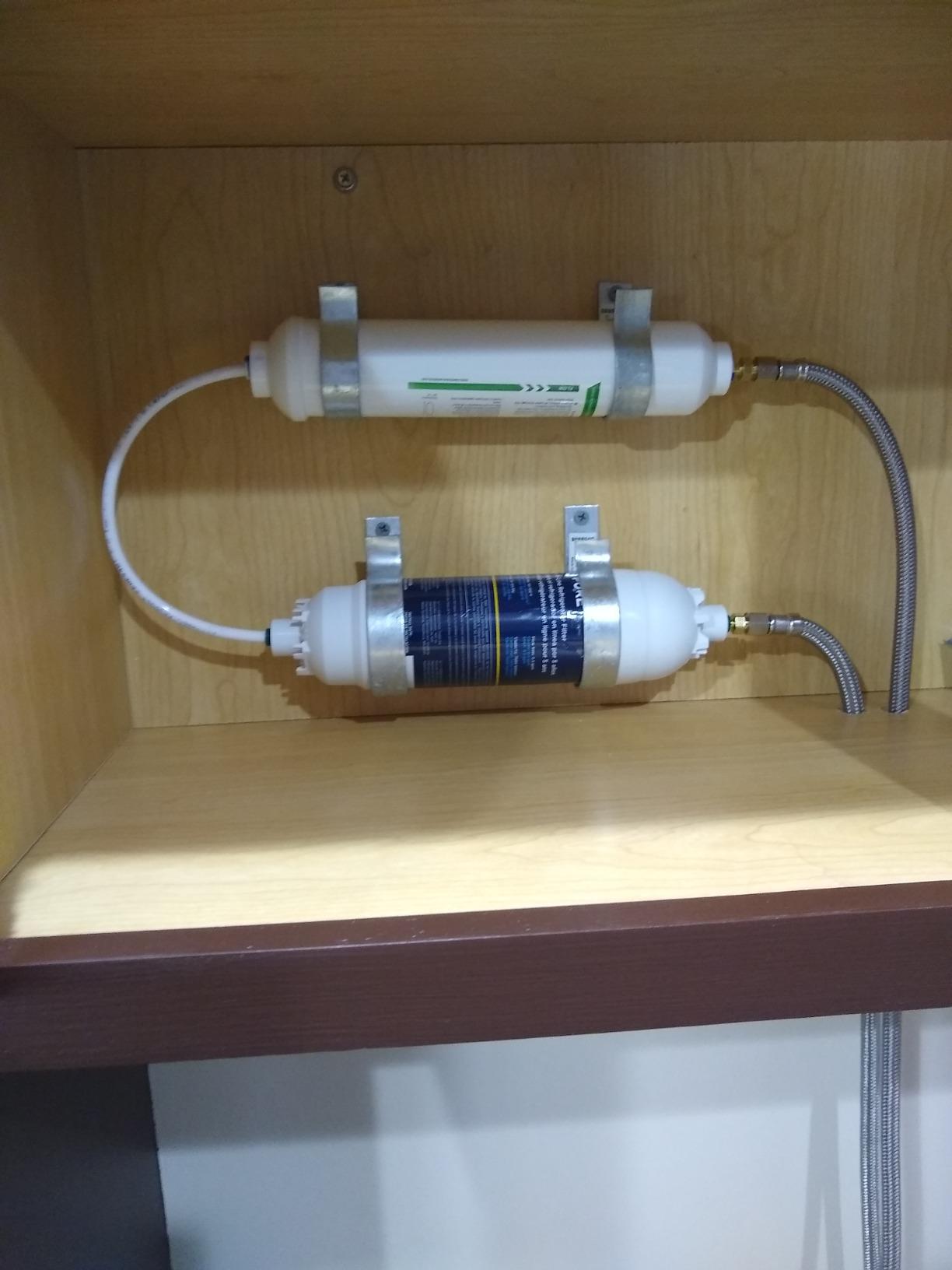
On a fridge with a Whirlpool, Samsung, GE, LG or Frigidaire line it simply adapts to what is already there, and it works on both copper and plastic tubing. One r/homeowners owner on well water reported running a second carbon stage on top of this one to get fridge water to a neutral taste, which is a reasonable stacking strategy.
Fit and finish are ordinary plastic, which is normal for this category and fine for a supply line that stays dry. The flow behaviour matters more than the material, and reviewers consistently report no noticeable drop at the dispenser or the ice maker fill cycle.
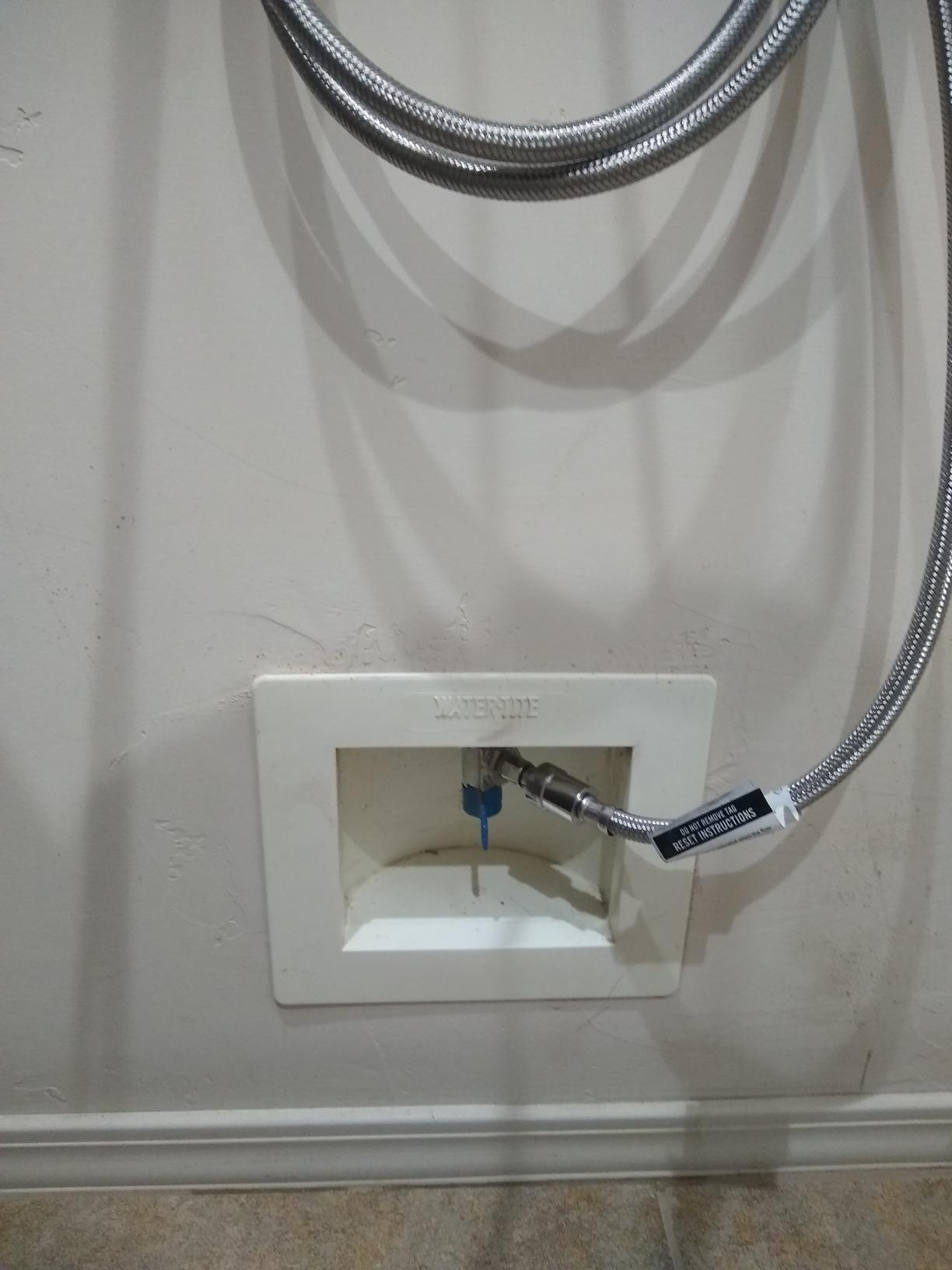
What to check before you buy the EPINL30
Measure the gap behind your fridge first. The body is 13.5 inches wide and 3 inches deep, which fits most spaces but is wider than the slim 2-inch inline bodies on this list. Slide-out fridge models leave very little slack in the line, so pull the unit out and look before you order.
Then check the line size. Nearly every refrigerator line is 1/4 inch, but a few older RV and boat installs use 3/8 inch, and this filter ships with 1/4 inch fittings only. If your tubing is not the standard diameter, the fittings in the box will not seal against it.
Who should skip this pick
Skip it if you have a documented lead or PFAS problem in your water. The certification here is 42 only, so a household chasing a health contaminant needs an inline filter certified to NSF/ANSI 53 instead, such as the Frizzlife MS99 later in this list.
Skip it too if your line already has threaded compression nuts and you want a permanent, no-tool connection. Push-to-connect fittings are convenient and serviceable, but a plumbed compression joint is the more traditional setup if you are comfortable with a wrench.
2. AQUA CREST INL – Best Value Inline Filter for Fridges
AQUA CREST INL 5 Years Inline Water Filter for Ice Maker and Refrigerator
0.5 micron coconut carbon block
5 year or 5000 gallon life
BPA-free and lead-free
Does not reduce TDS
Pros
- Five-year life at a low annual cost
- 0.5 micron coconut shell carbon block
- Includes PE tubing plus both fitting types
- BPA-free and lead-free materials
- Works with major refrigerator brands
Cons
- NSF/ANSI 42 scope only
- One report arrived without compression fittings
- Lifespan varies with water use and quality
The AQUA CREST INL is the pick for anyone who wants the same five-year service life as the top pick without paying a premium brand name for it. The cartridge is a 0.5 micron coconut shell activated carbon block, and the listing is explicit that it does not reduce total dissolved solids, which is an honest claim we wish more brands made.
What arrives in the box goes beyond the usual two fittings. You get a length of 1/4 inch PE tubing, a set of compression hex nuts, a sleeve and an insert, so you can rebuild either end of the connection if your existing tubing is cut back or brittle.
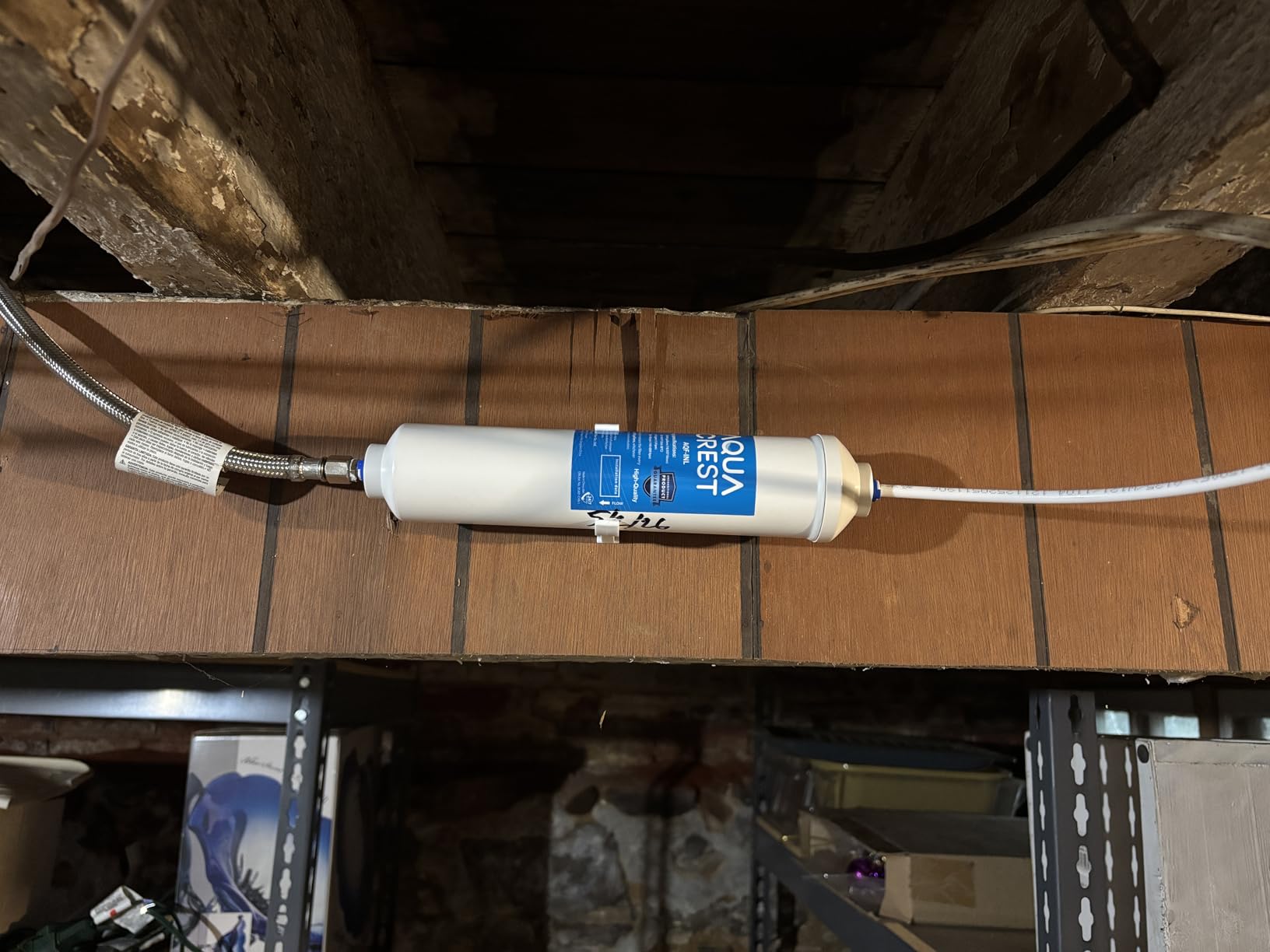
Reviews report a complete removal of chlorine taste and, in several cases, water that beats the factory cartridge that shipped with the fridge. That makes it a sensible upgrade for a refrigerator with a built-in housing you have simply stopped trusting.
One reviewer received a unit without its compression fittings, so check the parts against the list in the box before you start cutting tubing. It is an isolated report rather than a pattern, but five minutes of counting fittings saves a trip back to the hardware store.
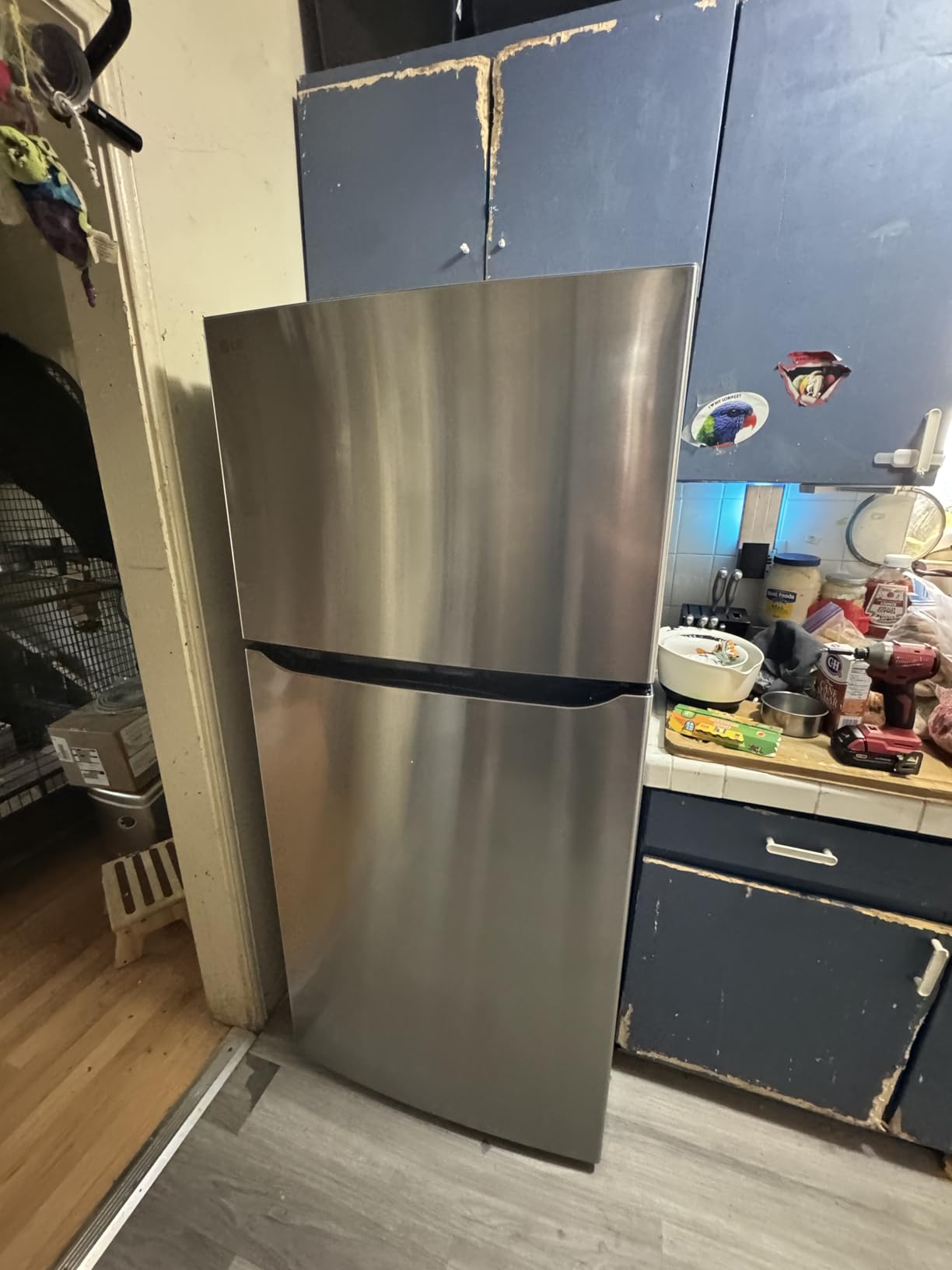
What the label will and will not tell you
The product is described as tested by a third-party laboratory against NSF/ANSI standards, and buyers who have checked the certifier database have found it listed for taste and odor reduction. Look for the standard number in the listing rather than a bare certification logo, because 42 and 53 are very different promises.
The body measures just over 10 inches tall and 3.4 inches across, so clearance is easier here than with the widest housings on this list. It still needs room for the tubing to bend without a sharp fold behind the fridge, which is where most slow-dispenser complaints start.
Who should skip this pick
Skip it if your main concern is dissolved minerals, hardness or a metallic taste coming from copper pipe rather than chlorine. No carbon block cartridge on this list addresses those, and a plastic flush line or a low-cost carbon pitcher will not either.
Skip it if you want a certified contaminant reduction claim to point an inspector at. The scope is aesthetic, and buyers who needed a lead reduction number moved to the certified 53 option further down.
3. Watts Premier 20000 Gallon – Best Inline Filter for Scale Protection
Watts Premier 20000 Gallon Inline Water Filter 1/4″ Brass Connectors
20000 gallon capacity
KDF media
1/4 inch brass connectors
Replace every 6 months
Pros
- Very high 20000 gallon capacity
- KDF media cuts chlorine
- odor and scale
- Brass connectors resist thread damage
- Works in fridges
- RVs
- coolers and fountains
- ANSI and NSF certified
Cons
- Six-month replacement interval
- Higher outlay than carbon-only cartridges
- 14 inch body may crowd tight spaces
Most inline refrigerator filters are carbon blocks that polish taste. The Watts Premier takes a different route with KDF media, a high-purity copper-zinc formulation that runs an oxidation-reduction process to strip chlorine and hydrogen sulfide while cutting scale buildup on the way through. In hard water territory that scale claim is the reason to buy it.
The 20000 gallon capacity is the biggest number in this roundup by a wide margin, and the housing is listed as ANSI and NSF certified. The catch is the replacement interval: the maker specifies every six months or 20000 gallons, whichever comes first, so the capacity only pays off if you actually use that much water through the fridge.
Brass 1/4 inch connectors are the physical highlight here. Brass threads and nuts are far less likely to cross-thread or crack than plastic when you are working in a dark cabinet with pliers, which is a real consideration behind a fridge.
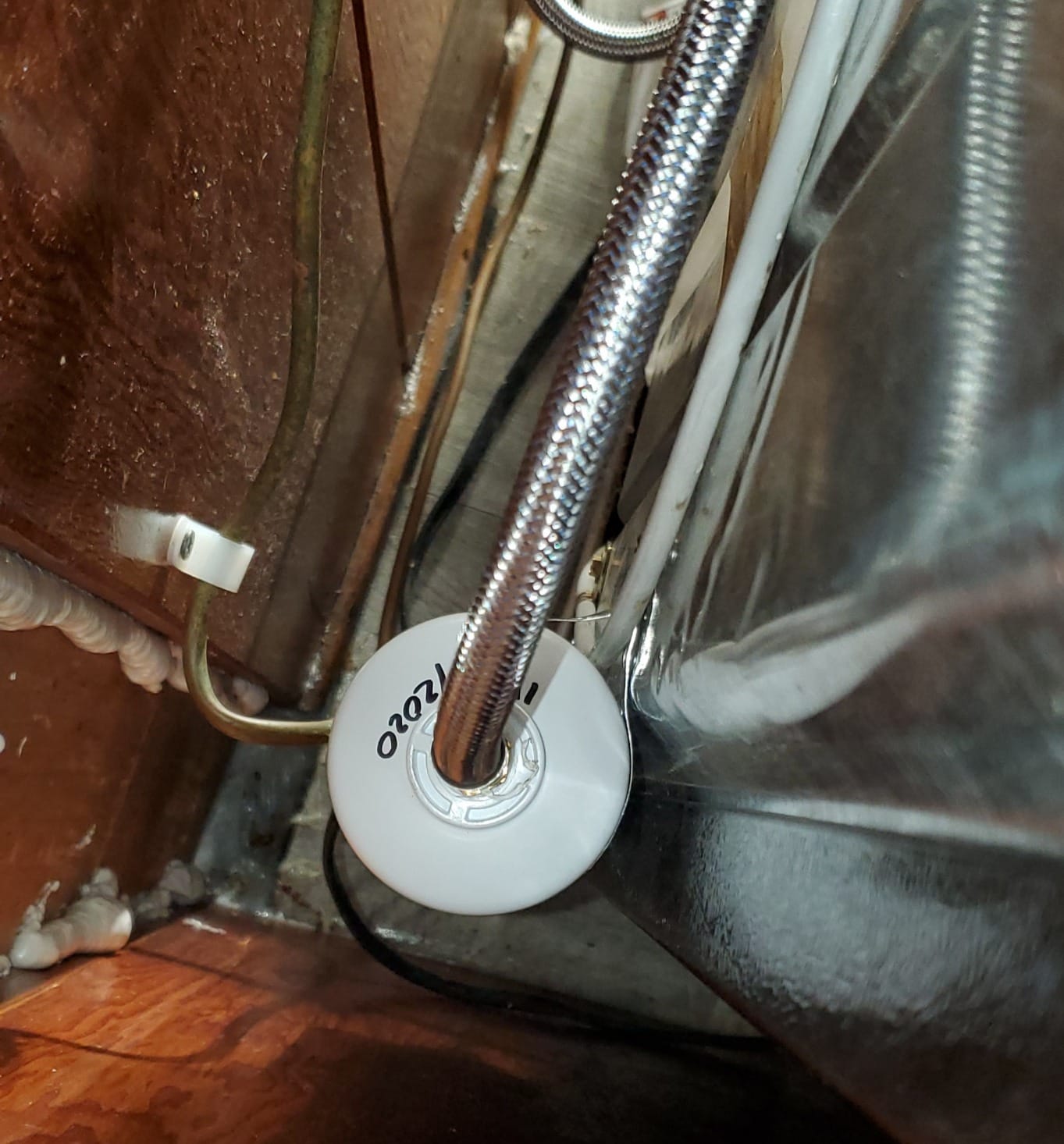
Buyers use it in places well beyond a kitchen, with r/RVLiving owners reporting comparable performance to other inline filters they have tried, minus the pitcher and second faucet. It also suits water coolers, fountains and coffee makers, so one cartridge can serve more than one appliance if your plumbing allows.
At 14 inches tall and 6 inches wide it is one of the larger bodies here. That is fine in an open cabinet or an RV bay, and it is the first thing to measure in a tight behind-the-fridge space.
Where KDF earns its place
Scale is the argument. If your ice maker has visible mineral crust, or your dispenser has gone slow over a couple of years, hardness is a stronger suspect than chlorine. KDF cartridges are built for that, and the scale reduction is the specific benefit a carbon block will not deliver.
Chlorine reduction comes along with it, so you do not lose taste and odor performance to make the scale tradeoff. Where it loses ground is the calendar: a six-month interval means you are handling the line twice a year instead of once every five years.
Who should skip this pick
Skip it if you have hard water but no scale symptoms, because a 20000 gallon cartridge rated for six months is a lot of media for a problem you do not have. The reverse also holds: if you are on soft water and happy with the taste, this is more media than you need.
Skip it if clearance behind the appliance is tight. There are slimmer inline bodies on this list that fit a 2 inch gap, and a cramped install that forces a sharp tubing bend is the fastest route to a leak.
4. Membrane Solutions T33 – Best Inline Filter for Post-RO Polish and Two Filter Points
Membrane Solutions T33 Inline Post Carbon Water Filter 1/4″ Quick-Connect
2 pack of 10 inch carbon cartridges
Quick-connect JG fittings only
1800-2000 gallon life
NSF/ANSI 42 certified
Pros
- Two cartridges in one pack
- NSF/ANSI 42 coconut shell carbon
- Standard 10 inch by 2 inch size
- Fits a wide range of RO and fridge setups
Cons
- Quick-connect fittings only
- no threaded option
- 1800-2000 gallon or 12 month life
- Requires flushing 3-5 gallons first
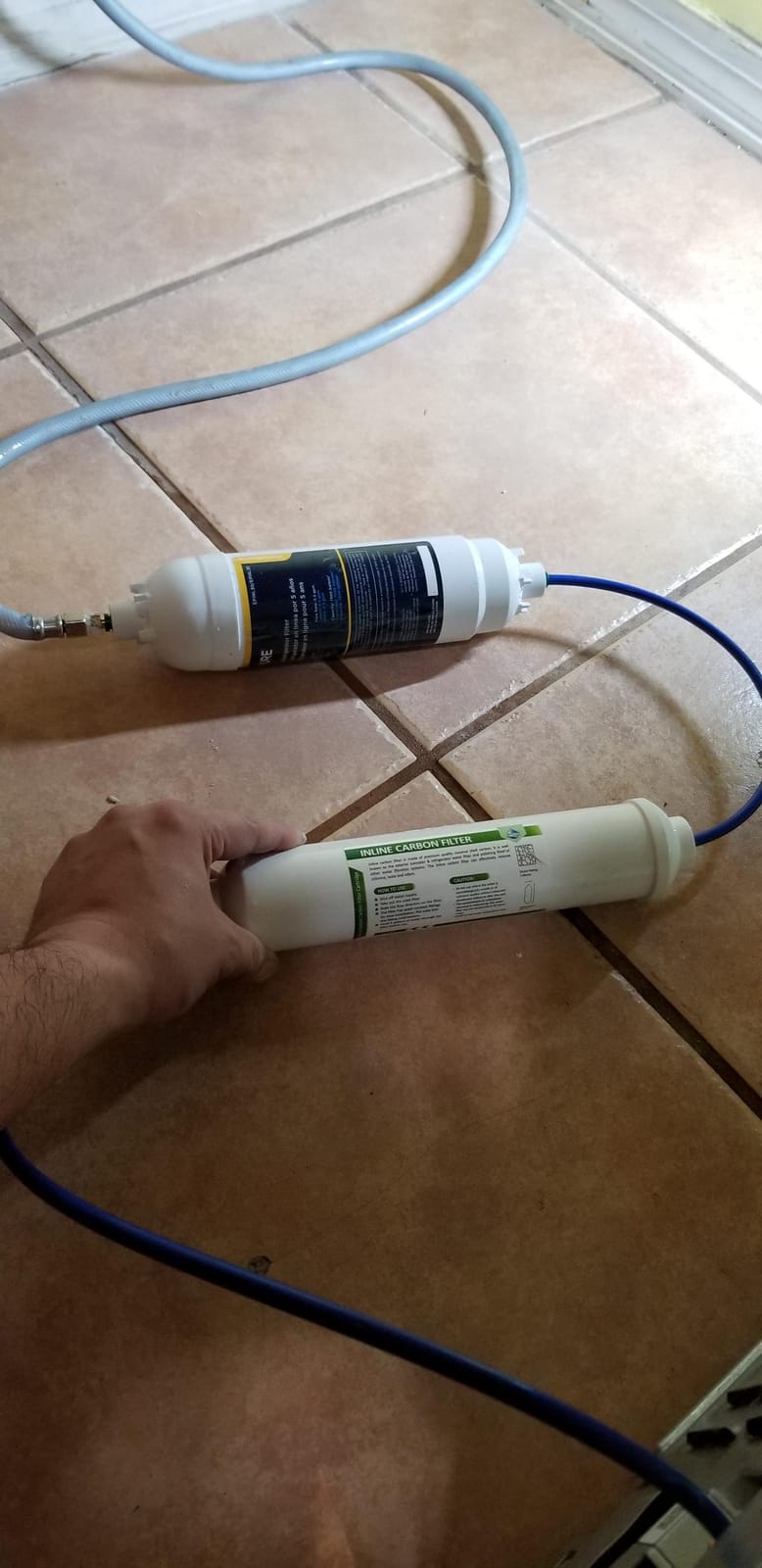
The T33 is sold as a two-pack of the standard 10 inch inline carbon cartridge, and that dual quantity is the reason it earns a place. If you have a reverse osmosis system that wants polishing, or a fridge and a coffee maker sharing a supply run, you can cover two filter points from one order instead of hunting for a second unit later.
Fitment is the whole story here, and it is narrow. These are 1/4 inch quick-connect JG style push fittings on both ends, which means they will not attach to a threaded compression line no matter how you try. Check your existing connection before anything else.
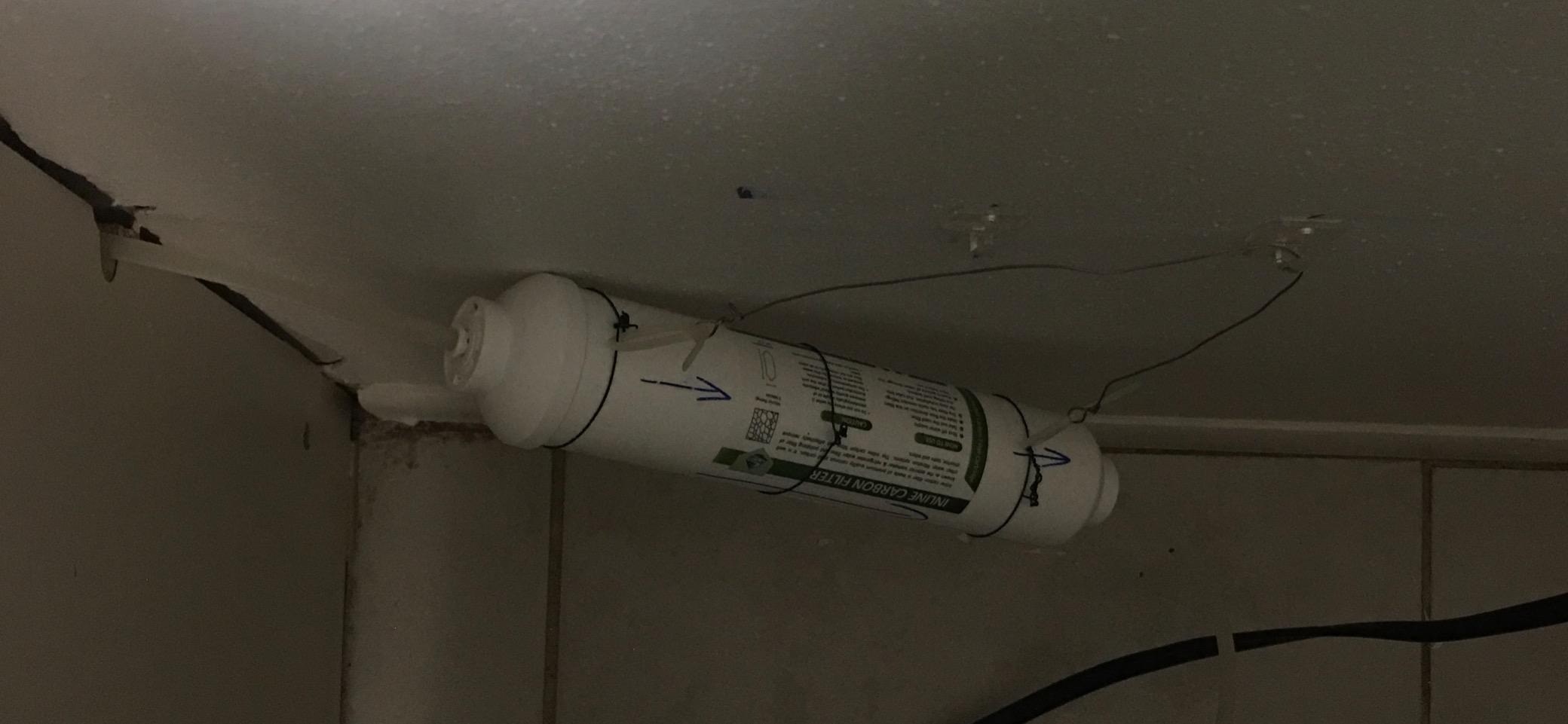
The compatibility list is genuinely wide once you are on push fittings: SimPure T1, GE GXRTDR, Culligan IC-100A, Omnipure K2533JJ, Samsung DA29-10105J and Whirlpool WHKF-IMTO all appear in the spec data. That makes it a natural second-stage filter behind a fridge that already has a factory carbon cartridge.
Service life is listed as up to 12 months as a post-RO filter or 1800 to 2000 gallons used independently. It is a fraction of the five-year cartridges elsewhere in this list, so treat it as a scheduled consumable rather than a set-and-forget install.
When a two-pack actually pays off
Two filters in series is the arrangement r/Appliances owners describe most often: a sediment stage first, then a carbon stage for taste. Doing it that way keeps the finer carbon media from catching the grit that chokes it, and this cartridge is a natural second half of that pair.
If your line is already push-connect, the T33 drops in with no tools at all. If you would need to add adapters to reach a compression line, the hardware cost erases the value of the pack and one of the kits later in this list is the better buy.
Who should skip this pick
Skip it if your tubing is threaded. There is no adapter in the box and no way to make a JG push fitting grip a compression nut, so this is the single most common way people end up with a filter they cannot install.
Skip it as a primary five-year solution. At roughly 1800 to 2000 gallons you would be swapping this several times over the life of a long-lived filter, and the carbon-only media does not address sediment the way a dedicated first stage does.
5. LASCO 37-1821 – Best Simple Inline Filter for Ice Makers
LASCO 37-1821 Ice Maker Inline Filter with 1/4-Inch Compression Connection, 2-Inch x 10-Inch , White
1/4 inch brass compression
1500 gallon or 6 month life
2 inch by 10 inch body
NSF certified
Pros
- Removes chlorine taste from ice effectively
- Brass compression fittings included
- Works horizontally or vertically
- Simple to install with basic tools
Cons
- 1500 gallon or 6 month life
- Needs pliers or channel locks
- Old brittle line may need replacing
- No mounting bracket included
The LASCO is a plumber’s take on the category. It uses 1/4 inch compression fittings, brass rather than plastic, which makes it a natural companion to a copper supply line and gives you a mechanical joint you can check and tighten whenever you pull the fridge out.
At 1500 gallons or six months it is the shortest-rated filter among the serious picks here, and that is a deliberate trade for a simple, sturdy body with no pre-flush ritual. The filter measures 2 inches across by 10 inches long, and it can be mounted either horizontally or vertically depending on where your space is.
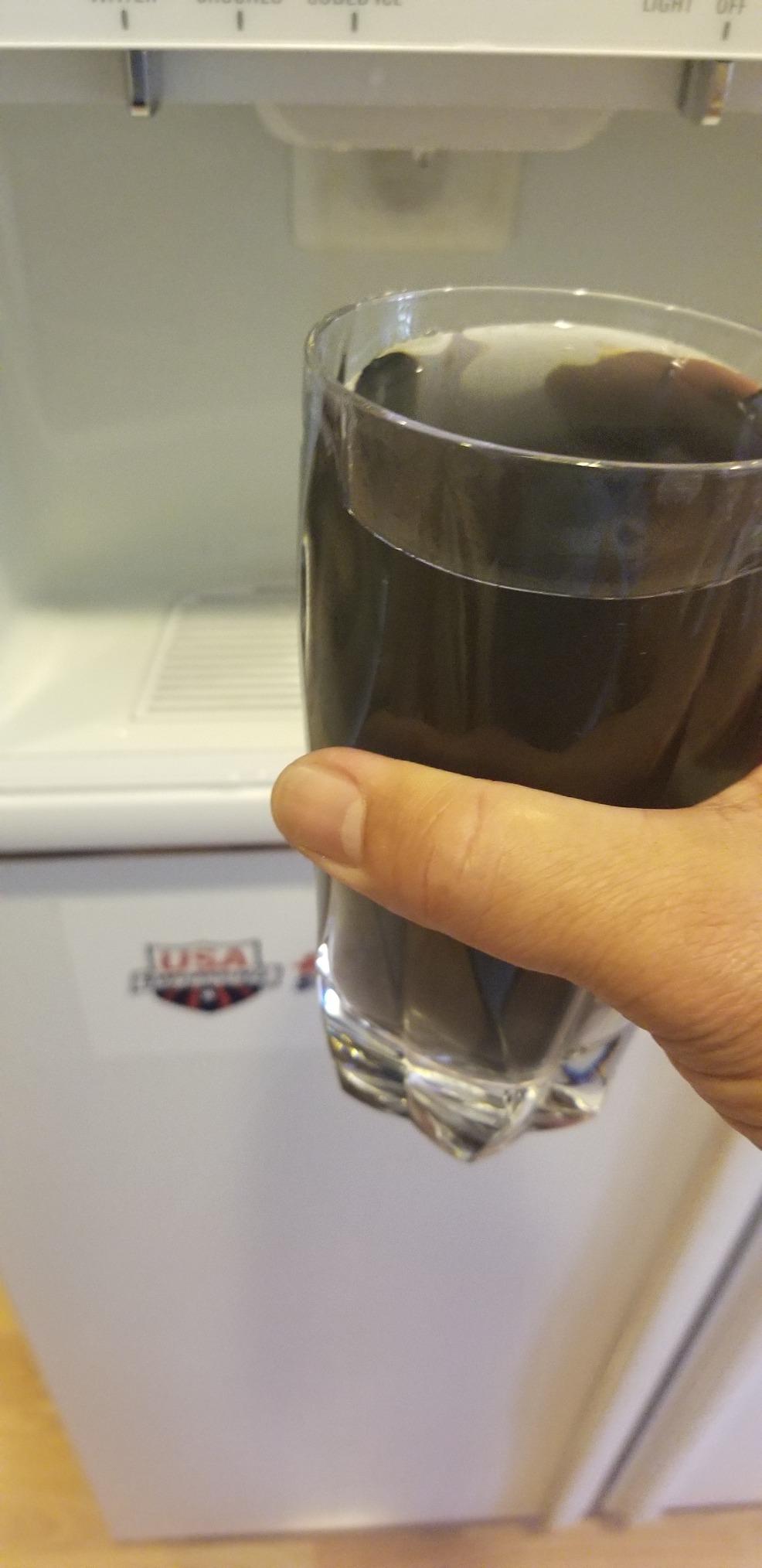
Users report clear, good-tasting ice and a visible improvement in the flavour of everything the ice maker touches. Reviews also note that properly installed compression joints do not leak, which is the opposite of the drip-a-day-later complaints that push-connect setups generate.
Two practical notes from buyer feedback. You need pliers or channel locks to tighten the nuts, and if the existing supply line is old or stiff you may want to replace the section you are cutting into rather than reuse it.
Compression versus push-to-connect
Compression fittings compress a ferrule onto the tubing and are the standard on copper and most braided lines. They take a wrench to assemble, and once assembled they do not creep. That is why plumbers reach for this style and why it is the better choice in a cabinet you rarely open.
Push-to-connect fittings are faster and serviceable without tools, and they are what most of the five-year filters on this list ship with. Neither is wrong. The mismatch is wrong, and a compression-only cartridge like this one on a push-connect line will simply not seal.
Who should skip this pick
Skip it if you dislike opening a compression joint twice a year. Two replacements over five years is more service events than any of the long-life carbon cartridges here, and for most people that is the only real argument against it.
Skip it if your line is push-connect plastic. There are no quick-connect fittings in the box, so you would be buying adapters that cost more than the filter body is worth.
6. Waterdrop INL – Best Inline Filter Kit for First-Time Installers
Waterdrop INL Inline Water Filter for Refrigerator and Ice Maker
NSF 42 and NSF 372 certified
0.5 micron coconut carbon
1 year lifespan
7/16 inch adapter included
Pros
- Dual NSF 42 and 372 certification
- Most complete kit with bracket and zip ties
- Several fitting sizes included
- Good flow at the dispenser
Cons
- One year lifespan
- Notably louder water flow
- Must flush for 5 minutes before use
- Only one length of PE tubing included
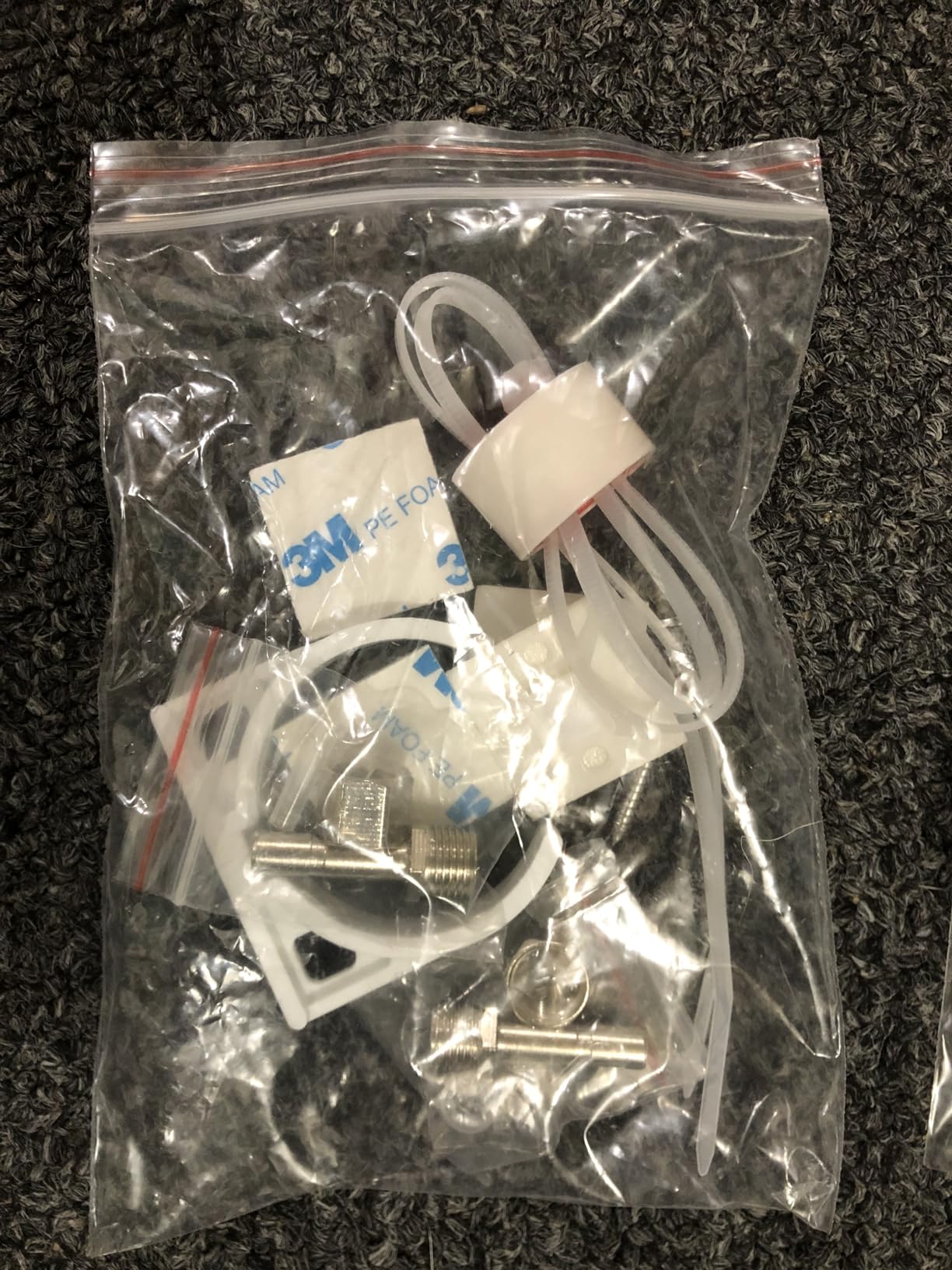
The Waterdrop INL is the pick if this is your first time cutting a fridge supply line, because the box anticipates every part of the job. You get compression and push-to-connect fittings, a 7/16 inch adapter for the slightly larger tubing some manufacturers use, a mounting bracket and zip ties, and the PE tubing to rebuild the run.
It carries two certifications that matter. NSF/ANSI 42 covers chlorine, taste and odor, with the listing citing a 97.6 percent reduction figure, and NSF/ANSI 372 confirms lead-free materials. That second one is a materials standard, not a lead reduction claim, and the distinction matters.
The 0.5 micron coconut shell carbon block is the same media format as the five-year cartridges, and users report complete elimination of chlorine taste. It replaces a long list of OEM cartridges including GE GXRTDR, Culligan IC-100A, Omnipure K2533JJ, Samsung DA29-10105J and Whirlpool WHKF-IMTO, which makes it a one-size answer to a very common question.
Buyers put installation time at about fifteen minutes even as beginners, and the flow at the dispenser stays where it was. The one-year lifespan is the trade for that low annual cost, and it is the reason this sits at number six rather than higher.
Read the flush requirement before you connect
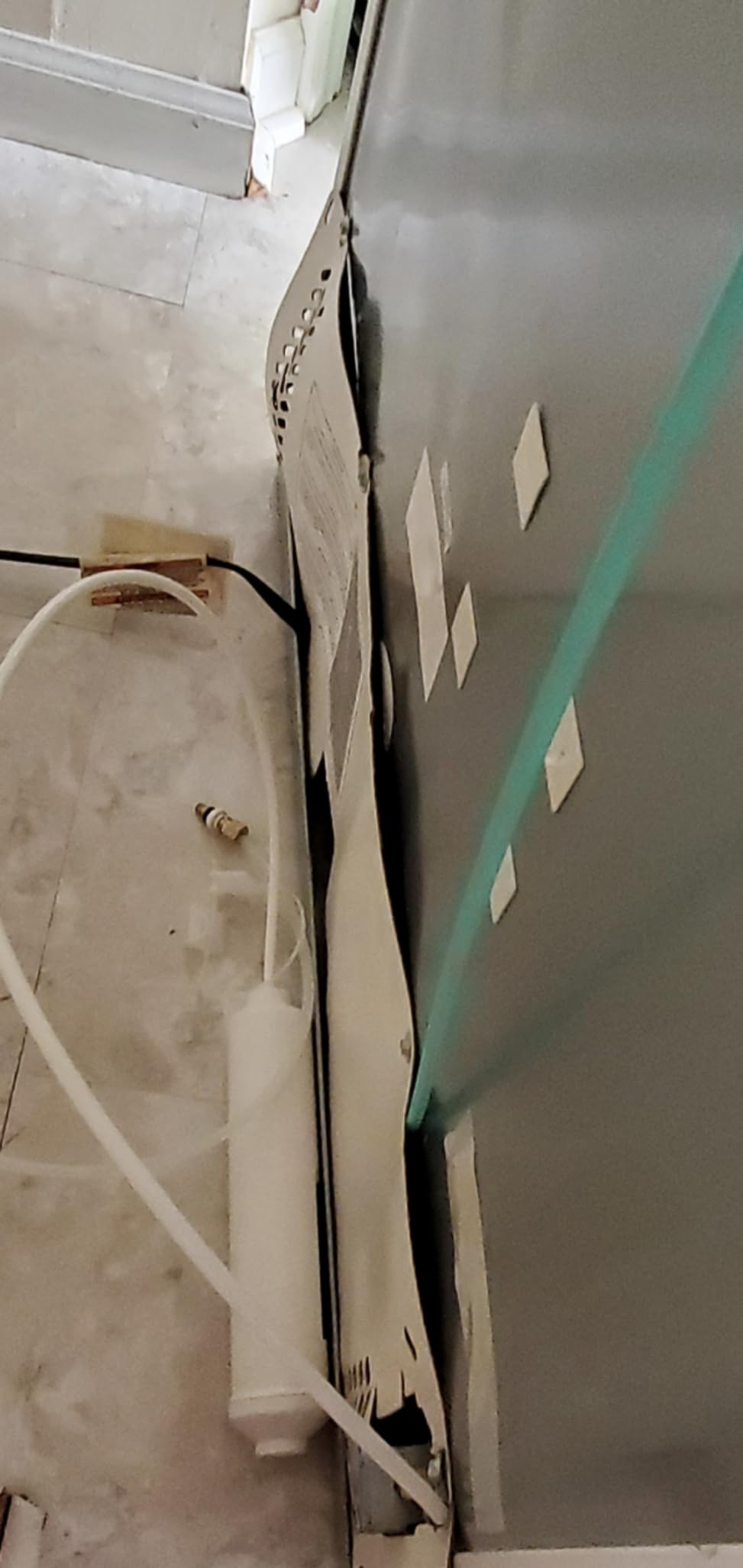
This cartridge needs a five-minute flush before you hook it to an ice maker, and that step is not optional. Carbon fines come off a new block during the first run, and pushing them straight into the ice maker fill valve is how people end up with a machine that will not fill.
Also budget for the noise. Reviews specifically mention a slightly louder water flow, which is a normal consequence of a tighter 0.5 micron block and is a fair trade for the taste improvement, but it can surprise you in a quiet kitchen at night.
Who should skip this pick
Skip it if you want to install once and forget. One year is the shortest interval among the multi-brand picks here, and a household that plans to move or simply wants minimal maintenance will get more from a five-year body.
Skip it if you need certified contaminant reduction. Both certification numbers on this cartridge are about taste and material safety, neither one is a lead or PFAS reduction claim.
7. Hydronix ICF-10Q 3-Pack – Best Value for Multiple Filter Points
Hydronix ICF-10Q/3 Inline Post Activated Carbon Water Filter Replacement Cartridge with 1/4-Inch Quick Connect for Refrigerator, Ice Maker, RO Reverse Osmosis System, 2000 Gallons (3 Pack)
3 pack of inline cartridges
2000 gallon or 12 month life
Quick connect both ends
NSF certified coconut GAC
Pros
- Three cartridges in one order
- Lowest per-filter outlay in the roundup
- NSF certified coconut granulated carbon
- Quick connect on both ends
- BPA-free
Cons
- Quick-connect fittings only
- Granulated carbon rather than a solid block
- 2000 gallon or 12 month life
- Box dimensions are bulky
Per-filter cost is the argument for this three-pack, and it wins that argument outright. If you run two filter points, or you simply do not want to shop again in a year, the arithmetic works better here than on any single unit in this roundup, and the cartridges carry an NSF certification for food-grade coconut carbon.
It is granular activated carbon rather than a solid carbon block. GAC spreads a large surface area through loose beads, which makes it effective for taste and odor, and buyers with very fine sediment or colloids sometimes find a block cartridge more capable of catching it.
Both ends are 1/4 inch quick-connect, which keeps the install tool-free and reversible. Compatibility covers Samsung, GE, LG, Whirlpool and Frigidaire, and the listing also names specific LG and Whirlpool models it is tested against, which is unusual detail for a cartridge of this type.
Service life is 12 months or about 2000 gallons, with a recommendation to replace every 6 to 12 months for maximum filtering. High iodine adsorption is the named capability, and BPA-free materials are listed.
Granulated carbon versus carbon block
Granulated carbon flows more easily and tolerates a wider flow range, which is friendly to an ice maker that has to fill on a fixed cycle. Carbon block gives a finer polish and a tighter micron barrier, but restricts flow slightly more, and that restriction is what causes fill-cycle complaints on some models.
Either media type only addresses what is already dissolved or suspended in the water. Neither softens, neither lowers TDS, and neither touches lead or PFAS without a matching NSF/ANSI 53 certification on the specific cartridge.
Who should skip this pick
Skip it if you have a threaded compression line. Quick-connect fittings only, exactly like the T33, so the same mismatch rule applies and there is no adapter in the box.
Skip it if you have very fine sediment to catch, or if you want one cartridge to cover five years. Twelve months is the ceiling here, and loose carbon media is the softer choice for very fine particulate.
8. PureWater Filters Inline Kit – Best Complete Installation Kit
PureWater Filters Inline Water Filter Kit for Refrigerators and Ice Makers
NSF/ANSI 42 Class I certified
1500 gallon or 1 year life
15 ft line and shutoff valve
Lifetime warranty on parts
Pros
- Everything needed in one box
- Includes 15 ft of NSF certified water line
- Shutoff valve makes future changes easy
- Lifetime warranty on kit parts
- Strong manufacturer support
Cons
- More to buy upfront than a bare cartridge
- Plastic fittings can cross-thread
- 15 ft of line may not reach a distant install
- Filter rated 1500 gallons
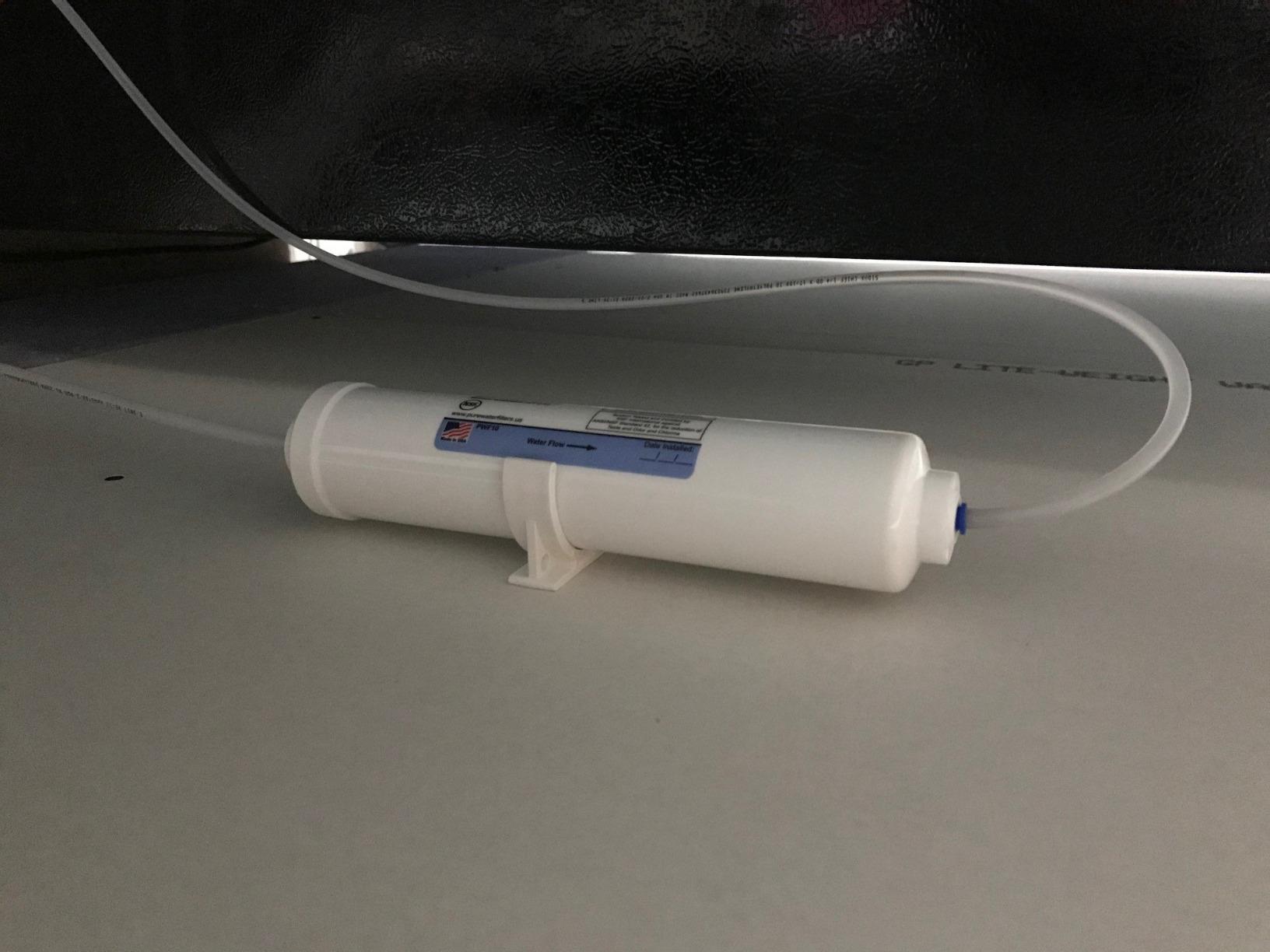
The PureWater kit is sold as a complete install rather than a bare cartridge. You get the filter, 15 feet of 1/4 inch NSF certified water line, a 1/4 inch shutoff valve, two quick-connect adapters and a mounting bracket with a screw, which removes every reason to make a second trip to a hardware store.
The shutoff valve is the piece most people skip and most people need. Without it, changing a filter means shutting off the whole house supply valve behind the fridge, which is awkward and easy to forget. This kit gives you an isolation valve at the filter itself.
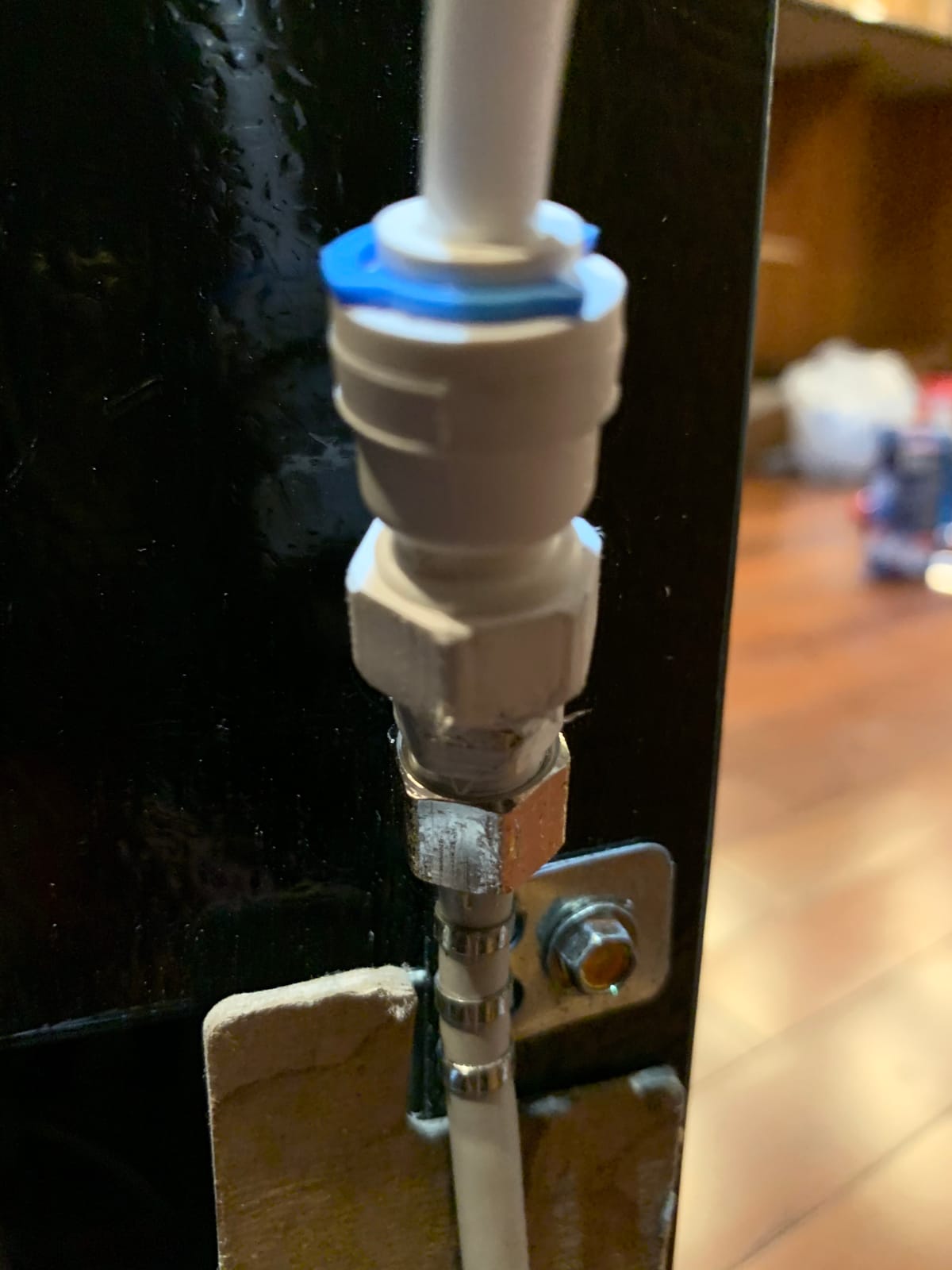
Certification is NSF/ANSI 42 Class I for taste, odor and chlorine, and the parts carry a lifetime warranty from the manufacturer. Buyers single out the customer support as a genuine strength, which matters for a kit where several unfamiliar parts are involved.
Filter life is 1500 gallons or one year, and a few owners on poor water report that this is less effective than a premium block cartridge. The housing itself is polypropylene, and the body is a slim 2 inches by 10 inches, which is one of the friendlier fits behind a tight appliance.
What the lifetime warranty actually covers
The warranty covers kit parts, not the filter cartridge. The housing, valve, bracket and adapters are what the manufacturer stands behind over the long term, and the carbon element is a consumable with a 1500 gallon rating like any other.
That distinction is worth reading carefully on any kit listing, because “lifetime” on a water filter headline can mean either the hardware or the media. On this one it is the hardware, and the cartridge still runs on its own schedule.
Who should skip this pick
Skip it if your existing line is in good shape. If you already have sound tubing and working connections, 15 feet of new line and a shutoff valve are parts you will not use, and the kit costs more than the cartridge alone.
Skip it if local code requires copper rather than plastic supply line. A few jurisdictions restrict plastic tubing for potable water, and in those places the included PE line is not usable for the final connection.
9. Frizzlife MS99 – Best Inline Filter Certified for Lead Reduction
Frizzlife Inline Water Filter System for Fridge, Ice Maker, Under Sink, Certified 0.5 Micron Reduces Chlorine, Lead, Long Lasting, Compression Brass Fittings Fits for Copper Tubing, MS99
IAPMO certified to NSF 42 and 53
1600 gallon or 2 year cartridge
1.4 gpm flow
Brass compression head
Pros
- One of few inline fridge filters certified to NSF/ANSI 53
- Certified lead reduction rather than a vague claim
- Two year cartridge with replaceable inner core
- Auto shut-off for tool-free changes
- Fast 1.4 gpm flow
Cons
- Premium outlay on the list
- 5 by 5 by 13.5 inch body needs clearance
- Filter change is awkward with water on
- Only one 90 degree brass fitting included
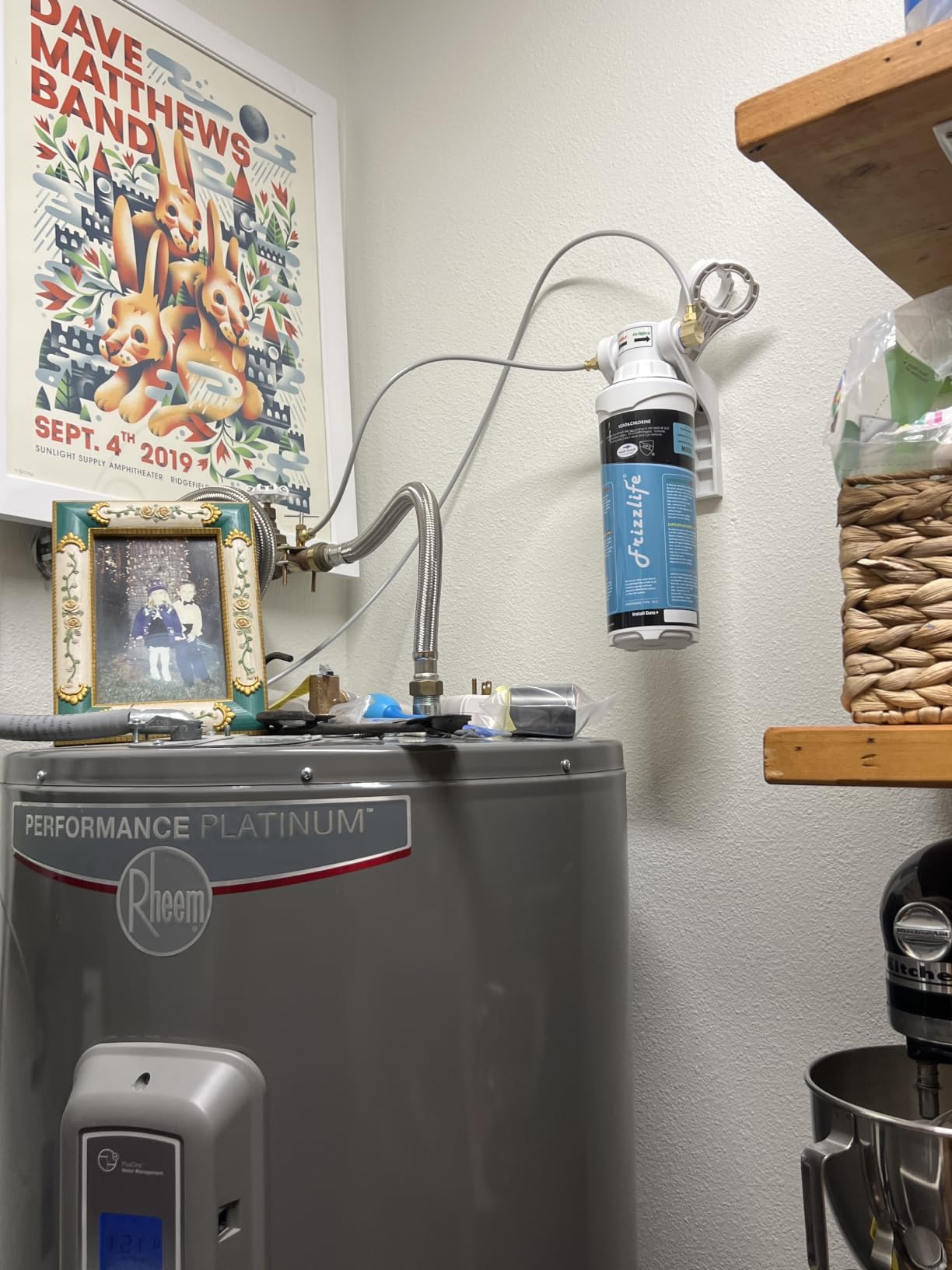
This is the only pick in the roundup that carries a real lead reduction certification. It is IAPMO R&T certified against both NSF/ANSI 42 and NSF/ANSI 53, which means the specific contaminant claims are verified rather than implied, and that distinction is the entire reason it is on this list.
The housing is built around a replaceable core rather than a throwaway element. Only the inner cartridge changes at 1600 gallons or two years, and the auto shut-off design lets the head pop off for a swap without reaching for the house shutoff valve, which is the feature that makes a two-year interval workable.
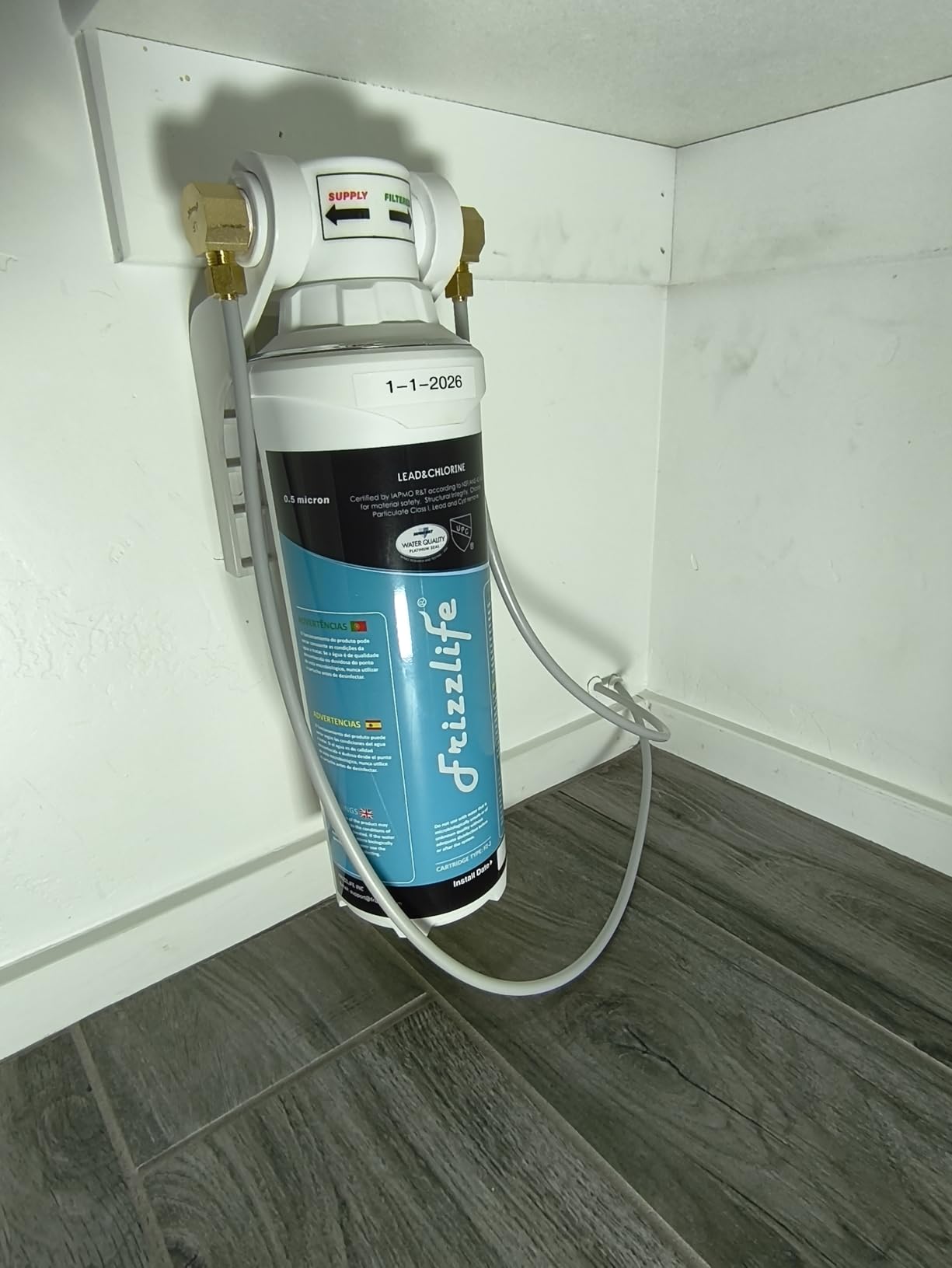
Flow is rated at 1.4 gpm, high for a certified inline unit, and the compression head is brass and lead-free so it fits PEX or copper. Reviewers consistently note the build quality and report that it outperforms the OEM cartridges they were replacing.
It is also the most flexible on placement. Buyers install it under a sink, behind the fridge or inside a cabinet, which matters if you want certified filtration but do not have room on the fridge line itself.
When NSF/ANSI 53 is the right standard to pay for
Reach for a 53 certified cartridge when a contaminant claim matters more than taste does. That means a documented lead result in your water, a PFAS concern you have actually verified, or an occupant with a specific medical need. If none of those apply, 42 buys the same result for less outlay.
Check the certifier listing rather than trusting the box. Search the IAPMO or NSF directory for the model number and confirm which contaminants the certificate names, because a broad phrase like heavy metal reduction on a product page is not the same as a listed reduction claim.
Who should skip this pick
Skip it if clearance is the problem. At 5 by 5 by 13.5 inches it is among the largest bodies here and needs roughly 6 inches of clearance, which rules out a lot of tight behind-fridge installs on slide-out models.
Skip it if your water is municipal with no documented contaminant issue. You would be paying a premium for a certification you have no reason to need, and a five-year 42 cartridge would serve the same result.
10. GE GXRTDR – Best Budget Inline Filter for GE Refrigerators
GE GXRTDR Exterior Refrigerator/Icemaker Filtration System, White
WQA certified to CSA B483.1
6 month service life
2 by 2 by 9.8 inch body
Chlorine taste and odor
Pros
- Very low outlay for a first install
- Compact body fits tight spaces
- GE part number fit for many GE models
- Attaches directly to the existing water line
Cons
- Six month service life
- Works only on select GE models
- No fittings or tubing included
- Not a universal fit
The GE GXRTDR is the simplest way to put a filter on a GE refrigerator line, and it carries the highest average rating in this roundup. Certification is WQA to CSA B483.1, a drinking water system standard, and the cartridge reduces chlorine taste, odor and sediment for a 2 inch by 9.8 inch body that is one of the smallest here.
It attaches directly to the existing refrigerator water line with no fittings or tubing supplied, which assumes your line already terminates in the right push-connect style. Confirm the connection before ordering, because nothing in the box will help you if the line is threaded.
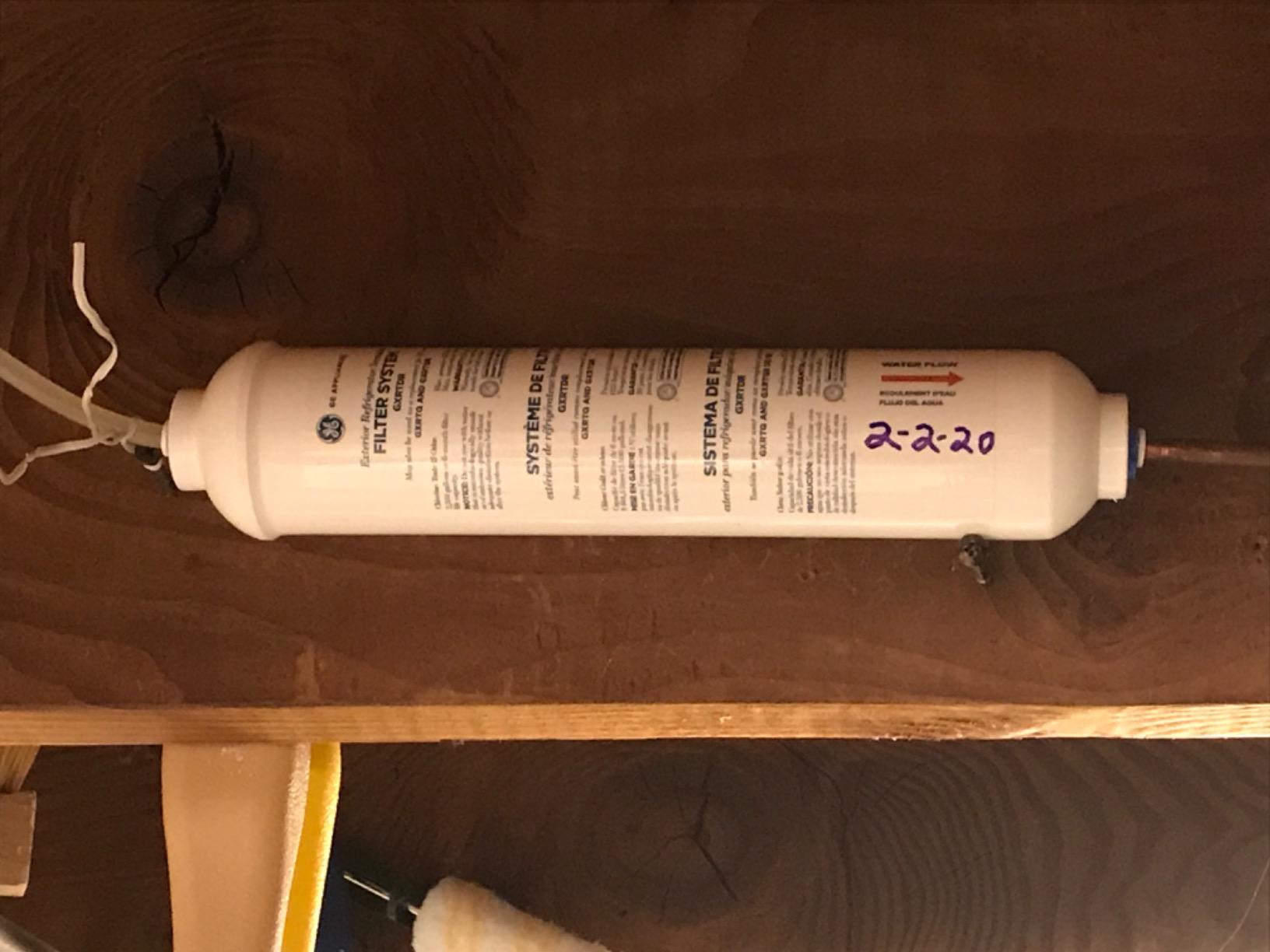
Compatibility is the constraint that decides this pick. The cartridge is listed for select GE side-by-side and top-freezer models and exists to serve fridges without built-in filtration, and the GXRTLL variant covers the other end of the range. It is not a universal inline filter despite the simple order.
The trade is the six-month life. Multiply that over five years and you are changing the cartridge ten times, which is the single strongest argument against a short-interval filter no matter how good the sticker rating looks.
Matching an OEM-style cartridge to your line
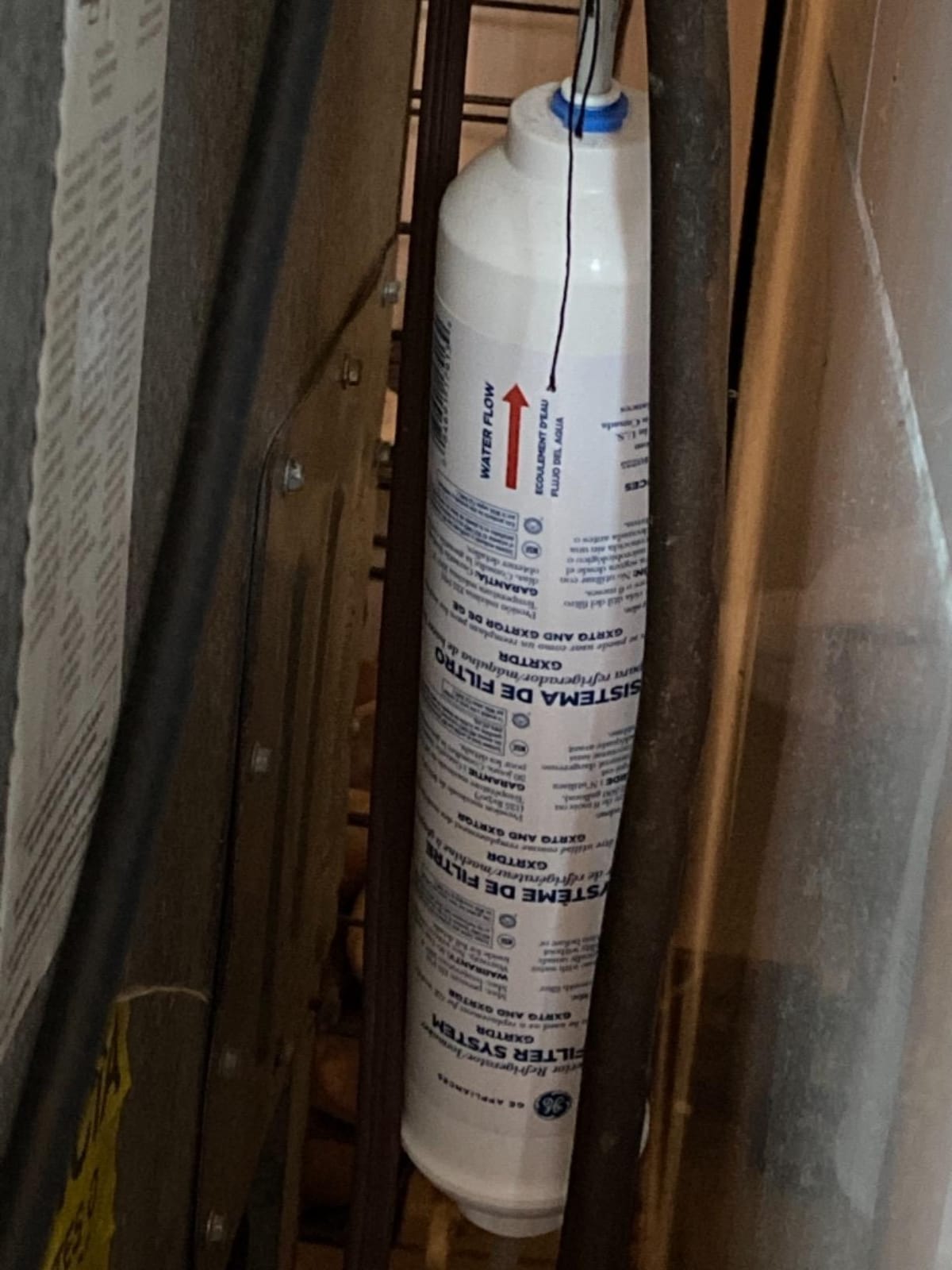
People searching for a Whirlpool or Samsung inline filter usually want the same part number the fridge was built with, because the housing and connection already match. GE GXRTDR fills that role for GE units, and the spec data lists OEM numbers it can stand in for across several brands.
If you are not sure what your fridge uses, pull the old cartridge out and read the number printed on its housing before you buy. Ten seconds of reading beats an order that arrives with the wrong connection.
Who should skip this pick
Skip it if you do not own a compatible GE model. This is the least universal filter in the roundup, and a genuinely universal 42 certified cartridge will fit more refrigerators than this one does.
Skip it for any long-term ownership plan. Two changes a year adds up quickly in both money and effort, and the same budget spent on a five-year cartridge is usually the better trade over any realistic ownership period.
NSF/ANSI Standards in Plain English
Most confusion in this category comes from four standard numbers being treated as interchangeable. They are not. Read the number, not the logo, and check it in the certifier directory when the claim matters.
NSF/ANSI 42 is the aesthetic standard. It covers chlorine taste and odor, and in some certified products particulate reduction claims as well. It is what most inline fridge filters on this list carry, and it is the right standard when your complaint is taste.
NSF/ANSI 53 is the health-related standard. It covers named contaminants, and a certified product only reduces the contaminants actually listed on its certificate. Lead is the most common one. A 53 claim for lead does not automatically mean a claim for PFAS or fluoride.
NSF/ANSI 372 covers lead-free materials. This is the most misunderstood label in the category. It means the plastic and metal parts do not leach lead, which is a materials safety standard, and it is not a lead reduction claim about the water coming out of the other end. One pick on this list is certified to 372 and 42 but not to 53, and that is a perfectly normal combination.
None of these standards means total dissolved solids reduction. TDS is dissolved mineral content, and no carbon cartridge on this list changes it. Our under-sink water filter guide covers the filtration types that do address dissolved contaminants if that is your situation.
How to Choose an Inline Fridge Filter
Measure the tubing first. Almost every refrigerator line is 1/4 inch, and 1/4 inch OD is what most fittings expect. A few RV, boat and older appliance installs use 3/8 inch. Measure before you order, because a filter that cannot seal onto your line is the most common return reason in this category.
Identify the connection style. Push-to-connect, or JG, fittings slide on and grip with a collet. Compression fittings use a nut and ferrule and need a wrench. Both are legitimate, and they are not interchangeable. Some kits include both, which is why they are the safe choice when you cannot tell.
Match the water source. Municipal water with a chlorine complaint needs a carbon block, which is most of this list. Well water needs a sediment stage ahead of the carbon, and that is the series arrangement r/Appliances owners describe. Hard water with scale in the ice maker points to a KDF or polyphosphate-style cartridge instead.
Check the flow story, not just the filter. A restrictive cartridge on an ice maker with a fixed fill cycle can cause small or hollow cubes, and a slow dispenser that appears after a filter install is often the cartridge, the tubing bend or the inlet valve rather than the appliance. If your ice maker is marginal, a higher-flow unit is the safer bet.
Buy the interval you will actually keep. A five-year cartridge that is easy to install and easy to remember beats a cheaper one you have to swap in a cramped cabinet twice a year. A shutoff valve at the filter makes short intervals much less annoying, which is why the complete kit is worth a look if you are choosing a short-life body.
For the same reason, if you also filter an RV or a countertop unit, our RV water filter picks and countertop filter picks use the same certification logic, and the reasoning transfers directly.
Installing an Inline Filter Without Leaks
Nearly every leak complaint in this category traces back to a cut that is not square, a fitting that is not fully seated, or a check that was skipped the next morning. Work through these steps in order and the problem largely disappears.
1. Turn off the supply valve behind or under the fridge, then open the dispenser to depressurize the line and relieve pressure at both ends.
2. Measure and mark your cut point, keeping enough slack on both sides that the tubing can bend gently without a sharp fold. Straight cuts in a tight space cause leaks later.
3. Cut the tube square with a sharp tubing cutter, then ream or deburr the end. A jagged edge is the most common reason a ferrule fails to seal.
4. For push-to-connect, push firmly until you feel and hear the click and check the collet is seated against the fitting shoulder. For compression, slide the nut and ferrule on first, then seat the tubing and tighten evenly with a wrench.
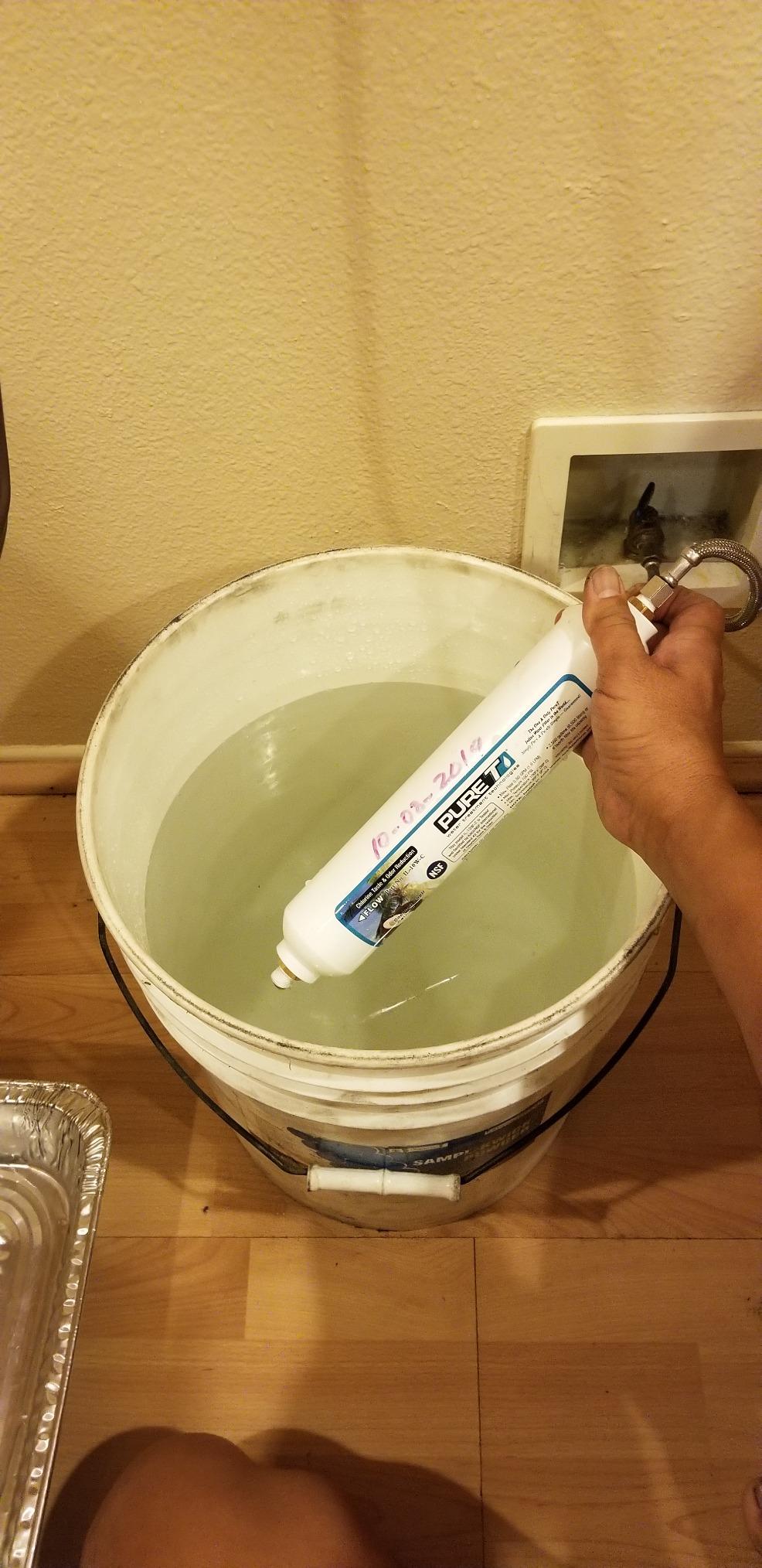
5. Flush the cartridge before connecting it. Run 3 to 5 gallons to clear carbon fines, and follow the specific flush time on the label if the manufacturer states one.
6. Reconnect the fridge, restore pressure slowly, and dry the joints with a paper towel. Any drip will show on the paper rather than on your floor.
7. Check the connections again after one hour and again at 24 to 48 hours. Push-to-connect fittings that leak almost always leak on the second check, not the first, because pressure cycles and thermal movement loosen a marginal seal.
Troubleshooting a Slow Dispenser
A dispenser that got slower right after a filter went in is the most repeated complaint in every forum thread on this subject. Work through these in order, because the filter is only one of five possible causes and it is rarely the first thing to blame.
1. Check the filter age against its gallon rating. A five-year cartridge in a high-use household can reach 5000 gallons sooner than the calendar suggests, and a saturated carbon block is the first thing to rule out.
2. Check the tubing for kinks. A sharp bend added to make room behind the fridge is the second most common cause, and a slide-out model is a classic place to find one.
3. Check the saddle valve. These saddle-style supply valves are notorious for reducing flow and for weeping, and a plastic saddle valve installed years ago is a very common culprit. Replacing it with a proper 1/4 inch angle stop usually fixes the problem outright.
4. Check the refrigerator inlet valve. Screen filters inside the valve are designed to stop exactly this kind of debris, and once they clog the dispenser slows no matter how new your inline cartridge is.
5. Check household pressure. Low static pressure makes every filter in the chain look restrictive, and the fix is a pressure regulator rather than a different cartridge.
If small or hollow ice cubes are the symptom rather than slow water, the fill cycle is the thing to look at. A restrictive cartridge, a partially closed saddle valve or a clogged inlet screen can all leave the ice maker short of the water it expects, and forum users consistently report the fix being upstream of the ice maker itself.
Frequently Asked Questions
Do inline refrigerator water filters work?
Yes, for what they are designed to do. An inline filter polishes water at the fridge inlet, reducing chlorine taste and odor and trapping sediment before the water reaches the dispenser and the ice maker. It does not lower total dissolved solids, soften water, or reduce lead or PFAS unless the specific cartridge is certified to NSF/ANSI 53 for those contaminants.
Are inline water filters any good?
They are genuinely good at taste and odor, which is the realistic benefit buyers report on forums. They are not a substitute for certified contaminant filtration. A carbon block will not change dissolved minerals or metals, and a filter certified only to NSF/ANSI 42 makes no lead reduction claim. Judge a filter by its standard number and named contaminants, not by its logo.
What is the best in-line water filter for a refrigerator ice maker?
For most ice makers, a carbon block filter with a generous flow rating and at least a five-year or 5000 gallon service life. The EcoPure EPINL30 and the AQUA CREST INL both fit that profile and include compression and push-to-connect fittings. If your ice cubes are already small or hollow, add a check of the saddle valve and inlet screen, because the appliance is usually the problem.
Which inline water filter is the best?
The EcoPure EPINL30 is our overall pick for its five-year or 5000 gallon rating, NSF/ANSI 42 certification and inclusion of both fitting types. The AQUA CREST INL is the value option with the same service life. If you need certified lead reduction, the Frizzlife MS99 is the only pick certified to NSF/ANSI 53, and it needs more clearance and a higher upfront outlay.
What are the common problems with inline water filters?
The most reported problems are leaks from push-to-connect fittings that appear hours after installation, a slow dispenser caused by an undersized cartridge or a kinked tubing bend, and small or hollow ice cubes when the fill cycle is starved. A bare NSF certification logo with no standard number is a marketing problem rather than a physical one. Most of these are solved by cutting square, seating fittings fully, flushing 3 to 5 gallons and re-checking at 24 to 48 hours.
Do inline filters remove lead or PFAS?
Only if the specific cartridge is certified for it. NSF/ANSI 53 is the health-related standard, and a certified product reduces only the contaminants named on its certificate. NSF/ANSI 372 is different: it means the filter materials are lead-free, not that the filter removes lead from your water. Always look up the model number in the certifier directory rather than relying on the product page wording.
Will an inline filter reduce water pressure?
Any filter adds some restriction, and that is the usual reason a dispenser feels slower or an ice maker fills short. Choose a higher flow rating, keep the tubing bend gentle behind the fridge, and check the saddle valve and inlet screen, which restrict far more than a cartridge does. If your ice maker is marginal, a wider-flow cartridge or a separate filtration point under a sink is safer than stacking filters on the fridge line.
How often should I replace an inline fridge filter?
Replace at whichever comes first, the month rating or the gallon rating. Long-life carbon cartridges in this roundup are rated around five years or 5000 gallons, while shorter bodies are rated 6 to 12 months or 1500 to 2000 gallons. A high-use household can reach the gallon rating early, so set a reminder from the install date rather than from the date the taste changes.
Final Verdict
The EcoPure EPINL30 takes the top spot in our best inline filters for refrigerator water lines roundup because it removes the two decisions that cause returns: which fitting type you have, and how often you want to touch the line. Five years or 5000 gallons, both fitting styles in the box, and a review base large enough to trust.
The AQUA CREST INL is the pick if your annual outlay is your priority, the Frizzlife MS99 is the one to buy if a certified lead reduction claim is the reason you are filtering at all, and the Watts Premier is the answer to hard-water scale. Everything else on this list solves a narrower problem, and each section above tells you which one.
Measure your tubing, check your clearance and read the standard number before you order. That is all the research this roundup can do for you.