
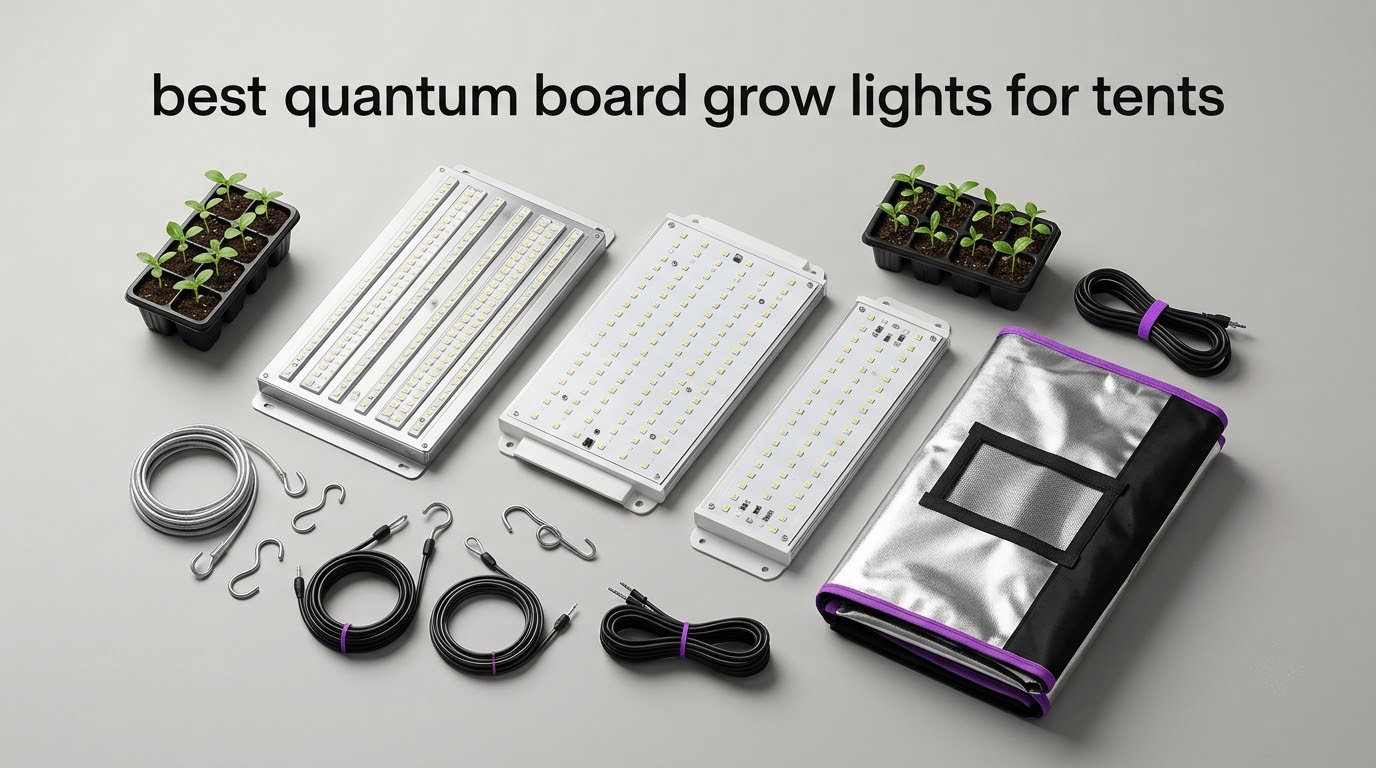
If you are shopping for the best quantum board grow lights for tents, the first thing to sort out is not wattage. It is the size of your tent and whether the panel physically spans it. A board that fills a 4×4 will bleach a 2×2, and a board that suits a 2×2 will leave dark corners in anything larger.
Quantum boards are the flat-panel LED fixtures that growers have leaned on for years because they spread light across the whole panel instead of concentrating it on a single emitter. That layout is why they produce even coverage inside a fabric tent with no reflectors, no ballasts and no moving parts. Our roundup covers ten of them, sorted by the tent each one actually fits, from a 95W board for a 2×2 up to a 600W four-board fixture for a 4×4.
A note on method: this is a spec-sheet and owner-report roundup, not a lab bench test. Every number below comes from the manufacturer listing and from what buyers report after living with the fixture, and we have not fabricated a single measurement we did not have. If you are still choosing a tent first, start with our grow tent picks before picking a light.
Table of Contents
What Is a Quantum Board Grow Light?
A quantum board grow light is a full-spectrum LED fixture whose diodes are mounted across a flat aluminum panel, spreading light evenly over a grow space instead of focusing it on one spot. Because the diodes cover a wide area, the same wattage produces more even coverage and fewer hot spots inside a tent, and because the panel doubles as a large heat sink, the fixture runs cool and fanless.
The diodes are usually Samsung LM301B or LM301H chips, the workhorses of the modern horticultural LED world, sometimes paired with OSRAM or Sanan deep-red emitters. Two numbers matter more than the label wattage: PPFD, the density of usable photons landing on the canopy, and PAR efficacy in μmol/J, which tells you how many of the watts the fixture draws actually become plant-usable light.
Here is the honest caveat. Most panels sold as quantum boards are technically multi-bar or single-panel designs, and the category has blurred since bar-style fixtures absorbed the high end of the market. We include both here because growers shop by them together, but we flag the form factor in every review so you know which one you are hanging.
Top 3 Best Quantum Board Grow Light Picks for Tents (October 2026)

VIVOSUN LumaLight 400W
- Even 4x4 coverage with no dark spots
- Fanless and silent at 400W
- Dimming from 25 to 100 percent
- 2.9 umol/J efficacy

AC Infinity IONBOARD S24
- Edge-to-edge PAR distribution
- 0-100 percent integrated dimmer
- IP-65 sealed aluminum board
- Deep canopy penetration

HLG 600 Rspec
- 1529 PPF at 2.60 umol/J
- Dimming from 100W to 600W
- Four Samsung LM301H boards
- ETL and UL certified
Best Quantum Board Grow Lights for Tents in 2026
| Product | Specifications | Action |
|---|---|---|
| VIVOSUN LumaLight 400W |
|
Check Latest Price |
| AC Infinity IONBOARD S24 |
|
Check Latest Price |
 MARS HYDRO SP3000 MARS HYDRO SP3000 |
|
Check Latest Price |
| HLG 600 Rspec |
|
Check Latest Price |
 AC Infinity IONFRAME EVO3 AC Infinity IONFRAME EVO3 |
|
Check Latest Price |
 HLG 100 V2 HLG 100 V2 |
|
Check Latest Price |
 Mars Hydro FC-3000 Mars Hydro FC-3000 |
|
Check Latest Price |
 Mars Hydro FC-E3000 Mars Hydro FC-E3000 |
|
Check Latest Price |
 Spider Farmer G3000 Spider Farmer G3000 |
|
Check Latest Price |
 VIVOSUN VSX3200 VIVOSUN VSX3200 |
|
Check Latest Price |
1. VIVOSUN LumaLight 400W – The Evenest Coverage in a 4×4
VIVOSUN LumaLight 400W LED Grow Light, Full Spectrum Plant Light
400W
2.9 umol/J
Covers 4x4 ft with 5x5 ft max
Dimmable 25-100%
Fanless
17.5 lb
Pros
- Even 4x4 coverage with no dark spots
- Silent fanless cooling keeps tent heat low
- 4728 reviews averaging 4.6 stars
- Dimming adapts to seedling veg and bloom stages
Cons
- Dimming steps in coarse 25 percent increments
- No built-in timer so a smart plug is required
- Very bright even at 25 percent so use eye protection
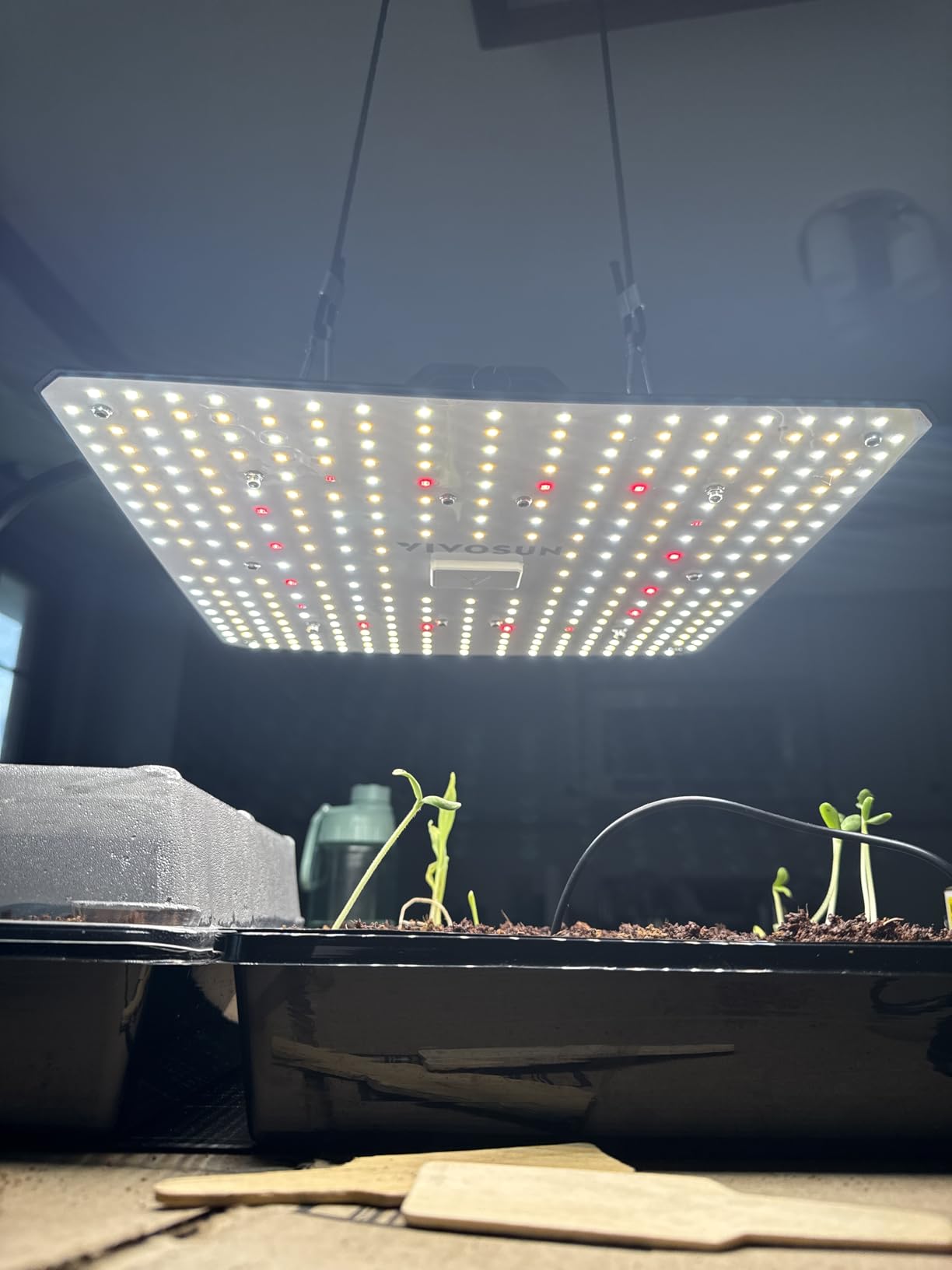
The LumaLight 400W is the fixture I recommend to anyone who wants one light and does not want to think about coverage. Owners running it across a 4×4 report no dark spots at the canopy, which is the single hardest thing to achieve with a single fixture in a square tent. At 17.5 pounds it is also the heaviest board here, so hang hardware matters more than usual.
What stands out in the owner reports is consistency. With 4728 reviews averaging 4.6 stars, this is the largest review base in our group, and the complaints are narrow and repetitive rather than structural. The 25 percent dimming floor is the one that comes up most, and it is a real constraint for seedlings raised directly under the panel.
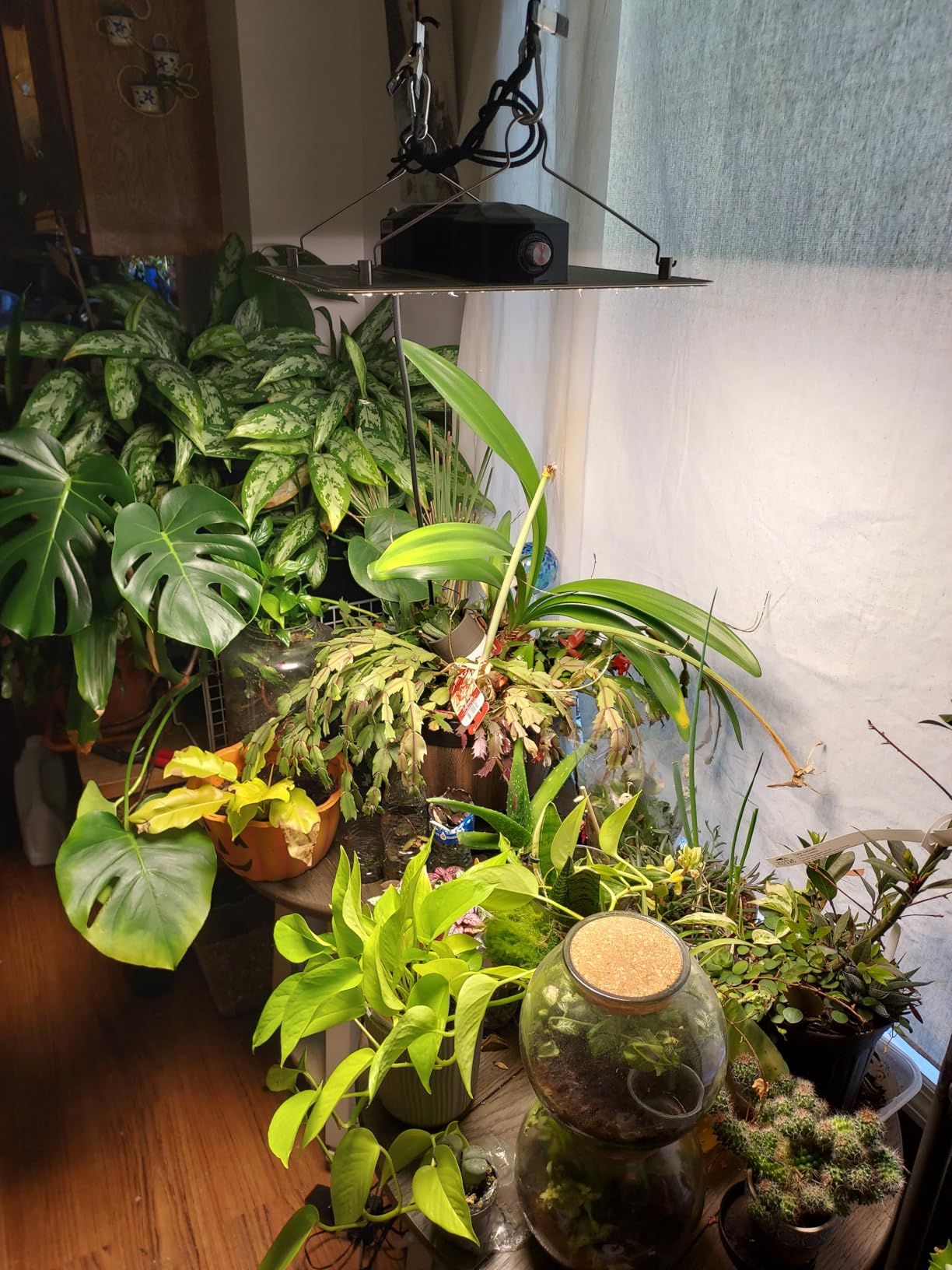
Buyers also point out the fanless design with ventilation holes in the power supply, which means the fixture adds no noise and very little radiant heat. That matters in a 4×4 where you are already fighting the summer. There is no built-in scheduling, so you will be running a smart plug or an external controller on the timer circuit.
Efficacy of 2.9 μmol/J at 400W is competitive with everything on this list except the newest LM301H EVO chip sets. A pair of VIVOSUN rope hangers is included, which saves you a step on setup day. The listed coverage is a 4×4 with a 5×5 maximum, so it stretches a little if your canopy is short.
What to check before you buy
Confirm your hangers can carry 17.5 pounds plus the rope spread, because the weight is concentrated on two points and a thin frame will sag. Check that a 4×4 is really your flowering footprint, because in a 2×4 this board is far more light than you need and the 25 percent floor will not save you.
Plan for an external timer from day one. There is no on-board clock, and every owner who tried to jury-rig one ended up buying a smart plug anyway.
Where it falls short
The coarse dimming means you cannot dial down to a whisper for very young seedlings sitting close underneath. Most growers solve this by raising the fixture and lowering intensity as the canopy fills in, but that is a workaround rather than a control.
One 400W board is often not enough to cover a long 4×2 evenly, so growers covering that footprint usually end up with two fixtures. If your tent is a 4×2 rather than a 4×4, look at the 320W bar in this roundup instead.
2. AC Infinity IONBOARD S24 – The Best Even PAR for a 2×4
AC Infinity IONBOARD S24, LED Grow Light Board 2×4 with Dimming Control
200W
26 by 14 inch board
0-100 percent dimming
IP-65 sealed
2-year warranty
Pros
- Edge-to-edge light distribution with deep canopy penetration
- Integrated 0-100 percent dimmer with app programmability
- Unibody aluminum board rated IP-65 for humid rooms
- Passive cooling stays comfortable to touch at reduced output
Cons
- No integrated on/off switch or built-in timer
- Dimming stops at 20 percent minimum
- Some owners report driver failure and flicker after extended use
The IONBOARD S24 is a genuine flat quantum board rather than a bar, and at 26 by 14 inches it is proportioned for a 2×4 footprint rather than stretched across one. Owners single out the edge-to-edge distribution as the standout, meaning plants at the tent wall get the same intensity as those under the center.
Its dimming is the best behaved in this group. The integrated knob runs 0 to 100 percent rather than stopping at a quarter or a half, which is exactly what you want when raising seedlings and then pushing into flower. Pair it with a smart controller and you get scheduled grow cycles and app control without a separate plug.
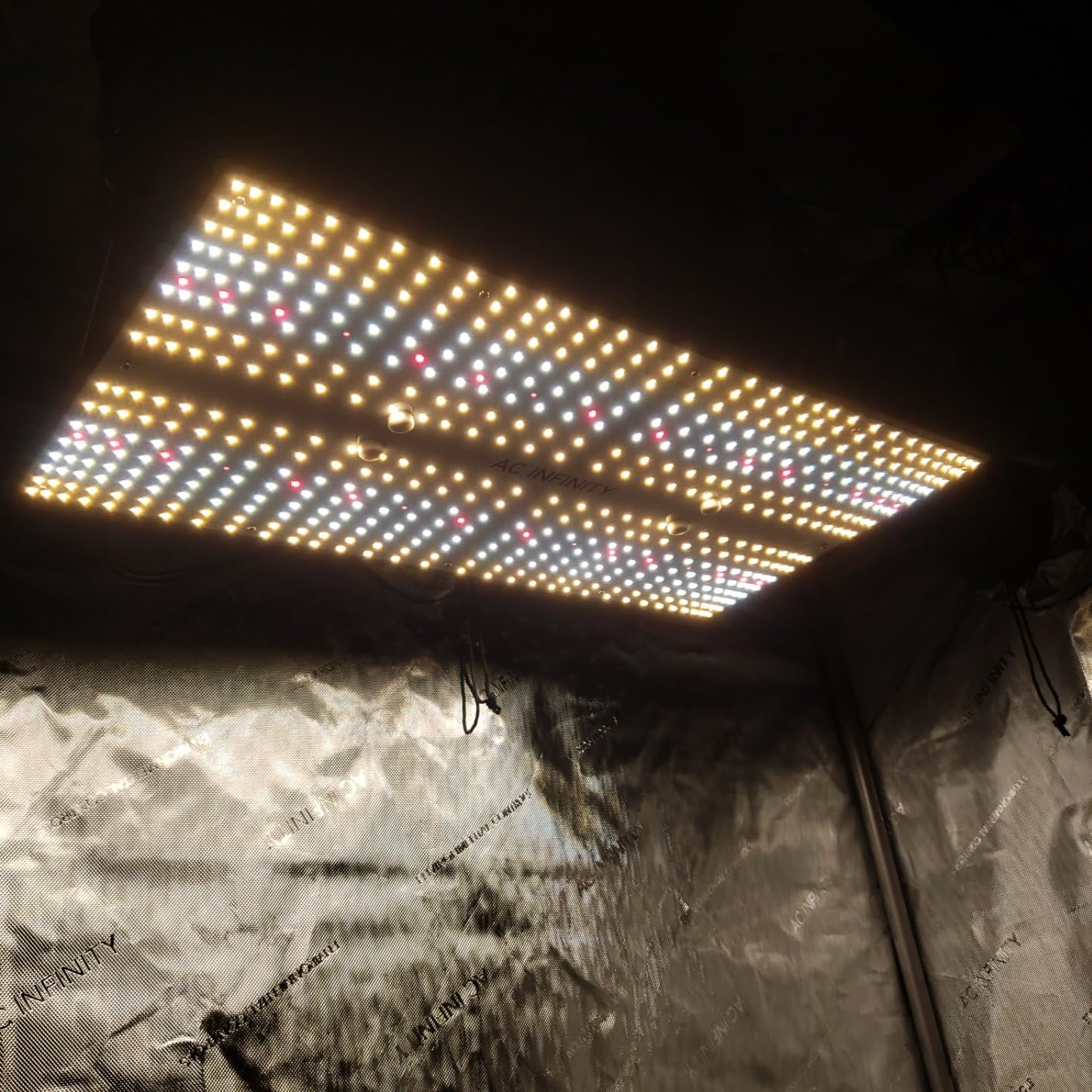
Build quality is a highlight too. The unibody aluminum board carries IP-65 sealing, which matters more than most sellers admit because tents get wet and humid. AC Infinity’s warranty support is repeatedly called out as fast and low-friction in owner reports, which is a real advantage over budget boards.
The 200W rating is modest against the bigger boards here, and that is deliberate. In a 2×4 the smaller panel spreads its output across the footprint instead of dumping it into a hot center, so the plant-level result often beats a brighter oversized light.
What to check before you buy
You will need a smart plug or a controller because there is no on-board timer or master switch. Budget for that in your planning, because it is the one accessory this fixture genuinely requires.
Check your canopy height as plants climb. The board is passive-cooled with no fan, so it stays comfortable to touch at reduced output, but at full power in a small tent you still want an extraction fan moving air.
Where it falls short
Dimming stops at 20 percent rather than zero. For a light-starved seedling stage that floor can still be too bright if the board hangs low, though raising it solves the problem quickly.
A minority of owners report driver or LED pack failure and flickering after extended use, and the 2-year warranty is the shortest on this list. If you plan to run a board for several years, weigh that against the longer coverage on the HLG and Mars Hydro models.
3. MARS HYDRO SP3000 – The Easiest Board to Scale Across Tents
MARS HYDRO SP3000 Grow Light Dimmable Full Spectrum 2×4
300W
727.2 umol/s PPF
2.8 umol/J
976 light sources
9.9 lb
Pros
- Very even PAR across a 2x4 footprint
- Daisy-chain one dimmer knob across 50 fixtures
- Runs cool enough to keep tent temperature easy
- Mars Hydro replaces failed drivers at no cost
Cons
- Dimmer box and on-off switch sold separately
- Some owners report more heat than earlier SP models
- Narrow end mounting slots make tent pole hanging awkward
The SP3000 is built around a single idea: run one dimmer for a whole room. Up to 50 fixtures can be daisy-chained from a single knob, which is why it keeps showing up in multi-tent setups and small commercial grows. For a home grower running one tent that capability is nice to have but rarely used.
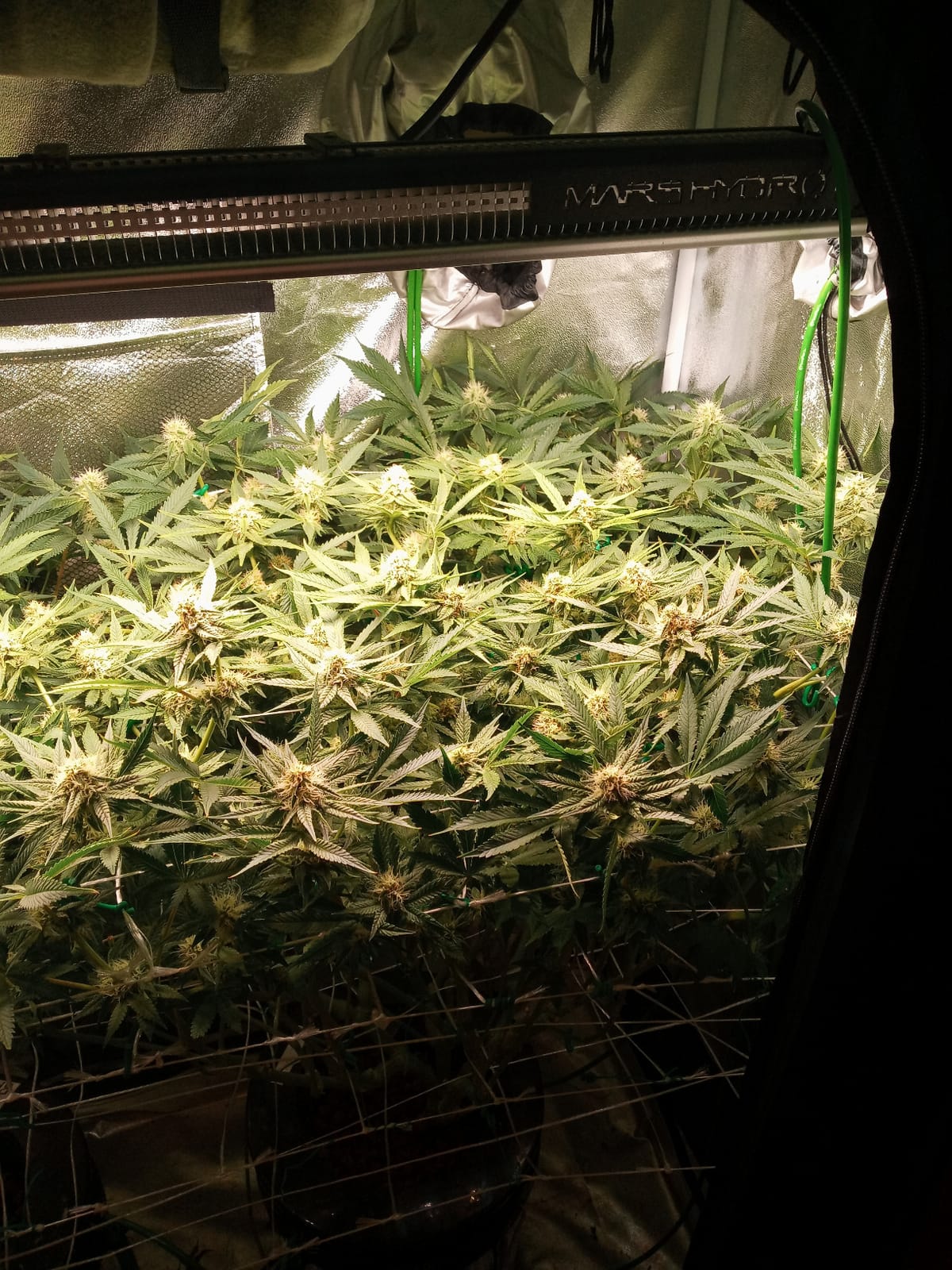
Output is a well-specified 727.2 μmol/s at 2.8 μmol/J, and the spectrum mixes 3000K warm white, 5000K white and 660nm red. Owners report solid results in 2×4 tents, with several citing 7 to 8 ounces dry per plant. At 9.9 pounds it is also one of the lighter boards here, which makes hanging far less of a chore.
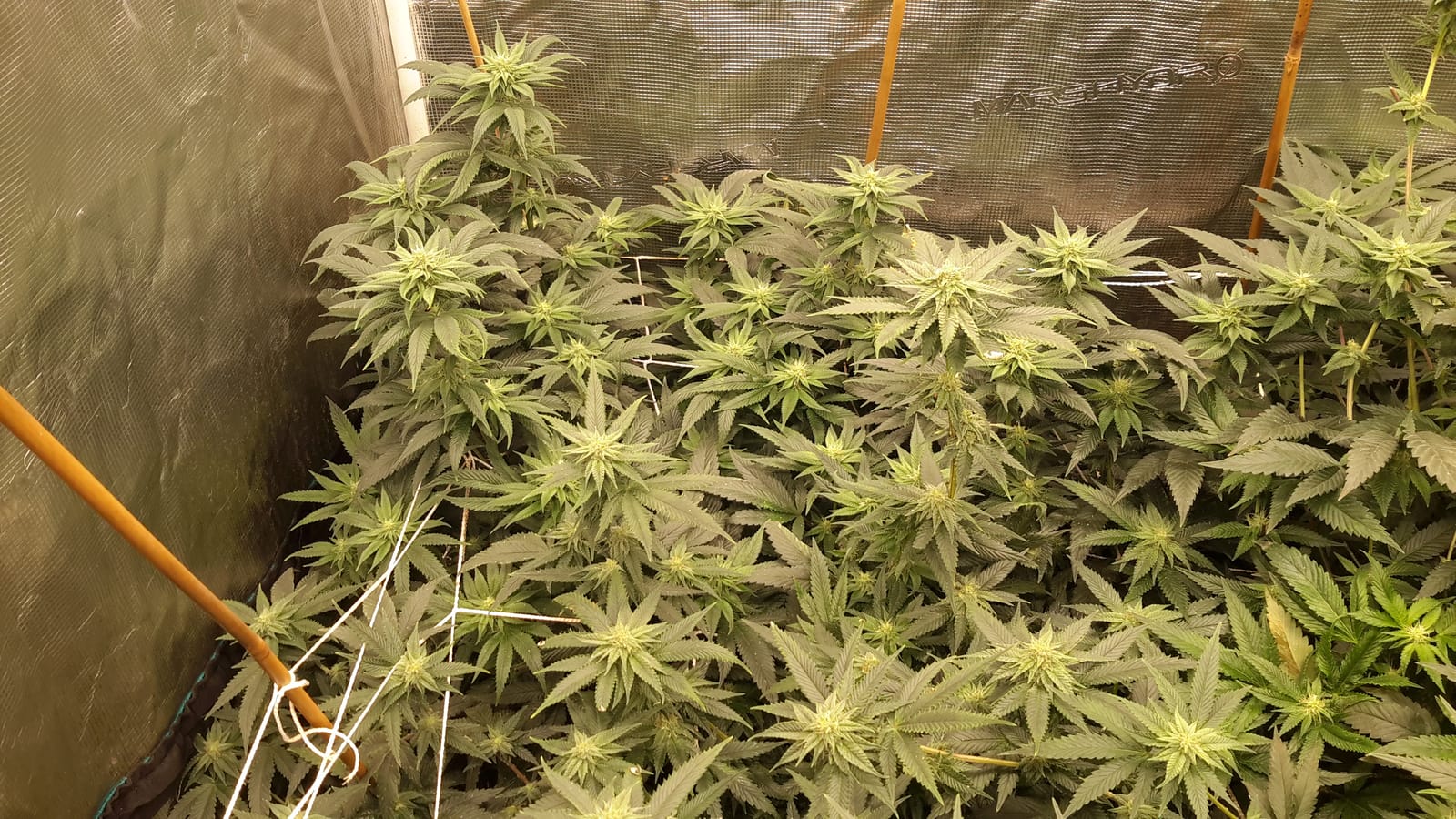
Heat is the one thread worth pulling on. A number of owners report noticeably higher heat than earlier SP-series models, so in a 2×4 or 2×2 during summer you should plan on moving air regardless of how good the coverage looks.
Warranty coverage is 5 years, and Mars Hydro’s service is repeatedly described as fast with free driver replacements. That is the strongest support story among the mid-range boards in this roundup.
What to check before you buy
Budget for the separate dimmer box and on-off switch, which is the most common complaint in the reviews. Also check the mounting slots, because the narrow end slots are awkward when you are hanging from tent poles rather than a frame.
Check the 42.8 inch length against your tent width. This is a long linear board, so it needs a 2×4 oriented correctly rather than a square footprint.
Where it falls short
Without the separately sold dimmer, you are running it at full output, which is how a lot of light stress happens in small tents. This board depends on the accessory to be versatile.
The heat increase on this revision is real enough that you should treat it as a 300W heat source inside a fabric tent, not a cool-running panel. A few owners also mention glue residue or rough finish on arrival.
4. HLG 600 Rspec – The Most Output You Can Hang in a 4×4
HLG 600 Rspec FR 600W 120V LED Quantum Board Grow Light, Growing Lights for Indoor Plants, Full Spectrum, Dimmable
600W
1529 PPF
2.60 umol/J
Dimmable 100-600W
Four LM301H boards
Pros
- Highest average rating in the group at 4.8 stars
- 1529 PPF at 2.60 umol/J with deep red 660nm
- Dimmer scales output from 100W to 600W
- Thick aluminum stays touchable even at 80 percent
Cons
- Highest power draw in the roundup
- Runs hot at full power and needs a fan above it
- Does not daisy-chain
- Some units will not register the lowest dimmer setting
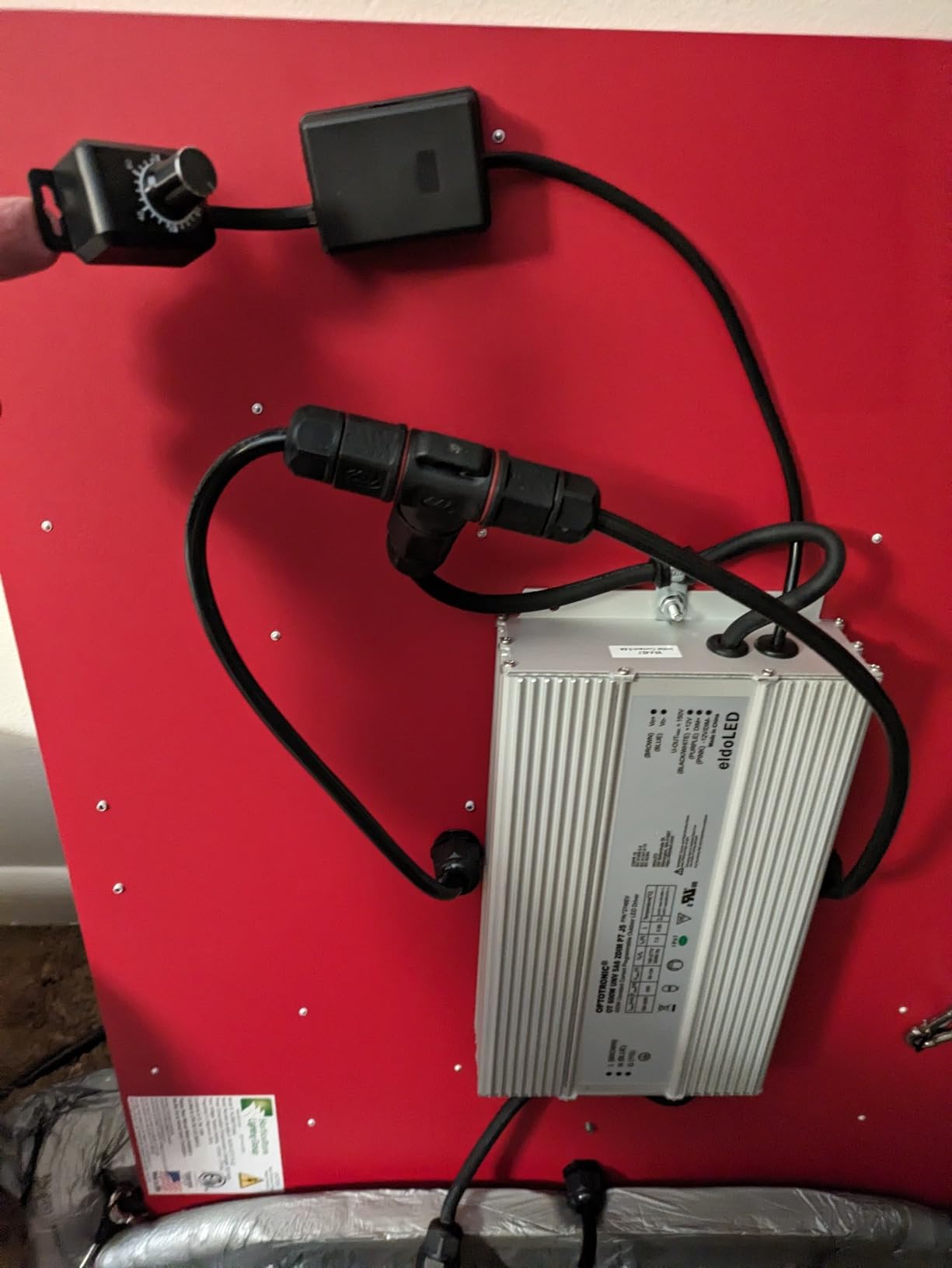
The Rspec is the only fixture here built from four separate Samsung LM301H quantum boards, and it is designed around a 4×4 tent footprint. With 1529 PPF at 2.60 μmol/J it delivers more raw photons than anything else on this list, and it carries both ETL and UL certification.
The dimmer is the real feature. Rather than a percentage slider, the knob scales output from 100W to 600W, which means one fixture can cover a full grow from seedling to flower, and a 2×2 up to a 4×4, without swapping fixtures. HLG recommends mounting 28 to 36 inches above the canopy.
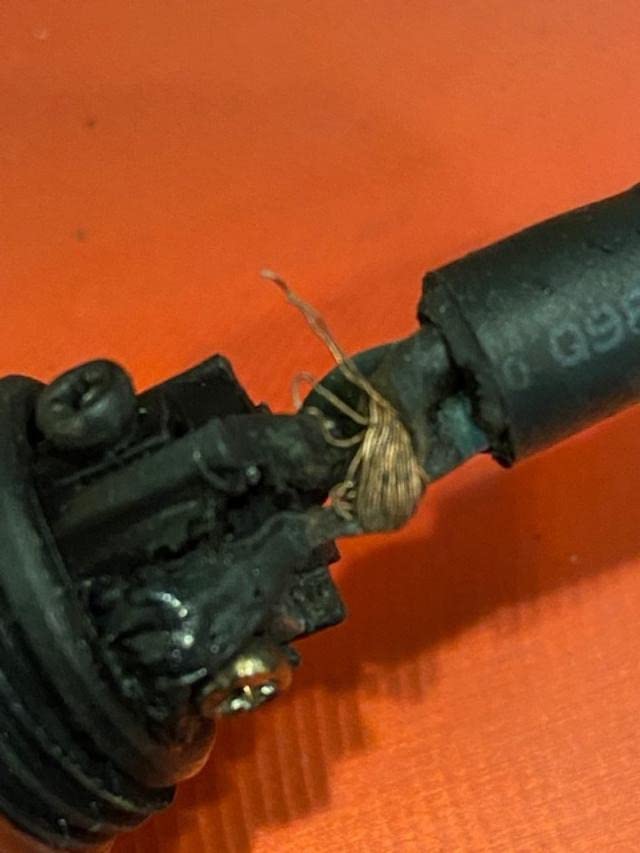
Owners report visible growth differences within a night of switching from 600W HPS, and a double-digit drop in ambient tent temperature. The listed footprint is a 5×5 veg area at 28 inches and a 6×6 flower area at 40 inches, which tells you how much headroom the design has.
At 4.8 stars across 268 reviews with roughly 88 percent five-star ratings, satisfaction is the highest in the group. The thick aluminum construction means the board stays comfortable to touch even at 80 percent output, which is unusual at this wattage.
What to check before you buy
Check your electrical headroom. This is the highest draw in the roundup and it does not daisy-chain, so a second fixture means a second circuit. Mount it on hardware rated well above the fixture weight at that height.
Read the heat notes carefully. A number of growers add a clip-on fan above the light, and that should be part of your plan rather than an emergency purchase in July.
Where it falls short
The dimmer knob uses only about half its travel according to owners, so the useful adjustment range is narrower than 100W to 600W suggests. Some units also refuse to register the lowest brightness setting, which can be a fault rather than a preference.
Its efficiency of 2.60 μmol/J is the lowest here, so the raw output is huge but you are paying more in electricity for each photon than with the newest EVO chip boards. For a fixed footprint at full power that cost difference is real.
5. AC Infinity IONFRAME EVO3 – The Most Efficient Light per Watt
AC Infinity IONFRAME EVO3, 280W Samsung EVO Bar LED Grow Light 2×4
280W
3.14 umol/J
1745 PPFD
840 diodes
17.4 lb
Pros
- Highest efficacy in the group at 3.14 umol/J
- Samsung LM301H EVO diodes rated above LM301B and LM301H
- Schedule controls with sunrise and sunset dimming
- Removable passive driver to rebalance heat
Cons
- WiFi and app control require AC Infinity UIS hardware
- Heavier 17.4 pound chassis needs solid hanging hardware
- Costs more than a bare board for the same footprint
The IONFRAME EVO3 is a bar-style fixture, not a bare board, but it uses the newest Samsung LM301H EVO diodes rated at 3.14 μmol/J. That is the highest efficiency figure in this roundup, and it means the 280W fixture delivers 1745 PPFD, the strongest plant-level number here relative to its power draw.
Chip generation is worth understanding. The EVO rating is not marketing spin on the same part: it is a measurable jump over the LM301B and LM301H chips used by most of the boards on this list, and it shows up directly in your electricity bill over a full cycle.
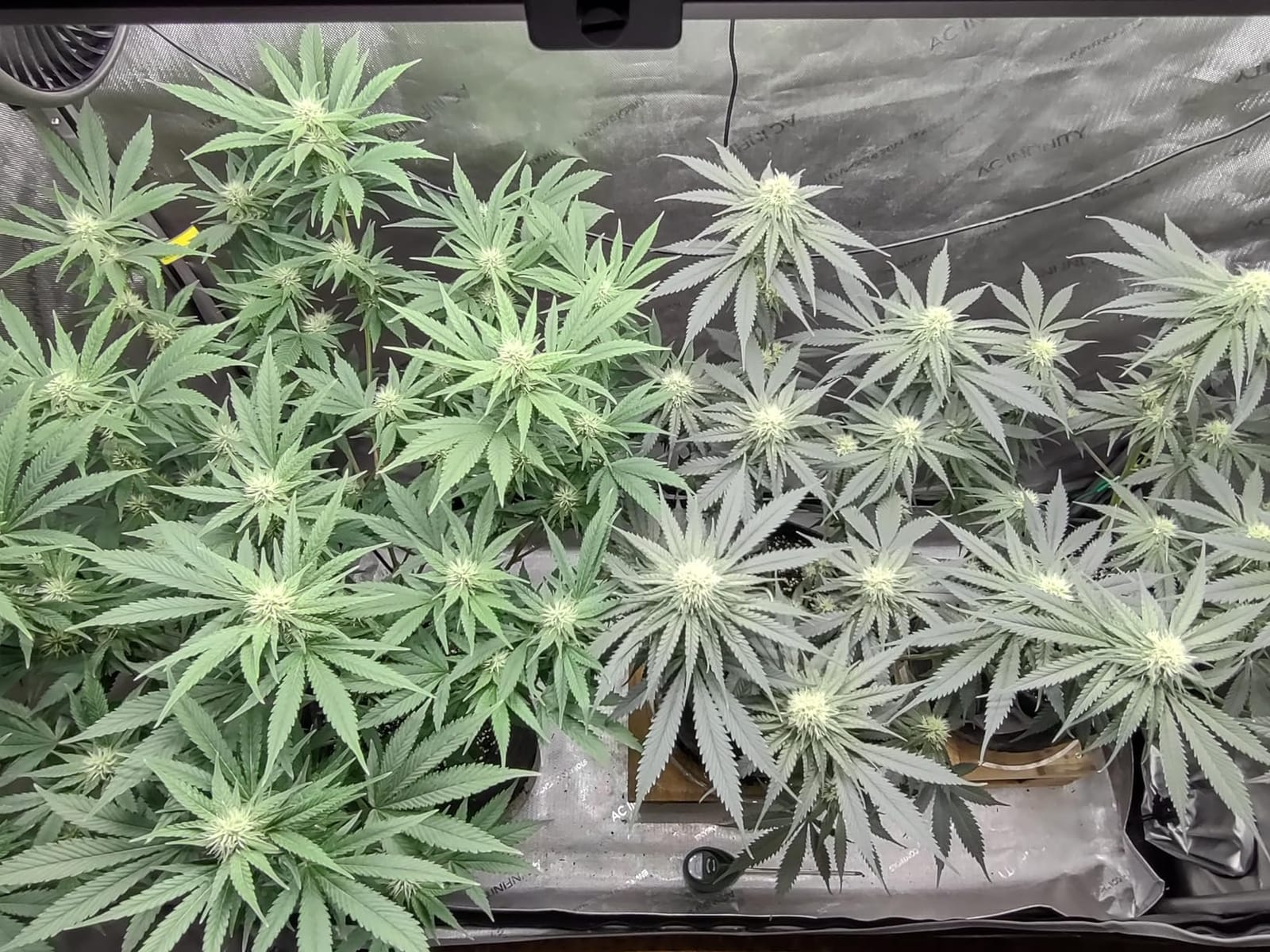
Control is thorough. You get schedule programs, sunrise and sunset dimming and 10 brightness levels, and fixtures can be daisy-chained up to 80. The driver is removable, which lets you move it outside the tent and shift heat out of the canopy space entirely.
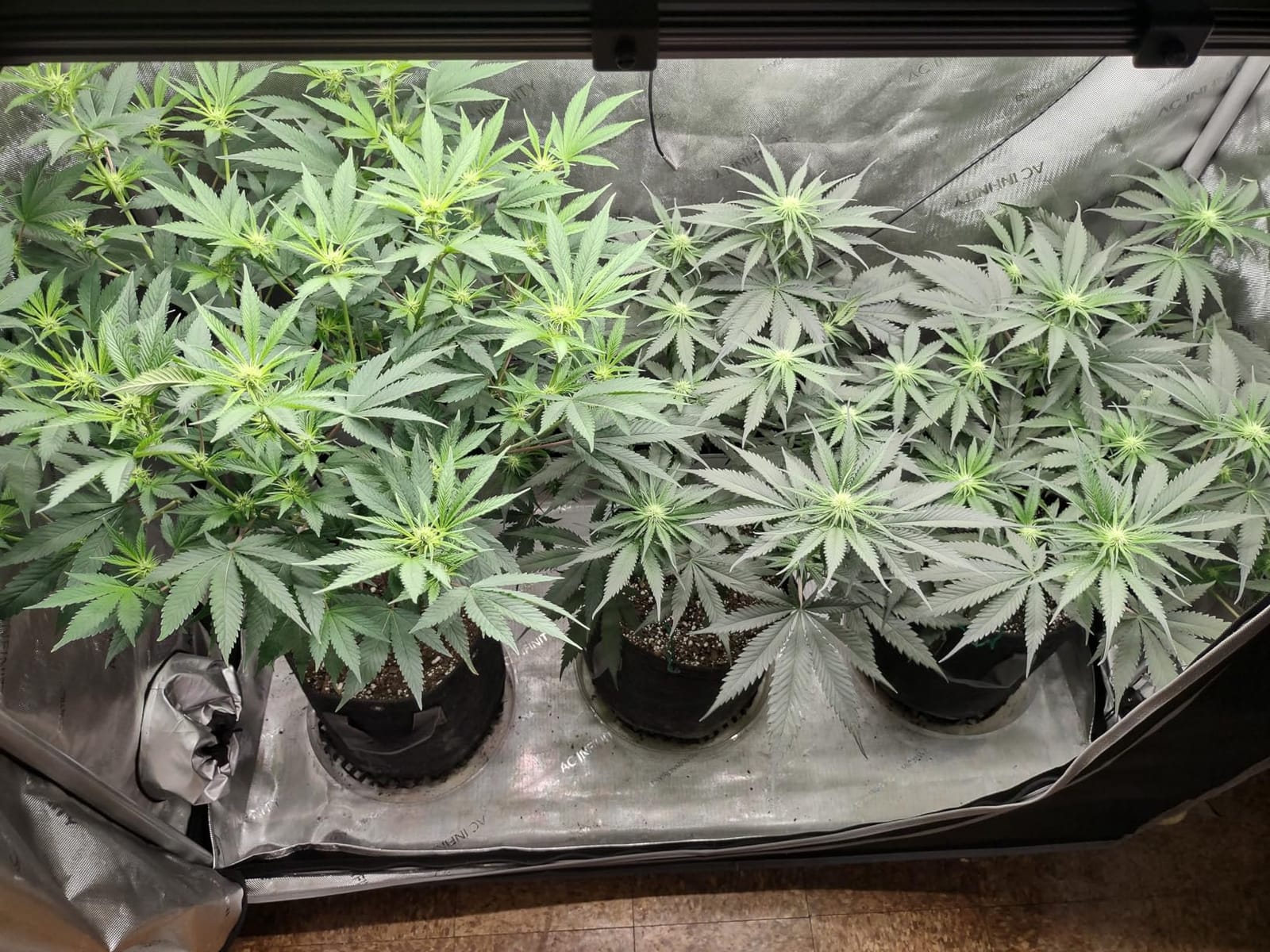
Owners report low PPFD drop across the canopy and strong satisfaction, with about 88 percent of reviews at five stars, the highest share among the 2×4-class boards here. Coverage is listed as 3 by 5 feet veg and 2 by 4 feet flower.
What to check before you buy
Full programmability needs AC Infinity’s UIS platform or one of its controllers. If you just want a knob and a timer, you are paying for capability you may not use.
Check your hanging setup against 17.4 pounds. This is a heavy chassis, and a magnetic mount or light frame that cannot take the load is a real risk in a tent.
Where it falls short
Cost is the honest drawback. Against a bare board covering the same 2×4, this fixture costs more, and the gap widens if you also want smart control. You are buying efficiency, not bare value.
The bar form factor also means the debate about boards versus bars applies here. If you specifically want the look and the broad single-panel spread of a quantum board, this is not that.
6. HLG 100 V2 – The Compact Board for a 2×2 or a Seedling Tray
Horticulture Lighting Group HLG 100 V2 4000K 95W LED Quantum Board Grow Light Veg & Bloom with High Efficiency Upgraded Version 2 Samsung LM301B, Full Spectrum Growing Lights for Indoor Plants
95W
192 Samsung LM301H diodes
16000+ lumens
2.43 umol/J
Passive cooled
Pros
- Reference Samsung LM301H board design assembled in the USA
- Excellent efficiency at 2.43 umol/J
- 4000K white spectrum diffuses evenly without brown tips
- Passive cooling keeps tent temperature easy to manage
Cons
- Not dimmable so output is fixed
- Small 2x2 flower and 3x3 veg footprint only
- Blue-weighted veg spectrum is weak as a bloom light
The HLG 100 V2 is the board that made this form factor famous, and it is still the cheapest way into genuine LM301H silicon. At 95W and 3.7 pounds it hangs anywhere, and owners report it running cool and silent because it has no fan at all.
Owners value the even white light most. A 4000K full spectrum diffuses cleanly and produces uniform growth without the brown tips that growers associate with some cheaper diode mixes. It holds about an 82 percent five-star share across 327 reviews.
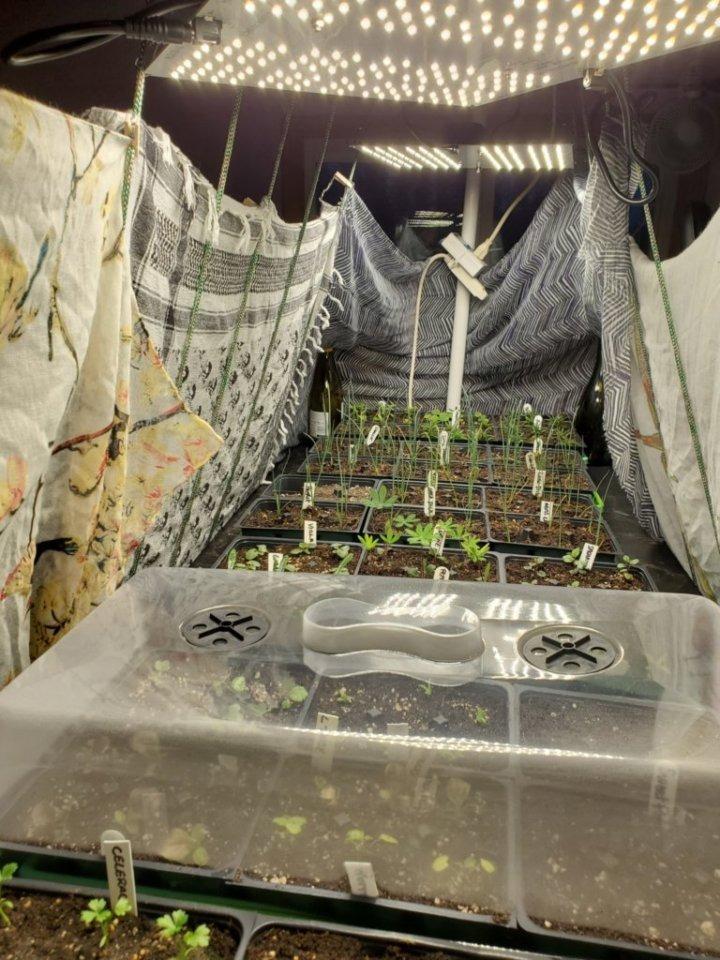
The catch is that it is a single-cycle tool. With no dimming and a blue-weighted veg spectrum, most growers use it through the vegetative stage or as supplemental light above a propagation tray rather than as a whole-cycle tent fixture.
Output works out to 224.51 PPF at 2.43 μmol/J, which is efficient for its wattage but small in absolute terms. The included reflector is what makes that number land on the canopy instead of scattering.
What to check before you buy
Check your tent footprint against the 2×2 flower and 3×3 veg figures. Anything larger will show obvious falloff at the edges, and no amount of reflector adjustment fixes that.
Plan to raise the board as seedlings stretch. With no dimmer, height is your only intensity control, and setting the wrong starting height is how growers end up with bleached or purple growth.
Where it falls short
No dimming is the dealbreaker for anyone running a mixed canopy of seedlings and mature plants under one light. Output is fixed at 95W.
The warranty terms vary by model and this listing carries a 1-year term, which is the thinnest coverage here. For a board that is still in production, that is worth weighing.
7. Mars Hydro FC-3000 – The Balanced 300W Board for a 3×3
Mars Hydro FC-3000 300W 3×3 LED Grow Light Full Spectrum for Indoor Plants
300W
2.85 umol/J
792 light sources
660nm OSRAM red
Covers 3x3 ft
Pros
- High 2.85 umol/J efficiency from Bridgelux 3030 diodes
- OSRAM 660nm deep red chips for flowering and final weight
- Bar structure dissipates heat for a fanless quiet fixture
- Uniform coverage sized to a 3x3
Cons
- Bars and driver must be assembled manually before use
- App controller sold separately
- Some reviews note it runs warmer than bare-board designs
The FC-3000 is the board most 3×3 growers end up with, and the reason is simple balance. It pairs 2.85 μmol/J efficiency from Bridgelux 3030 diodes with OSRAM deep-red chips, which is the combination that supports both vegetative growth and flowering weight in a single fixture.
Deep red at 660nm is the spec that matters here. Growers consistently credit the red content with heavier final harvests, and this board carries it at a fraction of what the premium fixtures cost. The bar structure handles heat well enough that it runs fanless and quiet.
About 80 percent of reviews are five stars, and Mars Hydro backs the fixture with 5 years of warranty plus free driver replacement. Coverage is listed at 3×3 feet, which is a more honest number than most sellers give, and the 120-degree beam angle spreads light predictably.
App scheduling is available through the iConnectu, Controller or iHub-Pro, all sold separately. The absence of a timer in the box is the most common complaint, along with the assembly step.
What to check before you buy
This is not plug-and-play. You assemble the bars and driver yourself, so budget twenty minutes and read the manual first, because a mis-seated bar is the usual cause of the one-star reviews.
Decide early whether you want app control, because the ecosystem hardware is a separate purchase. Without it you need an external timer.
Where it falls short
Manual assembly is a genuine friction point for first-time growers, and there is no bundled dimmer, so out of the box you are at full output. In a 3×3 during the seedling stage that is more light than you need.
Some reviews note the fixture runs warmer than comparable bare-board designs. It is still fanless, but plan on airflow in a sealed tent.
8. Mars Hydro FC-E3000 – Deep Red on a Smaller Budget
Mars Hydro FC-E3000 300W 3×3 LED Grow Light Full Spectrum Veg Bloom Flower
300W
2.8 umol/J
840 umol/s PPF
OSRAM deep red
23.4 by 21.2 inch
Pros
- Upgraded OSRAM deep red at a lower price point
- 2.8 umol/J with 840 umol/s PPF from Bridgelux diodes
- Smaller footprint gives strong 3x3 max coverage
- Bar structure supports efficient heat dissipation
Cons
- Requires bar and driver assembly before use
- Smart controller sold separately
- Listed item weight looks implausibly low so verify specs
- Lower average rating with 8 percent one-star reviews
The FC-E3000 is the value entry in this roundup, and it does something the cheaper boards do not: it carries OSRAM CSSRM6.24 deep-red chips rated at 4.48 μmol/J on their own. That red content is the part of the spectrum that moves flowering and final weight, and most budget boards cut it first.
Output works out to 840 μmol/s at 2.8 μmol/J from Bridgelux diodes, which is a respectable number for the money. Coverage is listed as a 3×3 maximum with a 2×2 core, so a smaller tent gets the intensity you actually want and a 3×3 still works.
Owners treat this as the yield-per-dollar pick in the Mars Hydro line, and the red spectrum is what they praise. The 23.4 by 21.2 inch footprint is genuinely compact, which is a practical advantage in a 2×2 or 2×4 where a bigger panel overhangs the walls.
Satisfaction trails the brand’s own FC-3000, and about 8 percent of reviews are one star, mostly tied to early failures and the assembly step. Mars Hydro’s service desk is still the main draw, replacing failed drivers at no cost.
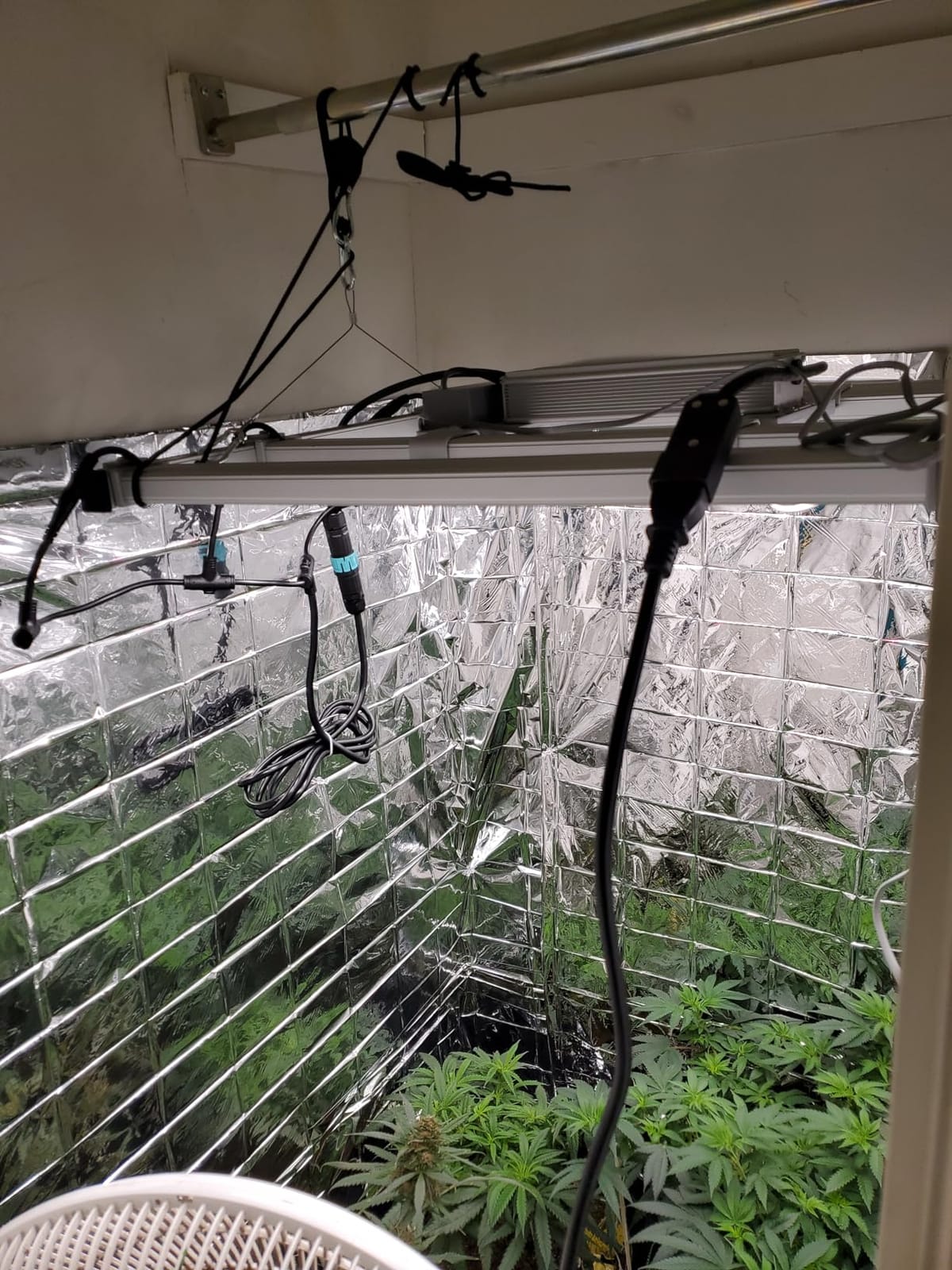
What to check before you buy
Verify the weight yourself before you plan the hang. The listed item weight for a 300W fixture is implausibly low, so measure or confirm with the manufacturer rather than trusting the specification for your hanging hardware.
Confirm your footprint. A 2×2 core with 3×3 maximum means a 3×3 gets edge falloff, and that is where growers report uneven results.
Where it falls short
Assembly is required, and there is no bundled dimmer or controller, so out of the box it runs at full output. For a seedling stage that is the wrong starting point.
The 4.3 average with 8 percent one-star feedback is the weakest rating in this group alongside the VSX3200. If reliability under long daily run times matters more to you than upfront cost, step up to the FC-3000.
9. Spider Farmer G3000 – The Evenest Edge Coverage in a 3×3
Spider Farmer G3000 LED Grow Light for Indoor Plants 300W, App Controlled
300W
2.75 umol/J
824 umol/s PPF
896 diodes
23.73 by 23.02 inch
Pros
- Extended bar design gives even PAR with almost no edge drop
- Runs cool for a 300W rating while adding useful tent heat
- Built-in digital brightness display and daisy-chain for 50
- App control with schedules and sunrise and sunset
Cons
- Some units failed within six months
- Detachable driver cable is short for outside mounting
- Only 80 percent of reviews are five star
- Lowest average rating among the 300W boards here
The G3000 is an extended bar design, and that geometry is its whole argument. Growers measuring across a 3×3 report near-identical PPFD from center to edge, which is the hard part of covering a square tent with a single fixture.
Output is 824 μmol/s at 2.75 μmol/J from 896 diodes, spread across 3200-4200K, 4800-5000K and 660-665nm bands. The built-in digital brightness display is a small detail that makes daily adjustments far less guesswork than a blank knob.
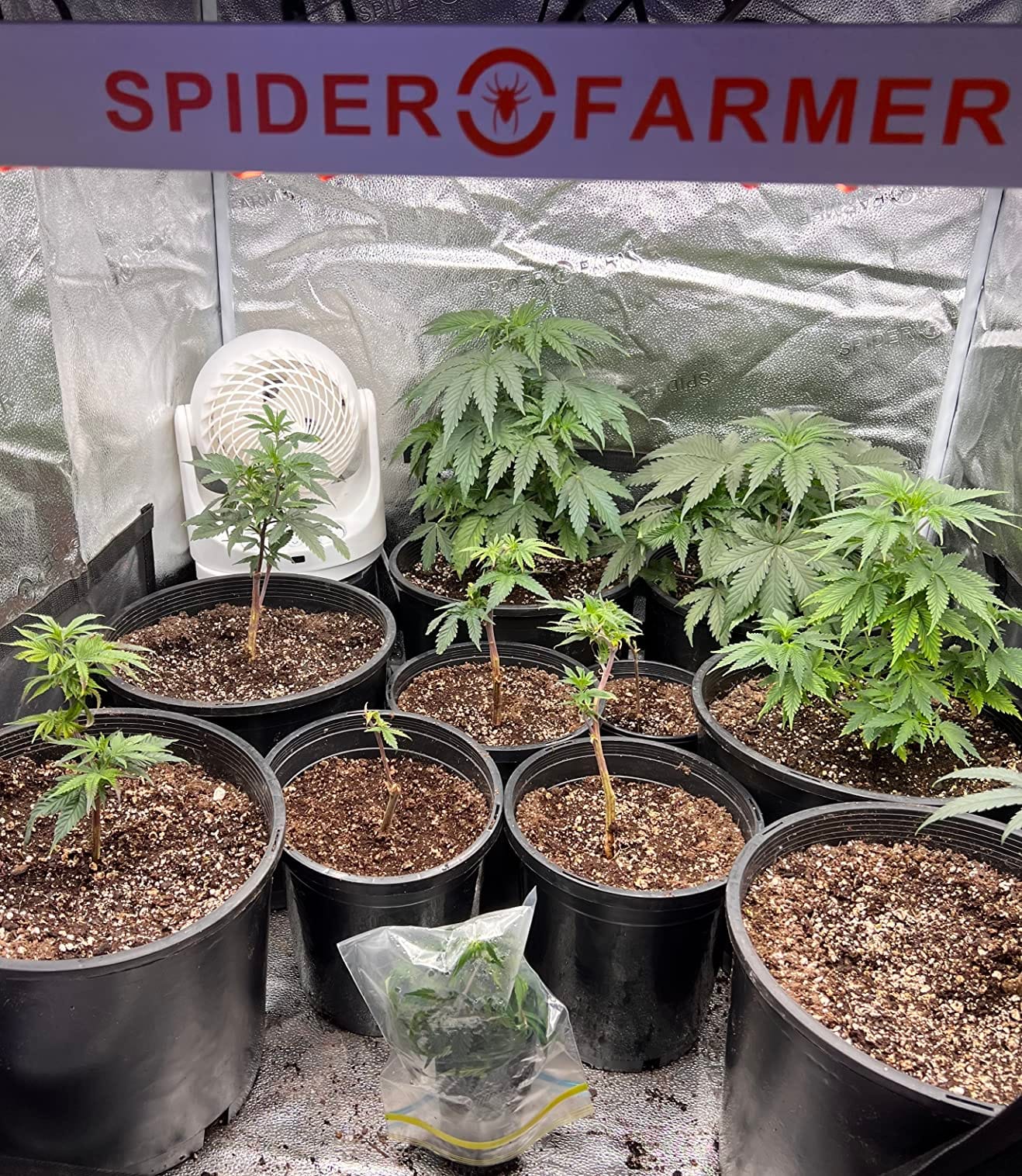
Control runs through the Spider Farmer app with custom schedules and sunrise and sunset simulation, and you can daisy-chain up to 50 fixtures from one master. Coverage of 5 years is backed by a US-based service center, which is the strongest support commitment here for a mid-range board.
It also runs cool for a 300W fixture while still contributing useful heat in a cold tent, which is a real benefit in winter that reviewers mention less often than the coverage numbers.
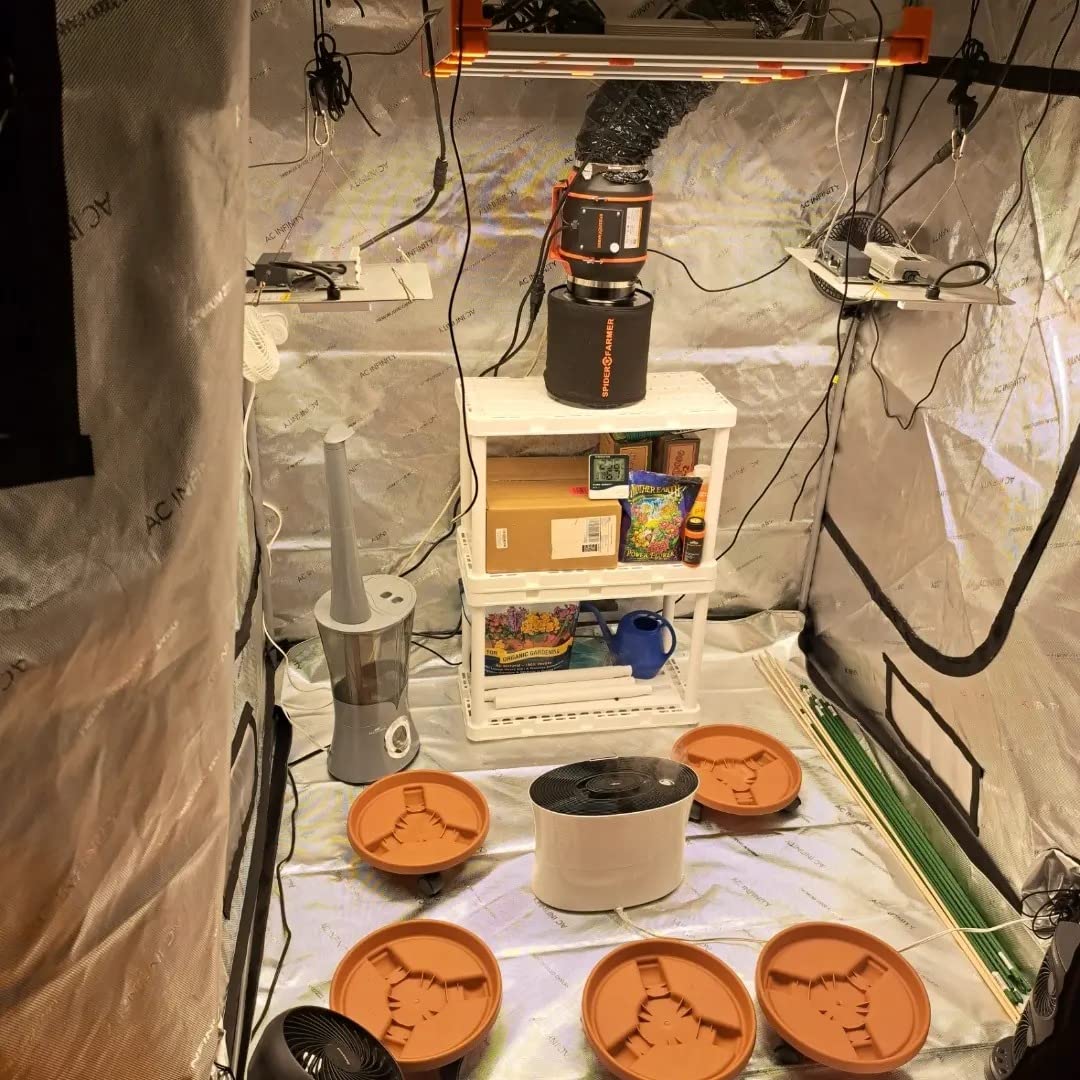
What to check before you buy
Measure your mounting options before ordering. The detachable driver cable is short, so if you plan to hang the driver outside the tent you may have very little height adjustment available.
Check your hangers against the panel size. At roughly 24 inches square this is a wide fixture and it needs even support rather than two straps at the ends.
Where it falls short
Some units failed within six months, and warranty service may require buying the dimmer switch separately, which is a real cost if something goes wrong early.
The 4.4 average with about 80 percent five-star reviews is the lowest of the 300W boards here, and the review base of 149 is on the thin side. The coverage and the numbers are good; the long-term record is not yet as proven as the Mars Hydro and VIVOSUN boards.
10. VIVOSUN VSX3200 – The Far-Red Spectrum for a 2×4
VIVOSUN VSX3200 LED Grow Lights, 2 x 4 Ft. Coverage with 1000Pcs Samsung LM301 Diodes, Daisy Chain Dimmable Full Spectrum Grow Lamp for Indoor Plants Seedling Veg and Bloom Plant Grow Lamps
320W
2.8 umol/J
1000 Samsung LM301 diodes
ETL certified
16.2 lb
Pros
- Sized specifically for a 2x4 with a bar that hangs vertically or horizontally
- 1000 Samsung LM301 diodes at 2.8 umol/J
- Full spectrum including 660nm and 730nm far red
- ETL certified Sosen driver with IP65 sealing
- Daisy-chain up to 20 fixtures at four dimming levels
Cons
- Smallest review base in the group at 44 reviews
- No app or built-in scheduling
- 43.3 inch bar is hard to use outside a 2x4
- 11 percent of reviews are two star
The VSX3200 is the most specifically sized board here. At 43.3 inches long it is engineered for a 2×4 footprint, and the rectangular bar can hang vertically or horizontally depending on how your tent frame runs. That sizing discipline is why the coverage is even inside a narrow tent.
The spectrum is the distinguishing feature. Alongside 3000K and 5000K white, 660nm red and 730nm far-red, this is one of the few boards in the roundup carrying genuine far-red content, which some growers use to influence flowering behavior late in the cycle.
Safety hardware is better specified than most at this level. It uses an ETL-certified Sosen driver with IP65 sealing for humid tents, and the 1000 Samsung LM301 diodes produce 2.8 μmol/J at 320W with a pair of VIVOSUN rope hangers included.
Dimming offers four levels from 25 to 100 percent rather than a continuous knob, and daisy-chaining covers up to 20 fixtures. That step-based control is less precise than the AC Infinity boards, though it is enough to walk a canopy through growth stages.
Be careful with this one. The review base is only 44, which is the thinnest here, and about 11 percent of those are two star. Seventy-three percent are five star, so the distribution is genuinely bimodal rather than broadly mediocre, and that is a small sample telling you less than you would like.
What to check before you buy
Confirm your tent is a 2×4. A 43.3 inch bar in a square tent either overhangs the walls or leaves a dark strip, and no amount of dimming corrects that geometry.
Count on the hangers being included, which saves a purchase, but check they are rated for 16.2 pounds. Confirm your vertical clearance too, since the bar orientation changes the effective footprint.
Where it falls short
There is no app and no built-in scheduling, so you need an external timer or controller for any automated cycle. For a grower who wants programmable runs that is a step back from the other VIVOSUN and Mars Hydro options here.
Far-red content and the long bar make this the least versatile fixture in the roundup. It is a good answer for one tent shape and a poor answer for every other one.
Quantum Board vs. Bar-Style vs. COB Grow Lights
This is the most-asked question in the grow forums and no commercial page answers it properly, so here is our read. The short version is that a quantum board wins on coverage uniformity, a bar wins on efficiency and modularity, and a COB wins on nothing except a cheaper bill of materials.
A quantum board spreads its diodes across one flat aluminum panel. The panel is both the light emitter and the heat sink, so the fixture runs passively cooled with no fan, and the emission surface is wide enough that light reaches the tent walls rather than falling off a foot from the center. The weakness is weight. Large boards are 16 to 18 pounds and genuinely awkward to lift into a tall tent.
A bar-style fixture splits the same diode count across two or four linear bars. Each bar sheds heat better than a single slab, so modern boards reach higher efficacy, and multi-bar fixtures are easier to space evenly across a large footprint. The cost is that drivers and controls live in a box away from the emitters, and the parts cost more.
A COB uses one or a few large emitters behind a lens. It concentrates output, which produces a hot center and a dark perimeter unless you add reflectors, and the phosphor ages faster under that concentration. For tent growing it is the form factor we would steer new growers away from.
The forum consensus we found backs the board-versus-bar split by use case. Growers report bar style being easier to cool, while others counter that wattage drives heat far more than form factor does. Both are right, which is why we sort these by tent size in the buying guide rather than declaring a winner.
How Many Watts Does Your Tent Need?
The most repeated number in the grow forums is about 50 watts per square foot for a flowering tent. Below roughly 30 watts per square foot you will grow thin, stretched plants; above 70 you are paying for photons the canopy cannot use and stressing the leaves closest to the fixture.
Here is the framework for the standard tent sizes, using the 50 watt per square foot figure as the flowering target.
A 2×2 tent covers 4 square feet, so target about 200W. That is the AC Infinity IONBOARD S24’s rating exactly, and it is why a 200W board in a 2×2 outperforms a 600W board every time.
A 2×4 tent covers 8 square feet, so target about 400W. This is where the 300W and 320W boards live, and they work because dimming lets you cover the flowering target and the vegetative stage from one fixture.
A 3×3 tent covers 9 square feet, so target about 450W. The 300W boards here are slightly under the mark, which is fine if you supplement with the far-red or deep-red content they already carry.
A 4×4 tent covers 16 square feet, so target about 800W. That is why the HLG 600 Rspec exists and why it dims down to 100W for earlier stages. One 600W board at 2.60 μmol/J covers the footprint more effectively than two 300W boards of the same total wattage.
A 5×5 tent needs about 1250W, which is past every fixture in this roundup. At that size you are into two-light territory, which is the topic of the next section.
How to Choose a Quantum Board Grow Light for a Tent
Start with efficacy, not wattage. The number that separates a good board from a cheap one is PAR efficacy in μmol/J, and every product in this roundup sits between 2.43 and 3.14. A 280W board at 3.14 μmol/J delivers more usable photons than a 300W board at 2.75, and the difference compounds across a full cycle.
Next comes physical size. This is the mistake that costs first-time growers the most. A board that is narrower than your tent leaves dark corners that no amount of wattage fills, and a board that is much wider than your tent dumps light onto fabric walls. Match the panel to the footprint, and read both the flowering and vegetative coverage figures rather than the maximum claim.
Dimming range is the third check, and the detail that matters is the floor, not the top. A knob that runs to 100 percent is common. A knob that runs to 0 or 20 percent gives you seedling control, while a board that stops at 25 or 50 percent forces you to manage early growth purely by raising and lowering the fixture.
Diodes are the fourth check. Samsung LM301B and LM301H are the current standard, with LM301H EVO as the newest generation. Bridgelux 3030 performs well in the Mars Hydro designs here, and OSRAM or Sanan deep-red chips are the ones worth paying for because they drive flowering weight.
Heat is the fifth check, and in a tent it is not a footnote. A 600W board is a serious heat source inside a fabric enclosure, and the passive-cooled designs in this roundup still need moving air. Budget for an extraction fan and a clip-on fan above high-wattage fixtures, which is what owners of the HLG 600 Rspec actually do.
Certification is the sixth. ETL or UL listing matters more than it looks when a humid tent and a plastic canopy are involved. Several boards here carry ETL certification and IP65 sealing, and we would not run an uncertified panel in a tent where condensation is constant.
Warranty and service are the seventh. Terms in this roundup run from 1 year to 5 years, and the service experience matters as much as the length. Owners repeatedly single out Mars Hydro and AC Infinity for fast free driver replacement, which is the difference between a nuisance and a dead fixture.
What to ignore: app control, brand name alone, and lumens. Growers in the forums treat apps as a gimmick that adds cost without improving the grow, and we agree. If you would rather see the wider field, our flowering grow light guide compares the board-style options against the rest. Lumens measure brightness to your eye, which is meaningless to a plant. Judge on μmol/J, PPFD at canopy and coverage area.
One more decision worth making deliberately: two smaller boards or one large one. Growers report running two 240W boards in a 3×3 with excellent coverage, especially with dimmers, and it is a good approach when a large fixture is too heavy to hang. The tradeoff is that two boards cost more to buy and draw two plugs.
What Growers Report in Forums
The forum record is more useful than any spec sheet, and it lines up with what we found in the owner reviews. The clearest signal is on long-term reliability. A grower in r/microgrowery reported 18 months with a 480W Kingbrite board in a 3×3 and described it as their frostiest and densest harvest, which suggests that a properly sized budget board can absolutely hold up over a full season and beyond.
On sizing, the 50 watts per square foot rule is the most repeated number in the communities we read, and it matches the framework above. The common failure is the opposite one: buying an oversized board for a small tent and bleaching the leaves closest to the panel. The fix is dimming, which is why a dimmer with a low floor is worth more than extra watts.
Weight comes up constantly as the main practical downside of quantum boards versus bar style. Heavy panels are genuinely hard to lift into a tall tent, and several people mention needing a second person. Others counter that wattage drives heat more than form factor does, and that debate is still unresolved in the communities we checked.
Heat is the number one concern in small tents, with 2×2 and 2×4 users reporting real overheat problems from lights sized for larger footprints. If you read one thing in this section, read that one: size the light to the tent, and run air over it.
Dimmer quality varies enormously, which is the complaint that appears most often for budget boards. Some dim to 50 percent only, and some are non-linear, meaning the bottom of the travel changes output far more than the numbers suggest. If you plan to use the fixture at low intensity, the 0-100 percent boards in this roundup are the ones worth paying for.
Frequently Asked Questions
What is a quantum board grow light?
A quantum board grow light is a full-spectrum LED fixture whose diodes sit across a flat aluminum panel, spreading light evenly rather than focusing it on one emitter. The panel doubles as a large heat sink, so most run fanless and cool. Boards range from about 95W for a 2×2 tent to 600W for a 4×4, and most are dimmable.
How many watts do I need for my grow tent?
About 50 watts per square foot is the standard target for a flowering tent, which is roughly 200W for a 2×2, 400W for a 2×4, 450W for a 3×3 and 800W for a 4×4. Staying within that range avoids wasted electricity and light stress. Undersizing gives thin stretched growth, and oversizing bleaches leaves near the panel.
Can you have too much LED light in a grow tent?
Yes, and it is one of the most common first-grow mistakes. A board far stronger than the tent needs creates a hot spot where leaves bleach and curl while corners stay dim. Either choose a board sized to the footprint or use the dimmer to bring the output down during seedlings and veg, then raise it for flower.
Are quantum board grow lights better than bar lights?
It depends on the tent. Quantum boards spread light across one wide panel, which gives more uniform coverage in small and square tents, and they are heavier. Bar fixtures cool better and reach higher efficiency, so they suit large tents and multi-fixture setups. Many growers also run two smaller boards instead of one oversized fixture in a 3×3.
Is 10,000 lumens too bright for seedlings?
Lumens measure brightness to your eye, not to a plant, so the number alone tells you very little. What matters is PPFD at the canopy, where seedlings want roughly 100 to 300 μmol/s and flowering plants want 600 to 1000. If you know PPFD, dial the dimmer; if you only know lumens, raise the fixture until leaves stop stretching.
How long do quantum board grow lights last?
Quality panels are usually rated for 50000 hours, which is over eleven years of an 18-hour photoperiod, and real diode degradation is gradual rather than sudden. The parts that fail first are usually the driver and the dimmer rather than the LEDs, which is why warranty length and service quality matter more than the diode claim. Boards with replaceable drivers, like the Mars Hydro models here, last longer in practice.
Conclusion
Start by measuring your footprint and picking the wattage that matches it, then choose the board with the best efficiency number you can find in that class. Get those two decisions right and the rest is dimming and airflow.
For a single fixture covering a square tent, the VIVOSUN LumaLight 400W is our pick of the best quantum board grow lights for tents, with the largest review base in the category and no reported dark spots across a 4×4. In a 2×4, the AC Infinity IONBOARD S24 gives the most even edge-to-edge PAR we found and a dimmer that actually reaches low output. For a 3×3, the Mars Hydro FC-3000 gives the best balance of efficiency, deep red and support. For a 4×4 where you want the most photons available, the HLG 600 Rspec is hard to argue with once you have accounted for its heat.
If you are still working out the tent itself, our beginner tent guide covers the sizing questions that decide which light you need. Our broader LED grow light picks cover bar-style fixtures beyond what fits here.