
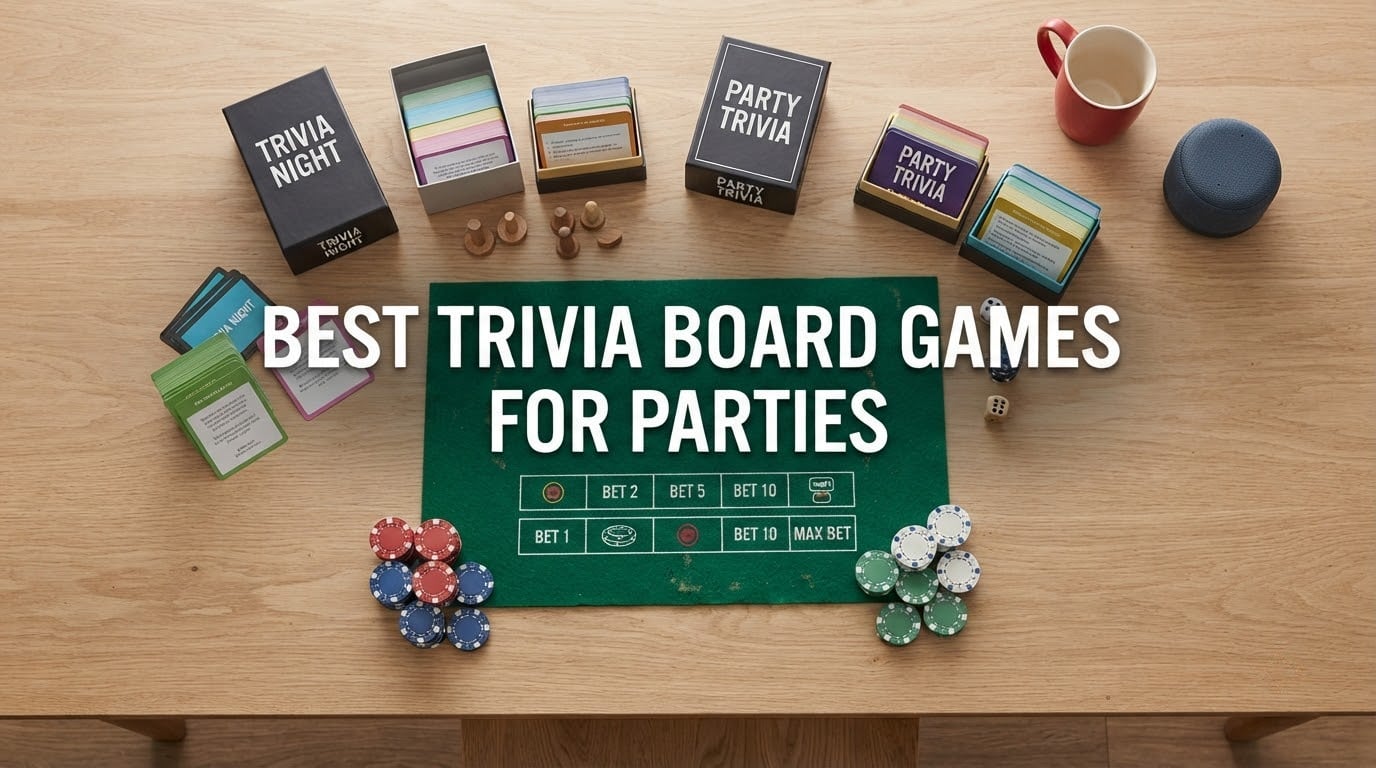
The best trivia board games for parties are the ones where a wrong answer costs you something. A game that only rewards recall hands the win to the one person in the room who reads Wikipedia for fun, and half the table checks their phone. The picks below change that math: you write an answer, wager on whose guess is closest, or invent a fake answer and try not to get caught.
Party trivia is also the lowest-stakes way to break a room of strangers. Nobody has to learn a rulebook, nobody has to lose a game they spent 90 minutes building a strategy for, and a bad round only lasts a few minutes. That is why we spent 2026‘s party season playing these boxes with groups of four, eight and ten, with and without rules-explainers in the mix.
Below you will find 12 boxes, ranked by how well each one handled a real gathering. Every review names the player count, the age floor, the time it actually took, and the deal-breaker nobody puts on the box. If your group is mostly non-gamers, jump to Wits and Wagers Deluxe and Sounds Fishy. If it is a multigenerational family table, Hitster is the one. If you want a subject rather than a format, the history and American sets are further down.
One note before we start: if your group is larger than the box says, player-count mismatch is the single most common complaint we saw, and we cover how to fix it in the buying guide at the end. Our games like Hades list is the same kind of roundup format if you want a second read on party-sized games.
Top 3 Best Trivia Board Games for Parties in 2026
These three are the ones we hand to a host without a caveat attached. Each one survives a mixed room, teaches in a single round, and produces noise and laughter in roughly equal measure.
I Should Have Known That!
- 400+ questions
- Points deducted for wrong answers
- Compact box suits more than 2 players

Wits and Wagers Deluxe
- No trivia knowledge needed
- Bets on other players
- Felt mat and wagering chips
All 12 Trivia Board Games Compared (October 2026)
This is the fast version. The player counts, formats and time commitments below are drawn from the box specifications, so you can match a game to your guest list in about fifteen seconds before you read anything else.
| Product | Specifications | Action |
|---|---|---|
| I Should Have Known That! |
|
Check Latest Price |
 Trivial Pursuit Classic Trivial Pursuit Classic |
|
Check Latest Price |
 Smart Ass Smart Ass |
|
Check Latest Price |
 Lyrically Correct 90s and 00s Lyrically Correct 90s and 00s |
|
Check Latest Price |
 Chronology Chronology |
|
Check Latest Price |
 Urban Trivia Urban Trivia |
|
Check Latest Price |
 Horror Trivia Horror Trivia |
|
Check Latest Price |
 Jumbo Hitster Jumbo Hitster |
|
Check Latest Price |
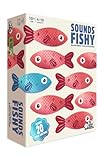 Sounds Fishy Sounds Fishy |
|
Check Latest Price |
 Outset Media American Trivia Outset Media American Trivia |
|
Check Latest Price |
| Wits and Wagers Deluxe |
|
Check Latest Price |
 History Channel Trivia History Channel Trivia |
|
Check Latest Price |
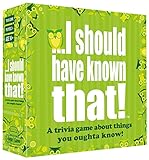
1. …I Should Have Known That! – Penalty Scoring Keeps the Whole Table in It
I should have known that! – A Trivia Game About Things You Oughta Know, Green
400+ questions on 110 cards
Points deducted for wrong answers
5.7 x 5.7 x 1.8 inch box
Pros
- Penalty scoring keeps casual players engaged to the last card
- 400+ questions give long replay value
- Compact box travels easily
- Works with more than 2 players
Cons
- Questions lean toward oughta-know general knowledge
- A knowledgeable player can run away with the round
- Box is small so cards shuffle tight
The twist here is the reason this box has gathered more ratings than anything else in this roundup, and it is not subtle. You do not earn points for correct answers, you lose them for wrong ones, which means the safest strategy is to skip anything you are unsure about. That single rule change keeps the quiet half of the table playing to the last card instead of folding after two rounds.
We played this one at a housewarming where the guest list ran from a 24-year-old to a 63-year-old and nobody knew anybody else. The card is read aloud, everyone writes a guess, and the honest ones tank their own score. It produces a specific kind of groan, and it produces it roughly 400 times before the deck runs dry.
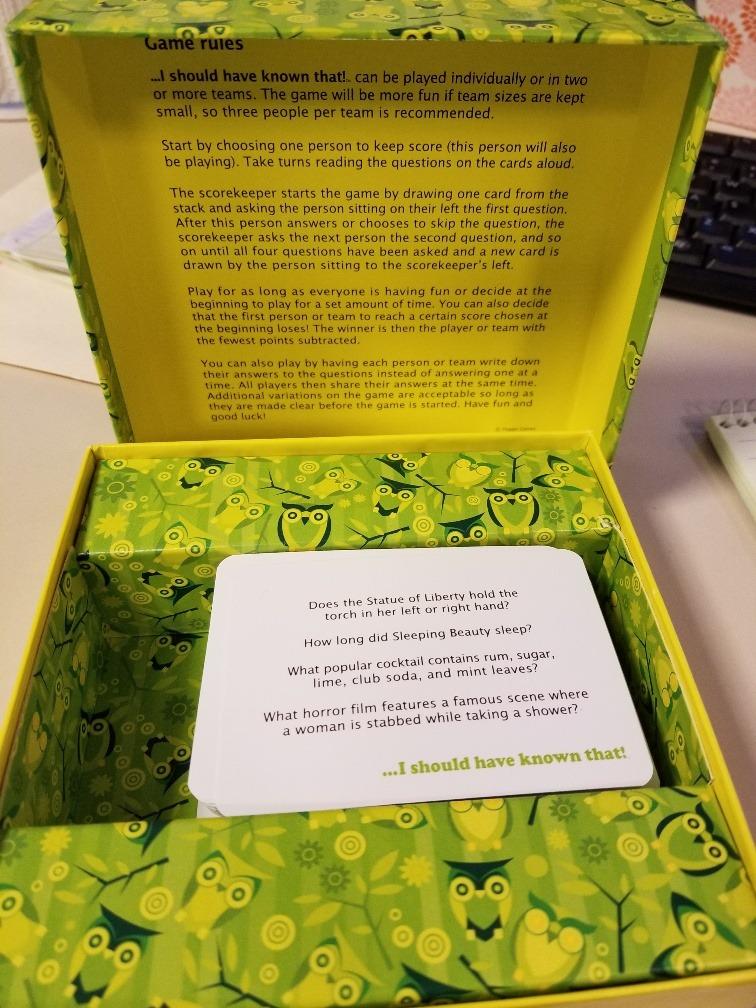
Setup is close to zero. The box measures 5.7 by 5.7 by 1.8 inches and weighs 8.8 ounces, so it lives in a jacket pocket and the entire game is a stack of cards. There is no board to unfold and no components to count, which matters when the host is also cooking.
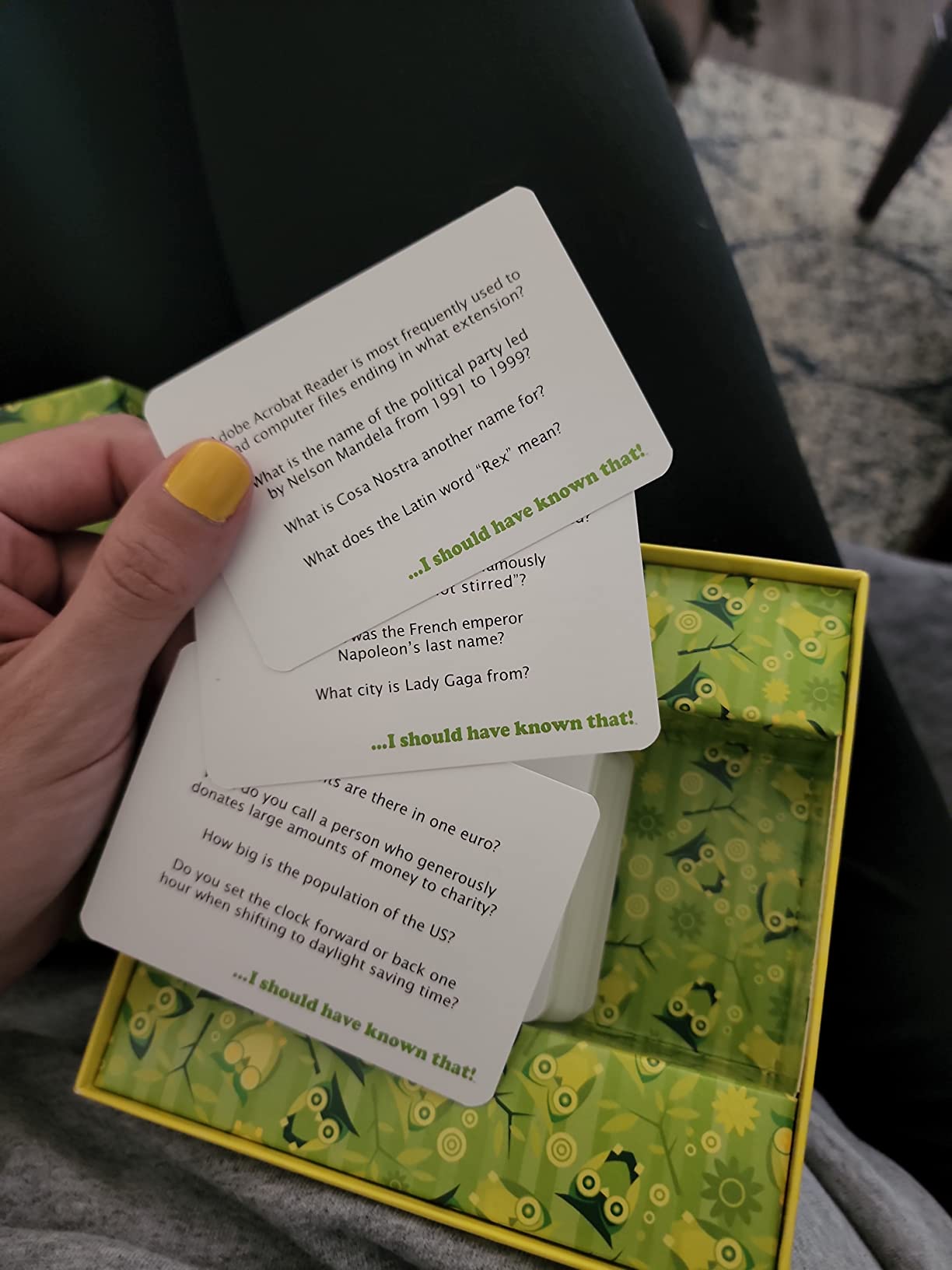
The question bank covers the kind of everyday knowledge described in the box as things you ought to know, rather than specialist subjects. That is the honest trade-off. A table of specialists will enjoy it, but a group with one historian or one sports obsessive can pull ahead, and the reviewer feedback says exactly that: many buyers report the round getting lopsided when a knowledgeable player is involved.
When this game works best
It is built for a guest list of any size above two, which almost no other box on this list can claim. Adults only, per the packaging, so it is not the choice for a table with young children. If you want a game where a complete beginner can plausibly win, this is a strong shortlist entry, because betting nothing is a legitimate strategy and the scoring punishes overconfidence rather than ignorance.
It also packs better than almost anything else here. If you are hosting in a hotel room, a rented cabin or a camping trip, the whole game fits in a bag and needs no table surface beyond a knee.
When this game is the wrong call
Skip it if your group wants to feel clever. Because points are deducted, the game quietly rewards knowing when to stay quiet, and a room full of show-offs will treat it as a challenge to be won by someone who knows when to bet nothing. That is fine, but it is not the same as a lively party game.
It is also a poor fit for mixed-age gatherings with children who can read but are under the adult age rating, and for anyone hoping for a subject they care about. The question set is broad general knowledge, so nobody gets to be the expert. If the group wants music, history or American culture specifically, the themed boxes below serve that better.
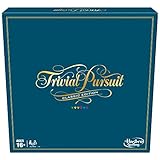
2. Trivial Pursuit Classic Edition – The Nostalgia Play With 2400 Questions
Trivial Pursuit Classic Edition Board Game for Adults and Teens Ages 16 and Up, Trivia Game for 2-6 Players
2400 questions across 6 categories
Collect 6 wedges to win
2 to 6 players, ages 16 and up
Pros
- 2400 questions rarely repeat
- Retro board recreates the original feel
- Built-in buzzer and 1 minute timer
- Everyone in the group likely knows it
Cons
- Wedge turn-taking drags when one player owns a category
- Ages 16 and up rules it out for younger children
- Slower pace than card-based party trivia
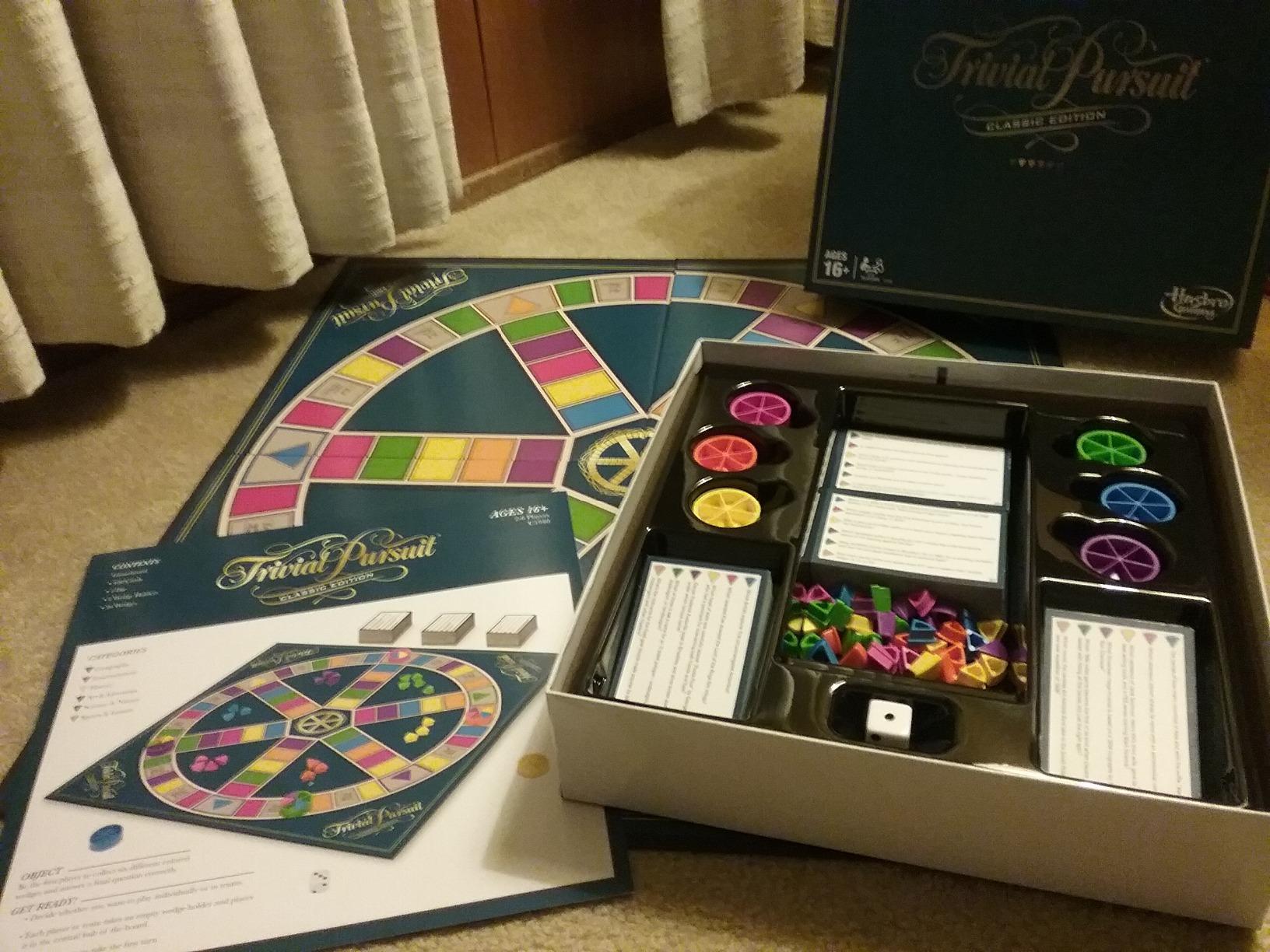
This is the box most people picture when someone says trivia board game. The retro board, the buzzer, the six coloured category wedges and the 1980s look are all intact, and with 2400 questions across Geography, Entertainment, History, Art and Literature, Science and Nature, and Sports and Leisure, you will not run out of material for a very long time.
At a party, the recognisability is the point. Nobody needs the rules explained, which means you can put it on the table while the food is still finishing. We found it works best in two teams, where the wedge-donating turn order stops being tedious and starts being a reason to root for a partner.
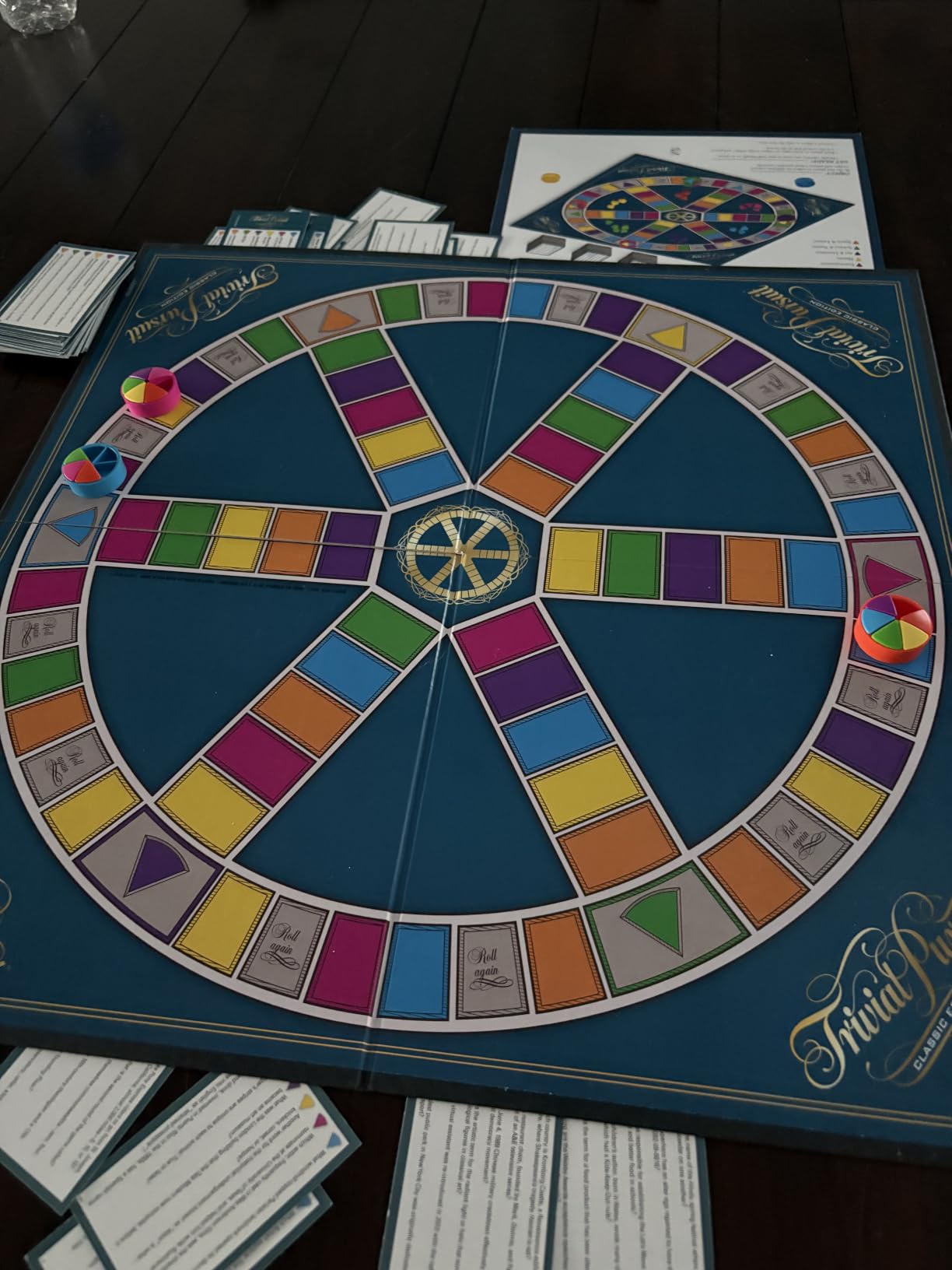
The included timer runs one minute and the buzzer handles the shouting, so rounds keep moving even when a category argument starts. Players earn a different coloured edge for each correct answer on a wedge space, and the game ends when one person collects all six and answers the final question.
The catch is the age rating. This is a 16-and-up box, and the difficulty is real quiz difficulty rather than casual party difficulty. Reviewers repeatedly note that the questions are tougher than expected and better suited to adults, which matches the frustration forum readers describe about classic quiz formats in mixed groups.
When this game works best
Choose it for a group of adults or teens, four to six people, who have played it before or who will enjoy a genuine test of knowledge. The question volume makes it the safest choice here for a household that plans to play repeatedly, and the buzzer keeps a noisy room under control in a way that a card game cannot.
It is also the one to buy if you are hosting a holiday gathering of adults and want something that requires no explanation at all. Everyone knows the shape of it, and the nostalgia factor does half the icebreaking work on its own.
When this game is the wrong call
Six players is the ceiling, and most party guest lists run past that. Do not buy it expecting to seat a group of ten unless you plan to run two tables and share an extension set, because the components are not designed for it.
It is also the wrong pick when one guest will dominate. Wedge-based turn-taking rewards the player who owns a category, and if that person is already the loudest voice in the room, the gap widens every turn. In a mixed room with a non-gamer, expect a humbling score and possibly a bad evening. If you want a game where knowing nothing is survivable, bet on Wits and Wagers instead.
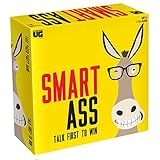
3. Smart Ass – The Shouting Game That Never Stalls
Smart Ass Fast-Paced Trivia Board Game for Families, Ages 12+
411 question cards
2 to 6 players, ages 12 and up
Who, What and Where questions
Pros
- Shouting the answer is officially allowed
- 411 cards hold up over years
- Fast pacing suits team play
- Wide age range once players can read
Cons
- Questions run harder than casual trivia for younger players
- Default and penalty scoring can feel arbitrary
- Some buyers report box condition issues
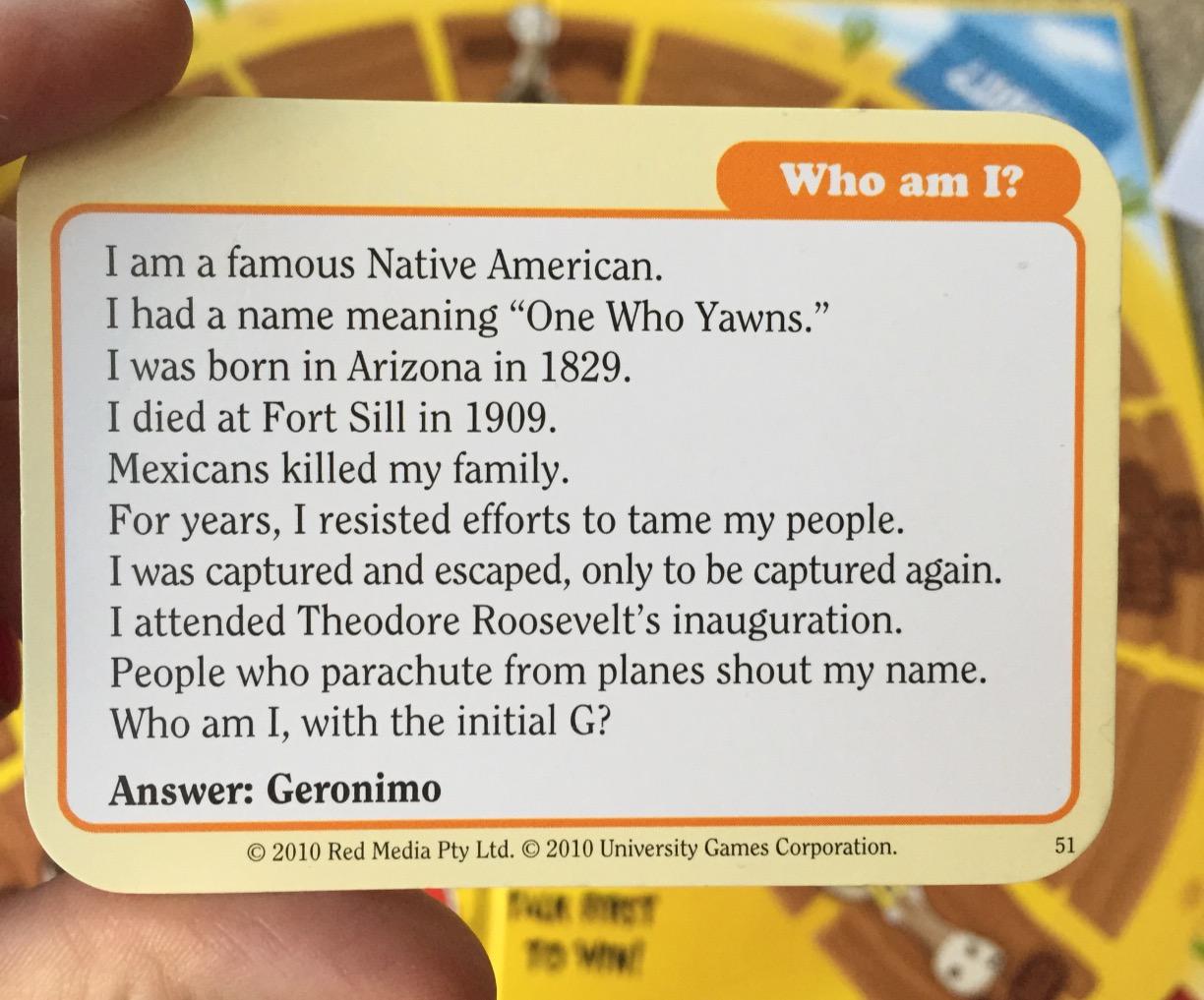
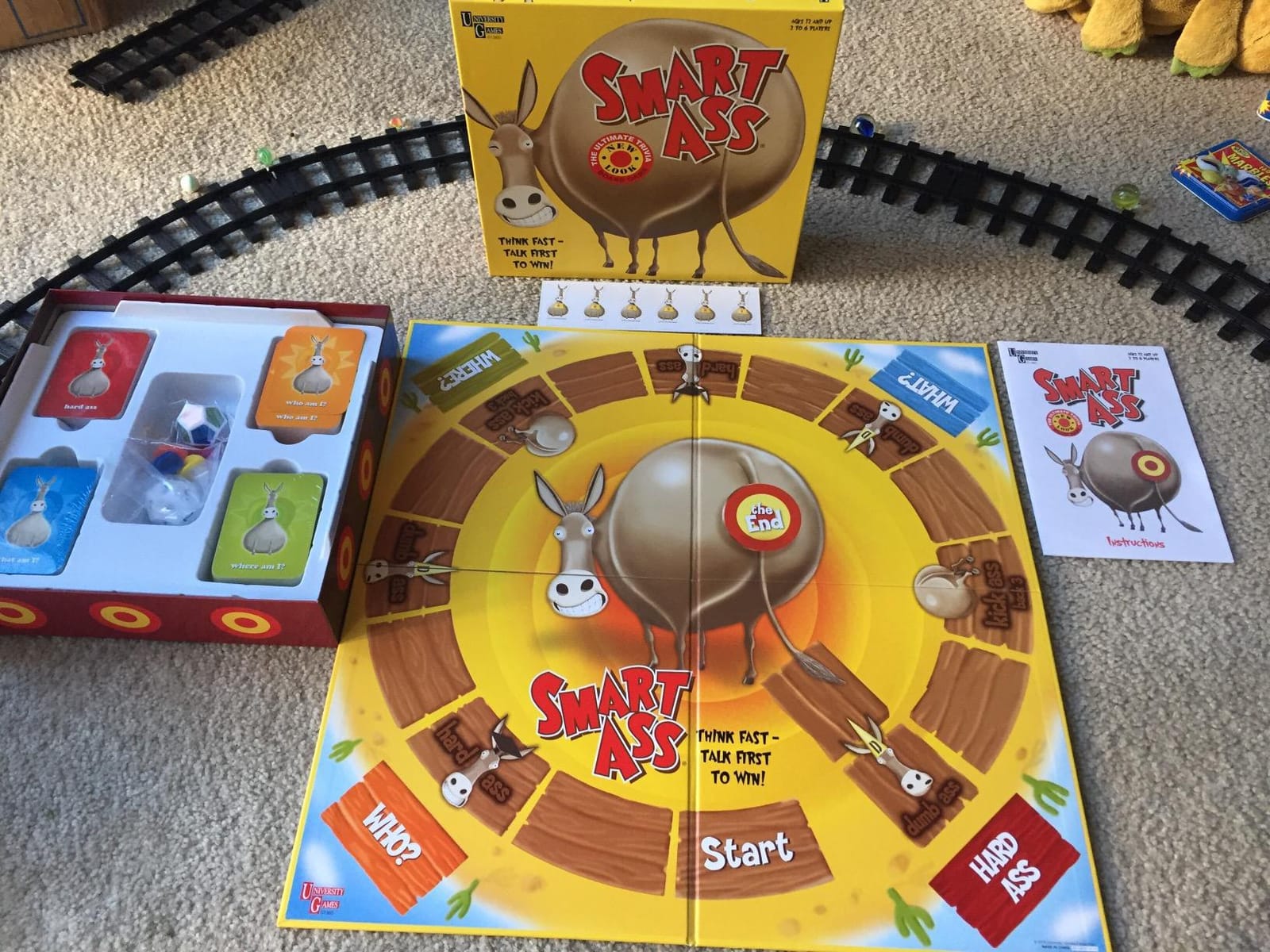
Smart Ass is the antidote to tedious trivia. The rule that makes it work at a party is simple and slightly rude: it is fine to yell out the answer even when it is not your turn, and if you are right you move closer to becoming the ultimate Smart Ass. That converts a quiet recall test into a shouting, laughing free-for-all where the quietest guest is the only one losing points.
The board, six playing pieces and stands, a jumbo category die and a jumbo movement die take about a minute to assemble. With 411 question cards covering who, what and where prompts across new topics, we never came close to exhausting it, and reviewers describe the same pattern: families buy it again and again because it survives a second and third game night.
The pace is what makes this a party box rather than a quiz box. Questions come in quick succession and the movement die keeps everyone moving, so there is no long silence while a player agonises. In team play with four or more people, it becomes a genuinely competitive night rather than a polite one.
Two honest warnings from the reviews. The question bank is harder than most people expect for teens and younger players, closer to classic quiz difficulty, so it is not a soft game for a mixed kids-and-adults table. And the scoring leans on a default or penalty mechanic that some players find arbitrary, which is worth explaining in the rules briefing.
When this game works best
This is the loud option. If your party has a group of four or more people who enjoy competing, ages 12 and up, and you want an hour of noise, this is the box. It also does well as a work event where the point is to get people talking, because a shouted answer is a conversation starter.
It pairs well with a second game. Because the pacing is fast and the rules are one rule, a round takes 20 minutes or so, which makes it easy to slot between other activities rather than dedicating the whole evening to it.
When this game is the wrong call
Do not buy it for a quiet dinner, a shared apartment, or any situation where the neighbours have thin walls. This is the loudest game in the roundup, and shouting is a rule rather than an accident.
It is also the wrong choice for a table that includes children under 12, and for a room where a quiz nerd will run away with it, because the shouting rule rewards confidence as much as knowledge. If you need a game where quiet and careful play wins, the penalty-scoring game at the top of this list is a much better fit.
4. Lyrically Correct 90s and 00s – Finish-the-Lyric for Hip-Hop and R&B Nights
Lyrically Correct ’90s & 2000s Hip-Hop & R&B Music Trivia Card Game
140 trivia cards plus 10 challenge cards
For 2 or more players
3 x 2 x 3 inch box
Pros
- Fill-in-the-lyric format is more active than straight question and answer
- Covers era-defining 90s and 2000s artists
- Strong nostalgia icebreaker at reunions
Cons
- Narrow genre focus limits mixed-music groups
- Challenge cards are used up fast
- A lyric game needs an actual music fan in the room
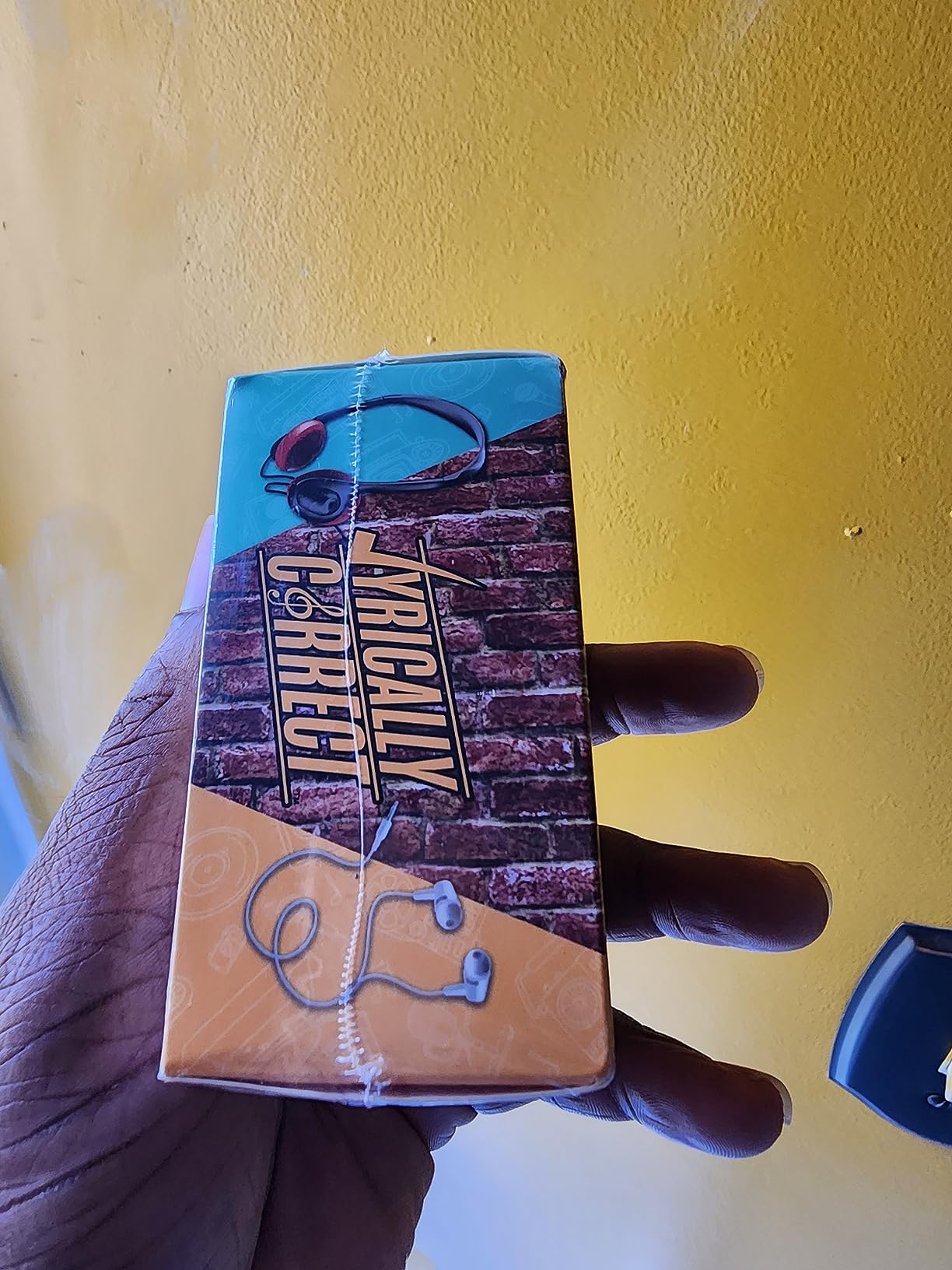
This is trivia with a single mechanic that changes the feel of a room. Instead of asking questions, the card gives you a lyric with a word missing, and the race is to finish it. That makes it far more active than a question-and-answer game, and far less passive than sitting through someone else being tested.
The catalogue is specific and unapologetic, drawing on artists like TLC, Mary J. Blige, Outkast, Usher, Missy Elliott, Notorious B.I.G. and Wu-Tang Clan. For a group that grew up on this music, the nostalgia is the entire point, and reviewers describe it as the thing that gets a family gathering talking across generations.
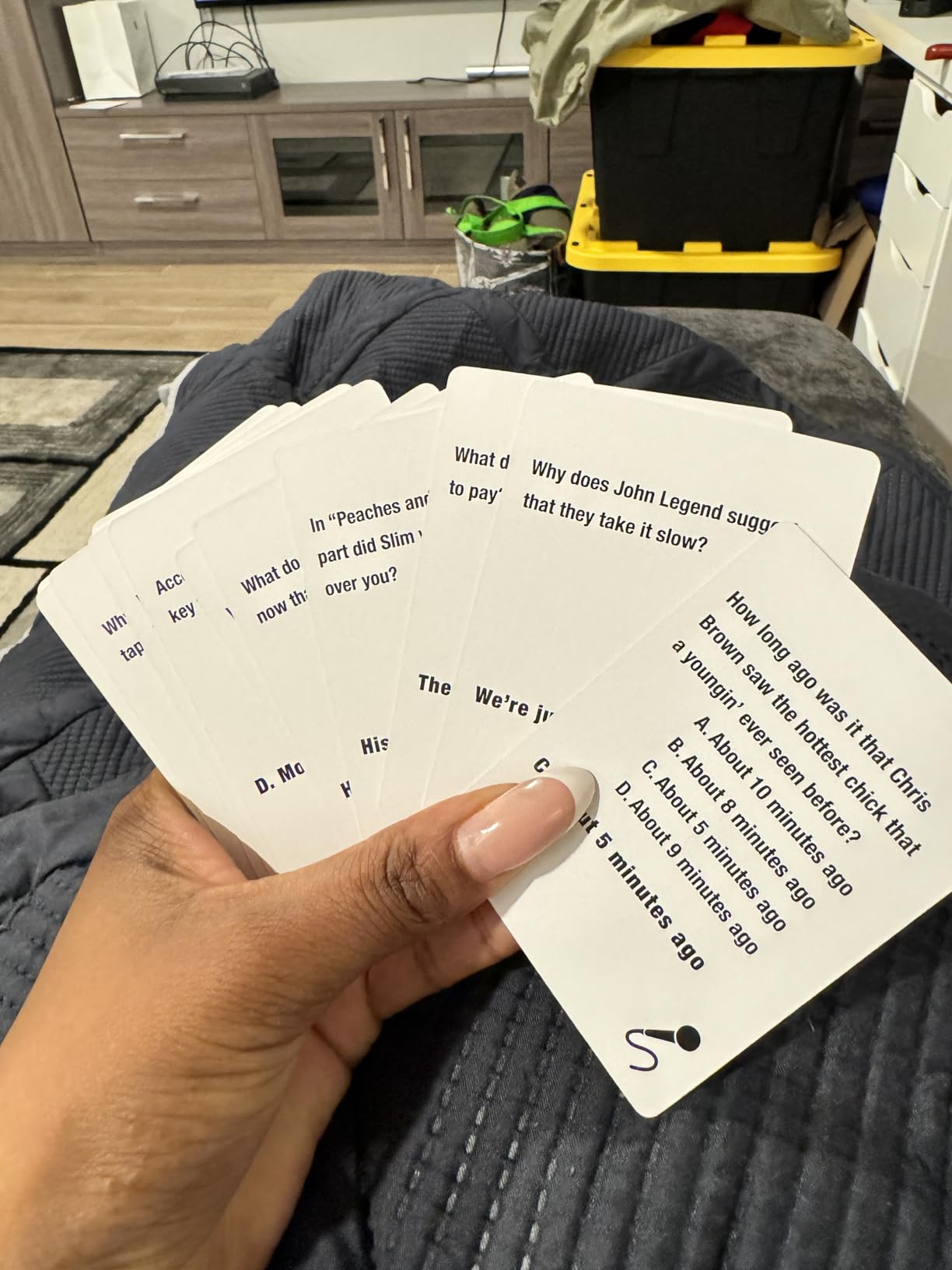
You get 140 trivia cards plus 10 challenge cards, and the box is tiny at 3 by 2 by 3 inches and 9.1 ounces. Setup is basically zero, which makes it an easy add-on to a party that already has a main game, and it works for two or more players so you can split a large group across two tables and compare scores.
The limitation is the same as the appeal. If half your guests listen to different music, the game stalls on cards they have no shot at, and reviewer feedback is blunt about the narrow appeal outside the 90s hip-hop and R&B canon. The lyric prompts also get consumed quickly, so a big group playing several rounds will exhaust the interesting ones first.
When this game works best
Pick it for a birthday, a cookout or a family reunion where the guests share a musical generation. It is a good second game rather than a main event, because it needs no table space and no equipment beyond the cards and a flat surface to put them on.
It also works as an icebreaker between people who have not met. Asking someone to fill in a lyric is far less exposing than asking them to prove they know the answer, and the laughs come from recognition rather than humiliation.
When this game is the wrong call
Do not buy it as your only game for a general party. Any guest outside the genre is sitting out for most of the deck, and a party where half the table is bored is a failed party game no matter how good the questions are.
It is also a poor choice for large groups, despite the 2-or-more player label, because everyone needs a readable card and the deck runs thin. If you want a music game that a mixed and multigenerational room can all play, the Hitster box below covers a century of radio hits and keeps working well past the first session.
5. Chronology – 800 Events and the Fastest Setup in the Roundup
Buffalo Games – Chronology – The Game Where You Make History – Historical Timeline Trivia for 2+ Players, Ages 14+
800 updated historical events
First to 10 timeline cards wins
2 to 8 players, ages 14 and up
Pros
- 800 updated events give enormous replay value
- Scales from 2 to 8 players
- Playing within minutes of opening the box
- Teaches something without feeling like school
Cons
- Timeline placement is a narrow format that can tire
- History buffs dominate mixed-experience groups
- Less trivia in the conventional sense
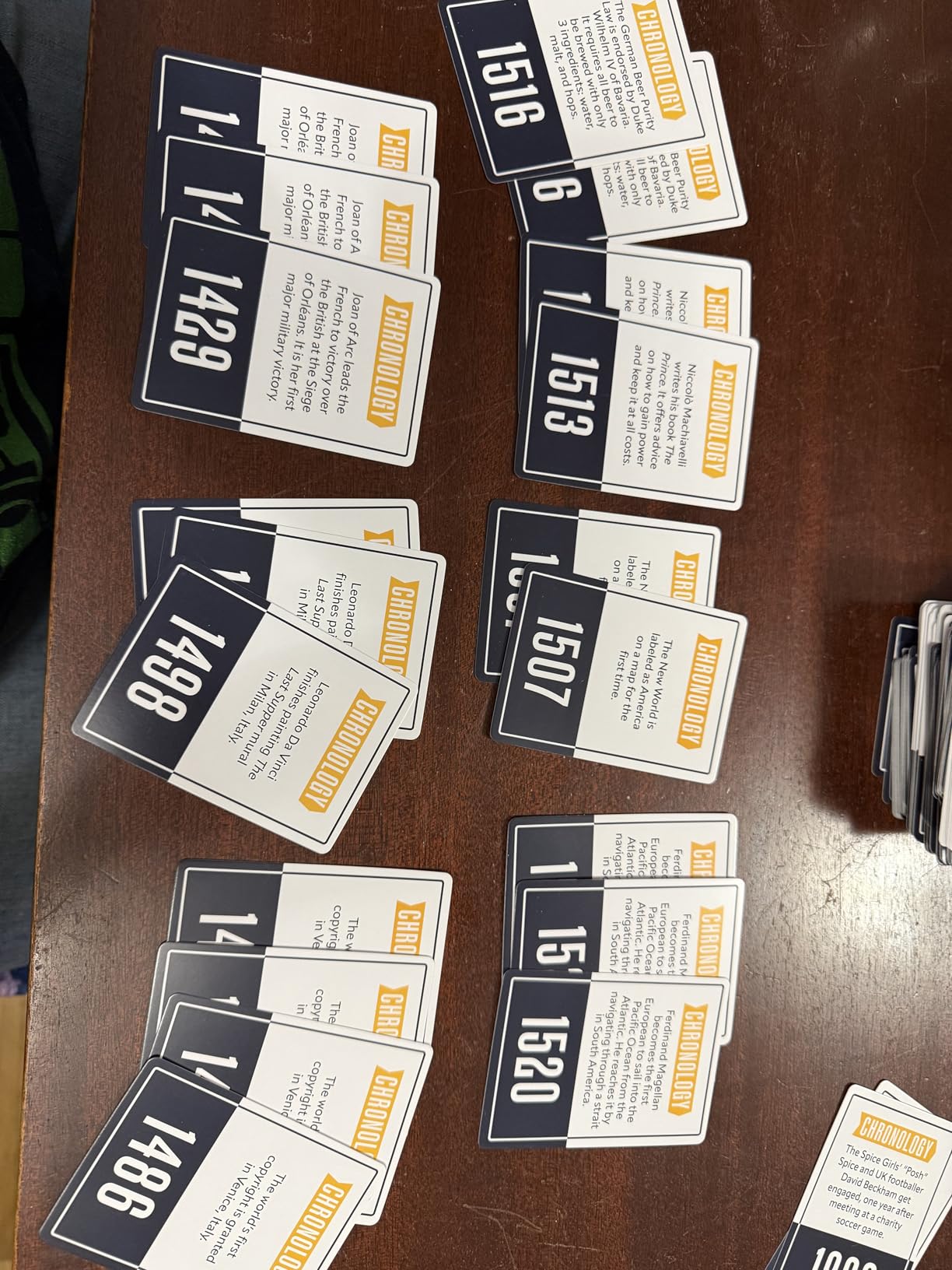
Chronology is not trivia in the quiz sense. You each draw a historical event card and place it on a timeline, and the game is about knowing whether the printing press came before or after the fall of Rome. It earns a place on this list because it is the fastest-starting, least-confusing box we played, and because almost nobody can get a ten-card timeline right.
Simple rules mean you are playing within minutes, and the first player to build a timeline of 10 cards wins. It scales from 2 to 8 players, which covers a date night and a family dinner with the same box, and the current Anniversary Edition carries brand new cards spanning 2,000 years of history, refreshed with recent additions.
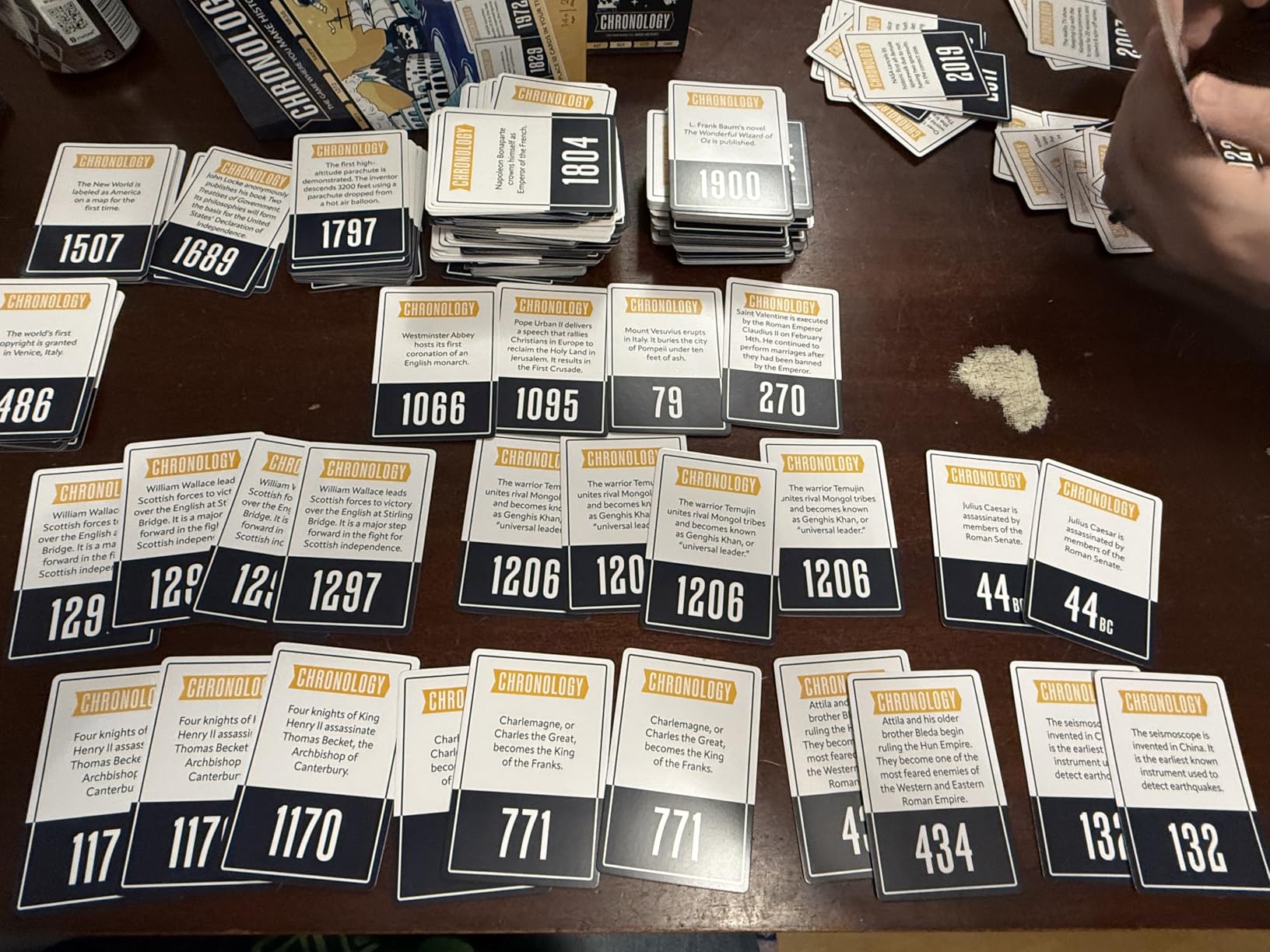
The 800-event bank is what makes this a repeat-purchase rather than a one-night purchase. At our table, a group of seven played three games in one evening without anyone noticing the deck shrinking, and reviewers cite the same updated content as the reason it keeps getting pulled out.
It is also quieter than most games on this list, which makes it the safe pick for a shared space or a dinner table where conversation matters more than volume. The board is 2 by 8 by 10.63 inches and weighs 1.4 pounds, so it is stable and easy to pass around.
When this game works best
Choose it for history-minded groups, holiday gatherings and family reunions where the age floor of 14 works. It is a genuinely good teaching game that nobody experiences as teaching, and the 2-to-8 range means it handles both a couples evening and a table of eight without any adaptation.
It is also the best choice here if you want a game that does not end in elimination. Nobody drops out, nobody sits out, and a slow player is not punished with a long wait, which is exactly the failure mode that kills a party game.
When this game is the wrong call
Skip it if your group is not interested in history, because placement quickly becomes a memory test rather than a discussion. Reviewers also note the format is narrow enough to feel repetitive after a few sessions, so it works best as one game in a rotation rather than the only box you own.
And expect the history buffs to win. If you are hosting a mixed group where one person knows the Roman emperors and nobody else does, the gap is brutal and there is no wagering mechanic to soften it. For a room like that, a bluffing or betting format keeps the evening competitive for everyone.
6. Urban Trivia – One of the Few Boxes That Actually Seats 20 Players
Urban Trivia – Black Card Game for The Culture! New & Improved Fun Trivia on Black TV, Movies, Music, Sports, & Growing Up Black! Great for Adult Game Nights and Family Gatherings.
4 to 20 players
Ages 13 to 75
Cardstock deck in a 2.7 x 1 x 3.6 inch box
Pros
- Scales to 20 players so it handles a large gathering
- Questions rooted in Black TV movies music and sports
- Prompts spark conversation long after the game ends
Cons
- References skew older and suit players roughly 45 and up
- Narrow subject matter limits mixed-interest groups
- Needs cultural familiarity to score well
Almost every box in this roundup tops out somewhere between 4 and 10 players, which is precisely why so many parties go badly. This one is built for 4 to 20, which means you can seat a large family gathering at one table instead of splitting into two games and comparing scores over a phone call.
The content is the reason to buy it. Questions and challenges cover Black movies, music, legendary TV shows and sport, sourced from the brand’s street interview work rather than assembled from a generic database. Reviewers consistently report that the room laughs and that the conversation continues long after the last card, and the game is explicitly pitched at ages 13 to 75.
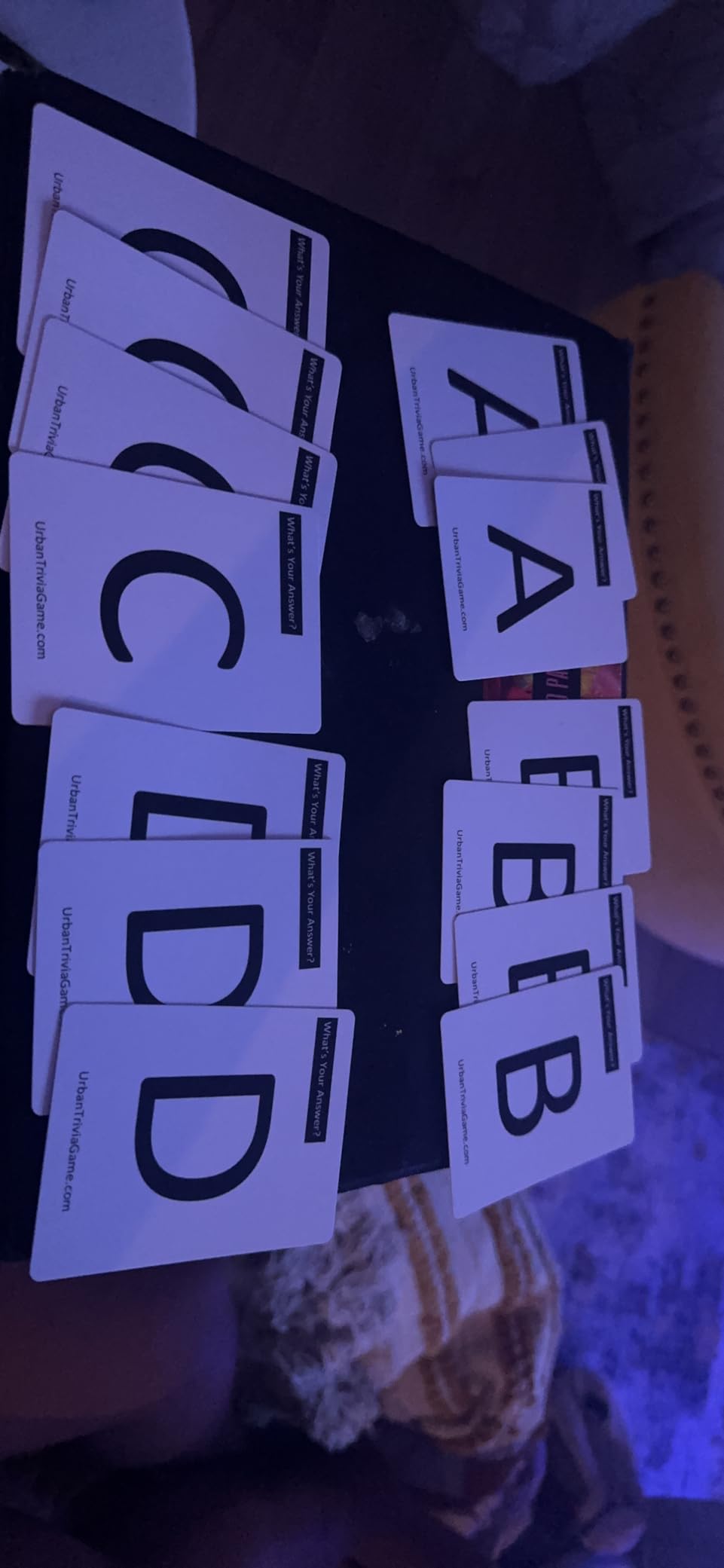
Mechanically it is a friendly card game with an easy and a harder question, so people at different skill levels can both score. The whole box is 2.7 by 1 by 3.6 inches and weighs 5.6 ounces, so it is a deck you can hand around rather than a table-filling centrepiece.
The honest caveat, repeated in the reviews, is that the references skew toward an older audience. If most of your guests are under 40 and outside the culture, many answers will land flat and the game slows down. This is a knowledge game with a specific subject, not a neutral crowd-pleaser.

When this game works best
It fits large family gatherings, reunion dinners and work events where the guest list is big and culturally specific. A group of 14 people at one table is the scenario this box is designed for, and it removes the awkward math of splitting a party into two games with mismatched materials.
It is also a good bridge game. The prompts are personal and specific rather than abstract, so even people who miss an answer tend to have a reaction worth talking about.
When this game is the wrong call
Do not buy it for a general-interest crowd expecting a neutral quiz. The subject matter is deliberately narrow, and players who have no familiarity with it will sit quietly while others score, which is the opposite of what you want from a party game.
It is also a poor pick for a group centred on children, since the 13-and-up floor rules out younger siblings. And if you need a large-group game where nobody can be excluded for lack of knowledge, the betting and bluffing formats later in this list do that better.
7. Horror Trivia – 20 Minutes and a Weapon Card for Every Win
Horror Trivia Card Game – Test Your Knowledge of Horror Pop Culture Facts with 300 Scary Fun Trivia Questions
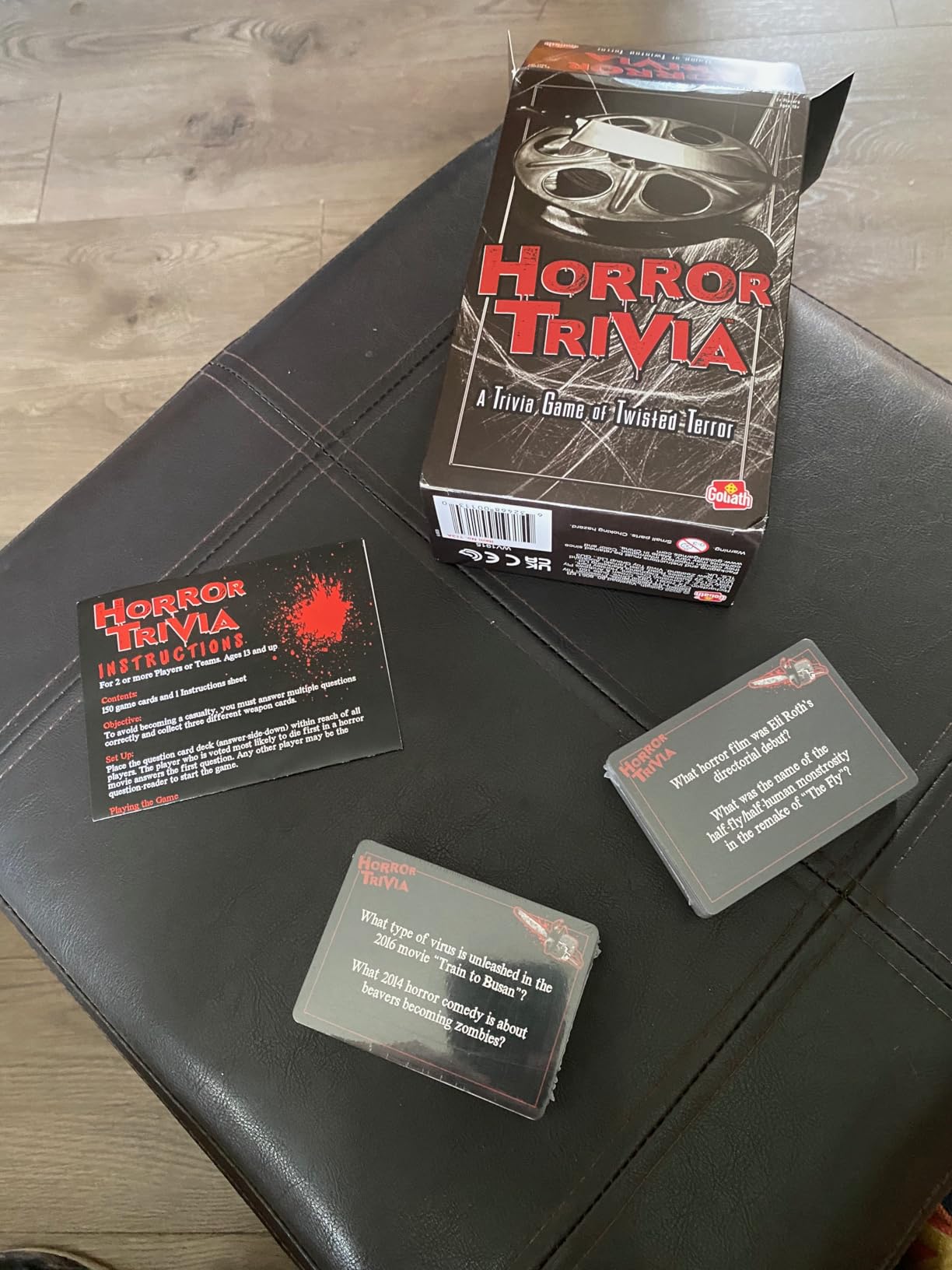
300 questions on 150 cards
20 minute play time
2 or more players, ages 13 and up
Pros
- Mixed difficulty keeps novices and genre fans competitive
- 20 minutes fits into any party schedule
- Weapon-card collecting gives straight trivia a game feel
- Doubles as decor and a travel filler
Cons
- Heavy franchise repeat once the deck is learned
- One playthrough largely exhausts the questions
- Needs an existing interest in horror films
What separates this from a plain question deck is the win condition. You answer multiple questions correctly to collect weapon cards, and the first person to three weapons wins, so the game has forward momentum that a pure trivia pile does not. It also means you can stop after 20 minutes and the result still feels like a result.
That timing is the selling point at a party. With 150 cards holding 300 questions, an estimated 20 minute play time and an age floor of 13, you can drop it into a Halloween party, a film night or a house party where the schedule is loose, and it will not eat the evening.
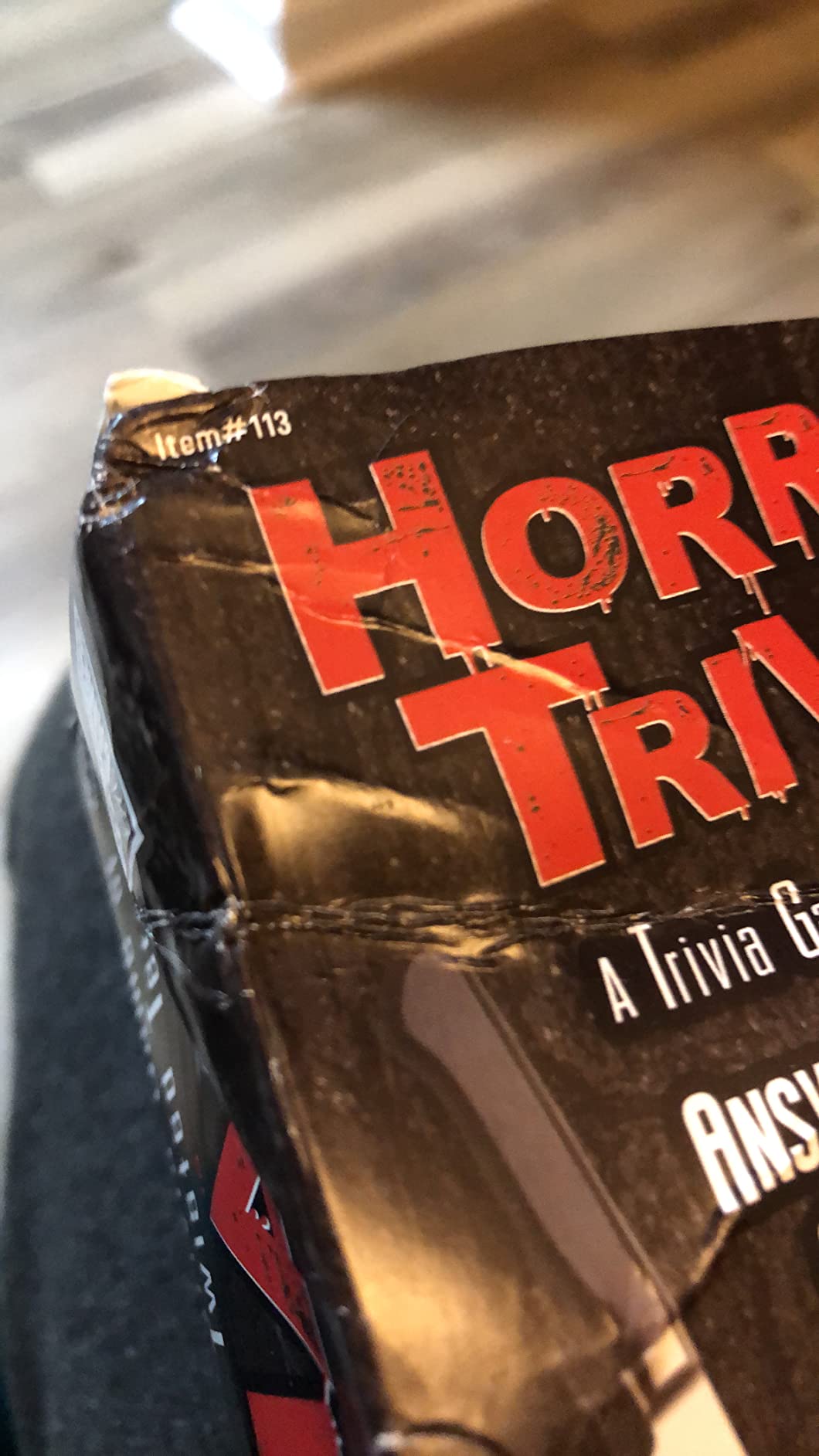
The question set mixes easy prompts for horror novices with harder ones for genre loyalists, and the subject range covers creepy dolls, psycho killers, haunted places and legendary monsters. That difficulty spread is what allows a mixed room to play without one person running away with it.
It is also a good gift and a good prop, since the black card box fits a Halloween table. For travel it is a deck and nothing else, weighing almost nothing and measuring 4.75 by 2.56 by 7.88 inches.
When this game works best
Buy it for a Halloween party, a film-watching night or a group of people who already argue about horror movies. The short play time and the collecting mechanic make it a reliable gap-filler, and it works equally well for two people or a dozen once you split the deck.
It suits an age floor of 13 and up, so it is a safe pick for a house with teenagers rather than small children, and the content stays playful rather than graphic.
When this game is the wrong call
Do not make it a repeat-play staple. Reviewers consistently describe it as a one-and-done game, because the question set leans heavily on the same franchise films and once the table has played it through there is very little left. Repetition is the single most common complaint about trivia boxes in general, and this is the sharpest version of it.
It is also the wrong pick for a room without a shared interest in the genre. A group that does not care about horror spends the entire game listening to people who do, and the mixed difficulty spread does not solve a table that has no interest in the subject at all.
8. Jumbo Hitster – The Music Game a Mixed-Age Room Can Actually Finish
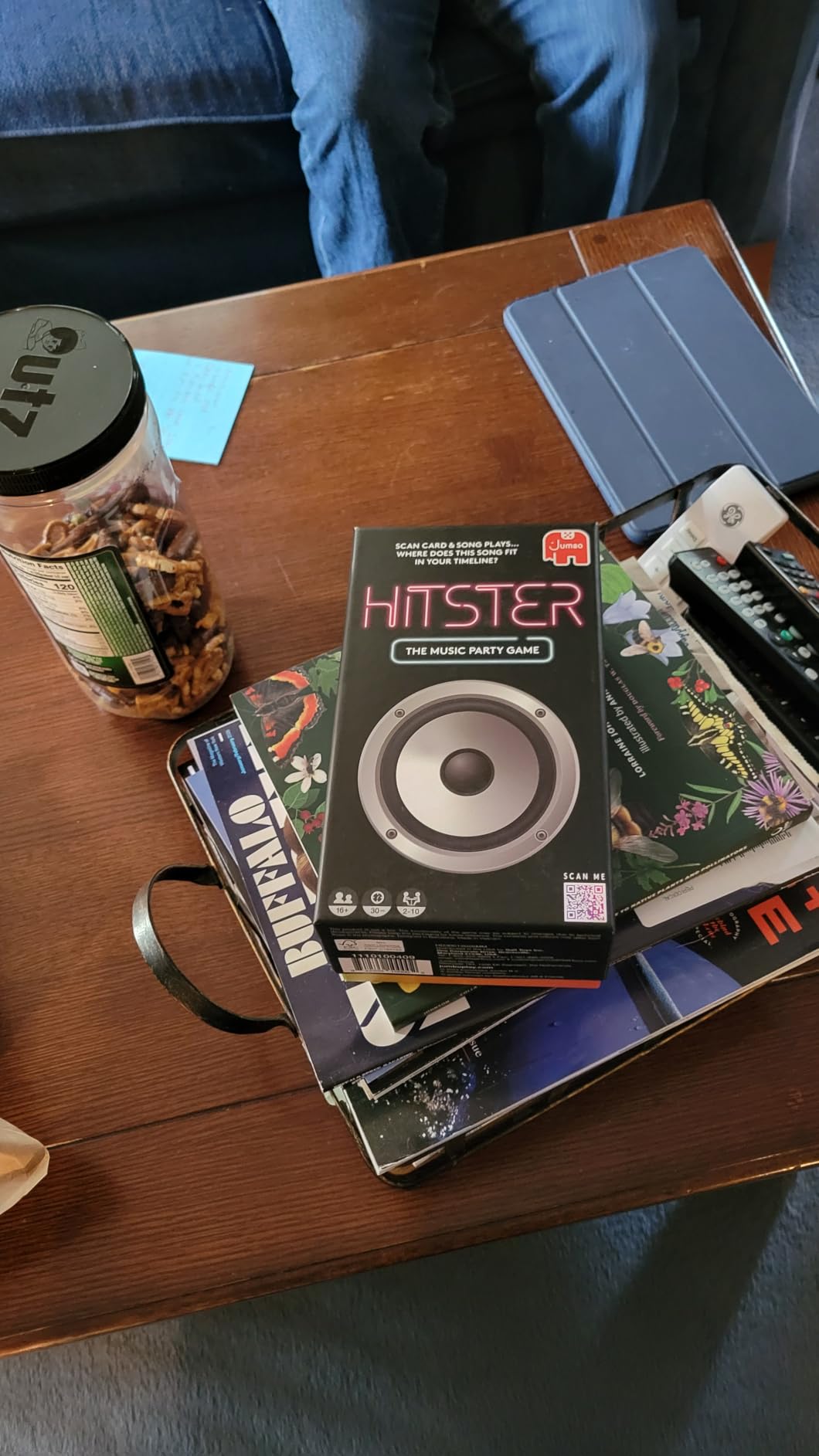
Jumbo Hitster – The Music Fun Party Quiz Card Game, 2-10 Players – 300 Plus Iconic Music Hits – Great for Adult and Family Game Night
300+ music cards with QR codes
2 to 10 players
8.5 x 4.5 x 3 inch box
Pros
- Rules explain in about three minutes
- Covers music from the 1920s to the 2020s
- Over 300 songs keeps rounds feeling different
- Compact box travels well
Cons
- Needs a streaming subscription for full-song playback
- A few cards carry explicit lyrics
- No musical theatre or Disney songs
Hitster solves the problem that kills most music trivia at a family party. A niche game plays to one generation and leaves everyone else at the table. This one covers the biggest hits of the last 100 years, from the 1920s to the 2020s, so grandparents and teenagers both have songs they can claim.
The setup is the fastest here. Choose a music card, scan the QR code with the free Hitster app, and play. Reviewers describe the rules as a three-minute explanation, which matters when half the room has never played a board game before and you need them participating within five minutes.
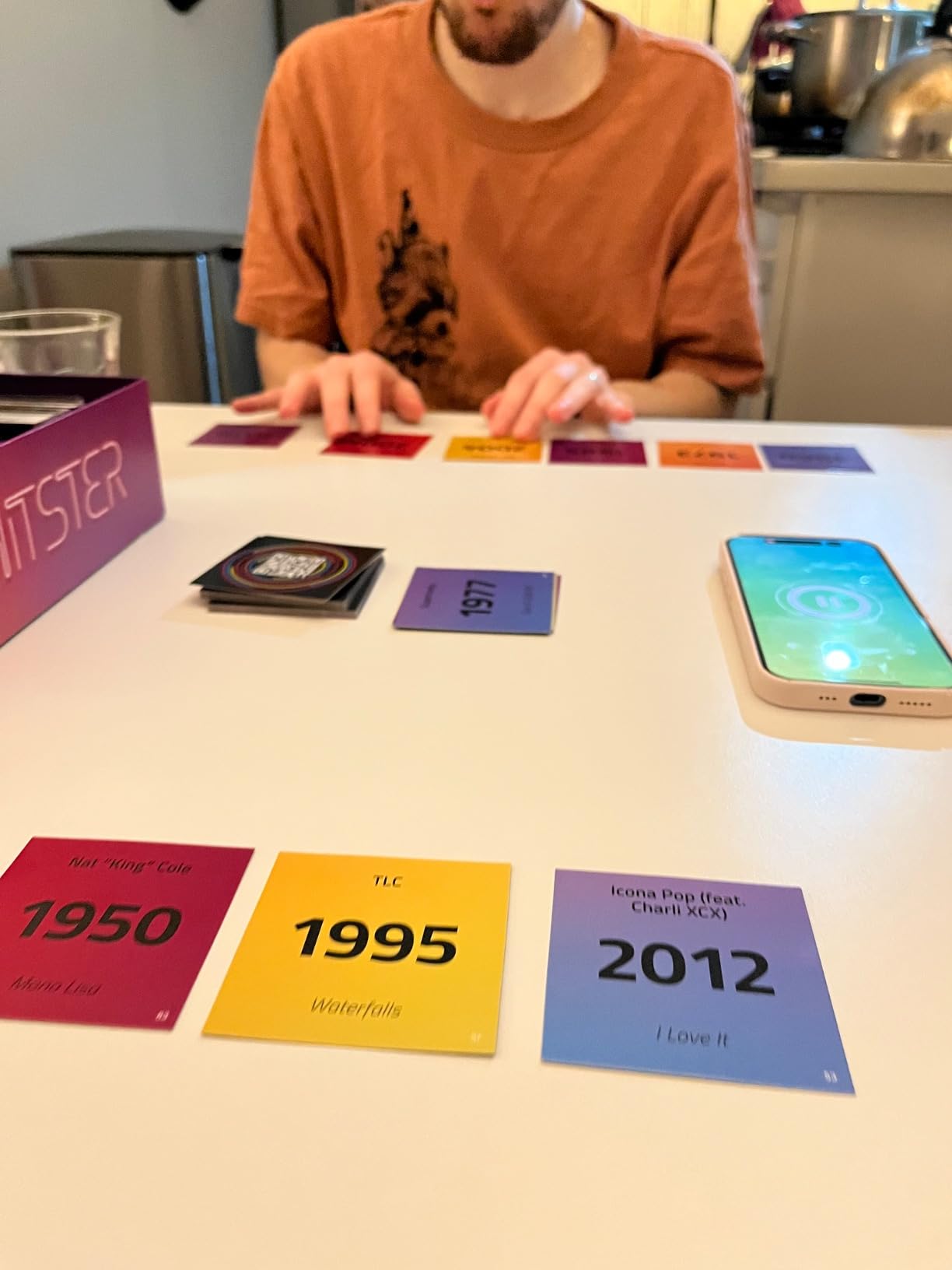
You get 300-plus music cards with QR codes and 37 chips, and there are multiple modes: competitive showdowns, cooperative teamwork or solo challenges. That flexibility means the same box works for a competitive group and for a family that just wants to sing along, and it seats 2 to 10 players.
Two practical notes. Full-song playback needs a music streaming subscription, otherwise you get a short clip, so check that before the party rather than during it. And a handful of cards carry explicit lyrics, which is fine for an adults-only night and worth pulling for a mixed-company table.
When this game works best
It is the strongest multigenerational pick in this roundup, and the right answer for a holiday gathering, a family reunion or a house party with a wide age spread. Because the song list spans a century, a group of 10 mixed in age and taste can all contribute wins, which is unusual for a themed game.
It is also a good travel and second-game box. The 8.5 by 4.5 by 3 inch package is compact, and the cooperative mode works nicely as a wind-down activity after something competitive.
When this game is the wrong call
Do not buy it for a room without reliable app playback. If nobody has a streaming subscription set up on the device you are using, the game becomes a clip-guessing game, and a 10-second excerpt of a song most people know is a harder and less fun proposition than it sounds.
It is also not the right pick for music fans who want depth. The list is built on radio-style hits, so musical theatre, Disney songs and much of the album-driven canon are simply absent. For a dedicated music party, the lyric game earlier in this list rewards knowing songs properly instead of recognising them.
9. Sounds Fishy – Bluffing Trivia for Groups Full of Non-Gamers
Sounds Fishy: Funny Bluffing Trivia Board Game for Families, 4-10 Players
Invent fake answers, then bet on one
4 to 10 players
15 minute play time
Pros
- Works with non-gamers because inventing beats recalling
- Packs well for 8+ groups
- Quick to learn and quick to play
- 20 bonus question cards add variety
Cons
- Memorised answers make it a one-and-done game
- Cardboard fish tokens bend
- Requires solid English reading skill
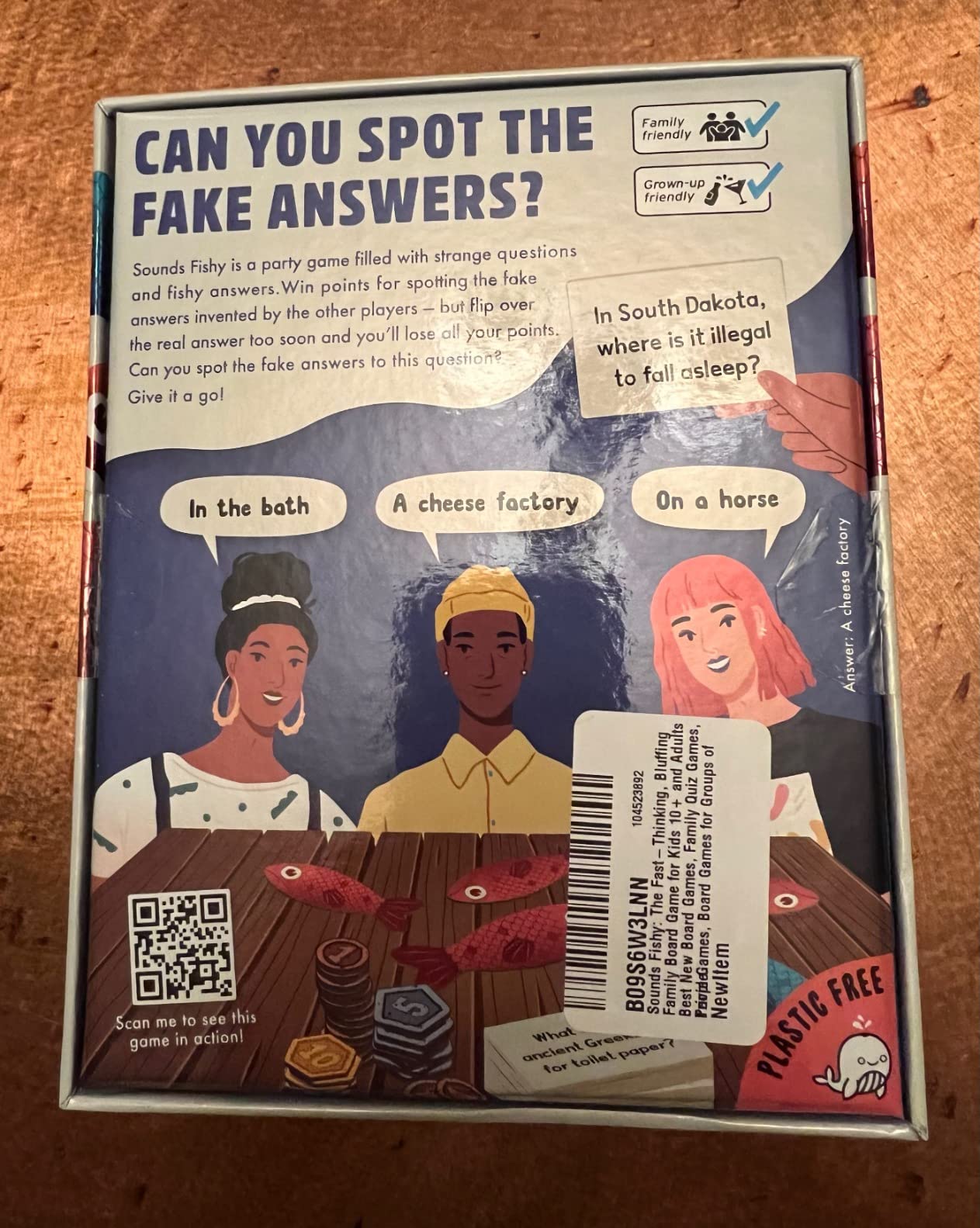
Most trivia games test memory. This one tests nerve. You get one correct answer and invent the rest, then everybody bets on which one is true, and the bluffing becomes the game rather than the trivia. For a room of people who claim to hate board games, that is a remarkably effective conversion.
It is quick to learn, quick to play at around 15 minutes, and built for 4 to 10 players. Reviewers report families and groups of 8 or more getting great results, and the small 7.4 by 5.8 by 2.2 inch box is easy to pack for a trip. The Amazon-exclusive edition includes 20 bonus question cards to stretch the deck.
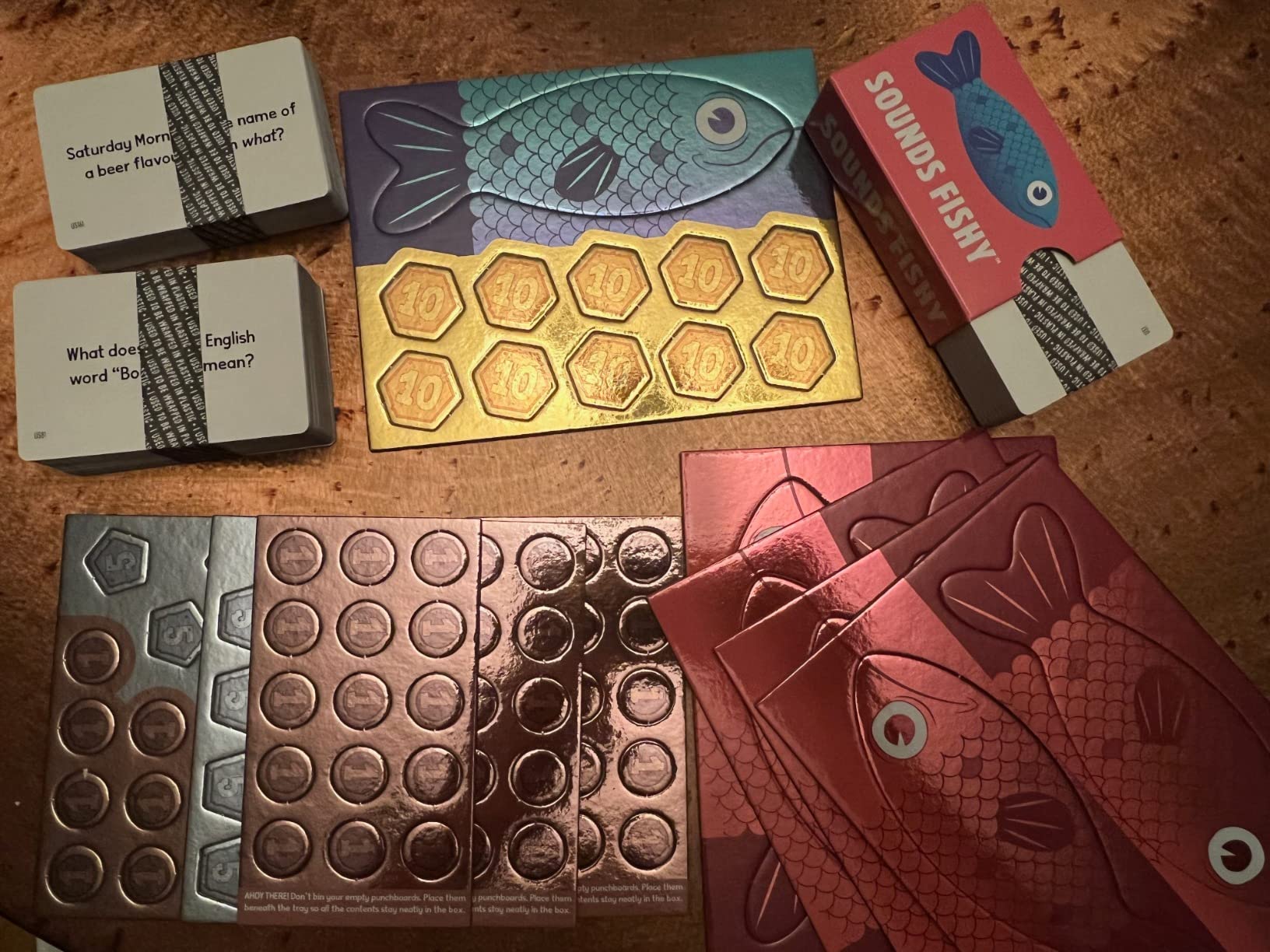
The design intent is a mix of creativity, trivia and a little sneakiness: you get the true answer, invent your own fake ones, and then push your luck on someone else’s guess. Because nobody can be caught out by not knowing something, the person who usually loses at quiz games has a genuine shot, which is the whole point at a mixed party.
The failure mode is repetition, and it is sharper here than in most boxes. Once the table has played through, people remember the good fake answers, and reviewers call it effectively a one-and-done game. The fish tokens are also bendable cardboard, and a bent blue fish is a bent blue fish, so handle them gently if the box travels a lot.
When this game works best
Choose it for a group with a wide skill range, ages 10 and up, where one or two guests normally dominate trivia and you want them to. Bluffing equalises a group better than almost anything else on this list, and it produces the loudest per-minute entertainment in a small box.
It is also a strong pick for two consecutive parties in a row, since you can bring it out first to break the ice and then switch to something with more depth. Guests who enjoy it tend to remember the fake answers more than the real ones.
When this game is the wrong call
Do not expect it to last. The single most common complaint is that one full playthrough exhausts the material, so buying it as a long-term family staple will disappoint. If replayability is your priority, pick a box with a large question bank instead.
It is also a poor fit for younger children and for anyone who finds reading difficult, because the game depends on reading and writing invented answers quickly. In a group with kids under 10, the adults will finish long before the children do.
10. Outset Media American Trivia – Five Categories and 1000 Questions
Outset Media American Trivia Game (Amazon Exclusive) – 5 Categories to Choose from and 1,000 Questions – for Ages 14 and up
1000 questions across 5 categories
2 or more players, ages 14 and up
Score pad and pencil included
Pros
- Five balanced categories keep mixed interests engaged
- 1000 questions give real variety
- Rules learn quickly for holiday gatherings
- Sturdy thick cards and packaging
Cons
- Some questions are dated or obscure
- Difficulty skews adult
- Thin card count for extended play
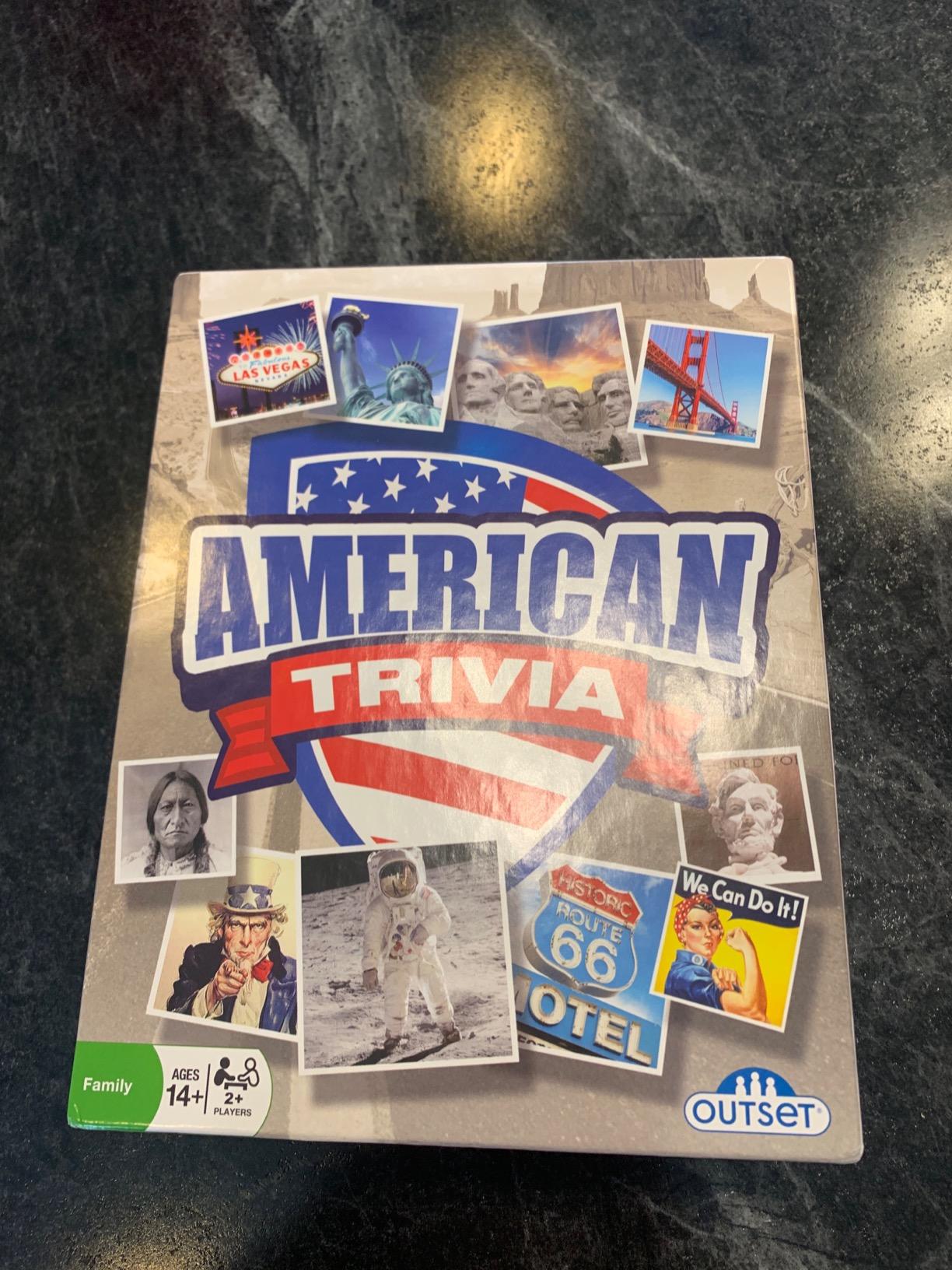
This is the reliable holiday-table filler. You get 100 double-sided cards carrying 1000 questions across Geography, History, Pop Culture, Sports and General trivia, along with a score pad, a pencil and instructions. The five categories do the load-bearing work, because a guest who loves sport and a guest who loves geography are both getting questions they can win.
Nothing about it is flashy, and that is the appeal at a party. It drops into a gathering with almost no briefing, and reviewers frequently describe it as a dependable option for holiday tables and family get-togethers where you just need something to hand out after dinner.
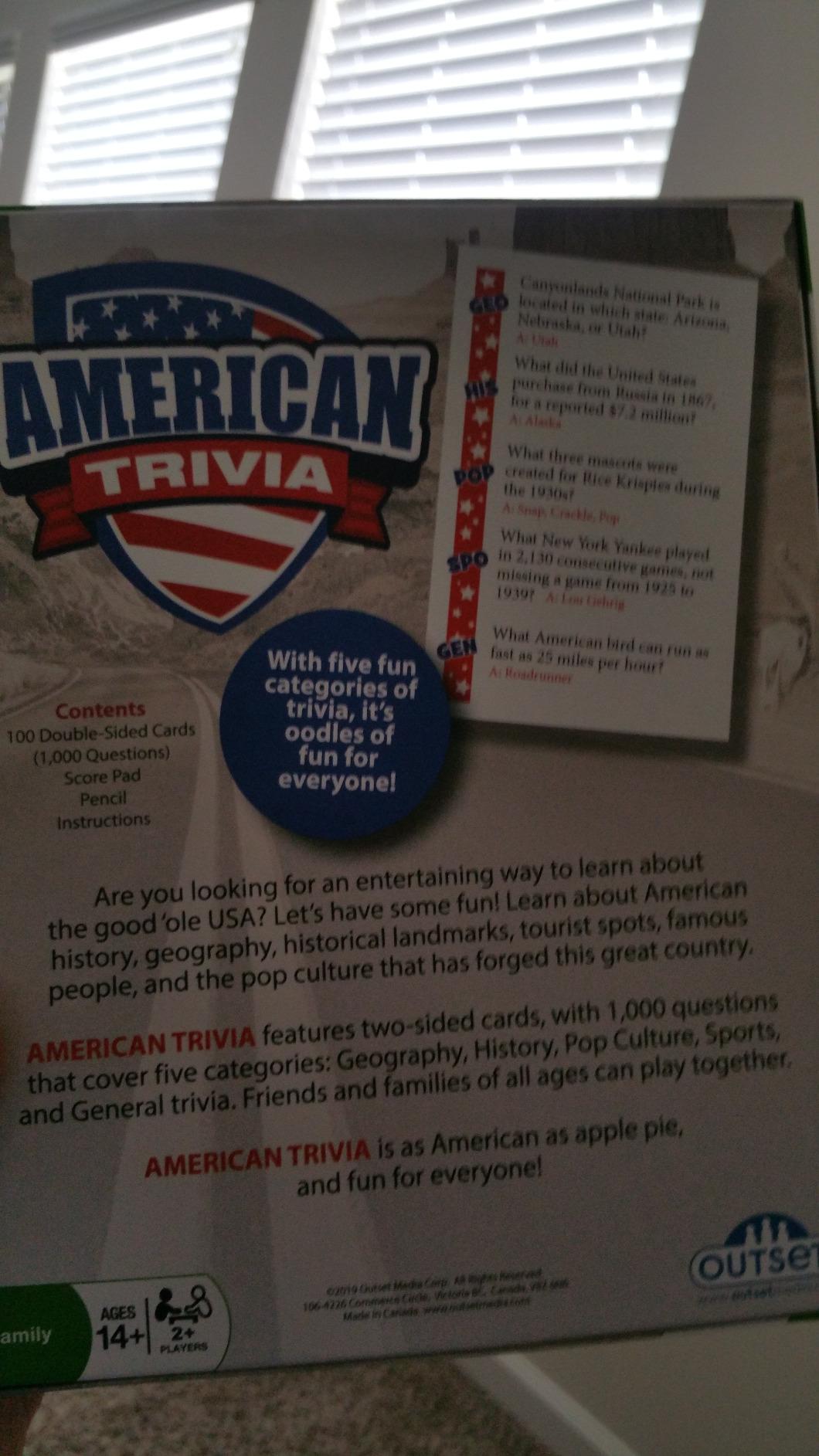
The mix of easy and challenging questions helps in mixed rooms, and the cards are thick enough to survive being handled by a room full of people passing them around. It works for 2 or more players, which means you can split a big group across two tables, and the whole box is 6 by 8 by 2.5 inches at 15.2 ounces.
The complaints are consistent across reviews. Some questions are dated or obscure, which frustrates players expecting current pop culture, the difficulty is adult-leaning so it is not a children’s game, and the 100-card count is thin if you are planning many sessions of dedicated adult play.
When this game works best
It suits a mixed-interest group of adults and teens on a holiday table, especially where nobody wants to be stuck on a subject they know nothing about. Five categories is the best insurance in this roundup against a table with a maths person, a sports fan and someone who only watches cooking shows.
It is also easy to hand to guests who arrive late. Because it is 2 or more players with no board, you can start a second table at any moment without preparation.
When this game is the wrong call
Do not buy it for a group that wants current culture. The question bank includes items reviewers call dated or obscure, and that mismatch is exactly what kills the mood on a party where everyone expects to know about the last two years of entertainment.
It is also the wrong pick for a family with young children, given the 14-and-up rating and adult-leaning difficulty, and it is too thin for a household that plays weekly. For a subject-heavy night with more depth, the history set below carries a far larger bank.
11. Wits and Wagers Deluxe – The Betting Game Where Not Knowing Is Fine
Wits and Wagers Deluxe Board Game | The Trivia Game Where You Don’t Need the Answers to Win | Party Game for Groups | 4+ Players | Age 10+
Bets on the closest guess, not correct answers
4 or more players, ages 10 and up
30 minute play time
Pros
- No trivia knowledge required so non-gamers can win
- Learns in a single round
- Scales from 4 to 7 or more players
- Premium felt mat and heavy chips
Cons
- Weak as a two-player game
- Chip supply runs thin in smaller groups
- US measurement units can confuse other audiences
This is the game we recommend when a party contains a quiz obsessive. Everyone writes down a best guess to a numerical question, then bets chips on whose answer is closest to correct. The trivia knowledge you need is not what you know, it is what you think other people know, which is a completely different and much more social skill.
Nobody sits out, nobody needs to prove anything, and the box states it plainly: no trivia knowledge required, no one person dominating. It is up and running in one minute because a single round teaches the whole game, and the deluxe components include casino-quality wagering chips, a crease-free felt betting mat and dry-erase answer boards with markers.
The numbers work well at a gathering. It is rated for 4 or more players and scales from 4 to 7 or more, ages 10 and up, with a 30 minute play time that fits neatly into a party schedule. The 12.5 by 12.5 by 12.88 inch package and 2.6 pound weight make it a table game rather than a travel one.
Two caveats are worth knowing before you commit. It needs four or more players, so it is weak as a two-player game, and the chip supply runs thin in smaller-player games, which reviewers point out as a gap against the deluxe packaging. Questions also use US-based units, which needs a converter for players outside the US.

When this game works best
It is the first choice for a group of adults or mixed ages 10 and up where one person would otherwise win every round. The betting layer means a complete beginner can beat a trivia expert, which is the single most requested property in party trivia, and the dry-erase boards make it easy to play while eating.
It also works well for a group of 7 to 10, where the number of competing answers per question gives the betting more room. Bring it when the guest list is larger than a typical trivia box allows and you want everyone at one table.
When this game is the wrong call
Do not buy it for two people, and do not bring it to a quiet dinner in a small apartment, because half the appeal is the table theatre of moving chips around a felt mat. The chip shortfall in small games is a real annoyance once you are past the first few rounds.
And if your party is outside the US, run through the questions once before guests arrive. A handful of questions are built on inches, feet and miles, and a group that has to convert units mid-round loses momentum at exactly the wrong moment.
12. History Channel Trivia – 2000+ Questions and Six Per Card
HISTORY Channel Trivia Game – 2000+ General Knowledge Questions | Official HISTORY Channel Trivia Card Game & Party Game for Adults, Families & Board Game Night – Great Gift for Dad & History Buffs
2000+ general knowledge questions
Five categories
2 or more players, ages 14 and up
Pros
- Six questions per card means used cards are not discarded
- Modern design with no meeple movement
- Rules explain in a minute or two
- Category-swap rule softens a weak subject
Cons
- Questions skew difficult for younger children
- Some categories lean heavily toward US history
- Needs solid English comprehension
The design choice that sets this box apart is six questions per card instead of one, so a card does not get discarded once you have seen it. Combined with 2000-plus questions and no meeple movement, it is a modern take on general-knowledge trivia that keeps giving long after the obvious material runs out.
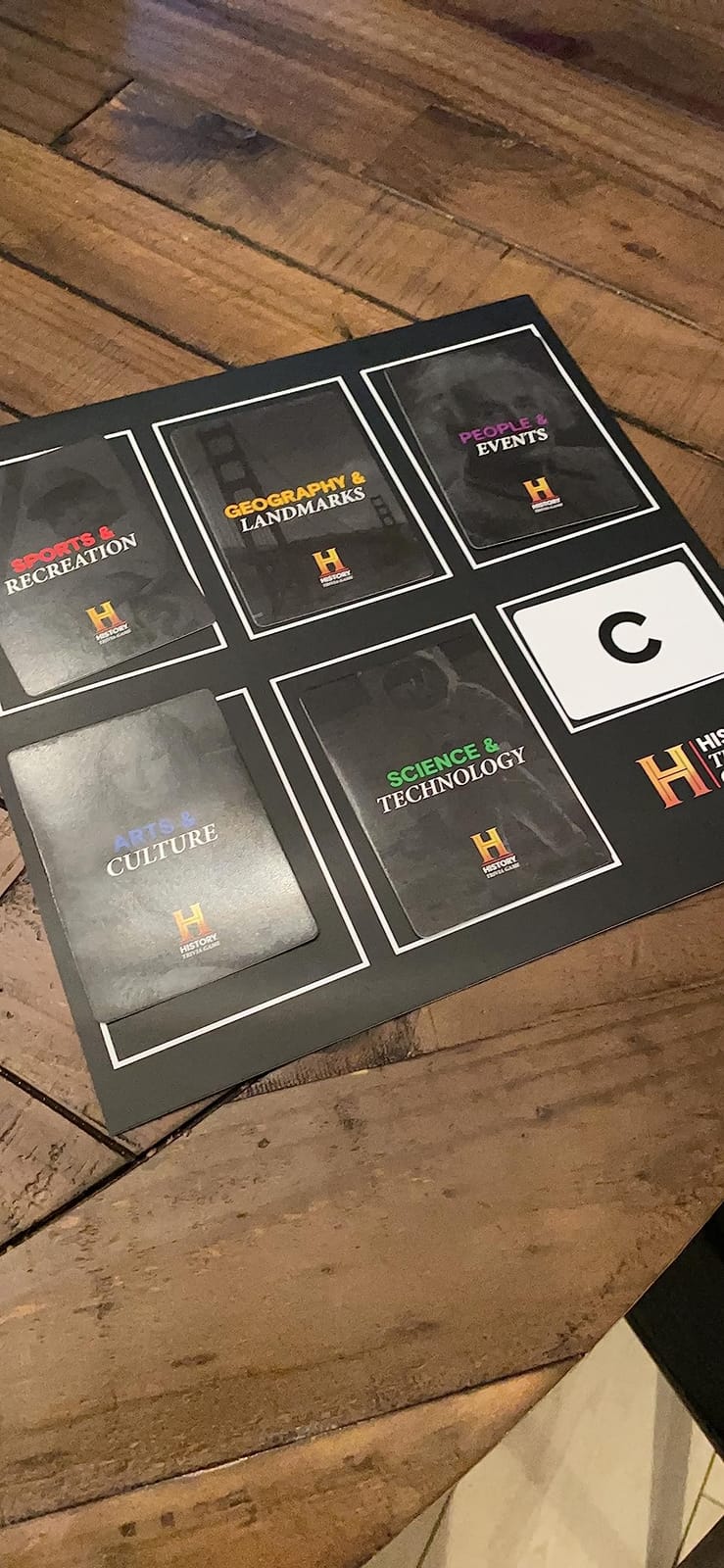
It was created in partnership with The History Channel, and the questions span ancient civilisations, famous figures, science, sports, geography and modern events, sorted into five categories: Arts and Culture, Sports and Recreation, Science and Technology, Geography and Landmarks, and People and Events. Rules explain in a minute or two.
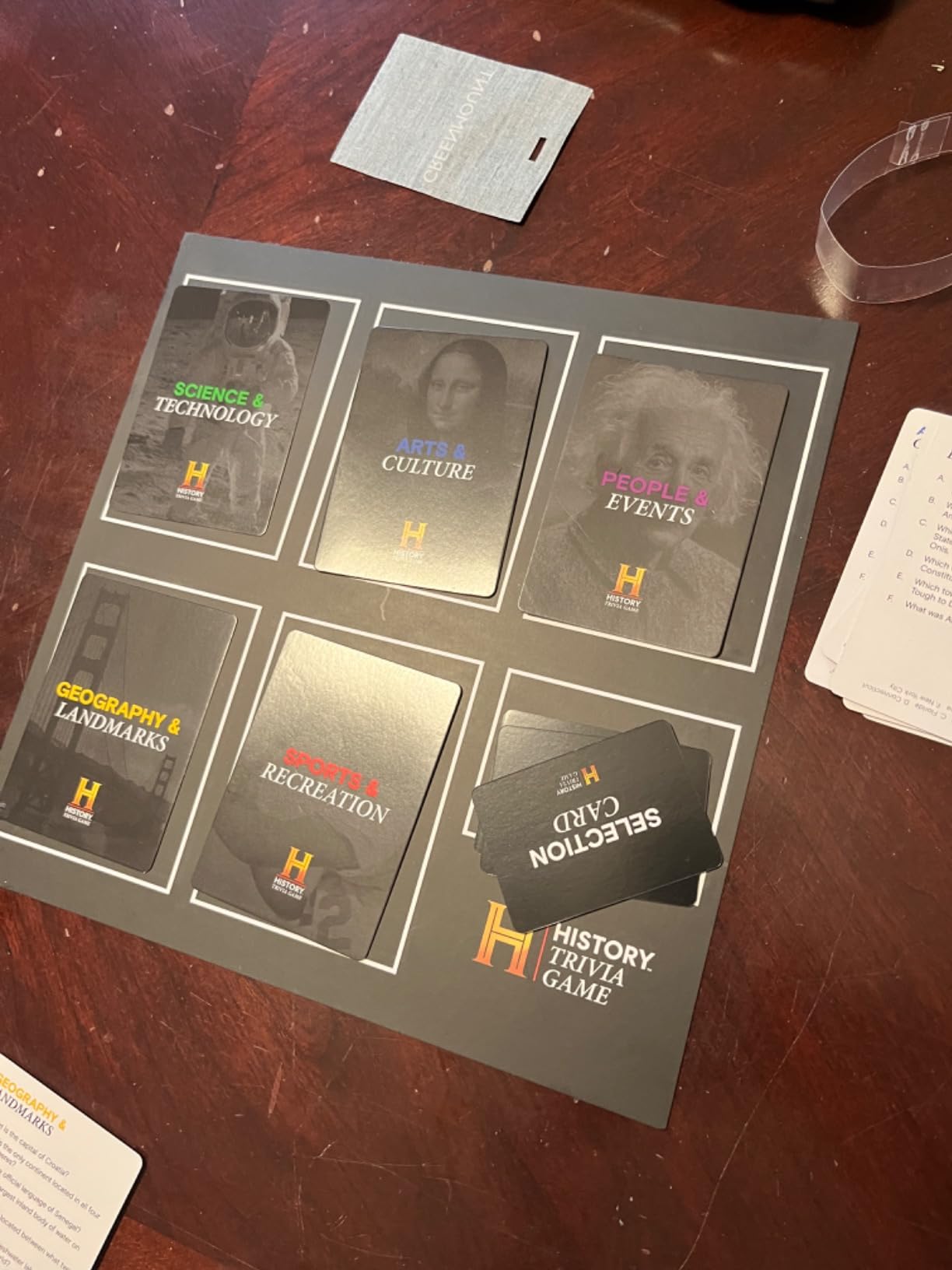
At 2 or more players and ages 14 and up, with an estimated 30 to 45 minute play time, it slots neatly between courses at a dinner party. The category-swap rule means a weak subject does not automatically lose you the game, and reviewers point out that the questions prompt discussion rather than flat recall, which is what keeps a table talking.
The difficulty is the thing to plan around. Multiple reviewers note it is too hard for younger kids, and that some categories lean heavily toward US history, so an international guest list may hit a wall in People and Events. The package includes cards, a board and rules, measuring 10 by 10 by 2 inches.
When this game works best
It suits a household that plays often, because the six-questions-per-card design means the bank genuinely keeps going. Adults and teens, two or more players, and a group that enjoys arguing about answers rather than just scoring them, which is what reviewers report from repeat family nights.
It is a good dinner-party game because the 30 to 45 minute estimate matches the gap between courses, and the lack of board pieces means it does not need a clear table.
When this game is the wrong call
Do not buy it for a group with young children or for a room that struggles with English comprehension, since the harder questions assume both. Several reviewers single out difficulty as the reason the box disappoints families with kids, and that is not something a party host can fix on the night.
It is also a weaker choice than a betting or bluffing game when one guest is a quiz expert, because the questions reward pure knowledge. If your problem is a dominant player rather than a thin question bank, fix the player problem instead with a format that lets a beginner win.
How to Pick a Trivia Board Game for Your Party
Pick by group size first, then by difficulty, then by subject. Every other consideration is decoration, and a perfect game that seats four people will lose to a plain game that seats the whole room.
Match the player count to your guest list
Player-count mismatch is the most common complaint about boxed trivia, so check the box before you check anything else. Under six people, almost anything works. At 8 to 10, narrow the field to Sounds Fishy at 4 to 10 players, Hitster at 2 to 10, or Chronology at 2 to 8. Above 10, the realistic options here are Urban Trivia at 4 to 20 players and the betting format in Wits and Wagers Deluxe.
If your party is bigger than any box supports, split it. Put two teams of four or five on separate tables, give each table a scoring pad, and compare totals at the end. It is slightly more work for the host and much better than six people watching while four play.
Set the difficulty floor honestly
The single biggest mistake is choosing a game that punishes the least confident person in the room. For a mixed group of non-gamers, choose a format where the mechanic reduces the value of raw knowledge: a wagering game such as Wits and Wagers, a bluffing game such as Sounds Fishy, or a penalty-scoring game such as …I Should Have Known That! Classic quiz formats like Trivial Pursuit Classic reward knowledge most directly and are the toughest row to seat a beginner at.
Age floors are the fastest difficulty signal. Games rated 13 and up or 14 and up, including the horror set, the history set, Chronology, the American trivia set and the History Channel set, are adult or teen territory. Hitster at 2 to 10 and Sounds Fishy at ages 10 and up are the safer middle ground for a family table, and Wits and Wagers is also ages 10 and up.
Decide how loud the room can be
Noise is a real decision criterion and almost no roundup mentions it. A game that shouts will not work in an apartment with thin walls, at a dinner table, or anywhere near a sleeping child. Hitster and Sounds Fishy are moderate, being app-based and bluff-based rather than shout-based. Smart Ass is loud by design, because yelling the answer is a rule, and Wits and Wagers is medium, with table talk but no required shouting.
Chronology, the American trivia set and the History Channel set are the quiet options. If you are hosting a dinner or a mixed-age gathering where conversation matters more than points, use one of those as the main game.
Check the replay value before you buy
Repetition is the most common long-term complaint about trivia boxes, and the review data separates the picks clearly. Trivial Pursuit Classic with 2400 questions, the History Channel set with 2000-plus questions, Hitster with 300-plus music cards, and the American trivia set with 1000 questions are built for repeat sessions. The horror set, Sounds Fishy and the lyric game are closer to one-and-done, which is fine if you are hosting a single themed night and a waste if you are building a family shelf.
For a house that will host often, buy two boxes from different formats rather than two boxes from the same format. A quiz game plus a bluffing game gives you range in the same way two quiz games do not, and it protects you against the week when the first box is a month past its best.
Have a tie-breaker before you need one
Decide how ties are broken before the first round, because nobody enjoys that argument at the end. The easiest options are a head-to-head sudden-death round, a shared bonus question every player attempts for one point, or simply splitting the pot so both players leave with something. Whatever you choose, announce it at the start and write it on a score pad where everyone can see it.
Keep scoring simple and visible. The boxes that include a score pad and pencil are the easiest to run, and for games without one, a phone note that everyone can see prevents the two most common arguments at a party, which are both about the score.
For hosts who want a second activity on the same night
One trivia box rarely fills an evening. Most of these finish in 20 to 45 minutes, so plan a second activity. A short party game between quiz rounds keeps the energy up without requiring anyone to sit through a long setup, and if your group also argues about video games, our games like Hades guide makes a fine between-rounds topic rather than a second rules session.
For hosts who are simply comparing a lot of games before buying, our games like Unpacking list and games like Celeste list are the same kind of shortlist format we use here, and we judge them the same way: player count, setup time and whether a non-gamer can win.
Frequently Asked Questions
What are some fun trivia games to play at parties?
The best party trivia games change the win condition so that knowledge alone does not decide the result. Wits and Wagers Deluxe makes you bet on other players guesses, Sounds Fishy has you invent fake answers, and …I Should Have Known That! deducts points for wrong answers so hesitation is punished rather than rewarded. Add a shout-based box like Smart Ass if the room is loud, or Hitster if you want a music game that works across generations.
What are the top 10 party board games?
Our ten standouts for parties are Chronology, Trivial Pursuit Classic, Smart Ass, Lyrically Correct 90s and 00s, Urban Trivia, Horror Trivia, Jumbo Hitster, Sounds Fishy, Outset Media American Trivia and Wits and Wagers Deluxe. Each one runs in 45 minutes or less and needs almost no setup. The two we would add to that list for a large guest list are Urban Trivia, which seats up to 20, and the History Channel trivia set, which carries more than 2000 questions.
What are some good trivia board games for adults?
For an adult party, start with Wits and Wagers Deluxe, which needs no trivia knowledge at all and seats 4 or more players, or Sounds Fishy, a bluffing game for 4 to 10 people that welcomes guests who normally refuse board games. Trivial Pursuit Classic is rated 16 and up and carries 2400 questions, while Hitster covers music from the 1920s to the 2020s for 2 to 10 players. Urban Trivia is built for large gatherings of 4 to 20, ages 13 to 75.
What are the top 10 trivia games?
It depends on whether you want a quiz or a party game. For pure trivia, the strongest banks here are Trivial Pursuit Classic with 2400 questions, the History Channel set with more than 2000, the American trivia set with 1000 across five categories, and …I Should Have Known That! with more than 400 on 110 cards. For parties, the betting and bluffing formats are the better buy because a complete beginner can still win. The same box can serve both only if your group actually enjoys being tested.
What trivia game is best for large groups of 10 or more?
Urban Trivia is the most straightforward answer because it is built for 4 to 20 players, ages 13 to 75, with a small card deck that fits on any table. Hitster also seats 2 to 10 and needs only a phone and the free app, and Sounds Fishy covers 4 to 10. Above 10 players, the reliable move is to split the group into two teams of five, give each table its own deck, and compare scores at the end of the night.
The Best Trivia Board Games for Parties
Buy …I Should Have Known That! if you want one box that works for a room of any size above two, travels easily and keeps every guest scoring to the final card. The penalty mechanic is what makes it inclusive, and the 400-plus question bank is what makes it survive a second party.
Buy Wits and Wagers Deluxe if your worry is a dominant guest, and Sounds Fishy if your worry is guests who claim to hate board games. For a large gathering, Urban Trivia seats 20. For a loud room, Smart Ass. For a quiet dinner or a multigenerational family table, Hitster or Chronology.
Test whichever you pick with the exact guest list first. Ten minutes of the real group beats an hour of research, and the box that survives those ten minutes is the one that will still be in rotation when 2026 turns over and the next party arrives.