
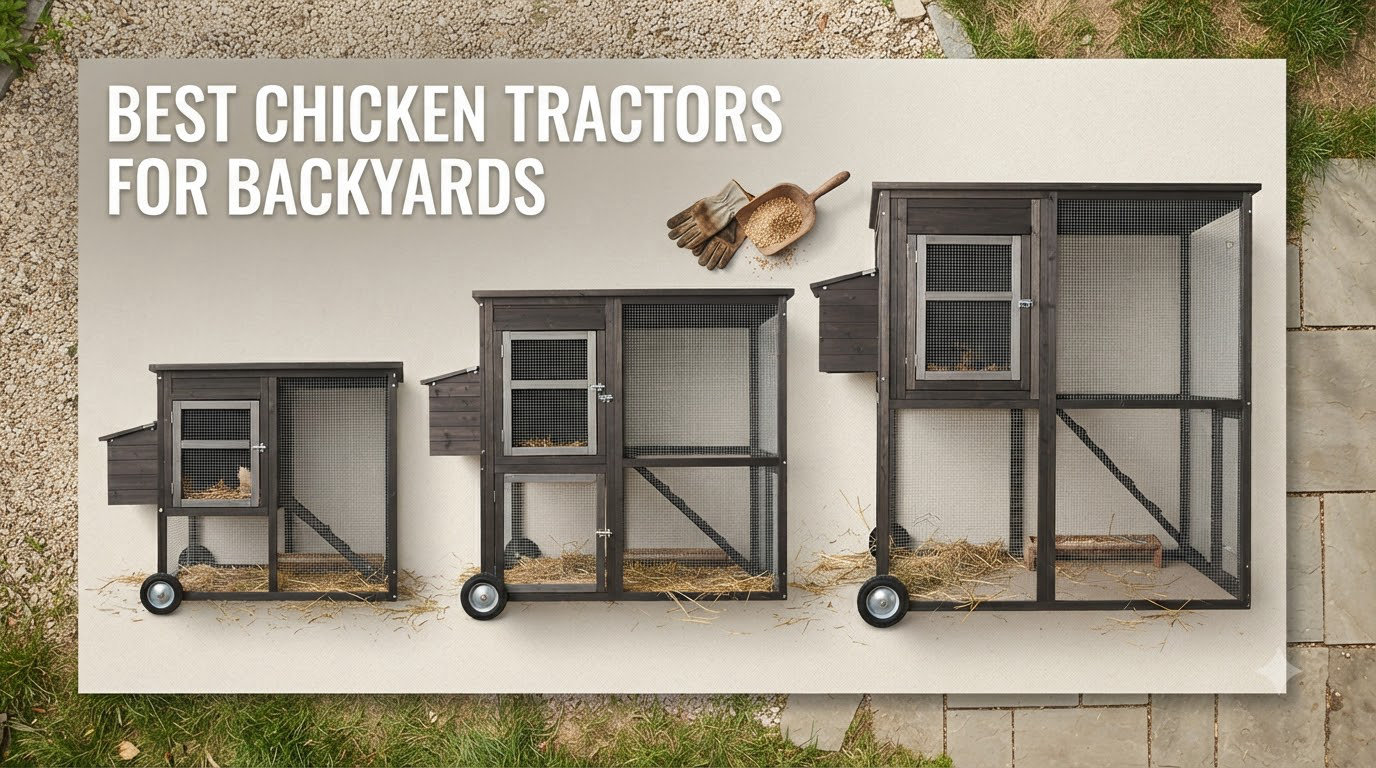
Most people searching for the best chicken tractors for backyards are not trying to build a pasture operation. They have a quarter-acre lot, four to eight hens, a neighbor who is friendly but not patient, and a lawn they would rather not turn into a mud pit.
That changes what you need. A flock of a dozen free-ranging birds does not need a fiberglass palace. It needs wheels that roll over a sodden September lawn, a floor that lifts the birds off wet ground, and a footprint you can walk around in the dark without tripping.
We went through the wheeled coops on the market and sorted them by the things that actually decide whether a tractor works in a residential yard: castor type, total weight, how many square feet you really get per hen, and whether the mesh stops a raccoon or merely reassures you.
Eight products made the cut, and they span a wide range of flock sizes, from a two-bird quarantine pen to a 16.4 square foot unit rated for eight.
One note on the word tractor itself. The name comes from what the birds do to the soil, not from the machine. Chickens scratch the top inch of ground loose as they work, which is exactly the behavior of a small garden machine working a bed.
If you have ever run a garden tractor around a vegetable plot, the comparison is apt. A chicken tractor is that same idea applied to pasture instead of soil beds.
Everything below reflects what owners report in the reviews and what the manufacturer specs actually claim. Where a number is contested, we give you the number the reviews report.
Table of Contents
What Is a Chicken Tractor?
A chicken tractor is a portable, wheeled chicken coop: a small enclosed house attached to a wire run, built on a frame with wheels and a handle so the whole unit can be dragged to fresh grass every one to three days.
Birds forage on fresh ground, exhaust that patch, and you move them before the lawn underneath turns to bare dirt.
Why a Backyard Flock Needs a Tractor
The case for a tractor is rotation. A stationary coop lets a flock sit on the same square footage long enough to strip the grass, concentrate manure in one corner, and build up the parasite load that makes birds sick.
Moving the housing breaks that cycle, spreads manure across the yard as fertilizer, and gives the birds fresh bugs and grass every single day.
Keepers on r/BackYardChickens describe the daily move as the habit that makes everything else work. One owner put it plainly: they move their tractor every day to fresh grass, which keeps the birds from getting fat and keeps the pasture healthy.
Another noted the no-floor design means there is no bottom tray to clean out, because the birds are standing on the ground itself.
There is a real tradeoff, though. A tractor is exposed housing, and in winter, in driving rain, or during a rural predator season a fixed coop with a solid floor and a locked run is the safer answer.
Tractors also demand a person willing to move something heavy every day. On a small lot the daily footprint turns a lawn into a patchwork of grazed and recovering patches, and if either of those describes you, read the stationary coop roundup instead.
Worth stating plainly: the number one predator for backyard chickens is the raccoon, followed closely by hawks. In rural settings the list shifts to foxes, skunks, and opossums, and those are the ones that dig.
Top 3 Picks for Backyard Chicken Tractors (October2026)
The three below are the ones we would put on a suburban lawn without hesitation. Everything else earns its place for a specific situation, which we spell out in each section.

Aivituvin AIR61 Mobile Coop
- Built-in wheels and side handle
- Waterproof PVC nesting-box cover
- Fir wood with sloped asphalt roof
- Expandable to a double unit

Ketive Cedar Chicken Coop
- Cedar wood with pitched asphalt roof
- 13.54 sq ft usable space
- Galvanized wire mesh
- Assembles in about 45 minutes
Aivituvin CK97 Mobile Coop
- 360-degree metal casters
- 16.4 sq ft for 6-8 chickens
- Metal pull-out trays
- Reinforced iron frame
Best Chicken Tractors for Backyards in 2026
All eight units are wheeled, all are sold as outdoor coops, and all appear below in ranked order. Capacity figures are the manufacturer claims, and where owners report fitting fewer birds we say so in the individual review.
| Product | Specifications | Action |
|---|---|---|
| Aivituvin AIR61 Mobile Coop |
|
Check Latest Price |
 GUTINNEEN 67 Inch Wooden Hen House GUTINNEEN 67 Inch Wooden Hen House |
|
Check Latest Price |
| Ketive Cedar Chicken Coop |
|
Check Latest Price |
 Aivituvin AIR23 Mobile Coop Aivituvin AIR23 Mobile Coop |
|
Check Latest Price |
 GUTINNEEN Iron Frame Tractor GUTINNEEN Iron Frame Tractor |
|
Check Latest Price |
| Aivituvin CK97 Mobile Coop |
|
Check Latest Price |
 Suumerpety All-Steel Mobile Coop Suumerpety All-Steel Mobile Coop |
|
Check Latest Price |
 GUTINNEEN 79 Inch All-Steel Coop GUTINNEEN 79 Inch All-Steel Coop |
|
Check Latest Price |
1. Aivituvin AIR61 Mobile Coop – The Best Pick For Most Backyard Flocks
Aivituvin Chicken Coop with Run and Wheels, Mobile Outdoor Hen House Wooden Poultry Cage with Waterproof Roof (Red, AIR61)
Fir wood with asphalt roof
Built-in wheels and side handle
80.5 x 21.2 x 42.5 inches
Expandable to a double unit
Pros
- Genuinely easy to relocate with built-in wheels and side handle
- Waterproof PVC cover over the nesting boxes with upgraded locks
- Solid fir wood and a sloped asphalt roof that sheds water
- Four access points plus a removable leakproof tray for cleaning
- Two coops can be joined into one larger enclosure
Cons
- Narrow 21.2 inch footprint limits real capacity
- Long run layout gives birds limited floor space
- Assembly realistically needs two people
- Nesting area is compact for larger flocks
This is the unit we keep coming back to for a residential yard. It is not the biggest option here and it is not the cheapest per square foot, but it is the one whose owners report the fewest surprises after a full season of daily moves.
The combination that matters is a handle on the side, wheels underneath, and a floor high enough off the grass that you are not dragging the house through mud every morning.
At 469 reviews it also carries the largest body of owner feedback in this roundup, which means the complaints below are well documented rather than anecdotal.
The dominant pattern is that the coop is narrower and smaller than the listing photos suggest. Buyers who expected a four-hen-plus interior and found it tight end up unhappy for a reason that has nothing to do with build quality.
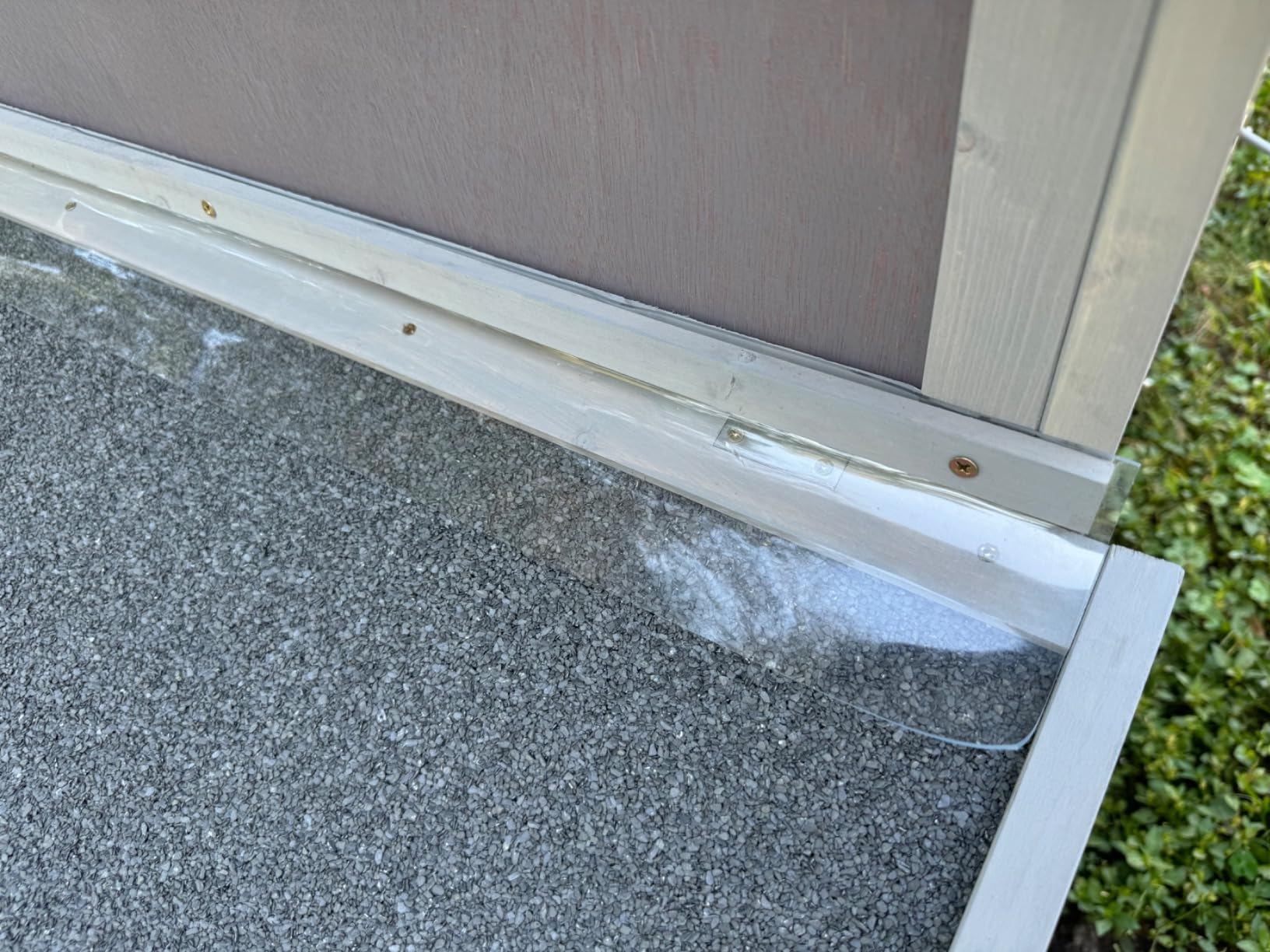
The upper section is the part that earns its keep in a backyard setting. A waterproof PVC cover sits above the nesting boxes to stop rain reaching the bedding, and custom locks over the egg nests add a second layer against a raccoon that has learned how to work a simple latch.
The sloped asphalt roof and the eco-friendly paint on solid fir are both sensible for a structure that will sit in weather year-round.
Cleaning is where this coop quietly wins against cheaper models. Four separate access areas plus a removable leakproof tray mean you can reach every corner without dismantling anything, and an extra-large playpen beneath the nesting boxes gives the birds usable ground inside the footprint.
The expandable design is genuinely useful too. Pull the side doors off and join a second coop to double the space when your flock grows.
Who this tractor suits
This suits a household flock of four to six hens on a normal suburban lawn, particularly anyone who expects to move the unit daily and does not want to recruit a second person every time.
The four access points and the leakproof tray make it a good fit for families scooping bedding out weekly. The expandable design also makes it the safest starting point if you are not sure how many birds you will end up with.
Who should skip it
Skip it if your plan is a flock of eight or more full-size birds in one unit, because the 21.2 inch width makes the run long and narrow rather than roomy.
Skip it if you intend to assemble alone, since the size of the panels makes this a two-person job in most households.
2. GUTINNEEN 67 Inch Wooden Hen House – The Easiest One To Scrub Out
GUTINNEEN Large Chicken Coop for 4-6 Chickens, Movable Thickened Wooden Hen House on Wheels with Easy Clean Removable Tray & 2 Nesting Boxes, Extra Large Outdoor Duck Cage & Rabbit Hutch
Solid wood panels with hardware fabric
19 sq ft interior space
63.77 pounds
Four wheels lift the floor 4.92 inches
Pros
- Four access doors and a pull-out sliding tray give unusually thorough cleaning access
- Hardware fabric instead of chicken wire is a real predator upgrade
- Two-level layout puts the run under the house to save yard space
- Wheels raise the floor off wet ground in rain and snow
- Owners routinely add automatic doors
- solar fans and panel heaters
Cons
- Runs smaller than the photos suggest and holds fewer hens than advertised
- No roosting perch is included and it is awkward to add later
- Thin paint and soft wood that scratch and dent
- Flimsy tray
- hinges and latches that can stick in damp weather
- Nearly impossible to move across dirt without handles
This is the one to buy if muck is your biggest concern. The two-level design stacks the run underneath the hen house, which means you are cleaning a tray that slides out from the front and the back rather than crouching inside a run to scrape out bedding.
For a backyard flock that produces a surprising amount of droppings in a week, that difference is felt every single time you do the chore.
At 19 square feet of inner space and a stated 3 to 6 chicken range, it publishes the largest interior figure in this roundup. Owners also single out the hardware fabric as the reason they stopped losing birds.
Several describe adding automatic doors, solar fans, and a panel heater over the first winter, and one notes it holds up well against high winds when positioned against a fence.
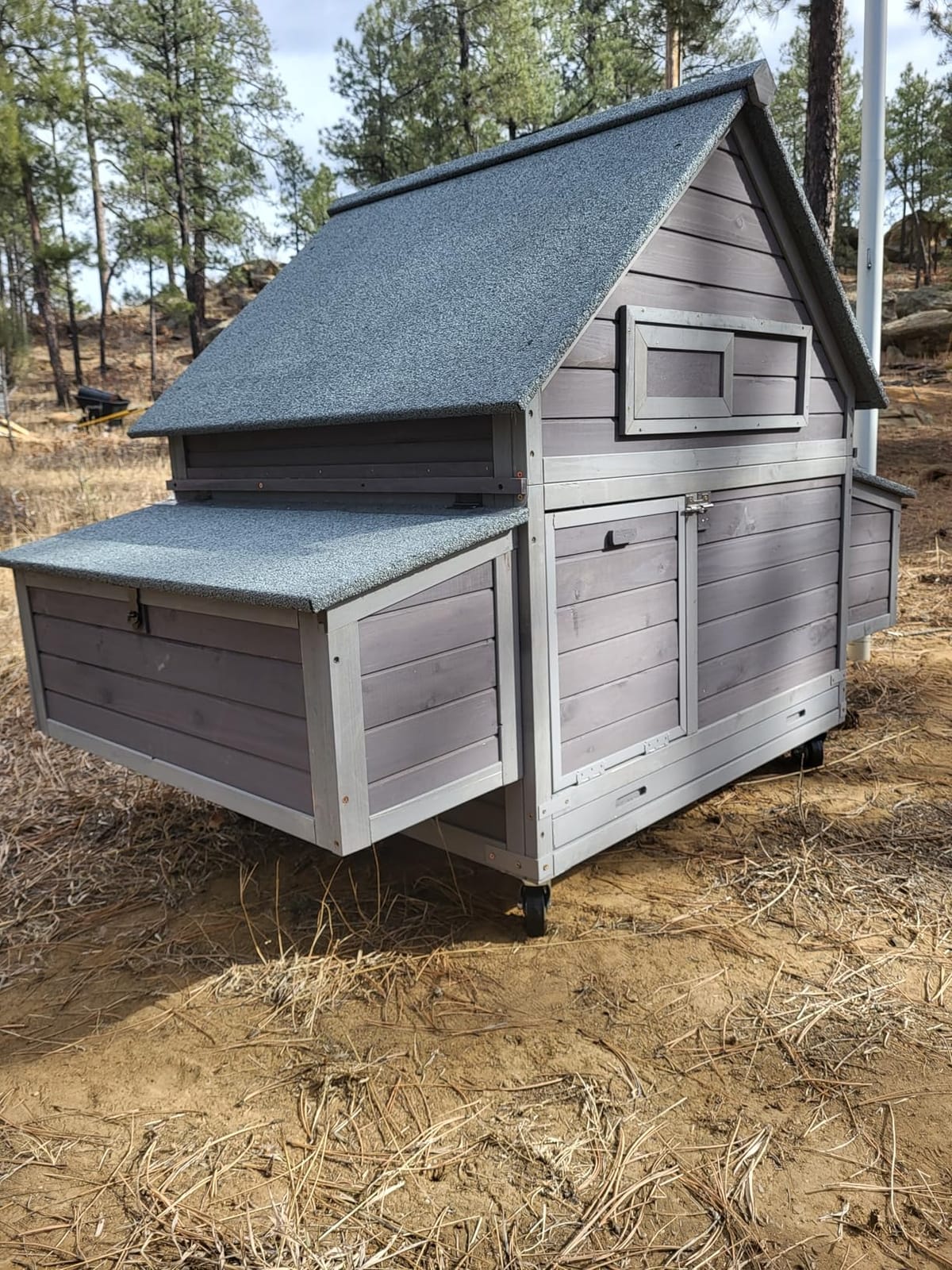
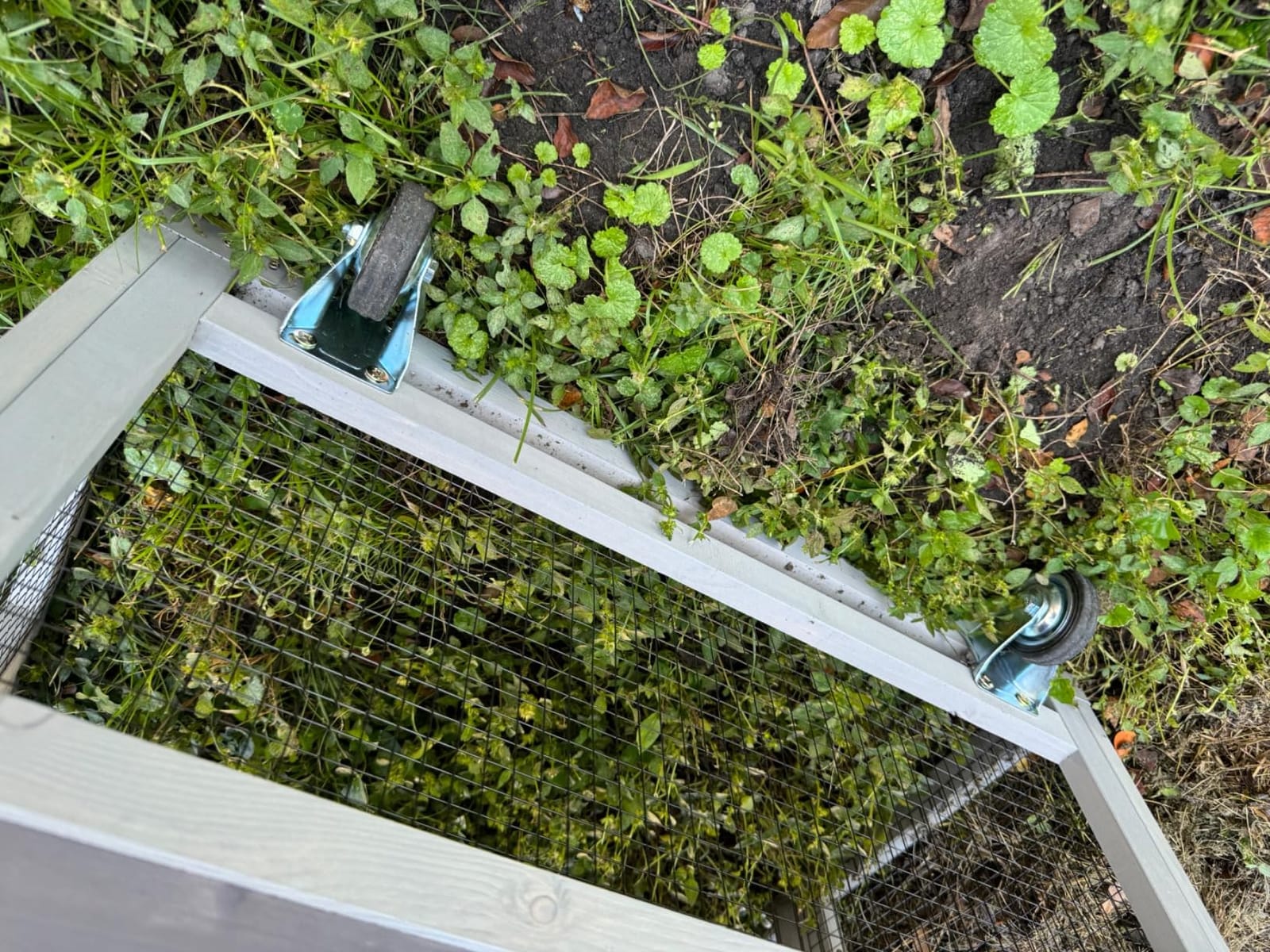
The wheels raise the floor to about 4.92 inches off the ground, which does more than most owners expect.
It keeps bedding dry in a wet spring, stops the birds sitting in cold mud, and makes the whole structure easier to drag over uneven lawn. Two nest boxes with six compartments and a roof that opens for egg collection make it convenient for a working flock.
There are real weaknesses, and they are the reason this is not our first pick. Several owners report the interior runs smaller than advertised and would not fit the stated number of hens, and no roost perch is included, which is awkward to add once the roof is on.
The wood is soft and untreated, the paint is thin, and the tray metal, hinges, and latches are the components owners mention warping or popping out in cold or damp weather.
Who this tractor suits
This suits keepers with four to six birds on a tight lot who want the run tucked underneath rather than extending behind the house.
It is a good match for anyone in a wet climate who wants the floor lifted off the ground, and for owners who do not mind sealing the wood and reinforcing the latches in their first month.
Who should skip it
Skip it if you plan to move it solo across uneven ground. At 63.77 pounds with no carry handles, owners describe it as nearly impossible to move alone on dirt, and a daily move is the entire premise of a tractor.
It is also the wrong pick if you want a natural roosting bar included, or if you are not willing to seal soft wood before winter.
3. Ketive Cedar Chicken Coop – The Best Chicken Tractor For Small Yards
Ketive Large Wooden Chicken Coop with Run and Wheels, Grey
Cedar wood with protective coating
13.54 sq ft usable space
71 x 26 x 39 inches
Assembles in about 45 minutes
Pros
- Cedar is far more rot-resistant than the soft pine used in many budget coops
- Assembles in roughly 45 minutes with pre-drilled holes
- About 13.5 sq ft of usable run plus an elevated resting area
- Galvanized wire mesh gives airflow while deterring common predators
- Removable sliding tray speeds up bedding changes
Cons
- Best suited to small flocks of one to four birds
- The 26 inch width makes the run long and narrow
- Panels can arrive chipped or damaged
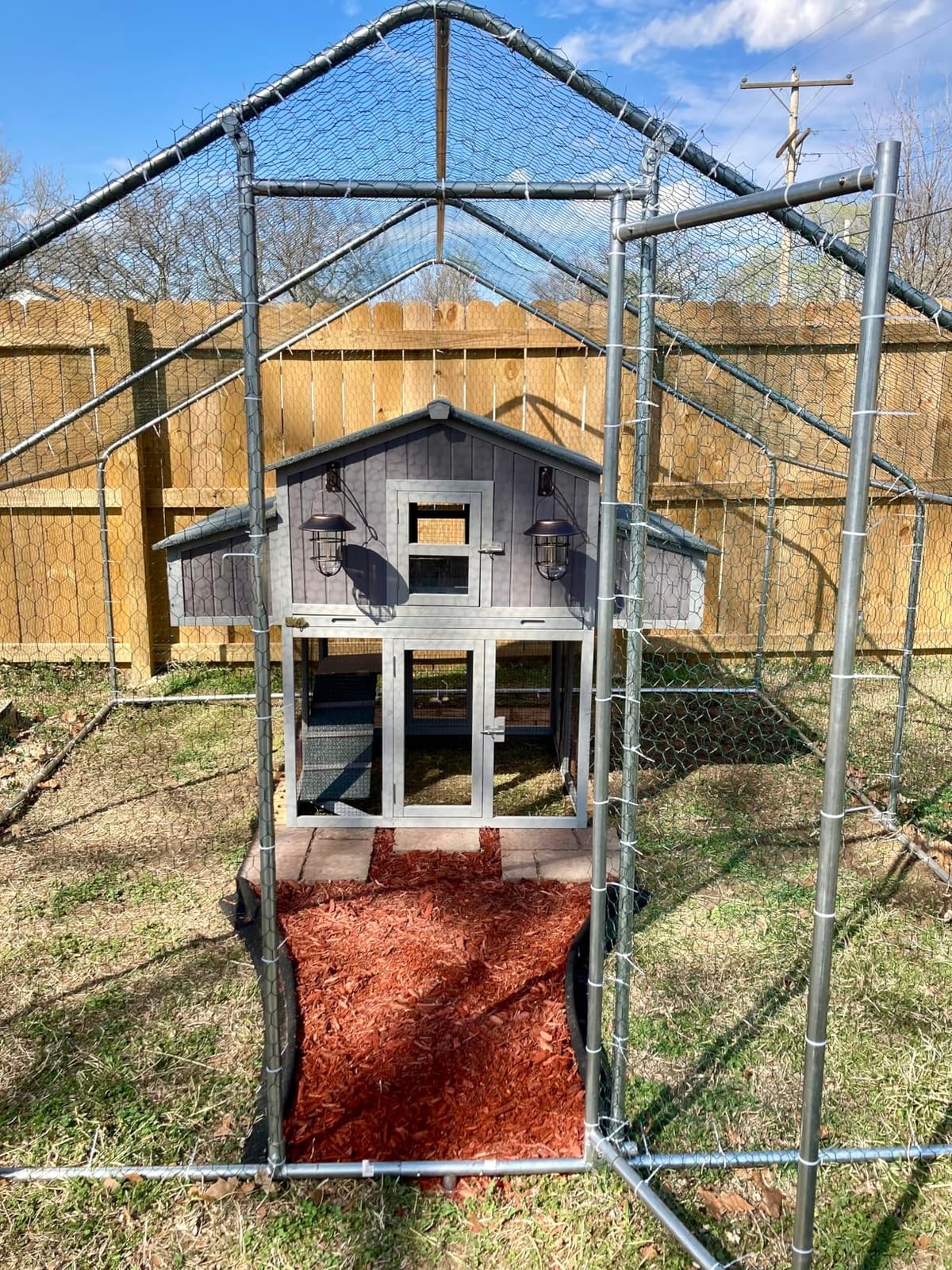
If your lot is genuinely small, width should drive your decision, and this is one of the narrowest units here. The 26 inch width keeps the total footprint at 71 by 26 by 39 inches, which means you can park it beside a fence or a shed without taking the lawn hostage.
Owners also single out the material. Cedar is a more rot-resistant choice than the soft pine used in many budget coops, and this listing carries a 67 percent five-star share, the highest proportion of top ratings in the roundup.
The breakdown of the 13.54 square feet matters too: about 10.08 square feet is open run, and 3.46 square feet is the elevated resting area.
That ratio is sensible, since it gives laying hens a raised, dry place to roost while the run below stays open to the air. The anti-slip ramp makes the transition manageable for heavier birds.
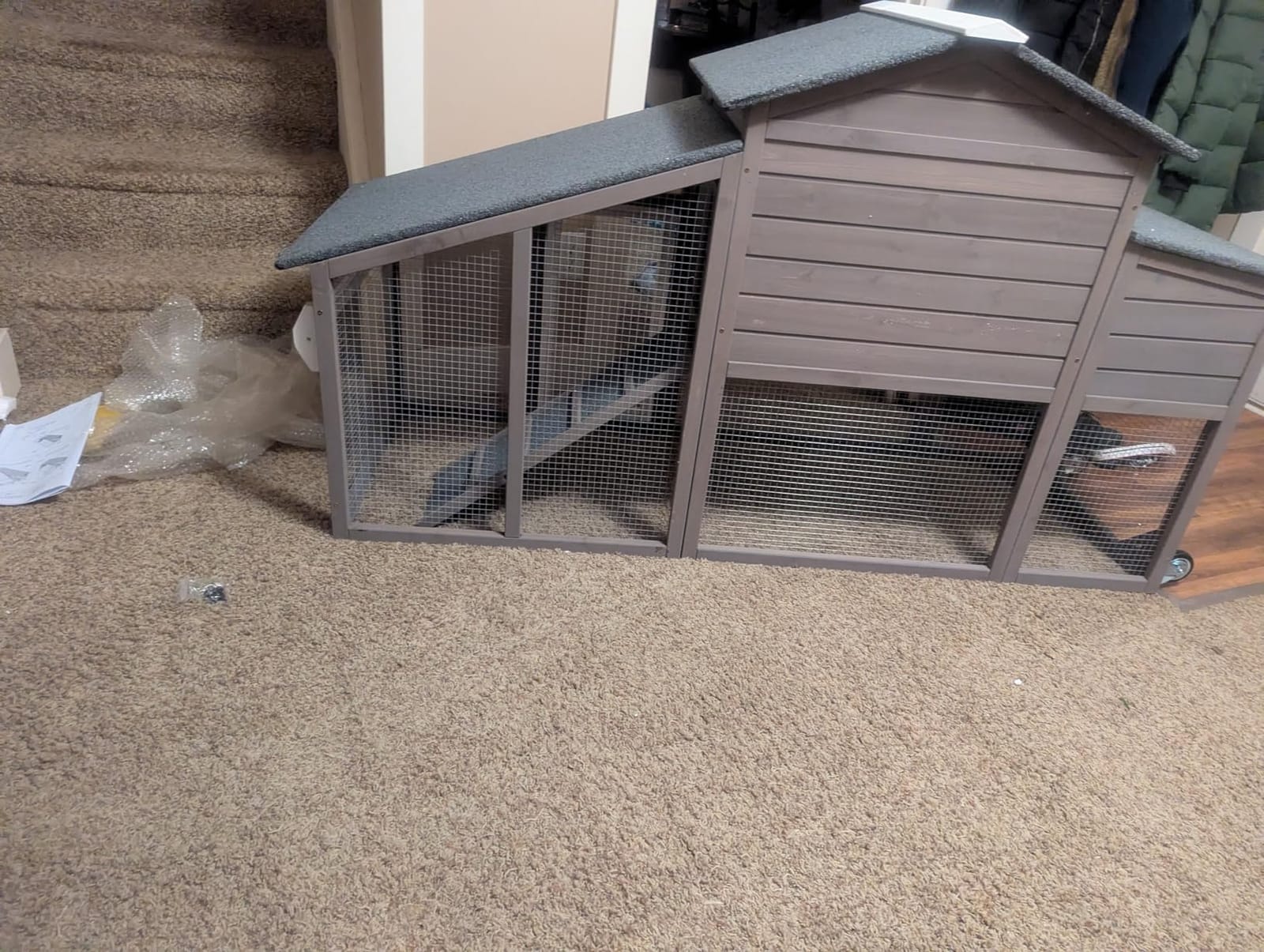
The assembly experience is genuinely good. Pre-drilled holes, clear step-by-step instructions, and all parts in the box mean two adults can have this together in about 45 minutes.
For a first flock that matters more than it sounds, because a build that stalls on step two on a Saturday evening is a build that does not get finished.
The galvanized wire mesh is a step up from hex chicken wire, giving airflow while discouraging the raccoons and cats that plague suburban yards.
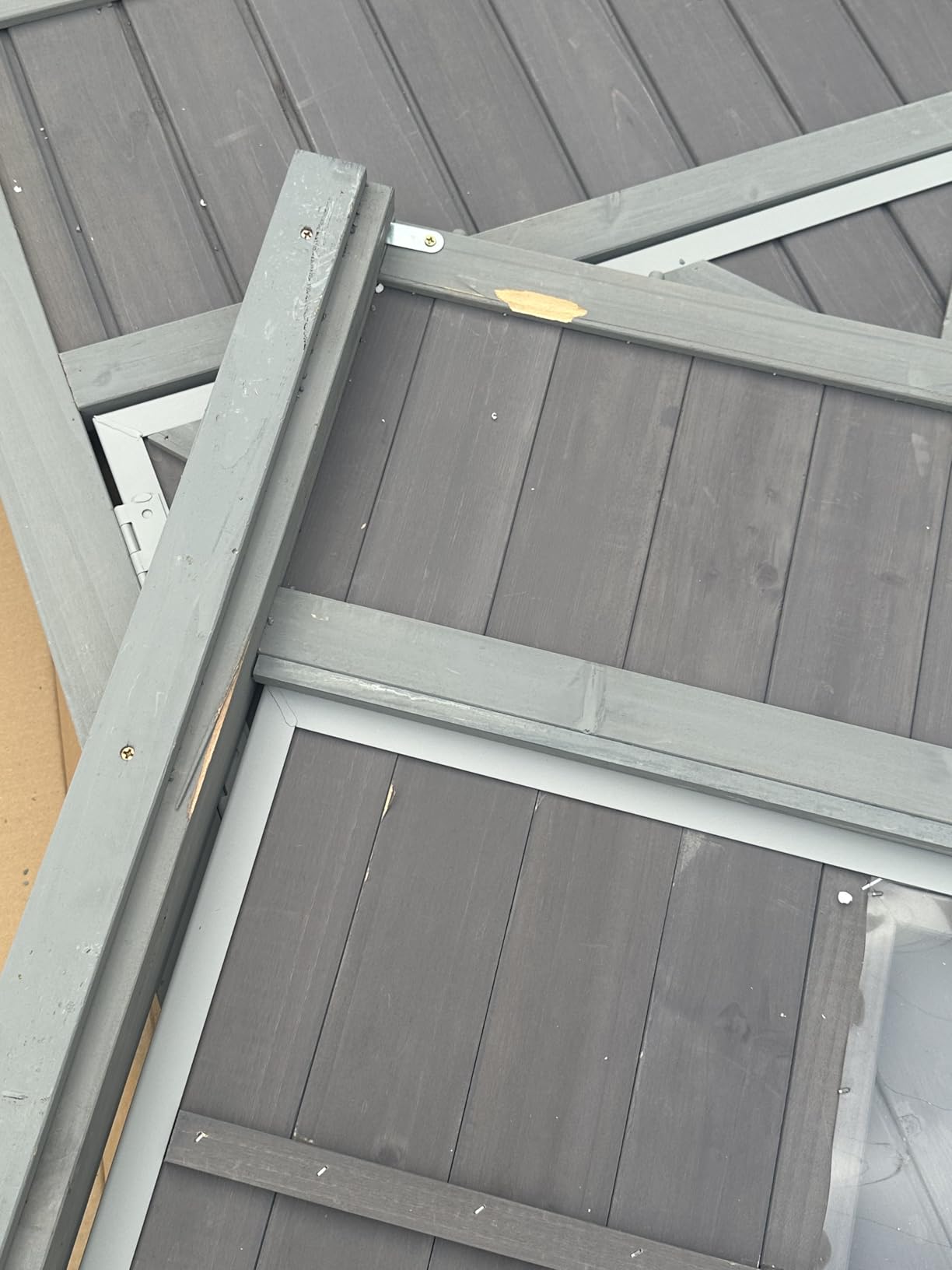
The one recurring complaint is shipping damage, with cedar panels arriving chipped. It reads as cosmetic rather than structural in the reports, but it is worth checking the box before you start and having replacement boards on hand if your supplier is slow.
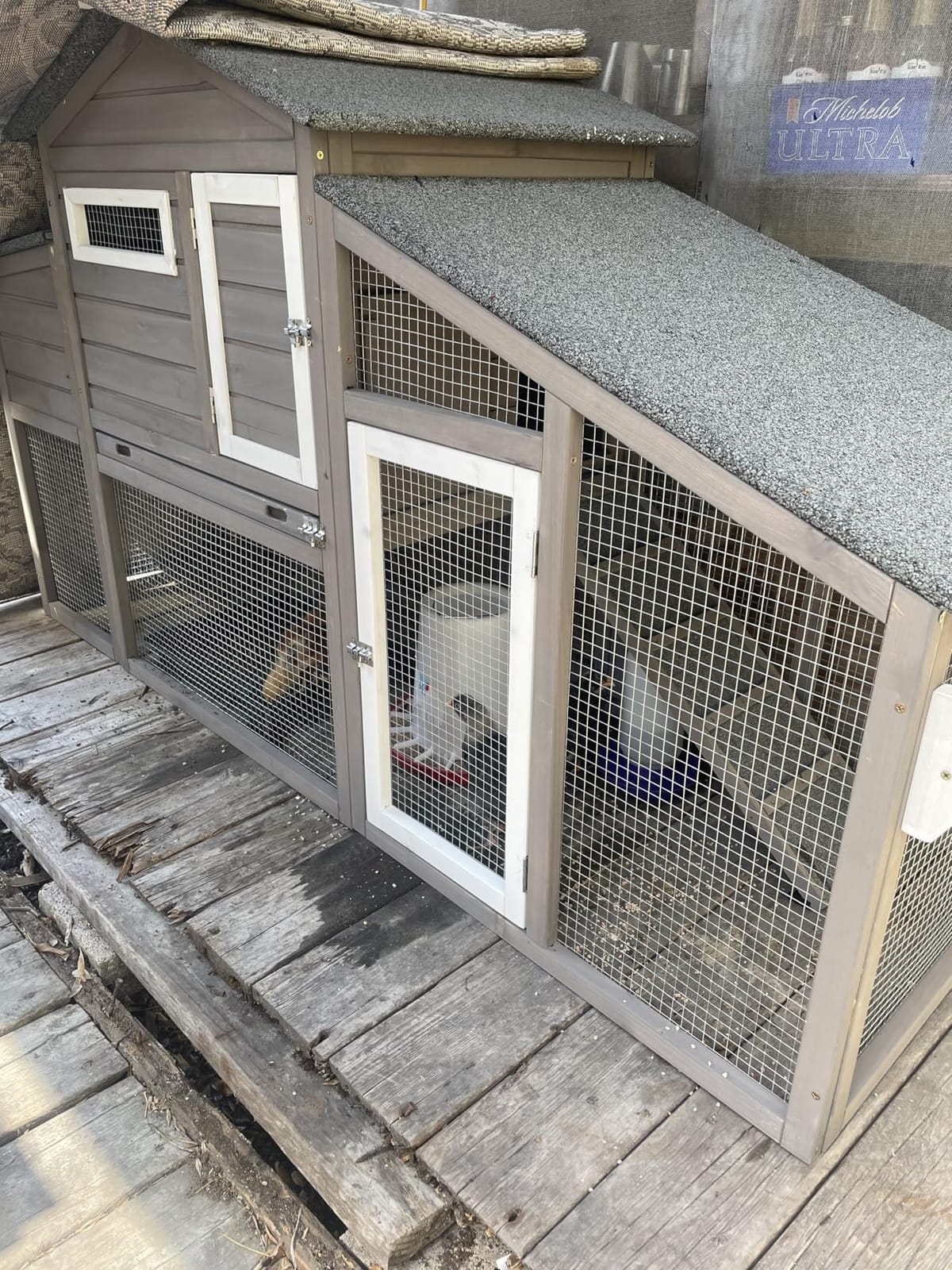
Who this tractor suits
This suits a beginner with one to four hens, a bantam flock, or anyone working with a small side yard where a wide run is a luxury.
It is also the best choice in this roundup for anyone who wants a real tractor habit without a punishing build, since the 45 minute assembly removes most of the barrier to starting.
Who should skip it
Skip it if you are planning a flock of six or more full-size hens, because the space simply is not there.
Skip it if you need a wide run area for a bantam-heavy or very active flock that will use every inch. If your priority is a large gathering of laying hens rather than a tidy small-lot footprint, look at the larger units further down.
4. Aivituvin AIR23 Mobile Coop – The Best Budget Tractor For Quarantine And Grow-Out
Aivituvin Chicken Coop Mobile Hen Coop, Large Poultry Cage with Wheels Outdoor Backyard Chicken House
Soft wood frame with asphalt roof
61.73 pounds
67.3 x 26 x 39.4 inches
Nest box plus two roosting bars
Pros
- Very low entry cost makes it a practical quarantine or grow-out pen
- Assembles in about 30 to 100 minutes solo with pre-drilled holes
- Light enough at roughly 60 pounds for one person to maneuver
- Feed storage compartment under the nesting box
- Removable sliding tray and galvanized wire fencing
Cons
- Too small for permanent housing of full-size hens
- Roost bars sit low and birds bonk their heads on the panel
- Soft wood dents and splits during assembly
- Flimsy roofing and wire mesh a cat could breach
- Small castors struggle on grass and gravel
Judged as full-time housing for a flock, this is the weakest of the eight. Judged as what most people actually use it for, it is a clear success.
At 61.73 pounds with built-in wheels and a side carry handle, it is one of only a couple of units in this roundup light enough for one person to maneuver across a lawn. Reviewers overwhelmingly describe it as a quarantine pen, a grow-out pen for chicks, or an overnight shelter for hens that free-range during the day.
Those buyers rate it well. The 54 percent five-star share reflects people who sized their expectations correctly rather than disappointment about capacity.
If you bring home three birds expecting three birds, you are in the group that loves this coop.
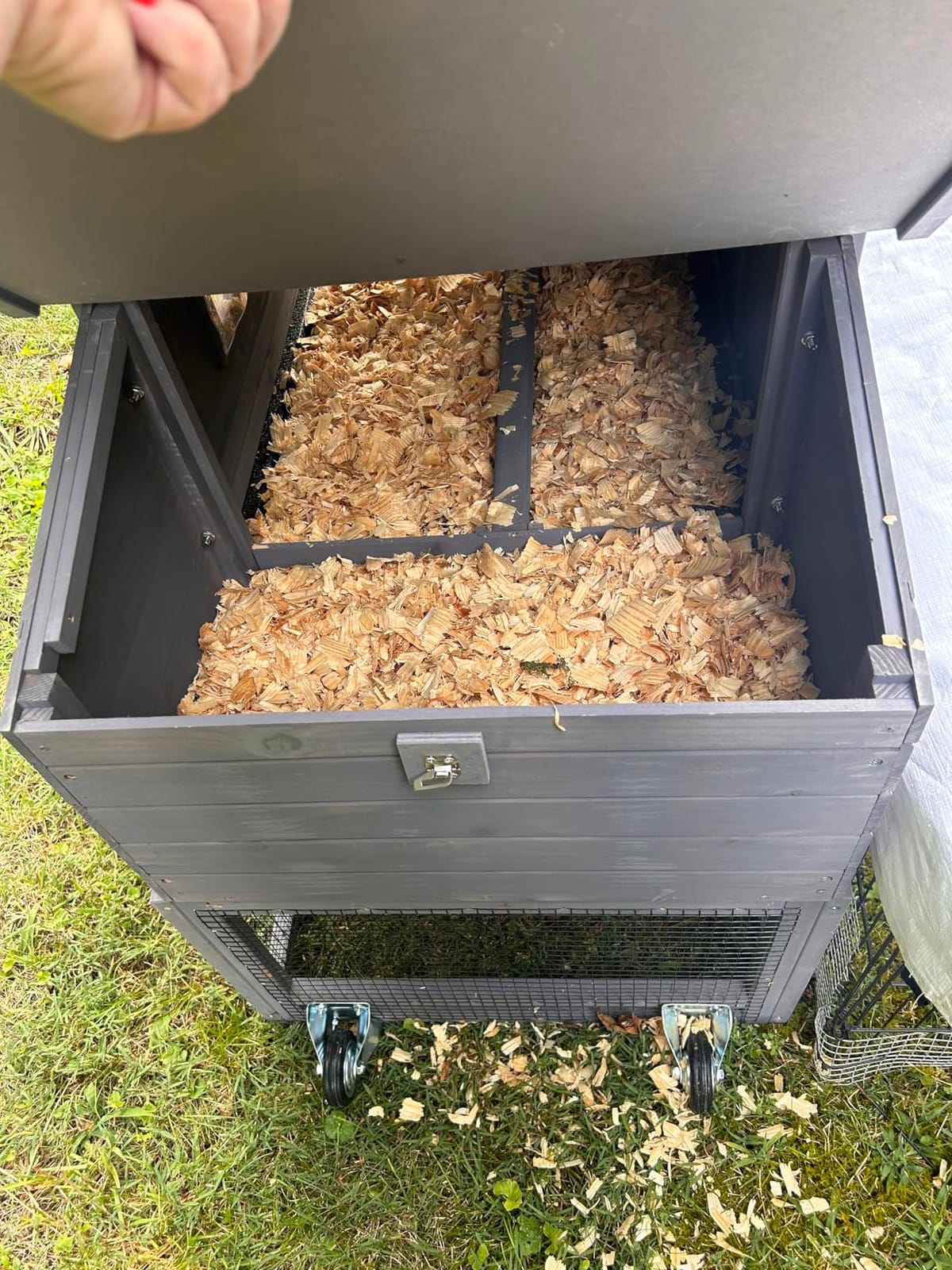
On the build side, pre-drilled holes and generously supplied hardware mean a single person can put it together in somewhere between 30 and 100 minutes depending on their pace.
The nesting box and two roosting bars give the birds what they need, and the separate space underneath the nesting box doubles as feed storage, which saves a bag of feed sitting in the rain.
The problems are specific and worth knowing before you buy. The roost bars sit very low, so bedding ends up level with them and birds knock their heads on the plastic panel above, and the soft wood dents and splits during assembly.
The castors are small and struggle on grass, gravel, or anything uneven, though one owner kept birds warm through winter with only light modification. Several also report chipped or broken pieces arriving in the box.
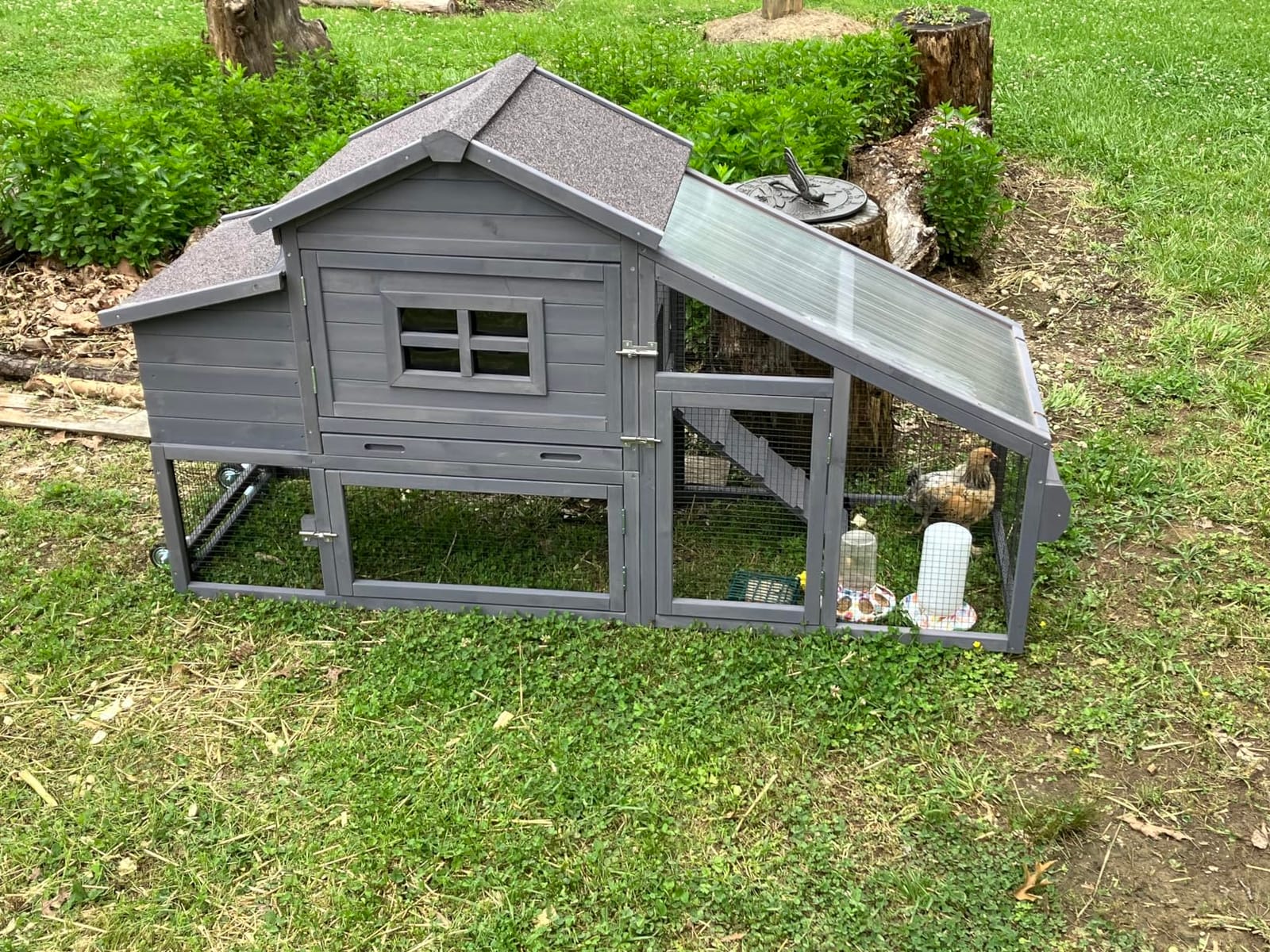
Who this tractor suits
This suits anyone isolating a new arrival, raising chicks to point of lay, or housing a small group of bantams.
It is the right tool for a keeper who free-ranges during the day and wants a secure night shelter that one person can drag into position. It also works as a hospital pen when a hen needs separating from the flock.
Who should skip it
Skip it for a permanent home for full-size hens, where most owners cap it at two or three birds.
Skip it if you plan to move it daily across grass or gravel, because the small castors will bog down on soft ground. It is also a poor choice in a neighborhood with roaming cats, given how thin the roofing and wire mesh are.
5. GUTINNEEN Iron Frame Tractor – The Best Pick For Parking And Daily Moves
GUTINNEEN Large Chicken Coop with Run with All-Arounded Iron Frame Chicken Tractor Mobile Chicken House with Large Run and Nesting Box Waterproof Outdoor Poultry Cage for Backyard
Solid wood on a reinforced iron frame
76.65 x 53.81 x 36.81 inches
Universal brake casters
Separate outdoor run
Pros
- All-around iron frame is a genuine upgrade over the usual all-wood frame coops
- Universal brake casters let you park the unit securely after each move
- Spacious for the size with 4 to 7 birds reported as comfortable
- Roof arrived sealed and weatherproofed with flaps over the egg lids
- One owner assembled it solo in about 4 hours
Cons
- Smaller and lower than buyers expect
- which makes access awkward
- Light brittle wood cracked where nesting boxes meet the sidewall
- Missing parts in one order and roof dings that needed sealing
- Strong off-gassing on arrival
- so air it out for about 36 hours
This is the one that makes the daily move realistic. The universal brake casters roll, then lock, so you can position the unit precisely on the lawn and leave it there without it creeping downhill or into a flower bed.
Owners with four to seven birds report the space is comfortable, and the multi-compartment layout that divides resting, nesting, and perching areas reduces crowding in a way the simpler two-level designs do not.
For a residential yard that matters more than raw square footage. A tractor that can be parked accurately is a tractor you will actually use every morning.
The independent outdoor run with thick anti-escape wire mesh is a step above the wire used on the budget units here, and the reinforced iron frame is the piece owners most often praise.
One buyer reported four hours of solo assembly and found the unit easy to clean, move, and modify. The seller also made up missing parts from a shipment promptly, which matters in a category where complete-box delivery is inconsistent.
Two safety notes recur often enough to pass along. First, air the coop out for about 36 hours before birds go in, because owners report strong off-gassing on arrival.
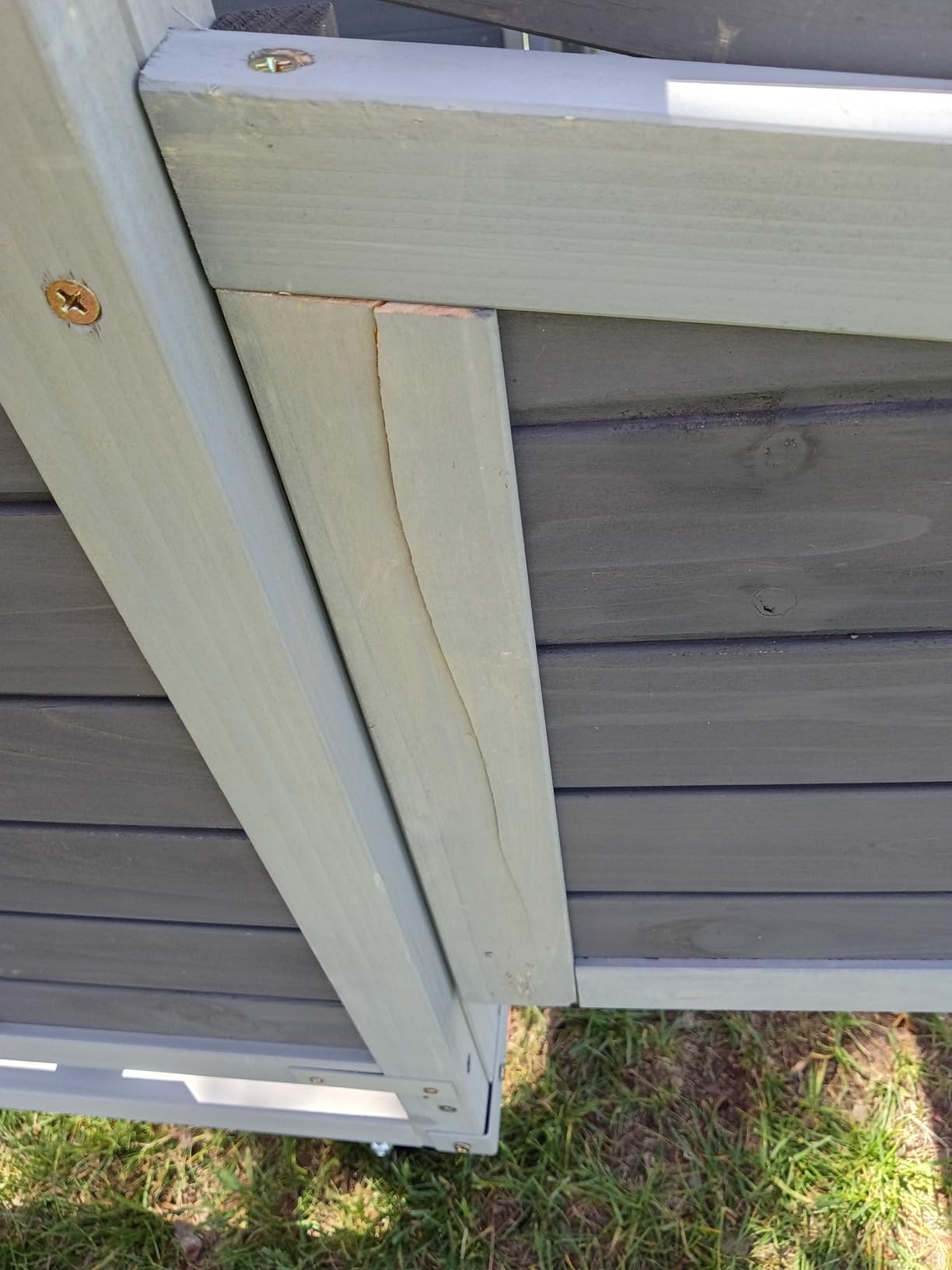
Second, seal the wood. It is light, brittle, poplar-like stock, and several owners report cracking where the nesting boxes meet the sidewall.
This unit is also lower and smaller than most buyers assume, so check your clearance under the run and over the access points.
Who this tractor suits
This suits a flock of five to seven birds on a yard where the unit will be moved every day and parked in roughly the same spot each time.
The brake casters make it a good pick if you are working around landscaping and want the placement to be repeatable. It is also a strong choice if you prefer one structure that separates sleeping, laying, and perching rather than a single open box.
Who should skip it
Skip it if you cannot commit to sealing the wood and airing the unit out before use, because untreated brittle stock will not last a wet winter without it.
Skip it if you need generous clearance underneath for access, since the low profile is awkward to reach into. Anyone sensitive to paint and coating smells should plan a full day and a half of airing first.
6. Aivituvin CK97 Mobile Coop – The Best Chicken Tractor For 6 To 8 Birds
Mobile Chicken Coop with Wheels, Large 16.4ft² Chicken House for 6-8 Chickens, Weatherproof Chicken Tractor, with Nesting Boxes & Foldable Ramp, Easy Clean with Pull-Out Metal Trays
Reinforced iron build with metal casters
16.4 sq ft of living space
68.1 x 41.3 x 49 inches
Removable nesting-box divider
Pros
- Metal pull-out trays resist corrosion where cheaper coops use plastic
- 360-degree metal casters roll over grass
- dirt and patio far better than small plastic wheels
- Largest stated capacity in the roundup at 6 to 8 chickens
- Removable nest-box divider adapts the layout as the flock changes
- Best five-star share in the set at 62 percent against 3 percent one-star
Cons
- Newer listing with a thinner review history than the picks above it
- Wheels still need lifting to cross uneven ground
- Highest build cost of the eight units here
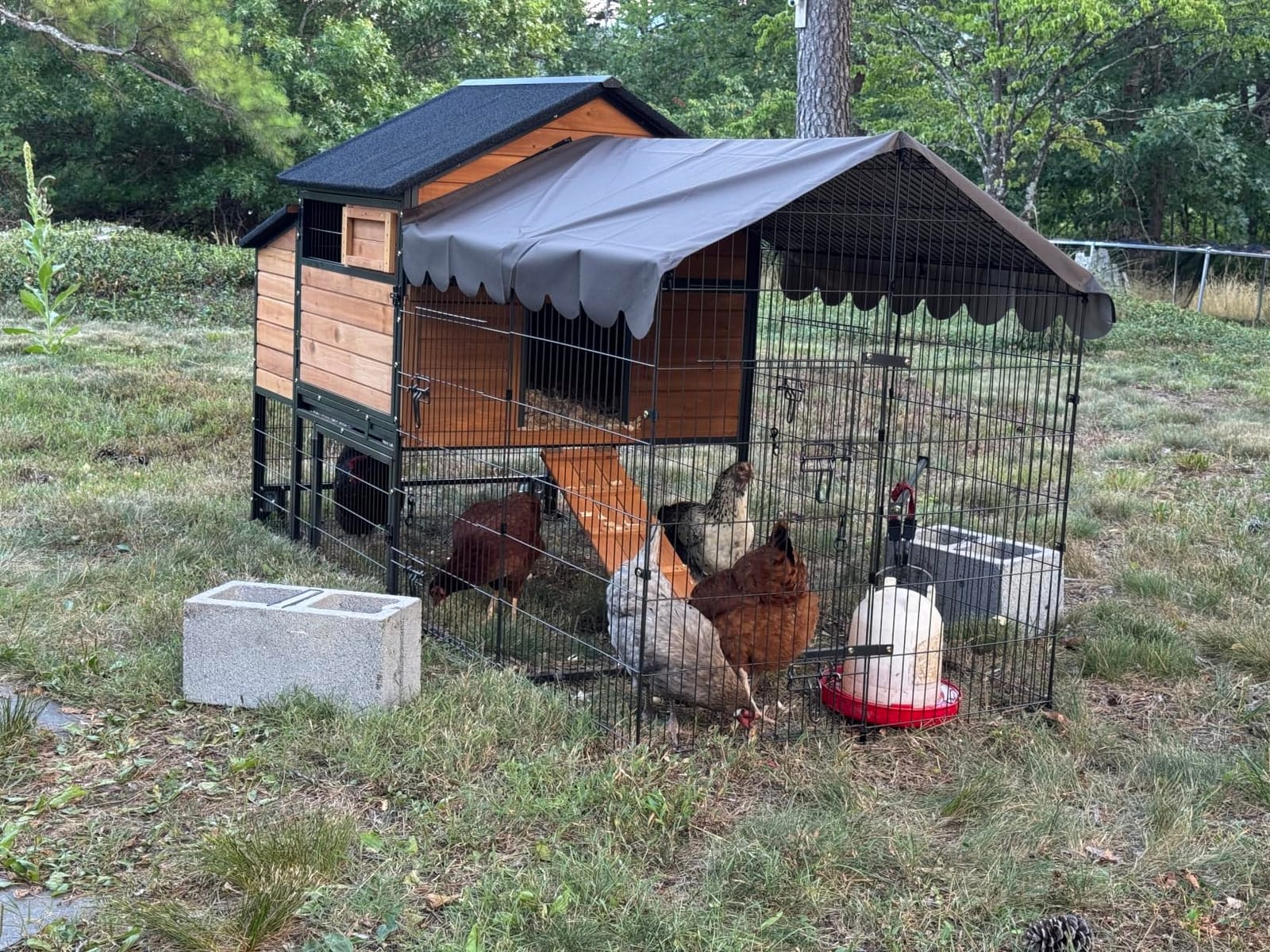
Two design decisions put this unit ahead for a working backyard flock. The first is the 360-degree rotatable metal casters, which owners specifically praise for rolling over grass, dirt, and patio instead of grinding to a halt the way small plastic wheels do.
The second is the metal pull-out trays, which solve the corrosion and breakage problem that owners of cheaper coops complain about repeatedly.
At 16.4 square feet of living space with two large nesting boxes, it carries the largest stated capacity in this roundup.
The removable divider lets you shrink the nesting area when the flock is smaller, which is what makes it a good long-term buy rather than a fixed-capacity box.
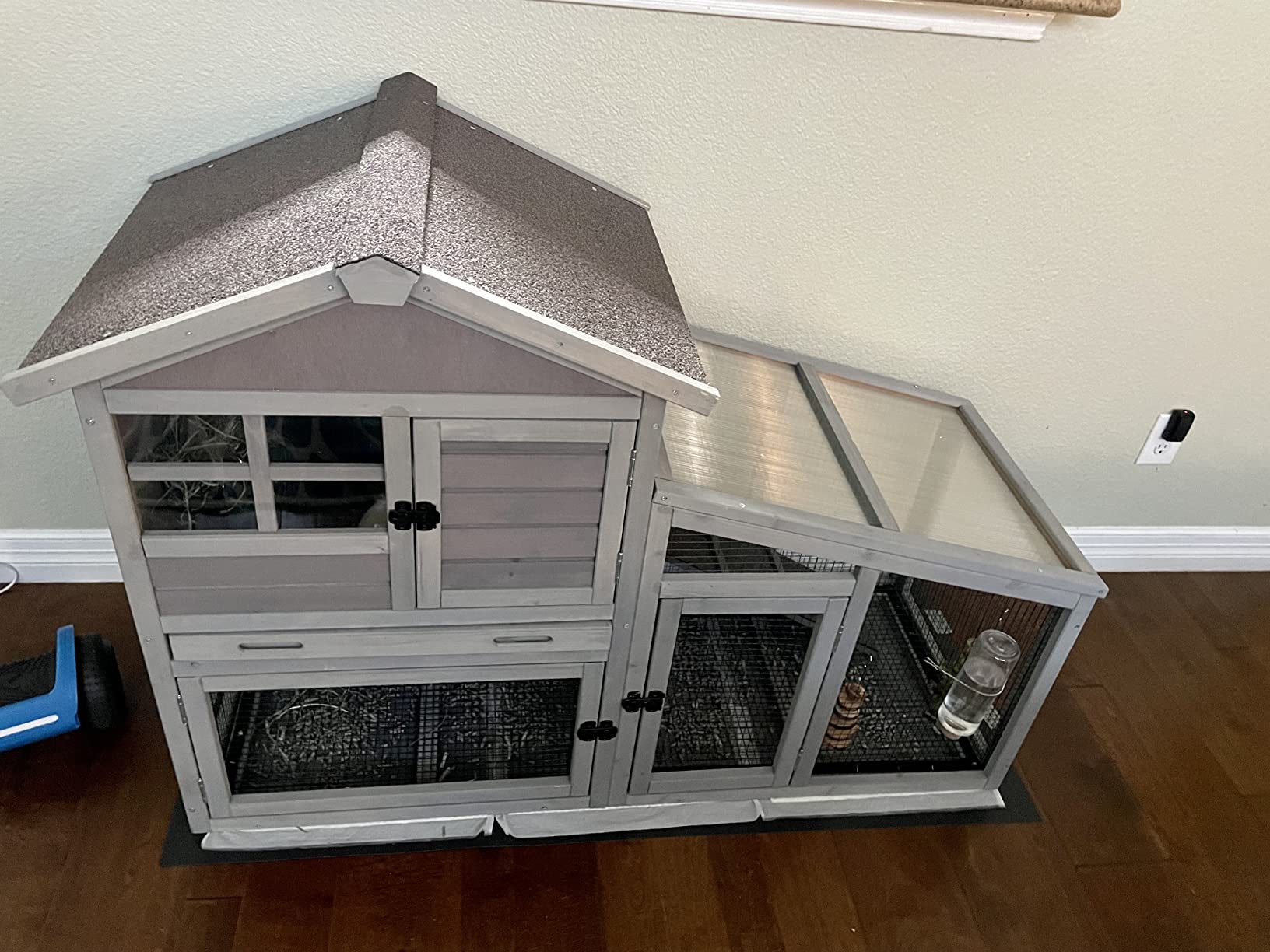
The predator-related details are deliberate rather than incidental: a reinforced iron construction, stainless steel locks, an asphalt shingle roof, and a PVC waterproof curtain over the nesting area.
The foldable ramp door, adjustable sliding window, and external egg access are the small usability touches that make a daily inspection routine quicker.
Its rating distribution is the cleanest in the set, at 62 percent five-star against only 3 percent one-star, which suggests the hardware quality lands consistently rather than occasionally.
The main reservation is not a flaw in the product but in the evidence. This is a newer listing with 150 reviews, so the feedback skews recent and long-term durability is not yet proven.
The casters also still need lifting to get over uneven ground.
Who this tractor suits
This suits a household running six to eight hens, particularly on a yard with a mix of lawn, bare dirt, and patio where plastic castors would struggle.
It is the right choice for a flock that will grow over the years, since the removable divider and the two large nesting boxes handle a changing bird count.
Who should skip it
Skip it if you are buying on a tight budget and the money is better spent elsewhere in the setup, since this is the highest-cost unit here.
Skip it if you cannot lift the casters over a threshold or a raised edge without help. Anyone who wants a long track record of real-world weathering should note that the review base is newer than the picks above it.
7. Suumerpety All-Steel Mobile Coop – The Best For Rural Predator Pressure
Mobile Chicken Coop for 6-8 Hens, All-Steel Frame Hen House with Wheels Portable Poultry Cage, Metal Run & Nesting Box Duck Coop Large
All-steel frame with hardware cloth
85.6 x 40.6 x 48.2 inches
Three-compartment nest box
Six access doors
Pros
- Steel frame that owners single out as noticeably better than wooden-frame coops
- Wood panels are thicker than equivalent units elsewhere
- Three-compartment nest box gives each hen a private laying space
- Steel mesh under the nest box improves airflow and stops eggs breaking
- Six access doors and two large viewing windows for monitoring
Cons
- Real capacity is closer to 3 or 4 birds than the stated 6 to 8
- Soft wood strips screws and will not hold fasteners
- Needs water sealing to survive a humid climate
- Run area is too small for daytime living beyond one or two birds
If your birds face foxes, skunks, or opossums rather than raccoons and hawks, the hardware cloth and all-steel frame here are the right starting point.
Owners consistently rate the frame and the panel thickness above comparable units, and the 63 percent five-star share comes largely from that build quality.
Metal hardware cloth is a different category of material from chicken wire, and it is the single most important spec on this list.
The three-compartment nesting box is a genuine improvement for laying hens, because each bird gets a private space and the steel mesh floor underneath improves ventilation while cushioning the eggs.
Six access doors and two large viewing windows make it easy to check the flock without opening the whole structure.
The honest limitation is capacity. Despite the stated 6 to 8 chicken rating, most owners fit three or four full-size birds and report the unit runs smaller in practice.
The run area is too small for daytime living beyond a bird or two, so this works best paired with free-ranging time or a larger fixed run.
The two-tier design also leaves room for ducks or rabbits below, which several buyers use.
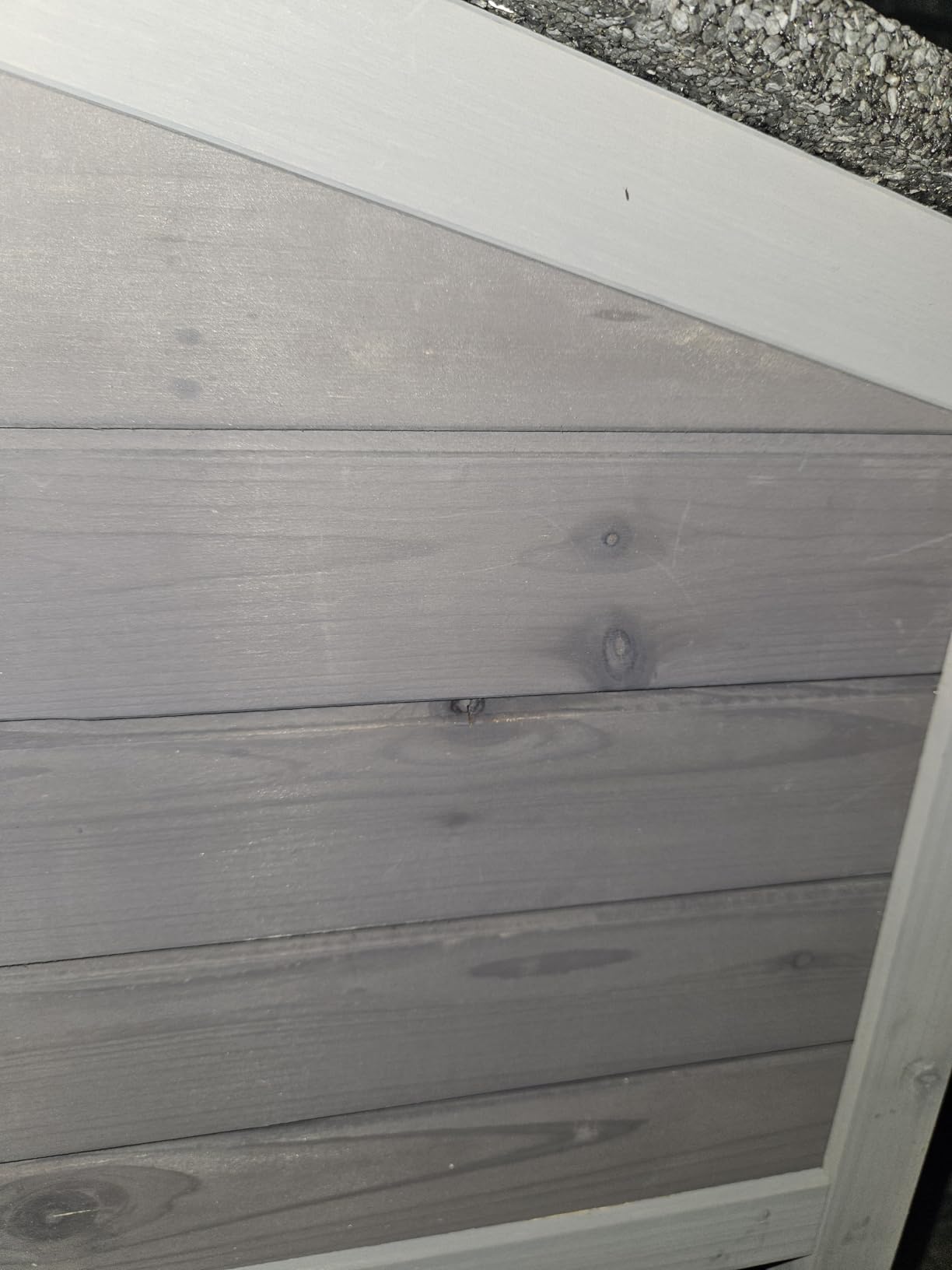
Weather is the second limitation. The soft pine panels strip screws and will not hold fasteners for long, and owners in humid climates report sealing is essential to get more than about a year of service.
A separate note worth flagging: the wood extension sold alongside this unit is described in its listing as a metal frame when it is wood, which weakens the predator resistance of the extension specifically.
Who this tractor suits
This suits a rural or semi-rural property with digging predators in the area, where hardware cloth and a steel frame are worth more than extra capacity.
It is a good fit for a flock of three or four hens that free-ranges during the day and needs a secure night structure. It also works if you want to keep ducks or rabbits alongside the chickens.
Who should skip it
Skip it if you need the run itself to be the daytime home for a larger flock, because the run area is genuinely cramped.
Skip it in a humid climate if you are not willing to seal the soft pine and expect to redo it. Be cautious with the add-on extension, since the frame material is not what the listing describes.
8. GUTINNEEN 79 Inch All-Steel Coop – The Best Covered Run For Wet Climates
Mobile Chicken Coop Large 79″ Chicken House On Wheels All-Steel Frame Hen House Poultry Cage with Metal Run,Waterproof Rain Cover
All-steel run with fir wood house
79.1 x 25.2 x 43.6 inches
Removable waterproof roof cover
Six access doors
Pros
- All-steel run is more durable than the usual wire or wood frame
- Removable waterproof roof cover adds real protection for the run area
- Round-edged perches above the tray protect birds feet
- Two push-pull windows give good airflow and natural light
- Pre-drilled holes make assembly straightforward
Cons
- Much smaller than expected
- with owners fitting 2 or 3 birds
- Wheels sit about half an inch or more off the ground so the unit must be lifted
- Metal run feels flimsy and owners question how long it will last
- Poor mobility makes this a weak choice for frequent rotation
Rain protection is what separates this one. The removable waterproof cover fits over the run, and a wet-climate keeper will find that hard to match at this level of build.
Wet weather is a recurring worry among owners, and the cover plus two push-pull windows for airflow is a sensible combination for birds that need fresh air without being drenched.
At 71 reviews this is the least-reviewed listing in the roundup, so treat the owner feedback as thinner than the rest. The positive reports concentrate on the steel run, the waterproof cover, and the easy assembly.
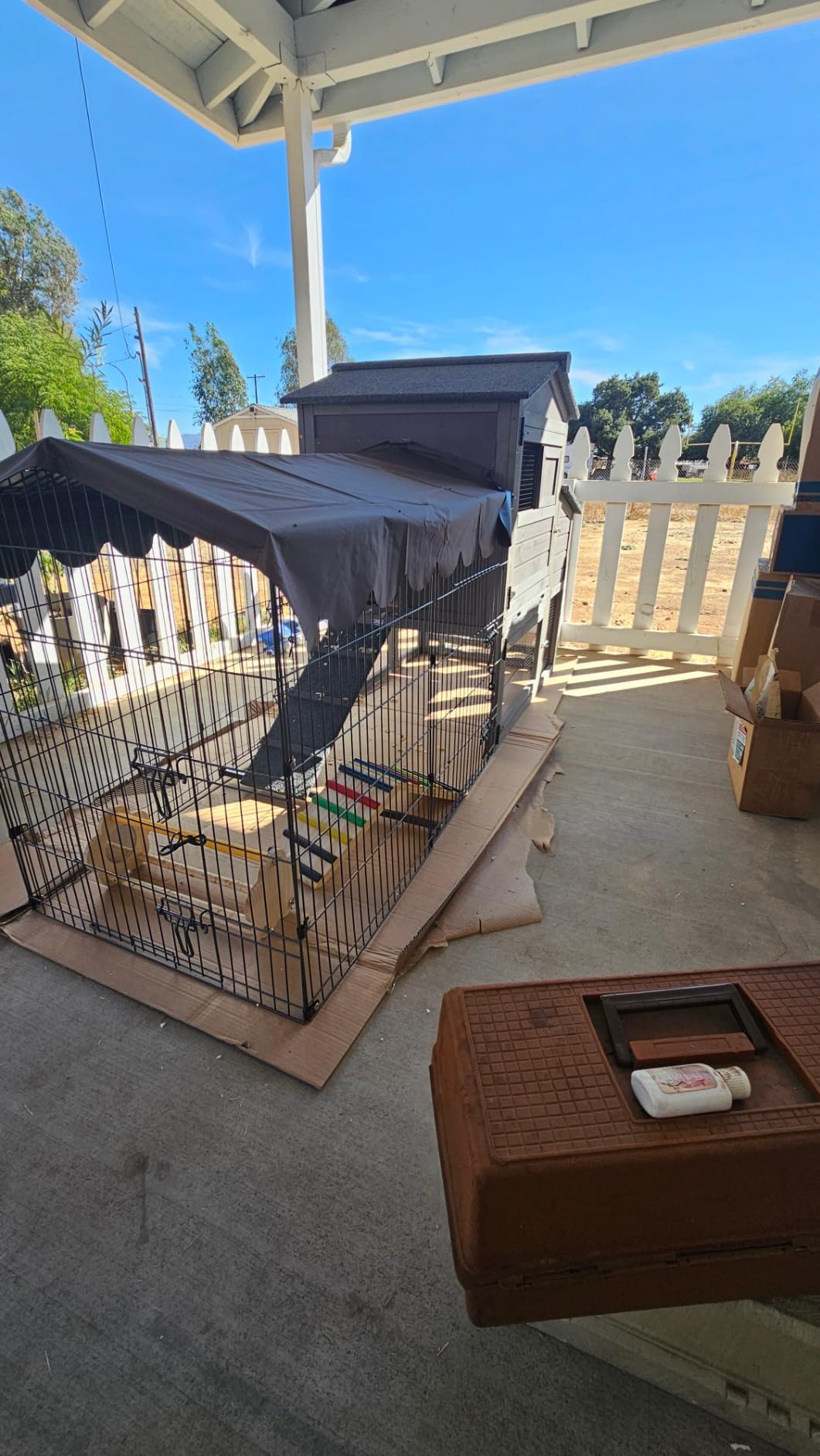
The construction details are thoughtful in small ways. Two round-edge perches sit above the tray, which protects feet from the wet bedding underneath.
The two-section nesting box has a steel pen beneath it for structural strength, and the sliding door with a ramp connects the run to the resting area.
Predator-resistant latches and six access doors round out the layout.
The mobility limitation is real and worth weighing carefully. The wheels sit about half an inch or more off the ground, so the unit has to be lifted to move rather than rolled.
Owners also question how long the metal run will last, and several repurpose the unit as an isolation or hospital pen. That is probably the honest way to think about it.
Who this tractor suits
This suits a keeper in a wet or coastal climate who wants a covered run more than they want daily mobility.
It works well as an isolation pen, a hospital pen, or a temporary shelter for a small group of birds during bad weather. It is also a reasonable option for a two or three bird flock that spends most of its time free-ranging.
Who should skip it
Skip it if the whole point of your setup is a daily rotation, because the wheels sit too high to roll it and you will be lifting instead.
Skip it if you are planning to house four to six full-size hens, since owners consistently fit two or three. It is also a poor choice for anyone expecting a heavy-duty frame for a long service life.
How To Choose A Chicken Tractor For Your Backyard
Most people choose a tractor by photo, and most people end up disappointed. The six decisions below actually determine whether the unit works in a residential yard, roughly in order of importance.
How much space does each chicken need?
The standard allowance is 4 square feet of run space per standard hen, 3 square feet for bantams, and 6 square feet for large breeds, with the elevated sleeping area counted separately from the open run.
Manufacturer capacity claims frequently assume small birds or generous stocking, so read the square footage first and the chicken number second. A listing claiming six to eight birds in under 14 square feet is telling you something.
Water access also has to work inside whatever footprint you choose. A tractor that is too tight to fit a proper waterer becomes a daily frustration, so look at our chicken waterer picks to match the unit first.
Rule of thumb: if the run cannot hold a waterer without blocking the ramp, the run is too small.
Hardware cloth or chicken wire: the one spec that matters
Use 1/2 inch hardware cloth or galvanized welded wire, never hexagonal chicken wire. Chicken wire is made to keep chickens in, not predators out, and a raccoon will work through it in minutes.
Keepers on Reddit are blunt about this, and the advice generalizes to every tractor on this list, because almost none of them ship with true hardware cloth as standard.
Then deal with the open bottom, which is the structural weakness unique to tractors. Because the birds stand on the ground, digging predators have a path a stationary coop does not offer.
Attach a skirt of hardware cloth that runs outward along the ground about 12 to 18 inches from the base of the walls. Owners who add that outward skirt and two-step latches report near-total elimination of losses, and animals generally try to dig right at the edge.
Electrified netting is the honest answer in high-pressure country, since no tractor is fully predator proof.
If you are building out a run area separately, our chicken run roundup covers the fixed-structure version of the same problem.
Wheels: castors, treads, or metal casters
Set 6 inches as the practical minimum wheel diameter, and treat anything smaller as a lawn ornament rather than a tractor.
Small castors dig into soft ground and make a solo move exhausting, which is the single most repeated hardware complaint in this category. The ranking runs from worst to best: small plastic castors, solid or treaded wheels, 360-degree metal casters, and pneumatic tires for genuinely rough ground.
Pair wheels with a side handle and check the total weight. Anything over roughly 70 pounds with small wheels needs two people or a lift attachment.
Brakes matter too, because a unit without locking castors will creep across the lawn every time it rains.
How often should you move it?
Move it daily, or every two to three days at the outside, for a typical backyard flock of four or more hens. Weekly is acceptable only for a light stocking on poor pasture where the ground can absorb it.
A good rule is to move before you see bare soil, because once the grass is gone you are onto mud and parasites rather than pasture.
The daily move is also what makes a tractor worth the effort. Keepers describe it as the habit that keeps birds in condition and the pasture healthy, and as the reason their lawn recovers between passes instead of dying in one spot.
The year-one upgrade list every prefab tractor needs
Almost every prefab tractor in this roundup needs the same five things before birds go in, in this order:
Replace all chicken wire with 1/2 inch hardware cloth, including the run floor edges.
Install a 12 to 18 inch outward skirt of hardware cloth around the base to stop diggers.
Swap single latches for two-step latches or carabiners on every door and nest lid.
Seal the wood with an exterior sealer, especially on soft pine and poplar-style stock.
Upgrade the wheels and add a side handle so one person can move the unit on grass.
Add a rain cover to the run if you are in a wet climate, and expect to seal or replace plastic trays within a couple of seasons.
Should you build it yourself instead?
Build your own if you want a no-floor design, a custom flock size, and hardware cloth from the start. Building wins on material control and loses on time, since a competent plan takes a weekend plus hardware runs.
Most builders report deviating from the printed plans to solve problems nobody anticipated. Buy if you want something functional this weekend, and spend the difference on the upgrade list above.
When A Chicken Tractor Is The Wrong Choice
A tractor is the wrong tool in a few real situations, and it is worth saying so before you spend a weekend assembling panels.
It is wrong for a large permanent flock, because no single portable unit gives the run area that forty hens need.
It is also wrong in winter in a climate with sustained freezing, because exposed wheeled housing with no insulation is not a winter house.
It is wrong on a very small lot, where daily moves and grass recovery fight each other and the birds end up on mud.
And it is wrong if you live where foxes and skunks are a constant problem and you are not willing to run a skirt or electrified netting. An open-bottom structure with hardware cloth on the walls still leaves a hole at ground level.
In those cases, a stationary coop with a solid floor, a fixed run, and a proper apron is the better investment. Our best chicken coops roundup covers that category in detail, and it is a genuinely good answer for a permanent backyard flock.
Frequently Asked Questions
How often should you move a chicken tractor?
Move it every one to three days for a typical backyard flock of four or more hens. Daily is ideal because it keeps the birds on fresh grass, spreads manure as fertilizer, and stops parasites building up in one patch. Weekly is acceptable only for a light stocking on poor pasture. The practical rule is to move before you see bare soil, because once the grass is gone you are standing on mud.
How do I keep predators away from a chicken tractor?
Use 1/2 inch hardware cloth rather than hexagonal chicken wire on every opening, and install two-step latches on doors and nest lids. Because a tractor has an open bottom, attach a skirt of hardware cloth running outward along the ground 12 to 18 inches from the base of the walls. Nightly lock-in, a hawk cover, and electrified netting in high-pressure country round out the protection.
What is the number one predator of chickens?
In a suburban backyard, the raccoon is the number one predator of chickens, with hawks close behind. In rural areas the list shifts to foxes, skunks, and opossums. The last three are the ones that dig, which is why an outward hardware cloth skirt matters so much on a chicken tractor with an open bottom.
How much space does each chicken need in a tractor?
Plan on 4 square feet of run space per standard hen, 3 square feet for bantams, and 6 square feet for large breeds, with the elevated sleeping area counted separately. Manufacturer capacity claims often assume small birds, so read the stated square footage before the stated chicken number and check that a waterer fits without blocking the ramp.
What kind of wheels work best on a chicken tractor?
Set 6 inches as the practical minimum wheel diameter, and go larger if you move over uneven ground. The ranking runs from small plastic castors, which dig in and make solo moves exhausting, to solid or treaded wheels, to 360-degree metal casters, and pneumatic tires for genuinely rough terrain. Add a side handle and brake casters so one person can position the unit precisely.
Can one person move a chicken tractor?
Yes, if the unit weighs under roughly 70 pounds, has a side handle, and sits on wheels at least 6 inches in diameter. Above that weight with small wheels, expect to need two people or a lift attachment. One of the budget units in our roundup weighs about 60 pounds and moves solo, while a 64 pound unit without handles is described by owners as nearly impossible to drag across dirt.
Are chicken tractors predator proof?
No enclosure is fully predator proof. The most common real-world loss is the open bottom of a tractor, which gives digging predators a path in that a stationary coop with a solid floor does not. Owners who report years without losses typically pair hardware cloth, two-step latches, an outward skirt, and a nightly lock-in, and in high-pressure country add electrified netting around the pasture.
Final Verdict: Which Chicken Tractor Fits Your Backyard
For most households we recommend the Aivituvin AIR61. It has the largest body of owner feedback, a handle and wheels that make a daily move realistic, a leakproof tray and four access points that keep cleaning quick, and a design that expands if your flock grows.
If your lot is very small, the Ketive cedar coop gives you the same habit in a narrower footprint. If you are running six to eight birds, the Aivituvin CK97 with its metal casters and trays is worth the step up.
Whatever you choose, buy hardware cloth, an outward skirt, and two-step latches before the birds arrive, and move the unit every one to three days. Those three habits decide whether a chicken tractor works in your backyard far more than the brand on the box does.