
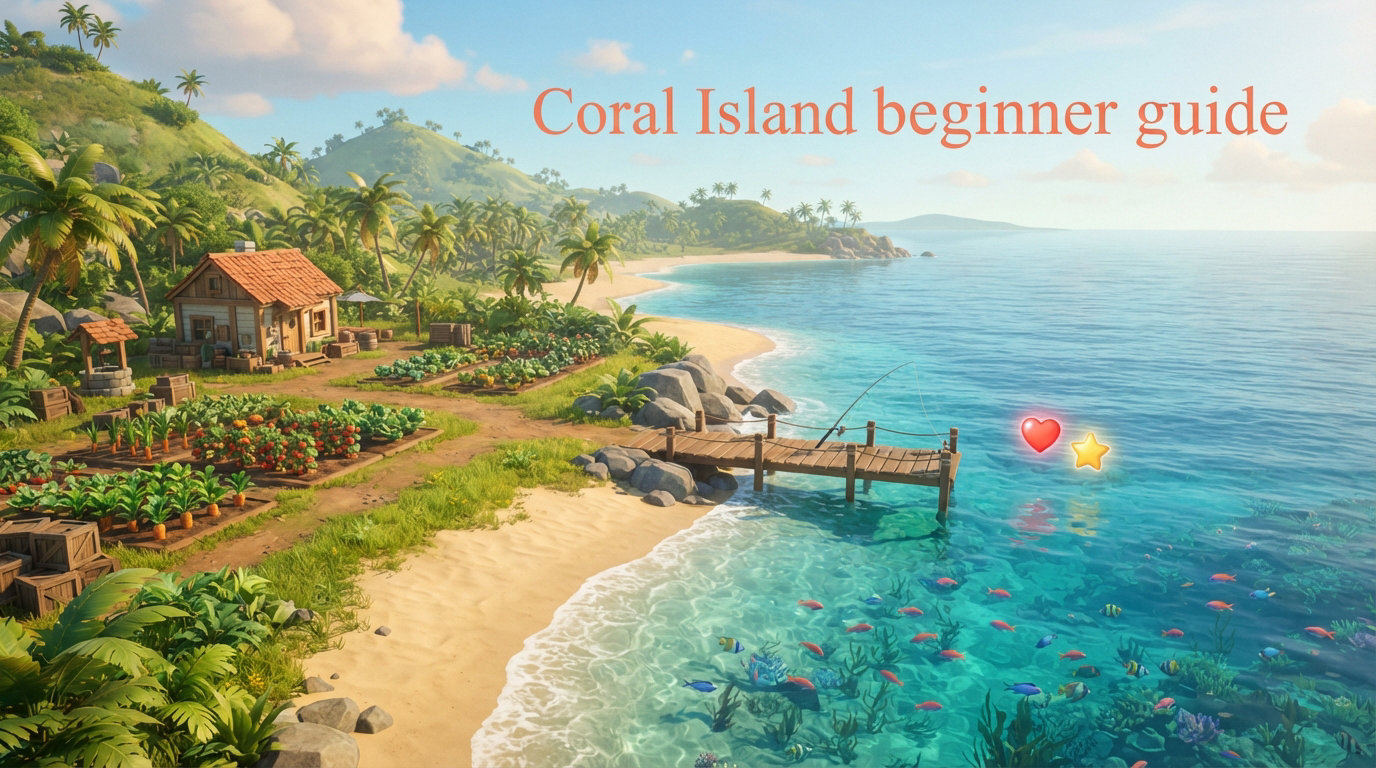
Starting Coral Island for the first time can feel overwhelming. There is so much to do, so many places to explore, and the in-game clock never stops ticking. I remember my first few hours — I ran out of energy by noon, had no idea what to plant, and accidentally threw away trash that was actually valuable. That is exactly why I put together this Coral Island beginner guide.
Whether you are completely new to farming simulators or a Stardew Valley veteran looking for your next obsession, this guide covers everything you need to know in your first few seasons. I have spent over 200 hours in Coral Island, and these are the tips I wish someone had told me on day one.
You will learn how to manage your energy, which crops to plant first, how to tackle ocean diving, and the best ways to earn gold without burning out. I also cover common mistakes that trip up almost every new player, plus a build specialization system that most guides completely ignore. By the end, you will have a clear plan for your first week in-game.
This Coral Island beginner guide is updated for 2026, including all post-1.0 content like Merfolk kingdom romance and the full ocean restoration storyline. If you played during Early Access, there is plenty of new material here for you too.
Table of Contents
Top 10 Coral Island Beginner Tips You Need Immediately
If you only have two minutes, these are the ten things that will save your first playthrough. I ranked them by impact, starting with the single most important change you can make.
- Set game speed to 50% immediately. The default speed feels rushed. Slowing it down gives you time to think, plan, and actually enjoy your day.
- Build makeshift chests right away. Your starting inventory fills up fast. Craft chests from basic wood and place them near your farm and the mine entrance.
- Plant crops on your first day. Buy spring seeds from Sam’s store and get them in the ground. Every day counts toward your first harvest.
- Never sell raw crops. Process them in kegs and aging barrels instead. The gold difference is massive, and it only takes a few extra days.
- Manage your energy like a budget. High-energy tasks like mining and chopping should be planned. Eat coconuts or visit hot springs to recover.
- Upgrade your pickaxe and mining tools first. Better tools mean faster mining, which feeds into every other system in the game.
- Talk to every NPC you pass. Friendship matters in Coral Island. Talk to townies twice per day for bonus relationship points.
- Keep your trash. Trash from diving and fishing can be recycled into useful materials like scrap and cloth. Never throw it away.
- Upgrade your backpack early. More inventory space means fewer trips back to chests and more productive diving runs.
- Use your dash ability constantly. Press the dash button to move faster around town. It saves real minutes over the course of a season.
These ten tips alone will put you ahead of most first-time players. The rest of this guide goes deeper into each system so you can build a solid foundation for long-term success.
Change Your Game Speed to 50% First
Before you do anything else in Coral Island, open the settings menu and change the game speed from the default to 50%. This is the single most recommended tip across Reddit, Steam forums, and every major guide for a reason.
At default speed, a full in-game day passes in about 14 real-world minutes. That sounds reasonable until you are trying to water 40 crops, chat with NPCs, go diving, and mine ore all before 2 AM in-game. The rush leads to mistakes — forgetting to water plants, missing NPC schedules, or running out of energy halfway through your to-do list.
At 50% speed, each day lasts roughly 28 real minutes. You have time to breathe. You can plan your route around town, take a detour to forage, and still get your core tasks done without stress. Most experienced players on the Coral Island subreddit agree that 50% is the sweet spot for new players.
You can always speed it back up once you are comfortable with the game’s rhythm. Some players eventually settle at 75% after their first year. But starting at 50% gives you the learning buffer you need without feeling punished by the clock.
To change it, open the main menu, navigate to Settings, find the Game Speed slider, and drag it down to 50%. This takes about ten seconds and completely changes how the game feels.
Your First Day in Coral Island: Step-by-Step Checklist
Your first day sets the tone for your entire first season. I have refined this checklist over multiple playthroughs, and it gets you from zero to productive in about one in-game day.
Step 1: Adjust your settings. Change game speed to 50% before you do anything else. This is covered in detail above, but do not skip it.
Step 2: Clear farm debris. Your farm is overgrown with rocks, weeds, and logs when you arrive. Clear a small section near your house — maybe a 6×6 plot. You do not need to clear everything on day one. Focus on enough space for your first crop planting.
Step 3: Plant your first crops. Head to Sam’s General Store and buy spring seeds. Cauliflower, potatoes, and green beans are all solid first-season choices. Check how many days remain in the season versus the crop’s grow time. If a crop takes 8 days and only 6 days remain in spring, skip it.
Step 4: Meet NPCs around town. Walk into town and introduce yourself to everyone you see. You do not need gifts yet — just the initial conversation. Talk to NPCs twice per day when possible, as the second interaction gives bonus friendship points.
Step 5: Check the town board. The town board posts small quests that reward gold and relationship points. Completing these early helps you build connections and earn your first income outside of farming.
Step 6: Explore the beach and diving area. Walk south to the beach. You cannot dive yet, but seeing the ocean area early helps you plan. Look for forageable items along the shoreline — they are free items you can sell or gift.
Step 7: Build makeshift chests. Use the wood you collected from clearing your farm to craft at least two makeshift chests. Place one near your farmhouse and one near the mine entrance. Your starting inventory will not last long without extra storage.
By the end of day one, you should have crops in the ground, chests placed, a few NPC introductions done, and a plan for day two. That is a solid start.
Farming Basics: Best Crops and Farm Layout for Beginners
Farming is your backbone in Coral Island. It provides steady income, gifts for NPCs, and materials for artisan goods. Getting your farm set up correctly in spring saves you headaches for the rest of the year.
Best Spring Crops for Your First Season
For your first spring, focus on these crops:
- Cauliflower: High sell price and worth the longer grow time. Plant these early in the season.
- Potatoes: Fast-growing and reliable. A good filler crop between your higher-value plantings.
- Green beans: They grow on trellises, so plan your layout to leave walking space between rows.
- Blueberries: Universally loved as a gift by almost every NPC. They also process well in kegs for extra profit.
Always check the crop’s grow time against the remaining days in the season. If the crop will not finish before summer starts, it will wilt and you lose your investment. This is one of the most common beginner mistakes I see on forums.
A simple layout for your first farm is a grid system with 3×3 or 4×4 plots separated by walking paths. Leave space near your house for chests and eventually sprinklers. You do not need a perfect layout on day one — just something functional that you can expand later.
Why You Should Never Sell Raw Crops
This tip deserves its own section because it is the biggest gold mistake new players make. Selling a raw cauliflower might earn you 175 gold. Processing that same cauliflower in a keg turns it into pickled cauliflower worth significantly more. Aging barrels push the value even higher.
The math is simple. Kegs and aging barrels take a few extra days, but the return on investment is substantial. Over a full season, the difference between selling raw versus processed crops can be thousands of gold. That money funds tool upgrades, backpack expansions, and building projects much faster.
Craft kegs as soon as you unlock the recipe. Place them near your farm for easy access. Fill them every time you harvest. Once you have an aging barrel, use it on your highest-value crops for the best returns.
Energy and Stamina Management Explained
Energy is the invisible currency in Coral Island. Run out of it, and your day is basically over. Learning how to manage it separates players who struggle from players who thrive.
Regular energy is consumed by farming tasks like watering, chopping, mining, and using tools. Diving stamina is a separate pool used only when you are underwater. This distinction matters because you can drain your regular energy on the farm and still have diving stamina available for an evening dive.
Here are the best ways to manage both pools:
- Coconuts: They grow near the beach and restore a solid chunk of energy. During summer, coconut farming becomes a reliable energy and income source. Players on Reddit consistently recommend stocking up.
- Hot springs: Located in the mountain area, hot springs completely restore your energy for free. Make them part of your daily route once unlocked. The trip takes a bit of time, but the full restore is worth it on heavy-task days.
- Scuba snacks: Craft or buy these for diving trips. They restore diving stamina, letting you stay underwater longer and clear more ocean debris per trip.
- Foraged foods: Wild berries, mushrooms, and other forageables provide small energy boosts. Keep a stack in your inventory for emergencies.
Plan your day around energy-intensive tasks. I recommend doing your mining and tree chopping in the morning when your energy is full. Save lighter tasks like NPC visits and shopping for the afternoon when your energy is running low. If you have diving stamina left, evening dives are a productive way to end the day.
Tool Upgrade Priority: What to Upgrade First
Tool upgrades are expensive, and buying the wrong one first slows your entire progression. I have tested different upgrade orders across multiple saves, and there is a clear priority list.
1. Pickaxe (Copper then Silver): Upgrade your pickaxe first, without question. Better pickaxes break harder rocks in the mine, which gives you access to better ore. Better ore leads to better tools, better buildings, and better gear. It is the upgrade that feeds every other upgrade.
2. Watering Can: After the pickaxe, upgrade your watering can. A better watering can waters more squares per use, which directly saves energy every single morning. If you are watering 30+ crops daily, this upgrade pays for itself in energy savings within a week.
3. Axe: The axe upgrade lets you chop harder wood types and clear stumps faster. This is important for farm expansion and crafting higher-tier buildings, but it is less urgent than mining and watering.
4. Hoe: The hoe can wait. You do not need a high-level hoe early on because your farm plot size grows gradually. Upgrade it when you have surplus resources.
You take tools to the blacksmith in town for upgrades. Each upgrade takes a couple of in-game days, so plan around that. Do not drop off your watering can the night before a big harvest day, for example.
The materials for upgrades come primarily from the mine. This is why the pickaxe upgrade is critical — it directly accelerates your ability to gather upgrade materials for everything else.
Diving and Mining: How to Get Started
Diving and mining are two of Coral Island’s most unique systems. They open up different progression paths and both are worth your time from relatively early in the game.
How Ocean Diving Works
Ocean diving is the mechanic that sets Coral Island apart from other farming sims. When you approach a glowing spot in the water, press X to drop your scuba anchor and dive below the surface. Underwater, you will find coral, debris to clear, and paths to deeper areas.
Diving uses its own stamina pool, separate from your regular energy. This means you can exhaust your surface energy farming and still go for a dive in the evening. Bring scuba snacks to extend your underwater sessions.
One thing that catches new players off guard is the giant turtles. These block deeper diving areas and demand specific items to let you pass. The key detail: their requested items change with the seasons. Do not panic when you see one — just note what they want, check if you have it, and come back prepared. Reddit threads are full of players who were confused by this mechanic at first.
Clearing ocean debris contributes to coral restoration, which unlocks new areas and rewards. Make diving a regular part of your weekly routine. Even short dives add up over time.
Mining Progression Tips
The mine unlocks after you make some story progress. Once open, it becomes your primary source of ore, gems, and upgrade materials. Here are the key tips for efficient mining:
- Break boxes in the caverns. Wooden crates and boxes scattered through the mine often contain extra loot like ore, coal, and occasionally rare items. Always smash them as you pass.
- Upgrade your pickaxe before deep mining. Deeper levels have harder rocks that require better tools. Do not waste energy on rocks you can barely chip.
- Bring energy food. Mining drains energy quickly. Pack coconuts or cooked meals to extend your trips.
- Use the elevator. Once you reach certain depth milestones, the mine elevator unlocks. Use it to skip to deeper floors on return trips.
Ore from the mine is the bottleneck for almost every upgrade and building project in the game. Prioritize mining trips early and often.
Building NPC Relationships and Gifting Guide
Coral Island has over 70 NPCs, and building relationships with them unlocks dialogue, cutscenes, recipes, and romance options. The relationship system is generous, but it rewards consistent effort.
The most important mechanic: talk to NPCs twice per day. The first conversation gives normal friendship points, and the second gives bonus points. IGN highlighted this in their tips guide, and it remains one of the easiest ways to build relationships without spending resources on gifts.
When it comes to gifts, here are safe bets that work for almost everyone:
- Daffodils: Easy to find in spring, and everyone loves them. Forage them daily and hand them out freely.
- Blueberries: A universally liked gift that doubles as a profitable crop. Grow extra plants specifically for gifting.
- Cooked dishes: As you unlock recipes, cooked food generally earns more friendship than raw ingredients.
Be careful with gift choices, though. Hated gifts actually decrease friendship. If you are unsure about a specific NPC’s preferences, stick with daffodils or blueberries until you learn their tastes. The wiki has full gift preference lists if you want to optimize.
Romance is available with many NPCs once you reach high enough friendship. Post-1.0, the Merfolk kingdom adds new romance options with underwater characters. This is content that was not available during Early Access, so returning players have new storylines to discover.
Early Game Money-Making Strategies That Actually Work
Gold flows slowly at first, but there are reliable strategies that accelerate your income without requiring massive upfront investment. I tested these across three different save files, and they consistently work.
Process everything in kegs and aging barrels. This bears repeating because it is the most impactful money strategy in the game. A crop worth 100 gold raw can become worth 300 or more after processing. Fill every keg and barrel you have, every single time you harvest.
Recycle trash instead of throwing it away. Trash from diving and fishing decomposes into scrap, cloth, and other materials through the recycler. These materials sell for more than the trash itself, and some are crafting ingredients you will need later. Keep every piece of trash you find.
Forage daily. Wild flowers, mushrooms, shells, and berries are free items scattered around the map. A daily foraging run takes five real minutes and generates consistent income with zero energy investment beyond walking.
Set up bee hives for passive income. Bee hives produce honey automatically once placed near flowers. Assorted Meeples highlighted this as an underappreciated strategy, and I agree. Honey sells well and requires almost no maintenance. Place hives near your most abundant flowers for best results.
Summer coconut farming. Coconuts grow near the beach and are abundant during summer. They provide both energy and income. Players on Reddit call this the “Summer Coconut King” strategy for good reason — the profits add up fast.
Donate to the museum. Museum donations sometimes unlock rewards, including items you can sell or use. It is not a primary income source, but it is worth doing as you find new artifacts and minerals.
The common thread across all these strategies: never sell anything raw if you can process it first. Patience pays off in Coral Island, and the processing buildings are your best friends for building wealth.
Inventory Management: Chests, Backpacks, and Organization
Inventory management sounds boring until you are standing in the mine with a full backpack and no way to pick up the silver ore you just found. A few early decisions save you from this frustration.
Build makeshift chests immediately. They cost basic wood, which you have in abundance from clearing your farm. Place chests strategically — one near your farmhouse, one near the mine entrance, and one near the diving area. This way, you always have storage nearby when your inventory fills up.
Upgrade your backpack as soon as you can afford it. The first backpack upgrade adds several inventory slots, and the second upgrade adds even more. The cost is significant early on, but the quality-of-life improvement is massive. You will spend less time walking back and forth to chests and more time being productive.
One tip that surprises many players: machines like kegs, aging barrels, and recyclers can queue multiple items per build. You do not need to wait for one item to finish before adding the next. Queue up several items at once to keep production running even while you are out exploring.
For chest organization, group items by category. One chest for ores and gems, one for crops and seeds, one for forageables and gifts. It takes a few seconds to sort but saves you minutes of searching later when you need a specific item fast.
Common Beginner Mistakes to Avoid in Coral Island
I made almost all of these mistakes on my first playthrough. Learning from them early saves you days of wasted effort and thousands of lost gold.
Planting crops that will not finish before the season ends. When a season changes, all crops from the previous season wilt. If you plant an 8-day crop on Spring 24, it dies on Summer 1. Always do the math before planting late in a season.
Selling raw crops instead of processing them. I covered this in depth earlier, but it is worth repeating here because it is the number one gold mistake. Kegs and aging barrels are not optional — they are your primary profit engine.
Throwing away trash. Trash recycles into useful materials. Every piece of trash you throw away is wasted gold and wasted crafting resources. Keep it all.
Ignoring the town board. Town board quests give gold and relationship points for relatively simple tasks. They are easy to overlook but provide a steady income stream alongside your farming.
Not upgrading the backpack early enough. Inventory space is a bottleneck for everything — mining, diving, foraging, farming. The upgrade is expensive but pays for itself in efficiency within days.
Wasting energy on low-priority tasks. Using your last energy points to chop a random log instead of mining ore is a classic mistake. Prioritize tasks by their long-term value. Mining feeds your tool upgrades. Tool upgrades speed up everything else. Chase that chain first.
Choosing Your Build: Diver, Farmer, Rancher, or Artisan?
One of the most undercovered topics in Coral Island guides is the build specialization system. Your early decisions about where to invest time and resources shape your playthrough. This is not a rigid class system — you can mix and match — but having a primary focus helps you prioritize.
The Diver Build focuses on ocean restoration and underwater exploration. You spend your days clearing ocean debris, collecting coral, and progressing through underwater areas. The rewards include unique crafting materials and access to Merfolk kingdom content. If you love the diving mechanic, this build maximizes it.
The Farmer Build is the most straightforward path. You expand your farm, plant diverse crops across seasons, and focus on maximizing yields. Farmers benefit most from sprinklers (which automate watering) and seed makers. This build provides consistent, reliable income.
The Rancher Build centers on animal husbandry. You raise cows, chickens, and other livestock for their products. Ranching requires significant upfront gold for barns and animals, but the daily products like milk and eggs provide steady income. Processing animal products in cheese presses and mayo machines multiplies their value.
The Artisan Build is all about processing. Kegs, aging barrels, cheese presses, looms, and bee hives are your primary tools. Artisans buy or grow raw materials and transform them into high-value goods. This build generates the highest gold-per-item ratio but requires patience and infrastructure investment.
The Socialite Build prioritizes NPC relationships and town events. You spend your time talking to residents, giving gifts, attending festivals, and unlocking heart events. This is a slower build financially but unlocks unique dialogue, recipes, and story content that other builds might miss.
Most players naturally gravitate toward a mix of two or three builds. I recommend picking one primary focus for your first year and branching out in year two. The beauty of Coral Island is that nothing is locked away permanently — you can always pick up a new activity later.
Coral Island Beginner Guide: Frequently Asked Questions
What are the best beginner tips for Coral Island?
Set your game speed to 50%, build makeshift chests immediately, plant crops on day one, never sell raw crops (process them in kegs and aging barrels), and talk to every NPC you meet twice per day for bonus friendship points.
How do I start Coral Island?
On your first day, adjust game speed to 50%, clear a small section of your farm, buy spring seeds from Sam’s store and plant them, walk around town to meet NPCs, check the town board for quests, and craft at least two makeshift chests for storage.
What should I focus on first in Coral Island?
Focus on three things in your first week: planting and watering crops for income, mining ore for tool upgrades, and introducing yourself to NPCs for friendship. Tool upgrades, especially the pickaxe, accelerate every other system in the game.
How do I make money fast in Coral Island as a beginner?
Process all crops in kegs and aging barrels instead of selling them raw. Forage daily for free items to sell. Recycle trash instead of throwing it away. Set up bee hives for passive honey income. During summer, harvest and sell coconuts from the beach for quick profits.
When should I upgrade my tools in Coral Island?
Upgrade your pickaxe first as soon as you have copper ore and gold. Follow with the watering can to save daily energy. Then upgrade your axe. The hoe can wait until you have surplus resources. Each upgrade takes a couple of in-game days at the blacksmith.
How does diving work in Coral Island?
Approach a glowing spot in the ocean and press X to drop your scuba anchor. Diving uses a separate stamina pool from your regular energy. Underwater, you clear debris, collect coral, and find paths to deeper areas. Giant turtles guard some passages and require specific seasonal items to pass. Bring scuba snacks to extend your diving sessions.
What are the best crops for beginners in Coral Island?
For spring, plant cauliflower for high profit, potatoes for fast returns, and green beans for trellis farming. Blueberries are a top pick because NPCs universally love them as gifts and they process well in kegs. Always check that the crop’s grow time fits within the remaining season days.
How do I befriend NPCs in Coral Island?
Talk to NPCs twice per day for bonus friendship points. Gift daffodils (easy spring forage) or blueberries (safe universal gift) to any NPC. Avoid giving hated gifts, as they decrease friendship. Over time, reaching higher friendship levels unlocks heart events, recipes, and romance options.
Wrapping Up Your Coral Island Beginner Guide
If you take away three things from this Coral Island beginner guide, let it be these: set your game speed to 50%, never sell raw crops, and upgrade your pickaxe first. These three decisions compound over your entire playthrough and make everything else easier.
Coral Island rewards patience and planning. Take your time exploring the island, building relationships with the charming cast of NPCs, and restoring the ocean ecosystem. The game has received substantial updates since its full release, including Merfolk kingdom content, new festivals, and expanded storylines. There has never been a better time to start.
I update this guide regularly as new patches and content drops change the meta. If a specific topic was not covered in enough detail, the FAQ section above addresses the most common questions from new players. Enjoy your time on Coral Island — it is a beautiful place to build a new life.